Hisor
Hisor, Tajikistan
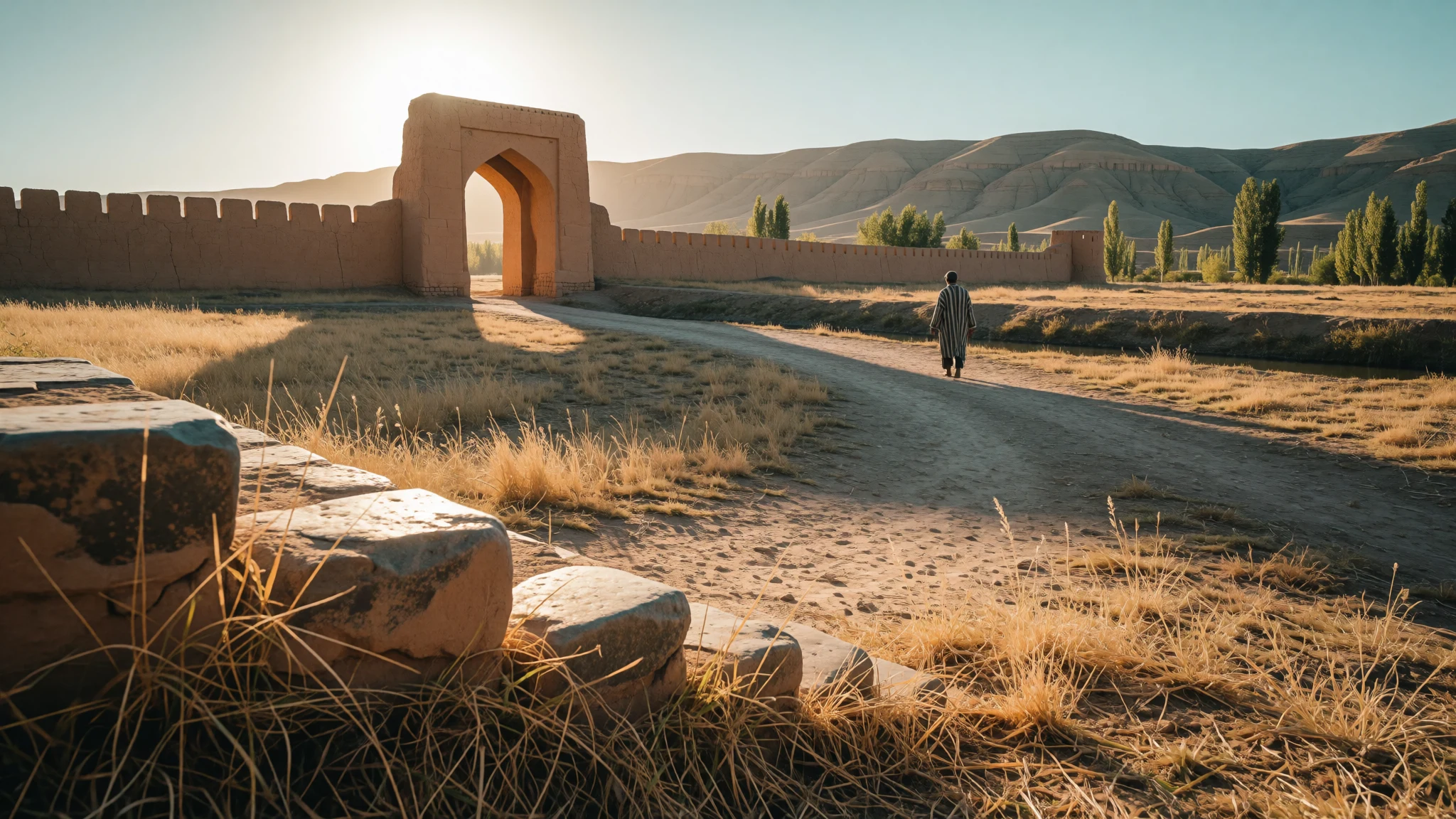
Hisor is an easy day out from Dushanbe: a restored Bukharan fortress gateway, old madrasas, a bazaar and, in season, horseback buzkashi.
The place
Hisor sits in a broad valley in western Tajikistan, a short drive west of Dushanbe, at an elevation of 802 m. About 23,200 people live in the city itself, with many more in the villages and farmland around it. Mountains close the valley on both sides: the Gissar range rises to the north, while the lower Babatag and Aktau ridges lie to the south. The small Khanaka river runs through the town and gives it a green edge in an otherwise dry landscape. The name appears in two spellings on maps and signs: Hisor in Tajik (Ҳисор), and Hisar or Gissar in the Russian-era form. Most residents are Tajik, with Uzbek and Russian minorities, and Tajik is the everyday language, with Russian still common in shops and offices. The centre is low-rise and unhurried, with a main road of shops, a bazaar, and a historic complex set a little apart on open ground at the foot of the hills. The climate is the dry-summer Mediterranean type. Summers are hot and almost rainless, winters are cold, and spring brings most of the rain. That pattern shapes a visit more than anything else, because the exposed fortress ground offers little shade in July and little comfort in January. Public transport is regular, and the Dushanbe–Termez railway passes through the district, though most visitors arrive by shared taxi or a hired car.
Its story
Hisor's story is that of a frontier valley squeezed between larger powers. Local tradition ties its fortress to Cyrus the Great and says it was captured twenty-one times. That is legend rather than proven record, but it gives a fair sense of how often the place changed hands. The documented history is firmer from the early sixteenth century, when Muhammad Shaybani took the region in 1504. Babur held Hisor briefly in 1511, after which Uzbek rule returned. Over the following decades it became a semi-independent principality under a sultan, supplying troops for Bukhara's wars. In the seventeenth century Tajik families won the governorship, and Hisor answered mostly to the Bukharan ruler based at Balkh rather than the khan in Bukhara itself. When Bukharan power faded after Ubaydullah Khan was assassinated in 1711, Hisor ran its own affairs for a time. It returned to Bukhara only with Russian military help after the treaty of 1868. Later, when the Soviet Union redrew Central Asian borders, eastern Bukhara was separated and became the core of a Tajik republic, partly because it was more remote and less developed than the western half. Hisor was formally made a city in 1993. The fortress was the winter seat of the Bukharan governor, which explains why such a small town carries such a large piece of history.
What to see
- Hisor Fortress — Historic complex, edge of Hisor
The fortress is the reason most people come. It was the seat of the Bukharan governor, and local tradition links its origins to Cyrus the Great. What stands now is a restored gateway and earthen walls on open ground, so a hat matters in summer. Check locally for opening arrangements before going.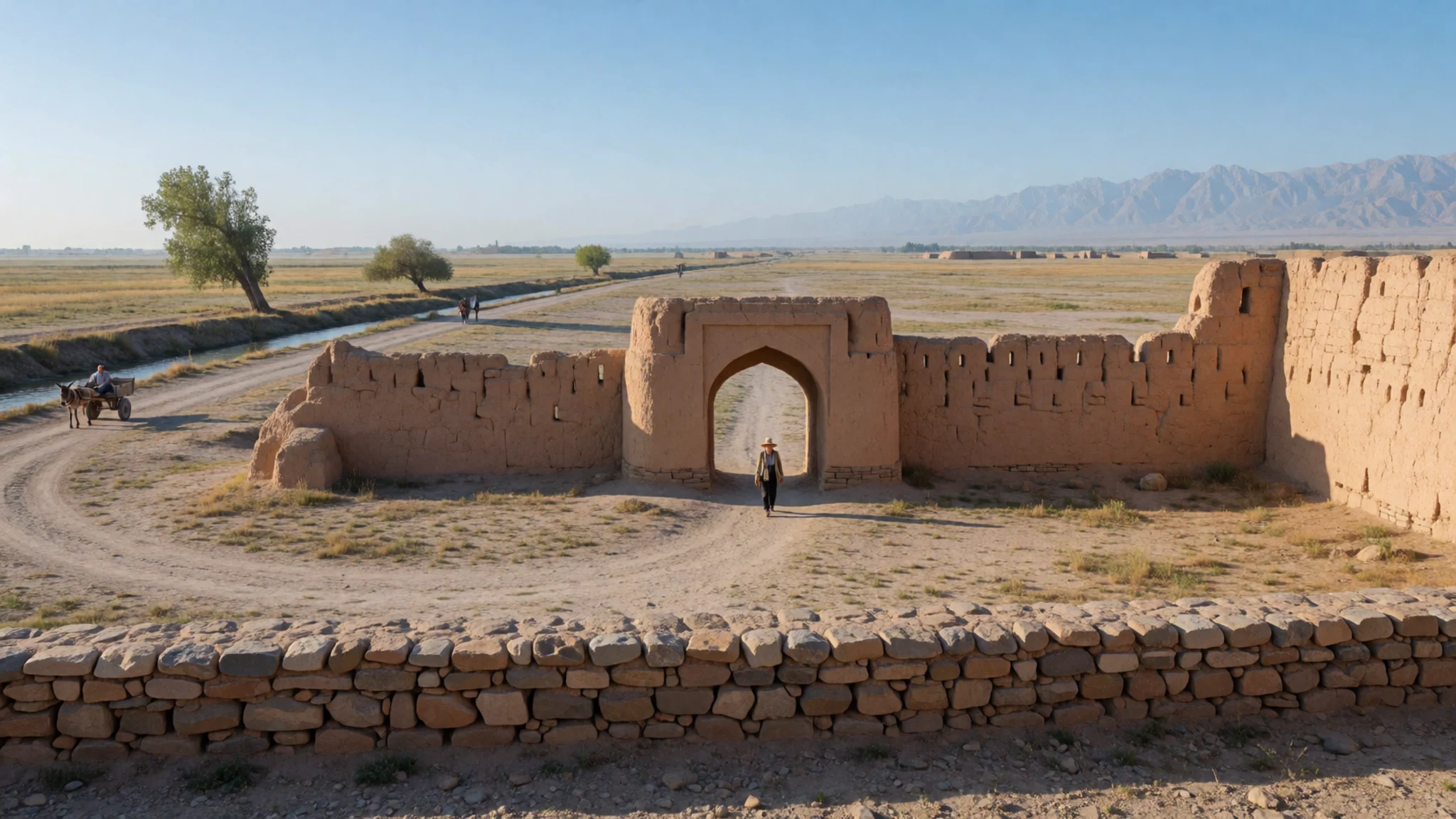
- The old madrasas — Beside the fortress complex
Near the fortress stand old madrasas, religious colleges of brick built around courtyards. They show how the town worked as a place of learning and administration under Bukharan rule. Interiors are modest, and some rooms hold small displays. Opening arrangements change, so ask on site or in Dushanbe first.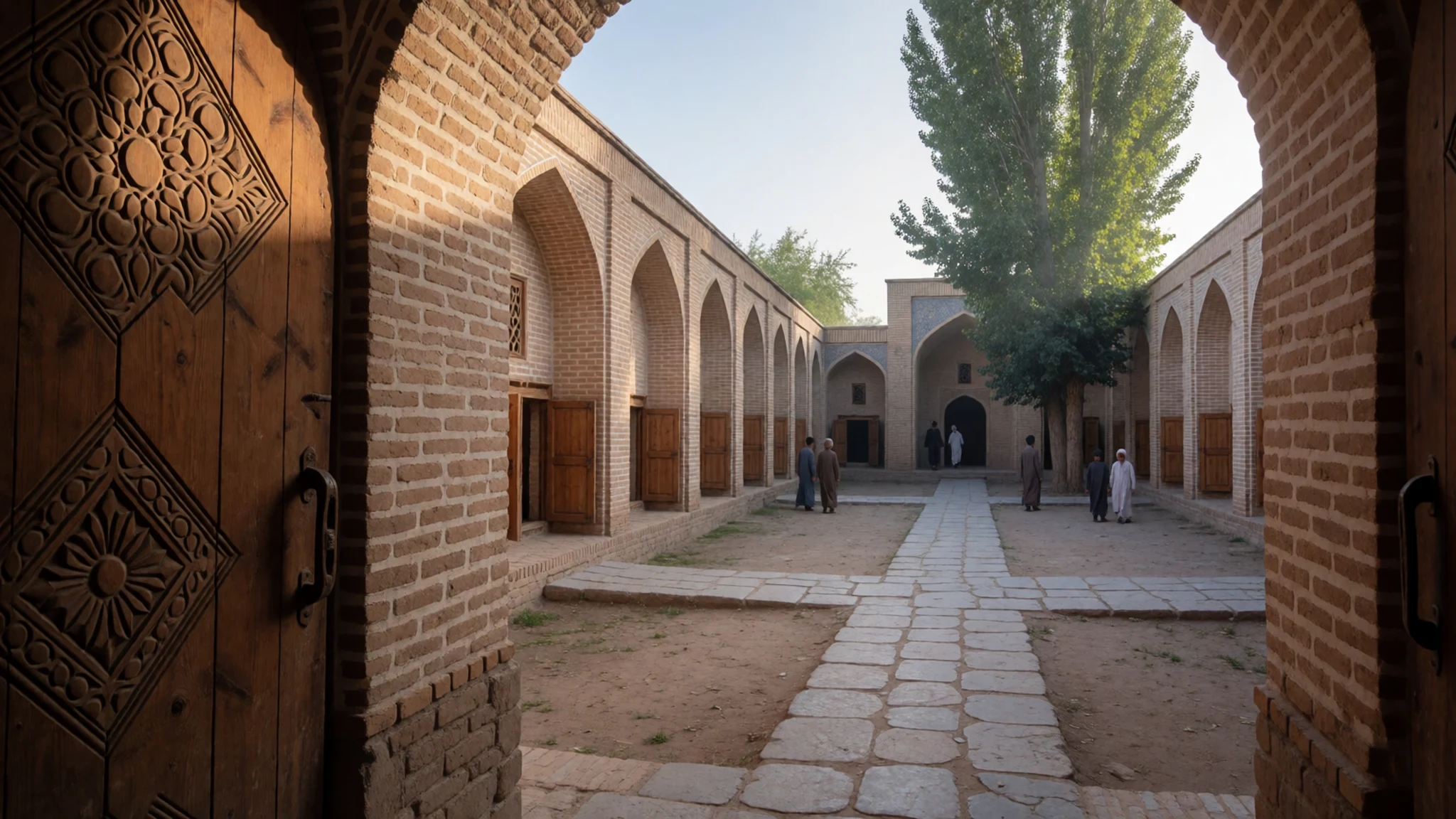
- Caravanserai remains — Historic complex, Hisor
The low remains of a caravanserai, a trade-route inn, recall Hisor's position on the road between the Dushanbe plain and the mountain passes. The ruins need some imagination, but they help explain why a fortress grew here. Combine them with the madrasas rather than making a separate trip.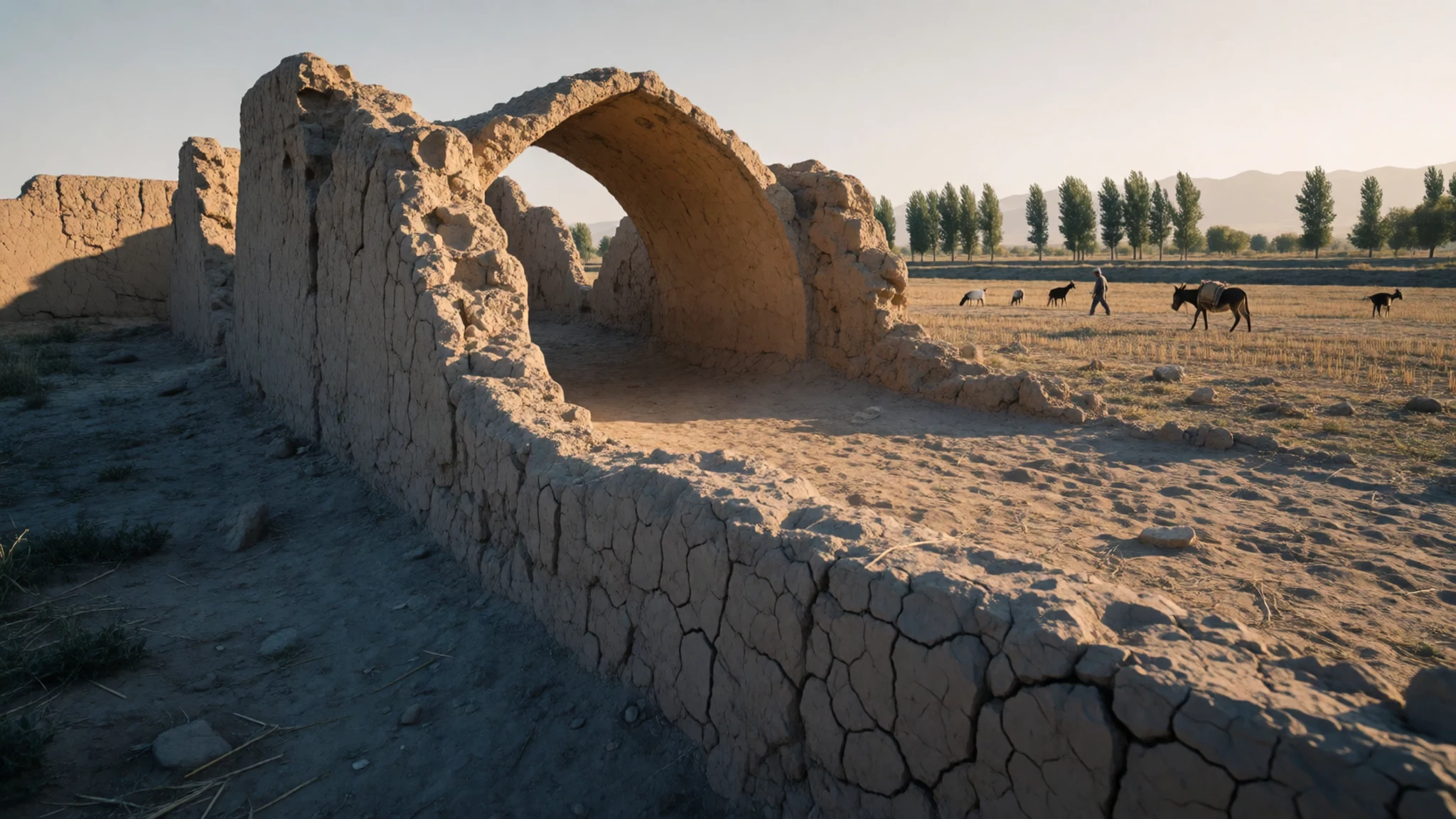
- A buzkashi match — Fields around Hisor, seasonal
Buzkashi is a horseback game in which riders fight over a goat carcass and try to carry it to a scoring circle. Matches are held in the valley around festivals and by local arrangement, so dates are not fixed. Ask a driver or guide in Dushanbe, and watch from behind the crowd line.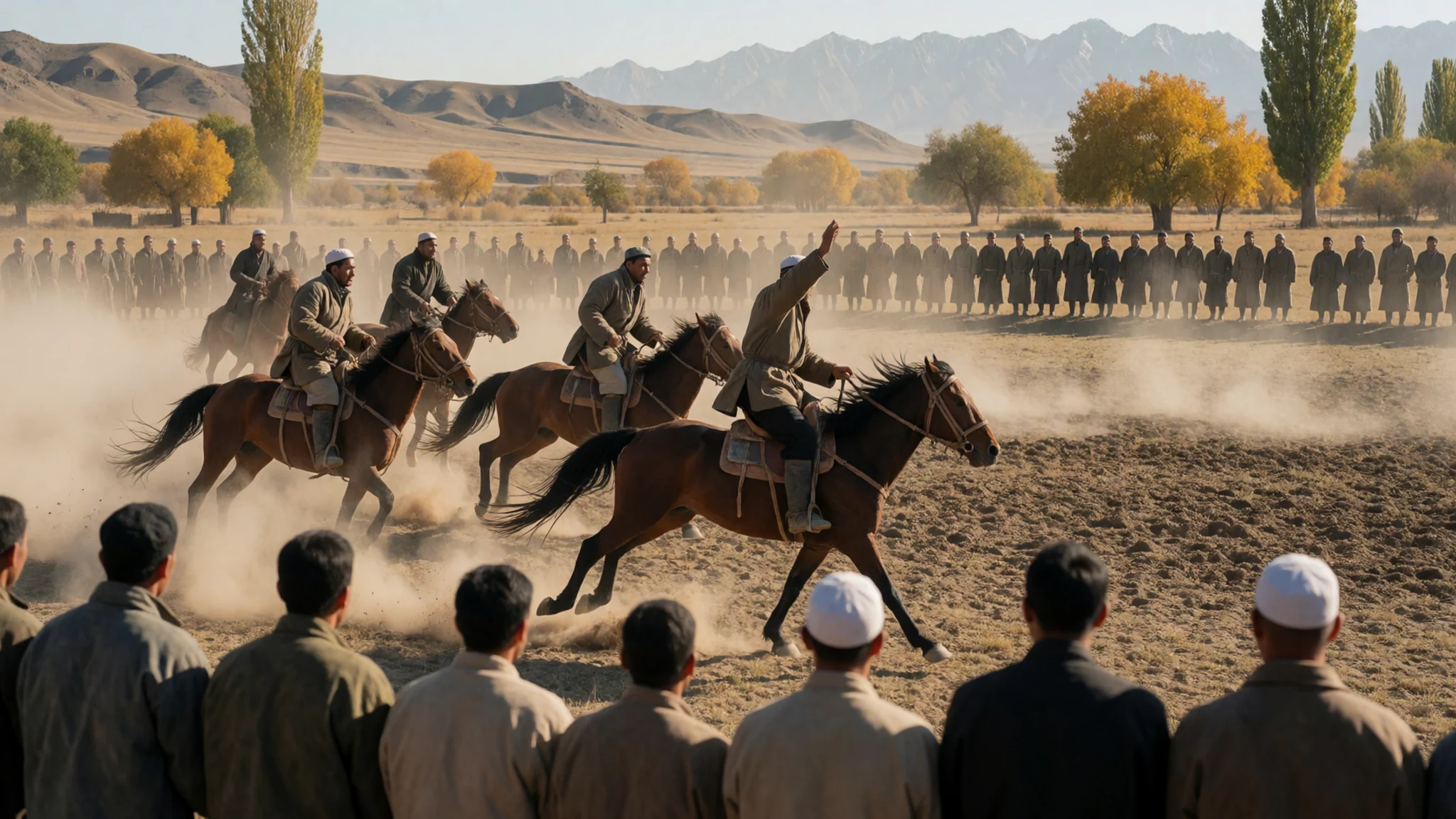
- Hisor bazaar — Town centre, Hisor
The town bazaar is where the valley's farming shows up: fruit, nuts, bread, spices and household goods laid out under awnings. It is a good place for a snack and a sense of ordinary life after the fortress. Go in the morning, carry small notes, and ask before photographing stallholders.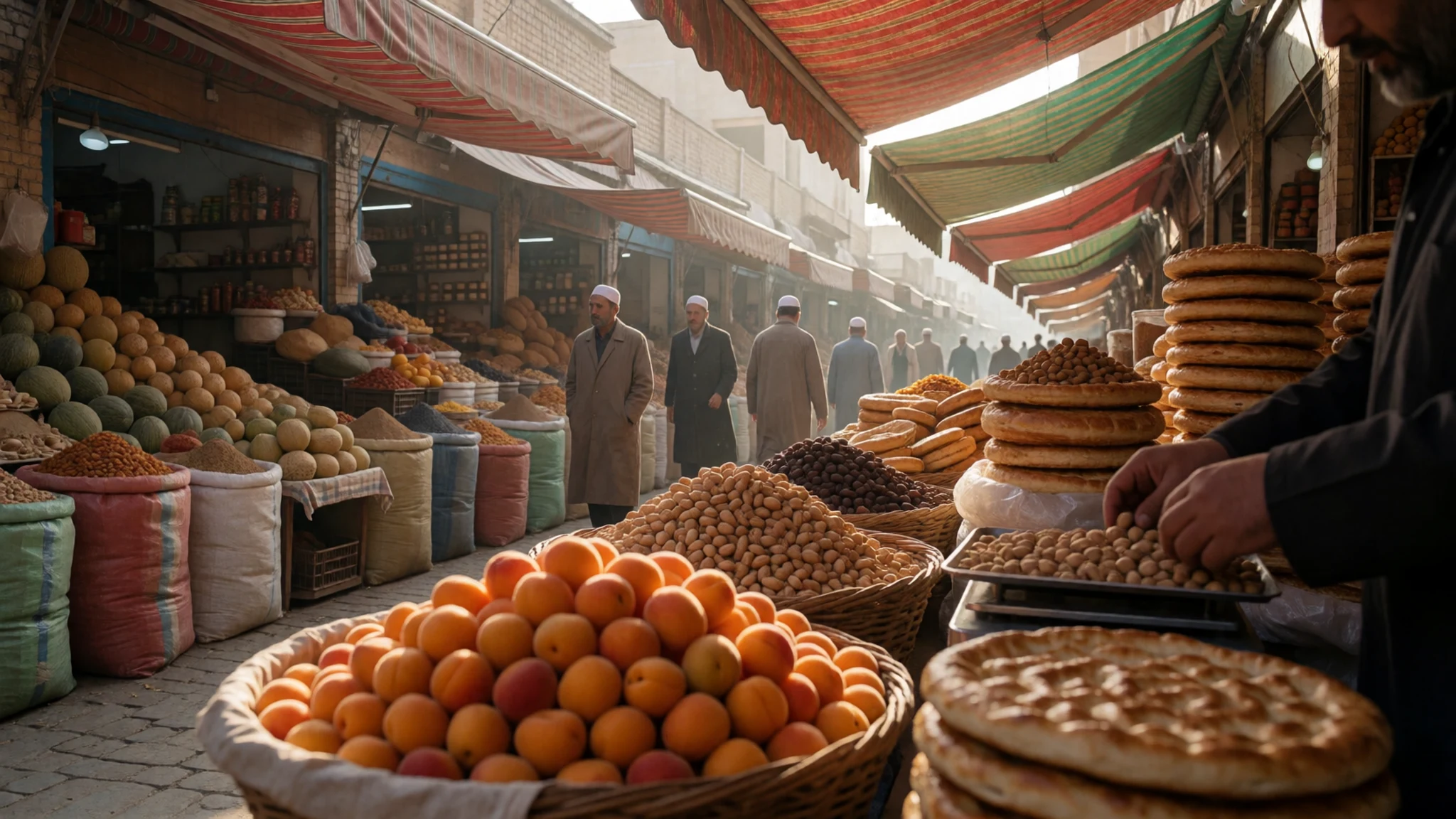
Culture
Hisor is a Tajik town with a mostly Muslim population, and daily life follows the rhythm of the bazaar, the mosque and the family table. Hospitality is central. Guests are often offered tea and flatbread before anything else, and refusing outright can sting, so take a small piece and thank the host. Tajik is the main language, Russian remains common, and a few words of greeting go a long way. The region's older Persianate culture shows in poetry, music and the habit of long conversations in a teahouse. One tradition tied to the valley is buzkashi, a rough horseback game in which riders contest a goat carcass and try to carry it to a scoring circle. It is played on festive occasions, often around Navruz, the spring new year, and watching it is a lively but unpredictable experience, as riders and horses move fast. Navruz itself brings picnics, dancing and special dishes, and families dress up for the day. The Soviet period left its mark in the town's layout, apartment blocks and mixed language use, while mosques and shrines have regained their place in public life. Photographing the fortress and the landscape is fine, but soldiers, police and official buildings are sensitive subjects. Ask before photographing anyone, particularly women, and never point a camera at soldiers, police or government buildings.
What to wear
Traditional dress in the Hisor valley belongs to the wider Tajik and Central Asian wardrobe. Women wear long, loose dresses with matching trousers, cut from atlas and adras, silks and silk-cotton blends woven in bright ikat patterns, often with a headscarf or embroidered cap. Men have the chapan, a quilted striped robe worn in cold weather and on ceremonial days, and the embroidered skullcap called a tubeteika or doppi. Suzani, needlework with bold floral designs, appears on cushions, hangings and some festive garments. These are worn mainly at weddings, at Navruz and for celebrations. Day to day, most people in town wear ordinary modern clothes: trousers and shirts for men, and for women long skirts or dresses, often with a scarf, and plain jackets in cooler months. Younger people follow the same global styles as in Dushanbe. A visitor should dress modestly, with shoulders and knees covered, which also helps in strong sun. Women need not cover their hair in public, but a light scarf is useful if entering a mosque or shrine. Choose sturdy, closed shoes for the dusty, uneven ground around the fortress, and bring a brimmed hat and sunscreen for summer. In winter the valley is properly cold, so pack layers, a warm hat and shoes with a good grip.
What to eat
- Plov (osh) — Teahouses and eateries near the bazaar
Rice cooked with carrot, onion and mutton or beef in a big cauldron. It is the dish for celebrations and the usual lunch special. Look for it at a teahouse (choyhona) or an eatery near the bazaar, where it is often served communally.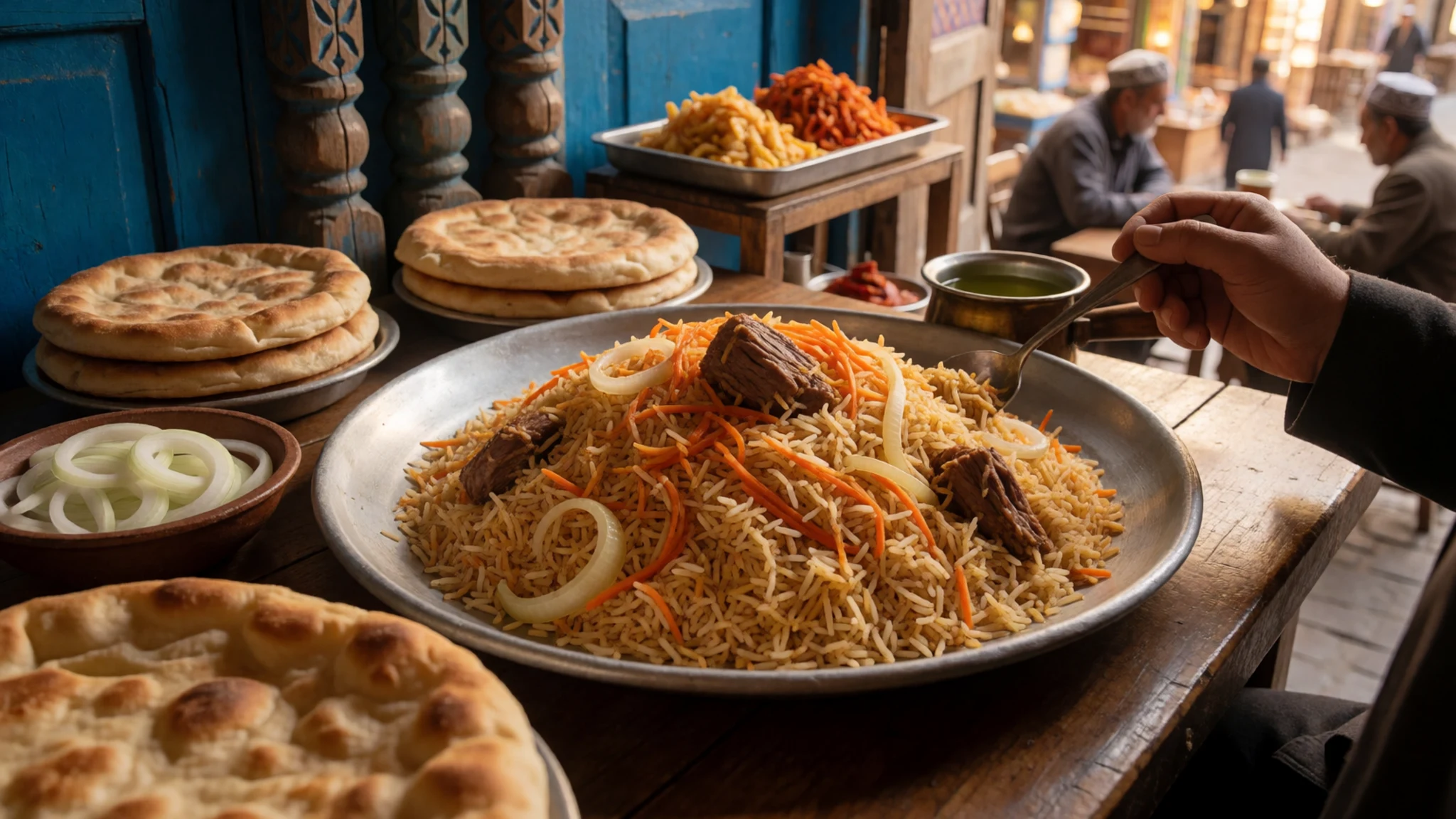
- Qurutob — Local teahouses (choyhona)
A national dish of torn flatbread soaked in a sauce of qurut, dried salted yoghurt balls, topped with onion, tomato and herbs. It is tangy, filling and eaten from a shared platter. Ask for it at a local teahouse.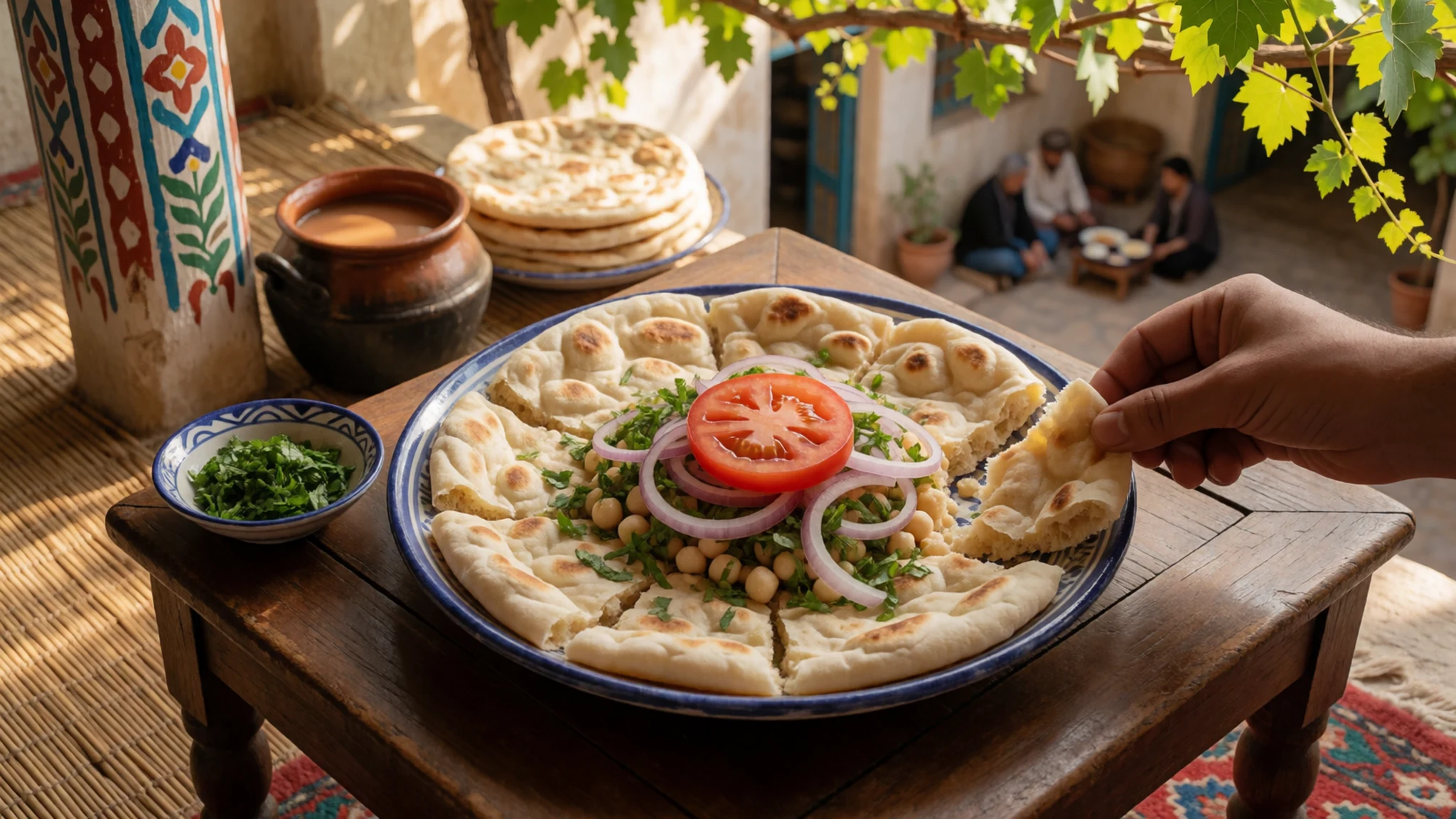
- Non (tandoor bread) — Bakers' stalls in the bazaar and along the main road
Round, dense flatbread baked on the walls of a clay oven, often stamped with a pattern. Bought hot from a baker's stall, it goes with tea, soup and everything else. Tearing it rather than cutting is the local way. - Sambusa — Bazaar stalls and roadside bakeries
Baked pastry triangles filled with spiced meat and onion, or sometimes pumpkin. They are a cheap, portable snack, best eaten warm. Look for them at bazaar stalls and roadside bakeries, and expect them to be oily and filling. - Shashlik — Roadside grills and teahouses on the main road
Skewers of lamb or beef grilled over charcoal, served with raw onion and bread. Smoke from roadside grills is the easiest signal that lunch is near. Order a few skewers and share them with tea.
Plan it
Best time. April–May and September–October, when days are mild and the fortress ground is comfortable. March is the wettest month, July is hot, August is very dry, and January is the coldest, with an average temperature barely above freezing.
How long. 1
Getting there. Fly to Dushanbe, the nearest airport, then take a taxi or regular shared transport west to Hisor, a short drive. The Dushanbe–Termez railway passes through the district, with stations at Chiptura and Khonakoh, but a road transfer is simpler for most visitors.
Budget. low
Tips
- Treat Hisor as a half- or full-day trip from Dushanbe and arrange a return taxi in advance.
- Start early in summer, as the fortress ground has little shade.
- Carry cash in small notes for the bazaar and teahouses, as cards are unreliable outside the capital.
- Bring drinking water and sun protection.
- Check current travel advice and carry your passport and papers.
Etiquette
- Dress modestly, with shoulders and knees covered.
- Ask before photographing people, especially women, and avoid photographing officials or soldiers.
- Accept tea or bread when offered, and thank your host.
Nearby
Sources
- Wikidata Q655771 (CC0)
- Wikipedia: Hisor, Tajikistan (rev 1377707799) (CC BY-SA 4.0)
- Wikivoyage: Hisor (rev 5414207) (CC BY-SA 4.0)
- Steve Evans, An old castle in Hisor (photo 01) (CC BY 2.5)
- Christoph Höhn, 500px photo 56180614 (photo 02) (CC BY 3.0)
- Christoph Höhn, 500px photo 56180616 (photo 03) (CC BY 3.0)
- Christoph Höhn, 500px photo 56180618 (photo 04) (CC BY 3.0)
- Christoph Höhn, 500px photo 56180620 (photo 05) (CC BY 3.0)
- Christoph Höhn, 500px photo 56180622 (photo 06) (CC BY 3.0)
- Christoph Höhn, 500px photo 56180624 (photo 07) (CC BY 3.0)
- Christoph Höhn, 500px photo 56180626 (photo 08) (CC BY 3.0)


