Dushanbe
Dushanbe, Tajikistan
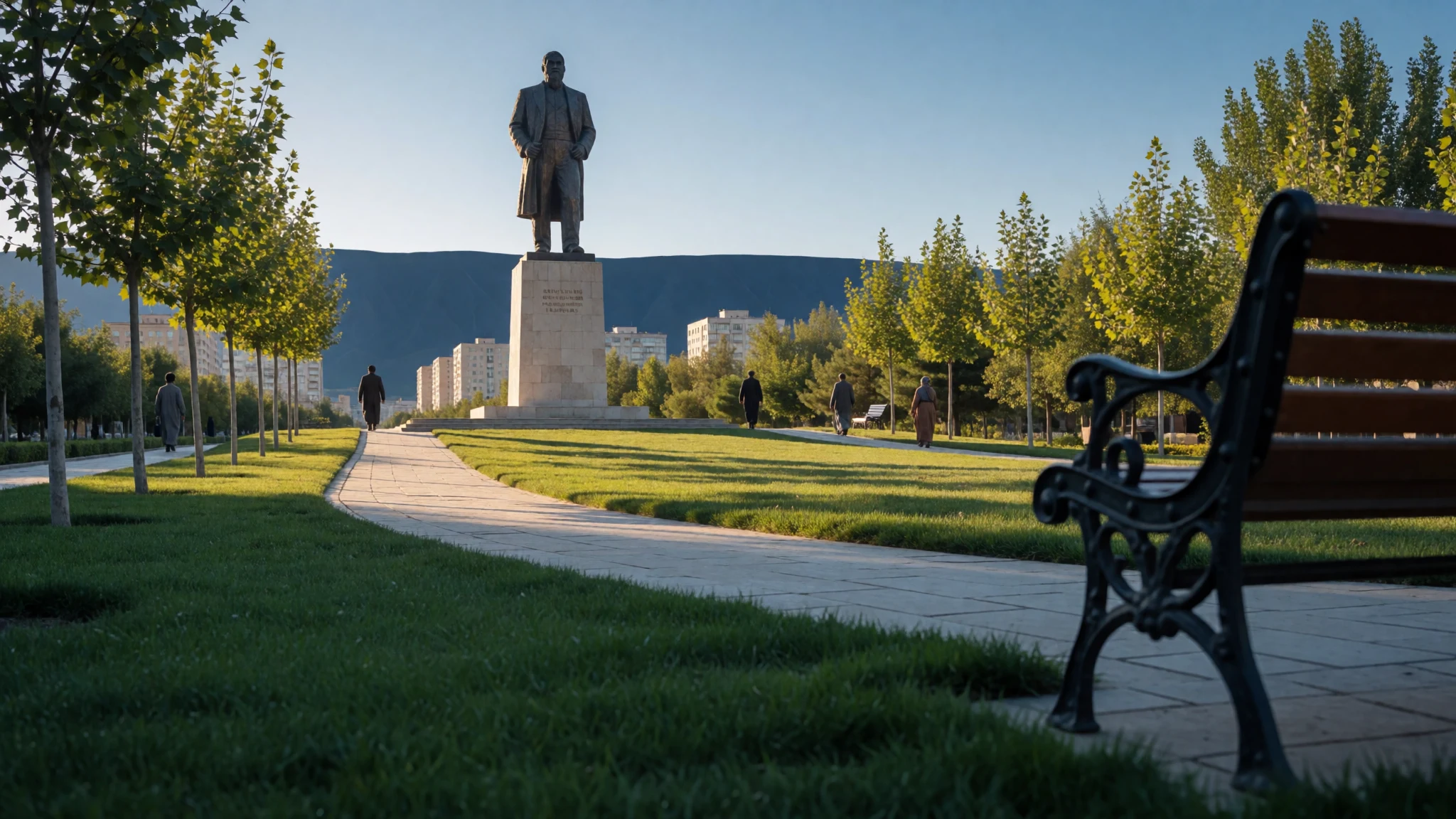
Dushanbe is a compact capital in a high valley, with long avenues, courtly music and a real bazaar life.
The place
Dushanbe is the capital of Tajikistan, laid in the Hisar Valley at about 706 metres. South of the streets stand the Babatag, Aktau, Rangontau and Karatau ranges; the Hisar Range walls the valley off to the north and the east. The basin is broad and green, with high ridges on the skyline, and the Varzob meets the Luchob here.
What stands now was largely laid out in the Soviet decades: wide, tree-lined avenues, formal squares and big public buildings. Four districts split the municipality — Ismail Samani, Avicenna, Ferdowsi and Shah Mansur — names drawn from Persian and Central Asian learning. From the national monument the prospect runs towards the statue of Ismail Samani. Elsewhere the skyline is mid-rise blocks, a golden dome, the opera house, and the National Library behind fountains and flower beds.
Tajiks form most of the population, and the republic's daily business runs along these streets: ministries, museums, the philharmonic, an Eastern Orthodox cathedral and mosques that have grown since independence. About 1.2 million people live here, and the main sights still sit within a walk of one another. In winter and early spring the high passes that join southern Tajikistan to the north can shut, so the airport on the city's edge becomes the practical link between the south and the north of the country, not only a door for foreign arrivals.
Its story
Dushanbe as a recorded town dates to the seventeenth century, but people were in this valley long before that market existed. Mousterian stone tools mark their makers here, and later farming communities known as the Hisar, Bishkent and Vakhsh cultures kept cattle, grew crops and wove near where the Varzob meets the Luchob.
Graves from the Bronze Age lie near the ground the airport now uses. East of the present streets, at Qiblai, Achaemenid ceramics have come out of the soil, and a small citadel from the fifth century BC has been traced well south of the city. After the Seleucids took the region, Greek-ruled Bactria left a settlement and coins, one of them struck for King Eucratides and another showing Dionysus. In medieval times the palace town of Hulbuk stood in the same wider country.
From the seventeenth century the place that took the name Dushanbe was a market under the Beg of Hisor, later under Balkh, and then under Bukhara, until the Russian Empire absorbed it. Bolshevik forces took the town in 1922, and in 1924 it became the capital of the Tajik Autonomous Soviet Socialist Republic — the moment the avenues and the public institutions began. Russian clerks wrote Dyushambe; from 1929 to 1961 the official name was Stalinabad, taken from Joseph Stalin's name, before Dushanbe returned. The building boom ran on until the Tajik Civil War. The capital on the map today is that Soviet city, relabelled with older Persianate heroes.
What to see
- Haji Yaqub Mosque — northern centre
The Haji Yaqub Mosque stood just north of central Dushanbe, picked out by a burnished golden dome and a crescent-topped minaret, but it was replaced by the new Central Mosque, which opened in June 2023. It was a working mosque from the independence years, and its exterior was the part most people came to see. Modest clothing is expected, and shoes come off at the threshold. Check dushanbe.tj before counting on an interior visit.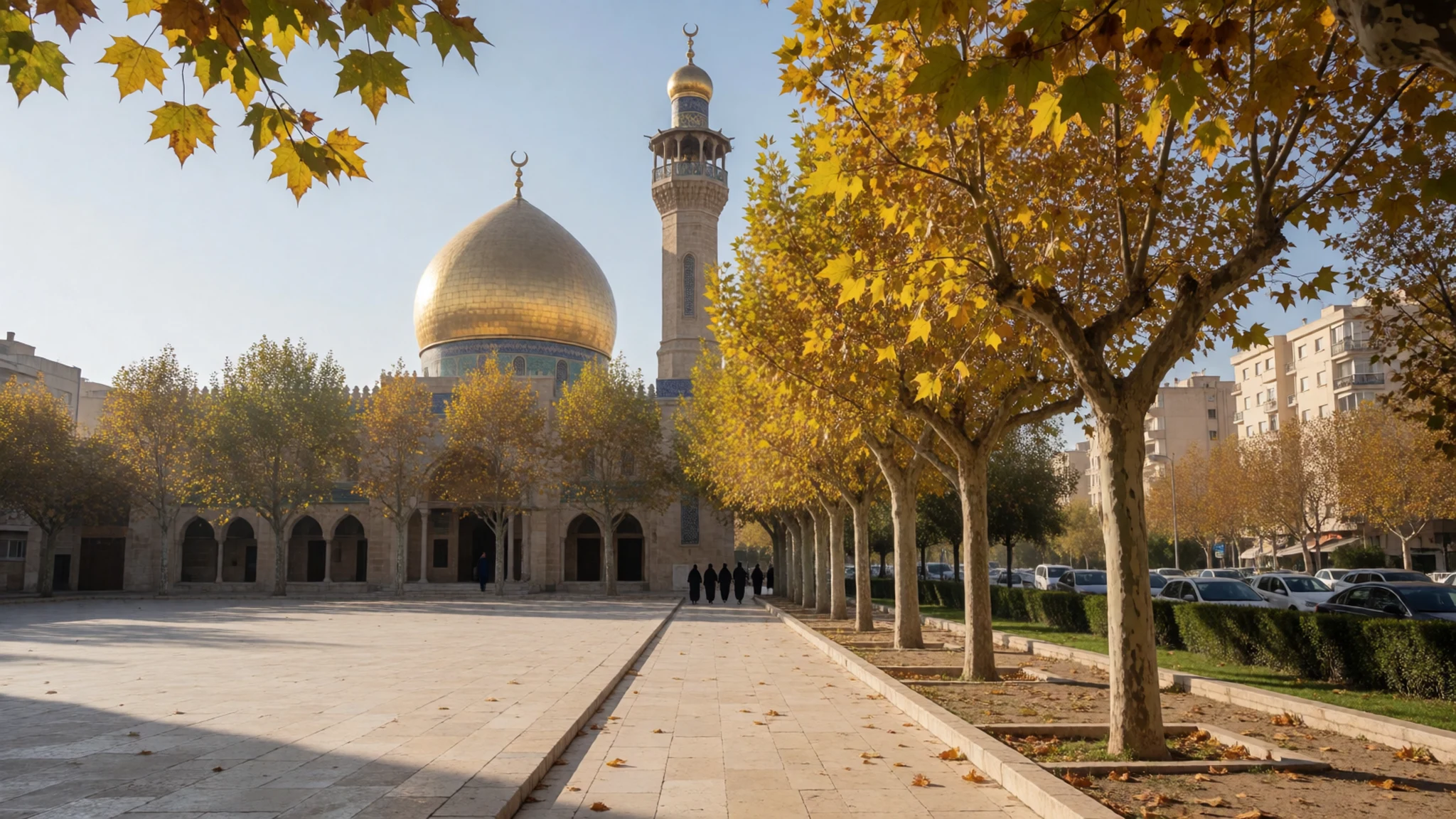
- Ismaili Centre — west of the centre
The Ismaili Centre sits west of Dushanbe's main avenues and serves the city's Ismaili community as a place of worship and gathering. Listings mark the spot and say little about public tours, so it is first a living religious centre. Visitors who are not expected for prayer should ask at the entrance, dress modestly, and leave cameras down around worship.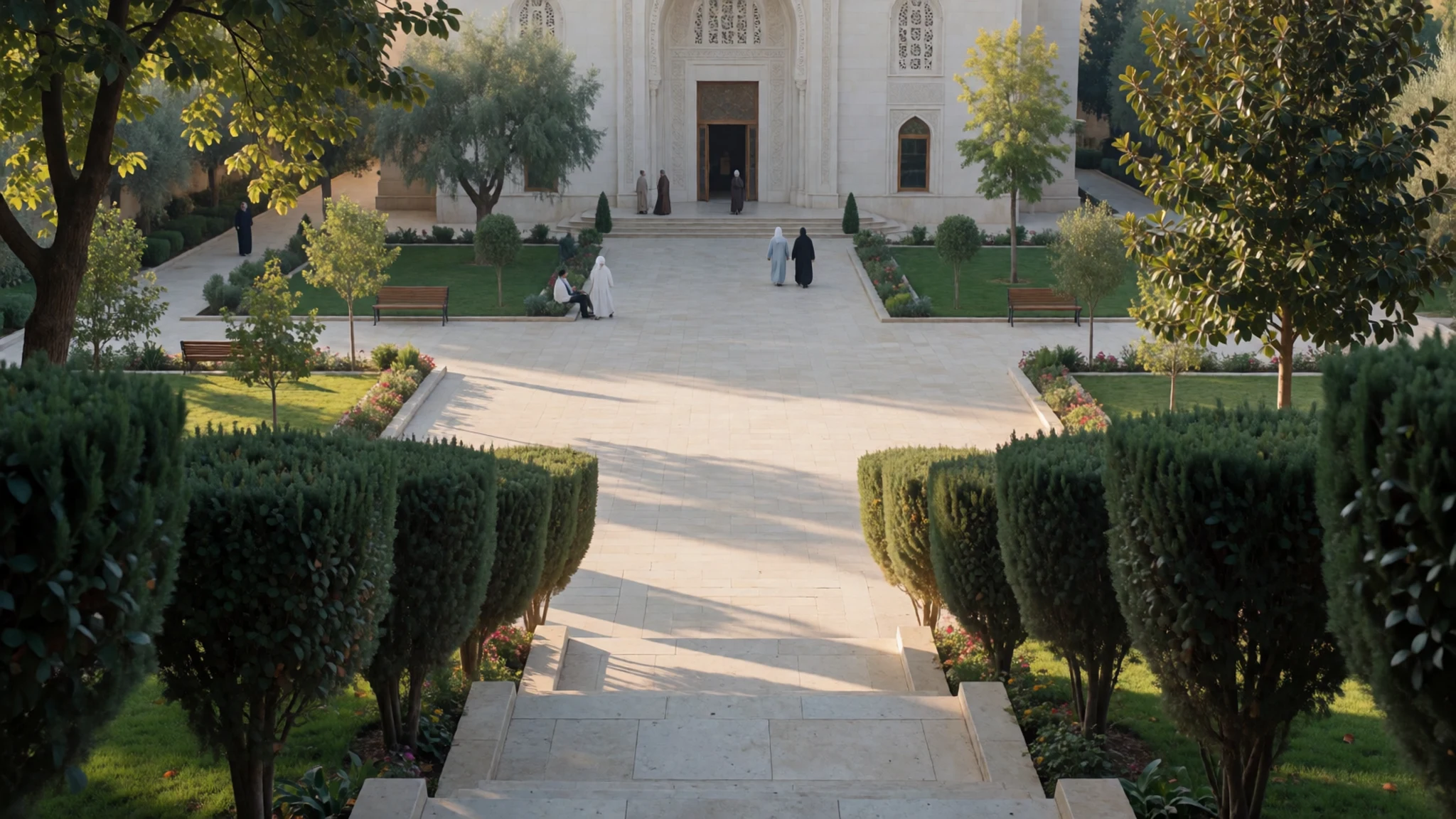
- St. Nicholas Cathedral — east of the centre
St. Nicholas Cathedral, on the eastern side of Dushanbe, is the city's main Eastern Orthodox church. The interior is a working parish church, so quiet dress and quiet behaviour matter, and photography during a service is something to ask about rather than assume. The parish is a legacy of Russian settlement, and the building is still in use.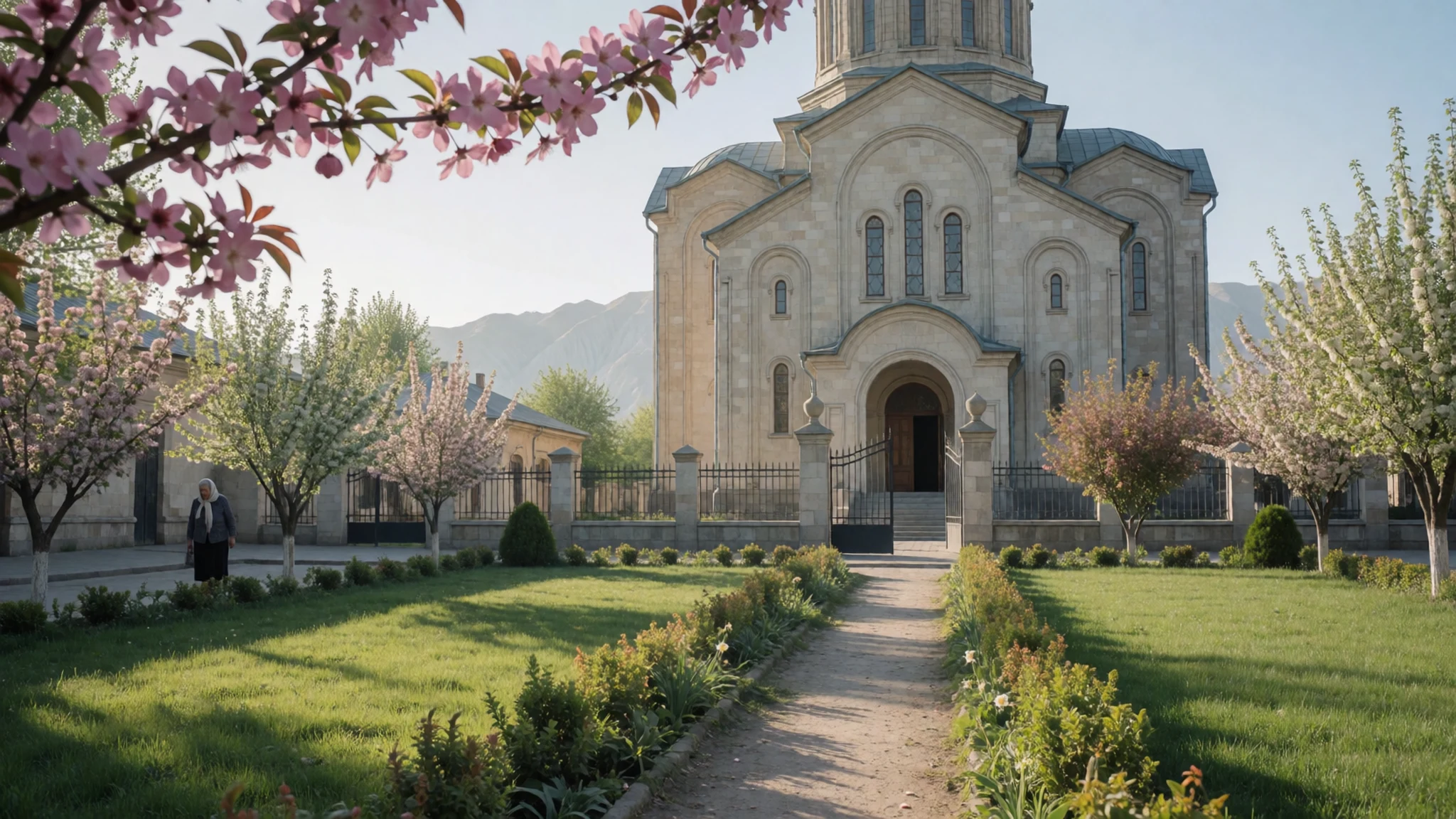
- Gurminj Museum of Musical Instruments — central Dushanbe
The Gurminj Museum of Musical Instruments, in central Dushanbe, is a small collection of Central Asian instruments. The cases run from ghizhak and qashqar to setor, dutor, tanbur, rubab and Pamiri rubab — lutes and fiddles of court and mountain music. An unhurried look around makes a good indoor hour when the avenues are harsh. Ask at the door about opening days.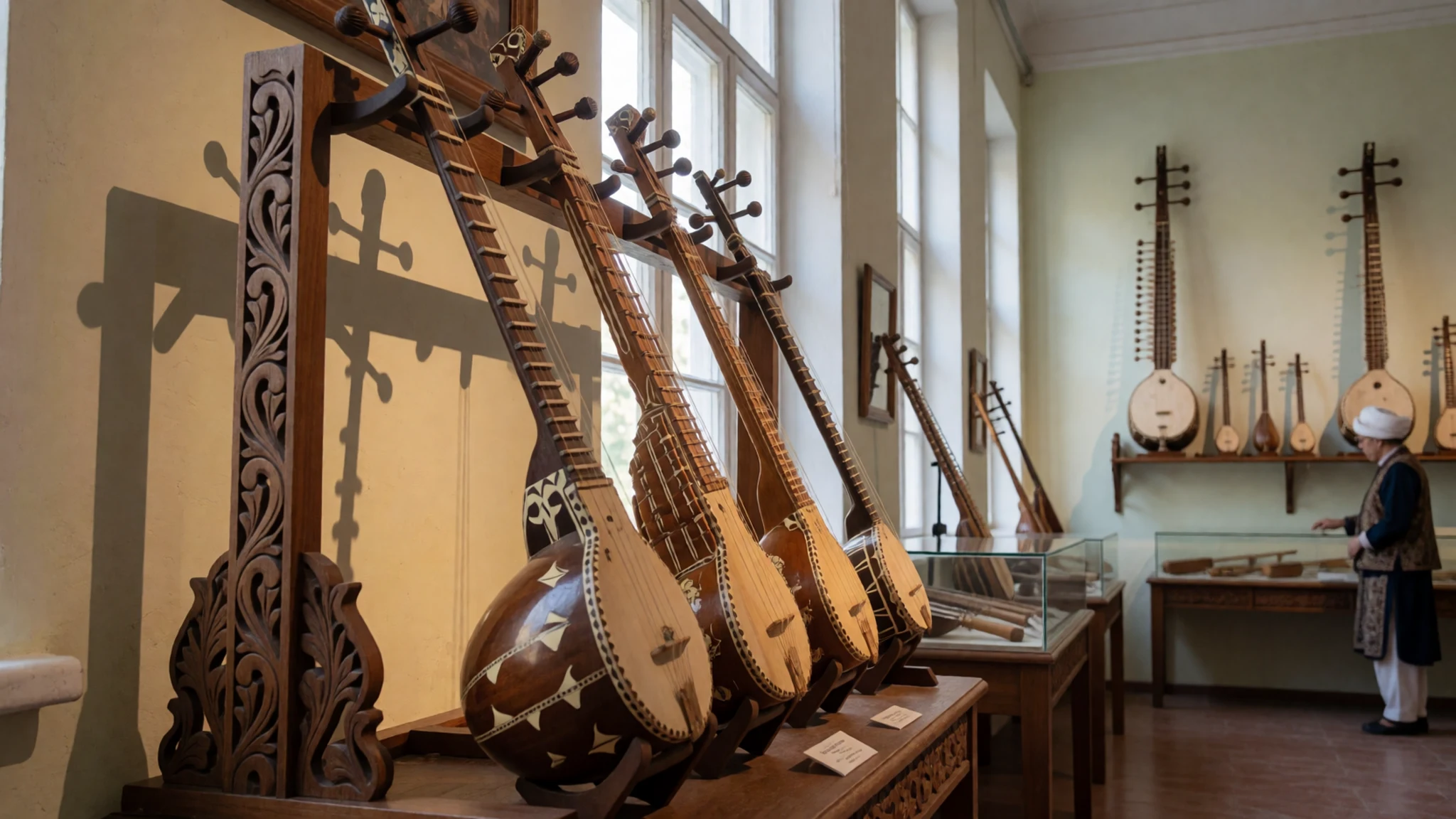
- National Museum of Tajikistan — south of the centre
The National Museum of Tajikistan, south of Dushanbe's centre, uses art to walk through the country's past, floor by floor. Downstairs is the deep time: prehistory and the land's geology. From the ground floor upward the galleries turn to people. It is the indoor place that sets the valley's older cultures beside the modern capital. Check dushanbe.tj or the door for hours.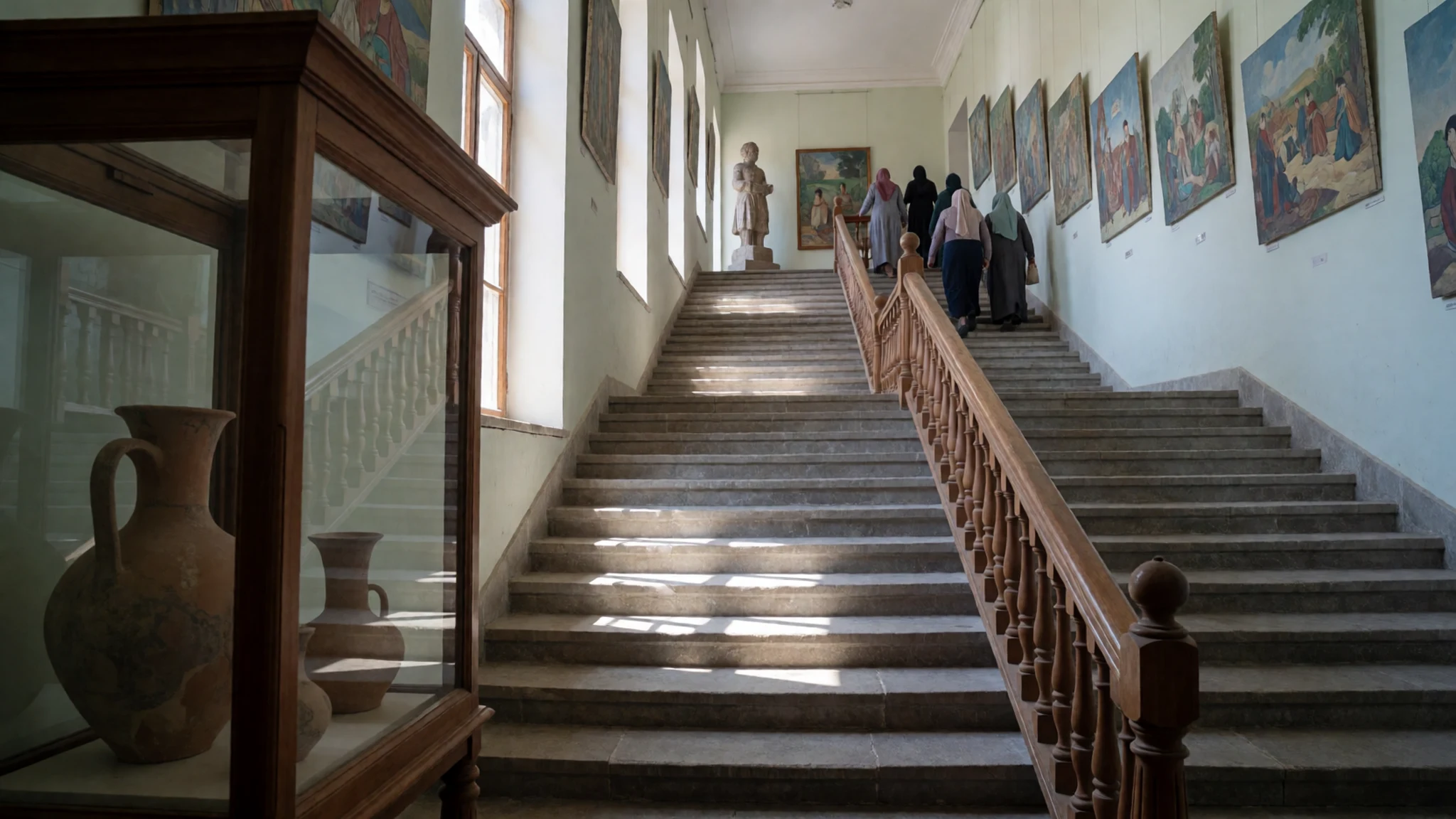
- Monument of Amir Ismail Samani — central avenue
The Monument of Amir Ismail Samani stands in central Dushanbe, a statue of the tenth-century Samanid founder whose name the currency uses. From the national monument the avenue runs towards the figure through trees and traffic. It is an outdoor stop on the avenue, with no interior to tour, and the light is kinder early on a bright day.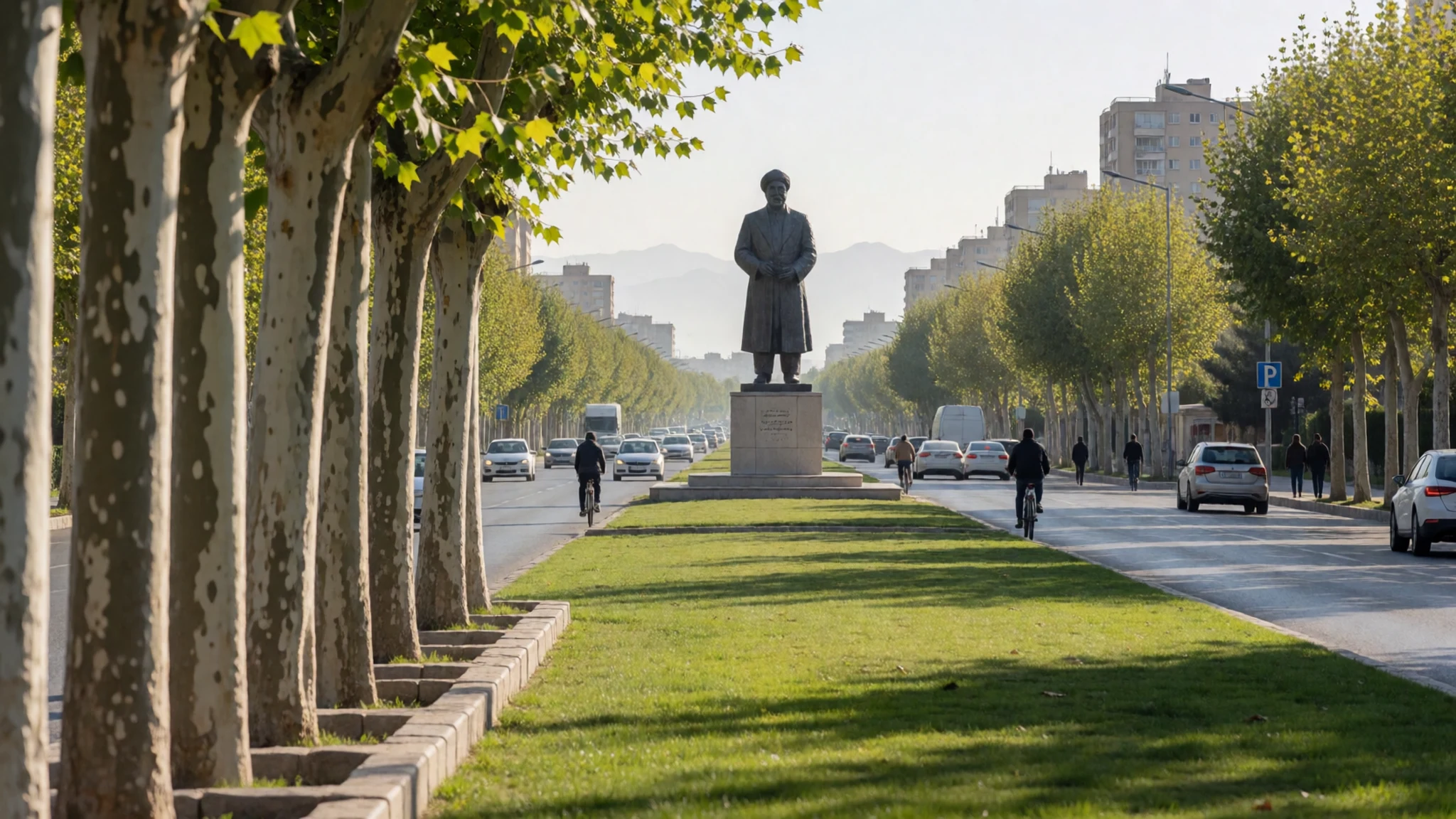
Culture
Dushanbe's cultural life took shape under Bukharan rule and then, more decisively, under the Soviet Union, which opened many of the capital's first formal institutions. After independence the same city turned towards a more nationalist reading of Tajik identity, and the names on theatres and avenues — Rudaki, Ayni, Ismail Samani — carry that turn in public.
Music is the clearest thread. In the nineteenth century shashmaqam, the classical suite tradition of the Bukharan court, was the prevalent form in Tajikistan. Soviet cultural policy treated it as repertoire for an emir and pushed it aside, while promoting revolutionary songs, some of them translated into Tajik, and building a professional scene in a capital still assembling its own institutions. Akasharif Juraev's name now sits on the Tajik Philharmonic, a society started in 1938. The Ayni opera and ballet theatre is the set-piece of that programme, and Gurminj's cases keep the rubab, tanbur, dutor, ghizhak and Pamiri cousins used in court and mountain music. Independence did not freeze the mix: shashmaqam is heard again with pride, beside pop, wedding bands and the ordinary soundtrack of a modern capital.
Tea, bread and a long greeting still organise a social visit, and hospitality is public as well as private. When you enter a mosque in Dushanbe, dress modestly, take off your shoes where others have, and ask before you photograph anyone at prayer.
What to wear
Dushanbe keeps a ceremonial register and a weekday one on the same streets. The older clothes are Tajik and Persianate: women in long dresses of atlas, the silk ikat whose softened clouds of colour are woven on narrow looms, often with a rumol over the hair and, for ceremonies, the dense embroidery known as chakan. Men keep the tubeteika, a brimless embroidered cap, and on feast days a quilted chapan over shirt and trousers. These clothes appear at weddings, Navruz and family gatherings more often than at the office. Atlas, embroidery, woven belts and hand-knotted rugs are still sold in the bazaars, including the carpet market.
On an ordinary weekday the centre looks contemporary. Younger residents wear jeans, trainers, dark jackets and, in the hot months, light shirts; office staff add a blazer or a plain suit. Headscarves are common and varied, some tight and plain, others loose and colourful, with no single rule. Russian-influenced tailoring and Turkish high-street clothes sit beside local dress on the same avenue.
Visitors should plan for modest dress and for a valley that runs from cold winters to hard summer sun. Covered shoulders and knees suit the street and are the right baseline at mosques and the Ismaili Centre; a scarf is worth carrying for shrines. Shoes need to cope with long paved avenues, and an extra layer helps when the evening wind drops off the Hisar slopes.
What to eat
- Osh — chaikhanas and local eateries
In Dushanbe, osh is rice cooked with carrot, onion and meat and eaten from a shared platter. Chaikhanas and plain local eateries serve it on ordinary days, not only at weddings. Lamb and beef both appear, with a piece of non beside the dish.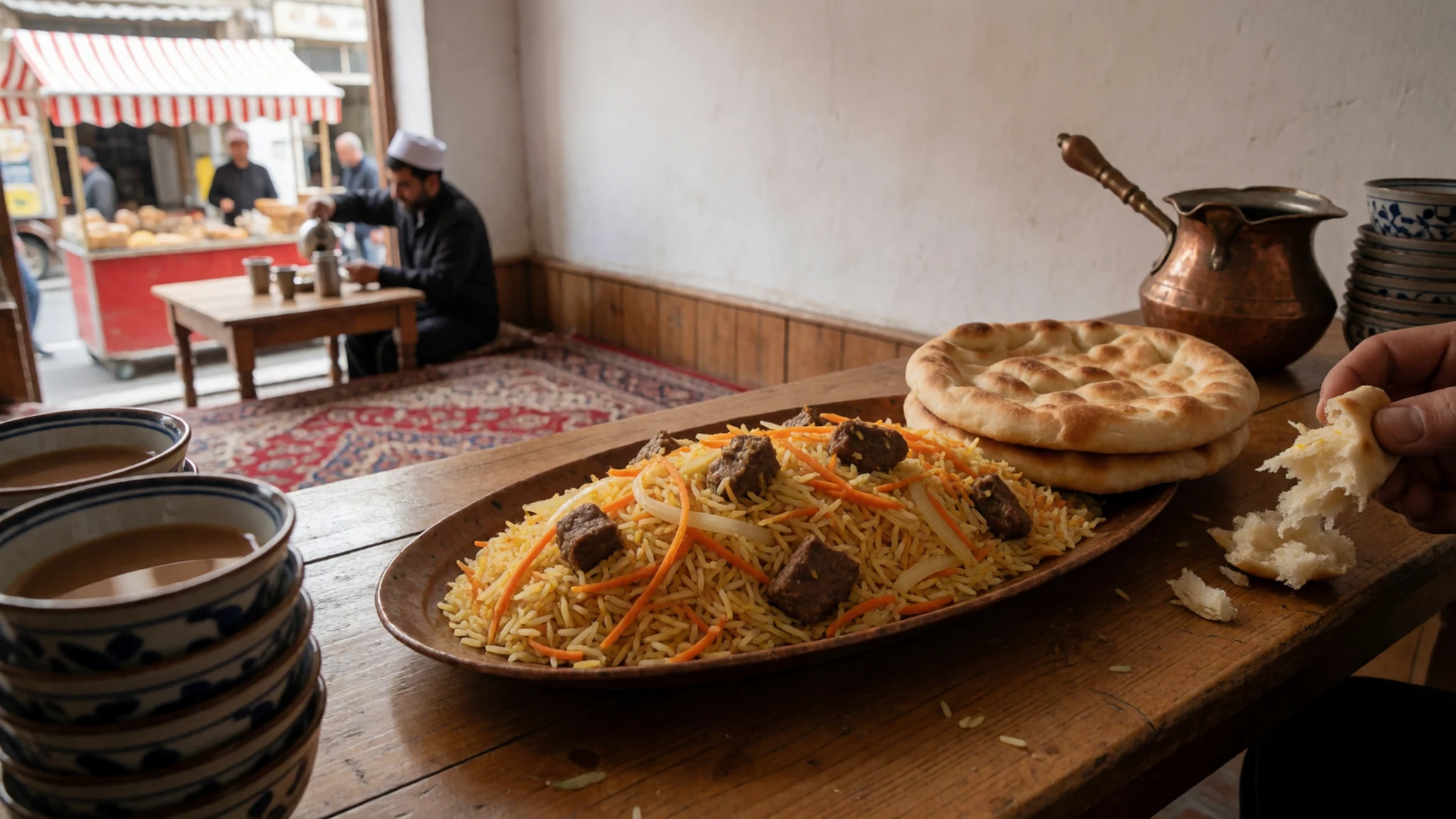
- Qurutob — traditional eateries and family kitchens
Qurutob is the bowl people in Dushanbe point to as home food: torn flatbread soaked in tangy dried-yoghurt qurut, then onion, tomato and herbs, sometimes meat. Traditional eateries and family kitchens serve it; the Turkish cafeterias usually do not. Many diners eat it with the hands.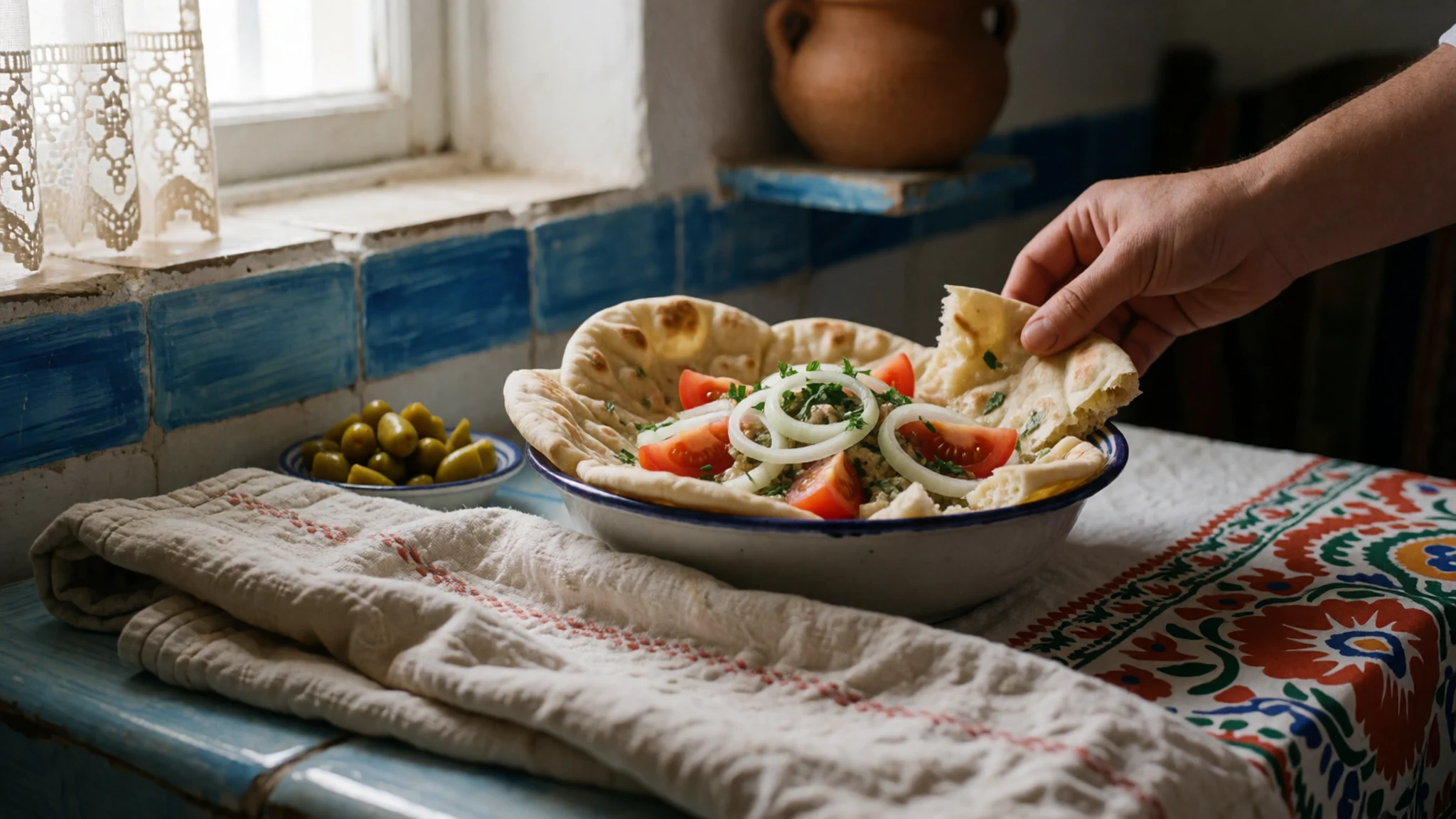
- Shashlik — charcoal grills and casual cafeterias
In Dushanbe, shashlik means grilled skewers, usually lamb or beef, eaten at lunch with bread and raw onion. Charcoal grills and the casual cafeterias that draw students serve it hot, in the same rush as plates of kebab. It is everyday food, not a banquet dish. - Non — bazaars and neighbourhood tandirs
Non is the round tandoor bread that comes with almost everything in Dushanbe. Stalls in the bazaars and neighbourhood tandirs sell it stamped and blistered, best the day it is baked. Torn into osh or qurutob, it works as both food and utensil. - Lagman — noodle shops around the centre
Lagman in Dushanbe is a peppery noodle dish, in broth or fried, with meat and vegetables. Noodle shops and simple eateries around the centre serve it for lunch. People choose the soup when the valley turns cold. - Sambusa — bazaar stalls and bakery counters
Sambusa, a baked pastry of meat, pumpkin or greens, is Dushanbe's between-meals snack. Bazaar stalls and bakery counters sell them warm, especially in the morning. Paired with tea, they mark a short pause on an avenue rather than a sit-down meal.
Plan it
Best time. In Dushanbe, April and October are the easy months for walking the avenues. Winter and early spring can close the passes north, so the road to the north of the country is unreliable then. Midday in high summer is hard going.
How long. 2–3
Getting there. Dushanbe International Airport sits on the edge of the city; the last leg is a taxi or local ride into the centre. Somon Air flies to Khujand thrice weekly. Weekly flights also run to and from Tashkent and Almaty. In the warmer months a Bishkek service operates once a week. If you connect from beyond Türkiye, Dubai or Kazakhstan, confirm that your bags are checked through.
Budget. mid
Tips
- In winter and early spring, do not count on the road north; use the Khujand flight while the passes are closed.
- If a connection starts beyond Türkiye, Dubai or Kazakhstan, confirm the luggage is tagged all the way to Dushanbe.
- Check https://dushanbe.tj for official city information, and ask at the door for museum hours.
- Walk the central avenues in the morning, before the day gets harsh and the pavements fill.
Etiquette
- Take off your shoes where a step up or a row of shoes marks a mosque entrance.
- Cover shoulders and knees at mosques, and carry a scarf for shrines.
- Ask before you photograph people, above all during prayer or at a family gathering.
Nearby
Sources
- Wikidata Q9365 (CC0)
- Wikipedia (rev 1384661035) (CC BY-SA 4.0)
- Wikivoyage (rev 5424859) (CC BY-SA 4.0)
- Photo photos/01-tehron-street-dushanbe.jpg (CC BY-SA 4.0)
- Photo photos/02-panorama-with-buildings-dushanbe.jpg (CC BY-SA 4.0)
- Photo photos/03-.jpg (CC BY 3.0)
- Photo photos/04-.jpg (CC BY-SA 4.0)
- Photo photos/05-.jpg (CC BY-SA 4.0)
- Photo photos/06-ayni-opera-theatre-in-dushanbe.jpg (CC BY 3.0)
- Photo photos/07-tajikistan-384743913.jpg (CC BY-SA 2.0)
- Photo photos/08-kara-khanid-khanate.png (CC BY-SA 4.0)


