Ajina Tepe
Ajina Tepe, Tajikistan
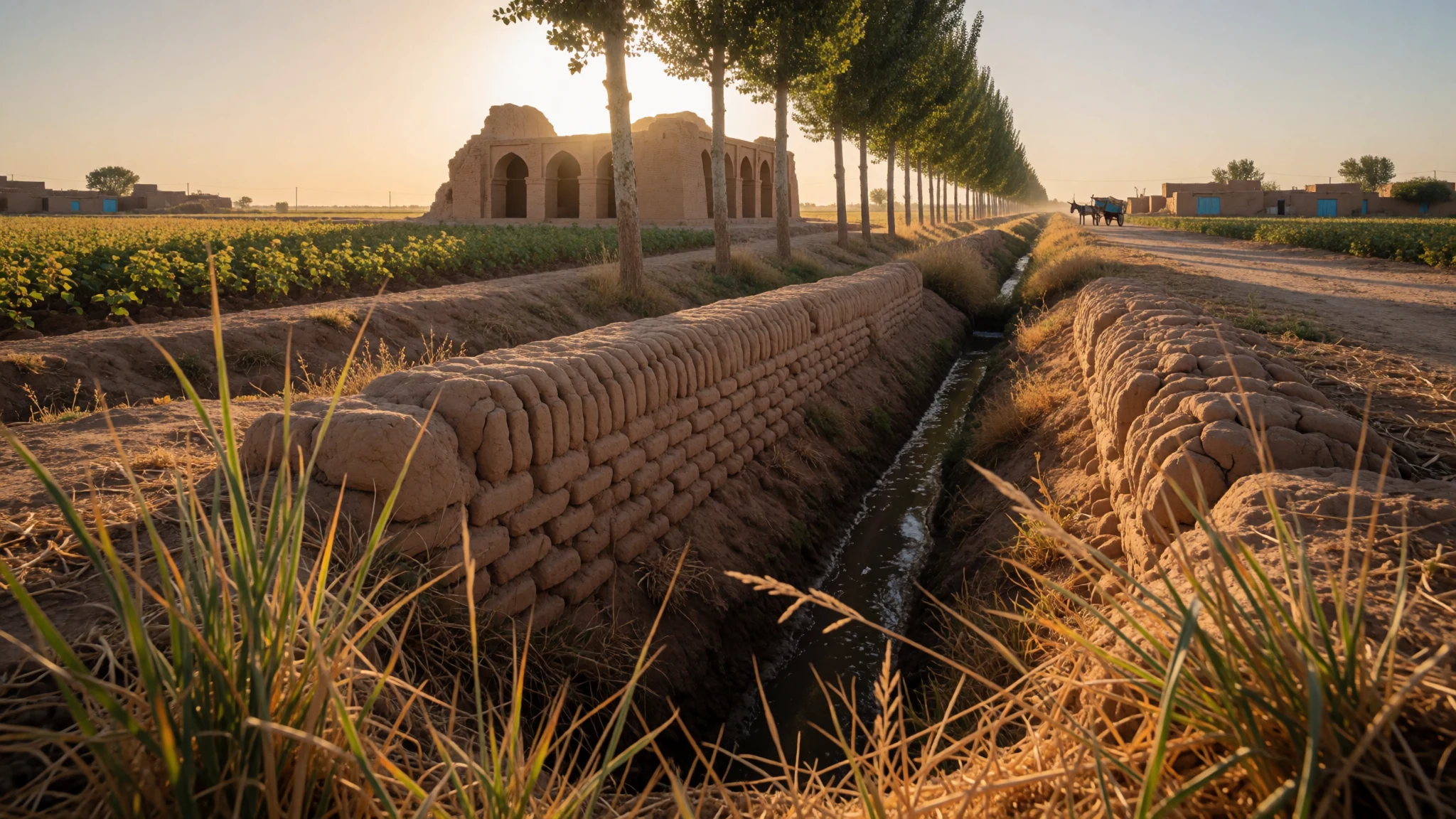
Ajina Tepe is a quiet mud-brick Buddhist monastery in Tajik cotton country, evidence of a faith this region long ago left behind.
The place
Ajina Tepe sits in the lowlands of southern Tajikistan, in Khatlon region, about 12 kilometres east of the city of Bokhtar. It is the ruin of a Buddhist monastery, built of mud brick, with a cloister plan that archaeologists can still trace in the ground. Nothing here is tall or dramatic. The walls survive as low, weathered lines in flat farmland, and the interest lies in what the layout says: a working religious community in a country now known for Islam, once part of the Buddhist world of Tokharistan. The landscape around it is cotton country, irrigated and hot, made of fields, canals and small villages rather than mountains. The best-known finds, including a large reclining Buddha and fragments of painted walls, were moved to the National Museum of Antiquities in Dushanbe. That means the site itself works best as a footprint, and the museum as the treasure chest. Anyone going should expect an archaeological field that is quiet and often empty, with few facilities and little signage. Ajina Tepe is also one of a group of sites in southern Khatlon linked to the medieval Kingdom of Khuttal, so it combines easily with other ruins in a day of driving. Dust, heat and rough roads are part of the trip, and so is the pleasure of seeing a place that has not been polished for tourists.
Its story
Ajina Tepe belongs to a period when Buddhism, long established across Tokharistan, the old name for the lands around the upper Amu Darya, enjoyed a revival under the Western Turks. Monasteries of the seventh and eighth centuries across the region, among them Qal'a-i Kafirnihan, Khisht Tepe and Kafyr Kala, show a similar pattern: Turkic nobles and their followers supporting monks, and artists painting walls and modelling clay figures for the shrines. At Ajina Tepe those paintings and sculptures were later excavated and carried to the capital. Islam eventually became the region's faith, the monastery fell out of use, and mud brick left in the open slowly settled back into mounds. The modern history of the district matters as much to a visitor as the ancient one. During the Soviet era, Khatlon emerged as one of Tajikistan's two primary cotton-growing areas, along with Sughd. Collectivisation was pushed hard, irrigation canals spread across the plains, and highland communities were moved down into the lowlands, together with settlers from Uzbekistan. Many of those moves were forced and caused real suffering. The result is a population who still describe themselves as Gharmis, resettled from the mountains, or Kulobis, two groups that never fully merged. They fought on opposite sides in the civil war after independence, and Khatlon took the worst of the destruction. Tensions have not entirely faded. In 2025 eleven places in southern Khatlon tied to the Kingdom of Khuttal were inscribed together as a World Heritage Site, and Ajina Tepe's monastery is part of that story.
What to see
- Ajina Tepe monastery — East of Bokhtar, Khatlon
The monastery mounds themselves are the reason for the trip. Walk the outline of the cloister, look for the lower courses of brick and the hollows where rooms once stood, and picture painted walls and a stupa. Go with a local guide or a good printed plan, as there is little on-site explanation.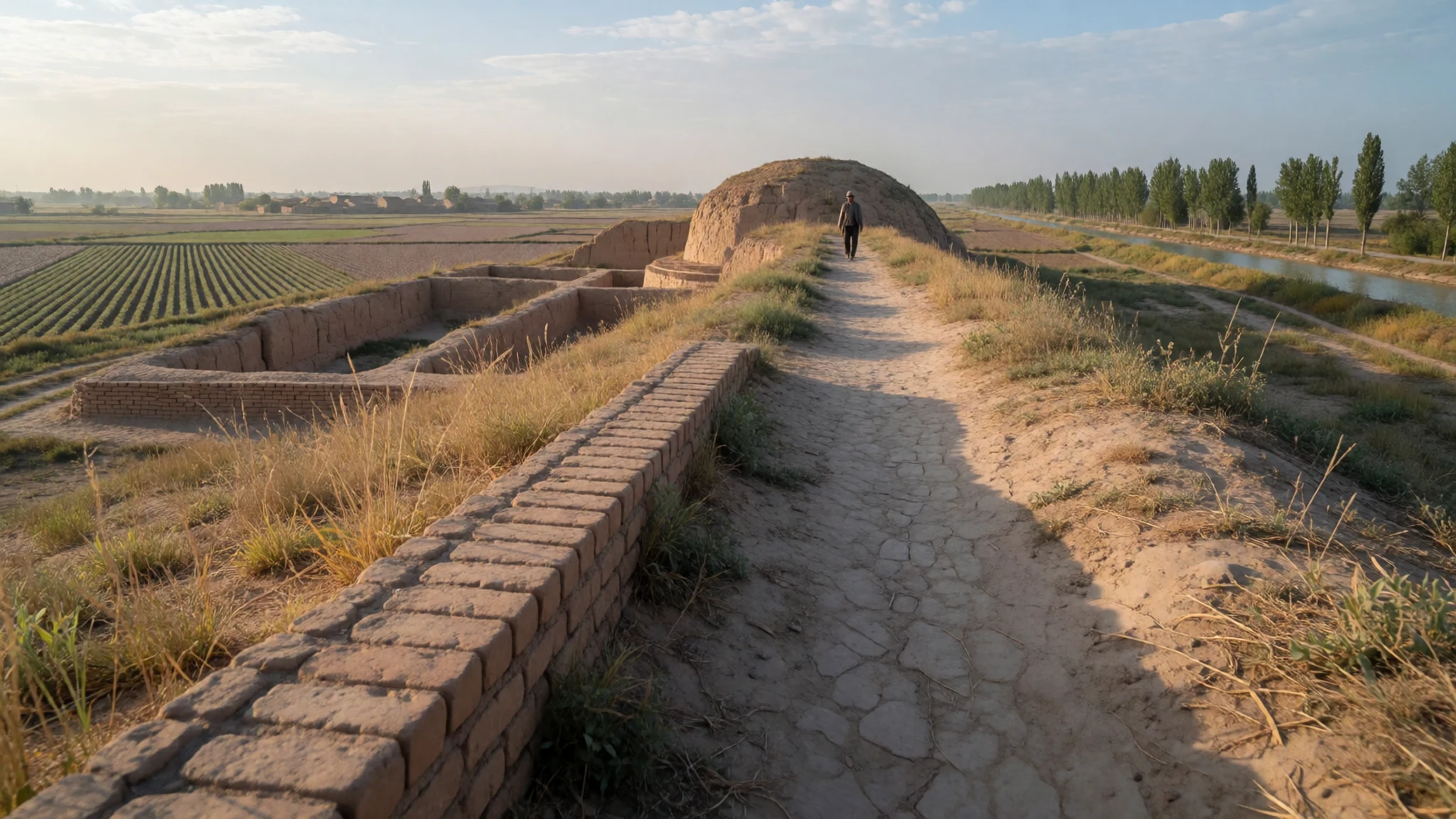
- Kalai Hulbuk — Hulbuk, southern Khatlon
Kalai Hulbuk is a ruined medieval citadel in the east of the region, part of the same Khuttal heritage group. It shows the secular side of the area's past, with earthen foundations that reward a slow walk. Pair it with the neighbouring ruined town for a fuller picture of the district.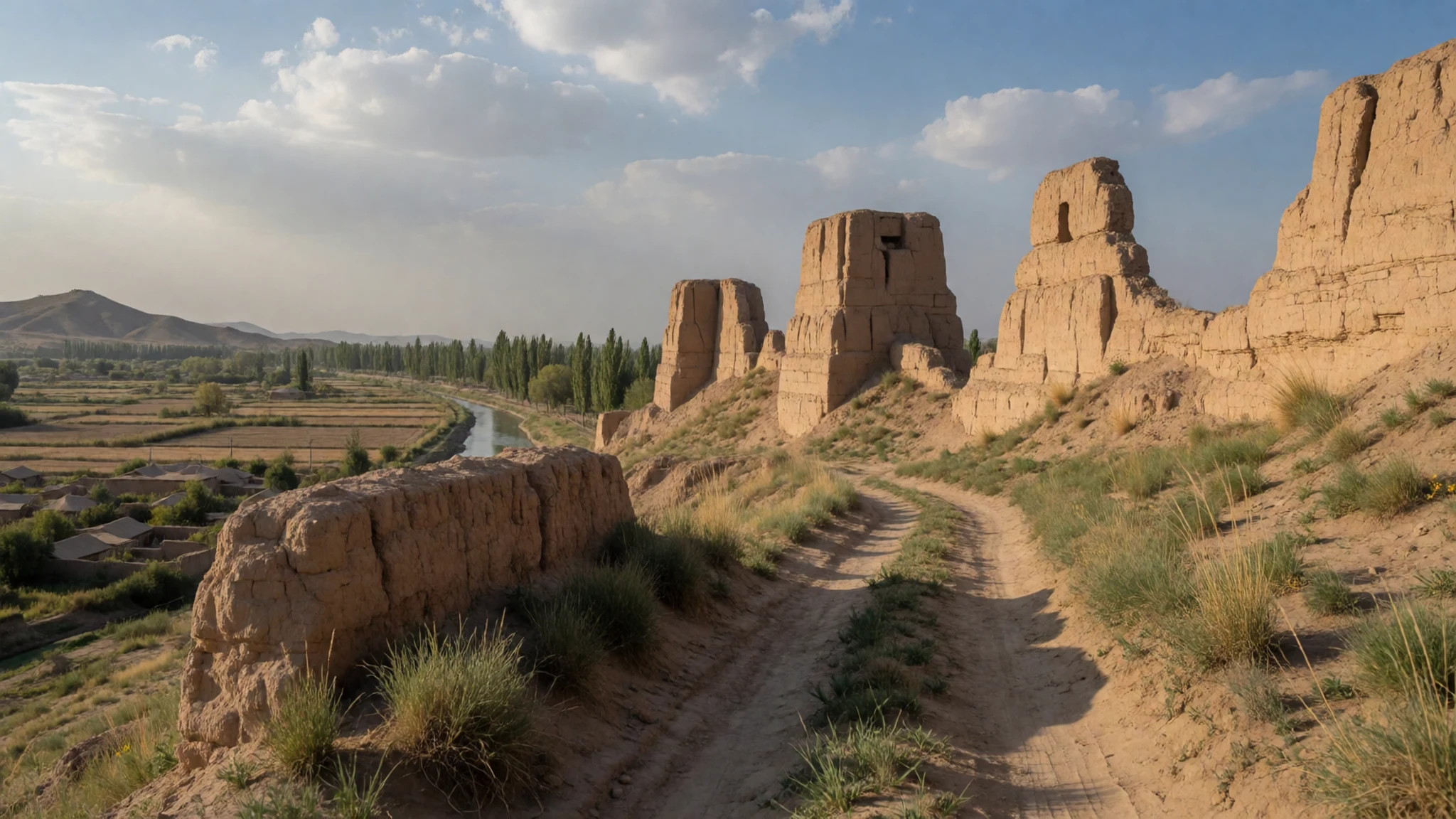
- Khishttepa Buddhist temple — North of Khatlon, towards Dushanbe
Khishttepa holds the archaeological remains of a temple from the seventh to eighth century, the same era as Ajina Tepe. It lies a good way north of the main cluster, so it suits travellers with their own transport who want to see how widely Buddhism spread in Tokharistan.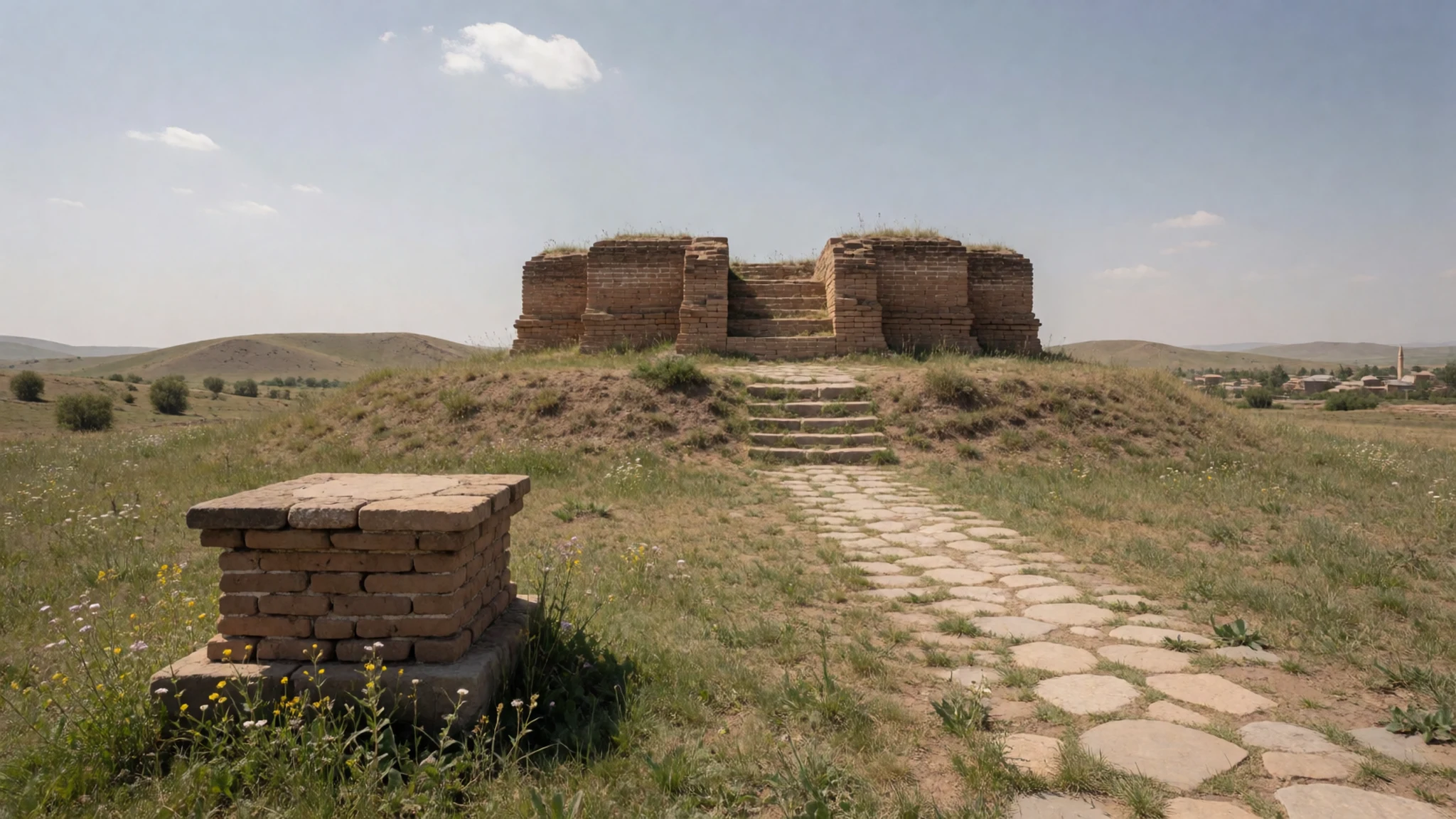
- Tohir Caravansarai — Central Khatlon
This caravan stop recalls the Silk Road trade that passed through Khuttal and gave the region its wealth. Such buildings gave merchants and animals shelter on long routes. It is a modest roadside stop rather than a showpiece, and a good place to understand why the region mattered.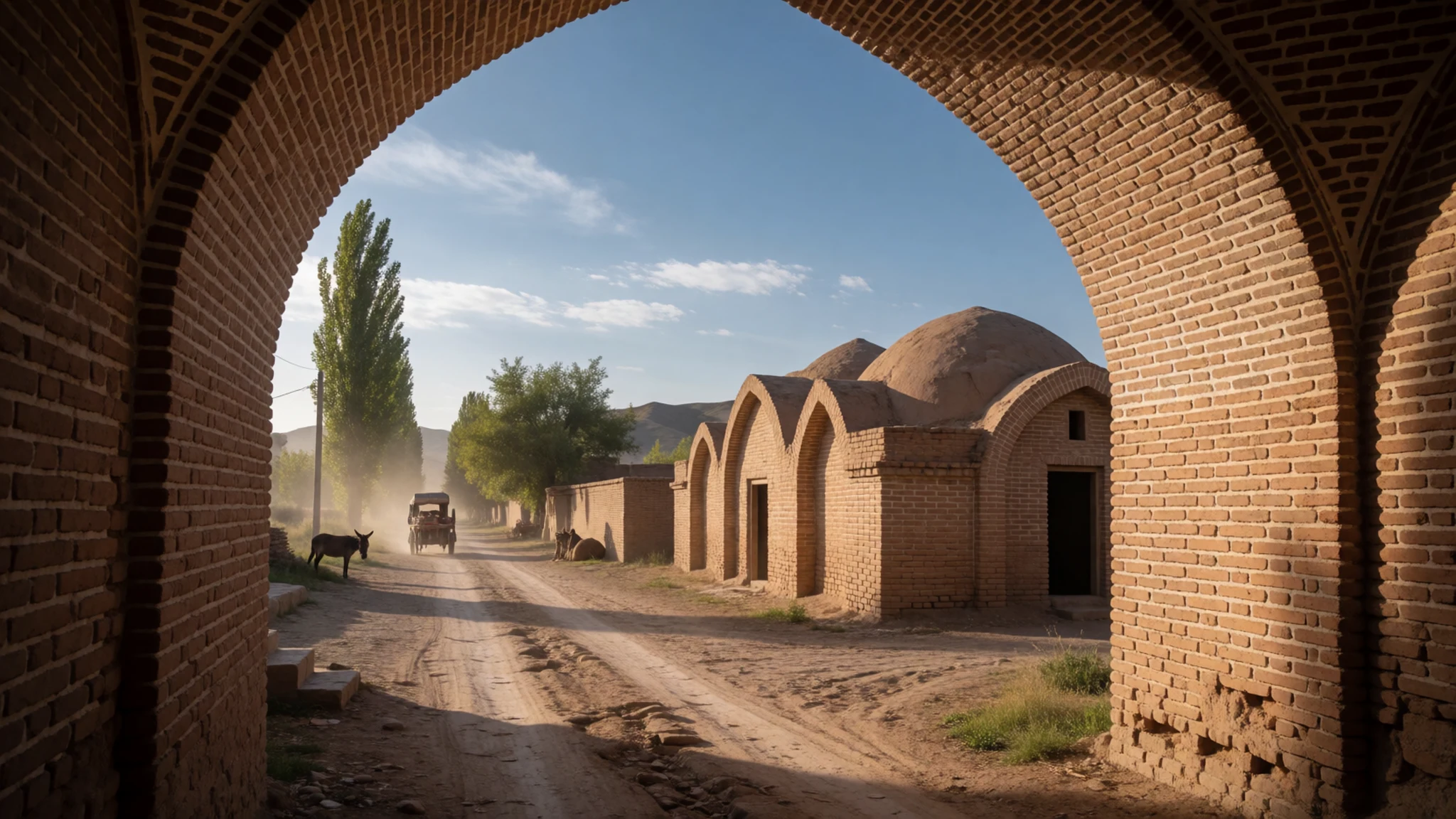
- National Museum of Antiquities, Dushanbe — Dushanbe
The capital's museum holds the finds from Ajina Tepe, including the reclining Buddha and painted fragments, shown alongside Zoroastrian, Hellenistic, Islamic and Pamiri objects. Seeing it before or after the site makes the empty mounds far easier to read. Check the museum's own channels for opening arrangements.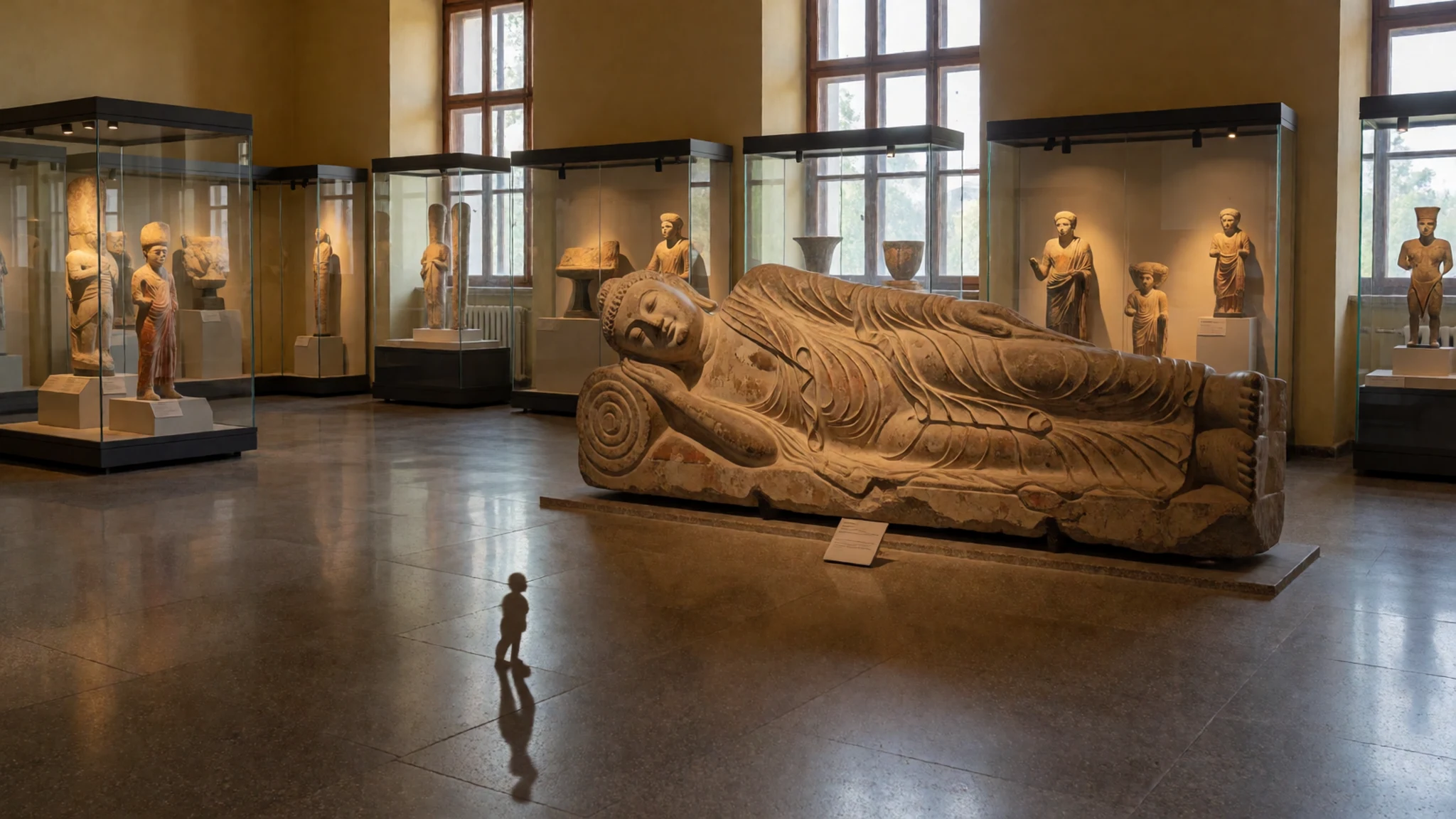
Culture
Ajina Tepe lies in a part of Tajikistan where daily life is shaped by Islam, Persian-speaking Tajik tradition and a Soviet inheritance that still shows in the language, the architecture and the farming. Hospitality is central. A visitor who stops in a village is likely to be offered tea, round bread and fruit, and refusing everything outright can seem cold, so accepting a little with thanks goes a long way. Families are close and respect for elders is strong, so greetings are unhurried and usually include questions about health and family. Southern Khatlon is rural and conservative, and it carries the memory of forced resettlement and a painful civil war. Tajiks may speak about these things frankly or not at all, and a guest does well to follow their lead rather than ask pointed questions about politics or old loyalties. The Buddhist past is understood mostly as heritage rather than living belief, so there are no monks or rituals at the site, just scholarly interest and local pride. Many people are happy to explain what they know about the mounds, and a small thank-you for a guide's time is welcome. Photography is generally relaxed at the ruins, but tourists are rare enough that people may be curious about you. Ask before photographing anyone, particularly women, and do not walk across planted fields or take fragments from the walls.
What to wear
In Ajina Tepe's district, traditional Tajik dress is most visible on festival days and at weddings. Women wear long dresses cut from atlas and adras, bright silk or silk-and-cotton cloths with blurred ikat patterns, often over loose trousers, with a headscarf or embroidered cap. Men have a long striped quilted coat, the chapan, and a square black skullcap with white embroidery, the tubeteika. In everyday life, village clothes are simpler. Women often wear a colourful, loose dress and a headscarf, while men favour trousers, shirts, jackets and sometimes a skullcap, a mix shaped by Soviet-era tailoring and local taste. Younger people in Bokhtar wear jeans and trainers much as elsewhere. A visitor should dress for heat and modesty together. Light, loose cotton or linen with long sleeves and long trousers or skirts keeps the sun off and avoids attention, and a wide-brimmed hat and sunglasses help on shadeless ruins. Women do not need a headscarf at the monastery but should carry one for mosques and village visits, and men should avoid shorts away from the hotel or guesthouse room. Wear closed, sturdy shoes, since the ground is dusty, uneven and sometimes littered with brick fragments. In the cooler months, bring a warm layer for mornings and evenings, because the plain can feel surprisingly chilly after dark.
What to eat
- Plov (osh) — Any local eatery or roadside canteen in Bokhtar
Rice cooked with lamb or beef, carrots, onion and sometimes chickpeas or raisins, served in a big shared dish. It is the dish for celebrations and lunch gatherings, and also turns up in simple eateries in Bokhtar and along the main roads.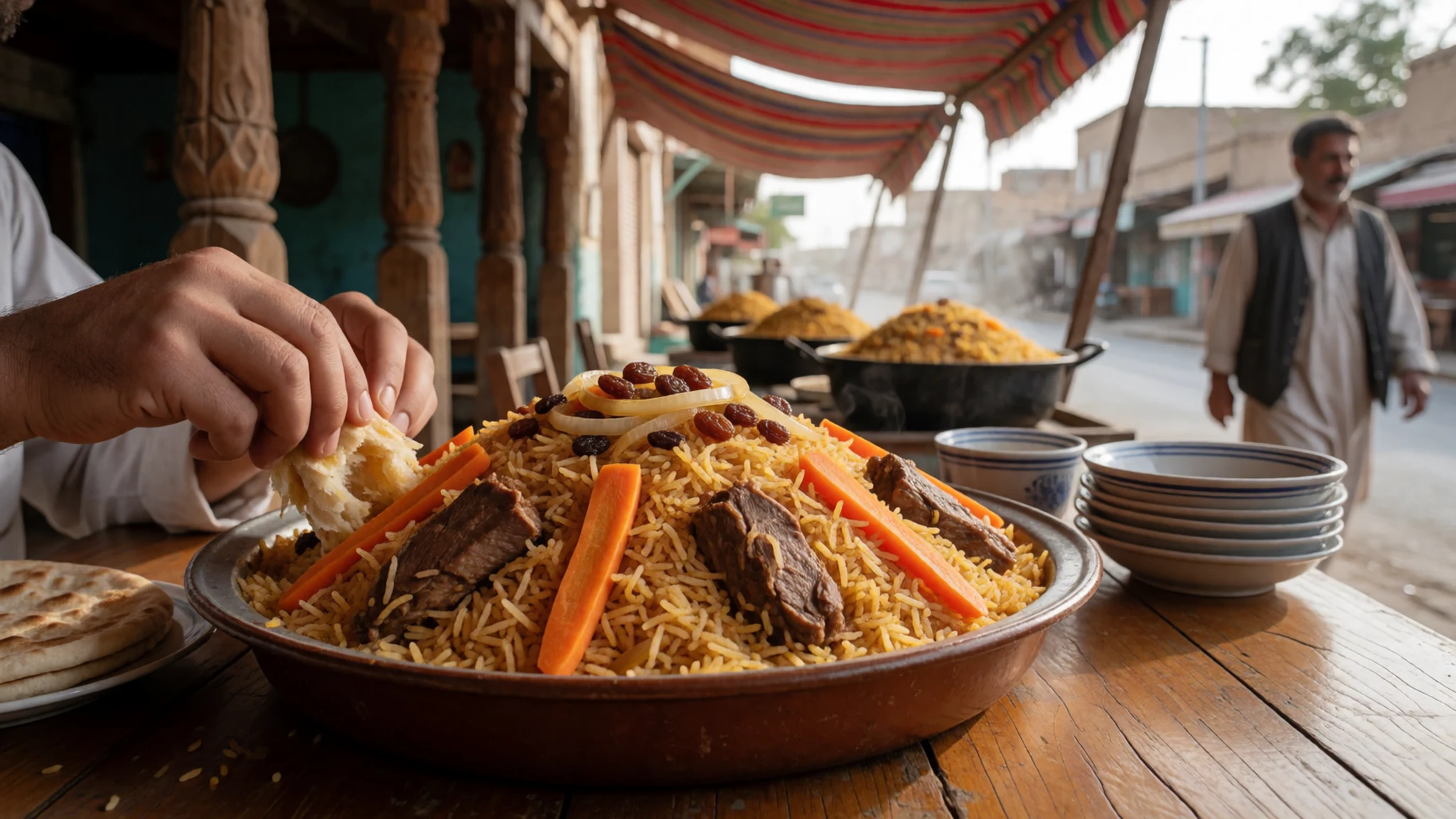
- Non (flatbread) — Neighbourhood bakeries and the main bazaar in Bokhtar
Round, thick, patterned bread baked on the walls of a clay oven. It arrives with every meal and is treated with respect, never placed face down. Buy it hot from a baker's counter and eat it with tea, fruit or cheese.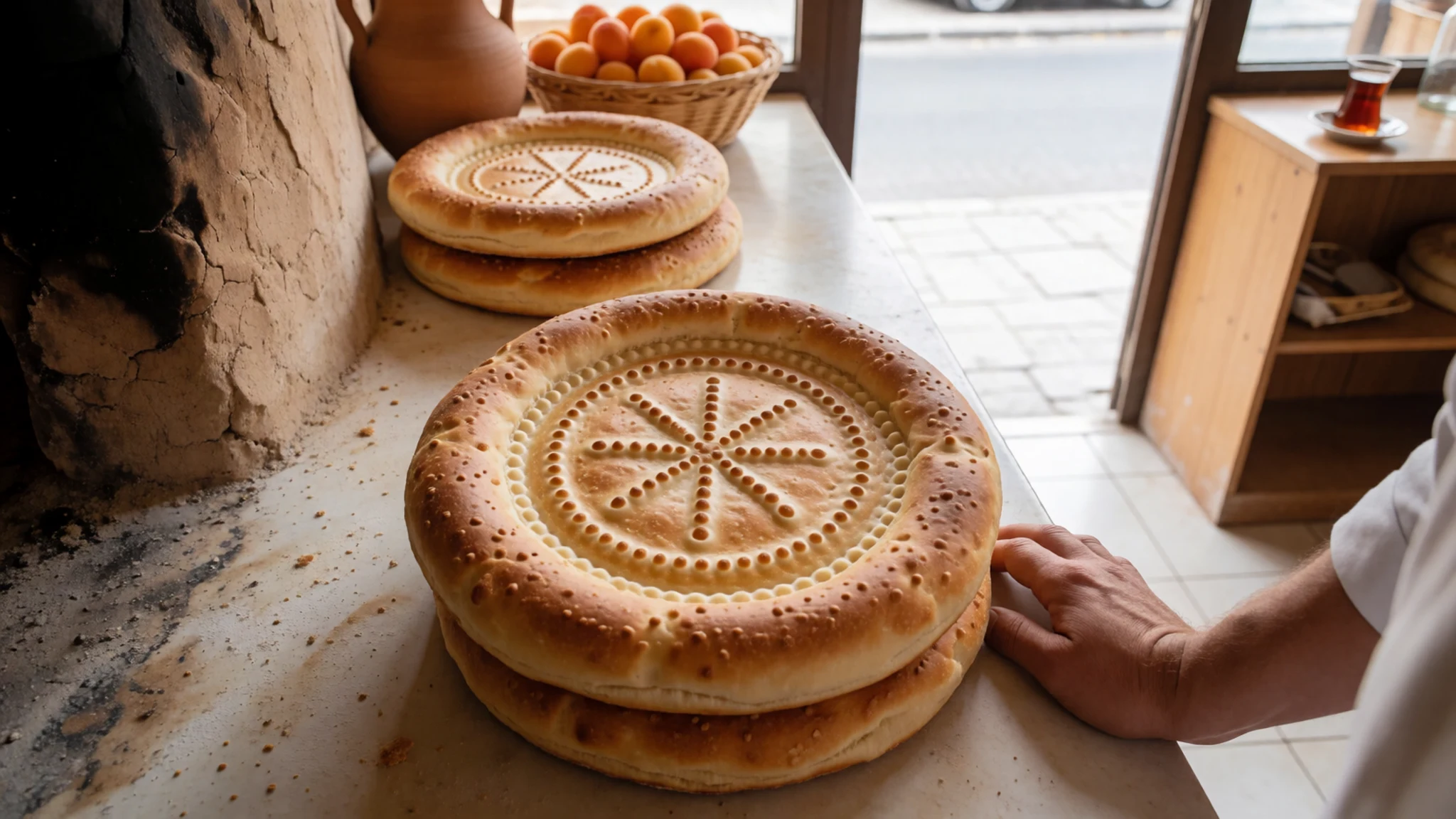
- Qurutob — Family-run tea houses and eateries in southern towns
A Tajik favourite of torn flatbread soaked in a sauce of dried yogurt balls and water, topped with onion, tomato and herbs. It is tangy, filling and eaten from a shared platter, often with a spoon or by hand. - Sambusa — Bazaar stalls and roadside vendors
Baked pastry triangles filled with minced meat and onion, sometimes pumpkin. They are cheap, portable and ideal for a long day among ruins. Fresh ones are crisp outside and juicy inside, and the best are eaten warm. - Shurbo — Local tea houses and family eateries
A clear, hearty soup of meat on the bone, potatoes, carrots and other vegetables, finished with herbs. It is home cooking at its simplest, welcome on cool mornings and evenings, and usually served with bread.
Plan it
Best time. April–May and September–October. The lowlands of southern Tajikistan are hot in high summer, with little shade at the ruins, while spring and autumn bring milder days that suit walking around the mounds. Winter can be cold and damp.
How long. 1–2
Getting there. Bokhtar International Airport in Qurghonteppa takes flights from Dushanbe, Russia and Kazakhstan. Otherwise travel overland by bus or shared minibus (mashrutka), or by car from Dushanbe. The last leg to Ajina Tepe is a short drive from Bokhtar, best done with a driver who knows the track.
Budget. low
Tips
- Hire a driver in Bokhtar for the day, since public transport to the site is limited
- Carry cash, water and snacks, as there are few facilities at or near the ruins
- Visit the National Museum of Antiquities in Dushanbe first to recognise what the mounds once held
- Start early to avoid the heat and the midday glare on the plain
- Check current official travel advice for the region before you go, since tensions still exist locally
Etiquette
- Ask before photographing people, especially women
- Stay on paths and do not climb the walls or take brick fragments
- Accept tea or bread when offered, and thank your hosts
Nearby
Sources
- Wikidata Q4057547 (CC0)
- Wikipedia, Ajinateppa (rev 1385072438) (CC BY-SA 4.0)
- Wikivoyage, Khatlon (rev 5334319) (CC BY-SA 4.0)
- Danny Roper, Budhistic cloister of Ajina-Tepa, via Wikimedia Commons (CC BY 3.0)
- DEMIS Mapserver, पाटलिपुत्र, West Asia non political with water system, via Wikimedia Commons (CC BY 3.0)
- Greater Bactria map (DEMIS Mapserver), via Wikimedia Commons (CC BY 3.0)
- DEMIS Mapserver, पाटलिपुत्र, South Asia non political, with rivers, via Wikimedia Commons (CC BY 3.0)
- Ajina-Tepe Buddhist mural, Tajikistan, 7th-8th century CE, via Wikimedia Commons (Public domain)
- Jeff Rozwadowski, Dushanbe - National Museum of Antiquities - Sleeping Buddha, via Wikimedia Commons (CC BY-SA 2.0)
- Ninara, Tajikistan National Museum of Antiquities, via Wikimedia Commons (CC BY 2.5)
- ALFGRN, Buddha between two stupas, Ajina Tepe, via Wikimedia Commons (CC BY-SA 2.0)


