Ishkashim
Ishkashim, Tajikistan
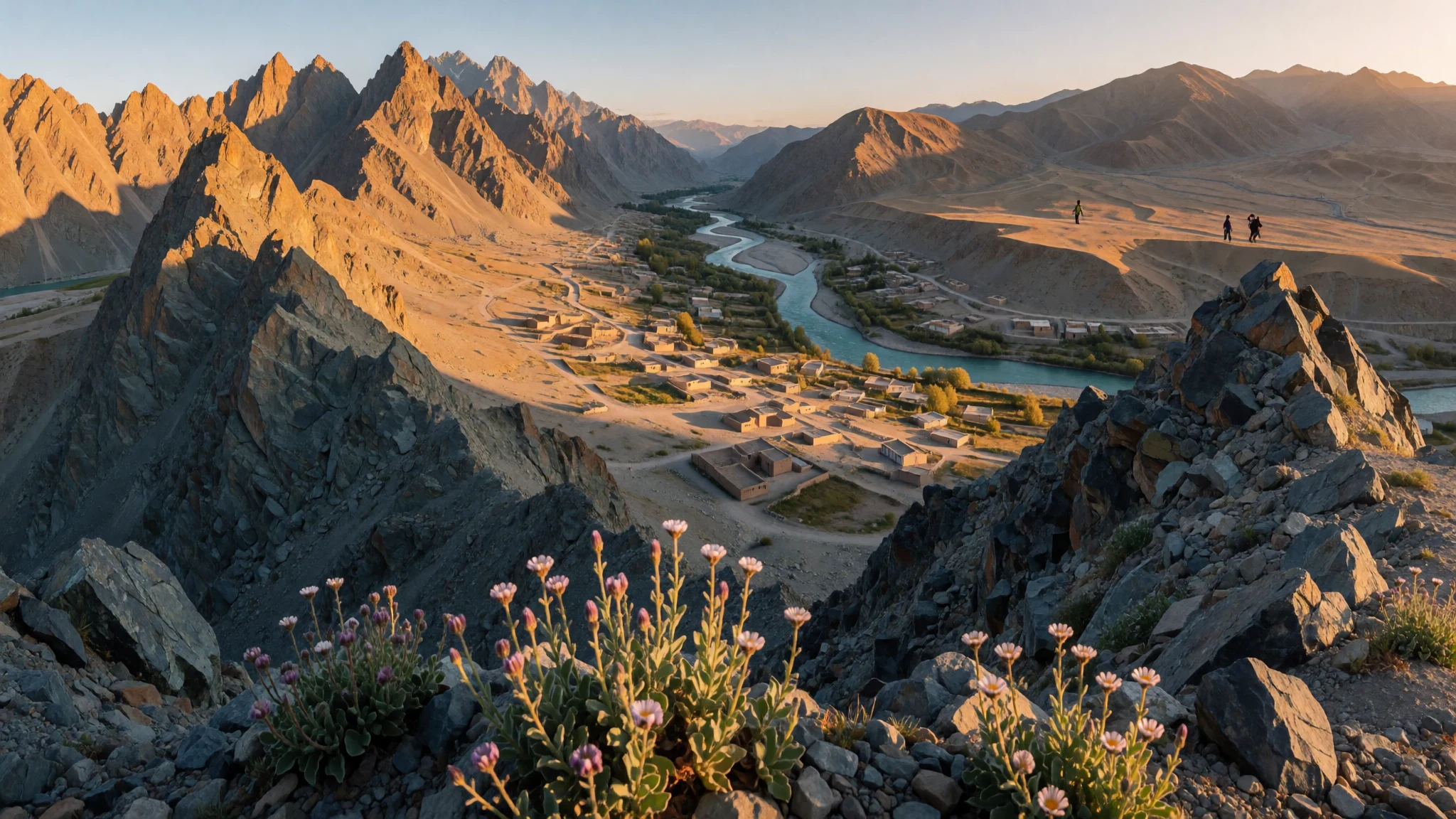
Ishkashim is a quiet Pamir Highway village where a river is the frontier and Afghanistan's mountains stand in plain view.
The place
Ishkashim (Ishkoshim, Ишкошим in Tajik) is a village of about 6,600 people in south-east Tajikistan, on the river Panj, which here forms the frontier with Afghanistan. It is the seat of Ishkoshim District in the Gorno-Badakhshan Autonomous Region, and it lies on the Pamir Highway between Khorog and Langar. On the far bank stands an Afghan town with almost the same name, spelled Ishkashim, in Badakhshan Province. The two settlements face each other across the water, and a bridge opened in 2006 joins them. The village itself is low and spread out: a paved main street with little traffic, a bus stop, family guesthouses, and bare mountain walls closing in on both sides of the valley. Ishkashim works as a border and transit town rather than a sightseeing one. People pass through on the way along the Pamir Highway or towards the Wakhan corridor, and many travellers stay a night or two before moving on. What the place offers is quiet: slow evenings, unhurried walks, and a view into another country that feels close enough to call across. Summer is the season when visitors appear, and the village is busiest then. Winters are cold and the pace turns inward. Services are modest, so cash, patience and flexible plans matter more than a checklist of sights.
Its story
Ishkashim owes its character to geography. It stands where the Panj, the river that marks much of Tajikistan's southern frontier, meets routes running along the Wakhan corridor and the Pamir Highway. For centuries the valleys here have carried traders, herders and travellers between Central and South Asia, and the communities on both banks share languages, kin and customs. When empires drew lines through the Pamirs, the river became the boundary, and Ishkashim became two places facing one another: Ishkoshim on the Tajik side, Ishkashim on the Afghan. In the Soviet period the Tajik village sat at the edge of a tightly guarded frontier, and crossing the river was not something ordinary families could do. After independence, the region went through difficult years of isolation and relied heavily on outside aid and on help from neighbours. The bridge that opened in 2006 changed the pattern. It gave the two towns a formal crossing, a route for goods, officials and some visitors, and a place where relatives on either side could, in principle, meet. Using it still depends on visas, permits and the politics of the day, and the situation in Afghanistan has made travel across far less predictable. Today the bridge is the defining structure of the village: part border post, part landmark, and a reminder that a calm street can sit right on a long-standing line of history.
What to see
- The main street — Village centre
The paved main street is the village's living room. Traffic is light, so people walk down the middle, stop to talk, and children cross without fuss. A slow stroll in the late afternoon passes low houses, small shops selling basics, and the bus stop where shared vehicles gather. Greetings go a long way, and conversation may be in Tajik or Russian.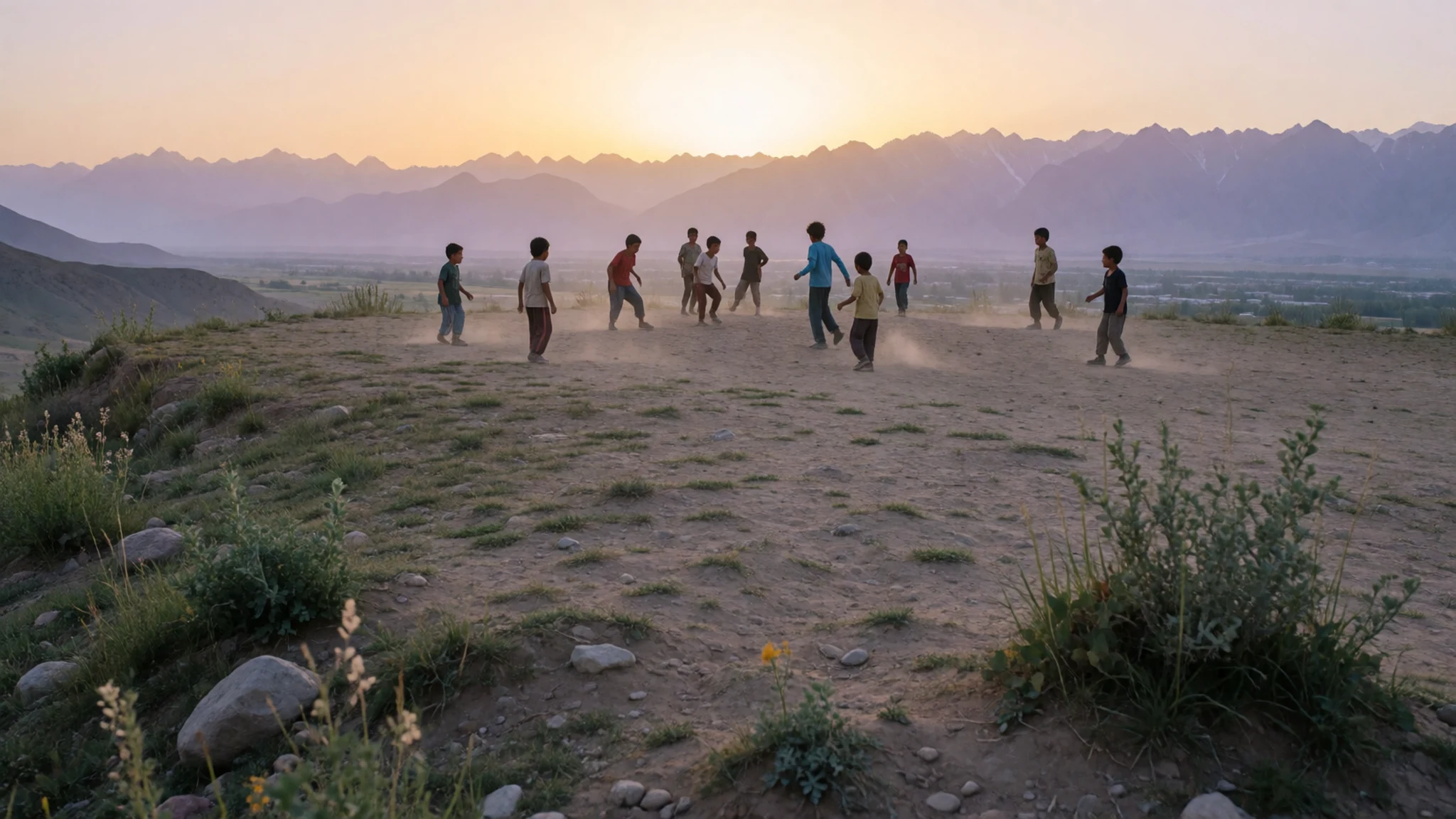
- The hillside at sunset — Slope behind the village
A path climbs the slope above the village, reached by heading towards the Murgab end of the street and turning off before the bridge. The reward is a wide view along the valley and across the Panj into Afghanistan, best near sunset. Leave enough daylight to get down, wear shoes with grip, and expect children playing on the flatter ground.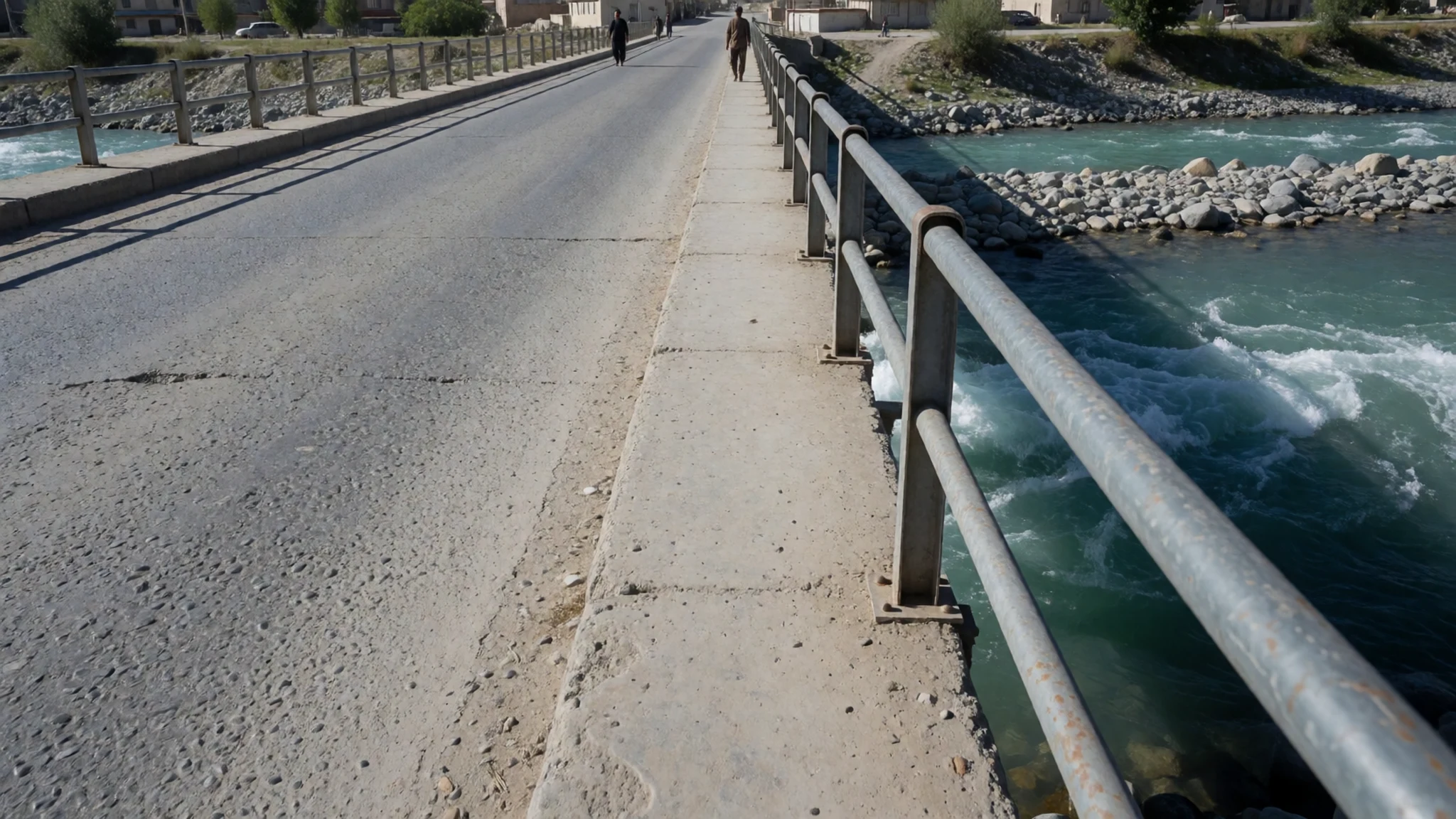
- The border bridge — Western edge of the village
The bridge opened in 2006 carries the crossing between Tajik Ishkoshim and its Afghan namesake. It is a working border, not a viewpoint, so watch from a respectful distance and do not photograph soldiers, guards or paperwork. Even so, the structure, the river beneath it and the facing mountains make a telling picture of how close the two countries sit.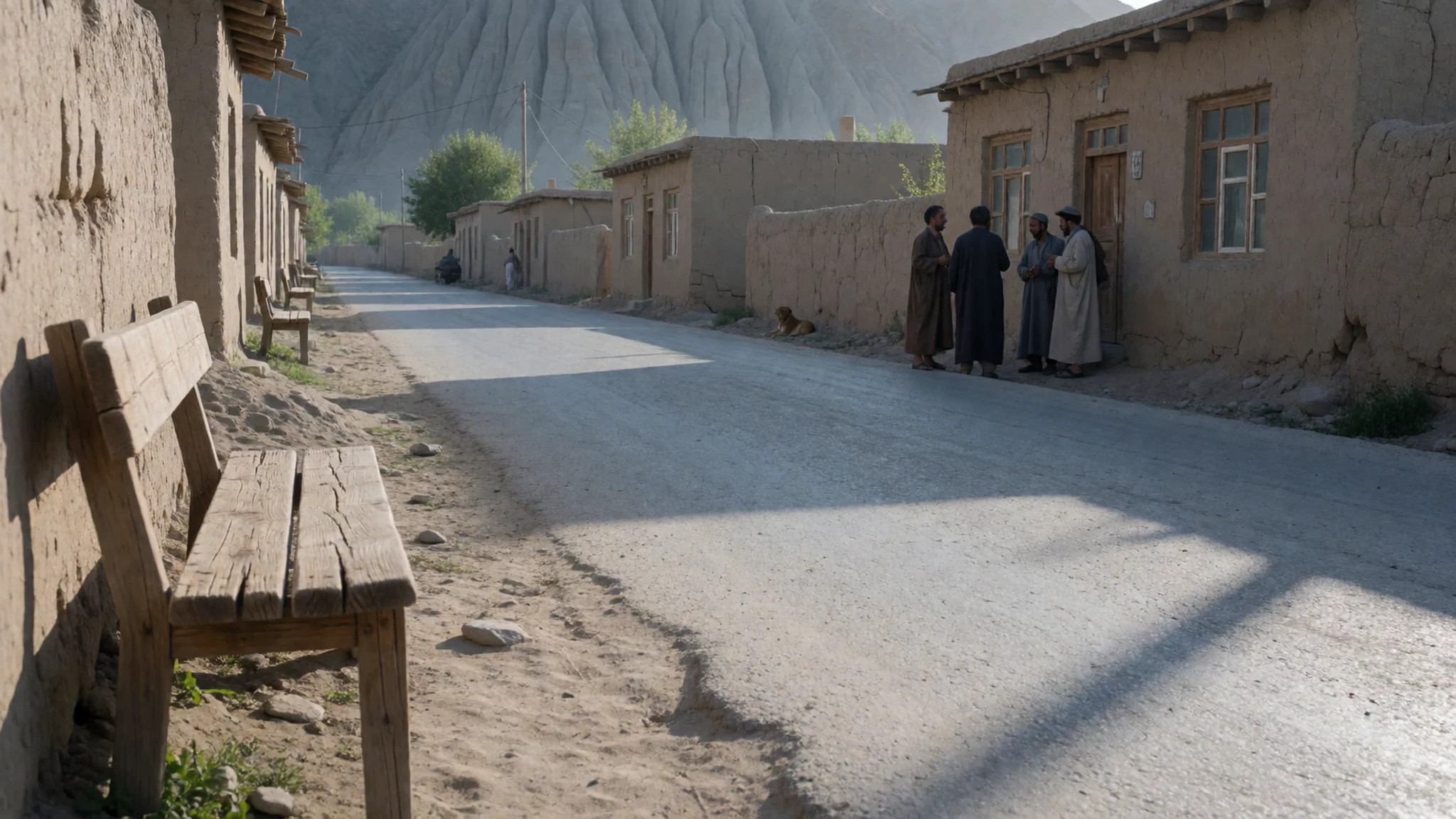
- The Panj riverbank — River edge near the bridge
Walking to the river's edge gives the plainest view of the frontier: the Panj running between two shores, with Afghan houses, fields and tracks on the far side. Visitors who stand quietly may see herding and travel across the water. Keep to open paths, stay out of restricted zones, and follow any instruction from a guard.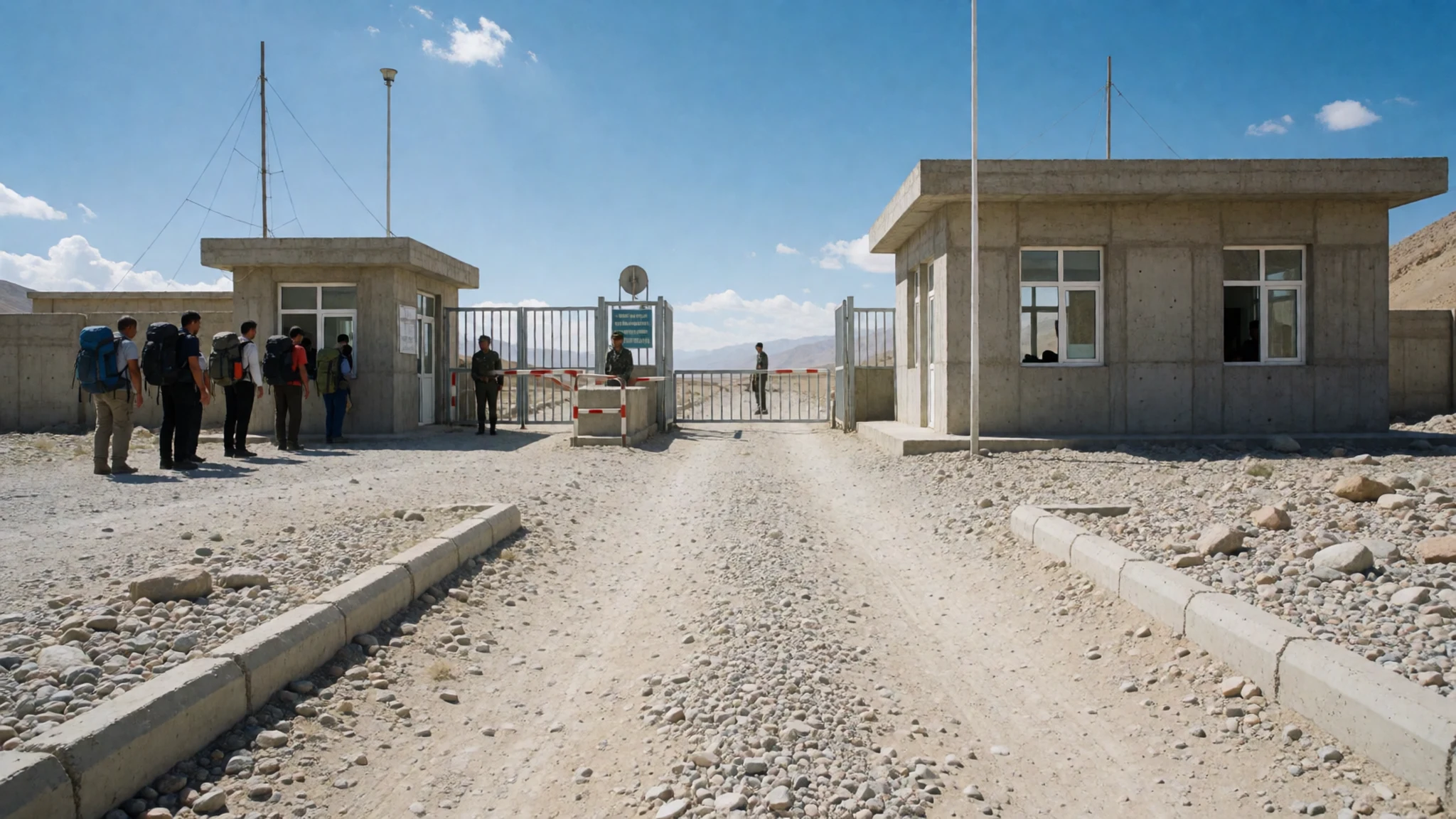
- A family guesthouse evening — Village centre
Staying in a family guesthouse is the most natural way to spend an evening in Ishkashim. Rooms tend to be simple, meals are shared, and the host is usually the best guide to buses, weather and the road ahead. Ask what is cooking, accept tea when it is offered, and treat the stay as a visit to someone's home.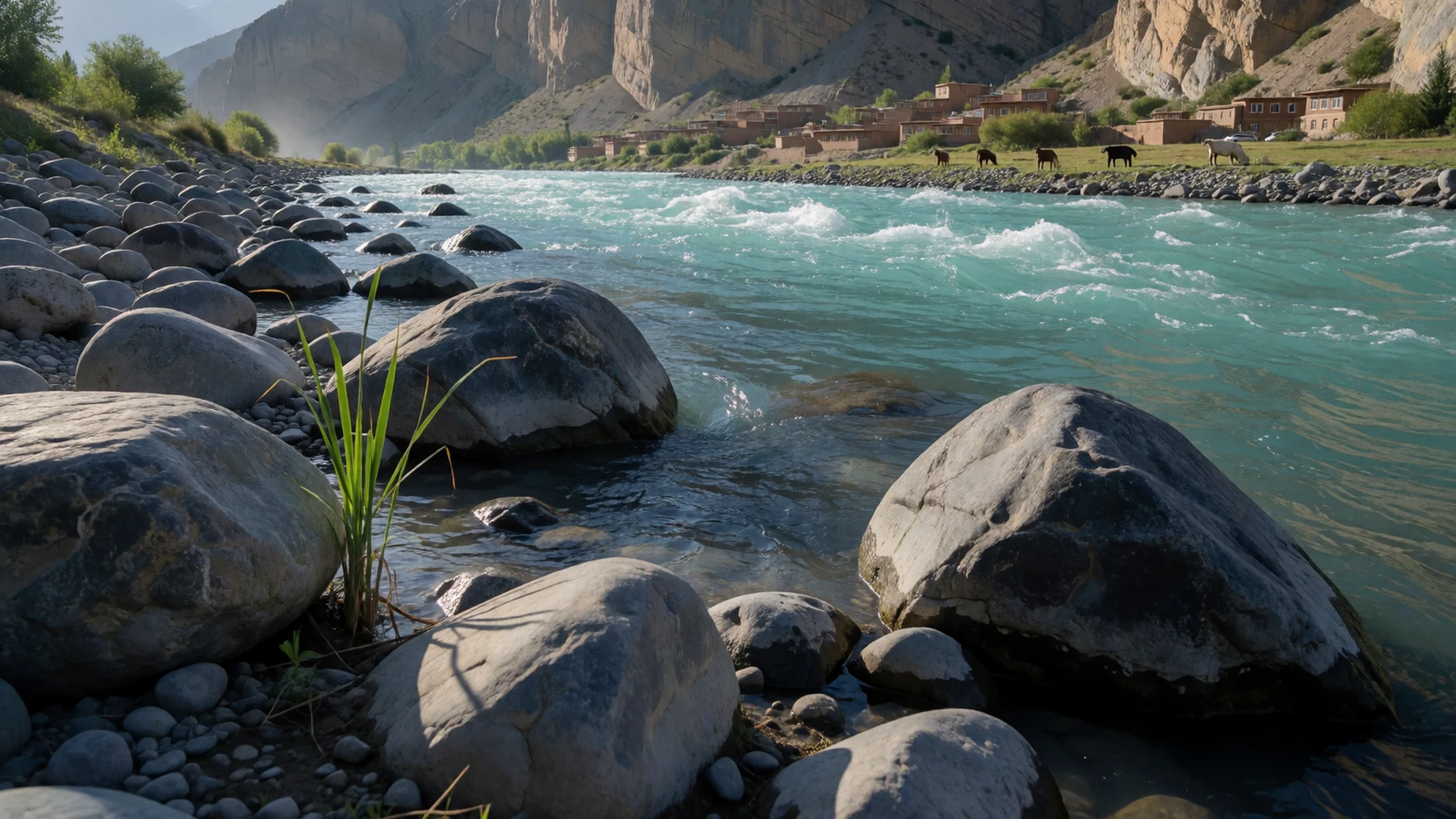
Culture
Ishkashim belongs to Gorno-Badakhshan, the Pamiri heartland of Tajikistan, where many people are Ismaili Muslims and speak Pamiri languages at home alongside Tajik and Russian. Ishkashimi is the name of one such local language, spoken on both sides of the river. Hospitality is central to daily life. A visitor who sits down in a house is likely to be offered tea, bread and whatever else is to hand, and turning down everything outright can feel cold, so a small taste with thanks is the usual courtesy. Traditional Pamiri houses are built around a central living space supported by pillars that carry symbolic meaning, and guests are often seated on raised platforms along the walls. Faith is lived quietly, and the Ismaili community's reverence for its spiritual leader, the Aga Khan, is visible in portraits and in the schools and clinics his networks have supported across the region. Life follows the seasons: summer for herding, harvest and travellers, winter largely indoors. Because this is a frontier, officials are a normal presence and people are used to caution around cameras. Ask before photographing anyone, especially women and older people, and never photograph the border post, the bridge or the soldiers and guards who work there.
What to wear
In Ishkashim, traditional dress follows the wider Pamiri pattern. Women wear long, brightly coloured dresses in cotton or silk-blend cloth, often with embroidered caps or headscarves, and men have long worn woollen coats, robes and caps in cold weather. Hand-knitted woollen socks, patterned in strong colours, are a household craft and still worn through the long winter. Embroidered pieces appear most at weddings, festivals and family occasions. Day to day, most people dress practically: jeans, trousers, track jackets, padded coats and sturdy boots for men, and for women long dresses or skirts over trousers with a headscarf, often in cheerful prints. Herders and farmers add wool and heavy layers. Visitors should dress for a high, dry mountain climate where days can be hot and nights cold, so wear layers, a hat, sunglasses and strong sun protection. Modest clothing is expected: cover shoulders and knees, and women should carry a light scarf for homes and religious places. Closed shoes with good grip suit the hillside paths and loose stony ground. Pack a warm layer even in summer, and a proper jacket for evenings.
What to eat
- Lagman — Small restaurants and eateries along the main street
Noodles served in a savoury broth with vegetables and, when available, meat. It is a filling staple of Central Asian cooking and a reliable meal after a day on the road. Portions are generous, and the dish tends to be on the table when little else is.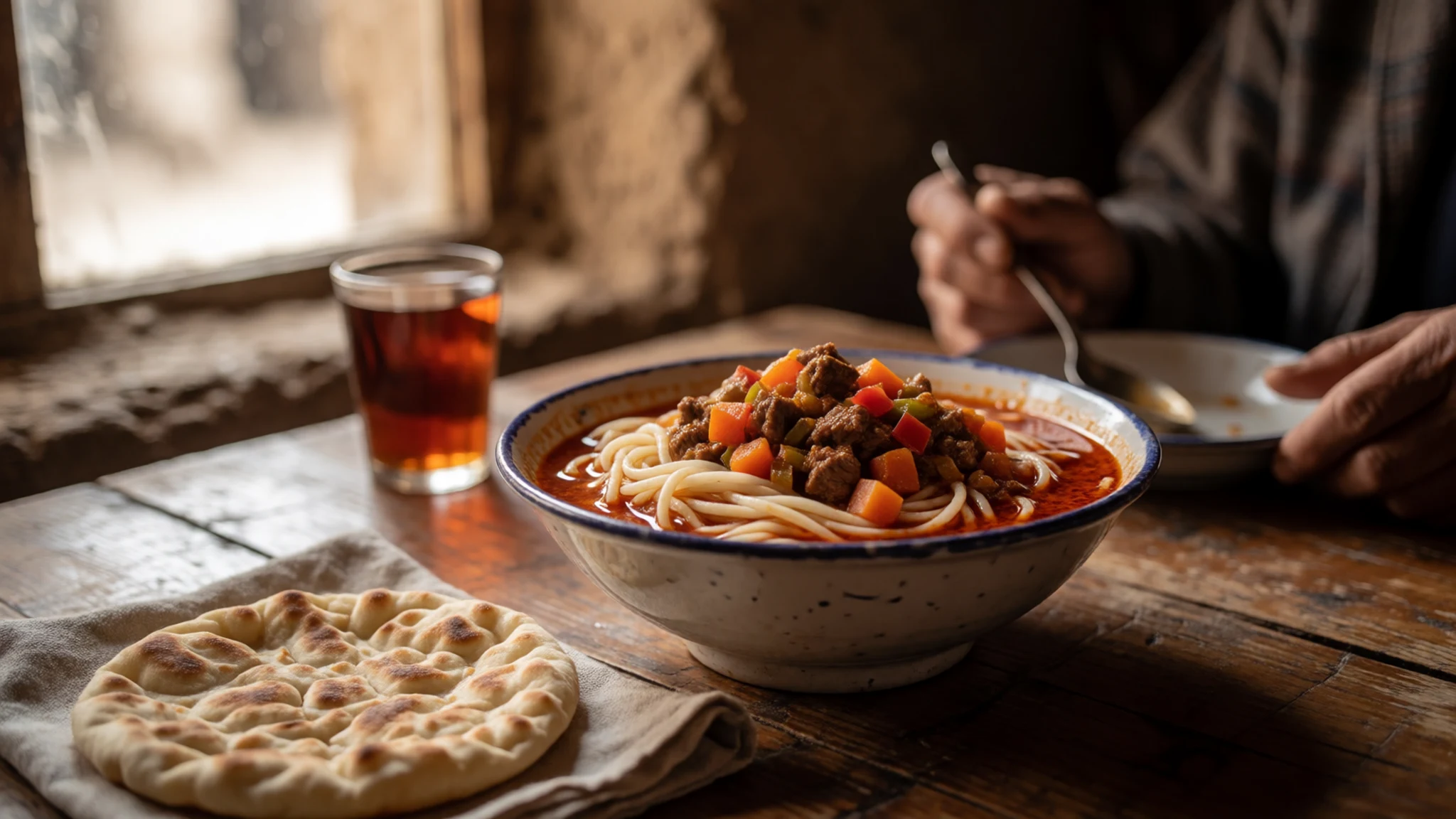
- Potato soup — Eateries on the main street and guesthouse kitchens
A plain, warming soup that often appears as the dish of the day in local eateries. It is simple home cooking rather than showpiece food, and comforting when evenings turn cold. Ask what is available that day, as menus follow what the kitchen has.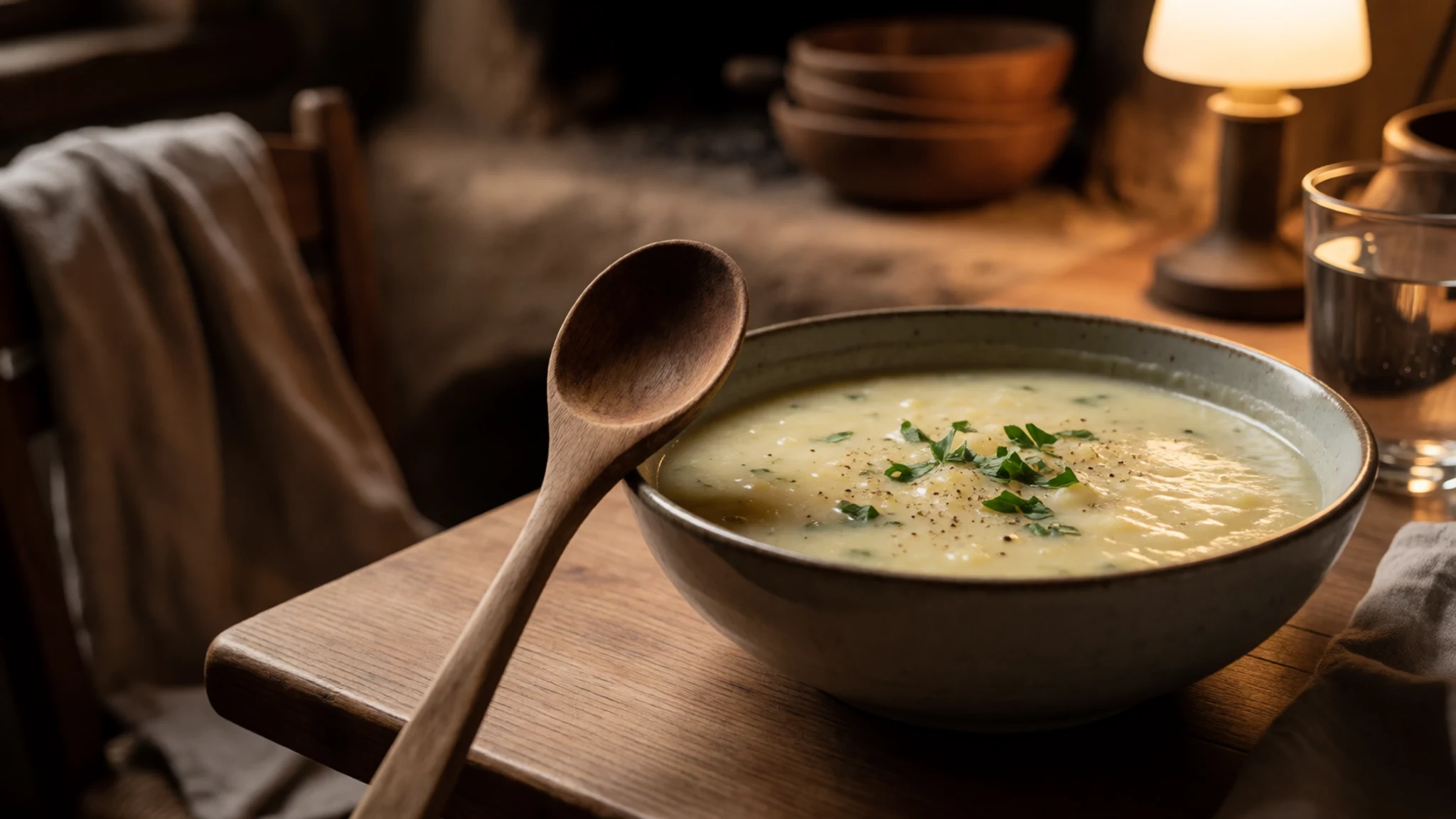
- Non — Guesthouse breakfast tables and village bakeries
Round, flat bread baked in Central Asian style and served with almost every meal. It arrives warm at breakfast with tea, jam or butter, and is used to scoop up soup. Tearing and sharing it is part of the table etiquette, and it should not be left on the floor. - Salted milk tea — Guesthouse tables and family homes
In Pamiri homes, tea is sometimes drunk with milk and a pinch of salt, a taste that surprises newcomers. It is offered to guests as a gesture of welcome, and the pot is refilled until you indicate you have had enough. - Plov — Guesthouse dinners and family gatherings
A pilaf of rice, carrot and meat, cooked in a large pot and shared from a common dish. It is the usual food for celebrations and for honoured guests. A guesthouse may prepare it with advance notice, especially for a group.
Plan it
Best time. June to September, when the roads are most dependable and the days are warm; the Pamir climate is cold in winter and snow can disrupt travel. Local border guards and consulate staff report that many travellers come through in summer, so expect more company then.
How long. 1–2
Getting there. Fly or drive to Dushanbe, then travel overland to Khorog, the regional centre, and continue along the Pamir Highway to Ishkashim by shared vehicle or hired car. Check current flight and road conditions before booking, as services vary.
Budget. low
Tips
- Bring enough cash from Khorog, as cards and cash machines in the village cannot be relied on
- Book a guesthouse ahead in July and August, or ask in Khorog for a recommendation
- Carry layers, sun protection and a refillable water bottle, as mountain days are strong in sun and cold at night
- Allow slack in the schedule, since shared transport and road conditions change from day to day
- Check your own government's travel advice and the official Tajik visa and regional permit rules before you leave, and do not assume the Afghan crossing is open to visitors
Etiquette
- Greet people and accept tea when offered
- Never photograph the bridge, border post or any soldier or guard
- Dress modestly, covering shoulders and knees
Nearby
Sources
- Wikidata Q913494 (CC0)
- Wikipedia: Ishkoshim, Tajikistan (rev 1374443480) (CC BY-SA 4.0)
- Wikivoyage: Ishkashim (Tajikistan) (rev 5241555) (CC BY-SA 4.0)
- Along the main street — Hans Birger Nilsen (CC BY-SA 2.0)
- Ishkashim street — Hans Birger Nilsen (CC BY-SA 2.0)
- Ishkashim Bridge- Afghan/Tajikistan Border — Raki_Man (CC BY 3.0)
- Bridge in Ishkashim, view towards east — Kondephy (CC BY-SA 4.0)
- Ishkashim locals — Hans Birger Nilsen (CC BY-SA 2.0)
- Busstop — Hans Birger Nilsen (CC BY-SA 2.0)
- Hanisa Gueshouse — Hans Birger Nilsen (CC BY-SA 2.0)
- Herdswoman — Hans Birger Nilsen (CC BY-SA 2.0)


