Varzob
Varzob, Tajikistan
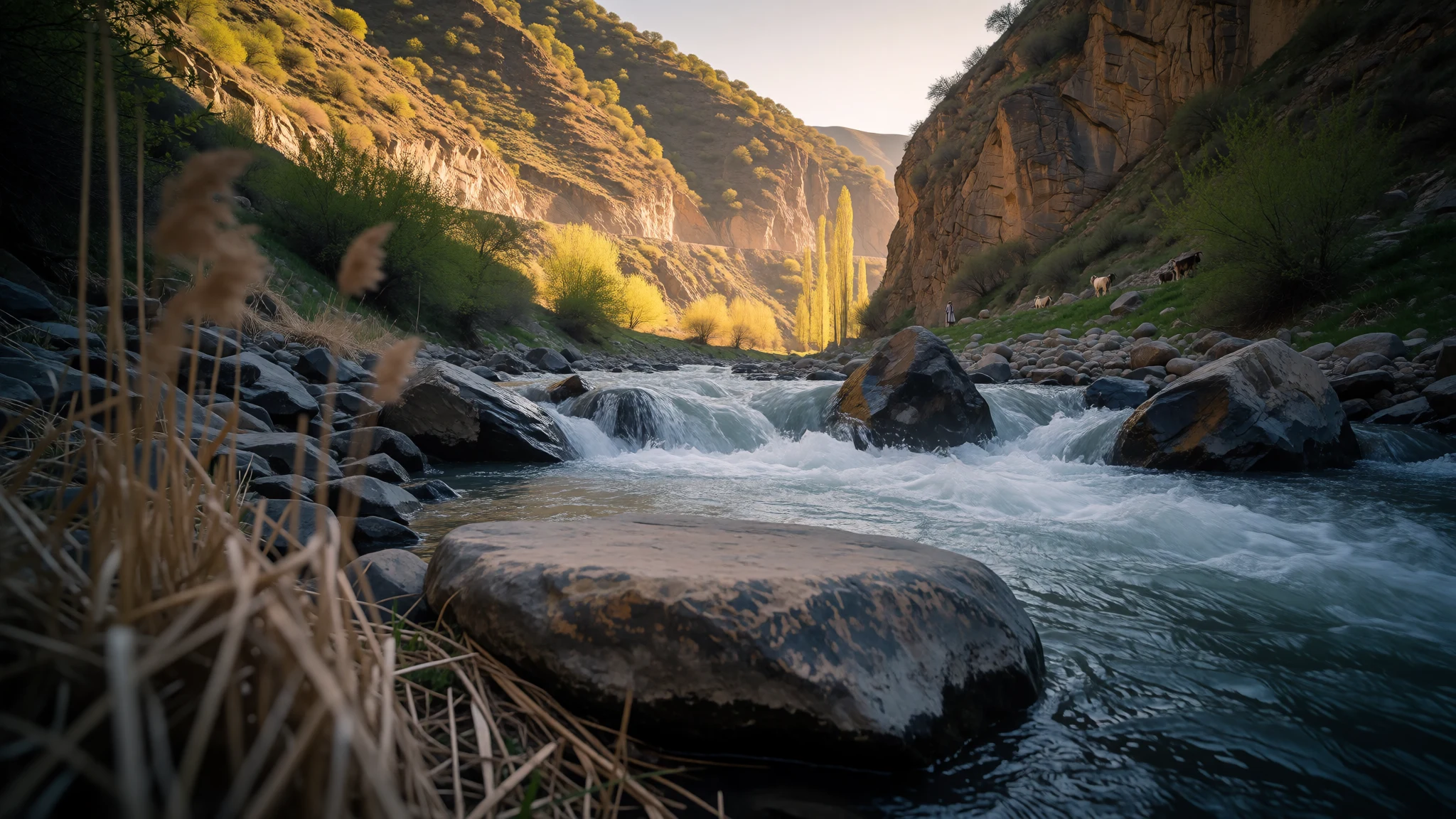
Varzob is the mountain river that runs through Dushanbe, where the capital's families head for cooler air and the Gissar foothills begin.
The place
Varzob is a river in western Tajikistan that starts on the southern flank of the Gissar Mountains and runs south through Varzob District into the capital, Dushanbe. It is a mountain stream that feeds the valley below. The reference point for this reading sits in the valley on the stretch between the high mountains and the city.
The river changes character along its length. Upstream it is a cold, quick mountain stream squeezed between steep rock slopes, loud over boulders. Closer to Dushanbe the valley opens, the water slows, and the river becomes part of the suburbs, running past parks, roads and houses. In the city's lower reaches it is also known as the Dushanbinka, which shows how closely the capital has claimed it.
This is a river rather than a single dramatic waterfall, and it suits people who like moving water, shade and a cooler afternoon more than a famous viewpoint. Most visitors reach it as a short escape from the capital, not as a destination in its own right.
Spelling varies. The river is written Варзоб in Tajik and Russian, and nearby names shift too: the Gissar range also appears as Hisor, Gisor or Hissar. Maps and road signs may use any of these, so it helps to know a few variants when searching.
Its story
Varzob matters because of where it sits: a mountain river that arrives in a hot, dry lowland. Tajikistan is sunny and warm for most of the year, and the south is the hottest part of the country, so meltwater coming down from the Gissar Mountains has long been what makes settlement possible in the valley below. Dushanbe grew where this stream leaves the hills, and the river's lower name, Dushanbinka, records that bond.
The valley is also a corridor. A road follows the Varzob upstream out of the capital into the gorge, which is why the route carries lorries, taxis and weekend families on the same bends. People have used routes like this through Central Asian ranges for centuries, and the river is what makes the line workable, because it cut the gorge that the road then follows.
The river's names show a layered history. Russian spellings were standard through the Soviet period and many maps still carry them, but Tajikistan has increasingly used its own forms as it has established its own identity, so Varzob, Russian-script versions and other transcriptions all circulate. There is no single agreed system for writing Tajik in English, and the same river can look like a different place on two different maps.
For a modern visitor the story is mostly one of contrast: a mountain stream that has also become a city's river, valued by Dushanbe residents as somewhere to sit by cold water.
What to see
- The gorge north of Dushanbe — Varzob District, north of Dushanbe
The gorge north of Dushanbe is where Varzob feels most like a mountain river: fast water between steep rock slopes, with the road clinging to the valley side. Pull-ins and short paths let walkers reach the water. Go on a weekday if possible, since traffic and parking thicken at weekends.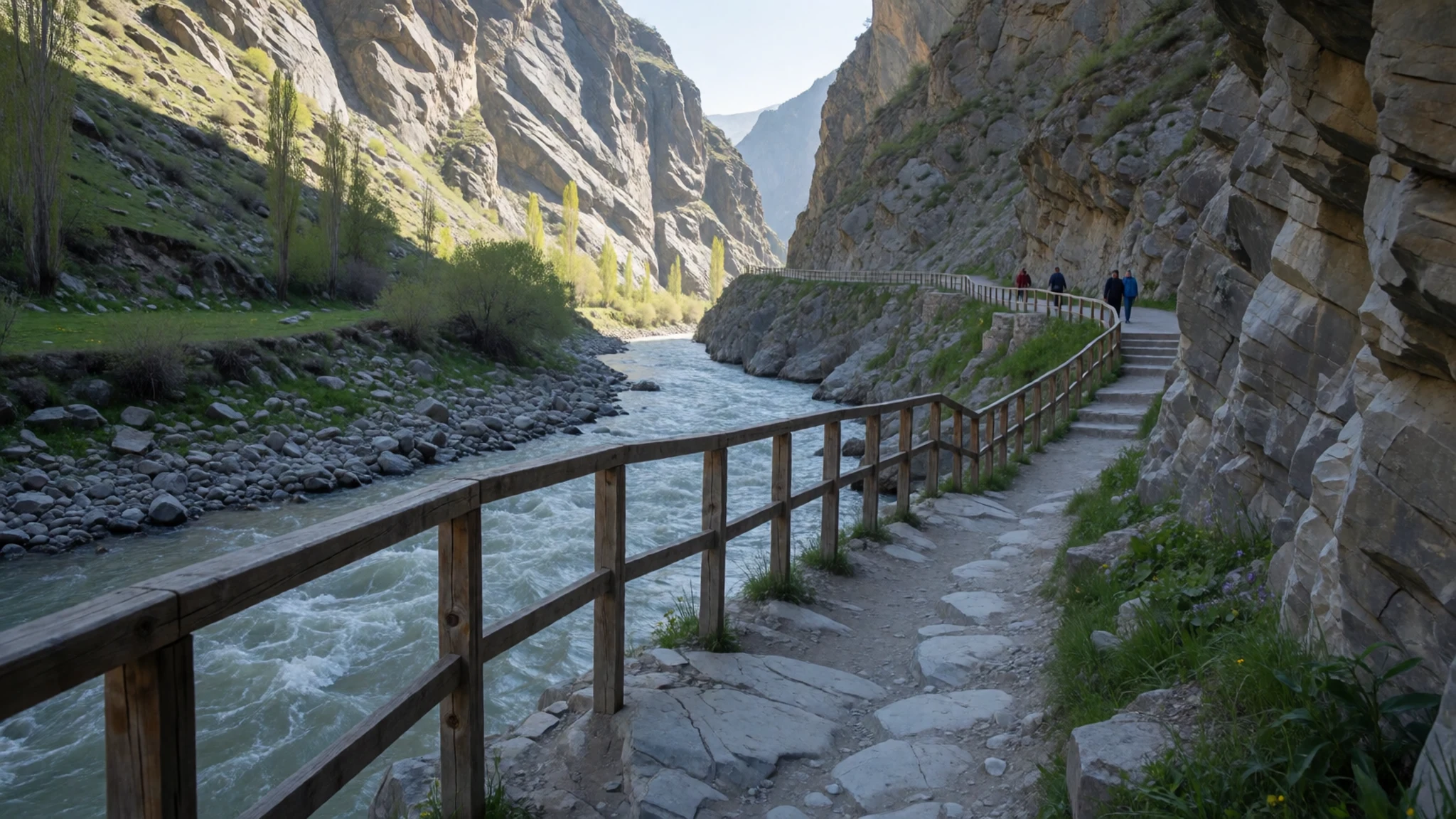
- The river at 721 metres — Varzob District
The coordinates for this reading fall at 721 metres in Varzob District, on the mountain side of the capital. It is a place for slow walking, sitting by the water and watching how the river splits into channels around stones. Expect scenery rather than signed attractions or ticketed sights.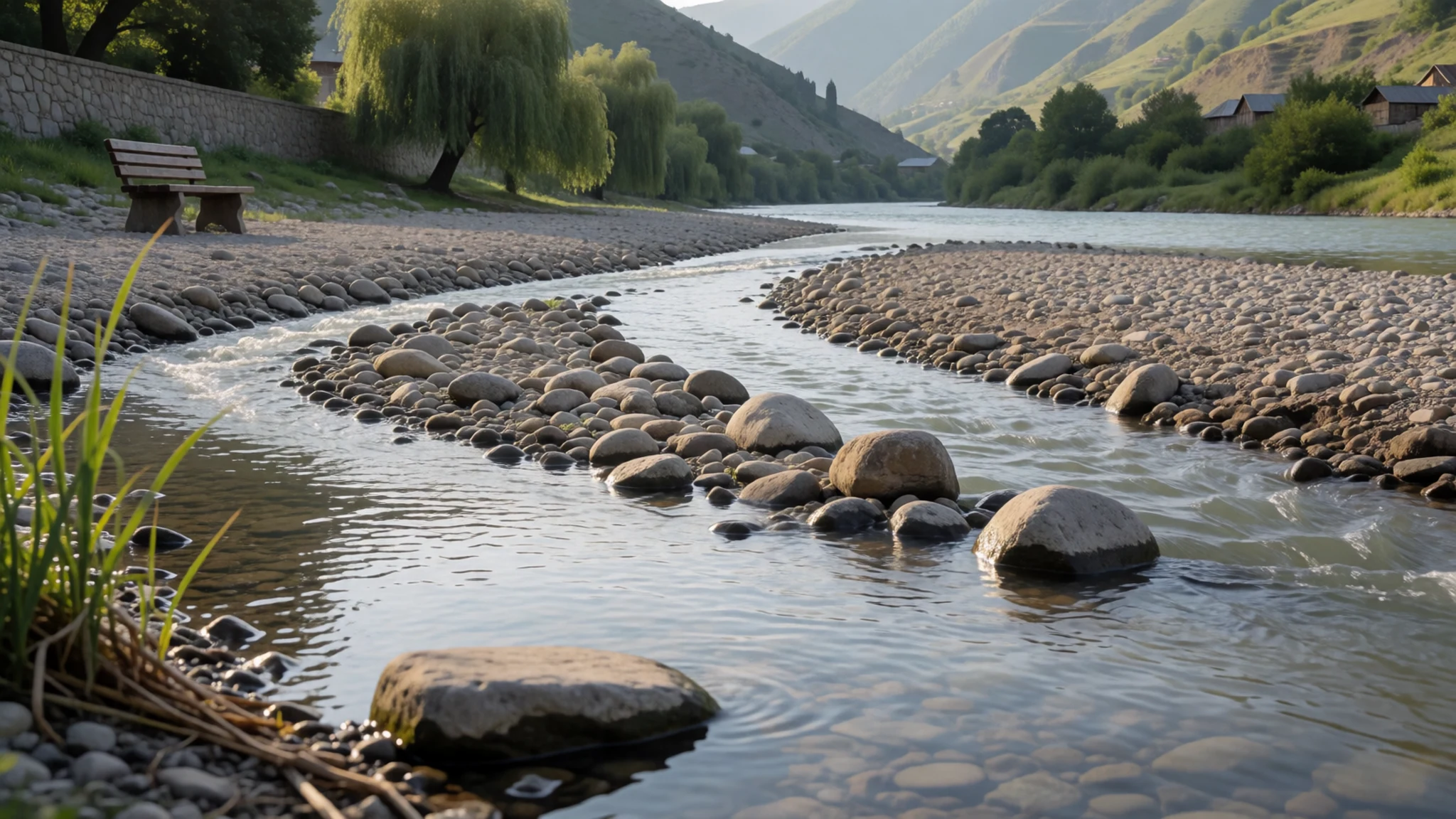
- The Dushanbinka in Dushanbe — Dushanbe
In Dushanbe the river is known as the Dushanbinka and flows through the city on its way south to the Kofarnihon. Here it is an urban watercourse, best seen on foot as part of a day in the capital, with bridges, roads and neighbourhoods close by. It is a quiet contrast to the mountain stretches upstream.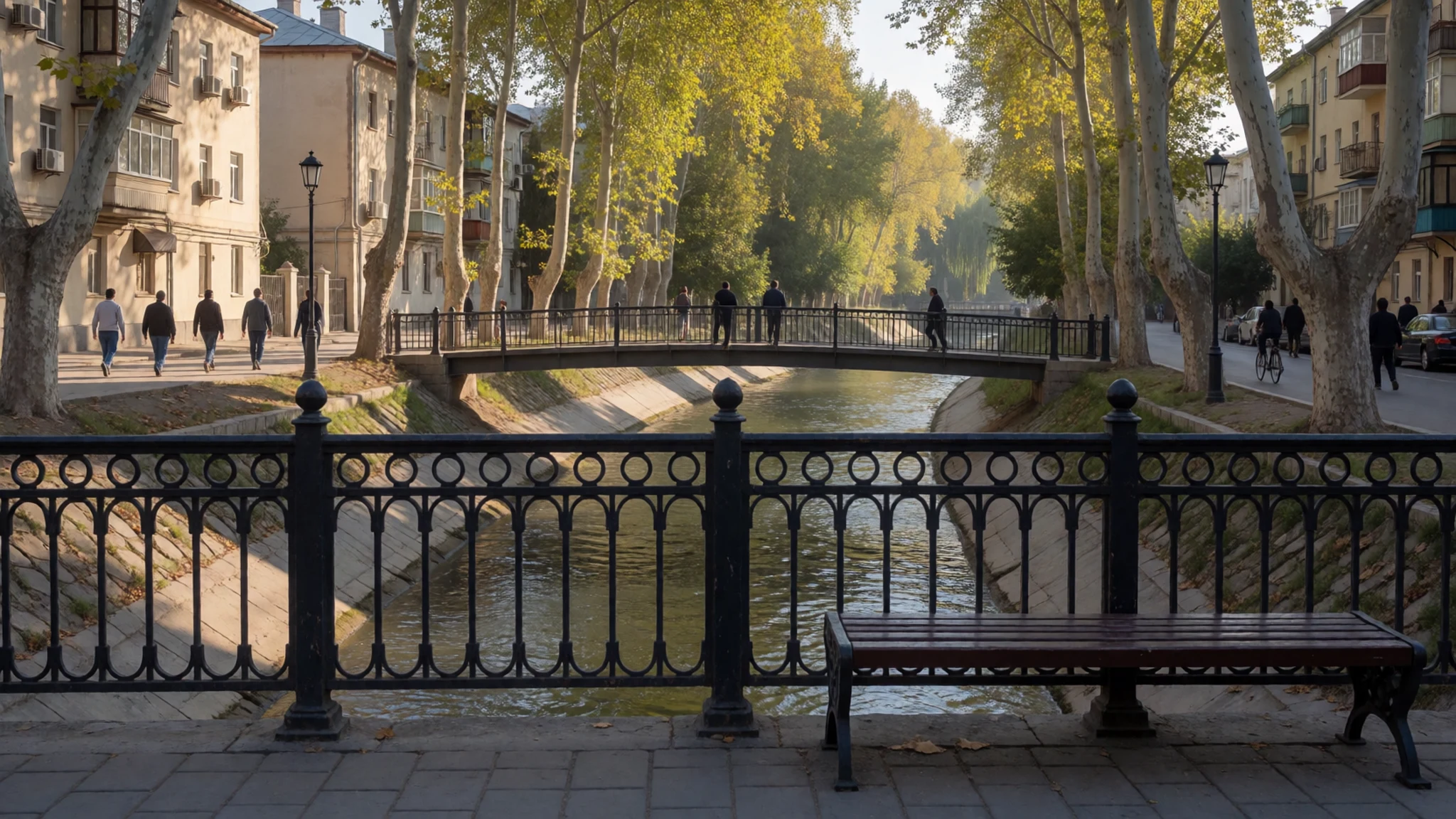
- Varzob town — Varzob District
The town of Varzob, on the river's course through the district of the same name, gives a sense of everyday life in the valley rather than the capital. The river is never far from the road. It works as a stopping point for tea and a stretch of the legs before heading higher or turning back to the city.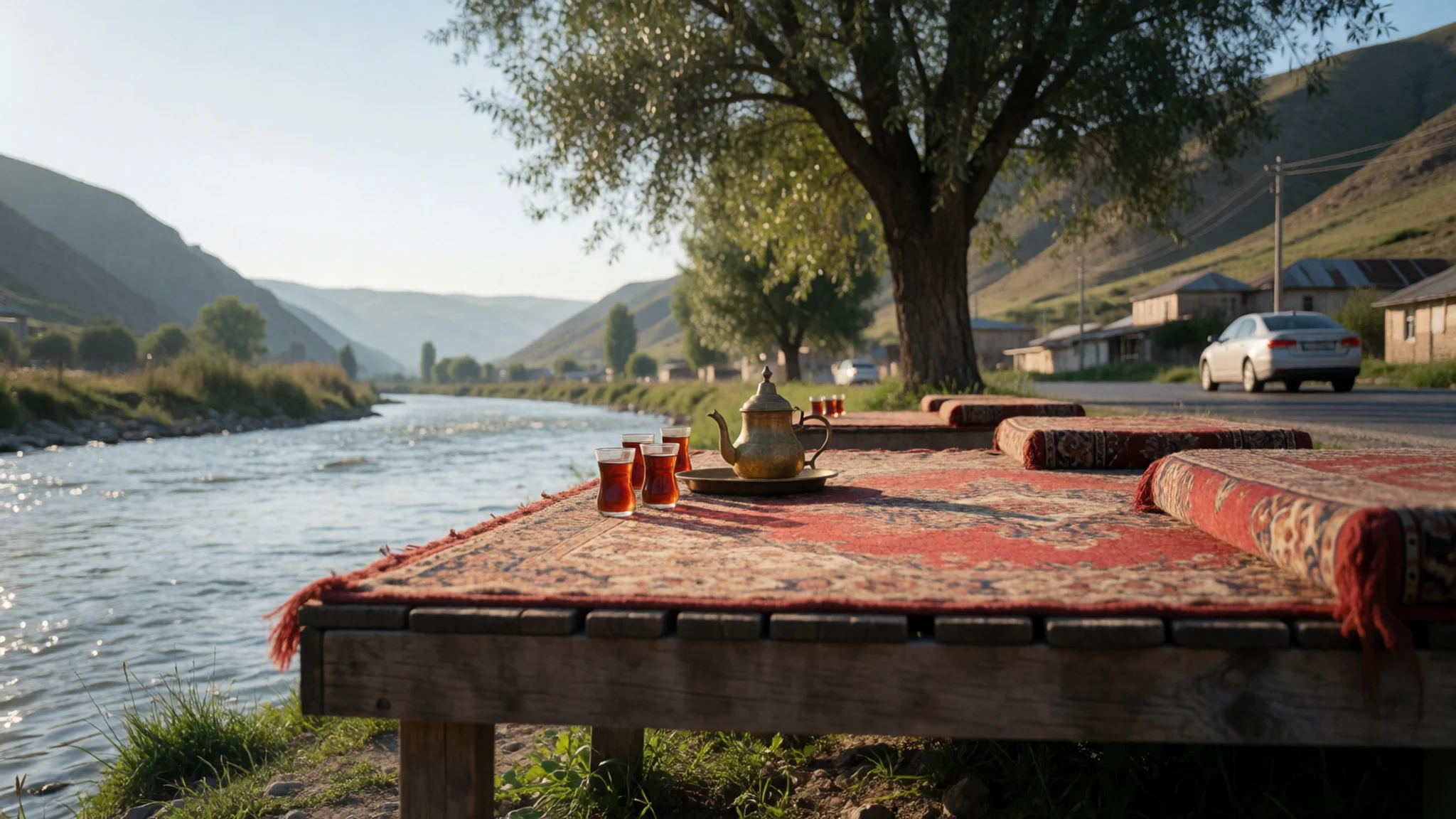
- The Gissar foothills — Gissar Mountains, upper catchment
The Gissar Mountains, where the Varzob rises, form the backdrop to the whole valley. The slopes are greener in spring and drier by late summer, and snowmelt feeds the river. Anyone wanting longer walks should ask locally and check route conditions first; this reading covers the river, not the high routes.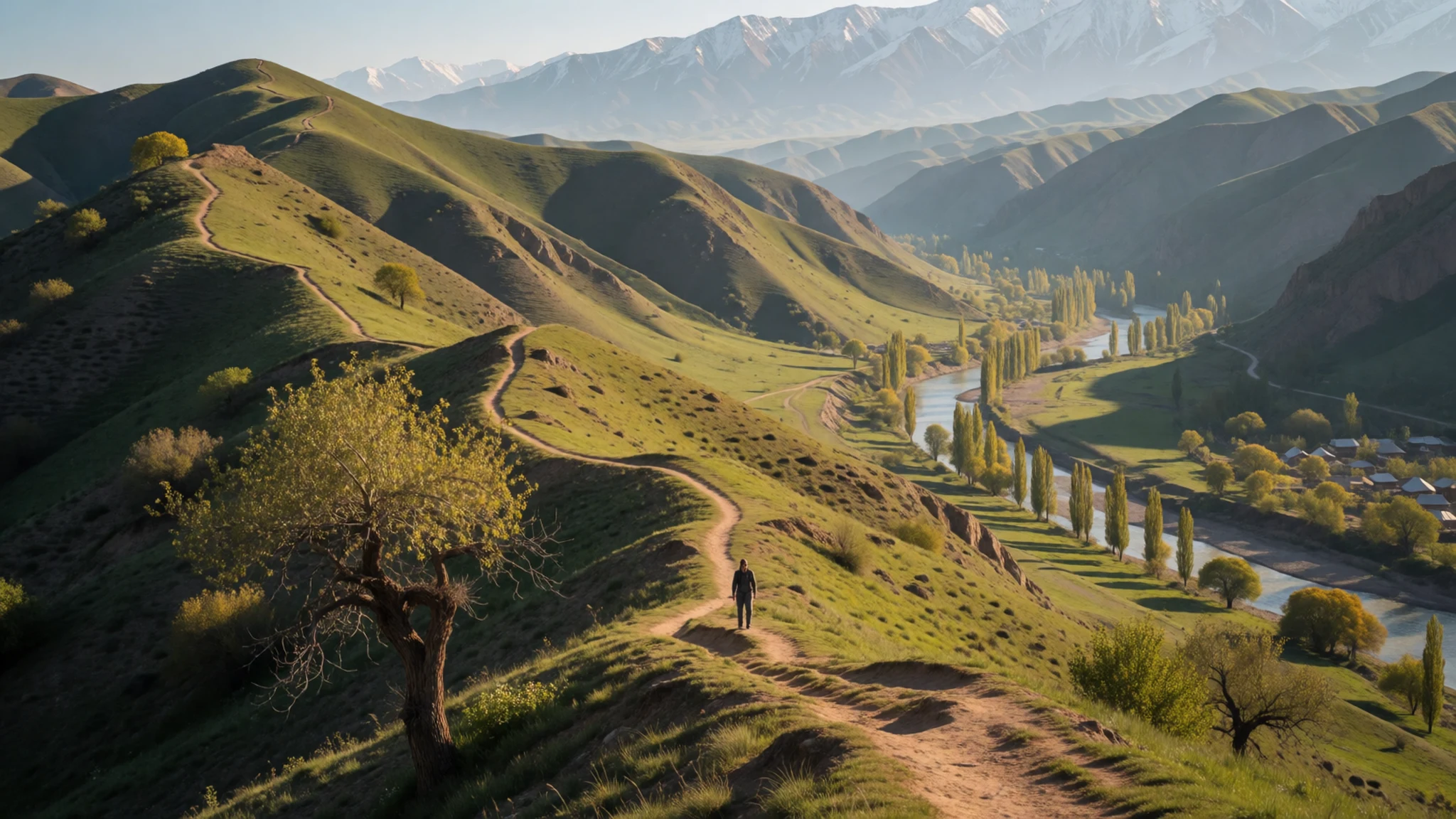
Culture
Varzob lies in a conservative and hospitable country, and the river valley reflects both. Modest dress is expected in public across Tajikistan, and visitors are generally welcomed warmly, though not everyone is equally friendly and the larger cities have some scams to watch for. Young people sometimes approach foreigners simply to say hello and practise their English, which is usually curiosity rather than a hustle.
Around Dushanbe, days out by the river are social. Families and friends sit together over tea, bread and shared dishes, and the pace is unhurried. Meals are often eaten communally from a single plate, and green tea is drunk through the day.
Respect for elders shows in small gestures. When greeting an older man or woman, people place the right hand over the heart. Mosques in Tajikistan are open for prayer to men only; women usually pray at home or at work, and while some mosques in larger cities admit female tourist groups to look around, prayer remains male.
Photographing people calls for care. A smile and a gesture to ask first goes a long way, particularly with older people and with women.
When you meet an older person in Tajikistan, place your right hand over your heart, and keep shoulders and knees covered once you leave the riverbank for town.
What to wear
Traditional dress around Varzob and across Tajikistan draws on Central Asian silk and cotton weaving. Festive clothing uses atlas, a silk ikat with bold, softly blurred patterns, and adras, a lighter cloth that blends silk and cotton. Women have worn long dresses over loose trousers with a bright headscarf, while men's formal wear includes the chapan, a quilted robe, and an embroidered skullcap. These are mostly seen at weddings, festivals and national holidays rather than on an ordinary day.
Day to day, people in Dushanbe wear modern clothes: shirts, jackets and trousers for men, and dresses or long skirts with colourful scarves for many women. Headscarves and face coverings are the exception rather than the norm.
Visitors should dress modestly. Men in shorts draw disapproving stares even in Dushanbe, and women should cover shoulders and knees. For the river valley, wear sturdy shoes with good grip for wet rocks and uneven paths, carry a light layer for cooler mountain evenings, and add a sun hat for the summer months, which are very hot in the lowlands. A light scarf is useful against sun and dust.
What to eat
- Osh (plov) — Dushanbe bazaars and busy lunchtime eating places
Plov, called osh in Tajikistan, is rice cooked with carrots and beef or mutton in a large cauldron over an open flame, then served on a communal plate. It is the dish to try first, and it is filling enough to stand as a whole meal.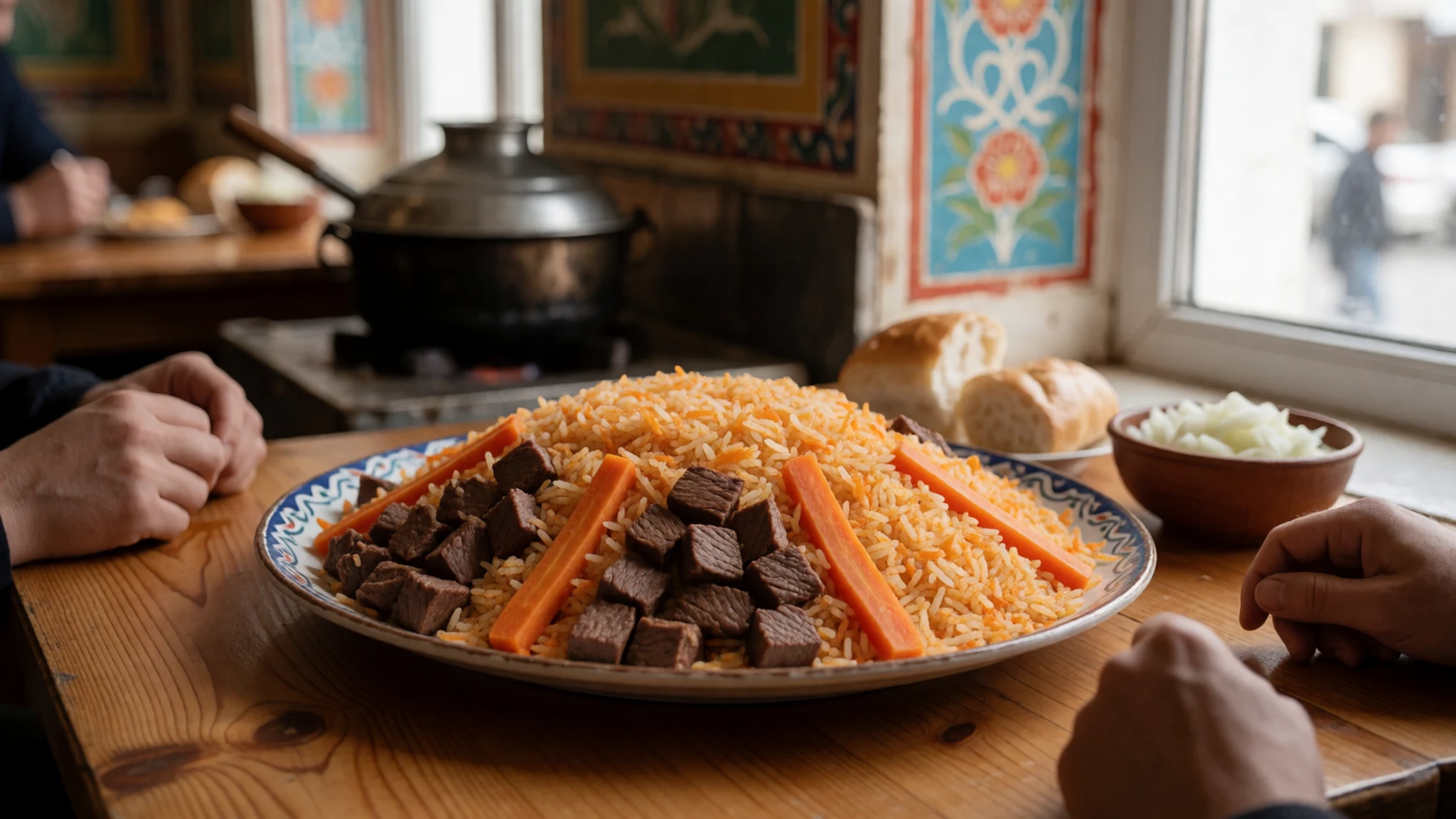
- Qurutob — Traditional tea houses in Dushanbe
Qurutob layers flatbread pieces and vegetables in a sauce made from dried sour cheese (qurut), topped with golden fried onions. It contains no meat and is eaten by hand from a shared platter. It is regarded as the national dish, though osh is easier to find.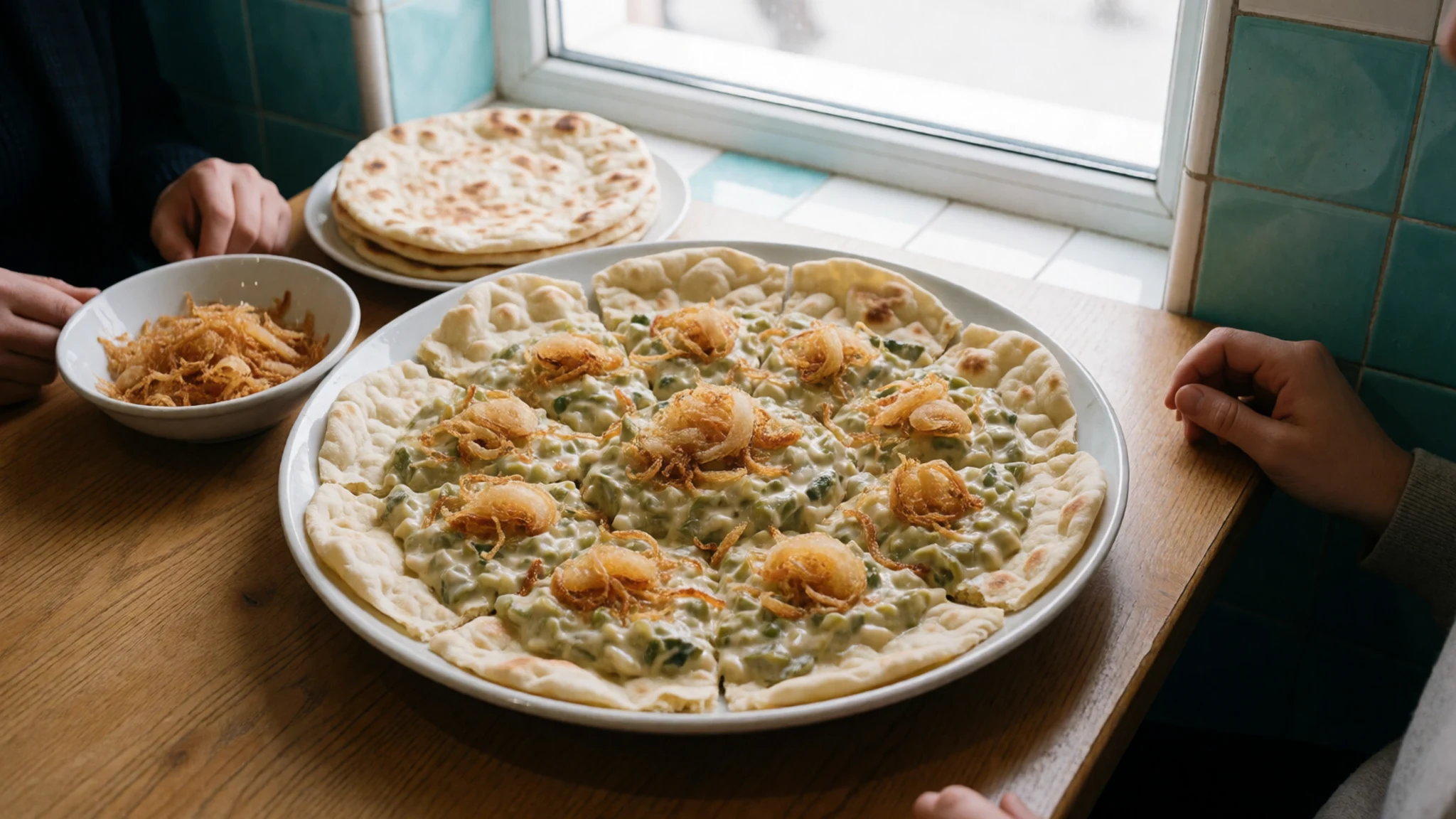
- Laghman — Bazaar food stalls and everyday eateries in Dushanbe
Laghman is a noodle soup with vegetables and beef or lamb, hearty and easy to find. It suits a lunch before or after a walk along the river valley, especially on a cooler day when something hot is welcome. - Non (flatbread) — Neighbourhood bakeries and bazaar stalls
Non is round, dense flatbread baked in a clay oven, usually stamped with a pattern. It arrives with almost every meal and is good fresh and warm, torn by hand and shared at the table. - Green tea and compote — Riverside eating places in the valley and any tea house in Dushanbe
Green tea is drunk all day, sweetened or plain, and is the usual welcome to a table. Compote, a sweet stewed fruit drink, is served chilled in warm weather. Both go well with a long afternoon by the water.
Plan it
Best time. April to June and September to October, when walking is comfortable. June to August is very hot in the lowlands around Dushanbe, so the river valley is most appealing then only for short, early outings.
How long. 1–2
Getting there. Fly to Dushanbe International Airport, then travel north up the river valley by taxi or shared car; the last leg is a short road journey along the Varzob gorge.
Budget. low
Tips
- Drink bottled water and avoid ice; tap water is not safe, and supply to buildings, including restaurants, is sometimes cut off.
- Check current visa and e-visa rules on the Tajik Ministry of Foreign Affairs website before booking, and print your e-visa, as a digital copy is not accepted.
- Go on a weekday if you can; weekends are likely to be busier with families from Dushanbe.
- Carry some cash in small notes for taxis and roadside stops.
- In summer, start early to avoid the worst of the heat.
Etiquette
- Dress modestly, with shoulders and knees covered.
- Place your right hand over your heart when greeting an older person.
- Ask before photographing people.
Nearby
Sources
- Wikidata Q2658784 (CC0)
- Wikipedia: Varzob (river), rev 1374571915 (CC BY-SA 4.0)
- Wikivoyage: Tajikistan, rev 5424872 (CC BY-SA 4.0)
- Varzob, Tajikistan — lensnmatter (CC0 1.0)
- Varzob river near Dushanbe, Tajikistan — Mr. Gadi Zafrir (CC BY 3.0)
- Ravine of Varzob River — Michael Karavanov (CC BY 3.0)
- Река Варзоб, Вазобский район (1) — Шухрат Саъдиев (CC BY-SA 4.0)
- Река Варзоб, Вазобский район (2) — Шухрат Саъдиев (CC BY-SA 4.0)
- Река Варзоб, Вазобский район (3) — Шухрат Саъдиев (CC BY-SA 4.0)
- Река Варзоб, Вазобский район (4) — Шухрат Саъдиев (CC BY-SA 4.0)
- Varzob River — Nikolamikovic82 (CC0 1.0)


