Tigrovaya Balka
Tigrovaya Balka, Tajikistan
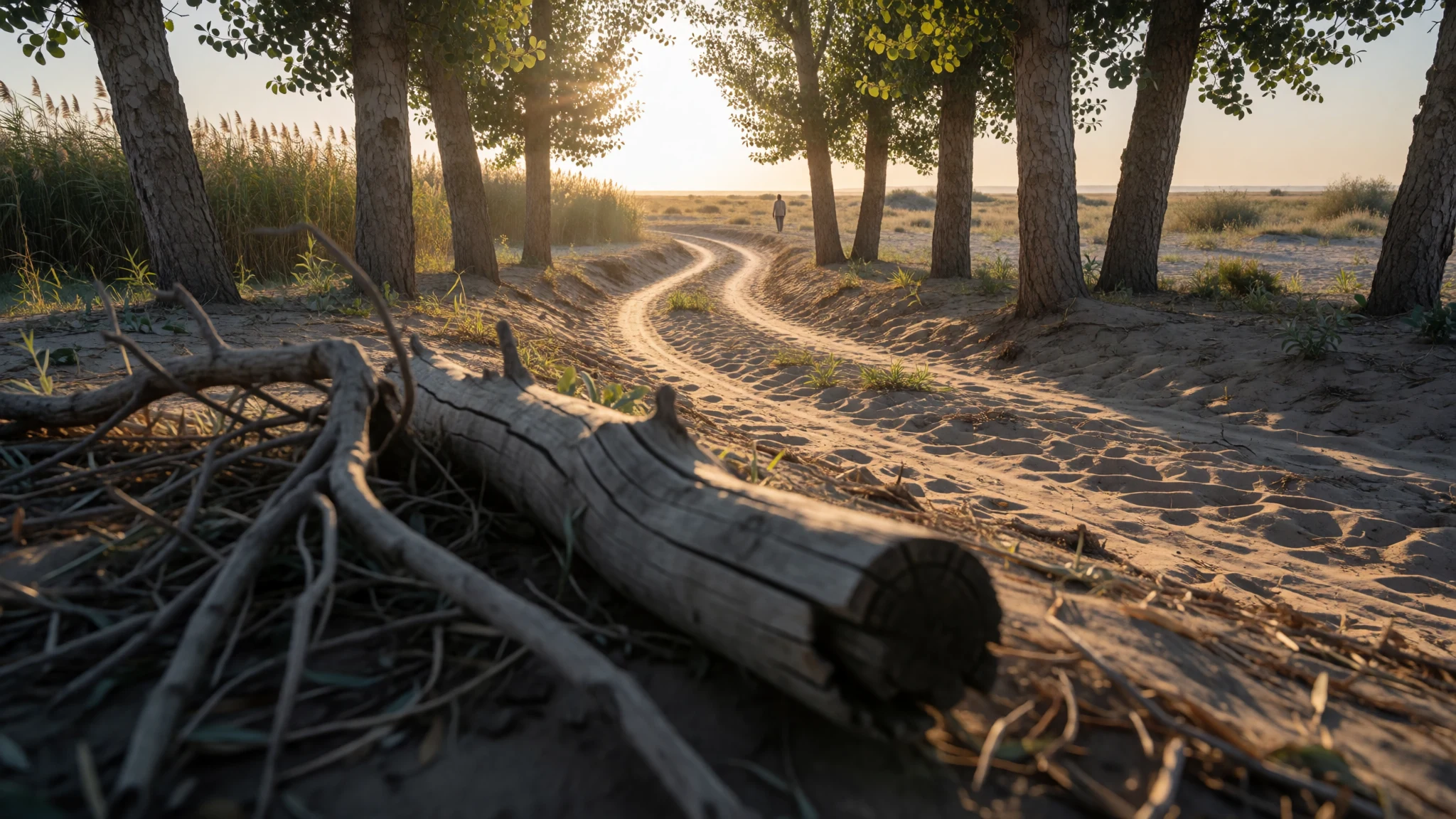
Tigrovaya Balka keeps a living ribbon of tugay forest where the Vakhsh still floods a desert plain in southern Tajikistan.
The place
Tigrovaya Balka is a strict nature reserve on the lower Vakhsh, in the hot lowlands of south-western Tajikistan. The name is Russian for tiger ravine: a shallow wooded cut in a landscape that is otherwise desert, salt flat and irrigated field. What makes the place is tugay, the floodplain woodland that grows where a Central Asian river still spills, drops silt and then pulls back. Poplars with pale bark stand over oleaster, tamarisk and a thicket of reed. Away from the water the ground turns to sand and scrub within a short walk. The air in the warm months is dry and glaring; along the oxbows it is close, and insects gather wherever the water sits still. Shade is a narrow gift under the canopy. The reserve is a ribbon, not a park of lawns: tracks of dust, fallen branches, and sudden openings where a former channel has become a lake. Jackals, jungle cats and wild boar use the cover. Bukhara deer, the tawny deer of these river forests, are the animal most people hope to glimpse at the edge of the trees. Birds use the reeds on passage and in the breeding season. Beyond the boundary, cotton and wheat take the water that the forest also needs, so the green stops abruptly at canals and fields.
Its story
Tigrovaya Balka took its name from the tiger that once hunted these reeds and poplar alleys. Local speech still carries the Russian name, Tigrovaya Balka (Тигровая балка), a memory of an animal the floodplain no longer holds. The tiger of Central Asia needed exactly this kind of cover: dense tugay, water, and wild pigs to hunt. As reeds were cut, channels straightened and guns became common along the Vakhsh, the cat vanished and left the ravine its title. The woodland that remains is a fragment of a forest type that used to follow the great rivers of the region wherever they flooded. Soviet planners, who turned much of the valley to cotton, also set this tract aside as a zapovednik, a reserve meant to be left alone for study and for the animals. That legal idea still shapes the place: wardens, permits and a bias against casual wandering. Through the decades the river has been dammed and tapped upstream, so the floods that feed the poplars arrive on a human schedule, or sometimes barely arrive at all. Young trees need that pulse of water; without it the desert walks in. The story of Tigrovaya Balka is therefore not a ruin and not a wilderness untouched. It is a narrow bargain between a river, a forest and the farms that stand on either side, with an extinct tiger in the name to say what the bargain once included.
What to see
- Vakhsh tugay — Vakhsh floodplain inside the reserve
Tigrovaya Balka's tugay is a gallery of pale poplars, oleaster and tamarisk along old flood channels. In the early morning the dust still holds tracks and the canopy is broken enough for sun and shade to swap every few steps. Pheasants move in the undergrowth. Wind knocks dry wood. This woodland is the heart of the reserve.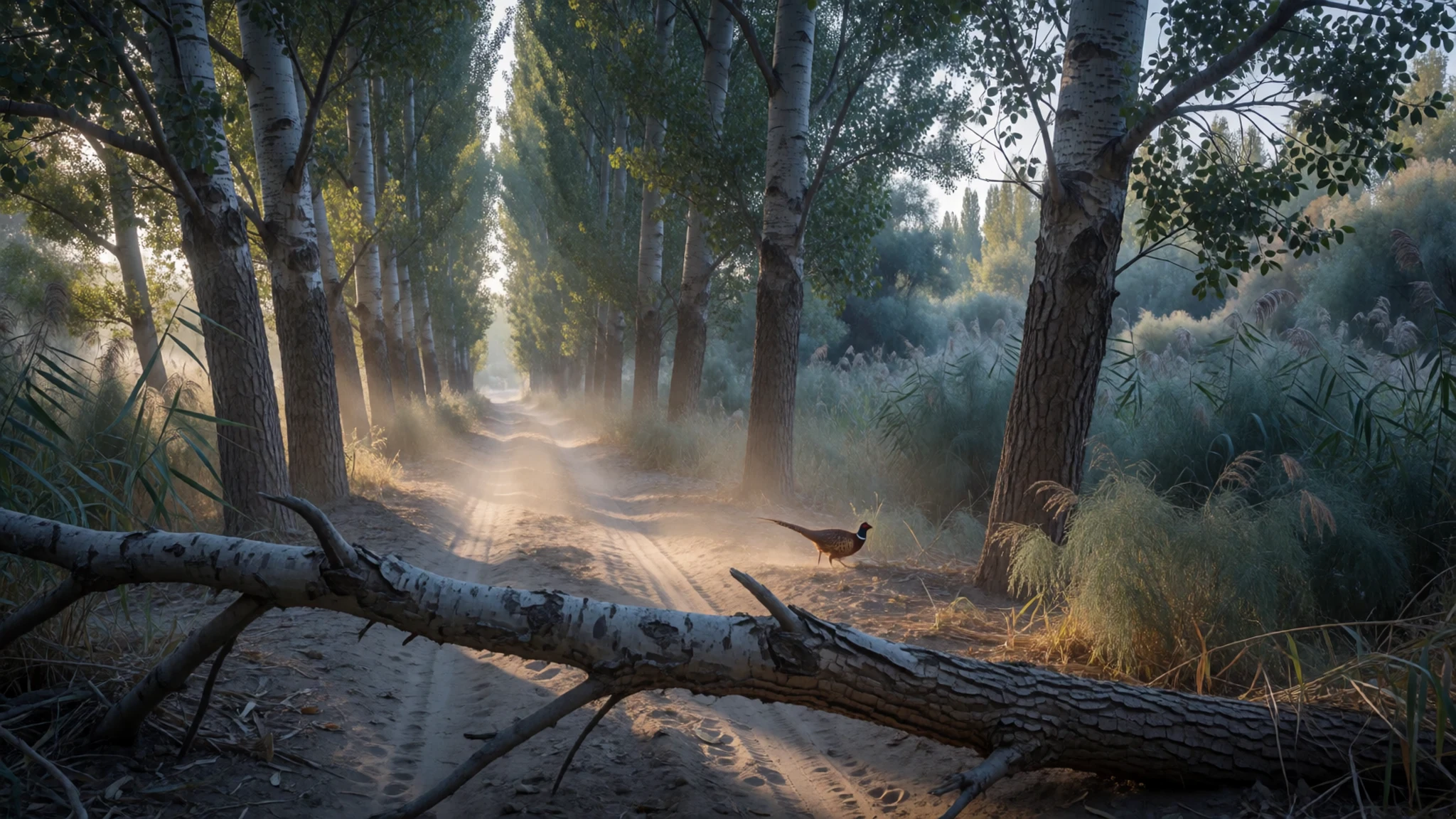
- Oxbow lakes and reeds — Cut-off bends beside the Vakhsh channel
Tigrovaya Balka's oxbows are old bends of the Vakhsh, cut off from the main flow and ringed with tall reed. Herons, ducks and smaller migrants use them, and the air stays humid even on a desert day. Banks are soft and the cover is thick, so animals drink at the margins rather than in the open. A figure on the skyline sends the birds up at once.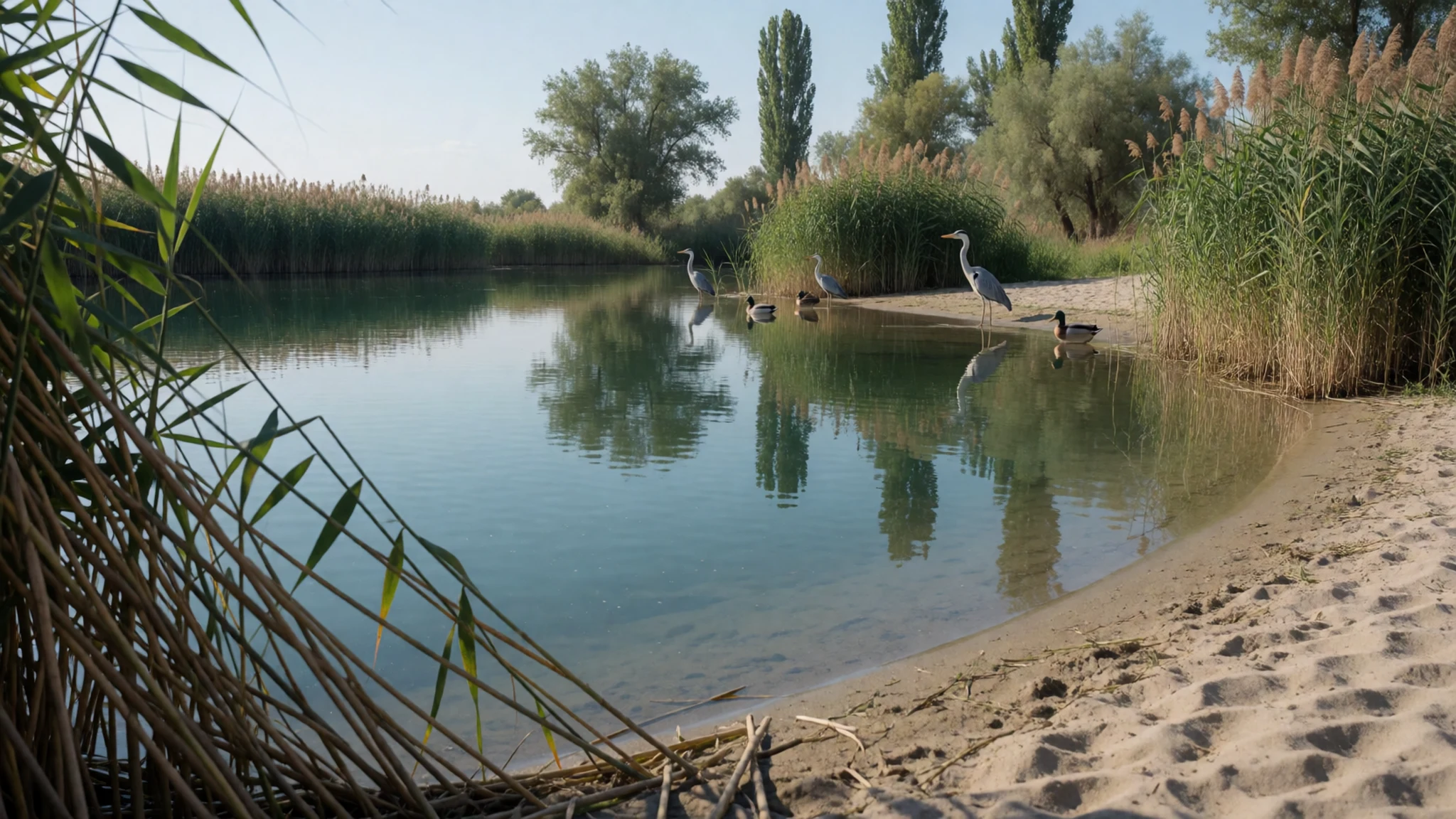
- The desert edge — Sand and scrub at the reserve fringe
Beyond the poplars, Tigrovaya Balka changes in a few minutes from woodland to open sand and low scrub. The light is harder, the plants are wiry, and the mountains sit far off when haze allows. This fringe shows why the forest cannot wander: past the reach of floodwater, the plain will not hold a tree. Early and late in the day that contrast is easy to see.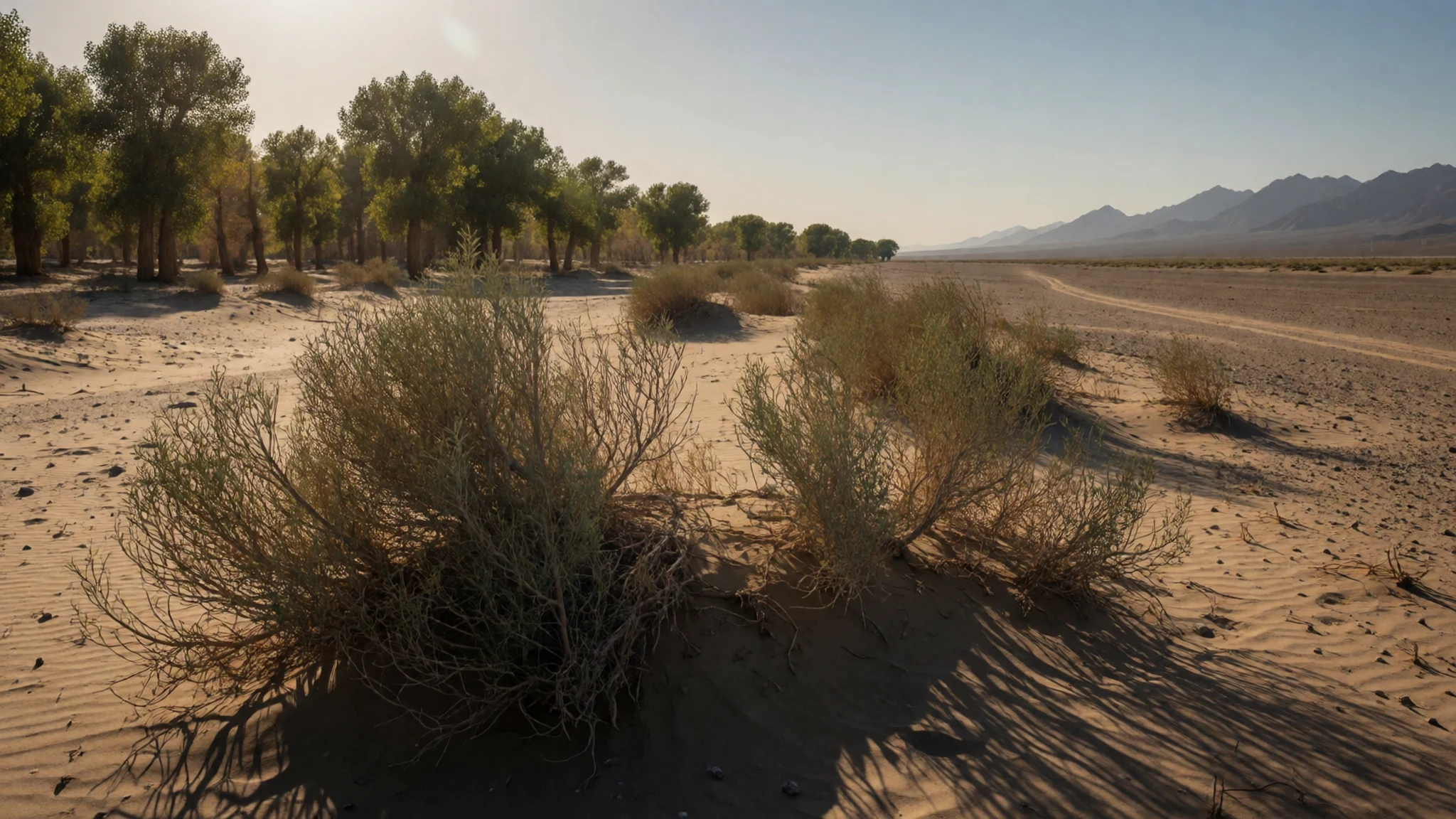
- Bukhara deer country — Poplar stands and reed edge
Bukhara deer still live in Tigrovaya Balka: shy, tawny animals of tugay and thicket, more often known by slots in the mud than by a clear view. Dawn and dusk are the honest hours. They cross between poplar stands and the reed edge. A quiet watch from a warden's track is kinder to them than pushing into the brush.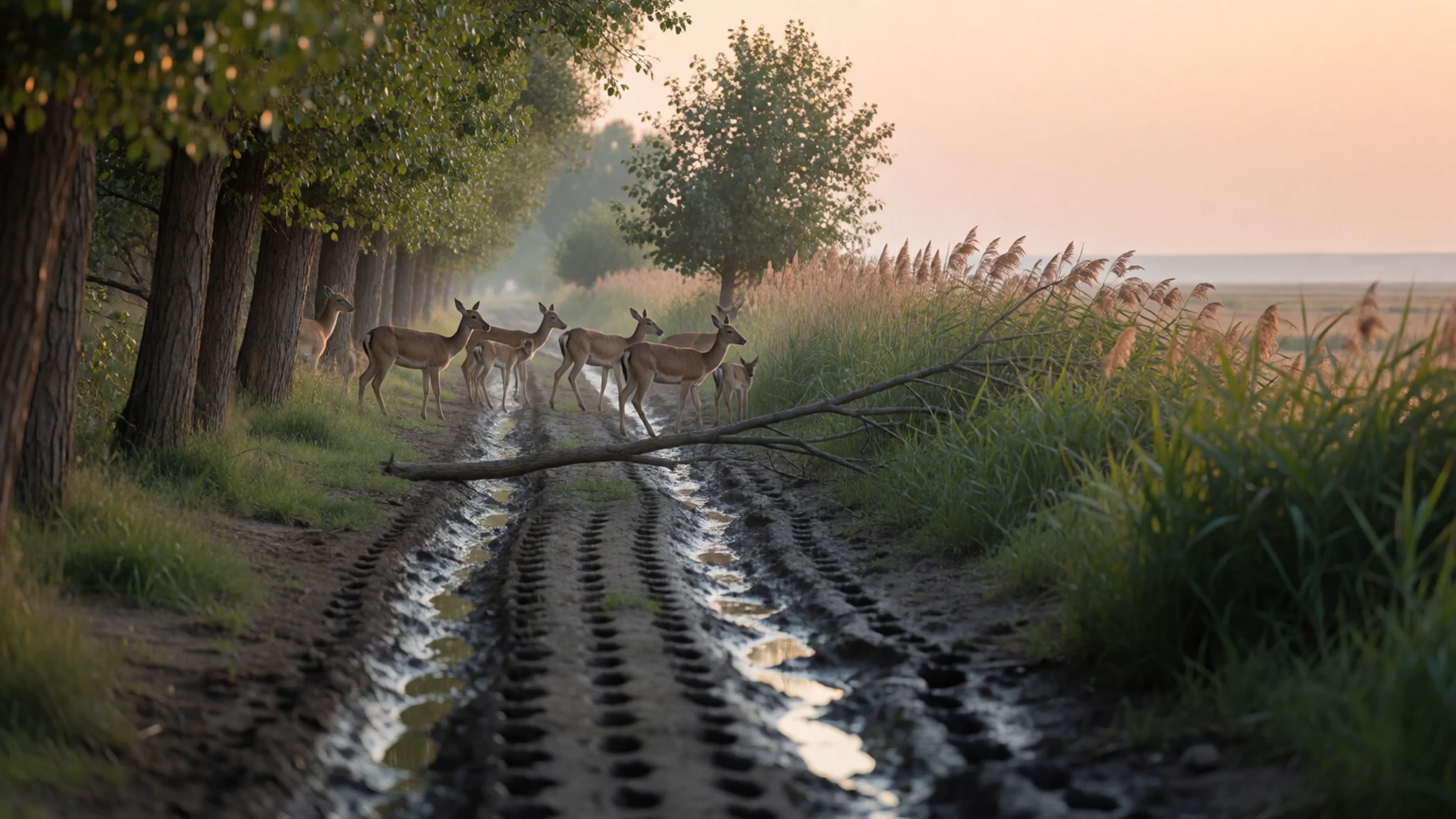
- The Vakhsh bank — Main channel of the lower Vakhsh
The living river is the engineer of Tigrovaya Balka. Where the Vakhsh still moves, it undercuts banks, drops sandbars and feeds the roots of the nearest poplars. The channel is louder and cooler than the reed-bound oxbows, and less hidden. Upstream dams have left the level looking modest for a river with a long history of flood. Everything green in the reserve depends on this bank.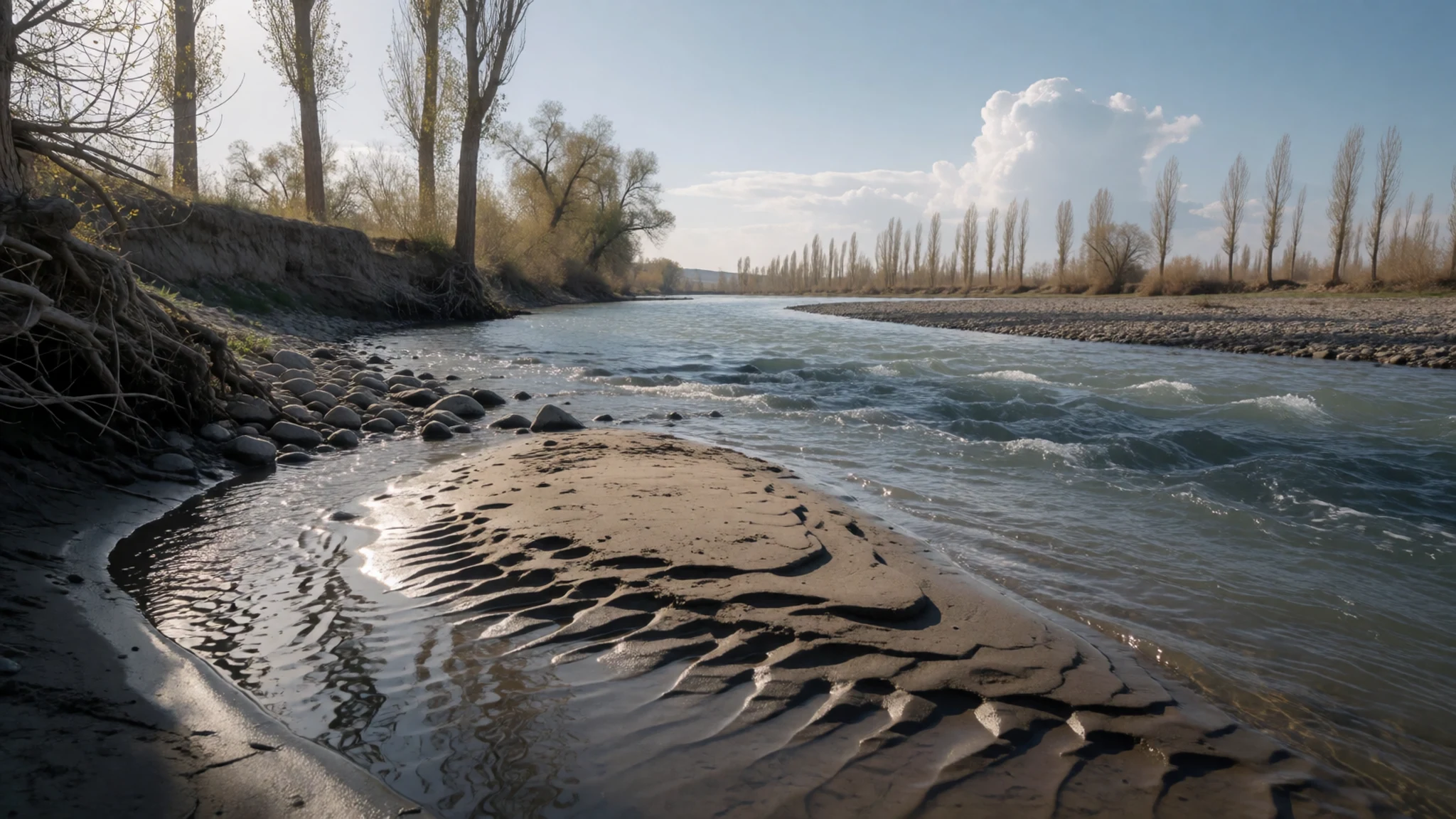
Culture
Tigrovaya Balka lies in Tajikistan's southern lowlands, where daily life is Tajik and Muslim, and where a guest is still a serious matter. Tajik, a form of Persian, is the language of the house; Russian lingers in official speech and in the reserve's own name. Tea opens every visit. Bread is handled with care: it is not set on the ground, and it is not thrown away in front of a host. Elders are greeted first. In villages around the Vakhsh, homes often ask visitors to leave shoes at the door, and a meal may be taken seated on the floor from a shared spread. Hospitality is warm and can be insistent; refusing a first cup reads as odd, while an empty cup is often refilled unless a hand covers it. The reserve itself adds another layer. It belongs to the old zapovednik idea: land kept for nature and for wardens, not a picnic ground. People who live nearby have long used reeds, grazing and fish, and those needs still press on the boundary, so a stranger's careless cutting or off-track driving is not a small thing. Dress modestly in the villages, ask before you photograph anyone, and stay on the warden's routes inside Tigrovaya Balka.
What to wear
Tigrovaya Balka is not a city of tailors, but the valley around it still shows how southern Tajikistan dresses. For festivals and Navruz, women wear long dresses in bright cotton or in atlas and adras, silk ikat whose edge is blurred because the threads are tied before dyeing. A rumol covers the hair in many rural houses. Men keep a chapan, a padded coat, and a toqi, an embroidered skullcap, for cold mornings, prayers and celebrations: silk and cotton for heat and honour days, wool and quilting when the plain turns cold. On a weekday in Bokhtar the clothes are plainer: trousers and shirts for younger men, long dresses, cardigans and scarves for women, with jeans more common in town than in the villages. A visitor should follow that modest end. The reserve is thorn, dust and hard sun, so wear closed shoes, trousers, a long-sleeved shirt, and a scarf for a village doorway or for noon. Add a heavy coat for November nights, colder than January, and for March dawns before a scorching day.
What to eat
- Osh — Chaikhanas in Bokhtar and along the Vakhsh valley road
Osh, or plov, is rice with carrot, onion and meat, the gathering dish of the Vakhsh valley around Tigrovaya Balka. It comes to the table in a chaikhana, the teahouse, with non and tea. The rice should taste of oil and carrot.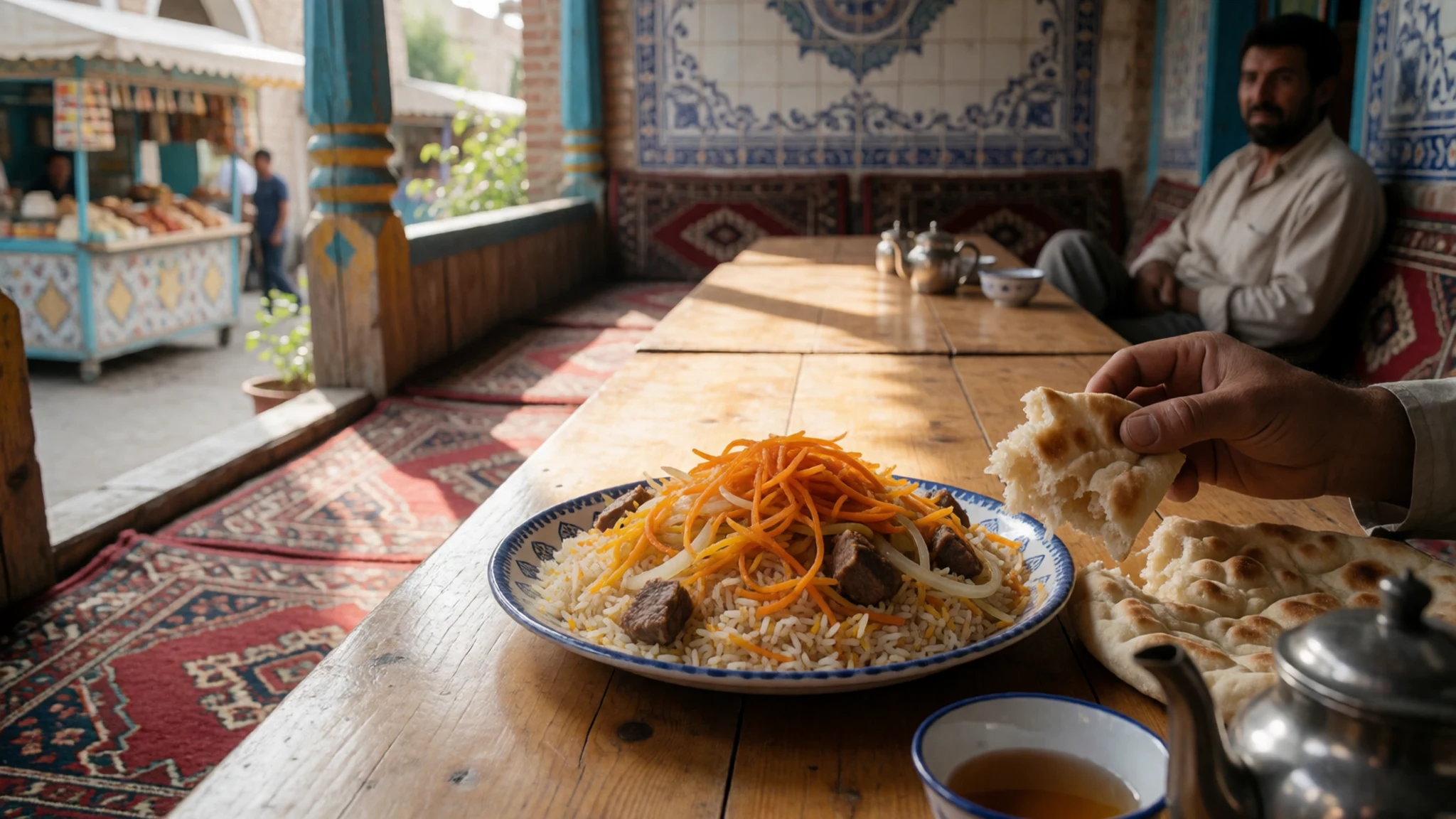
- Qurutob — Teahouses in Bokhtar and the Vakhsh valley
Qurutob is fatir or non torn into qurut, a sauce of dried yoghurt, with onion, tomato and herbs. Tajik hosts treat it as the everyday national bowl, eaten by hand from a shared dish. Teahouses in Bokhtar and the Vakhsh valley serve it on ordinary days.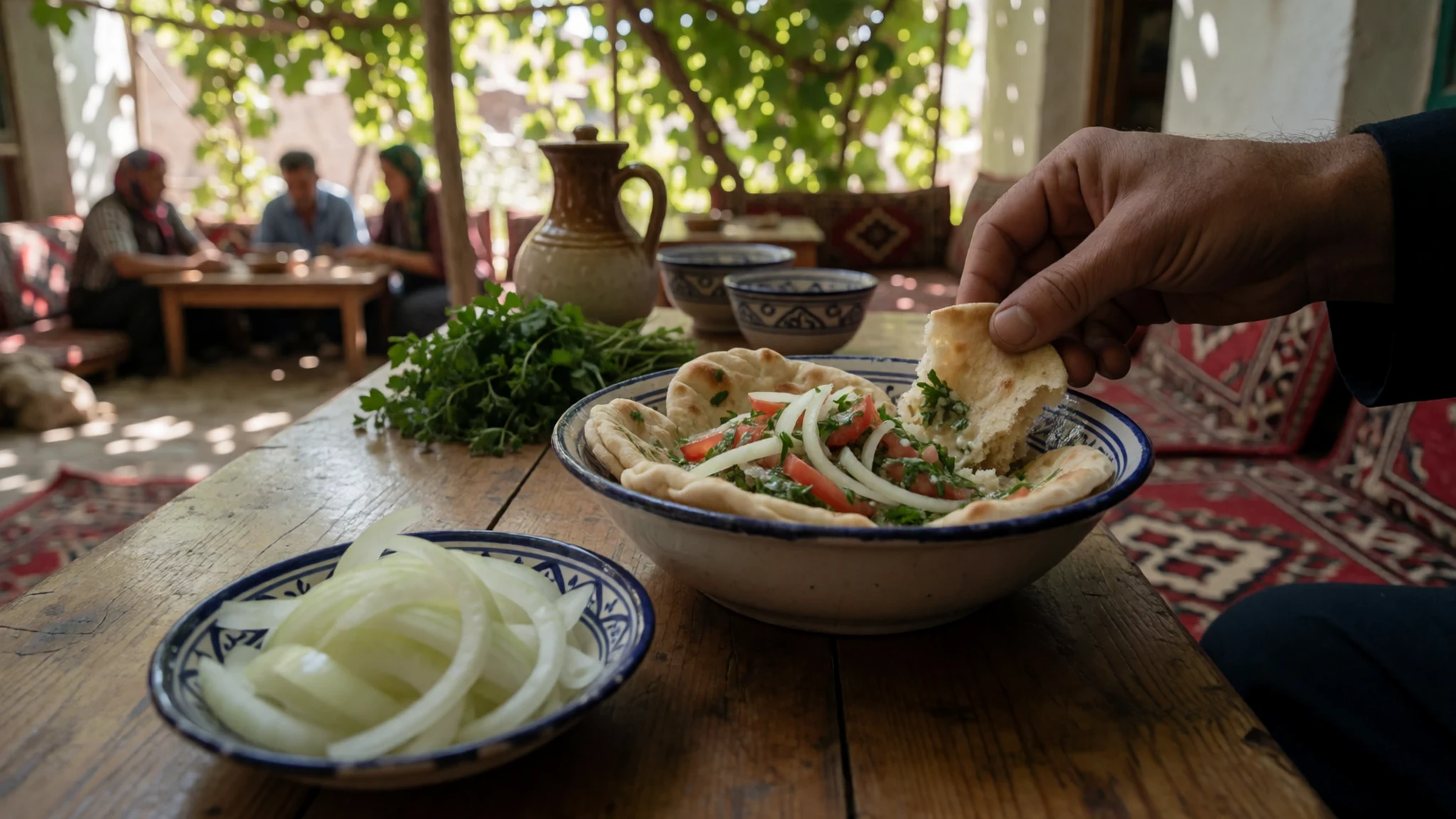
- Sambusa — Morning bazaar in Bokhtar
Sambusa are baked parcels of meat, onion and sometimes pumpkin, sold from tandyr ovens at bazaars rather than from a formal menu. In southern Tajikistan the dough is often flaky and the filling peppered. The morning batch in Bokhtar's bazaar is still warm. - Shurbo — Chaikhanas along the Vakhsh valley road
Shurbo is a boiled soup of meat, potato, carrot and onion, sometimes with chickpeas, eaten with non on a cool day. Chaikhanas on the Vakhsh valley road keep it as the dependable pot. Fat floats on top, and bread does the work of a spoon. - Non — Bazaar bakeries in Bokhtar
Non, the round tandyr bread, is on every table around Tigrovaya Balka. The centre is stamped, the rim is thick, and the loaf is torn rather than cut. Bazaar bakers in Bokhtar sell it through the day. A shared piece is the host's honour. - Shakarob — Summer teahouses in the Vakhsh valley
Shakarob is the hot-weather plate of the Tajik plain: tomato, cucumber and onion cut small, salted, and folded with torn fatir and a spoon of oil or qurut. No long cooking, which suits a noon stop near the reserve. Summer teahouses and home tables in the valley both keep it.
Plan it
Best time. December, January and February are the kind months at Tigrovaya Balka, when the days stay gentle, February wettest and July the fiercest. Summer on this plain is fiercely hot and dry, and winter nights are cold with soft tracks after rain. Spring moves birds through the reeds; autumn is clearer for walking.
How long. 2–3
Getting there. Fly into Dushanbe, then take the road south through the Vakhsh valley and Bokhtar. The last leg is by car with a local driver, as the forest has no public stop. Ask about permits before leaving the capital, because access near the southern border can tighten without notice.
Budget. mid
Tips
- Arrange a driver and a permit check in Dushanbe before the day of entry.
- Start at first light, because late morning in the warm months is harsh and the deer leave the open edges.
- Carry more drinking water than a city day needs, since shade and shops stop at the reserve boundary.
- Take cash for valley bazaars and teahouses, and do not rely on a card once you leave Dushanbe.
- Use a repellent near the oxbows in the warm months, when insects gather on still water.
Etiquette
- Remove shoes when a host leaves them at the door.
- Ask before photographing people in the villages around the reserve.
- Stay on the warden's routes, and do not pick plants, cut reed or drive off the track.
Nearby
Sources
- Wikidata (CC0)
- Wikipedia (CC BY-SA 4.0)
- Wikivoyage (CC BY-SA 4.0)
Wildlife
- Pheasant (bird)
The pheasant is a handsome ground-loving bird, often called ring-necked or blue-headed, and it is a distant relative of the farmyard chicken. In Tigrovaya Balka it moves about in the undergrowth, so look low among the plants rather than up at the sky. Keep your distance, move softly and speak quietly, and ask a guide to help you spot it. Never feed it, so it stays wild.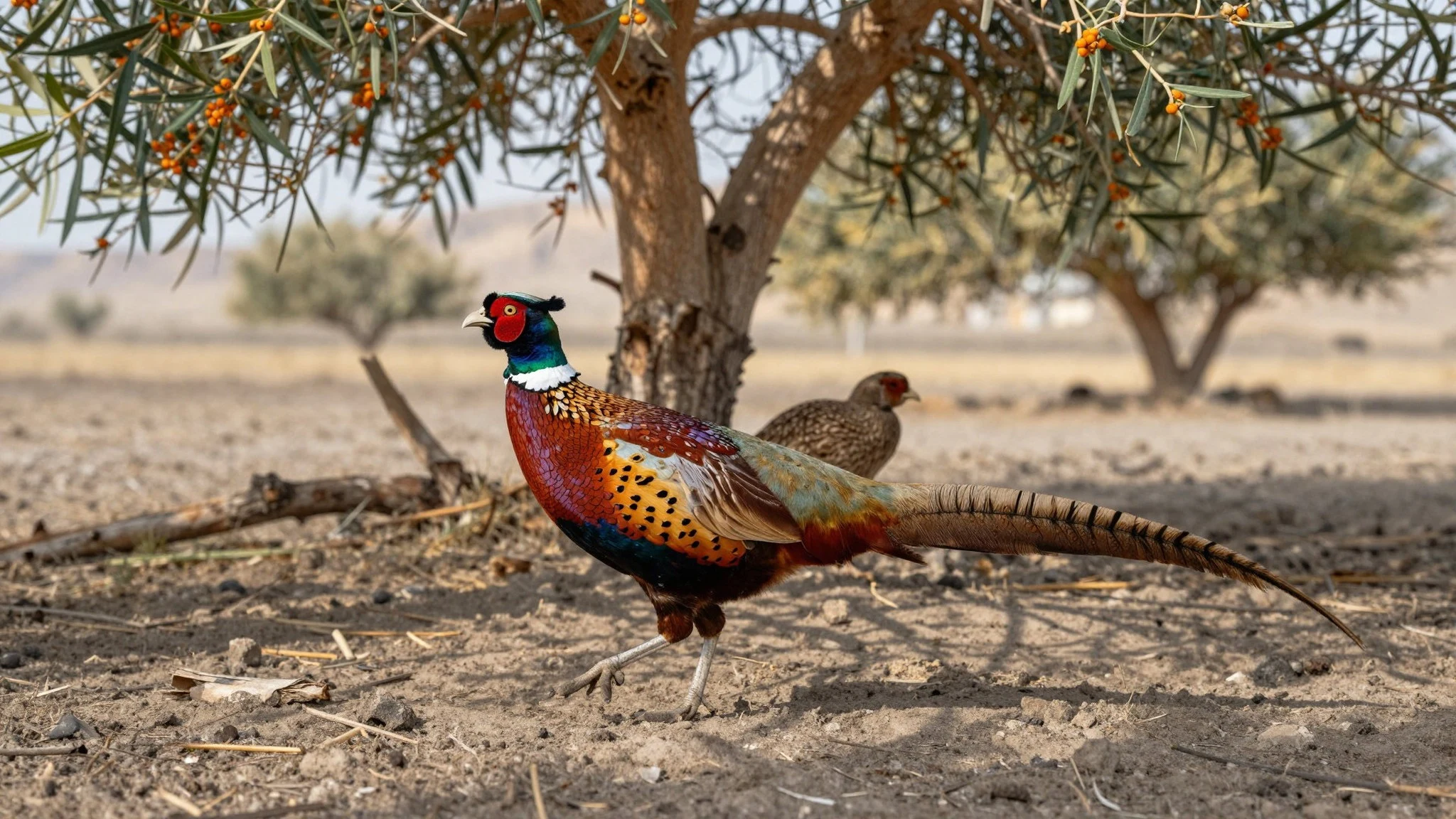
- Bukhara deer (animal)
The Bukhara deer is a shy, tawny cousin of the red deer, an animal of the lowlands that follows river corridors through desert country. In Tigrovaya Balka it still lives in the tugay woodland and thickets, and you are far more likely to find its hoofprints in the mud than to enjoy a clear view. Look for tracks, keep a respectful distance, stay quiet, and walk with a guide who knows the paths. Never feed it. - Jungle cat (animal)
The jungle cat is a medium-sized wild cat that loves wet, reedy places, so think of it as the cat of the marshes. In Tigrovaya Balka it shares the thick cover with jackals and wild boar, which means it keeps well hidden. Be patient, watch from a good distance, stay still and quiet, and let a guide lead the way. Never offer it food, as that would spoil its wild ways.