Takht-i Sangin
Takht-i Sangin, Tajikistan
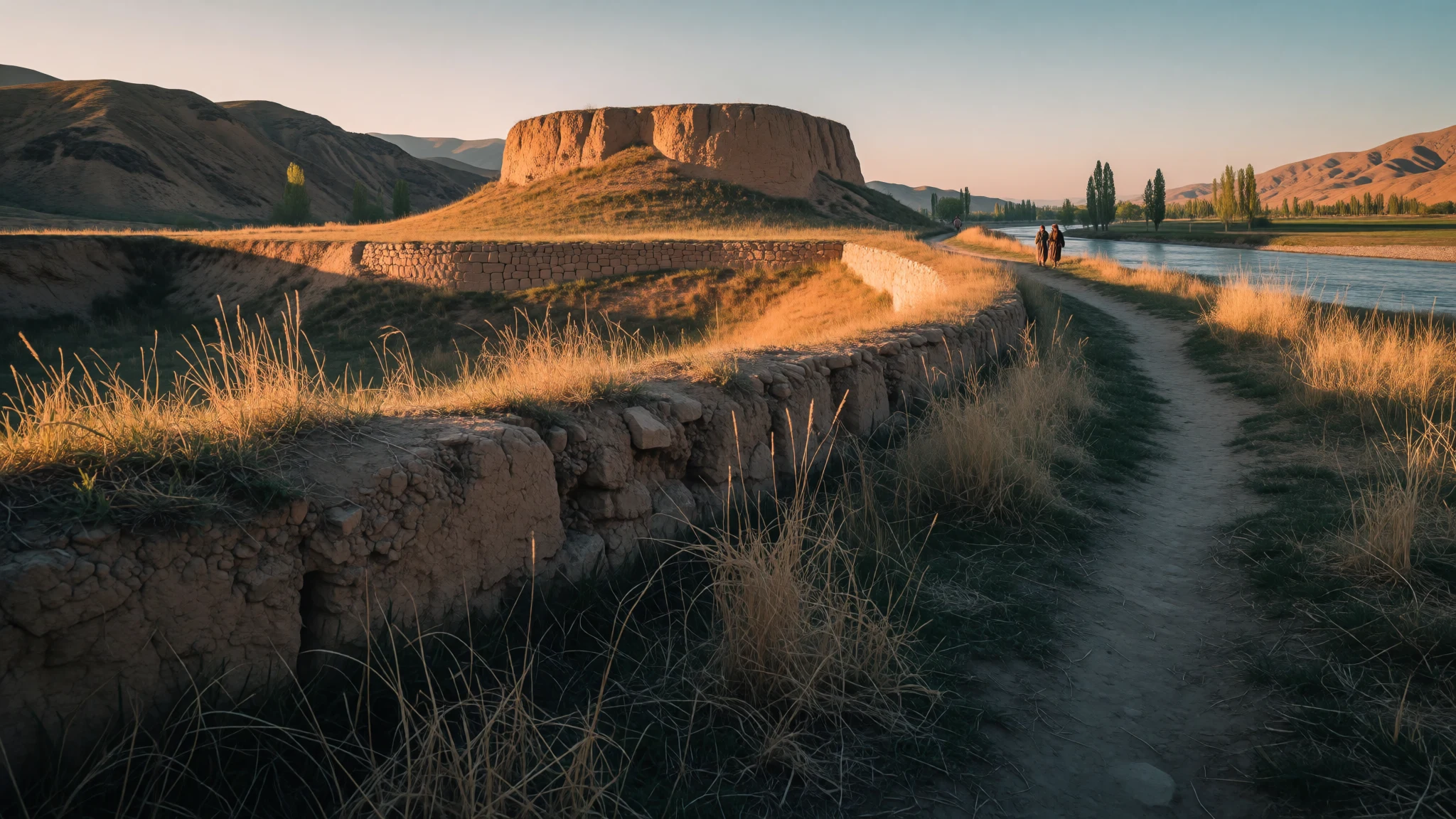
Takht-i Sangin is a ruined river-god temple in southern Tajikistan, where Greek columns and Central Asian worship met beside the ancient Oxus.
The place
Takht-i Sangin, which means 'Throne of Stone' in Tajik, occupies a flat terrace in southern Tajikistan, just south of the point where the Vakhsh river joins the Panj. Below that meeting, the water carries the name Amu Darya, the Oxus of the ancient Greeks. The terrace stretches for a few kilometres from north to south, wedged between the river on the east and the dry Teshik Tosh hills on the west. Water on one side and rock on the other did most of the defending, so walls mattered mainly at the northern and southern ends, with further cross walls cutting the town into districts. In the middle rose a citadel on a built-up mound, circled by a ditch and a low stone wall, and the temple complex stood at the heart of the settlement. Farmland nearby is scarce, so the town's wealth must have come from elsewhere: pilgrims, offerings and the pull of its shrine. Today the ground lies in Khatlon, a region that became a cotton-growing centre under Soviet rule, and the Panj here is also the frontier with Afghanistan. What remains is low and weathered: foundations, trenches, fallen stone and a great deal of sky. Anyone expecting a restored monument will be disappointed, while those who enjoy imagining a lost city from its outlines will be rewarded. The best finds are now in museums, so the ruins work best as a way to understand the setting.
Its story
Takht-i Sangin belongs to the Greco-Bactrian world, the kingdom that grew up in Central Asia after Alexander's armies and their successors left Greek settlers, soldiers and ideas along the upper Oxus. Here the newcomers built a town around a temple to the river itself, honoured as a god, and they did it in a mixed visual language: Ionic columns and Greek-style sculpture alongside local and nomadic motifs. The archaeologist Lindström suggests that pilgrims from across Bactria came to honour the river god here, which would explain how a town with so little farmland could flourish. Violence ended that phase. Raiders, probably Kushans, wrecked the town, and its population largely drained away. The temple outlived that blow, still receiving worshippers under Kushan rule, before it too was abandoned. The site's name comes up again in the story of the Oxus Treasure, a hoard of gold and silver metalwork now in the British Museum. It was found a short way south, at Takht-i Kuvad, and some scholars think the pieces may once have been offerings from this very temple. That remains a hypothesis rather than a fact. The site's reputation rests more securely on the Soviet-era excavations that recovered its altars, weapons, votive plaques and sculpture.
What to see
- The temple terrace — Takht-i Sangin, Khatlon
The terrace itself is the main sight, with the outlines of the Oxus temple and its citadel mound still traceable in low walls and trenches. Walk it slowly with the excavation plan in hand and compare it with what lies on the ground. Little is rebuilt or labelled, so reading up beforehand, or going with a local guide, makes the visit far richer.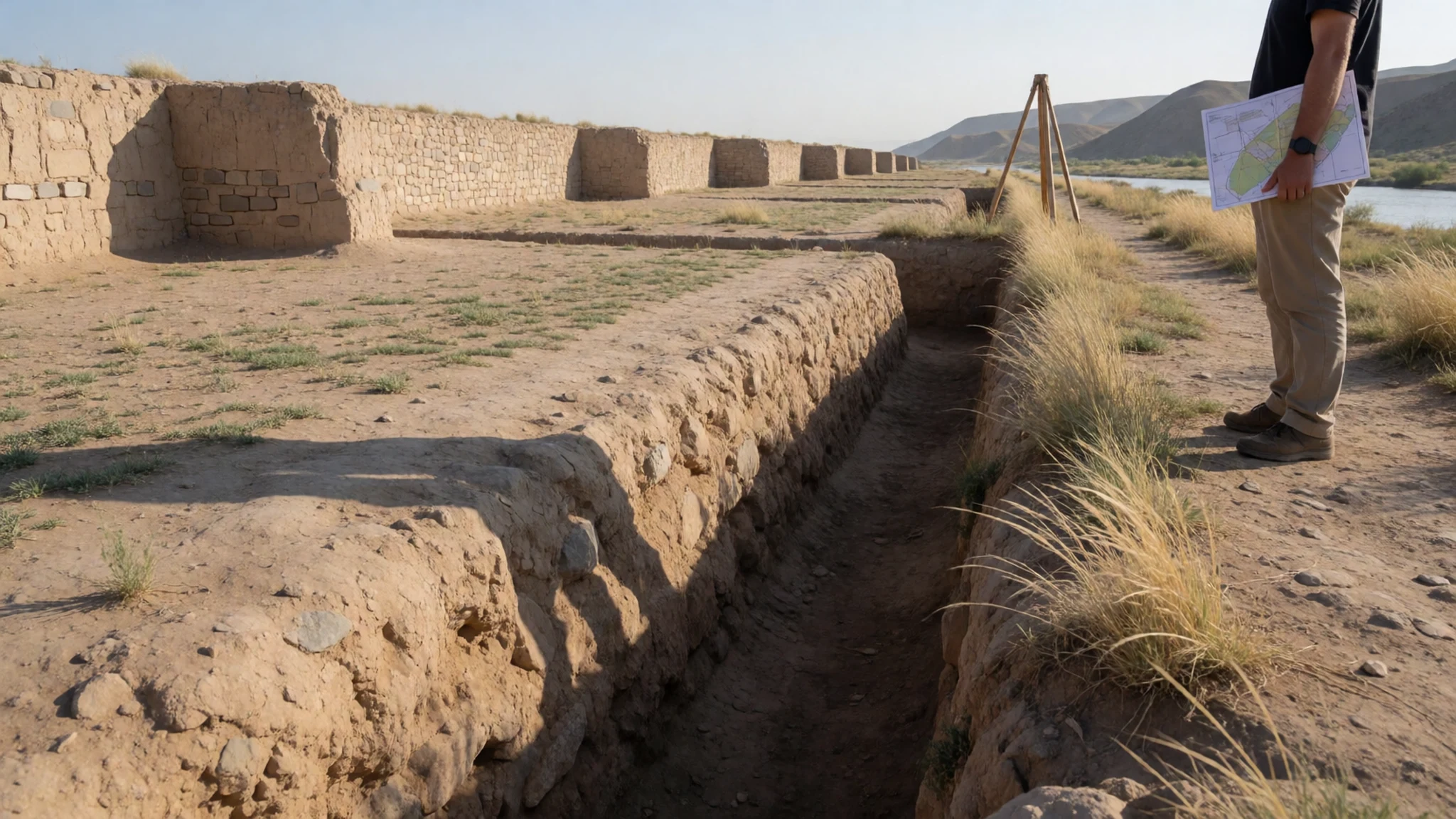
- Confluence of the Vakhsh and Panj — Just north of the ruins
Close to the ruins, the Vakhsh and the Panj join to form the Amu Darya. The meeting of waters explains the site's setting and the cult of the river, and the view across to the Afghan bank makes the border location tangible. Ask locally what is accessible, stay on open ground and keep cameras away from border posts.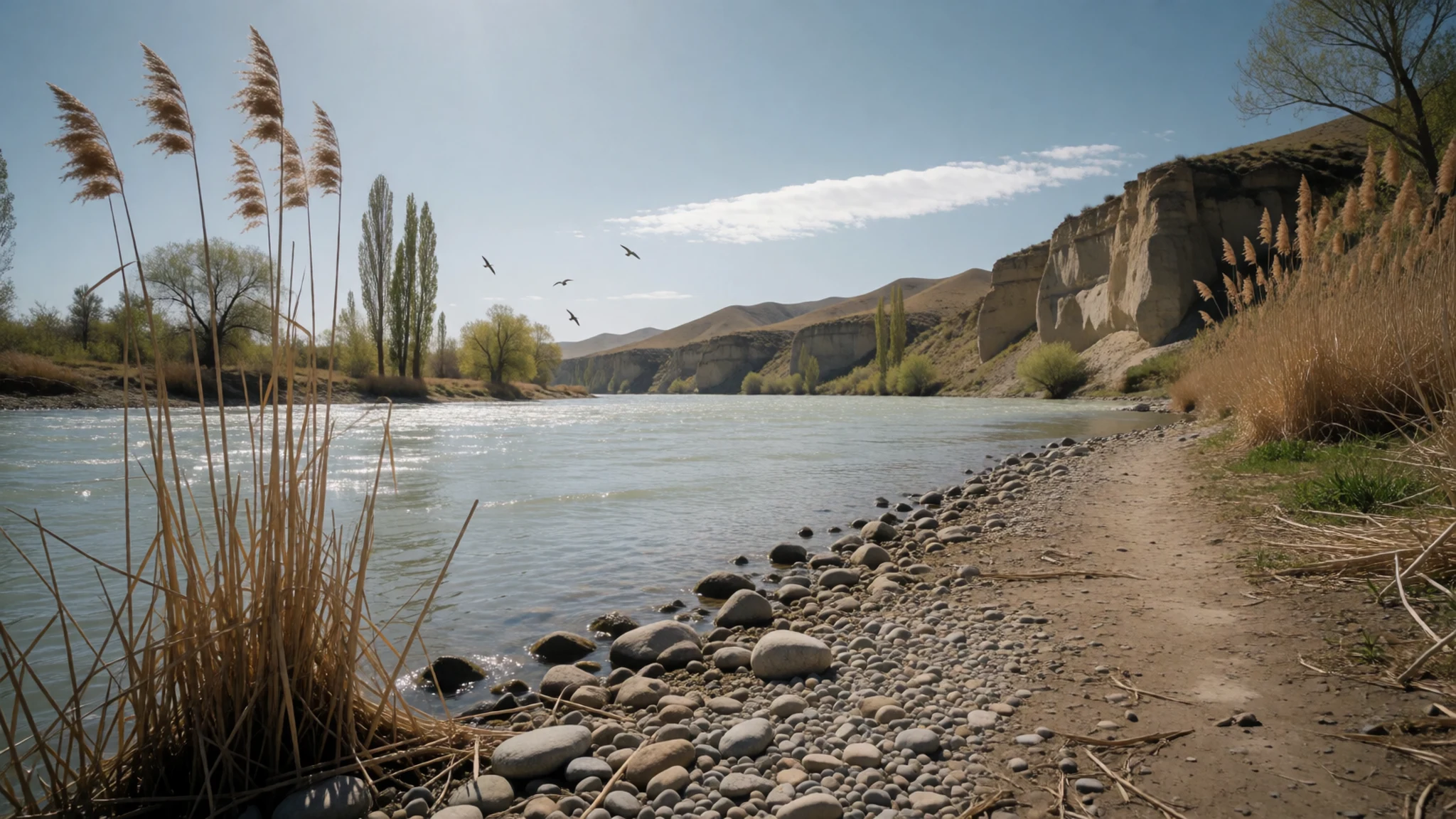
- Finds in museums — Dushanbe and Paris
Takht-i Sangin's best-known objects are no longer on site. The altar showing Marsyas playing the double flute, an Ionic pillar, a sculpted ruler's head and small votive plaques are held in museums, including the Musée Guimet in Paris and the national antiquities museum in Dushanbe. Check each museum's official website for what is currently on display.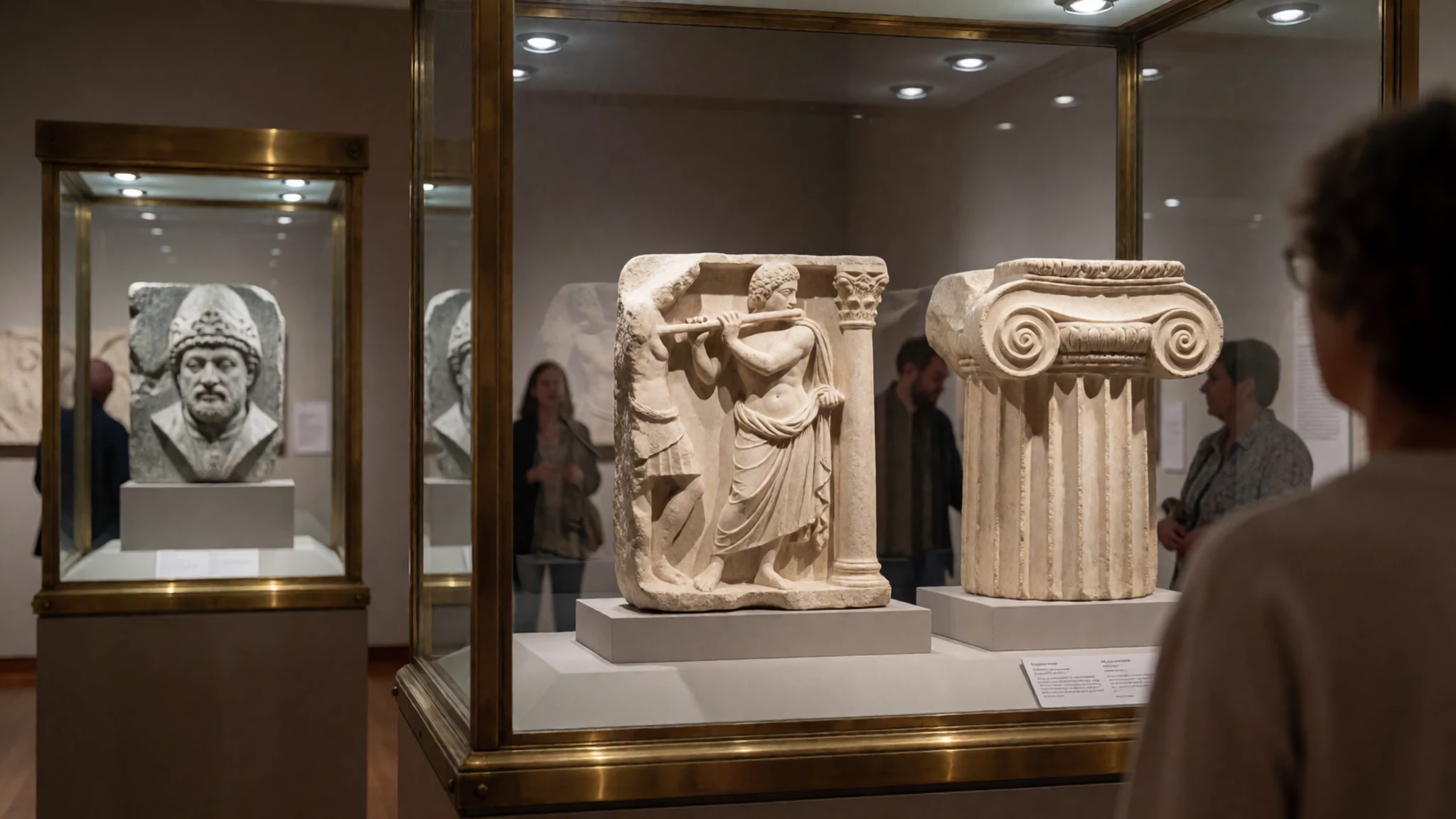
- Ajinatepa Buddhist monastery — Khatlon, north of Takht-i Sangin
Ajinatepa is a Buddhist monastery site in Khatlon, a later chapter in the region's religious history than the river-god temple. Its best-known find, a large reclining Buddha in clay, was removed and is now in Dushanbe, so the visit is to the earthen ruins and their setting. Confirm access locally, as the site is not on a regular tourist circuit.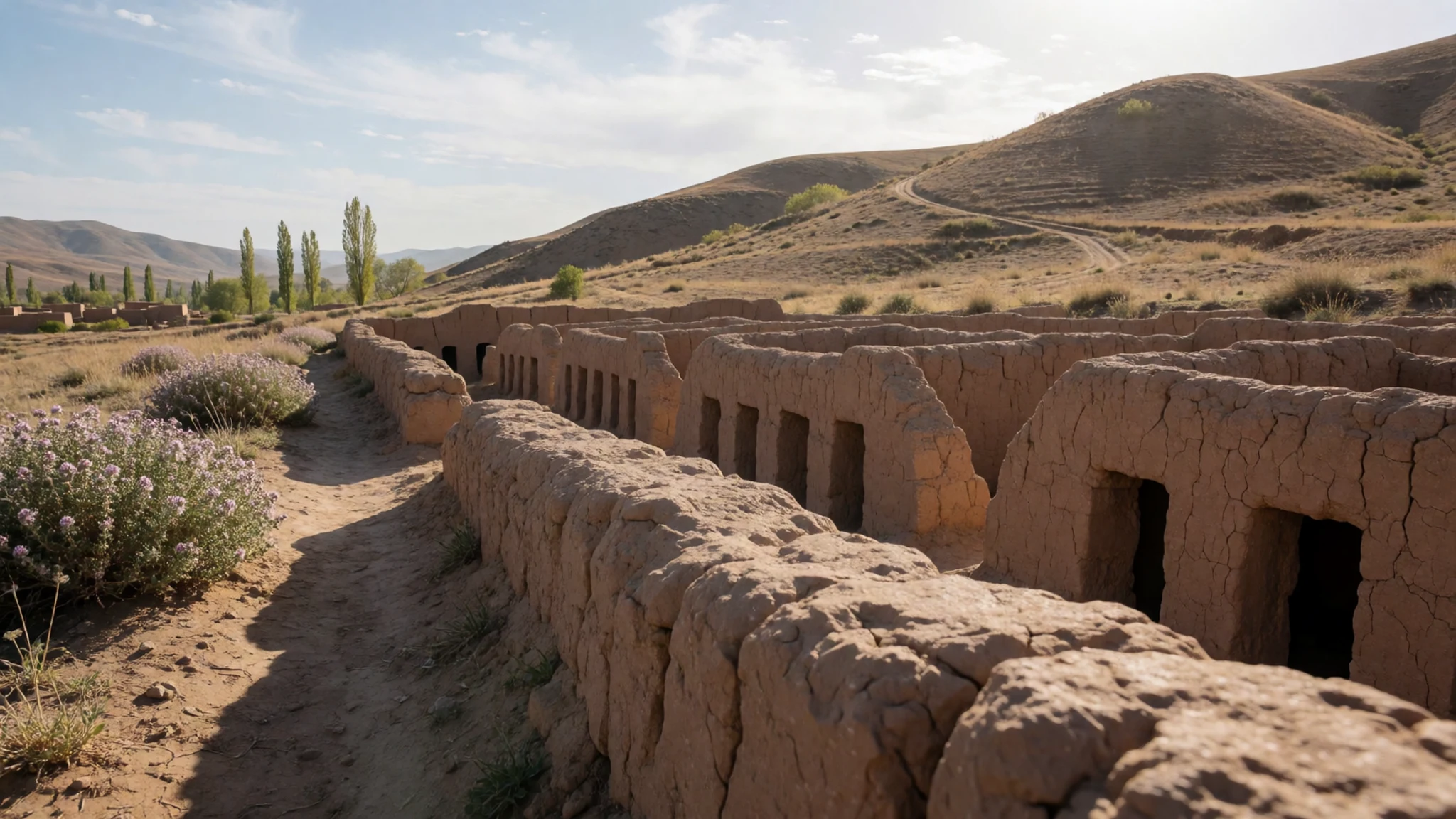
- Kalai Hulbuk — Eastern Khatlon
Kalai Hulbuk is a medieval palace-town in eastern Khatlon, a good distance by road from Takht-i Sangin. It belongs to the Silk Road era of the region rather than the Greek one, and nearby Shahristoni Hulbuk marks the old walled town. Together they suit a second day for anyone curious about how the area changed after the Greco-Bactrian period.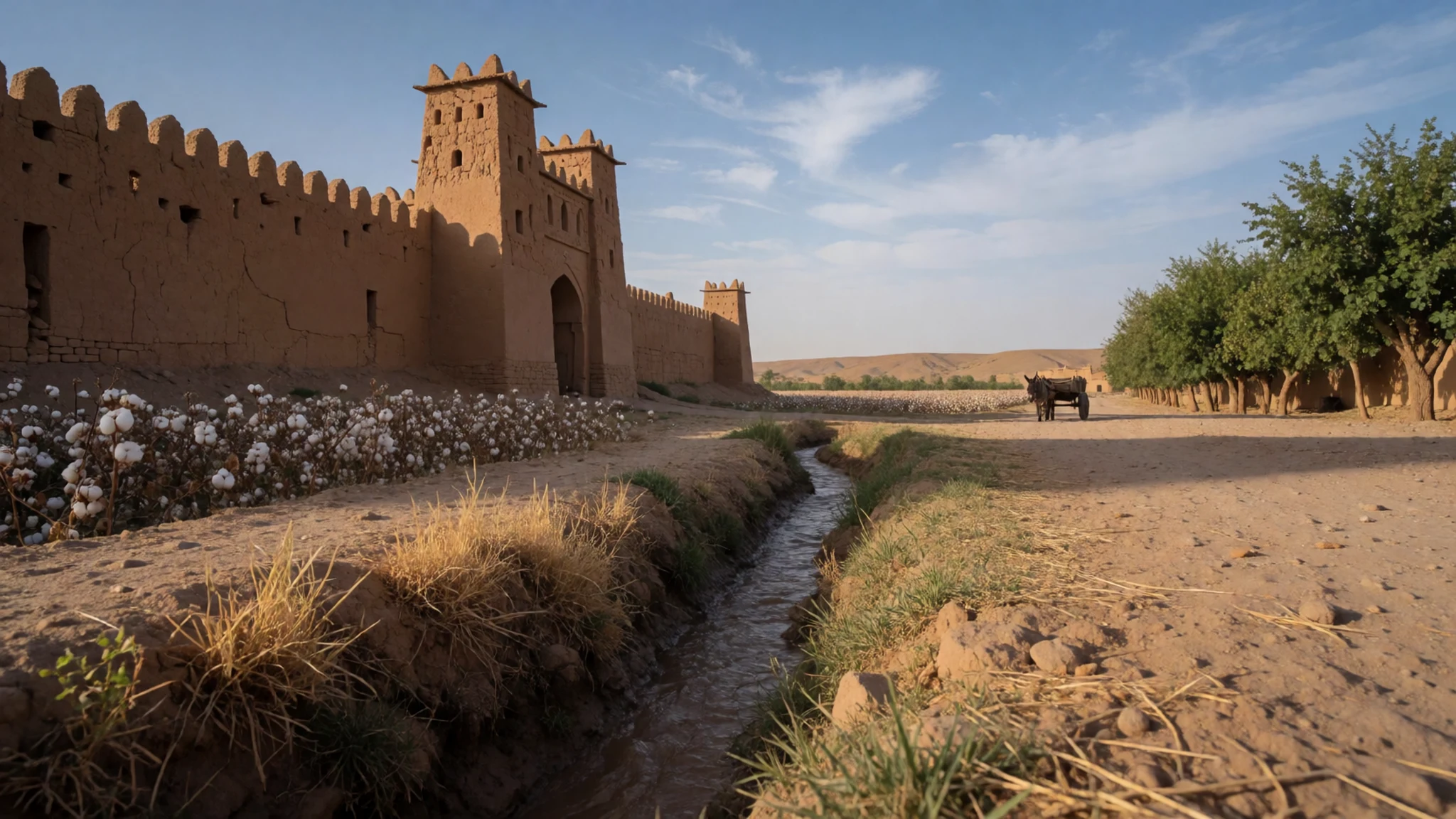
Culture
Takht-i Sangin sits in a part of Tajikistan whose culture is Persian-speaking, Muslim and shaped by decades of Soviet planning. Daily life in Khatlon revolves around family, hospitality and the table: guests are fed generously, tea is poured constantly, and refusing everything outright can cause offence. Cotton fields and irrigation canals define the working landscape, and weddings and gatherings often take place in courtyards under vines. Spring brings Navruz, the Persian new year, with festive food and music across the country. The older belief that the ruins represent has left no living cult. The Oxus was once a deity with altars and votive offerings, whereas today the river is mostly an irrigation source and a border. Local people may be curious about the few foreign visitors who come and are often glad to share what they know about the site. Tajik is the national language and Russian is widely understood, especially among older people, so a few words of Tajik greeting go a long way. A handshake followed by a hand placed briefly on the heart is a common courtesy, though in conservative villages men and women may greet differently, so follow your host's lead. Ask permission before photographing people, and never point a camera at soldiers, border posts or the far bank of the Panj.
What to wear
Around Takht-i Sangin, traditional Tajik dress is built on bright silk and cotton. Women's festive dresses are cut from atlas, a glossy silk ikat, or adras, a lighter silk-and-cotton cloth, in bold dyed patterns, worn long and loose over trousers with a scarf or embroidered cap. The classic men's outfit is a knee-length shirt-coat with trousers, topped by an embroidered skullcap, and is mostly kept for weddings, Navruz and religious holidays. Cotton, the region's crop, underlies much everyday cloth. Day to day, people wear what is practical: men in trousers, shirts and jackets, younger women in modest modern clothes or long dresses with a headscarf, and older women often in bright printed dresses. Visitors should dress for dust, sun and conservative villages. Loose, long-sleeved cotton, long trousers or skirts below the knee, a wide-brimmed hat and sunglasses suit both the climate and local norms, and women may want a light scarf for villages and mosques. At the ruins the ground is uneven and dusty, so closed, sturdy shoes with good grip are better than sandals. Carry a warm layer for spring and autumn evenings, and expect strong sun reflecting off pale earth.
What to eat
- Plov (osh) — Any chaikhana (tea house) or bazaar eatery in Qurghonteppa
Rice cooked with carrot, onion and meat in a large cauldron, the dish served at weddings and gatherings across Tajikistan. Portions are generous and usually shared. Lunchtime is the best moment to find it freshly made.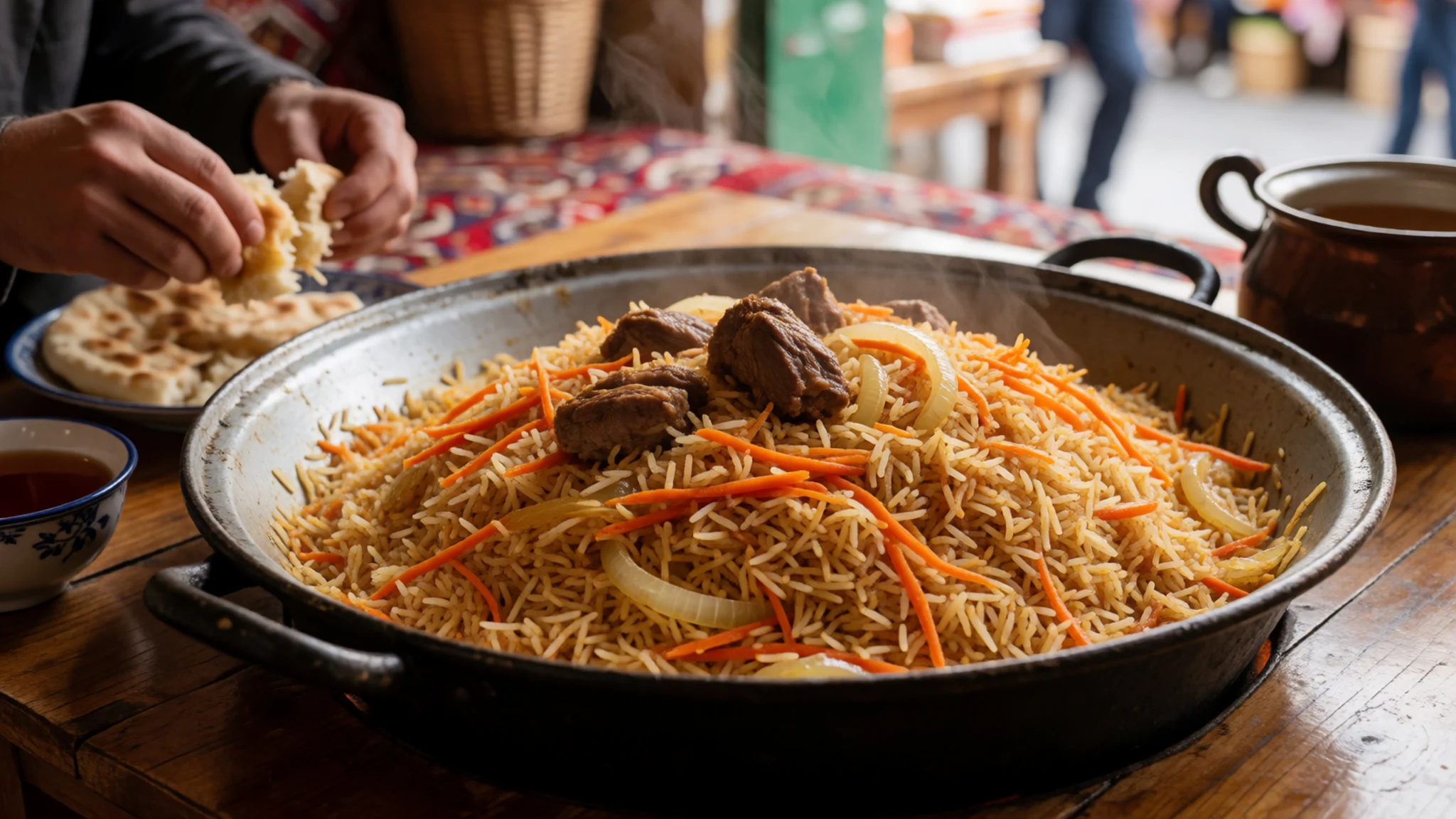
- Qurutob — Tajik eateries and chaikhanas in towns across Khatlon
Pieces of flatbread soaked in a tangy sauce made from dried yoghurt balls, topped with raw onion, tomato and herbs. It is eaten from a communal dish, often by hand, and tastes sharp, cool and filling.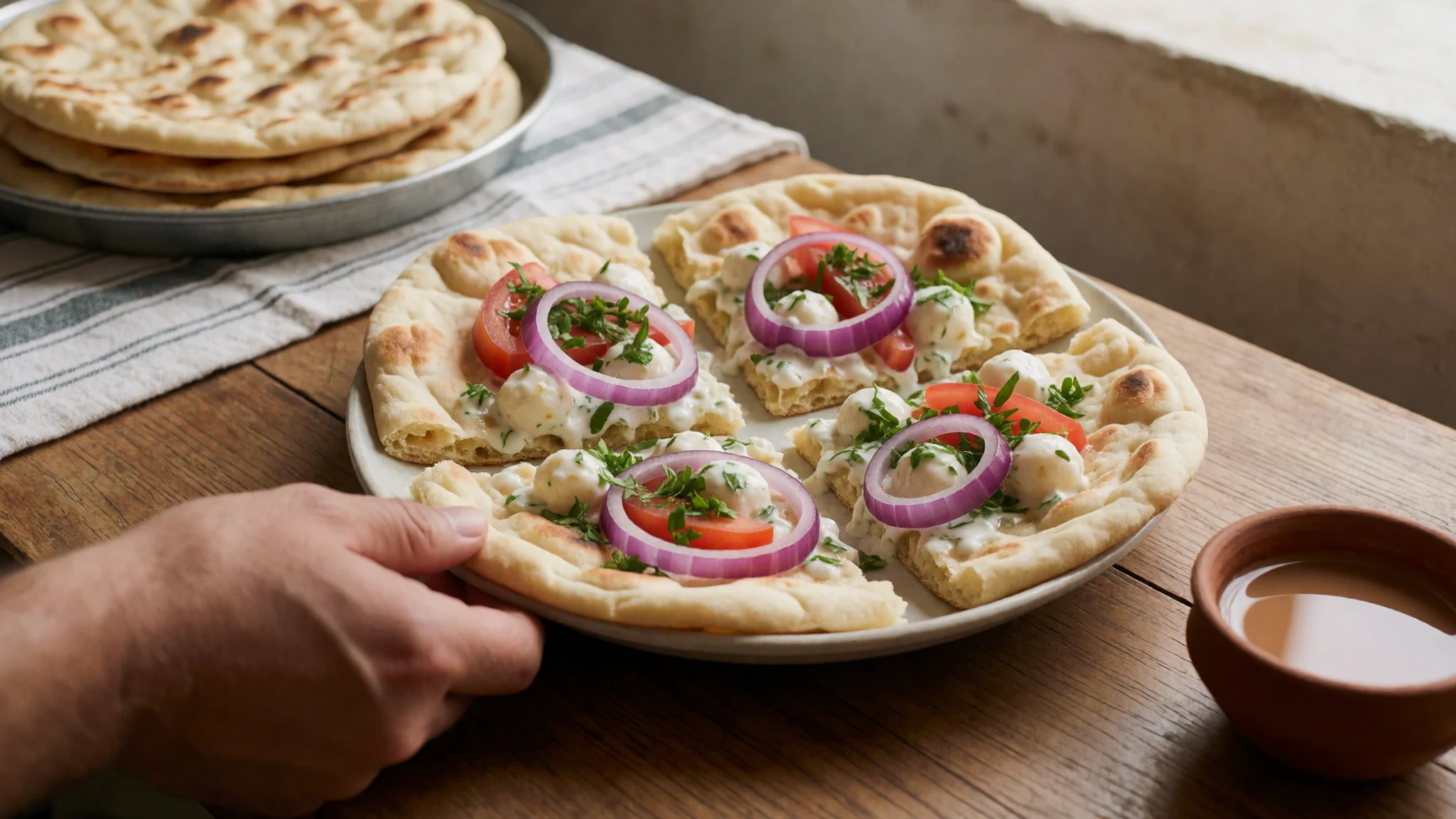
- Non (tandoor bread) — Bakeries and bazaar stalls
Round, patterned loaves baked on the walls of a clay oven and sold warm. Bread is treated with respect in Tajik homes, and a fresh loaf with tea makes a simple breakfast before a day on the dusty roads. - Shashlik — Roadside grills and the edges of town bazaars
Chunks of lamb or beef grilled over charcoal on skewers, served with sliced onion and bread. It is the usual road-trip meal on the way to the ruins, and the smell of the grill often announces it first. - Sambusa — Market stalls and kiosks near bus stops
A baked pastry parcel stuffed with minced meat or pumpkin, flaky outside and juicy within. It is cheap, portable and handy for a long day of travel, best eaten hot from the oven.
Plan it
Best time. April–May and September–October, when it is mild enough to walk the exposed ruins. Summer in Khatlon is very hot and the terrace has little shade, while winter is cold and can be damp.
How long. 1–2
Getting there. Flights from Russia, Kazakhstan and Dushanbe arrive at Bokhtar International Airport in Qurghonteppa. Beyond that, the options are driving, a shared minibus (mashrutka) or a bus; the last stretch is by road towards the Panj, and a local driver is more practical than public transport.
Budget. low
Tips
- Confirm access and any permits before travelling, because the site lies in a border zone
- Hire a local driver or guide, as signs and facilities at the ruins are minimal
- Carry cash, water and food, since there is little shelter or shopping near the site
- Start early to avoid midday heat and strong sun on the open terrace
- Read your government's current travel advice for the Tajik–Afghan border area
Etiquette
- Dress modestly in villages and keep shoulders and knees covered
- Ask before photographing people, and avoid photographing soldiers or border posts
- Leave pottery fragments and stones where you find them
Nearby
Sources
- Wikidata Q6554804 (CC0)
- Wikipedia: Takht-i Sangin (rev 1311936049) (CC BY-SA 4.0)
- Wikivoyage: Khatlon (rev 5334319) (CC BY-SA 4.0)
- Takht-i Sangin, plan of the Temple (photo) (CC BY-SA 4.0)
- Altar to God Oxus, with Marsias playing the aolos (photo) (CC BY-SA 2.0)
- West Asia non political with water system (photo) (CC BY 3.0)
- Greater Bactria map (photo) (CC BY 3.0)
- Ionic pillar, cella of the Temple of the Oxus (photo) (CC BY-SA 2.0)
- Head of a Greco-Bactrian ruler, Temple of the Oxus (photo) (CC BY-SA 2.0)
- Votive plaquette camel NMAT TS4202-1091 (photo) (CC BY 4.0)
- Akinakes sheath NMAT M7251 (photo) (CC BY 4.0)


