Sungei Buloh
Sungei Buloh, Singapore
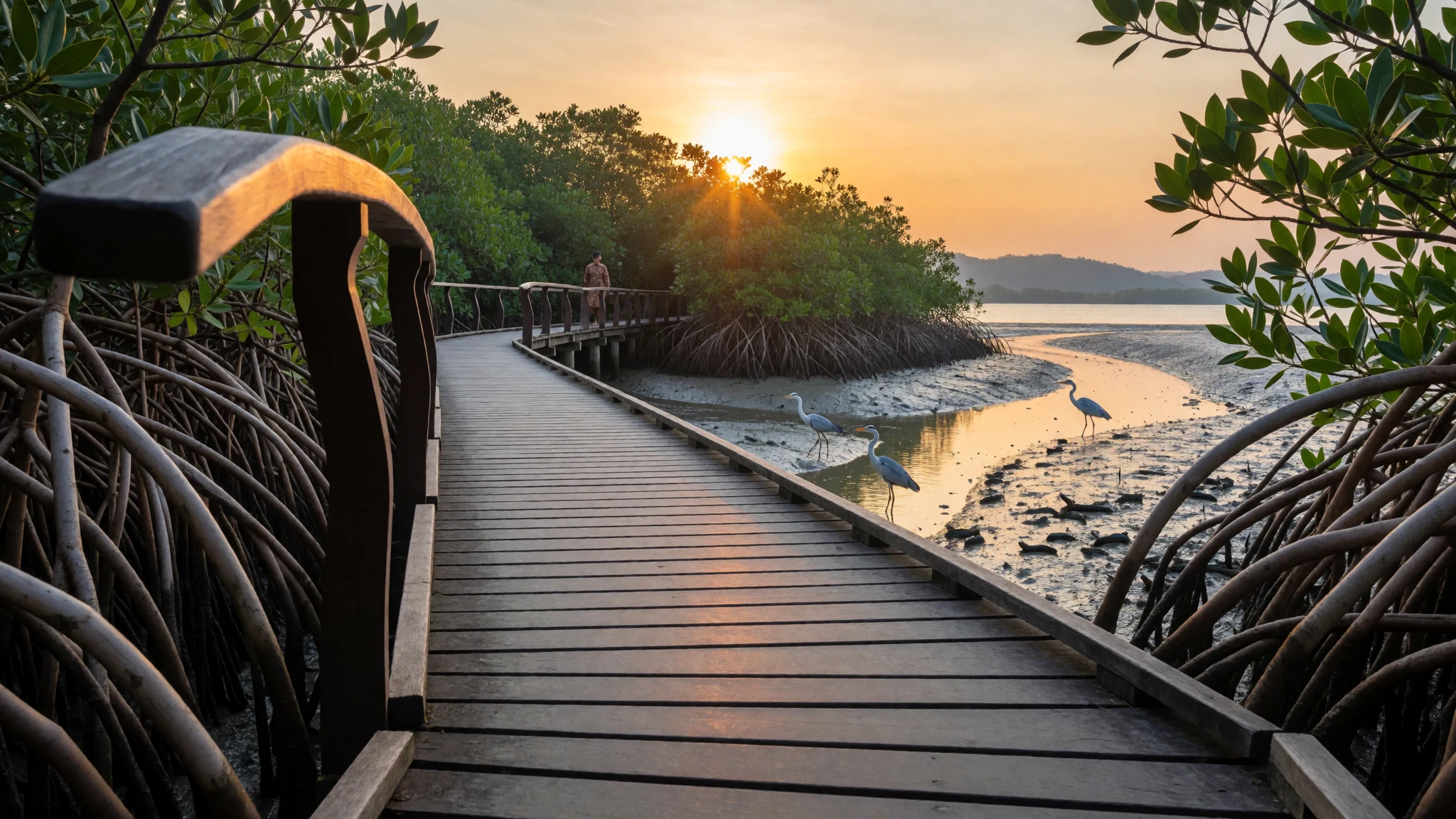
Sungei Buloh offers a slow morning of mangroves, mudflats and migratory birds, a short ride from one of Asia's busiest cities.
The place
Sungei Buloh Wetland Reserve sits in the northwest of Singapore, facing Malaysia across the Johor Strait, where mangrove, mudflat, tidal pond and regrowth forest are packed into a small pocket of land. It was gazetted in 2002, the first wetland reserve Singapore protected in this way, and it covers 130 hectares. That is modest beside most national parks, but the mix of habitats does a lot of work: a walker moves from shaded boardwalk to open pond edge within minutes, and the scene changes with the tide. The reserve matters well beyond the island. It belongs to the East Asian Australasian Shorebird Site Network, because birds travelling between northern breeding grounds and Australia use the mud here to rest and feed. It was also named an ASEAN Heritage Park in 2003. For most of the year the reserve is a quiet, damp, green walk: kingfishers on posts, mudskippers on the banks, water monitors sliding into channels, and herons standing very still. Around it, Singapore is dense, fast and well organised, and that contrast is much of the appeal. Heat and humidity are constant, shade is patchy on the open bunds, and weekends bring families and photographers, so weekday mornings are calmer. Binoculars help, but patience helps more. Plenty of visitors spend an hour here and leave happy, while keen birders stay far longer.
Its story
Sungei Buloh was not thought of as a nature area until 1986, when members of the Singapore branch of the Malayan Nature Society argued that the site deserved conservation. What caught their attention was the range of birds, including visitors that travel from as far as Siberia towards Australia to avoid the northern winter. The government took up the idea, and by 1989 a small parcel of land had been given nature park status. The Parks & Recreation Department, forerunner of today's National Parks Board, developed and ran it with advice from outside specialists, among them the Wildfowl & Wetlands Trust of the United Kingdom and the World Wide Fund for Nature. It opened to the public as Sungei Buloh Nature Park a few years later. The next step was a formal announcement that the park would become a nature reserve, a status that protects the land from unauthorised destruction or alteration. A second phase was opened, and the whole 130 hectares was gazetted in 2002 as Sungei Buloh Wetland Reserve. It is one of four nature reserves in Singapore to carry that protection. The sequence explains the character of the place. Amateur observers came first, counting and recording birds, and official protection followed their evidence. The result is a reserve built around watching and listening rather than around monuments or grand views, and the habit of quiet observation still shapes how people behave on its paths.
What to see
- Mangrove boardwalk — Interior trails
The raised walkways at Sungei Buloh Wetland Reserve take walkers through mangrove shade, with tangled roots below and mudskippers, crabs and small fish visible at low tide. It is the most atmospheric stretch of the reserve, humid and green, and a good place to listen for birds before spotting them.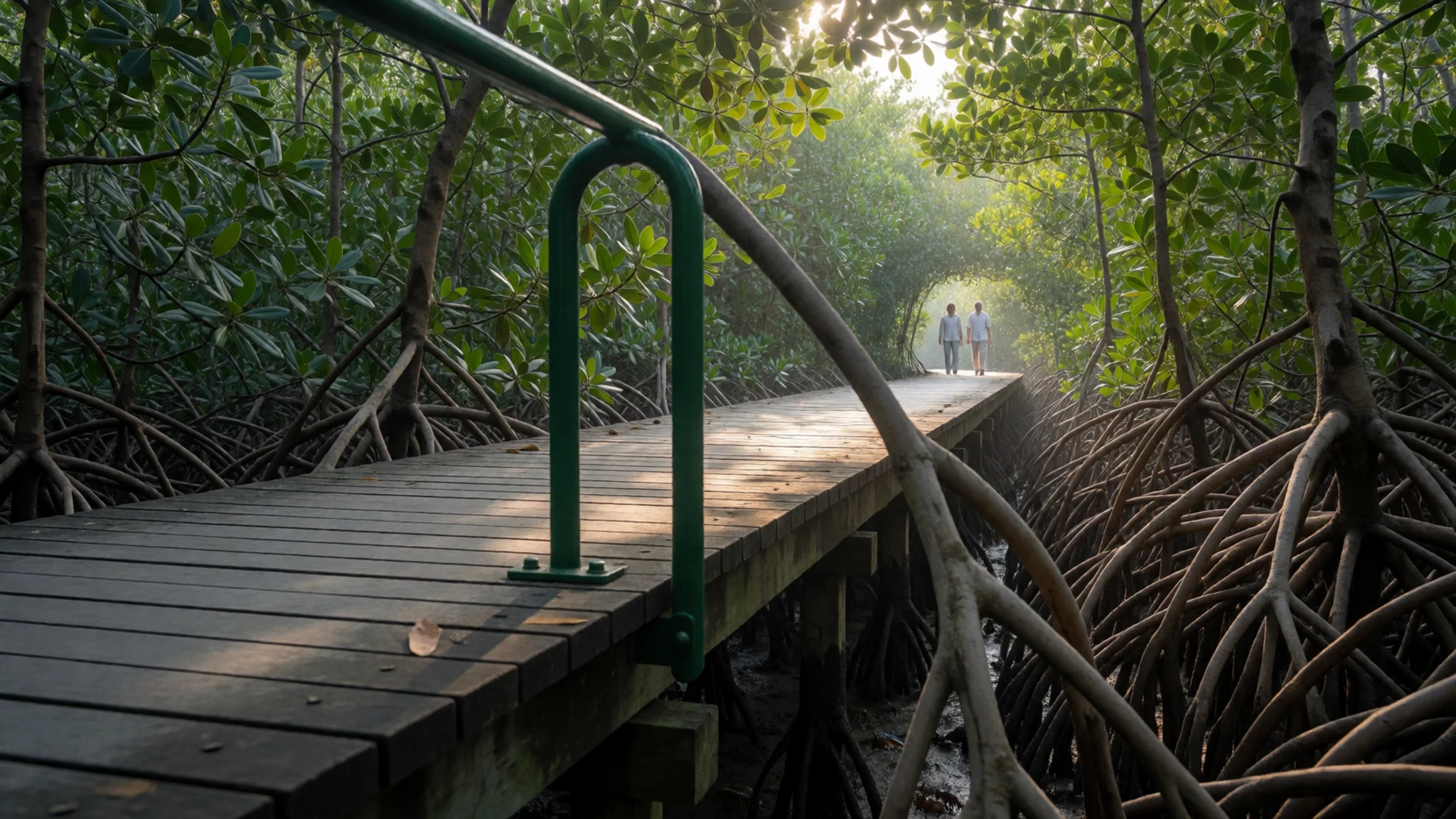
- Tidal ponds and mudflats — Pond and shoreline trails
Open water and mud on the reserve's edge are where shorebirds gather to feed, especially during the migratory season. Egrets, herons and sandpipers work the shallows, and the light is best early. Binoculars make a real difference here, and a slow, quiet approach usually gets closer views.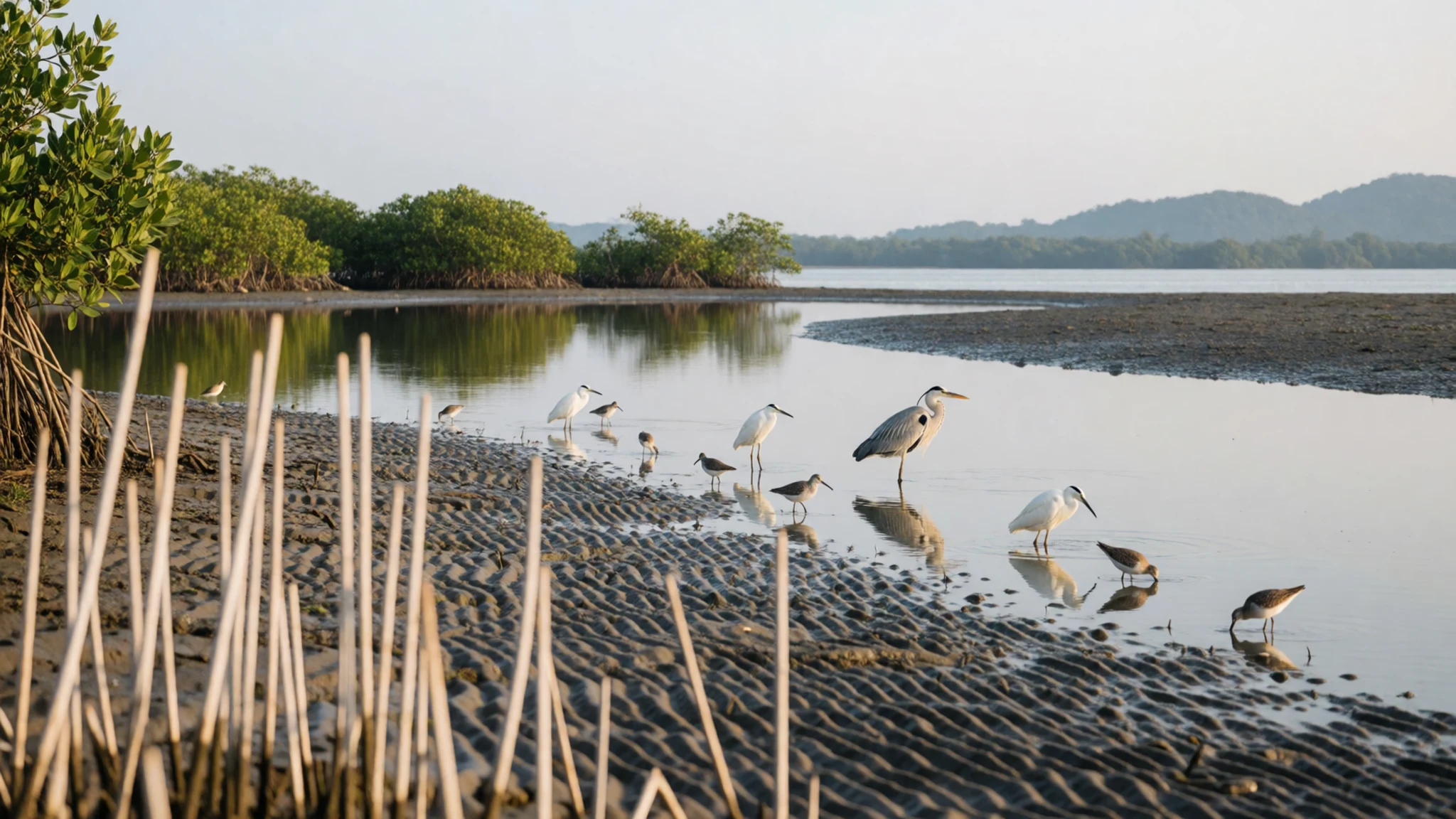
- Observation hides and tower — Along the main trails
Wooden shelters and a viewing structure give a raised or screened position over ponds and mangrove canopy. They suit photographers and anyone who wants to watch without disturbing the birds. Sit still for a few minutes and the activity around the water usually picks up.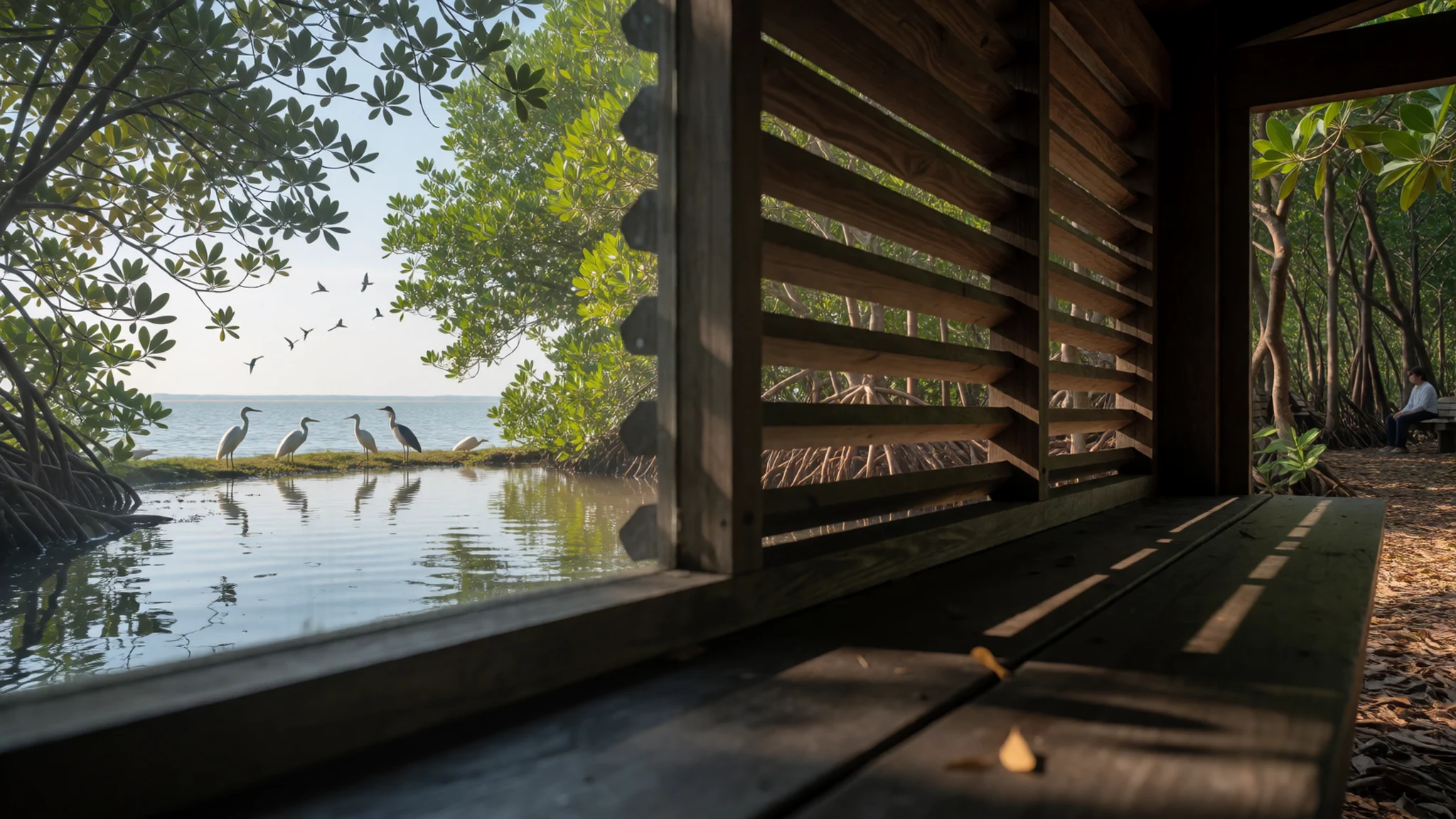
- Water monitors — Channels and bunds
Large water monitor lizards patrol the channels and banks, sometimes crossing the path in no hurry at all. They are wild animals and best watched from a distance. A sighting is common enough to be expected, though never guaranteed, and children tend to remember it longest.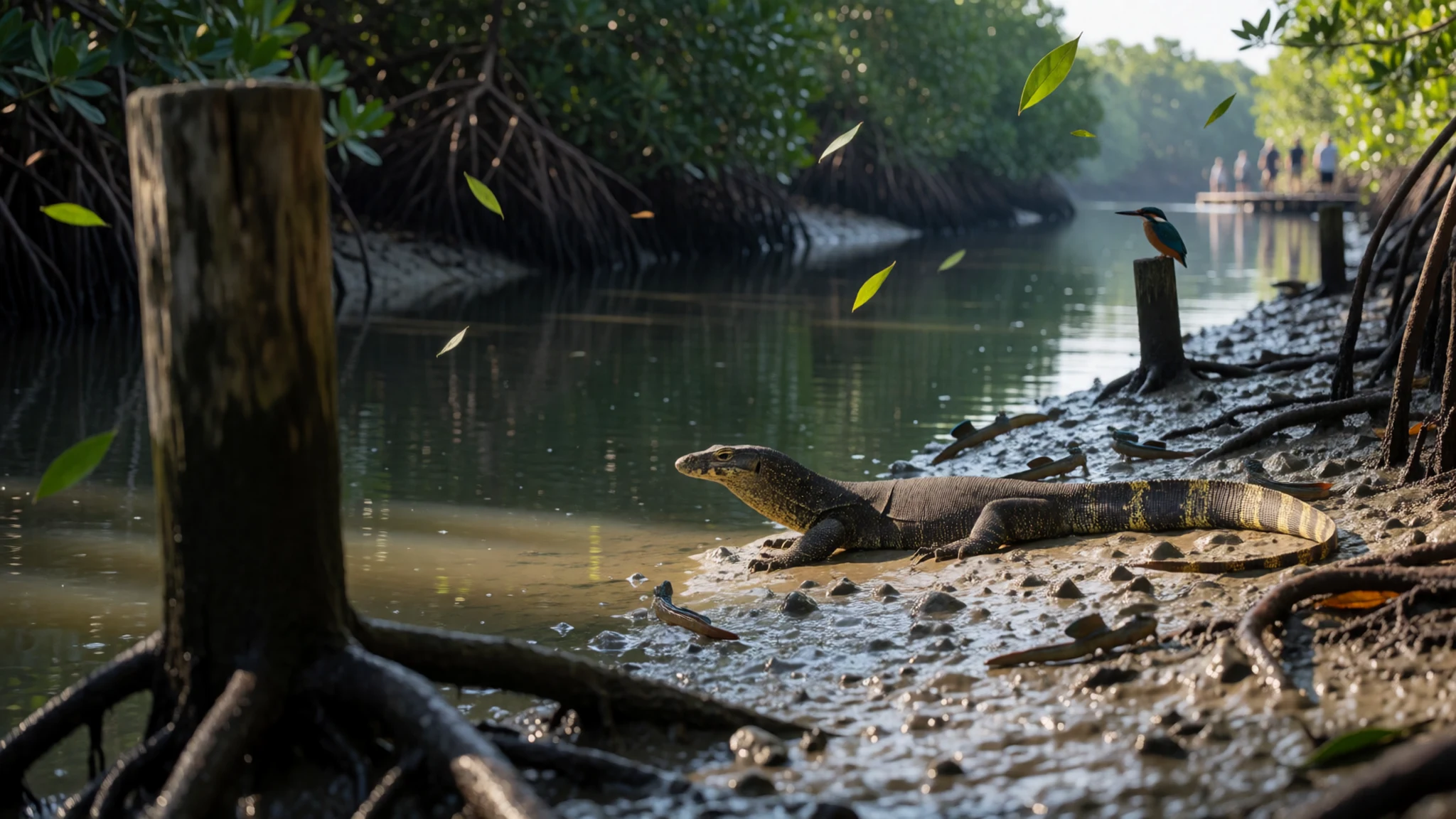
- Entrance and main trail loop — Reserve entrance
The entrance area introduces the reserve with signs and maps, and the main trail loop is an easy, mostly flat route that links ponds, boardwalk and viewing points. Families and first-time visitors can cover it at a gentle pace, with plenty of shaded spots to rest.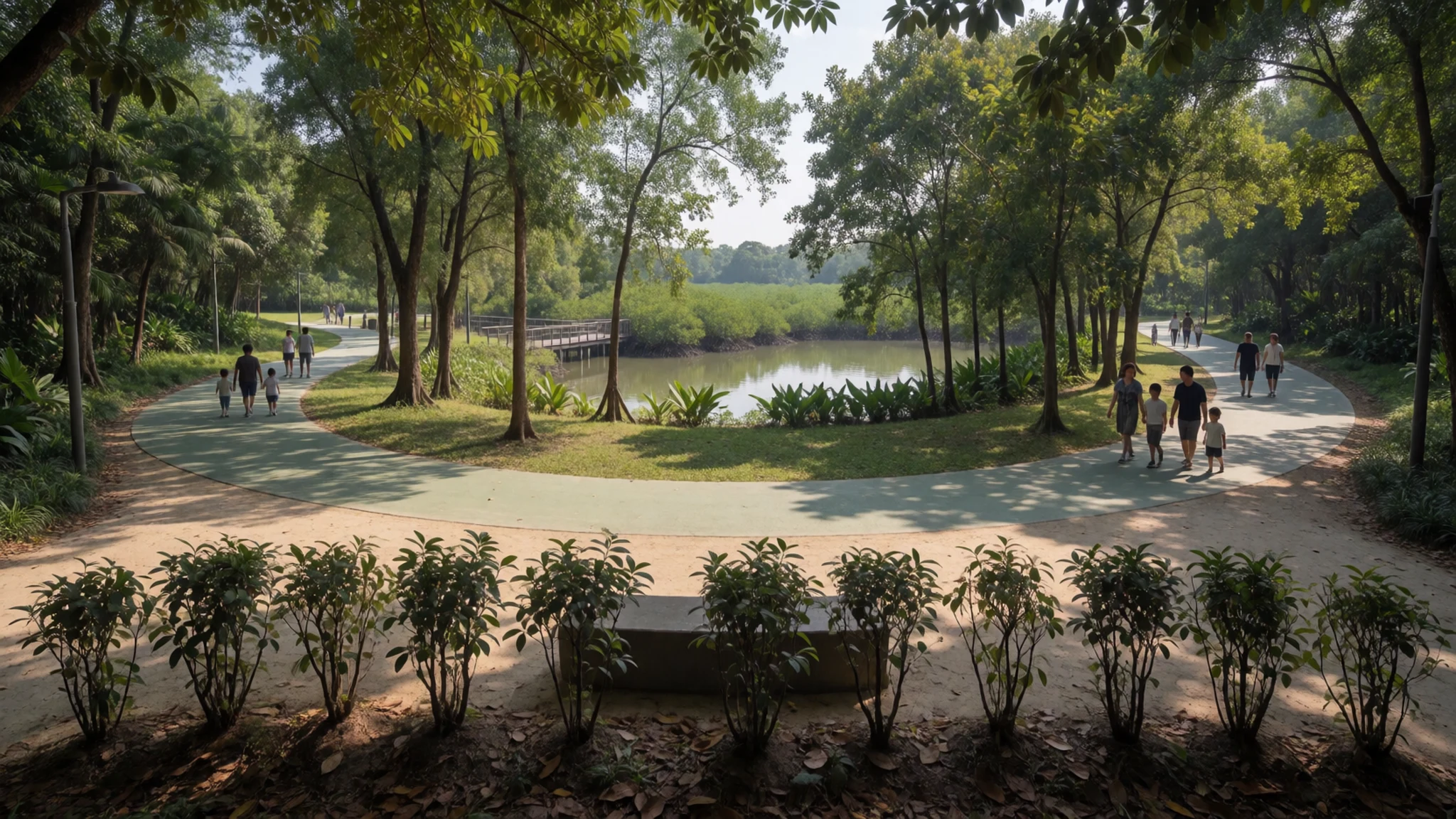
Culture
Sungei Buloh Wetland Reserve lies in a country where manners are relaxed but not careless. Singapore mixes Chinese, Malay and Indian communities with many long-term workers and expatriates, and formal politeness matters less than ordinary consideration; behaviour that is decent at home rarely offends here. Dress codes are rare outside upmarket bars, government buildings and some private clubs, so shorts and sandals are normal at a nature reserve. Singaporeans are still somewhat socially conservative: holding hands is fine, but heavy affection in public is considered impolite, and going topless is not accepted anywhere. Places of worship ask for covered shoulders and knees, and the best-known ones lend shawls or sarongs at the door. Inside the reserve, the local culture is that of the bird-watching community: patient, quiet and generous with tips. Regulars will point out a kingfisher or a mudskipper to strangers without being asked, and long lenses on tripods are a common sight along the bunds. Families come for weekend walks, so paths can be busy, and the pace is slow rather than sporty. Rubbish goes in bins or home with the visitor, and the habit of keeping public places clean applies here as anywhere in the country. Keep your voice low on the boardwalks, stay on the marked paths, and never feed or approach the wildlife, especially the water monitors.
What to wear
Sungei Buloh Wetland Reserve is a hot, humid walk, so practicality matters more than tradition, though Singapore's dress history deserves a short note. Traditional clothing follows its communities. Malay women wear the baju kurung, a long tunic over a skirt, often in songket or batik, and men wear the baju melayu with a sampin wrap, mostly at weddings and Hari Raya. Indian women wear silk or cotton sarees, and men the kurta or veshti on festival days. Chinese families may bring out the cheongsam or samfu for Lunar New Year. Peranakan women developed the sarong kebaya, sheer embroidered cotton worn with a batik wrap. Day to day, most people wear light T-shirts, shorts, dresses and trainers, and air-conditioned trains, malls and offices run cold enough that many carry a thin layer. For the reserve, choose breathable, quick-drying clothes in muted colours, a hat, sunglasses, sunscreen and insect repellent. Closed shoes or sturdy sandals suit damp boardwalks and muddy bunds. A light rain jacket or compact umbrella is sensible all year. Dress for temples and mosques is a separate matter: cover shoulders and knees, and carry a scarf or sarong if a visit to one is planned for the same day.
What to eat
- Hainanese chicken rice — Any hawker centre
Poached chicken served over rice cooked in the cooking stock, with chilli sauce, ginger paste and a bowl of broth. It is a plain, comforting meal that suits a hot day, and it is easy to find at almost any hawker centre.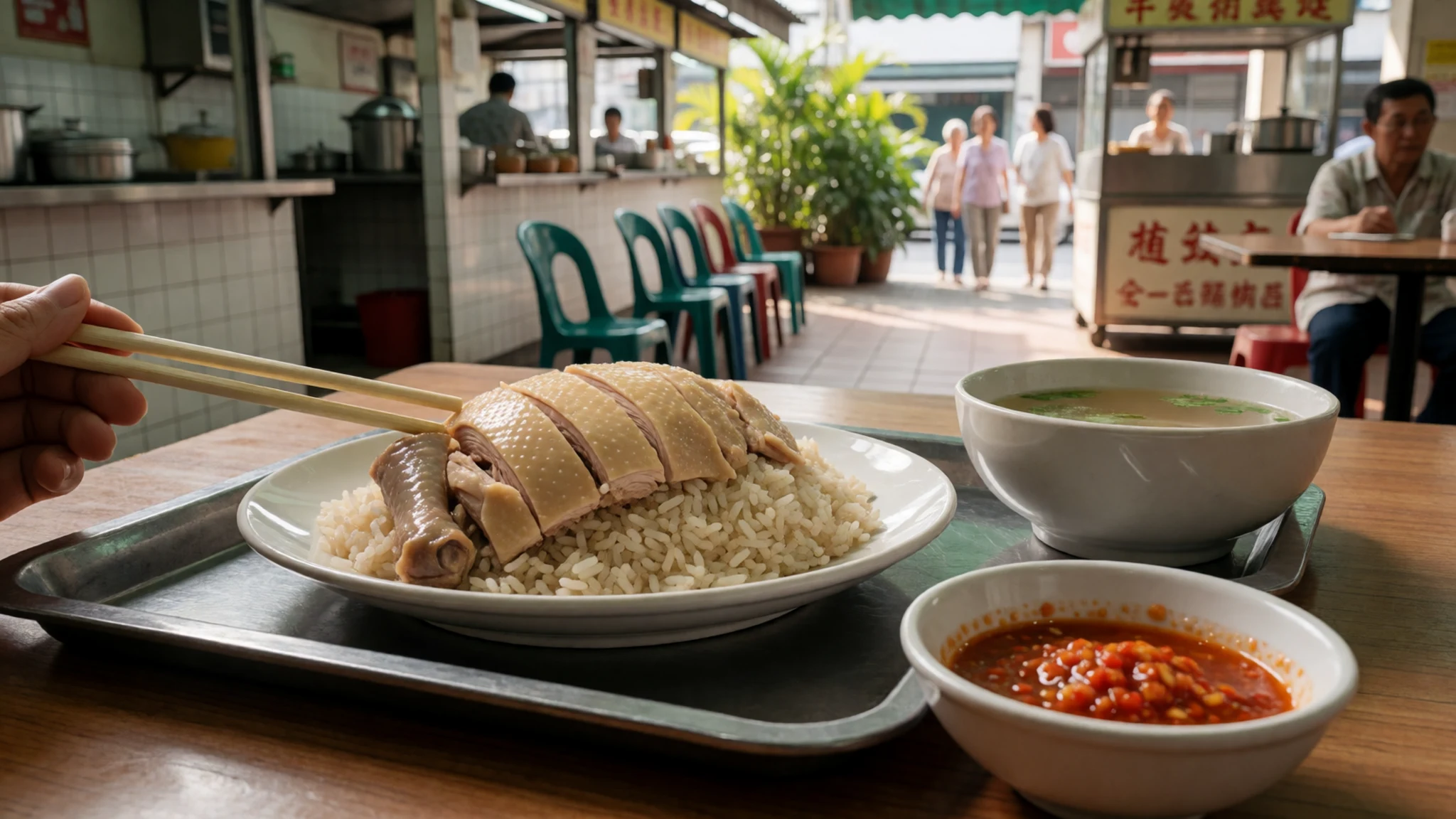
- Laksa — Hawker centres and neighbourhood eateries
Rice noodles in a spiced coconut-milk broth, usually topped with prawns, fish cake and cockles. The version found in Singapore is rich, fragrant and mildly hot. Ask for less chilli if unsure, and expect a spoon as well as chopsticks.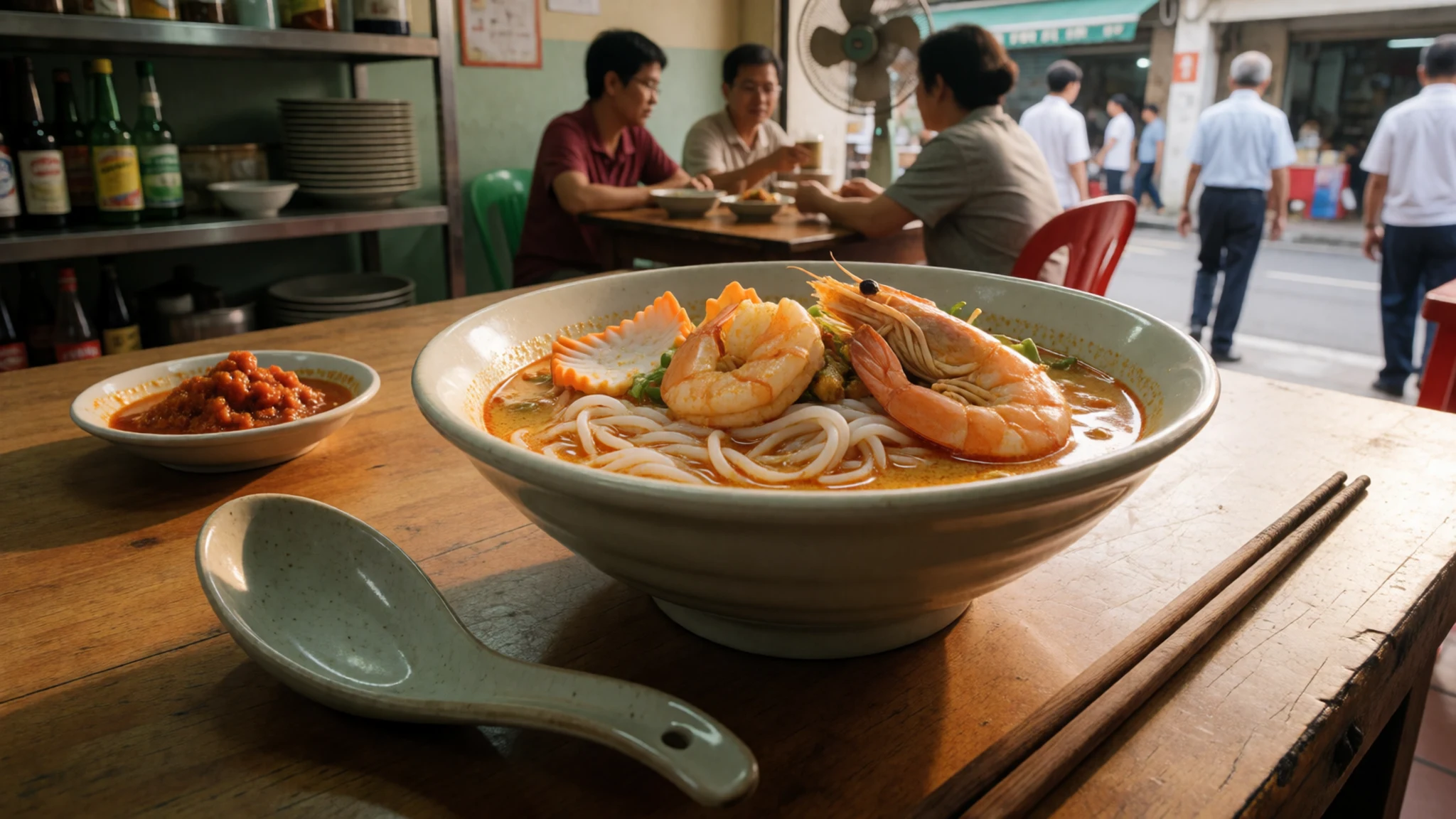
- Nasi lemak — Malay food stalls in hawker centres
Rice cooked in coconut milk and served with fried anchovies, peanuts, egg, cucumber and a sambal chilli paste. It works as breakfast or lunch, and can be eaten with a fork and spoon or by hand, using the right hand only. - Roti prata — Indian eateries and open-air coffee shops
A flaky, griddled flatbread from the Indian community, eaten with a bowl of curry for dipping. Plain and egg versions are common. It is a good early-morning meal before heading out to the wetlands. - Char kway teow — Hawker centres and food courts
Flat rice noodles stir-fried over high heat with egg, bean sprouts, Chinese sausage and cockles or prawns. It is smoky, a little sweet and fairly oily, and best eaten hot from the wok.
Plan it
Best time. September to November and March, when migratory shorebirds are usually passing through and the heat is a little easier to manage. Singapore is hot and humid all year, with showers at any time, so go early in the morning and bring rain protection.
How long. 1
Getting there. Fly into Singapore Changi Airport, take the MRT towards Kranji, then finish with a short bus or taxi ride to the reserve. Check the NParks page for current transport and entry details: https://www.nparks.gov.sg/gardens-parks-and-nature/parks-and-nature-reserves/sungei-buloh-wetland-reserve
Budget. low
Tips
- Go on a weekday morning for cooler air, quieter paths and more active birds
- Carry water, sunscreen, a hat and insect repellent; shade is patchy on the open bunds
- Bring binoculars, or check whether the visitor area offers any for loan
- Check the official NParks site for opening times, fees and any trail closures before setting out
- Carry a small rain layer, as sudden showers are common and tides change what is visible
Etiquette
- Keep to marked paths and boardwalks, and keep your voice low near the water
- Do not feed or approach water monitors or other wildlife
- Take all rubbish with you or use the bins provided
Nearby
Sources
- Wikidata Q643216 (CC0)
- Wikipedia: Sungei Buloh Wetland Reserve (rev 1382007580) (CC BY-SA 4.0)
- Wikivoyage: Singapore (rev 5408853) (CC BY-SA 4.0)
- Photo: Mangroves of the Sungei Buloh Wetland Reserve, Calvin Teo (CC BY-SA 2.5)
- Photo: The Banner of Sungei Buloh Wetland Reserve, Thaejas (CC BY 3.0)
- Photo: Sungei Buloh Wetland Reserve 202408, FN-082 (CC BY-SA 4.0)
- Photo: Mangroves of the Sungei Buloh Wetland Reserve (panorama), Calvin Teo (CC BY-SA 2.5)
- Photo: Water monitor of Sungei Buloh, Thaejas (CC BY 3.0)
- Photo: Structure at Sungei Buloh, Anish Sheela (CC BY 4.0)
- Photo: Tourists visiting Sungei Buloh Wetlands, Anish Sheela (CC BY 4.0)
- Photo: View of Sungei Buloh Wetland reserve, Enthu2608 (CC BY 3.0)


Wildlife
- Little egret (animal)
The little egret is a small white heron with a thin black beak and long black legs, like a dainty ghost wading about. At Sungei Buloh it works the shallows alongside other herons and sandpipers, and the light is loveliest early in the day, so set out early. Stand quietly at a comfortable distance, move slowly, and let it hunt undisturbed. Never feed it, and a guide can help you tell it from its relatives.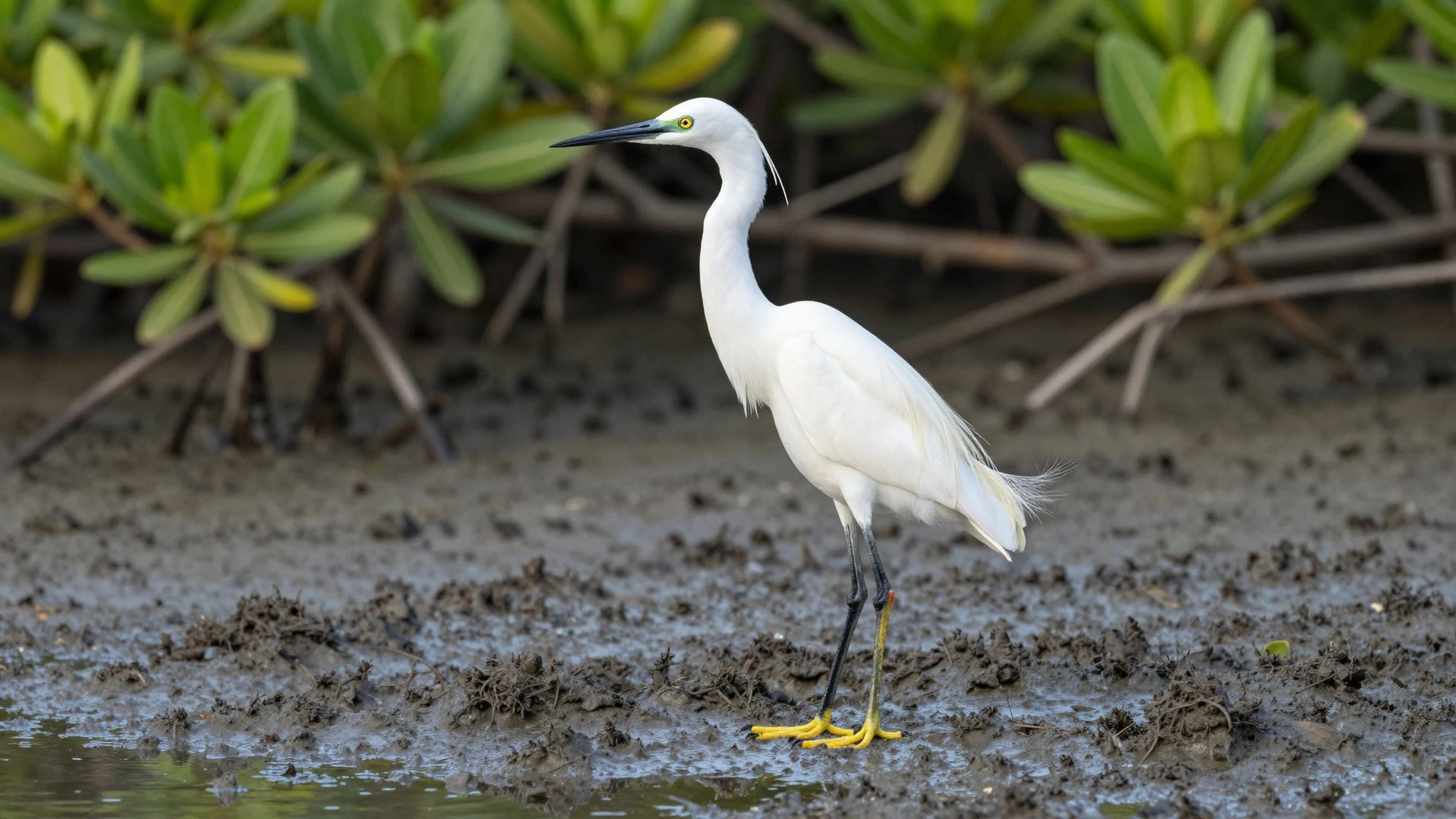
- Grey heron (bird)
The grey heron is a tall, long-legged wading bird that stands so still it seems to be made of stone. At Sungei Buloh herons stand motionless for most of the year along the quiet, damp, green walk, waiting for small water creatures. Because it hunts by patience, give it room: keep your distance, stay silent and move slowly so it is not startled. Never feed it, and ask a guide to point out where one is waiting.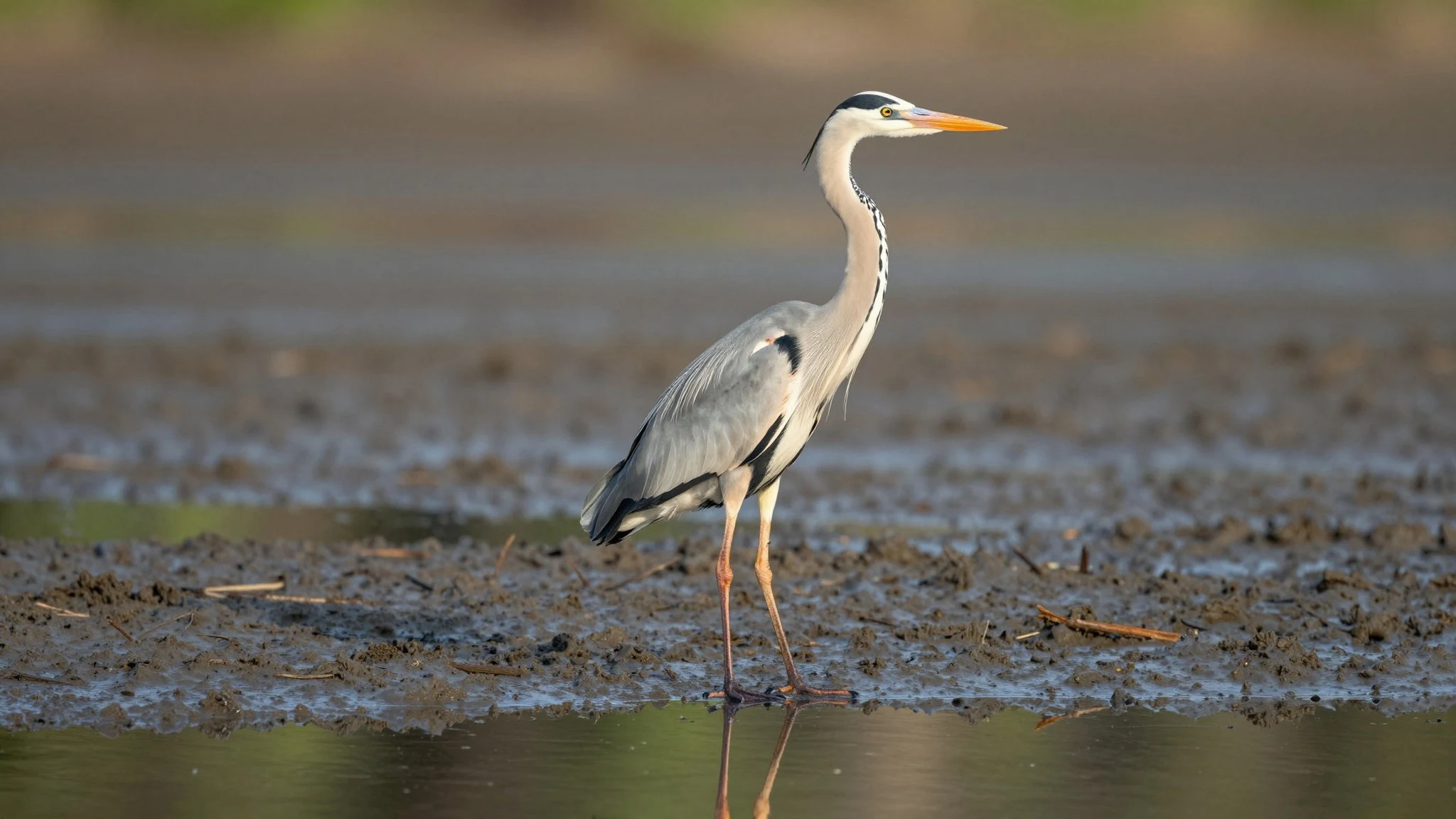
- Water monitor (animal)
The water monitor is a giant lizard, a bit like a small dragon that loves a swim. At Sungei Buloh it patrols the channels and banks, and you may meet one strolling across the path as though it had all day. Walk slowly and keep your eyes open, especially beside the water, where one may slide in. Keep a respectful distance, stay calm and quiet, let it pass in its own good time, and never feed it. - Collared kingfisher (bird)
The collared kingfisher is a medium-sized kingfisher, a bird wearing a collar as if dressed for dinner, and it is also called the mangrove kingfisher. At Sungei Buloh look for kingfishers perched on posts, which you can do for most of the year on the quiet, damp, green walk. Keep still and speak softly, watch from a good distance, and let it fish in peace. Never feed it, and a guide can help you spot it.