Pulau Ubin
Pulau Ubin, Singapore
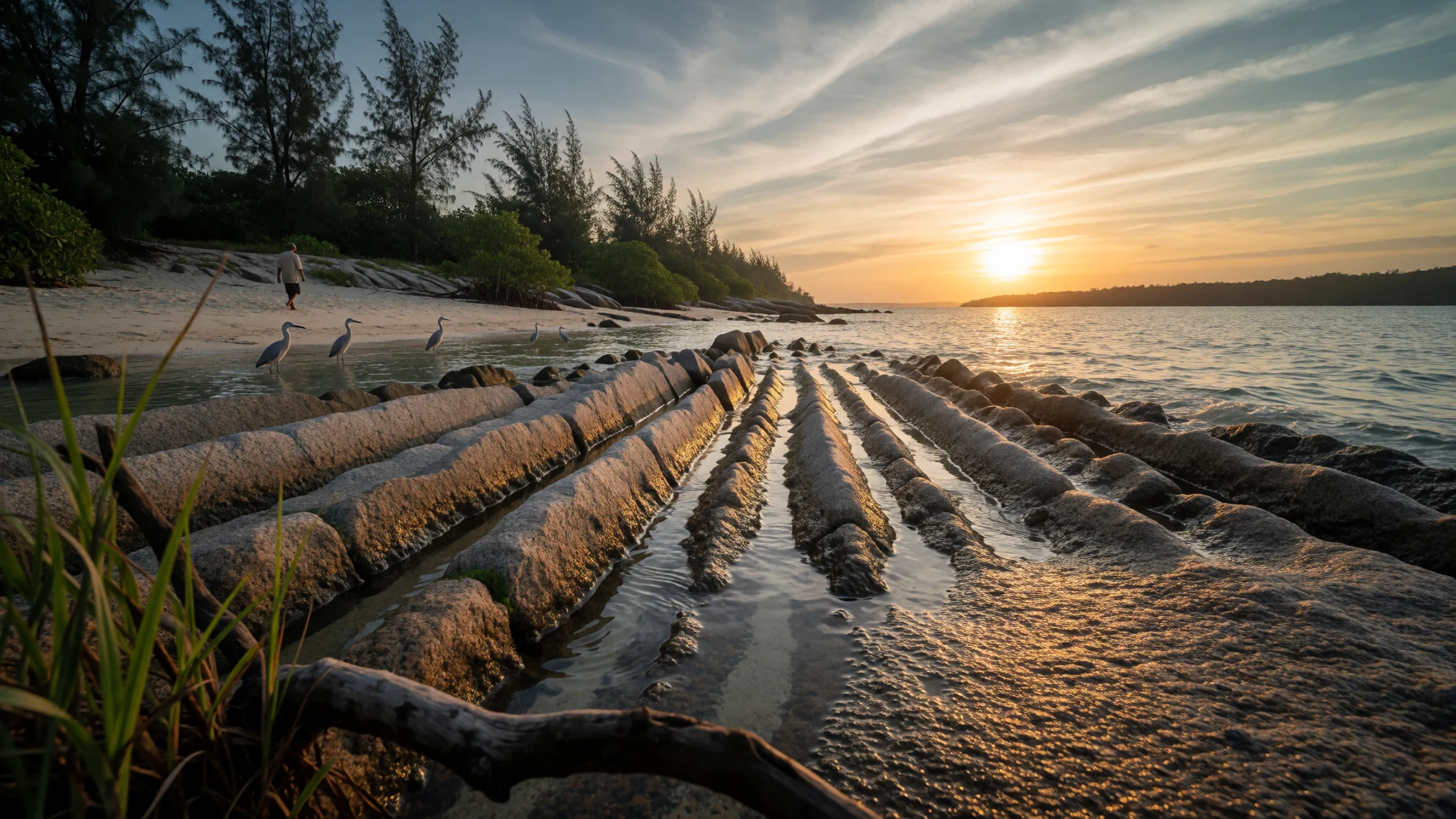
Pulau Ubin is a short boat ride from Singapore's cities, yet it keeps village lanes, flooded quarries, mangroves and shoreline where bicycles set the pace.
The place
Pulau Ubin lies off the north-east of Singapore, close to Pulau Tekong, and it feels like a different decade from the main island. Ubin (pronounced OO-bin) is a rural pocket where tracks run between secondary forest, old kampong houses, fish farms and mangrove edges. The highest point is about 56 m, so this is gentle terrain: flat enough for a hired bicycle, hot enough that most visitors stop often for water.
In the 1960s a few thousand people lived here, mostly tied to the granite quarry. By 2012 only about 40 villagers remained, and the island has since been run by the National Parks Board rather than the many agencies that once shared it. That has helped keep much of it green. The island is part of the Ubin–Khatib Important Bird Area, recognised by BirdLife International for the resident and visiting birds it supports, some of them threatened.
A day here has a loose pattern. Boats leave from the mainland and land at a small jetty, where bicycle shops and a few eateries cluster. From there the island opens out: the old quarries, the north shore with views across the strait to Johor in Malaysia, and the shoreline at Chek Jawa on the east side. There is little shade on the main road, no real crowds outside weekends and holidays, and a calm that Singapore's city streets rarely offer. Visitors come to slow down, not to tick off sights. The island's official page is at https://ubin.mnd.gov.sg/MS/PulauUbin.aspx.
Its story
Pulau Ubin's story is a granite story. The British claimed the island on 4 August 1825, when the colonial administrator John Crawfurd led an expedition over from Singapore, a settlement then only six years old. An 1828 sketch of Singapore marks the island as Pulo Obin, and later maps give it as Po. Ubin, spellings that show how the name was still settling.
The rock mattered from the start. By 1847 Chinese settlers had arrived and set up quarry companies, cutting the island's granite for the construction trade of a growing colony. The stone has a distinctive look from the water: grooves and fluted sides leave furrows and ridges across the slabs. The surveyor John Turnbull Thomson painted these in 1850 in a work titled Grooved stones on Pulo Ubin near Singapore.
In the 1950s the British ran large-scale quarrying here, and the granite went into the Horsburgh Lighthouse on Pedra Branca. It was later used for the Singapore–Johor Causeway, so stone from this small island ended up in structures that link and guide traffic across the region.
Beyond quarrying, farming and fishing were the main livelihoods. Today none of the quarries operate. Plants are creeping back across their edges, and several have filled with water, leaving still pools below the cut rock faces. The island's older working life is now visible mostly as ruins, houses and a handful of residents who stayed on.
What to see
- The Ubin quarries — Interior of the island
The disused quarries are the clearest trace of the island's working past. Sheer cut faces drop into pools of still water, with vegetation steadily reclaiming the rims. Keep to marked paths and viewing points, watch the edges, and go early or late when the glare off the water is softer.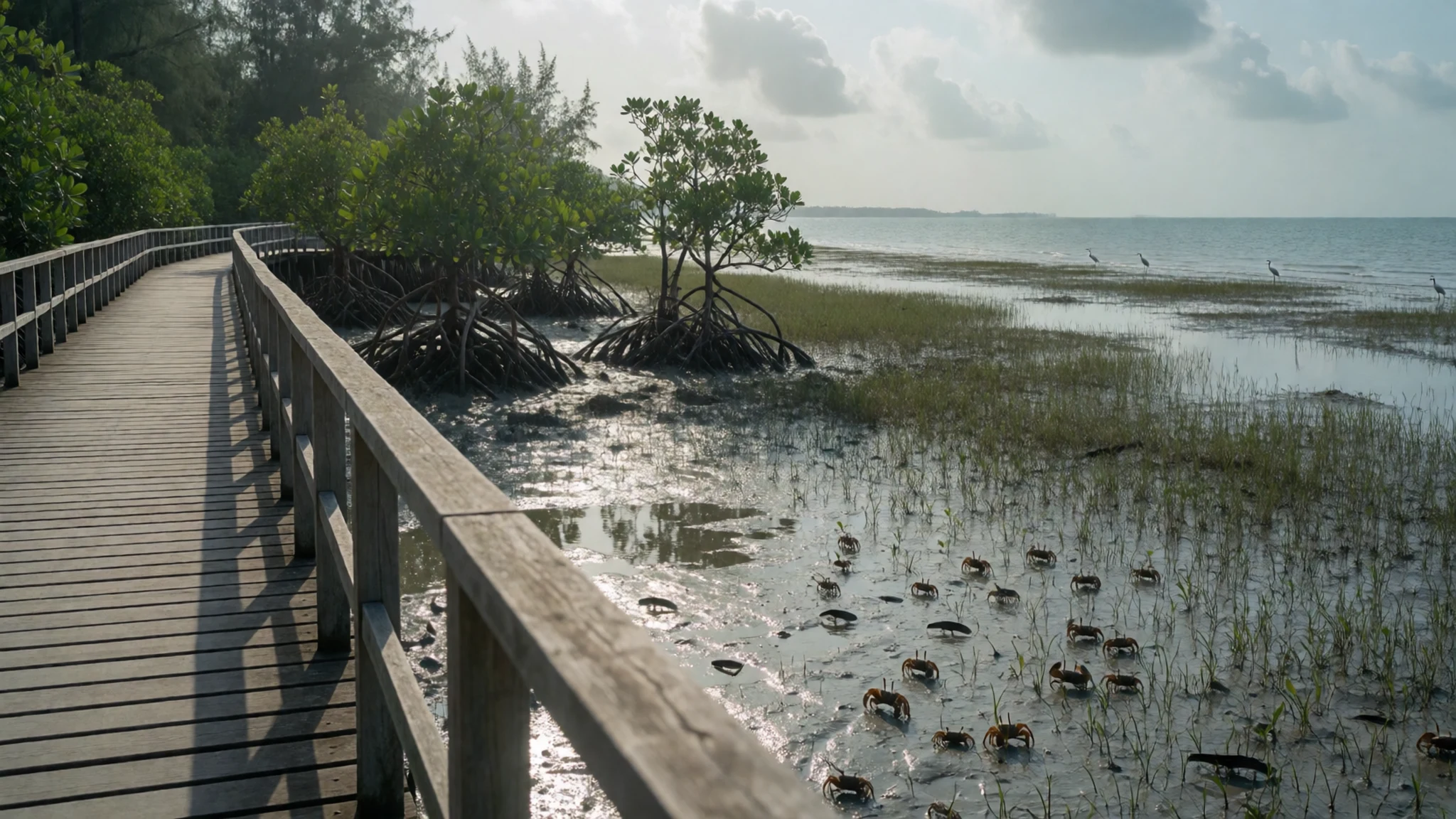
- Chek Jawa — East coast
Chek Jawa, on the east side, is a shoreline of varied habitats within a short stretch: sea, sand, rocky ground and mangrove close together. Boardwalks keep feet off the delicate ground. Check tide times before going, as the shore looks quite different at high and low water.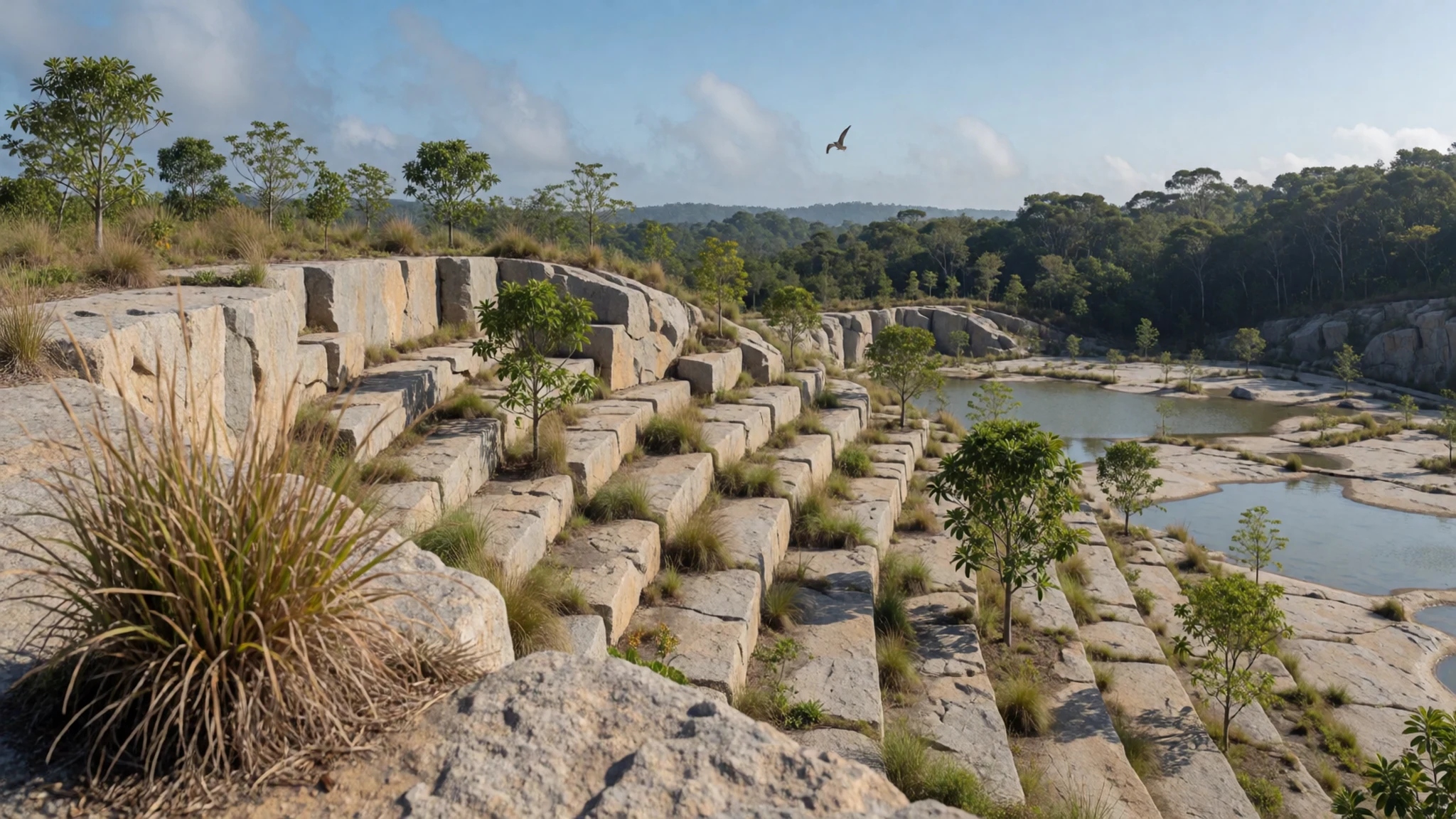
- North shore lookout — North coast
On the northern shore the land opens to the strait and the low coast of Johor, Malaysia, across the water. It is a quiet place for a rest, with sea breeze and few people. Binoculars are useful for birds along the shoreline, and shade is scarce, so bring a hat.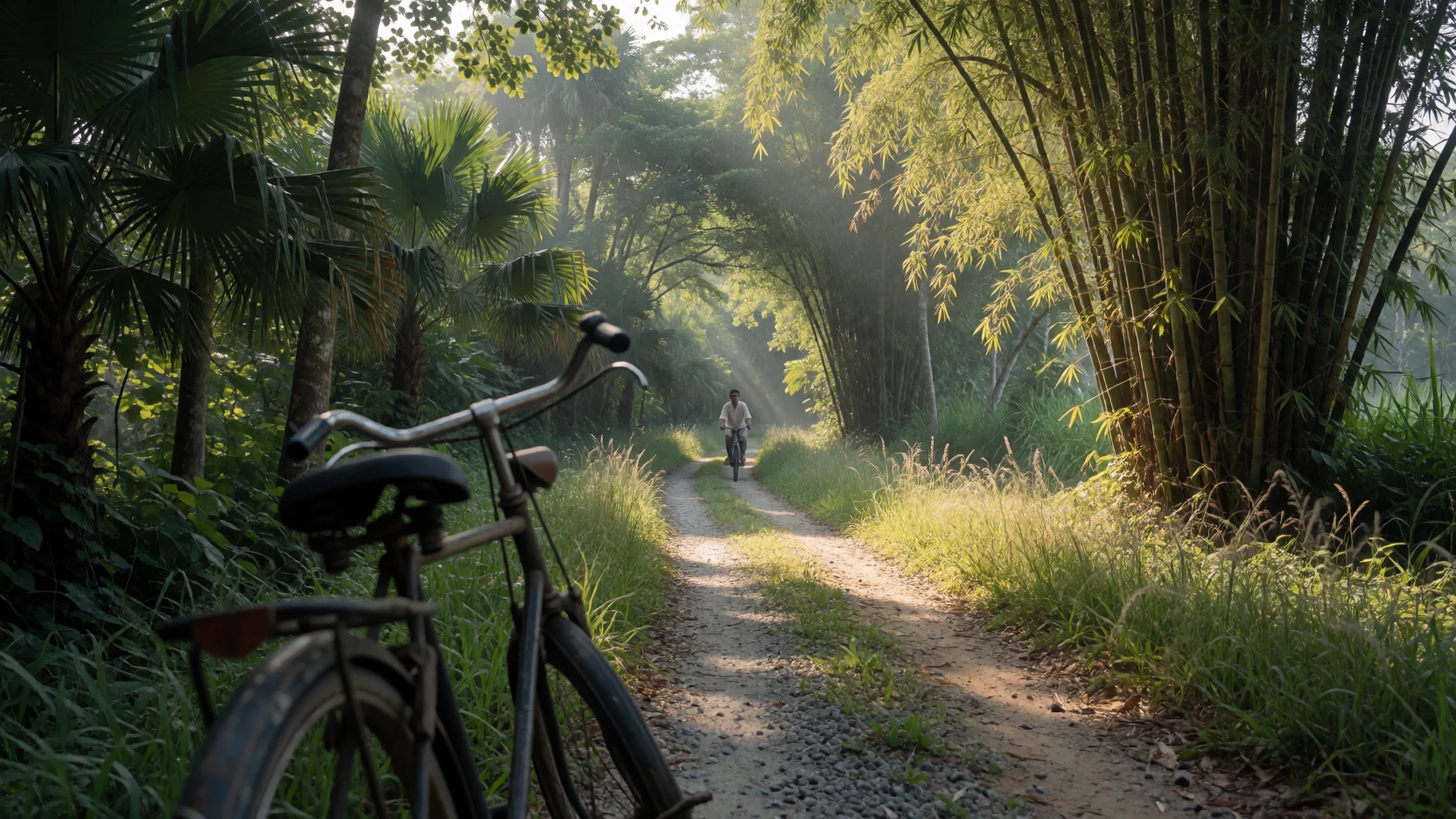
- Kampong houses — Village lanes and north coast
Scattered timber and zinc-roofed houses show how the village lived when quarrying and farming supported a few thousand people. Many sit among trees near the lanes. They are lived in or cared for, so look from the path, take photographs politely and do not step onto anyone's property.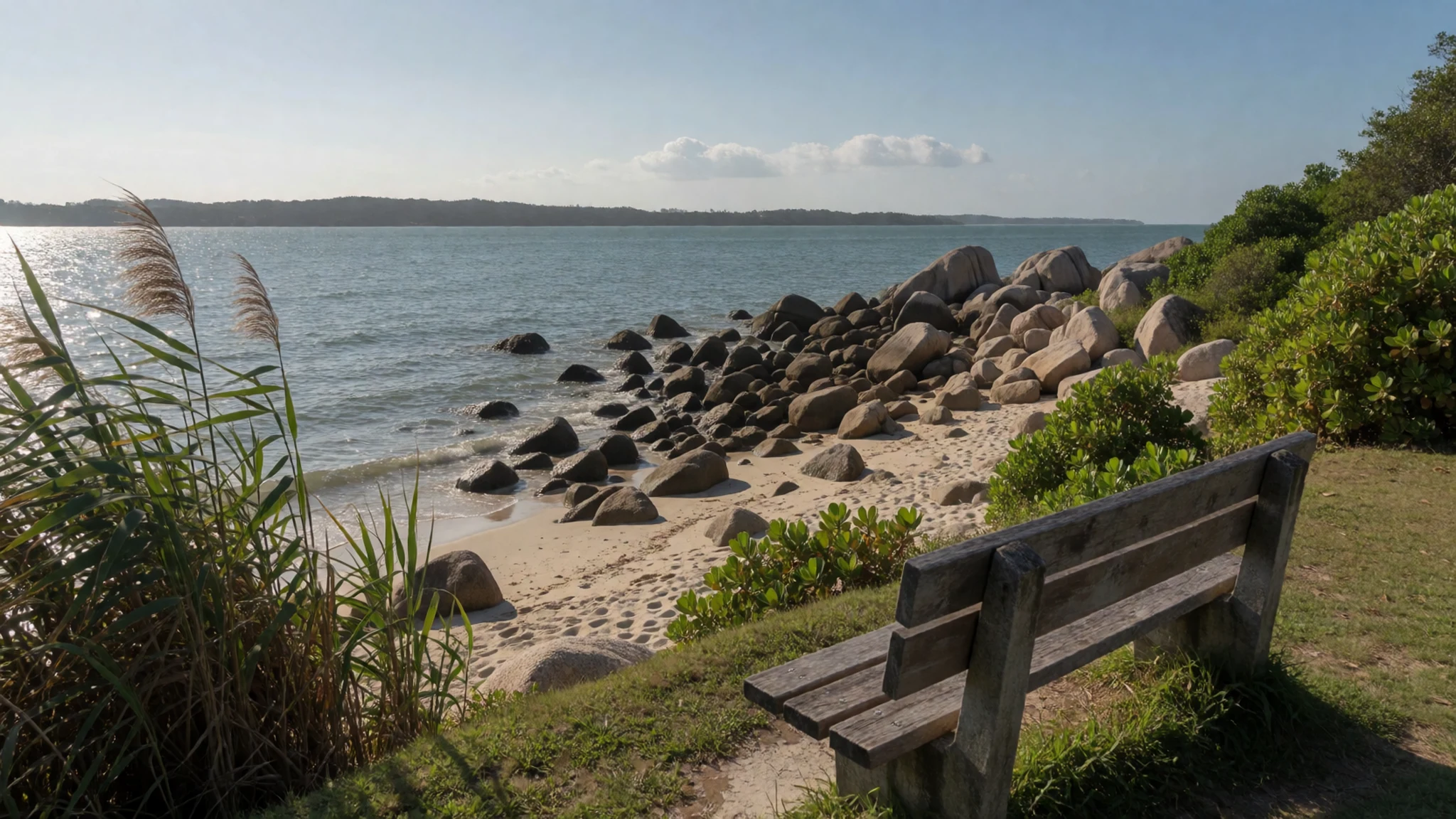
- Jetty and bicycle lanes — Ubin jetty
The jetty is where bumboats land and where most days begin. Bicycle shops sit close by, and the flat main tracks make cycling the natural way to cover the island. Check brakes and tyres before leaving, and note the way back to the jetty before the afternoon heat sets in.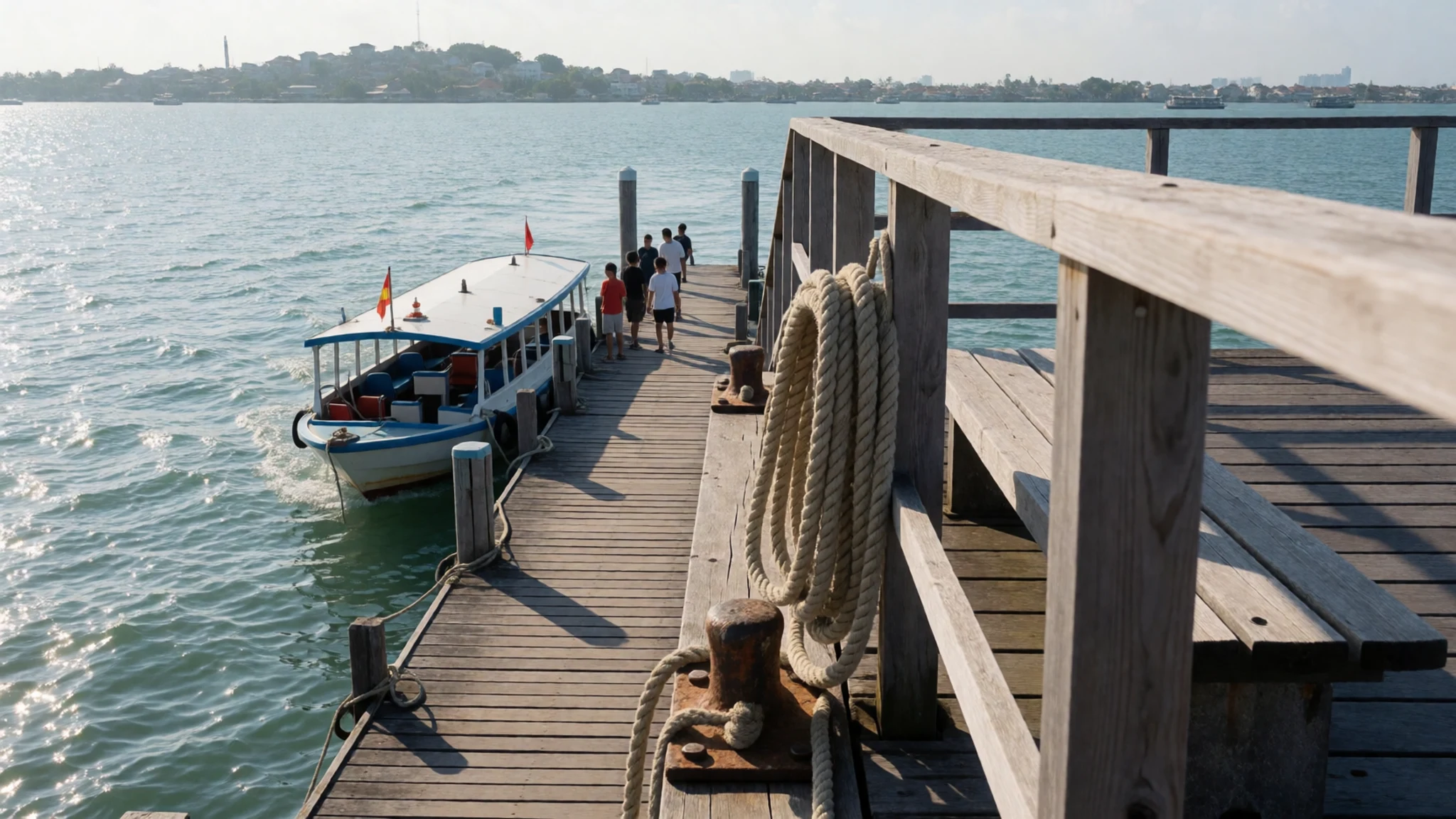
Culture
Pulau Ubin sits inside Singapore's wider culture, which is a mix of Chinese, Malay and Indian communities with many workers and expatriates from elsewhere. On the island the older character is that of a small Chinese-founded quarry and farming settlement, with fishing a long-standing livelihood. The villagers who remain are few, so visitors are guests in what is still someone's neighbourhood.
Daily manners in Singapore are relaxed. Ordinary decent behaviour at home will rarely offend anyone, and dress codes are limited to a few formal venues. Even so, Singaporeans tend to be more socially conservative than many visitors expect. Holding hands is fine; more intimate public affection is considered impolite. Toplessness is not acceptable anywhere, including beaches. Places of worship generally ask for covered shoulders, midriff and knees, and the busier ones lend shawls or sarongs.
On Ubin the more practical culture is that of a shared natural area. It is managed by the National Parks Board, and the island's appeal lies in how little has been added to it. Wildlife, from birds to shoreline creatures, is part of the draw, and the sense of rural calm is something residents and visitors both value.
When you go, keep to marked trails and boardwalks, take your rubbish back to the mainland, and ask before photographing residents or entering a private property.
What to wear
Pulau Ubin has no single traditional costume of its own. Its early settlers were Chinese, and the older generation would have worn simple working clothes of cotton, often with a hat against the sun, suited to quarrying, farming and fishing. Across Singapore, traditional dress belongs to specific communities and occasions: Chinese qipao and samfu at festivals, Malay baju kurung and baju Melayu with songket or batik fabric on religious and family days, and Indian saris and kurtas at weddings and celebrations. None of these is everyday wear on the island.
What people wear now is practical and casual. Singapore is hot and humid, so residents and day-trippers choose light cotton or quick-dry shirts, shorts or loose trousers, caps and sunglasses. Cyclists favour sports clothing and sturdy sandals or trainers. Dress codes are rare in the country, apart from a few formal places, and the island is informal.
For a visitor, think weather and terrain. Wear breathable, light-coloured clothing, a hat, sunscreen and closed shoes or sturdy sandals for gravel tracks, boardwalks and muddy shoreline. Pack insect repellent and a light rain jacket, since showers arrive quickly. If you plan to enter a place of worship on the mainland, carry a scarf or light layer, as shoulders and knees should be covered. Swimwear is for beaches only, and toplessness is not acceptable anywhere in Singapore.
What to eat
- Hainanese-style chicken rice — Eateries near Ubin jetty
Poached chicken over fragrant rice, served with chilli sauce, ginger paste and a bowl of broth. It is one of Singapore's everyday plates, and simple versions are easy to find at the small eateries near the jetty.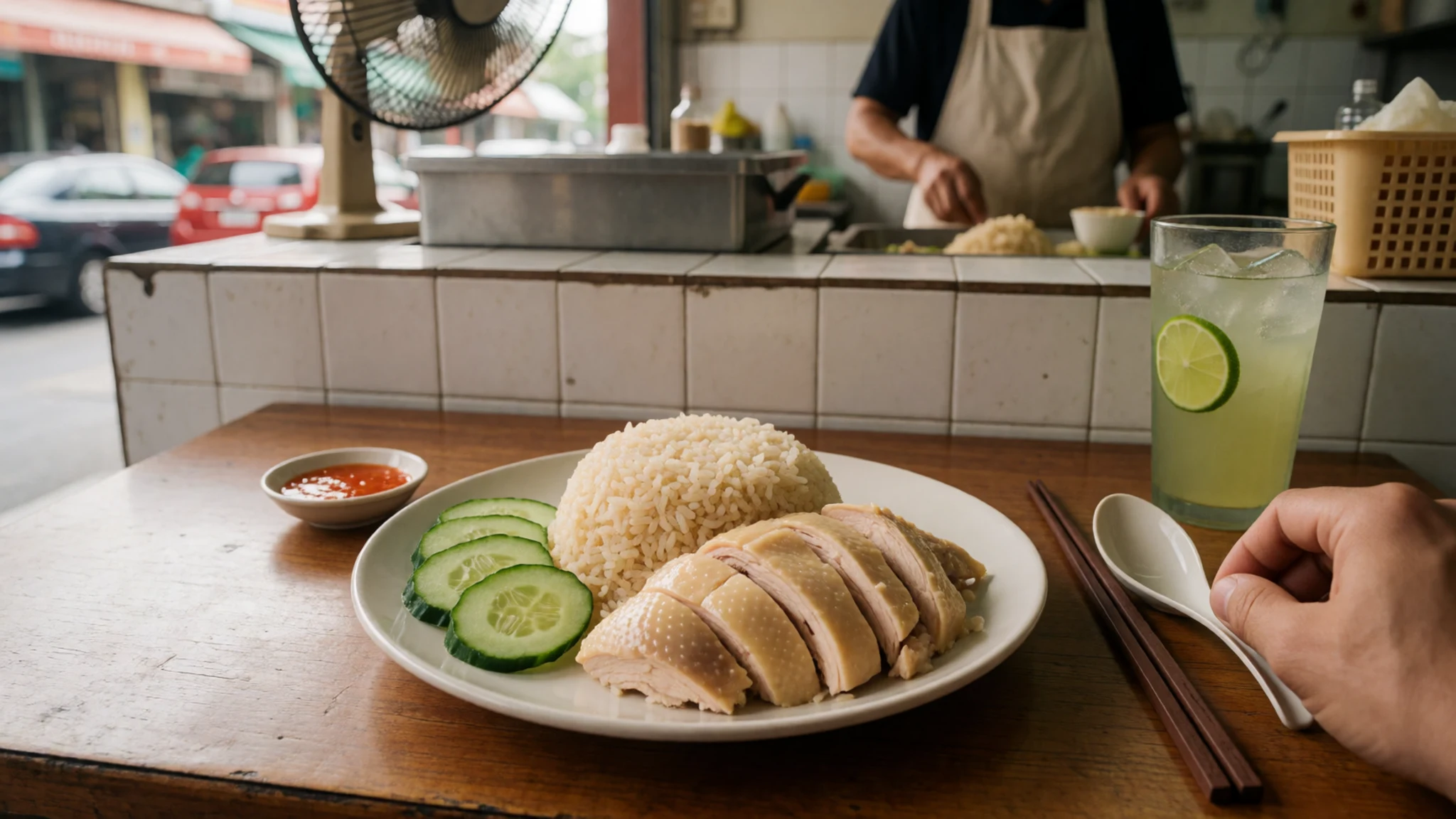
- Mee goreng or fried noodles — Casual eateries near the jetty
Stir-fried noodles with vegetables, egg and chilli are a typical quick meal, filling enough for a morning of cycling. Malay and Chinese styles both appear on menus, so check which you are getting.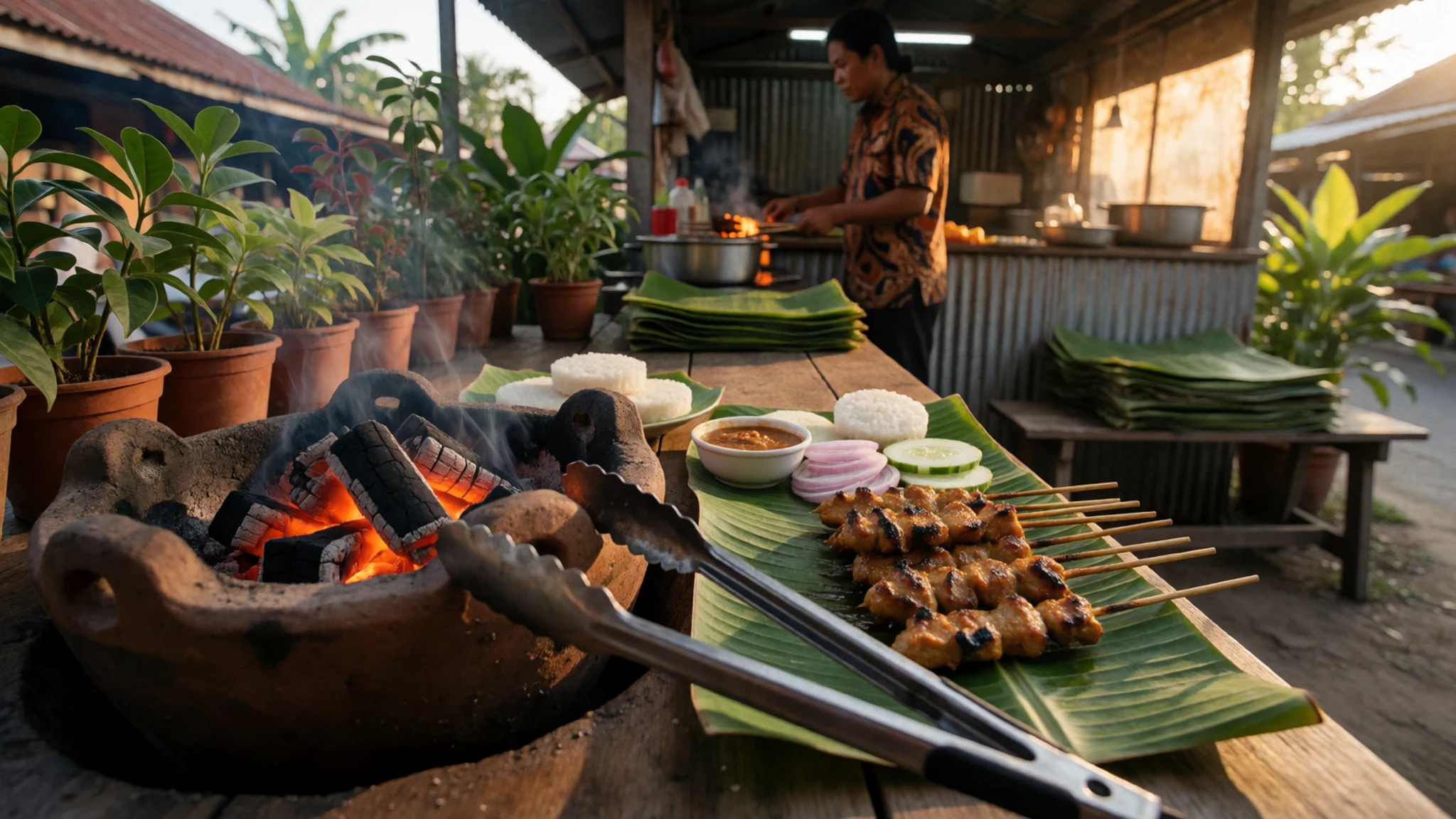
- Fresh sugar cane juice — Drink stalls around the jetty
Pressed to order and served over ice, it is a sweet, cooling drink after a long ride in the sun. Ask for less ice if you want more juice, and drink water alongside it. - Satay — Hawker centres on mainland Singapore, before or after the crossing
Skewers of marinated grilled meat served with peanut sauce, a Malay favourite found across Singapore. Eat them with your right hand or a fork, as you prefer. Choose a busy stall for freshness. - Kopi and kaya toast — Kopitiams and hawker centres on the mainland
Strong local coffee with toast spread in coconut jam is the classic Singapore breakfast. It makes a good start before catching a boat to Ubin and is available at neighbourhood kopitiams.
Plan it
Best time. February to August is generally the drier stretch, though showers can come at any time in Singapore's equatorial climate. Expect heat and humidity all year, so start early. Check the weather and tide times if Chek Jawa is a priority.
How long. 1
Getting there. Fly to Singapore Changi Airport, travel by taxi or MRT to the mainland ferry terminal in the north-east, then take a bumboat across to Pulau Ubin's jetty. Check the official site for current boat arrangements.
Budget. low
Tips
- Go early to avoid the worst heat and the weekend crowds
- Carry cash for boats, bicycle hire and small eateries, and check what is accepted
- Bring plenty of water, sun protection and insect repellent
- Check bicycle brakes and tyres before riding off
- Allow enough daylight to be back at the jetty before dusk
Etiquette
- Stay on marked paths and boardwalks, especially at Chek Jawa
- Ask before photographing residents or their homes
- Take all rubbish back with you
Nearby
Sources
- Wikidata Q1928550 (CC0)
- Wikipedia: Pulau Ubin (rev 1378961184) (CC BY-SA 4.0)
- Wikivoyage: Singapore (rev 5408853) (CC BY-SA 4.0)
- Photo: House near the northern coast of Pulau Ubin (BertholdD) (CC BY 3.0)
- Photo: Extract from map of Singapore Island 1945 (Tfitzp) (CC BY-SA 4.0)
- Photo: Ubin Quarry (CC BY-SA 2.5)
- Photo: Pulau Ubin (Zairon) (CC BY-SA 4.0)
- Photo: Pulau Ubin cycle hire (Johnragla) (CC BY 3.0)
- Photo: Overlooking Johor from Pulau Ubin (Zhou Guanhuai) (CC BY-SA 4.0)
- Photo: Chek Jawa panorama (Sengkang) (CC BY-SA 2.0)
- Photo: Singaporean bumboats (Whoosises) (Public domain)


