Gardens by the Bay
Gardens by the Bay, Singapore
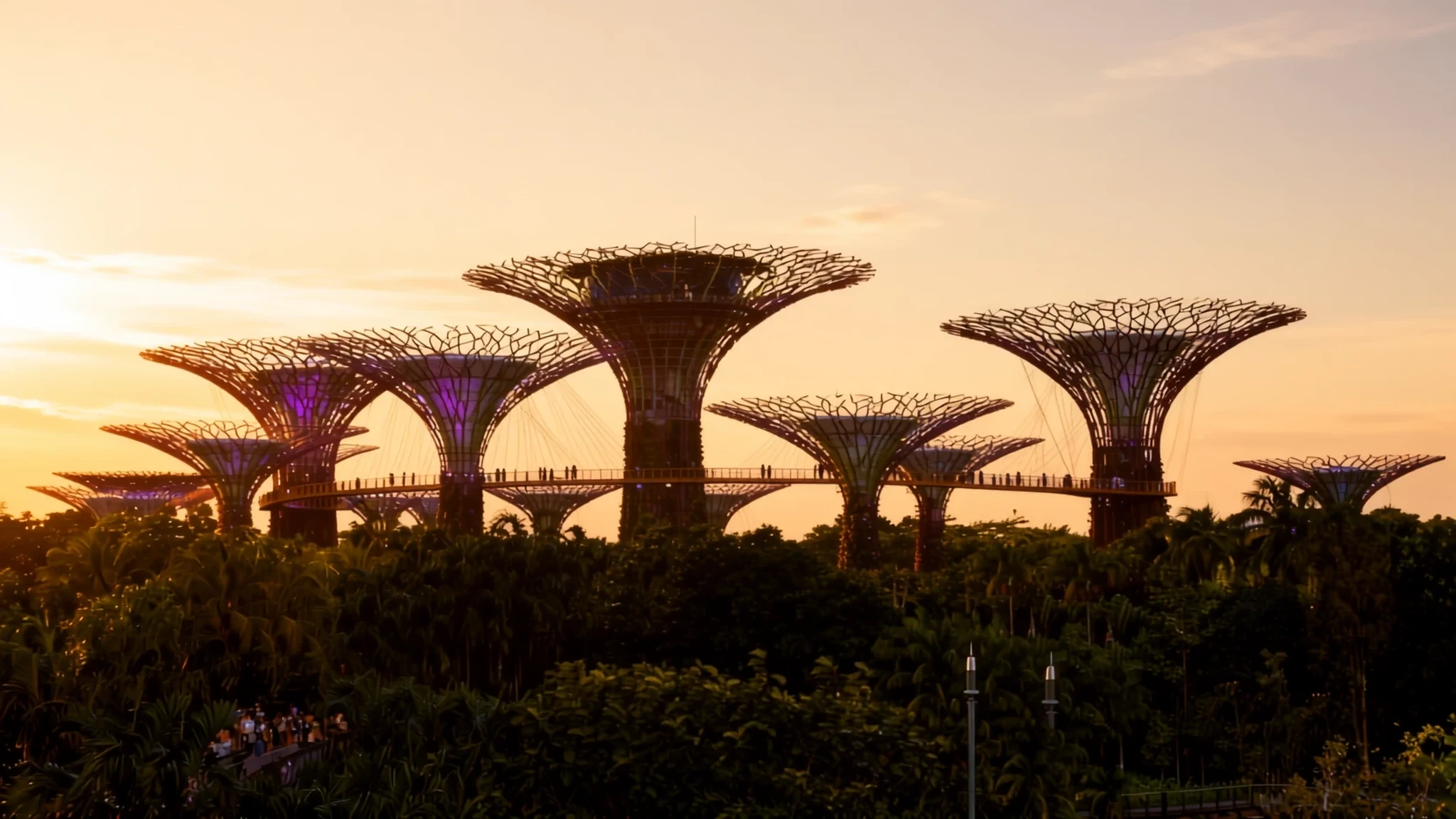
Gardens by the Bay turns a stretch of Singapore's waterfront into a futuristic garden of towering Supertrees, glass conservatories and evening light shows.
The place
Gardens by the Bay sits on reclaimed land beside the Marina Reservoir, just south of Singapore's downtown towers. It is an urban park of 105 hectares, split into three waterfront gardens: Bay South, Bay East and Bay Central. Most visitors head for Bay South, the biggest and most elaborate, designed by the landscape firm Grant Associates. This is where the famous structures stand: the Supertree Grove, the Flower Dome and the Cloud Forest.
The layout is easy to follow. Walkways link the conservatories, the lakes and the Supertrees, and a long elevated path runs among the tree canopies. Bay East is calmer, with lawns and open views across the water to the city skyline, and it is the better choice for a slow walk or a sunset photograph. Bay Central connects the other two along the waterfront.
The setting matters. Singapore is a compact island state, and the gardens put a large block of planting right beside the financial district. The contrast is the point: glass, steel and tropical leaves within a short walk of each other.
Be realistic about the weather. The climate is hot and humid all year, so the outdoor gardens are best early in the morning or after the afternoon heat. The air-conditioned domes make a welcome break, though they can feel almost chilly after the heat outside. Crowds build at weekends and in the evenings, when the Supertrees are lit.
Its story
Gardens by the Bay grew out of a national idea. Singapore had long described itself as a Garden City, with trees along roads and green space woven into housing estates. In 2005 the prime minister, Lee Hsien Loong, announced at the National Day Rally a bolder version: a City in a Garden, where greenery would be part of daily life and raise the quality of living for ordinary people.
The park was meant to be the showpiece of that plan, a major recreation space for residents and a national icon. A design competition drew international entries, and the Bay South garden by Grant Associates was chosen. The site was reclaimed waterfront, so almost everything had to be planted from scratch, and the engineering was as important as the horticulture.
The gardens opened to the public in 2012, the year recorded in the facts for this place. They quickly became one of the most photographed spots in the country, and visitor numbers climbed into the tens of millions within a few years. Tourists came for the spectacle, but Singaporeans also adopted it for picnics, jogging, family outings and evening strolls.
Bay East and Bay Central followed the first garden, extending the park along the water. Bay East also holds the Founders' Memorial, a tribute to the people who built the modern nation. The whole project shows how Singapore treats planning: a long-term idea, announced early and carried through with unusual determination.
What to see
- Supertree Grove — Bay South Garden
The Supertrees are vertical gardens made of steel, wrapped in ferns, orchids and climbing plants. Walk beneath them for the scale, then go up to the aerial walkway for a view across the canopy. They are lit after dark, so evening is the busiest time.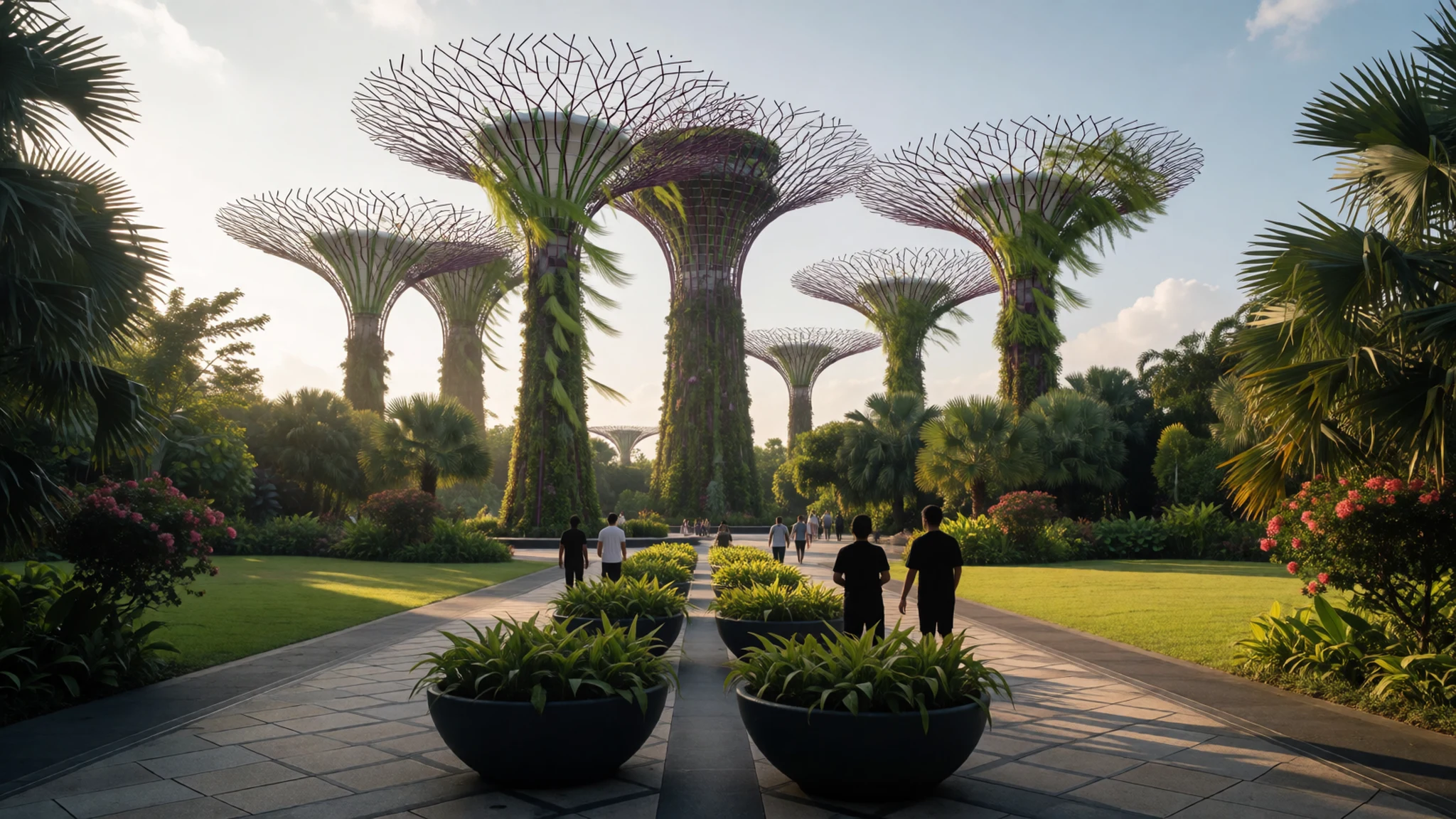
- Flower Dome — Bay South Garden
A huge glass conservatory kept cool and dry, holding plants from Mediterranean-type climates: olive trees, succulents and seasonal flower displays. It suits the middle of a hot day. The displays change through the year, so check the official site for what is on.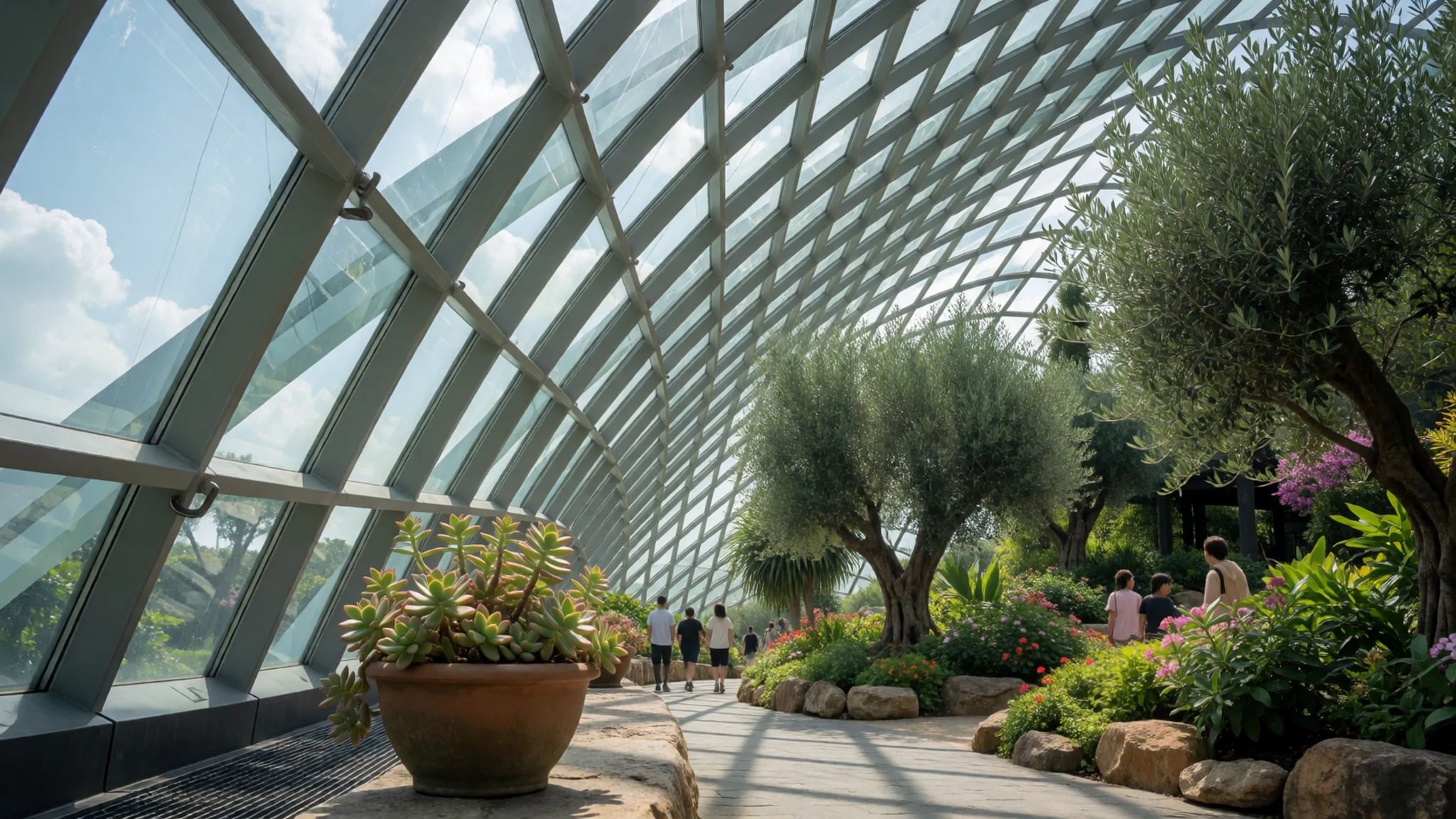
- Cloud Forest — Bay South Garden
A second conservatory, cool and misty, built around a tall artificial mountain covered in ferns, orchids and other plants of tropical highlands. A waterfall pours down the middle, and walkways spiral around it. Start at the top and work down.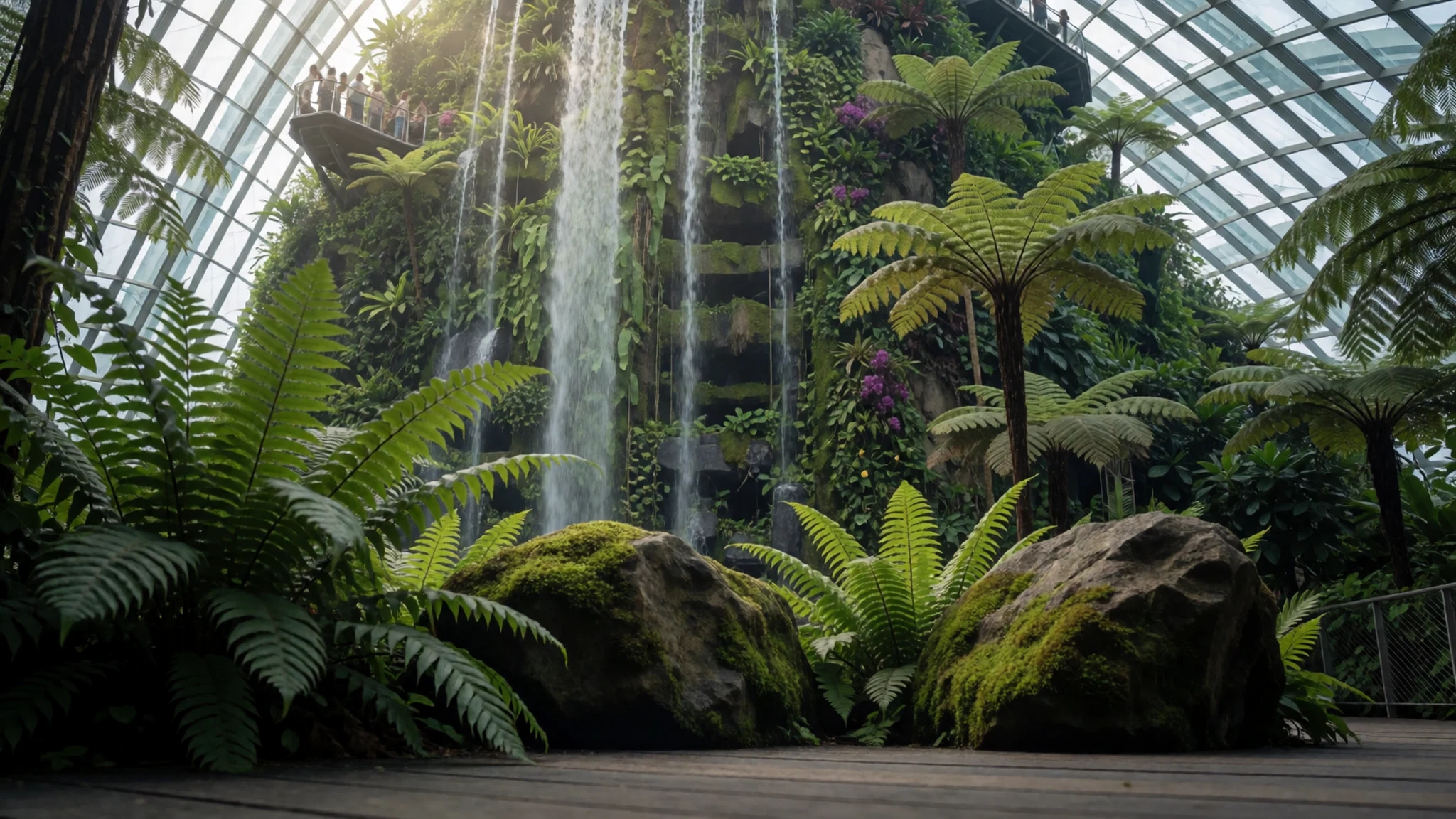
- Bay East Garden — Marina East
A quieter waterside lawn with a clear view across the water to the city skyline. It is a good place for a slow walk, and the sunset here is memorable, with the towers turning gold and then lighting up.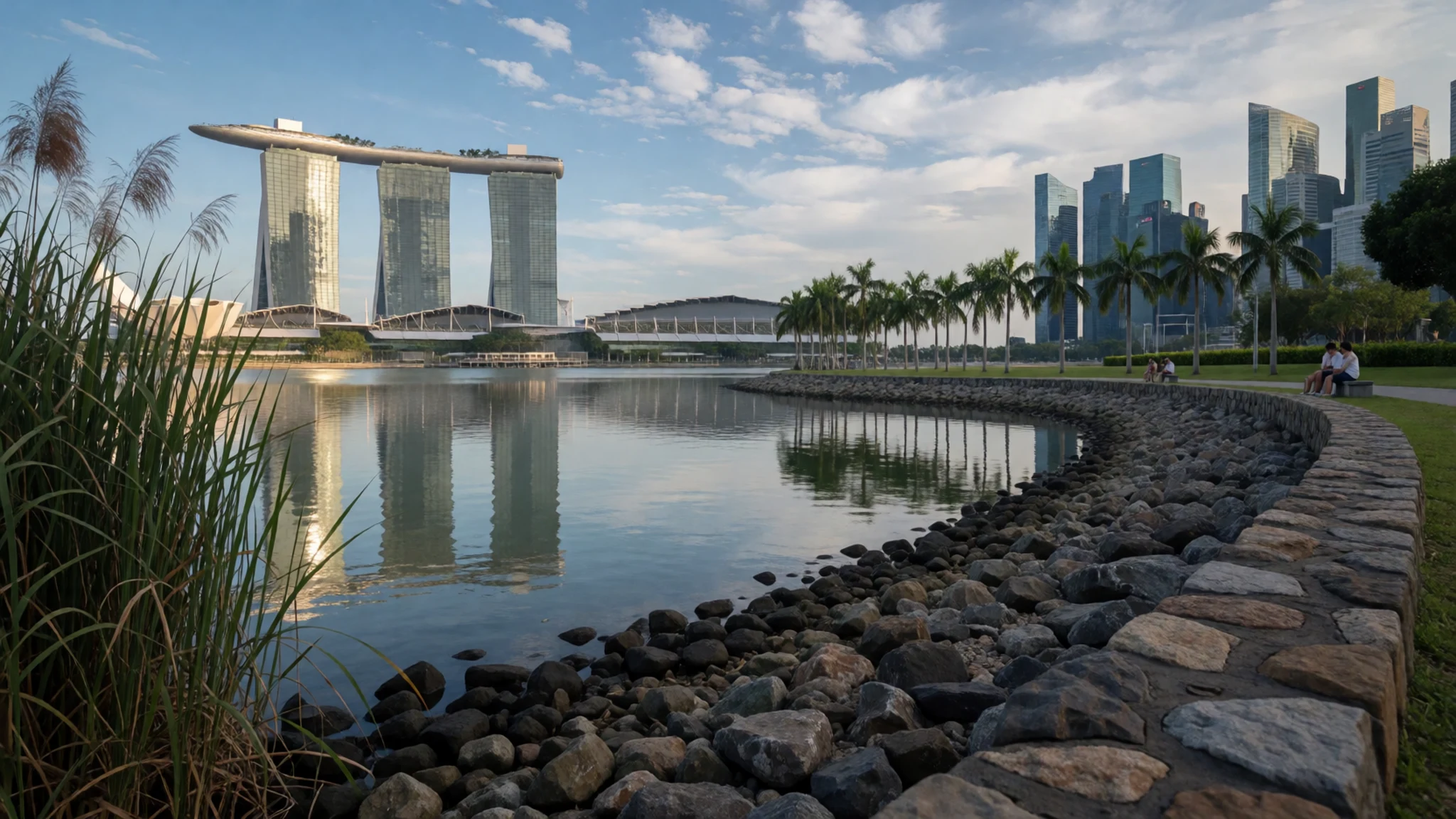
- Founders' Memorial — Bay East Garden
Set within Bay East Garden, this memorial honours the people who shaped modern Singapore. It is a reflective, uncrowded stop away from the main conservatories, and suits visitors interested in the country's history as well as its plants.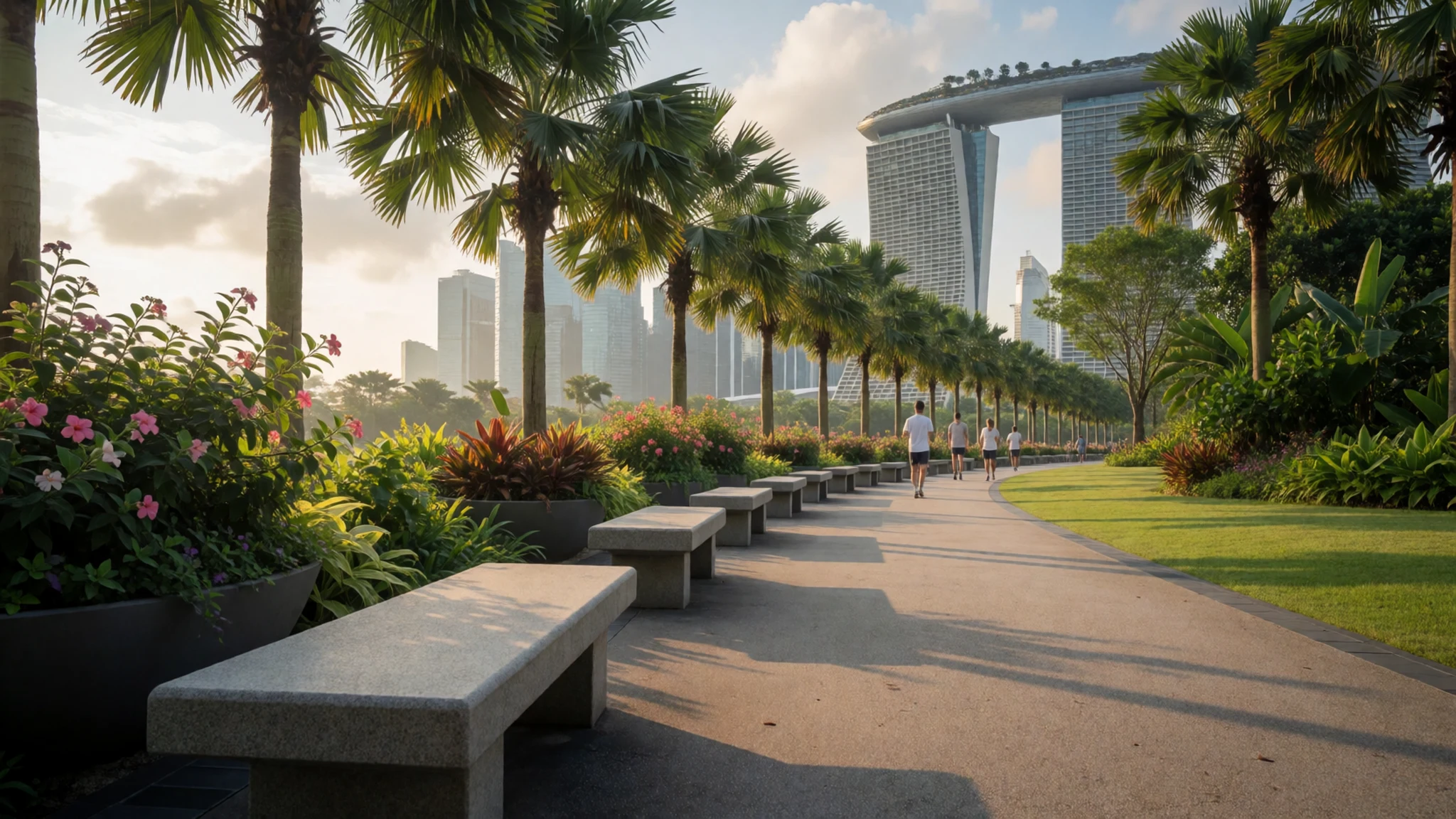
Culture
Gardens by the Bay reflects the way Singapore sees itself. The country is a mix of Chinese, Malay and Indian communities, alongside many workers and expatriates from elsewhere, and a visit to the park is a good place to watch that mix at ease. Families picnic on the lawns, joggers circle the lakes, and groups of friends gather under the Supertrees in the evening.
Singaporeans are not stiffly formal. Ordinary good manners are enough, and nobody expects elaborate courtesies from visitors. The society is, however, somewhat conservative in public. Holding hands is perfectly normal, but heavier displays of affection draw disapproval. Public spaces are clean and well regulated, and people take the rules about litter and shared spaces seriously.
The gardens are also a symbol of the state's long-term planning. Greening the city has been official policy for decades, and locals often speak of the park with a degree of pride, as proof that a dense, busy island can still be filled with plants.
Beyond the park, the wider culture is best met around food, in neighbourhood eating halls where every community's cooking sits side by side. Combining a morning in the gardens with a meal at one of these places gives a far fuller picture of the country than the conservatories alone.
Keep to the paths, do not pick or climb on the plants, and take your litter with you.
What to wear
Singapore has no single national costume, but each community keeps its own traditional dress. Chinese Singaporeans may wear the cheongsam, a fitted silk dress, at Lunar New Year. Malay families wear the baju kurung, a long tunic and skirt, or the baju Melayu for men, usually in cotton or silk, around Hari Raya. Indian communities wear saris and kurtas, often in silk and cotton, at weddings and festivals such as Deepavali. The Peranakan kebaya, an embroidered blouse worn with a batik sarong, is a local heritage style.
Everyday dress is simple and suited to the heat: light cotton shirts, T-shirts, shorts, dresses and sandals. Offices are cooler inside, so many people carry a thin layer. Dress codes are rare, and only a few formal venues enforce them.
For Gardens by the Bay, wear light, breathable clothing and comfortable closed or well-fitted walking shoes, since the park involves a lot of walking on paved paths. Bring a hat, sunglasses and sun protection for the outdoor gardens. The conservatories are deliberately cool, especially the Cloud Forest, so a thin cardigan or scarf is useful. A small umbrella or light rain jacket helps, as showers can arrive suddenly. If you plan to visit a mosque, temple or other place of worship nearby, cover shoulders and knees, and carry a scarf for the purpose.
What to eat
- Hainanese chicken rice — Hawker centres across the city
Poached chicken served with fragrant rice cooked in chicken stock, with chilli and ginger sauces. It is a national favourite and a simple, filling lunch. Order it at almost any hawker centre.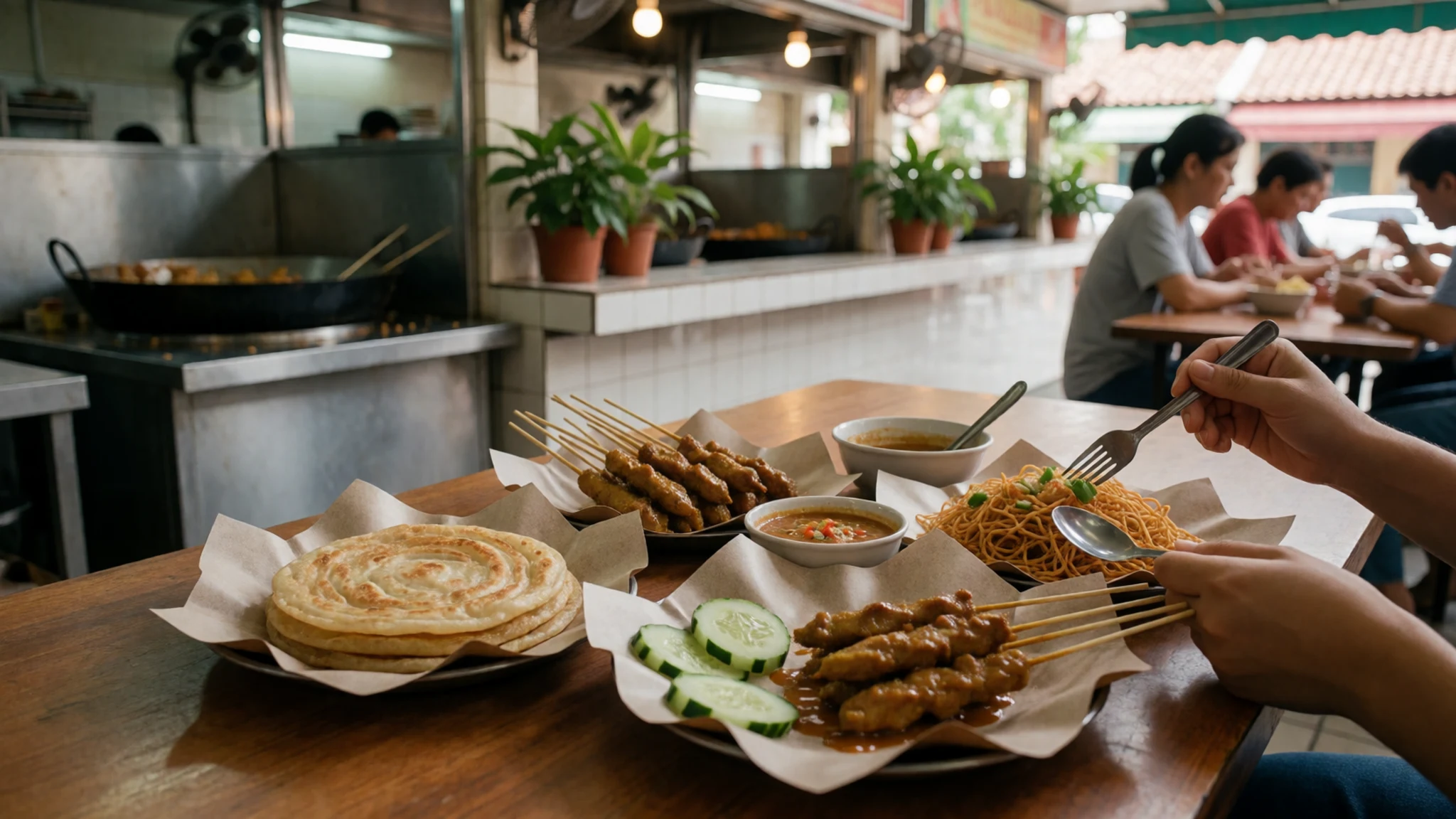
- Laksa — Food courts and Peranakan eateries
Noodles in a spicy, coconut-rich broth, often topped with prawns and cockles. The flavour is rich and warming. It is widely sold in food courts and at Peranakan eateries.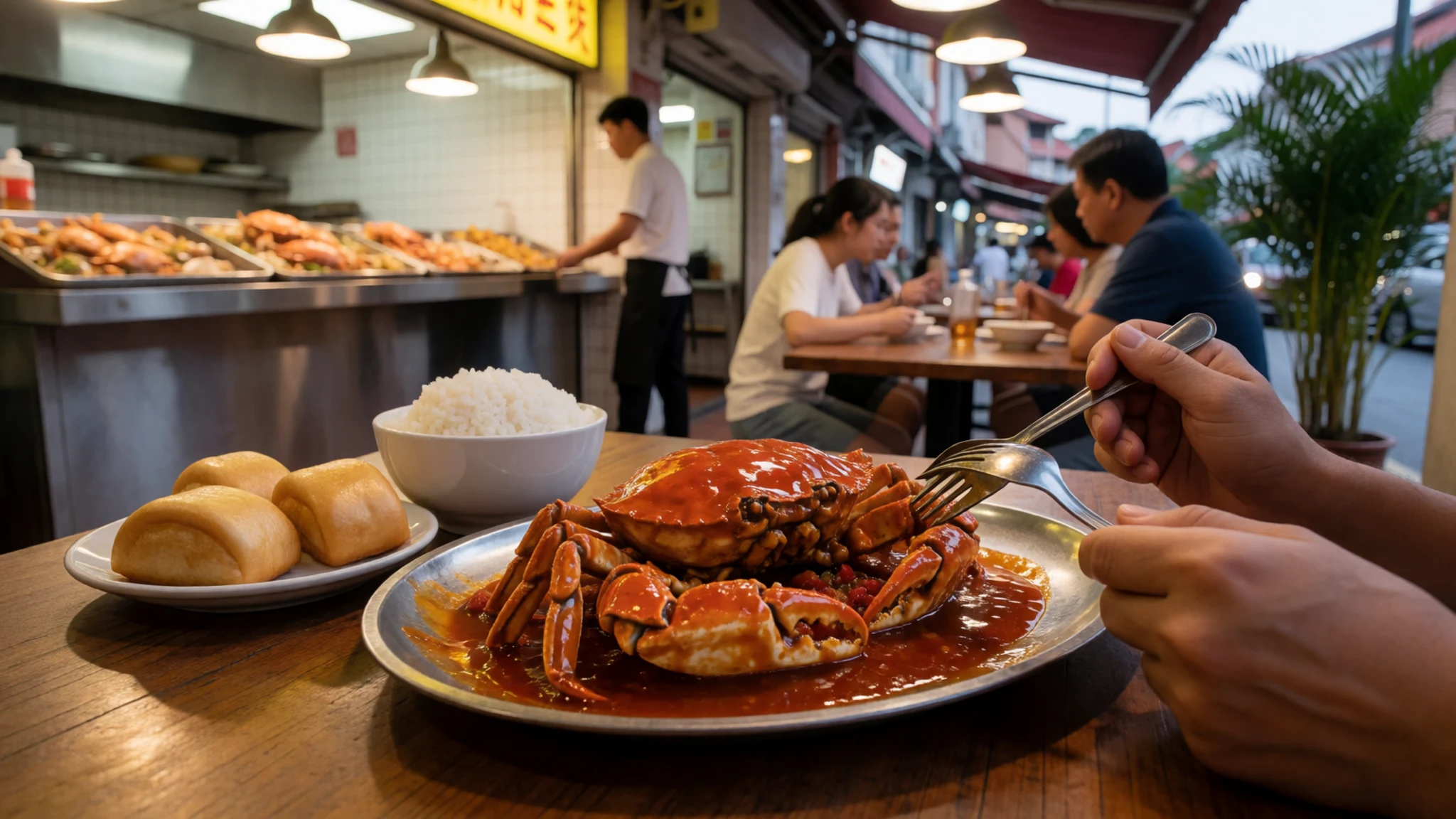
- Chilli crab — Seafood restaurants around the Marina and east coast
Crab cooked in a sweet, savoury and mildly spicy tomato-chilli sauce. It is messy, so expect to use your hands and plenty of napkins. Eat it with fried buns to mop up the sauce. - Satay — Evening open-air food stalls
Skewers of marinated grilled meat served with peanut sauce, rice cakes and cucumber. They are best eaten fresh from the grill in the evening, usually shared among a group. - Roti prata — Indian-Muslim eateries in Little India and neighbourhood estates
A crisp, flaky flatbread cooked on a griddle and served with curry. It is a common breakfast and late-night snack, and comes plain or filled with egg or cheese. - Kaya toast — Old-style coffee shops and breakfast cafés
Toasted bread spread with coconut jam and butter, usually served with soft-boiled eggs and sweet coffee or tea. It is a traditional light breakfast that is easy to find.
Plan it
Best time. February to April and July to August are generally drier, though Singapore is hot and humid all year and sudden showers are possible at any time. Go early morning or evening to avoid the worst heat.
How long. 1
Getting there. Changi Airport, then the MRT metro into the city; Bayfront station links to the gardens by a sheltered walkway, and taxis or ride-hailing cars are an easy alternative.
Budget. mid
Tips
- Check the official site (https://www.gardensbythebay.com.sg/) for opening times, ticket types and the light show schedule
- Book conservatory tickets ahead online at busy weekends and holidays
- Arrive early in the day for cooler weather and fewer crowds
- Carry water and a small umbrella for sudden rain
- Allow time to see the Supertrees both by day and after dark
Etiquette
- Stay on the paths and do not touch or pick the plants
- Take your litter with you and follow posted rules
- Cover shoulders and knees when visiting places of worship nearby
Nearby
Sources
- Wikidata Q630135 (CC0)
- Wikipedia: Gardens by the Bay (rev 1374334837) (CC BY-SA 4.0)
- Wikivoyage: Singapore (rev 5408853) (CC BY-SA 4.0)
- Photo: Supertree Grove (Shiny Things) (CC BY 2.5)
- Photo: Skyline at sunset from Bay East (Chensiyuan) (CC BY-SA 4.0)
- Photo: Flower Dome and Cloud Forest (CEphoto, Uwe Aranas) (CC BY 3.0)
- Photo: Flower Dome (Ong Chi Hang) (CC BY 3.0)
- Photo: Cloud Forest (Basile Morin) (CC BY-SA 4.0)
- Photo: Supertree Grove (dronepicr) (CC BY 2.5)
- Photo: Gardens by the Bay (Dietmar Rabich) (CC BY-SA 4.0)
- Photo: Gardens at Marina South model (DaronDierkes) (Public domain)


