Jewel Changi
Jewel Changi, Singapore
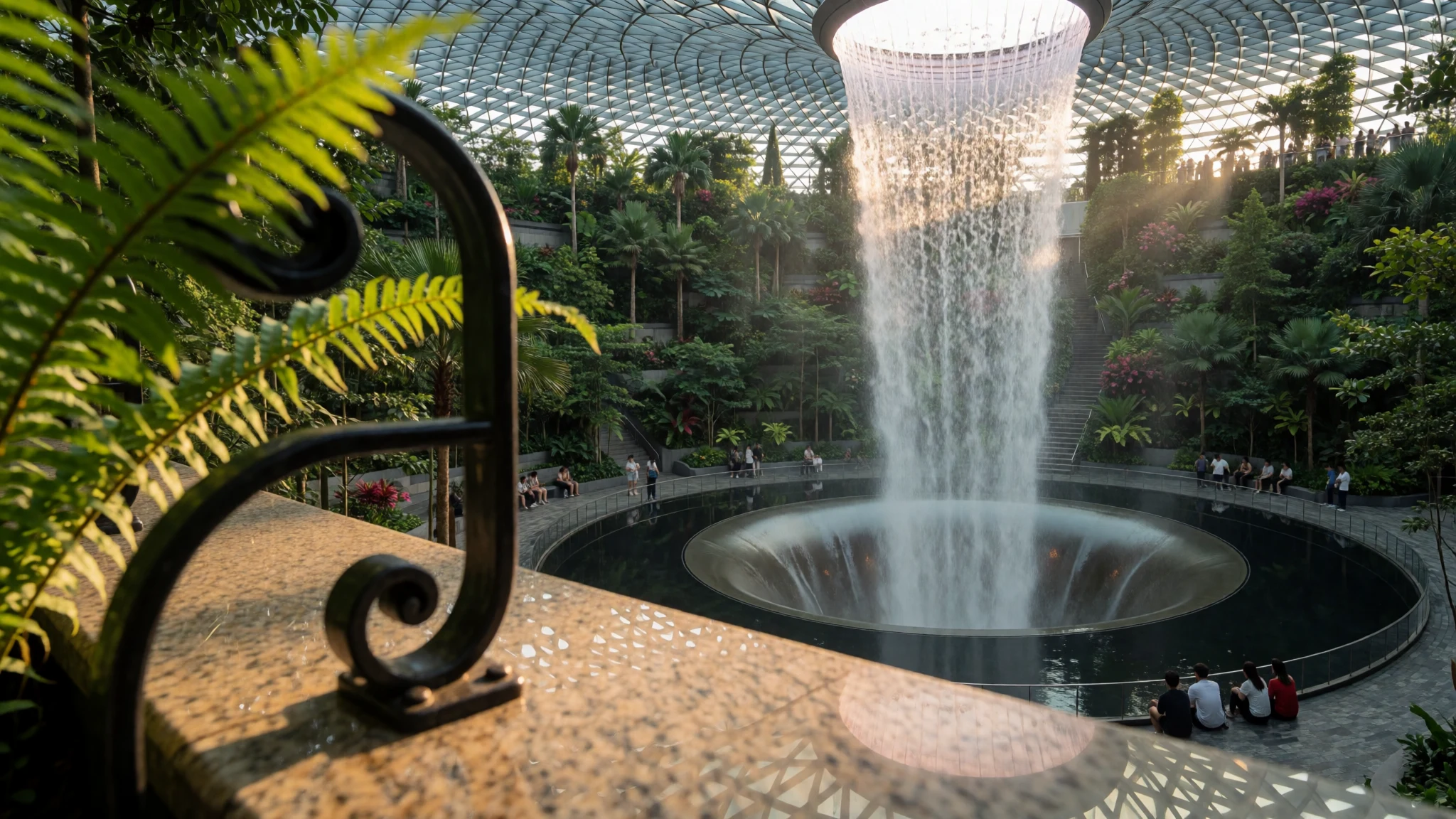
Jewel Changi turns an airport stopover into a destination, with a towering indoor waterfall and a forest garden under one glass roof.
The place
Jewel Changi Airport sits at the eastern end of Singapore, a nature-themed shopping and entertainment complex wrapped around the airport and joined to its three passenger terminals by covered links. A glass-and-steel dome shelters a central column of falling water, billed as the tallest indoor waterfall in the world, which drops through a terraced indoor forest. Around it the building stacks gardens, a hotel, shops, eateries and early baggage check-in, spread over five levels above ground and five below. The planting is dense: palms, ferns and flowering shrubs climb the terraces, and the air smells faintly of damp soil even though everything is under one roof. At the lowest levels, cafés and food courts open towards the base of the waterfall; at the top, a garden park with leisure attractions turns the roof into a destination in its own right. Jewel works for two kinds of visitor. Transit passengers drift in during a long layover, and Singaporean families come out at weekends simply to eat, walk and look. That mix means evenings and weekends can be busy, and the air-conditioning is strong enough that a light layer is welcome. Outside the glass the climate is equatorial, hot and humid all year, so the building doubles as a cool green pause in a tropical city. It opened in 2019 and has since become a reason to route a journey through Singapore rather than merely a place to change planes.
Its story
Jewel Changi Airport began as an answer to a simple problem: Singapore's airport was already busy and well regarded, yet passengers saw little beyond gates and duty-free halls. The idea was to add a destination to the airport rather than another terminal, building on the land in front of the three existing terminals and borrowing the island's long habit of calling itself a city in a garden. The designers put a rainforest and a waterfall inside a glass-and-steel shell, which means the building has to recycle its water and keep a living forest healthy indoors. Jewel opened in 2019, first softly and then fully, and the early crowds were so large that it passed its visitor target for the whole first year within months. Locals came in numbers as well as travellers, which surprised few who know how Singaporeans greet a new attraction. Visitor figures have kept climbing in the years since, reaching record levels recently, which is a mixed blessing for anyone hoping for a quiet look at the waterfall. Around the complex, the older character of Changi lingers. The district was a quiet coastal area of villages, beaches and wartime history long before it became an aviation hub, and the memorial chapel and museum nearby tell the story of the Second World War prisoner-of-war camp that once stood here. Seen alongside those places, the shiny new building has some context: it is the latest chapter in a neighbourhood that has repeatedly reinvented itself.
What to see
- Rain Vortex — Central atrium, Jewel
The Rain Vortex is the reason most people come. Water pours from an opening in the roof into a basin at the lowest level, ringed by the terraced forest, and its roar fills the whole atrium. Different floors give different views, from misty close-ups below to a wide sweep above. It is lit after dark; check the official site for show times.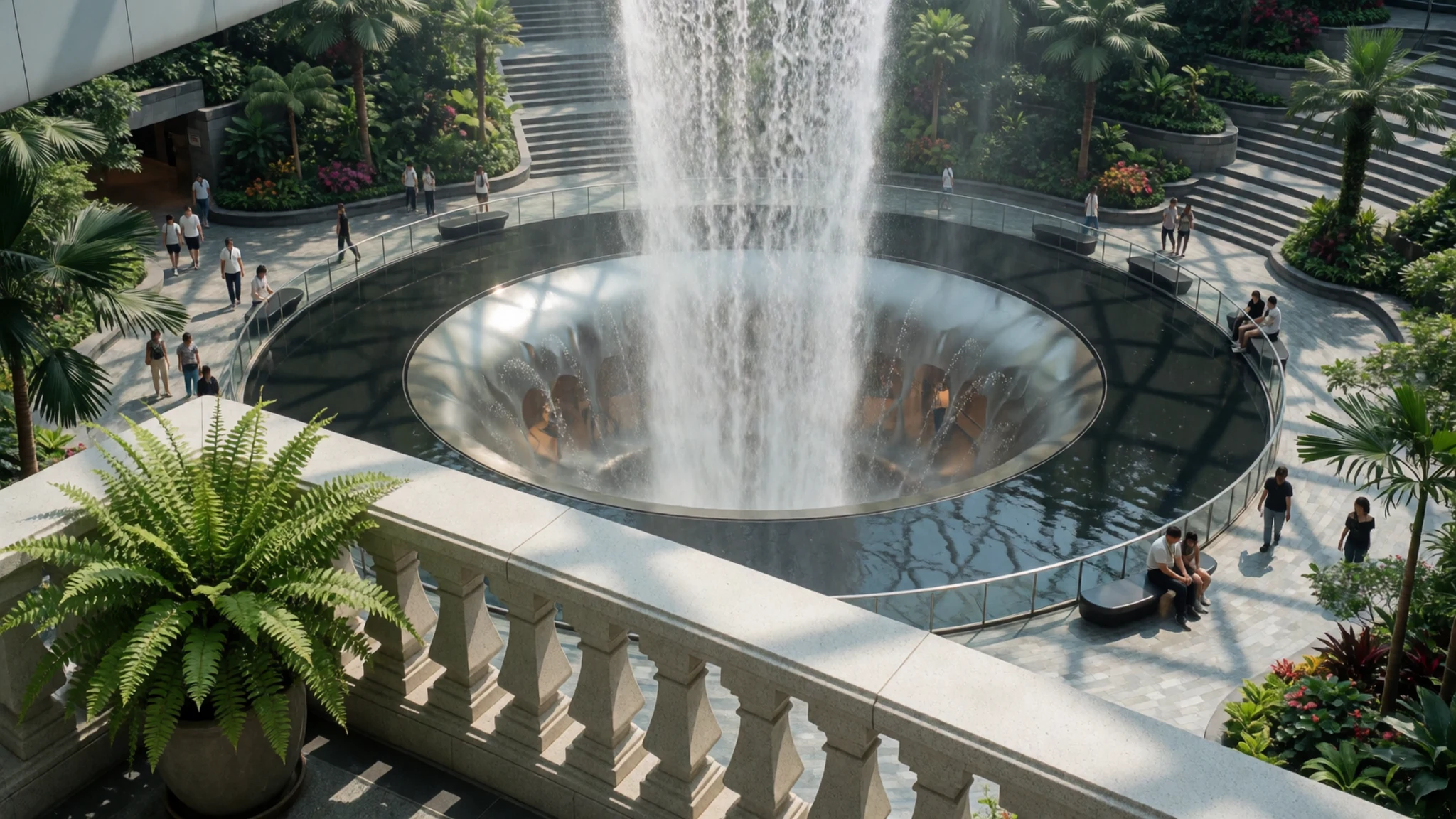
- Forest Valley — Terraces around the atrium, Jewel
Forest Valley is the indoor garden that climbs the terraces beside the waterfall, with paths winding through ferns, palms and flowering plants across five storeys. It is the calmest part of the building, especially in the morning, and a pleasant way to move between levels while seeing the planting up close rather than from a lift.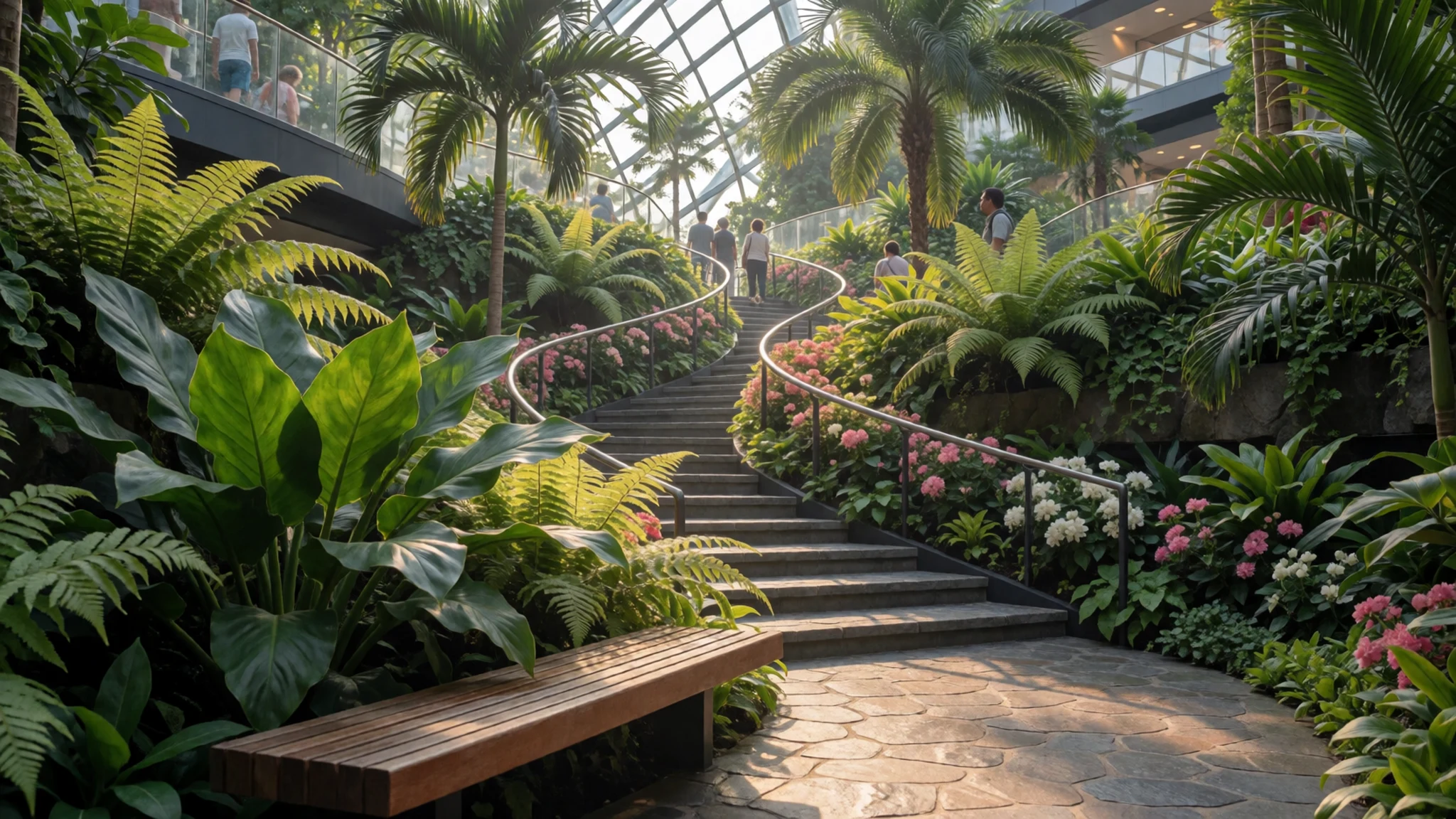
- Canopy Park — Top level, Jewel
Canopy Park occupies the topmost level and mixes gardens with leisure attractions, including walking and play features above the greenery. Some of them need separate tickets, so check the official site before planning a day around them. It is also a quieter place to sit and look back down into the dome.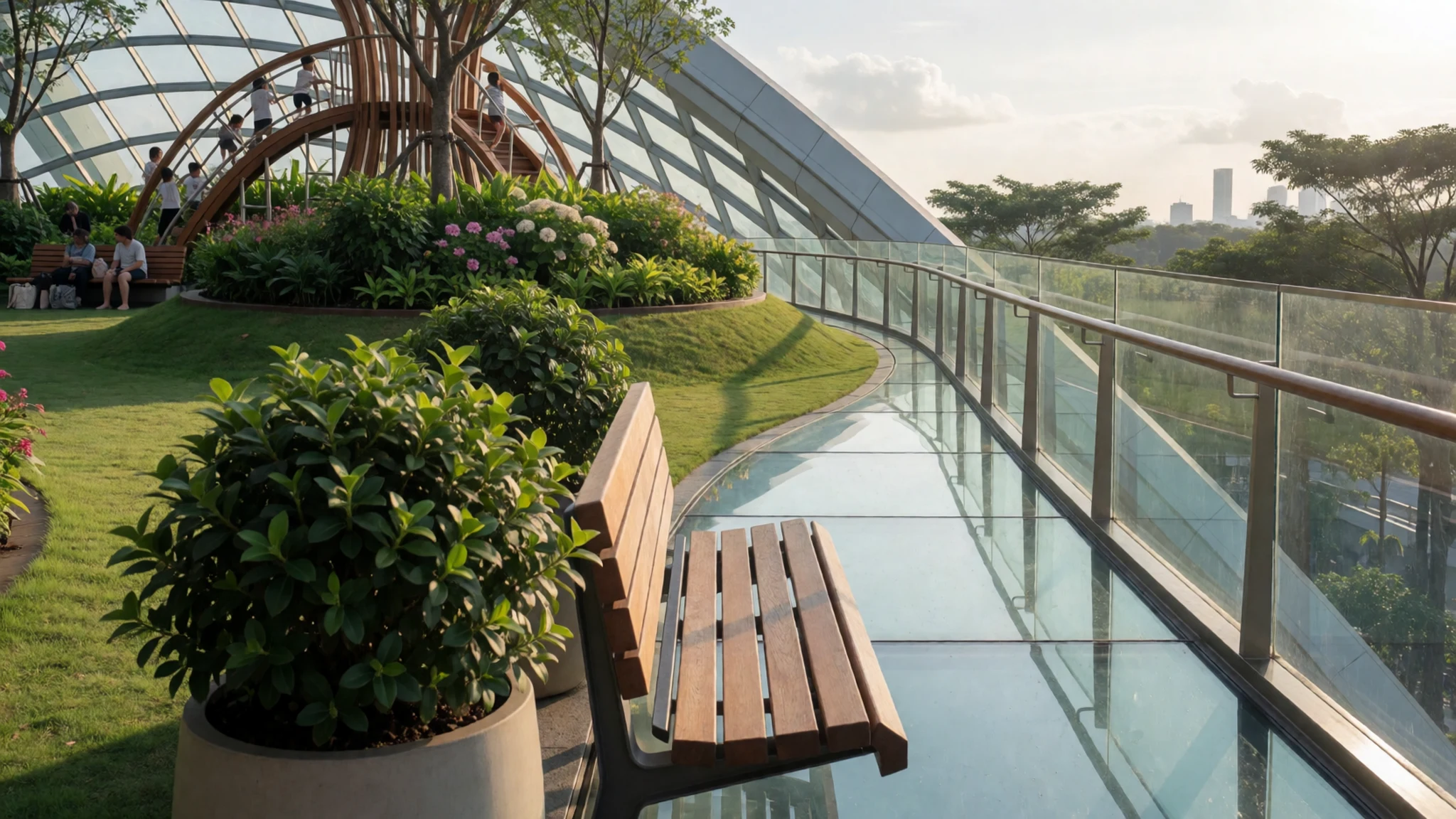
- Changi Chapel and Museum — Changi, east Singapore
Changi Chapel and Museum is a short trip from Jewel and remembers the Second World War prisoner-of-war camp that stood in the district. The present site is a reconstruction in a different location, and it includes a replica of the original chapel. It is sober, easy to fit into a morning, and a good counterweight to the shopping complex.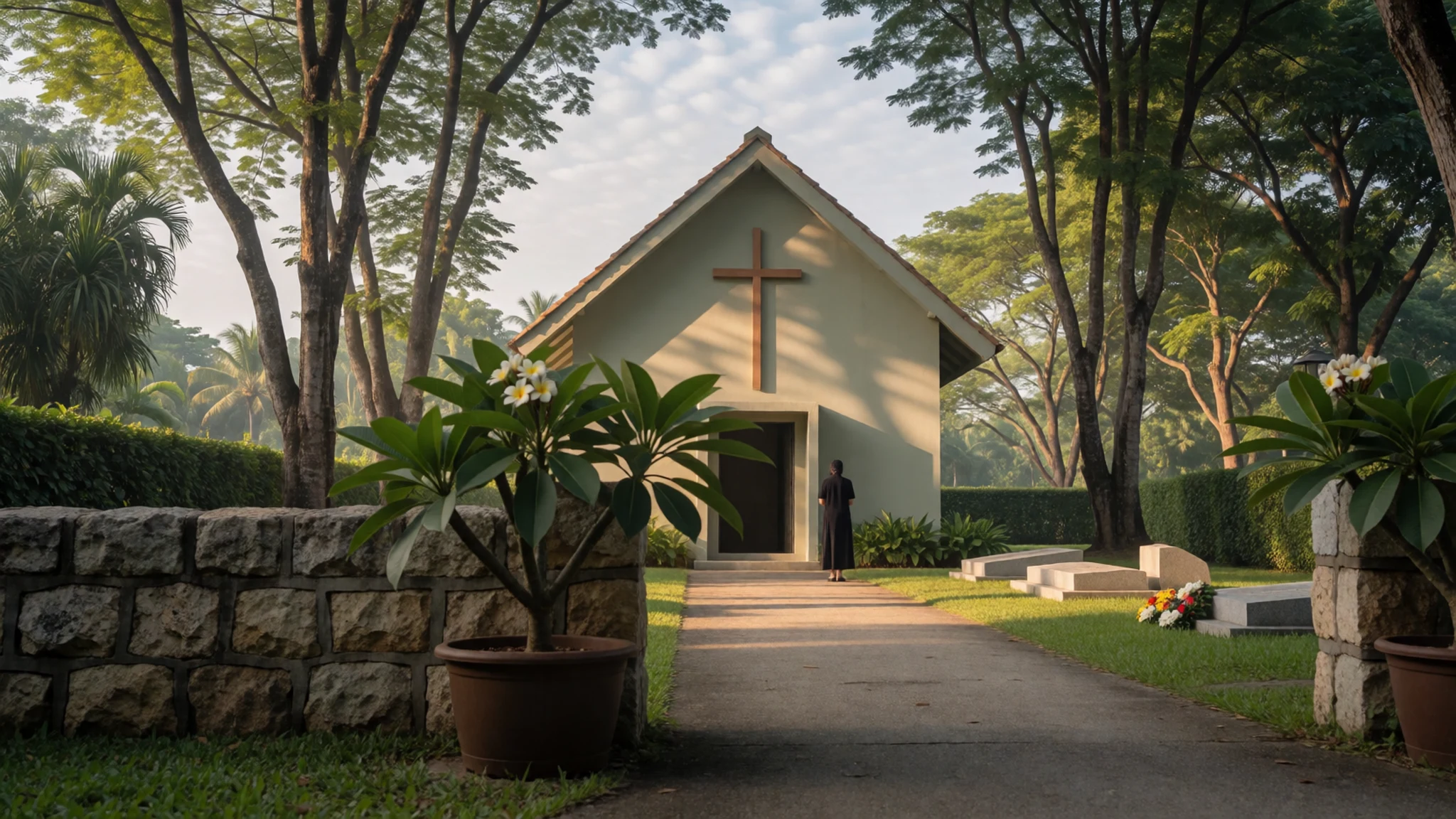
- Changi Beach and Boardwalk — Changi coast
Changi Beach lies close to the airport, and the shoreline is a place to sit and watch aircraft come and go, noise included. The Changi Boardwalk follows the coast nearby, making a gentle seaside walk after the air-conditioned atrium. Bring water and a hat, as the sun is strong.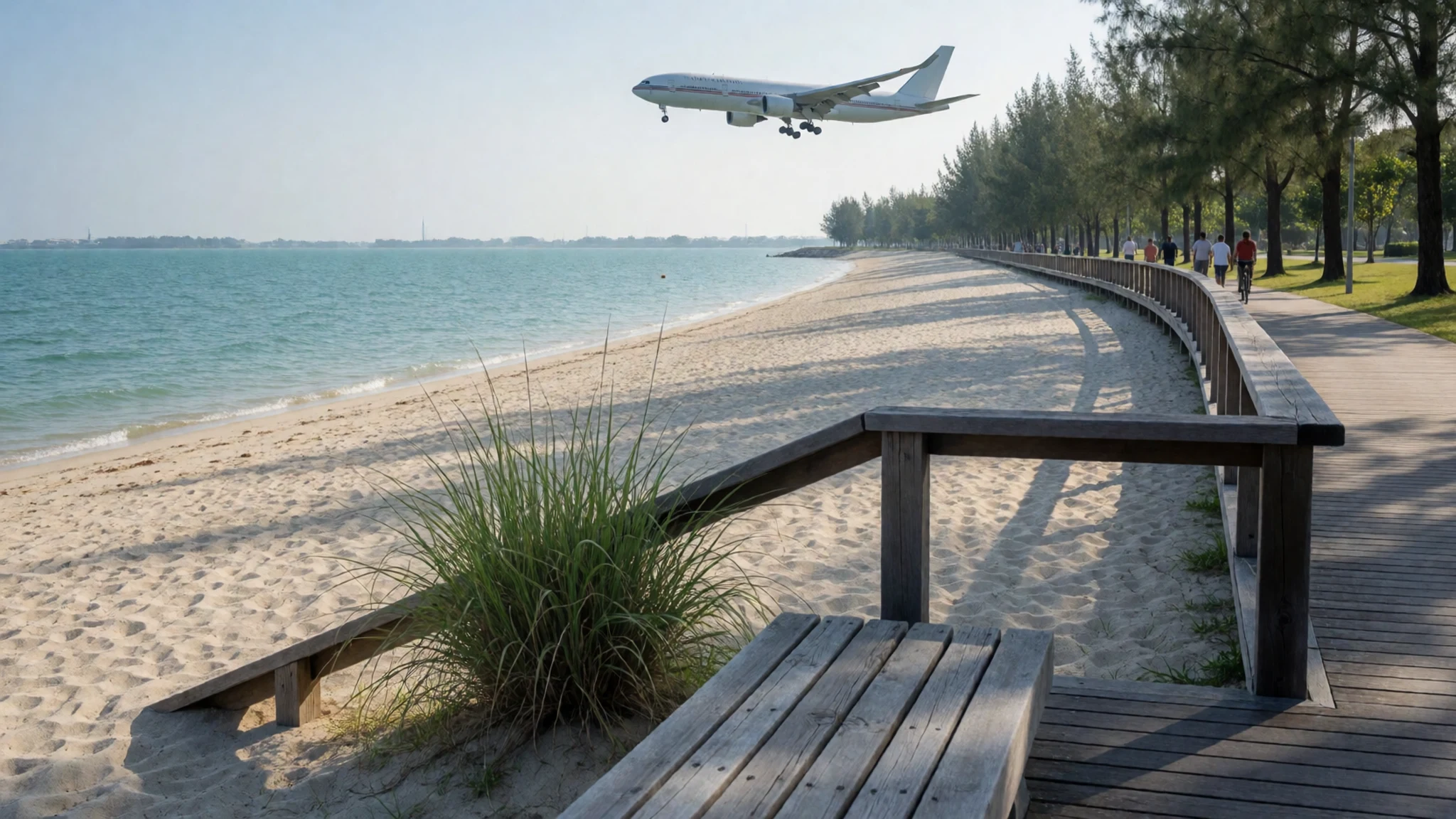
- Pulau Ubin — Island off north-east Singapore
Pulau Ubin is a small island off the north-east coast where fishing villages and stilt houses survive, a world away from the polished atrium. It suits a half-day on a long layover or an extra day in the area, usually reached by a short boat ride from the mainland; check current crossing details locally.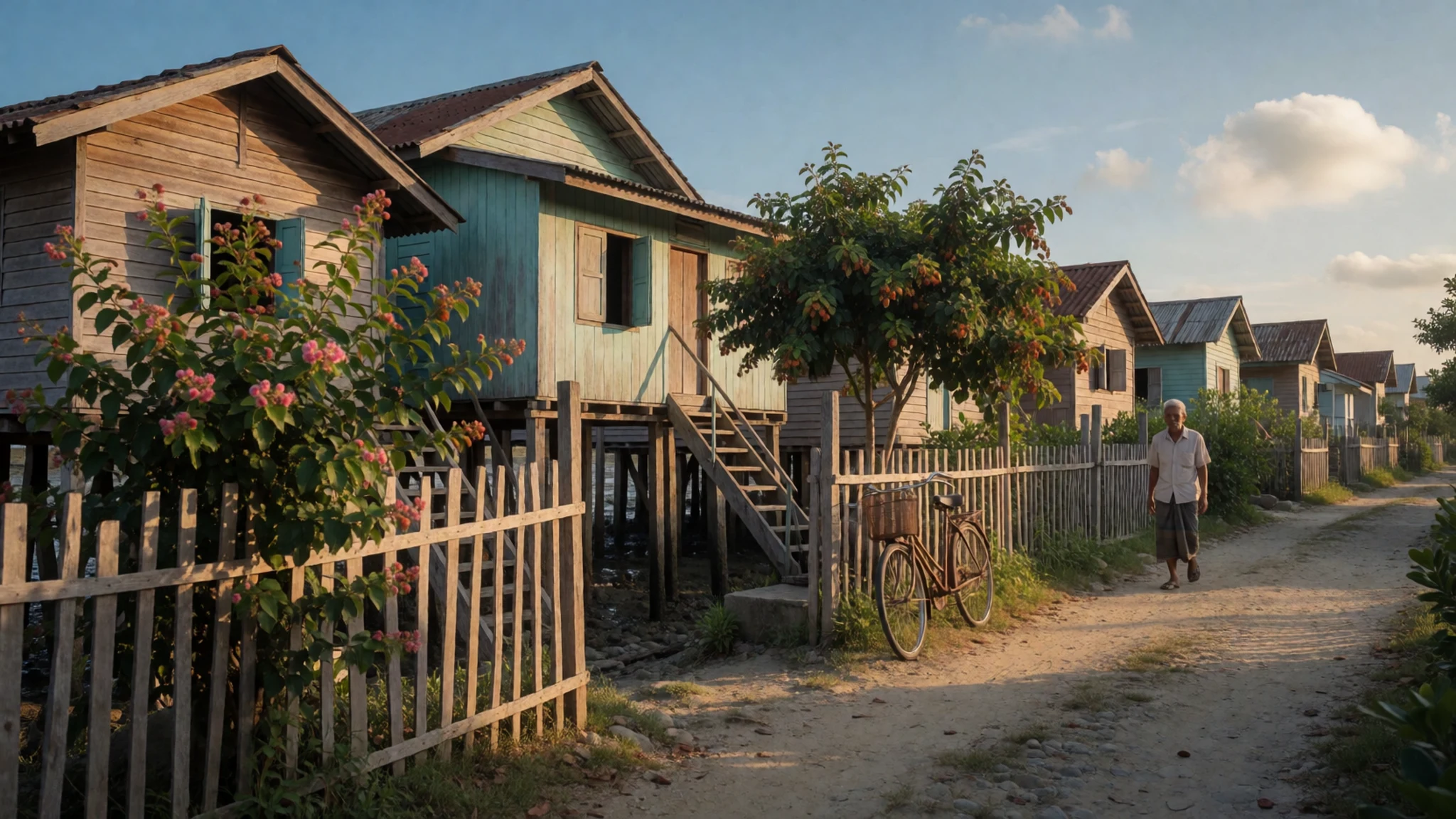
Culture
Jewel Changi Airport is a commercial space, but it sits in a multicultural city, and the mix shows in the crowd. Chinese, Malay, Indian and other communities share Singapore, so the eateries, signage and festival decorations draw on several traditions at once. The building's Chinese name, 星耀樟宜, means roughly 'sparkle Changi', a hint at the ambition behind it. Seasonal décor often follows festivals such as Lunar New Year, Hari Raya and Deepavali, so a visit at different times of year can look quite different. Singaporeans treat places like this as shared living rooms: families eat, students study and friends meet for hours. Queuing is the norm for taxis, popular tables and attractions, and people tend to be patient and orderly. Food is a favourite pastime, and food courts and hawker stalls are where everyday life is most visible. The district around the airport has an older story too, with the wartime memorial and the village life of Pulau Ubin offering a quieter picture of the island. Public behaviour is held to a stricter standard than in many countries, and cleanliness is taken seriously, from tidy tables to litter-free walkways. Keep to the queues, keep your voice low around the waterfall and seating areas, and put your rubbish in a bin rather than leaving it on a table.
What to wear
Fashion around Jewel Changi Airport reflects Singapore's mix of cultures. Traditional dress is mostly kept for festivals, weddings and formal occasions. Chinese families may wear silk cheongsam or tailored jackets at Lunar New Year; Malay communities wear the baju kurung or baju kebaya, often in cotton or silk, sometimes with songket woven with metallic thread; Indian communities wear sarees and kurtas in cotton and silk; and Peranakan heritage shows in the kebaya paired with a batik sarong. Day to day, people dress for heat and air-conditioning: light cotton and linen shirts, shorts, sundresses, trainers or sandals, with a thin jacket or cardigan carried for cold shopping malls. Office workers lean towards smart casual, and travellers in transit wear comfortable layers. Visitors should pack breathable, quick-drying fabrics and a light layer for the strong air-conditioning inside Jewel. Comfortable walking shoes matter, as the complex is large and floors near the water can be slick. There is no strict dress code at Jewel itself, but shoulders and knees should be covered when visiting mosques, temples and other places of worship elsewhere in the city. A compact umbrella is useful for sudden tropical showers on the walk to the beach or the boardwalk.
What to eat
- Katong laksa — Eateries in Katong and Joo Chiat, east coast
Katong laksa is noodles in a rich, coconut-based spicy broth, traditionally cut short so it can be eaten with a spoon. It belongs to the Peranakan food of the east coast, and different stalls argue loudly over whose version is the real one.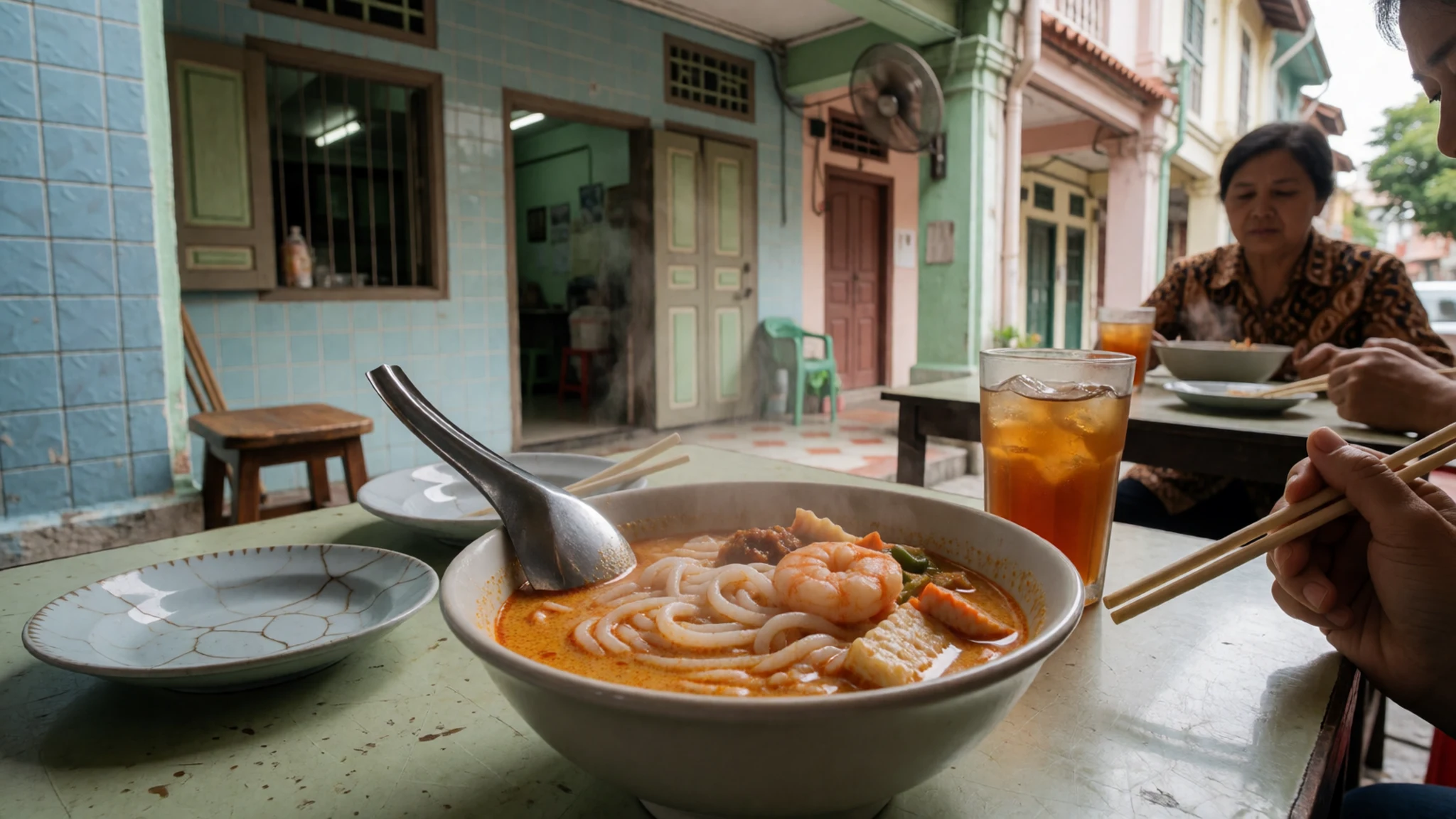
- Prawn noodle soup — Coffee shops and hawker centres across the east
Prawn noodles come in a deep, savoury broth made by simmering prawn heads for hours, topped with prawns and sometimes pork. Larger bowls bring more prawns. Locals eat it for breakfast or lunch, and it is a good cure for a long flight.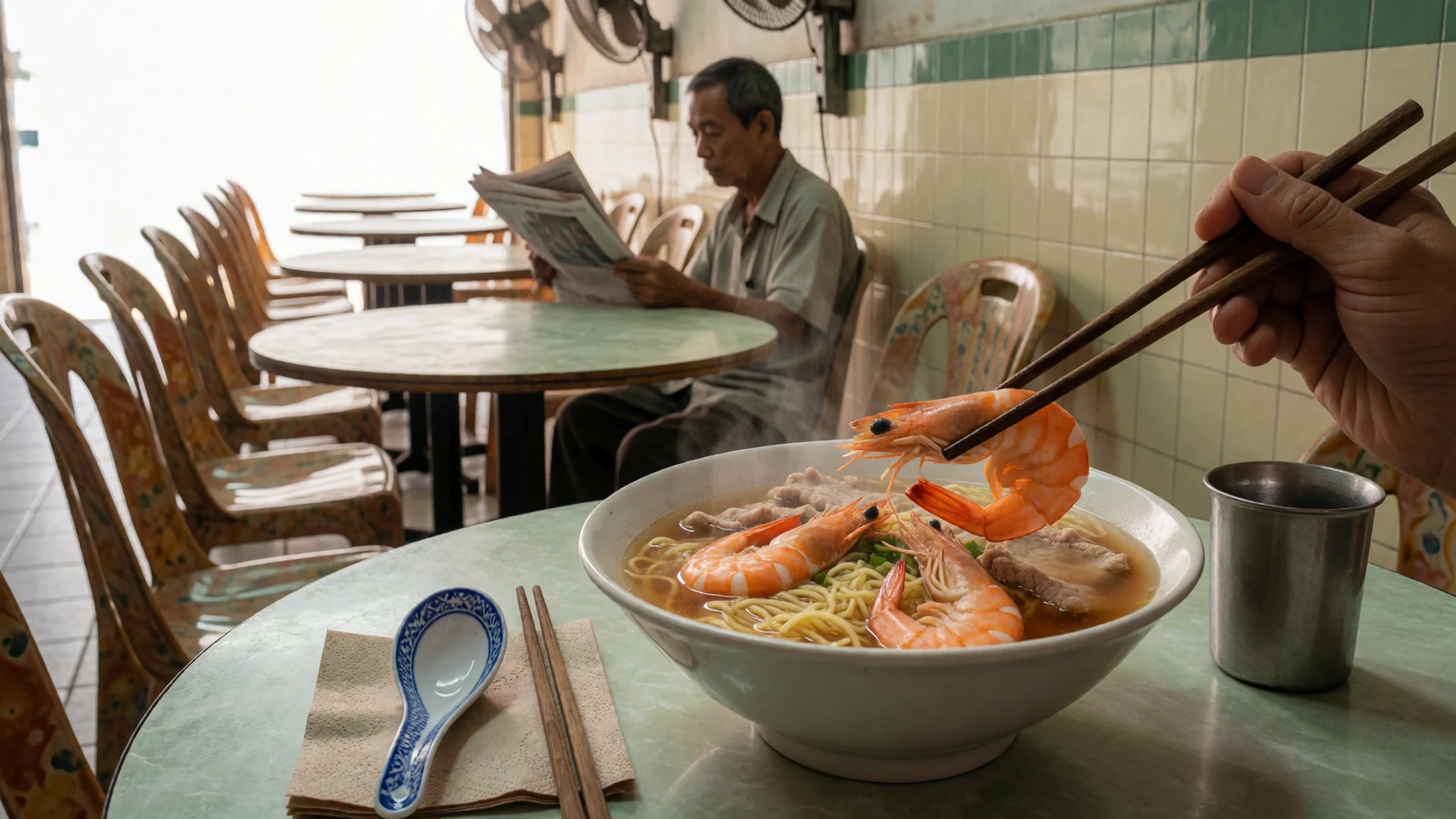
- Rojak — Hawker centres and food courts
Rojak is a salad of cucumber, pineapple and fried dough fritters tossed in a sticky dark sauce of prawn paste and sugar, then scattered with crushed peanuts. It is sweet, tangy and pungent at once, and best shared as a snack. - Black pepper crab — Seafood restaurants along the east coast
Black pepper crab is a messy, fiery dish of whole crab stir-fried in a peppery sauce. Order it for the table, expect to use your fingers, and keep rice or fried buns nearby to soak up the sauce. - Satay — Open-air satay stalls on the east coast and in hawker centres
Satay is skewered, marinated meat grilled over charcoal and served with a peanut sauce, cucumber and compressed rice cakes. The best way to eat it is outdoors in the evening, ordering a bundle of sticks from one of several neighbouring stalls.
Plan it
Best time. February to April is usually the drier stretch and suits combining Jewel with outdoor trips, while November to January brings more rain, which matters little inside the dome. Heat and humidity stay high all year, so the weather mainly affects the beach, boardwalk and Pulau Ubin.
How long. 1
Getting there. Jewel is part of Changi Airport and is linked to all three terminals by covered walkways. From the city, take the East-West MRT Line to Changi Airport station, or use the slower but more scenic bus from Orchard Road. Check whether the Thomson-East Coast Line extension to the airport has opened.
Budget. mid
Tips
- Visit on a weekday morning for smaller crowds; evenings and weekends are busy
- Check the official site (https://www.jewelchangiairport.com/) for light-show times and attraction tickets
- Carry a light layer for the air-conditioning and a refillable bottle for the heat
- Cards are widely accepted, but keep a little cash for hawker stalls
- If connecting between flights, leave generous time for getting back through security
Etiquette
- Queue for taxis, tables and attractions rather than pushing in
- Keep voices low near the waterfall and seating areas
- Bin your rubbish and keep tables tidy
Nearby
Sources
- Wikidata Q28419359 (CC0)
- Wikipedia: Jewel Changi Airport (rev 1386343643) (CC BY-SA 4.0)
- Wikivoyage: Singapore/East Coast (rev 5418243) (CC BY-SA 4.0)
- Project Jewel at Singapore Changi Airport, Changi Airport Group (CC BY 3.0)
- Singapore Changi Airport, LN9267 (CC BY-SA 4.0)
- HSBC Rain Vortex, Matteo Morando (CC BY-SA 4.0)
- Rain vortex at night, Timothy A. Gonsalves (CC BY-SA 4.0)
- At Jewel Changi, Singapore 2023 47, Mike Peel (CC BY-SA 4.0)
- Pokemon Center Singapore, A339 (CC BY-SA 4.0)
- Aéroport de Singapour, Jhorchler (CC BY-SA 4.0)
- Changi Airport control tower, Nigos (CC BY 3.0)


