Suchitoto
Suchitoto, El Salvador
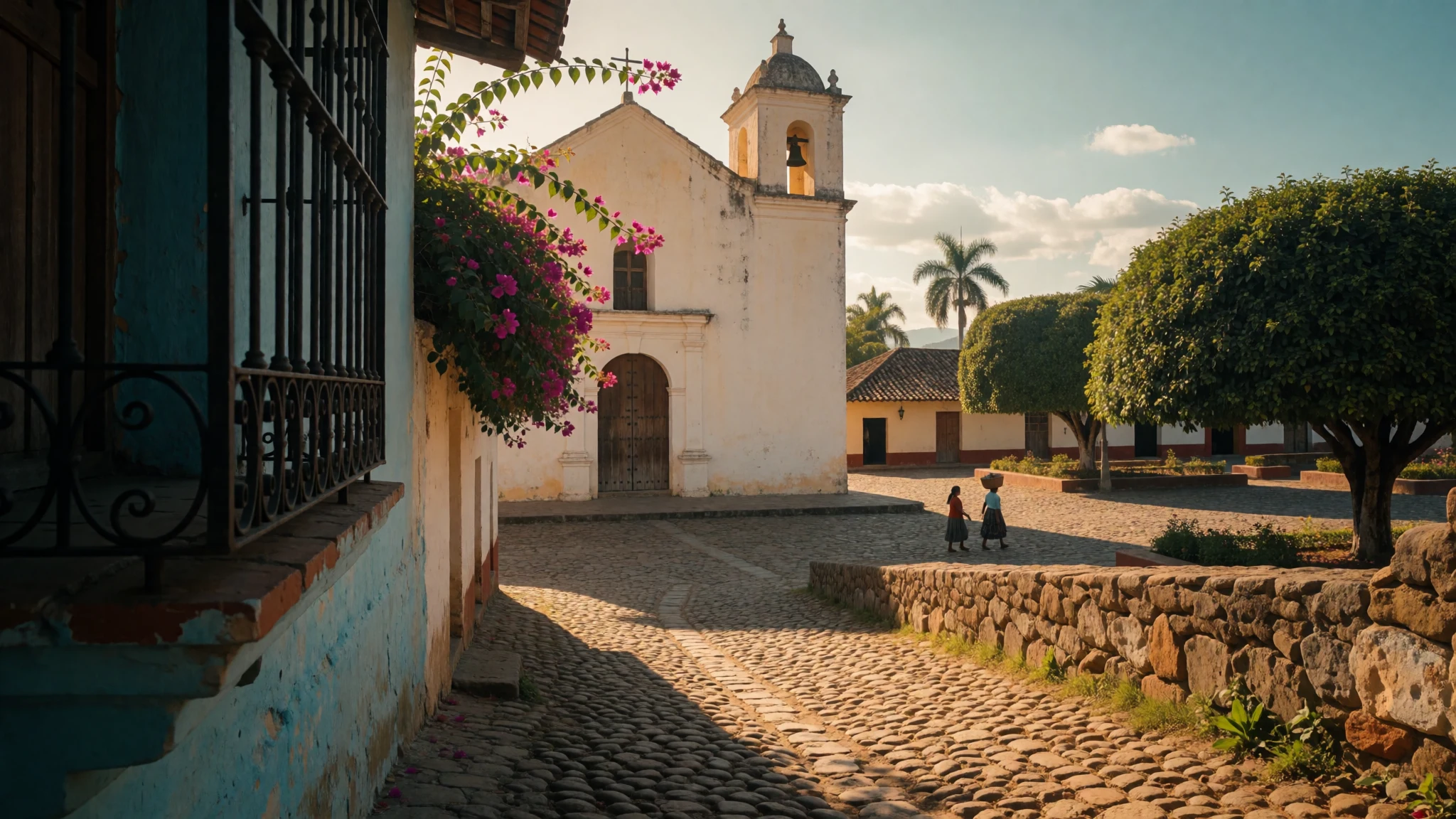
Suchitoto is a cobbled colonial town above a broad lake, where church bells, indigo workshops and quiet streets set the pace.
The place
Suchitoto stands on a ridge in Cuscatlán, central El Salvador, with Lake Suchitlán filling the view to the north. The town is compact: lanes around a main square, a parish church, a municipal building and houses whose clay-tiled roofs step towards the water. Walls are whitewashed or pale, doors are wooden, and window grilles stripe the pavements with shade. People live in these rooms. The colonial look is the ordinary fabric of the centre, not a street emptied for photographs.
The lake is a reservoir on the Lempa, held by the Cerrón Grande dam, and it covers an older valley of riverbank and fields. Morning water is pale and flat; by late afternoon it turns copper and grey, and the far shore becomes a dark line. Small boats work from landings below the town. Because the water lies over former paths, the opposite bank feels farther than a map suggests, and daily life now treats Suchitoto as a shore town.
Streets climb and dip. Several remain paved with uneven stone, which slows traffic and leaves footsteps as the main sound at dawn. Trees and flowering shrubs break the sun. Beyond the last blocks the ground falls towards the shore or opens into pasture. The climate is hot: a dry season bakes the cobbles, and a wet season greens the hills and slicks the stone. Suchitoto is easiest early and after the heat breaks.
Artists and weekend visitors share the centre with a working town. Families come in from hamlets for church, school and errands. Galleries use older houses, yet the square still belongs to people crossing it with bags.
Its story
Suchitoto's name is commonly linked to Nawat and explained locally as a place of birds and flowers, a reading guides still offer on the square. Before the Spanish street plan, this ridge above the Lempa valley lay in Pipil country, within the indigenous landscape of what is now central El Salvador. Colonial rule set a church and a civic square at the centre, and the parish of Santa Lucía became the landmark people still use when they give directions.
For generations Suchitoto was a provincial town: crops, including indigo, in the surrounding country; a municipal office on the square; families tied to the hills and to the river valley below. The Cerrón Grande project changed that geography. A dam on the Lempa drowned farmland and hamlets and created Lake Suchitlán, so the view from the ridge became open water. Communities moved. Older residents still name spots that are now islands or lie under the surface, and the town's sense of distance was rewritten by the reservoir.
The civil war reached Suchitoto and the countryside around it. The town was militarised, many families left, and houses stood damaged or empty. After the peace, people returned, repaired roofs and doors, and reopened the square. Cultural workers were part of that return. A former religious building became the Centro Arte para la Paz, and the cobbled centre began to draw day visitors from the capital as well as travellers walking the lanes.
The story is not a clean restoration. Memory of the conflict sits beside festival days, boat traffic and new lodgings. Suchitoto's present holds an indigenous ridge, a colonial plan, a flooded valley and a hard war in the same streets.
What to see
- Iglesia Santa Lucía — main square
The Iglesia Santa Lucía closes the main square of Suchitoto, a pale parish front that takes warm light late in the day. It is a working church: processions leave from its door, and ordinary weekdays are quieter than festivals. The façade is a clear landmark, seen from the cobbled approaches. Benches and trees fill the plaza, where civic life and parish life share the same paving.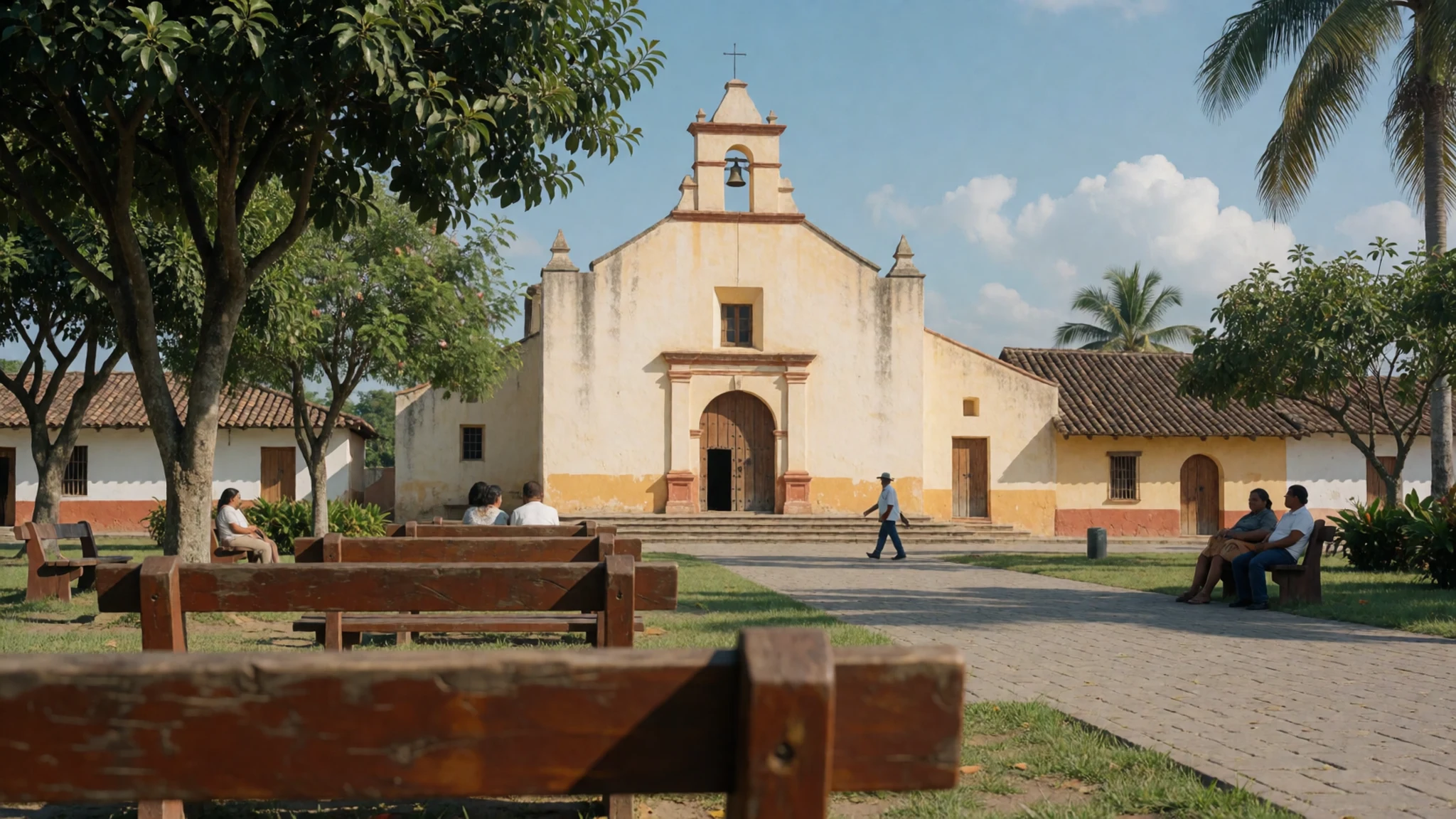
- Cobbled streets — town centre
The cobbled streets of Suchitoto are the town's real texture: irregular stone, narrow widths, and walls in white and faded colour. Walking them is slower than a paved city block, which is the point; cars crawl and early morning belongs to footsteps and doorways opening. Wooden doors, iron grilles and tiled roofs repeat without being identical, and bougainvillea breaks the glare.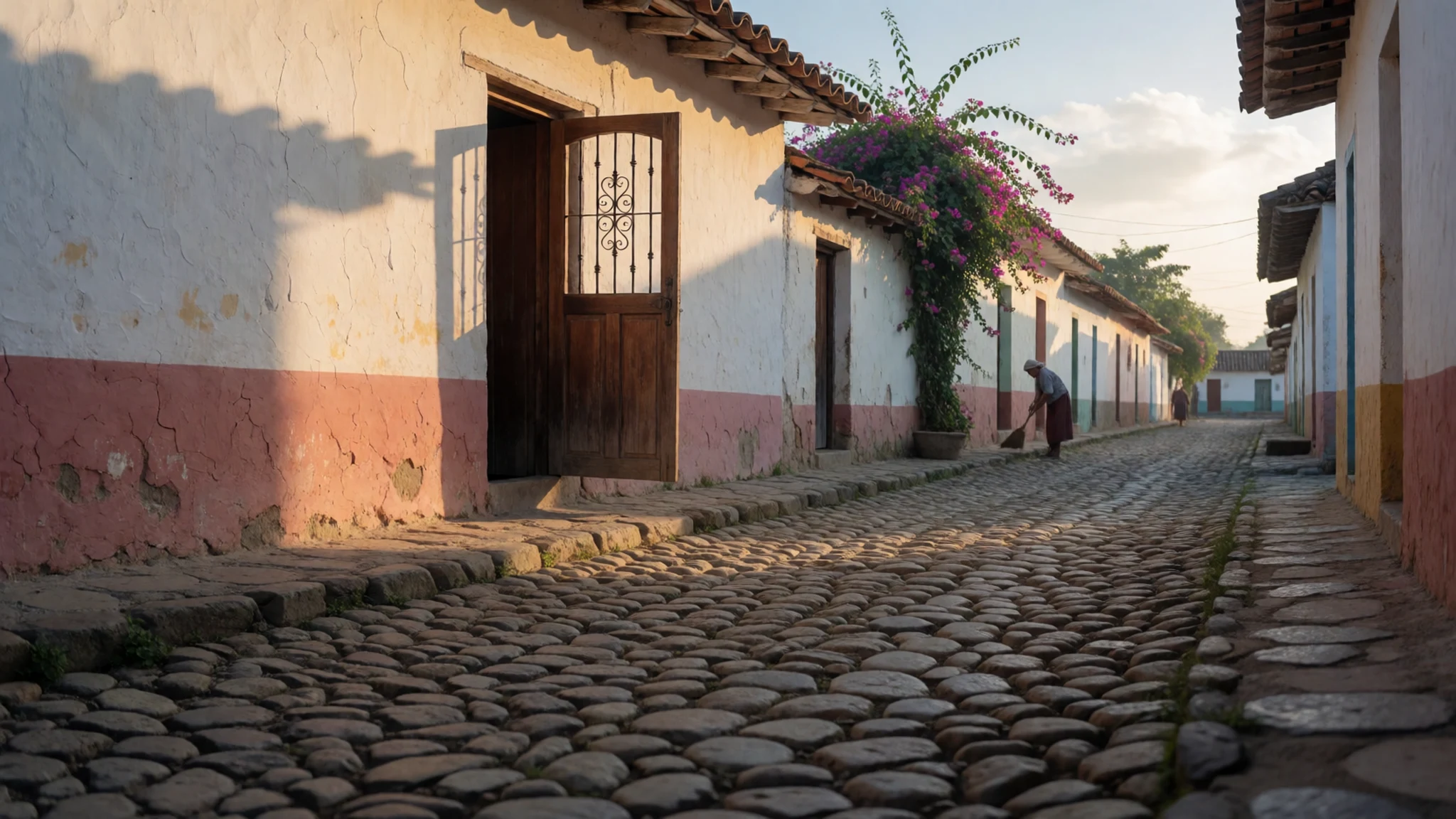
- Centro Arte para la Paz — town centre
Centro Arte para la Paz occupies a former religious building in Suchitoto and works as a cultural house rather than a single gallery. Rooms host exhibitions, workshops and conversations tied to memory, peace and local making. The chapel space still reads as a chapel, high and plain, even when art is installed in it. The centre is part of how the town talks about the war and about staying.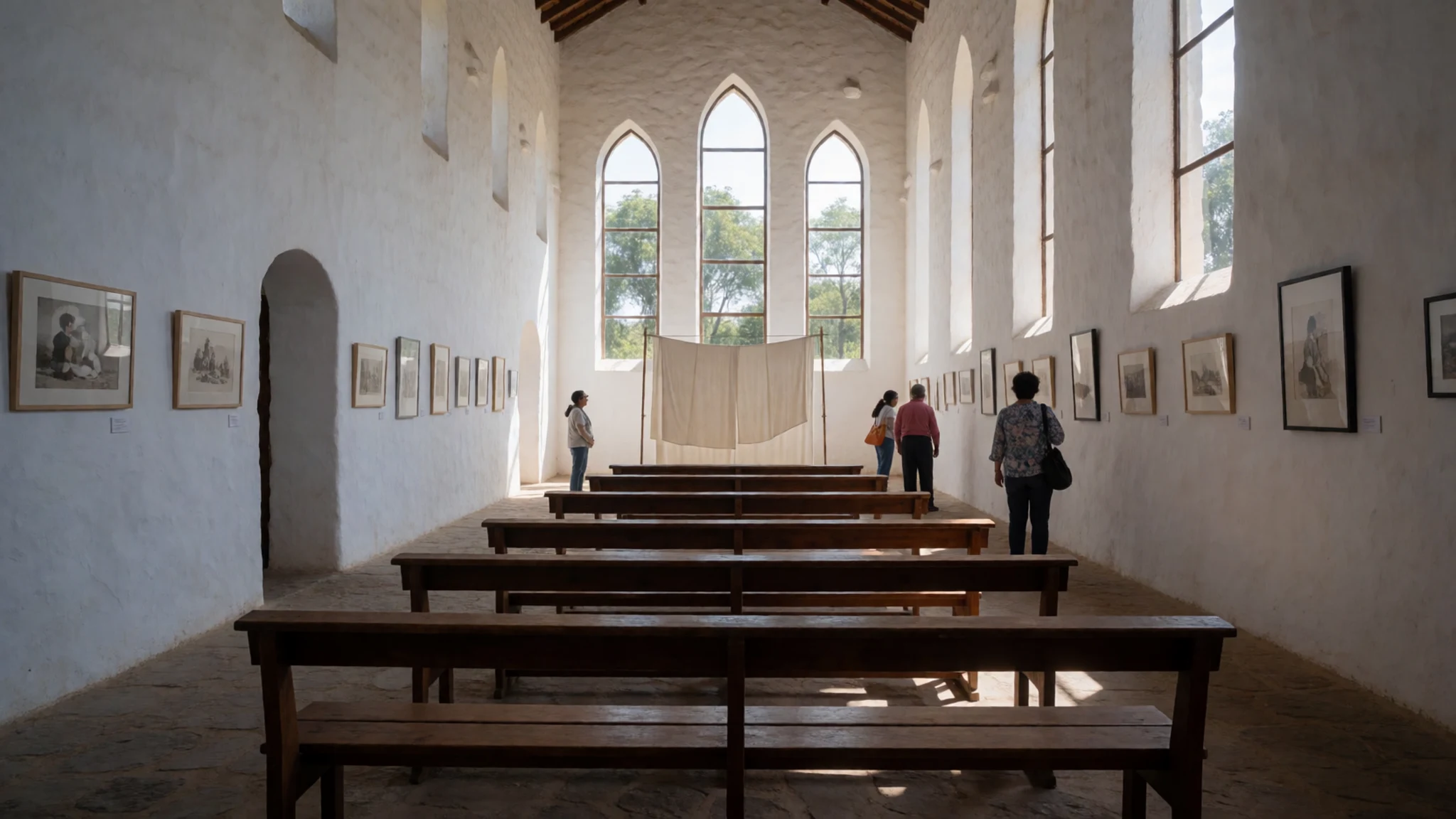
- Alcaldía municipal — main square
The alcaldía, Suchitoto's municipal hall, stands on the civic square as the town's everyday seat of local government. It is a modest official building rather than a palace, and its role is practical: permits, notices and the business of a small municipality. Together with the church it frames the centre where people meet, wait and watch processions pass.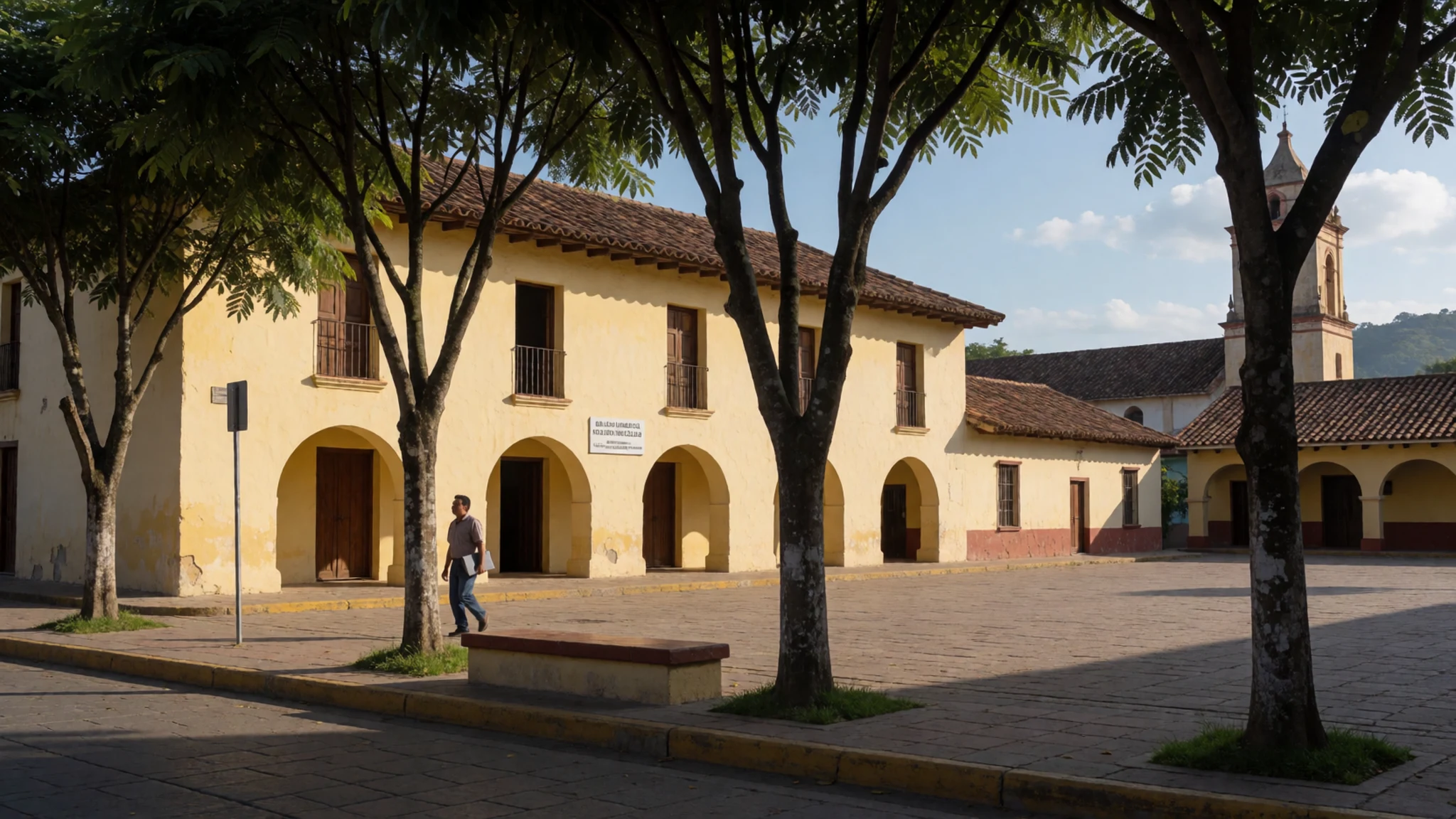
- Lake sunset corners — northern edge
Sunset corners on the northern edge of Suchitoto look over Lake Suchitlán, where the ridge gives way and the sky fills much of the view. The light goes warm on tiled roofs and then on the water, and the far shore turns into a silhouette. These are ordinary street ends and terraces, not a single formal viewpoint with gates and tickets. Residents use them as the day cools.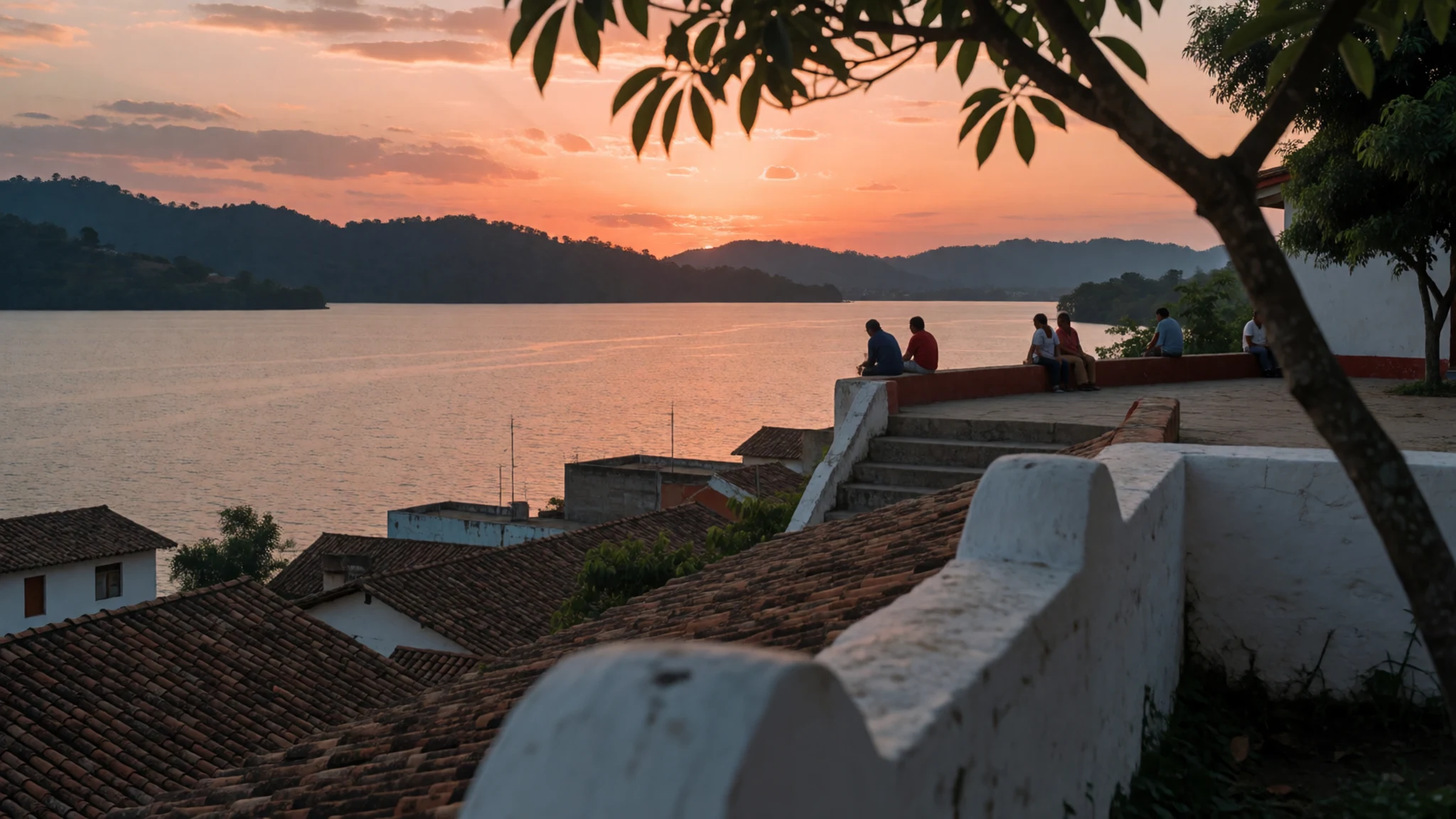
Culture
Suchitoto's culture is small-town and Salvadoran, with a strong public life on the square and a later layer of arts practice that grew after the war. The church calendar still organises the year: processions, patronal festivities for Santa Lucía, and the ordinary rhythm of masses and family gatherings. Indigo, once a regional crop, survives as a craft. Workshops dye cloth in the deep blue associated with Salvadoran jaspe and with local makers who demonstrate the vats to visitors.
Language in the street is Spanish, with Nawat remembered in the place-name and in cultural projects more than in daily errands. People greet across a short distance; a visit that begins without a buenos días reads as brusque. The town is used to outsiders, including day-trippers from San Salvador, but it is not a resort strip. Boats, festivals and gallery openings sit beside school pickup and market shopping.
Memory of the conflict is present without being turned into a single monument-tour. The Centro Arte para la Paz and private conversations carry more of that history than any plaque. Festivals can be loud and late; quiet residential blocks expect the opposite.
Ask before photographing people in Suchitoto, especially during processions or at a workshop, and step aside rather than stopping a street.
What to wear
Suchitoto's traditional dress belongs to the wider Salvadoran countryside rather than to a costume unique to this square. Women in festival processions may wear a long skirt, an embroidered blouse and a shawl, with jaspe cloth — ikat cotton, often indigo-dyed — as the textile people recognise. Indigo blue, woven checks and bright floral embroidery show up on rebozos and on skirts made for a patron saint's day, not for a weekday errand. Men historically wore simple cotton shirts and trousers; formal moments add a pressed shirt. These clothes appear at fiestas, folk presentations and craft fairs more than on an ordinary morning.
What people wear now is light, practical town dress. In the heat, residents choose T-shirts, polo shirts, jeans or light trousers, blouses, sandals and trainers. Gala nights at a cultural event bring dresses and guayaberas, the lightweight pleated shirt worn across Central America.
A visitor should dress for sun and for stone. Breathable cotton or linen, a hat, and shoes that grip cobbles are more useful than formal outfits. Shoulders and knees covered read as respectful inside Santa Lucía and during processions; a scarf is enough to adjust. After rain the lanes are slick, so smooth-soled sandals are a poor match for the hill. Indigo workshops can mark cloth and skin, so something that can take a splash of dye is the sensible choice when a demonstration is planned.
What to eat
- Pupusas — stalls and comedores around the main square
Pupusas are Suchitoto's everyday staple: thick maize tortillas filled with beans, cheese, pork or a mix called revueltas, griddled and eaten with curtido and a simple tomato sauce. Stalls and comedores around the square serve them from late afternoon, often eaten by hand at a plastic table.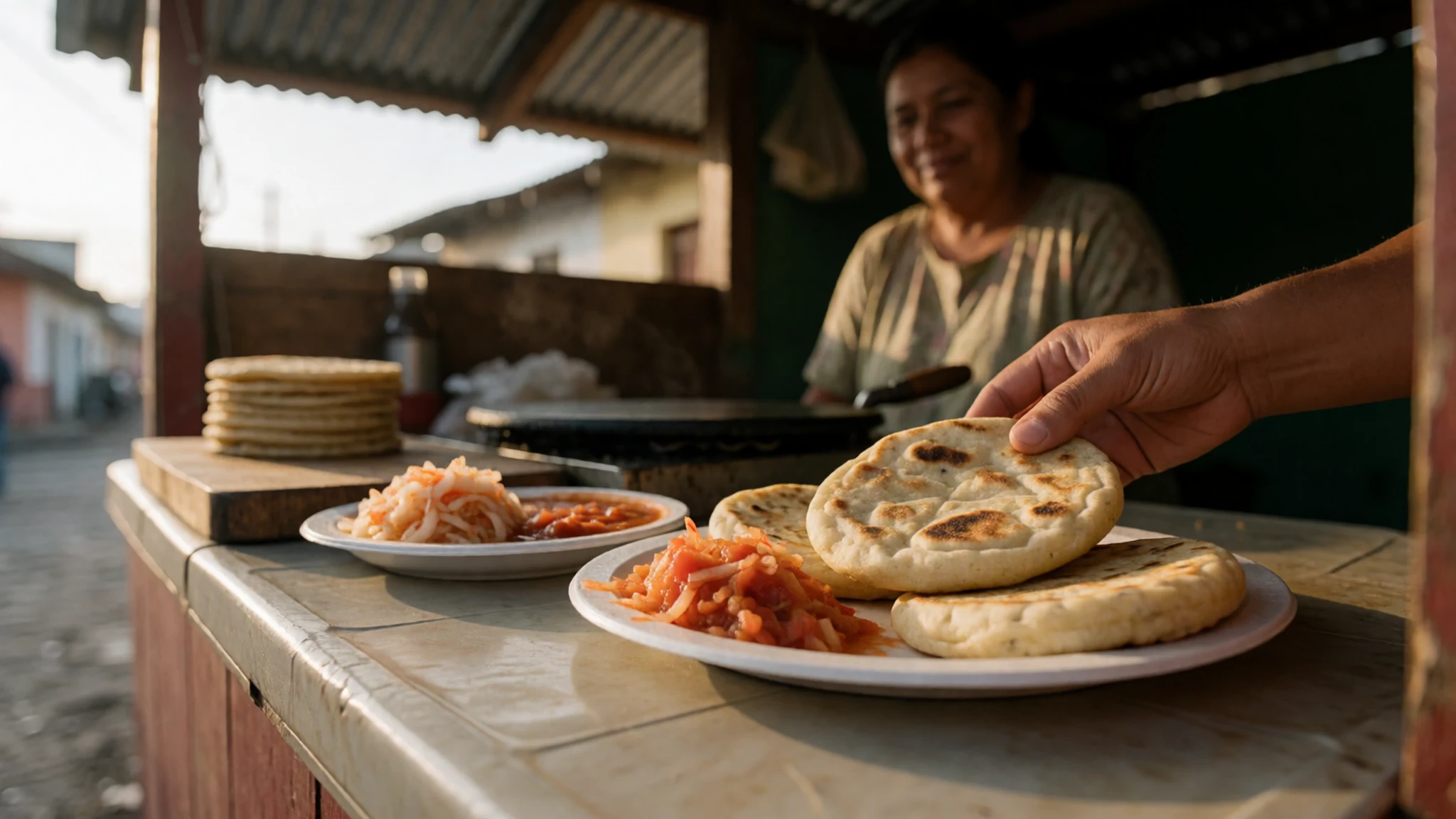
- Yuca con chicharrón — comedores near the square
Yuca con chicharrón is fried cassava with pork crackling, cabbage and tomato sauce, a heavier plate than a pupusa and common at the same comedores in Suchitoto. The yuca is boiled or fried until soft inside and edged with colour, then piled with crisp pork.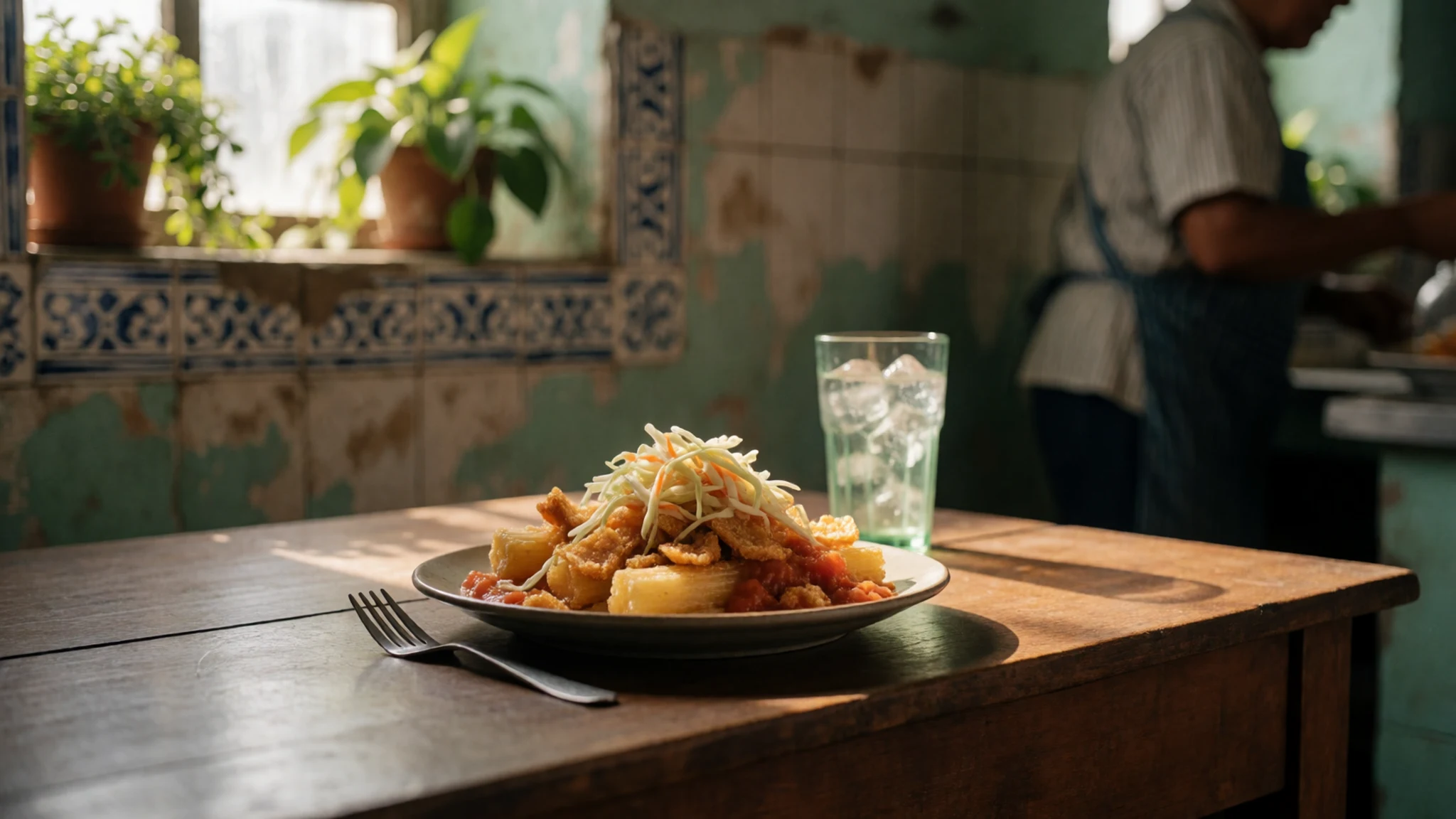
- Sopa de gallina india — midday comedores cooking for residents
Sopa de gallina india is a hen soup served in Suchitoto when a meal should last: rich broth, pieces of bird and vegetables, sometimes with rice. Comedores that cook for residents, rather than sweet stalls, are the place to find it at midday. The flavour is savoury and herbal. - Elote — carts on the square and busier corners
Elote in Suchitoto means maize treated as a snack: grilled or boiled ears, or a cup of kernels with cream, cheese and a light chilli sauce, sold from carts in the late afternoon. It is street food of the square and the busier corners, eaten while walking. - Tamales — front windows and baskets on the square
Tamales, sweet or filled, show up in Suchitoto around festivals and on weekend mornings, steamed in husks. Bakeries and home cooks selling from a front window or a basket on the square are the usual source. The bundle is worth taking while it is still warm.
Plan it
Best time. In Suchitoto, the mildest days fall from September to November, while December through March is the dry stretch: firmer walking on the cobbles and clearer light over Lake Suchitlán as the heat climbs. March and April stay dry but grow very hot. From May the wet months turn the hills green and the stone slippery, with heavier rain later in that season. Mornings and late afternoons are the kinder hours almost year-round.
How long. 2–3
Getting there. Suchitoto is reached by road from San Salvador. The usual last leg is a transfer from the capital or from El Salvador International Airport, then a climb into the cobbled centre. Boats on Lake Suchitlán link some shore landings, but the reliable arrival is by road.
Budget. low
Tips
- Begin at the square and the church in Suchitoto before the heat and the day-trip traffic.
- Wear shoes that grip uneven stone; the lanes are slick in the wet months.
- Carry some cash for stalls, boats and small workshops; card machines are not on every counter.
- Check boat trips and the Centro Arte para la Paz on the day itself; both change with the week.
- Leave a quiet hour at dusk for the light on Lake Suchitlán; midday is for shade and a long lunch.
Etiquette
- Greet with buenos días or buenas tardes before asking for help or a photograph.
- Dress modestly and keep quiet inside Santa Lucía, especially during mass.
- Ask before photographing people, processions or artisans at work.
- Leave doorways and the church steps clear when stopping for a picture.
Nearby
Sources
- Wikidata (CC0)
- Wikipedia (CC BY-SA 4.0)
- Wikivoyage (CC BY-SA 4.0)