Juayúa
Juayúa, El Salvador
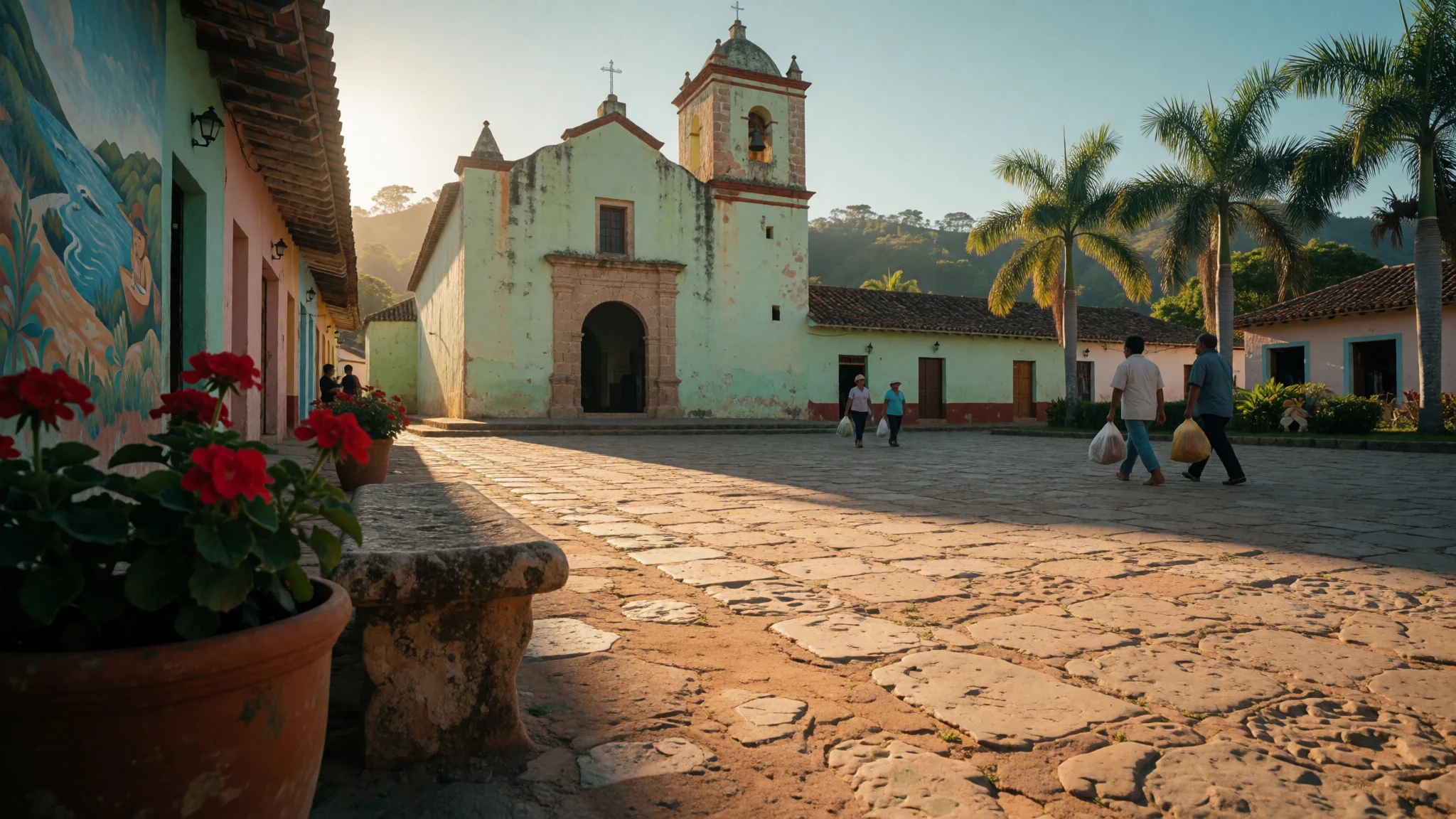
Juayúa is a cool, mural-covered coffee town in the El Salvador hills, with waterfalls nearby and a Black Christ church at its heart.
The place
Juayúa is a town of about 24,000 people in the Sonsonate department of western El Salvador, set at 975 m in the mountains that rise behind the coastal plain. The altitude matters: mornings and evenings are cooler than on the lowlands, and the hills around town are covered in coffee farms and patches of forest. The town sits on the Ruta de las Flores, a road linking a string of small highland towns, including Apaneca and Concepción de Ataco. Many visitors choose Juayúa as a base because it packs a lot into a compact grid of streets. The centre is easy to read. A central square faces the church of the Black Christ, a market with simple eating counters runs alongside it, and the surrounding lanes are lined with cafés, small shops and walls covered in murals by local artists. Colonial-era buildings survive between newer concrete ones, so the place feels lived-in rather than preserved. Most visitors are Salvadorans on a weekend out, which means the square is busiest at weekends and noticeably quieter midweek. Foreign visitors are fewer, though their numbers are growing. Waterfalls and walking routes lie within reach of the centre, and El Imposible National Park is a further outing from the region. A few honest caveats: some natural sights nearby are managed informally, lodging costs have climbed in recent years, and afternoon cloud or rain can close in during the wet season. Juayúa suits a slow stay of a day or two better than a rushed checklist.
Its story
Juayúa began as a Pipil settlement, part of the Nahua-speaking world that stretched across western El Salvador before the Spanish arrived. By about 1550 the population was reckoned at only around 300 people. By 1577 the town had become a place where Franciscan friars based in Sonsonate taught Christian doctrine to local people, and that year is the one usually given for its founding. Late in the 16th century the friars installed an image of a dark-skinned Christ, modelled on the Black Christ of Esquipulas, a figure that draws pilgrims from across Central America. They raised a first small hermitage to house it, and that modest chapel became the seed of what is now the church of Santa Lucía. The image and the church explain much of the town's calendar, because devotion to the Black Christ is still the centre of its yearly celebrations. Over the following centuries the cool, high slopes around Juayúa proved well suited to coffee, and the farms that now frame the town grew out of that. More recently the town has reinvented itself as a destination. Its place on the Ruta de las Flores, an outdoor food festival and a wave of street murals have turned a quiet mountain community into somewhere people travel to on purpose. The thread running through it all is continuity: an indigenous village, a mission town, a coffee town, and now a small tourist centre that still organises itself around its church.
What to see
- Central square — Town centre
The central square is the natural starting point and the town's living room. Families, vendors and visitors share the benches, and the church, market and cafés all open onto it. It is most animated at weekends and during festivals, so come midweek for quiet or Sunday for the crowd.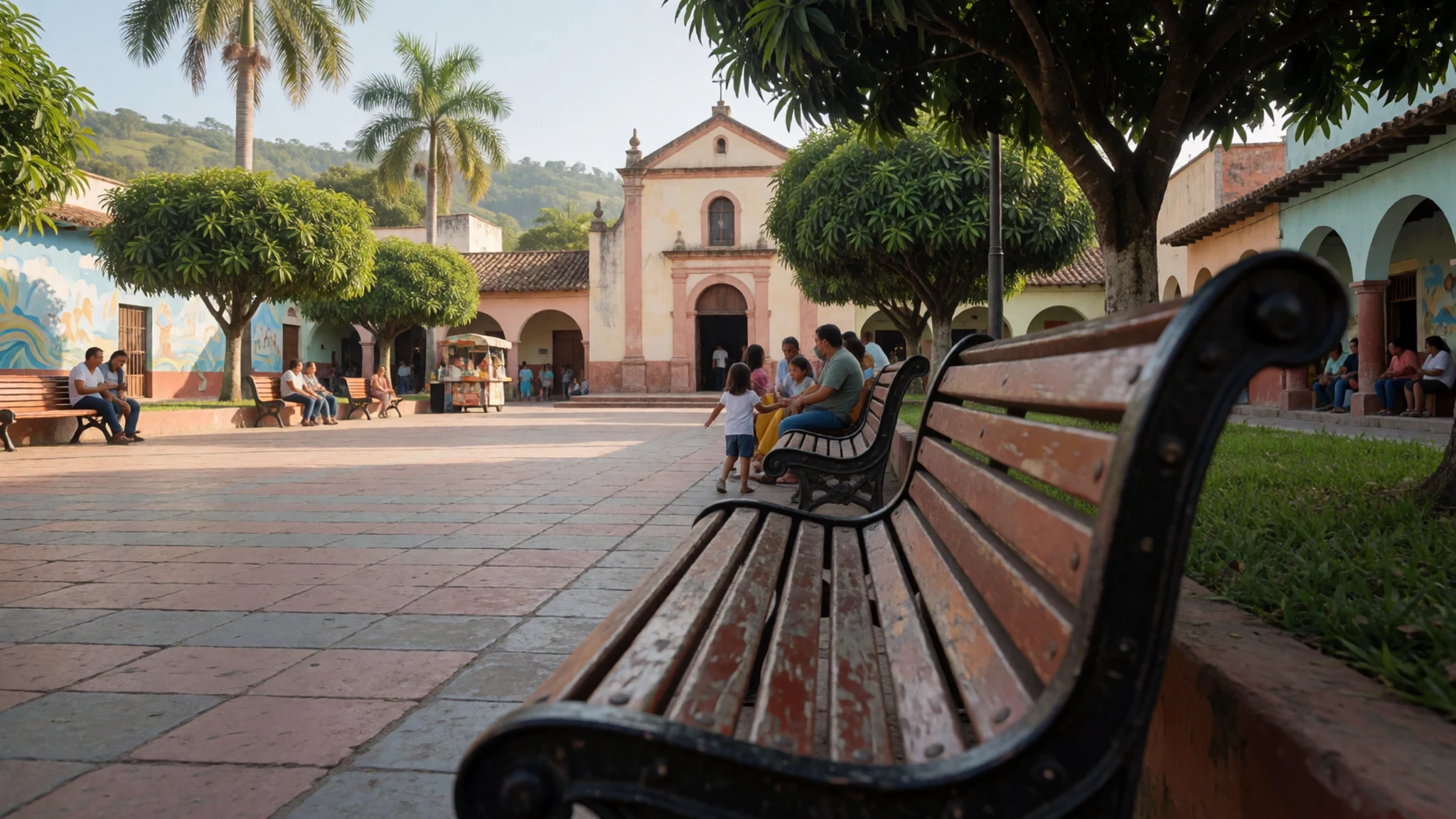
- Church of the Black Christ — Beside the central square
This parish church houses the dark-skinned Christ that gives Juayúa its devotional identity. Pilgrims come to give thanks, especially in the first half of January. Step inside outside service times if possible, look at the image quietly, and notice how local the worship feels.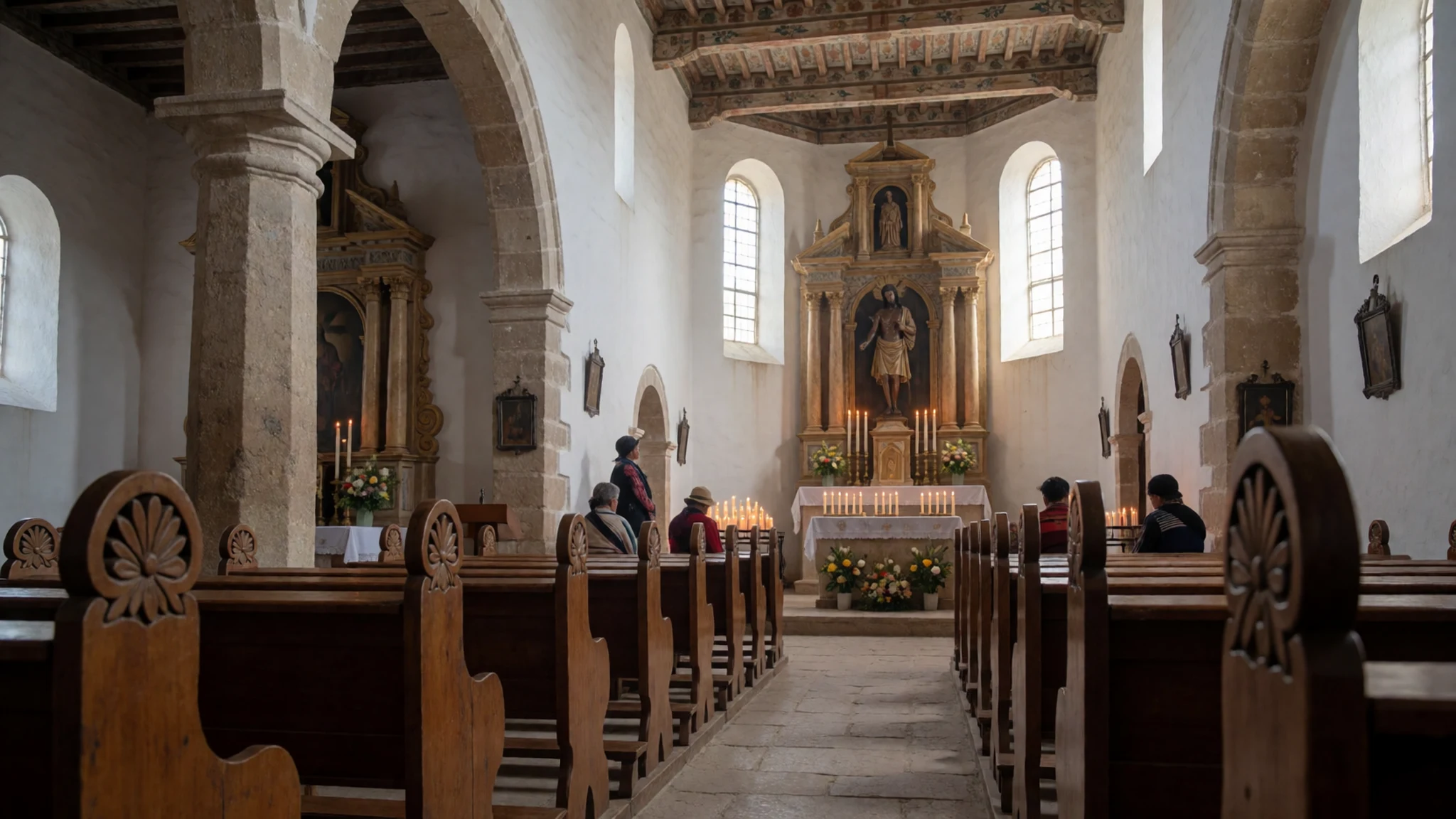
- Iglesia de Santa Lucía — Town centre
The Santa Lucía church traces its roots to the hermitage built by Franciscan friars in the late 16th century to hold the Black Christ image. It is worth a short look for the setting and the layers of history, and it pairs naturally with a walk around the old streets.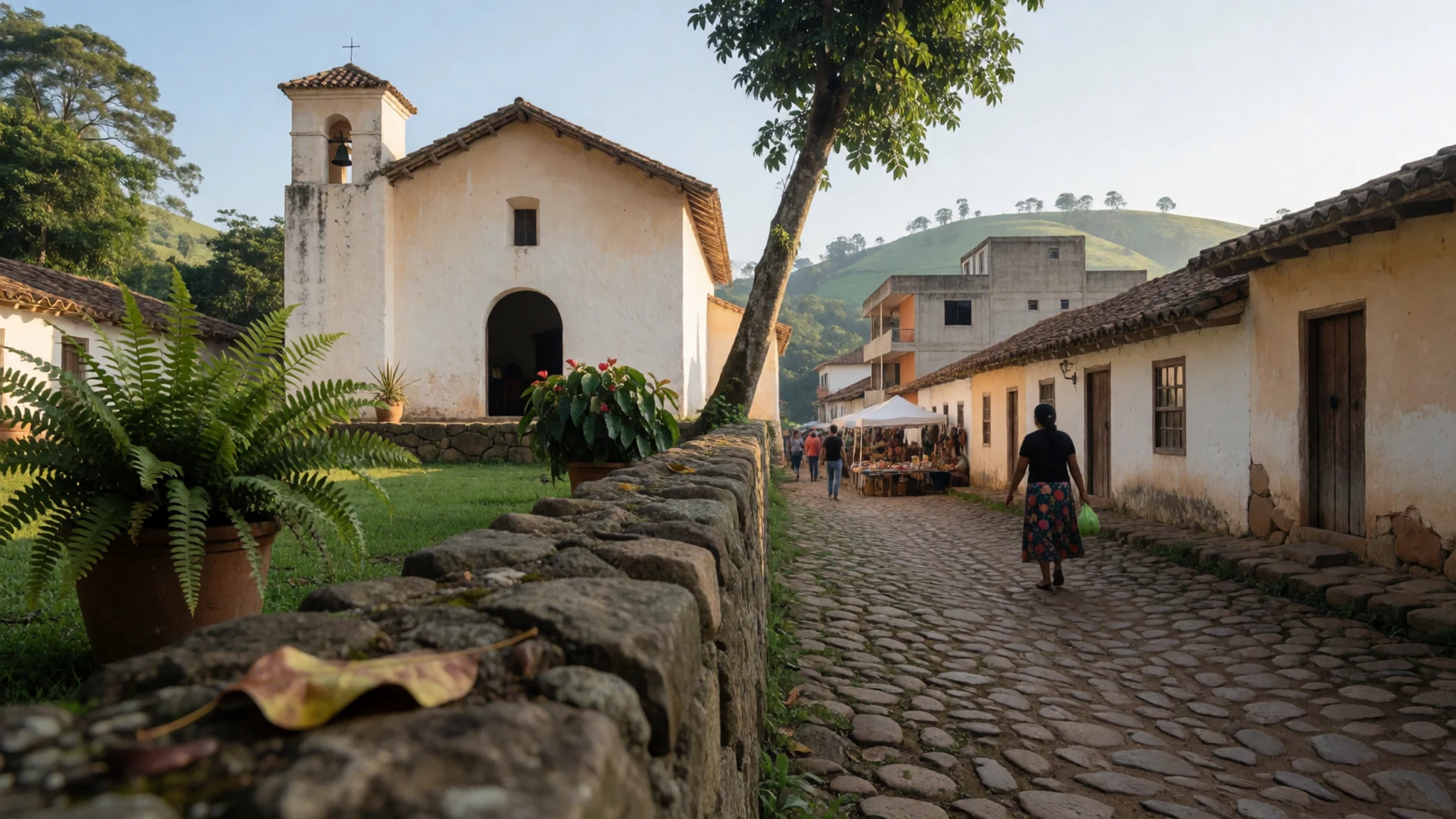
- Streets and murals — Streets around the square
Juayúa's walls act as an open gallery. Local artists have painted cafés, shops and house fronts, with styles running from surrealist to realistic portraits. A slow loop on foot, with a coffee stop, takes in the colonial lines of older buildings and the painted work between them.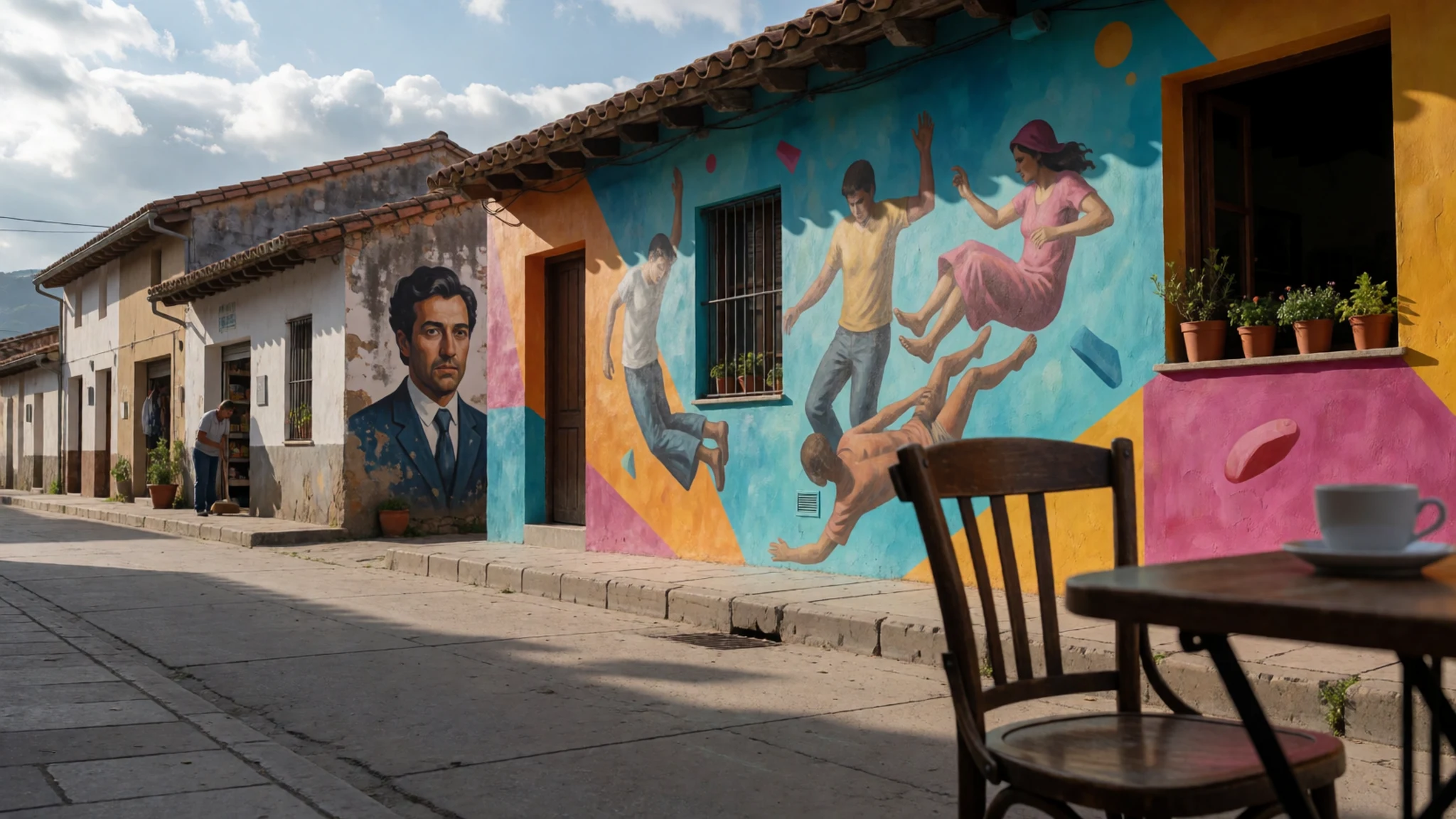
- Los Chorros de la Calera — Just outside town, a short walk or tuk-tuk ride east
A group of waterfalls and swimming pools just outside town, reached on a walk through coffee farms. The main pool is held by a concrete dam rather than rock. Access has recently been fenced, with local guides leading visitors through, so ask in town about current arrangements and agree terms beforehand.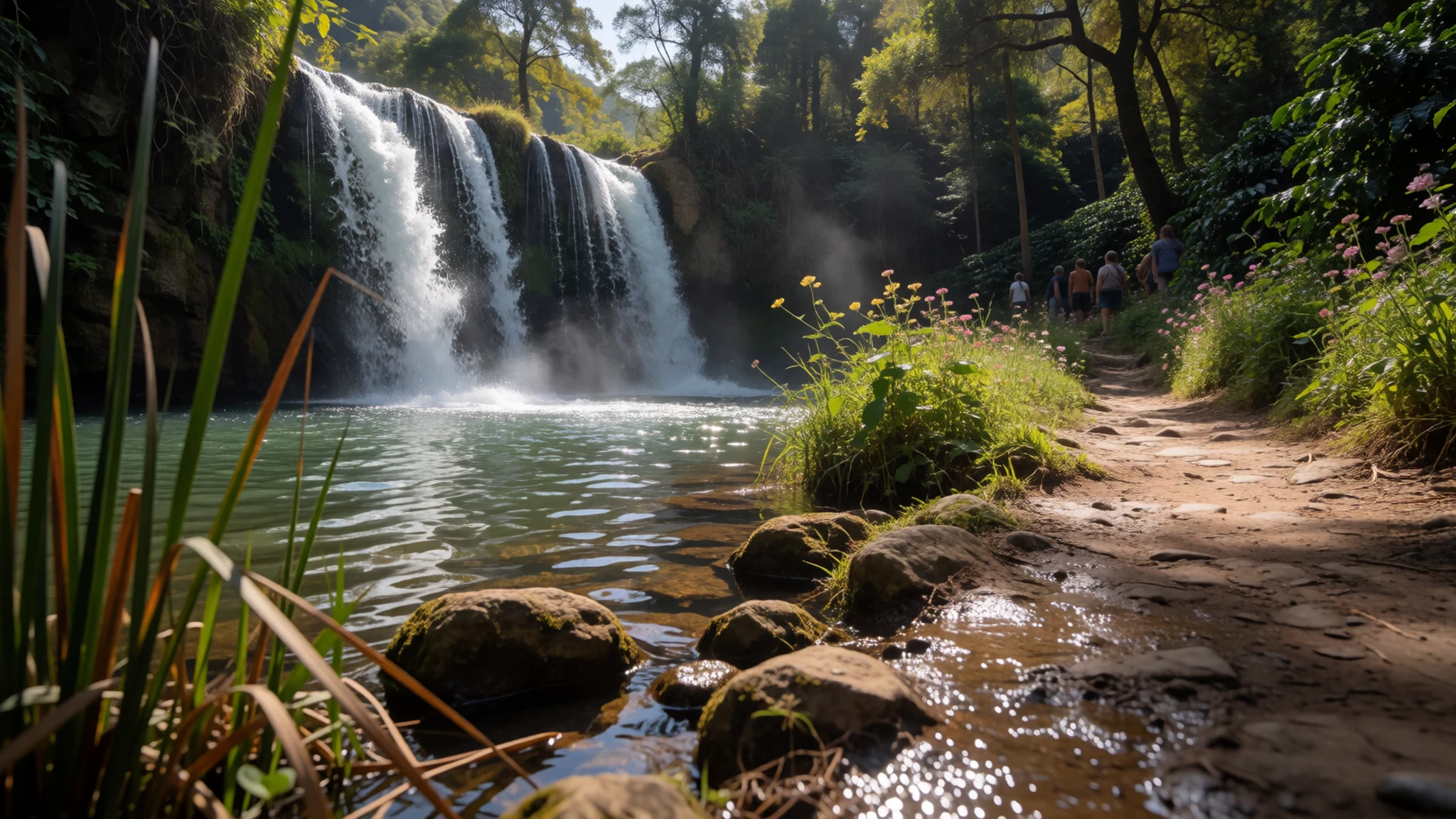
- Seven Waterfalls hike — Hills above Juayúa, booked through operators in town
Local operators run a long, rugged day walk past several waterfalls, with swimming in one and a rappel down another for those who want it. Expect to get wet and muddy, wear shoes with grip, and ask your guide about group size and current prices before committing.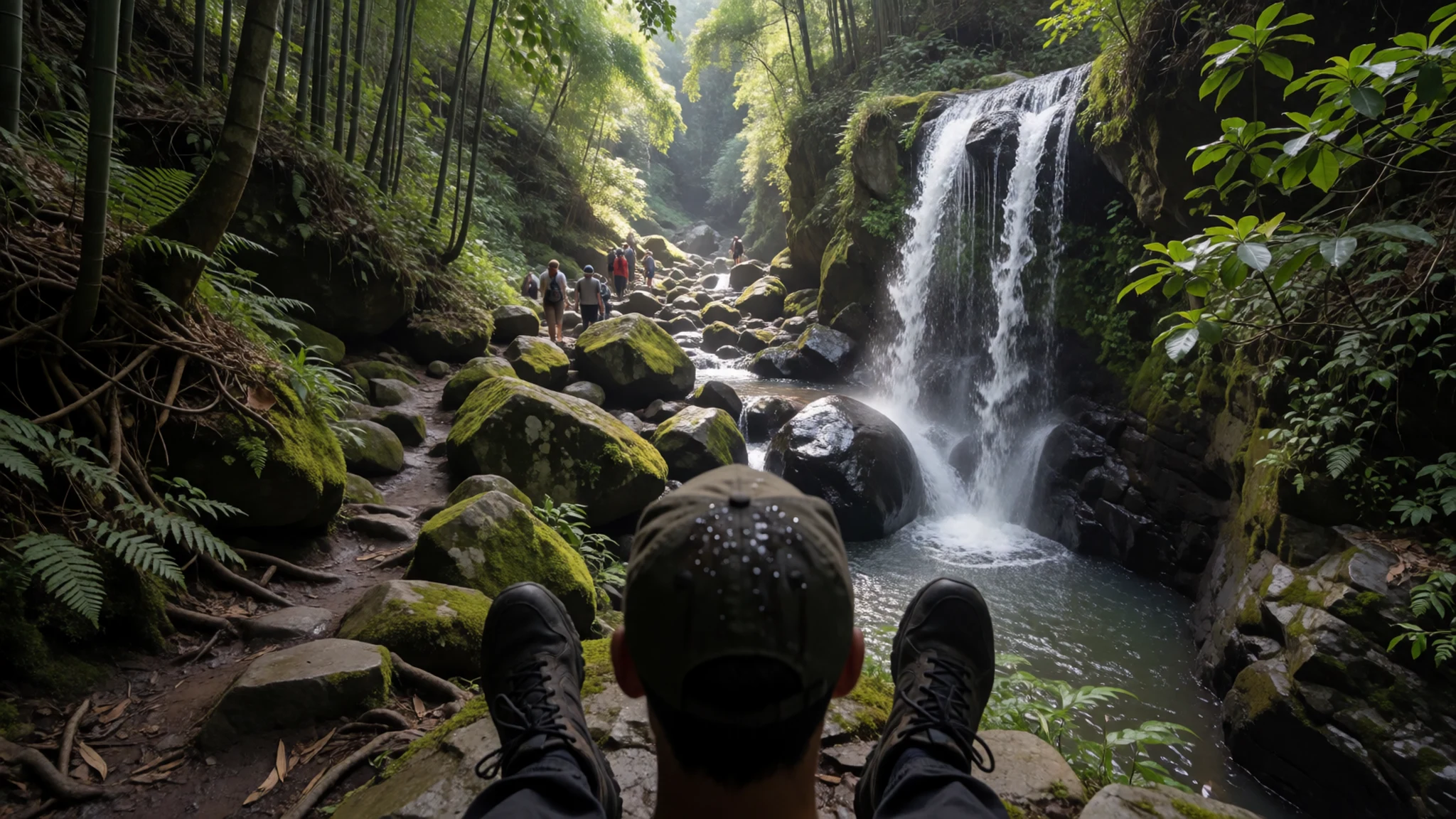
Culture
Juayúa's cultural life revolves around the Black Christ. The patron saint festivities run from the first to the fifteenth of January, and during those days worshippers travel here, as they do to Esquipulas, to give thanks for blessings received over the past year. Processions, services and street activity make the town noticeably busier and more devout than at other times. Outside the festival, everyday religion is still visible: people cross themselves passing the church, and the square fills for mass. Alongside this runs a newer, more playful strand of local identity. Murals have become a point of civic pride, and the town's outdoor food festival gathers Salvadoran cooking in the square for visitors from across the country and beyond. Local folklore also survives in small ways. The Cadejo, a Central American spirit shaped like a dog that either guards or threatens people travelling at night, lends its name and theme to at least one bar in town. Coffee shapes the rhythm of the surrounding hills, with harvest labour and farm visits part of the local economy. Spanish is the language of daily life, and a few greetings go a long way, since many shopkeepers and market cooks speak little English. Politeness matters: a greeting before asking a question, patience at busy counters and a friendly goodbye are all expected. Remove your hat and keep your voice low inside the church of the Black Christ, and ask before photographing worshippers, especially during services and festival days.
What to wear
Juayúa has no single dress that visitors will see on the street every day. Historically the Pipil communities of western El Salvador wove cotton cloth, and festive clothing in the region has leaned on embroidered blouses and full skirts in bright colours, worn today mainly for religious celebrations, school parades and folkloric performances. Expect to see such outfits around the January festivities rather than on an ordinary Tuesday. Day to day, people dress practically and casually. Jeans or light trousers, T-shirts, shirts with collars for church, and sturdy shoes are standard. Farm workers wear long sleeves, caps or wide-brimmed hats, and rubber boots in the wet season. Football shirts are common on weekends. Younger residents follow the same trends as the rest of the country, and cafés in town have a relaxed, slightly artsy look. For visitors, the climate suggests layers. The altitude keeps days mild and evenings cool, so bring a light jacket or jumper, plus a rain layer for the wet season. Shoes matter more than clothes. Choose closed footwear with grip for waterfall paths and coffee-farm tracks, and quick-drying clothes if hiking. Sun protection is wise even when cloudy. For church visits, cover shoulders and knees, avoid beachwear and take off hats. Elsewhere on the street, modest, neat clothing helps you blend in and avoids unwanted attention.
What to eat
- Pupusas — Pupuserías in the lanes near the central square
Thick maize-dough discs stuffed with cheese, beans or pork, griddled and served with a tangy cabbage slaw and tomato sauce. They are the national staple, eaten by hand, and Juayúa has small pupuserías tucked into alleys off the main avenues.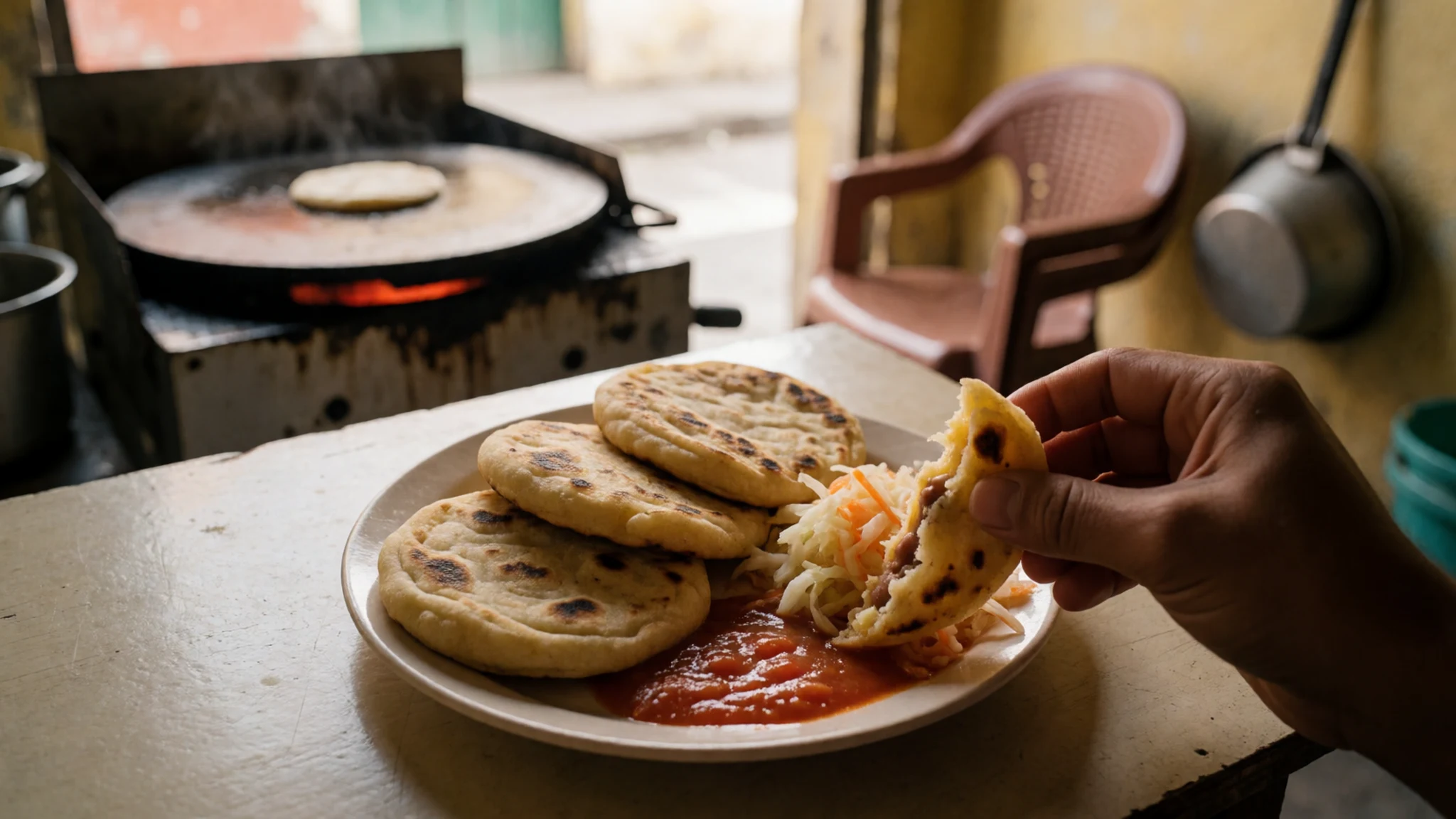
- Market comedor meals — The market next to the Black Christ church
Simple plates of rice, beans, stewed meat or fish, plus a drink, served at counters in and around the market. They are cheap, filling and popular with locals. Go at lunchtime when the food is freshest and the seats are busiest.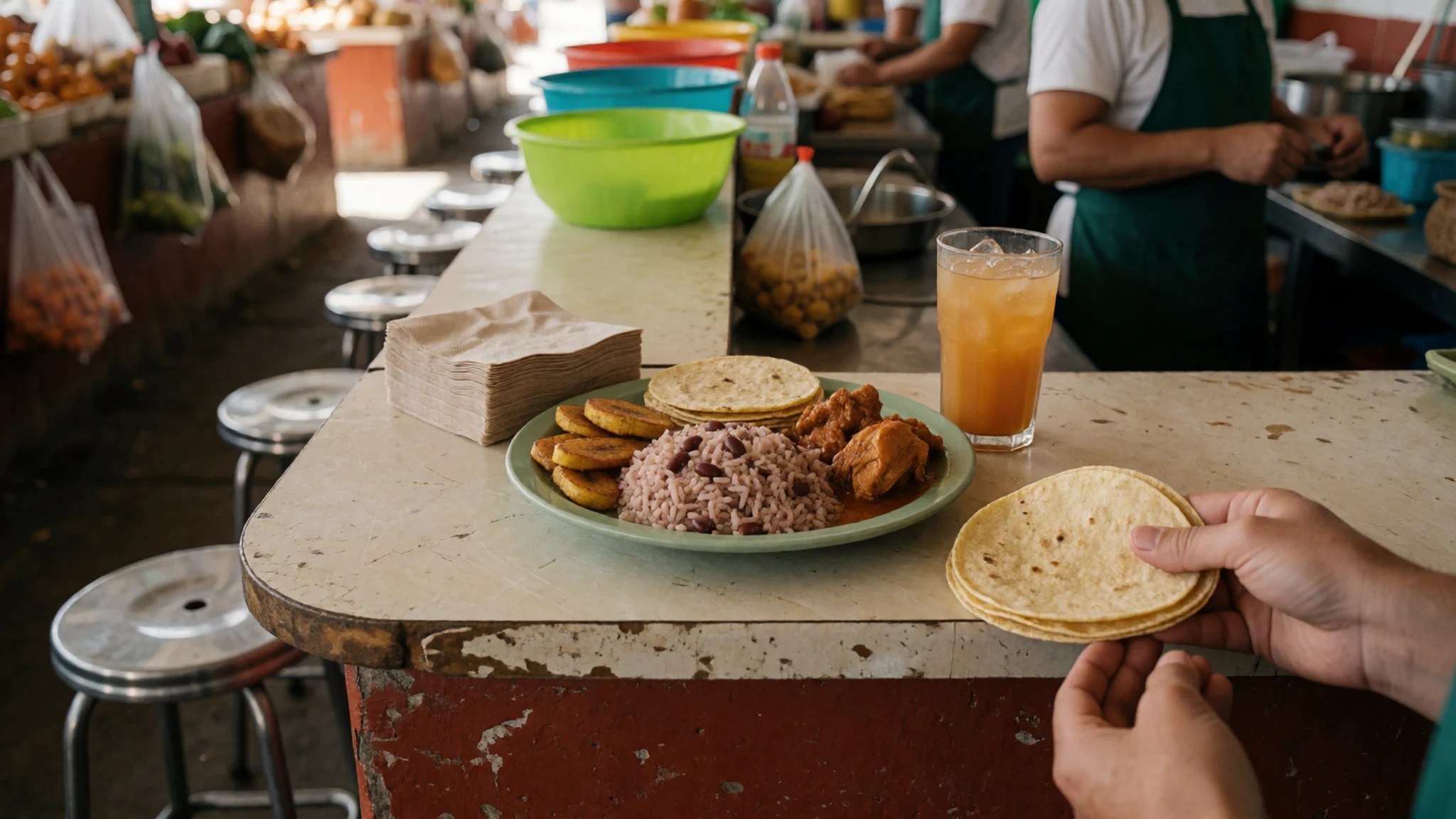
- Sopa de gallina — Festival stalls in the central square and family-run comedores
A hearty chicken soup with vegetables, often carrying herbs and a squeeze of lime, served steaming in the cooler hill air. It is a comforting dish for evenings and for the festival stalls, and tastes better with fresh tortillas alongside. - Yuca con chicharrón — Stalls at the weekend food festival in the square
Boiled or fried cassava served with crisp pork and a sharp cabbage relish. The soft, starchy root and salty meat make a classic Salvadoran pairing, and it is easy to eat standing up at a busy food stall. - Tamales — Market stalls and street vendors, mostly in the morning
Maize-dough parcels steamed in leaves, with fillings that may include chicken, pork or vegetables. They are a traditional breakfast and festival food, best bought warm in the morning and eaten with a cup of local coffee. - Coffee and desserts — Cafés and bars around the square
Coffee grown on the surrounding slopes is the obvious drink, and several cafés roast or serve local beans. Pair a cup with a dessert at a Cadejo-themed bar and grill, where live music is sometimes played in the evenings.
Plan it
Best time. November to March, in the drier months, when walking and waterfall trips are most comfortable and the early-January Black Christ festival falls. The wet season brings afternoon cloud and rain that can make trails muddy, though the hills turn very green.
How long. 1–2
Getting there. Fly to San Salvador's international airport, then travel west by road to Sonsonate or Santa Ana. From either, local buses run to Juayúa along the Ruta de las Flores, with the last leg ending at the town's central square. Check current routes and times locally, as they change.
Budget. low
Tips
- Visit midweek for quiet streets, or at a weekend if the food festival is the goal
- Carry small cash, as many market stalls and guides do not take cards
- Book lodging ahead for festival days and holiday weekends, since prices have risen
- Wear shoes with grip and bring a rain layer for waterfall walks
- Agree the price with any guide before setting off, and ask your lodging about current access to the falls
Etiquette
- Dress modestly and take off your hat when entering the church
- Ask before photographing worshippers or market vendors
- Greet people before asking for help or directions
Nearby
Sources
- Wikidata Q1006979 (CC0)
- Wikipedia: Juayúa (rev 1378251217) (CC BY-SA 4.0)
- Wikivoyage: Juayúa (rev 4918400) (CC BY-SA 4.0)
- Photo: PANORAMICA PLAZA CENTRAL JUAYUA 1 — ClauH0288 (CC BY 3.0)
- Photo: Chorros de La Calera — ElmerGuevara (CC BY 3.0)
- Photo: Calles de Juayua 1 — Erickssonr (CC BY 3.0)
- Photo: Fachada de la Iglesia de Juayúa — JosueArguera (CC BY 3.0)
- Photo: Fachada Principal Iglesia Parroquial Cristo Negro de Juayua — ClauH0288 (CC BY 3.0)
- Photo: Iglesia de Juayúa — JosueArguera (CC BY 3.0)
- Photo: Iglesia de Santa Lucía, Juayúa — Photoprojectsv (CC BY-SA 4.0)
- Photo: Iglesia del Cristo Negro de Juayua — Rodet7 (CC BY 3.0)


