Chalatenango
Chalatenango, El Salvador
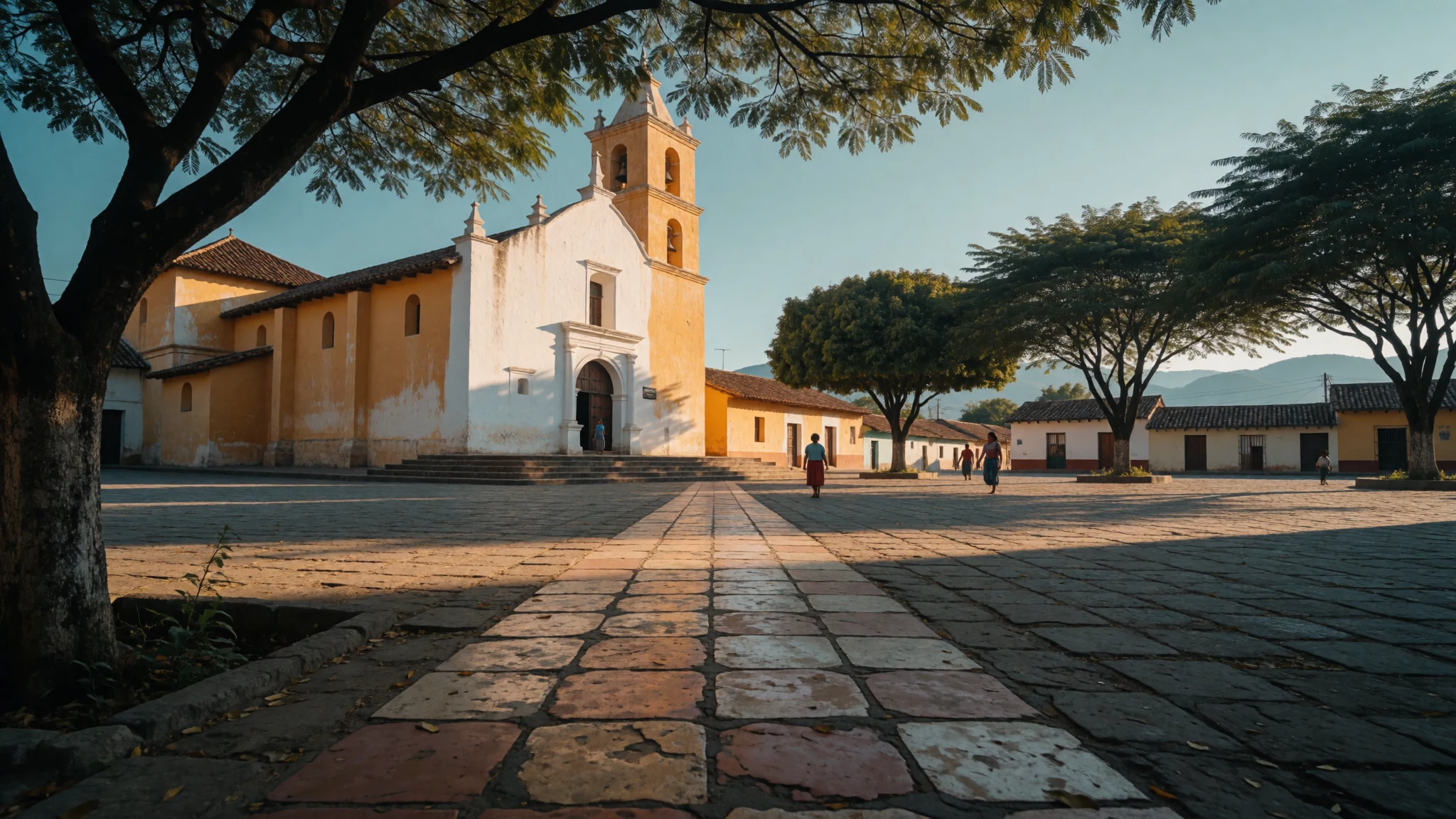
Chalatenango is a calm, hot hill-country town where Salvadoran daily life, a resilient history and day trips to lake and mountains sit close together.
The place
Chalatenango sits about 400 m above sea level on an agricultural plain in northern El Salvador, a few kilometres north of Lake Suchitlán, and is the capital of the department that shares its name. Locals shorten it to Chalate. The name comes from Nahuatl and is usually read as 'valley of waters and sand', which suits a town set among river-cut hollows and dusty dry seasons. Roughly 30,700 people live here, so this is a working provincial town rather than a resort: shops, offices, a market, schools, and farmers coming down from the hills. The centre is small and flat enough to cover on foot in an afternoon, arranged around a plaza and a large church, with low streets of painted single-storey buildings running off it. Heat is the main thing to plan around. The town is warm all year, and the hours around midday are slow, with people retreating into shade. Beyond the town, the department rises into pine and oak hills, and the roads north lead to villages, viewpoints and rivers. Visitors from India or the UK will find it quieter than the capital, with few tour groups and little English spoken, so some basic Spanish helps a great deal. It has a reputation as a pleasant, safe place to stay, though ordinary city sense still applies: keep valuables out of sight and ask locally before walking at night or heading to remote areas. Chalatenango works well as a base for a few days, mixing small-town ordinary life with day trips to Suchitoto, the lake and the high country.
Its story
Chalatenango's story begins well before the Spanish arrived, when the hills and valleys were home to Lenca and later Pipil communities. Spanish forces pushed into the region in the sixteenth century, and the colonial economy that followed rested on land held by European families and labour drawn from Indigenous people. Indigo, the plant that gives a deep blue dye, became the area's important product, and its trade shaped the small settlements here. The town's founding date is given as 1786, though the community itself is far older. Colonial-era accounts describe Chalatenango as the head of a cluster of villages, farming estates and fertile valleys, and one Spanish official called the climate hot but healthy. In the early nineteenth century the town took part in the push for independence from Spain and in the armed struggles that followed, and it was rewarded with the title of villa for those services. The deepest wound came in the twentieth century. The Salvadoran civil war hit this department hard, with villages emptied as families fled the violence. After the peace accords, people began coming back, rebuilding houses, farms and community life. That return is still visible in newer neighbourhoods, local memorials and a strong habit of community organising. Chalatenango today is a town shaped by repeated leaving and returning, and many residents have family stories that run through both.
What to see
- Catedral de Chalatenango and the central plaza — Town centre
The cathedral and the plaza in front of it are the natural starting point in Chalatenango. Early morning and late afternoon are the pleasant hours, when families, schoolchildren and vendors fill the benches and shade trees. Step inside if services are not under way, then wander the surrounding streets.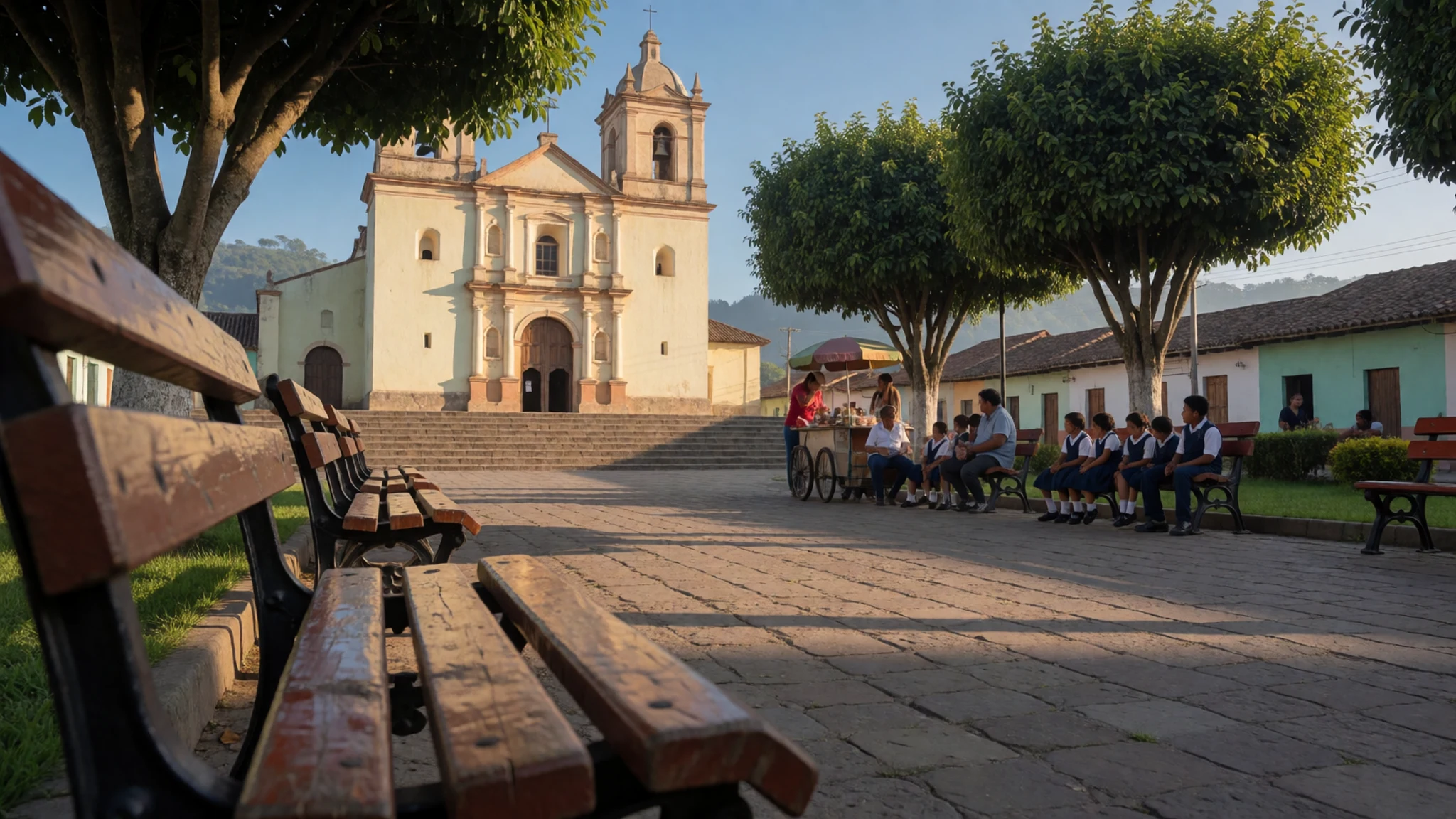
- San Luis del Carmen — South of Chalatenango
This small village sits a short drive south of Chalatenango. It holds its main festival in the second week of December for the Virgin of Carmen, and has a bullring that draws spectators on event days. Outside festival time it is a quiet, rural stop that suits a half-day outing.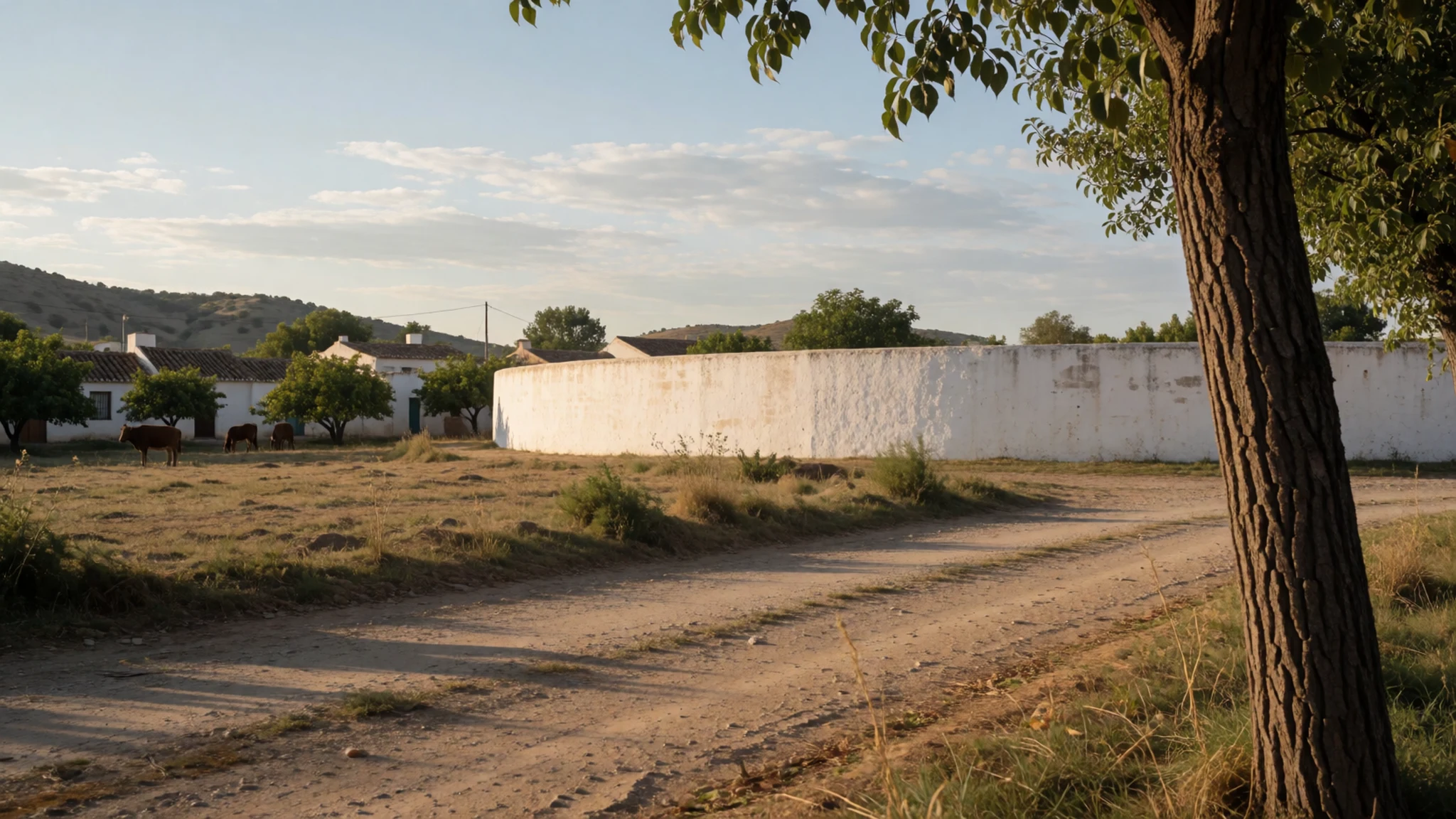
- Road to the Puente de las Hoyas — Countryside outside town
The country road towards the Puente de las Hoyas gives a good sense of the landscape around Chalatenango: dry-season scrub, farm plots, rock-strewn streams and long views across folded hills. Go with a local driver or guide, carry water, and avoid it in heavy rain.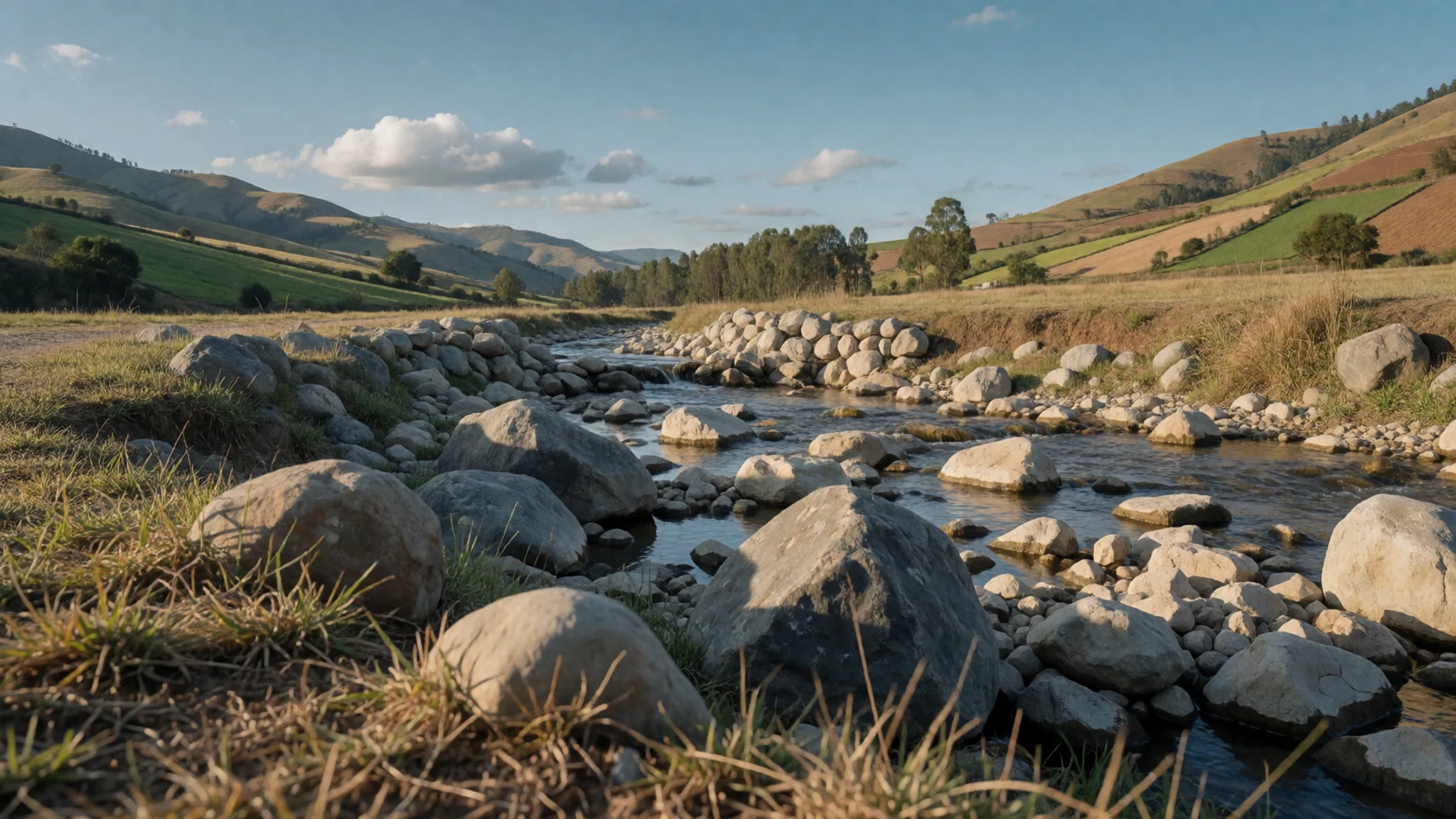
- Adobe houses of La Laguna — La Laguna area, Chalatenango department
Traditional adobe houses, built from earth bricks with tiled roofs and deep verandas, still stand in nearby rural communities such as La Laguna. They show how people built for heat before concrete became common. Treat them as private homes: ask before photographing, and never step onto a property uninvited.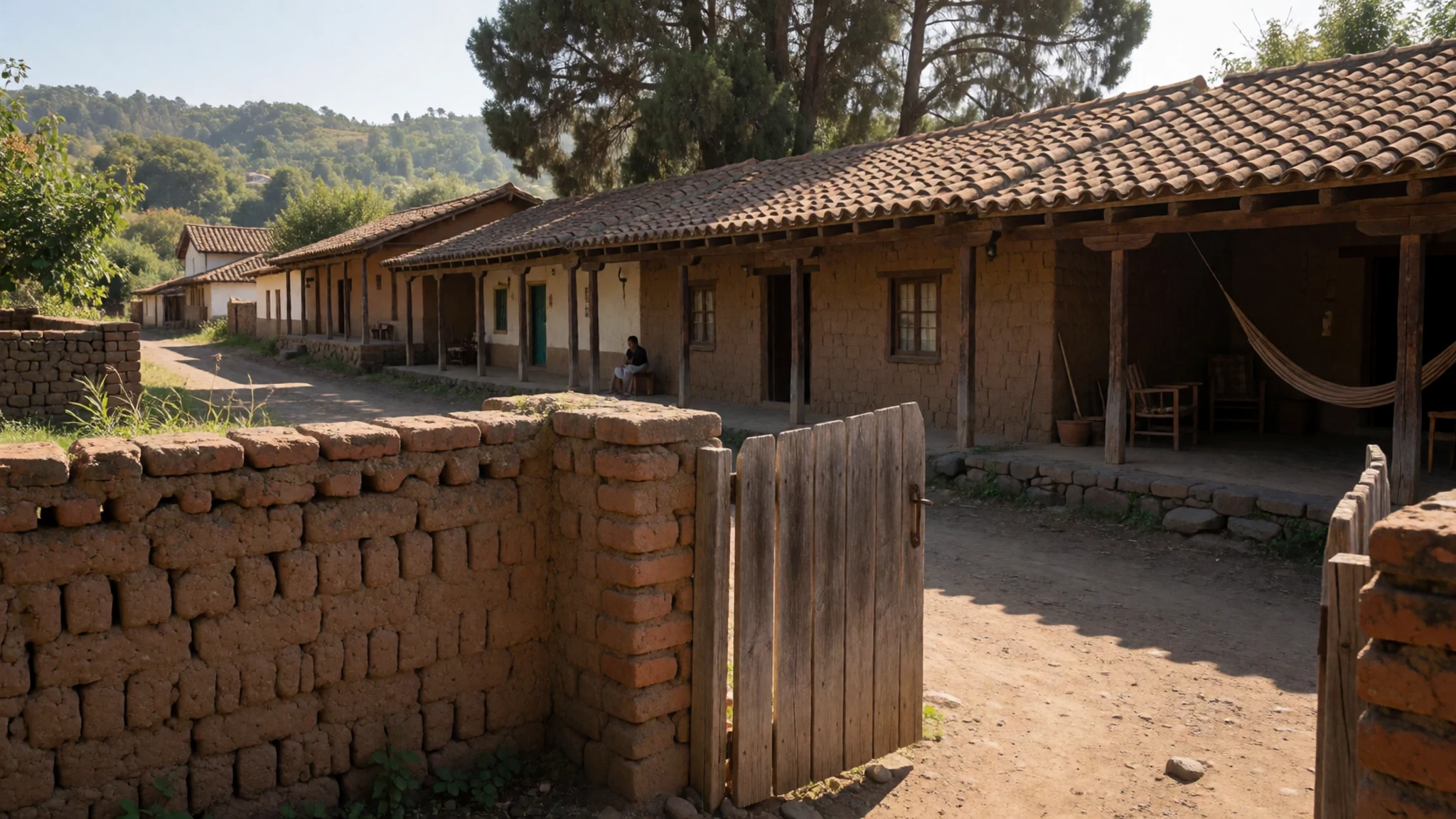
- Lake Suchitlán shoreline — South of Chalatenango
The reservoir lies a few kilometres south of the town and shapes the local landscape, with fishing communities, birdlife and open views. Boat trips and lakeside meals are possible, but services vary, so ask in town about current arrangements. It also leads on towards colonial Suchitoto on the far shore.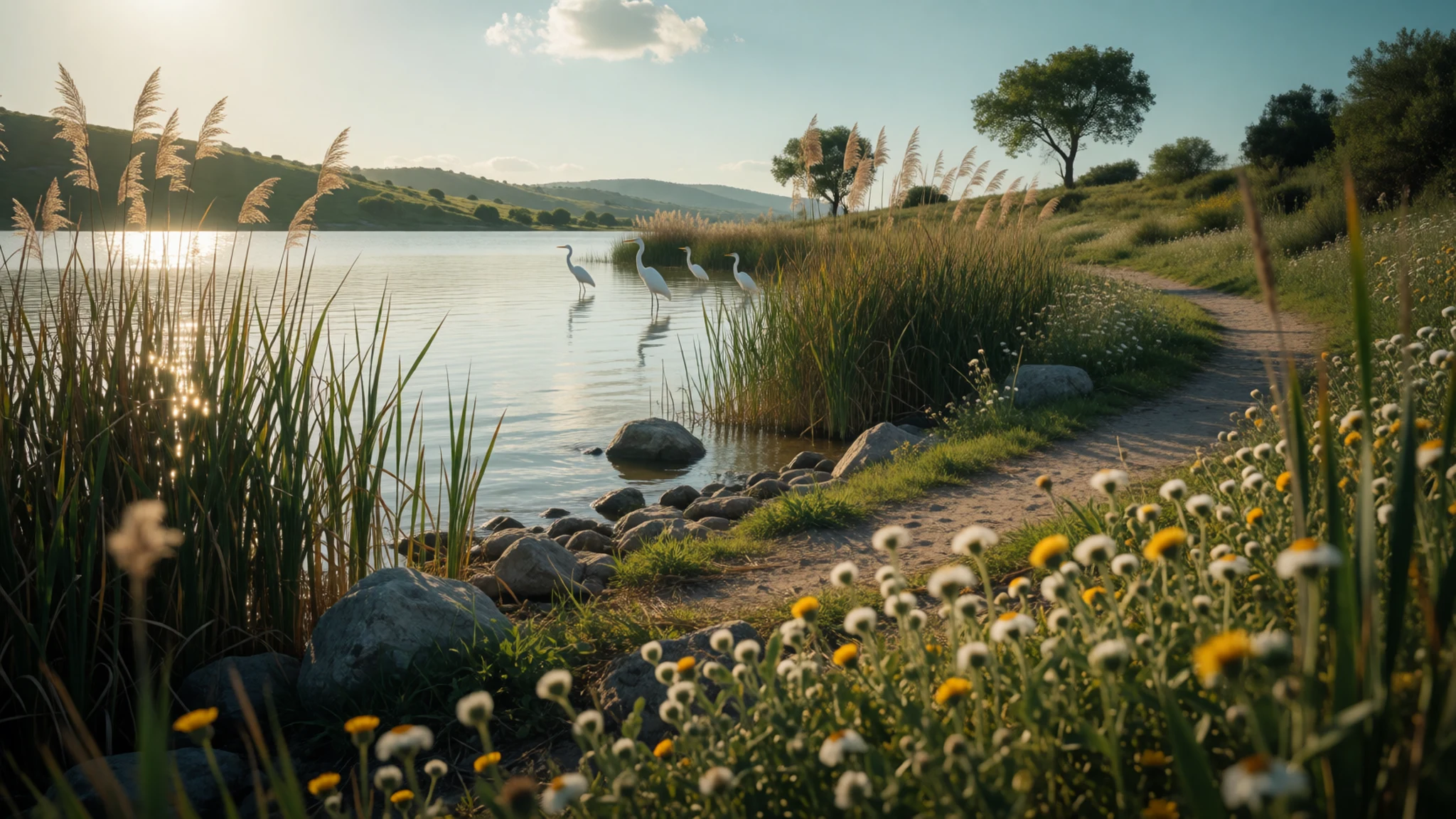
Culture
Chalatenango is a Catholic town with a growing Protestant presence, and religion shapes the calendar here. Almost every neighbourhood has its own patron saint and its own festival, so something is nearly always being celebrated. The main town festival honours St John the Baptist in late June, while individual barrios and colonias keep days for St Anthony of Padua, Our Lady of Peace, the Holy Cross, the Virgin of Mercy and others. Expect processions, music, fireworks, fairs, food stalls and late-night noise around these dates. The civil war is part of living memory, and many families lost relatives or spent years displaced. Locals are often willing to talk about it, but they set the pace, and it is better to listen than to ask pointed questions. Community life is warm and formal in a small-town way: people greet each other when they enter a shop, a bus or a waiting room, and handshakes and polite titles are normal. Sundays are for family and church, and the plaza is at its busiest in the evening, when the heat eases. Weekday mornings are for markets and errands, and farming rhythms still set the pace of the year. In churches and at religious processions, dress modestly, keep your voice low, and ask before photographing people, especially children and anyone taking part in worship.
What to wear
Chalatenango has no single formal costume, but its heritage is Lenca and Pipil, and Salvadoran rural dress draws on handwoven cotton, embroidered blouses and wide skirts, usually kept for festivals, school pageants and folkloric dance. The department was once a centre of indigo production, and indigo-dyed cloth remains a recognisable craft of this part of the country. Ask at a market or craft shop about what is locally made, rather than assuming. Day to day, people dress simply and for heat: jeans or light trousers, cotton shirts and T-shirts for men, and skirts, dresses or trousers with short sleeves for women. Cowboy-style hats and boots are common among farmers, and rubber boots appear in the wet season. Church clothes are neater, with collared shirts and dresses on Sundays and festival days. Visitors should wear light, breathable cotton or linen, with a hat, sunglasses and sunscreen for the sun. Shoulders and knees covered is a safe rule for churches and processions. Closed shoes with grip are better than sandals for hill roads and rural paths, and a thin waterproof is useful in the rainy season. Shorts are fine on the street but look casual in town offices or places of worship. Keep jewellery and expensive watches out of sight.
What to eat
- Pupusas — Pupuserías around the central plaza and market streets
Thick griddled maize cakes stuffed with cheese, beans or pork, served with pickled cabbage and a thin tomato sauce. They are the everyday Salvadoran meal and are eaten by hand. Look for family-run pupuserías, which fill up in the evening.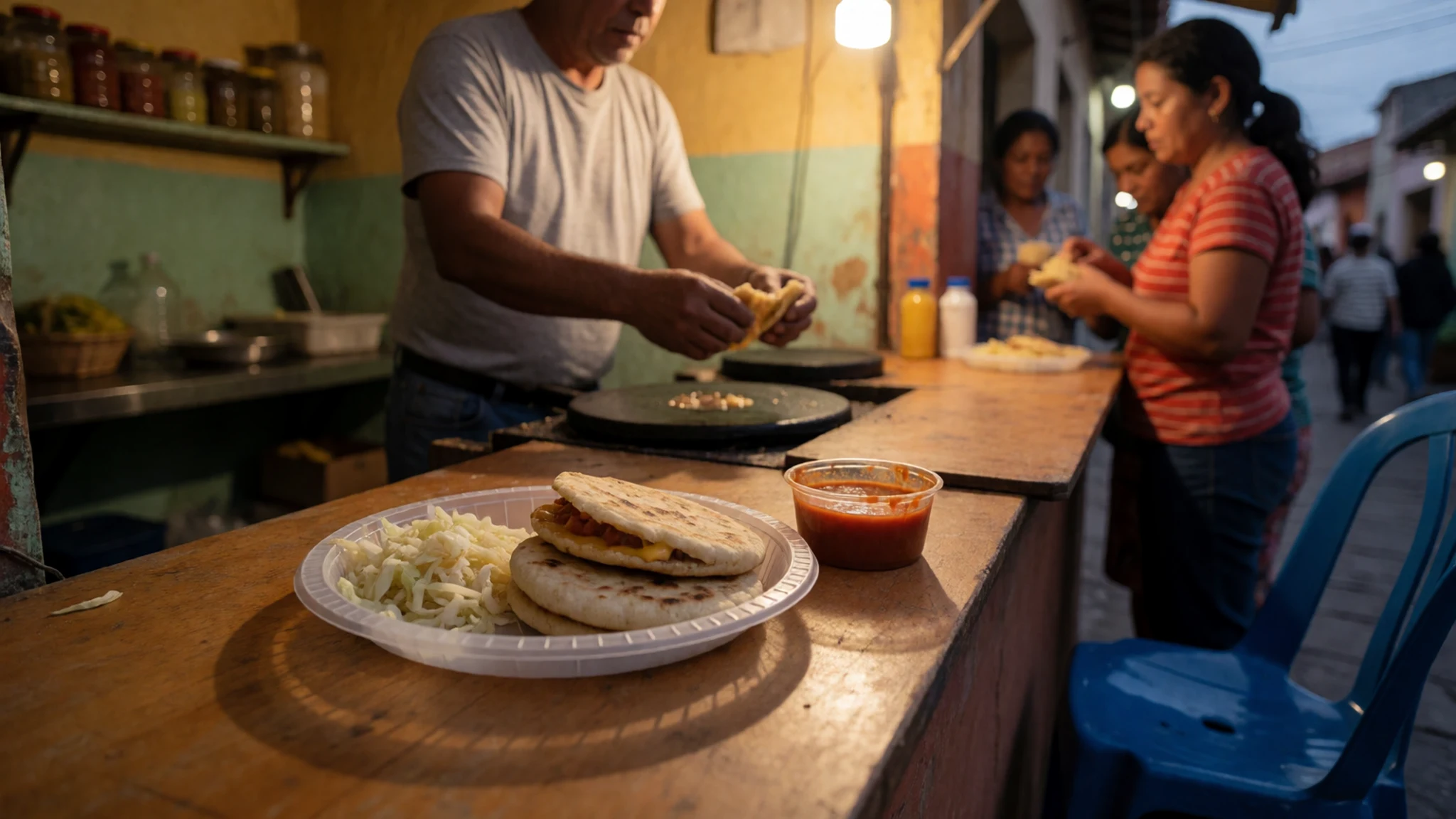
- Yuca frita con chicharrón — Market food stalls and small roadside eateries
Fried cassava, crisp outside and soft within, served with fried pork and a sharp cabbage relish. It is a filling, informal plate that suits a late breakfast or a mid-afternoon stop, usually shared at a simple table.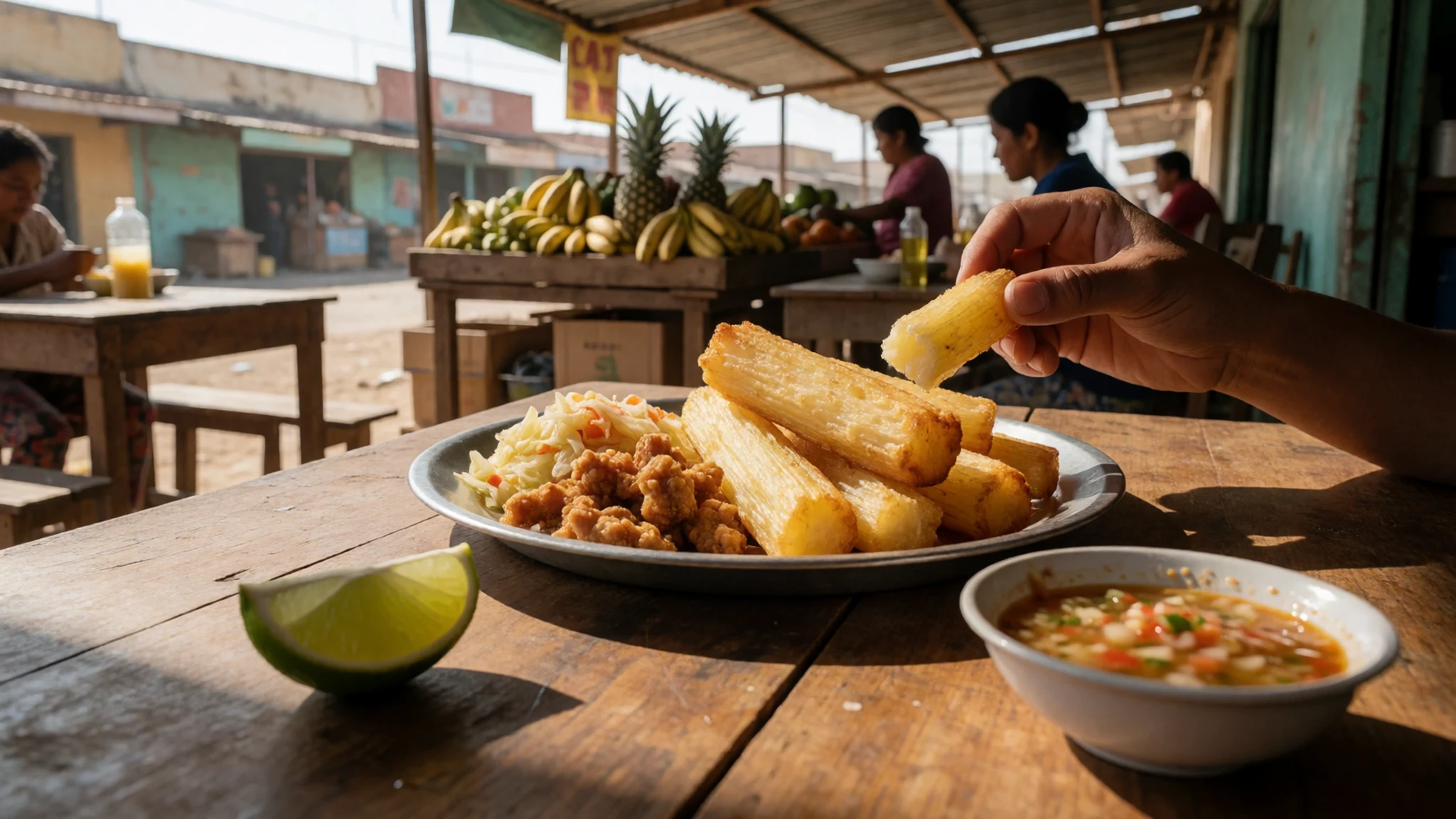
- Tamales — Morning market and street vendors near the church
Steamed maize dough parcels wrapped in banana leaf or corn husk, filled with chicken, pork or vegetables, or sweet versions made with fresh corn. They are especially common at festivals and on weekend mornings. - Atol de elote — Market stalls and home-style eateries
A warm, sweet drink made from fresh young corn, milk and cinnamon, thick enough to eat with a spoon. It is a comforting breakfast or evening drink in cooler hill-country air, often paired with a tamal. - Quesadilla salvadoreña — Bakeries and market stalls in the town centre
A sweet, slightly salty cake made with cheese and rice flour, often topped with sesame seeds. Despite the name it is not a tortilla dish. It goes well with coffee and is often sold as a gift or snack. - Horchata de morro — Small shops, market stalls and festival fairs
A cold drink made from ground morro seeds with spices such as cinnamon and nutmeg, giving a nutty, mildly sweet flavour. It is refreshing in the afternoon heat and is a good alternative to fizzy drinks.
Plan it
Best time. November to March is the dry season, with clearer skies and less mud on rural roads, though the days stay warm. May to October brings rain, often in the afternoons, and the heat can feel heavy before storms. Festival dates, such as the late-June celebrations for St John the Baptist, are lively but busier.
How long. 2–3
Getting there. Fly to Monseñor Óscar Arnulfo Romero International Airport near San Salvador, then continue north by road, using intercity buses or a hired car with driver to Chalatenango. Check current bus routes locally, as services change. For the last leg, walk or take a short taxi ride around the compact centre.
Budget. low
Tips
- Carry cash in small notes for markets, buses and village shops, as card use is patchy outside the main streets
- Start day trips early, before the midday heat, and carry plenty of drinking water
- Ask your lodging or a local driver about road conditions before heading to rural areas, especially in the rainy season
- Learn a few Spanish phrases, as little English is spoken
- Check locally whether the lake ferry to Suchitoto is running before planning a crossing
Etiquette
- Greet people when entering shops, buses and small eateries
- Ask before photographing people, especially at religious events
- Dress modestly in churches and keep voices low during services
Nearby
Sources
- Wikidata Q2290501 (CC0)
- Wikipedia: Chalatenango, El Salvador (rev 1375465903) (CC BY-SA 4.0)
- Wikivoyage: Chalatenango (rev 4851384) (CC BY-SA 4.0)
- Photo: Catedral de Chalatenango (Ernesto561) (CC BY 3.0)
- Photo: Chalatenango, El Salvador (MARVIN SOLIS) (CC BY 3.0)
- Photo: Estadio Chalatenango (JMRAFFi) (CC BY-SA 4.0)
- Photo: Camino al Puente de las Hoyas (MARVIN SOLIS) (CC BY 3.0)
- Photo: Old construction from La Laguna (welmer galdamez) (CC BY 3.0)
- Photo: CDA Manes visits Chalatenango (US Embassy San Salvador) (Public domain)
- Photo: CDA Manes visits Chalatenango (US Embassy San Salvador) (Public domain)
- Photo: CDA Manes visits Chalatenango (US Embassy San Salvador) (Public domain)


