Sipaliwini Savanna
Sipaliwini Savanna, Suriname
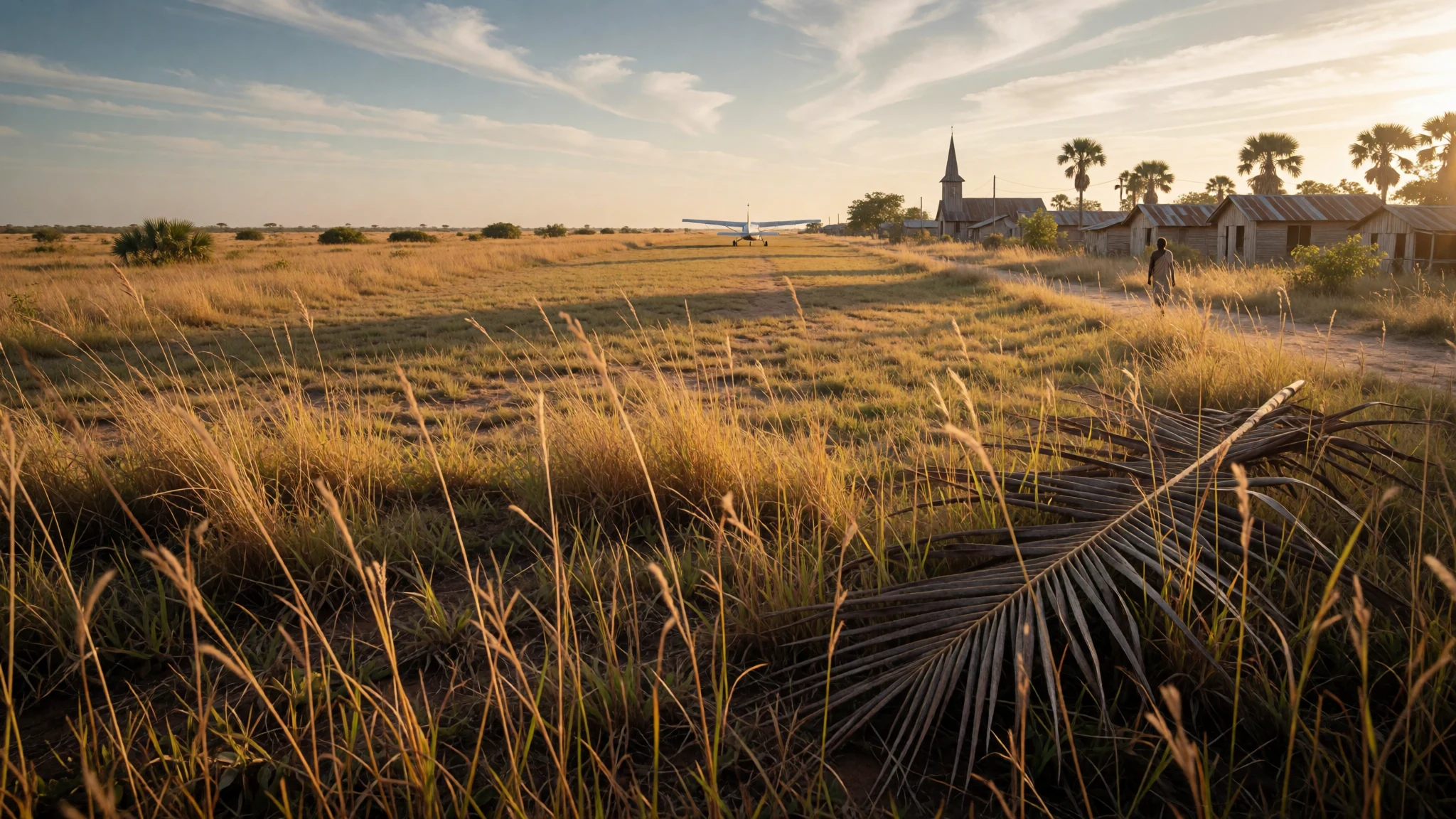
Sipaliwini Savanna is a Tiriyó village on open grassland deep in southern Suriname, reached by air or river, far from any road.
The place
Sipaliwini Savanna is a small Tiriyó village on the Sipaliwini River, in the far south of Suriname, not far from the Brazilian border. It stands beside an airstrip, which is the practical reason outsiders arrive at all, since no road reaches it. On the map the nearest Surinamese settlement is Alalapadu, about 60 km to the north, but the river twists so much that Kwamalasamutu, about 83 km to the west, is the easier neighbour to reach. A rough unpaved track runs across to the Brazilian village of Missão. The surroundings are open grassland, a change from the rainforest that covers most of the country, and the big sky is what people remember. Daily life is quiet and farm-based, with small plots supplying much of what the community lives on. There is a school, a clinic and a church. Electricity used to be a struggle: the Interior War destroyed the village's power facilities and only a few private diesel generators kept going, but solar panels now supply round-the-clock power. This is a living community first and an attraction second. Heat is steady, shade is thin on the savanna, and rain decides whether the airstrip and the river are usable. Costs tend to be high compared with the coast, because a visit normally has to be arranged through an operator in Paramaribo.
Its story
Sipaliwini Savanna sits in a country whose recorded history was written mostly on the coast. Dutch settlers from Zeeland colonised Suriname in the 17th century, and spells of British rule did not finally end until 1816. Plantations of sugar, coffee and cocoa depended on enslaved Africans, many of whom died under the work. When slavery ended in 1863, planters recruited contract workers from British India and from Java, and many of them stayed. That is why Hindu temples, mosques, Javanese warungs and Creole kitchens now share the streets of Paramaribo. Maroons, descended from people who escaped bondage, built their own communities in the forest interior. Independence from the Netherlands came in 1975, and many Surinamese moved to the Netherlands around then. Military rule followed, and an elected government finally settled back in by 1991. The Interior War, fought largely in the forest country, left southern settlements short of basic services, which is why the village lost its power supply. For the Tiriyó of the savanna, the plantation story was distant. Amerindian communities lived in the interior, outside the colonial economy, and the airstrip, school, clinic and church are a recent layer on a much older landscape. Visiting here means seeing a part of Suriname that the coastal history barely touches.
What to see
- Sipaliwini village and airstrip — Sipaliwini District
The village is the point of the trip. Planes land on the grass strip right beside the houses, so arrival is itself a scene. Walk the edge of the settlement with a guide, look at the school, the clinic and the farm plots, and ask before photographing anyone.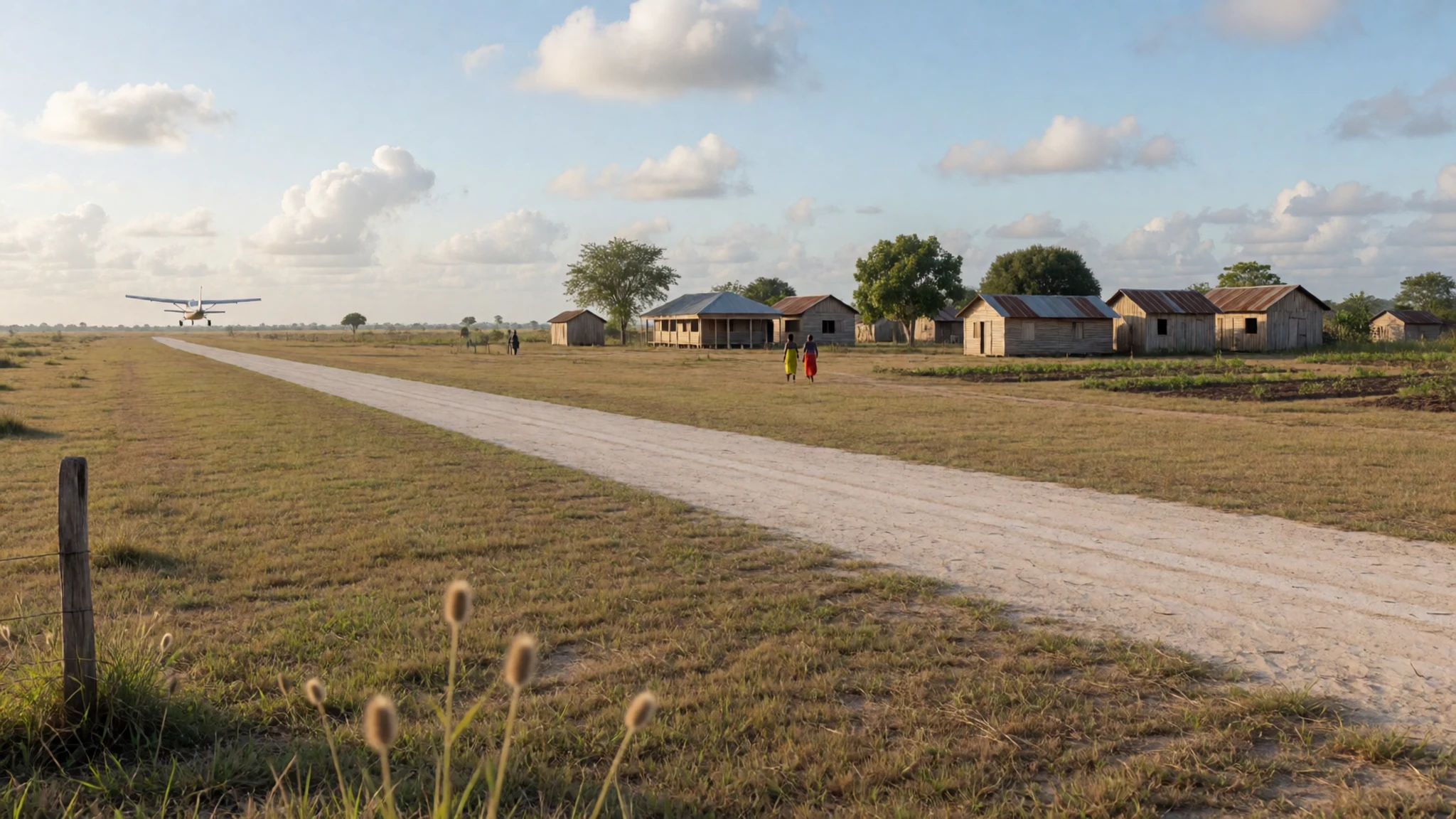
- The Sipaliwini River — Southern Suriname
The river is the village's lifeline and its link to Kwamalasamutu to the west. It bends so often that distances on the map mislead. Boat trips depend on water levels and an experienced local boatman, so arrange them through the operator rather than on arrival.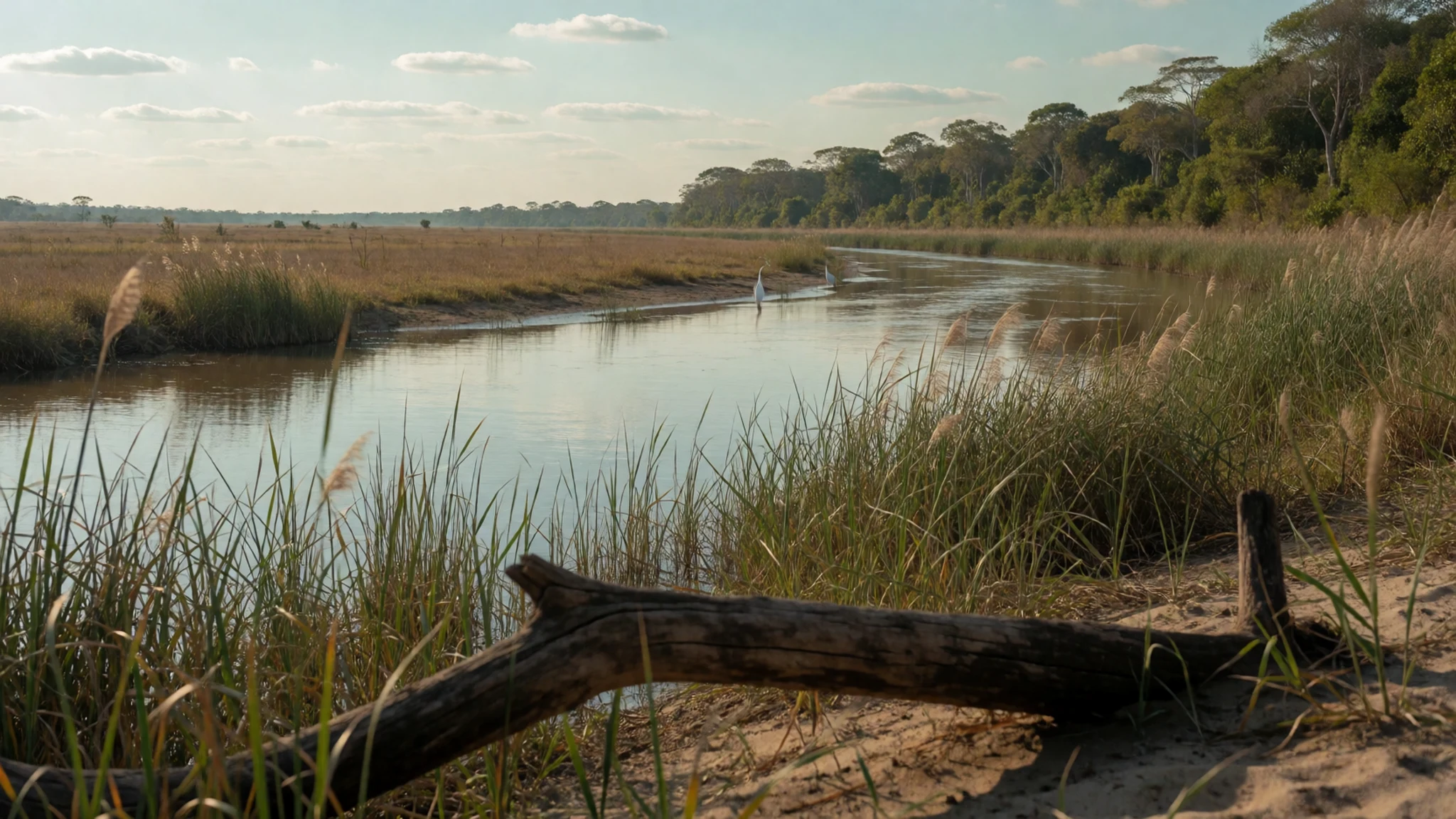
- Central Suriname Nature Reserve — Central Suriname
This is the best-known protected forest in the country, home to the Raleigh waterfalls and Mount Voltzberg. It is a much bigger forest trip than the savanna, usually done with guides who handle river transport and camping, and it suits anyone wanting to add wildlife and rock scenery.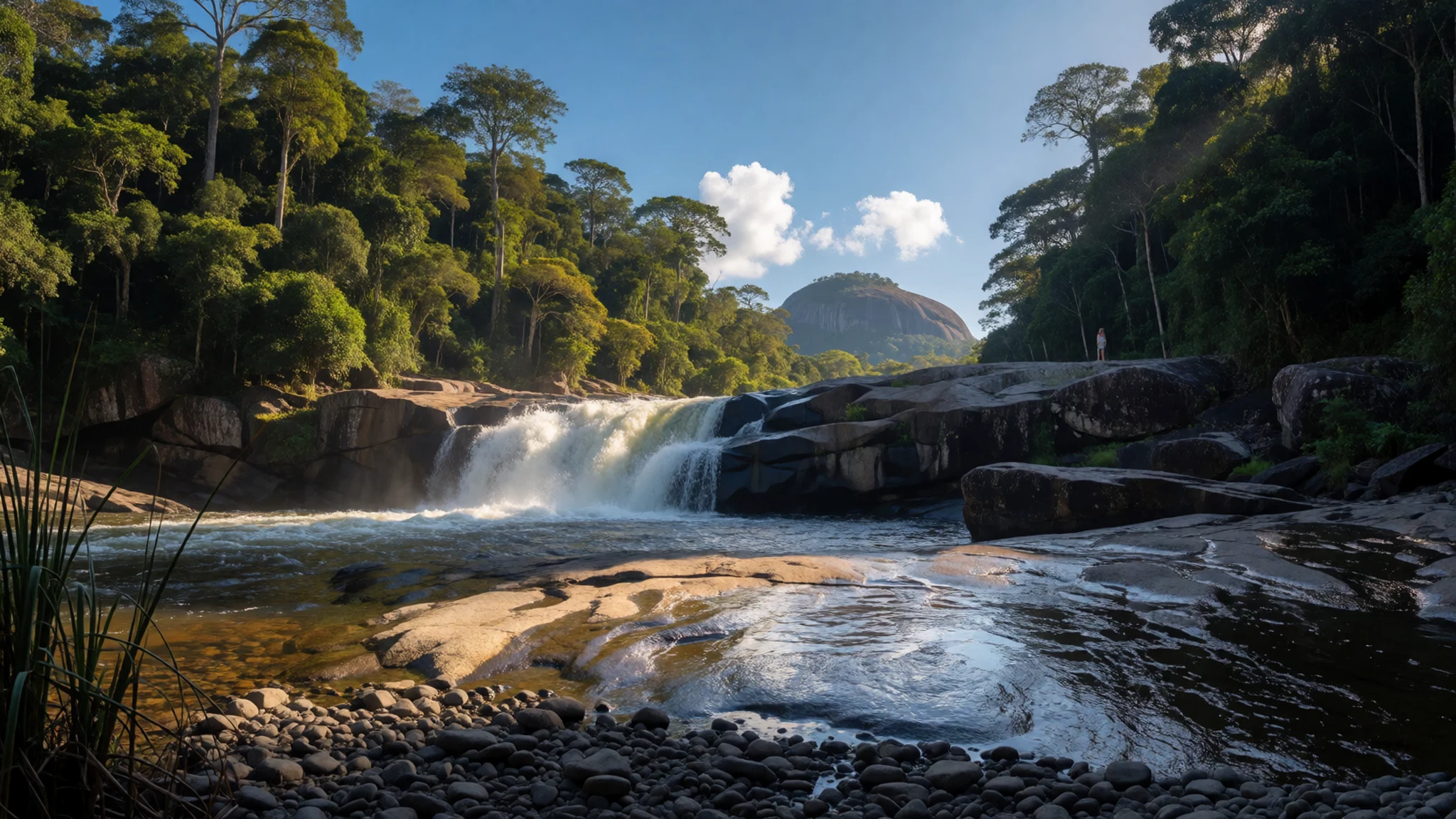
- Jodensavanne — Para District
A ruined settlement where Jewish colonists were allowed to live in the 17th century. Only ruins remain, but it is an important historic stop, and it fits naturally on a day out from Paramaribo, perhaps combined with a swim at Cola Creek on the way back.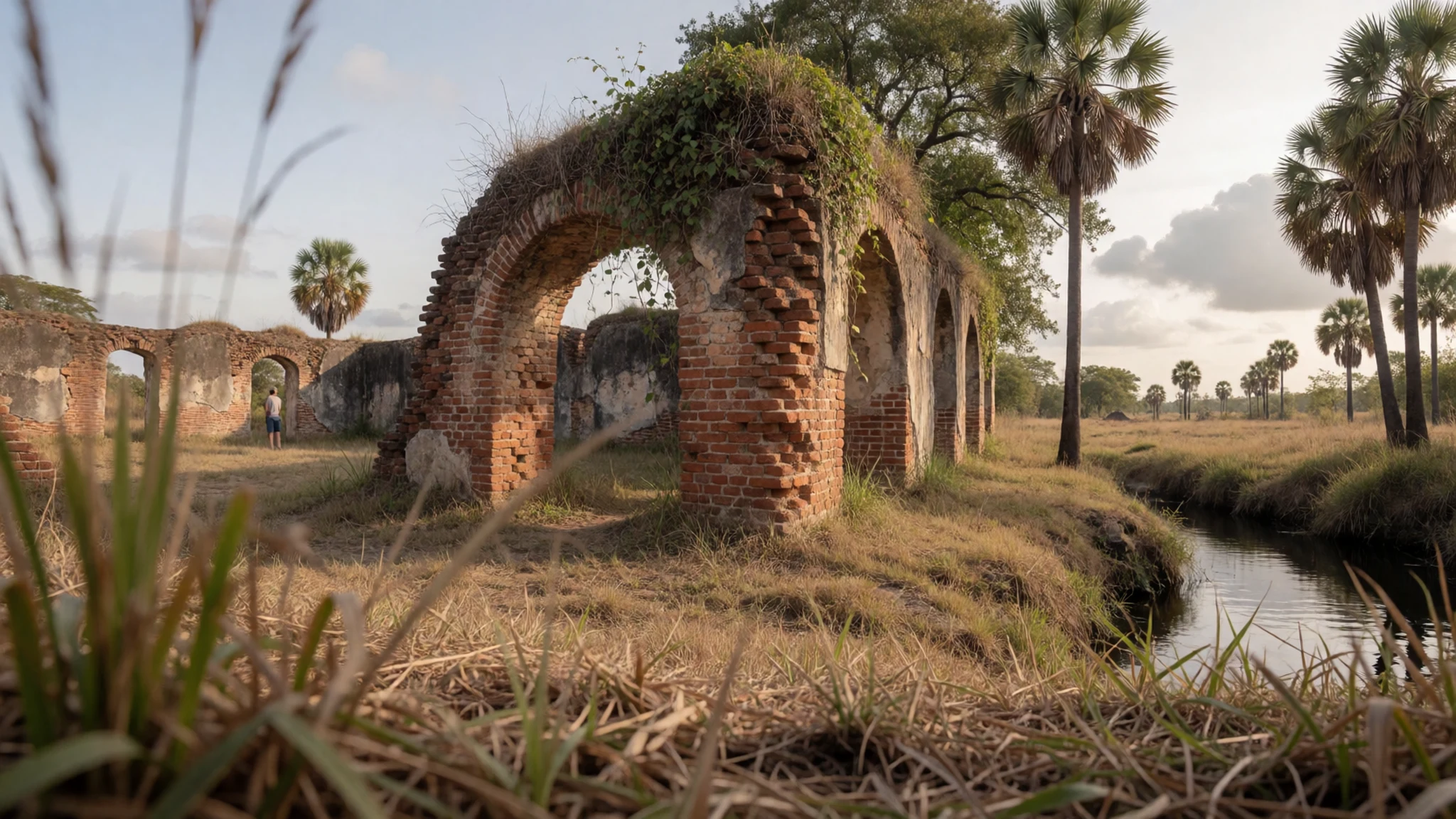
- Paramaribo historic centre — Paramaribo
The capital is a gentle place of wooden buildings and a village-like feel, with few big landmarks but a heritage-listed old core. Most trips to the savanna start and end here, so a day or two of walking the old streets is worth building in.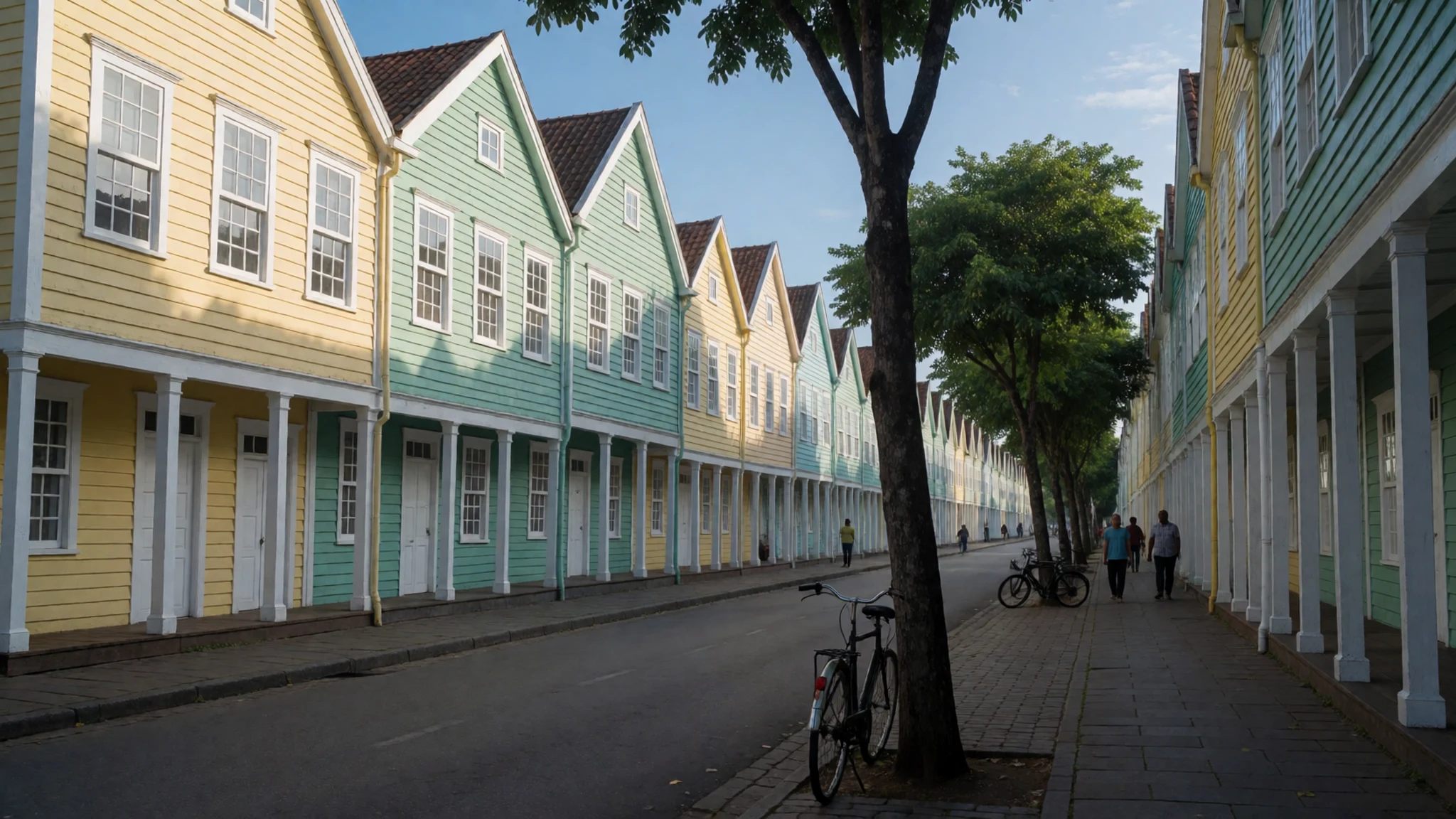
Culture
Sipaliwini Savanna is a Tiriyó village, and its culture belongs to a wider Amerindian world of the interior that is quite separate from the coastal mix of Hindustani, Javanese, Creole, Chinese and Maroon communities that Suriname is known for. Visitors arrive in a place where farming, family and the river set the rhythm of the day. Mission-era institutions, including the church, sit alongside older beliefs about land, forest and water. In the interior, certain trees and spots are held sacred by local people, and a guide will usually point these out. Language is another thing to bear in mind: Tiriyó is spoken in the village, Dutch is the national language, and Sranan Tongo is the common tongue between communities, so a local guide who can translate is more than a convenience. Hospitality tends to be reserved rather than effusive, and the community has little experience of mass tourism, so it helps to treat any visit as a favour rather than a right. Gifts, if offered, are best arranged through the operator so that they are useful and shared fairly. Expect early nights, no nightlife and plenty of time to simply watch the sky. Ask your guide for consent before photographing people, homes or sacred trees, and accept a refusal without argument.
What to wear
Sipaliwini Savanna has no dress code that outsiders will find written down, so it helps to know the background. Traditional Tiriyó dress, like that of many Amerindian peoples of the Guianas, leaned on cotton cloth, bead ornament and plant-based body paint, and bead work in particular is still made and valued, though how often it is worn varies from person to person and occasion to occasion. Today, daily clothing in the village is much like that across rural Suriname: T-shirts, shorts or skirts, flip-flops or bare feet, and practical cotton that dries fast. On the coast, Paramaribo shows the wider mix, from Javanese batik and Indian saris at festivals to ordinary Western casual wear. For a visitor the priorities are climate and terrain. Choose light, long-sleeved, quick-drying clothes in neutral colours that protect against sun and insects, plus a wide-brimmed hat and strong sun cream, because shade is scarce on the savanna. Sturdy closed shoes suit forest tracks and wet river banks, with sandals for camp. Bring a light rain jacket, as downpours arrive quickly. Dress modestly in the village, with shoulders and knees covered, and avoid camouflage patterns, bright flashy jewellery or swimwear away from the water.
What to eat
- Roti with chicken — Indo-Surinamese eateries in Paramaribo
A staple of the Indo-Surinamese kitchen: soft flatbread served with curried chicken, potato and vegetables. It is generally less fiery than in India, and it is an easy first meal in Paramaribo.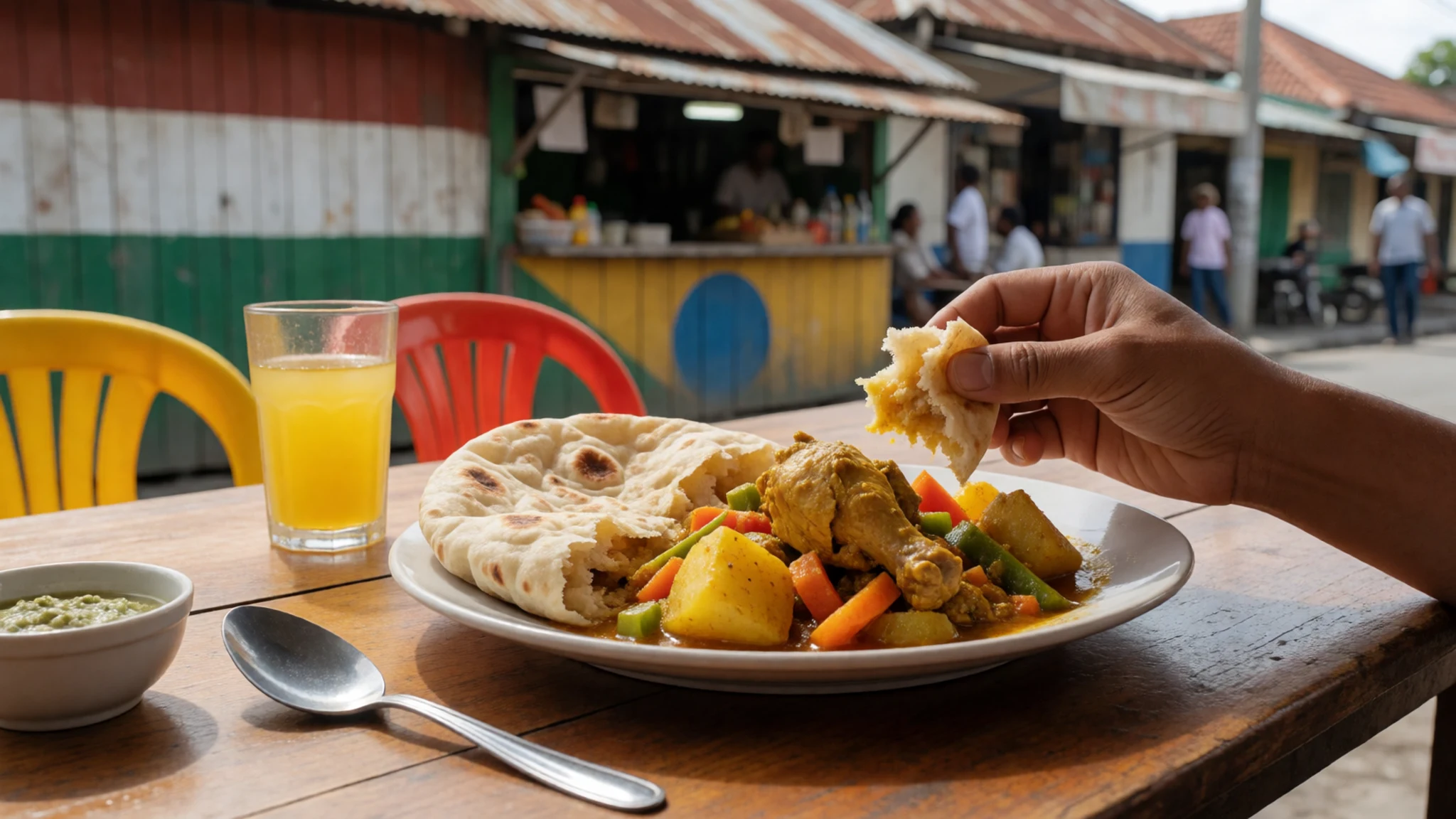
- Bami and nasi — Any warung, notably in Lelydorp and Blauwgrond
Noodles and fried rice from the Javanese tradition, served with spicy chicken or satay and peanut sauce. Surinamese versions have drifted from what is eaten in Java itself, but they are filling and widely loved.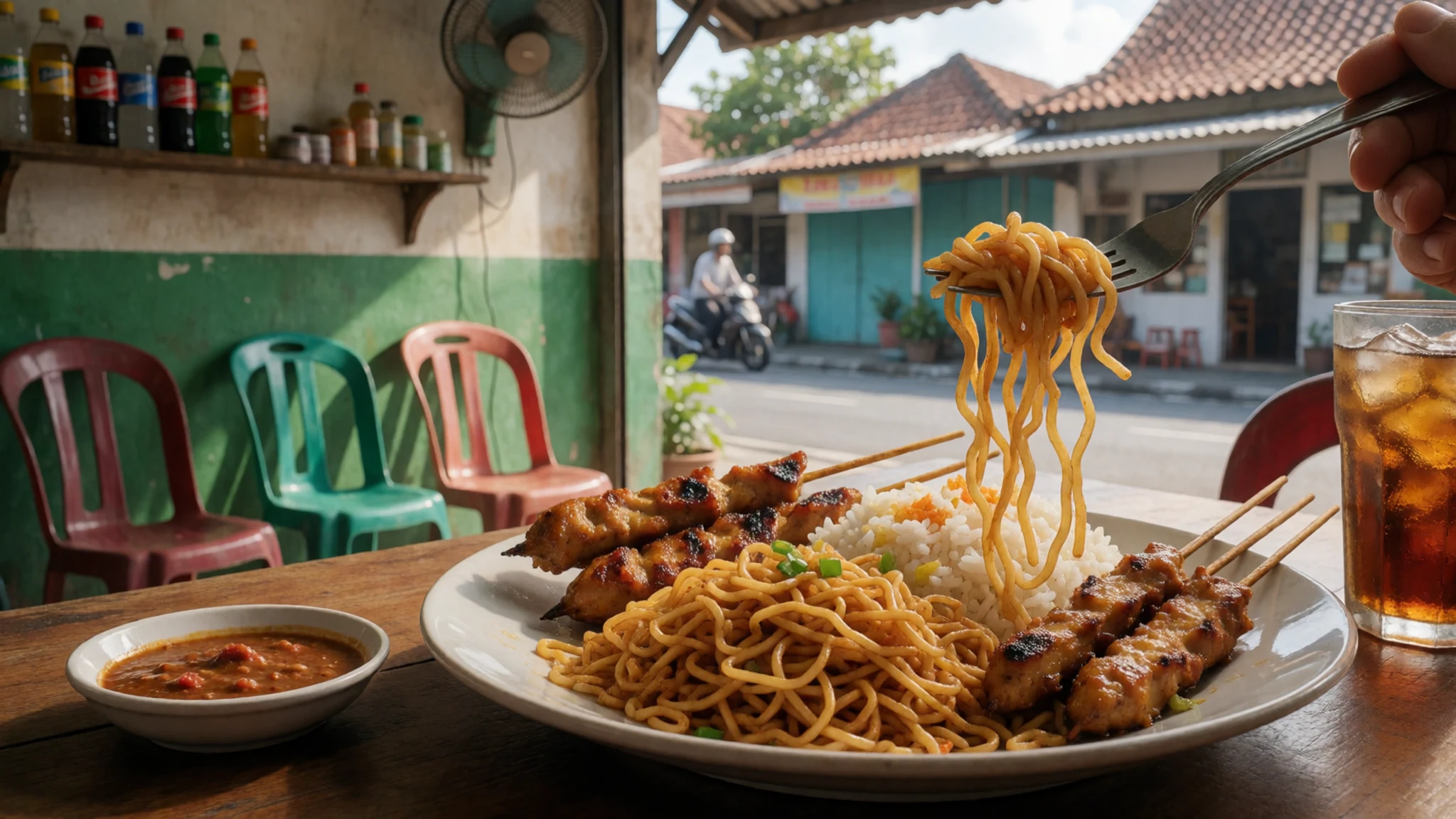
- Petjil — Javanese warungs near Paramaribo
A vegetarian dish of vegetables in peanut sauce, a useful choice for anyone avoiding meat. It is often paired with fried banana (baka bana) and rice, and it works as a light meal. - Soato — Warungs, especially around Commewijne
A Javanese-style soup of clear chicken stock with shredded chicken, bean sprouts, egg and sliced peppers. It is eaten as a warming meal and shows how the Javanese kitchen has settled into Surinamese life. - Fruit juices: markoesa and zuurzak — Markets and juice stalls in Paramaribo
Passion fruit (markoesa) and soursop (zuurzak) juices are common and rich. Bottled ones are usually sweetened, so ask for less sugar if you prefer. Telo, fried cassava with salt fish, is another local snack worth trying.
Plan it
Best time. Roughly August to November is the usual dry stretch in southern Suriname, when the airstrip and river tracks are most reliable. Wet months bring heavy downpours, higher rivers and more insects, and may disrupt flights. Heat is steady all year.
How long. 3–5
Getting there. Fly into Johan Adolf Pengel International Airport near Paramaribo, then take a small plane to the Sipaliwini airstrip or travel overland and by river from Kwamalasamutu, arranged through a Paramaribo operator. There is no road to the village.
Budget. high
Tips
- Book through an experienced interior operator well ahead, since flights and river transport are limited
- Bring mosquito repellent, sun cream and a hammock bought in Paramaribo
- Carry cash and any medicines with you, because there are no shops or cash machines to rely on
- Pack water-purification supplies and a light rain jacket
- Do not venture into the bush alone; go with a local guide
Etiquette
- Ask consent before photographing people, houses or sacred trees
- Follow your guide's advice on where to walk and what to avoid
- Check the official Suriname government site for current entry rules before travelling
Nearby
Sources
- Wikidata Q2299612 (CC0)
- Wikipedia: Sipaliwini Savanna (town) (CC BY-SA 4.0)
- Wikivoyage: Suriname (CC BY-SA 4.0)