Corneliskondre
Corneliskondre, Suriname
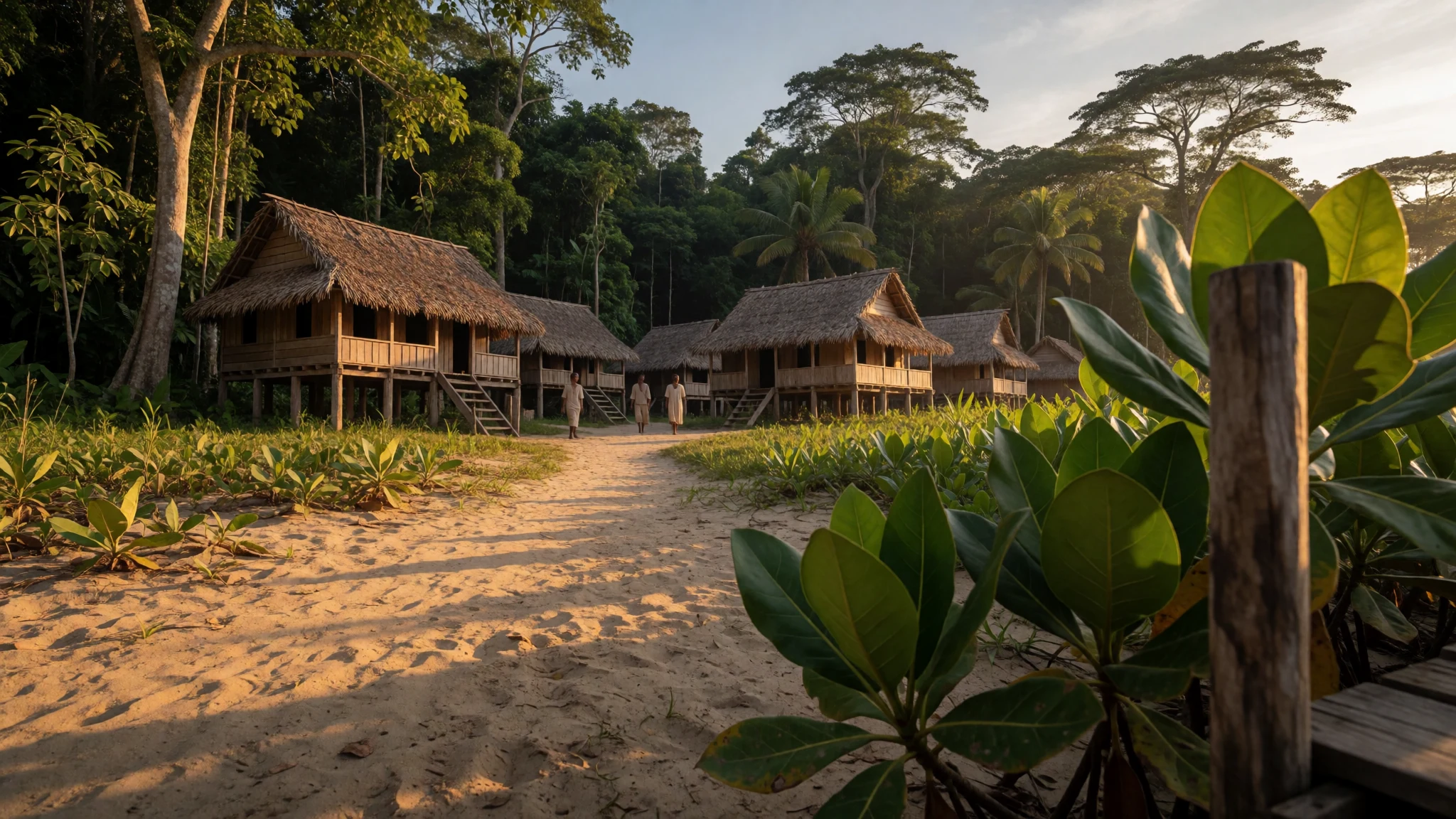
Corneliskondre is a small Kali'na village on the Coppename, where Suriname's Indigenous interior can be met quietly and on the community's own terms.
The place
Corneliskondre is a Kali'na village in the Boven Coppename resort of Sipaliwini District, Suriname, home to about 70 people as of 2020. That is a few households rather than a town, and the scale shapes everything about a visit. The village sits on the Coppename river, and the water works as the main road: archive photographs show a boat landing where people and goods come ashore, with forest close behind. The Kali'na, sometimes written Carib in older Dutch captions, are Indigenous people whose communities lie along Suriname's rivers, and Corneliskondre is one of them. Daily life here is organised around family, river and garden rather than around anything built for tourists. There is a school, a clinic run by the Mungra Medical Centre in Nieuw-Nickerie, and a holiday resort near the Wayambo River, which is the one piece of visitor infrastructure the sources mention. Beyond that, little is documented, and a traveller should treat the place as a living home first and a sight second. Sipaliwini is the interior, so the familiar picture of Suriname, with its coastal capital and its mix of Javanese, Indian, Creole and Chinese communities, applies here only at a distance. Journeys are long, plans depend on boats and weather, and a local guide or the resort is the sensible way in. Expect heat, humidity, insects and almost no signage. Come for quiet, river light and the chance to meet people on their own ground, and leave the checklist at the landing.
Its story
Corneliskondre takes its name from Cornelis Tapopi, the chief who founded the village; kondre is the Surinamese word for country or village, so the name reads roughly as Cornelis's place. Catholic missionaries first visited in 1883, and the church's long presence in the interior left a mark on many Indigenous communities. A headdress made by George Ajukana, a Kali'na maker from Corneliskondre, is now kept in the Kerkelijk Museum, which is one way the village's craft has travelled beyond the river. The wider history of Suriname frames all this. Settlers from the Dutch province of Zeeland colonised the country in the 17th century, and British administration came and went until it ended for good in 1816. The colony ran on sugar, coffee and cocoa plantations, worked by enslaved Africans under brutal conditions. Slavery ended in 1863, and contract labourers were then brought from British India and from Java, many of whom stayed and shaped the country's present mix of peoples. Plantation life was concentrated on the coastal lands, while Indigenous communities such as the Kali'na lived by the interior rivers, so their story runs alongside the colonial one rather than inside it. Independence from the Netherlands came in 1975, and many Surinamese moved to the Netherlands around then. A military regime followed a few years later, with corruption and killings of opponents. A village of 70 people holds little of that on show, but it exists inside all of it.
What to see
- The village on the Coppename — Boven Coppename, Sipaliwini District
Corneliskondre itself is the sight: a small Kali'na settlement on the river, with a school, a clinic and family homes. There is no monument to tick off. A walk, if the community welcomes it, and a conversation through a guide or interpreter give more than any photograph. Go as a guest, not an observer.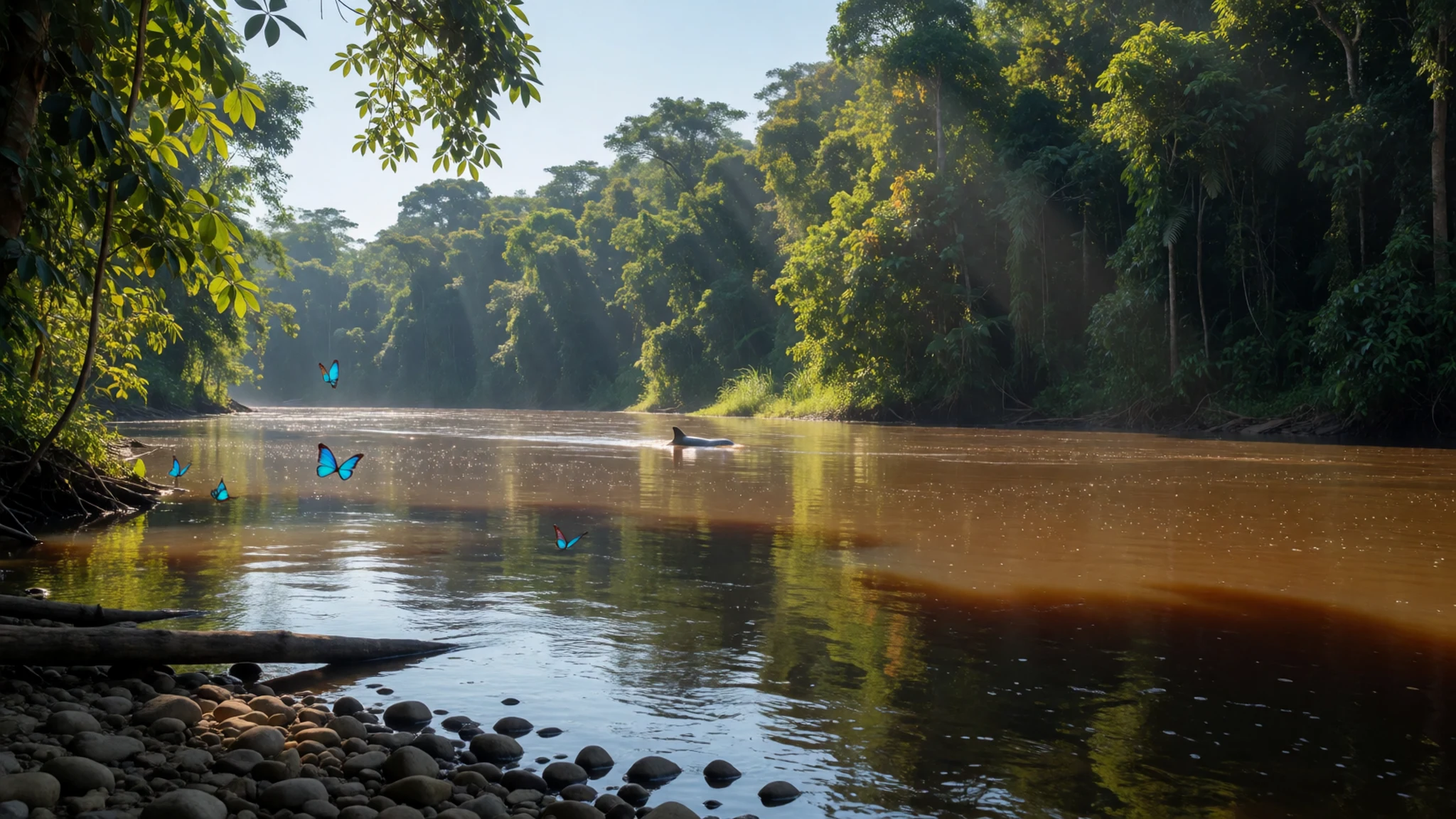
- The river landing — Coppename riverbank at the village
Archive photographs show a boat tied up at the landing below the village, and the scene probably still resembles them: water, forest and a muddy bank. The Coppename is how most visitors arrive, so the landing is both the first and last view. Early light and a calm river suit it best.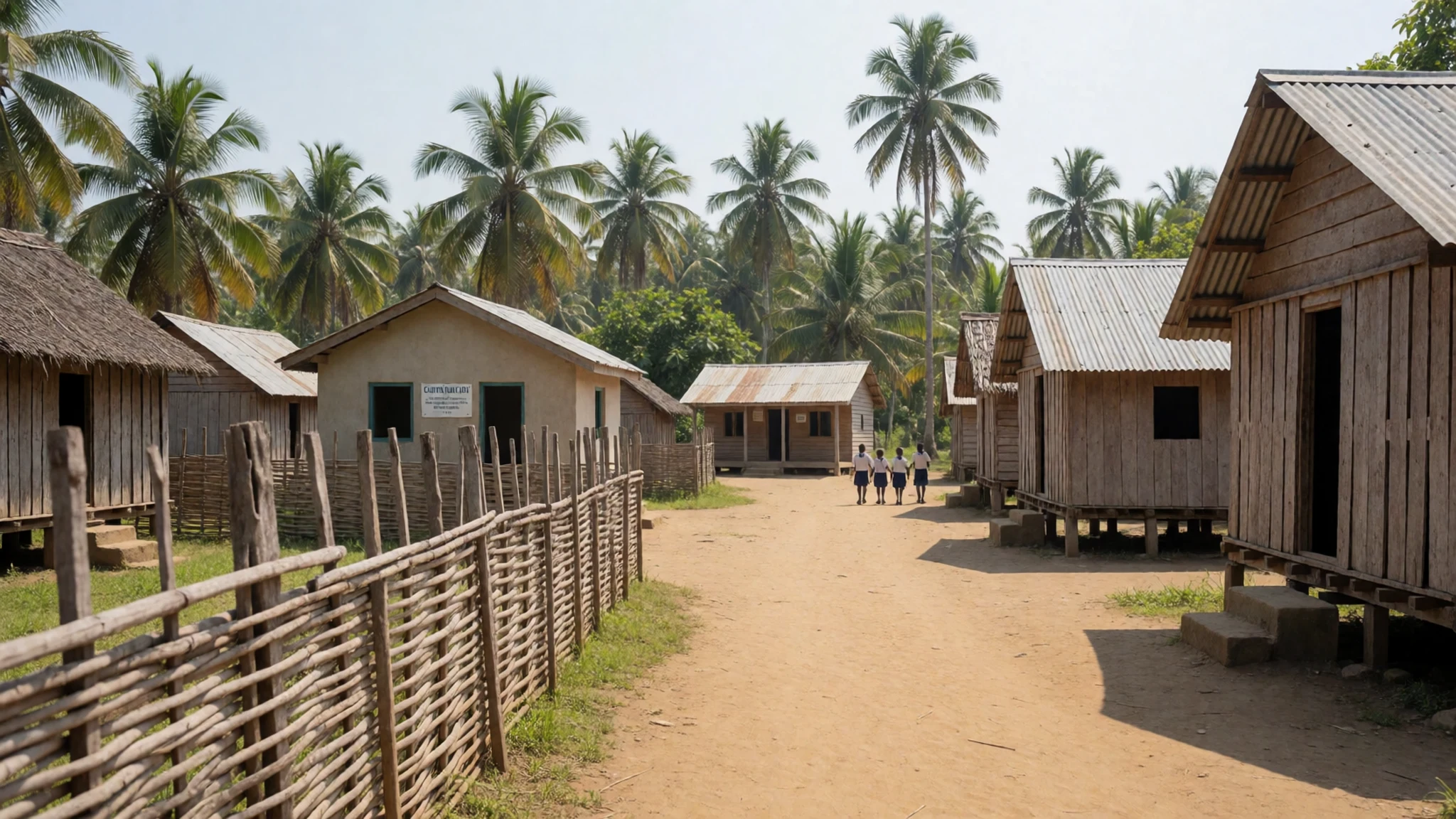
- The holiday resort by the Wayambo River — Near the Wayambo River
A holiday resort near the Wayambo River is the main visitor facility linked to the village. It gives a base for river time, birds and forest edge. Availability, access and what is offered change, so ask a Paramaribo tour operator or the resort directly before planning around it.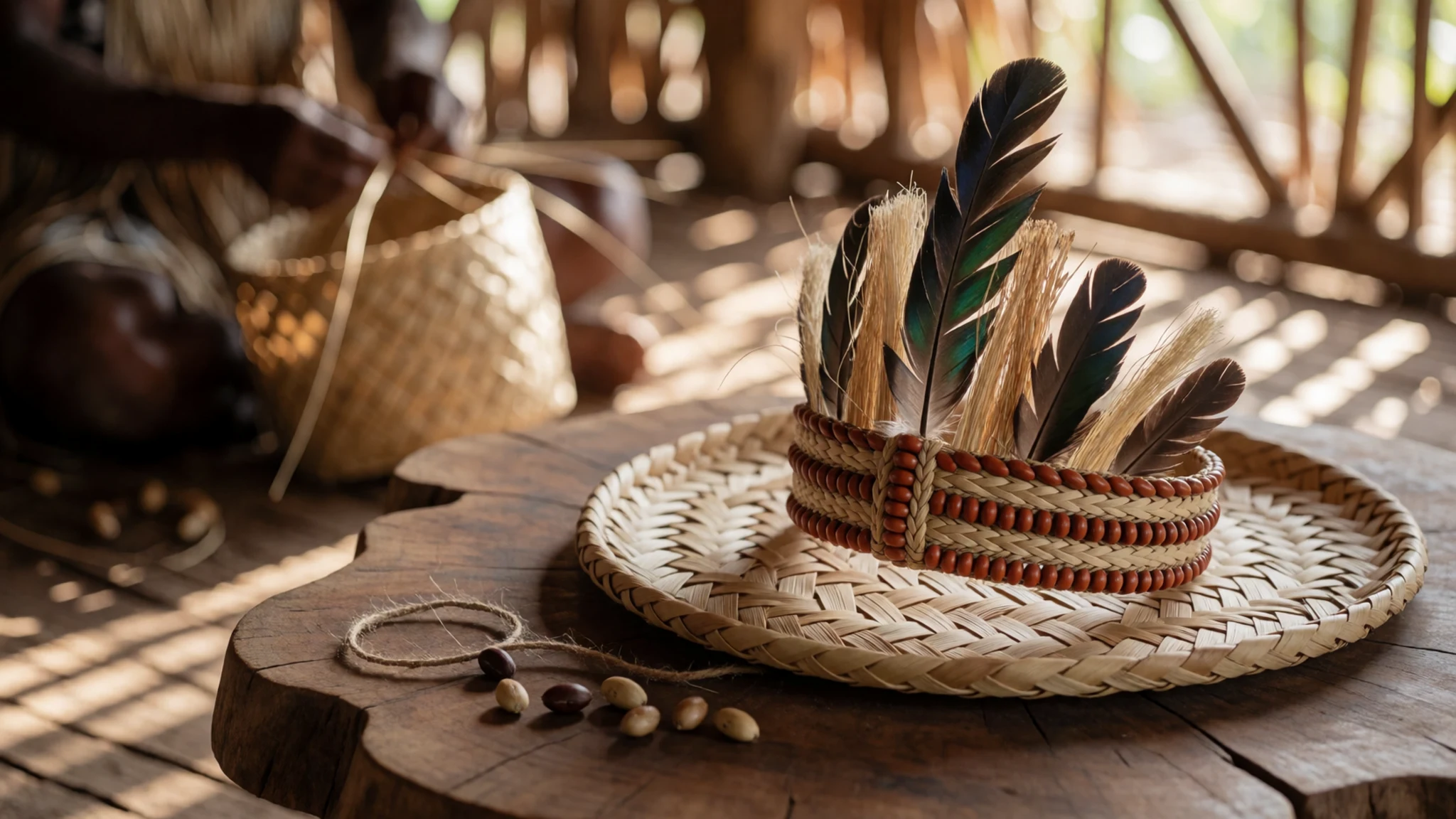
- Kali'na headdress at the Kerkelijk Museum — Kerkelijk Museum, Suriname
The Kerkelijk Museum displays a headdress made by George Ajukana, a Kali'na craftsman from Corneliskondre. It is a useful way to see local work up close before or after a river trip. Check the museum's own listing for its location and opening arrangements.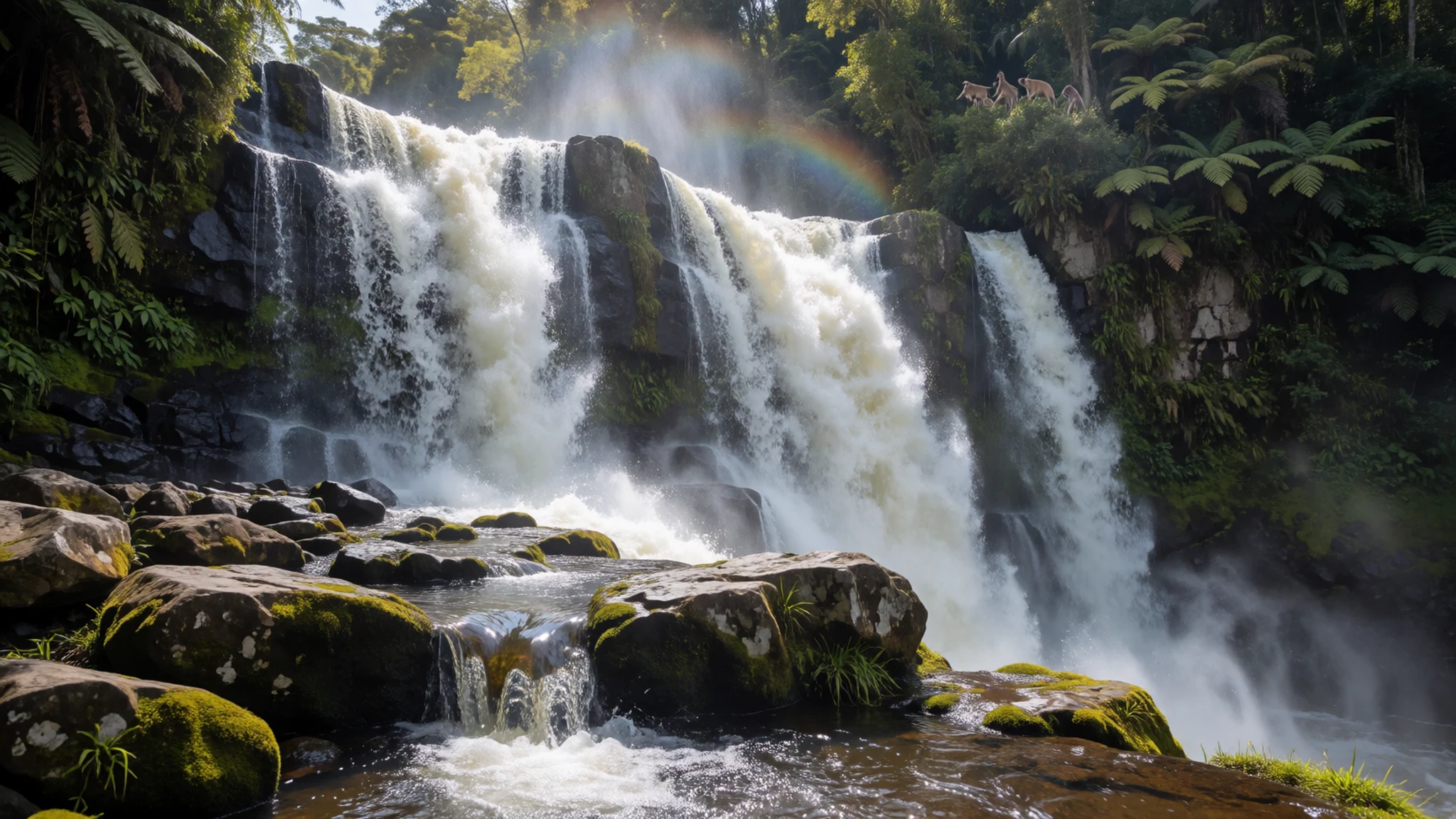
- Central Suriname Nature Reserve — Central Suriname
Travellers who come this far inland often look further afield, and the Central Suriname Nature Reserve is the best-known reserve in the country. Its Raleigh waterfalls and Voltzberg mountain are usually reached on organised trips. It is a separate journey from Corneliskondre, so plan it with an operator.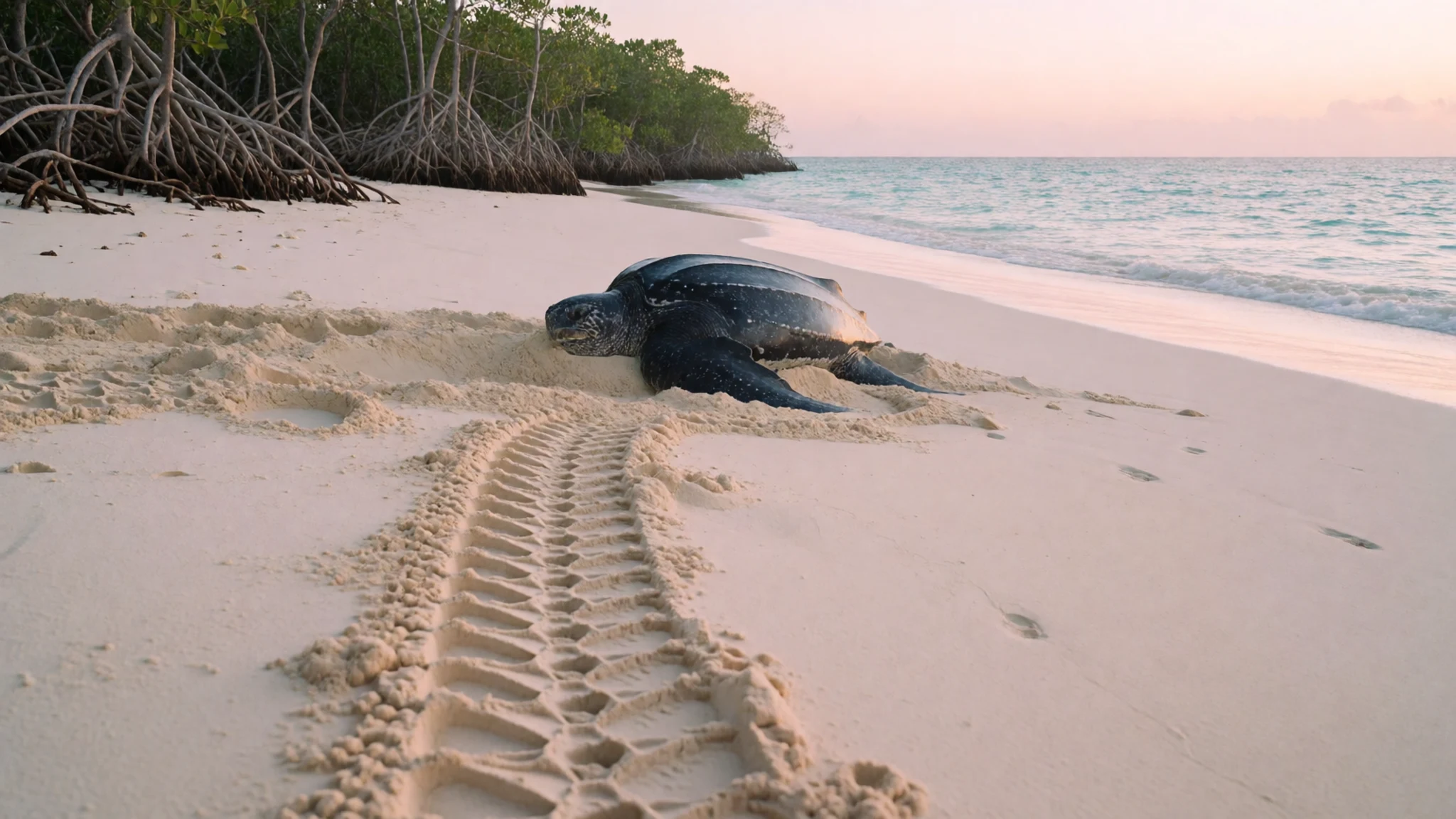
Culture
Corneliskondre is a Kali'na community, and visiting it is closer to being a guest in someone's village than visiting an attraction. The Kali'na are one of the Indigenous peoples of Suriname's interior, and the village has its own chief's tradition: it was founded by Cornelis Tapopi and still carries his name. Catholic missionaries arrived in 1883, so church life and older Indigenous practice sit side by side in many such places, and a visitor should not assume either. Archive photographs show women and children in the village, including one of cassava beer being prepared, a reminder that cassava is a staple and that food-making is communal work, not a performance. Across Suriname's interior, certain trees and spots are held to be sacred, and a local guide will normally point them out and explain what is expected. Everything here runs on relationships and on time: arrivals are best arranged in advance through someone the community knows, greetings matter, and a visit is not a right. Keep noise low, take away every piece of rubbish, and do not wander into homes or gardens uninvited. Ask permission before photographing any person, home, tree or spot your guide marks as significant, and accept a refusal without argument.
What to wear
Corneliskondre is a Kali'na village, and the community's traditional dress is best known through beadwork and headwear rather than a single garment. Kali'na makers are associated with beaded ornaments, woven plant-fibre goods and elaborate headdresses, and the headdress by George Ajukana in the Kerkelijk Museum is one example. Such pieces are generally made for ceremony and for sale or display, not for everyday wear. Day to day, people in the village most likely wear what is practical in heat and humidity: cotton T-shirts, shorts, light dresses and sandals or bare feet, with something tidier for church or school occasions. A visitor should dress for the forest and the river first. Pack light, quick-drying long sleeves and trousers against sun and insects, a wide-brimmed hat, and a thin rain jacket, because showers arrive fast. Closed shoes with good grip suit muddy landings and boat steps, and sandals that strap on are better than flip-flops. Modesty is simple and sensible: cover shoulders and knees in the village and anywhere near the church, and save swimwear for river spots where locals are comfortable with it. Bring more than one change of clothes, since nothing dries quickly in the damp, and a dry bag for phones and cameras.
What to eat
- Cassava beer — In the village, when invited by a family
An archive photograph shows cassava beer being prepared in Corneliskondre, so cassava drink and bread belong to the village's table. Taste it only if the community offers it, as a gift of hospitality. Ask your guide about how it is made and when it is served.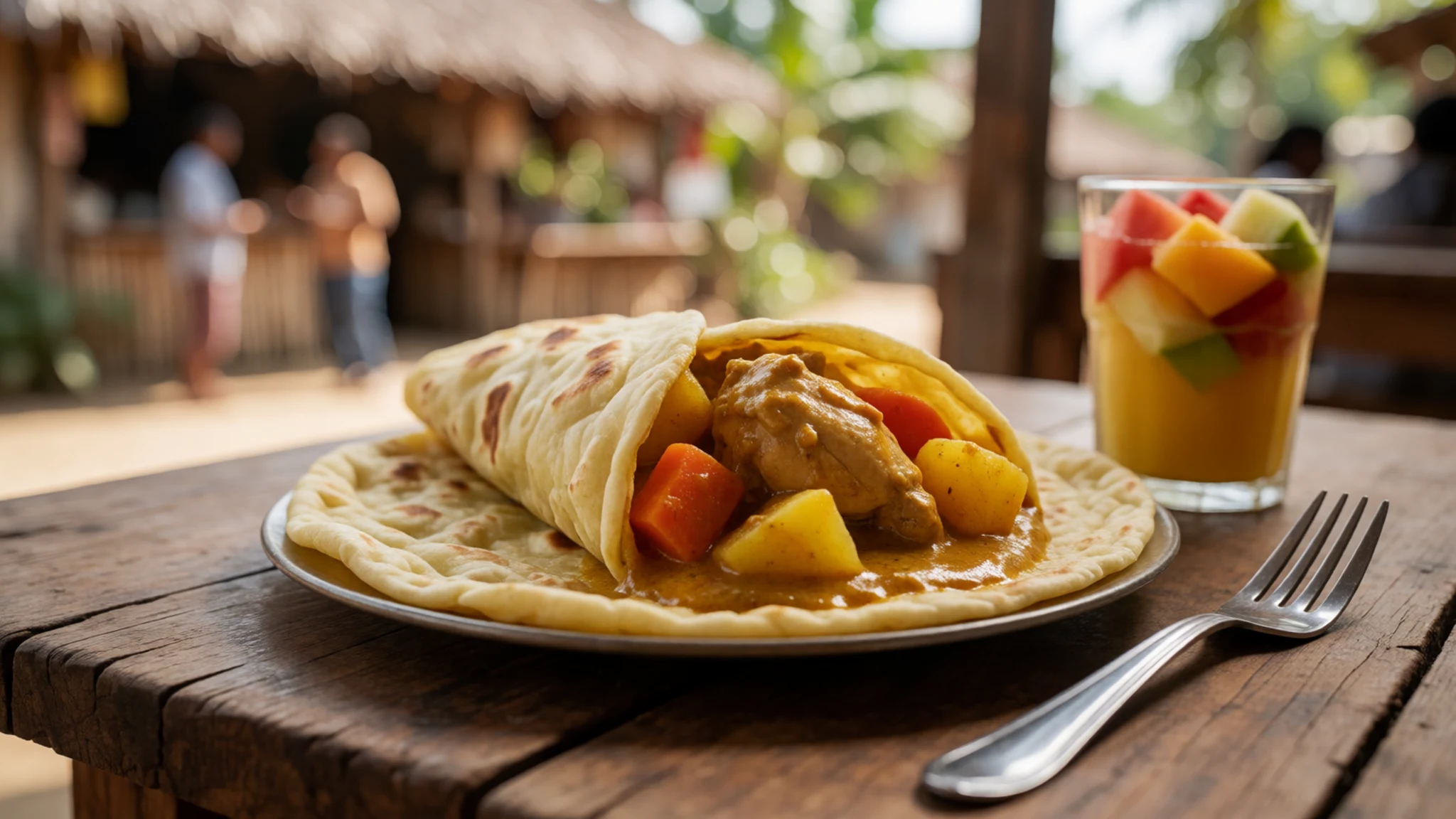
- Roti with chicken — Roti shops and eateries in Paramaribo
Suriname's Indian-descended communities gave the country its roti, usually eaten with curried chicken and potato. The Surinamese version is gentler on spice than many versions in India. It is an easy, filling meal before or after an inland trip.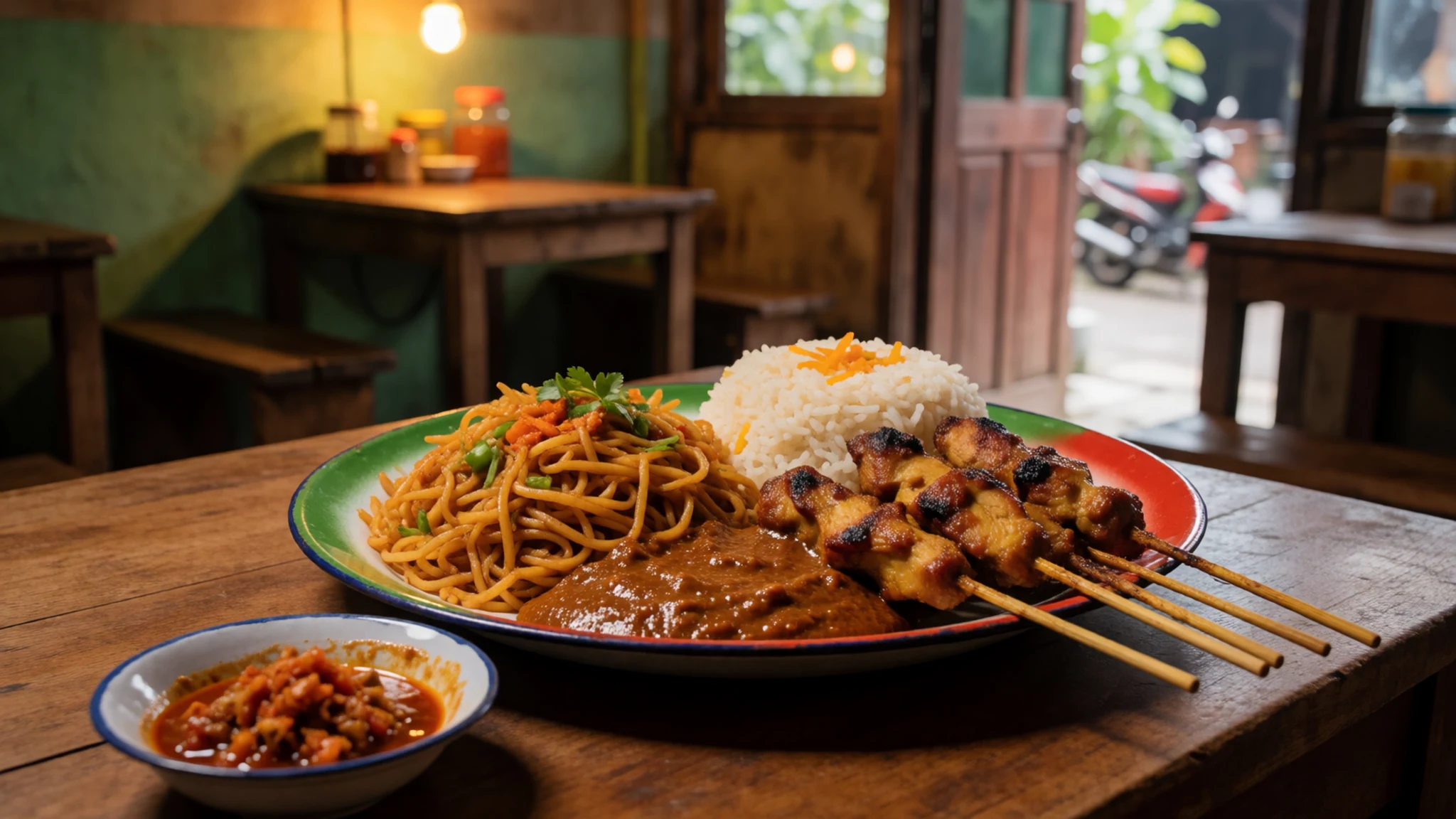
- Bami and nasi — Warungs in Lelydorp, on the road from the airport, and in Blauwgrond
Noodles and fried rice, the staples of Javanese-Surinamese cooking, are on the menu at nearly every warung. They usually come with spicy chicken or satay in peanut sauce. Javanese Surinamese food has grown into its own thing, quite different from food in Java. - Saoto — Warungs around Paramaribo and Commewijne
Saoto is a clear, savoury chicken broth with bean sprouts, egg, sliced peppers and sometimes noodles or rice. It is a favourite in the Javanese-Surinamese community and works as a light meal. Ask for the peppers on the side. - Fresh fruit juice — Markets and juice stalls in Paramaribo
Suriname has a wide range of tropical fruit juices, and they are worth drinking in the heat. Choose juice made fresh in front of you, and ask how the water was handled. Bottled water remains the safer choice for the river trip itself.
Plan it
Best time. Roughly February–March and September–October, when Suriname generally has drier spells and river travel is easier. Heavy rain months bring higher rivers and muddier landings, and the interior is hot and humid all year, so confirm conditions with your operator.
How long. 2–3
Getting there. Fly to Johan Adolf Pengel International Airport near Paramaribo. The last leg to Corneliskondre is by river on the Coppename, normally arranged through a Paramaribo tour operator or the resort, so ask for current routes and timings.
Budget. mid
Tips
- Arrange the visit in advance through a local operator or the resort; do not simply turn up
- Check visa rules with a Surinamese consulate well before travelling
- Carry cash, as cards are unlikely to work in the interior
- Bring drinking water, insect repellent, sun protection and a dry bag
- Avoid walking alone at night in Paramaribo and skip the Palm Garden after dark
Etiquette
- Ask permission before photographing people, homes, trees or spots your guide marks as significant
- Follow your guide's advice about sacred places and keep noise low
- Take all your rubbish out with you
Nearby
Sources
- Wikidata Q3316099 (CC0)
- Wikipedia: Corneliskondre (rev 1377586543) (CC BY-SA 4.0)
- Wikivoyage: Suriname (rev 5424835) (CC BY-SA 4.0)
- Willem van de Poll, Indiaans christenmeisje (252-5639) (CC0 1.0)
- Willem van de Poll, De boot Coppename bij de landingsplaats (252-5633) (CC0 1.0)
- Willem van de Poll, De Copename bij Cornelis Kondre (252-5635) (CC0 1.0)
- Willem van de Poll, Een Indiaanse vrouw poseert met haar kind (252-5637) (CC0 1.0)
- Willem van de Poll, Een vrouw en kind bij het bereiden van cassave-bier (252-5638) (CC0 1.0)
- Willem van de Poll, Indiaans christenmeisje (252-5640) (CC0 1.0)
- Ymnes, Kerkelijk Museum in Bisschopshuis 4 (CC BY-SA 4.0)
- Ymnes, Kerkelijk Museum in Bisschopshuis 5 (CC BY-SA 4.0)


Wildlife
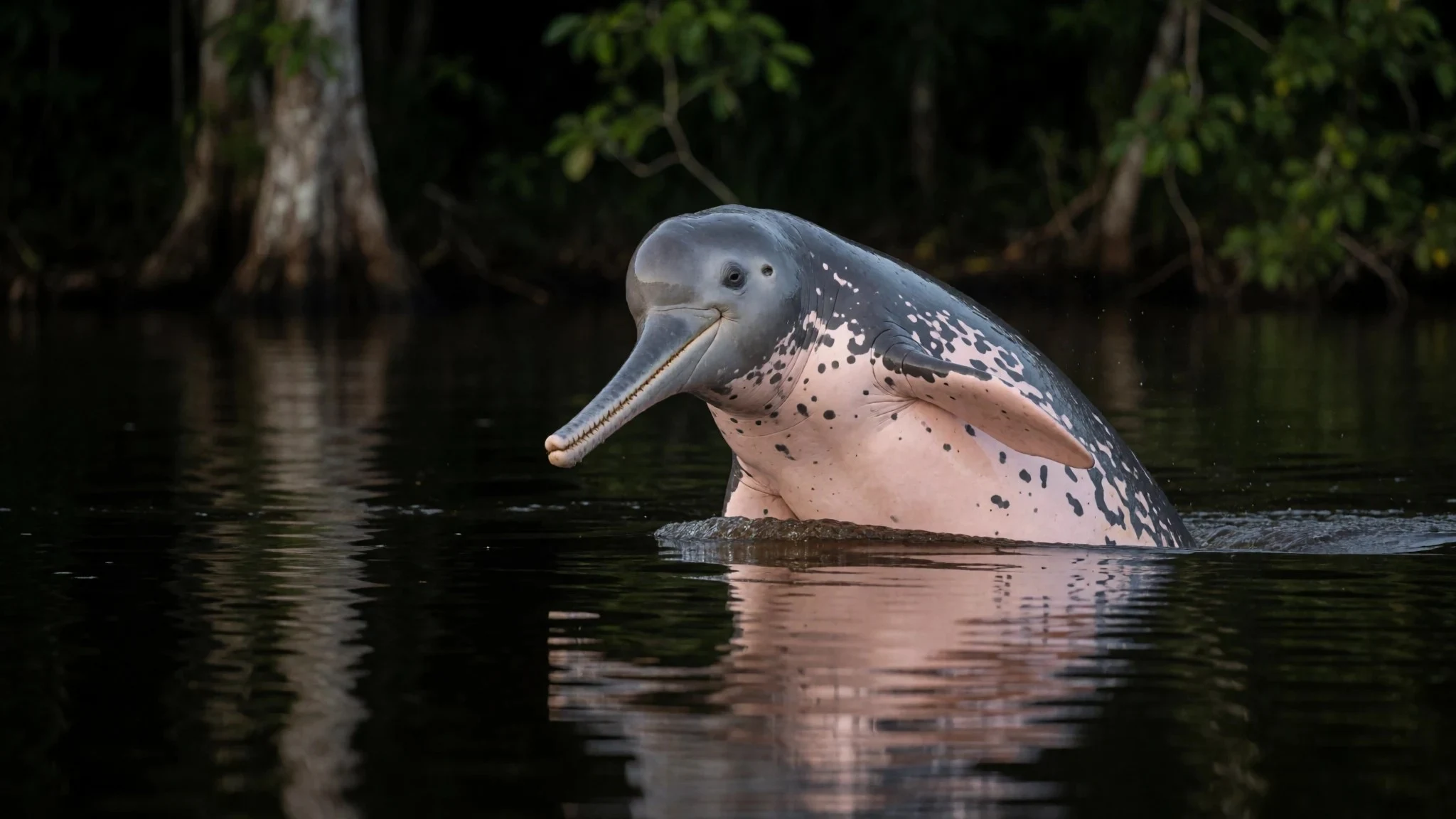
- River dolphin (animal)
The Amazon river dolphin is the pink river dolphin: a toothed whale that lives in South American rivers rather than the sea, and is also called the boto or bufeo. Corneliskondre is a fine place to look for river dolphins, alongside the many birds of the forest canopy in Sipaliwini District. No particular season or hour is promised, so ask locally. Watch from a respectful distance, keep voices low, go with a guide who knows the water, and never feed them.