Paramaribo
Paramaribo, Suriname
Paramaribo is a small, hot, riverside capital where Dutch wooden townhouses, a mosque and synagogue, and Javanese, Creole and Indian kitchens share a few streets.
The place
Paramaribo sits on the banks of the Suriname River, a short way inland from the Atlantic coast, and is the capital of Suriname. About 223,757 people live in the city, which locals nickname Foto. The land is flat and only around 3 metres above sea level, so the river and its tidal mud shape the mood of the place. The historic inner city has been a UNESCO World Heritage Site since 2002. Its core is a grid of white-painted wooden buildings with shutters and steep roofs, arranged around Independence Square and the Palmentuin. The Waterkant, the riverfront street, is where market stalls, boat traffic and old trading houses meet. Beyond the centre the city spreads into residential districts where Javanese, Hindustani, Creole, Chinese and Maroon communities live side by side, which is why one day's meals can run from roti to Javanese noodles to Chinese seafood. The climate is equatorial: warm all year, with rain in every month. September to November is the driest stretch, while April to July brings the heaviest downpours. Afternoons are sticky, shade matters, and a short shower is part of the routine rather than a disaster. Paramaribo is compact enough to cover on foot in the cooler morning hours, with taxis for the rest. It feels like a Caribbean-facing town on the South American mainland, and its pace is unhurried.
Its story
Paramaribo takes its name, most likely, from Parmurbo, an Indigenous village that stood on this stretch of the river when Europeans first arrived. The first Dutch trading post went up there in 1613, run by two merchants, and French and English traders made their own attempts nearby in the following decades. Those early outposts faded away. In the middle of the seventeenth century, English settlers sent from Barbados built a fortified town, named after the governor who backed them, Lord Willoughby, and the English crown later granted him the colony. Paramaribo grew until it overtook the older settlement of Torarica. In 1667, during the Second Anglo-Dutch War, a Dutch fleet under Abraham Crijnssen took the town, and the Treaty of Breda that year confirmed Suriname as a Dutch colony. The fort was renamed Fort Zeelandia after the province that had paid for the fleet. For generations the town ran on plantation produce, and that economy rested on the forced labour of enslaved Africans. Later waves of contract workers from Java, India and China changed the city's makeup, which is why its food, faiths and festivals are so varied. Fires swept through the wooden town more than once, and the rebuilt streets are the ones visitors walk today.
What to see
- Historic inner city — City centre
The historic inner city is the reason most people come to Paramaribo. Wooden buildings from the colonial era line narrow streets, some painted white with green shutters, others leaning slightly with age. It is best explored on foot early in the day, before the heat builds, with stops in the shade of the Palmentuin and along the Waterkant.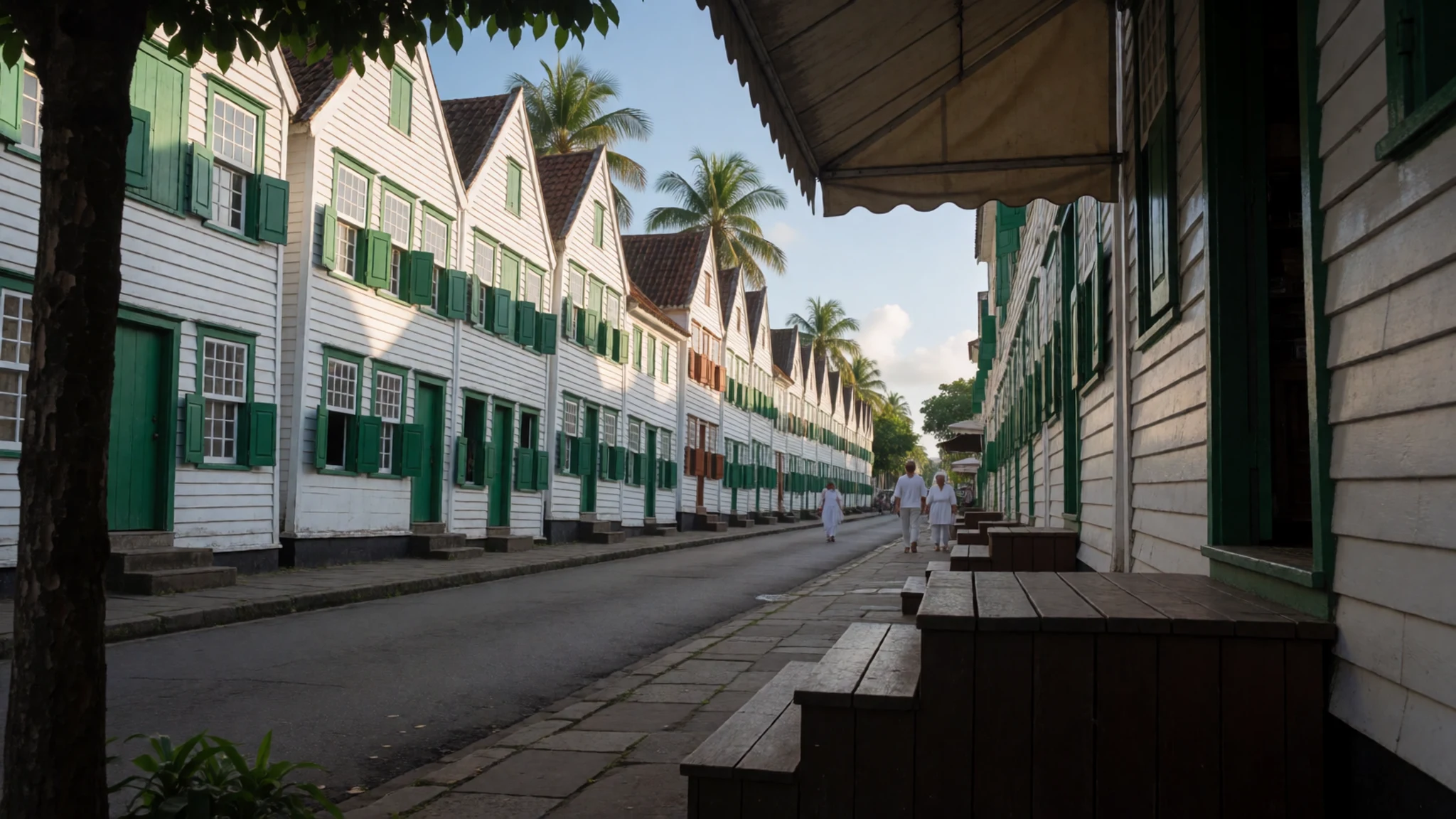
- Fort Zeelandia — Riverfront, city centre
Fort Zeelandia is a brick fort beside the river, built up from earlier wooden works first laid out by traders from several nations. Its walls and bastions are the easiest way to read the colony's layered history in one spot. Check what is open on the day, as museum access can vary.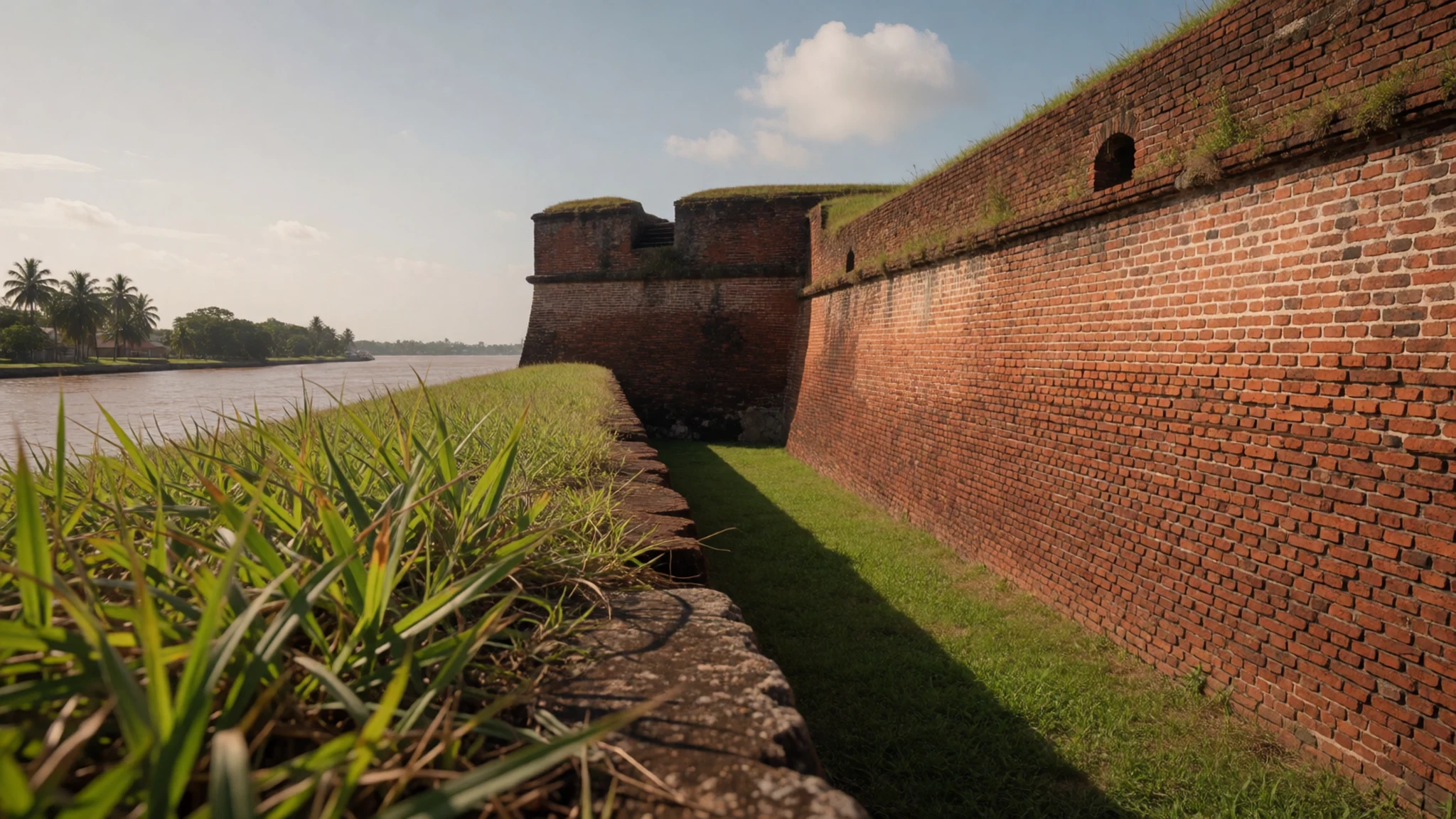
- Independence Square and Presidential Palace — City centre
Independence Square is the civic heart of Paramaribo, with the Presidential Palace, the Court of Justice and the Parliament facing onto its lawns. It also hosts festivals and public events. Photograph the exteriors from a respectful distance and follow any guard's instructions, as these are working government buildings.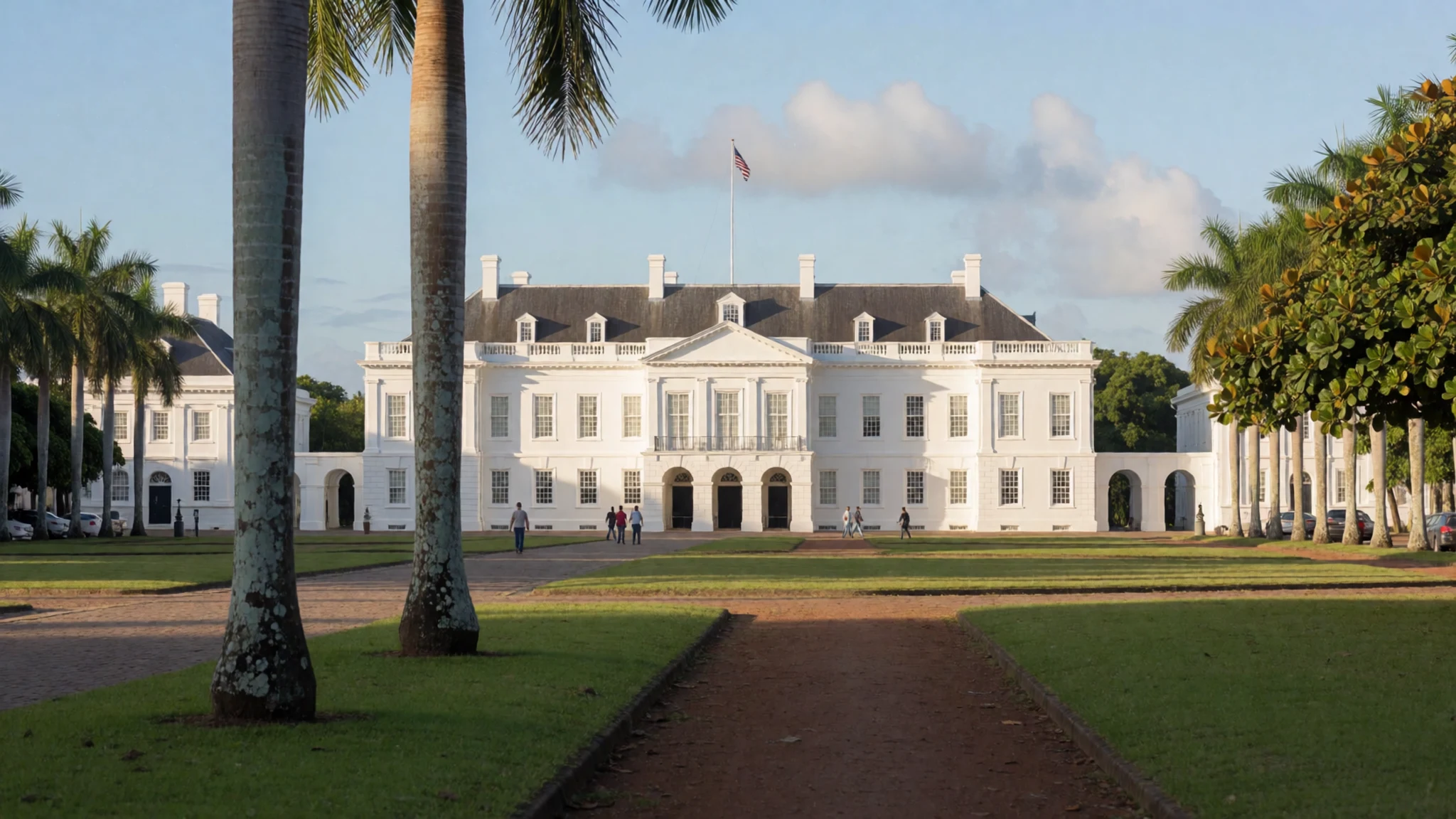
- Palmentuin (Palm Garden) — Behind the Presidential Palace
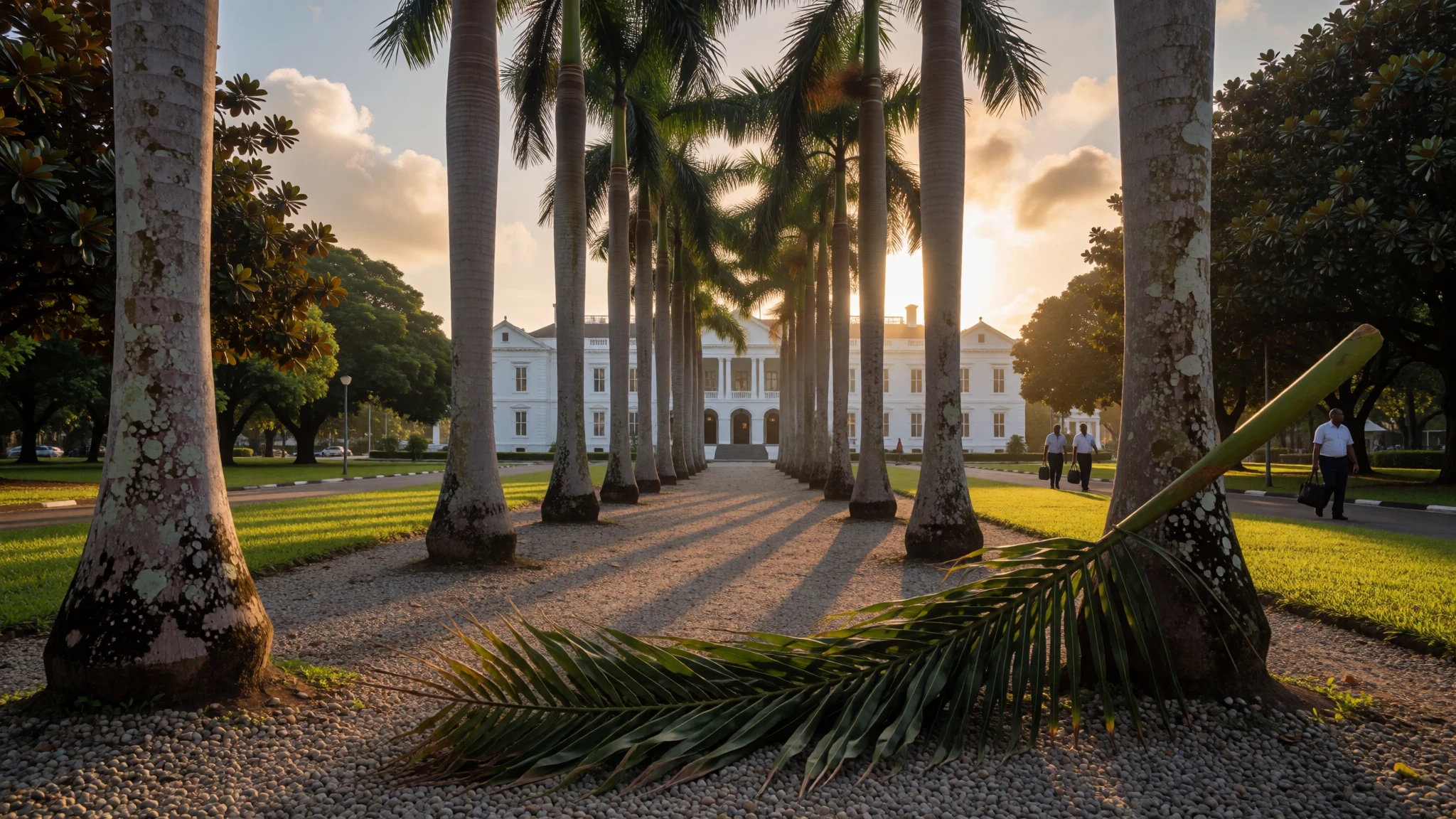
The Palmentuin is a small park of tall king palms behind the Presidential Palace. It was part of the original town plan drawn up for the first Dutch governor, Cornelis van Aerssen van Sommelsdijck. Families, joggers and office workers use it, and it is the easiest place in the centre to sit in shade and watch the city.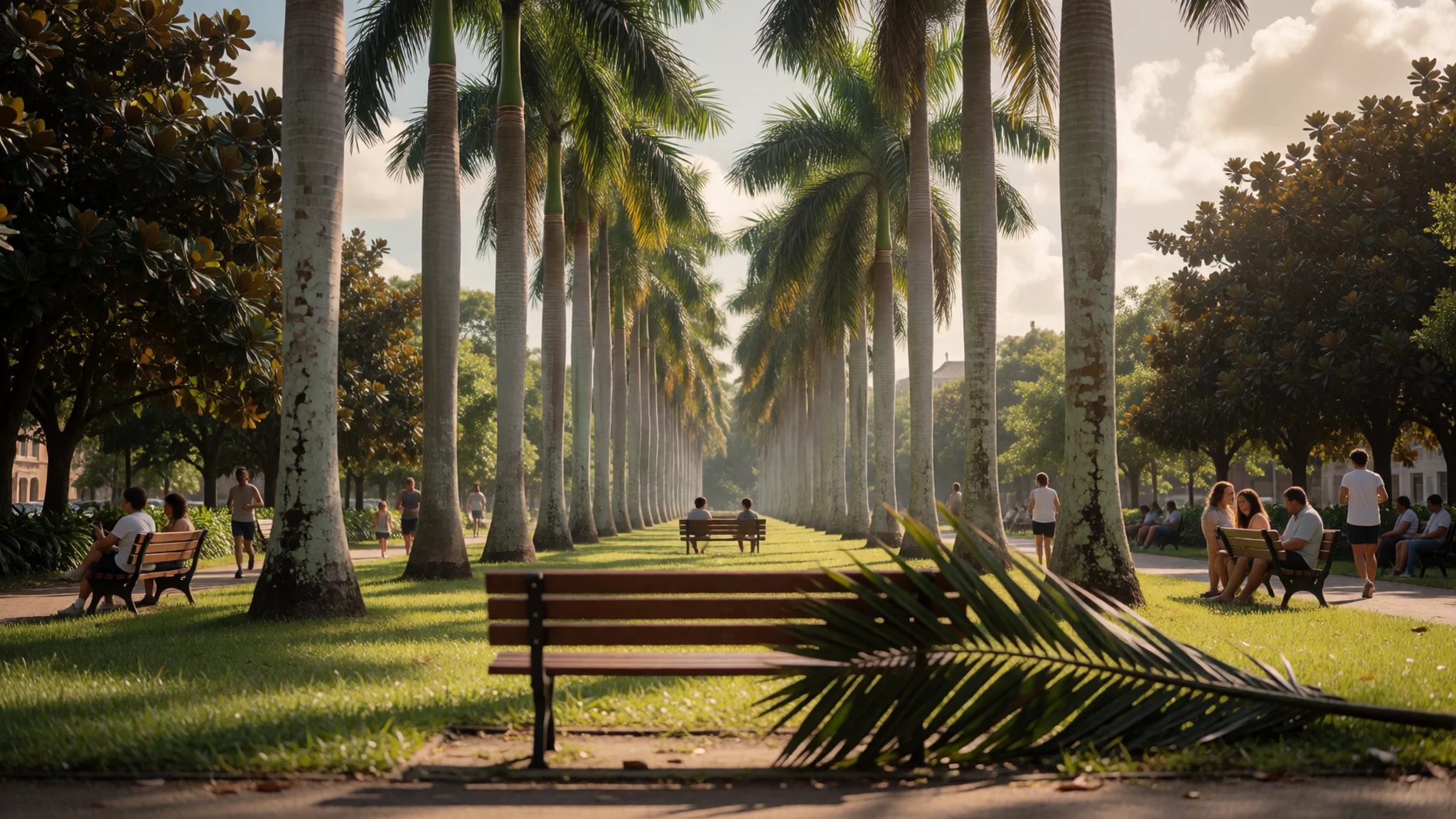
- The Waterkant — Riverfront
The Waterkant is the riverside street where Paramaribo meets the Suriname River. Small stalls sell inexpensive snacks, and the old trading houses behind them show how the port once worked. Mornings are the liveliest time for a stroll, and the river breeze helps. Keep valuables out of sight in the crowd.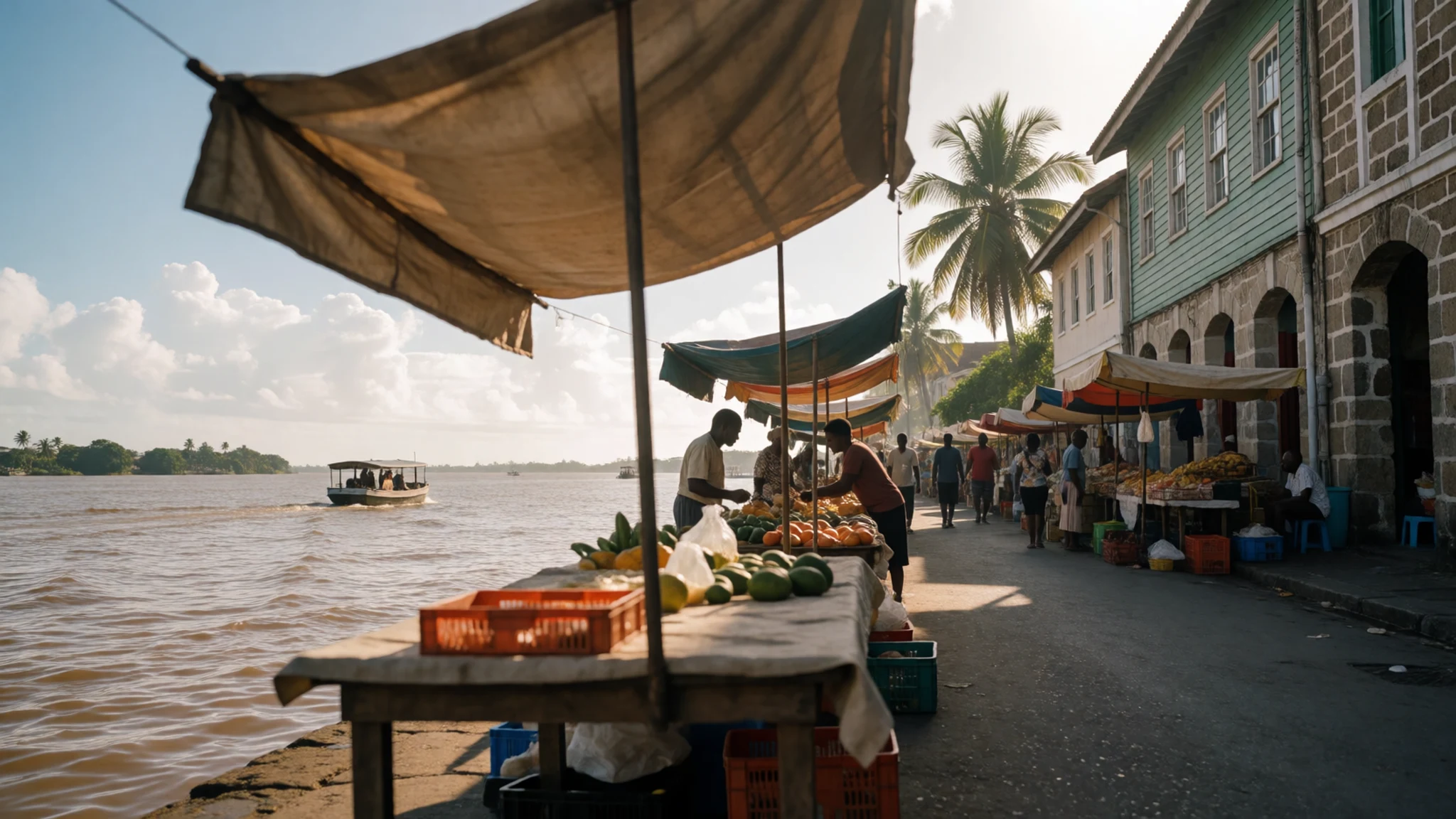
Culture
Paramaribo's culture is the result of several communities sharing one small city. Dutch is the official language, but Sranan Tongo, a Creole language, is what people use in the street and the market, and Javanese, Hindi and Chinese are heard at home. Places of worship reflect the same mix: churches, mosques, Hindu temples and a synagogue all stand in the city, with a mosque and synagogue famously close together in the centre. Festivals follow each group's calendar, from the lights of Divali and the colour of Phagwa to Javanese celebrations and Chinese New Year. Keti Koti, the day that marks the end of slavery, is observed with both remembrance and celebration. Music ranges from kaseko, a Creole dance style built on drums and brass, to Indian film songs and Dutch pop. Dutch influence also shows in everyday habits such as bread rolls, bicycles and coffee, while the Surinamese habit of sharing a table and talking is easy to join. Conversation is warm and unhurried, and a greeting before any request goes a long way. Ask permission before photographing people at markets or religious events, and remove your shoes and cover your shoulders and knees before entering a mosque or Hindu temple.
What to wear
Traditional dress in Paramaribo follows the city's communities. Creole women wear the kotomisi, a full, layered dress in bright cotton, with an angisa, a folded headscarf, and it appears at Keti Koti and on formal occasions. Javanese families wear batik, wax-resist cotton or silk, in sarongs and kebaya blouses for weddings and celebrations. Hindustani communities wear saris, salwar kameez and kurtas at festivals and weddings. Day to day, people dress casually and neatly: light cotton shirts, dresses, jeans or shorts, and sandals or trainers. Offices lean smart-casual, and many people dress up for an evening out. Visitors should pack breathable cotton or linen, a hat and sunscreen for the strong equatorial sun, and a light rain jacket or compact umbrella for the showers that can arrive in any month. Closed shoes with good grip help on wet pavements, and sandals suit the rest of the time. For mosques and temples, carry a scarf or light shawl and wear trousers or a long skirt. Beachwear belongs at the beach or pool, not in the old centre.
What to eat
- Chicken roti — East Indian roti shops in the city centre
Chicken roti is a soft flatbread served with curried chicken, potato and beans, often with a side of vegetables. It reflects the Hindustani community and makes a staple lunch. Ask for pepper sauce on the side, as the local peppers can be fiery.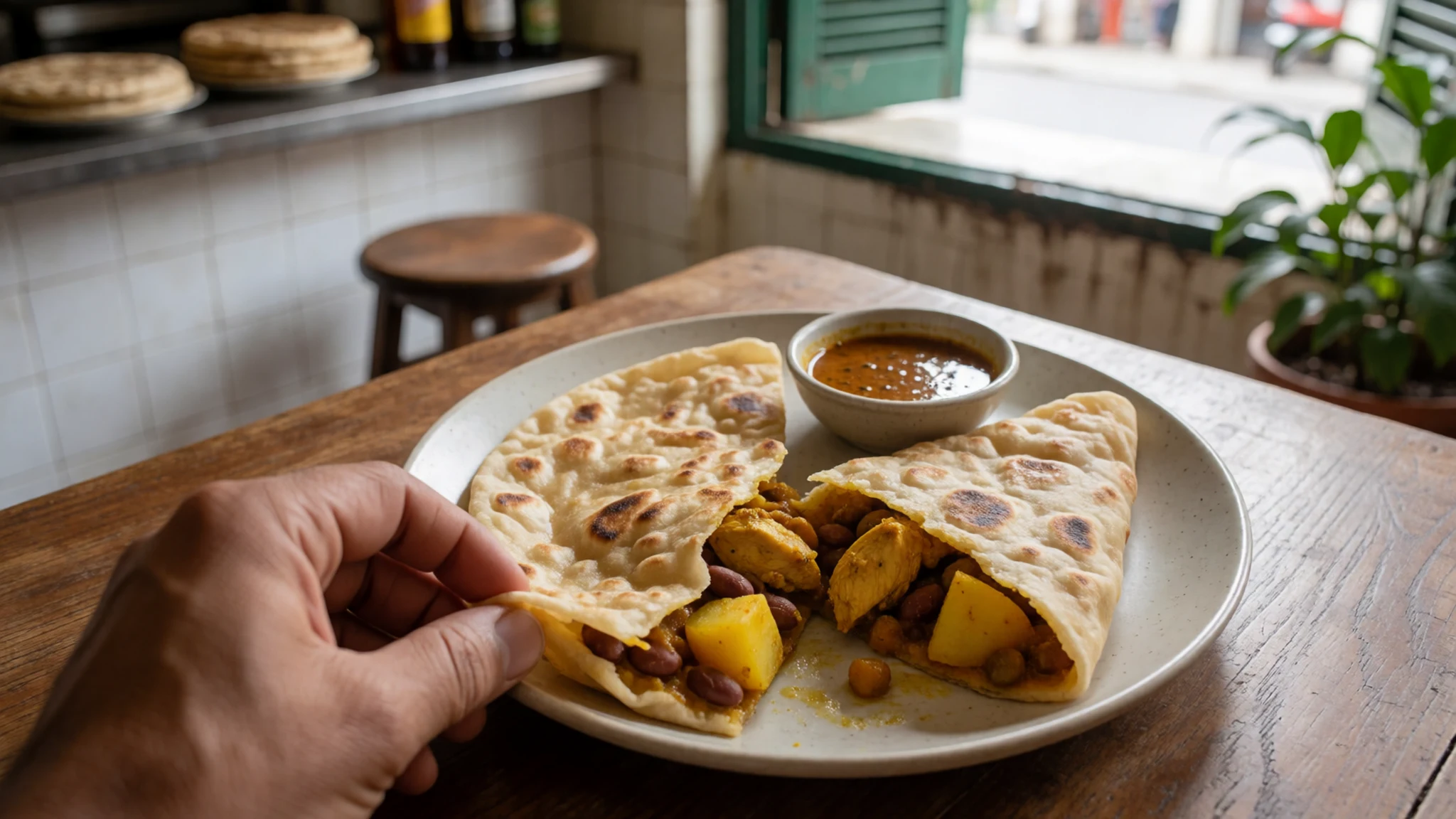
- Pom — Creole eateries and family-run places, especially around festivals
Pom is a Creole baked dish of grated root vegetable, usually pomtajer, layered with chicken and citrus, and served at celebrations. Its sweet-sour flavour is distinctive. It is rich and filling, so share a portion if you are not very hungry.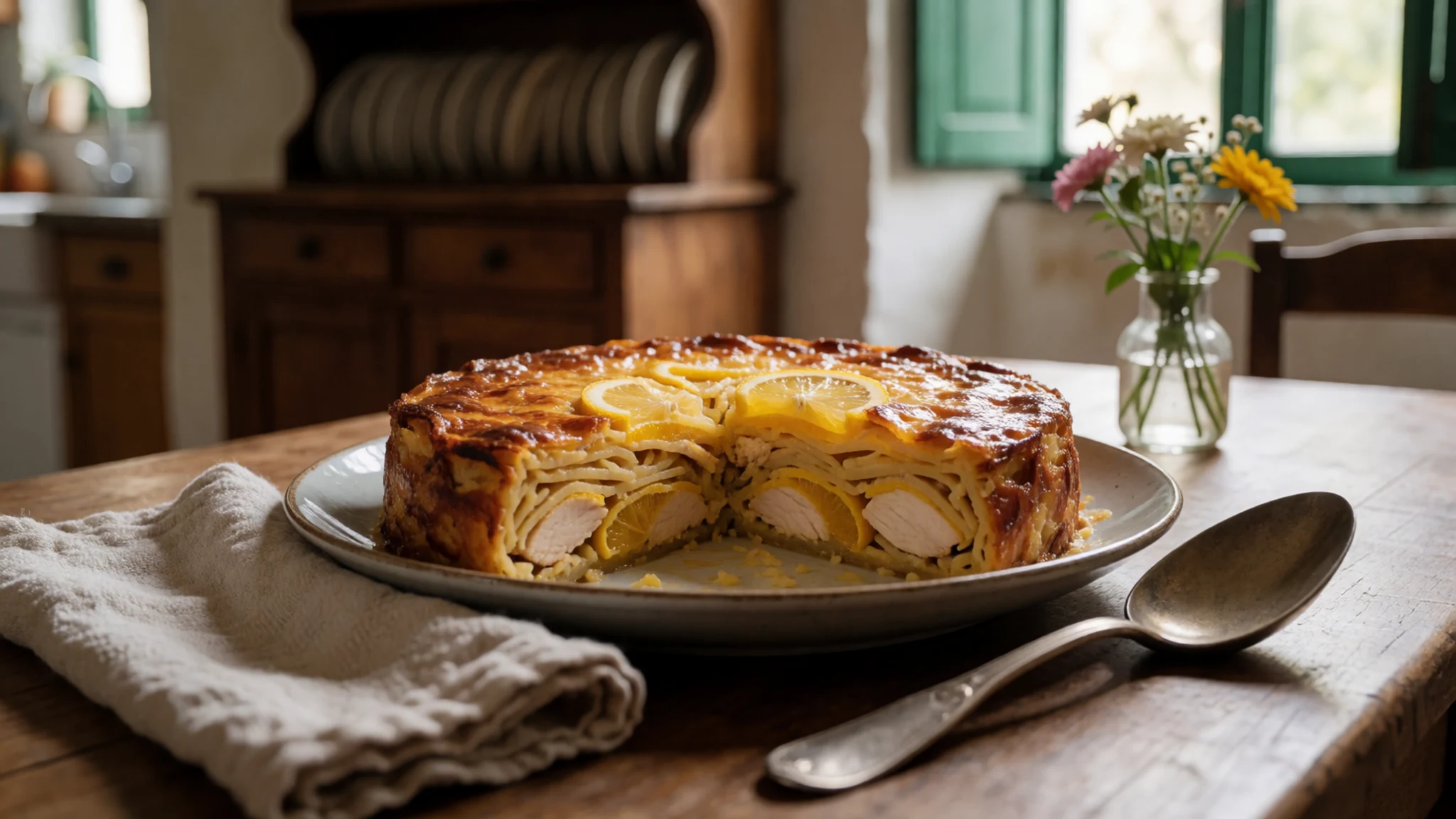
- Bami and nasi goreng — Javanese warungs, notably in Blauwgrond
Bami and nasi goreng are Javanese-style noodles and fried rice, usually topped with egg, chicken or satay. They are cheap, filling and easy to find. For the fullest Javanese range, travel out to the Blauwgrond area. - Saoto soup — Javanese warungs and market food stalls
Saoto soup is a Javanese chicken broth with noodles, bean sprouts, egg and potato sticks, finished with a squeeze of lime. It makes a light meal in the heat and works well as a late breakfast or lunch. - Chinese seafood — Chinese restaurants around the city centre
Chinese seafood dishes, such as king crab or steamed fish, show the city's Chinese influence. Portions are generous and usually meant for sharing, so order a few dishes between a group. Ask staff what is freshest that day.
Plan it
Best time. September to November is the driest stretch, which makes it the easiest time for walking the old centre, while April to July brings the heaviest rain. Temperatures stay warm all year, so heat is a factor in any month.
How long. 2–3
Getting there. Johan Adolf Pengel International Airport, near Zanderij, is the main airport, and a bus or taxi covers the last leg into the city in about an hour. Direct flights run from Amsterdam, with connections via Miami, New York, Trinidad and Georgetown. Check airlines for current schedules.
Budget. mid
Tips
- Walk the historic centre in the morning, before the heat and the afternoon showers
- Carry some cash for market stalls and small eateries, and check card acceptance elsewhere
- Drink bottled or filtered water, and carry sunscreen and insect repellent
- Check entry and tourist card rules well before you travel, and see https://www.paramaribo.com/ for events and current details
- Use taxis for evenings and longer distances, and keep valuables out of sight
Etiquette
- Ask before photographing people, especially at markets and religious events
- Cover shoulders and knees and remove shoes at mosques and Hindu temples
- Greet people before asking for help or directions
Nearby
Sources
- Wikidata Q3001 (CC0)
- Wikipedia: Paramaribo (CC BY-SA 4.0)
- Wikivoyage: Paramaribo (CC BY-SA 4.0)
- Photo: The waterkant of Paramaribo from the Suriname River (Rafaeljantz) (CC BY-SA 4.0)
- Photo: Paramaribo city collage (LLs) (CC BY-SA 4.0)
- Photo: Vente d'esclaves au Suriname en 1831 (Pierre Jacques Benoit) (Public domain)
- Photo: Kaart van Paramaribo (Hendrik de Leth, Alexander de Lavaux) (Public domain)
- Photo: Platte grond van de stad Paramaribo (1821) (Veldkamp) (Public domain)
- Photo: Plan von Paramaribo (Public domain)
- Photo: Map of Paramaribo 1920 (Frederik Eduard Spirlet) (Public domain)
- Photo: De Surinaamsche Bank, Henck Arronstraat (Sharmil2672) (CC BY-SA 4.0)


