Palumeu
Palumeu, Suriname
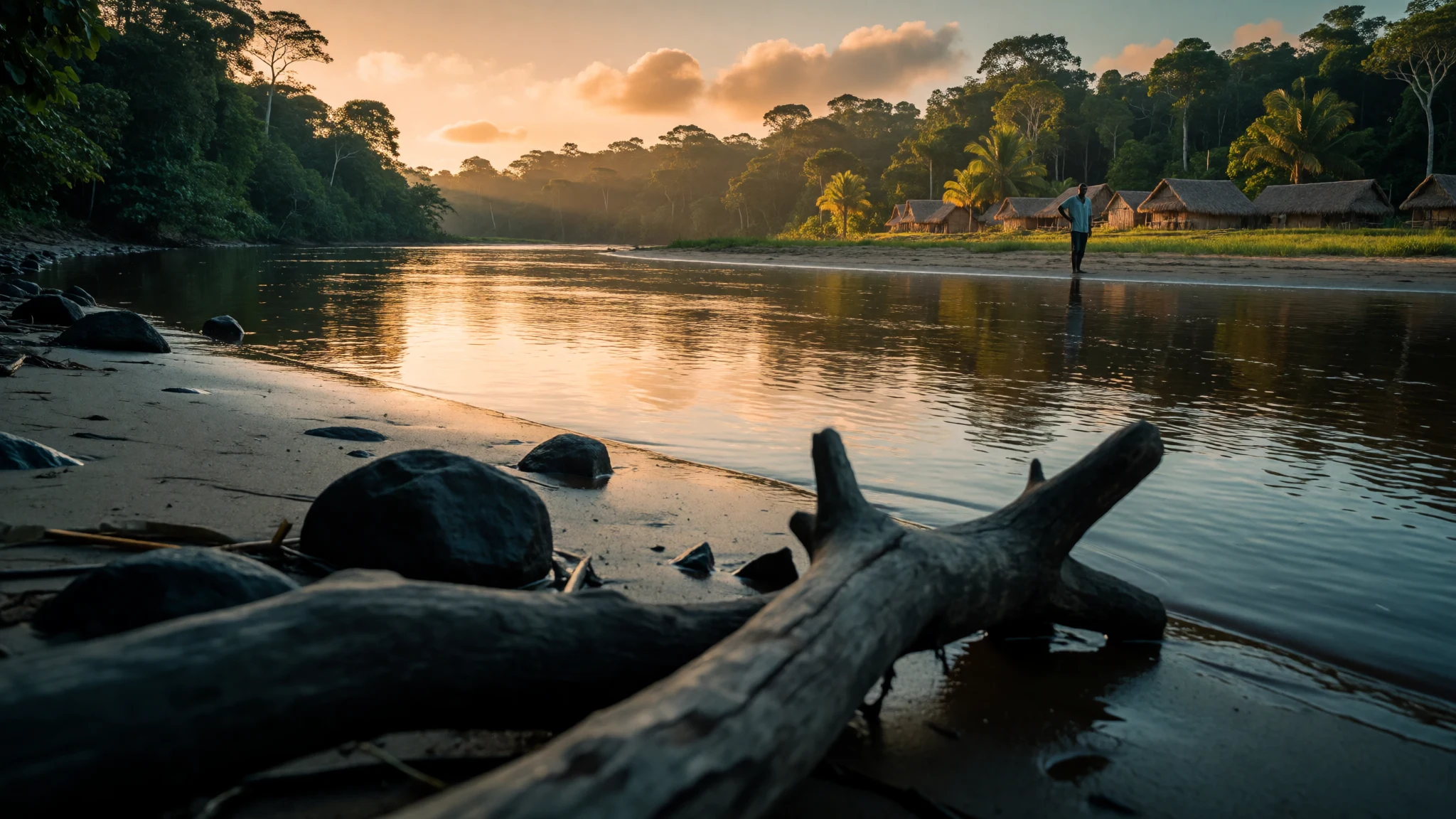
Palumeu is a rain-forest river in southern Suriname where travel still means canoes, forest paths and village hospitality rather than roads.
The place
Palumeu is a river in the Sipaliwini District of Suriname, deep in the south of the country, and also the name of the village where it runs into the Tapanahony River. There are no roads here in any sense a visitor would recognise. Rain forest closes in on both banks, the water is the main route between settlements, and the nearest town of any size is a long way off by air and longer still by boat. The village sits in a clearing, with an airstrip, thatched roofs and canoes pulled up on the bank.
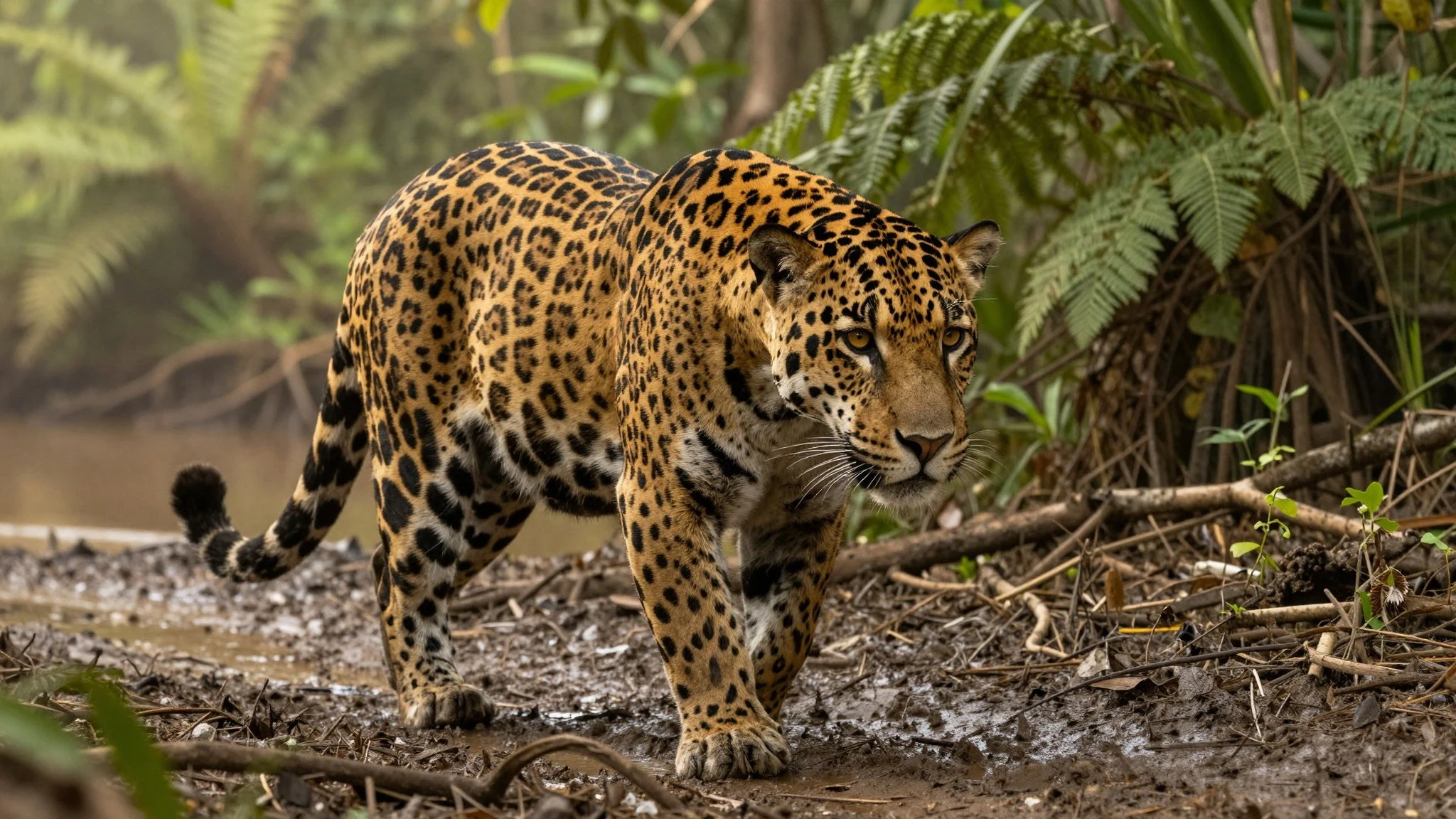
Suriname sets aside a large share of its land as reserves, and the interior is where that shows most. Monkeys, birds, reptiles and the occasional jaguar live in forest that has changed little. People come to Palumeu for the quiet, for travel by river and for time with the Indigenous and Maroon communities who live along these waters.
It is not a quick or casual trip. Humidity is constant, the sun is fierce in clearings, insects are part of the day, and everything moves at the pace of a paddle or an outboard motor. Mobile signal is patchy or absent. Lodging is simple, meals are set, and the guide decides what is sensible on a given day, depending on water levels and weather. The reward is a stretch of tropical river that still works the way rivers did before roads arrived, with long hours of birdsong and very little else.
Its story
The story of Palumeu is tied to the story of Suriname. Dutch settlers from Zeeland colonised the coast, and British periods of rule did not finally end until 1816. The colony ran on sugar, coffee and cocoa plantations, worked by enslaved Africans, many of whom died under the regime. Some people escaped inland, and the Maroon communities of the interior descend from those who made new lives along the rivers. The Indigenous peoples of the forest had been there far longer.
Slavery ended in 1863. Contract labourers were then brought from British India and from Java, and many stayed on, which is why Suriname today is one of the most mixed countries anywhere, with its food, languages and festivals shaped by all of them. Independence from the Netherlands came in 1975, followed by years of military rule, a return to elections, another coup and a democratic government again.
The far south stayed remote through all of this. The Palumeu River appears in the record mainly through a Dutch scientific expedition up the Tapanahony in 1904. Its photographer, Gerard Martinus Versteeg, recorded the source of the river, the rapids, side creeks and the expedition's camps, and those images, now in the public domain, show forest and water that a traveller today would still recognise.
What to see
- The village and the Tapanahony confluence — Palumeu village
The village of Palumeu stands where the river meets the Tapanahony. Spend a first evening on the bank watching canoes come and go. Versteeg photographed this stretch of water long ago, and the broad, slow meeting of two rivers is still the clearest way to understand how the area is laid out.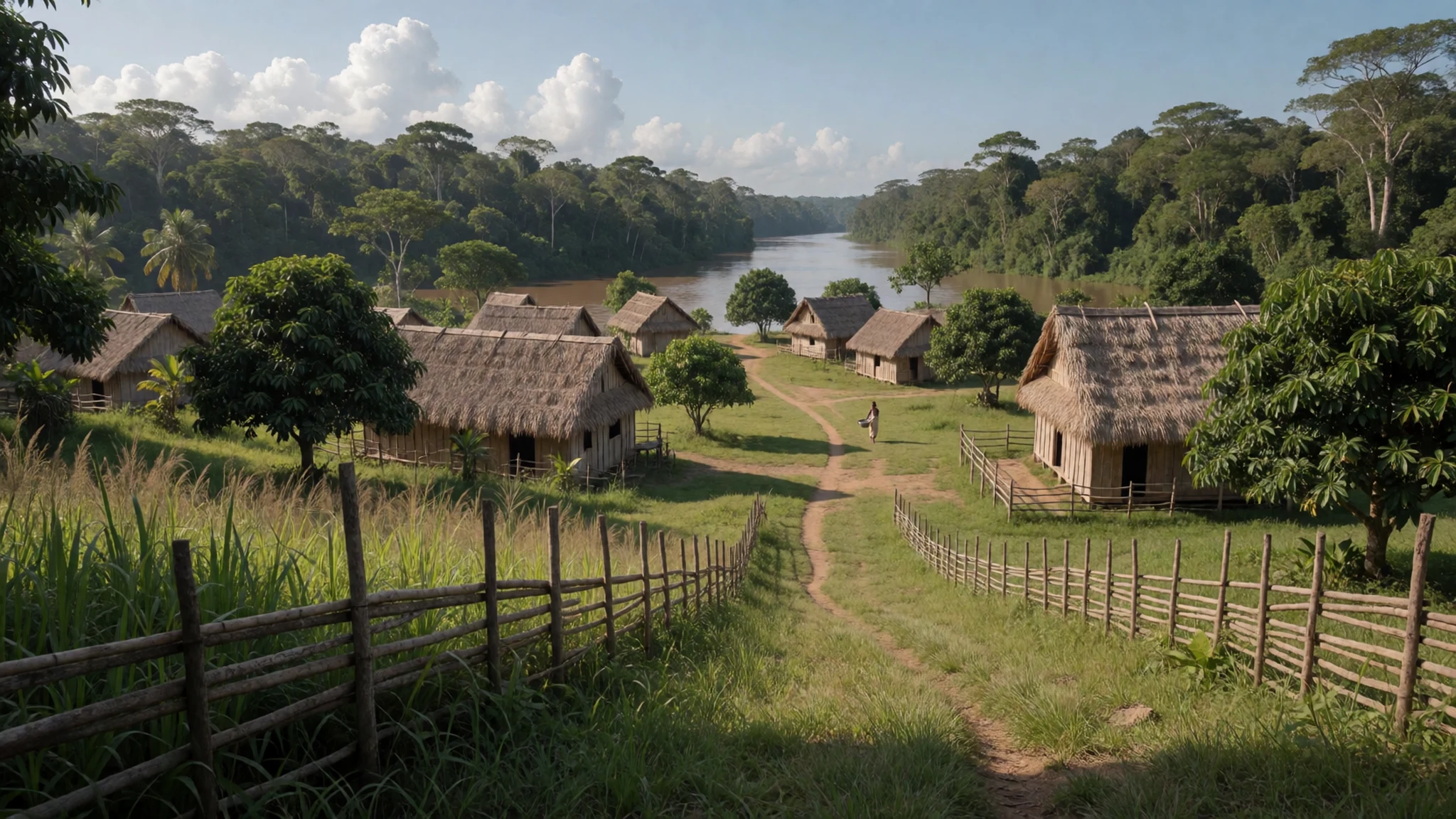
- Papadron Falls — Palumeu River, upstream of the village
Papadron is a rapid on the Palumeu River where the water breaks over rock and the expedition photographers once camped. Boats have to be handled carefully here, and the forest edge by the falls is a good place for birds. Water levels change the whole character of it, so ask your guide.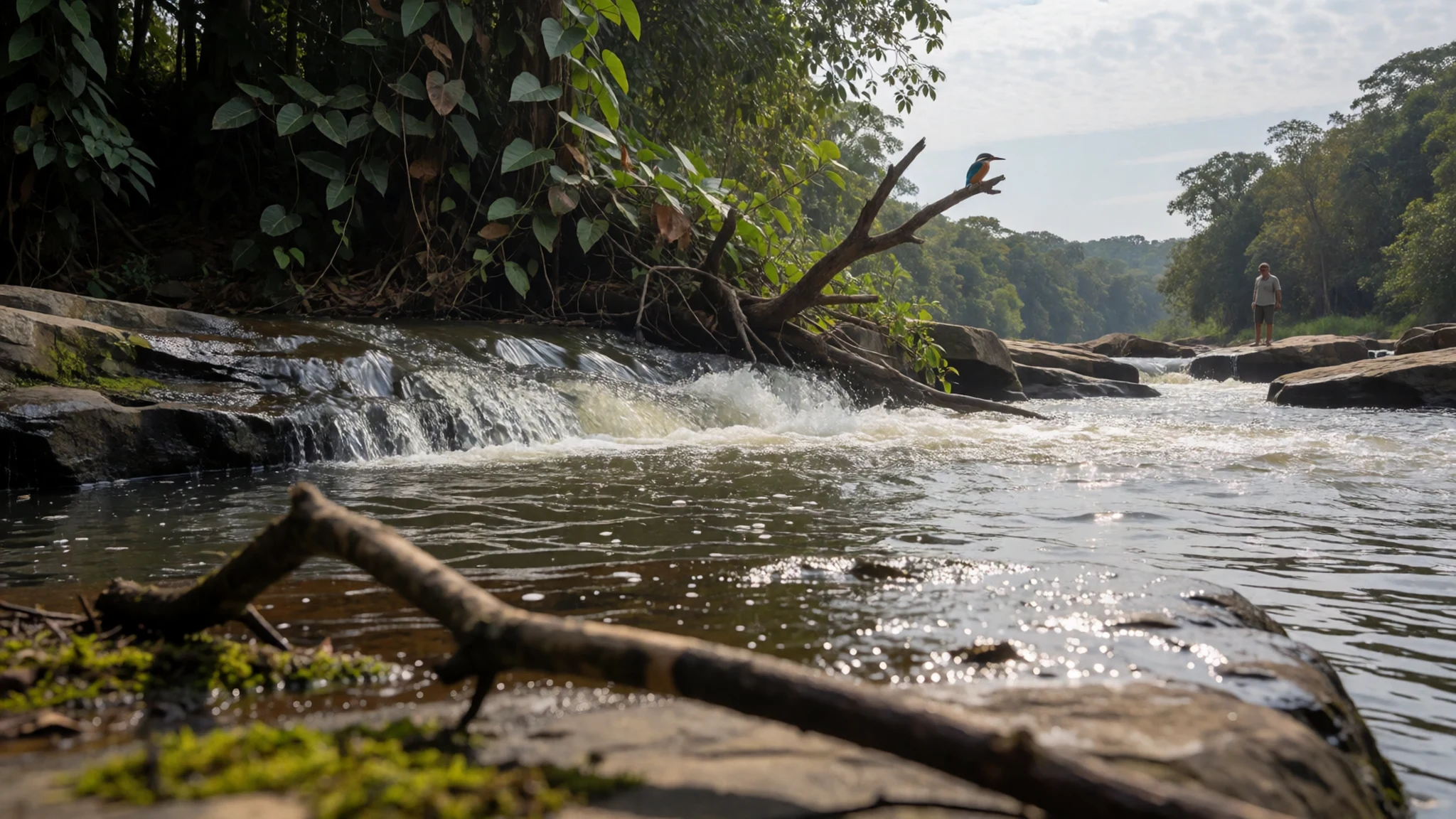
- The river source — Upper Palumeu River
A day trip upriver, if the water allows, leads towards the headwaters, where the river narrows into a shaded channel under overhanging trees. The old photographs of the source show how little the scene has altered. It is slow, hot going, best undertaken early with a guide who knows the channels.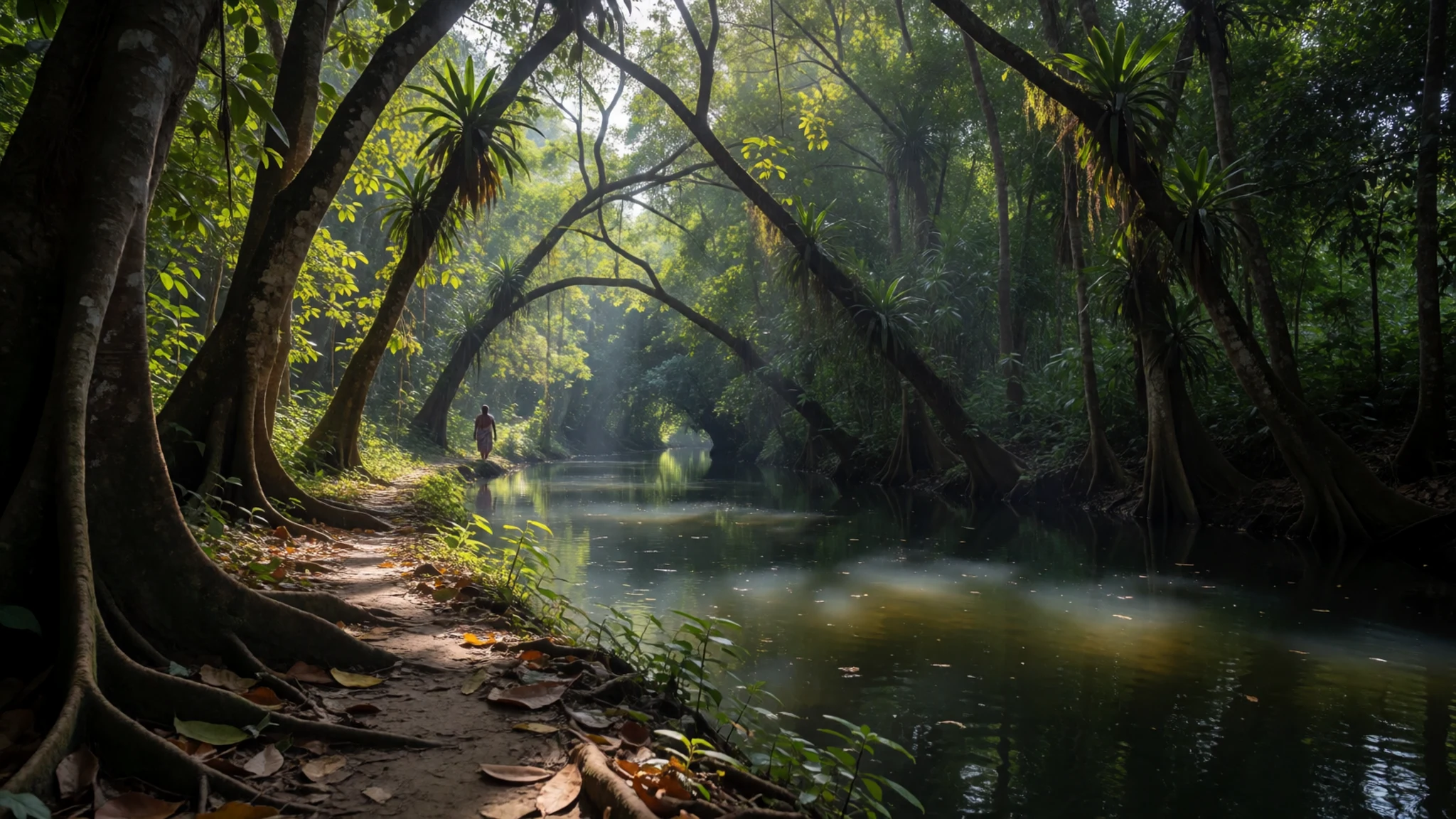
- Side creeks by canoe — Tributary creeks around Palumeu
The small creeks that feed the main river are quiet and shaded, and a paddled canoe disturbs very little. Early morning is best for kingfishers, herons and the occasional monkey troop in the canopy. Keep hands inside the boat, since branches overhead sometimes carry ants, spiders or snakes.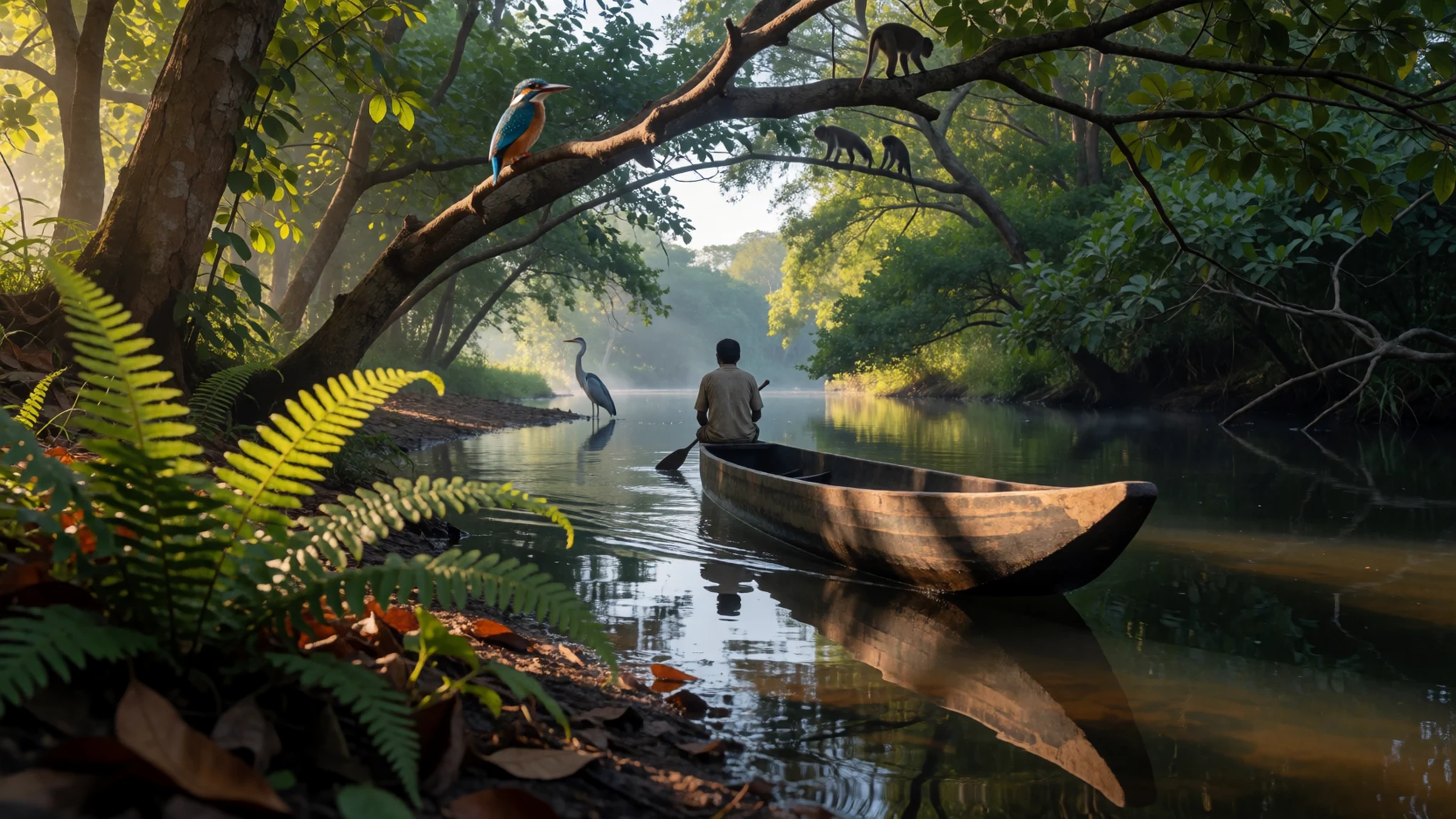
- Forest walks with a local guide — Forest around Palumeu village
Walking the trails near the village with a guide from the community shows how people use the forest: medicinal plants, building materials, fruit trees and animal tracks. A guide will also point out places considered sacred. Wear closed shoes, walk single file and expect to be slow, since there is a lot to stop for.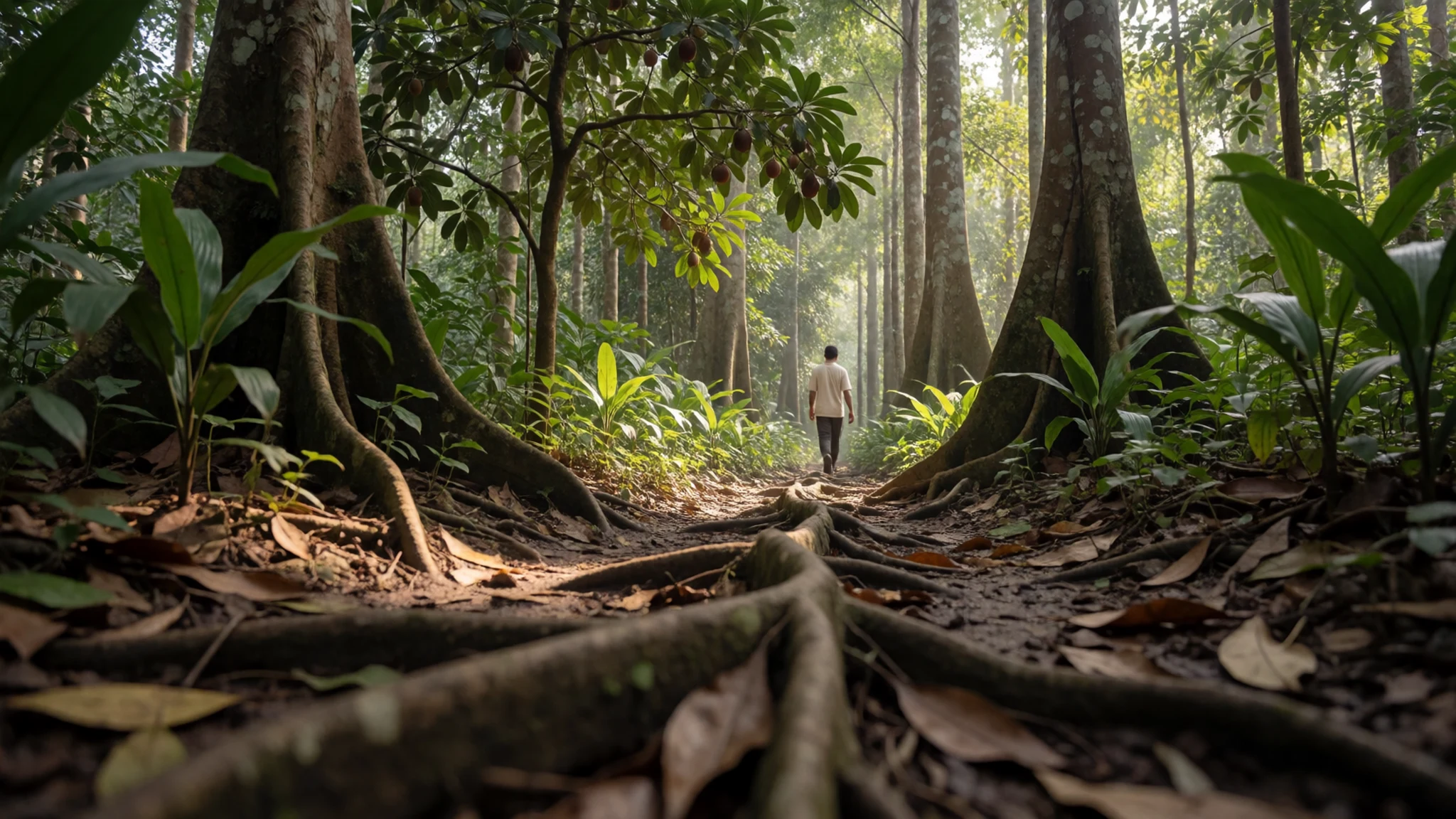
Culture
Palumeu is a living community, not a stage set, and the best visits are the ones where the village sets the terms. The people of the area belong to Indigenous and Maroon traditions with their own languages, beliefs and ways of sharing food and work. Suriname as a whole is among the most diverse countries in the world, and the interior adds another layer to that, with customs that differ from village to village.
The forest is not neutral ground. Some trees and spots are considered holy, and activities that look harmless to an outsider, such as climbing a rock, picking a plant or swimming in a pool, may be inappropriate. Your guide is the person to ask, and an honest question is always better received than a guess. Learning a few words of greeting, in Dutch or in the local language, goes a long way.
Meals, boat rides and guided walks are usually arranged in advance with the community or a lodge that works with it, so spontaneous bargaining is out of place. Gifts are best discussed with your operator beforehand rather than handed out, especially to children. Noise matters too: loud music or shouting carries across water and spoils the one thing most people come for.
Always ask your guide and the person concerned before photographing anyone, and do not photograph sacred trees or places at all unless you have been told it is welcome.
What to wear
Traditional dress around Palumeu depends on the community. Among Indigenous groups of the Guianas, beadwork is the best-known craft: tiny glass beads strung into aprons, armbands and anklets in strong geometric patterns, often in red, white and black. Cotton cloth, wrapped as a loincloth or skirt, and feather ornaments made for ceremonies are also part of the tradition. Maroon communities are known for brightly patterned cotton wraps and cloths, and for carved wooden objects. These items are mostly worn on festive or ceremonial occasions, and they are not costumes for visitors to ask people to put on.
Day to day, people in the village dress as most rural Surinamese do: T-shirts, shorts or knee-length skirts, cotton dresses, flip-flops or rubber boots, and sometimes a cap against the sun. Clothes are practical, washed often and dry quickly in the heat.
A visitor should dress for humidity, insects and river travel. Pack light, loose long-sleeved shirts and long trousers in quick-drying fabric, since they protect against sun and bites better than bare skin. Bring a wide-brimmed hat, a light rain jacket, swimwear that covers sensibly for bathing in the river and sandals that can get wet. For forest walks, closed shoes or light boots with good grip are essential. Neutral colours are less likely to attract insects. In the village itself, shoulders and knees covered is a simple courtesy.
What to eat
- Cassava bread — village kitchens and lodge meals around Palumeu
Cassava is the staple of many forest communities. Grated, pressed and baked into flat rounds, it is eaten with fish, pepper sauce or on its own. It keeps well on long river journeys and is worth trying wherever it is offered.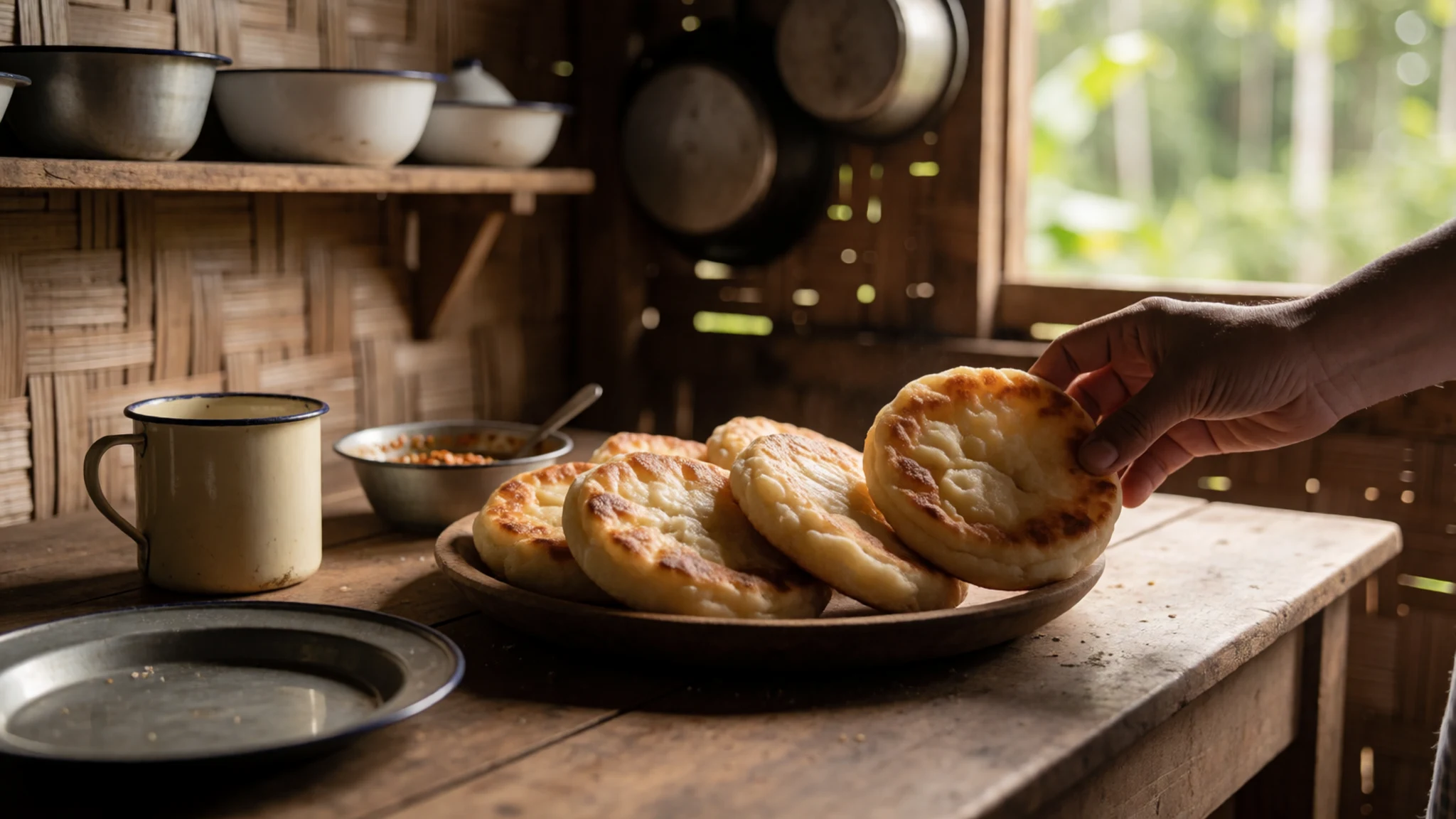
- River fish with rice — meals at the village or the lodge
Fresh fish from the river, grilled or stewed with peppers and served with rice, is the typical interior meal. Species depend on the season and the day's catch, so ask what was caught.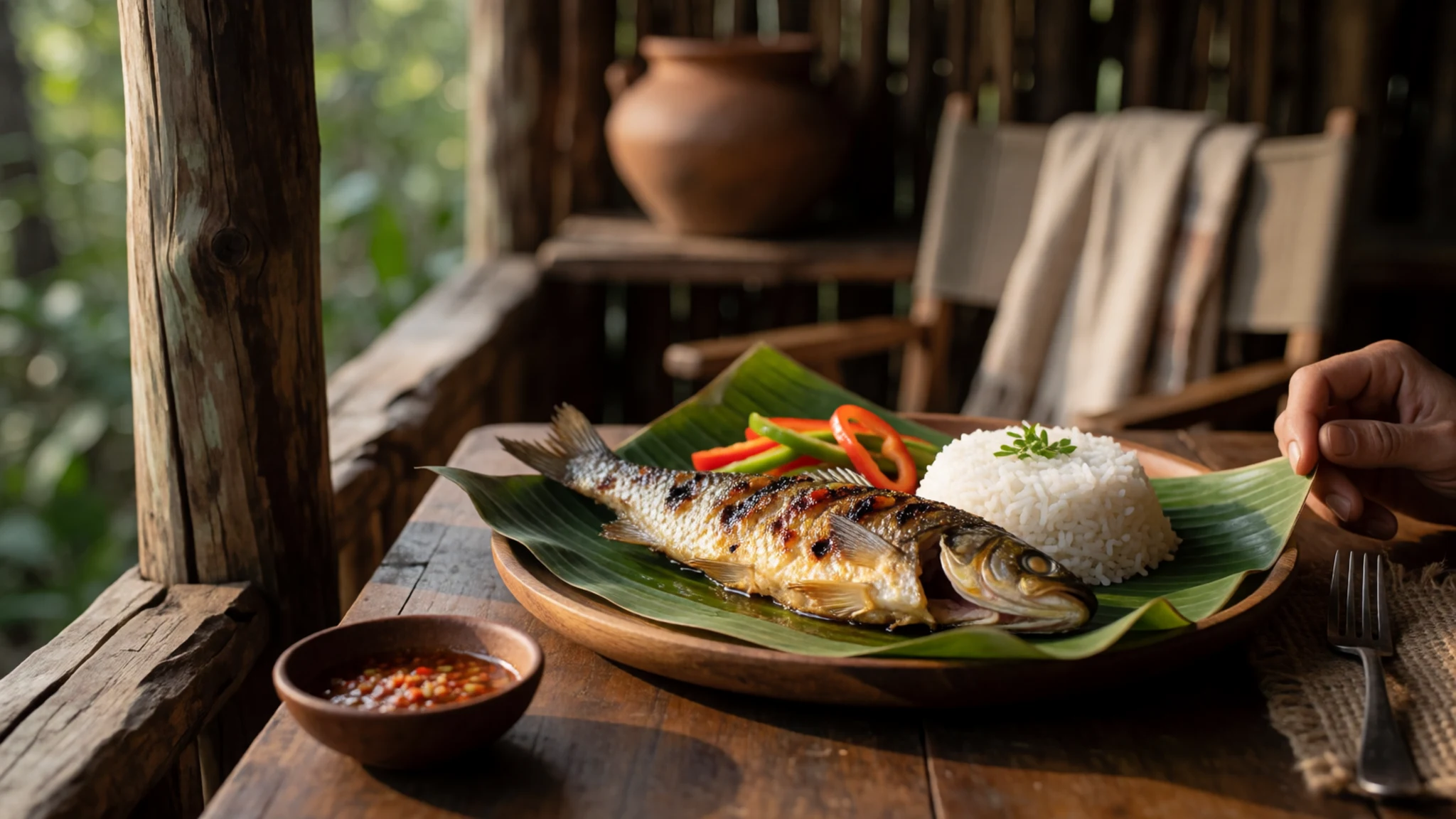
- Roti with chicken — roti shops in Paramaribo
A flatbread served with curried chicken, potato and green beans, brought to Suriname by contract workers from India. It is milder than curry in India and is widely eaten, a good meal before or after a trip inland. - Bami and nasi — warungs in Paramaribo, Lelydorp and Commewijne
Javanese-descended noodles and fried rice, usually served with spicy chicken or satay in peanut sauce. Surinamese Javanese cooking has drifted away from the food of Java itself, but it is satisfying and cheap by most standards. - Fresh fruit juice — juice stalls and markets in Paramaribo
Suriname's tropical fruit makes for excellent juices, sold cold and sometimes blended with a little sugar. Treat ice and water with caution outside Paramaribo, and ask your guide about the safe source.
Plan it
Best time. The drier months, roughly August to November, with a shorter dry spell around February and March, are the easiest for river travel and forest walking. Outside those periods heavy rain makes the trails muddy and the river high, though the forest is at its greenest. It is hot and humid all year.
How long. 3–5
Getting there. Fly to Johan Adolf Pengel International Airport near Paramaribo. Palumeu has an airstrip, and most visitors reach it on a light aircraft arranged through a tour operator in Paramaribo, then continue by dugout canoe. Boat journeys from the coast take far longer and need careful planning.
Budget. high
Tips
- Book through an operator in Paramaribo well ahead, as flights and lodge places are limited
- Bring cash in small notes, since there are no cards or cash machines in the interior
- Carry insect repellent, any personal medicines and a reliable water bottle or purifier
- Start boat trips and walks early, before the heat and afternoon storms
- Pack everything in dry bags, because rain and river spray are certain
Etiquette
- Ask your guide before photographing people or sacred places
- Follow the community's advice on where to walk, swim and camp
- Take your rubbish back out with you
Nearby
Sources
- Wikidata Q1882315 (CC0)
- Wikipedia: Paloemeu River (CC BY-SA 4.0)
- Wikivoyage: Suriname (CC BY-SA 4.0)
- Paloemeu oorsprong, Gerard Martinus Versteeg (Public domain)
- Bivak bij de Papadron-val in de Paloemeu-rivier, Gerard Martinus Versteeg (Public domain)
- Bosnegers en expeditieleden bij de Paloemeu-rivier, Gerard Martinus Versteeg (Public domain)
- Bosrand bij de Papadron-val in de Paloemeu-rivier, Gerard Martinus Versteeg (Public domain)
- Zijkreek van de Paloemeu (RV-A103-1-124), Gerard Martinus Versteeg (Public domain)
- De Paloemeu bij Majoli (RV-A103-1-125), Gerard Martinus Versteeg (Public domain)
- Zijkreek van de Paloemeu (RV-A103-1-126), Gerard Martinus Versteeg (Public domain)
- Paloemeu oorsprong (RV-A103-1-127), Gerard Martinus Versteeg (Public domain)


Wildlife
- Jaguar (animal)
The jaguar is the big spotted cat of the Americas, strong enough to crack a tortoise's shell, so think of it as the forest's golden heavyweight. In Palumeu it roams forest that has changed little, but sightings are only occasional, and no one can promise a particular season or hour, so count yourself lucky if one appears. Watch from a good distance, keep very quiet, stay close to your guide, and never try to feed it.