Blanche Marie Falls
Blanche Marie Falls, Suriname
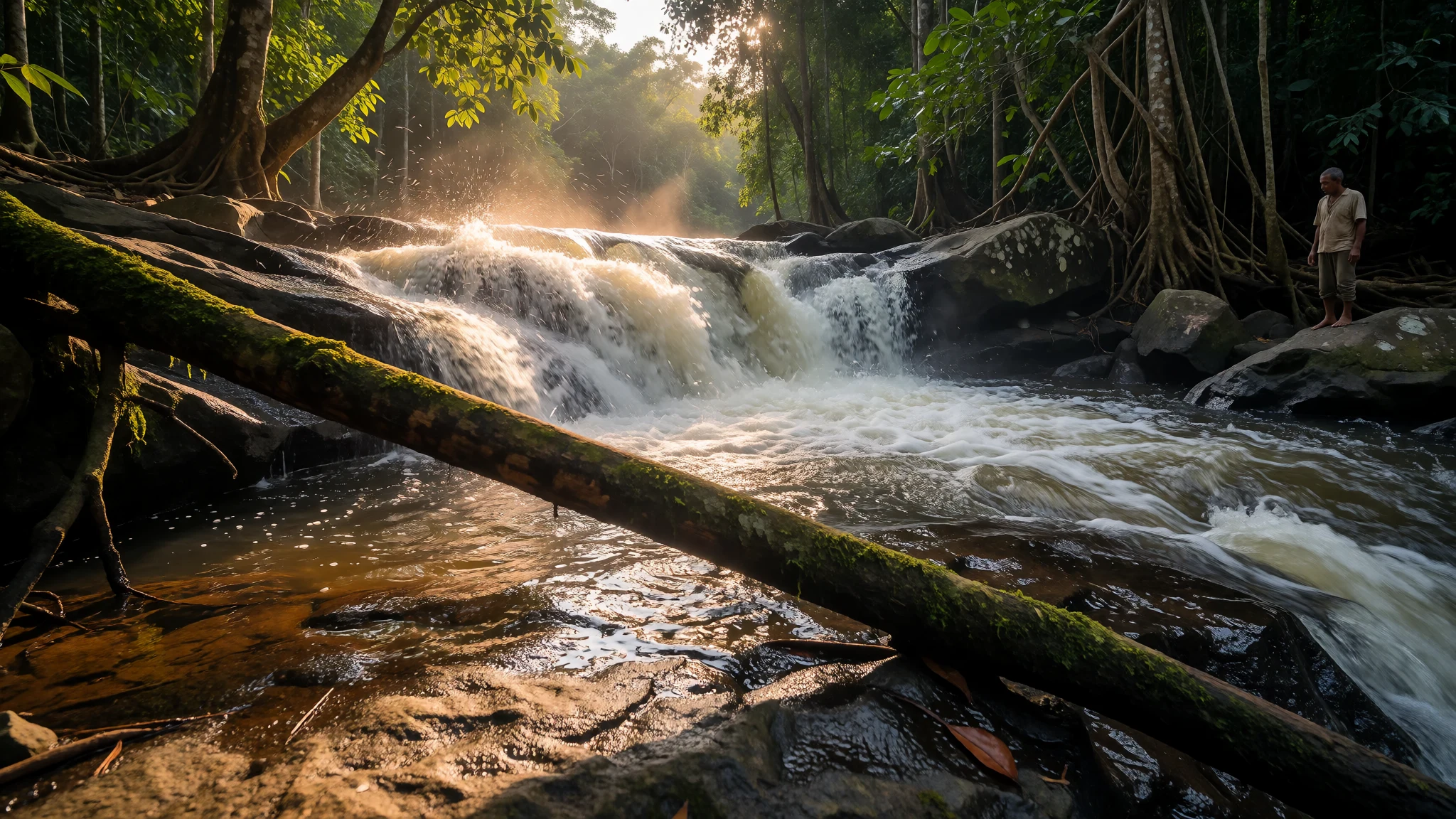
A car along the Southern East-West Link, through the forest, is what it takes to stand at Blanche Marie Falls.
The place
Blanche Marie Falls breaks the Nickerie River into white steps inside the forest of Sipaliwini, far inland in south-west Suriname. The sound arrives before the view: a steady roar under a closed canopy, then white water against dark rock and a green wall of trees. The Dutch name, Blanche Marie Vallen, is the form used on maps and in Paramaribo; English speakers shorten it to Blanche Marie Falls. There is no village at the lip, but the Southern East-West Link is the approach. The Southern East-West Link is the road. Cars take the Southern East-West Link from the more settled west of the country and come to the falls by road, the last stretch on that link rather than a landing on foot. The forest here is lowland tropical: tall trunks, lianas, sudden clearings where a tree has fallen, and birds that stay high and unseen. Heat sits in the shade. Rain can arrive without warning and turn the trail to mud, then leave as fast, with steam rising off the leaves. At the falls the rock is slick, the spray constant, and the pools below are river water, not a managed swimming hole. People who come are a popular stream of visitors, many by car, camping nearby until the river feels ordinary. On a quiet morning the only voices are the crew's. By afternoon the light goes early under the canopy, and the falls keep the same pace they had at dawn. Blanche Marie is not a viewpoint with a railing. It is a working river in a forest that still sets the terms: how the road comes in, where the camp sits, and whether the ground is passable after rain.
Its story
Blanche Marie Falls carries a European woman's name on a river that was a route long before Dutch maps named it. The Nickerie drains the western interior of Suriname toward the coast, and people living along these forests moved by water: hunting, fishing, trading and visiting kin, reading the current the way a road reads a junction. Colonial surveyors, working inland from the plantations and the later towns, wrote European names onto falls, creeks and bends. Blanche Marie belongs among those names. She was the wife of Corstiaan van Drimmelen, then district commissioner of Nickerie, who found the falls in 1897 and named them after her. What the name does mark is that 1897 naming: van Drimmelen’s wife, given to the falls when he found them and kept on the maps since. Independence did not move the falls closer to Paramaribo. The interior stayed a journey, and the people with working knowledge of this stretch remained those who use the river, not those who read about it. In recent decades a popular run of visitors has followed the road, bringing people who sleep in a camp and leave. That traffic is heavy beside the logging tracks, airstrips and mining pressure that worry the wider interior, but it still asks something of the forest: a path, a landing, a fire. The honest history of a visit is short.
What to see
- The cascade — Nickerie River, Sipaliwini
Blanche Marie Falls splits the Nickerie into a chain of white steps, each one shorter than a single drop and louder near the base. Spray hangs in the trees, the rock stays dark and slick, and nothing has been built: no railing, no platform, no path with a handrail. The view is the cascade itself, with forest pressing both banks and the river leaving below.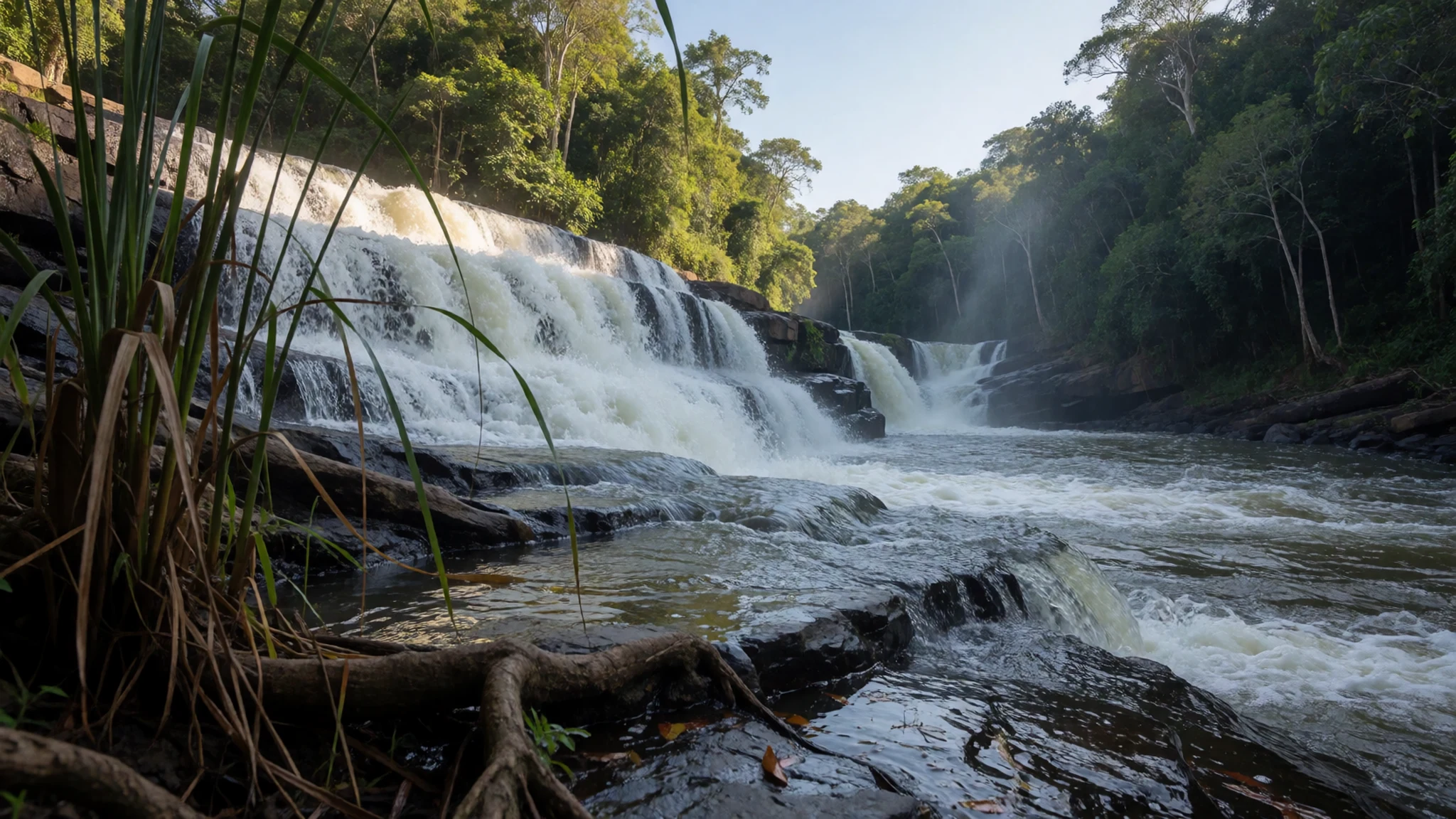
- The upper shelves — Upper cascade, Nickerie River
Above the main noise, Blanche Marie Falls continues as smaller shelves where the Nickerie tips from ledge to ledge. The forest closes in, roots cross the wet stone, and the water is clearer before it turns to foam. This stretch shows the falls as a staircase rather than an isolated drop, and it is easy to miss if the group stops only at the loudest drop.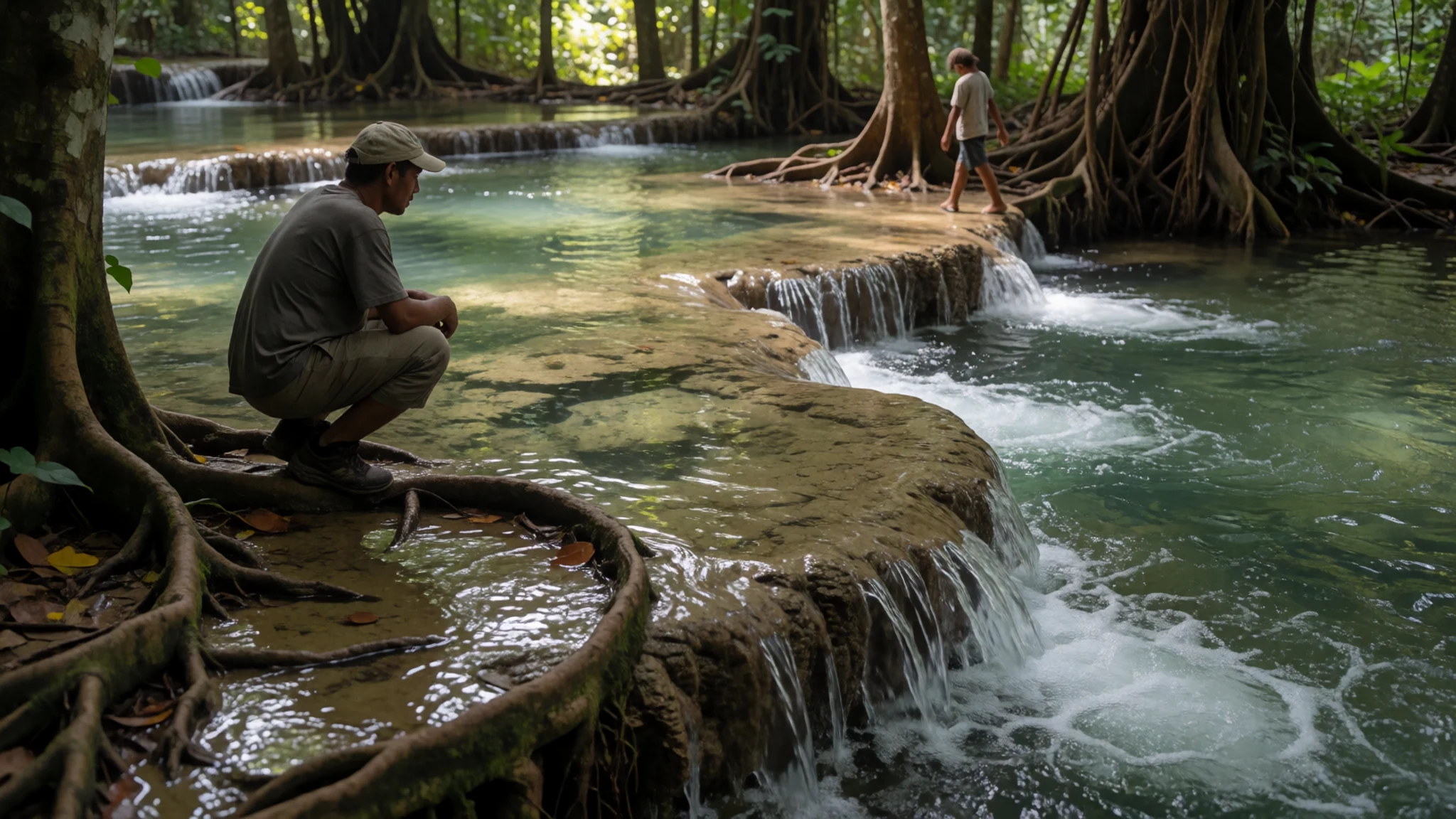
- The river approach — Nickerie River below the falls
The Nickerie on the way to Blanche Marie Falls is a brown-green road of current, fallen timber and sudden rocky shallows. Boats take the deeper line until the water steepens and the crew picks a landing. From low in the hull the banks look like a wall of leaves, and the falls announce themselves as sound long before any white water shows.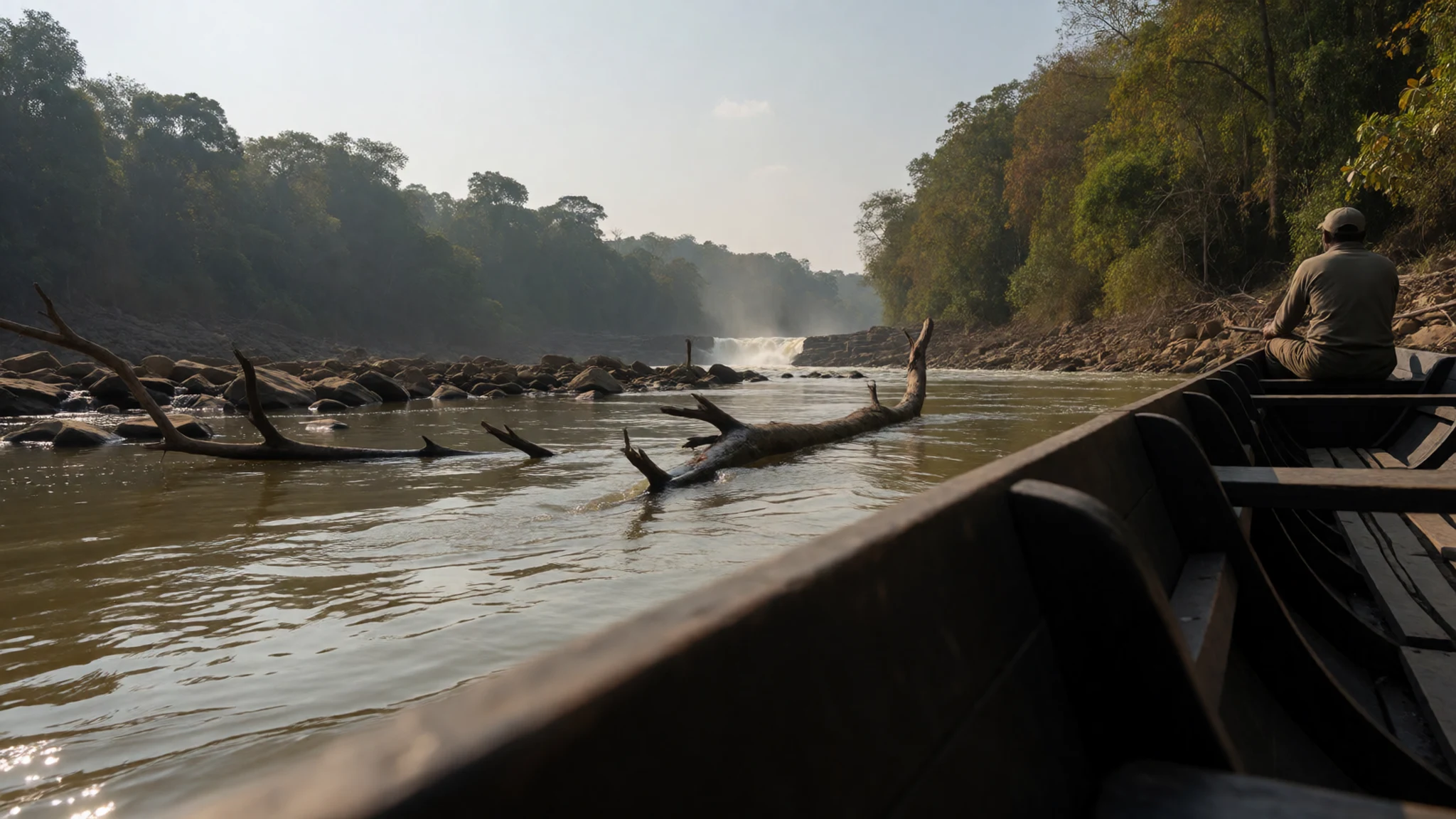
- The forest trail — Forest path from the landing
The footpath into Blanche Marie Falls starts where the boat can go no farther and runs through lowland rainforest to the spray. Mud, roots and standing water take turns underfoot, and a rain shower can change the footing before the group is back. The trail asks for attention the whole way: every step follows a line the guide has already chosen.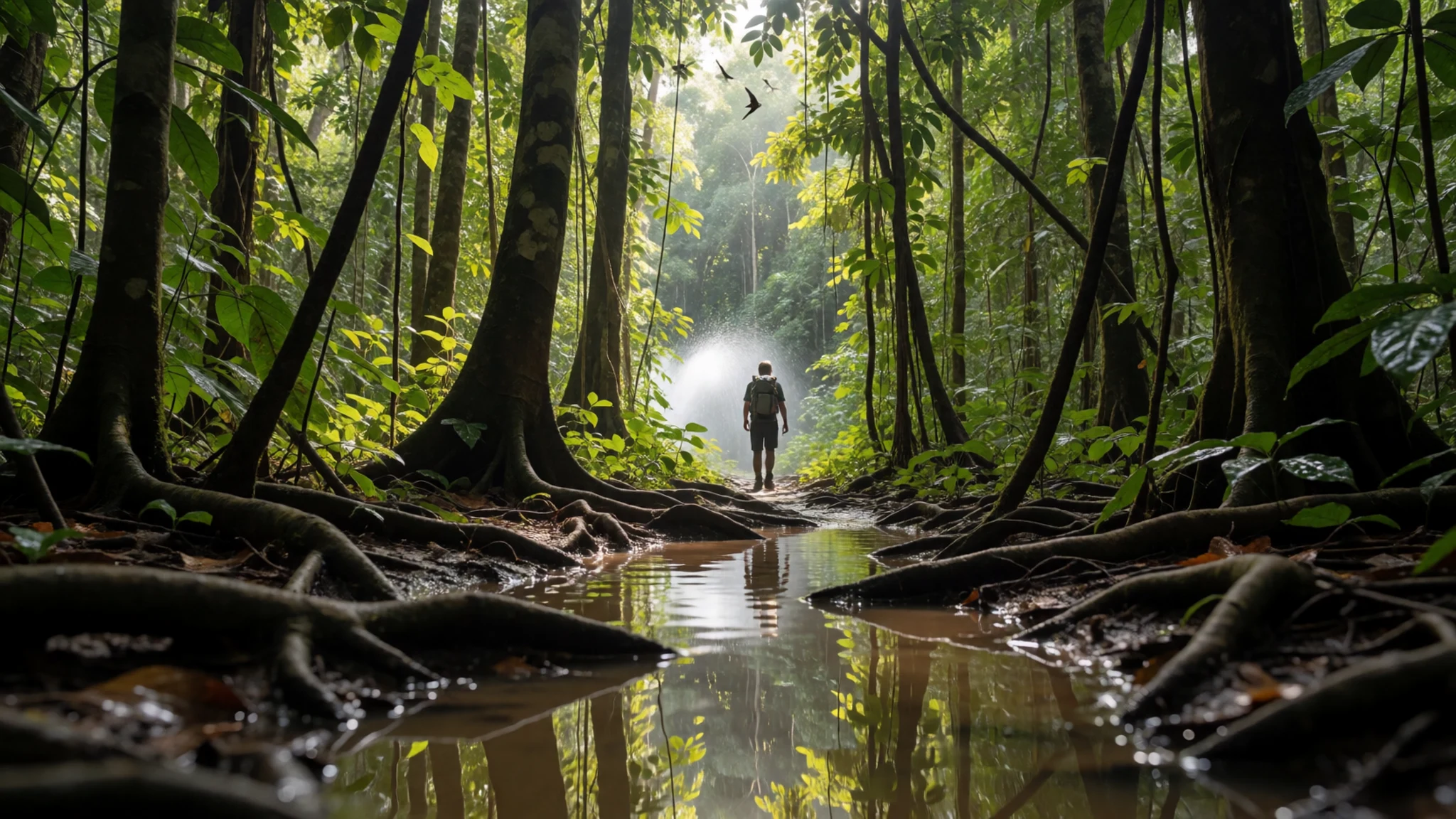
- The riverbank camp — Riverbank near the falls
Camp near Blanche Marie Falls is a clearing or a bend of bank chosen for level ground and a safe pull-out, not for a designed view. Hammocks or tents go up under the trees, wet clothes steam if the sun appears, and the river stays audible all night. There is no shop and no promise of a phone signal, and other parties are expected to arrive.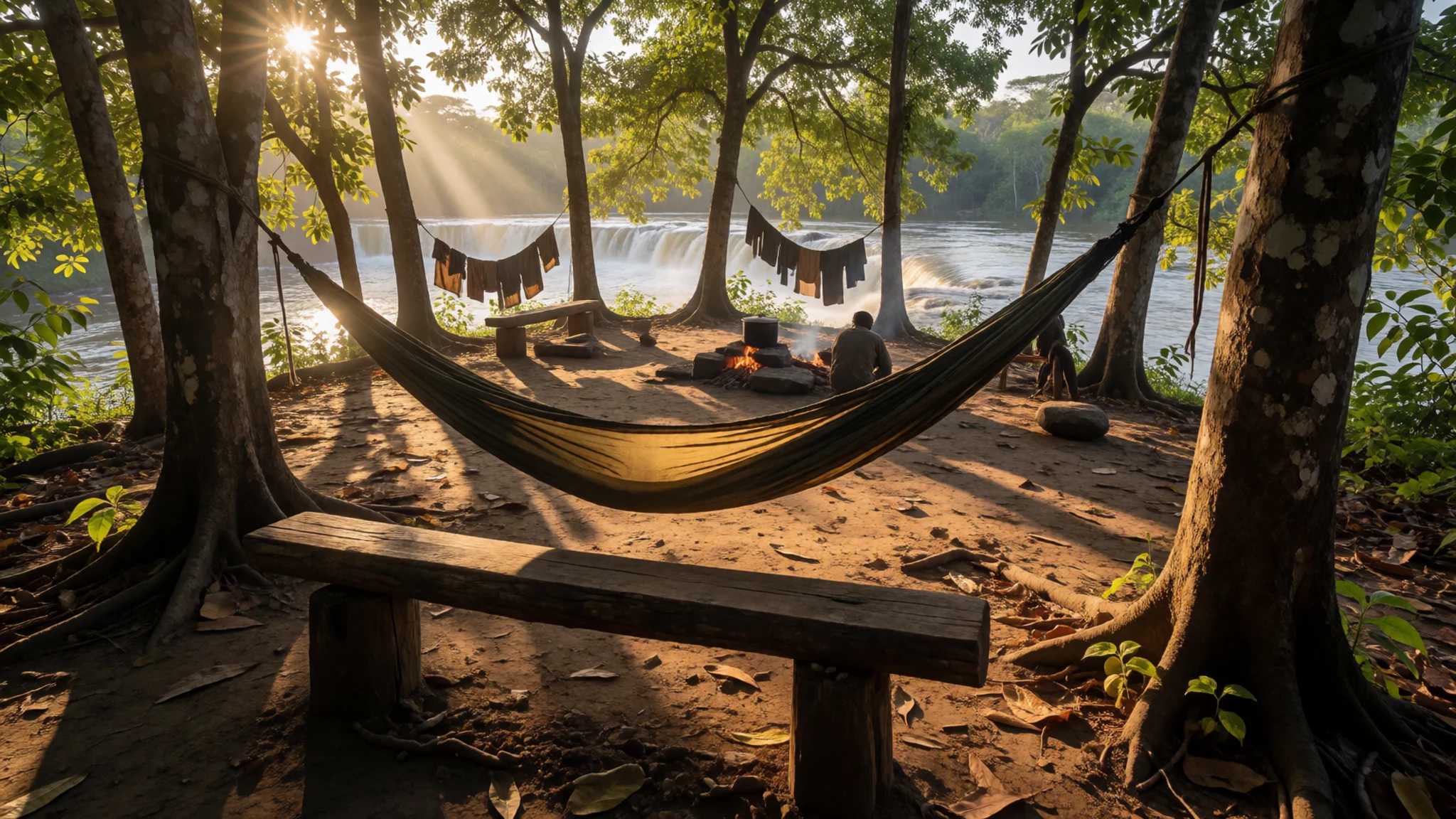
Culture
Blanche Marie Falls lies past the coastal towns, in forest where Indigenous communities and the Maroon nations of Suriname's rivers have long known the water better than any map drawn in Paramaribo. The country that travellers cross to get there is unusually plural. In the capital, Creole, Hindustani, Javanese, Chinese, Indigenous, Maroon and European lineages share streets, markets and kitchens, and that mix is ordinary public life, not a show put on for visitors. Lower Nickerie, the western district the river is named for, is farming country with a strong Hindustani presence and Javanese communities as well. Farther upstream the settlements thin out. Custom on the interior rivers is local: a village is not a viewpoint, a boat landing may belong to a family, and a guide is also a guest who has asked to pass. Music, food and cloth from the coast still travel with the crew, so a camp can sound like Paramaribo even when the bank is empty. Casual sightseeing manners travel badly. At Blanche Marie Falls, stay on the line your guide sets across wet rock, and ask before you photograph any person on the crew or in a village on the way.
What to wear
Dress around Blanche Marie Falls runs from the formal cloth of the capital to clothes that can survive a wet boat. Creole tradition centres on the koto, a voluminous skirt with a fitted jacket, and the angisa, a folded headcloth whose shape carries a message; both appear at celebrations more than on an ordinary weekday. Maroon women wear the pangi, a wrap of boldly patterned cotton, with beadwork and embroidered cloth for ceremonies. Javanese families keep batik for weddings and gatherings, and Hindustani dress includes the sari and the salwar kameez for festivals and temple visits. In daily life, Paramaribo wears what a warm city wears: cotton shirts, jeans, sandals and football jerseys, with lighter office clothes in the shade. On the river the crew switches to cloth that dries quickly, a cap against the sun, and a wrap ready when rain arrives. A visitor should copy that practical layer and leave celebration costume for the city. Lightweight long sleeves and trousers protect against sun and insects, a rain shell belongs at the top of the bag, and footwear has to cope with mud and with stepping into the river. The koto, the sari and the pangi are for an invitation in town; at Blanche Marie Falls, modest fast-drying clothes and shoes that still grip when wet are the useful choice.
What to eat
- Pom — Family eateries in Paramaribo
Travellers heading to Blanche Marie Falls meet pom in Paramaribo: grated pomtayer root baked with chicken, citrus and spices. Family eateries across the capital serve it as a full plate, a meal to eat before the river journey rather than in a canoe.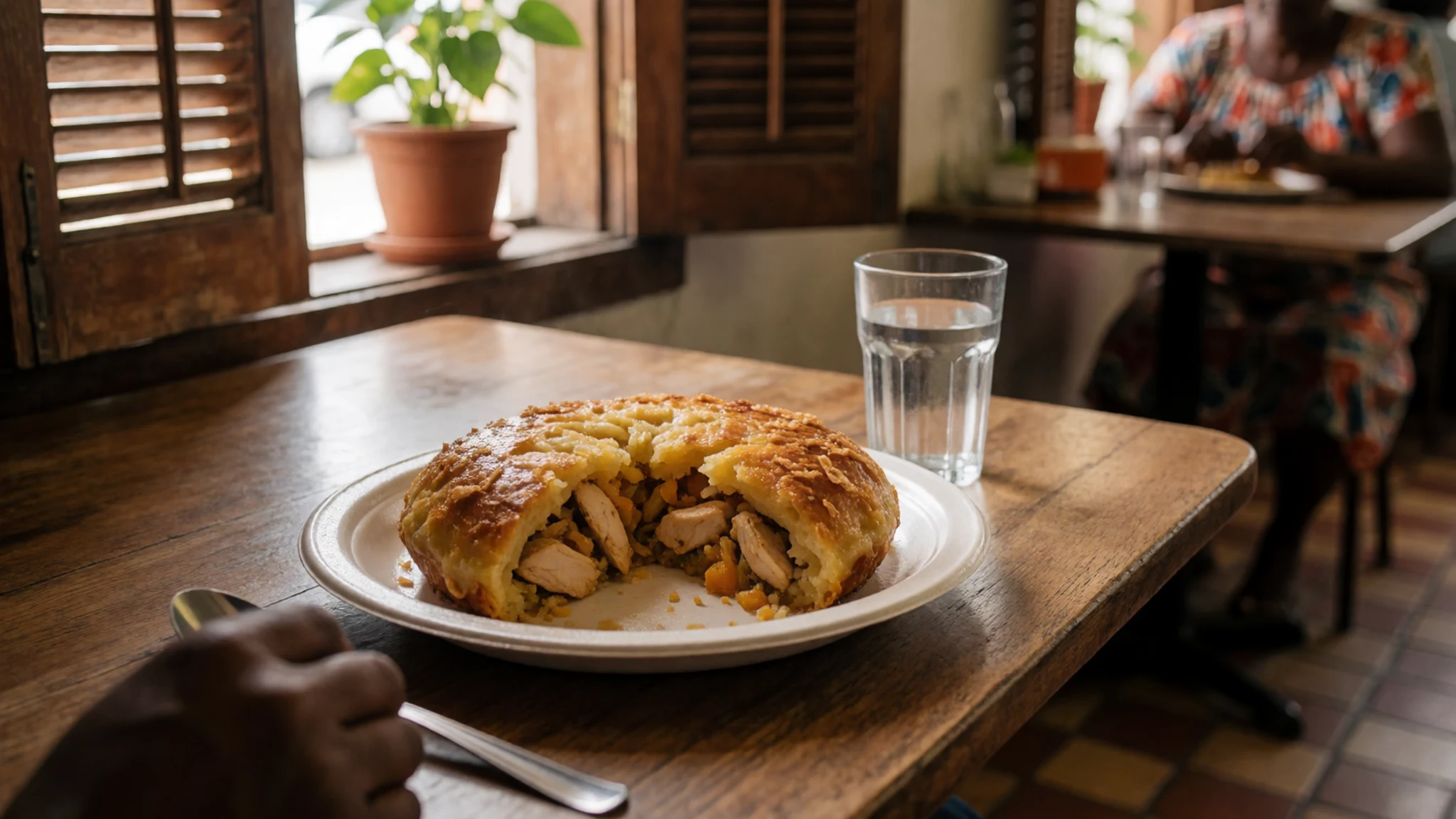
- Roti — Roti shops in Paramaribo and Nickerie town
Blanche Marie Falls is reached through the west, where Hindustani roti shops wrap potato, long beans and a meat or vegetable curry in a soft flatbread. In Paramaribo and in Nickerie town the same meal is everyday food, filling and easy to carry toward a boat.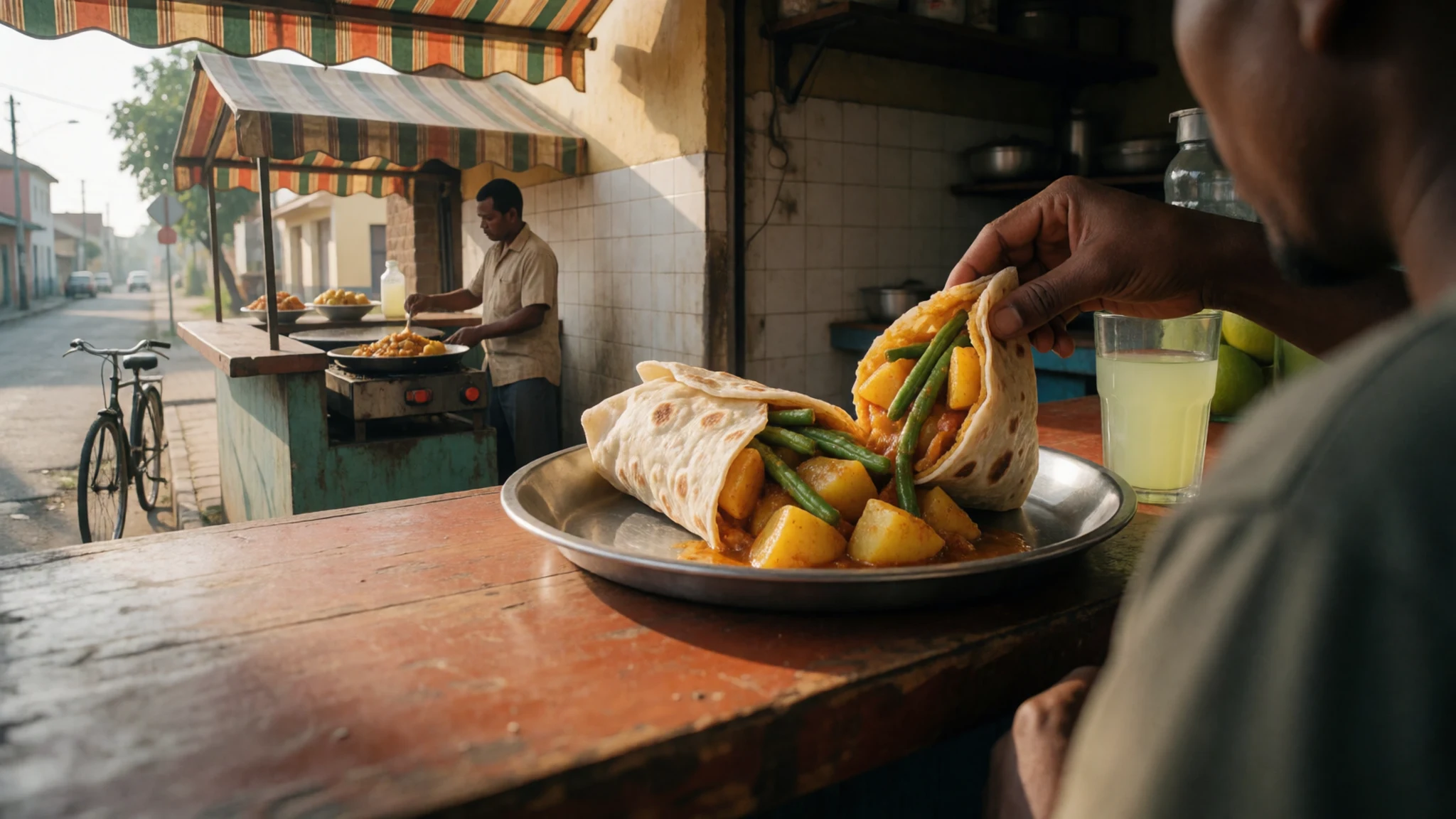
- Moksi alesi — Simple eateries in Paramaribo and the camp pot
Crews leaving for Blanche Marie Falls often eat moksi alesi the day before, mixed rice with salted meat, shrimp or vegetables. Simple eateries in Paramaribo serve it from midday onward, and the same idea reappears in camp as rice with whatever the river provides. - Pindasoep — Small eateries in Paramaribo
Peanut soup, pindasoep, is worth eating in Paramaribo before a Blanche Marie Falls expedition. The broth is thick with ground peanuts, often with plantain or cassava in the bowl, and small eateries ladle it out as a starter or a full meal. - Bakabana — Street stalls in Paramaribo
On the streets of Paramaribo, travellers bound for Blanche Marie Falls can buy bakabana, ripe plantain fried and eaten with peanut sauce. Stalls sell it as a snack between errands, sweet and salty, and it travels better than a plated meal if the boat leaves early. - River fish with cassava bread — Camp kitchen on the expedition
At Blanche Marie Falls the camp kitchen is simpler than the capital: grilled or stewed river fish with cassava bread cooked by the crew. Visitors take what is offered at the landing; there is no menu, and the pot is the meal.
Plan it
Best time. Blanche Marie Falls is warm and wet in every month, like the rest of Suriname's interior. October and November are the hottest, May the wettest, and January to March the most comfortable, with cooler nights and lighter rain. In the wetter months the same journey is slower, muddier and more often delayed.
How long. several
Getting there. Fly into Paramaribo, at Johan Adolf Pengel International Airport, and arrange the onward journey with a licensed interior operator. The usual last leg is a car on the Southern East-West Link from the west, then the road through to Blanche Marie Falls. The Southern East-West Link is the road to the cascade, and the trip should not be attempted alone.
Budget. high
Tips
- Plan the drive from Paramaribo and ask about the Southern East-West Link before you leave the city.
- Carry a dry bag, a rain shell and shoes that can get wet; the path is mud and rock.
- Treat drinking water or bring what the operator advises, and do not drink untreated river water.
- Keep cash for Paramaribo and Nickerie, and do not expect card machines on the river.
- Walk the forest stretch earlier in the day and stay with the guide.
- Confirm the return plan with someone in the city before the boat leaves.
Etiquette
- Follow the guide on wet rock and do not climb the falls for a photograph.
- Ask before photographing people, including the crew.
- Pack out all rubbish, including batteries and food wrappers.
- If the route passes a village, wait for an introduction and do not wander into homes.
Nearby
Sources
- Wikidata (CC0)
- Wikipedia (CC BY-SA 4.0)
- Wikivoyage (CC BY-SA 4.0)