Jodensavanne
Jodensavanne, Suriname
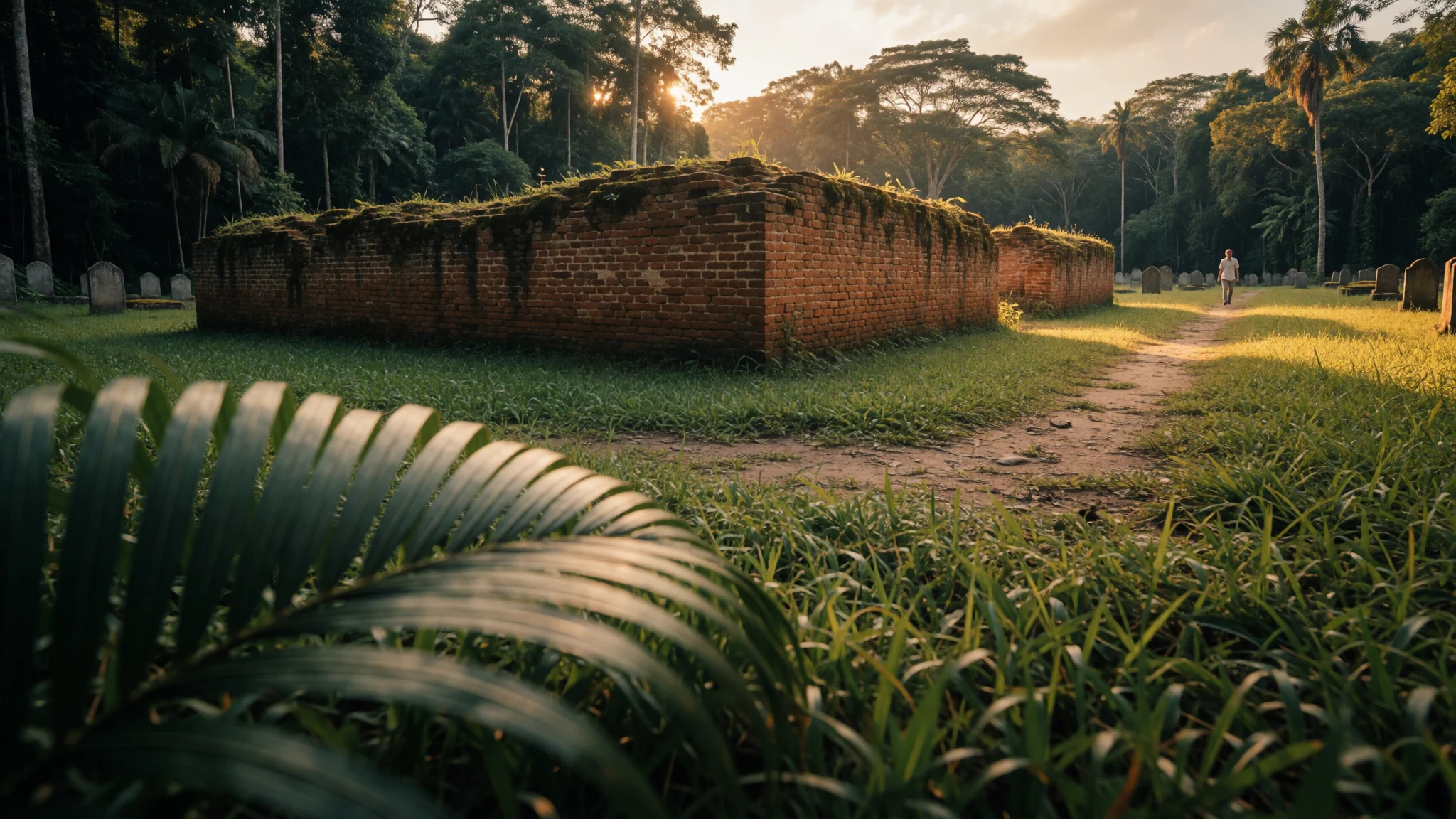
Jodensavanne, in Suriname's interior, holds the ruined synagogue and graves of a Jewish plantation settlement, and the plain truth that it ran on slavery.
The place
Jodensavanne, Dutch for Jewish Savanna, is a ruined plantation settlement on the Suriname River in Para District, about 50 km south of Paramaribo. Today it is a quiet clearing of grass and trees where broken brick walls and weathered gravestones mark what was once the centre of Jewish life in the colony. Nothing about it is grand. The synagogue survives as a low outline, the cemetery as a scatter of stones in shade, and the forest has taken back most of what lay between. What gives the site weight is what the ground implies: a raised patch chosen for a town, a river that carried sugar out and people in, and a street plan that is now mostly guesswork.
The settlement was started by Sephardi Jews in the 1600s and grew richer after refugees from Brazil joined it in the 1660s. Around 1700 it held about 500 planters and about 9000 enslaved people, who were forced to grow the sugarcane that paid for everything else. That lopsided count is the honest centre of the story, and it sits uneasily beside the idea of a refuge. The colony was under steady pressure from Indigenous attacks, revolts by the enslaved and even French naval raids, and in time the community moved to Paramaribo.
Reaching the site takes some effort, because it lies well away from the capital's streets, and many visitors arrange a guide or a tour from Paramaribo. The setting is hot, humid and full of insects, so a morning visit suits it best. UNESCO lists the site under reference 1680. A few unhurried hours is enough: the interest lies in standing among the remains and reading them, not in ticking off a long list of sights.
Its story
Jodensavanne's history starts with the English, who controlled Suriname in 1639 and allowed Sephardi Jews from the Netherlands, Portugal and Italy to settle. The newcomers began at the old capital, Torarica. In 1651 Benjamin de Caseras, Henry de Caseras and Jacob Fraso petitioned the English Council of State for leave to live and trade in Suriname and Barbados, and that petition gives historians a firm date for the community's beginnings.
A much larger party, about twelve hundred people travelling under Lord Willoughby, settled the ground now called Jodensavanne in 1652. A third group followed in 1664 under David Cohen Nassy, having been driven out of Brazil and then out of French Guiana. The English wanted these settlers to stay put, so they offered privileges, among them a court of their own and freedom of worship.
Around then the place picked up the name Savanne, after the open fields around it. It stood on raised ground with a single main road and four side streets. Sugar made the settlement prosperous, and sugar meant forced labour: African people were enslaved to work the cane, and by about 1700 they outnumbered their owners many times over. Fear shaped daily life, from Indigenous attacks to uprisings and French raids. Eventually the community relocated to Paramaribo, and the savanna fell quiet. Prints from 1830 and from around 1860 show the place as nineteenth-century artists saw it, and they remain the best way to picture what has been lost.
What to see
- Synagogue ruins — Jodensavanne clearing, Para District
The synagogue is the centrepiece of Jodensavanne: low brick walls and a clear rectangular footprint in an open clearing, shaded by trees. Comparing the walls with the 1860 print of the same building shows how much the forest and time have taken. A guide adds the names and community routines that bare walls cannot.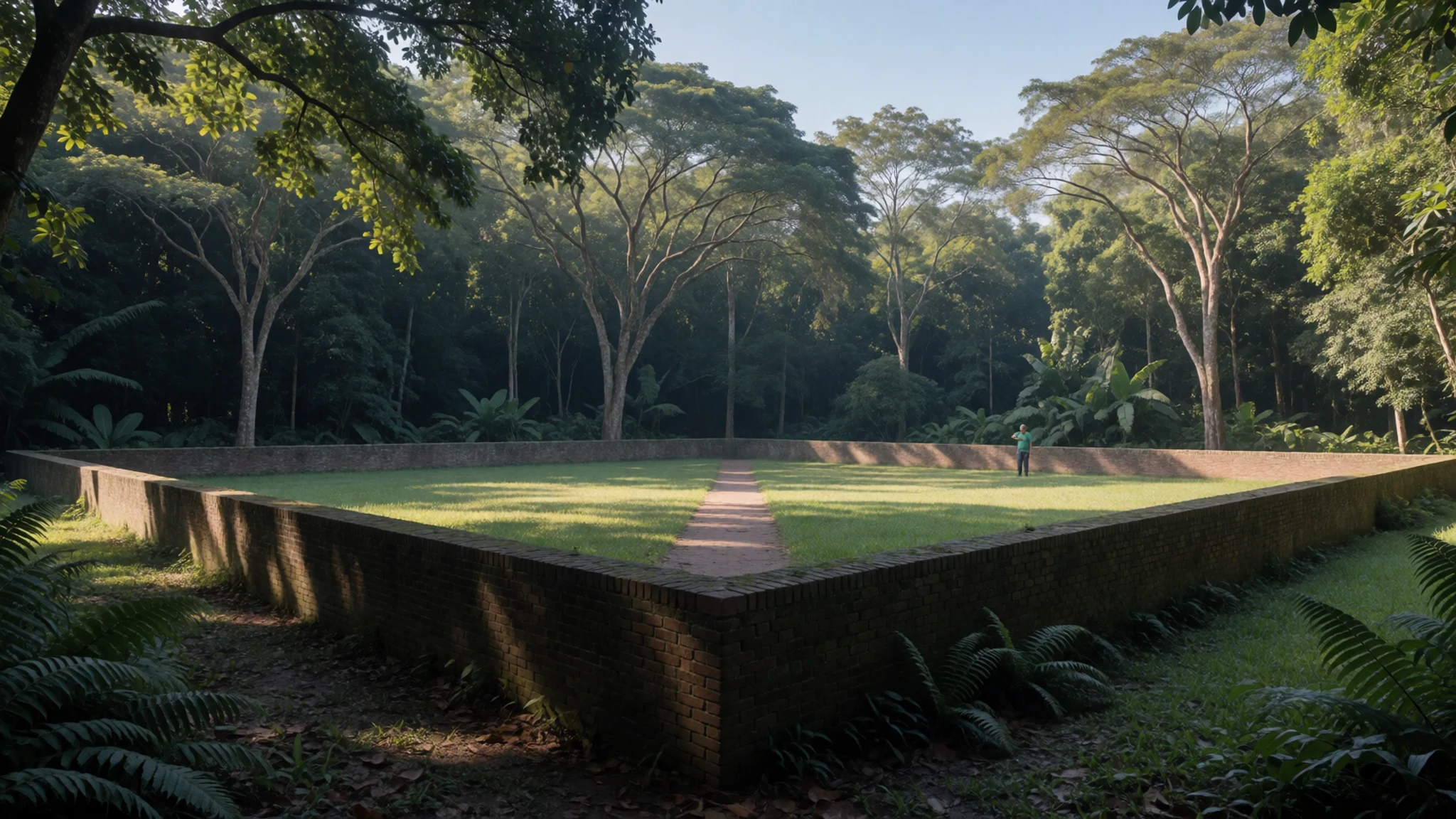
- Cemetery gravestones — Beside the ruins
Weathered gravestones stand in the shade near the ruins. Many inscriptions are worn, yet each stone is still a direct line to an individual life. Visitors tend to linger here longer than planned. Look rather than touch, follow the paths a guide points out, and remember that descendants still care for these graves.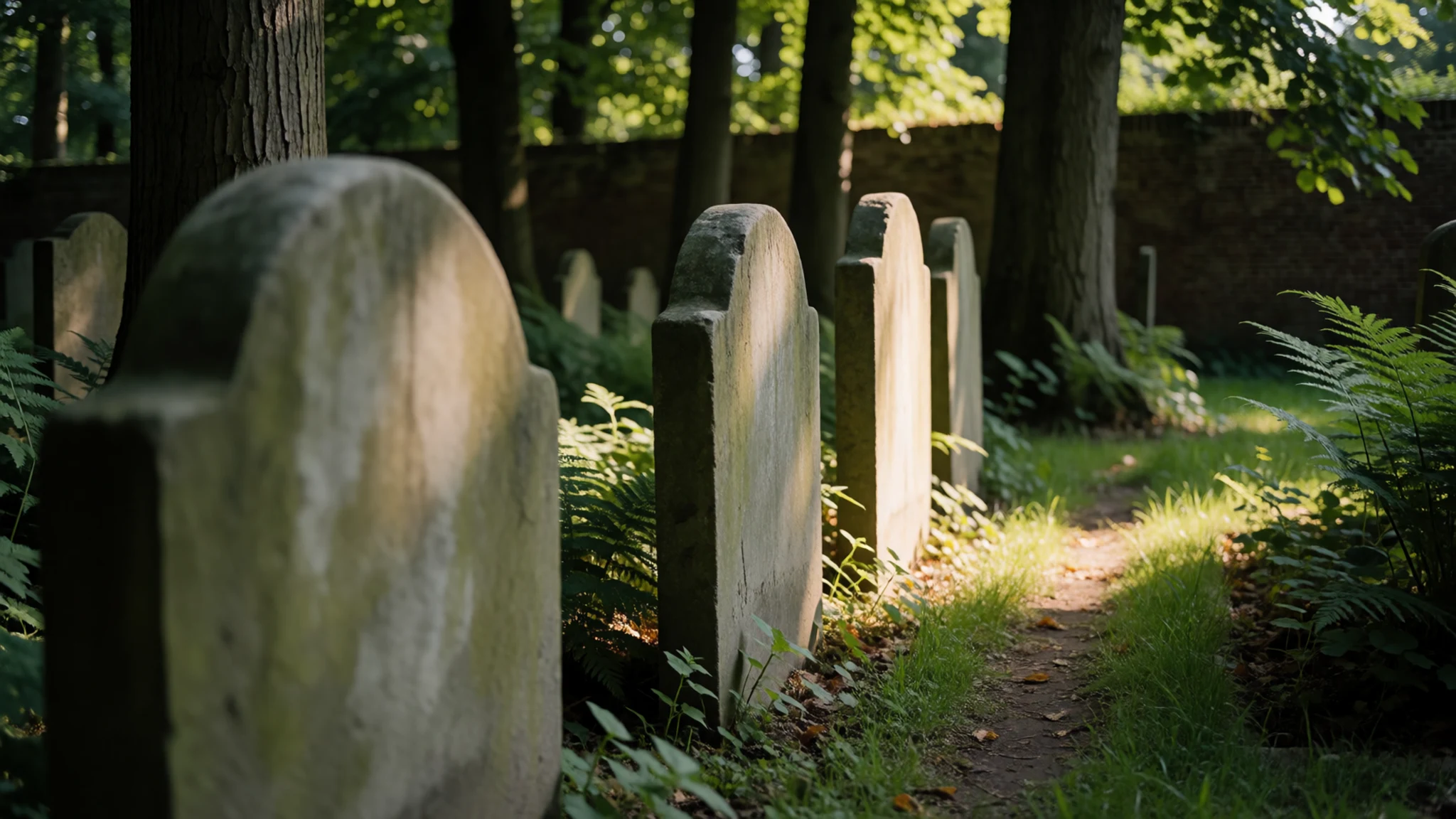
- The raised ground and street plan — Across the clearing
The settlement was laid out on a rise with one main road and four side streets, and a slow walk across the clearing makes that modest grid easier to imagine. Little shows on the surface now, so the 1830 print is a useful companion for filling the gaps between the walls and trees.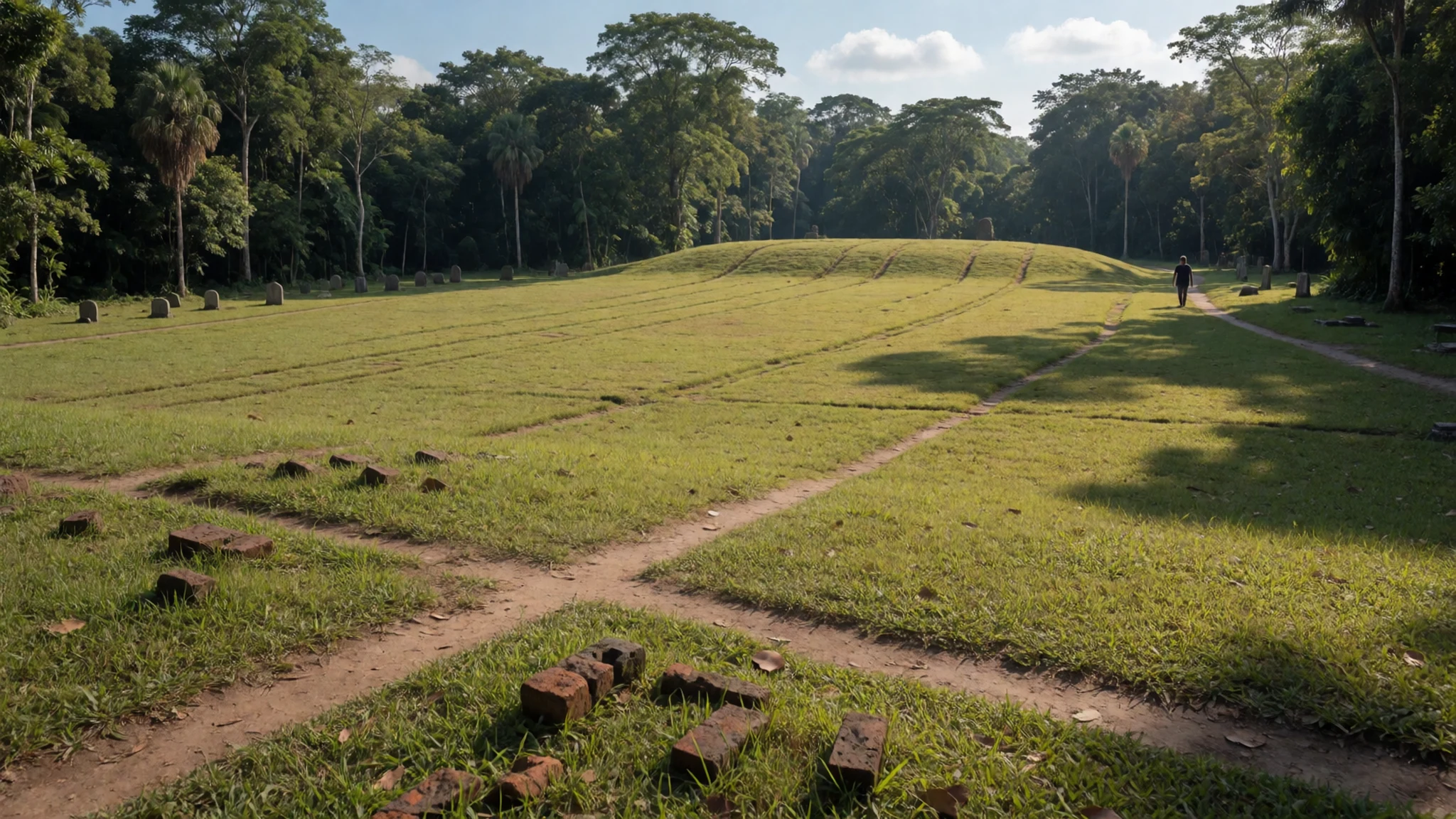
- The Suriname River approach — River bank near Carolina
The river explains why the settlement existed, carrying sugar and people between plantations and the coast. The approach has involved wooden bridges near Carolina that have been broken, replaced or left unfinished over the years, so plans should allow for detours. Even from the bank, the wide river makes the site's logic clear.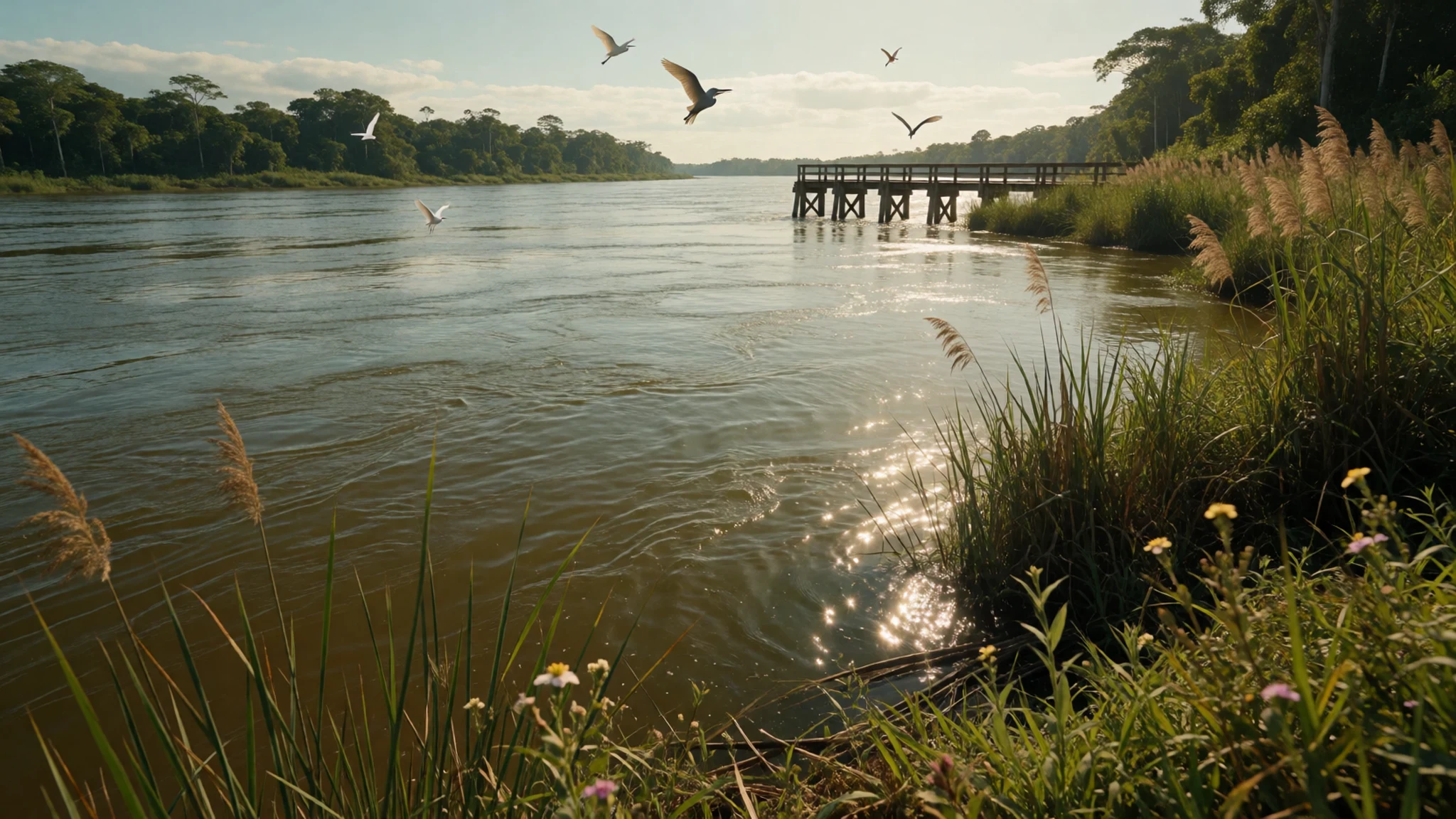
Culture
Jodensavanne belongs to two memories at once. For Suriname's Jewish families it is an ancestral place, with a synagogue and cemetery that testify to a community which built a life in the colony before moving to the capital. For the descendants of the African people enslaved here, it is a place where forced labour created someone else's wealth. Both histories lie in the same ground, and thoughtful local guides tend to tell them together rather than choose one.
Suriname today is a country of many communities, among them Creole, Indian, Javanese, Chinese, Maroon and Indigenous peoples, and that mix shows in the food, the festivals and the languages heard on the road to the site. Dutch names such as Jodensavanne itself remain on the map as a reminder of the colonial past.
In the interior, people of the forest communities regard certain trees and spots as holy, and consent matters before a camera comes out. That care applies near the river and forest around the site too. A guide will usually say where photography is welcome, and it is worth asking before assuming. Conversation about slavery and its legacy is better led by listening than by opinion.
Treat the gravestones as graves, so do not step on or lean against them, and ask your guide before photographing people or any tree or spot that local communities consider sacred.
What to wear
Traditional dress in Suriname reflects its many communities rather than one costume. Among Creole and Maroon women the best-known outfit is the kotomisi, a full cotton dress worn with an angisa, a large headscarf folded and tied in styles that can carry a message. Maroon communities also wear pangi, brightly patterned cotton cloths wrapped as skirts. Javanese families wear batik and the kebaya for weddings and festivals, and Hindustani families wear saris and kurtas on festive days. These outfits appear mainly at celebrations and commemorations.
Day to day, people in Paramaribo and the towns wear what the heat suggests: cotton T-shirts, shorts, light dresses, jeans for evenings, and sandals. Smarter clothes appear for church, mosque, temple and family occasions.
For Jodensavanne, visitors should dress for sun, insects and uneven ground. Light, loose, long-sleeved shirts and trousers in quick-drying cotton or linen protect against both mosquitoes and strong sunshine. A hat, a small rain layer and sturdy closed shoes or trail sandals are sensible, since paths can be muddy and roots hidden in the grass. The site is a burial ground and a memorial, so covering shoulders and knees is a courtesy even though no formal dress code applies. Leave bright, noisy swimwear and beach clothes for the coast.
What to eat
- Bami — Javanese warungs in Lelydorp, on the road from the airport, or in Blauwgrond, Paramaribo
Javanese-style noodles, stir-fried and usually served with spicy chicken or satay in peanut sauce. Bami is a staple of every warung. The Surinamese version has drifted from cooking on Java itself, but it remains a satisfying and widely available meal.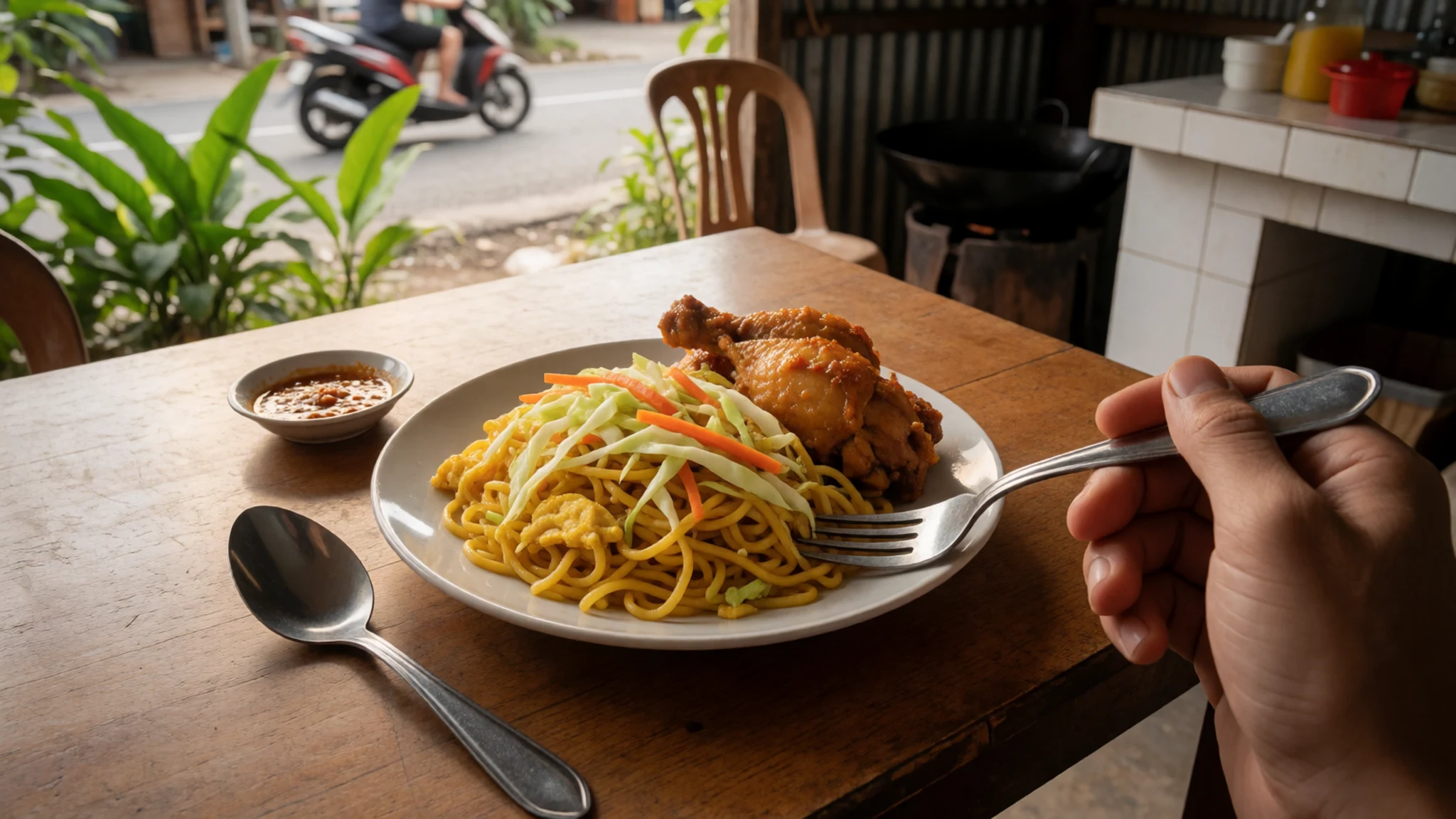
- Nasi — Any Javanese warung, including those near the Commewijne bridge
Fried rice, often ordered alongside bami and eaten with the same spicy chicken or satay. It is a filling, inexpensive plate of the kind served throughout Paramaribo's Javanese eateries, and a good first taste of Suriname's Javanese food culture.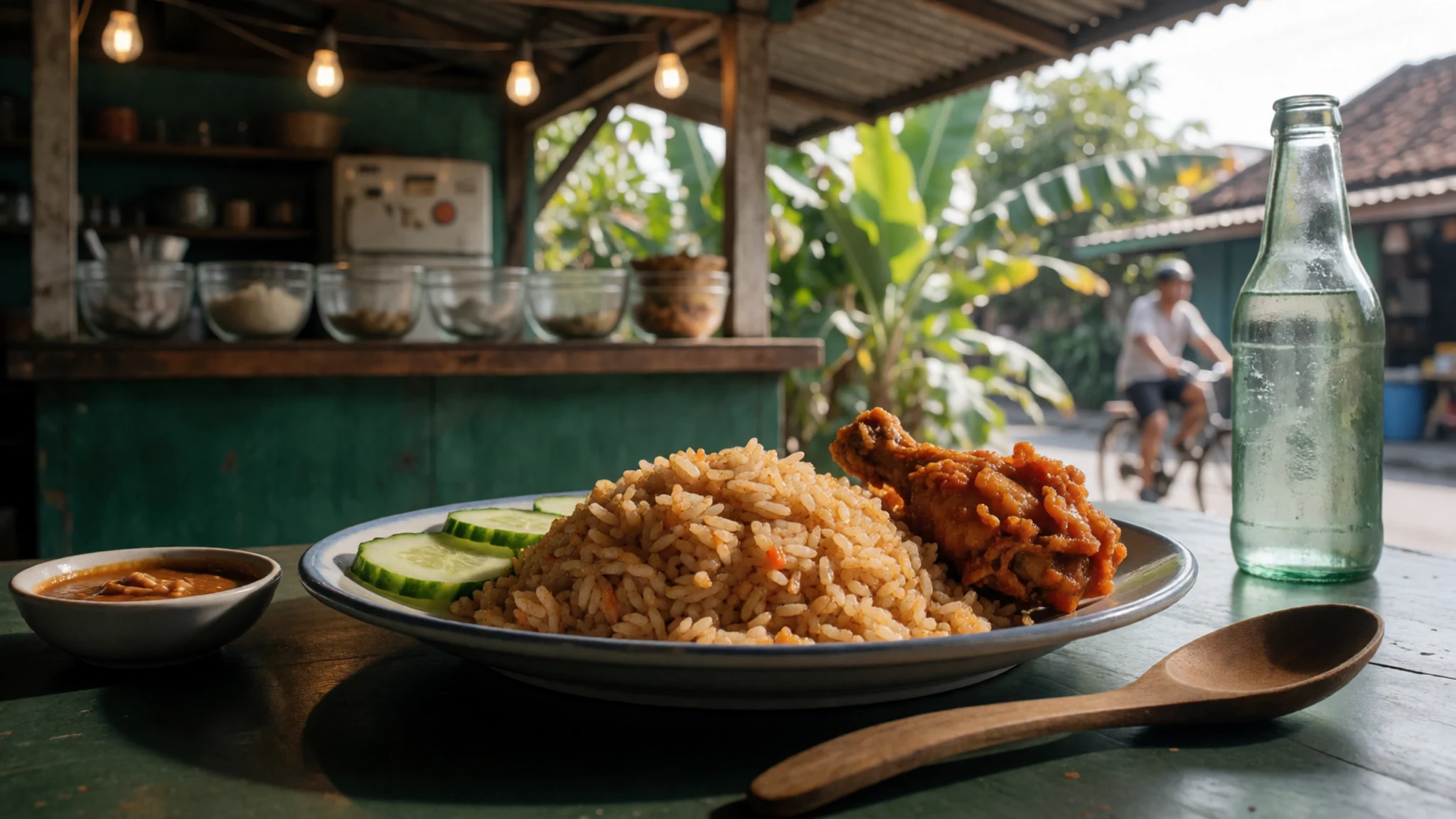
- Roti with chicken — Roti shops and Indian-Surinamese eateries across Paramaribo
A soft flatbread served with chicken curry, drawn from the cooking of Suriname's Indian community. The roti is usually torn and used to scoop up the curry. It is among the most popular everyday dishes in the capital and is easy to find. - Soto — Javanese warungs in Paramaribo and its outskirts
A clear chicken broth with strips of meat, bean sprouts, egg and sliced chillies. Javanese families in Suriname are especially fond of it, and it works as a light breakfast or lunch, particularly after a hot morning at the site. - Petjil — Javanese warungs, including those near the Commewijne bridge
Vegetables in a peanut sauce, one of the main vegetarian choices among Javanese dishes. It is rich, mildly spiced and usually eaten with rice. Ask which version a warung offers, since cooks adjust it to taste. - Telo — Javanese warungs in and around Paramaribo
Fried cassava served with salted fish, a plain, salty and satisfying snack. The cassava is crisp outside and soft within. It makes a good contrast to the spicier noodle and rice dishes and often appears as a side.
Plan it
Best time. Suriname is tropical, so heat and humidity are constant and the rains decide how easy the forest roads are. February–March and September–October are generally the drier spells and suit the walk best; check current conditions with a local operator before committing.
How long. 1
Getting there. Fly into Johan Adolf Pengel International Airport, travel on to Paramaribo, then continue about 50 km south to the Suriname River site. Road and bridge conditions on the last stretch have changed over the years, so confirm the current route with a Paramaribo operator.
Budget. mid
Tips
- Go with a local guide or operator, who can handle the route and tell both histories of the site
- Start in the morning before the heat builds
- Carry water, insect repellent and sun protection
- Bring some cash for small purchases and guide tips
- Ask about road and bridge conditions before setting out, especially after heavy rain
Etiquette
- Do not step on or lean against gravestones or the ruined walls
- Ask consent before photographing people, and ask your guide about places local communities regard as sacred
- Speak quietly and with care about slavery, which is part of this place's history
Nearby
Sources
- Wikidata Q648787 (CC0)
- Wikipedia: Jodensavanne (rev 1364715106) (CC BY-SA 4.0)
- Wikivoyage: Suriname (rev 5424835) (CC BY-SA 4.0)
- Photo: Jodensavanne synagogue remains (Brokopondo, Dutch Wikipedia) (Public domain)
- Photo: Jodensavanne 1830 (Pierre Jacques Benoit) (Public domain)
- Photo: Synagogue Jodensavanne around 1860 (Gerard Werner Catharinus Voorduin) (Public domain)
- Photo: Gravestone, Jodensavanne (Dan Sloan) (CC BY-SA 2.0)
- Photo: Chart of Suriname plantations (Alexander de Lavaux, Hendrik de Leth) (Public domain)
- Photo: Wooden bridge over Suriname river between Carolina and Jodensavanne (Maarten Sepp) (CC BY 3.0)
- Photo: Bridge, Suriname river, Carolina–Jodensavanne (Maarten Sepp) (CC BY 3.0)
- Photo: Broken bridge to Jodensavanna (Jan Willem Broekema) (CC BY-SA 2.0)


