Shahriston
Shahriston, Tajikistan
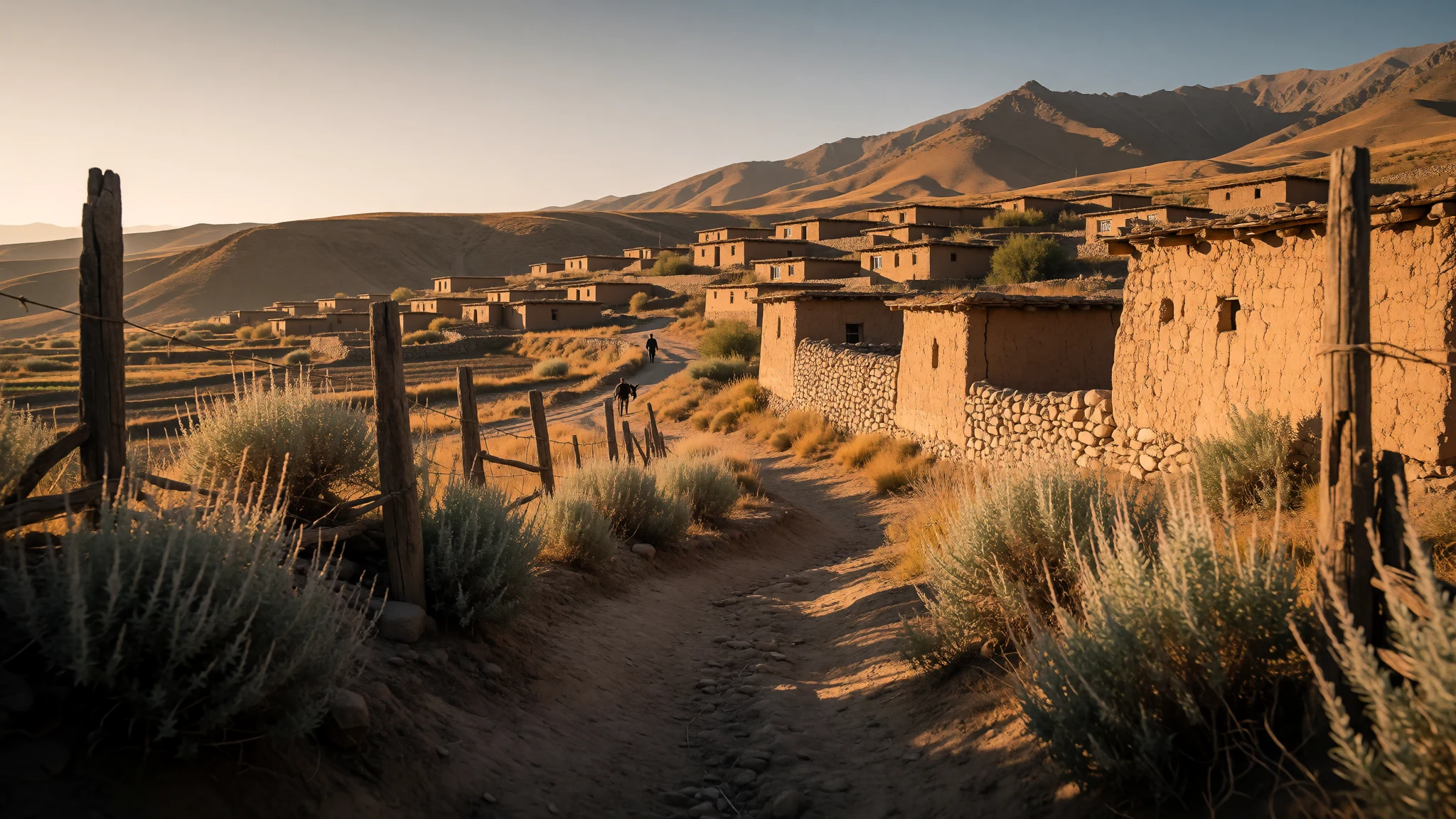
Shahriston is a Tajik village in Rudaki District, best for a slow look at rural life near Dushanbe, not for a list of sights.
The place
Shahriston is a village in Rudaki District, Tajikistan, and its coordinates put it a short distance from the capital, Dushanbe. It is not a town with a skyline or a famous monument. It is a farming settlement of the kind that fills the valleys of western Tajikistan: low houses behind walls, irrigation channels, fields and gardens, and dry brown hills closing the view. Anyone expecting a checklist of sights should look elsewhere in the country; the appeal here is ordinary life at close range.
The setting matters more than the village itself. Tajikistan is a mountain country, with three peaks above 7,000 m and more than half of its land higher than 3,000 m. Lowland places such as Shahriston sit in the gaps between those ranges, and they are where most people live, grow food and trade. The mountains are a backdrop and a weather-maker, and the rivers they feed make farming possible in a dry climate.
That climate is hot and sunny for most of the year. Summers, especially July, are fierce but dry rather than humid, a different kind of heat from an Indian monsoon city or a British heatwave. Spring and autumn bring cloudy, windy and sometimes wet days, and winter is properly cool.
A word on names: the village appears as Shahriston, Shahristan and other variants, because there is no single system for writing Tajik in Latin letters. Russian-style spellings were standard in Soviet times and are fading. Street signs in larger towns carry both Tajik and English, so a sign may not match a map. Shahriston works best as a short stop on a wider trip, perhaps half a day from Dushanbe, with the exact location confirmed locally before setting out.
Its story
Shahriston has a name before it has a well-recorded history, and the name carries most of the story. The word is Persian in origin, built on shahr, 'city', and is written شهرستان in Persian script and Шахристон in Tajik Cyrillic. Across the Persian-speaking world it has long been used for a town or a district, so it is no surprise that Tajikistan has more than one place answering to it.
That overlap causes real confusion. One Shahristan, the administrative centre of its own district in Sughd Region in the north-west, is described by Wikipedia alongside the archaeological site of Bunjikat. The village covered here is the one Wikidata places in Rudaki District, at the coordinates given with this reading. The sources do not agree on which settlement they describe, so claims about Bunjikat should not be attached to this village without checking.
What can be said safely concerns the recent past. Tajikistan was part of the Soviet Union, and Russian spellings of place names were standard in that period. Since independence the country has been establishing its own identity, and that includes how places are written, which is why Latin-letter versions drift between Shahriston, Shahristan and other forms. Tajik is closely related to Persian, so the Persian and Tajik forms of the name read as the same word in two scripts.
For a visitor, the sensible approach is to treat the village as a way into everyday Tajik life near the capital, ask hosts and neighbours about local history rather than trusting a single web page, and expect the best stories to come from people rather than plaques.
What to see
- Shahriston village — Rudaki District
Shahriston rewards a slow walk rather than a schedule. Look for irrigation channels, walled courtyards, fields running up to the foot of the dry hills, and the small shops where people gather. Greet people, ask before photographing anyone, and keep expectations modest: there is no ticketed monument, and services may be limited.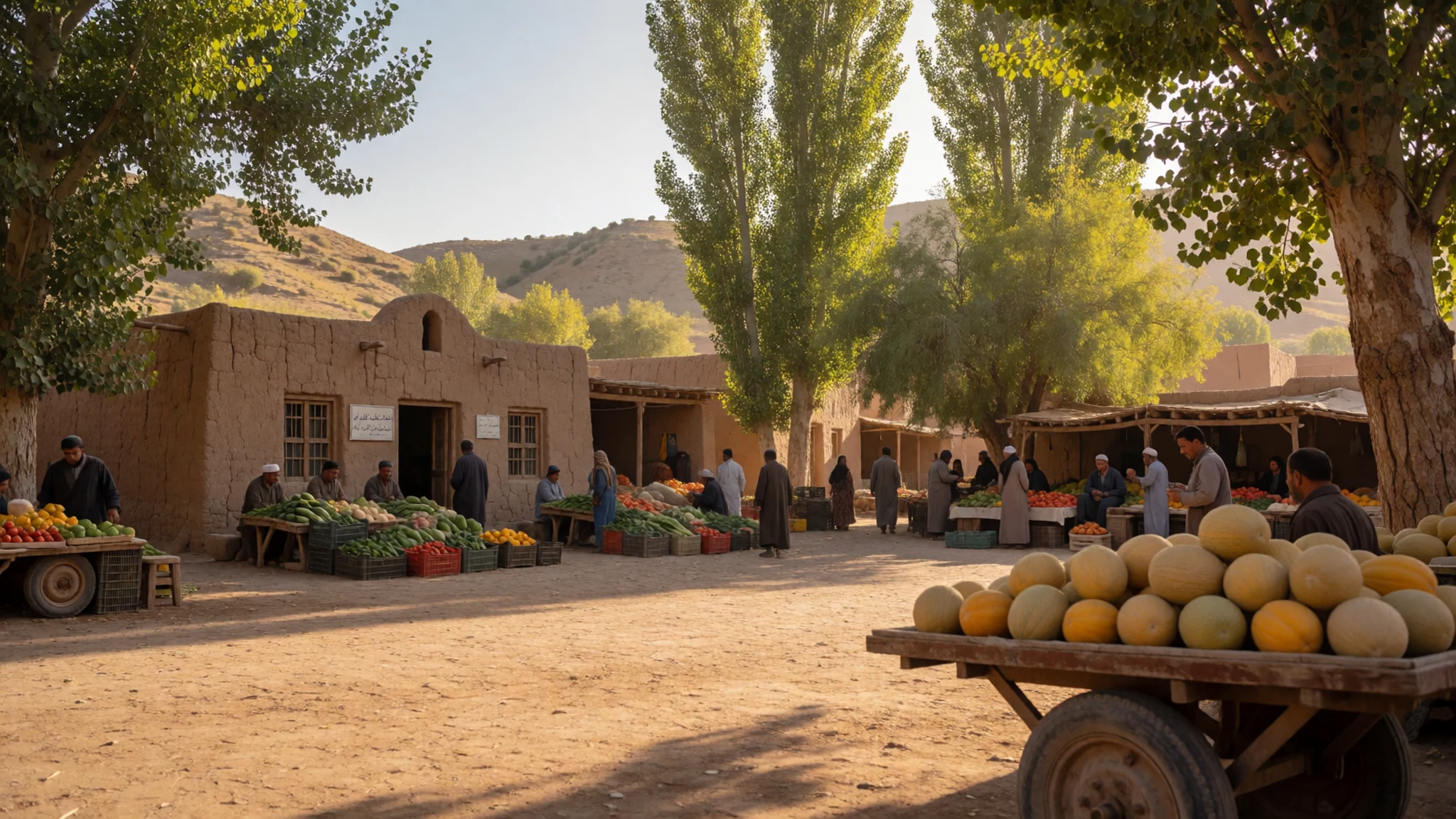
- Dushanbe — Capital city, short drive from the village
Dushanbe is the practical base and arrival point for Shahriston. Its bazaars are a good place to watch trade, fruit and bread change hands; keep an eye on pockets there, since bazaars are where pickpockets are most likely. Dress conservatively even in the city, as shorts on men still draw disapproving stares.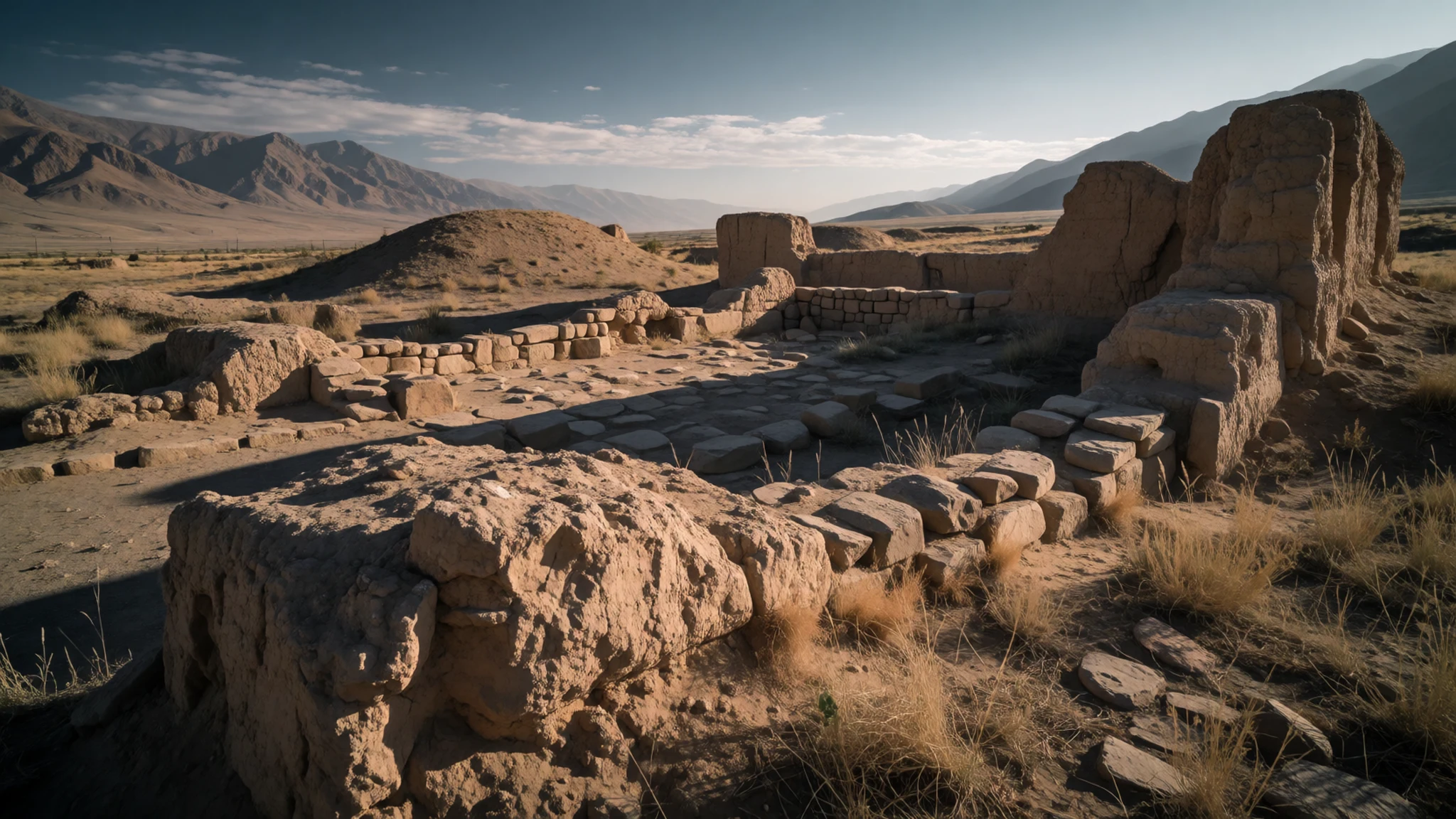
- Fann Mountains — North of Dushanbe
The Fann Mountains are the usual alternative to the distant Pamirs for trekking, and are fairly easy to reach from the capital. Plan several days rather than a day trip, carry water and warm layers, and check routes, weather and guesthouse options locally before heading out.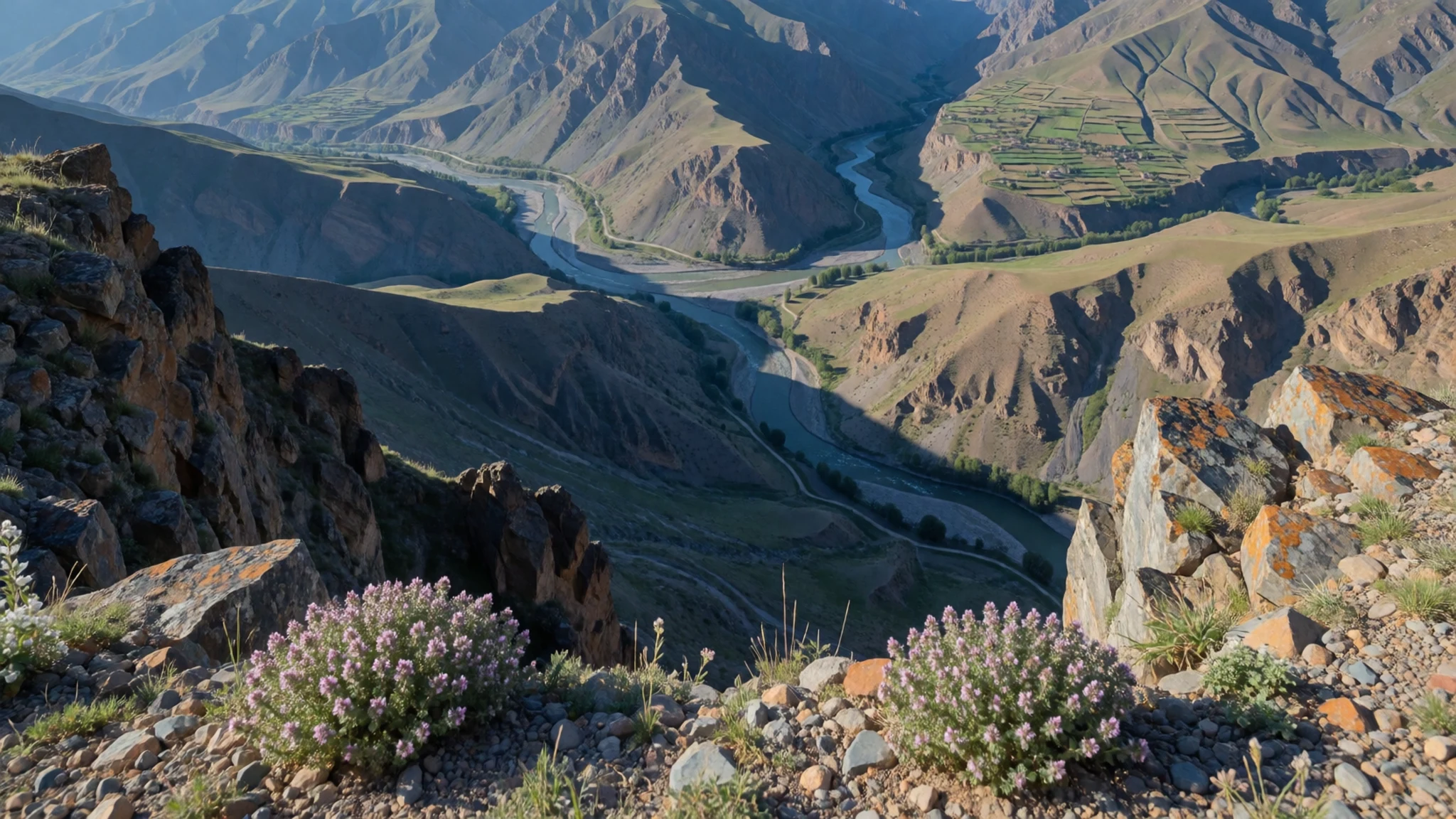
- Sarazm and Panjakent — Zeravshan valley, west near the Uzbek border
Sarazm is an ancient proto-urban site beside the town of Panjakent, which has its own old remains nearby. It suits travellers with time and an interest in archaeology. The journey from Shahriston is long, so plan it as a separate leg of a wider Tajik trip.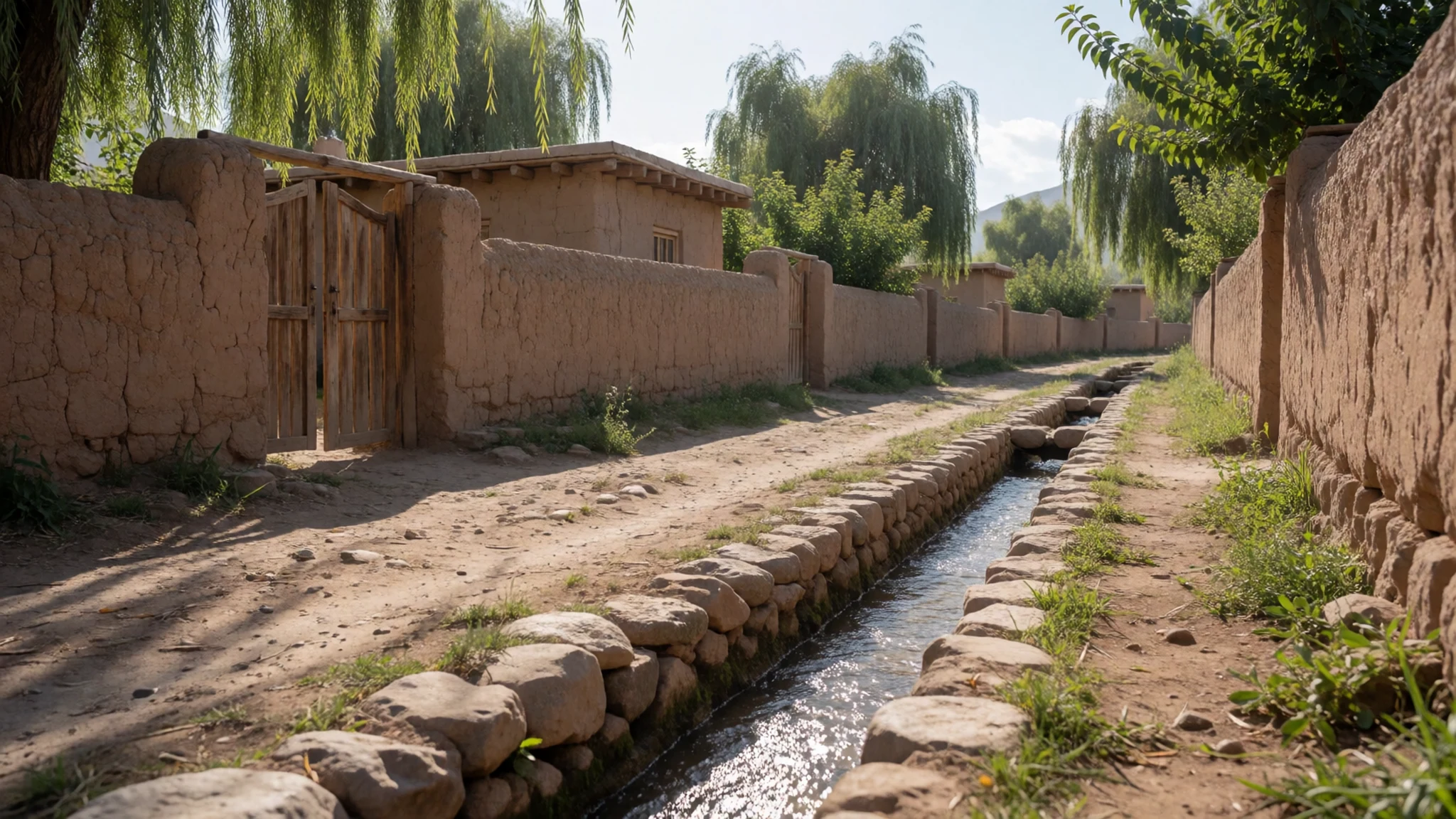
- Istaravshan and Khujand — Northern Tajikistan
Istaravshan and Khujand are the Silk Road towns that Tajik travel writing most often points to. Both lie far to the north of Shahriston, in Sughd Region, so they belong on a longer itinerary rather than a day out. Allow time for bazaars, old streets and slow tea stops.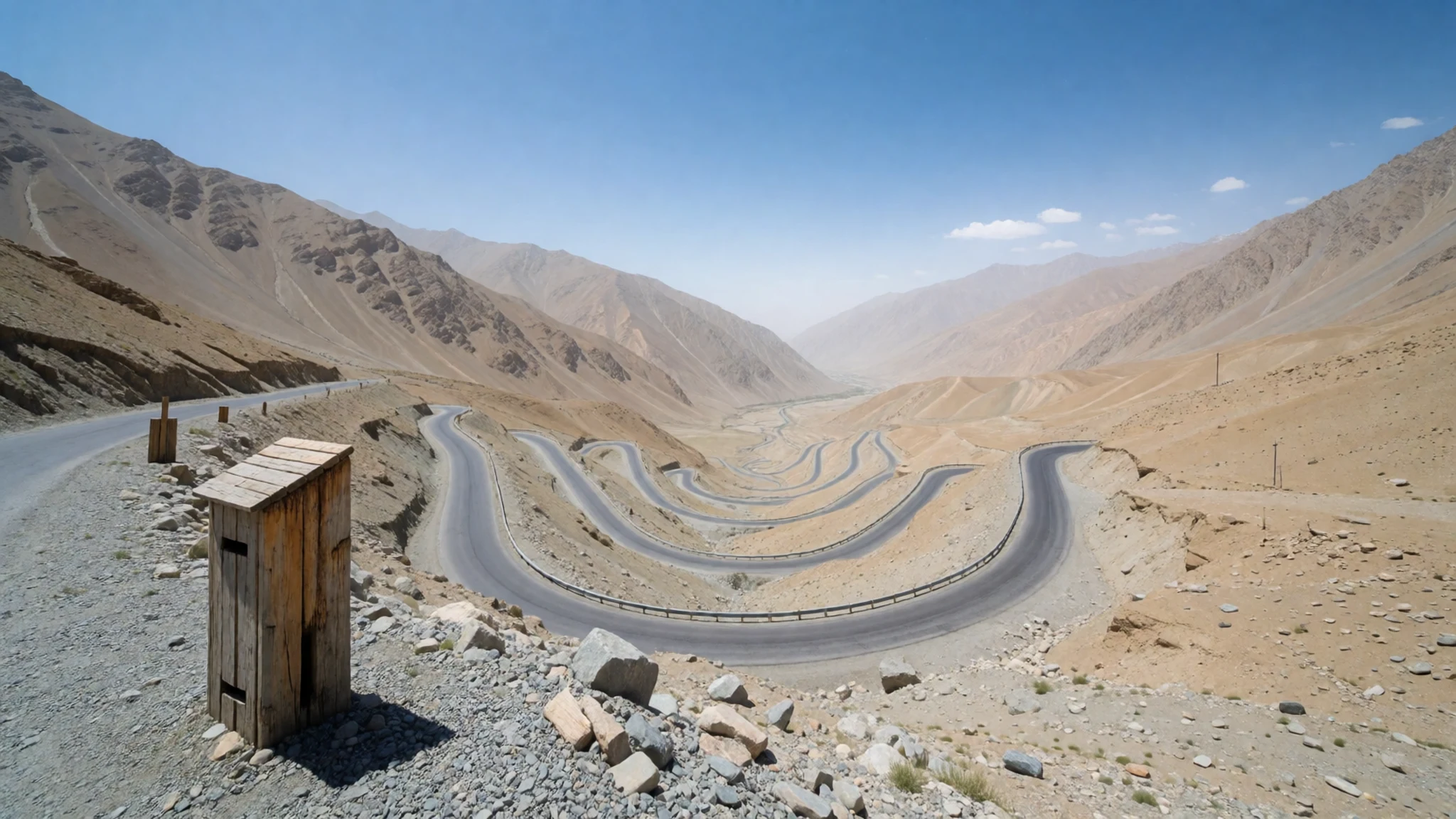
Culture
Culture in Shahriston follows the customs of Tajikistan generally, a fairly conservative society where modest dress in public is expected, especially of women. Strict face coverings are the exception, but covered shoulders and knees are the norm, and men in shorts draw disapproving looks even in the capital.
Hospitality runs deep. Tajiks are usually warm towards visitors, and young people may walk up simply to say hello and practise English; that is friendliness rather than a scam, though common sense still applies in busy bazaars. Meals are communal, with osh and qurutob served on one large plate, and green tea is poured all day. Not every encounter is gentle, and some people can be curt, which is rarely personal.
Age is honoured in greetings: when speaking to an older man or woman, Tajiks place the right hand over the heart.
Islam is the main faith, and mosques in Tajikistan are open to men for prayer. Women usually pray at home or in private spaces at work, and Muslim women visiting are expected to do likewise, though some city mosques let female tourist groups look round. In a village, asking a host is better than assuming access.
When greeting an older person, place your right hand over your heart, and ask before photographing anyone or stepping into a mosque.
What to wear
Fashion in and around Shahriston mixes inherited village dress with ordinary modern clothes. Traditional women's dress in Tajikistan is a long, loose, often brightly coloured dress worn over trousers, with a scarf tied at the head. For celebrations the fabric of choice is atlas or adras, a glossy silk or silk-blend with a blurred, ikat-dyed pattern. Men's traditional pieces include the embroidered skullcap (tubeteika) and the quilted chapan, a long coat worn in cold weather and on ceremonial occasions. These fabrics and embroideries mostly come out for weddings and holidays rather than weekdays.
Day to day, most people wear practical modern clothes: trousers and shirts for men, long dresses or skirts for many women, and jackets or tracksuit tops in cooler months. Scarves are worn in several styles, but strict face coverings are rare.
Visitors should dress modestly. Women do best with shoulders and knees covered, in loose cotton or linen, and a light scarf for sun and for any religious setting. Men should wear long trousers rather than shorts. Summers are dry and very hot, so breathable layers and a sun hat matter; spring and autumn can be windy and wet, so a light waterproof and a warm layer earn their space. Dusty lanes and uneven paths suit sturdy closed shoes that slip off easily, since shoes come off at the door of a home.
What to eat
- Osh (plov) — Tea houses, roadside eateries and any wedding or family feast
Osh is Tajikistan's everyday plov: rice cooked with cubed beef or mutton and long strips of carrot in oil, in a cauldron called a qazan over an open flame. It is eaten communally from one large plate, and it is the dish most often served to guests.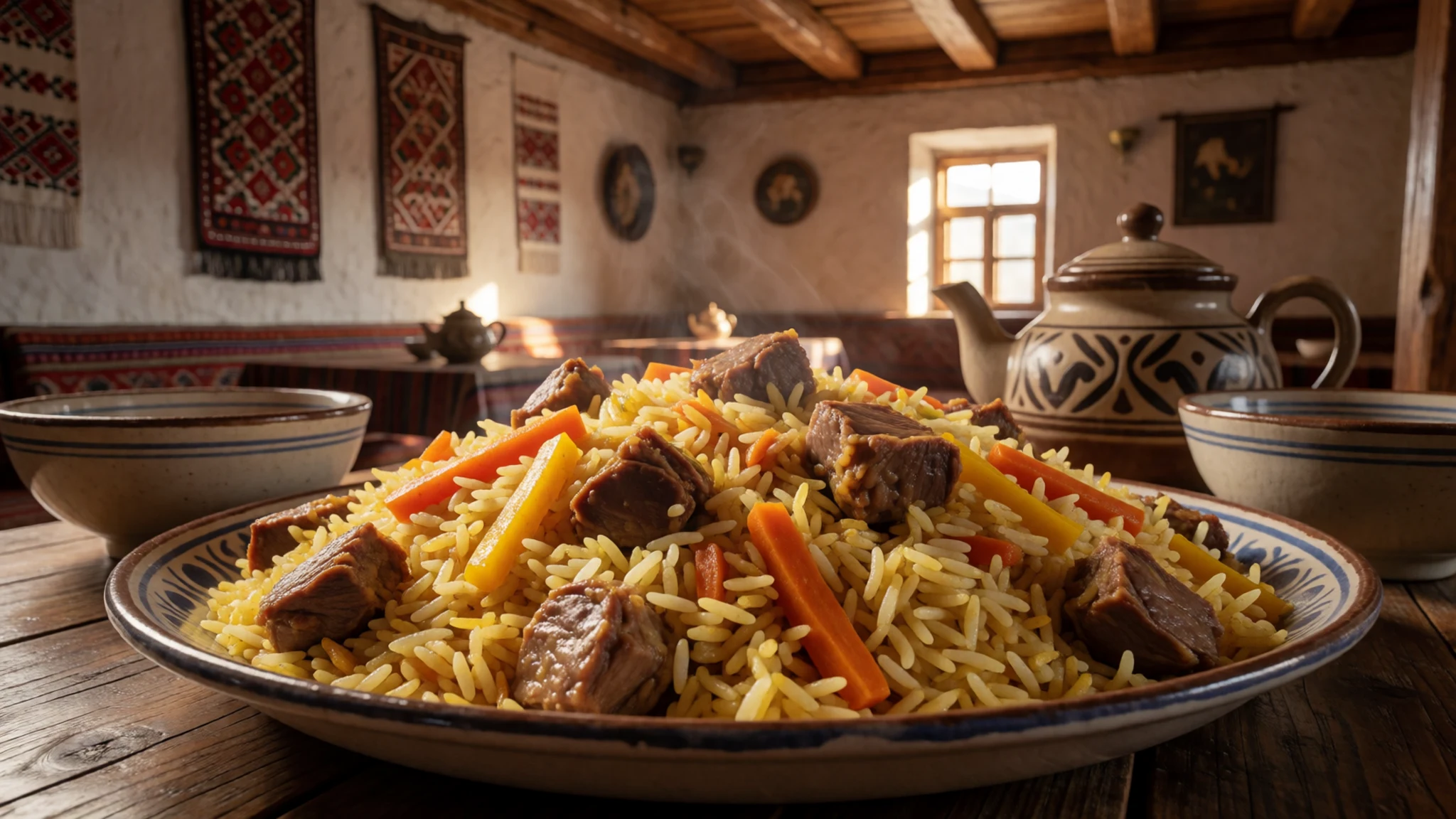
- Qurutob — Home-style eateries and family meals
Qurutob is often called the national dish: flaky bread and vegetables under a yogurt-like sauce made from dried sour cheese (qurut), topped with golden fried onions. No meat is added. It is eaten by hand from a communal plate and appears less often on menus than osh.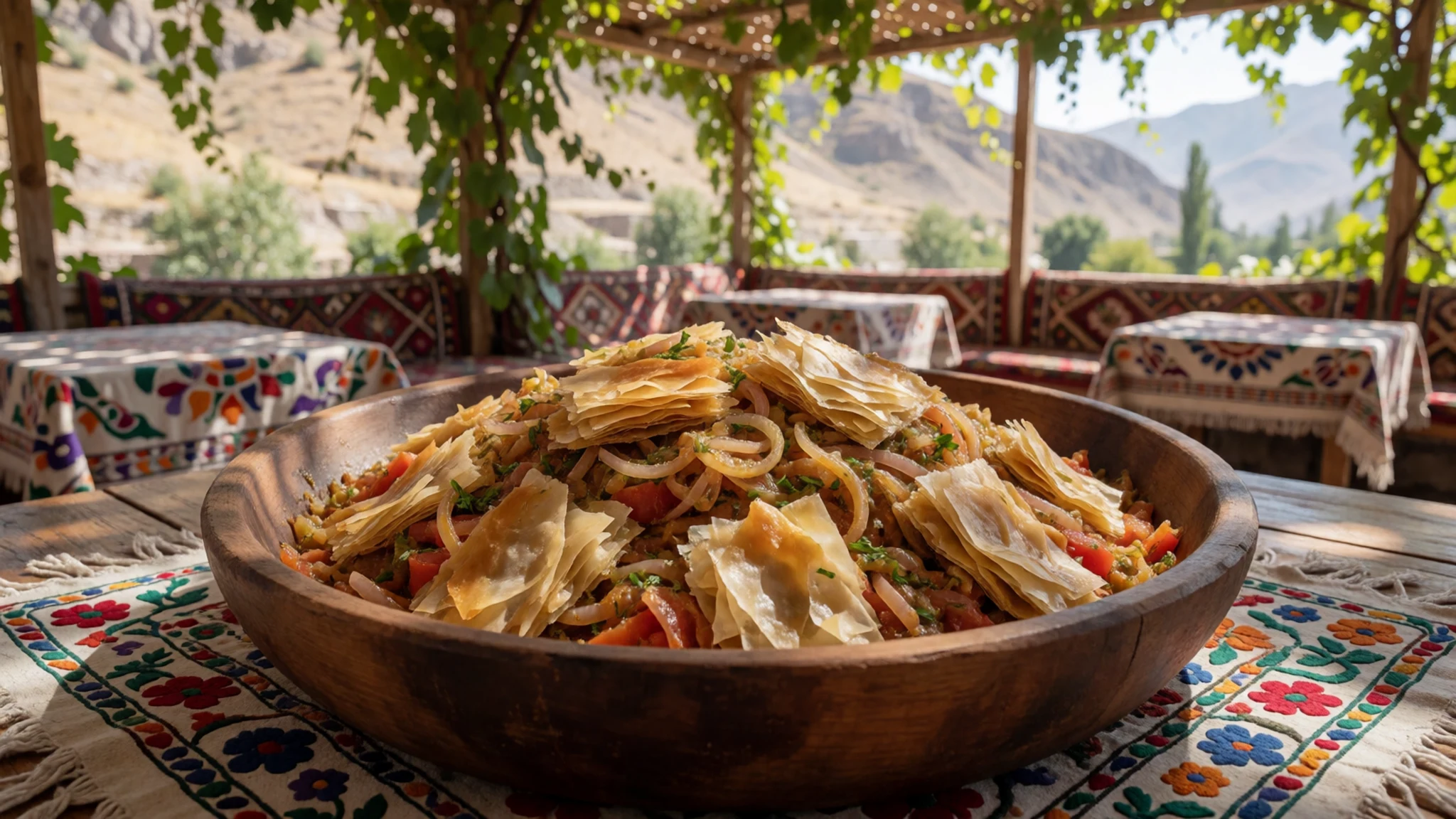
- Laghman — Bazaar eateries and simple canteens
Laghman is a noodle soup with vegetables and lamb or beef, a Central Asian staple that makes a lighter meal than osh. Look for it in the eating corners of bazaars, where it is cooked in large batches and served hot. - Green tea — Tea houses (chaikhana) and in any home
Green tea, sweetened or plain, is drunk through the day and offered to every guest. It arrives in small bowls that the host keeps refilling. Accepting a bowl is polite and is the easiest way to start a conversation. - Compote — Family tables and café counters
Compote is a cold drink of stewed fruit and its syrup, sweet and sometimes sharp. It is common at meals. Because tap water is not recommended in Tajikistan, ask whether it was made with boiled water and whether ice has gone in.
Plan it
Best time. Mid-May to early June, or August to early September, when it is neither cold nor at peak summer heat. July is the hottest month, though the heat is dry, and April–May and September–October can bring cloud, rain and wind.
How long. 2–3
Getting there. Fly to Dushanbe International Airport, then go by road (taxi or shared car) to Shahriston, which lies a short way from the capital. Confirm the exact village on a map first, because another Shahristan exists in Sughd Region.
Budget. low
Tips
- Check visa rules early: many nationalities get a short visa-free stay or an e-visa through the Ministry of Foreign Affairs checker, and the e-visa should be printed because digital copies are not accepted.
- Drink bottled water, avoid ice, and expect occasional water shutoffs in buildings, including eateries.
- Carry cash for village shops and shared cars; cards may not be accepted outside the capital.
- In warm months do outdoor walking in the morning, as midday sun is strong.
- Check current government travel advice before booking, since the security situation near Afghanistan can change.
Etiquette
- Place your right hand over your heart when greeting older people
- Dress modestly: covered shoulders and knees, and long trousers for men
- Ask before photographing people, and do not enter a mosque unless invited
Nearby
Sources
- Wikidata Q97238415 (CC0)
- Wikipedia: Shahriston (rev 1379122318) (CC BY-SA 4.0)
- Wikivoyage: Tajikistan (rev 5424872) (CC BY-SA 4.0)