Sabah Al Ahmad Sea City
Sabah Al Ahmad Sea City, Kuwait
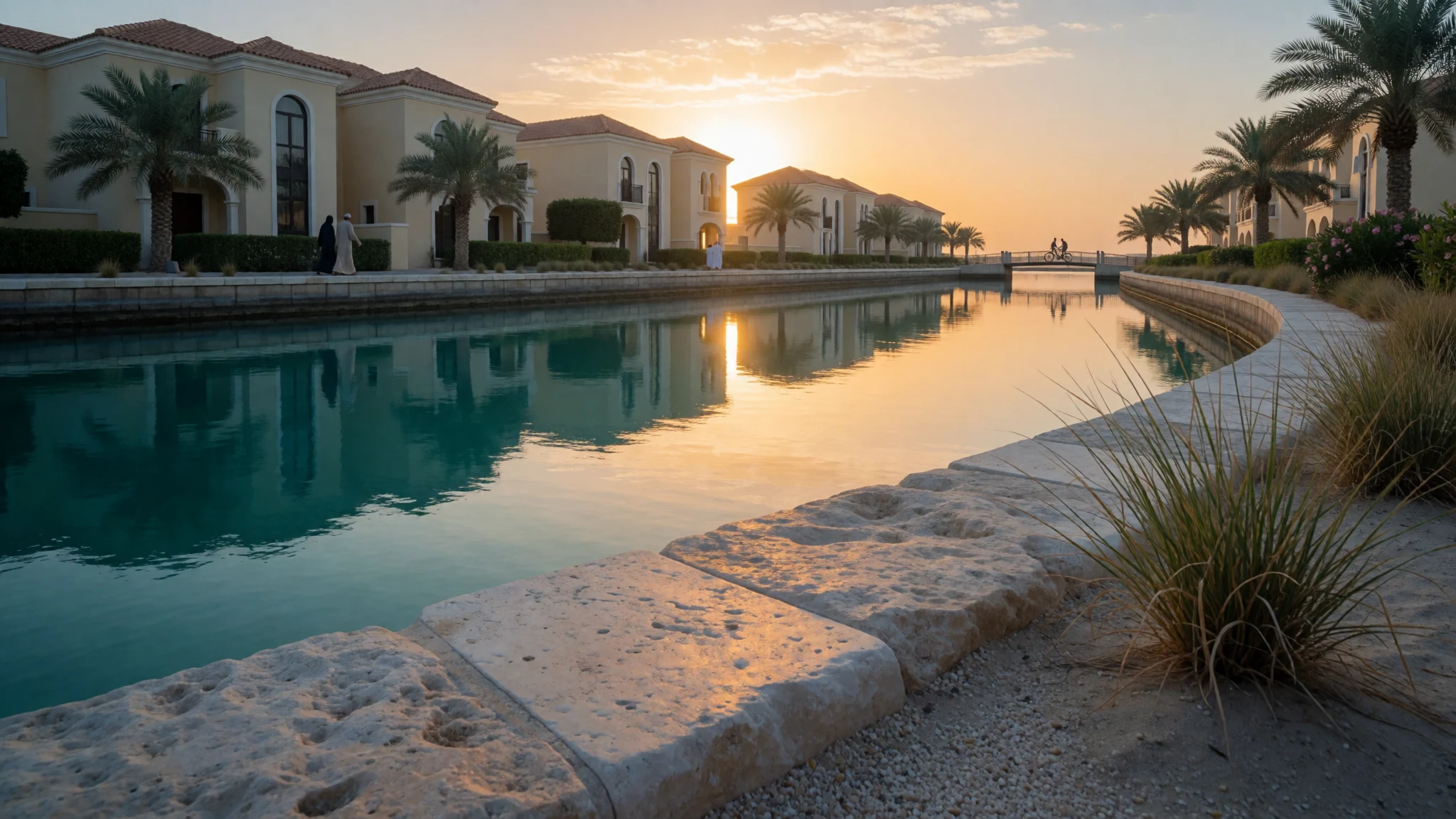
Sabah Al Ahmad Sea City is a canal-cut resort town on Kuwait's southern coast, worth visiting for cooler winters, boats and an unusual idea.
The place
Sabah Al Ahmad Sea City sits on the Khiran coast in Kuwait's Ahmadi Governorate, towards the southern end of the country's shoreline. It is a planned waterfront town where the water was dug rather than found: engineers cut broad channels into flat desert and let the Gulf flow in, so that rows of houses and apartments back directly onto the water. The aim was to create far more sea frontage than the natural coast offered, and to do it by excavation instead of reclaiming land from the sea. When the plan was drawn up, developers expected a population of up to 250,000, and the city was inaugurated in 2016, though building has gone on in phases and some districts still read as work in progress.
Visitors should set their expectations accordingly. This is not an old port with a souk and fishermen on a corniche. It is a car-dependent resort suburb of villas, marinas, chalets and boat jetties, quiet on weekdays and busier at weekends when Kuwaiti families come down for the sea. Summer heat is severe, and the water is far more pleasant in the cooler months. The surrounding land is flat, pale desert with a wide horizon. Shops and restaurants are clustered rather than strung along streets, so a day here usually means driving from one cluster to the next. The developer's official site, https://www.saasc.com/, is the place to check what is open and what is still being built.
Its story
The story of Sabah Al Ahmad Sea City is a recent chapter in a long Kuwaiti relationship with the water. Kuwaiti families trace their origins to tribes from the Nejd plateau, who drifted towards the Gulf and settled at Al-Qurain in the early eighteenth century. Within a few decades the settlers wanted a single authority to calm quarrels between rival groups. They chose the Al-Sabah family, and Sabah ibn Jaber became the first sheikh in the mid-eighteenth century. The family still leads the country today.
Boats, pearling and trade shaped the old town. Oil later reshaped the whole nation, and the oil port of Mina Al Ahmadi, to the north of Khiran, grew out of that change. Sea City belongs to a newer idea about how Kuwaitis might live beside the sea. Its first phase was opened to the water well before the formal inauguration in 2016, and the scheme was paid for and run by private developers rather than the state, a notable departure for Kuwait. Planners promoted the excavated-channel method as gentler on the environment than filling in shallow sea. Whether other developments follow the model remains an open question. The city has grown in stages across a planned span of decades, so its story is still being written, one phase at a time.
What to see
- The canal waterfront — Al Khiran, Ahmadi Governorate
The channels themselves are the main sight at Sabah Al Ahmad Sea City. Driving or strolling beside them shows how flat desert became waterfront plots, with boats moored outside houses and marinas at the larger junctions. Go in the cooler months, and in late afternoon when the light softens and the heat drops. Check the official site for what is open.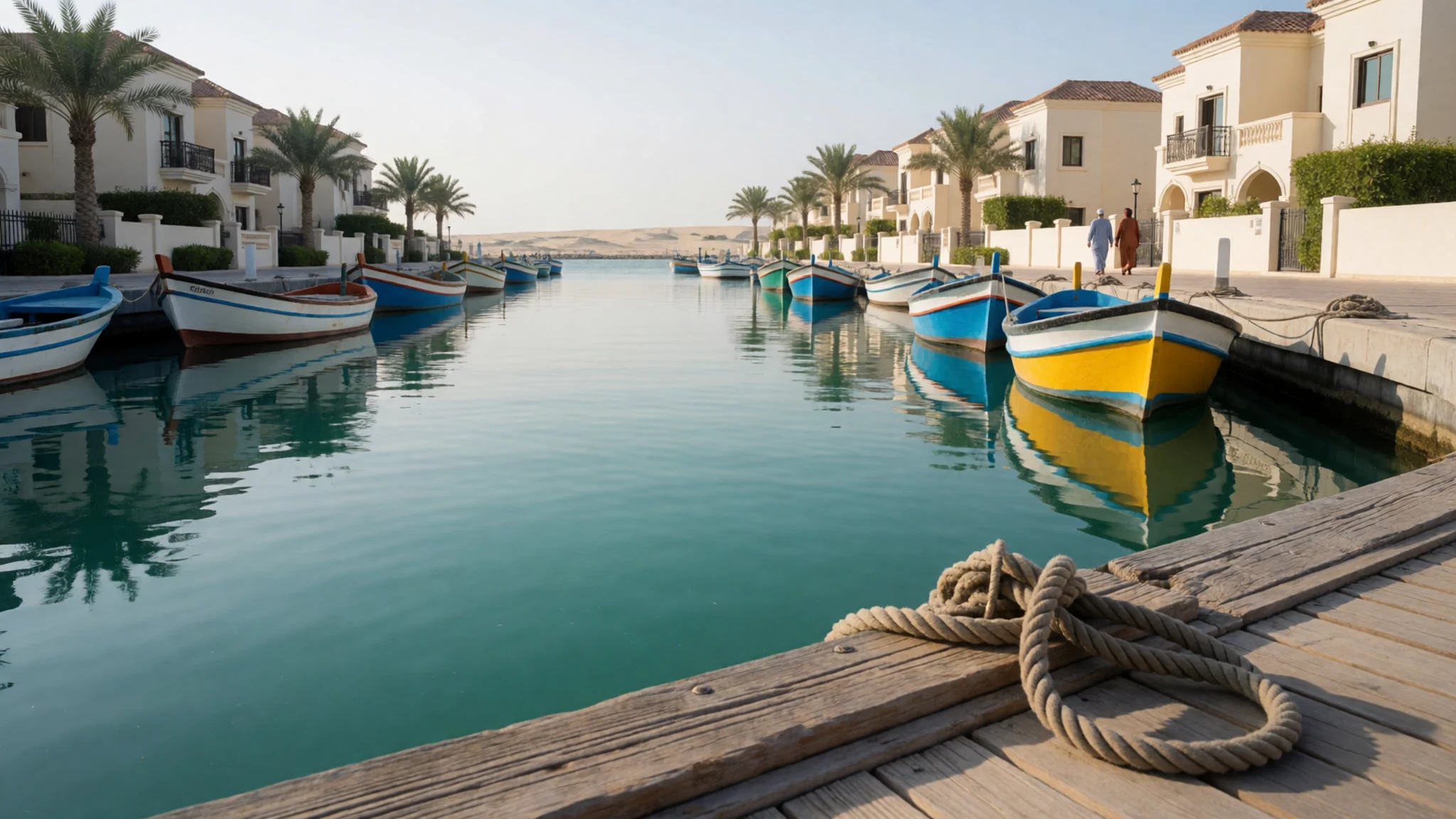
- Failaka Island — Gulf, off Kuwait City
Failaka Island lies in the Gulf off Kuwait City and is served by regular ferries from the mainland. Old dhows crowd its small port, and the island suits a slow day trip. It is a long drive north of Sea City, and departures can be cancelled, so check with the operator and keep a backup plan.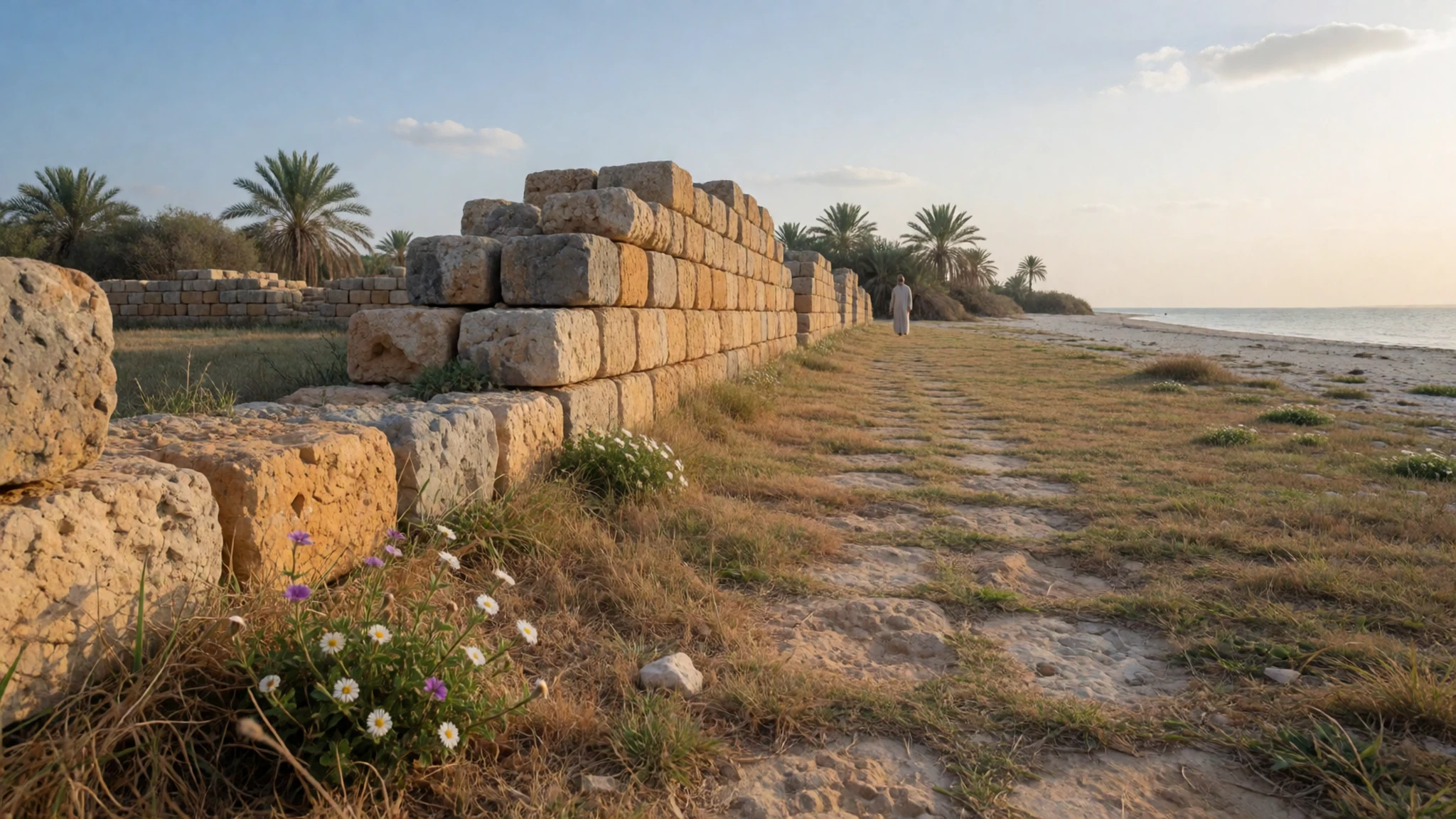
- Al Jahra boatyards — Al Jahra
Al Jahra, west of Kuwait City, still has yards building traditional wooden boats such as boums and sambuks. These days the vessels mostly go to leisure owners rather than to pearling or cargo work, but the craft survives. Ask locally before turning up, since these are working sites rather than attractions.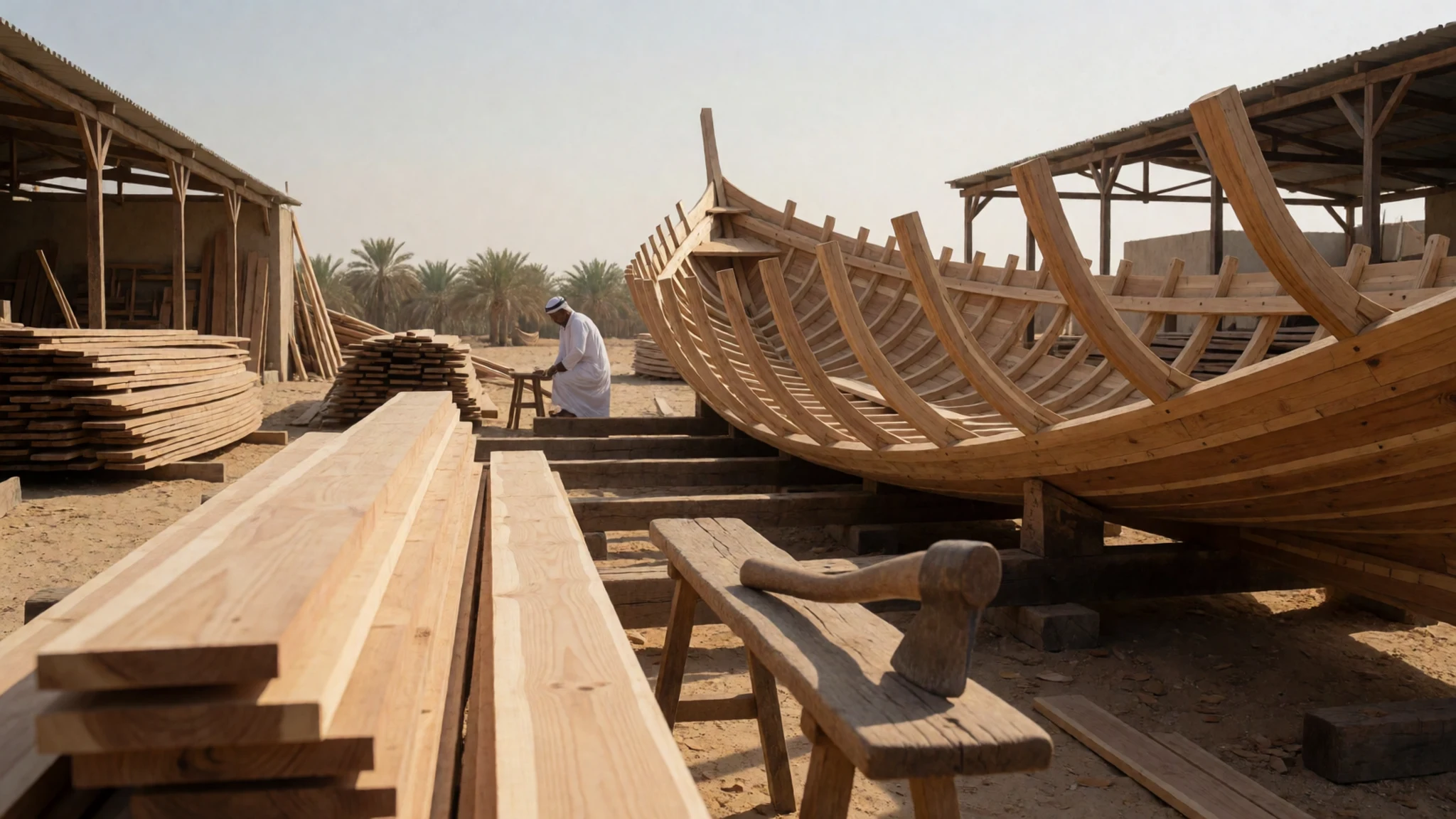
- Mina Al Ahmadi — Ahmadi Governorate
Mina Al Ahmadi is an oil port on the coast south of Kuwait City, with long jetties where supertankers load. It explains the money behind the modern country. The Oil Display Centre there tells the story of the Kuwait Oil Company, and reservations are needed, so arrange a visit well ahead.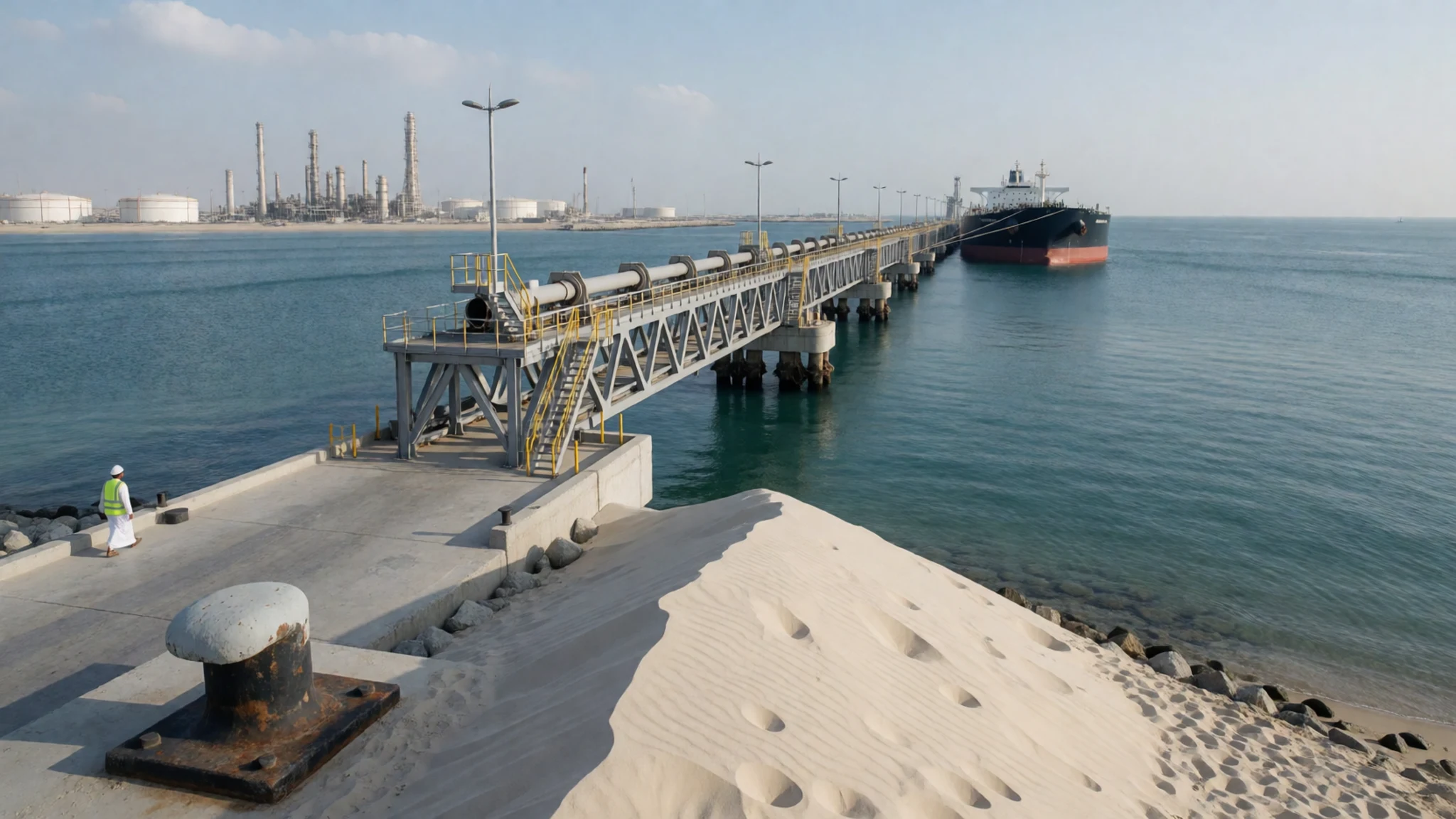
- KOC Ahmed Al Jaber Oil & Gas Exhibition — Ahmadi Governorate
This museum follows the history of Kuwait's oil industry through hands-on displays, finishing in a film room whose format is better left as a surprise. It suits a hot afternoon when the desert is too harsh for outdoor plans. Opening arrangements change, so check before travelling.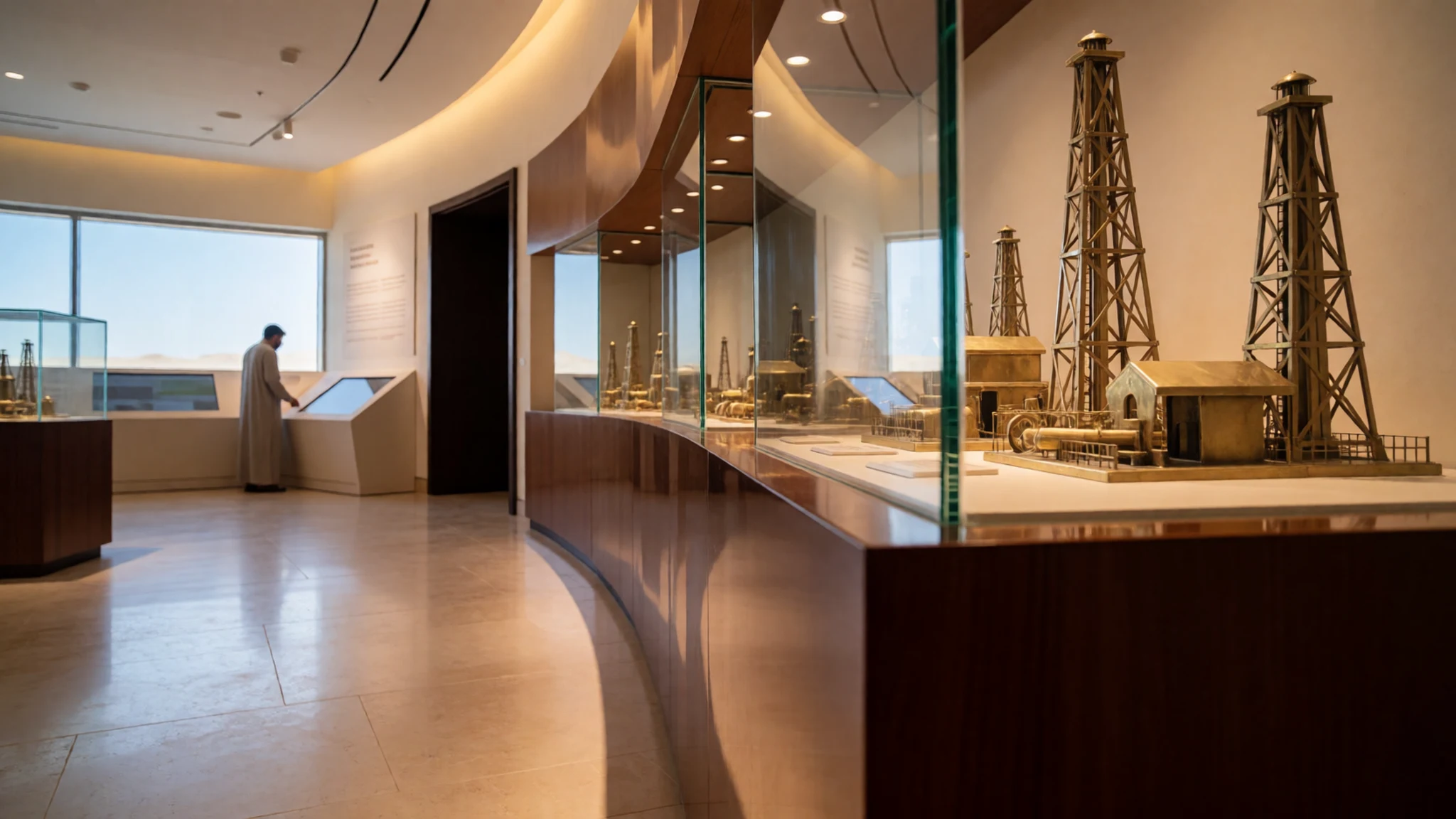
- Kazmah desert cliffs — Western Kuwait desert
The Kazmah cliffs rise from otherwise flat country and give a rare viewpoint over the bay when visibility is good. At weekends young Kuwaitis drive jeeps and quad bikes up the slope, so expect noise and dust. Go with someone who knows the ground, as desert tracks are easily lost in haze.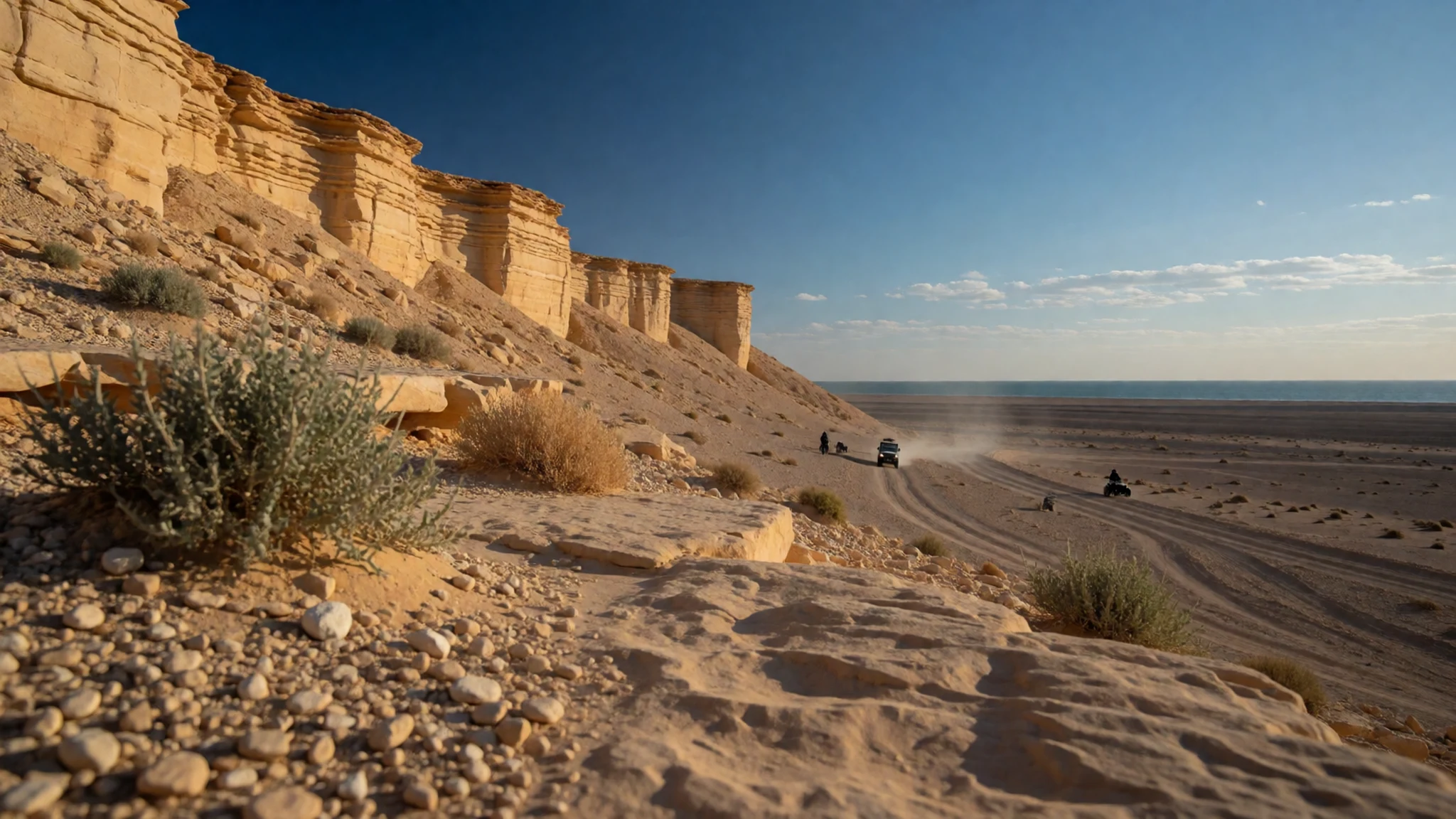
Culture
Sabah Al Ahmad Sea City is a young development, but the manners around it are those of Kuwait and the wider Arab Gulf. Courtesy and hospitality count for a great deal, and honour is taken seriously. Insulting, mocking or defaming someone in public can bring real anger and even legal trouble, and the law is drawn broadly, so careful speech is the safest habit.
Islam is the official religion, with Sunni and Shia Muslims alongside Christian, Hindu and other communities, and Kuwait is comparatively tolerant of other faiths. Calls to prayer are broadcast from mosques before dawn and several times through the day, which light sleepers may notice in a chalet or resort. Everyday dress is relaxed, and visitors will see a wide mix of styles.
Alcohol is banned outright: it cannot be imported, made or possessed. With almost no nightlife, social life revolves around restaurants, malls, family chalets and, at weekends, the sea. Visitors will find that evenings out mean long meals and coffee rather than bars. Families dominate the waterfront on busy days, and Kuwaitis are generally welcoming to polite guests who show interest in the country.
Keep conversation courteous, never joke about or criticise anyone in public, and leave alcohol and pork out of your luggage.
What to wear
Dress around Sabah Al Ahmad Sea City mixes Kuwaiti tradition with relaxed modern habits. Traditional men's dress is the dishdasha, a long white robe, made of lighter cotton in the hot months and heavier cloth in winter. It is worn with a ghutra headcloth held in place by a black agal cord. For formal and festive occasions a bisht, a light cloak edged with gold thread, goes over the top. Women's traditional wear includes the dara'a, a loose, often embroidered gown worn at home and at celebrations, and the black abaya with a headscarf, which many women wear outdoors.
Today Kuwait is live-and-let-live about clothing. Men may wear a dishdasha or T-shirts and shorts; women wear anything from designer outfits to full black abayas. At a canal-side resort the usual look is smart casual, with sportswear for boats and weekend chalets.
Visitors should pack light, loose cotton or linen that covers shoulders and knees in public, plus a sun hat, sunglasses and sandals. Women should avoid showing midriffs. Closed shoes help on desert tracks and at the cliffs. Swimwear belongs at resort pools or private beaches; cover up on public beaches. To enter a mosque, cover arms and legs, women should carry a headscarf, and everyone removes shoes.
What to eat
- Machboos — Kuwaiti home-cooking restaurants, mainly around Kuwait City
Spiced rice cooked with chicken, lamb or fish, scented with dried lime, turmeric and other warm spices. It is the dish most often served at family gatherings. Look for it in restaurants specialising in Kuwaiti home cooking, which are rarer than international chains.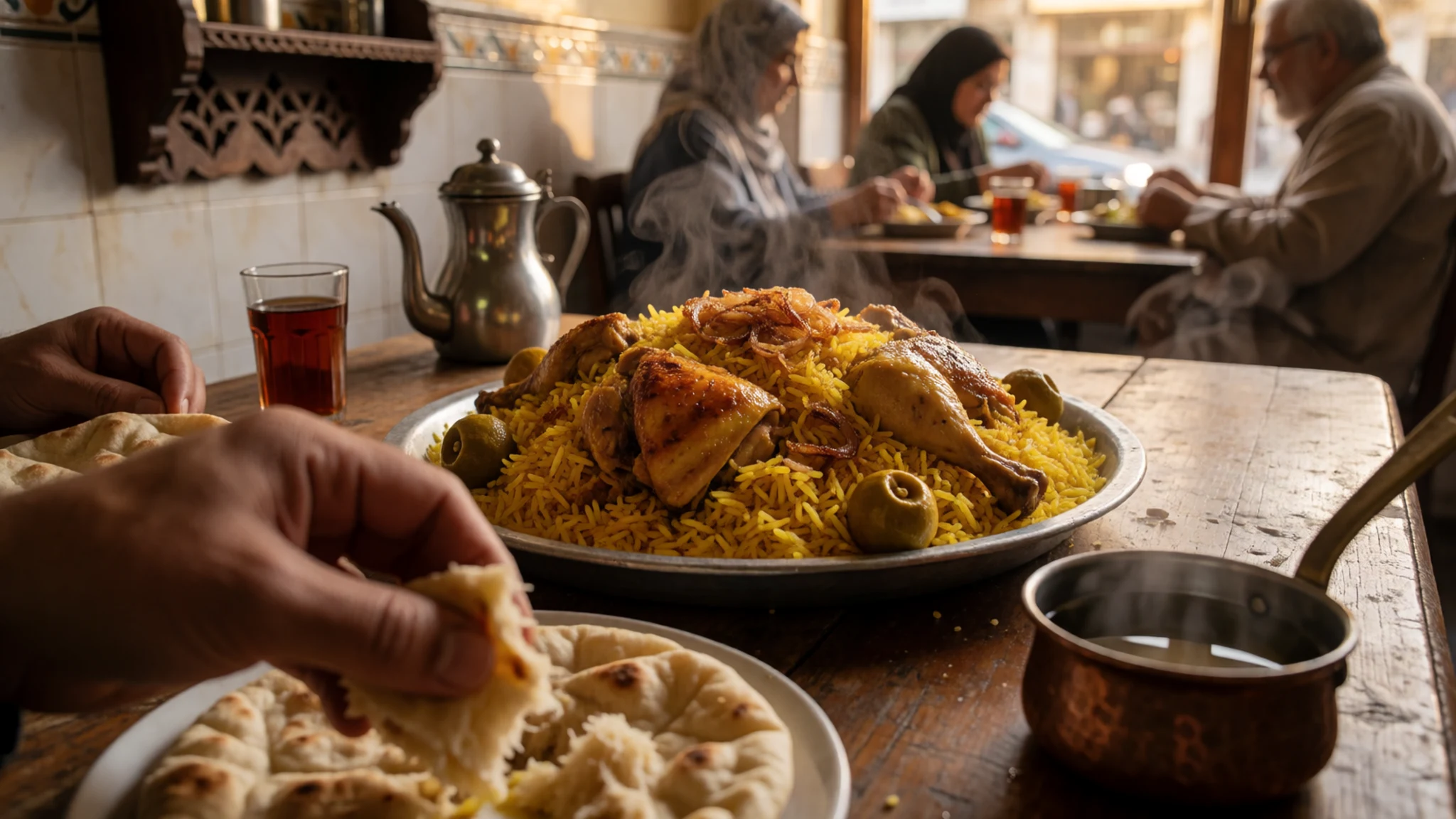
- Muhammar — Seafood restaurants along the southern coast
Sweet, dark rice made with dates or sugar syrup and usually served with fried fish. The mix of sweet and savoury surprises many first-timers. It suits seafood restaurants along the coast, where fish is the natural partner.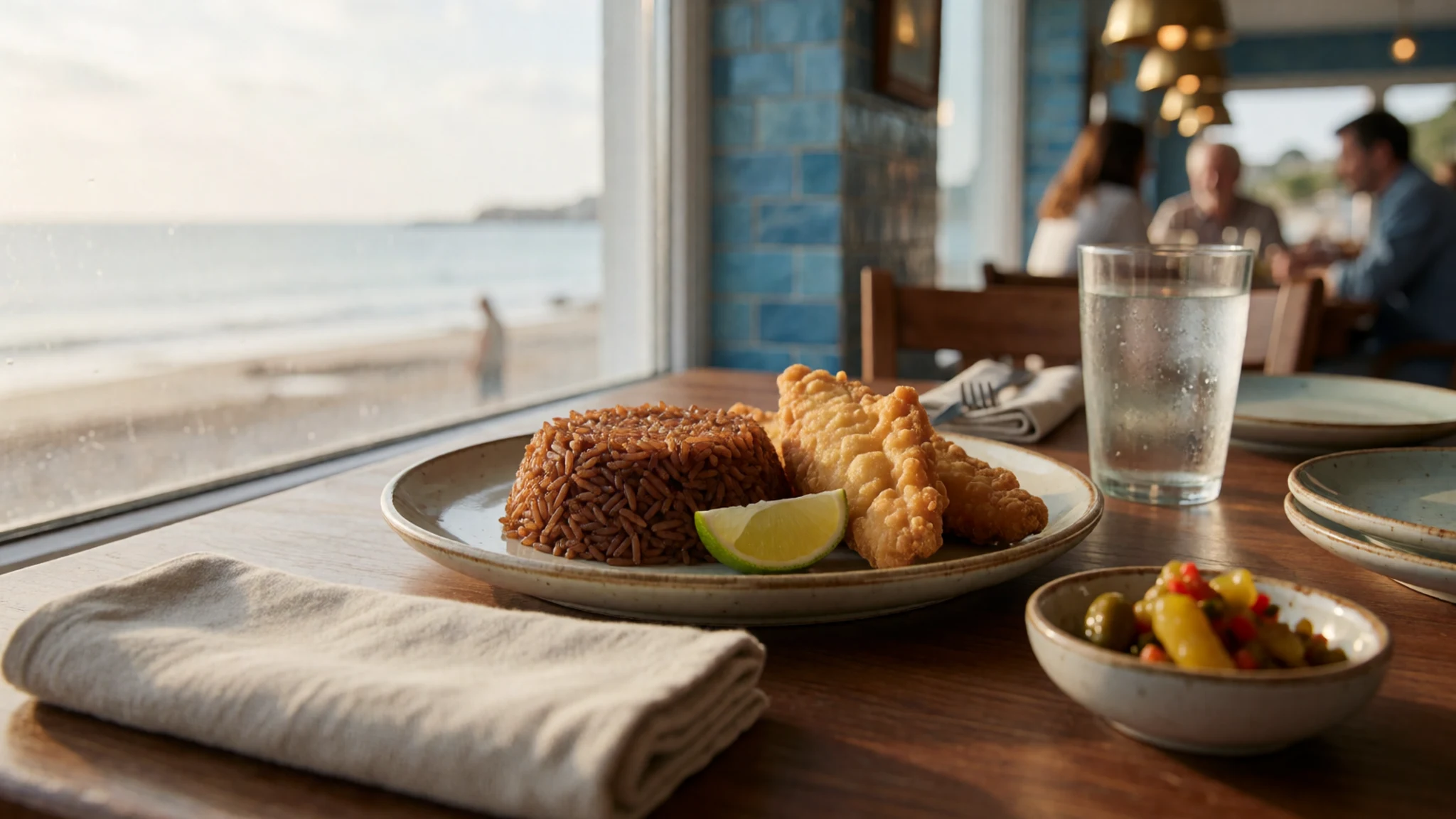
- Grilled fish — Waterfront and marina restaurants, and fishing-port eateries
Fresh Gulf fish, grilled whole or in fillets with spices and served with rice and salad. Seafood is the obvious order near the water, and quality varies, so choose places that are busy with local families rather than empty dining rooms. - Balaleet — Traditional breakfast cafés and family-run eateries
A breakfast of sweetened vermicelli noodles flavoured with cardamom and saffron, topped with a savoury omelette. The sweet and salty contrast is typical of Gulf morning tables, and it works well before a hot day out. - Specialty sandwiches and fresh juices — Restaurants Road, Salmiya, and mall food courts
Kuwait has a lively street-food culture of stuffed sandwiches, shawarma and freshly pressed juices. The road known locally as Restaurants Road, in Salmiya, lines up eateries for exactly this, and it is a cheap, quick contrast to a sit-down meal.
Plan it
Best time. November to March, when days are milder and the water is pleasant for boating and walks. Summer heat is severe and is the main hazard for visitors, so the hottest months suit only short, air-conditioned stops.
How long. 1–2
Getting there. Fly to Kuwait International Airport, then continue by taxi, driver or hire car along the southern coast road to Al Khiran, where Sea City stands. There is no practical rail link, so the last leg is by road.
Budget. high
Tips
- Check visa rules before booking: UK passport holders can use an eVisa or visa on arrival, but others need a sponsor's invitation that can take up to a week
- Hire a car or arrange a driver, as the area is spread out and walking in the heat is hard
- Carry water, a hat and sunscreen, and plan outdoor time for morning or late afternoon
- Check https://www.saasc.com/ for what is open and what is under construction before making the trip
- Save the emergency number, 112, and follow local news and official advice in times of regional tension
Etiquette
- Wear light but modest clothing in public, covering shoulders and knees and avoiding bare midriffs
- Keep swimwear to resort pools or private beaches and cover up on public ones
- Do not bring alcohol or pork into the country, and keep speech polite in public
Nearby
Sources
- Wikidata Q27347085 (CC0)
- Wikipedia: Sabah Al Ahmad Sea City (rev 1378592940) (CC BY-SA 4.0)
- Wikivoyage: Kuwait (rev 5407773) (CC BY-SA 4.0)
- View of Kuwait, ISS Expedition 61 (NASA) (Public domain)
- View of Kuwait, ISS Expedition 62 (NASA) (Public domain)

