Kubbar Island
Kubbar Island, Kuwait
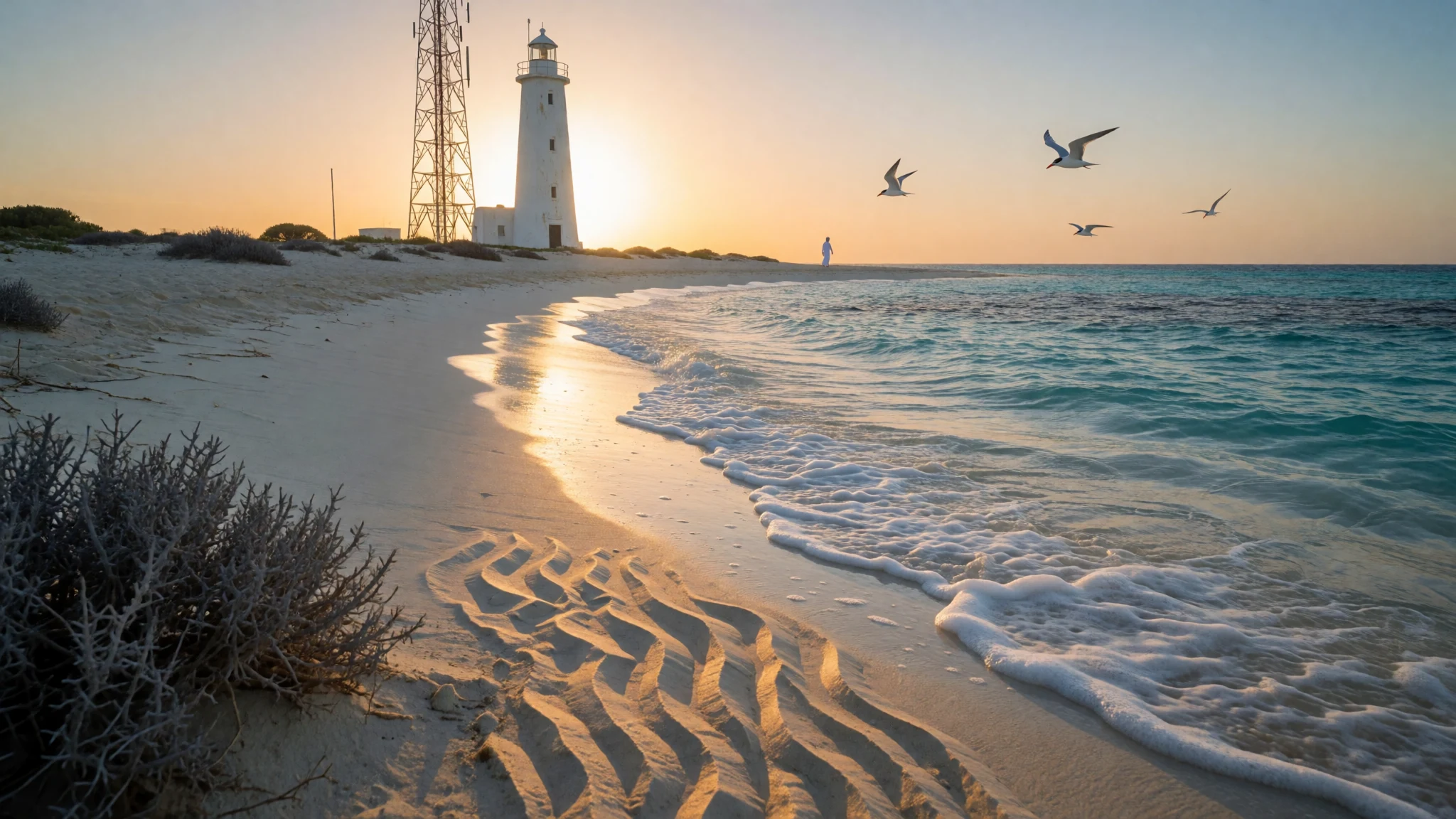
Kubbar Island is a Kuwaiti sand cay where nesting terns and a clear reef are a boat day from the city.
The place
Kubbar Island is a low sand island in Kuwait's southern waters, among the small offshore cays that sit apart from the city coast. There is no town on it, no harbour wall and no road: the land is a pale bar of beach and scrub, with a lighthouse and a tall antenna tower as the only built marks against the sky. Around the cay the seabed rises into reef, so the crossing ends in water that shifts from deep blue to a clear green over sand and coral heads. In the warmer months the island belongs largely to seabirds. White-cheeked terns nest on the open ground, and the air above the beach fills with their calls. Visitors come by private boat for the day, swim off the sand, and snorkel the edge where cuttlefish and reef fish hold to the coral. Shade is almost absent away from the boat, and the light off the sand is hard. Rubbish does not leave by itself; whatever comes ashore has to go back. The island reads as a nature stop rather than a resort: a short walk from end to end, a swim, a long look at the birds, and the return trip while the sea is still kind. From the water the Kuwait shoreline is a low haze, and the tower is the landmark that tells a skipper which cay this is.
Its story
Kubbar Island's story is the story of a shore people used and never occupied. Gulf sailors treated the low cay as a seamark on the run along Kuwait's southern coast, a pale rise that confirmed where they were when the mainland was still a smudge. Fishermen knew the water around it for reef fish and, in season, for the cuttlefish that gather over the sand. Because nobody built a village, the ground stayed open, and terns took it as a nesting island. White-cheeked terns lay where the beach is flat and passing boats are what disturb them. The modern marks on that old seamark are a lighthouse and a tall antenna tower, tools for boats rather than the start of a settlement. Nothing on the sand suggests a town was ever laid out. Across recent generations the same crossing became a pleasure trip. Families and friends charter a boat, anchor off the sand and spend the day between the beach and the reef, then leave the island empty again by evening. That rhythm is the whole human plot. There is no old quarter and no resident family to ask. What lasts is the habit of arriving lightly: the birds keep the nesting season, the reef keeps the swimmers, and the tower keeps the horizon readable for the next boat.
What to see
- Lighthouse and antenna tower — the tower end of the island
Kubbar Island shows itself from the sea as a lighthouse beside a much taller antenna tower, the only buildings on the sand. Skippers use the pair as a seamark. A walk to their base crosses open beach, with no museum and no deck, only the view back over reef water and the long flat shore. Morning is the kind hour, before the sand throws the heat straight back.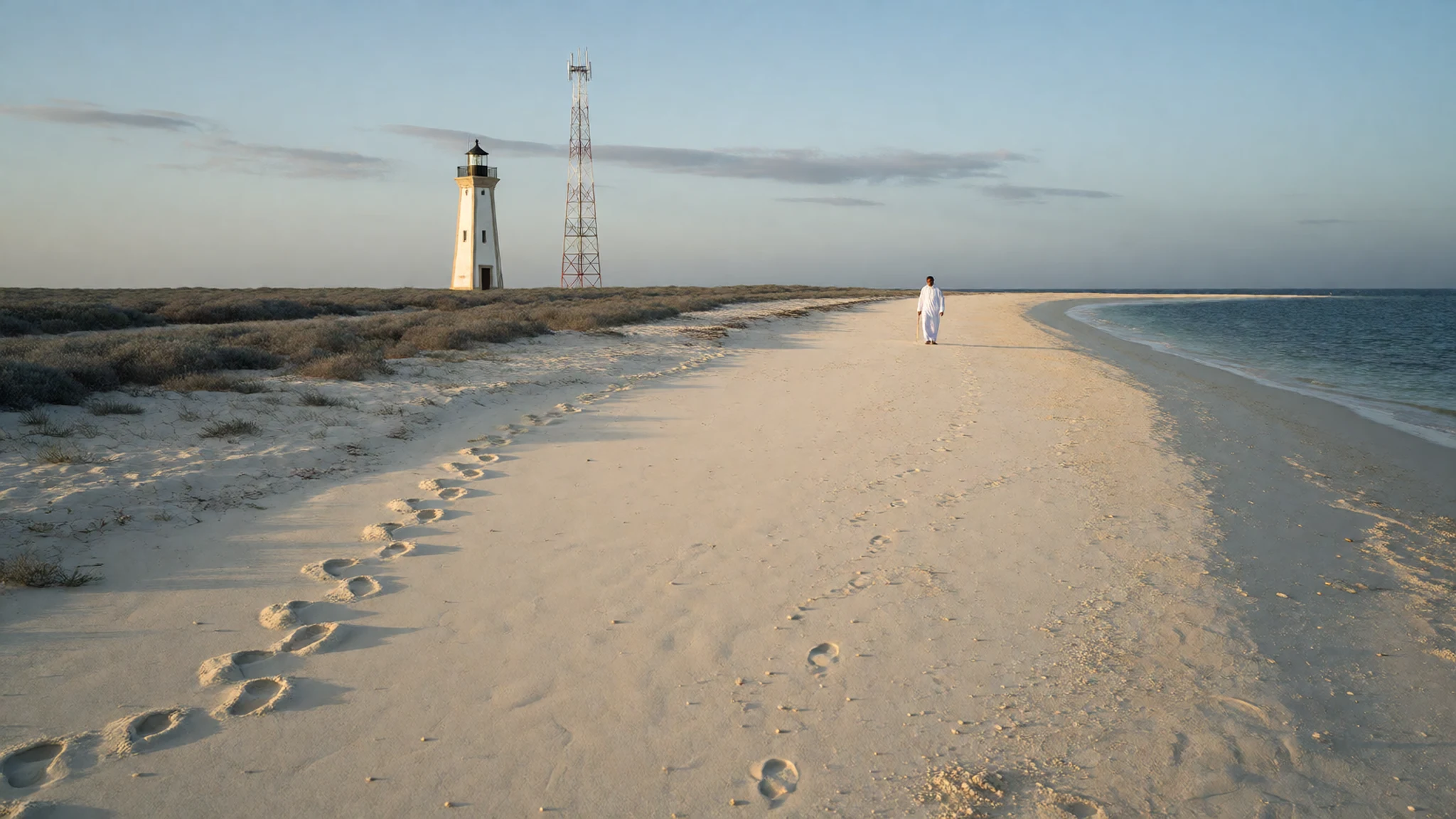
- Nesting terns — the open nesting sand
Kubbar Island is a nesting ground for white-cheeked terns, which share the open sand in the breeding season. The birds settle in loose groups on the beach rather than in trees, so a boat at rest can put a whole patch to flight. The kind view is from the waterline, with the colony left alone.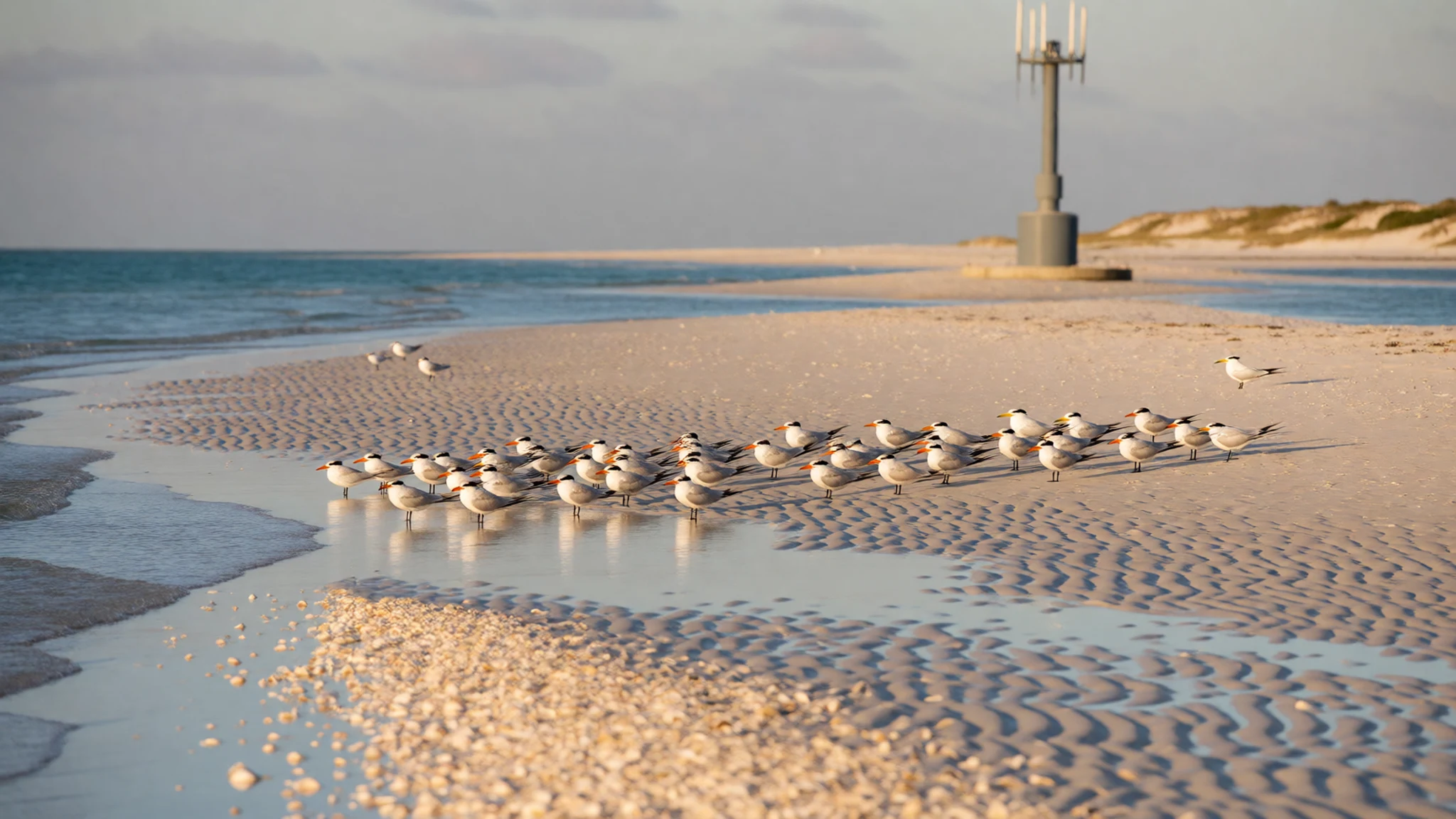
- Reef and cuttlefish — the reef edge
Kubbar Island's reef edge is why snorkellers make the crossing. Clear water over sand and coral heads holds reef fish and, in season, cuttlefish, which local boats know well enough to photograph under the island's name. Entry is from the shore or down a boat ladder, with the current kept in mind. Fins stay above the coral so the heads are left intact.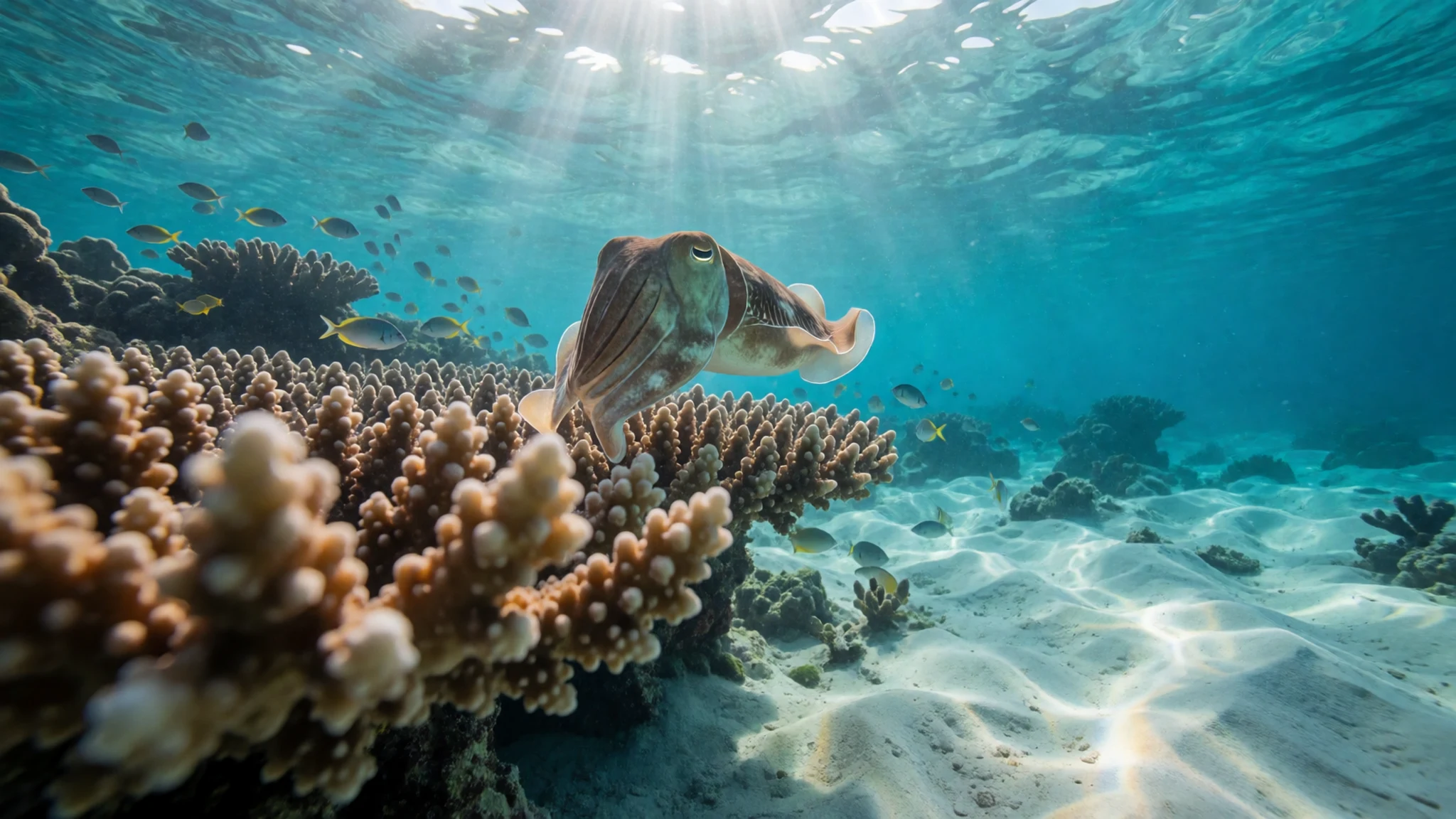
- The summer beach — the summer beach
Kubbar Island in summer is a bright, almost empty bar of sand, hot underfoot and hard on the eyes. The beach is the whole settlement: a swim off the boat, towels on the gunwale, and the tower as the mark when the gaze returns from the horizon. There is no café and no tree line. Visitors who come anyway swim and leave before the middle of the day.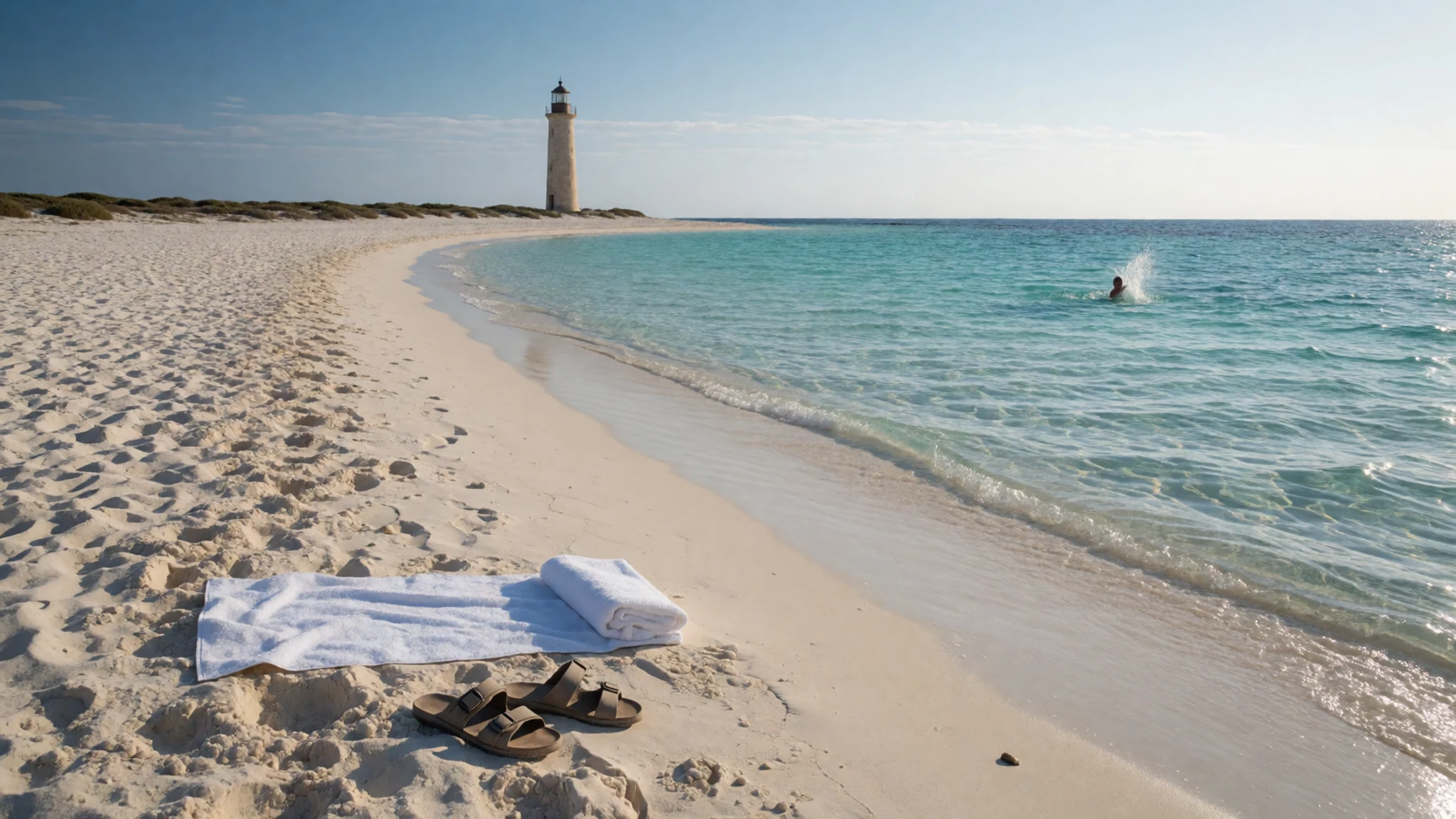
- The boat approach — the seaward approach
Kubbar Island appears on the boat approach as a low shore, a thin tower and a change in water colour over the reef. The landing is a beach rather than a quay, so the boat holds just off the sand or noses in on a quiet sea. That arrival is the visit: once feet are dry there is only beach and birds, then the ride home.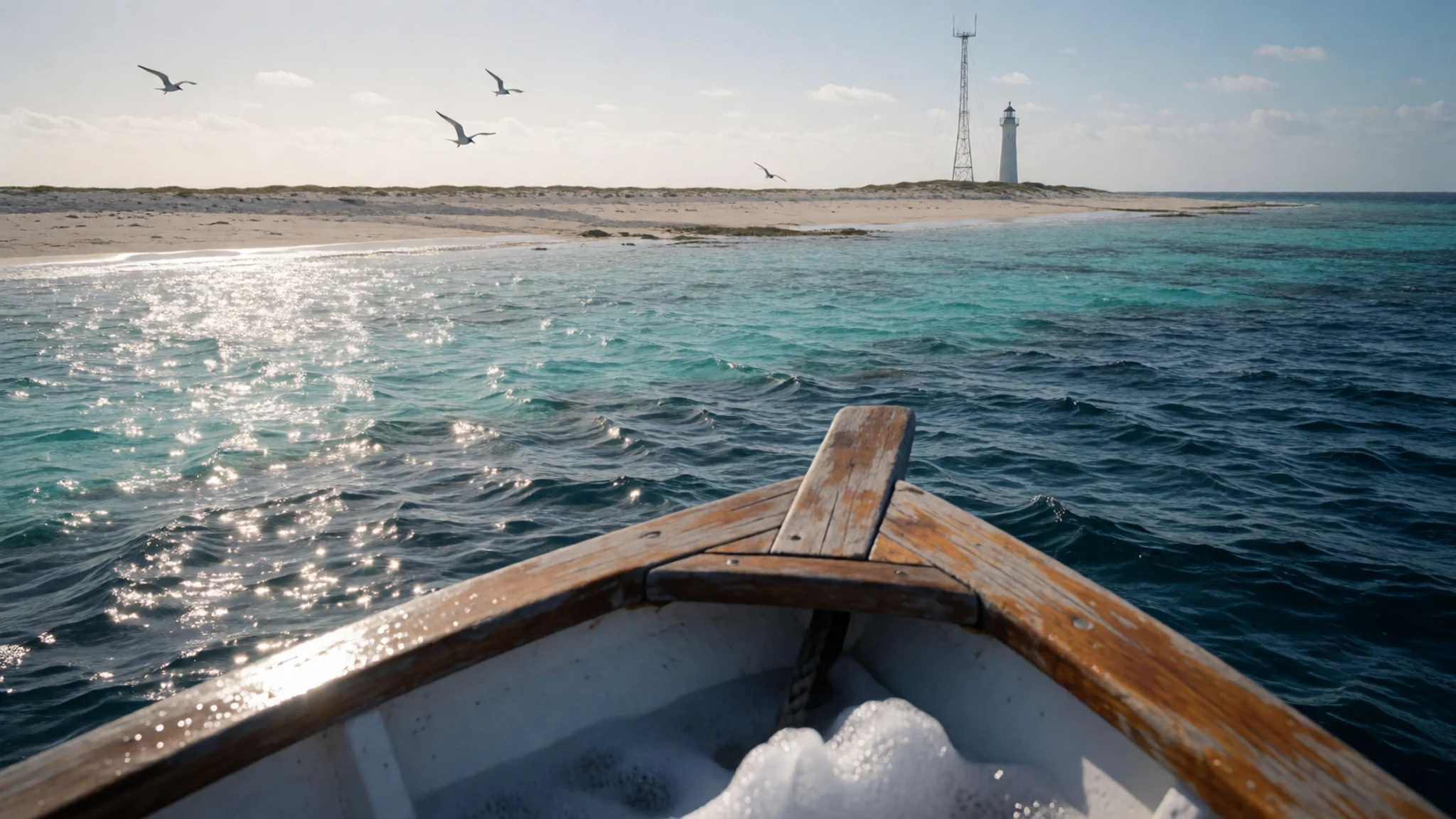
Culture
Kubbar Island sits inside Kuwaiti weekend culture more than it sits inside a town. The day out is a boat, often shared by a family or a circle of friends, with food packed before dawn and the marina as the real front door. Arabic is the language of the boat, English is widely understood, and hospitality shows up as shared fruit, tea and a place in the shade of the canopy. Islam shapes the clock: a Friday departure works around congregational prayer, and a travelling party still finds a quiet corner of the deck when prayer time falls at sea. Dress and manners loosen on the water compared with the city, then tighten again at the marina, where families mix and public courtesy matters. The island itself is treated as a natural shore rather than a park with gates. Birds are the residents; people are the guests for a few hours. Litter, loud music over a colony and feet through the nesting sand break that understanding. On Kubbar Island, stay well back from nesting terns, and do not walk into a colony.
What to wear
Kubbar Island has no cloth market of its own, so the clothes of the day are whatever left a Kuwaiti marina that morning. Traditional dress is still the default on shore. Men wear a dishdasha, a long cotton robe, white in the hot months and often darker or heavier when the weather cools, with a ghutra held by a black agal. Women wear a black abaya over everyday clothes, and many wear a hijab. Those textiles are practical: light cotton against the heat, a closer weave when the winter wind comes off the sea, and the abaya as a public wrap rather than wear for the sand. On the boat, present-day clothes take over. Crews and younger passengers switch to t-shirts, shorts, swimwear and a cap, then put the dishdasha or abaya back on before walking through the marina. A visitor should copy that split. Swimwear is right for the water at Kubbar Island; a shirt and a cover-up are right for the ride back and for any stop on the city side. The cay is all sun and no shade, so a hat and a light long-sleeve layer belong in the bag beside a modest cover-up. Water shoes help on broken shell and coral; bare feet suit the open sand.
What to eat
- Machboos samak — the boat cooler, or fish eateries in Fahaheel
Machboos samak is spiced rice with fish, the plate often packed for a Kubbar Island day. The pot rides in the boat cooler and is shared under the canopy. Fish eateries in Fahaheel serve the same dish for those who eat before boarding.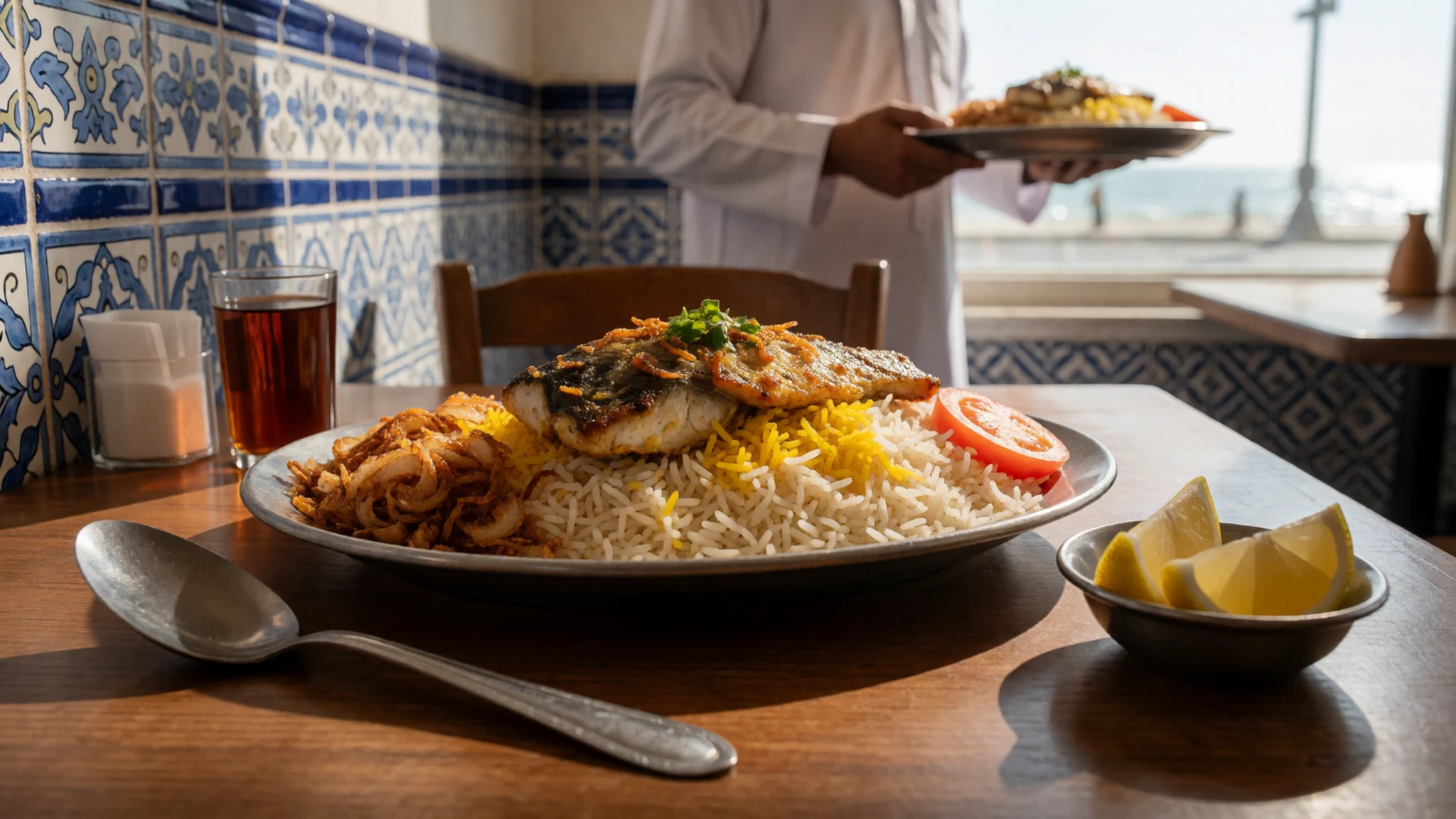
- Grilled hammour — morning fish markets and the boat grill
Grilled hammour is grouper cooked over charcoal, a standard boat-grill fish for a Kubbar Island day. Crews buy it at morning fish markets and serve it at anchor with lemon, onion and flatbread. Coastal stalls between the marina and Fahaheel are where to find it beforehand.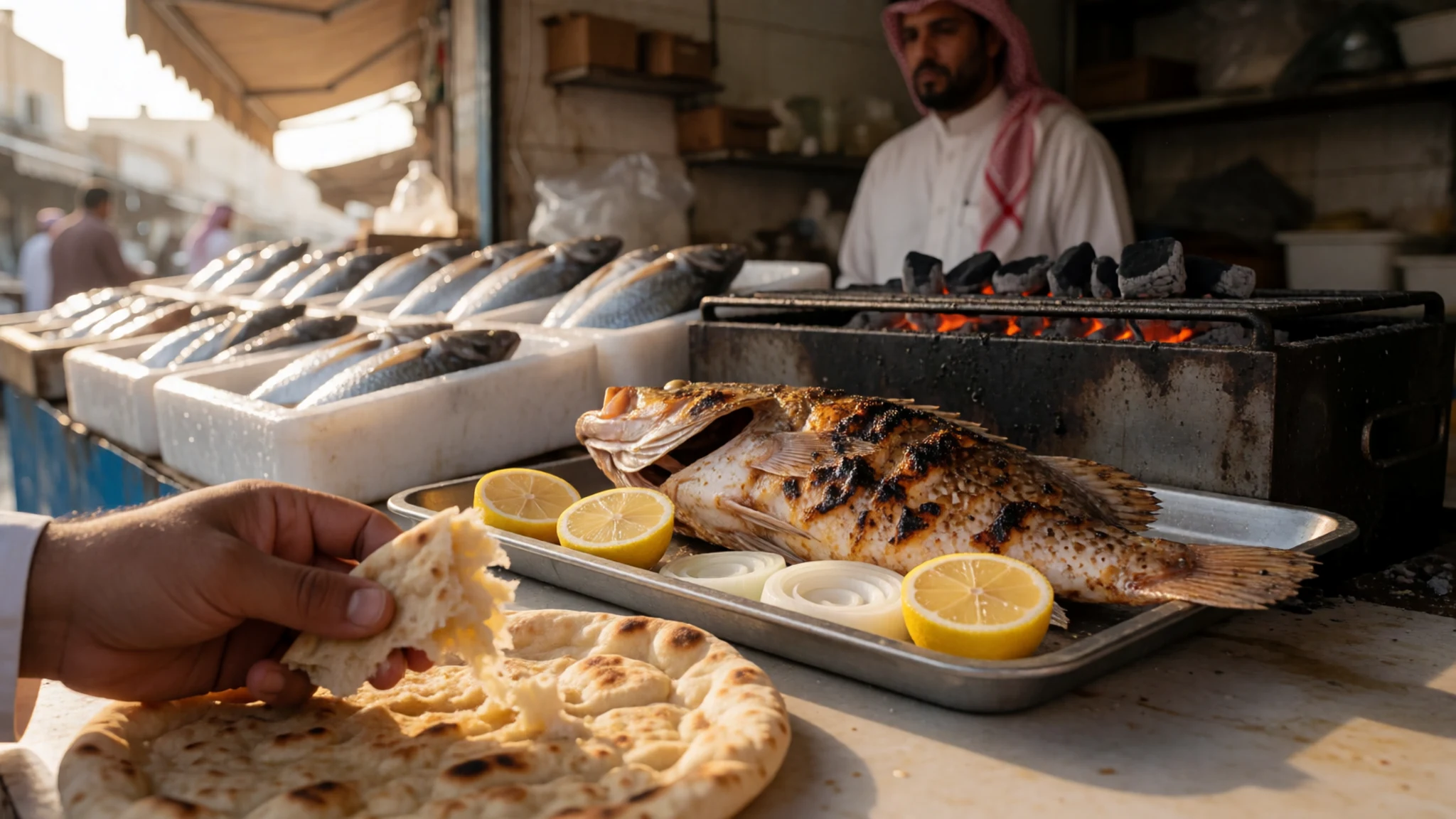
- Zubaidi — coastal fish markets and Fahaheel eateries
Zubaidi, silver pomfret, is fried or grilled and eaten with rice after a Kubbar Island crossing. It is a Kuwaiti standard from coastal markets, not from the cay, which has no stall. Fish eateries in Fahaheel and harbour-side kitchens that pack boat orders are the places to get it. - Grilled Gulf shrimp — the morning fish market and the boat
Grilled Gulf shrimp, spiced and finished over charcoal, is a shared tray on Kubbar Island boats, served with bread and lemon. The catch is bought at the morning fish market, not on the island. Shrimp stalls and seafood eateries along the Kuwait coast sell it to anyone boarding later. - Balaleet — bakeries and breakfast counters near the marinas
Balaleet is sweet vermicelli with egg, saffron and a little sugar, a Kuwaiti breakfast that travels in a tin to Kubbar Island. It is eaten on the early crossing, with karak tea, before anyone swims. Small bakeries and breakfast counters near the marinas sell it by the portion from dawn.
Plan it
Best time. March, April, October and November suit a Kubbar Island boat day: the heat loosens its grip and the sea is more often workable. High summer is severe on a shadeless cay, and a windy winter day can make the crossing a poor idea. Check the forecast for wind as much as for sun.
How long. 1
Getting there. Kubbar Island is reached from Kuwait International Airport by road to a marina in Kuwait City, Salmiya or Fahaheel, then by private boat. There is no public ferry and no pier timetable; the operator's boat is the last leg, and the booking is what to confirm before travelling.
Budget. high
Tips
- Book a licensed boat for a morning departure; weekend and holiday slots go quickly.
- Load drinking water on the boat: Kubbar Island has no tap, no shop and no shade.
- Take every piece of rubbish back to the marina.
- Snorkel from the ladder when birds are thick on the beach, and keep fins off the coral.
- Ask the operator about the sea state the evening before; wind matters more than a clear sky.
- Settle the boat payment before boarding, because the island has nowhere to pay.
Etiquette
- Stay clear of nesting terns and do not walk through a colony on Kubbar Island.
- Leave coral, shells and sand where they are.
- Wear swimwear for the water and a cover-up at the marina and in town.
- Ask before photographing families on the beach or on the boat.
Nearby
Sources
- Wikidata (CC0)
- Wikipedia: Kubbar Island (CC BY-SA 4.0)
- Wikivoyage: Kuwait (CC BY-SA 4.0)
Wildlife
- Lesser crested tern (animal)
The lesser crested tern is a seabird with an orange bill, easy to remember as the tern with the carrot-coloured beak. On Kubbar Island it nests on the open sand, sharing the ground with its yellow-billed cousin, so look for it during the breeding season. Watch from a good distance, speak softly and move slowly, so you never frighten birds sitting on nests. Going with a local guide helps you find them without disturbing them. Never feed them.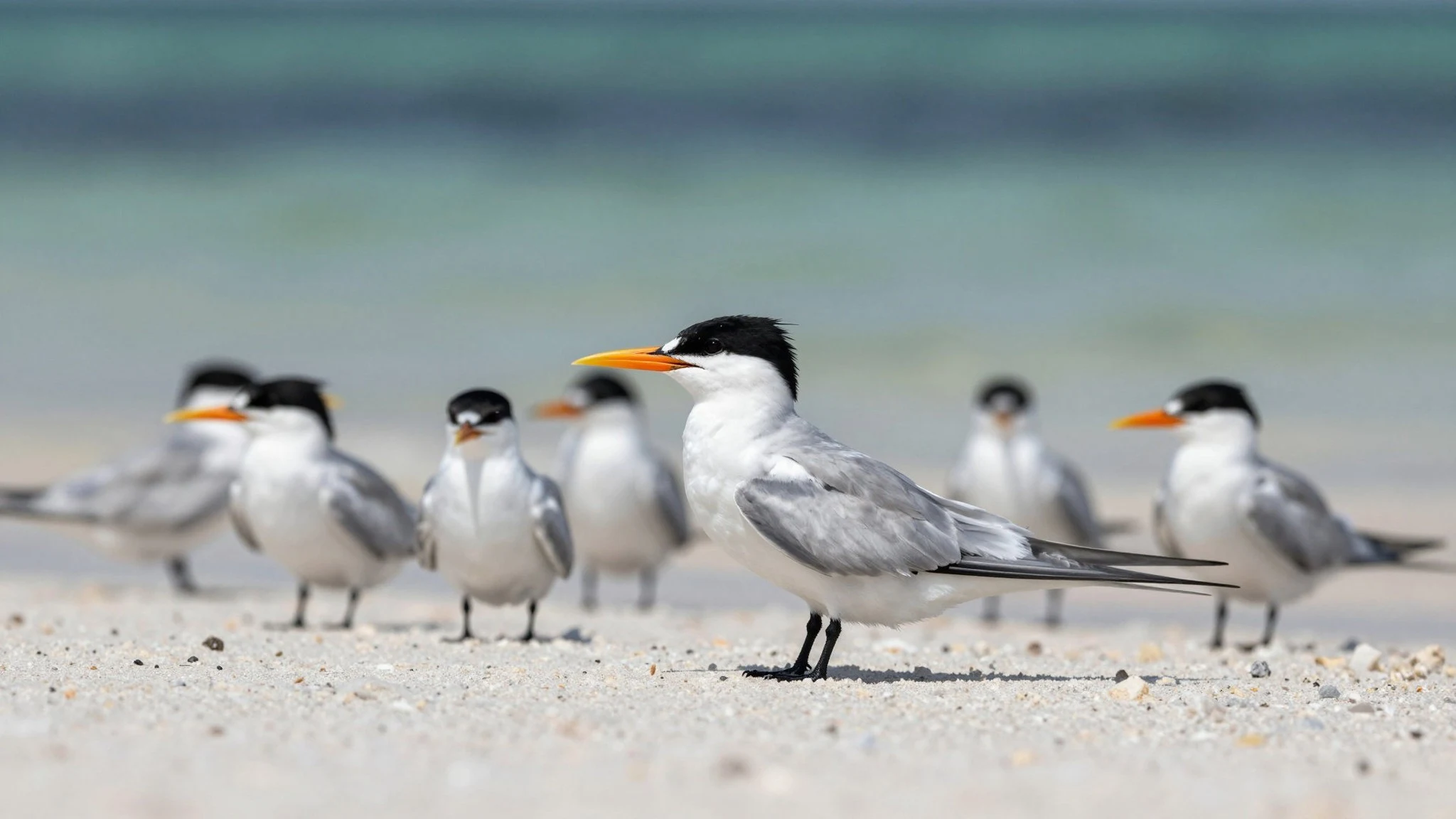
- Lesser crested tern (bird)
The lesser crested tern is a seabird with an orange bill, easy to remember as the tern with the carrot-coloured beak. On Kubbar Island it nests on the open sand, sharing the ground with its yellow-billed cousin, so look for it during the breeding season. Watch from a good distance, speak softly and move slowly, so you never frighten birds sitting on nests. Going with a local guide helps you find them without disturbing them. Never feed them. - Greater crested tern (animal)
The greater crested tern is a large seabird with a yellow bill, the tern with the sunshine-coloured beak. On Kubbar Island it nests on open ground beside the orange-billed lesser crested tern in the breeding season, and the air above the beach rings with their noisy calls. Keep well back, stay quiet and let the birds settle, since their nests lie right on the sand. A local guide can show you where to stand. Never feed them. - Greater crested tern (bird)
The greater crested tern is a large seabird with a yellow bill, the tern with the sunshine-coloured beak. On Kubbar Island it nests on open ground beside the orange-billed lesser crested tern in the breeding season, and the air above the beach rings with their noisy calls. Keep well back, stay quiet and let the birds settle, since their nests lie right on the sand. A local guide can show you where to stand. Never feed them.