Salmiya
Salmiya, Kuwait
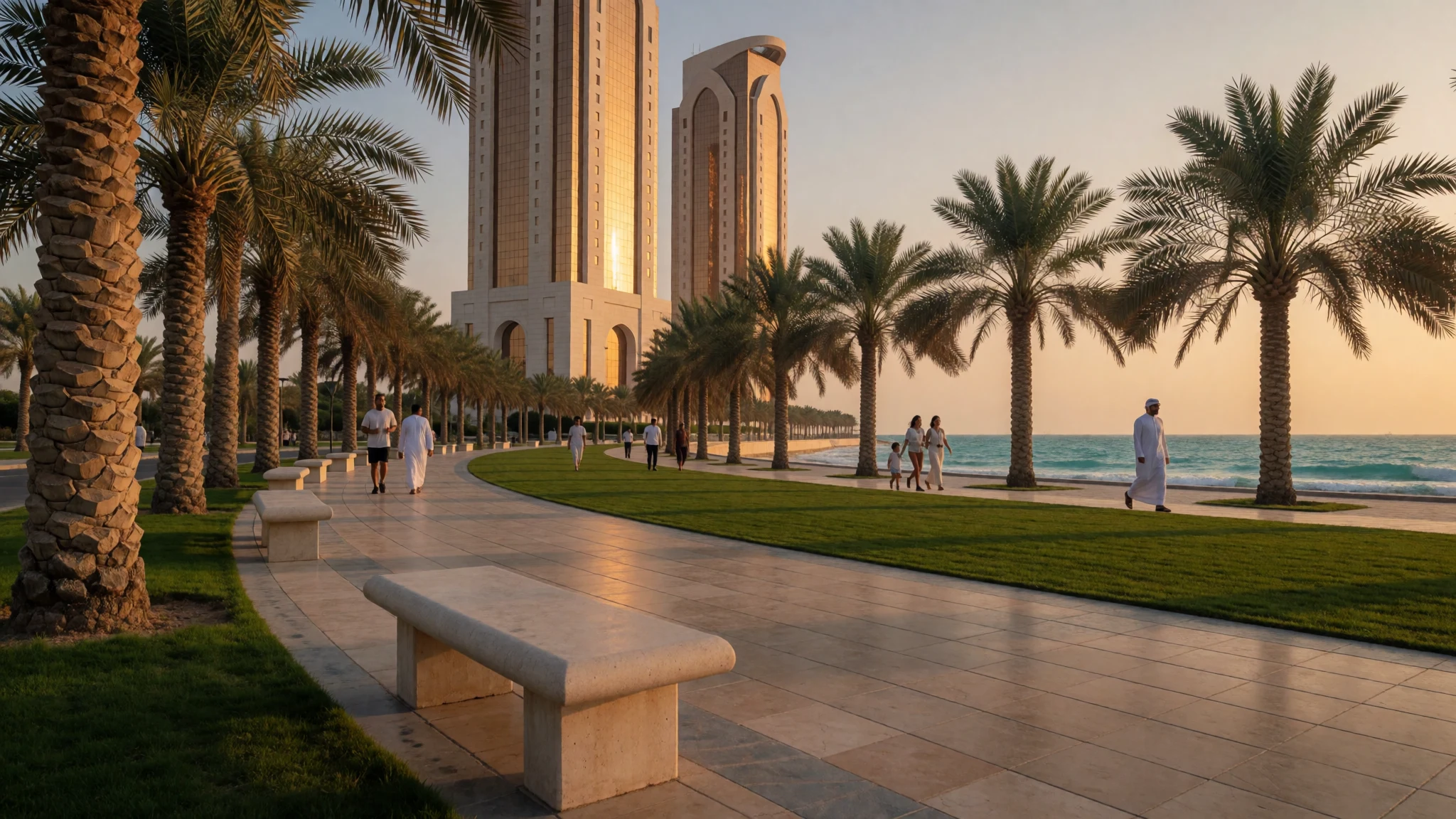
Salmiya is Kuwait's everyday seafront: a rebuilt, high-rise Gulf district for evening strolls, long dinners and a look at modern Kuwaiti life.
The place
Salmiya is a coastal district in Hawalli Governorate, Kuwait, on the Persian Gulf a short way along the shore from Kuwait City. It is not an old town or a resort strip. It is a dense, lived-in neighbourhood where residents shop, eat out and walk the seafront once the heat drops. Administratively it is split into 12 blocks. The inland blocks are mostly residential and home to many people from the Indian subcontinent and from other Arab countries, and roughly two-thirds of residents live in blocks 8 to 12. The blocks along the coast mix apartments with shops and offices. Addresses in Kuwait run by governorate, area and block, so a street number alone means little; a driver or delivery app needs the area and block as well. Nightlife in the usual sense is thin and alcohol is banned outright, so evenings revolve around restaurants, cafés, malls and the promenade. Plugs are the British three-pin type, or the common European two-pin and Schuko types, and adapters are easy to find. Summer is scorching, so daily life shifts to after dark and to air-conditioned interiors, while winter is the gentler season for walking outside. Salmiya suits a traveller who wants to see how modern Kuwait lives day to day rather than tick off monuments, and who is happy to treat the Gulf shore as a place for a stroll and a meal.
Its story
Salmiya's story is one of fast change on a Gulf shoreline. The beachfront was once a base for fishing and pearl-diving families, with a small harbour, low three-storey buildings and open ground behind them. Foreign workers began arriving in numbers as far back as the 1960s, and the district's mix of nationalities has been part of its character ever since. Then came the Iraqi invasion and occupation of Kuwait, during which Salmiya was badly damaged. Rebuilding began in 1993, and residents gradually moved back. The new district did not copy what was lost. High-rise apartments and commercial complexes replaced the old low buildings and fields, and the seafront became a busy commercial avenue along the Gulf Road. The Salem Al-Mubarak shopping street grew into a popular draw, close to the capital, and a property boom kept shifting who lived where as demand moved around the blocks. Today almost nothing visible recalls the pearling era, so the history sits in the layout and in the people: older families, long-settled migrant communities and newcomers sharing the same streets. Kuwaiti families trace their roots to tribes from the Nejd region, now in Saudi Arabia, and the sea shaped their trade long before oil. Anyone wanting a glimpse of that earlier maritime world is better served by the island and boat-building towns beyond the city than by Salmiya itself.
What to see
- Salmiya waterfront and Gulf Road — Gulf Road, coastal blocks
The seafront in Salmiya is a wide promenade lined with towers, cafés and shops, and it is where the district comes out after sunset. Walk it in the evening when the air cools. Expect families, joggers and traffic noise, with the Gulf on one side and apartment blocks on the other.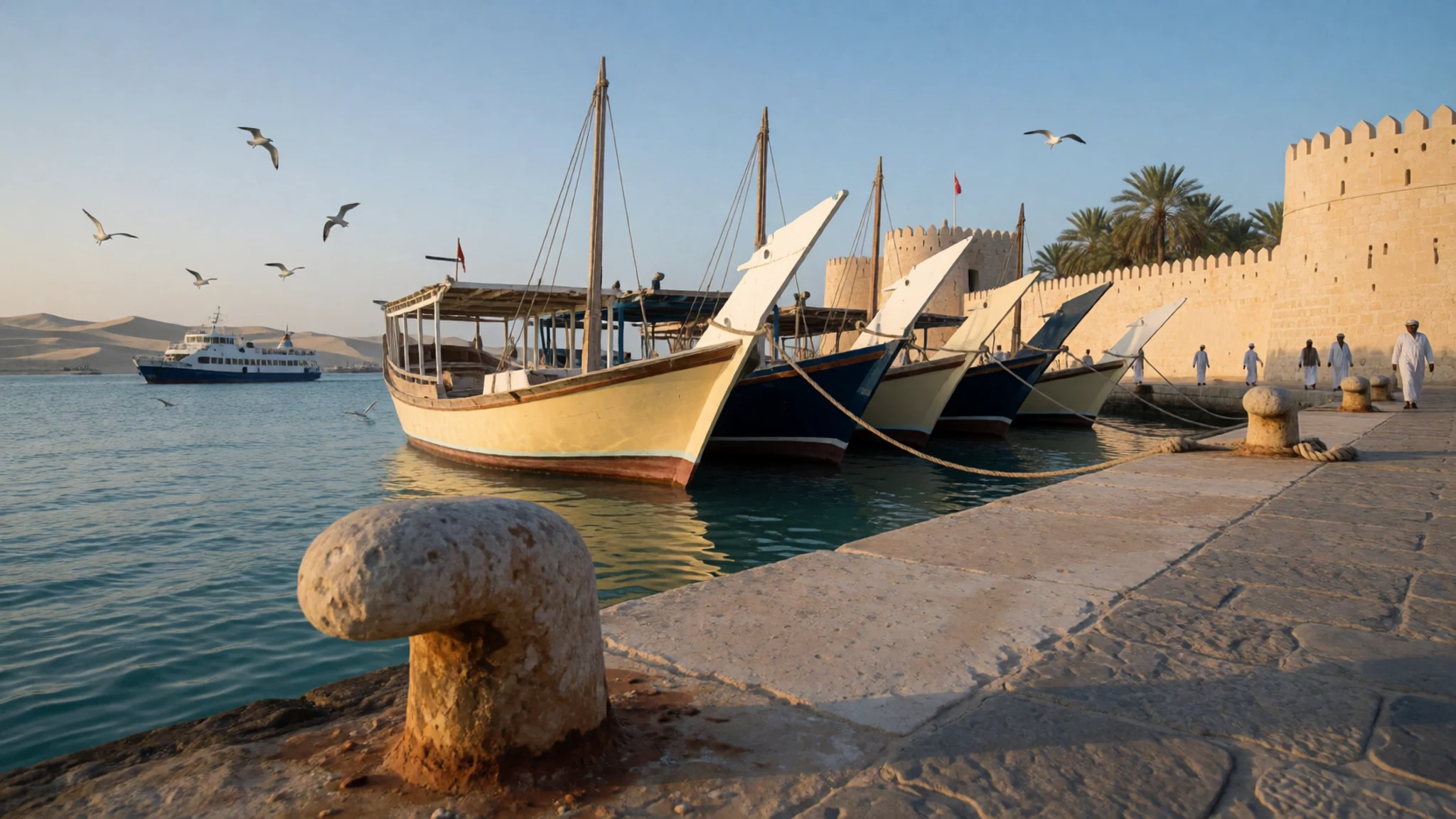
- Salem Al-Mubarak shopping street — Central Salmiya
Salem Al-Mubarak is the district's best-known shopping strip, a long run of fashion shops, cafés and eateries that stays busy into the night. It is a good place to watch daily Kuwaiti and expatriate life and to find snacks, but the heat and parking make late afternoon a poor time.
- Boulevard Park — Salmiya seafront
Boulevard Park is a green pocket on the Salmiya seafront, used by residents for a quiet break between work and home. Grass, palms and benches give shade and a view of the water. It suits a short rest after the promenade, best outside the hottest months.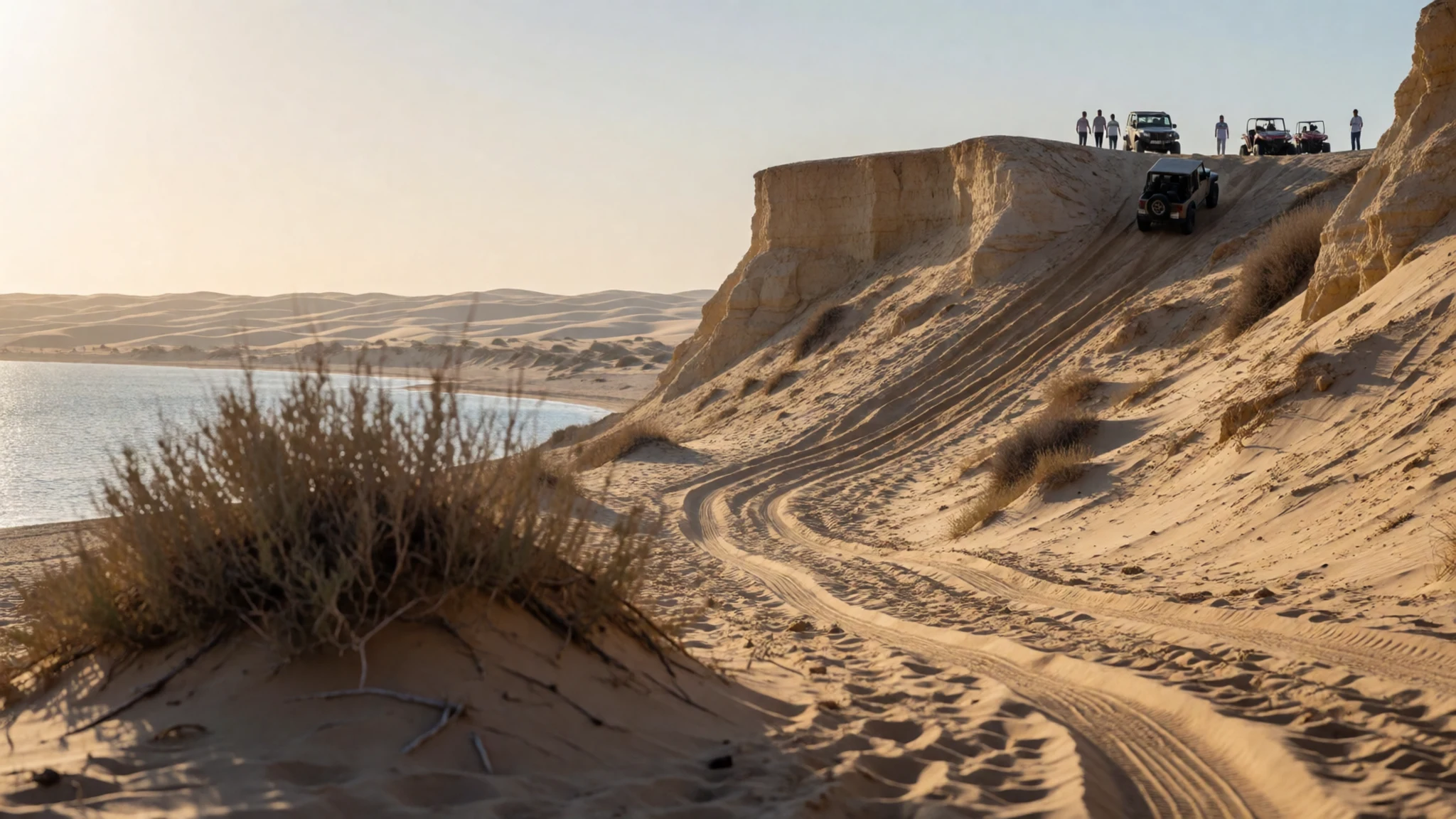
- Salmiya after dark — Residential towers near the coast
Seen from a balcony or upper floor, Salmiya at night is a long band of lit towers curving along the bay. The glow explains why the district feels most alive after dark. A rooftop café or a high-floor window gives the clearest view of the coastline.
- Failaka Island — Gulf, offshore from Kuwait City
Failaka Island lies off the Kuwaiti coast and is reached by regular ferry. Its port has old dhows, and it offers a quieter, older Gulf feel than the mainland. Private boat trips exist, but departures are not guaranteed, so keep a backup plan and check current ferry details with the operator.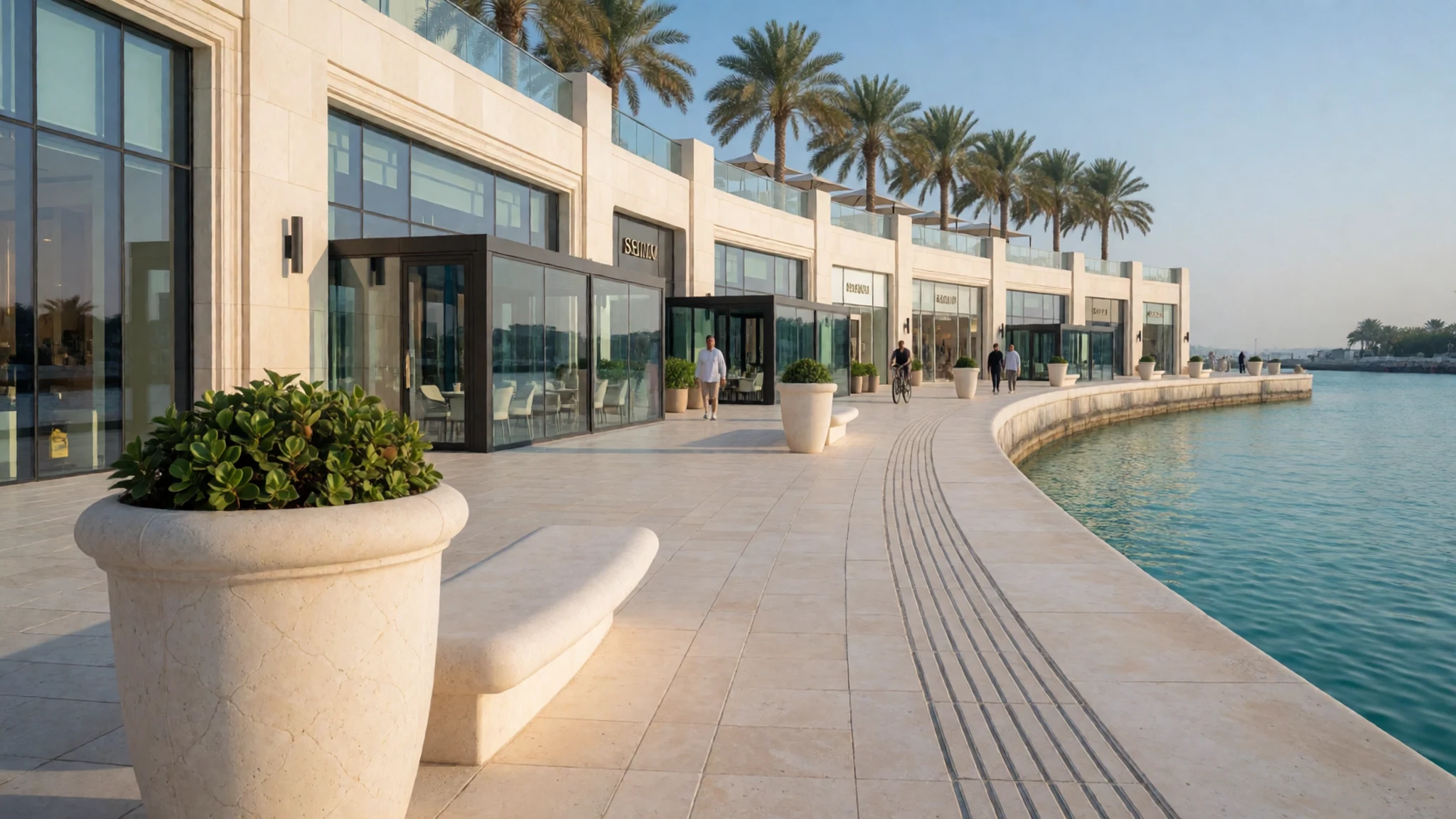
- Kazmah desert cliffs — Desert west of the city
The Kazmah cliffs are among the few raised spots in the flat Kuwaiti desert, and on a clear day they give a view over the bay. Young Kuwaitis come at weekends to drive jeeps and quads up the slopes. It is a half-day trip from the city, best in the cooler months.
Culture
Salmiya is a cosmopolitan district, and its social life reflects both Kuwaiti traditions and the many communities who live there. Much of what counts as good manners across the Arab world applies: greet people politely, accept hospitality graciously and keep voices calm. Honour matters a great deal in Kuwaiti culture, and public insults or mockery can bring real anger and even legal trouble, so careful, courteous speech is wise. Islam is the official religion and shapes the rhythm of the week, with prayer times and the holy month of Ramadan changing opening hours and the pace of the day; daytime eating and drinking in public is discouraged during Ramadan. Kuwait is relatively liberal by Gulf standards, with Christians, Hindus and others also present, and the population is a blend of Kuwaitis, other Arabs, South Asians and many more. Alcohol is banned, so socialising happens over coffee, tea, food and long evenings on the seafront and in malls. Family is central, and weekends see groups of relatives out together. Many residents come from India, Egypt and elsewhere, so you may hear several languages in one street. Visitors are generally treated with courtesy, and a little effort with Arabic greetings is appreciated. Do not photograph local women or families without asking first, and never speak mockingly of anyone in public.
What to wear
Salmiya's traditional dress is the Kuwaiti national costume. Men wear the dishdasha, a long white robe, often in light cotton or wool-blend cloth for the hot months, with a headcloth held by a black cord. Women traditionally wear the black abaya, often with a headscarf, and some wear richly embroidered or lighter dress at home and for celebrations. These are worn daily by many, and especially for formal occasions, Fridays and religious holidays. Alongside this, Kuwait follows a live-and-let-live approach to clothing, and Salmiya shows the full range. Many women wear designer fashion, others full black abayas, and many men wear T-shirts and shorts, particularly younger residents and expatriates. Shopping malls and the Salem Al-Mubarak strip show the latest global brands. For visitors, light, loose cotton or linen suits the heat, with sun protection for the walk along the seafront. Women should avoid showing midriffs; low necklines draw less attention than bare stomachs, but covered shoulders and knees are the safest choice. Men are fine in long trousers or smart shorts in casual places, though trousers are better for restaurants and mosque areas. Bikinis suit a private resort pool but not public beaches, where swimwear should be modest. Comfortable sandals or trainers handle the paved promenade, while closed shoes are better for desert trips such as the cliffs.
What to eat
- Machboos — Gulf-cuisine family restaurants
Machboos is the classic Kuwaiti rice dish, spiced and cooked with chicken, lamb or fish. It is a household staple and often shared from one large platter. Look for it in family restaurants that serve Gulf home cooking rather than international menus.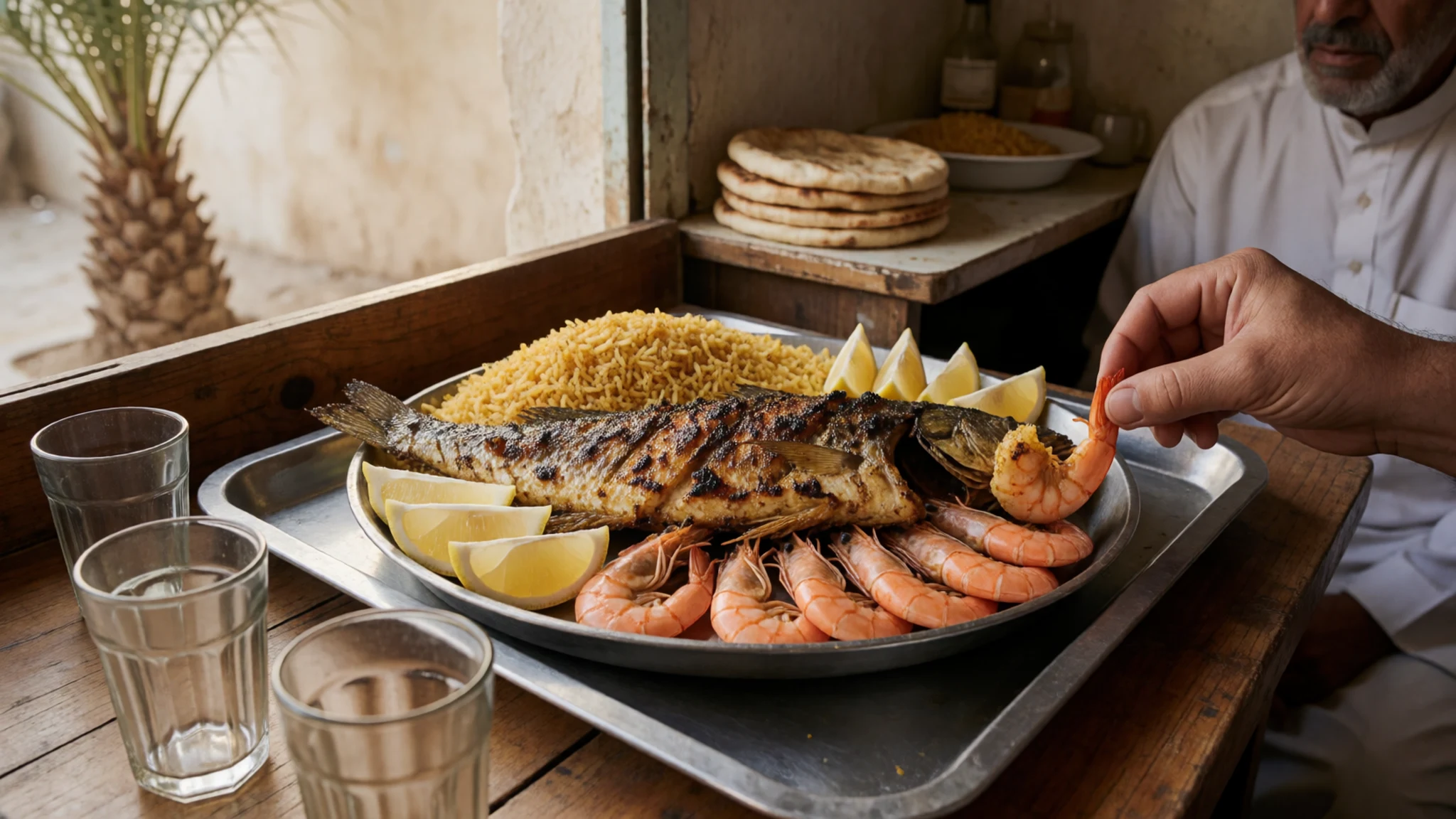
- Grilled and spiced seafood — Seafood restaurants along the coast
Fresh fish from the Gulf is served grilled or in spiced rice, one of the few traditional Kuwaiti food traditions still found in restaurants, though usually at upmarket prices. Ask what is local that day.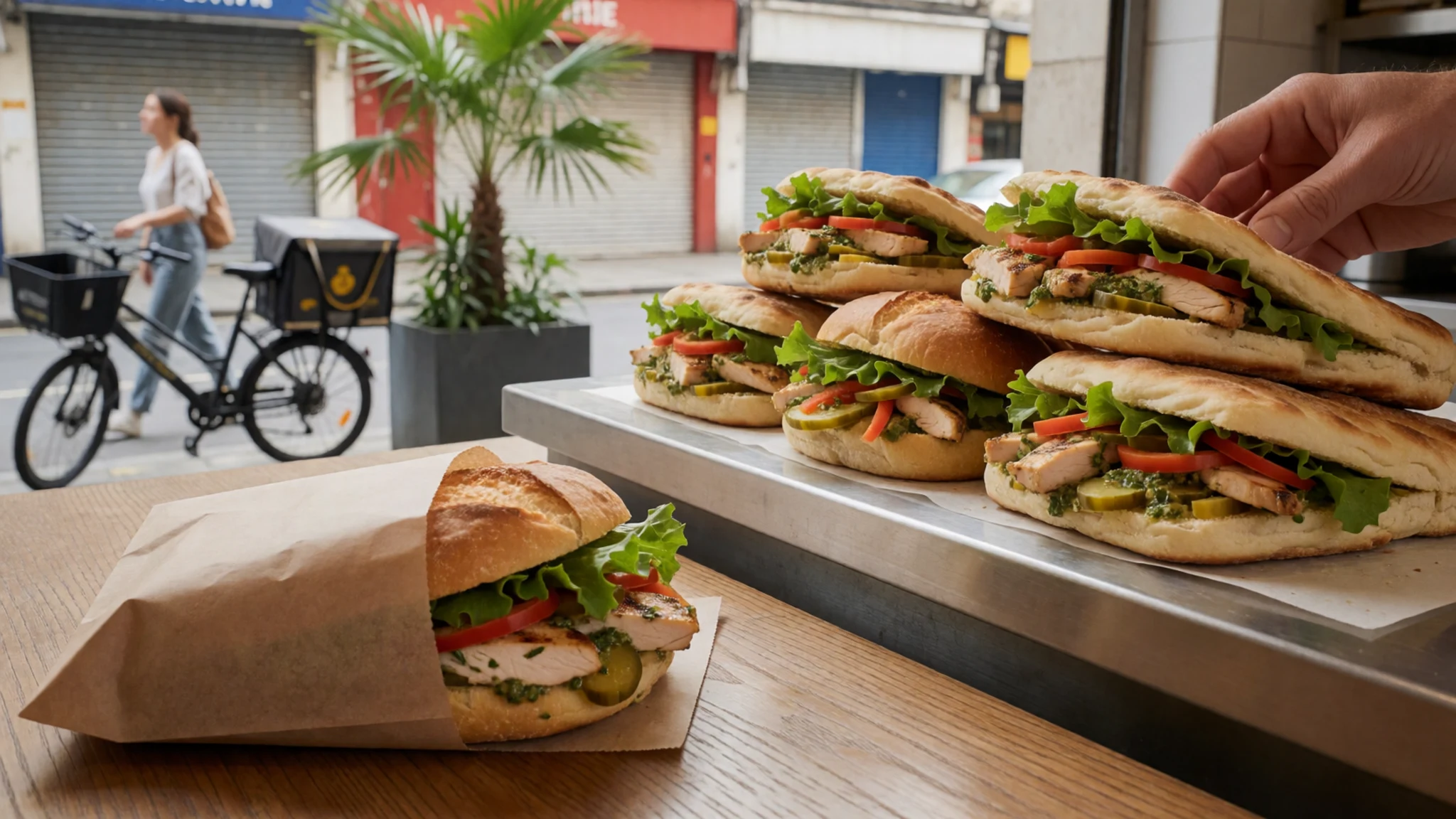
- Specialty sandwiches and shawarma — Restaurants Road
Salmiya's well-known Restaurants Road is packed with places selling wraps, shawarma and unusual sandwiches in a hurry. Good for a cheap, filling evening snack, usually eaten standing or taken away to the promenade. - Fresh juices — Juice bars near the shopping streets
Juice stalls and cafés press fruit-based drinks all day, a welcome contrast to the heat and a substitute for alcohol. Mango, pomegranate and mixed fruit are common. Look beside the sandwich counters on busy streets. - South Asian biryani and curries — Eateries in the inland residential blocks
With so many residents from the Indian subcontinent, Salmiya has eateries serving biryani, dosa and curries that taste close to home for Indian visitors. Rice dishes and tandoori grills are widely available and usually good value.
Plan it
Best time. November to March, when the weather is cooler and walking the seafront is pleasant; Kuwait is scorching hot for much of the rest of the year, so summer visits mean staying indoors by day.
How long. 2–3
Getting there. Fly into Kuwait International Airport, then take a taxi or ride-hailing car to Salmiya along the coast. Check visa rules before booking: many nationalities get a visa on arrival or an eVisa, while others, including Indian passport holders, need an advance visa with a sponsor's invitation, which can take up to a week.
Budget. mid
Tips
- Give drivers the area and block, not just a street number
- Visit the waterfront and shopping streets after sunset, especially in warmer months
- Carry a card and some cash, and keep a light layer for air-conditioned malls
- Check ferry and tour operators directly before planning a day trip to Failaka Island
- Check the official Kuwait eVisa site before travel, as entry rules change
Etiquette
- Dress modestly in public and keep swimwear for private pools
- Do not bring alcohol, which is banned in Kuwait
- Keep conversation courteous, as public insults are a criminal matter
Nearby
Sources
- Wikidata Q3505782 (CC0)
- Wikipedia: Salmiya (rev 1381192881) (CC BY-SA 4.0)
- Wikivoyage: Kuwait (rev 5407773) (CC BY-SA 4.0)
- Night panorama of Salmiya from our living room, Steve & Jem Copley (CC BY-SA 2.0)
- The Salmiya waterfront, Steve & Jem Copley (CC BY-SA 2.0)
- Soul-soothing Nature, Wanaviray (CC BY-SA 4.0)


