Qaruh Island
Qaruh Island, Kuwait
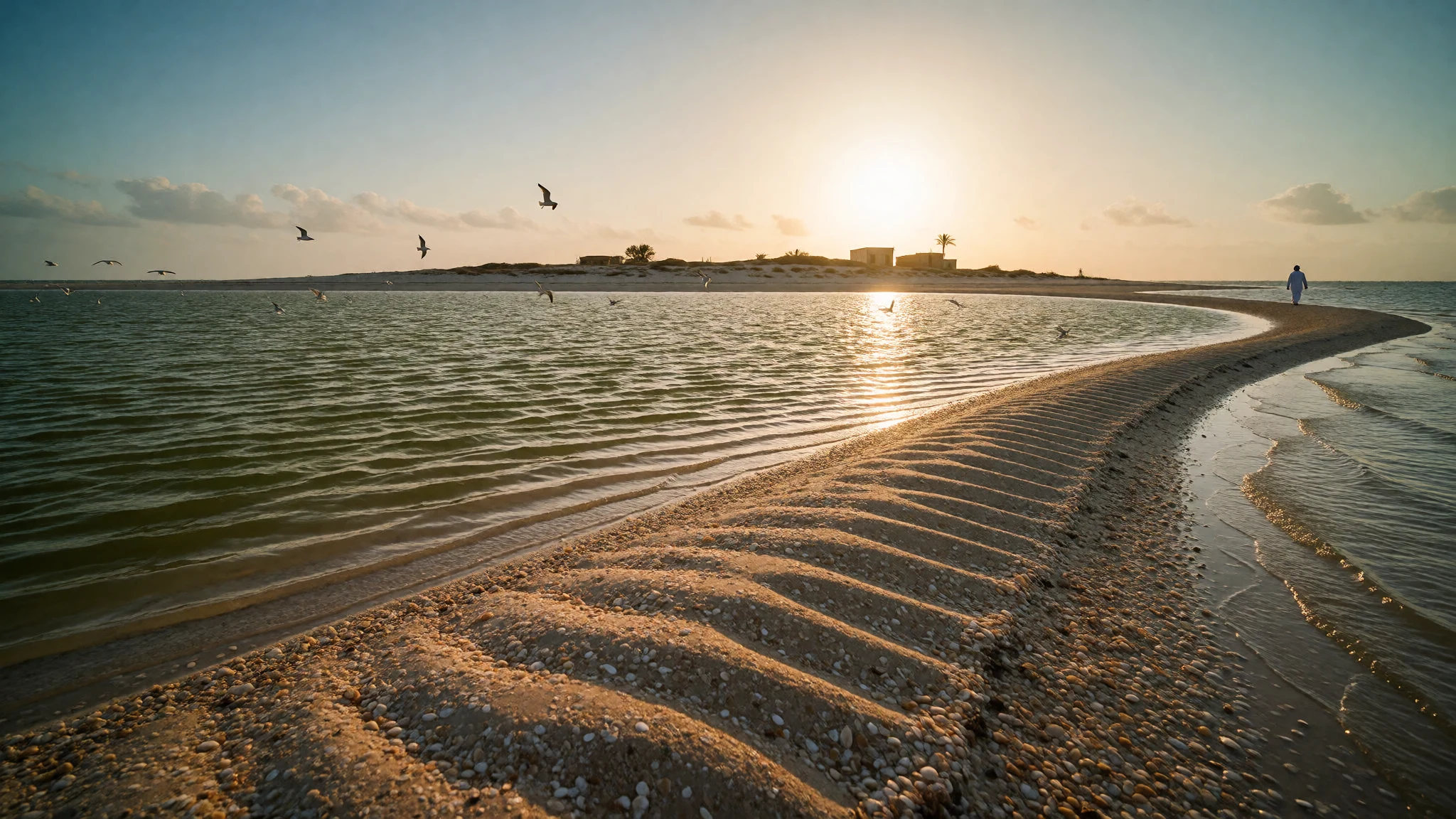
Qaruh Island is a tiny, tar-named speck in Kuwait's northern Gulf, worth knowing for its place in the country's modern story.
The place
Qaruh Island (Arabic: جزيرة قاروه) is a speck of land in the northern Gulf, the smallest of Kuwait's islands and the one lying farthest from the mainland. Its name comes from qar, the Arabic word for tar or bitumen, which refers to the oily sediments found in the surrounding area. Nothing much grows here. The island is flat, pale and exposed, small enough to cross on foot in a few minutes, and from a boat it shows up as little more than a low line on the horizon with a few structures on it. The mainland coast is out of sight on most days, and the water around it is shallow and silty, more green-brown than postcard turquoise. It is worth being straight about what this place is not. It is not a resort island, and there is no beach-day infrastructure of cafes, sunbeds or scheduled visitor ferries that could be pointed to. Anyone hoping to land should assume permission is needed and ask the Kuwaiti authorities first. Qaruh earns its place in a guide for what it represents: a marker at the edge of Kuwaiti waters, a reminder of how closely oil and geography are tied in this country, and a site with real national meaning. For a swim, a ferry and old boats, Failaka Island is the more practical choice.
Its story
Qaruh Island sits inside a story that begins on the mainland. Kuwait's founding families came from the Arabian interior and settled on this coast some centuries ago, first at Al-Qurain. Tribal feuding made life difficult, so the settled families agreed to choose a central authority, and the Al-Sabah family was picked to rule. The Sabahs kept their independence through diplomacy, mediating disputes at home and playing the Ottomans, the Egyptians and the European powers against one another. The sea was the livelihood of the early town, through pearling, fishing and trade by wooden boat. Oil changed the economy completely, and the name Qaruh is a small reminder of that tarry geology offshore. The island's best-known moment came during the Gulf War. It was the first piece of Kuwaiti soil to be freed from Iraqi occupation, which gave a tiny, empty islet an outsized symbolic weight. The anniversary of that liberation has been marked with ceremonies there, attended by military personnel and dignitaries, and a photograph of one such gathering is among the few public images of the island. It is a place remembered less for anything built on it than for what it stood for at a moment when the whole country was waiting to be returned.
What to see
- Qaruh Island — Northern Gulf, off the Kuwaiti coast
Qaruh Island is the subject of this reading, but it is not an ordinary stop. Its value is as a landmark of Kuwaiti history, remembered in anniversary ceremonies. Anyone wanting to see it up close should ask the authorities about access and not expect a public landing, facilities or a regular boat service.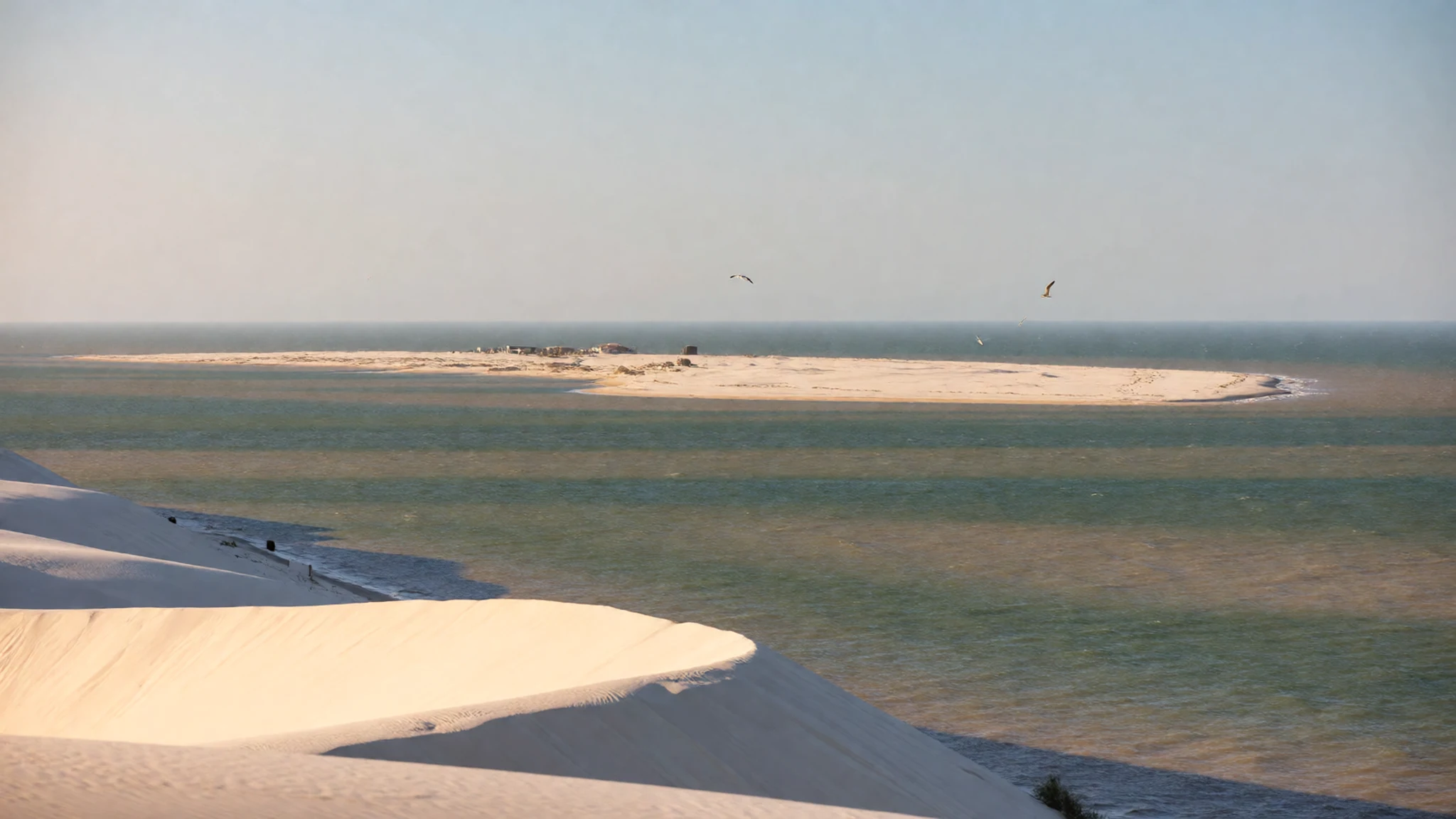
- Failaka Island — Off Kuwait City, northern Gulf
Failaka Island is the practical island outing from the mainland, reached by regular ferry. Its port holds many old dhows, and the crossing itself is part of the pleasure. Departures by smaller operators are not guaranteed, so keep a backup plan and check current ferry arrangements before setting out.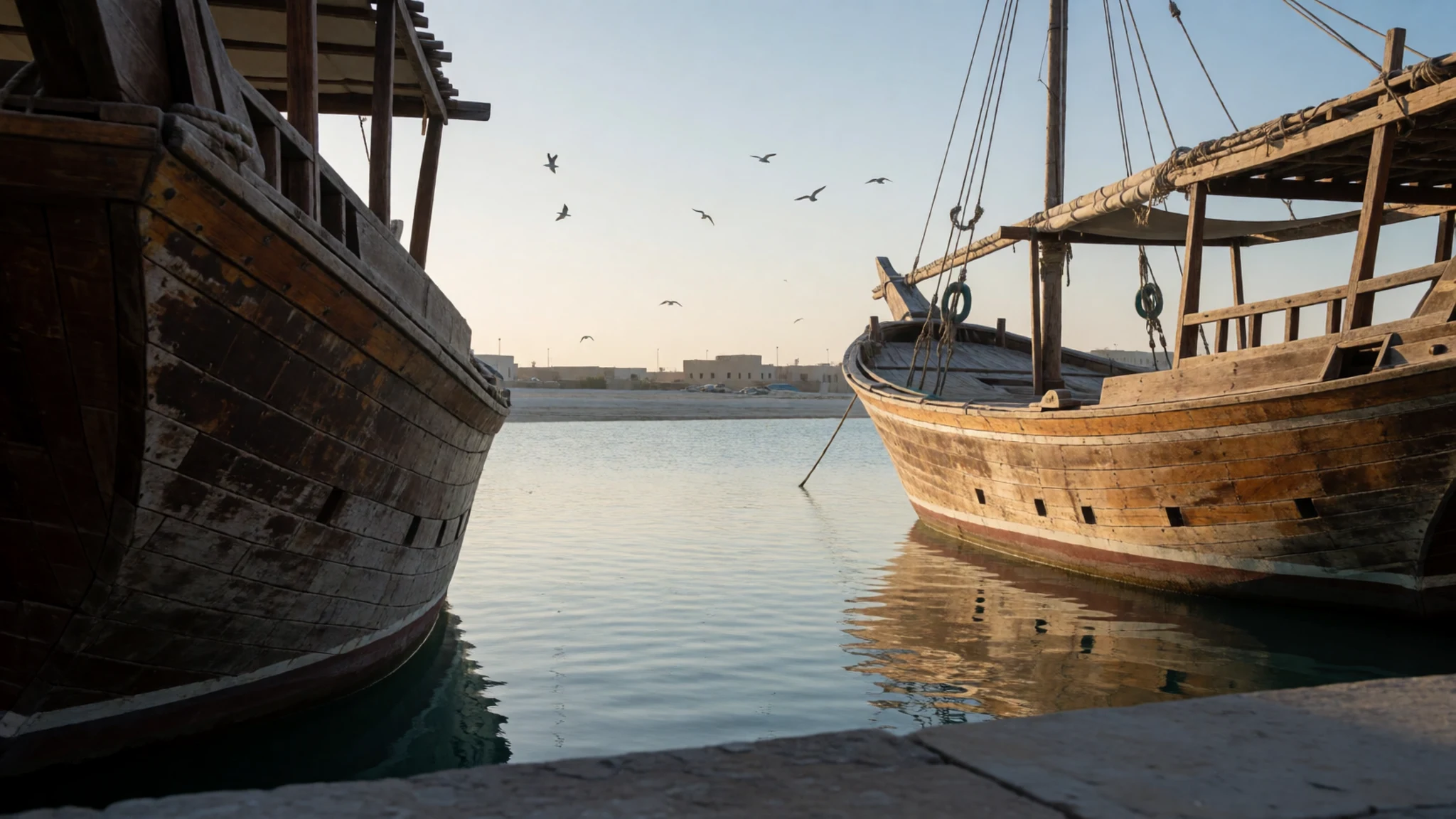
- Al Jahra boatyards — Al Jahra, west of Kuwait City
Al Jahra is a town where traditional-style wooden boats, the boums and sambuks, are still built. Today they mostly become pleasure craft and no longer serve for pearling or trade. It is a good place to see how a maritime craft survives when its original purpose has gone.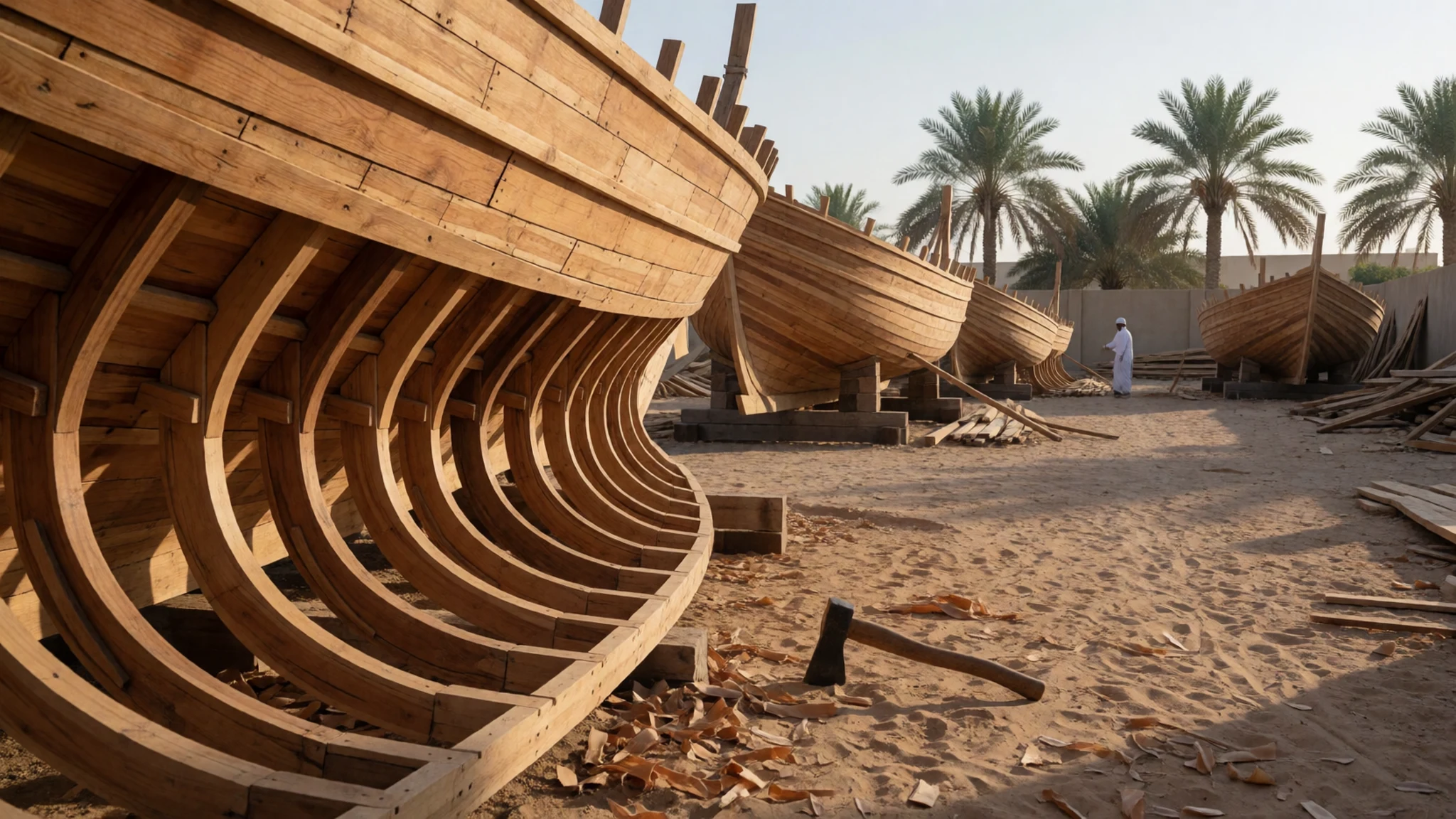
- Mina Al Ahmadi — Al Ahmadi, south of Kuwait City
Mina Al Ahmadi is an oil port south of Kuwait City, with long jetties built for supertankers. It shows how the country's wealth leaves by sea. Its display facility, which tells the story of the national oil company, needs a reservation, so check with the Kuwait Oil Company before going.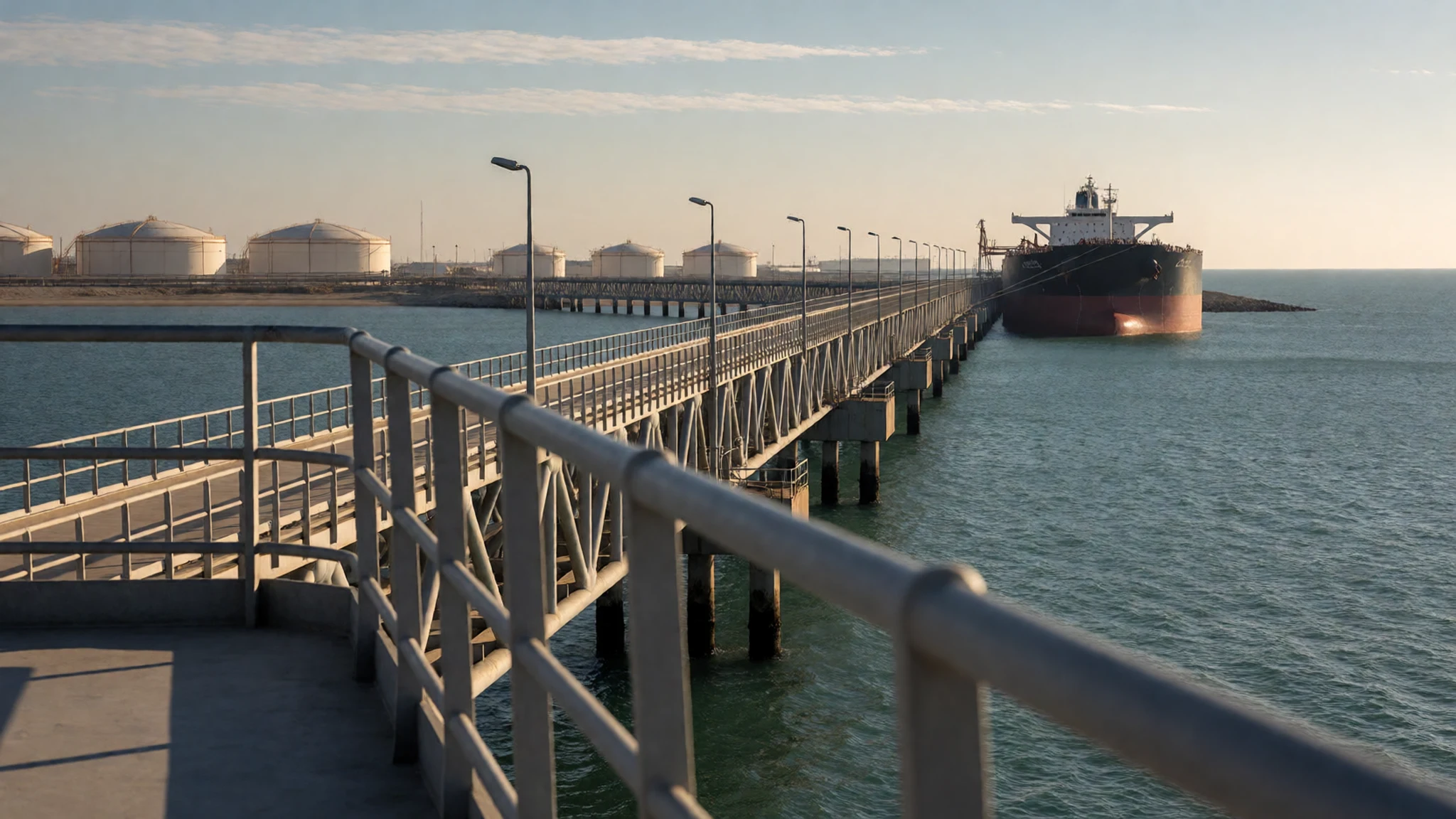
- KOC Ahmed Al Jaber Oil & Gas Exhibition — Ahmadi area, south of Kuwait City
This museum covers the history of Kuwait's oil industry through interactive exhibits and an unusually immersive film room. It suits visitors who want to understand why the country looks the way it does. Opening arrangements change, so check with the Kuwait Oil Company before planning a day around it.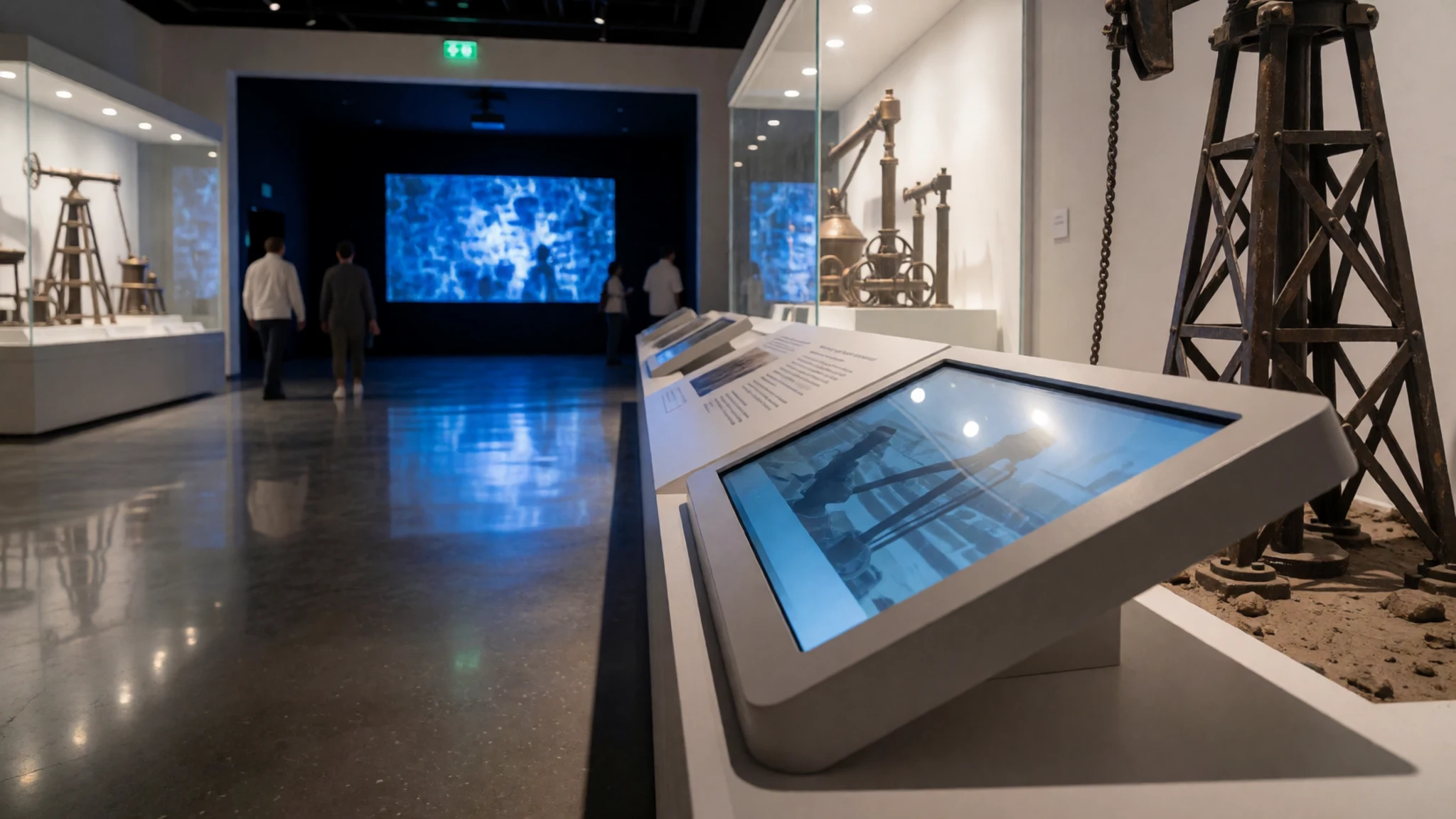
- Kazmah desert cliffs — Northern Kuwait desert
The Kazmah cliffs are among the few rises in the flat Kuwaiti desert, and on a clear day they give a view over the bay. Young Kuwaitis come at weekends to test their jeeps and quad bikes on the slope. Go in the cooler months, and take water.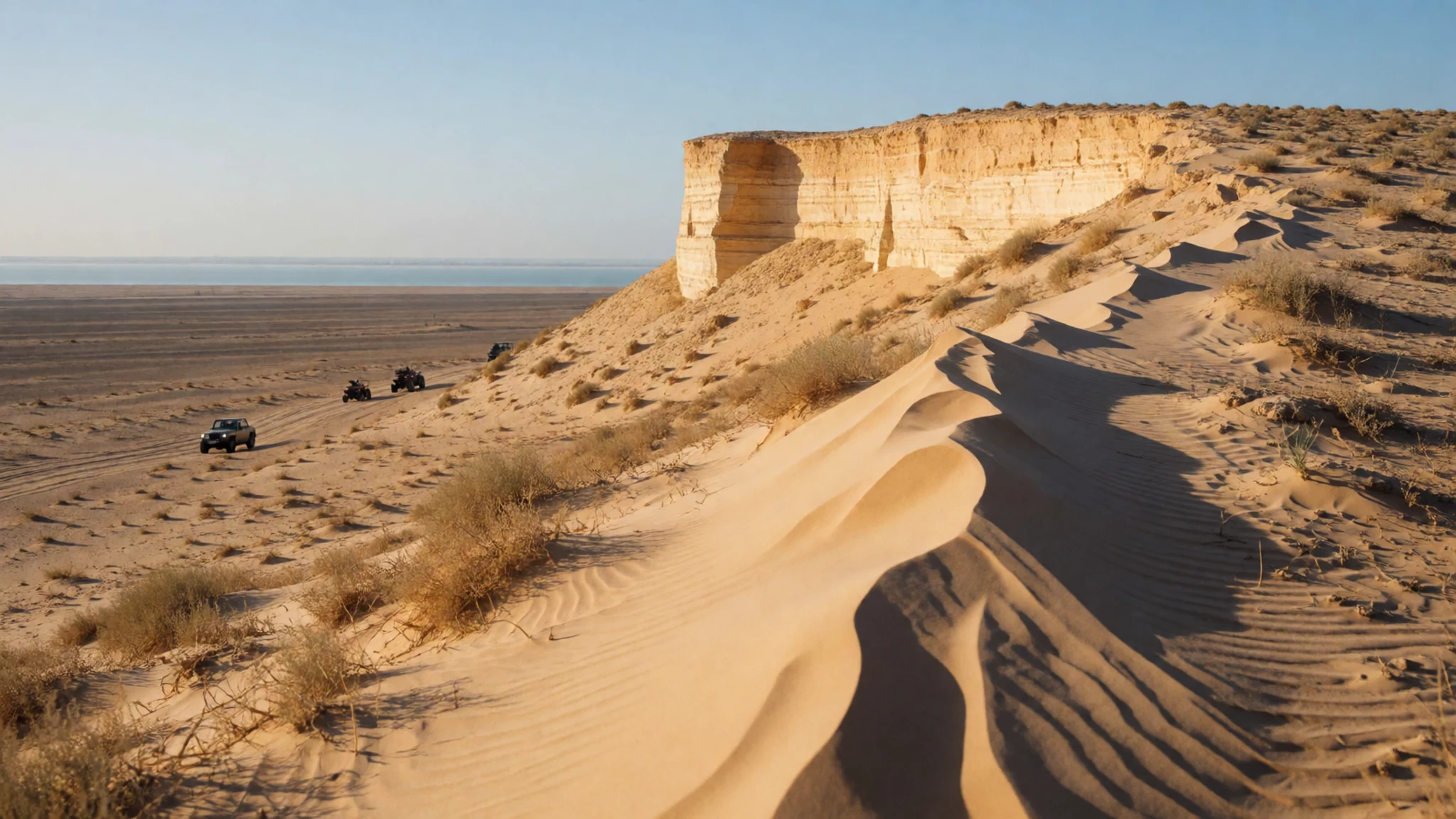
Culture
Qaruh Island has no community of its own, so the culture a visitor meets is Kuwait's, and it is generally courteous, family-centred and sensitive to honour. Good manners from across the Arab world apply: greetings are warm and unhurried, and tea or coffee offered in a home or office is usually accepted. Honour matters a great deal. Public insults or mockery can provoke genuine anger, and it is an offence to insult, humiliate or defame someone in public, under a law that is broadly worded and open to interpretation. The practical lesson is to keep remarks polite and avoid sarcasm about people, families or institutions. Kuwait is a mixed society, with Kuwaitis living alongside many other Arabs, South Asians, Iranians and others, and Islam is the official religion. Prayer calls sound several times a day, including before dawn, and light sleepers may want earplugs. Alcohol is banned outright: it may not be brought in, made or possessed, and newspapers regularly report illegal stills being shut down. Evenings tend to revolve around restaurants, malls and family outings, since nightlife in the Western sense is almost absent. Attitudes to dress are relaxed compared with some neighbours, though modesty still shapes how people behave in public. When photographing anything near the coast, ports or military sites, or any person, ask first and put the camera away if told no.
What to wear
Qaruh Island has no residents and no local dress, so fashion here means what is worn across Kuwait. The traditional men's garment is the dishdasha, an ankle-length robe, usually white and in light cotton for the hot months, with heavier wool in darker shades in winter. It is worn with a ghutra headcloth held by a black agal cord, and for formal occasions a fine cloak called a bisht goes over the top. Women traditionally wear the abaya, a long black cover-all robe, often with a headscarf, though many abayas are now cut and embroidered as designer pieces. Day to day, Kuwait follows a live-and-let-live approach. Men are seen in dishdashas, but also in T-shirts and shorts, and women's choices range from head-to-toe black to bold fashion labels. For a visitor, the sensible choices are practical ones. Loose cotton or linen covers the skin and helps in extreme heat, and a hat and sunglasses matter more than style. Women will draw less attention by covering shoulders and knees and avoiding exposed midriffs, and men are better off in long trousers in towns and offices. Bikinis are fine at hotel pools but not on public beaches. On boats and desert tracks, wear closed shoes with grip and bring a light layer for winter evenings.
What to eat
- Machboos — Traditional Kuwaiti eateries, Kuwait City
Spiced rice cooked with chicken, lamb or fish, flavoured with dried lime, tomato and warm spices. It is the dish most closely tied to Gulf home cooking. Look for it at traditional Kuwaiti eateries in Kuwait City, which are fewer than the international restaurants.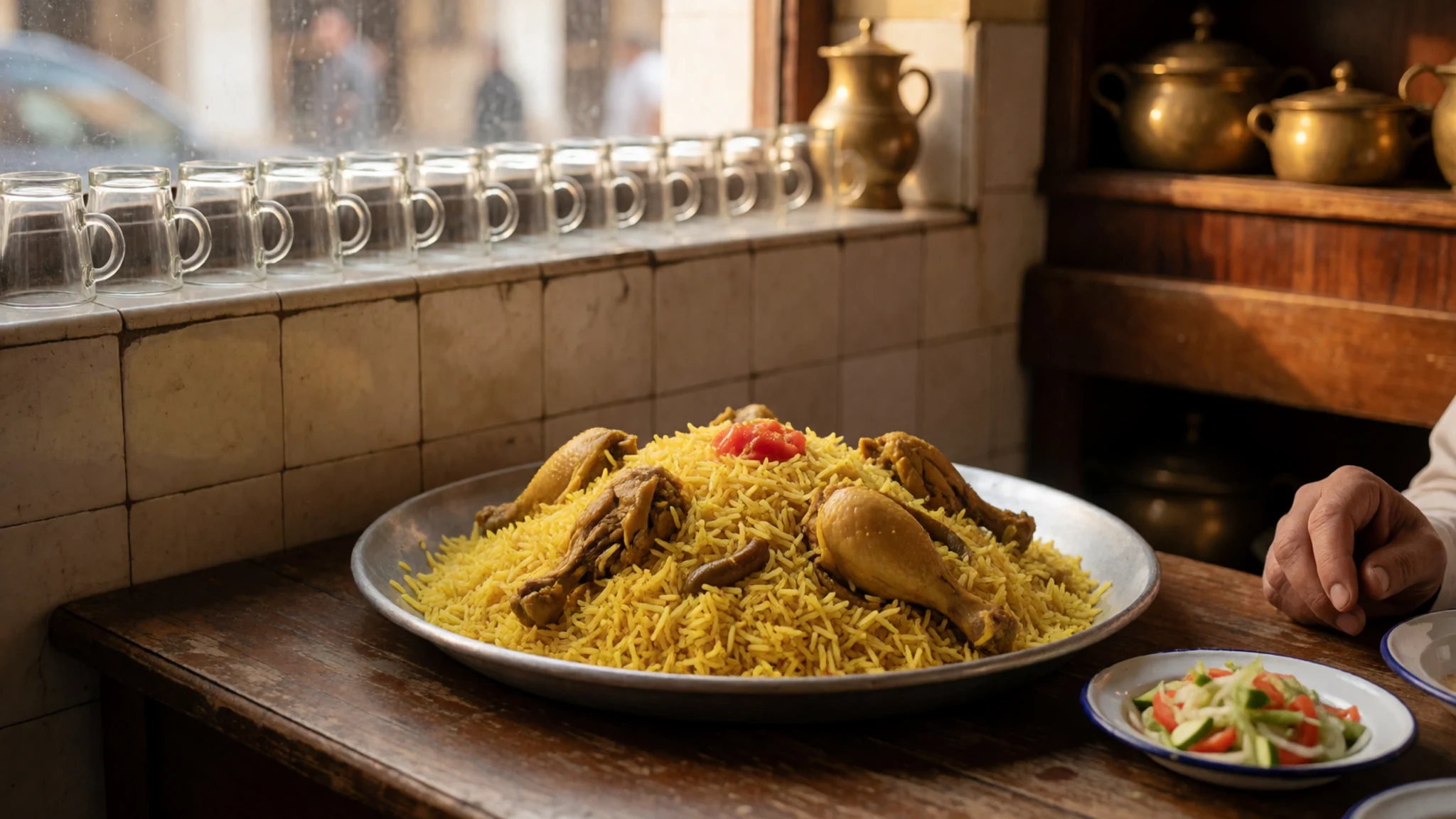
- Grilled zubaidi fish — Seafood restaurants and the fish market on the Kuwait City waterfront
Zubaidi is a silvery fish prized in the Gulf, usually grilled or fried whole and served with rice. Seafood is the obvious choice for anyone who has just looked out over the water. Ask for the day's catch, and eat it near the coast.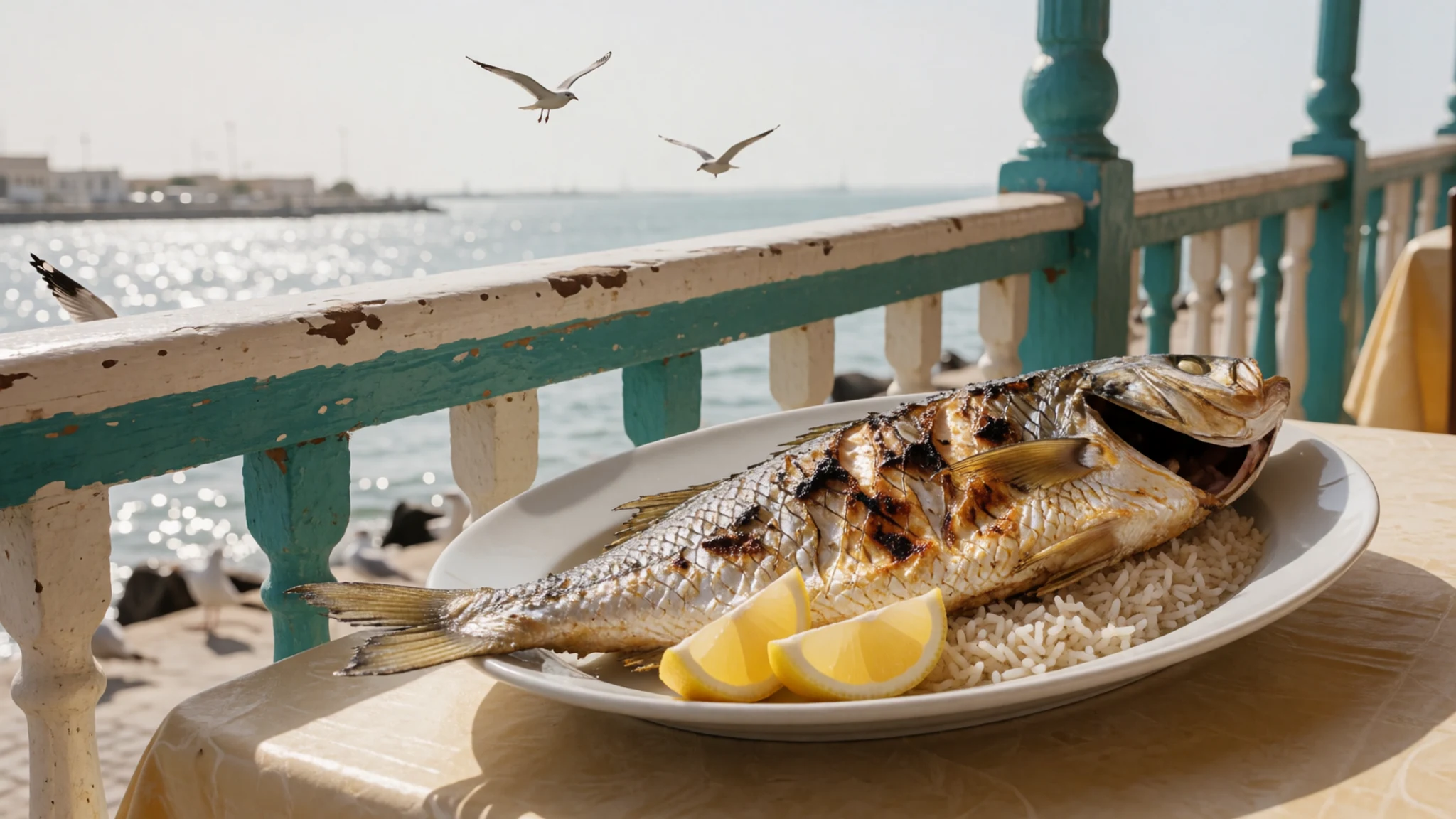
- Jireesh — Traditional Kuwaiti restaurants, especially in winter
A slow-cooked porridge of crushed wheat and meat, seasoned gently and often topped with fried onions. It is comfort food, especially in cooler months and during Ramadan evenings. A traditional restaurant is the likeliest place to find a properly made bowl. - Balaleet — Local breakfast cafes and traditional restaurants
A breakfast of sweet vermicelli flavoured with cardamom and saffron, topped with an omelette. The mix of sweet and savoury surprises first-timers but is a Gulf classic. Look for it on breakfast menus at local cafes and in family kitchens. - Specialty sandwiches and fresh juices — Restaurants Road, Salmiya
For a quick bite, Salmiya's Restaurants Road is packed with places selling sandwiches, juices and snacks. It is where locals go for casual food, and a good way to graze across many small kitchens. Malls offer the same in air-conditioned comfort.
Plan it
Best time. November to March, when daytime weather is mild enough for being outdoors. Summers are extremely hot, and heat is the main hazard for visitors.
How long. 2–3
Getting there. Fly to Kuwait International Airport, the usual way in. Qaruh Island lies out at sea beyond the mainland coast, with no public visitor ferry that can be recommended, so a landing would need arrangements with the Kuwaiti authorities. Failaka Island is reached by regular ferry.
Budget. high
Tips
- Check visa and entry rules with the official Kuwaiti authorities before booking, as eligibility depends on nationality
- Avoid midday outdoors in warm months, carry water and wear sun protection
- Hotels are expensive, so book early, and chalets along the southern coast are an alternative
- Keep up with official news and follow local instructions, as regional tensions can change conditions
Etiquette
- Dress modestly in public and keep swimwear to hotel pools
- Never bring in alcohol or pork, as both are illegal to import
- Ask before photographing people, ports or military sites
Nearby
Sources
- Wikidata Q2585129 (CC0)
- Wikipedia: Qaruh Island (CC BY-SA 4.0)
- Wikivoyage: Kuwait (CC BY-SA 4.0)
- U.S. Navy photo by Mass Communication Specialist 1st Class Elisandro Diaz, via Wikimedia Commons (Public domain)
