Kuwait Towers
Kuwait Towers, Kuwait
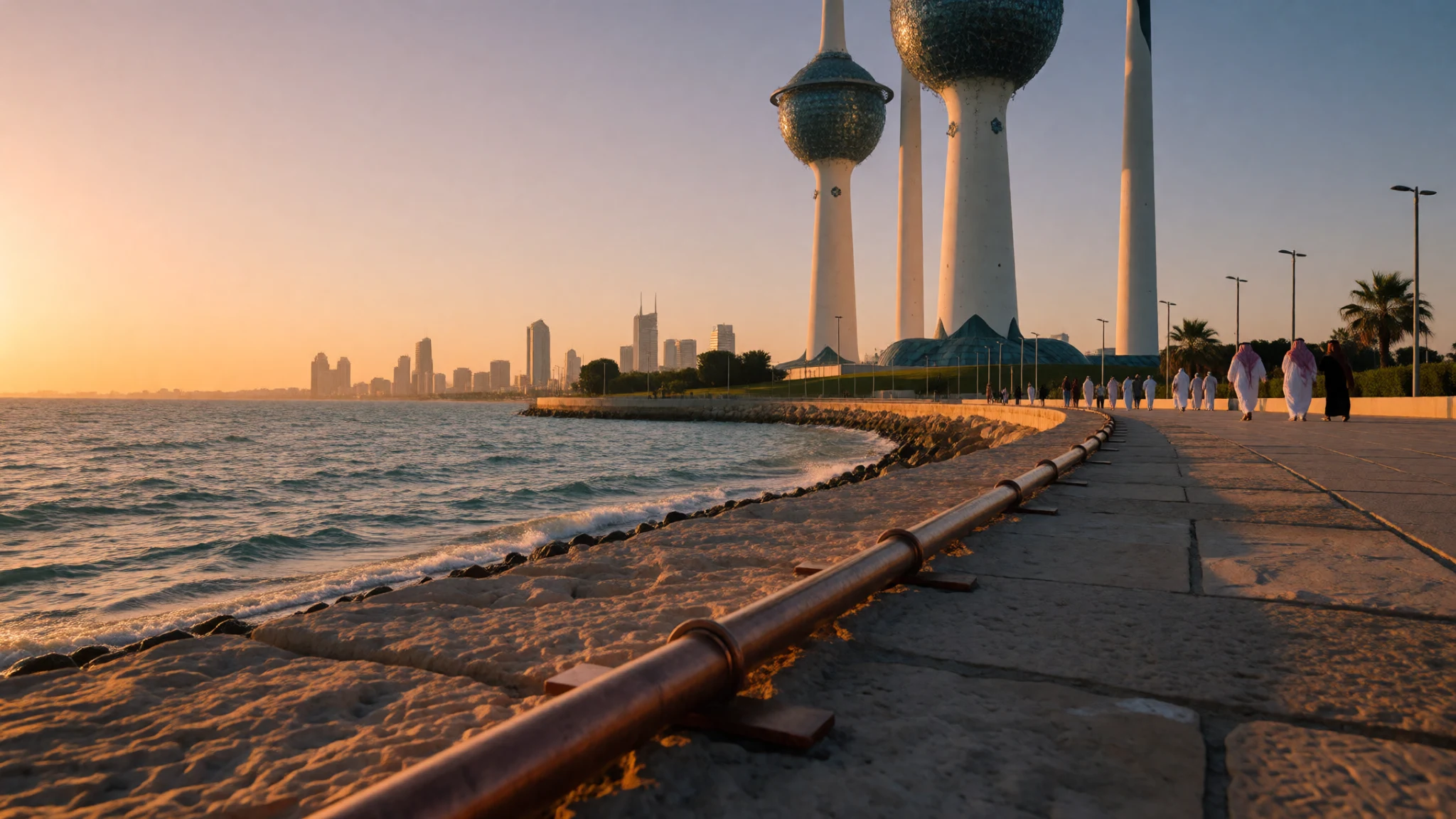
Go to Kuwait Towers for a modern Kuwait skyline moment—thin towers by the sea with views that work at day or night.
The place
Kuwait Towers are a group of three tall, slender towers in Kuwait City, standing on a promontory that juts into the Arabian Gulf. They sit in a very “this is Kuwait” setting: sea air, hard light, and a skyline that looks both futuristic and practical. Even if the towers feel like they’re already on every postcard, they reward an up-close visit—walk around the base area, watch how the sea frames the structure, then look back across Kuwait City.
These towers are part of the wider Kuwait Water Towers system. In the broader scheme there are many towers, but Kuwait Towers are distinct in style, giving the promenade a landmark identity rather than the look of standard utility infrastructure. They were opened to the public in March 1979, and the complex has been treated as a symbol of modern Kuwait ever since.
For travellers, the appeal is simple: location and viewpoint. The site is set up for people who want photos and people who want a proper sense of scale—how the city sits beside the water, how the coast curves, and how the port and sea activity change the mood of the place. Expect a mix of locals out for evening air, tourists doing the classic skyline loop, and families who want something short and memorable between longer sightseeing plans.
The complex is operated and managed by a state-owned company, and it has seen periods when access was limited due to maintenance. When it’s open, plan for clear visibility rather than “hoping for a view”; in the Gulf, heat haze can be real, and sea light can be harsh at midday.
Its story
Kuwait Towers started life as a technical landmark that quickly became a cultural one. The complex sits on a promontory into the Arabian Gulf in Kuwait City, where the sea is close enough to shape how the towers feel—cooler breezes in the evening, glare and strong shadows in the afternoon. That physical setting matters because the towers do not sit in a quiet park; they anchor the city’s coastal edge.
Within the bigger Kuwait Water Towers system of 34 towers, Kuwait Towers stand out for their different style. That contrast is part of why they became so recognisable: the architecture doesn’t read as “just infrastructure”. Over time, the site has been treated as an unofficial symbol of modern Kuwait, showing up in everyday life and not only in formal tourist guides.
Access has also shaped the story. The towers were closed for maintenance for a period in 2012 through 8 March 2016, and the re-opening was marked with a fireworks festival—an event that makes the towers feel less like a static monument and more like something the city shares. The Main Tower has even hosted TEDxKuwaitCity events in 2018 and 2019, which reinforces the point: people don’t only come for photos; they come because the complex has a public role.
For first-time visitors, the simplest way to “read” Kuwait Towers is to treat them as a skyline compass. One moment you’re photographing three thin structures against bright water; the next you’re watching traffic and port activity shape the wider scene. It’s a short stop that still gives you a sense of the country’s pace.
What to see
- Kuwait Towers (outside viewpoints) — Kuwait City waterfront promontory
Kuwait Towers are the skyline anchor of Kuwait City’s coast. Walk the promenade and take photos from different angles so the towers line up with the sea and the city behind.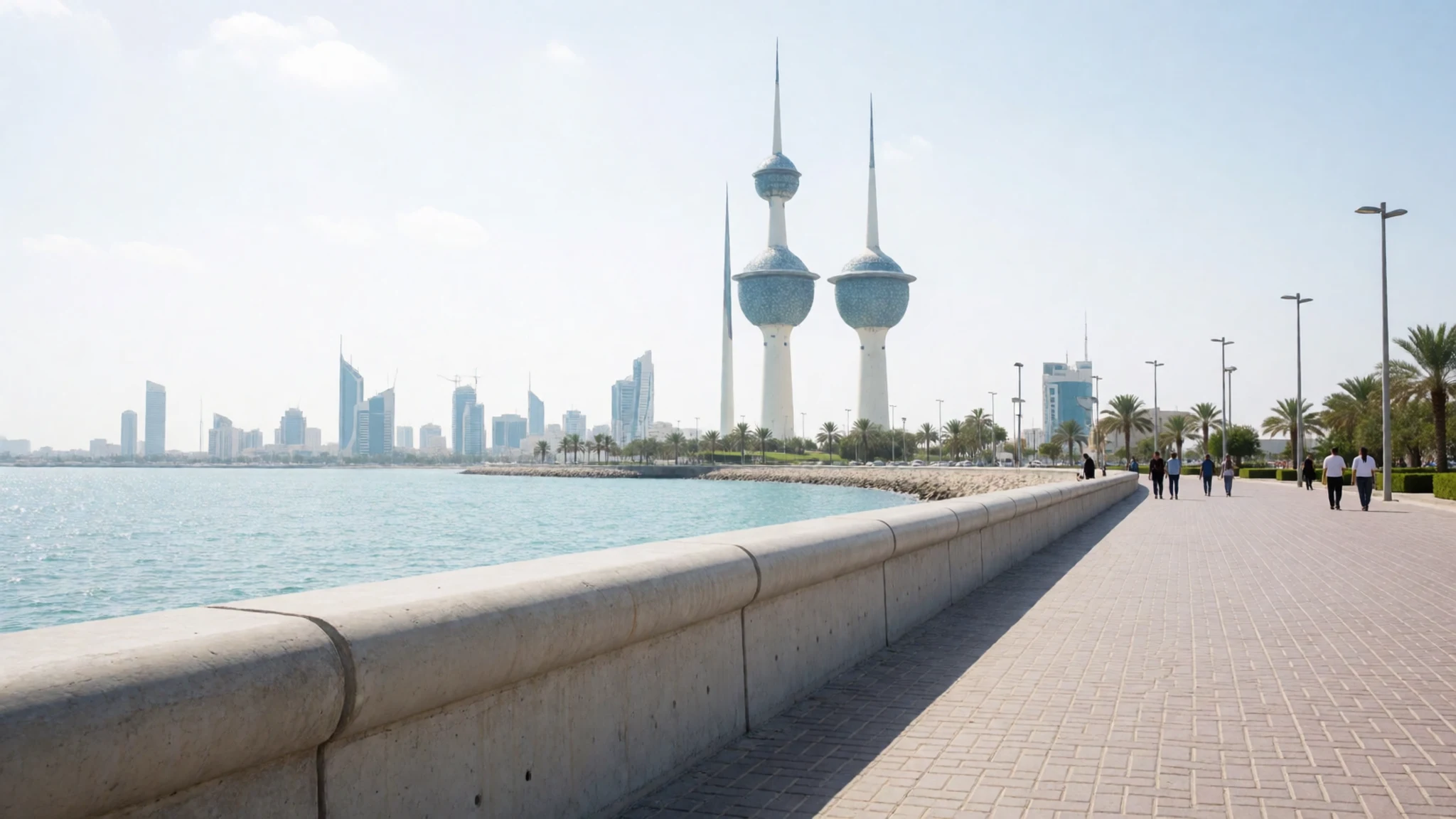
- Observation inside Kuwait Towers — Kuwait Towers complex
If the facility is open, the interior experience is about perspective. Go for a clear view and try to catch the late-day light, when Kuwait’s urban grid and coast feel less harsh.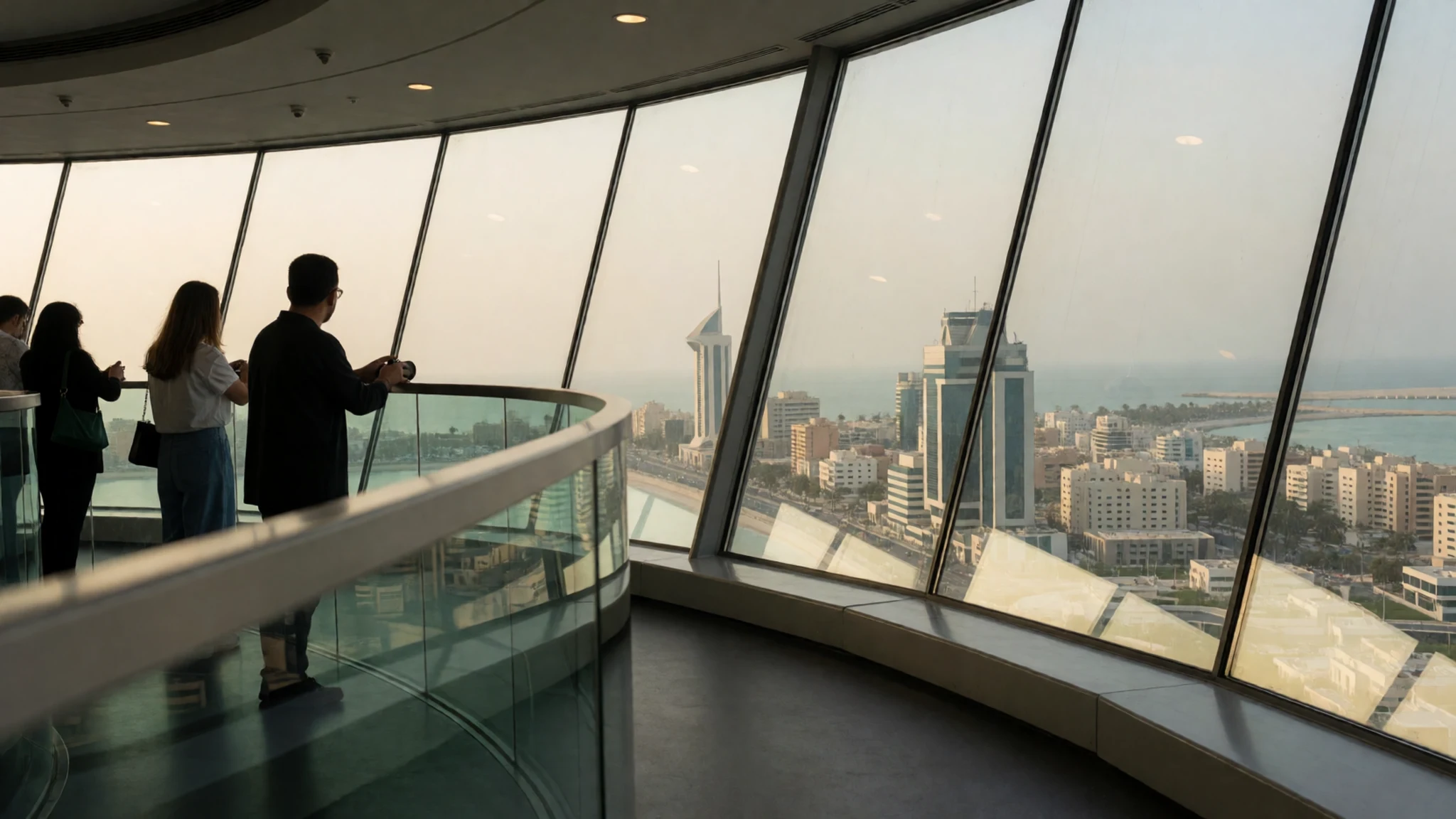
- Night view over Kuwait City — Kuwait City waterfront promontory
Kuwait Towers look especially different after dark. The distant city glow turns the towers into silhouettes, and the sea framing helps the whole scene feel more “destination” than “city landmark”.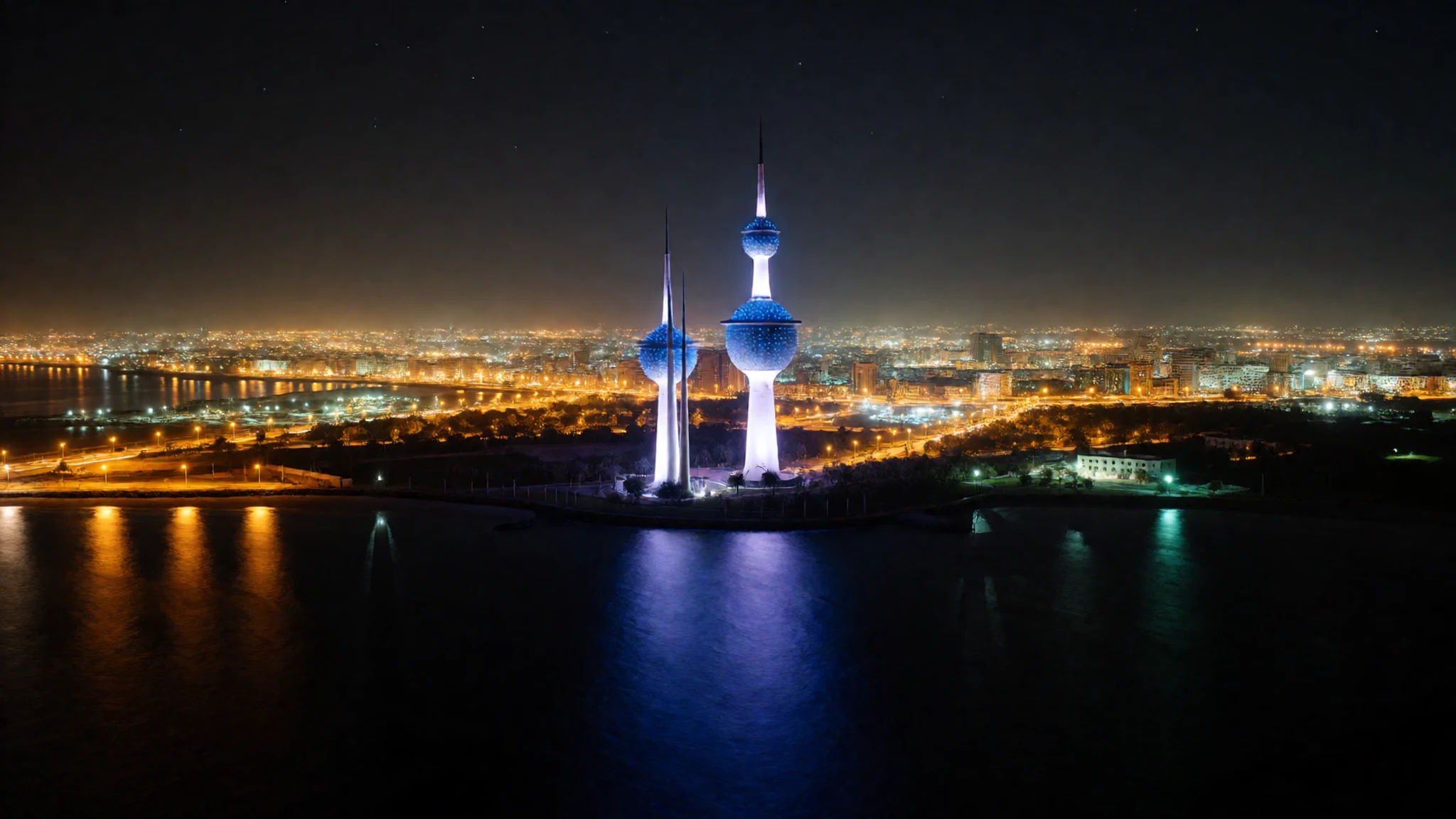
- Sea-front stroll and photo spots — Promontory approaches
The area around Kuwait Towers is built for casual wandering—good for quick portraits, people-watching, and letting the Gulf breeze cool you down. Come with a light jacket if you’re out later.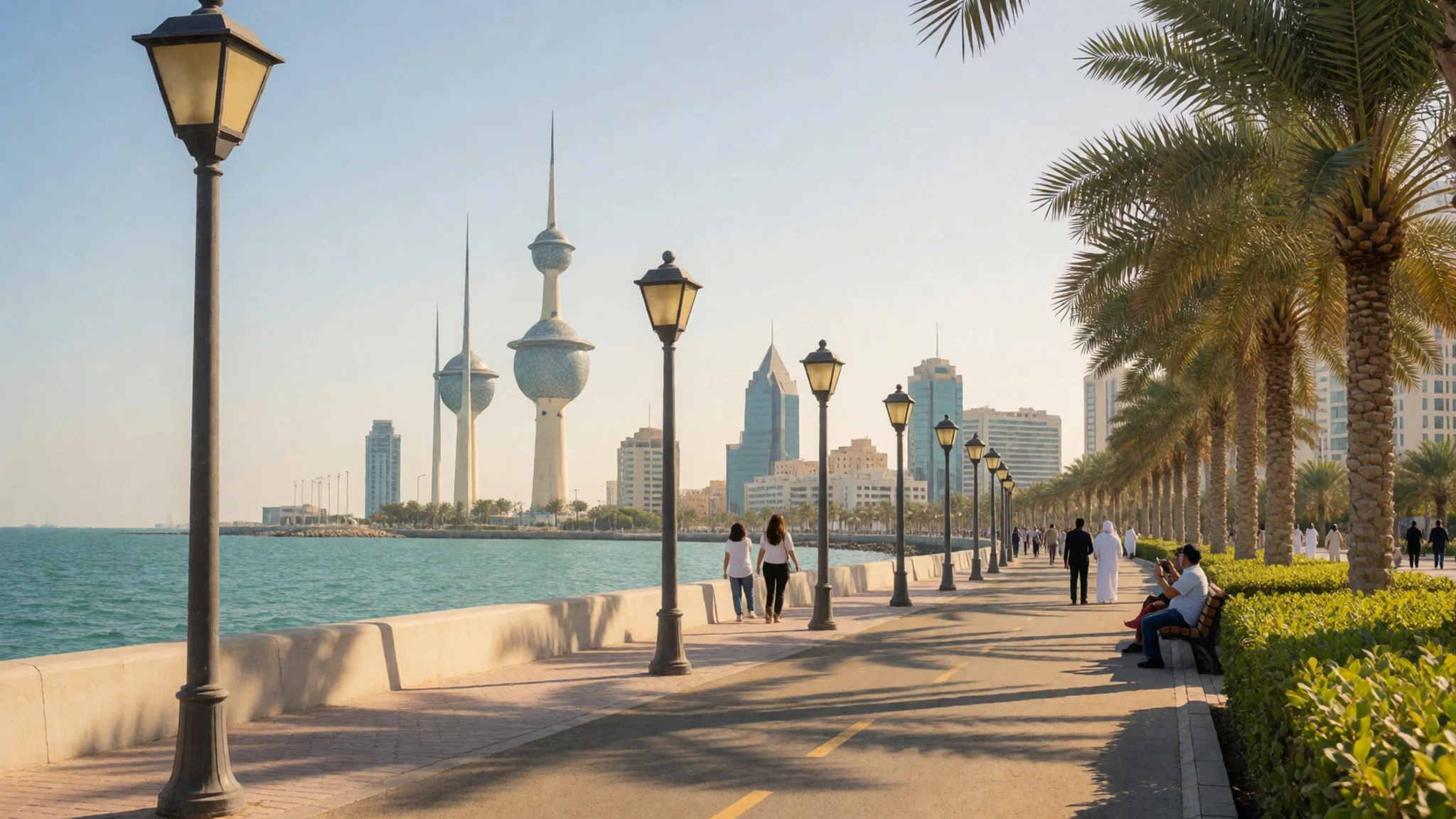
- Coastal downtime (family-friendly) — Kuwait City, coast area
Kuwait Towers is often paired with a relaxed afternoon. Nearby, families mix sightseeing with leisure, so expect a comfortable, everyday atmosphere rather than a quiet museum zone.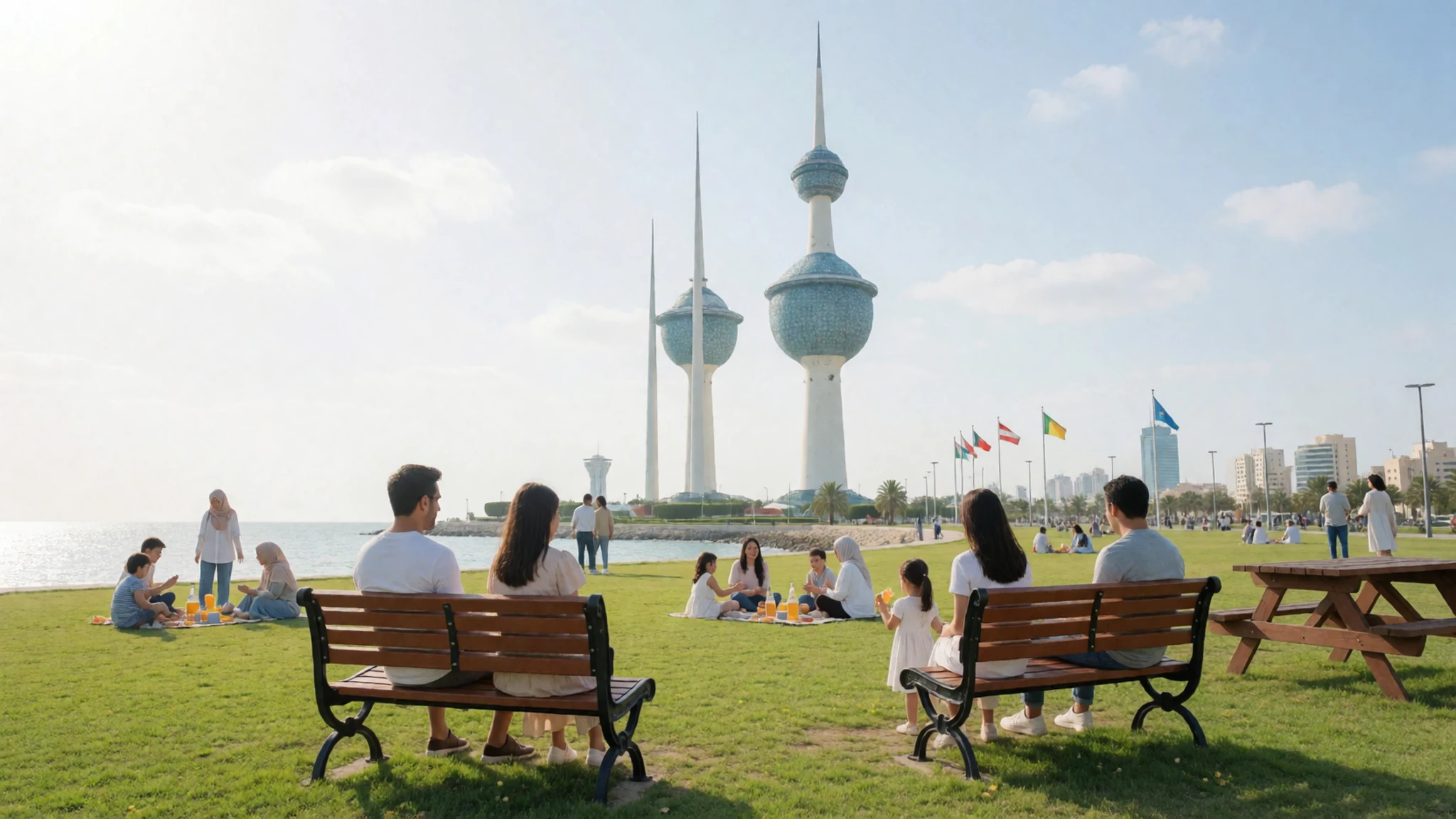
- Wildlife-at-the-edges moments — By the sea near Kuwait Towers
The most charming “bonus” at Kuwait Towers can be simple: cats and sea-side life. It’s an easy way to slow down, take a few relaxed photos, and feel like you’re part of daily city rhythm.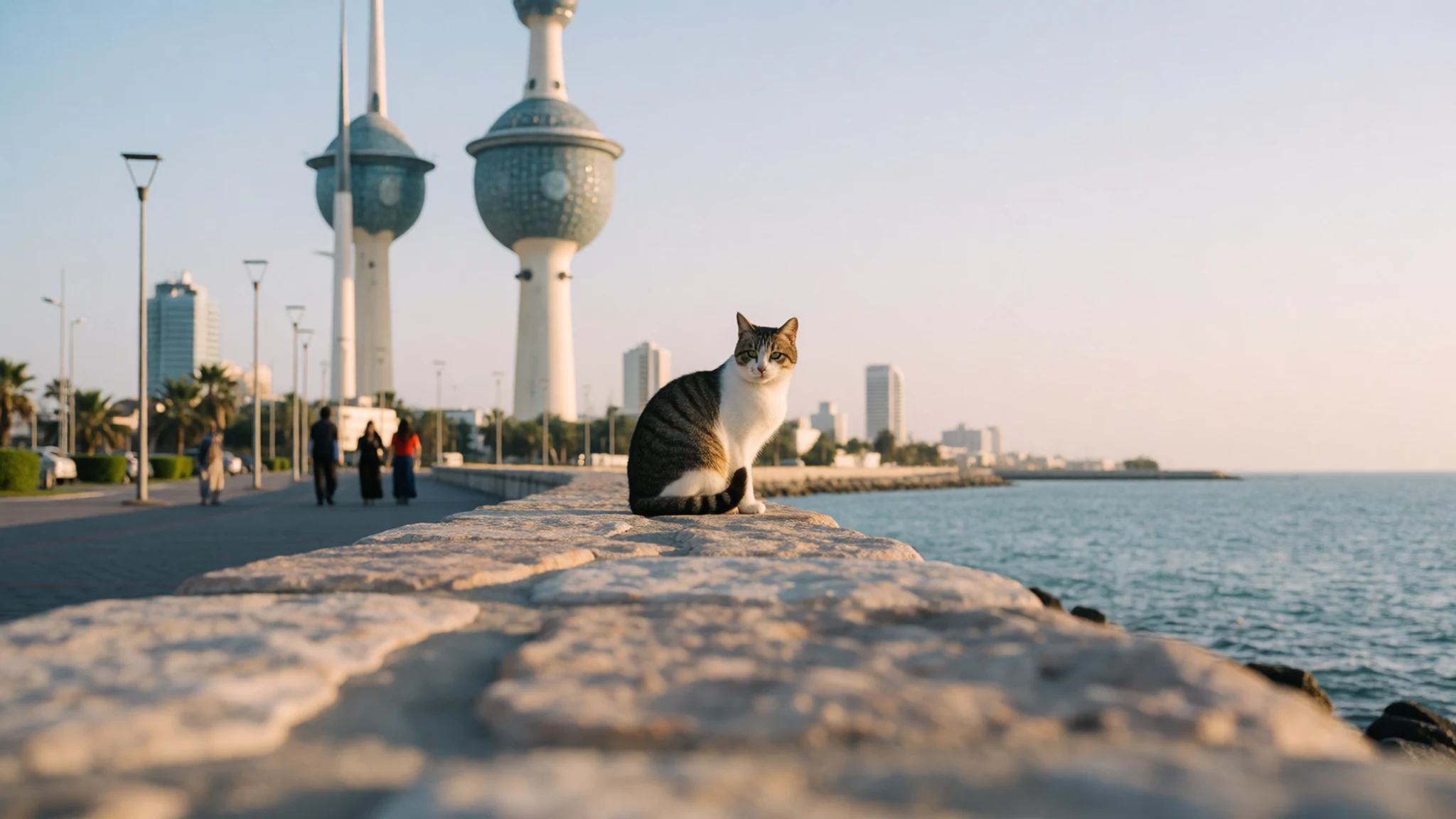
Culture
Kuwait is mostly Muslim, so respectful clothing is the default. That said, “respectful” in Kuwait can be flexible in everyday public places: malls often have young locals wearing shorts and more fitted clothing. Still, around landmarks and more formal spaces, it’s wise to dress modestly—think shoulders covered and avoid very short hems.
Kuwait also has a strong expectation around speech and behaviour. Avoid anything that could be seen as insulting to Islam, the Kuwaiti government, or national pride. The laws are strict: drug trafficking, murder, and rape carry the death penalty. Public swearing, or obscene gestures, can lead to arrest, steep fines, or even immediate deportation.
In practice, you don’t need to be nervous—you just need to be considered. Keep conversations calm in public, don’t make provocative jokes about religion or politics, and treat the towers as a public civic space rather than a place to get loud or rowdy.
And because Kuwait City can feel very lively, remember that “busy” doesn’t mean “rude”: if you’re taking photos, be mindful of foot traffic and avoid blocking walkways while people are moving past.
What to wear
Traditional dress in Kuwait is often associated with the thobe (a long garment) for men and the abaya and headscarf for women. These outfits use breathable, modest fabrics that suit warm weather and also fit the cultural expectation of covering in public.
What people wear day to day is more mixed. In Kuwait City, malls and busy areas can look similar to other Gulf cities, with many young men in shorts and fitted casual wear. Even so, visitors should be prepared to adapt quickly—shorts are generally easier in everyday commercial areas, but covering up helps in more formal settings or when you’re moving between neighbourhoods.
For Kuwait Towers specifically, you’ll be outside by the sea, so dress for heat and sun. Choose light, loose layers, comfortable footwear for walking, and bring sunglasses and sun protection. If you’re planning to head into any more formal cultural spaces, pack a light scarf or an extra layer to cover shoulders and chest. Avoid anything too sheer or aggressively revealing; it’s not worth the hassle and it keeps the day smooth.
If you’re visiting around evening, bring a thin layer anyway—coastal air can shift, and you’ll appreciate having something to throw on when you stop for photos.
What to eat
- Fish Market meals (fresh fish cooked to order) — Fish Market area, Kuwait City
The Fish Market is a go-to for seafood lovers: you’ll see fresh fish on display, and the kitchen can cook it based on your instructions. It’s lively, efficient, and very much a local-style experience.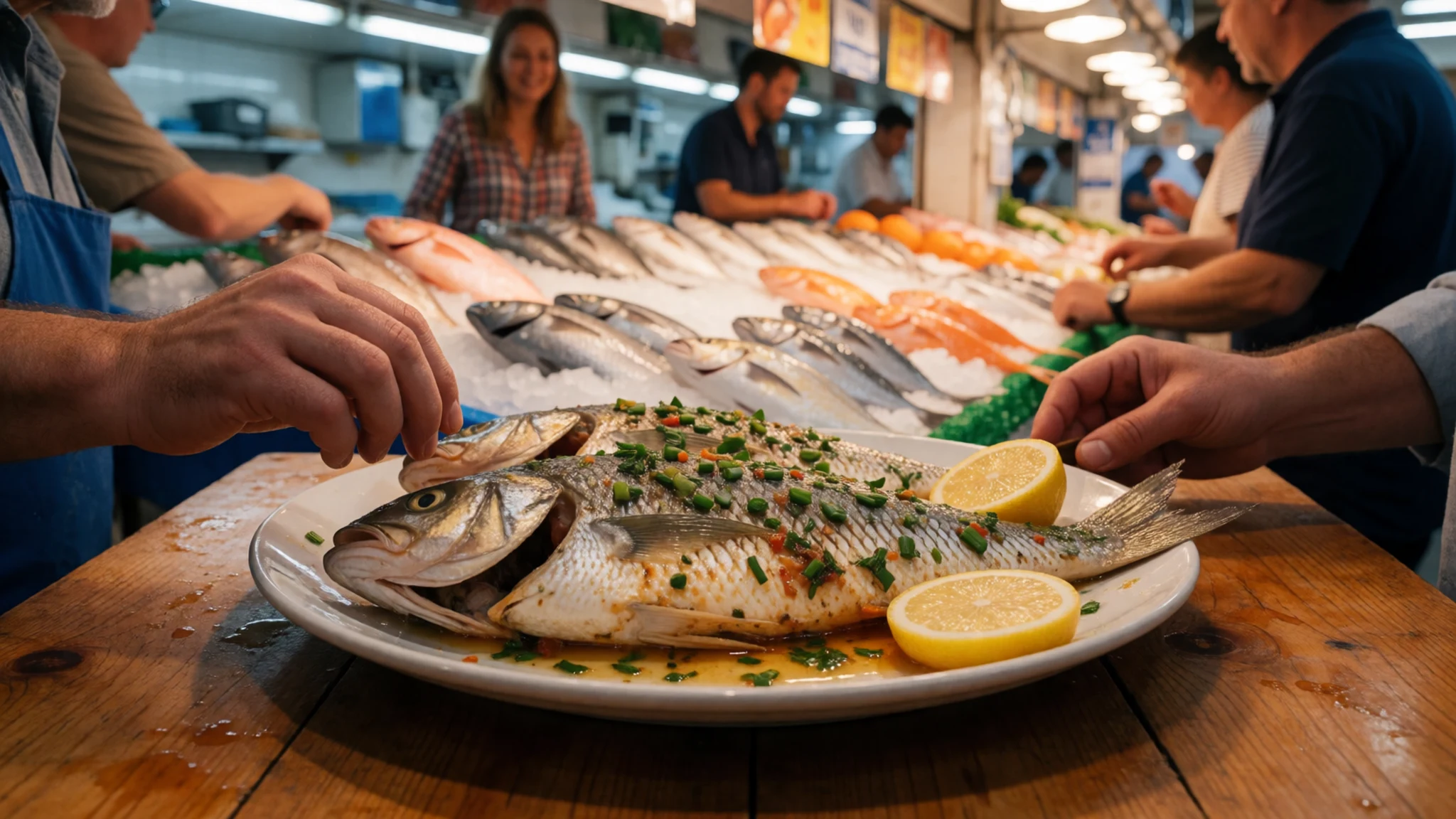
- Le Relais de l'Entrecote-style steak frites — Avenues Mall / Al-Fanar Mall, Al-Fanar area, Salmiya
French steak frites is an easy choice when you want something familiar but done well. Look for menus at malls around Kuwait City where French chains or inspired offerings are common.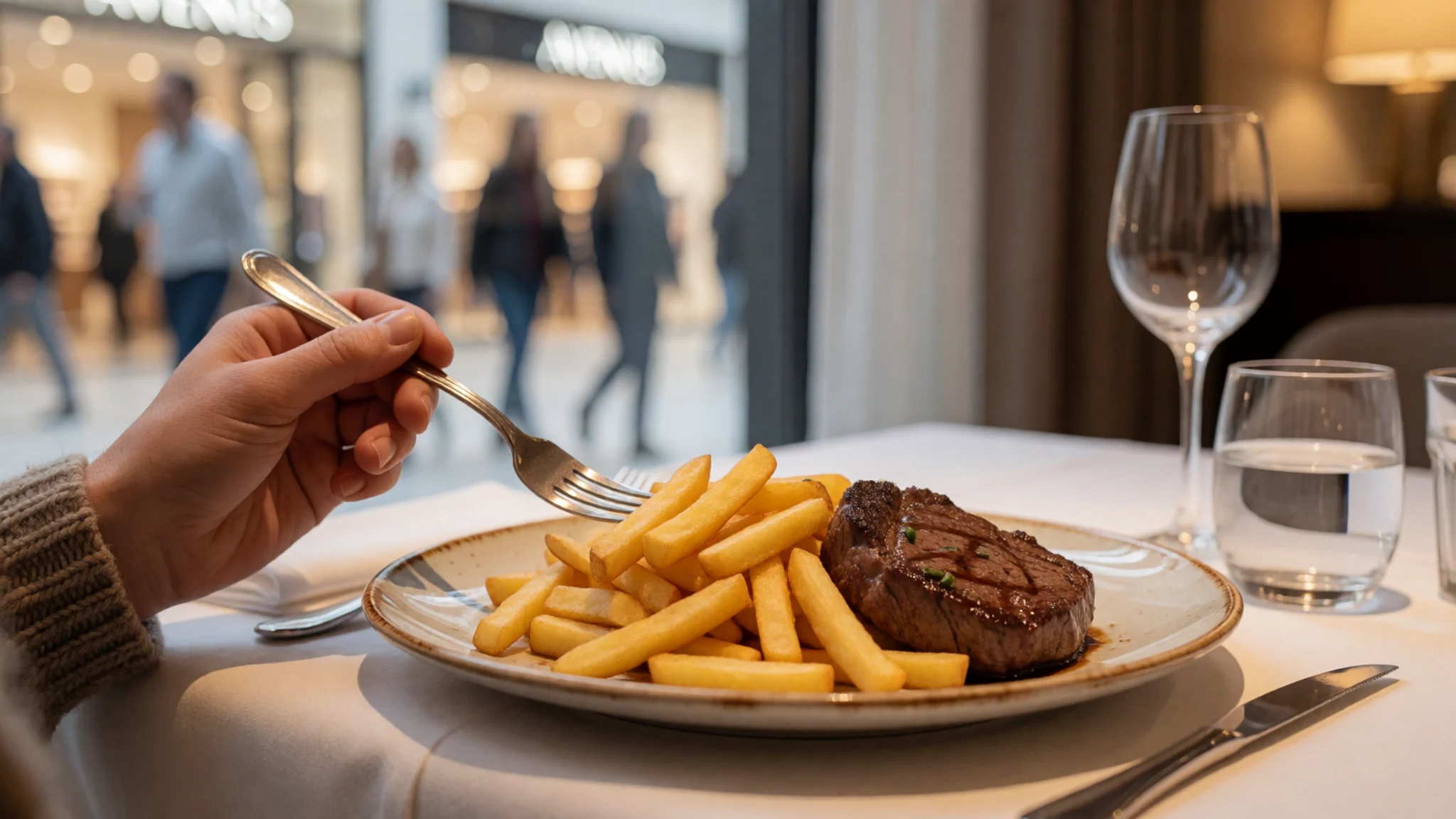
- Italian gelato and casual Italian bites — Sharg area around Ahmed AlJaber street, Gaz Tower
For something sweet (and a break from the heat), go for Italian gelato. It’s popular in Kuwait City, especially in lively shopping areas, and it’s a low-effort way to keep energy up while sightseeing. - Indian classics at sharg / Salhiya areas — Sharg / Salhiya Complex area, Kuwait City
Indian food is widely available, and it’s a good way to cool off indoors after time in the sun. Many options cluster around central neighbourhoods and mall food courts. - Mugal Mahal and Bukhara-style Indian dining — Sharg and Sheraton-area venues, Kuwait City
If you want more “restaurant” rather than casual, try the Indian menus associated with well-known names in the city. The vibe is sit-down, flavours are rich, and it works well for evening plans.
Plan it
Best time. February–April for the most comfortable sightseeing temperatures and clearer outdoor conditions—March and April are especially mild; October–November can also be pleasant when the heat eases. Kuwait’s heat and humidity can make long days outdoors less pleasant in other months.
How long. 2–3
Getting there. Fly into Kuwait International Airport, then take the X3 express bus into the city centre as the main transfer. Finish with a short local ride or walk depending on where your hotel is.
Budget. mid
Tips
- Plan Kuwait Towers for daytime visibility or evening light—heat haze can blur views in the midday sun.
- Keep the visit short and efficient: the complex works well as a quick skyline stop even on tight schedules.
- Carry water and sun protection for the coastal walk and photo time.
- Bring some cash for small purchases around markets and kiosks, alongside card payments where accepted.
- If you’re driving in the city, be extra careful crossing streets; there are few cues for pedestrians.
Etiquette
- Dress modestly in public areas, especially if you move beyond malls.
- Avoid insulting remarks about religion, government, or national pride.
- Keep your behaviour calm and avoid obscene gestures or loud public swearing.
Nearby
Sources
- Wikidata Q1335640 (CC0)
- Wikipedia (rev 1380256170) (CC BY-SA 4.0)
- Wikivoyage (rev 5407774) (CC BY-SA 4.0)
- photos/01-kuwait-towers.jpg (CC BY-SA 2.5 se)
- photos/02-kuwaitobservation.jpg (Public domain)
- photos/03-remote-view-of-night-in-kuwait-city.jpg (CC BY 2.5)
- photos/04-aqua-park-near-kuwait-towers.jpg (CC BY-SA 4.0)
- photos/05-a-cute-cat-by-the-sea-kuwait-towers-kuwait-2023-cropped-2026.jpg (CC BY-SA 4.0)
- photos/06-a-cute-cat-by-the-sea-kuwait-towers-kuwait.jpg (CC BY-SA 4.0)
- photos/07-kuwait-city-kuwait-towers-panoramic-view-1.jpg (CC BY 4.0)
- photos/08-kuwait-city-kuwait-towers-panoramic-view-2.jpg (CC BY 4.0)


