Qal'ai Khumb
Qal'ai Khumb, Tajikistan
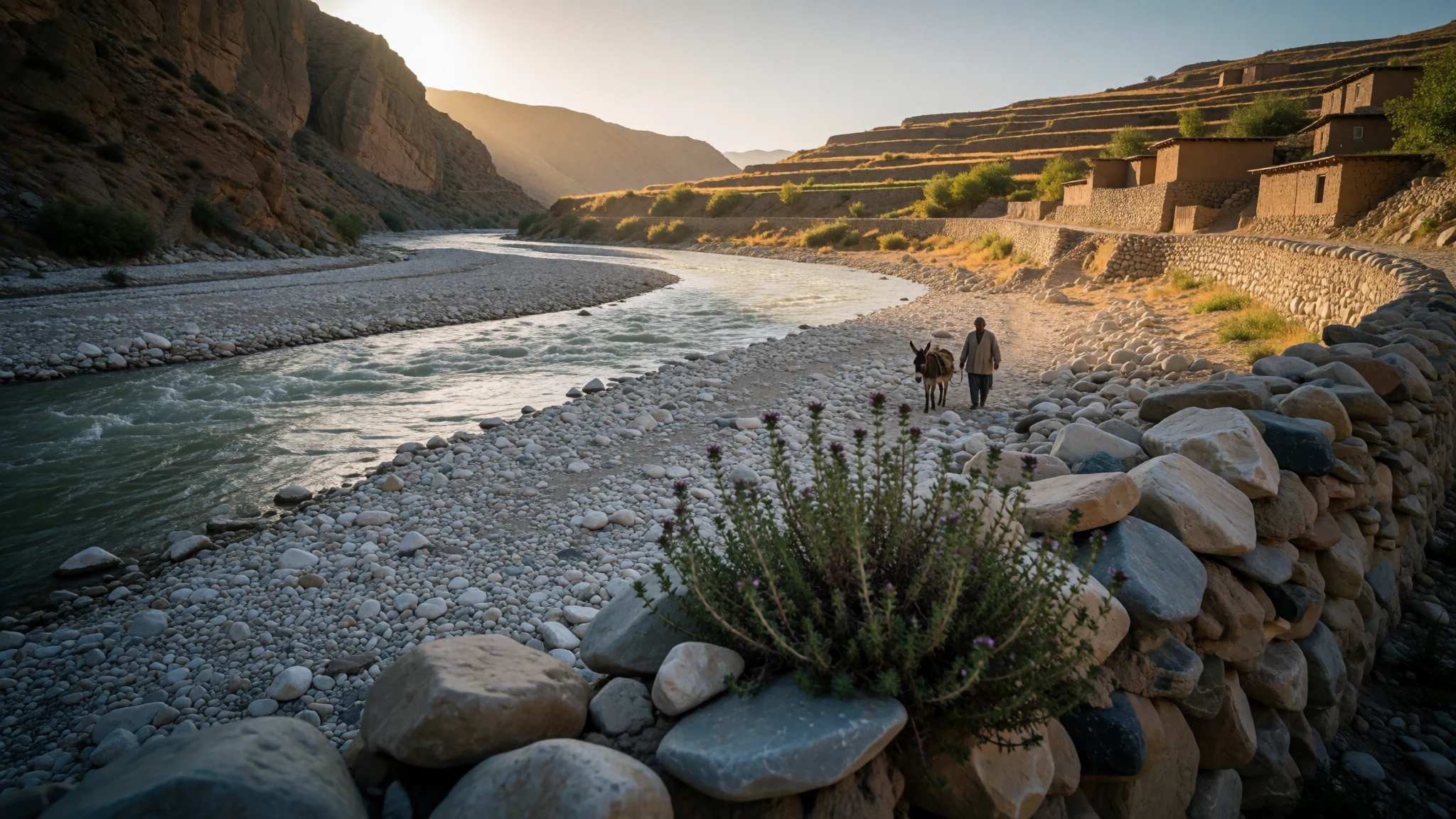
Qal'ai Khumb is a Pamir Highway waystation where a mountain river meets the Panj and Afghanistan sits just across the water.
The place
Qal'ai Khumb (Қалъаи Хумб in Tajik script, Kalaikhum in Russian-influenced spellings) is a small border town in the Gorno-Badakhshan Autonomous Region of Tajikistan. It sits at 1,200 m, where the Khumb river runs into the Panj. Across the Panj lies Afghanistan, close enough that the far bank's villages and footpaths are part of the everyday view. The name means a fortress on the Khumb river, though the town today is more about the road than about ramparts. The Pamir Highway meets the Panj here, and the settlement serves as the seat of Darvoz District and a regular overnight stop for drivers and cyclists travelling between Kulob and Khorugh. Mountains close in on nearly every side, so the town is squeezed onto a narrow valley floor, with houses, a bazaar strip and guesthouses strung along the main road. It is not a place of famous monuments. Its appeal is the setting, the border atmosphere and the chance to see a working Pamir waystation rather than a tourist town. Spellings vary on signs and maps: Kalai-Khumb, Qal'a-i-Khum and Kalaikhum all mean the same place, because Tajik has no single agreed system for Latin letters. Distances are long. Kulob is 168 km away and Khorugh 235 km, and mountain roads make those figures feel bigger than they look. Most visitors stay one night. A second night suits anyone who wants to walk the riverbank, ask locally whether the Saturday cross-border market is running, and give the road a rest.
Its story
Qal'ai Khumb was once the seat of a small independent state. In the 17th century it was the capital of the mirdom of Darwaz, a mountain principality whose rulers extended their influence over neighbouring mirdoms, including Ragh to the west and Roshan and Shughnan to the east. At its height the mirs' reach ran as far as the Wakhan valley. The townspeople of that period spoke Darwazi, a language of its own. Later the principality was absorbed by stronger powers, Bukhara and Afghanistan, and the emir of Bukhara pressed hard against the Darwazi language. North of the Panj it has since disappeared, while on the Afghan bank it is still spoken, which is a quiet reminder that the river is a recent line through an older shared world. Earlier still, archaeologists have found that Qal'ai Khumb was a large and prosperous town in the middle ages, enriched by its position on a Silk Road route through the mountains. That commercial role has a modern echo: the road and the bridge to Afghanistan keep the town in the business of passing trade. A memorial in the town to Soviet soldiers who died in Afghanistan adds a later chapter, from the decades when Tajikistan belonged to the Soviet Union and this border was a front line of a different kind.
What to see
- The Khumb river bridge, looking north — Town centre, over the Khumb river
The bridge over the Khumb is the best place to understand the town's shape. Looking north, the river runs out of a steep, dry valley towards the Panj, with buildings clinging to the banks. Go in the soft light of early morning or late afternoon, when the rock walls turn warm and traffic is lighter.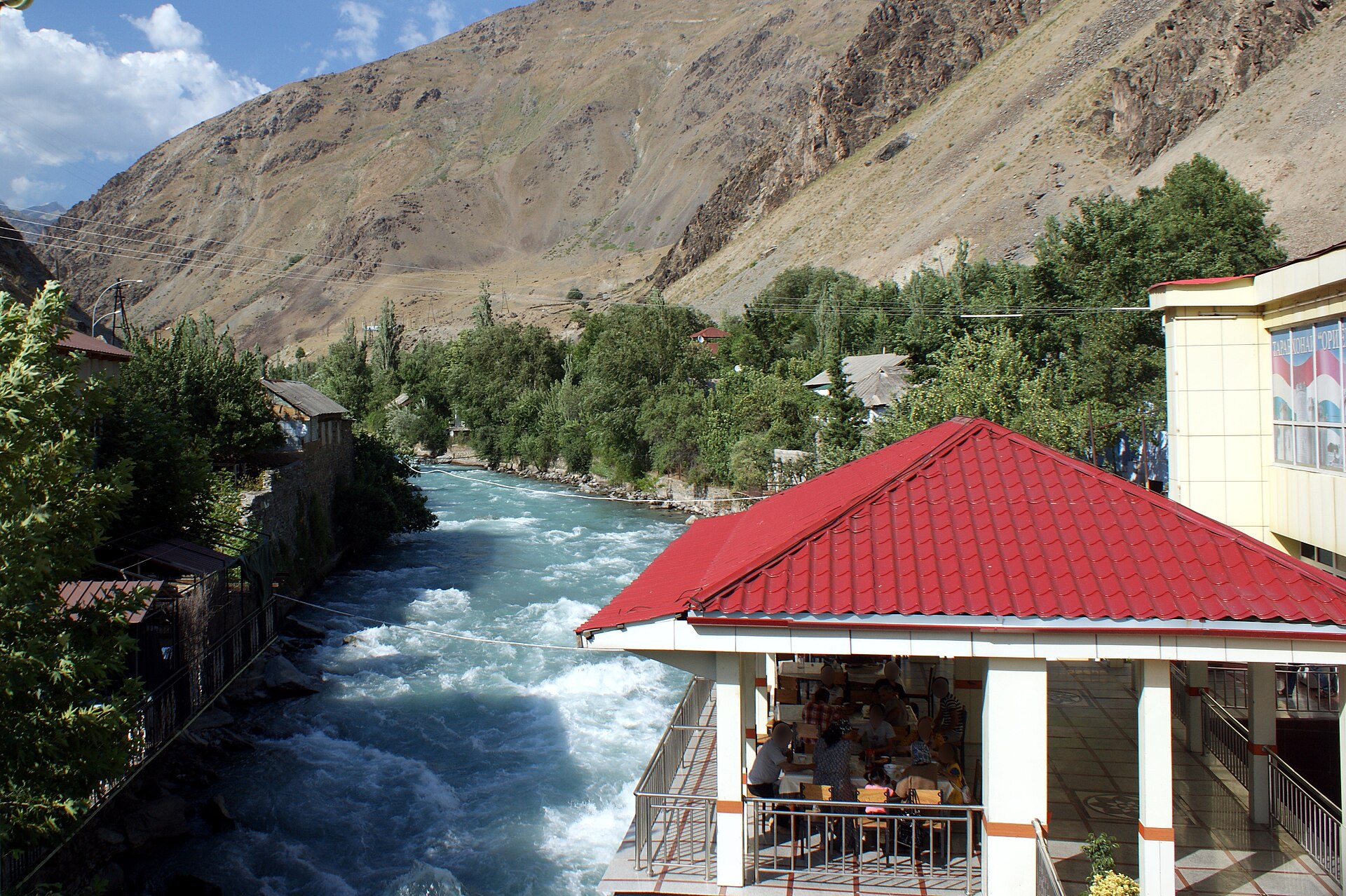
- Where the Khumb meets the Panj — Southern edge of town, at the river junction
The confluence of the Khumb and the Panj is where the town's name makes sense. Two rivers of different character join below the settlement, and the Panj carries on as the border with Afghanistan. It is an easy walk from the centre and rewards a slow look rather than a long visit.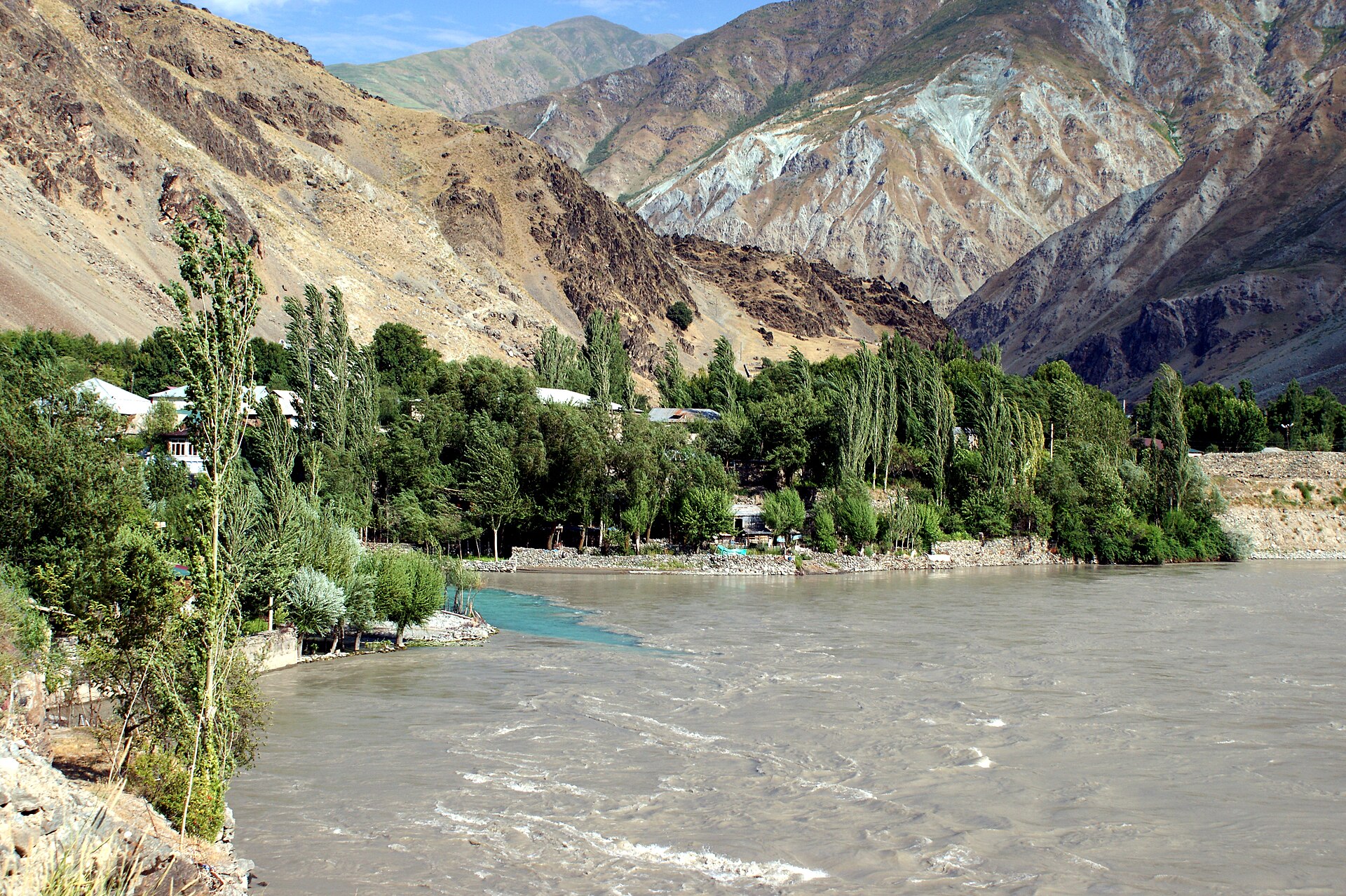
- The main road through town — Main road, town centre
The main road is the Pamir Highway's local face: small shops, parked shared taxis, guesthouse signs and the odd cyclist loaded with panniers. Walking its length takes little time, but it shows how a mountain waystation lives, and it is the easiest place to start conversations and ask about road conditions.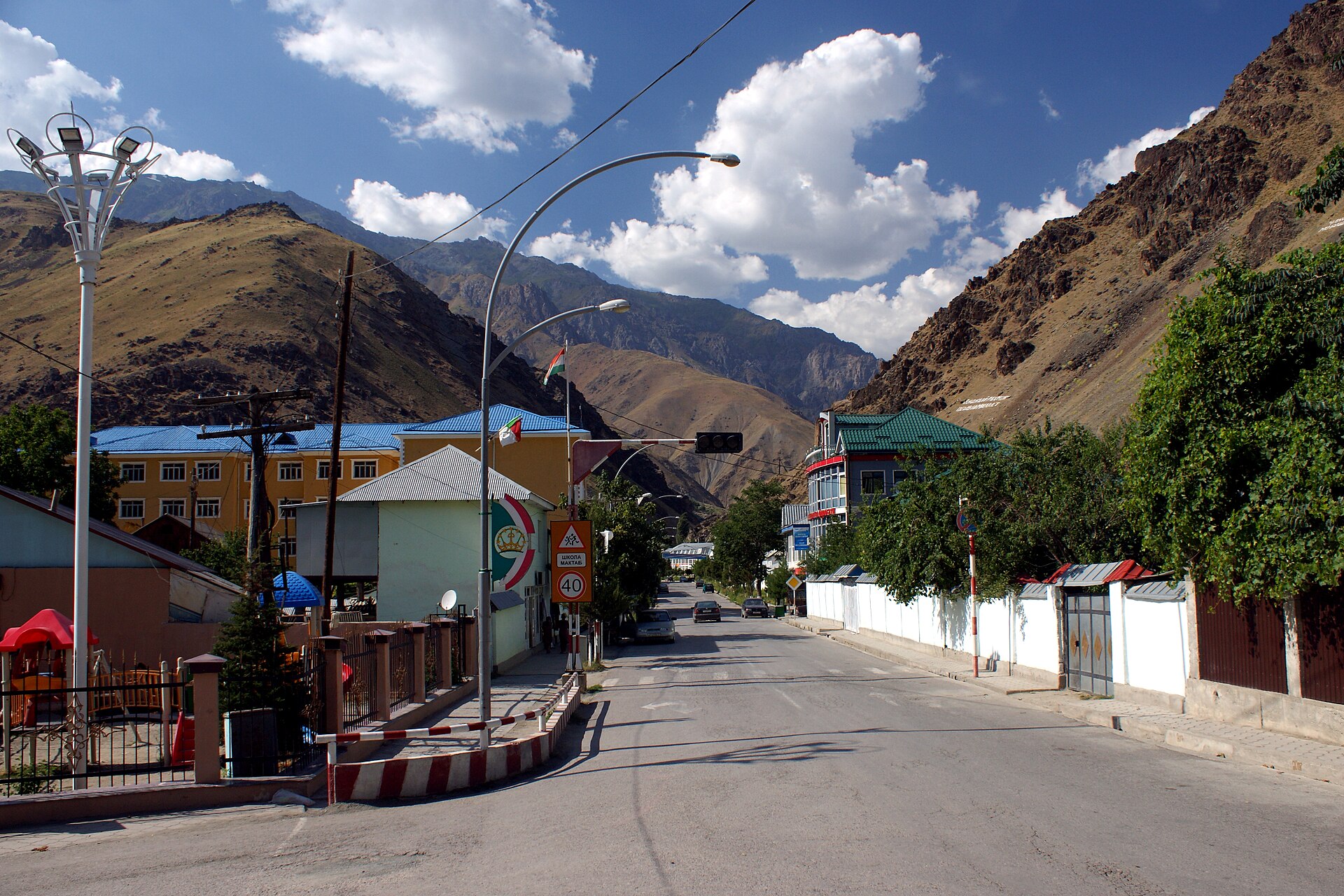
- Views across the Panj to Afghanistan — Riverside, south of the bridge
From the bridge looking south, the Afghan bank is plainly visible, with terraced fields, footpaths and mud-brick houses on the far side. Keep a respectful distance from any border infrastructure, and ask before photographing anything that looks official. The scene is quietly absorbing and needs no more than half an hour.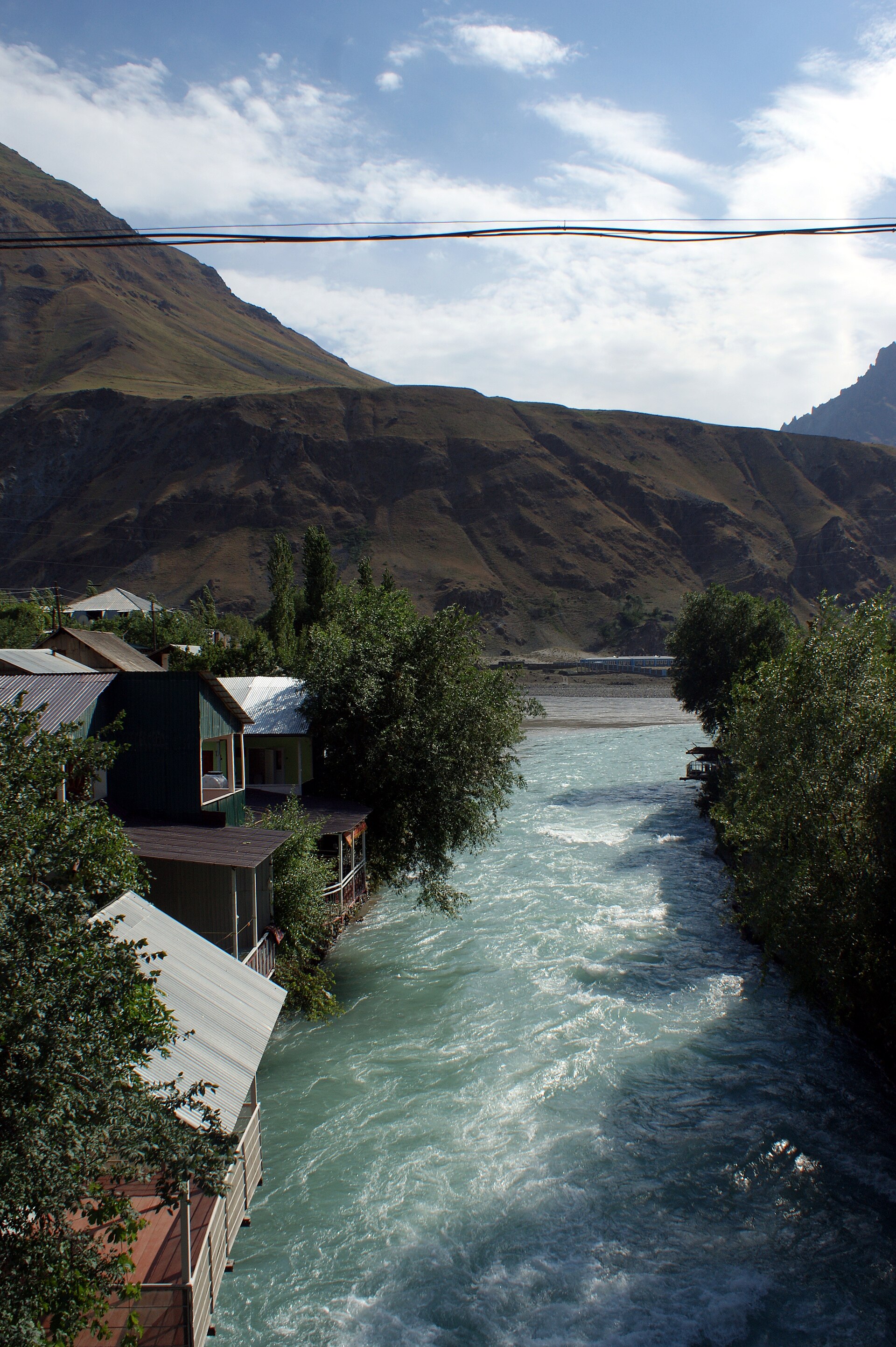
- The welcome arch — Entrance to town on the highway
A ceremonial arch marks the approach to Qal'ai Khumb and stands as the town's signature photograph. It is the sort of Soviet-era-style gateway found across the region, and it makes a convenient stop for travellers arriving by road from Kulob or Khorugh, with the mountains framing the background.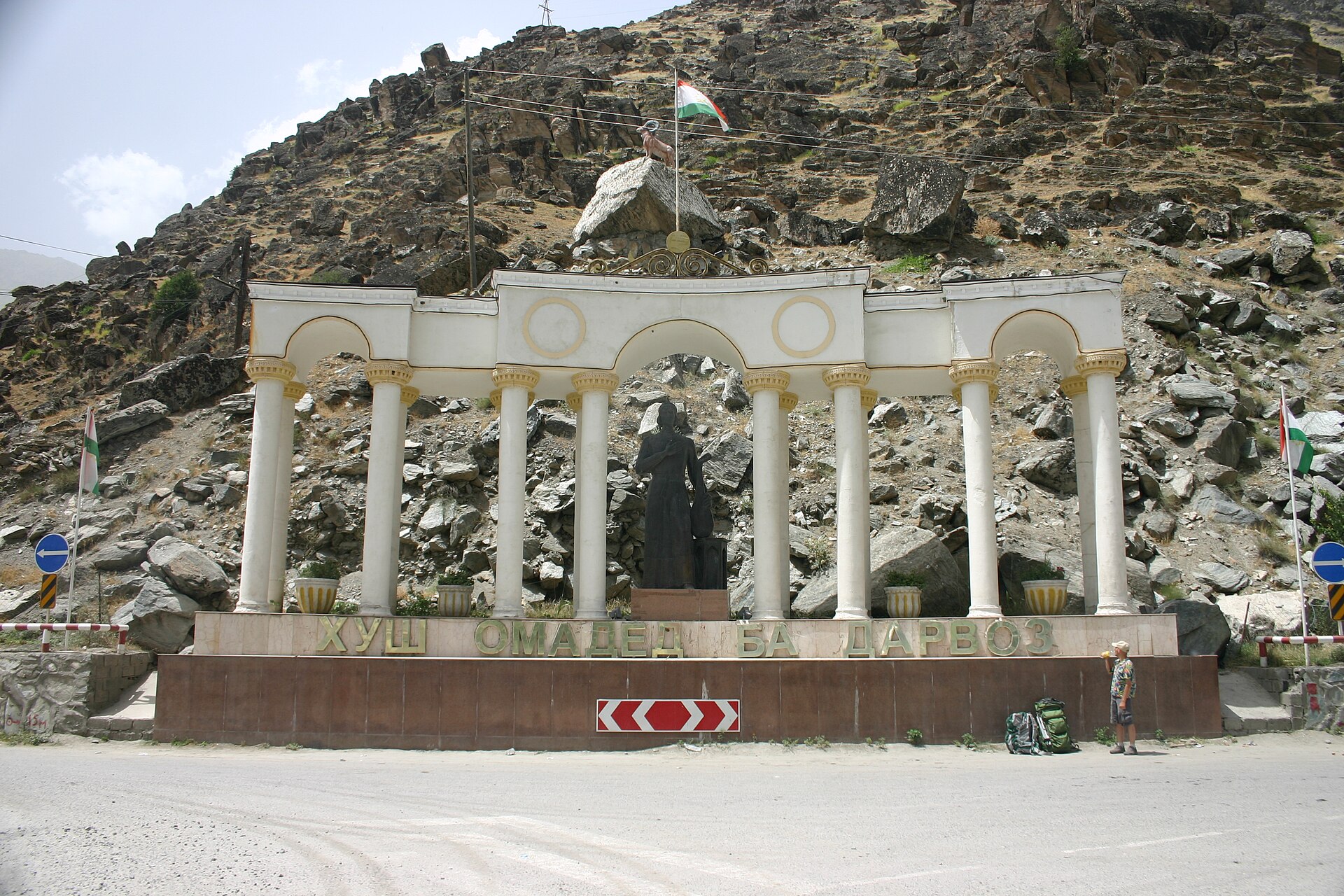
- Memorial to Soviet soldiers — Central Qal'ai Khumb
A memorial in town honours Soviet soldiers who died in Afghanistan. It is a small, sober site that links Qal'ai Khumb to the wider history of the border in the twentieth century. Visit quietly, avoid climbing on the monument, and treat it as a place of remembrance rather than a backdrop.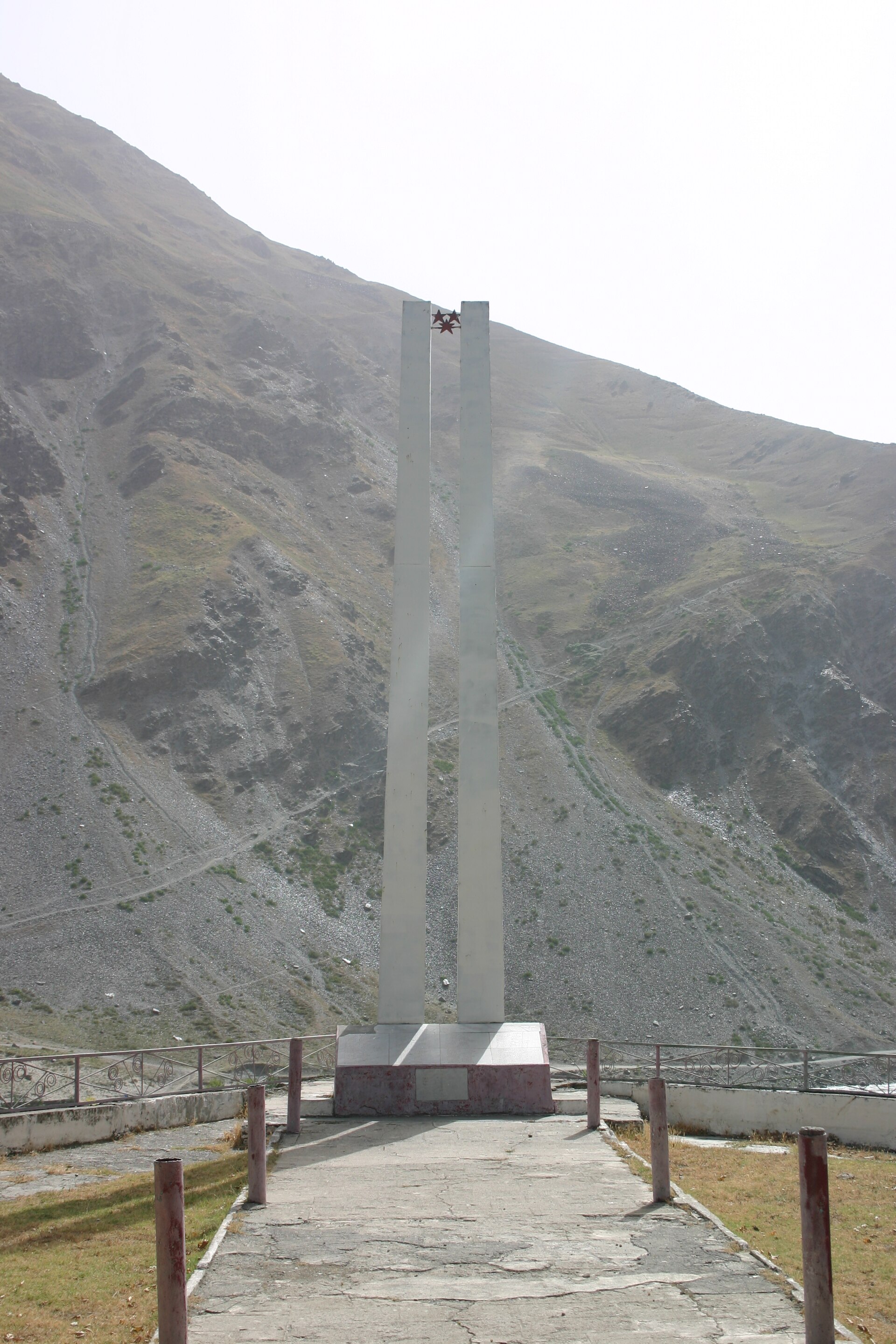
Culture
Qal'ai Khumb is a small, conservative Tajik town, and daily life follows the rhythms of family, the bazaar and the mosque. People are generally welcoming to travellers, and children and young people may approach to say hello or practise a few words of English. Hospitality is a point of pride, so an invitation for tea is common and worth accepting when it feels right. Green tea is poured throughout the day, bread is shared, and meals are often eaten from a communal plate. The town sits in a region with its own identities, and the Darwazi language, once spoken on both banks of the Panj, survives today only on the Afghan side, which makes the river feel like a recent line across an older shared culture. Mosques here are generally open to men only, and women usually pray at home, so visitors are expected to respect that rather than ask to go in. Modest dress is the norm in public for women, and men are rarely seen in shorts. Because the town is on an international border, officials may take an interest in cameras, so be sensible about what you point them at. When greeting an older person in Tajikistan, place your right hand over your heart as a sign of respect, and do not photograph people, especially women and elders, without asking first.
What to wear
In Qal'ai Khumb, as across Tajikistan, traditional dress is closely tied to textiles. Women's festive dress is often cut from bright patterned silk or silk-and-cotton fabric in the ikat tradition known as atlas, worn as a long, loose dress over trousers, often with an embroidered or printed headscarf. Men's traditional wear includes the quilted chapan robe and the embroidered skullcap, typically seen at weddings, festivals and other family occasions rather than on an ordinary weekday. Day to day, most people in town wear plain, practical clothes: trousers and shirts or jackets for men, long skirts or dresses, tunics and headscarves in simple colours for many women, and sturdy shoes for the dusty roads. In the colder months, padded coats and wool hats are common. A visitor should dress modestly. Women do best with long sleeves, loose trousers or a long skirt, and a light scarf to carry for mosque visits or village stops. Men should avoid shorts, which attract disapproving looks. Summer in the valley can be hot, so choose breathable cotton or linen layers, with a sun hat and sunglasses. Mornings and evenings in the mountains cool quickly, and winters are cold, so bring a fleece or warm jacket. Footwear should suit rough pavements, dust and uneven riverbank paths, so closed, comfortable walking shoes work better than sandals.
What to eat
- Osh (plov) — Roadside eateries and guesthouse dinners along the main road
Osh is the rice dish that anchors Tajik meals: rice, carrot and cubed meat, usually beef or mutton, cooked in oil in a large cauldron over a flame and served on a communal plate. Look for it at a roadside eatery or a family guesthouse supper. - Qurutob — Family homes and local eateries; ask at a guesthouse if the cook can make it
Qurutob is often called the national dish. Flaky flatbread is layered with vegetables and a tangy sauce made from dried sour cheese, then topped with fried onions. It contains no meat and is eaten by hand from a shared dish, though it appears less often than osh. - Laghman — Simple eateries near the main road and bazaar
Laghman is a noodle soup with vegetables and lamb or beef. It is hearty, warming and a sensible choice after a long day on the road, especially in cooler months when the evening air in the valley turns sharp. - Green tea — Teahouses, guesthouses and homes throughout town
Green tea is the everyday drink of Tajikistan, poured all day, sometimes sweetened and sometimes not. Expect it with bread at nearly every stop, and treat the offer of a pot as a gesture of welcome as much as refreshment. - Compote — Guesthouse meals and bazaar-side eateries
Compote is a sweet fruit drink, served cold and especially welcome in summer heat. It is a good way to try local fruit flavours alongside a meal, and it usually arrives in a jug at the table with other dishes.
Plan it
Best time. Late spring (May–June) and early autumn (September–October) are the most comfortable for road travel, when mountain passes are generally open and temperatures are moderate. Midsummer can be hot in the valley, and winter brings cold and a risk of road disruption, so check conditions locally before setting out.
How long. 1–2
Getting there. Fly to Dushanbe, then travel by road: Qal'ai Khumb is about 368 km from the capital, 168 km from Kulob and 235 km from Khorugh on the Pamir Highway. Shared taxis and private drivers cover the route, and the last leg follows the Panj river valley.
Budget. low
Tips
- Arrange your e-visa and the GBAO permit before arrival, and print copies, as digital copies are not accepted
- Carry enough cash for the journey, as card facilities are limited in small towns
- Drink bottled water, avoid ice, and be ready for occasional water shutoffs
- Start long drives early so you reach town in daylight and have slack if the road is slow
- Ask locally whether the Saturday cross-border market is running before planning around it
Etiquette
- Place your right hand over your heart when greeting older people
- Ask permission before photographing people, and be cautious about photographing border infrastructure
- Dress modestly, with covered shoulders and knees
Nearby
Sources
- Wikidata Q2995628 (CC0)
- Wikipedia: Qal'ai Khumb (rev 1374795249) (CC BY-SA 4.0)
- Wikivoyage: Tajikistan (rev 5424872) (CC BY-SA 4.0)
- Photo: Qal'ai Khumb main road (Kondephy) (CC BY-SA 4.0)
- Photo: Mündung des Khumb in den Panj (Kondephy) (CC BY-SA 4.0)
- Photo: View from Bridge in Qal'ai Khumb towards north (Kondephy) (CC BY-SA 4.0)
- Photo: View from Bridge in Qal'ai Khumb towards south / Afghanistan (Kondephy) (CC BY-SA 4.0)
- Photo: Sign to Khorugh on M41 / Pamir Highway (Kondephy) (CC BY-SA 4.0)
- Photo: Qal'ai Khumb gates (Красный) (CC BY-SA 4.0)
- Photo: Qal'ai Khumb memorial (Красный) (CC BY-SA 4.0)


