Marigot Bay
Marigot Bay, Saint Lucia
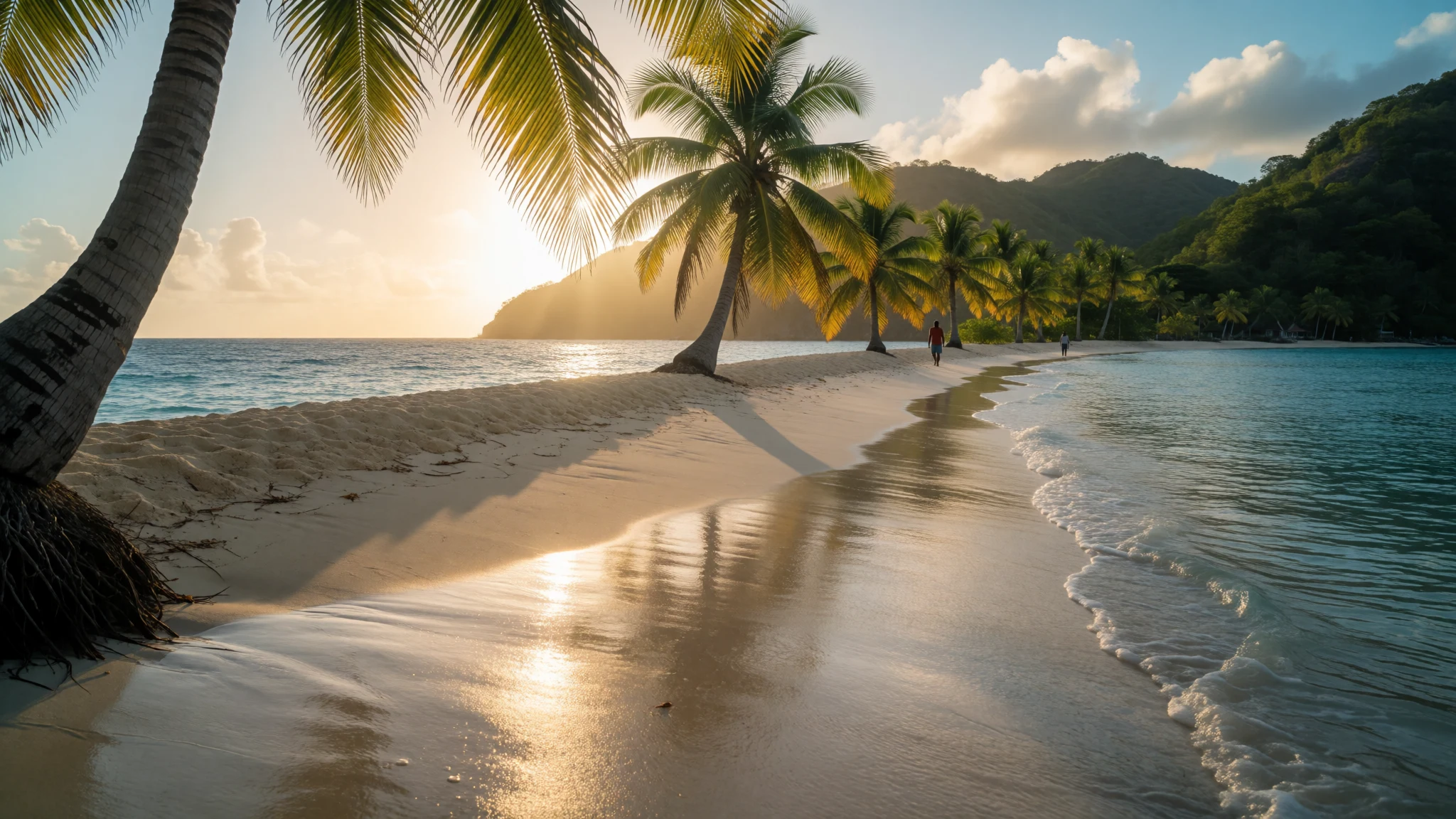
Marigot Bay is a calm harbour on Saint Lucia's leeward coast, easy to miss from the sea and hard to leave once inside.
The place
Marigot Bay sits on the western, leeward coast of Saint Lucia, a steep-sided inlet that the open Caribbean almost hides. From seaward the mouth looks like a line of palms and sand rather than a harbour; only a narrow channel slips past the spit into water that stays quiet when the wind is up outside. Hills in dense green drop straight to the shore, so the bay feels like a small room of water rather than a wide beach resort.
The inner shore holds a working village and a marina. Fishing skiffs and visiting yachts share the anchorage. A water taxi joins the shores, which is how most people move once they are down at the water, because the road ends in tight bends above the bay. The spit itself is a thin finger of sand and coconut palms, the place where swimmers and day boats collect, with the deeper harbour lying behind it.
The leeward coast misses the full push of the trade winds, so the surface often stays smooth while the Atlantic side of the island is rough. Showers still come, sometimes a brief drumming on the hills and sometimes a longer grey afternoon. Life on the water is the point of Marigot Bay. People swim off the spit, watch the channel, eat where the boats tie up, and sleep with hulls knocking at their moorings. It is also a settlement: school runs, fuel, groceries and church sit beside the marina. Taxis from the high road fill the shore on a holiday or a cruise day; on a quiet weekday a skiff crosses and the hills do the talking.
Its story
Marigot Bay's usefulness was always the trick of its entrance. Sailors who knew the coast could slip a vessel through the gap and lie invisible from the open sea, which made the inlet a shelter in bad weather, a quiet hole to ride out a storm along the Lesser Antilles. Saint Lucia itself spent long years pulled between French and British rule, and a west-coast harbour that could hide a ship mattered more than its size.
The people who stayed were not the fleets. Fishing families, small cultivators on the hills and a Creole village grew up around the landing, speaking the French-based Creole of the island and selling what the boats brought in. The name Marigot, shared with watery places across the French Caribbean, fits a shore of mangroves, run-off and still water more than a grand port. Charts of the harbour, including an Admiralty sheet surveyed by J. Parsons and J. P. Dillon, covering the coast towards Pointe du Cap, treated it as a navigable nook rather than a city wharf.
In later years the same optical trick reached a film crew. The film Doctor Dolittle used the bay as a lagoon a ship could enter and then vanish from the sea, and that scene fixed Marigot Bay in many travellers' minds. Afterwards the yachts arrived in earnest: a marina, moorings, and a shore where visiting boats stay on for long spells. The village did not disappear under them. Church, shop and skiff landing still face the water, and the old idea of the place, a harbour earned by knowing the channel, is what the pilots and the water taxis still sell.
What to see
- The palm spit — The sandbar at the mouth of the bay
The palm spit at Marigot Bay is the thin bar of sand and coconuts that makes the harbour look closed from the sea. Swimmers and day boats gather along it, with the deeper moorings just behind the trees. Still water, a line of palms and green hills rising almost at once are what define this shore.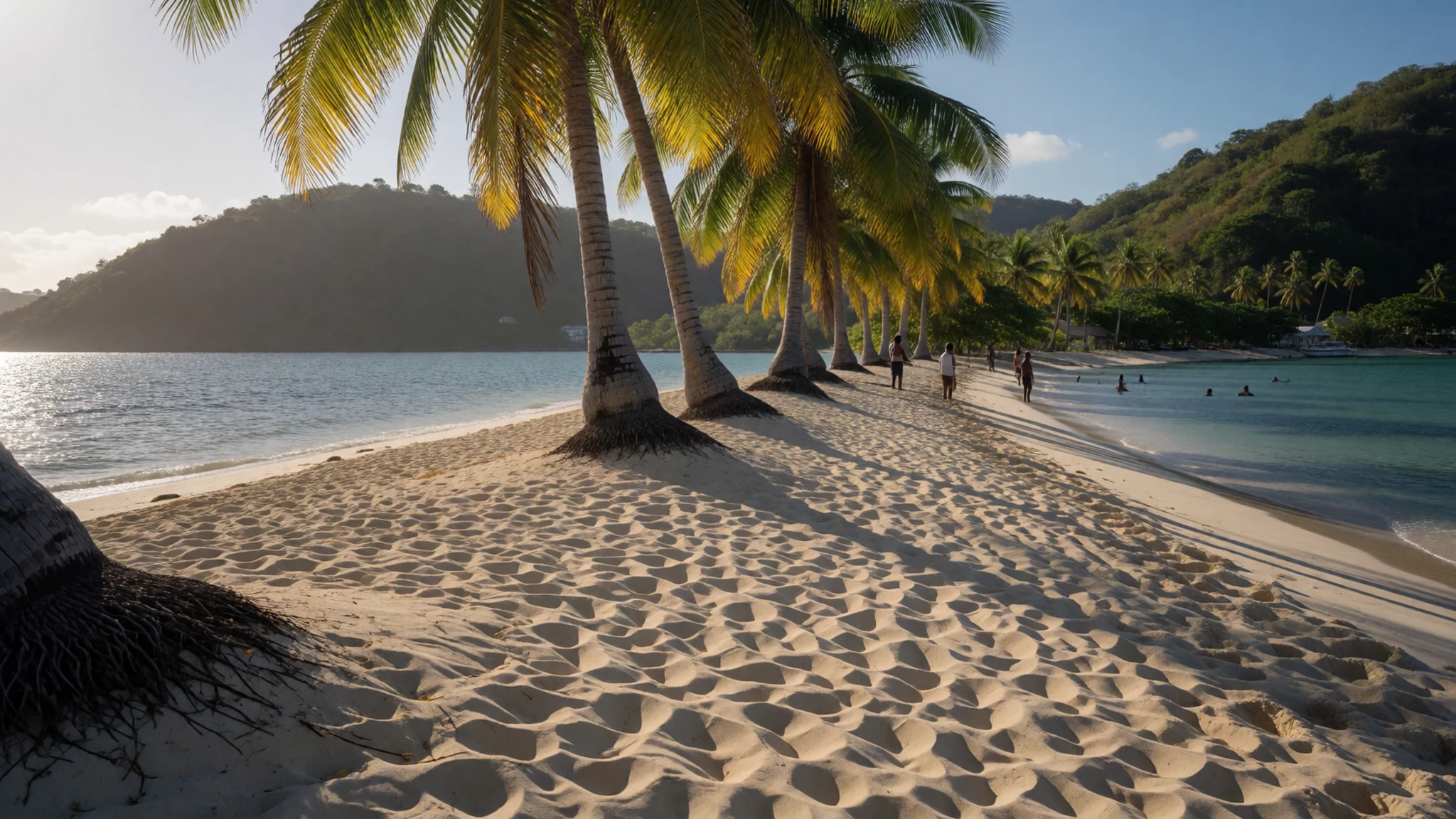
- The inner harbour — The pool behind the spit
The inner harbour of Marigot Bay is the calm pool behind the spit, where fishing skiffs and visiting yachts lie on moorings. Hills close the view, so wind that is fresh outside often dies on the water. Fuel, tenders and laundry runs share the space with people who have come only to look.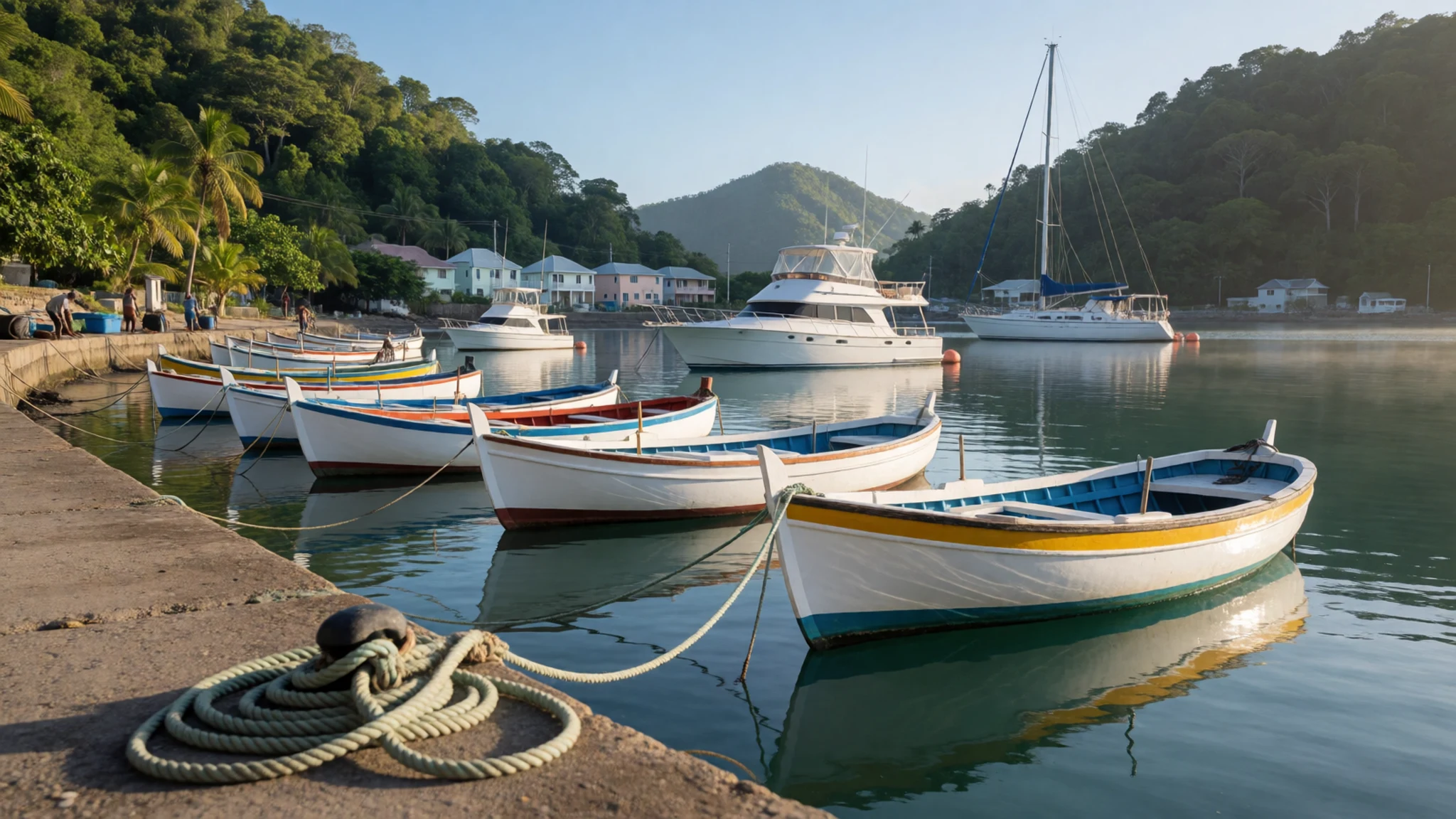
- The entrance channel — The gap beside the spit
The entrance channel at Marigot Bay is the gap beside the spit, easy to underestimate until a boat is in it. From the open sea the palms read as a continuous shore; the deep water is a bend, not a wide door. Swimmers should stay on the inner sand and leave the fairway to working skiffs.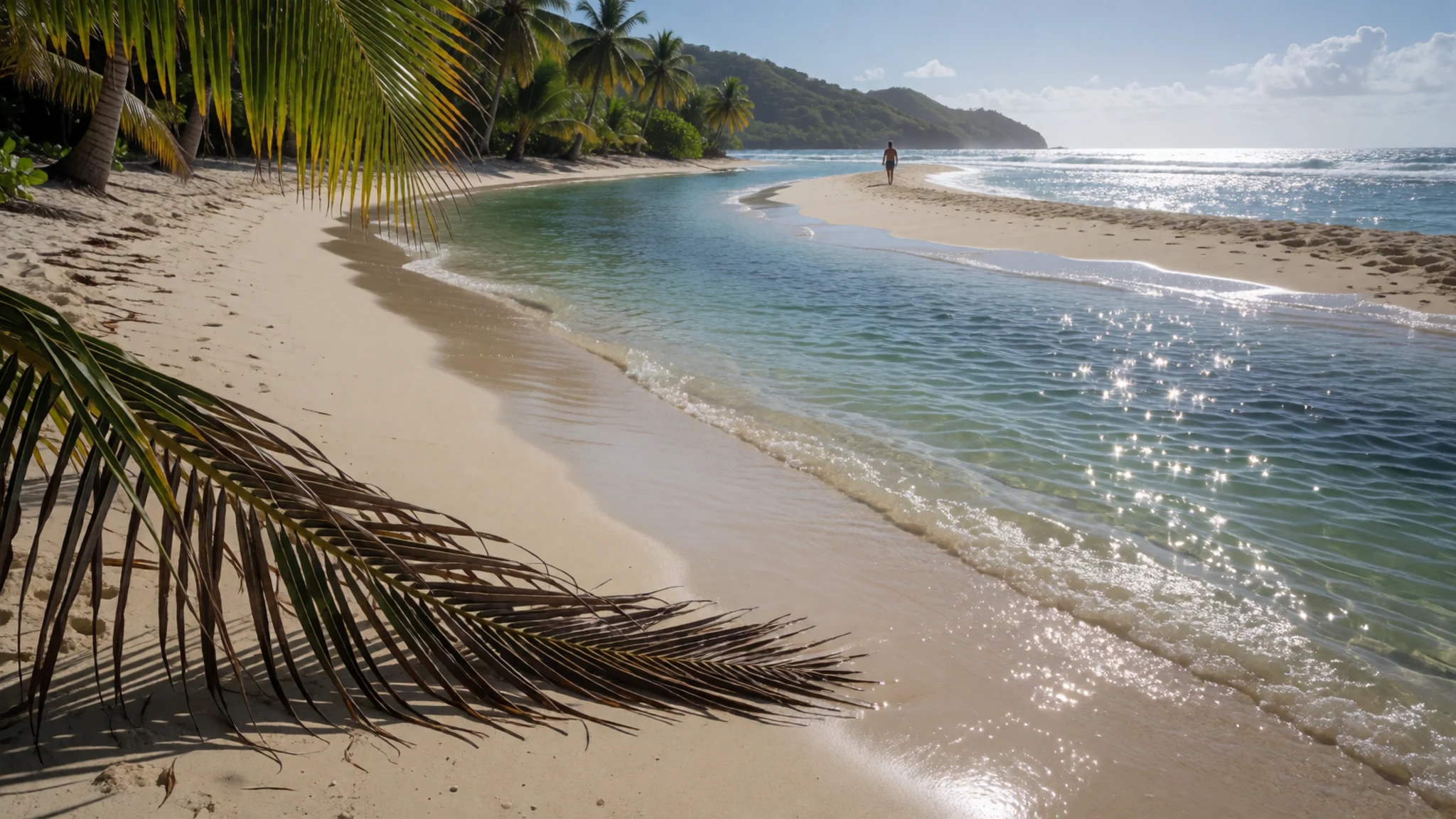
- The village landing — The village shore
The village landing at Marigot Bay is where water taxis nose in, fish is sold and people step between the road and the skiffs. It is plainer than the marina shore and more useful if the aim is a cookshop lunch or a chat with someone who works the bay. Houses sit just above the boats.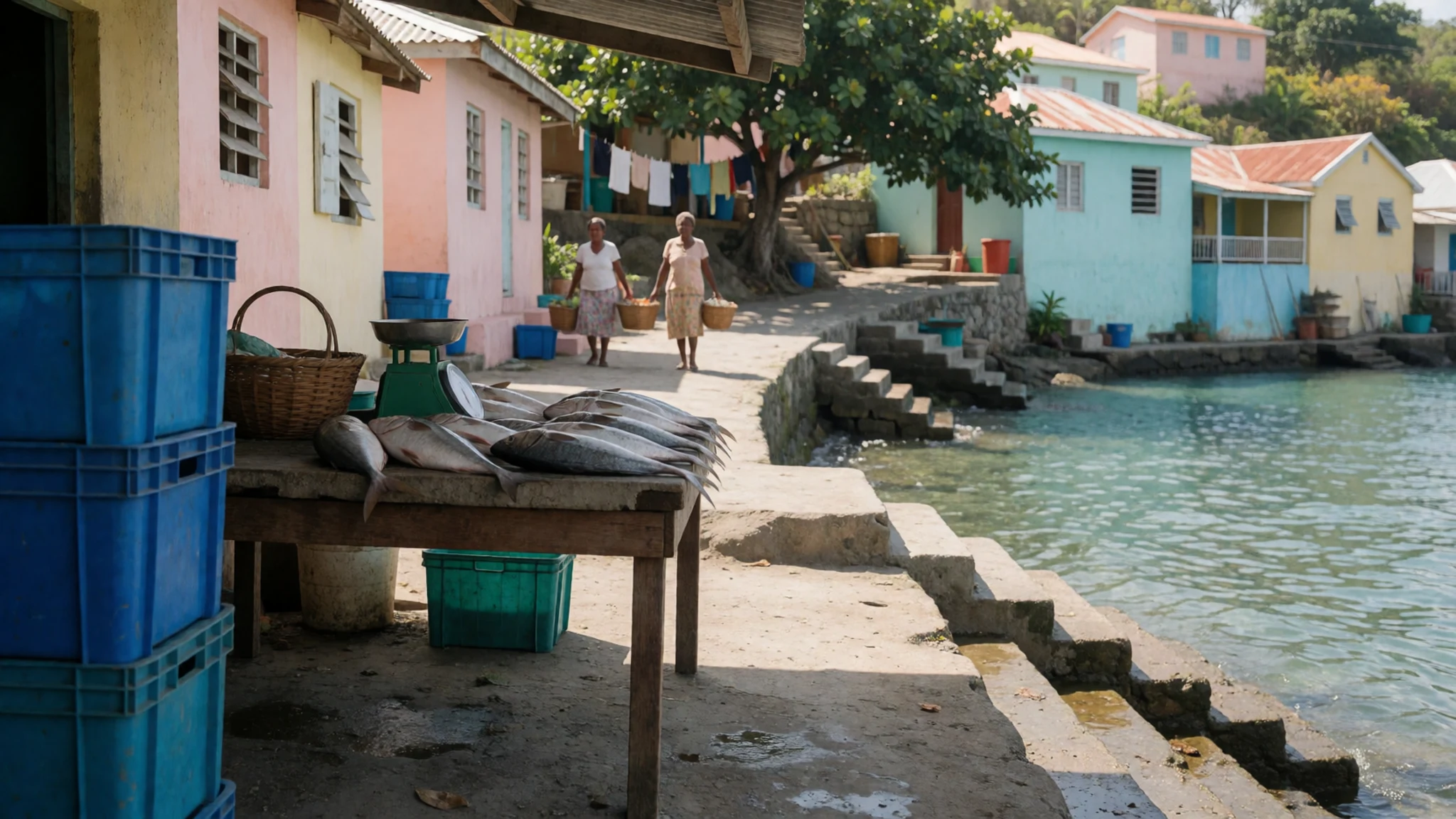
- The hill road — The ridge road above the bay
The hill road above Marigot Bay is the long look down into the harbour, and it explains the place better than the beach does. The inlet, the spit and the moored boats sit together, with the Caribbean just beyond the palms. Drivers meet tight bends and steep drops; people on foot should expect little shoulder and a hot climb back up.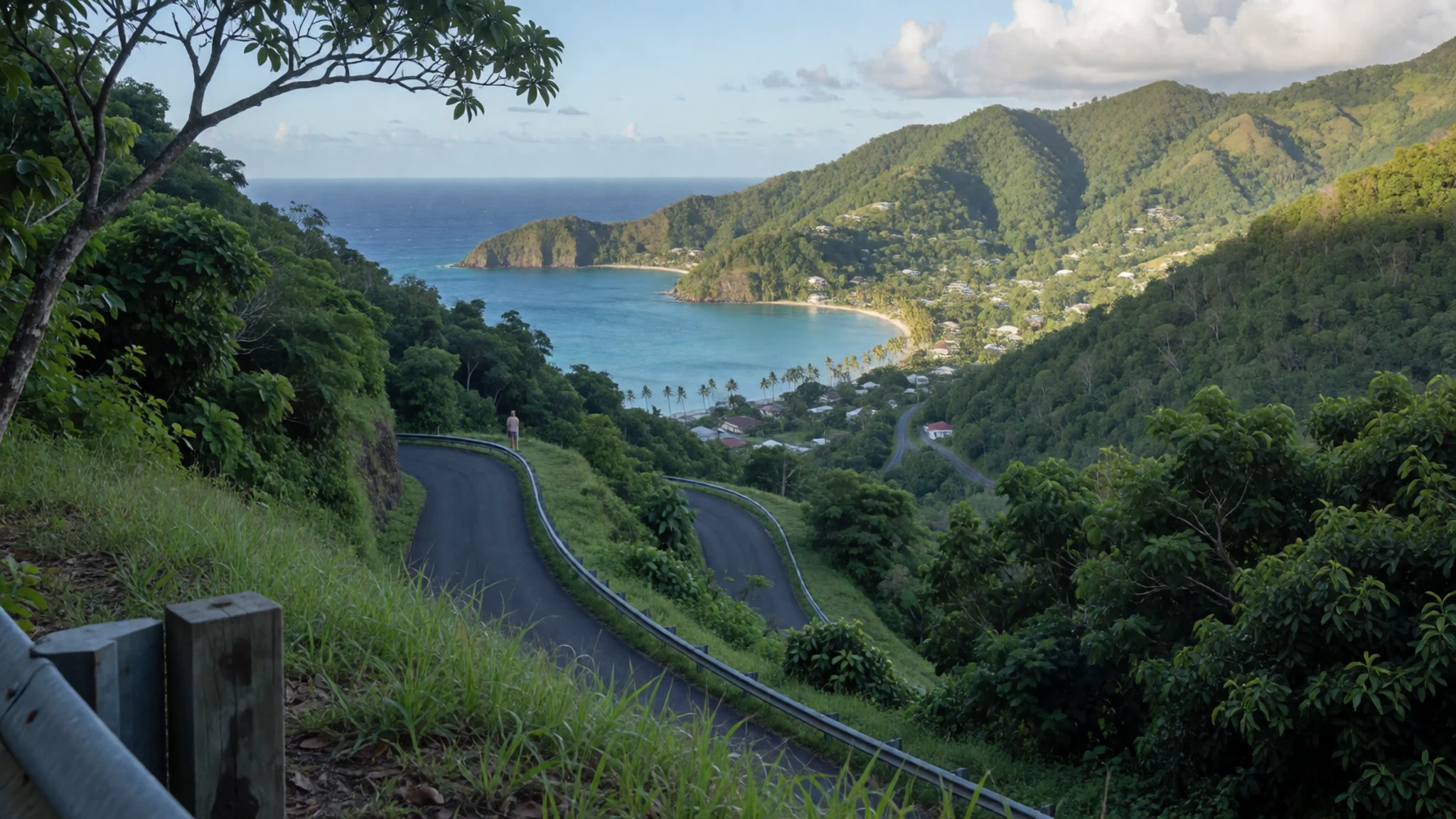
Culture
Marigot Bay lives inside Saint Lucia's Creole culture. English is the language of school and of official signs; Kwéyòl, a French-lexicon Creole, is the language of the yard, the joke and much of the market. On Jounen Kwéyòl, the island's Creole Day, people dress in madras and cook the old provisions — green banana, breadfruit, salt fish and cocoa — and even a small bay hears the drums and the radios. Through the year, cadence, calypso, soca and the quicker Dennery style move between rum shops and festival grounds, while Carnival draws crowds toward the larger towns.
The church still marks the week. Sunday morning is quiet on the water and busier on the paths that lead up to service. Fishing remains a livelihood, not a show: skiffs go out, come back and sell. The marina has added another layer of yacht crews, resort staff and water-taxi drivers, so an afternoon can hold a folk tune on a radio and a charter briefing on the dock. People are used to visitors, and they notice visitors who forget the village is a home.
Ask before you photograph residents, and change out of beachwear before you walk into a shop, a church or a home.
What to wear
Saint Lucia's traditional dress, worn for Marigot Bay's feast days as much as for the capital's, is built on madras, a bright checked cotton traded through the French Caribbean and still the island's ceremonial cloth. Women wear a full skirt, a light blouse, a shoulder scarf and a headwrap of that same plaid. How the headwrap is tied has long signalled whether the wearer is unattached or already spoken for. Men wear a madras shirt or a sash with pale trousers on the same occasions. The full costume comes out on Creole Day, at folk performances and when a wedding or a cultural show calls for it. It is not work clothes.
On an ordinary day in Marigot Bay people wear hot-weather cotton: T-shirts, shorts, sundresses, polo shirts for marina staff, and sandals or a cap against the glare off the water. Fishermen choose clothes that dry fast and let them move on a wet deck. Evenings at the smarter tables shift toward linen shirts and plain dresses.
A visitor does well to copy that split. Swimwear belongs on the spit and the swim platform. A shirt or a cover-up is the right choice for the village path, a church and any dinner table. Light cotton or linen beats heavy cloth. A hat matters on the open sand, and sandals or water shoes cope with the spit, the rocks and a wet dock. A thin rain layer is worth having, because a clear morning can still end in a shower off the hills.
What to eat
- Green fig and saltfish — Village cookshops and lunch counters
Green fig and saltfish is Saint Lucia's everyday plate, and Marigot Bay cooks it the same way: unripe green bananas boiled beside flaked salted cod, with onion, hot pepper and lime. It shows up at village cookshops and plain lunch counters, not as a dressed marina course.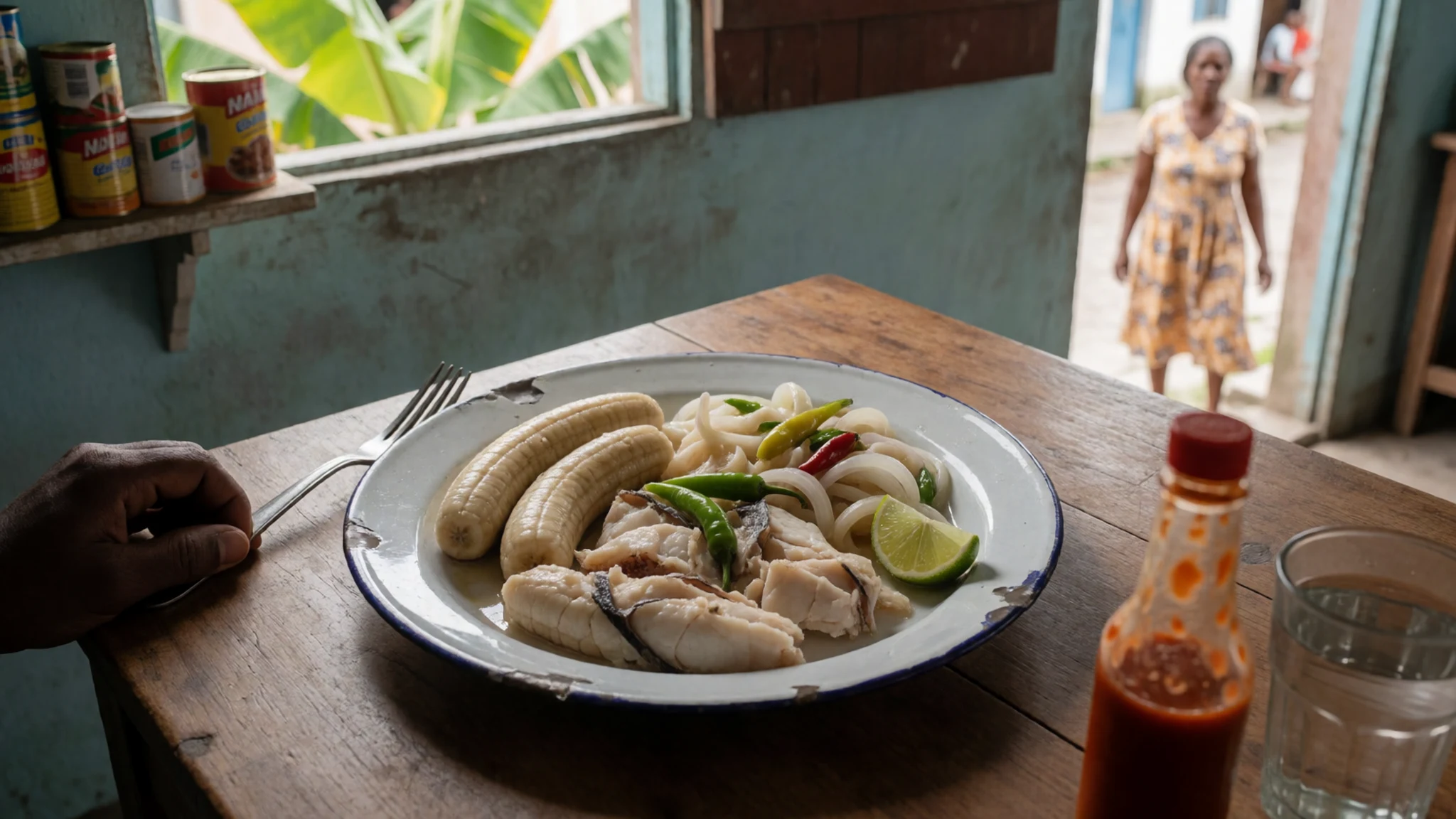
- Bouyon — Village cookshops on the road above the bay
Bouyon is a Creole pot that Marigot Bay kitchens lean on when rain cools the afternoon: root vegetables, dumplings and plantain in a peppery broth with fish or meat. Village cookshops on the road above the bay are the place to ask for it.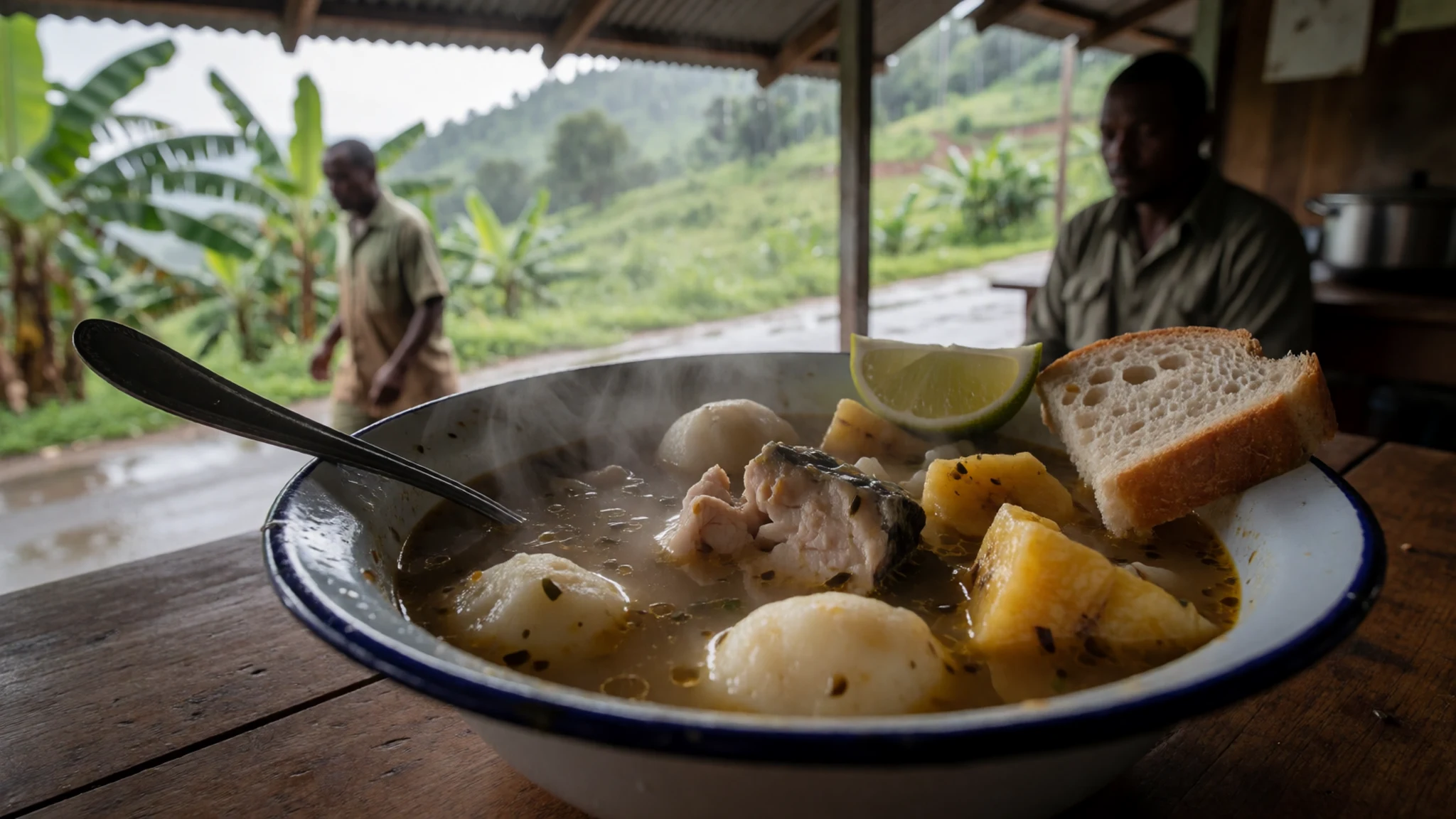
- Accra — Rum shops and fry stalls around the bay
Accra are saltfish fritters, crisp at the edge and soft inside, eaten as a snack rather than a sit-down plate. Around Marigot Bay, rum shops and small fry stalls cook them for people waiting on a boat or walking back up the hill from the landing. - Grilled fish — Beach grills and dockside eateries
Grilled fish is the marina meal at Marigot Bay: the morning's catch, often snapper or another reef fish, seasoned and cooked over a hot fire with lime, pepper sauce and a side of breadfruit or rice. Beach grills and dockside eateries serve it without ceremony. - Cocoa tea — Guesthouse kitchens around the bay
Cocoa tea is the breakfast drink of Saint Lucia, and guesthouse kitchens around Marigot Bay still make it from local cocoa boiled with spices, bay leaf and milk. It arrives hot, beside bakes or plain bread, and it is a different thing from a packet chocolate drink.
Plan it
Best time. Marigot Bay is at its easiest from January to March, when the weather is drier, mornings are clearer and the leeward coast is calmer; September is the hottest month and October the wettest. From June through November the island is wetter and greener, tropical storms are more likely, and the bay is quieter.
How long. 2–3
Getting there. Marigot Bay is reached via Hewanorra International Airport in the south of Saint Lucia, or via George F. L. Charles Airport near Castries for regional flights. A road transfer follows the east coast, quicker than the shorter-looking west-coast road, and drops down to the bay. A water taxi is the usual last step between the village landing and the inner shore or the marina.
Budget. mid
Tips
- Book a room or a mooring ahead for the drier months, when yachts and holiday transfers fill Marigot Bay.
- Come down to the spit early if you want a swim before the day boats gather.
- Carry some cash for water taxis, cookshops and small stalls; cards are more reliable at the marina.
- Stay out of the entrance channel when you swim, and follow local advice on where to get into the water.
- Bring drinking water and a hat; shade on the spit is mostly the palms, and the sun reflects off the harbour.
Etiquette
- Ask before you photograph residents, fishermen or children.
- Keep swimwear for the beach and cover up in the village, in shops and at church.
- Give way to working skiffs and do not block the entrance channel.
- Greet people you pass; a quiet good morning is ordinary courtesy at Marigot Bay.
Nearby
Sources
- Wikidata (CC0)
- Wikipedia (CC BY-SA 4.0)
- Wikivoyage (CC BY-SA 4.0)