Pitons (Saint Lucia)
Pitons (Saint Lucia), Saint Lucia
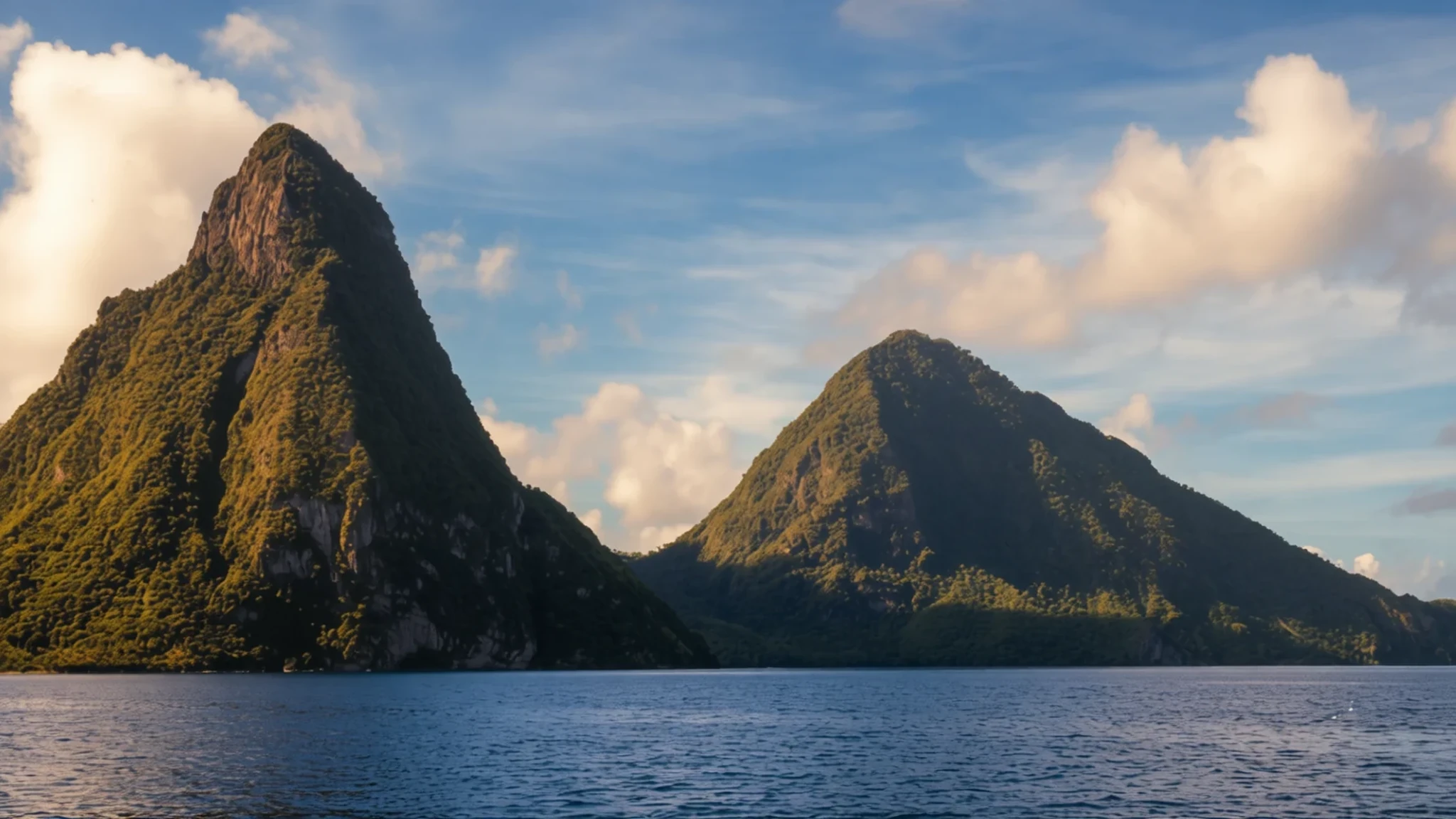
Two volcanic spires on Saint Lucia's southwest coast, best seen from the water or from a hillside above Soufrière.
The place
The Pitons are two volcanic plugs on the southwestern coast of Saint Lucia, standing between the towns of Soufrière and Choiseul. Gros Piton is the larger peak and Petit Piton the smaller; the name simply means mountain peak in French, so the two summits are told apart by size. A ridge called Piton Mitan joins them, which means that from many angles they read as one range rather than two separate hills. The landscape around them is steep, green and largely unbuilt. The recorded elevation for the site is 786 m, and most of the slopes are dense forest over volcanic rock. The protected area covers 2,909 hectares and was inscribed as a World Heritage Site, a listing that covers the surrounding land as well as the spires. The Pitons work as a backdrop from almost every point on this coast. The sea view from Soufrière and its bay is the classic one, but the peaks also appear behind banana fields and village roofs as the road winds south. The summits can sit in cloud later in the day, so an early look tends to give the clearest outline. Visitors come for the walks, the boat trips and the sulphur springs nearby, but the peaks themselves are the reason the coast looks the way it does.
Its story
The story of the Pitons begins underground. They are volcanic plugs: the solid core of lava that hardened inside a vent and was left standing after the softer rock and ash around it wore away over long spans of time. The result is a pair of steep spires rather than the broad cone of a typical volcano, which explains why their sides are so sheer and why the ridge between them looks like a deliberate wall. Their names come from the languages of the island's colonisers. Piton is French for mountain peak, and Saint Lucia passed back and forth between French and British control for long periods, so its place names carry traces of both. Fishers and coastal communities have long read the peaks as landmarks, and the twin profile became a familiar sight to anyone travelling the southwest coast. Wider attention arrived with tourism. The area around Soufrière grew into a base for hikers and divers, and the Pitons began to appear in brochures and photographs far beyond the island. Their World Heritage listing marked a shift towards protecting the landscape as a whole, not just the summits. The Pitons are still a working landscape in part. Farms, villages and fishing communities sit in their shadow, and the balance between visitors and daily life is a live question on the coast. Knowing this history makes the view more interesting: the same rock that caught the eye of early mapmakers now draws walkers, boat trips and photographers, and the people who live below it have their own long relationship with the peaks.
What to see
- Gros Piton summit trail — Gros Piton trailhead, on the Soufrière side of the peak
The climb to the top of Gros Piton is the most demanding walk in the area and the one most visitors remember. The path starts from the village side, climbs through forest and past farm plots, and becomes steep and rooty near the top. Hire a licensed guide, who will know the route, the conditions after rain and where to stop. Take closed shoes with grip, a full bottle of water and an early start, because the trail is hot and exposed in the middle of the day.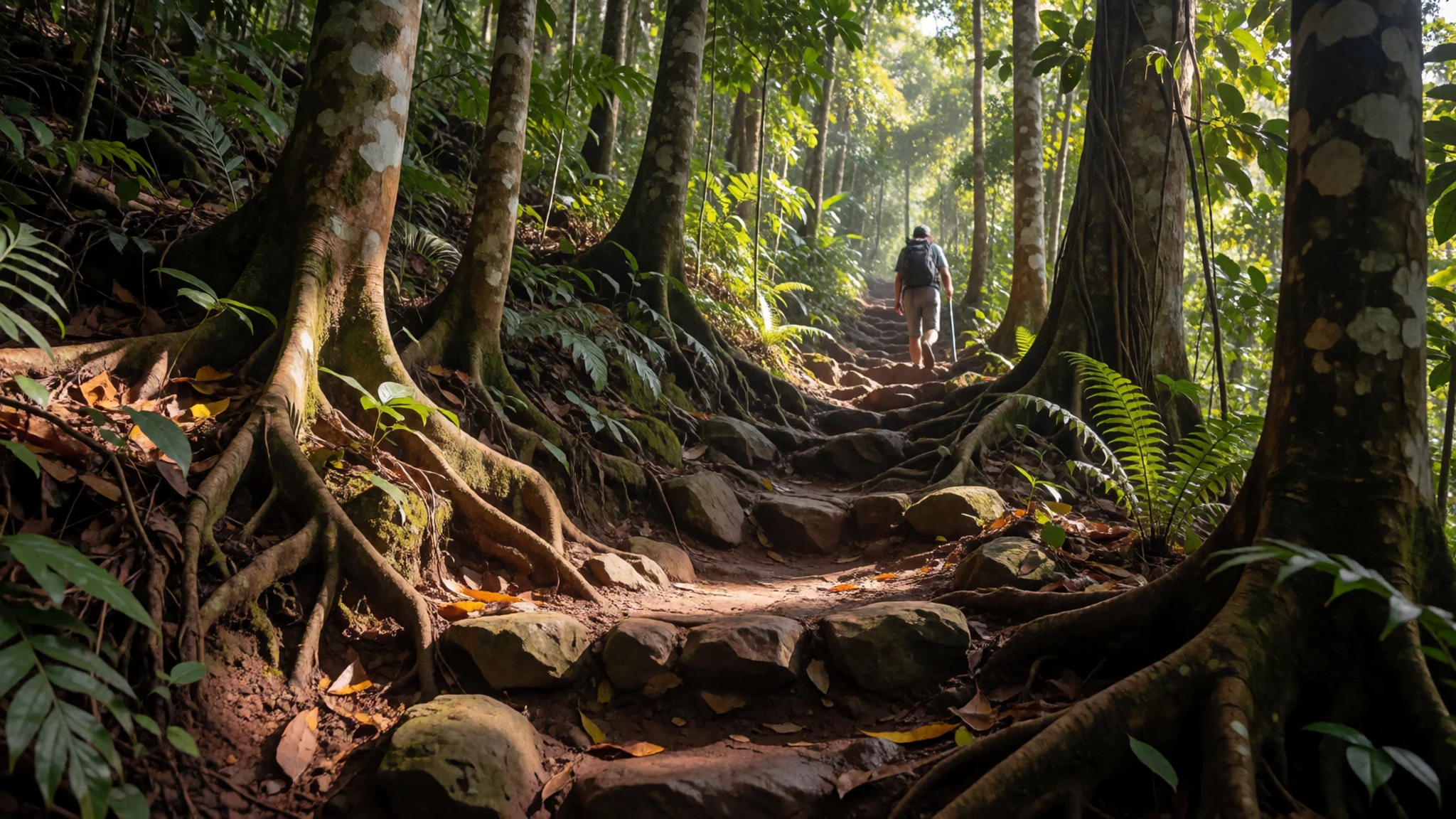
- Petit Piton from the water — Soufrière Bay and the coast south of the town
A boat trip along the coast gives the clearest view of the twin peaks rising straight out of the sea. Petit Piton is the steeper of the two, and from the water you can see how the ridge drops to the coast. Operators run half-day and full-day trips from Soufrière and the bays nearby, and the sea is calmest in the morning. Choose a boat with a licensed operator and ask about snorkel stops, since the coast here is good for reef swimming when conditions allow.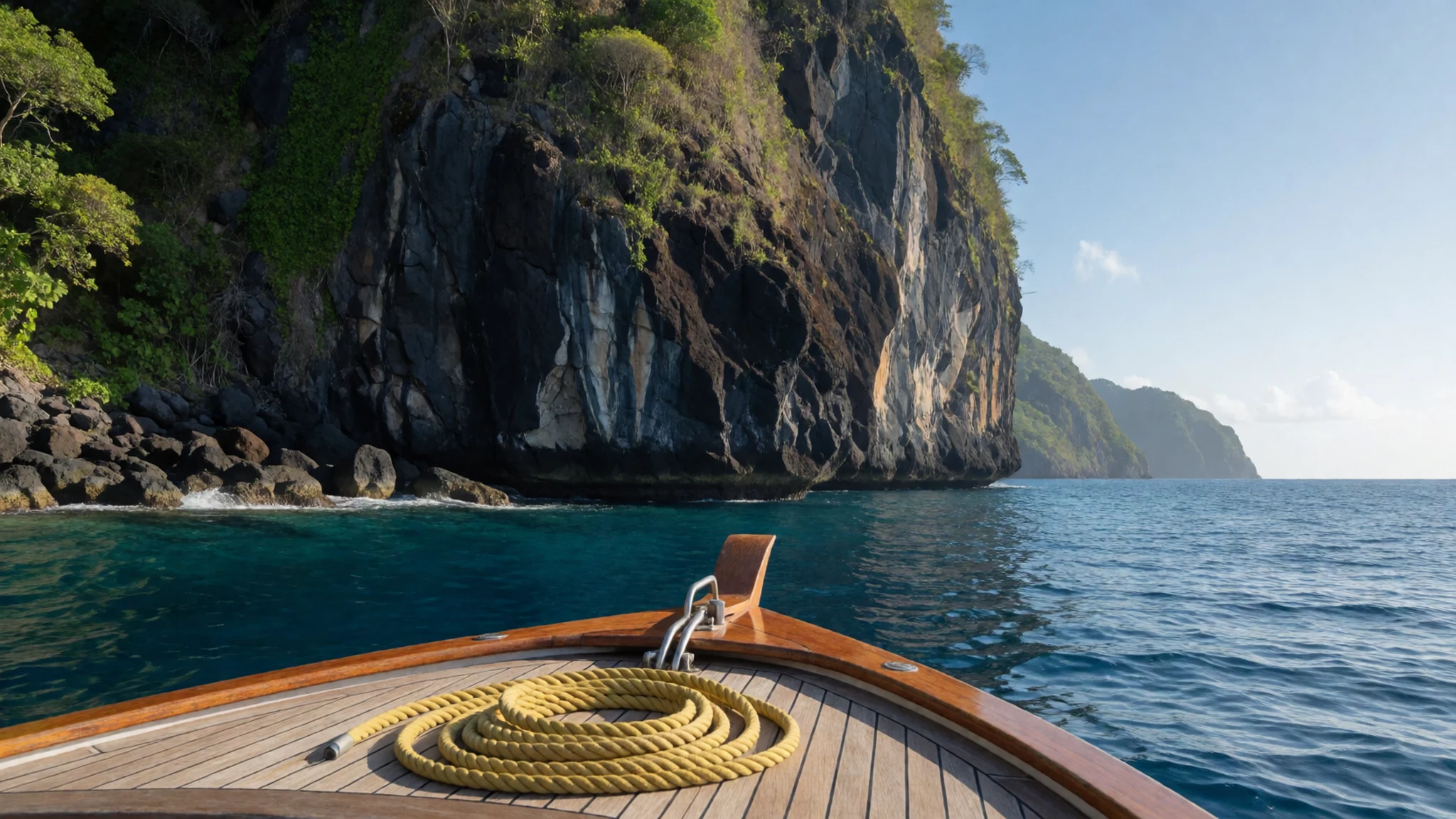
- Soufrière town and waterfront — Soufrière town centre and seafront
Soufrière is the market town at the foot of the Pitons and the easiest base for seeing them. Its old town has colonial-era buildings, a central square and a waterfront where fishing boats land their catch. The town is small enough to walk, and the view of the peaks from the seafront is one of the best without leaving the ground. Mornings are the busiest time, when the market fills and the ferry and tour boats leave, so go early for quieter streets.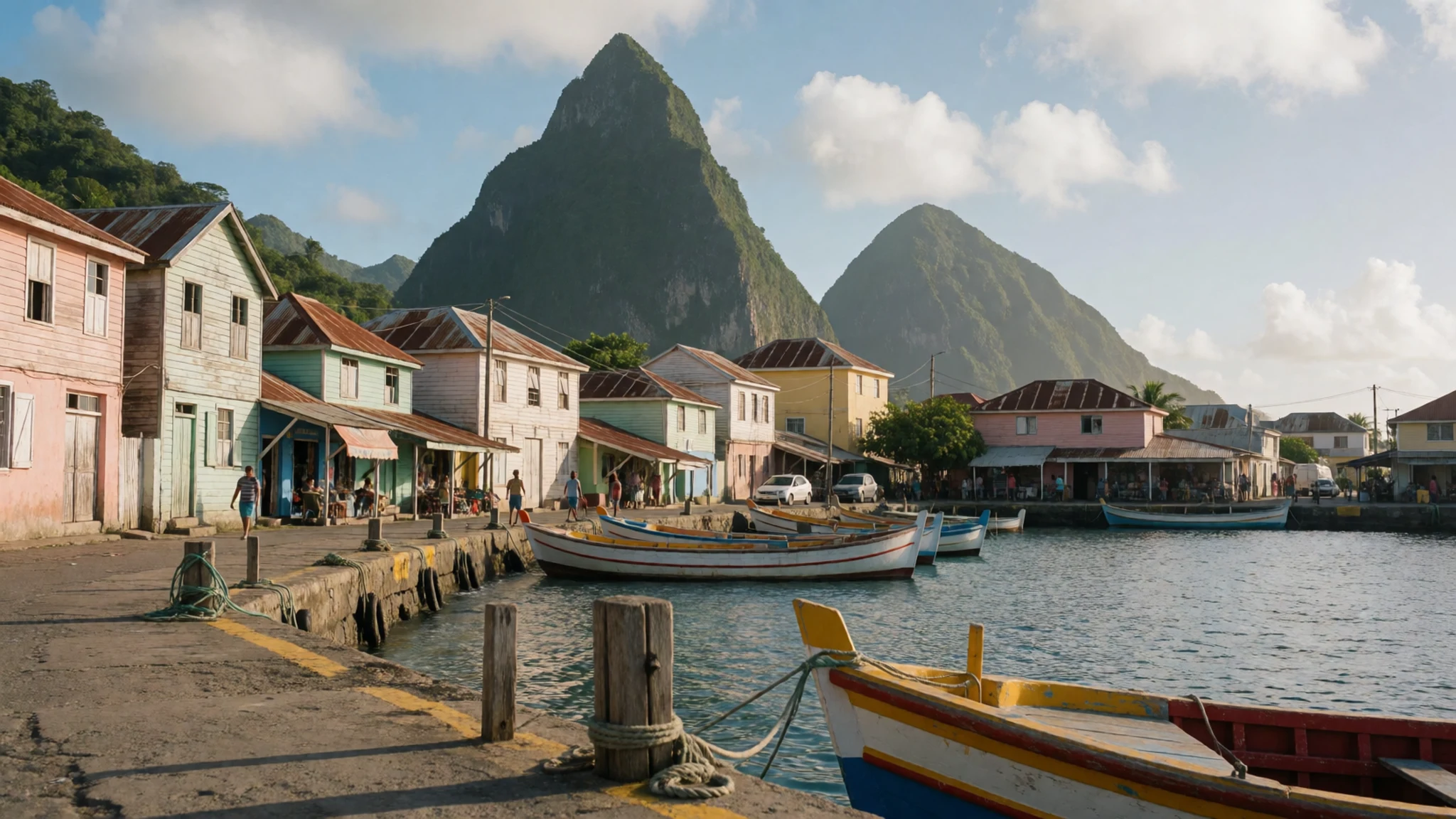
- Diamond Botanical Gardens and the Sulphur Springs — Diamond estate valley, inland from Soufrière
The Diamond Botanical Gardens sit in a mineral-rich valley near Soufrière, with waterfalls, mineral baths and a collection of tropical plants that are labelled for visitors. The nearby Sulphur Springs are a drive-in volcanic site, where steam and hot mud show the island's geothermal activity at close range. Both are easy to combine in a single half-day. Check the official site for opening times and fees before you go, as these change.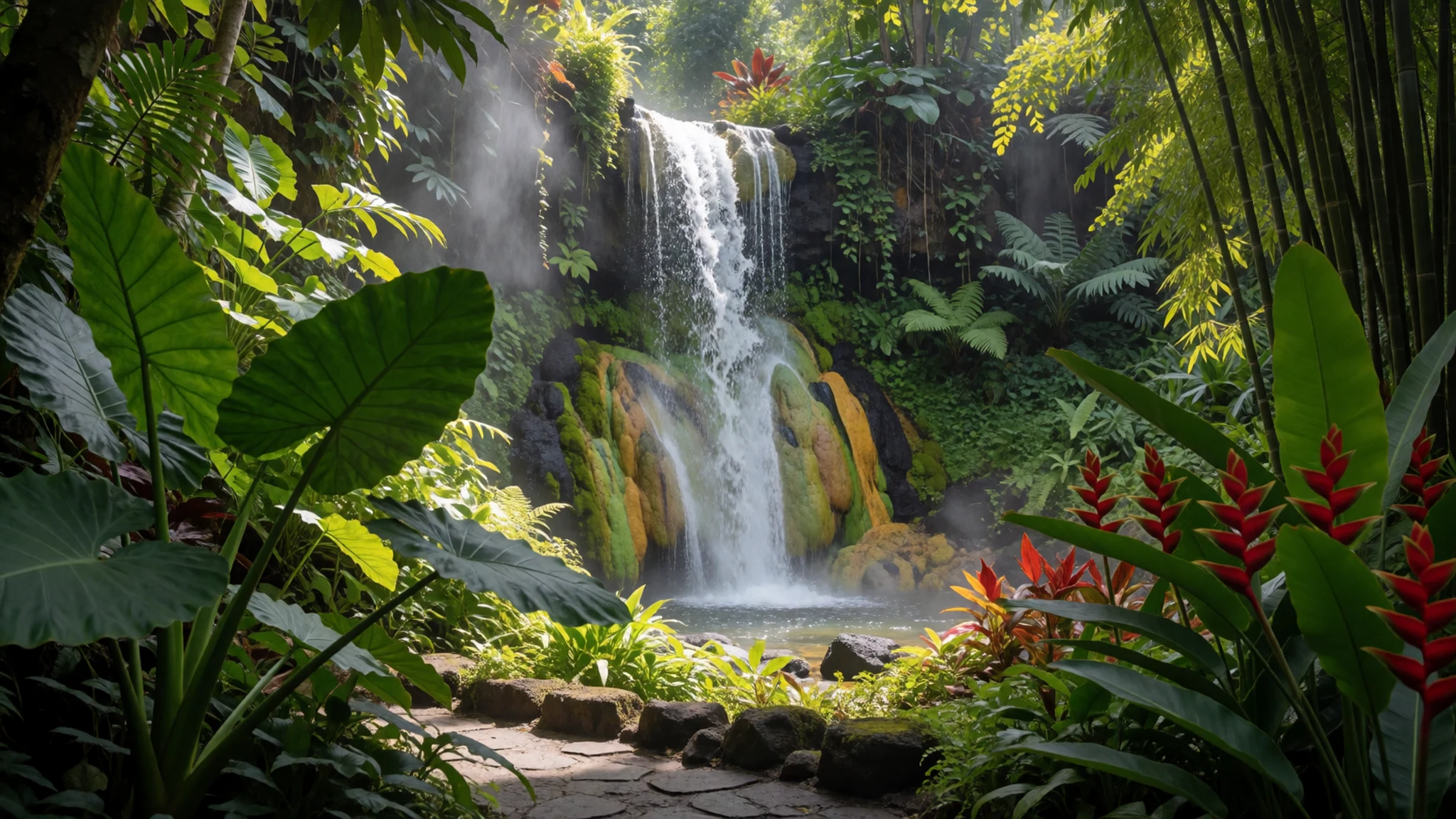
- Hillside view above Soufrière — Hillside roads above Soufrière
A short drive or walk up the slopes above Soufrière gives a wider view of the valley, the bay and both peaks in one frame. This is where many of the classic photographs are taken, looking down over the town towards the sea. The road is narrow and steep, so take a taxi or a guided tour rather than a rental car if you are not used to hill driving. Go in the morning, when the peaks are most likely to be clear of cloud.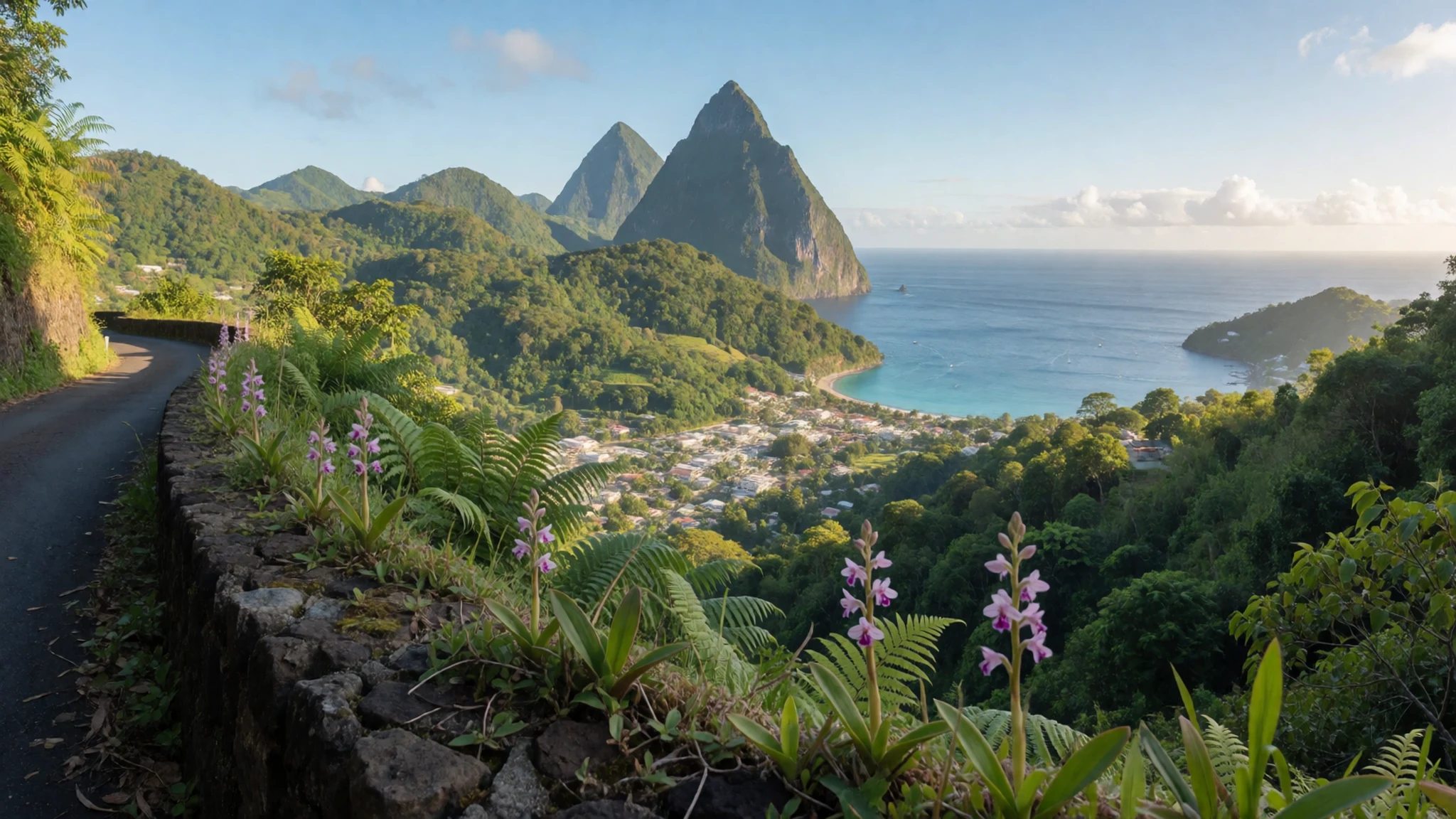
Culture
Saint Lucia is a Catholic country with a strong Kwéyòl (Creole) culture, and life around the Pitons is shaped by church, family and fishing. In Soufrière and the villages along the coast road, people dress with care for Sunday mass, so a visitor in beachwear at a service stands out. Music, storytelling and proverbs in Kwéyòl are part of everyday talk, and a few words of greeting go a long way. Hikers on the Gros Piton route pass farms and houses, and locals are generally relaxed about walkers who stop to talk, but some of the land is private and paths can close after heavy rain. Around the Sulphur Springs and the botanical gardens, staff are used to questions, and a guided tour brings local knowledge that is worth paying for. Market stalls are working places rather than displays: produce is not for handling until you have asked and are ready to buy. Ask before photographing anyone at a market stall or in a village, and keep your camera away from people during church services.
What to wear
Traditional dress in Saint Lucia is most often seen at festivals and heritage events, and its signature is madras cloth: a checked cotton, usually woven or printed in bright plaid, used for headwraps, skirts and blouses. The classic women's costume pairs a long, full skirt with an off-shoulder blouse and a madras headtie, a style that draws on the island's Creole roots. Men's festival dress is simpler, often a plain cotton shirt and trousers with madras accents. Everyday dress is modern and practical: jeans, shorts and T-shirts through the day, with a smarter outfit for church, government offices and Sunday lunch. People in Soufrière and the villages wear what suits the heat and the hills, and few dress up for a trip to the shops. For a visitor, the climate calls for loose, breathable cotton or linen and a light rain layer, since showers can arrive quickly. Shoes matter more than fashion here. Trails on Gros Piton are steep, rocky and often muddy, so closed walking shoes with grip are essential, and flip-flops are fine only on the sand. Cover shoulders and knees for churches and villages, and bring a swimsuit with a cover-up for the water. Modest, comfortable clothes are the easiest way to be treated as a welcome guest.
What to eat
- Green fig and salt cod — Sunday breakfast in family homes and guesthouses around Soufrière
Green fig is unripe banana, boiled and mashed or sliced, and it is served with salt cod cooked in a sauce of onion, tomato and herbs. It is the dish most often called the national breakfast, and it turns up at Sunday tables in homes and family restaurants. Ask a guesthouse in Soufrière if it serves it on weekends, since it is a home-kitchen dish more than a menu staple.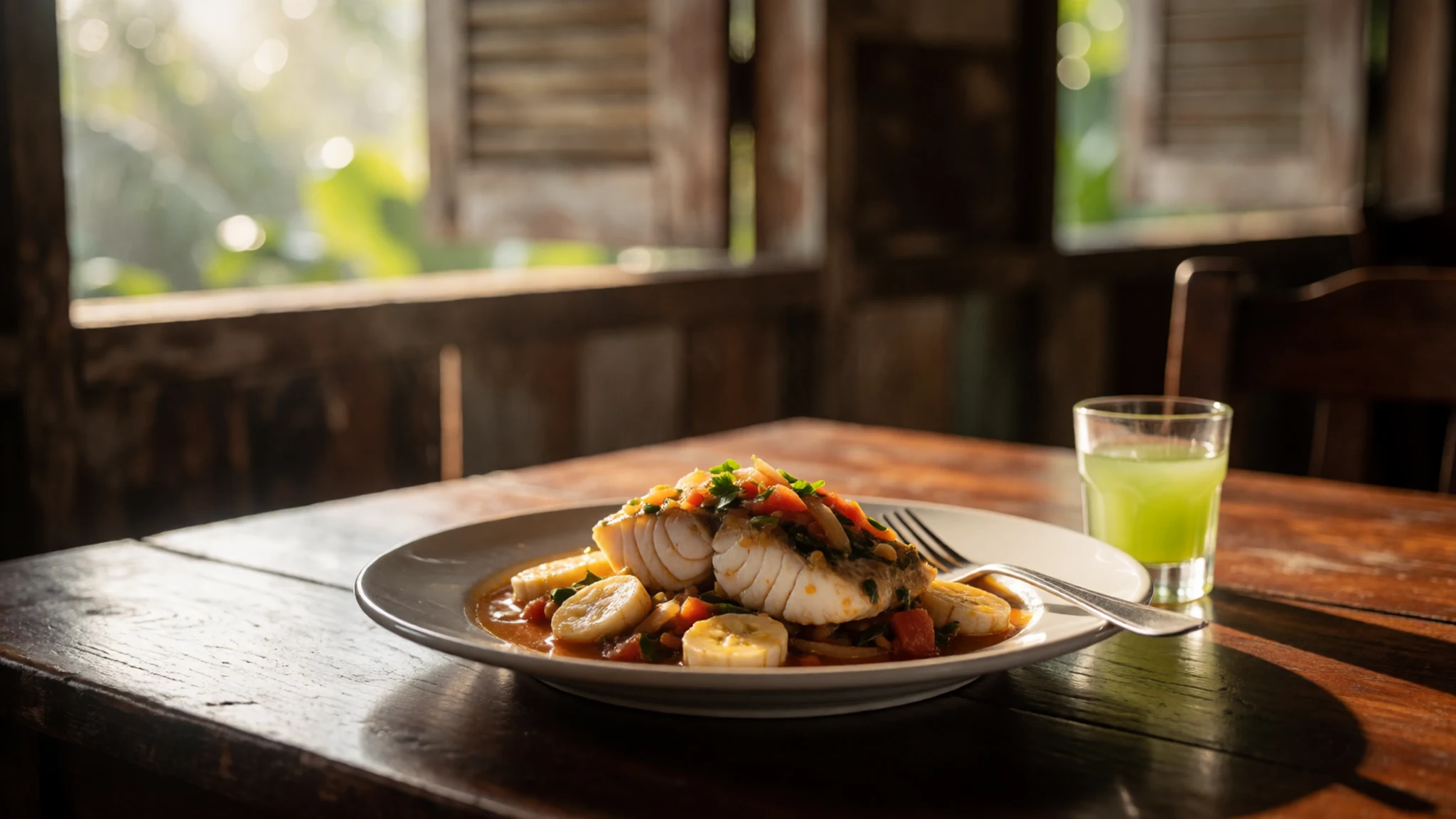
- Saint Lucian fish broth — Village eateries and fishing communities along the coast road
A fish broth, often made with a firm local fish, root vegetables and dumplings, is a comforting bowl that fishing families cook at home. It is light, peppery and eaten with a spoon and a hunk of bread. Village eateries along the coast road serve versions of it, usually at lunchtime and at weekends.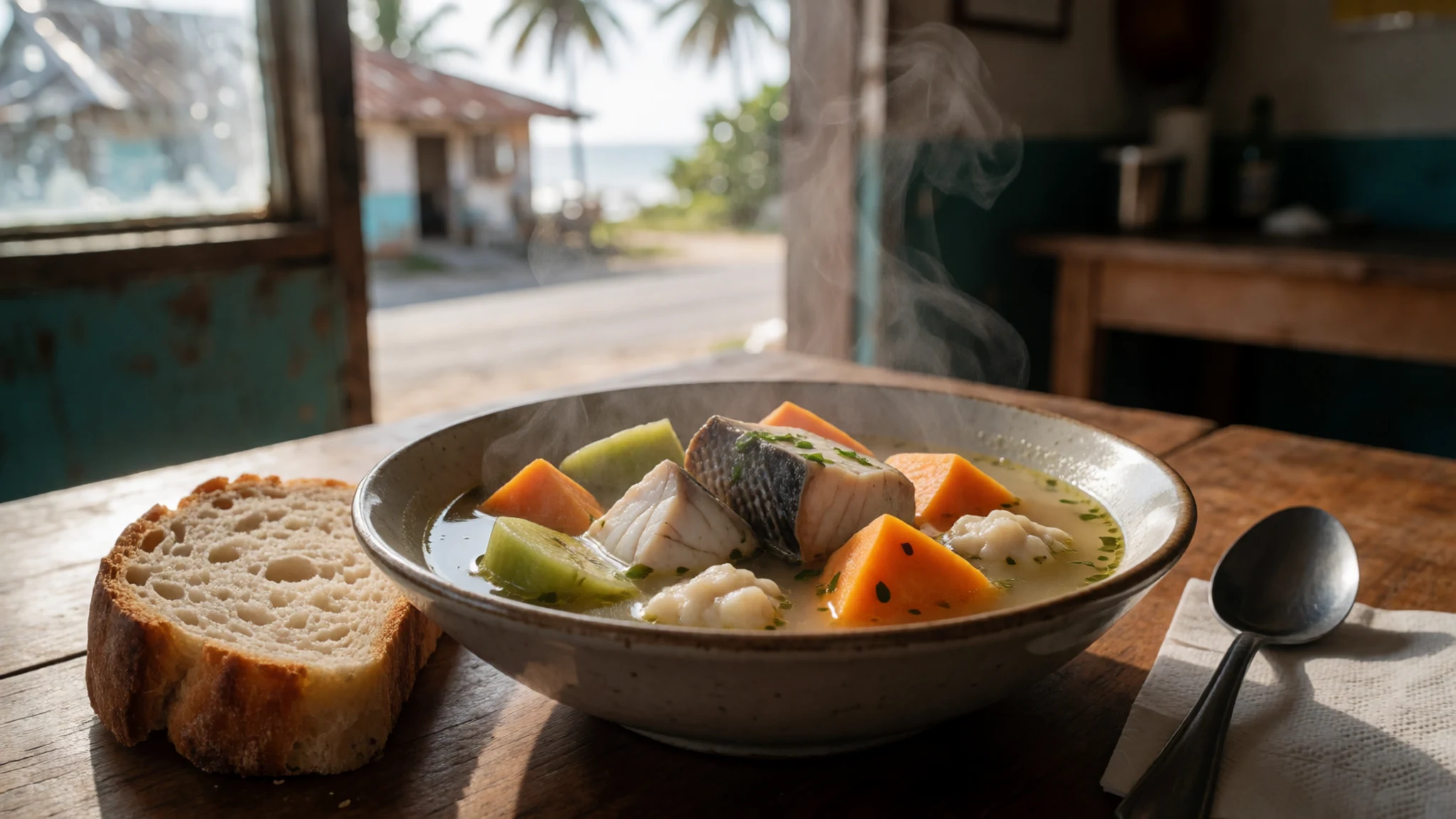
- Lambi — Seafood shacks on the Soufrière waterfront and beach bars along the coast
Lambi is conch, cleaned, tenderised and cooked in a spiced sauce, fried as cutlets or stewed with tomatoes and peppers. It is a favourite seafood dish on the island and a useful test of how local the kitchen is. Freshness matters, so ask when the shellfish came in before ordering. - Grilled fresh fish — Beach shacks and the fishing landing at Soufrière
Whatever the boats have landed that morning is often grilled whole or in fillets, rubbed with garlic, lime and local seasoning. It is served with rice, plantain or breadfruit and a side of salad. Eat it where the fish arrives, since the best plates are simple and fast. - Coconut water and mauby — Roadside vendors and the morning market in Soufrière
Fresh coconut water is sold straight from the nut with a machete, a cool drink on a hot hill walk. Mauby is a bittersweet drink made from tree bark and spices, served chilled and sweetened to taste. Both are cheap, refreshing and good to carry on a long day out.
Plan it
Best time. January to March is the drier season and the most comfortable for walking, with cooler mornings on the trails. June to November is the rainy and hurricane season, so check forecasts before booking and expect the summits to be cloudy more often.
How long. 2–3
Getting there. Hewanorra International Airport in the south of the island is the main gateway, followed by a road transfer over the hills to Soufrière. George F. L. Charles Airport in the north is an alternative for some flights. The final leg is the coast road, which is winding, so allow time and ask your hotel about a driver.
Budget. mid
Tips
- Book a licensed guide for the Gros Piton trail and confirm the route after any rain
- Start walks and boat trips early, before the heat and the afternoon cloud
- Carry water and cash in Eastern Caribbean dollars for small vendors and tips
- Check the official site for opening times and fees at the Sulphur Springs and gardens
Etiquette
- Ask permission before crossing private farmland on the trails
- Dress modestly for churches and villages
- Ask before photographing people at market stalls or in their homes
Nearby
Sources
- Wikidata Q639487 (CC0)
- Wikipedia: Pitons (Saint Lucia) (CC BY-SA 4.0)
- Pitonpair.JPG (CC BY 3.0)
- Pitons-aerial.jpg (CC BY-SA 4.0)
- Gros Piton and Petit Piton in Saint Lucia (CC BY-SA 2.0)
- View of Petit Piton from Gros Piton (CC BY-SA 2.0)
- The Pitons at Soufriere Saint Lucia (Public domain)
- GrosPiton.JPG (Public domain)
- PetitPiton.JPG (Public domain)
- The Pitons of St Lucia YORYM-TA0184 (Public domain)
- Wikivoyage (CC BY-SA 4.0)


