Pigeon Island
Pigeon Island, Saint Lucia
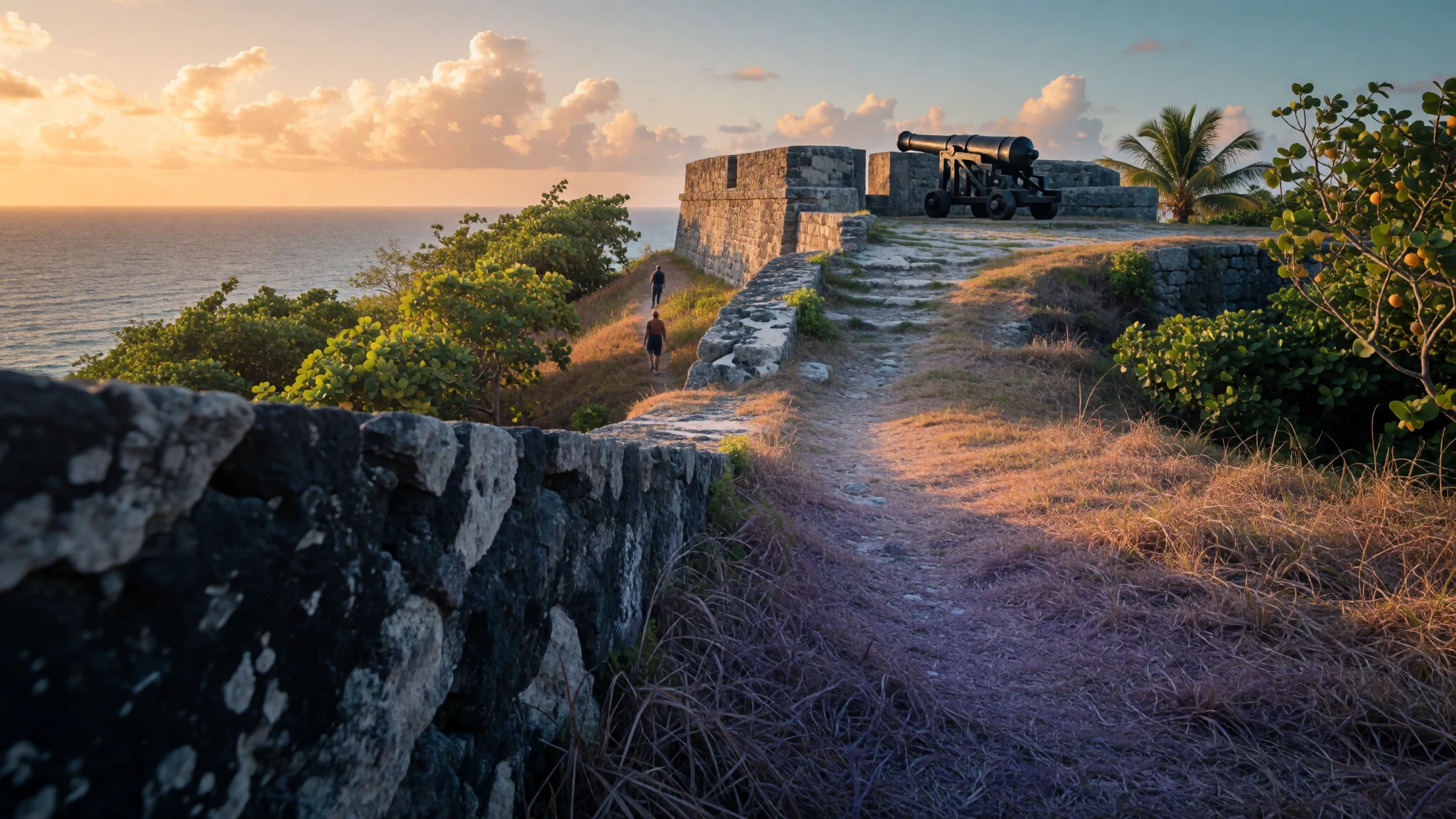
Pigeon Island is a small, green headland where British gun batteries, quiet coves and a long Martinique view fit into one easy morning.
The place
Pigeon Island sits at the northern end of Saint Lucia's western coast, just beyond the town of Gros Islet, and it is no longer quite an island. A causeway of earth dug out while Rodney Bay Marina was being formed joined it to the mainland in the early seventies, so visitors now arrive across a flat strip of reclaimed ground, on foot or by road. Beyond that the land rises into two wooded hills, linked by paths that pass ruined barracks, gun emplacements and old lookouts. The higher hill, Signal Hill, gives a wide view over the Caribbean and across the channel to Martinique, which was the whole reason the British fortified the place. The islet is small enough to explore in a morning, though the climbs are steep in the heat and shade is patchy on the open slopes. It became a national park in the late seventies and a national landmark in the early nineties, and it is looked after by the Saint Lucia National Trust. That makes it as much a historic site as a beach outing. Sheltered coves on the lee side suit a swim after the walk. Pigeon Island is also the main venue for the Saint Lucia Jazz and Arts Festival in May, when the lawns fill and the usual calm disappears. The dry months from January to April bring the most visitors to Saint Lucia as a whole, so expect company then.
Its story
Pigeon Island carries traces of Arawak and Carib settlement, and in the sixteenth century the French pirate François le Clerc used it as a hideout. Its real importance came in the late eighteenth century, when Admiral George Rodney occupied it as a British lookout. He had the trees stripped so that sentries could see clearly, and from Signal Hill his men watched the French naval base at Fort Royal on Martinique. From here Rodney sailed out and met the French fleet in the Battle of the Saints, a victory that is still the island's best-known claim to fame. In the nineteenth century the garrison lived in barracks and an officers' mess built for the purpose, and they stayed in use for decades. The guns were eventually sold off, leaving the empty emplacements visitors see today. A lime kiln dating to Rodney's time was later reworked to process whale oil, and it ran until the mid-1920s. During the Second World War the United States arranged to use Saint Lucia as a base. A naval air station was set up nearby, the islet served as a communications post, and a squadron of Catalina flying boats searched the sea for German submarines. President Roosevelt's ship called in the area in the winter of that year. Today those layers of Caribbean history sit side by side on one small hill.
What to see
- Fort Rodney and the gun emplacements — Pigeon Island National Landmark
The ruined battery on the lower hill is the best place to see how the British defended the northern coast. Cannons sit on the old platforms, and information boards explain the siege-era story. Allow time to read them, then walk the ramparts for a clear look at the coastline.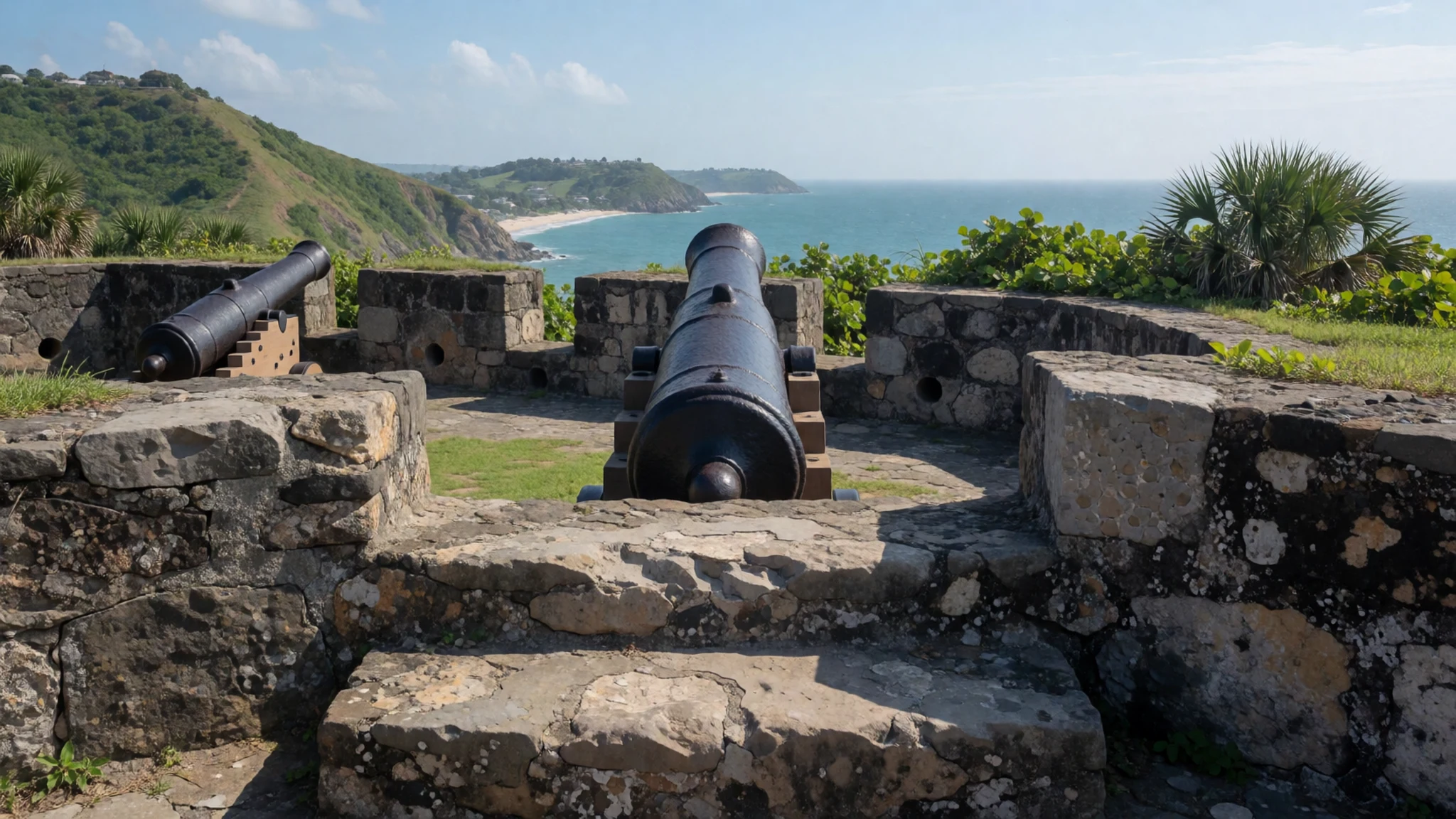
- Signal Hill summit — Higher peak of the island
The climb to the higher peak is short but steep, and the path is uneven in places. At the top the reward is a broad view across the channel to Martinique and back along the beaches of the north coast. It is the clearest way to see why this headland mattered so much.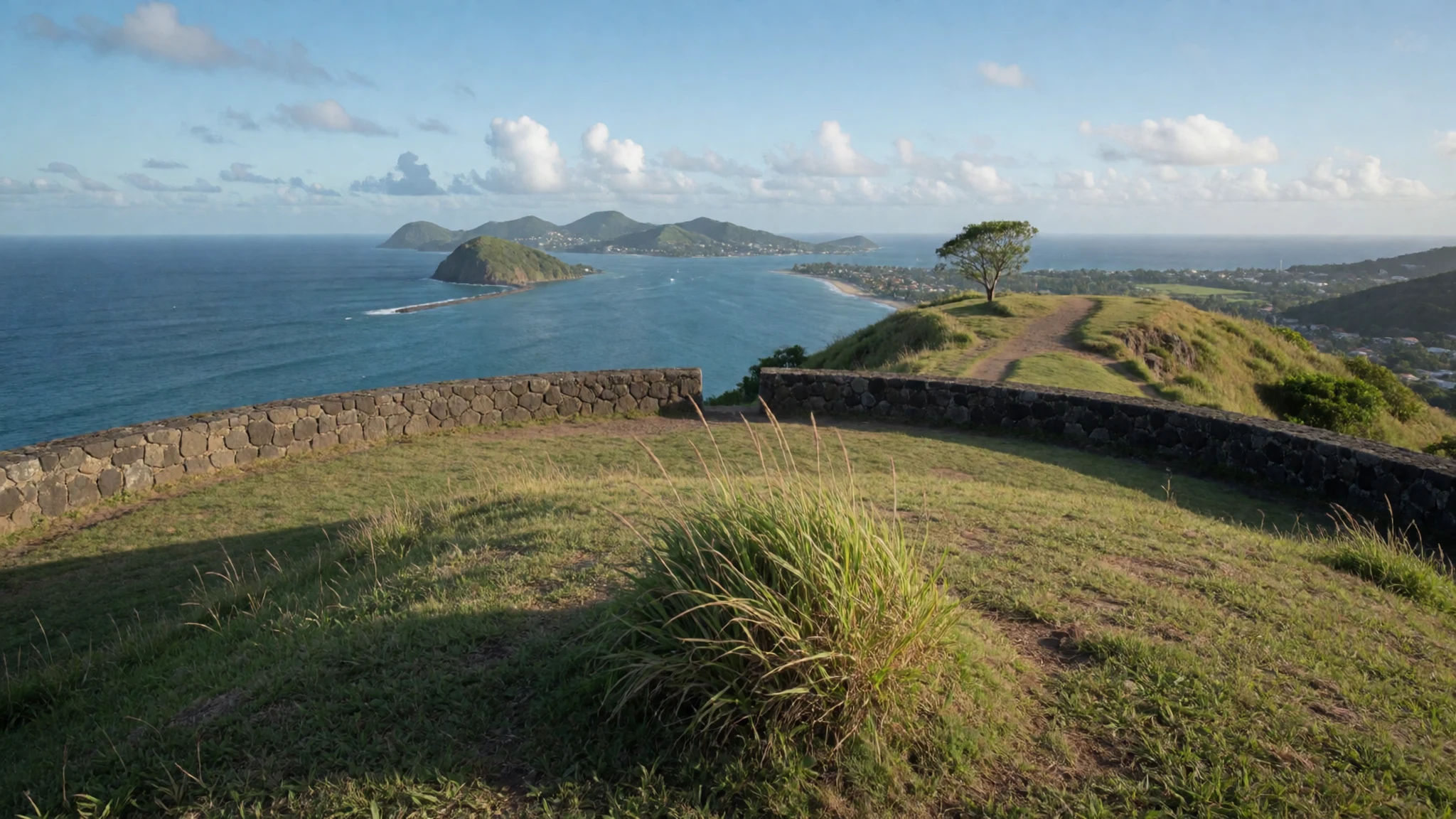
- Barracks and officers' mess ruins — Lower slopes near the museum area
Low stone walls mark the nineteenth-century barracks, kitchen and the quarters of the commanding officer. They are partly roofless and half-hidden by trees, which suits a slow wander. Look for the lime kiln nearby, which was later used for whale oil, a reminder that the site had many uses.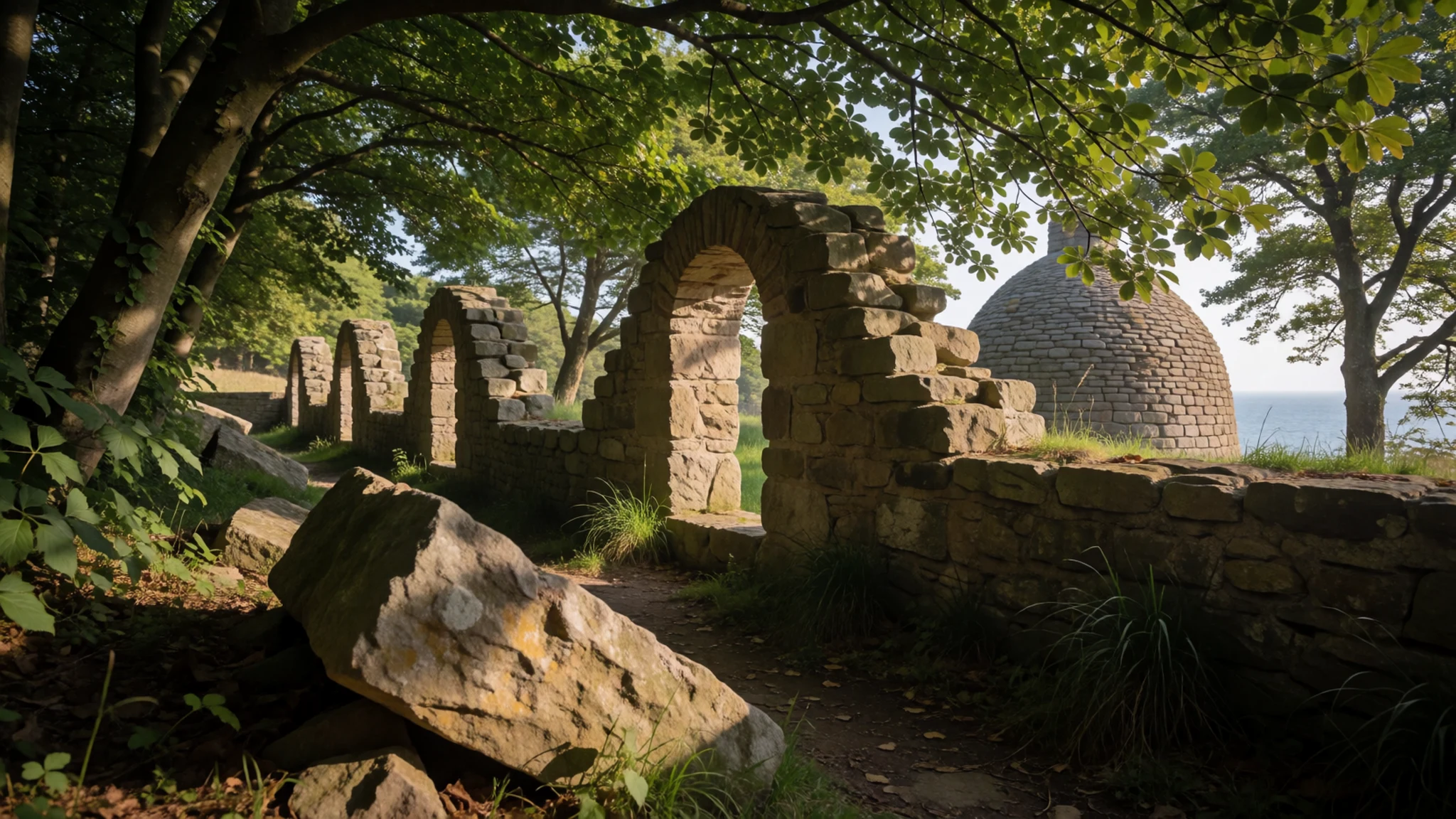
- The coves and beach — Western shore of the islet
Small sandy coves on the sheltered side give a swim and a rest after the walk. They are easy to reach from the main path and are open to the public, as all beaches in Saint Lucia are. Bring your own water and sun cover, as shade is limited.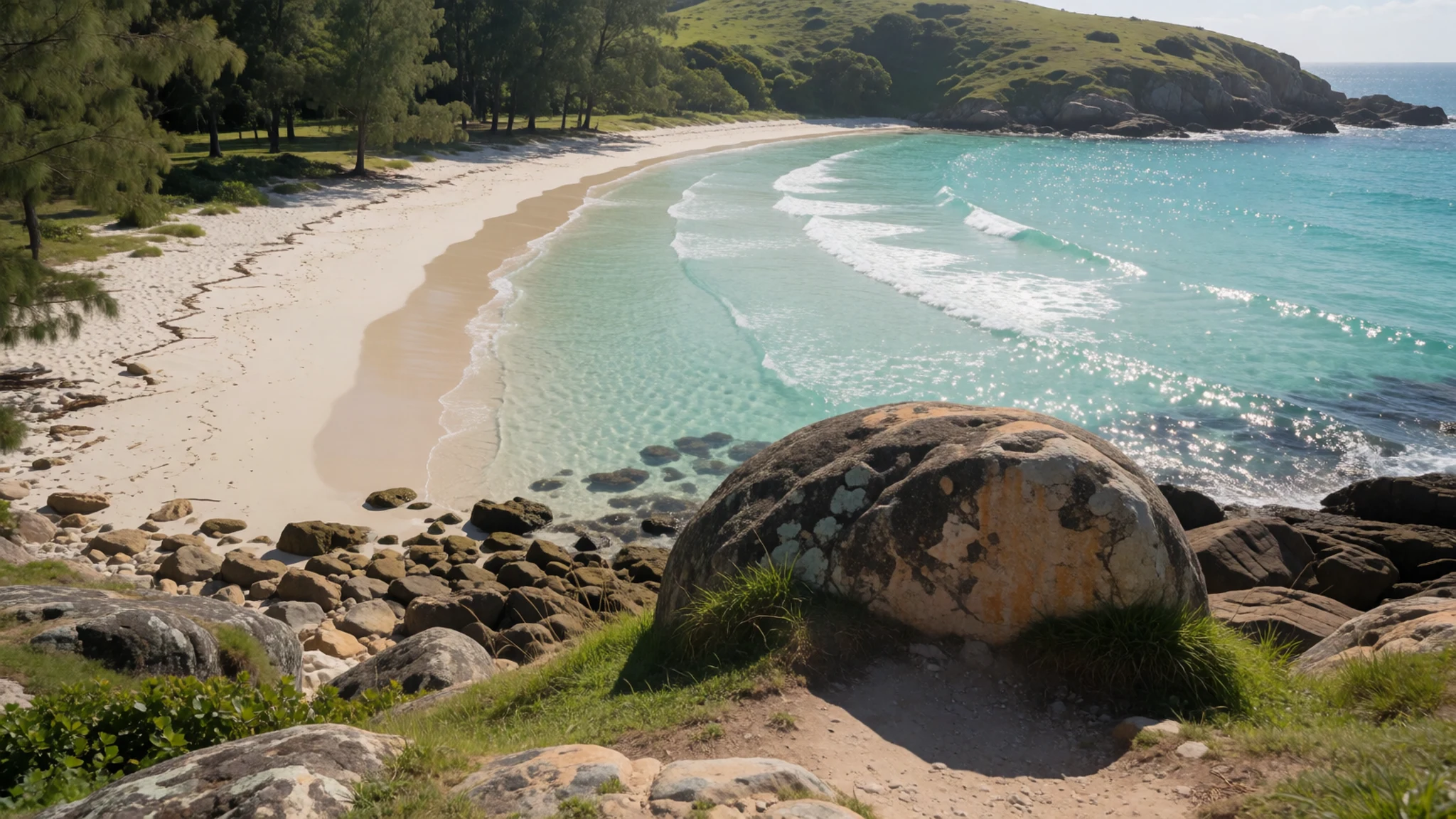
- Sunset and the green flash — Western viewpoints
The western horizon from the hills is open and wide, which makes it a fine place to watch the sun go down. On a hot, calm, clear evening there is a slim chance of the green flash. Most nights give only an after-image, but it is worth watching for.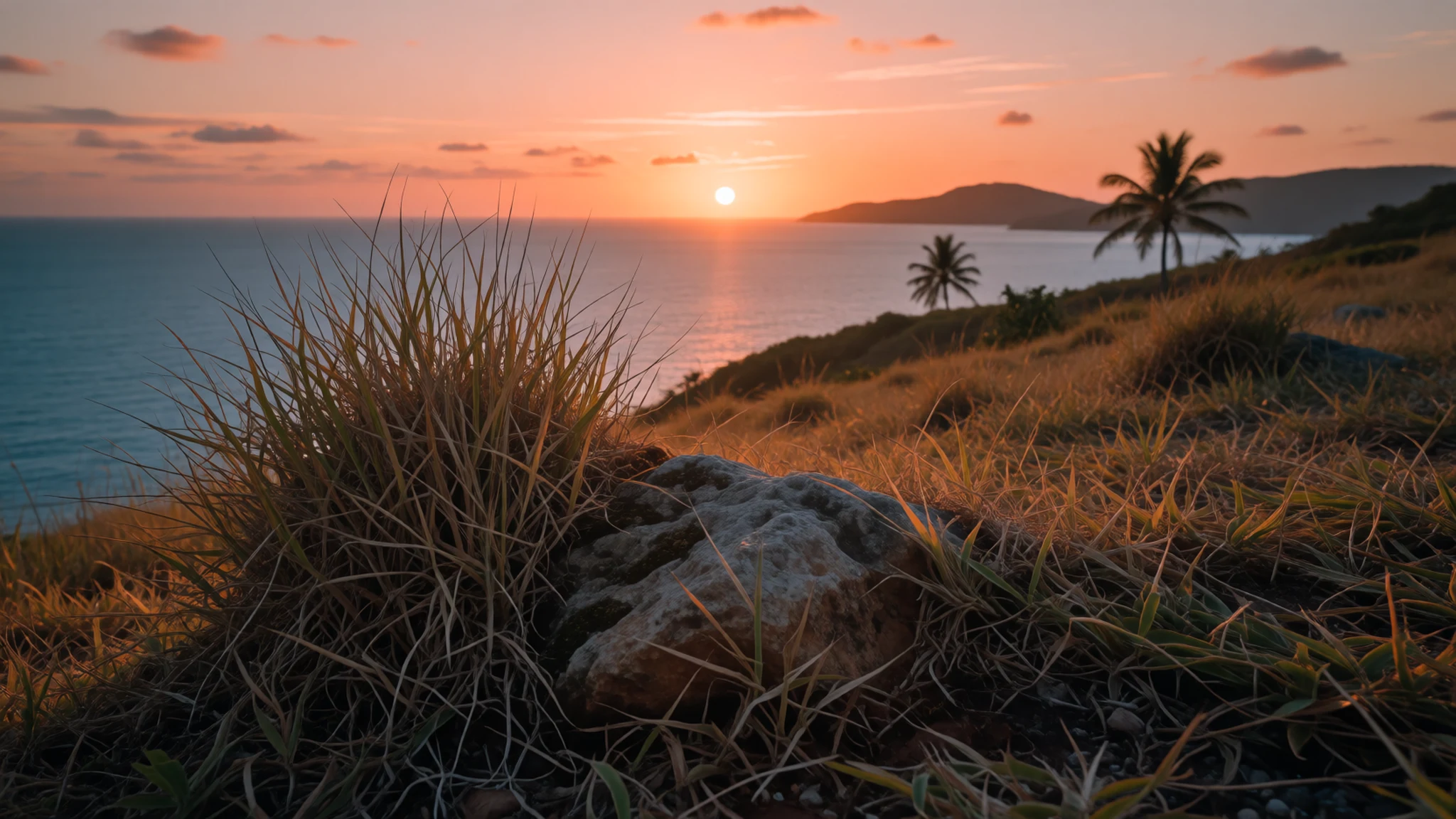
Culture
Pigeon Island is a small part of a wider Saint Lucian culture shaped by Arawak and Carib roots, French and British rule, and African heritage. Locals speak English and a French-based Creole, Kwéyòl, and the island's calendar of events reflects that mix. The Saint Lucia Jazz and Arts Festival fills the grounds in May, Carnival arrives in July, and Creole Heritage Month in October celebrates language, food, music and dress. Sport, church and neighbourhood gatherings matter just as much as the big festivals, and Friday evening street barbecues are a social occasion as well as a meal. At the landmark itself, the national mood is respectful of the past. The ruins are not just scenery but reminders of wars, labour and shipping that shaped the island, and the National Trust protects them for that reason. All beaches in Saint Lucia are open to the public, so the coves here are shared with local families as well as visitors. Nude sunbathing is illegal, and the same goes for beaches on Pigeon Island. Greet people politely before asking for help or directions, because a friendly hello is the normal start to any conversation. Visitors should keep to the marked paths, leave the stonework and cannons untouched, and take litter away, since the ruins are protected heritage.
What to wear
Saint Lucia's traditional dress is the wob dwiyet, a full skirt and blouse made from madras, the checked cotton fabric of the Creole Caribbean, with a matching headwrap tied in a style called the tête. Plaids in red, yellow and green are common, and the outfit is worn most visibly around Creole Heritage Month in October, at festivals, at school events and in national performances. Day to day, people on Pigeon Island and in Gros Islet dress for heat: cotton shirts, shorts, light dresses, sandals and swimwear for the coves. Smart-casual wear is normal for dinners and for church on Sundays, and local people usually cover up more away from the beach than visitors might expect. For a visit, light, breathable clothing in cotton or linen works best, with a hat and sunglasses because shade on the hills is patchy. Wear sturdy closed shoes or sandals with grip, since the paths to the summit are steep and stony, and bring a swimsuit and a towel for the beach afterwards. Cover up with a shirt or wrap when leaving the sand for town, restaurants or the road, and pack a light rain jacket for short tropical showers. Carry a refillable bottle, and bring insect repellent for the evening.
What to eat
- Coal pot stew — Local eateries in Castries and the south
A slow-cooked stew rooted in Carib cooking, made with meat, vegetables and local seasoning in a heavy pot. It is served at many local eateries in Castries, Soufrière and Vieux Fort, so it is easy to find on a day out from the north.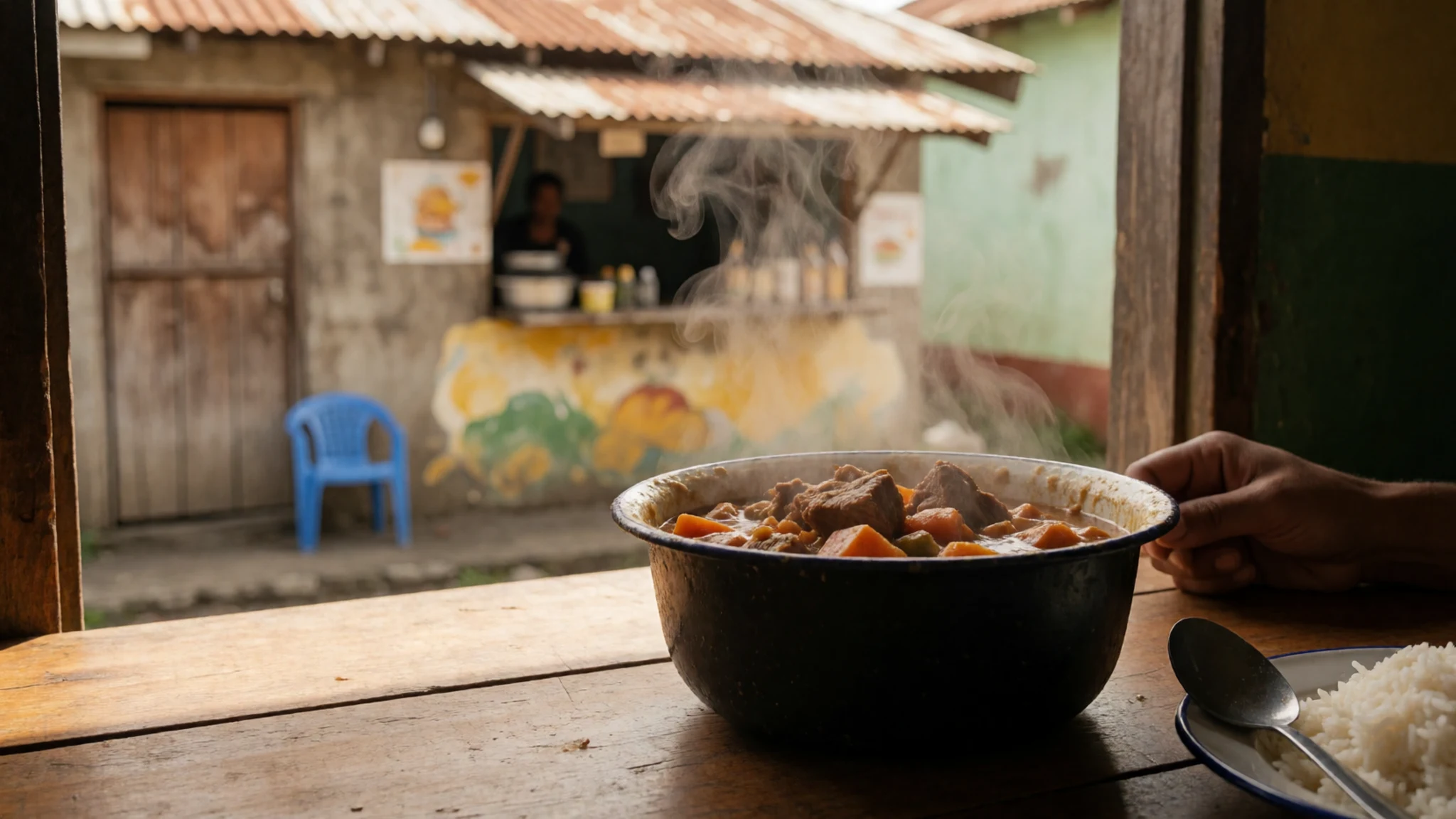
- Roti — Small roti shops in Gros Islet and nearby villages
Flatbread wrapped around vegetable or meat curry, a quick lunch with spice. Rotis are made fresh in the morning, so go early. Small local shops in Gros Islet and nearby villages are the usual places, and any resident will point you to a favourite.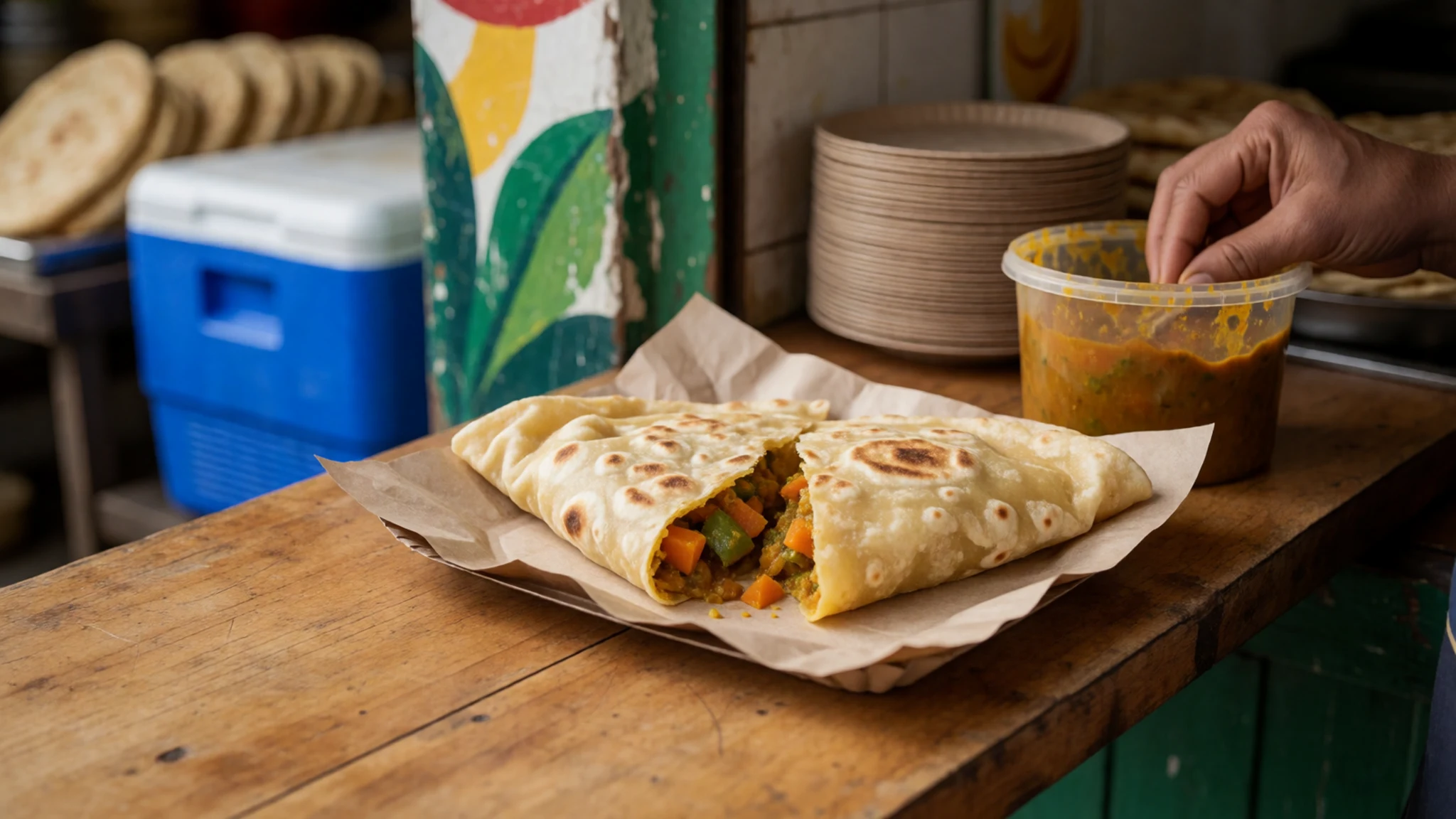
- Grilled fish with sides — Beachside eateries around Rodney Bay
Fresh fish is a staple and often comes grilled or stewed with plantain, breadfruit, rice and salad. Look for simple beachfront and village eateries, where the catch of the day is usually the best choice. - Friday night barbecue — Street stalls in Gros Islet and other villages on Friday night
Chicken and pork, well marinated and spiced, cooked over open fires on Friday evenings in communities across the island. Soak up the sauce with a fried or barbecued bake, a plain bread. The Gros Islet street party is a classic spot. - Fresh fruit and local juices — Roadside stalls and markets near Gros Islet
Saint Lucia grows a wide range of tropical fruit, and stalls sell it whole or pressed into drinks. A cold juice after the Signal Hill climb is one of the most welcome things on the island.
Plan it
Best time. January to April is the dry season and the busiest time for tourism, with the easiest walking weather. May brings the Jazz and Arts Festival, July has Carnival and October is Creole Heritage Month, so each has its own crowds and character. Outside the dry season expect showers and more humidity.
How long. 1
Getting there. Fly into one of Saint Lucia's two airports; the one near Castries is closer to the north. From there take a taxi or local bus to Gros Islet, then walk or ride the last stretch across the causeway to the entrance.
Budget. mid
Tips
- Go early in the morning, before the heat builds and before festival-day crowds arrive
- Carry water, sun cover and sturdy shoes, because shade is limited and the paths are steep
- Check the Saint Lucia National Trust for opening times, entry fees and festival dates before you go
- Keep valuables out of sight and take the same care you would at home, as crime rates have risen in recent years
- Check entry requirements before booking; UK passport holders do not need a visa, but Indian passport holders should confirm the rules
Etiquette
- Keep to marked paths and do not climb on or move the cannons and stonework
- Take rubbish with you and respect the quiet of the historic site
- Dress modestly away from the beach and leave nude sunbathing alone, as it is illegal
Nearby
Sources
- Wikidata Q7193299 (CC0)
- Wikipedia: Pigeon Island (Saint Lucia) (CC BY-SA 4.0)
- Wikivoyage: Saint Lucia (CC BY-SA 4.0)
- Photo: Pigeon Island, Saint Lucia from a boat — P. Hughes (CC BY-SA 4.0)
- Photo: Historical marker for Fort Rodney — Pi3.124 (CC BY-SA 4.0)
- Photo: Historical marker for Fort Rodney's redoubt — Pi3.124 (CC BY-SA 4.0)
- Photo: Historical marker for WW II — Pi3.124 (CC BY-SA 4.0)
- Photo: At the top of Pigeon Island — Lii (Public domain)
- Photo: Pigeon Island (Saint Lucia) — Nelro (Public domain)
- Photo: Cannons at Fort Rodney — Nelro (Public domain)
- Photo: Pigeon Island, Saint Lucia — Mjr74 (Public domain)


