Anse Chastanet
Anse Chastanet, Saint Lucia
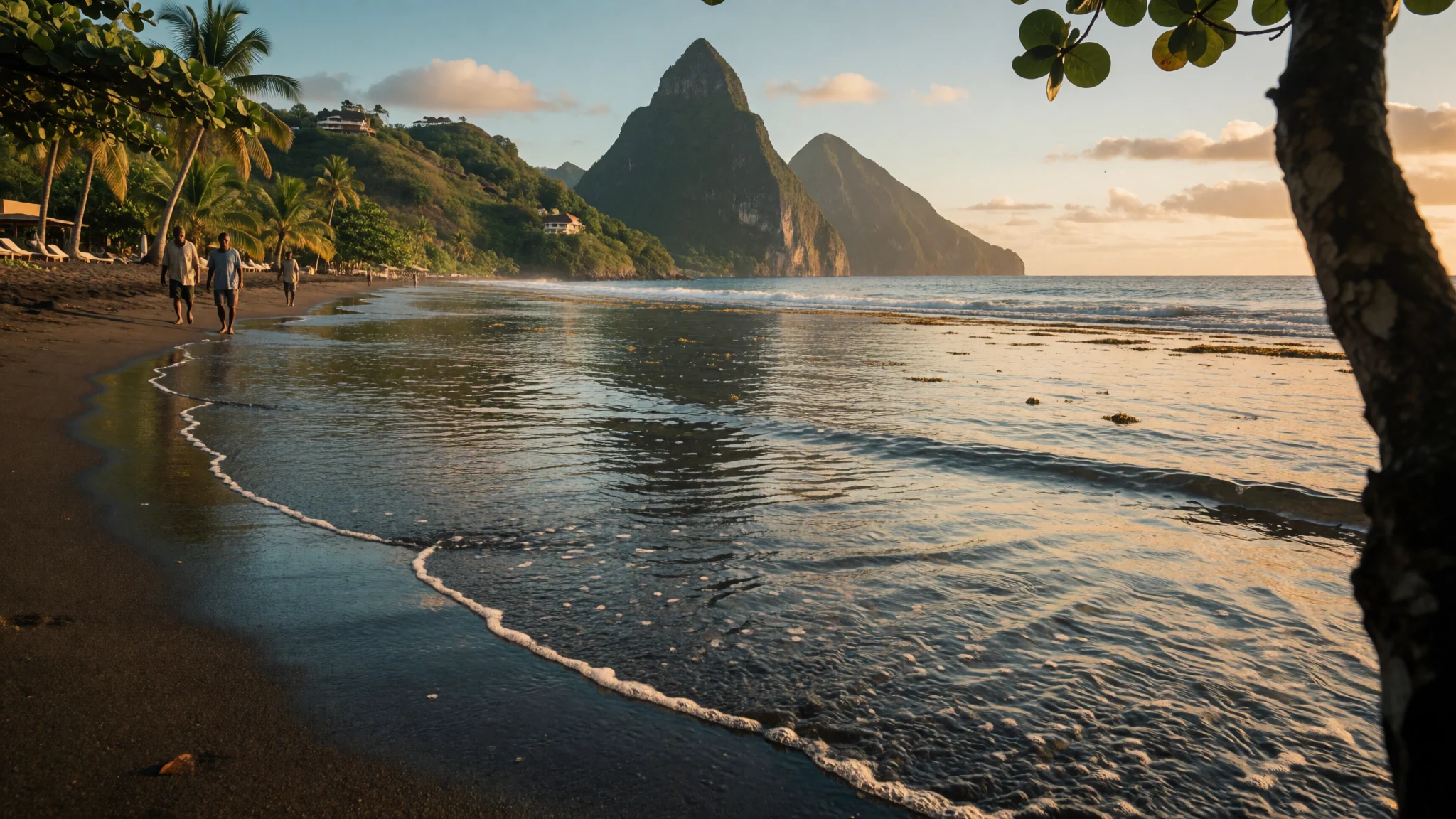
Anse Chastanet is a dark-sand bay on Saint Lucia's west coast, with a reef close to shore and the Pitons almost within sight.
The place
Anse Chastanet is a crescent of sand on Saint Lucia's west coast, just north of the town of Soufrière, where the Caribbean Sea meets steep green hills. The sand is darker than the pale beaches of flatter islands, a sign of the volcanic ground behind it, and the water drops away quickly to a reef that suits snorkellers as much as swimmers. Palms and sea-grape trees edge the shore, and a resort with a waterside bar takes up part of the slope, though the beach itself is public: every beach on the island is open to everyone. The road in from Soufrière is winding and rough in places, which keeps the bay calmer than the busier strips in the north. Behind it the land climbs into rainforest, and a short way south the Pitons rise straight out of the sea and shape almost every view. The bay faces away from the open Atlantic, so the water is usually gentle. Tourism is the main business in this district, and it is busiest in the dry season from January to April, when boat trips leave from the shore and dive groups head out early. From May to December showers are likelier, the sea stays warm and the place is quieter, though hurricane season falls inside those months. The heat is constant, so shade and drinking water matter more than any itinerary.
Its story
Anse Chastanet belongs to the story of Soufrière, the old French settlement that was once Saint Lucia's capital. The island's first known inhabitants were Arawaks, who were gradually displaced by Caribs. Spanish voyagers passed by early on, but it was the French who settled, and they signed a treaty with the Caribs in 1660. French planters carved large estates out of the hills around Soufrière, and some of them, Rabot and Fond Doux among them, still exist today. Their wealth rested on enslaved African labour. After the French Revolution slavery was ended, then restored under Napoleon, and enslaved people and French deserters fought a guerrilla campaign against British forces until 1803, when Britain took control of the island. Castries then became the capital, leaving Soufrière a quieter place. The town has paid a steady price for its setting: hurricanes, a major fire in 1955 and an earthquake in 1991 meant it was rebuilt more than once. Joséphine de Beauharnais, later Empress of France, spent much of her childhood in the area. When Queen Elizabeth II visited in 1966 she came ashore at Soufrière rather than Castries. Today farming has given way to tourism, and the bay's reputation rests on its scenery and its reef rather than on any single monument.
What to see
- Anse Chastanet beach and reef — Anse Chastanet bay, north of Soufrière
The bay itself is the main sight. Dark sand slopes into clear water, and the reef starts close to the shore, so a mask and snorkel are enough to see fish without a boat. Mornings are calmest. The waterside bar gives a shaded view of the whole curve of the beach.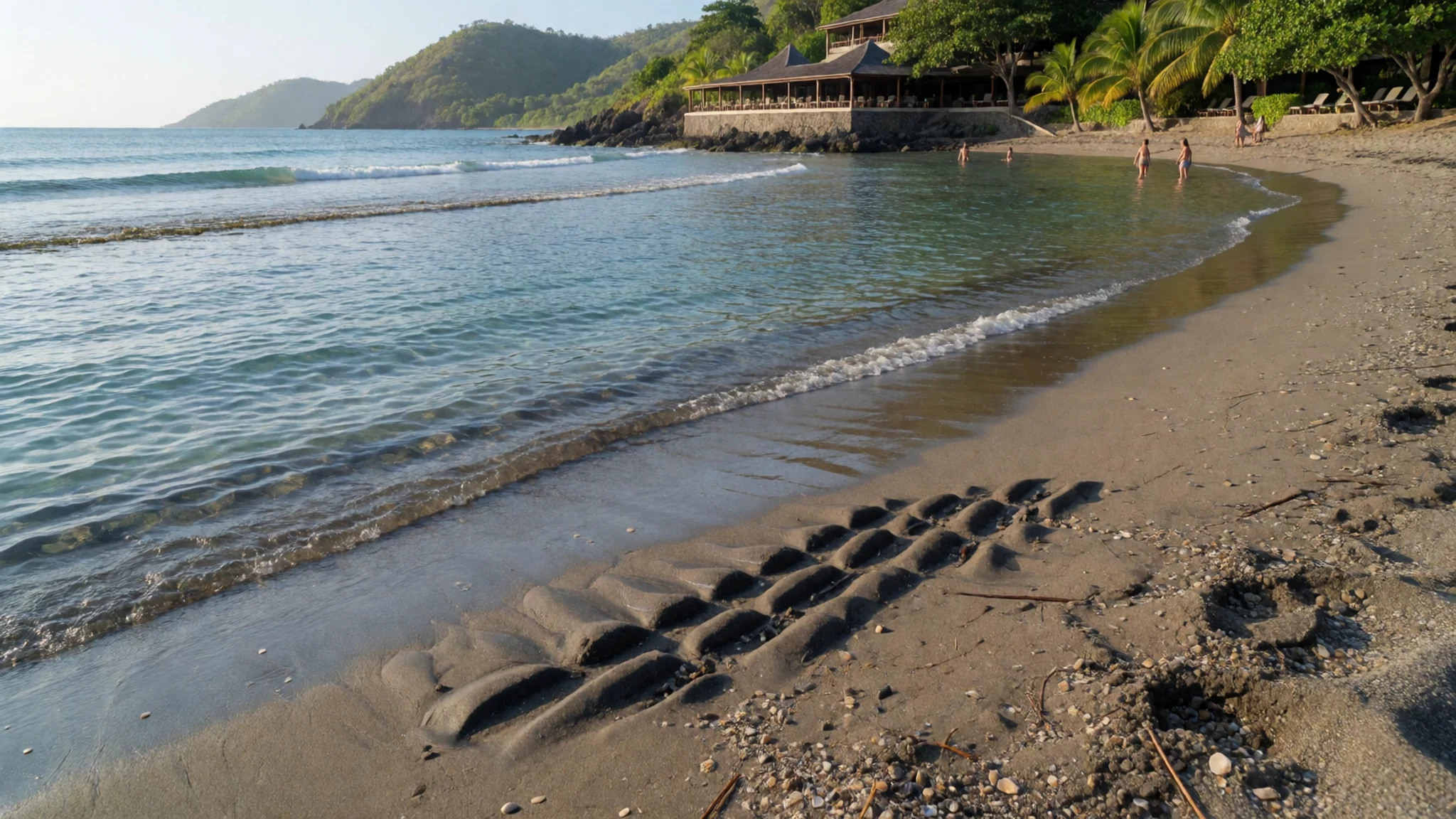
- The Pitons — South of Soufrière
Two volcanic plugs rise sharply from the sea just south of Soufrière. They are a UNESCO World Heritage Site and appear on the national flag. They are best seen from the water or from a high viewpoint in the morning, before cloud gathers around the summits.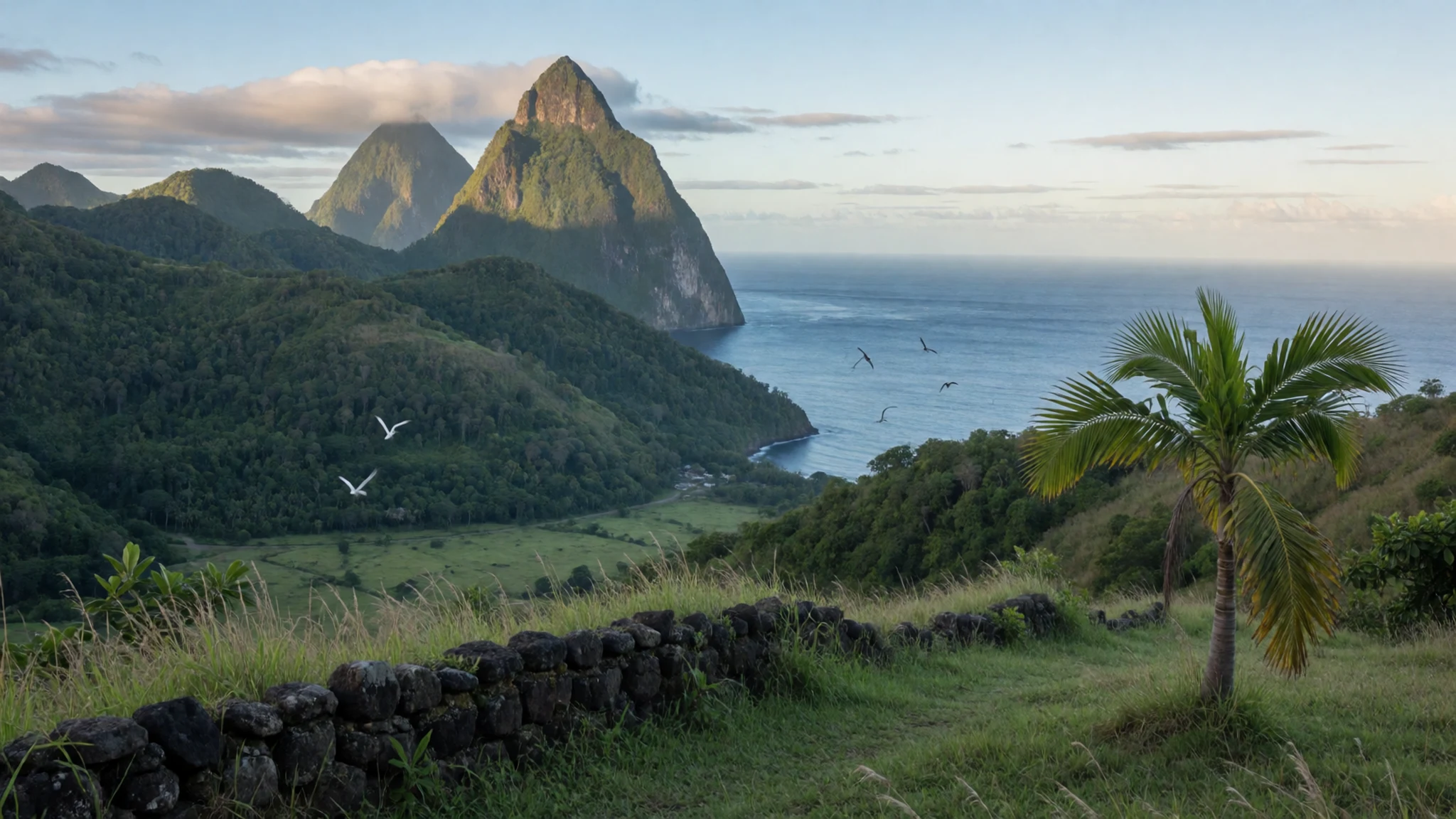
- Sulphur Springs — Inland from Soufrière
Hot, mineral-rich water runs through a pool just south of Soufrière, close to an active volcanic area that smells strongly of sulphur. Visitors can bathe in the warm water, so bring swimwear and a towel. The smell is part of the experience, and midday heat makes it stronger.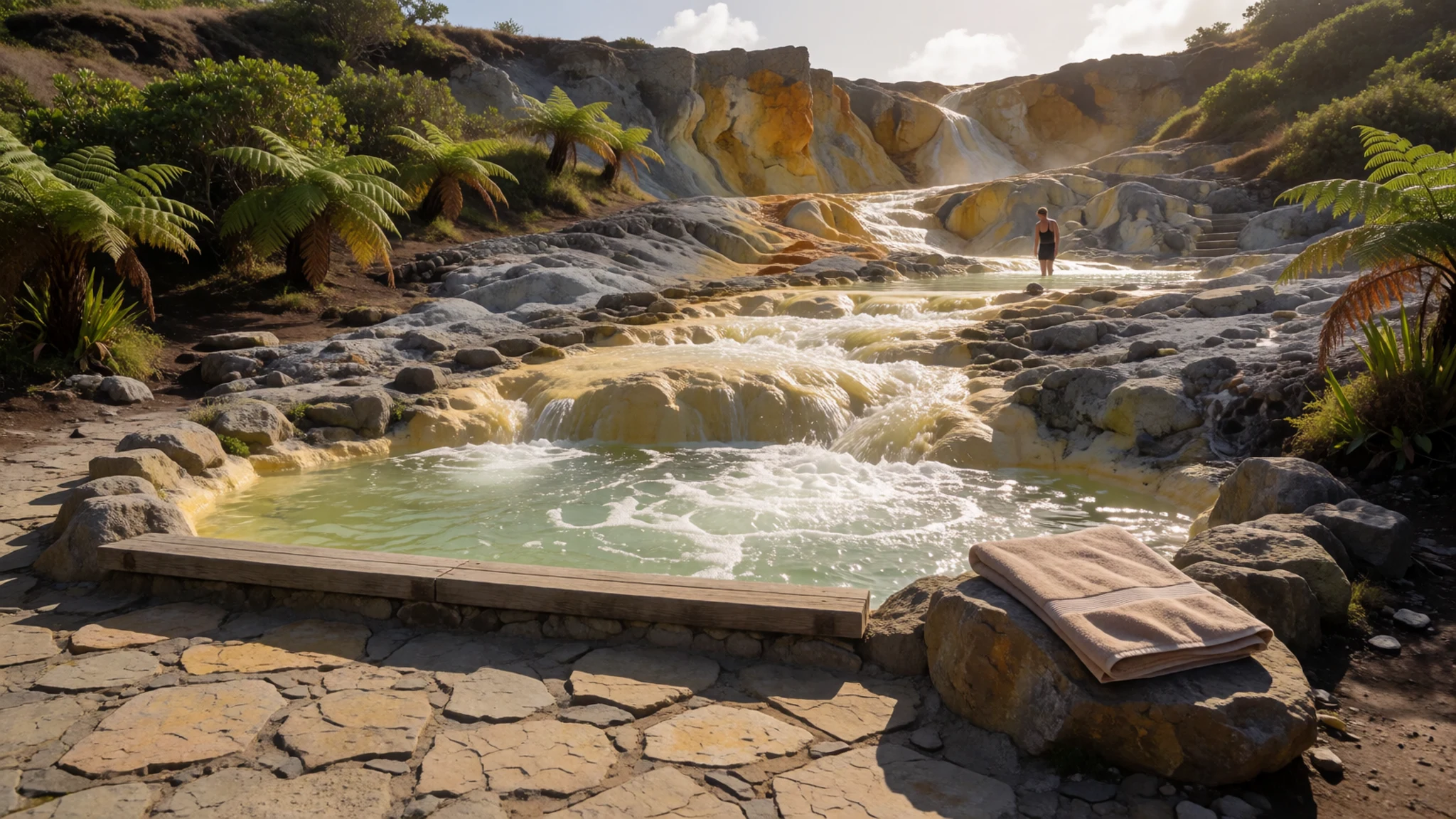
- Diamond Falls Botanical Gardens — Soufrière, a short drive from the town centre
A compact garden in Soufrière built around a waterfall whose rock face is stained by minerals. Paths wind through tropical flowers and shade trees, and the walk is short and easy. It suits a hot afternoon when the beach is too bright, and it is worth checking opening times on the official site.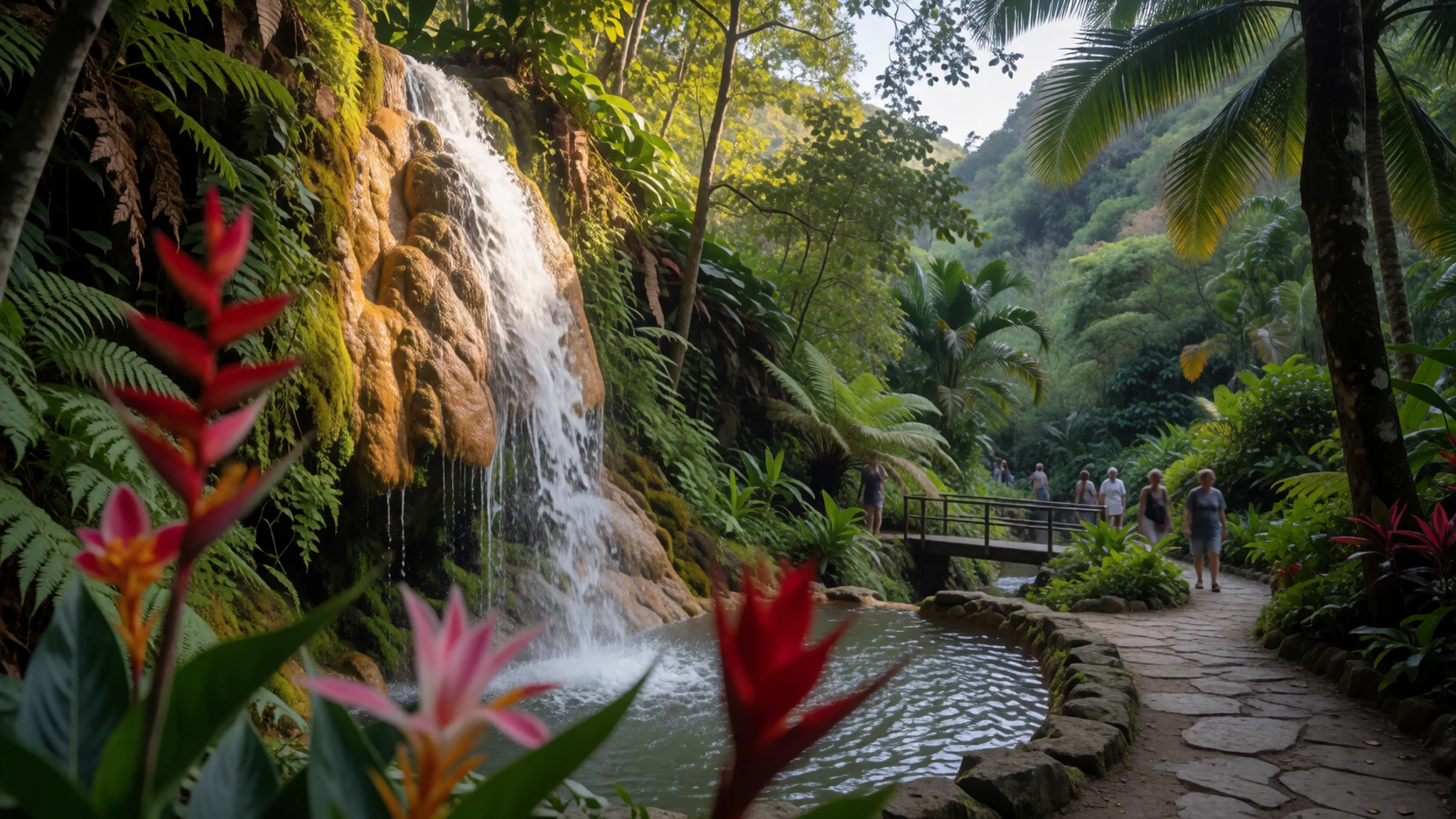
- Soufrière town and waterfront — Soufrière town centre
The town is small, lively and worth an hour on foot. Fishing boats pull up along the bay, a Catholic church stands near the centre, and the Pitons fill the skyline to the south. Markets and snack stalls make it the easiest place to meet local life.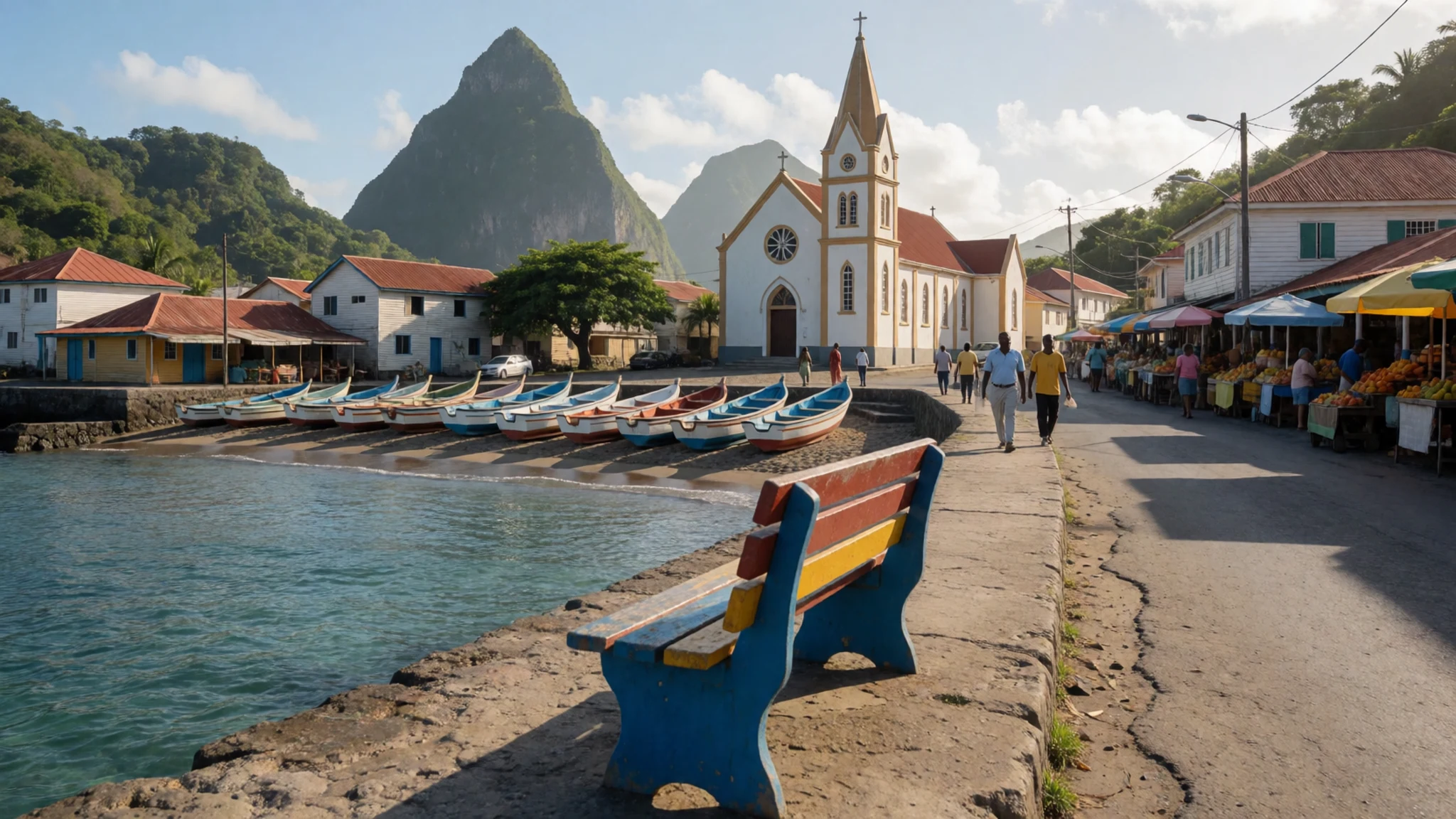
- The old estates and Piton Valley — Hills and valley behind Soufrière
Former French plantation estates, including Fond Doux and Rabot, sit in the green valley behind Soufrière, with cocoa trees, gardens and walking paths. Several can be visited on tours. Viewpoints in the valley give wide views across to the Pitons, so a camera and sun hat are useful.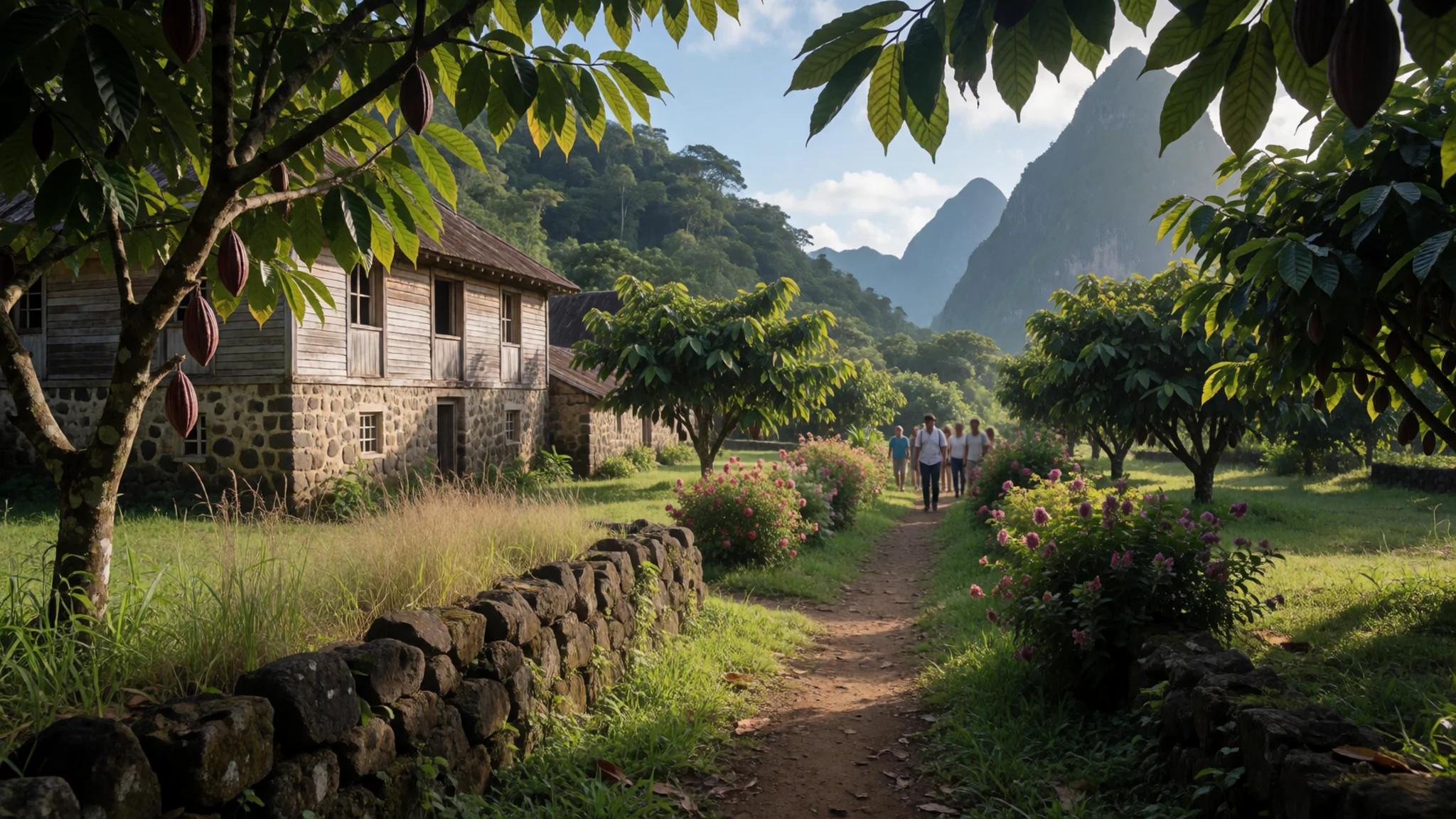
Culture
Anse Chastanet sits in a part of Saint Lucia where African, French and British histories overlap, and the mix shows in language, religion and food. English is the official language, but Kwéyòl, a French-based Creole, is spoken widely in and around Soufrière, and a greeting in it is usually received warmly. Catholicism is strong here, a legacy of the French settlers, and the church in Soufrière is a landmark as well as a place of worship. The year has its own rhythm of celebrations: the Jazz and Arts Festival in May, Carnival in July, and Creole Heritage Month in October, when traditional dress, music and cooking are celebrated across the island. In everyday life, Saint Lucians tend to be friendly but expect basic courtesy, a greeting before a question, and patience on a slow afternoon. Fishing, small-scale farming and tourism sit side by side, so a beach may be both a leisure spot and someone's workplace. All beaches on the island are open to the public, which means locals, boat crews and visitors share the sand. Public nudity is not tolerated, and nude sunbathing is illegal. Keep a shirt or wrap with you for the walk into Soufrière or into the church, and keep nude sunbathing off the sand, since it is illegal in Saint Lucia.
What to wear
Around Anse Chastanet, the traditional dress of Saint Lucia is built around madras, a bright plaid cotton cloth in reds, yellows and greens that came through the island's French and Creole history. Women's formal dress, often called the wob dwiyet, is a long, full skirt with a white blouse and a madras head tie, and the way the tie is knotted has its own local conventions. It is worn mainly for Creole Heritage Month in October, for Jounen Kwéyòl celebrations and for cultural shows, rather than daily. Day to day, people in Soufrière wear what suits the heat: light cotton shirts, shorts, sundresses and sandals, with neater clothes for church and for official business. At the beach, swimwear is normal, and covering up afterwards is the local habit. Visitors should bring light, quick-drying clothes, a wide-brimmed hat and strong sun protection, as the sun is fierce at this latitude even on cloudy days. Water shoes are useful on rocky entries to the sea and near the reef. For walks in the rainforest or on estate paths, wear closed shoes with grip and carry a light rain jacket, since showers are quick and frequent. A shirt, sarong or wrap helps in town and at church, where beachwear looks out of place.
What to eat
- Coal pot — Local restaurants in Soufrière
A slow stew cooked over charcoal in a clay or metal pot, traditional to the island's Carib roots. It is rich and savoury, usually served with local sides. Ask for it at small local restaurants in Soufrière.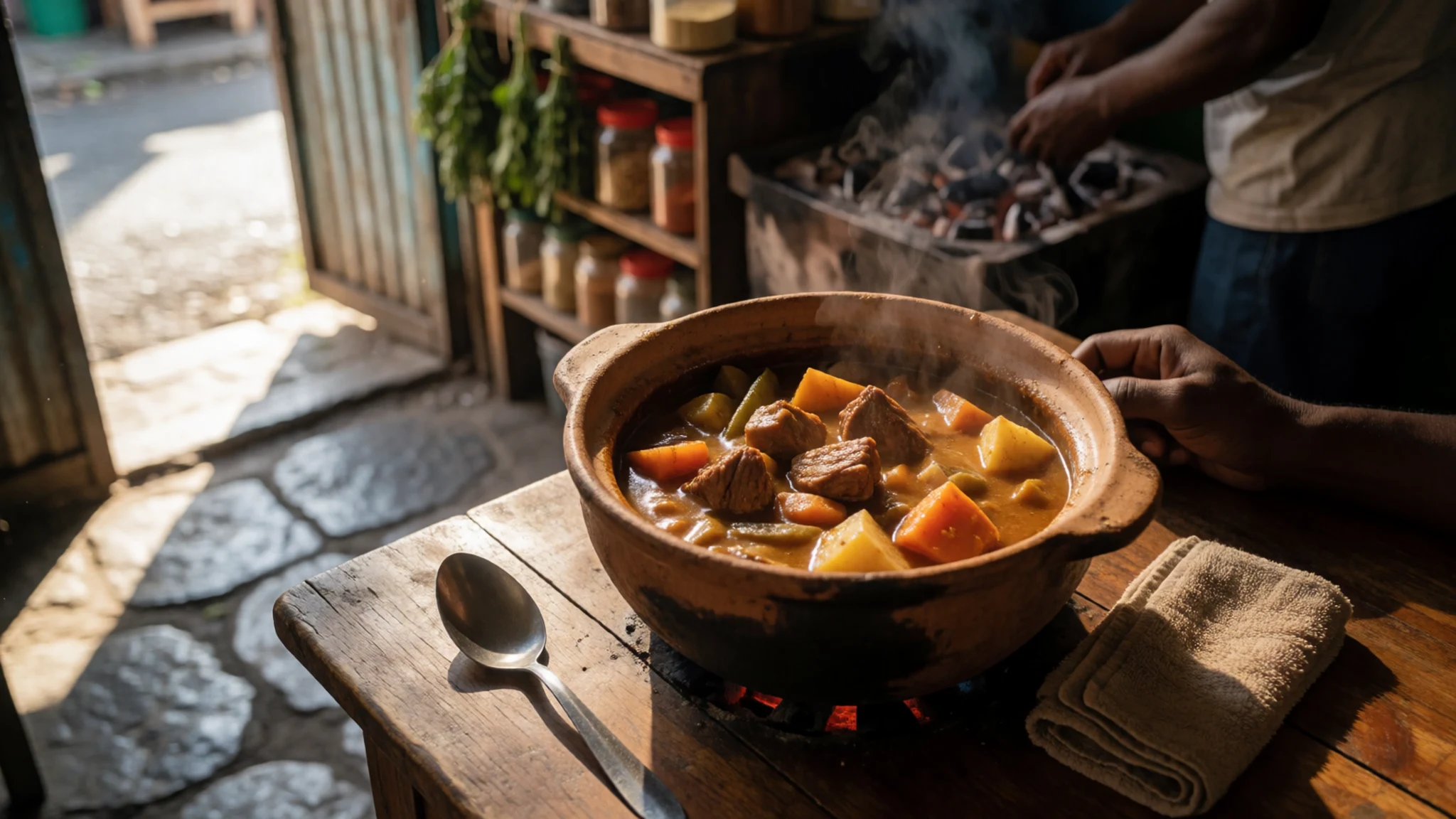
- Roti — Small roti shops in Soufrière and other towns
A soft flatbread folded around curried vegetables, chicken or other fillings. It is made fresh in the morning, so an early lunch is best. Vegetarian versions are easy to find, and locals will point out a favourite shop.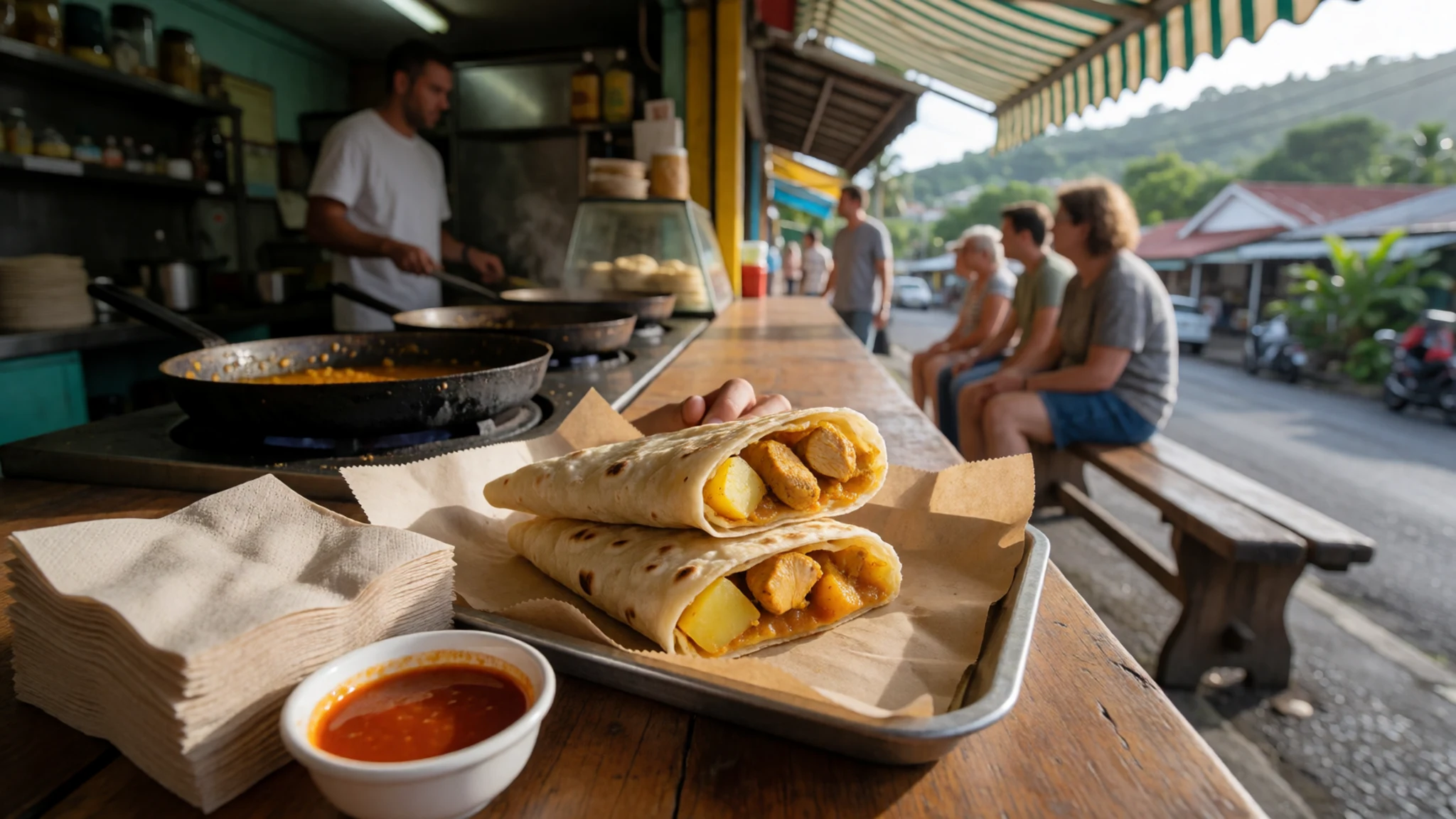
- Friday-night barbecue — Roadside barbecue stands in any village on a Friday night
Chicken and pork are marinated, spiced and grilled over coals in communities across the island on Friday evenings. Order it with a fried or baked bake, a bread that mops up the sauce. It is casual, filling and sociable. - Fish with ground provisions — Local eateries and rum shacks near the fishing beaches
Fresh fish, usually fried or stewed, comes with sides such as plantain, breadfruit, rice, macaroni and salad. It is the everyday plate of the island, and the catch depends on what the boats brought in that morning. - Fresh tropical fruit — Roadside stalls and the market in Soufrière
Mango, banana, pineapple and other fruit are sold from stalls and markets, often picked nearby. Eaten on the spot, they make a cheap, cool snack between beach swims and hikes, and ripeness varies by season.
Plan it
Best time. January to April is the dry season, with the least rain and the busiest beaches; May to December is wetter and quieter, with hurricane season inside those months.
How long. 2–3
Getting there. Hewanorra International Airport in the south of the island is the usual arrival point, followed by a road transfer north along the coast to Soufrière and on to the bay; George F. L. Charles Airport near Castries is the other option, with a longer drive. Check the official sites for current flights and transfers.
Budget. mid
Tips
- Book rooms and boat trips well ahead for January to April, when the bay is busiest
- Snorkel early in the morning, when the water is calmest and the beach is quiet
- Carry some cash for small stalls, taxis and roadside food, and cards for larger bookings
- Bring reef-safe sun protection, a hat and plenty of drinking water, as the sun is strong
- Travel in groups and be careful in secluded spots, since crime has risen on the island
Etiquette
- Cover up with a shirt or wrap when you leave the beach for town or church
- Greet people before asking a question or taking a photograph
- Do not sunbathe nude, as it is illegal
Nearby
Sources
- Wikidata Q4770550 (CC0)
- Wikipedia: Anse Chastanet (rev 1376882286) (CC BY-SA 4.0)
- Wikivoyage: Saint Lucia (rev 5429571) (CC BY-SA 4.0)
- Photo: View from the waterside bar at Anse Chastanet, April 2007 (ROxBo) (Public domain)
- Photo: Soufrière, St Lucia, 2007 (Gzdavidwong) (CC BY 3.0)
- Photo: Piton Valley (Jayen466) (Public domain)
- Photo: Malgretout Beach, Saint Lucia (ROxBo) (Public domain)
- Photo: Catholic Church Soufriere Saint Lucia (ROxBo) (Public domain)
- Photo: The Pitons at Soufriere Saint Lucia (Public domain)
- Photo: Soufrière Saint Lucia (Nelro) (Public domain)
- Photo: Soufrière Bay, Saint Lucia (Mjr74) (Public domain)


