Castries
Castries, Saint Lucia
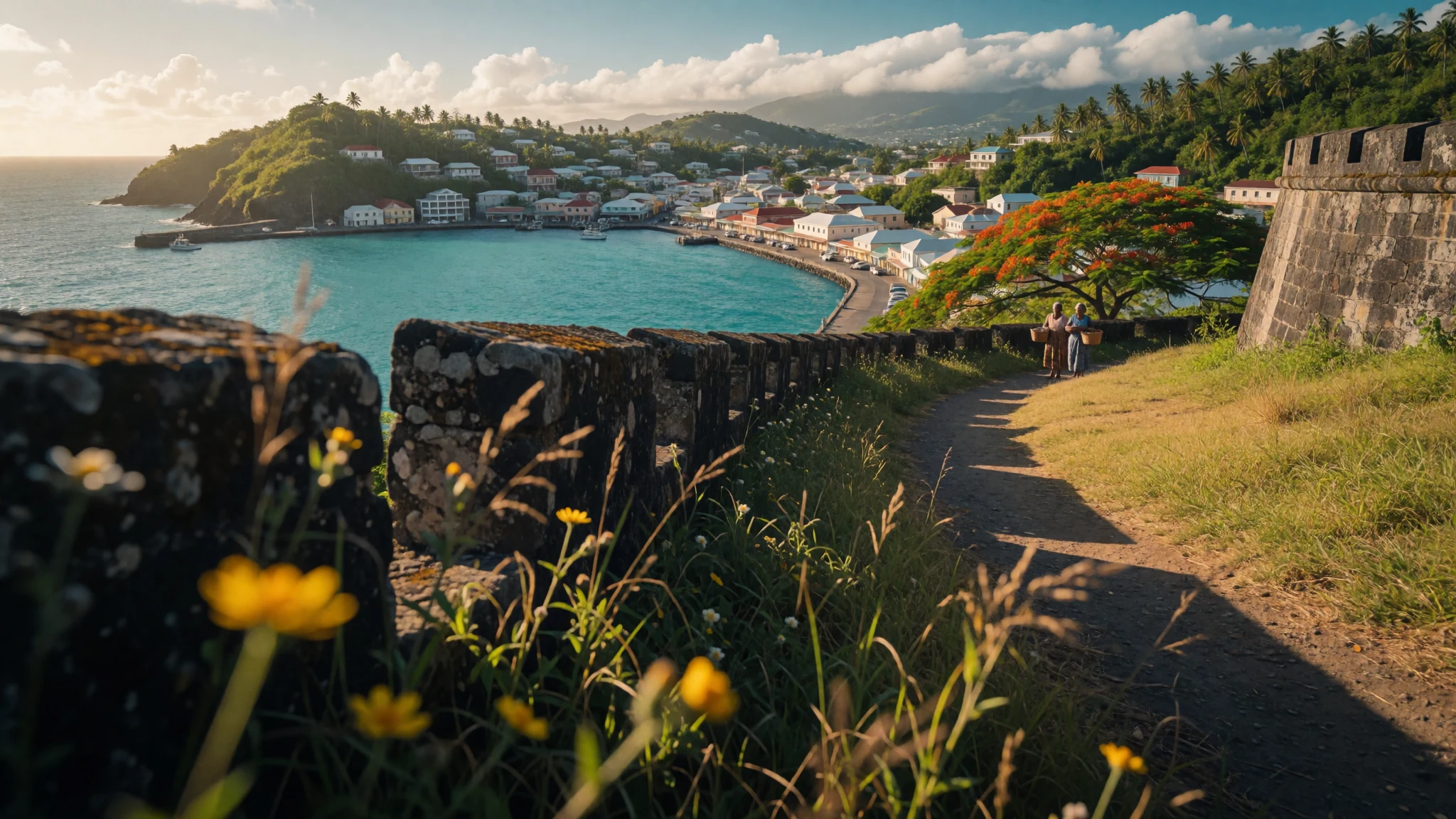
Castries is a working Caribbean capital with a busy market, a calm harbour and hill views, worth a day or two before the island's beaches.
The place
Castries sits on a low, flat stretch of reclaimed land at the head of a sheltered harbour on Saint Lucia's north-west coast, only about 2 metres above sea level. It is the island's capital, with an urban population of around 20,000 and a wider district several times that size. Government offices and the head offices of local and foreign firms are here, so weekday mornings are busy with people in office clothes crossing a street grid that is easy to read on foot. The harbour does the heavy lifting. Cargo ships, ferries and cruise liners all use it, and on days when several liners are in, the duty-free shopping areas at Pointe Seraphine and La Place Carenage fill with day visitors and the town centre turns noticeably livelier. On quiet days the city goes back to its own rhythm of market stalls, minibuses and schoolchildren in uniform. Behind the grid the land rises steeply, and Morne Fortune gives the clearest sense of how the town is squeezed between ridge and sea. The climate is tropical rainforest: warm all year, humid, with heavy showers that tend to pass quickly. Castries is a working capital rather than a resort. Vigie, Malabar, Choc and La Toc beaches lie close by, but many travellers treat the city as a gateway or a single day out, and base themselves elsewhere on the island.
Its story
Castries began in 1650 as a small French fort near the harbour, set up by about 40 men under de Rousselan after the French West India Company sold the island's rights to private buyers. The settlement was first called Carénage, a word for a place where ships are hauled over and repaired, which says plainly what the harbour was for. In 1769 the governor moved the capital to the south side of the harbour, and in 1785 the village took its present name from the marquis de Castries, then France's minister for the navy and colonies. Saint Lucia passed between French and British hands more than once, and the British later developed the port as a coaling station, with the first steamship calling in 1841. Fire has been the town's recurring enemy. Blazes in 1805 and 1813 were followed by the fire of 19 June 1948, the most destructive, and the city was rebuilt each time, which helps explain why the centre has few very old buildings. The Second World War reached the harbour as well. On the night of 9 March 1942, German U-boat U-161 entered the harbour and torpedoed two Allied vessels, one of which was the Canadian ship Lady Nelson. That vessel was raised, towed to Canada and converted into a hospital ship. The same harbour is still the reason the city exists, now handling ferries, cargo and cruise ships.
What to see
- Derek Walcott Square — Town centre
Derek Walcott Square is the shaded green heart of Castries, renamed from Columbus Square in honour of the island's Nobel-winning poet. Benches and shade make it a good place to sit out the midday heat and watch the town go by. The cathedral stands on one side, and the grid of the old centre starts here. - Cathedral Basilica of the Immaculate Conception — Town centre
The cathedral faces the square and is the main Catholic church of the capital. Inside it is a cool, quiet break from the street, and the painted interior is far more colourful than the plain exterior suggests. Services are held regularly, so visit outside worship times and keep voices low.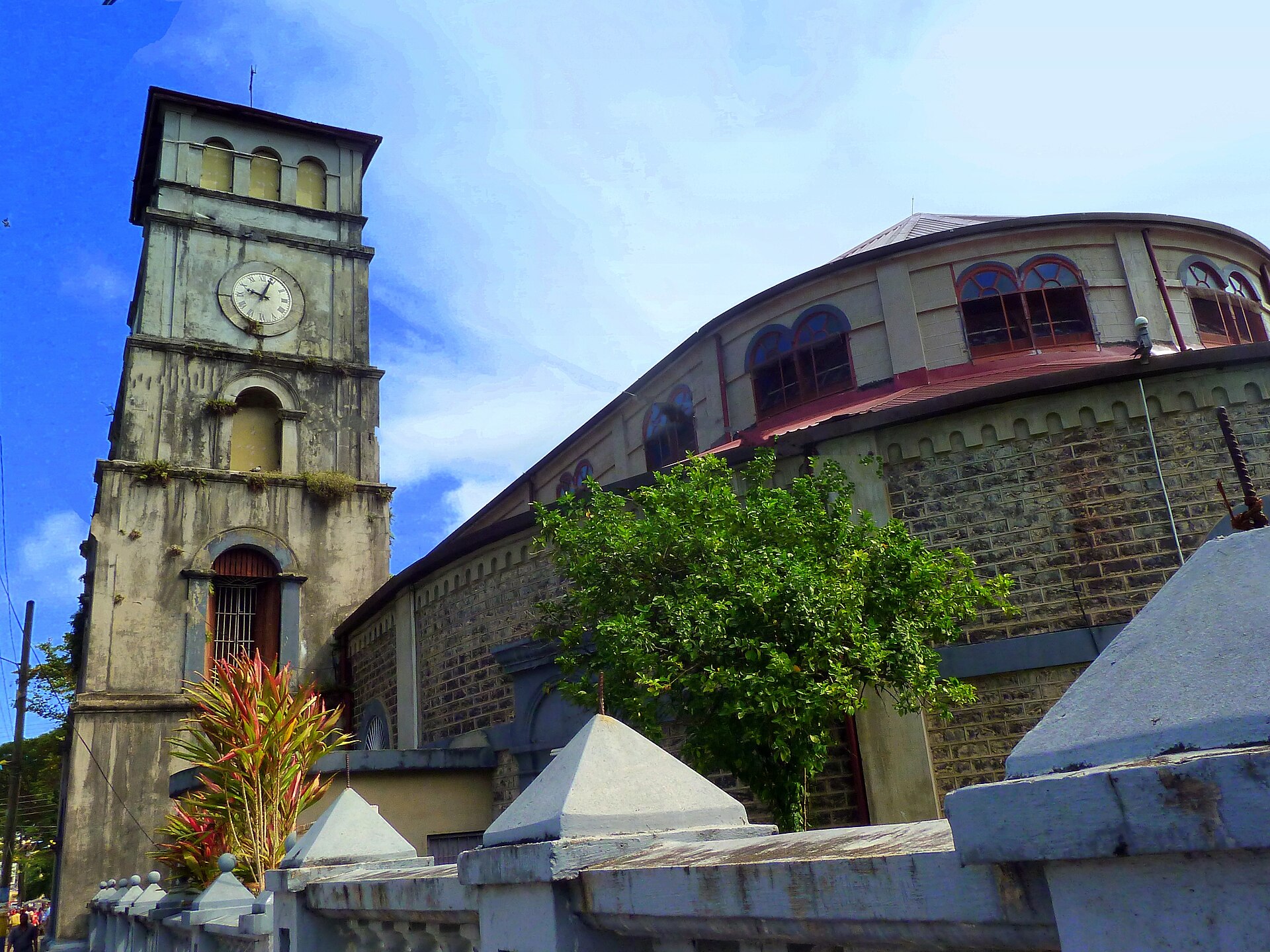
- Castries Market, Jeremie Street — Jeremie Street
The market on Jeremie Street is the liveliest corner of town: fruit and vegetables, spices, crafts and chatter. Go in the morning, before the heat builds, and expect the busiest crowds when cruise ships are in. A small alley beside it leads down to cheap local eateries.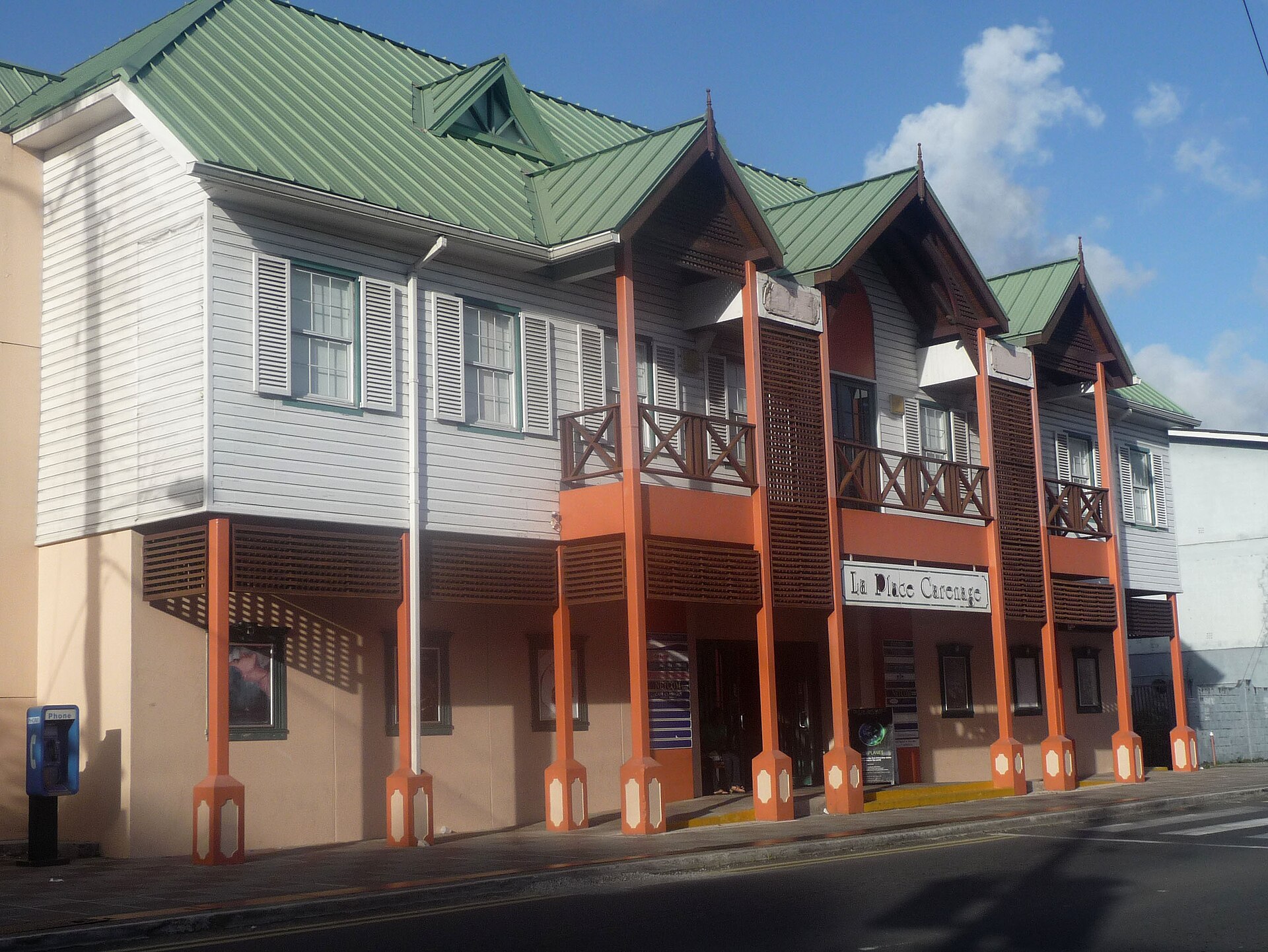
- Morne Fortune and Fort Charlotte — Morne Fortune, south of the harbour
Morne Fortune is the 258 m hill above the city, and the viewing point just below Government House, built in 1895, gives the best look over the harbour and the grid of streets. Fort Charlotte sits near the top. Take a taxi up, and walk down only if you are happy with steep roads in the heat.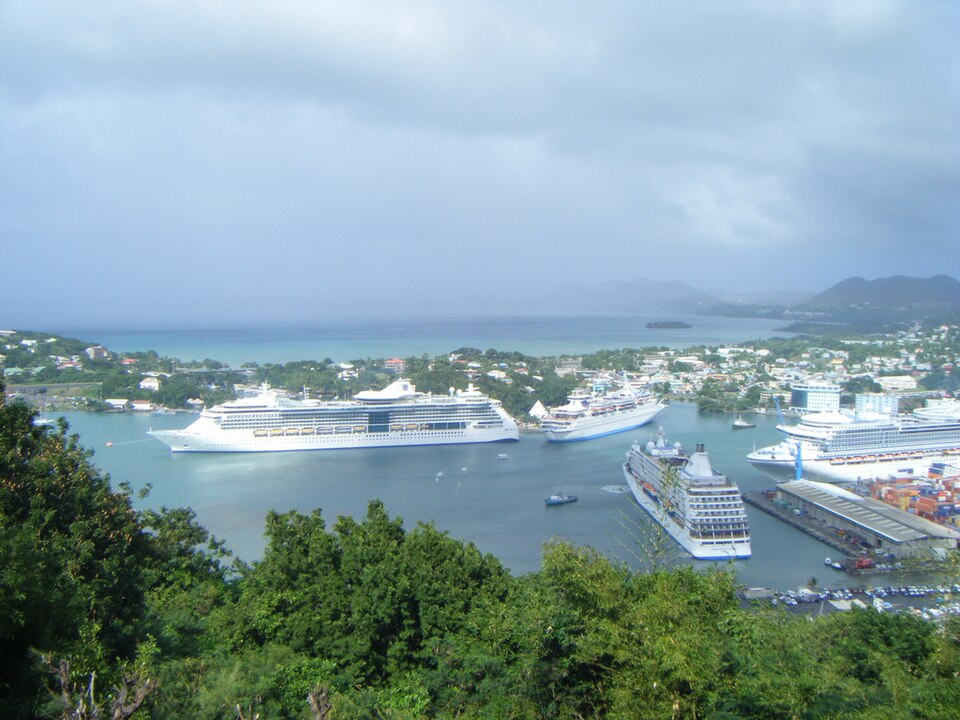
- La Toc Battery — La Toc, south-west of the harbour
La Toc Battery was built by British colonial forces in 1888 and watches over the entrance to the harbour. It is the best-preserved of the old forts here, with thick stone walls and underground passages that are fun to explore. Wear shoes with grip, as the stone can be uneven and slippery after rain. - Vigie Beach — Vigie, north of the centre
Vigie Beach is the town's own strip of sand, a short ride north of the centre. It suits a swim and a few hours of sun after the market, with calmer conditions than most open-coast beaches. It is a local beach rather than a resort one, so bring water and snacks, and expect plenty of residents at weekends.
Culture
Castries is where Saint Lucia's mix of French, African and British inheritance is easiest to see. English is the official language, but Kwéyòl, a French-based Creole, is what many people speak at home and in the market, and a few words of it are received warmly. The city's cultural weight is larger than its size suggests: Arthur Lewis, the 1979 Nobel laureate in economics, and Derek Walcott, the 1992 laureate in literature, were both born here, and the central square now carries Walcott's name. Catholic faith shapes the calendar and the skyline, with the cathedral at the centre of town life, and Sunday services are still well attended. Cricket is followed with real passion; local matches are played at Mindoo Phillip Park, while top-level games are held at the Daren Sammy Ground in Gros Islet. Music, from soca to calypso, peaks around Carnival in July, and Creole Day in October brings out traditional dress and food across the island. Daily manners are courteous and slightly formal, and conversations tend to open with a proper greeting before any business is done. Greet people with a 'good morning' or 'good afternoon' before asking anything, and ask permission before photographing market vendors or anyone inside a church.
What to wear
Castries has a traditional dress that is brought out for celebrations rather than worn daily. The best known is the wob dwiyèt, a gown with a full, layered skirt made from madras, a lightweight checked cotton, worn with a folded madras head-tie and often gold jewellery. It appears around Creole Day in October and at the flower festivals of La Rose and La Marguerite, and at school and cultural events. Everyday clothing in the capital is practical for heat: cotton shirts, light dresses, shorts, linen trousers and sandals, with smarter, more covered outfits for office work, church and formal occasions. Swimwear is for the beach, and people notice if it is worn in town. Visitors should dress for a humid tropical climate, in breathable cotton or linen, with a hat and sunglasses. Carry a light rain jacket, since showers arrive fast. For the cathedral, cover shoulders and knees, and put a shirt or wrap on over beach clothes before walking through the streets or the market. Comfortable closed shoes or sandals with grip are best for the steep roads of Morne Fortune and the old stone at La Toc Battery. Flip-flops are fine for the beach but poor for hill walks.
What to eat
- Green fig and saltfish — Cheap local eateries in the alley beside the market
Often described as Saint Lucia's national dish, it pairs boiled green bananas with flaked salted cod, onions and peppers, sometimes with a little oil on top. It is filling, mildly savoury and a good first meal in town. - Bakes with fish or saltfish — Snack stalls and small cafes around the market and the town centre
Bakes are fried or griddled breads, split and filled with saltfish or fried fish. They make a quick, cheap breakfast or lunch to eat on the move, ideal before a walk up Morne Fortune. - Callaloo soup — Local eateries in the town centre
Callaloo is a smooth green soup made from the leaves of dasheen or similar greens, usually with coconut milk, onion and sometimes crab or salted meat. Order it as a starter, then expect a hot, comforting bowl. - Fried fish with provisions — Small eateries near the market and cafes on Derek Walcott Square
Fish is fried or stewed Creole style and served with 'provisions', the island word for starchy root vegetables, plantain and breadfruit. Portions are generous, and the plate is the standard working lunch in the capital. - Fresh fruit and juices — Fruit stalls inside and around the market on Jeremie Street
Mango, papaya, pineapple, passion fruit and sugar cane are sold by the bag or pressed into juice, depending on season. Choose fruit that is peeled in front of you and drink bottled water alongside.
Plan it
Best time. December to April is the drier, sunnier stretch with less humidity, which suits walking and beaches. The climate is tropical rainforest, so showers occur year-round, and the wetter, more humid months run roughly from June to November, which is also the Atlantic hurricane season.
How long. 1–2
Getting there. Fly to Hewanorra International Airport at the island's southern end, or to the smaller George F. L. Charles Airport beside Castries for regional flights, then take a taxi or minibus for the last leg. Cruise ships dock at Pointe Seraphine on the north side of the harbour, and ferries also serve the port.
Budget. mid
Tips
- Check cruise-ship days if you want a quieter market and square; crowds peak when several liners are in port.
- Visit the market and walk the town in the morning, before the heat and the afternoon showers.
- Carry some cash for market stalls and small eateries, as not all accept cards.
- Drink bottled water, wear sun protection and keep a light rain jacket handy.
- Take a taxi or bus to Morne Fortune, Marigot Bay or Rodney Bay rather than relying on walking; for city information, see the official site at https://castriescity.com/.
Etiquette
- Greet people before asking for directions or prices.
- Cover up when away from the beach, especially in the cathedral and the market.
- Ask before photographing people, especially vendors.
Nearby
Sources
- Wikidata Q41699 (CC0)
- Wikipedia: Castries (CC BY-SA 4.0)
- Wikivoyage: Castries (CC BY-SA 4.0)
- Port of Castries, Saint Lucia, West Indies — UpstateNYer (CC BY 3.0)
- View of Castries Saint Lucia Day248bdriveb — Unknown author (CC BY 3.0)
- Cathedral Basilica of the Immaculate Conception — giggel (CC BY 3.0)
- Castries Harbor from Morne Fortune — D G Brown (CC BY 2.5)
- Castries Town — gailhampshire (CC BY 2.5)
- Government House — David Stanley (CC BY 2.5)
- Eastern Caribbean Securities Exchange — Bgabel (CC BY-SA 2.5)
- Castries Cruise Port — Prayitno (CC BY 2.5)


