Khujand
Khujand, Tajikistan
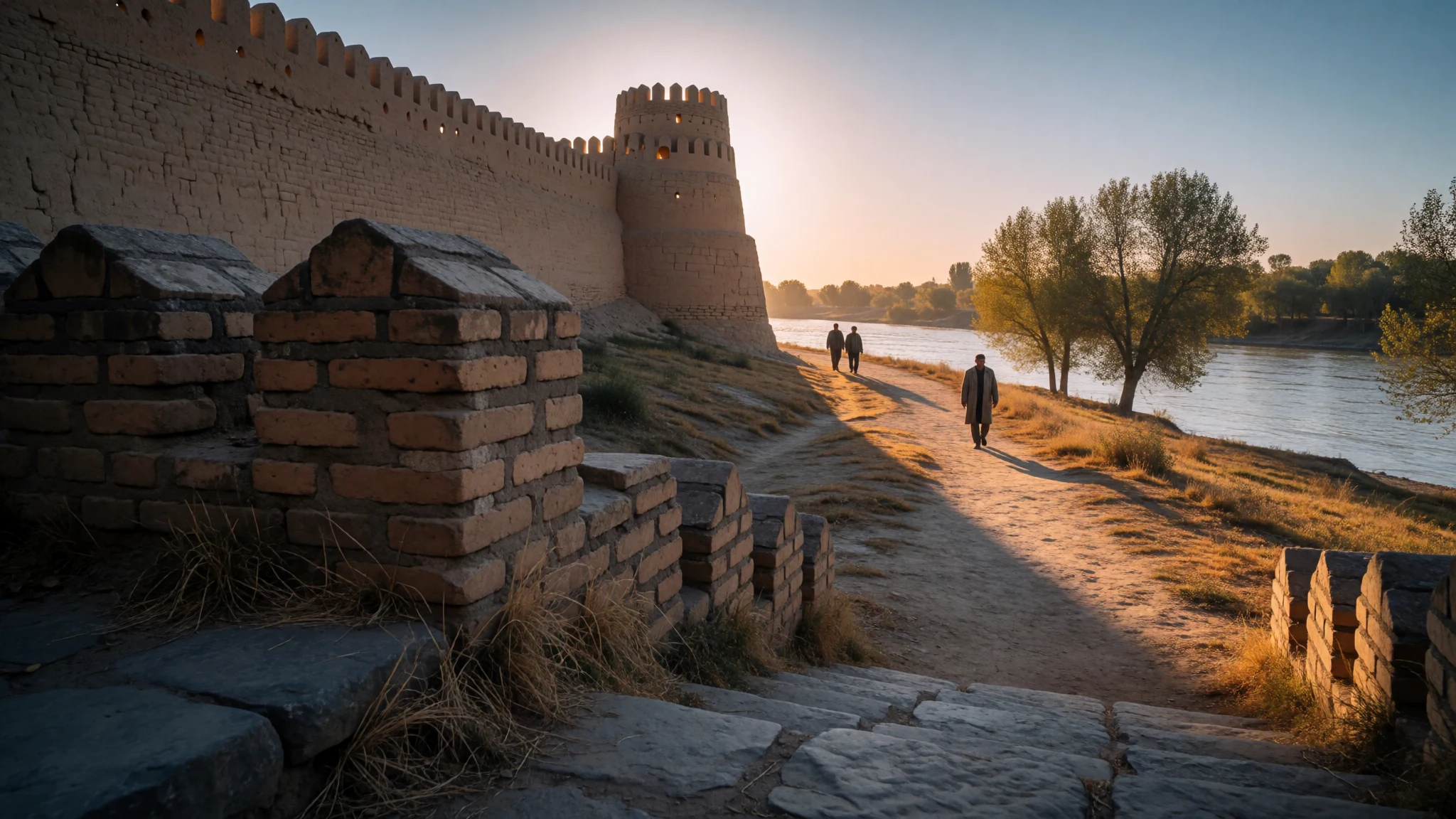
Khujand is a river city at the mouth of the Fergana Valley, where Silk Road history, Soviet grandeur and a busy bazaar sit side by side.
The place
Khujand is the capital of Sughd, Tajikistan's northern province, and the country's second city, with a population of about 198,700. It sits at roughly 300 metres above sea level on both banks of the Syr Darya, at the point where the river leaves the mountains and enters the wide, flat Fergana Valley. That position explains almost everything about it: water for orchards and cotton, a natural crossing, and a place where caravans paused before or after the mountain roads.
The city's name appears in older books as Khodjent, and for much of the twentieth century it was called Leninabad. Today it is Khujand again, and the old name survives mostly in the memories of older residents and on Soviet-era maps.
The centre feels spread out and green. Wide avenues, plane trees and fountains were laid out in the Soviet period, and the river embankment is a favourite place for evening walks. On the left bank the reconstructed fortress, the museum and the main theatre cluster together near a large square, while the north side of the river holds a newer mosque and a number of restaurants.
Borders matter here. Uzbekistan and Kyrgyzstan are both close, so the town has long had a mixed, trading character, and Tajik, Russian and Uzbek are all heard in the streets. It is a calmer, flatter and warmer introduction to Tajikistan than the mountain country further south, and visitors usually come either as a stop on a Fergana Valley circuit or as the northern end of a trip from Dushanbe. The dry continental climate means hot summers, cold snowy winters and little rain.
Its story
Khujand's history is counted in millennia. Tradition links it to Cyropolis, a Persian foundation attributed to Cyrus the Great during his last campaign against the Massagetae, though the remains of that city have never been found. The facts record a founding around 530 BCE. In 329 BC Alexander the Great built his farthest Greek outpost nearby, Alexandria Eschate, meaning the Furthest. It served as a bastion against nomadic tribes north of the river, and a Roman writer suggests Hellenistic culture lingered there for centuries.
As the northern Silk Road grew, Khujand became a staging point and a cultural centre, producing poets and scholars. In the early eighth century the Umayyad Caliphate took the city under Qutayba ibn Muslim, and Islamisation followed under the Abbasids. By the late ninth century local rule returned, and the city passed into the Samanid realm.
Later centuries brought the Mongols in the thirteenth century, and the picture of Timur Malik defending the town against them, fighting from boats on the river, remains one of its best-loved stories. The Khanate of Kokand held the city before the Russian Empire absorbed it in the nineteenth century, and then came the Soviet Union, under which it carried the name Leninabad. Each period left layers: a fortress rebuilt more than once, a mausoleum and mosque from older Islamic times, and monuments from the sixteenth and seventeenth centuries.
The result is a city with few intact ancient buildings but a very deep record. Much of what stands has been rebuilt, so the pleasure lies in reading the layers rather than expecting a preserved old town.
What to see
- Khujand Fortress and Historical Museum of Sughd — Central left bank, by the main square
The fortress is a reconstruction of the medieval citadel, and it houses the regional history museum. Exhibits trace the area from antiquity onward. Treat the walls as a modern rebuild on an old site, and go for the displays and the sense of where the old city stood.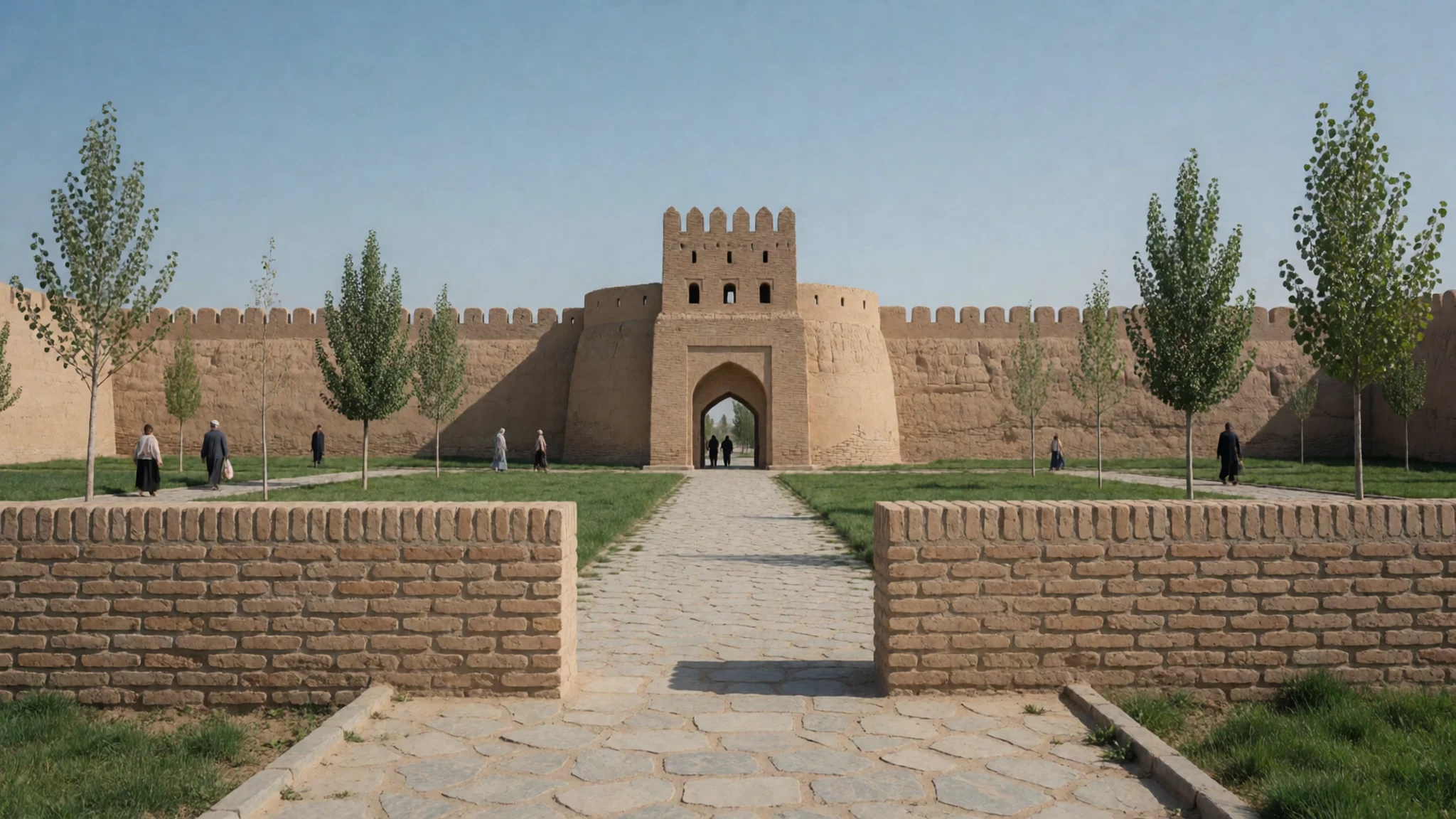
- Sheikh Muslihiddin Mausoleum and Jami mosque — Old centre
Together with the fortress, the mausoleum and the Friday mosque are the city's main surviving religious heritage. The complex is tied to the local saint after whom the ensemble is named, and its domes dominate views across the old quarter. Dress modestly and check which parts are open.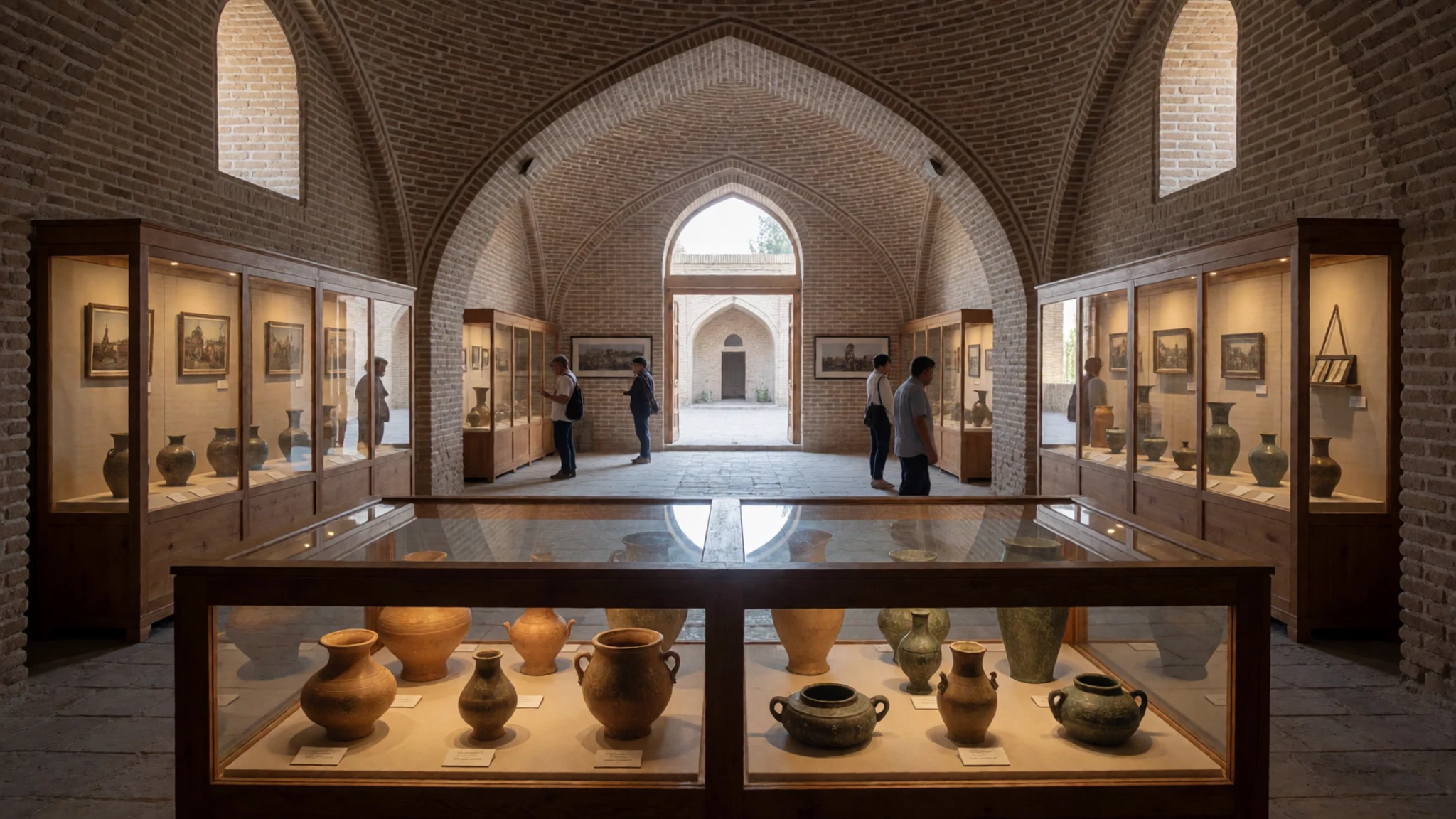
- Kamoli Khujandi Theatre — Main square
The theatre faces the fortress across the main square and is one of the clearest examples of the city's Soviet-era public architecture. It is worth seeing from outside in the evening, when the square fills with families, and check locally for performances.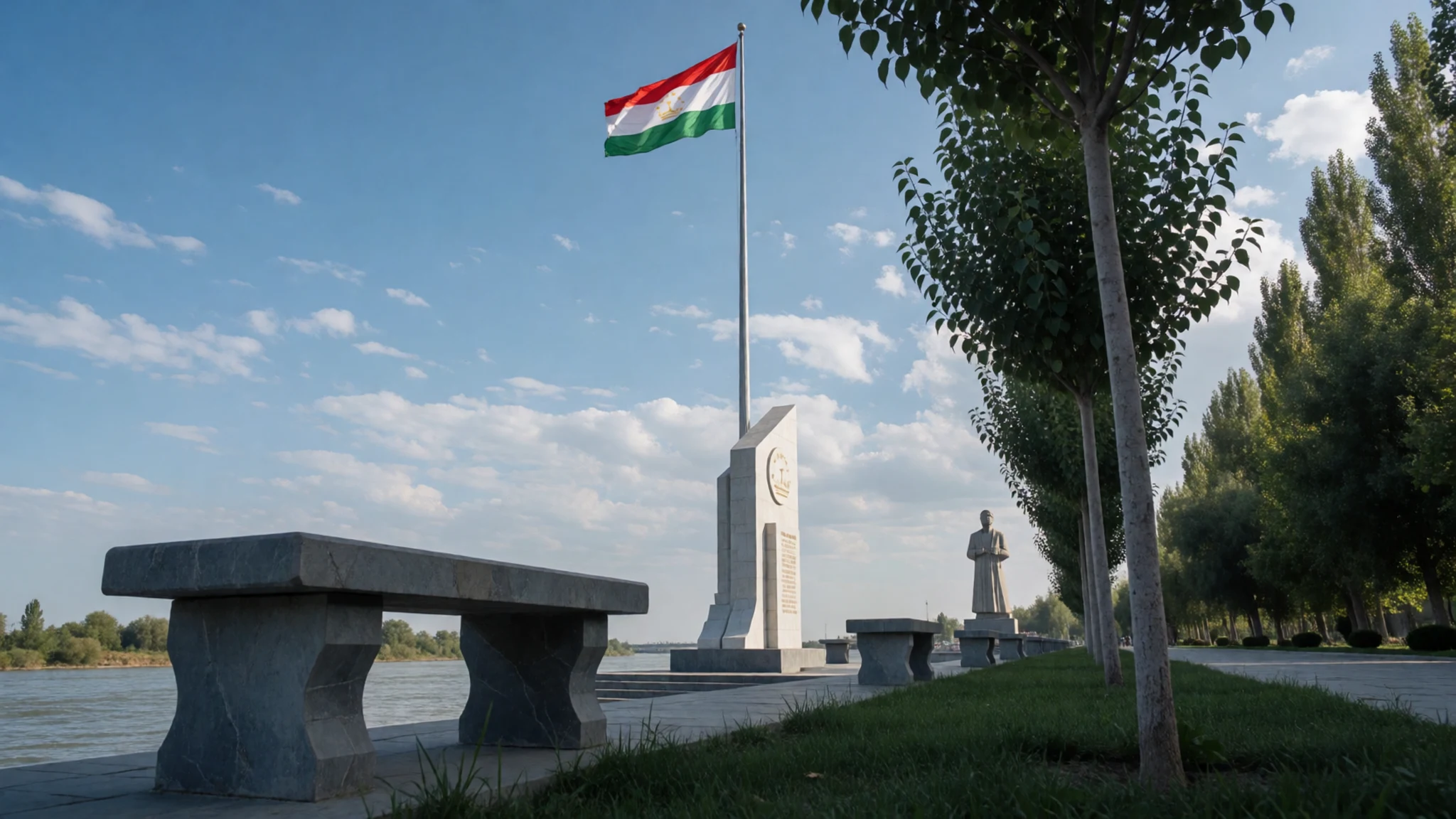
- Kamoli Khujandi Park and Museum — Near the fortress
This park commemorates the poet Kamol Khujandi. It holds a mausoleum-style building with earth from his grave, springs, carved wooden music stages and a reconstructed house. It is a shady, quiet place to rest in the heat and see how locals use the space.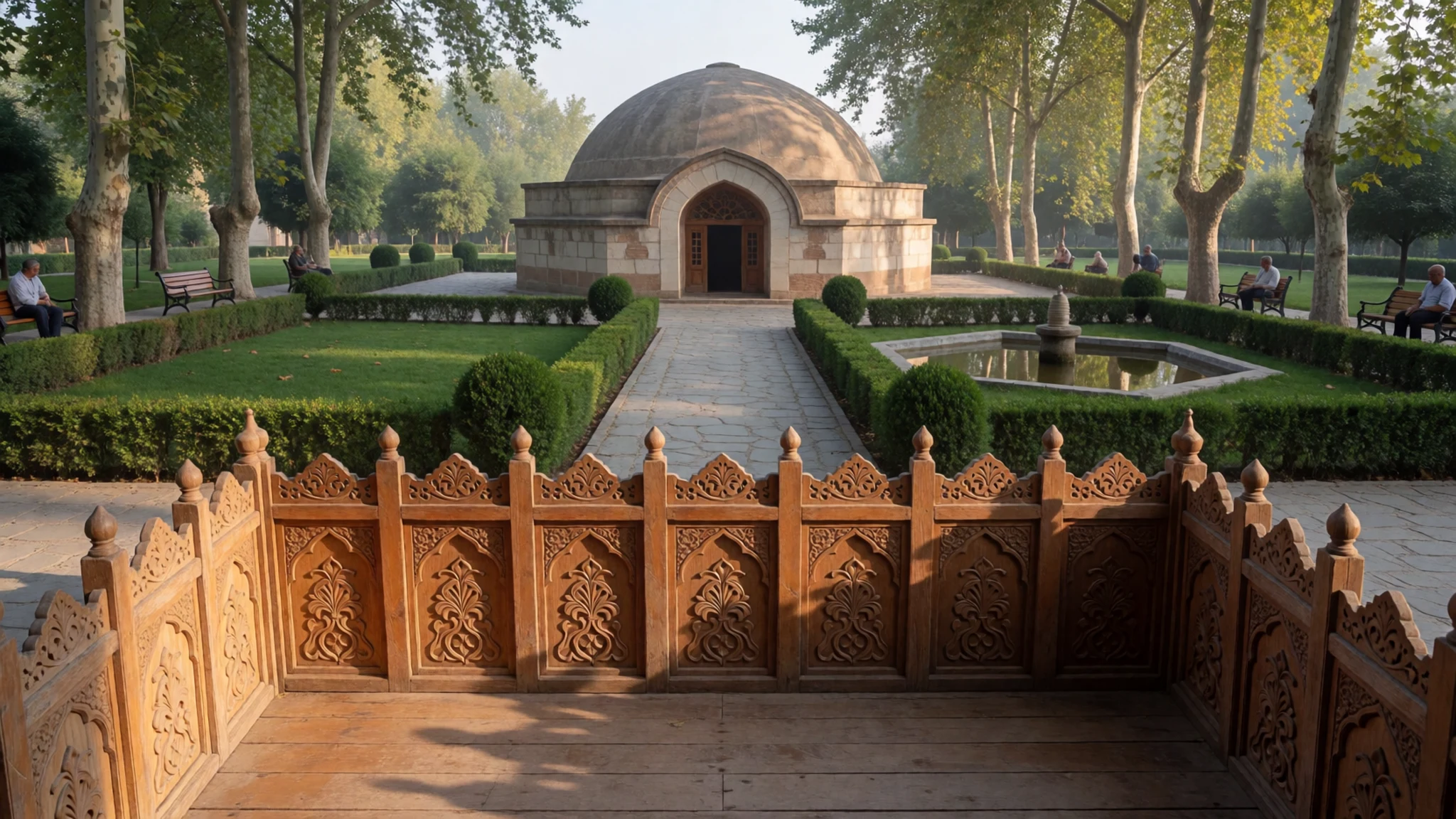
- Arbob Palace — East of the centre
Built in the 1950s as the headquarters of a Soviet collective farm, this government building was modelled on the Winter Palace in Saint Petersburg. It sits east of the centre and is an odd, grand sight. Because it is an official building, access may be limited; photograph from outside.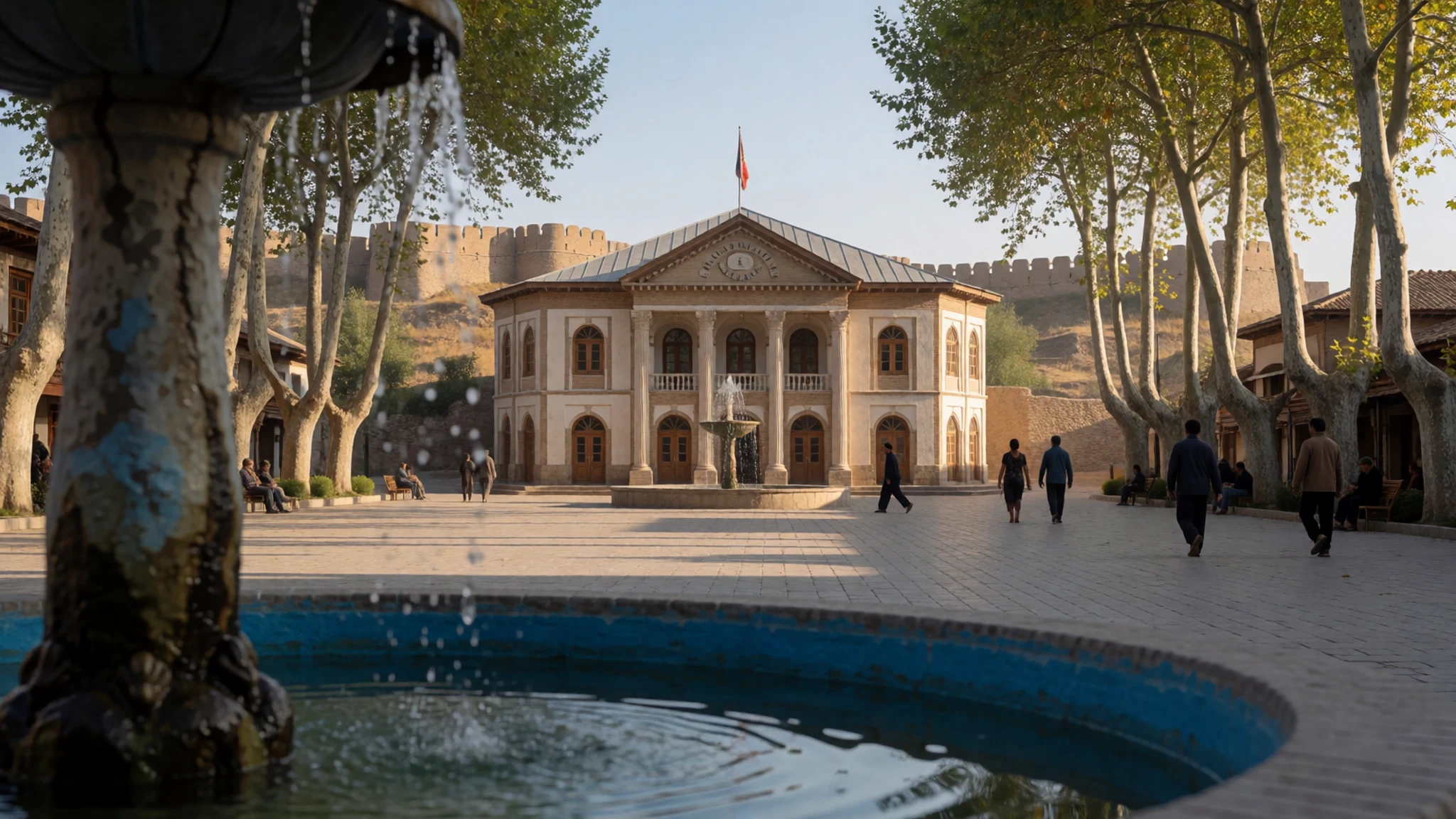
- Independence monument and river embankment — Riverbank
A stele beside the Syr Darya carries a very tall Tajik flagpole, and the poet Rudaki is honoured with a monument just to the east. The riverside walk is the easiest place to feel the geography that shaped the city, especially at sunset.
Culture
Khujand is a mainly Muslim, mainly Tajik city, and daily life mixes Central Asian hospitality, Persian-language poetry and the legacy of Soviet public life. Tajik is the first language of most residents, but Russian is widely understood, and you will hear Uzbek too because of the nearby border.
Poetry is a point of local pride. Rudaki, regarded as a founder of classical Persian literature, has a monument by the river, and the local poet Kamol Khujandi has a park and museum devoted to him. Public statues and gardens are used for family outings, weddings photographs and evening strolls.
Hospitality is central. Guests are often offered tea, bread and dried fruit, and refusing everything outright can seem cold; accepting a little and thanking the host is the easy path. Meals are communal, with bread treated respectfully and never put on the ground. Family ties are strong, and elders are greeted first.
Religion is part of the landscape without dominating it. The mosque on the north side of the river and the old mausoleum complex are active places of worship as well as monuments, and prayer times shape the rhythm of nearby streets, particularly on Fridays. Bazaars are social spaces where bargaining is expected and conversation matters as much as the purchase.
In mosques and at the mausoleum, dress modestly, take your shoes off where others do, and ask before photographing worshippers or women and children.
What to wear
Traditional dress in northern Tajikistan centres on silk and cotton from the Fergana Valley. Women wear long, loose dresses in bright patterned fabric, often made from the shimmering atlas and adras cloths, with trousers beneath and a headscarf or embroidered cap. Men have the doppi, a small square skullcap with embroidery, and for festivals a long striped quilted robe called a chapan. These are most often seen at weddings, Navruz in spring and national celebrations.
Everyday clothing is more modern. In Khujand, younger people wear jeans, shirts and trainers, and many women wear dresses or tunics in the traditional fabrics tailored in contemporary cuts. Older men often wear a dark jacket and a doppi, and a suit is normal for official occasions. Markets sell bolts of colourful cloth, and local tailors will make something quickly.
Visitors should dress for a dry continental climate. Summers are hot, so light cotton or linen in loose cuts works best, with a hat and sunglasses. Winters are cold and snowy, so bring a warm coat, hat and gloves. Modest dress is the safest choice: shoulders and knees covered for both men and women, and a light scarf for women entering religious sites. Shoes should be easy to slip off, and comfortable for paved streets and uneven ground at the fortress and park.
What to eat
- Plov (osh) — Restaurants on the north bank near the mosque; local lunch spots
Rice cooked with meat, carrots and onions in a large pot, plov is the dish for celebrations and for lunch. Look for it at a restaurant near the main mosque or at a plov centre, where it is served at midday until it runs out.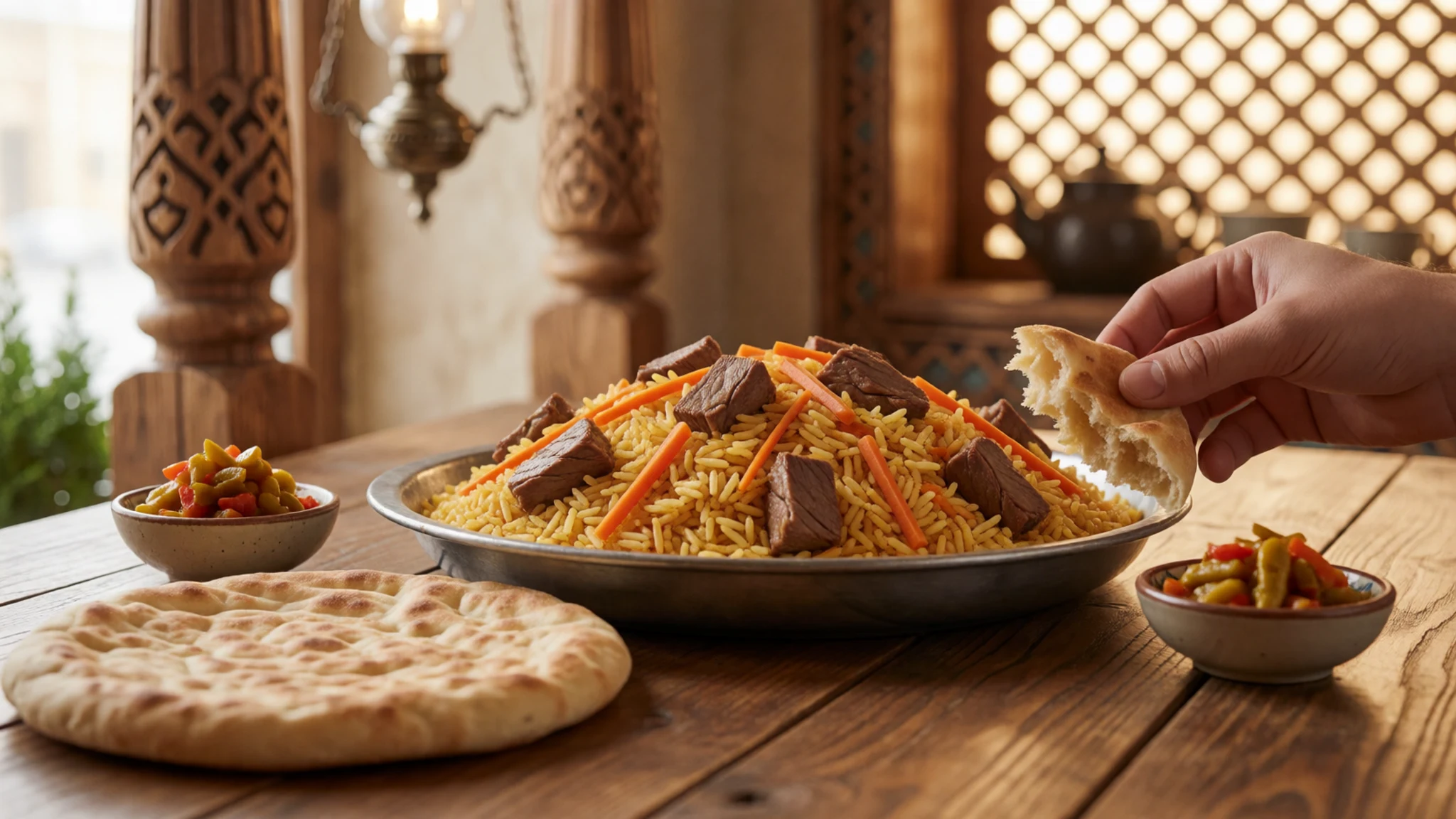
- Shish kebabs — Grill restaurants on the north side of the river
Skewers of grilled lamb or beef, served with raw onion, flatbread and sometimes a tomato salad. They are the simplest way to eat meat here, and several grill restaurants on the north side of the river specialise in them.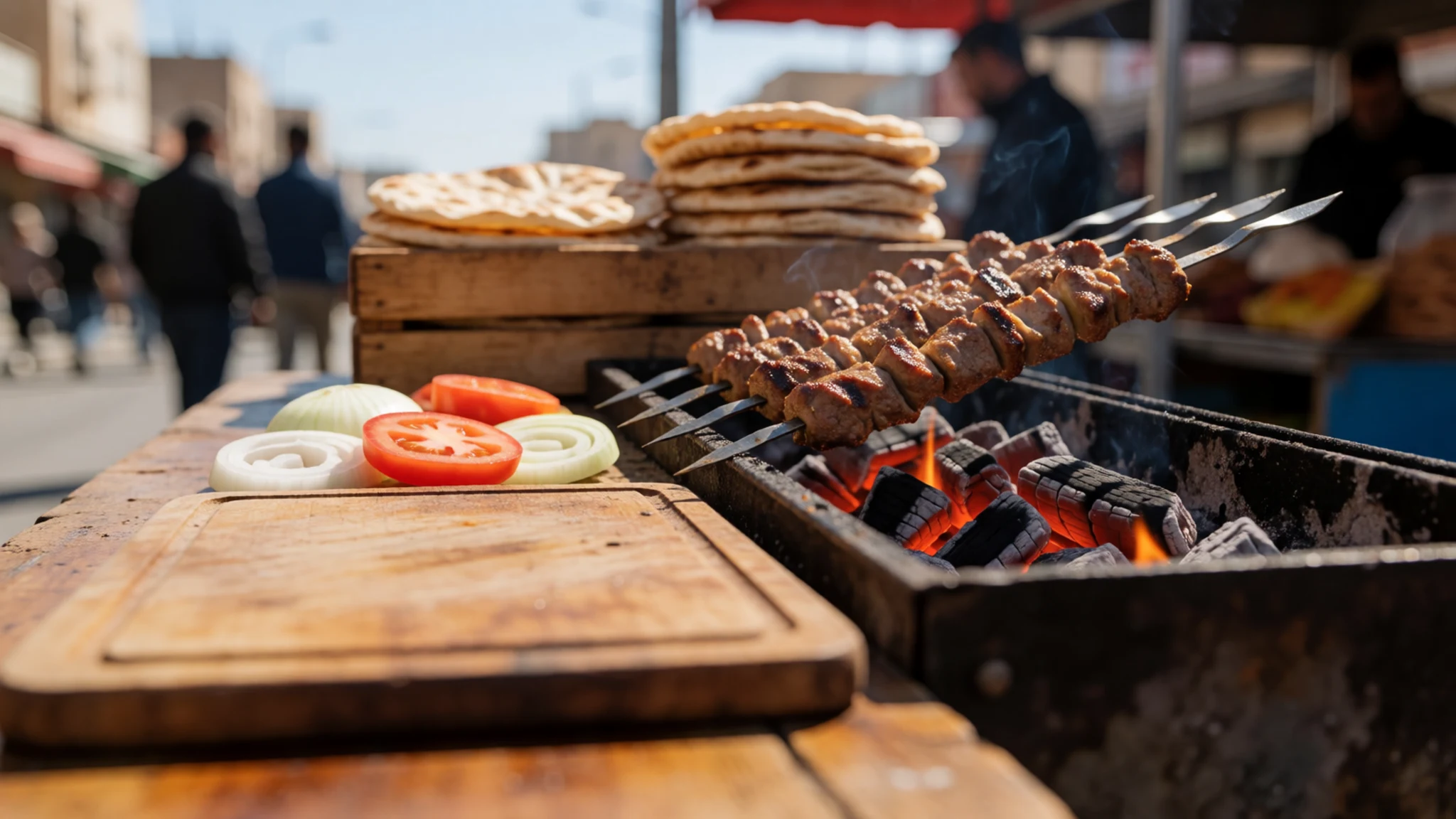
- Non (flatbread) — The bazaar and neighbourhood bakeries
Round, dense bread baked in a clay oven, often stamped with a pattern. It is eaten with every meal and sold warm in the bazaar. Break it by hand rather than cutting it, and never leave a piece on the ground. - Borscht and shchi — Cafeterias and canteen-style eateries
Russian-style soups remain common in Khujand, a reminder of the Soviet period. Borscht is beetroot-based, while shchi is a cabbage soup. They are cheap, filling, and served in large canteens popular with local workers and students. - River fish — Restaurants along the central river area
Fish dishes such as grilled or fried fish are found at restaurants with indoor and outdoor seating near the river. They are a change from the mostly meat-centred menus, and often arrive with salad and bread. - Turkish grills — Turkish restaurants on the north side of the river
Turkish-style restaurants on the north side of the river serve kebabs, grilled meats, salads and flatbreads. They are a good option when you want something lighter than plov and a calm, comfortable setting for dinner after a day of sightseeing.
Plan it
Best time. April–May and September–October. Summers are hot and dry, winters are cold and snowy, and rain mostly falls in autumn and winter, so spring and early autumn give the most comfortable walking.
How long. 2
Getting there. Somon Air runs short flights from Dushanbe, about 40 minutes, which are the safest option in winter when the mountain pass is dangerous with snow and avalanches. Shared taxis and marshrutkas also run from Dushanbe, Panjakent and Istaravshan to the Avtovokzal in Khujand. Bring your passport when buying flight tickets.
Budget. low
Tips
- Check the official city site at khujand.tj for events, and confirm opening details locally
- Carry some cash for shared taxis, markets and small eateries
- Take the flight rather than the road from Dushanbe in winter
- Start sightseeing early in summer, when afternoons are hot and dry
- Agree the fare before getting into a shared taxi, since asking to be taken to a specific address may cost slightly more
Etiquette
- Dress modestly, and remove shoes when entering mosques or homes
- Ask before photographing people, especially women and children
- Accept tea or bread when offered, and greet elders first
Nearby
Sources
- Wikidata Q373808 (CC0)
- Wikipedia: Khujand (rev 1376414141) (CC BY-SA 4.0)
- Wikivoyage: Khujand (rev 5413087) (CC BY-SA 4.0)
- Photo: View to Khujand, Neu holland (CC BY-SA 4.0)
- Photo: Қалъаи Хуҷанд, VASHGIRD (CC BY 4.0)
- Photo: K. Khujandi State Musical Comedy Theater, DilshodKh (CC BY-SA 4.0)
- Photo: Фонтан в г. Худжанде, Шухрат Саъдиев (CC BY-SA 4.0)
- Photo: Дворец Арбоб, Шухрат Саъдиев (CC BY-SA 4.0)
- Photo: West Asia non political with water system, DEMIS Mapserver (CC BY 3.0)
- Photo: Hindu-Kush, DEMIS Mapserver (CC BY 3.0)
- Battle of the boats - Timur Malik's defence of Khujand, 1220 (Public domain)


