Gonarezhou
Gonarezhou, Zimbabwe
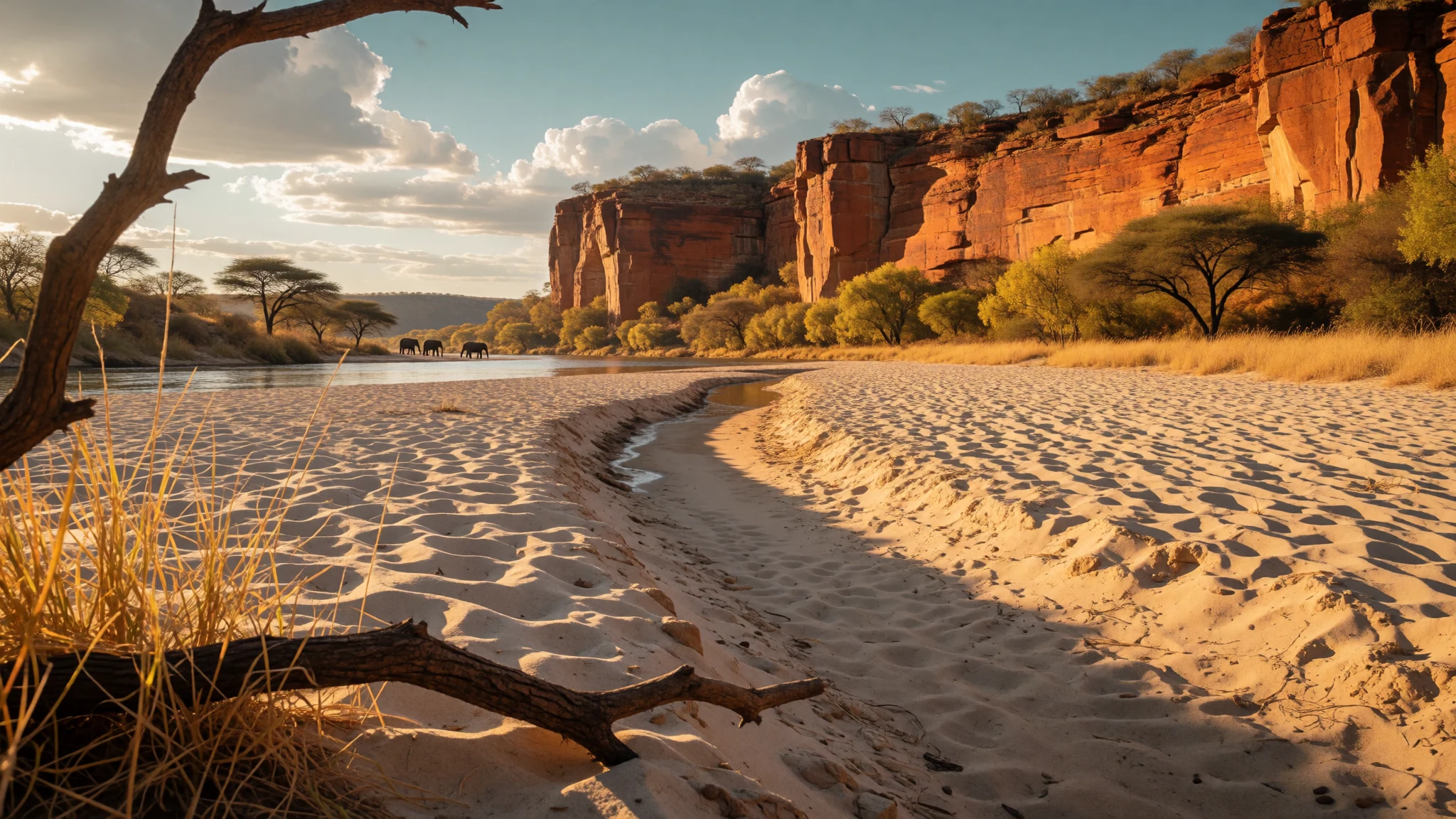
Gonarezhou is Zimbabwe's remote Place of Elephants, where red cliffs, sandy rivers and few visitors reward those who arrive self-sufficient.
The place
Gonarezhou lies in the far south-east of Zimbabwe, in a corner of Masvingo Province pressed against the Mozambique border. It sits well away from the usual tourist circuit, and that distance is much of its character: roads are few, camps are far apart, and long stretches of country see almost no one. The park covers 5,053 square kilometres, which makes it the second-largest in Zimbabwe after Hwange. The name comes from Shona and is usually translated as the Place of Elephants, and herds are indeed what the park is known for. Buffalo, lions, leopards, African wild dogs, hippos and crocodiles live here too, spread thinly over a very large area, so sightings come through patience rather than a quick loop.
The land is shaped by rivers. The Runde, Save and Mwenezi cut through dry woodland, leaving sandy beds, deep pools and seasonal pans where animals and birds gather. In the north-east the vegetation is mopane and wider Zambezian woodland, while the south-west shifts towards bushveld. Red sandstone cliffs and wooded hills break up the flat horizon.
Gonarezhou is also one piece of the Great Limpopo Transfrontier Park, a cross-border arrangement linking it with Kruger in South Africa and Limpopo National Park in Mozambique, so wildlife can move between the three. For a human visitor the reality is simpler: hot days, limited services, and a park that expects people to bring their own food, water and spare tyres.
Its story
Gonarezhou was first set aside as a game reserve in 1936 and became a national park in 1975. The decades that followed were unsettled. The Rhodesian War closed it to the public, and the civil war across the border in Mozambique kept it shut for much of the period afterwards. Visitors were only allowed back in 1994.
Reopening did not solve everything. From 1994 until 2007 the park was run entirely by Zimbabwe's national parks authority, and the country's economic troubles meant there was little money for roads, buildings or anti-poaching work. Infrastructure aged and protection thinned.
A turning point came in 2007, when the parks authority agreed a partnership with the Frankfurt Zoological Society. The society supplied funding and technical help, concentrating on rebuilding facilities and guarding the park's wildlife and habitats. That arrangement ran until 2017.
In March 2017 day-to-day management passed to the Gonarezhou Conservation Trust, a co-management body shared between the parks authority and the Frankfurt Zoological Society. Its board is made up of equal numbers from each side. A central idea behind the trust is that money earned from tourism stays in the park and is reinvested there, rather than disappearing into a wider budget.
The result is a place with a layered recent past: a wartime closure, a lean period, and a gradual rebuilding that is still under way. Much of what travellers find today, from maintained tracks to ranger patrols, comes from that last chapter.
What to see
- Chilojo Cliffs — South bank of the Runde River
The park's best-known landmark is a wall of red sandstone rising about 180 metres above the south bank of the Runde River and running for roughly 20 kilometres. Early morning and late afternoon light turns the rock deep orange. Viewpoints and picnic areas nearby make good stops, though fires are not allowed at the sites.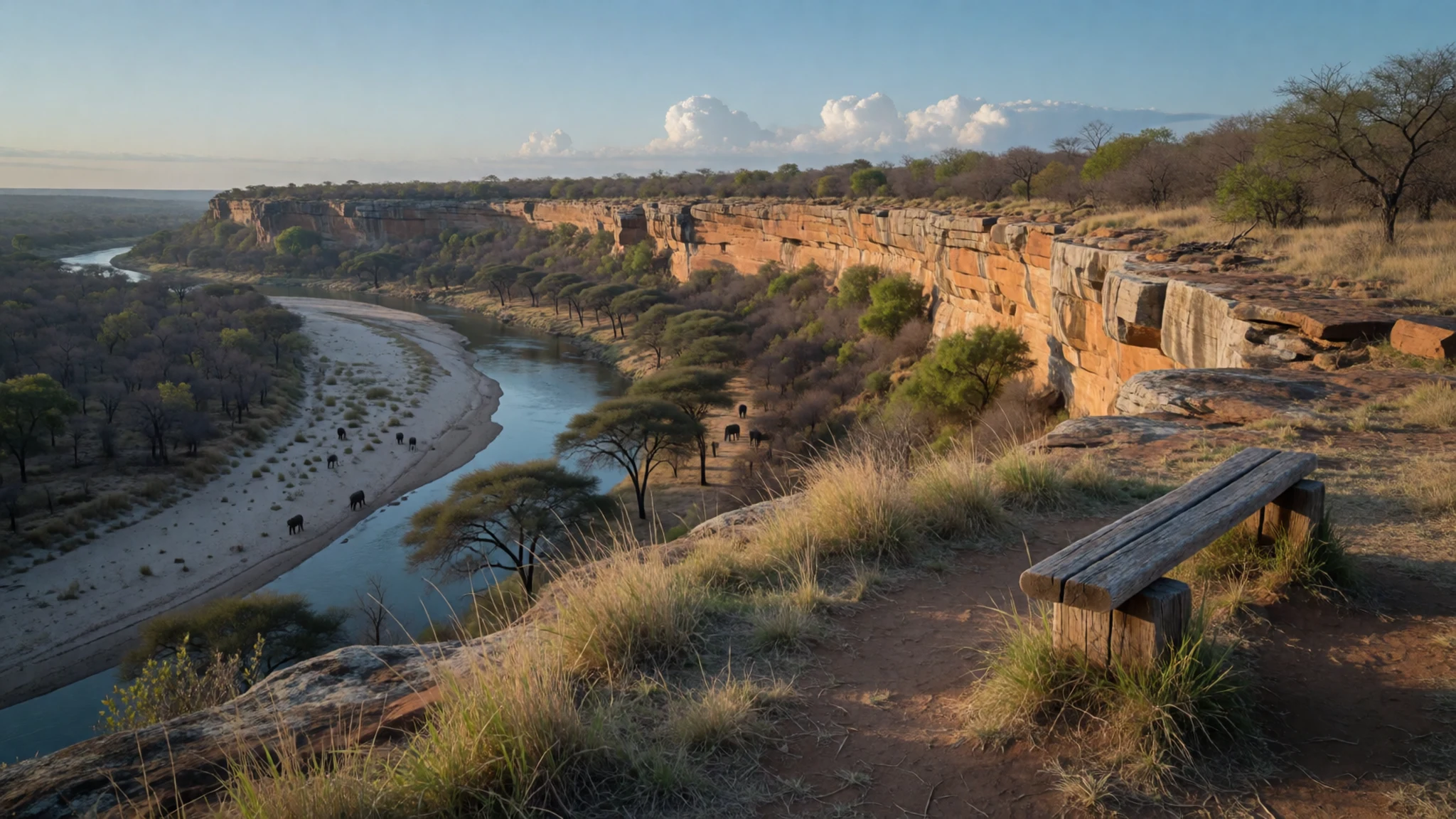
- Runde and Mwenezi river valleys — Mwenezi River valley
Self-drive or guided game drives follow these two valleys, where elephants come down to drink and buffalo graze on the floodplains. Riverside spots such as Buffalo Bend suit a long, quiet stop with binoculars. Animals are spread across a huge area, so several days here pay off better than a single pass.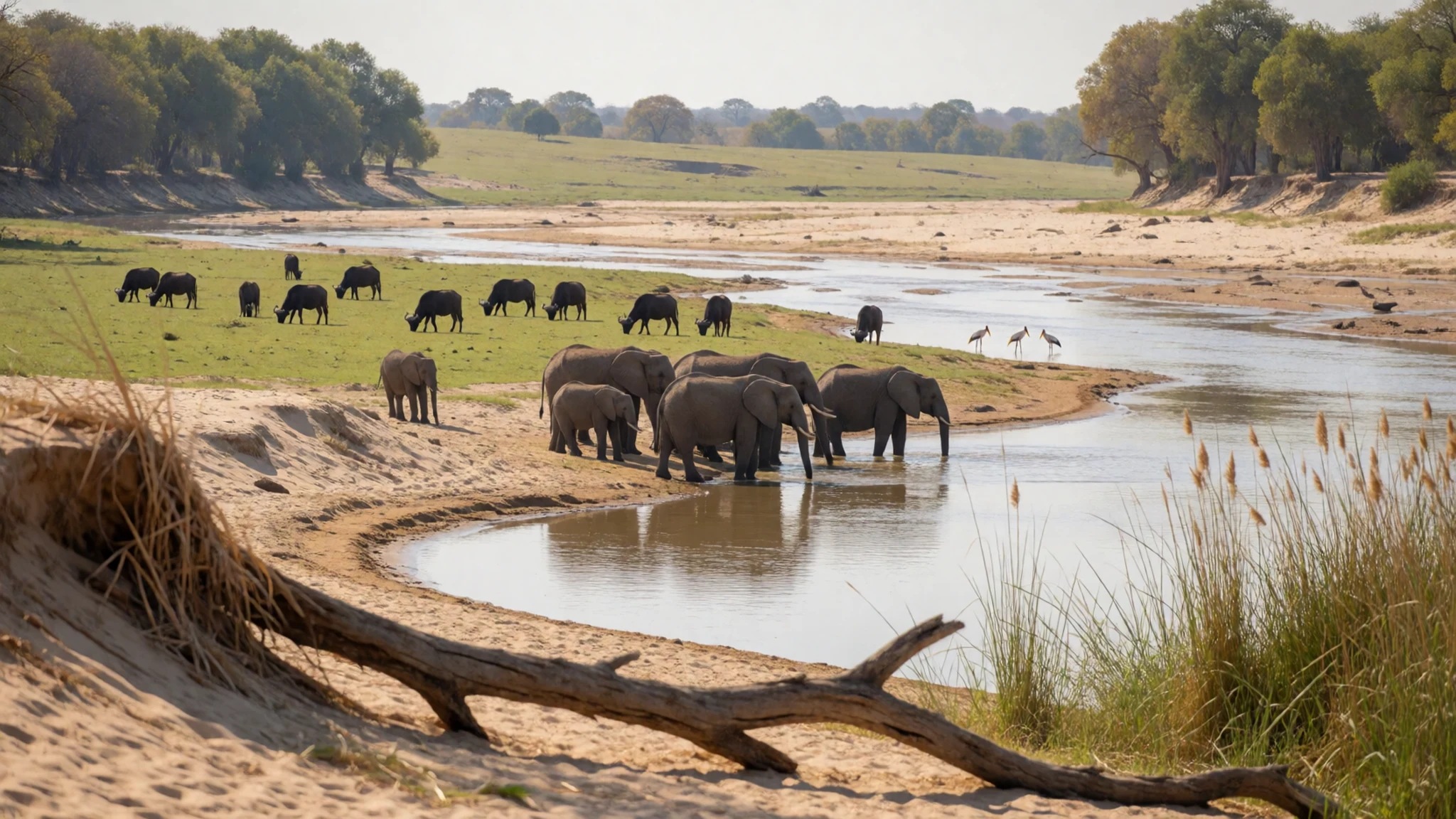
- Makokwani Pools — Central Gonarezhou
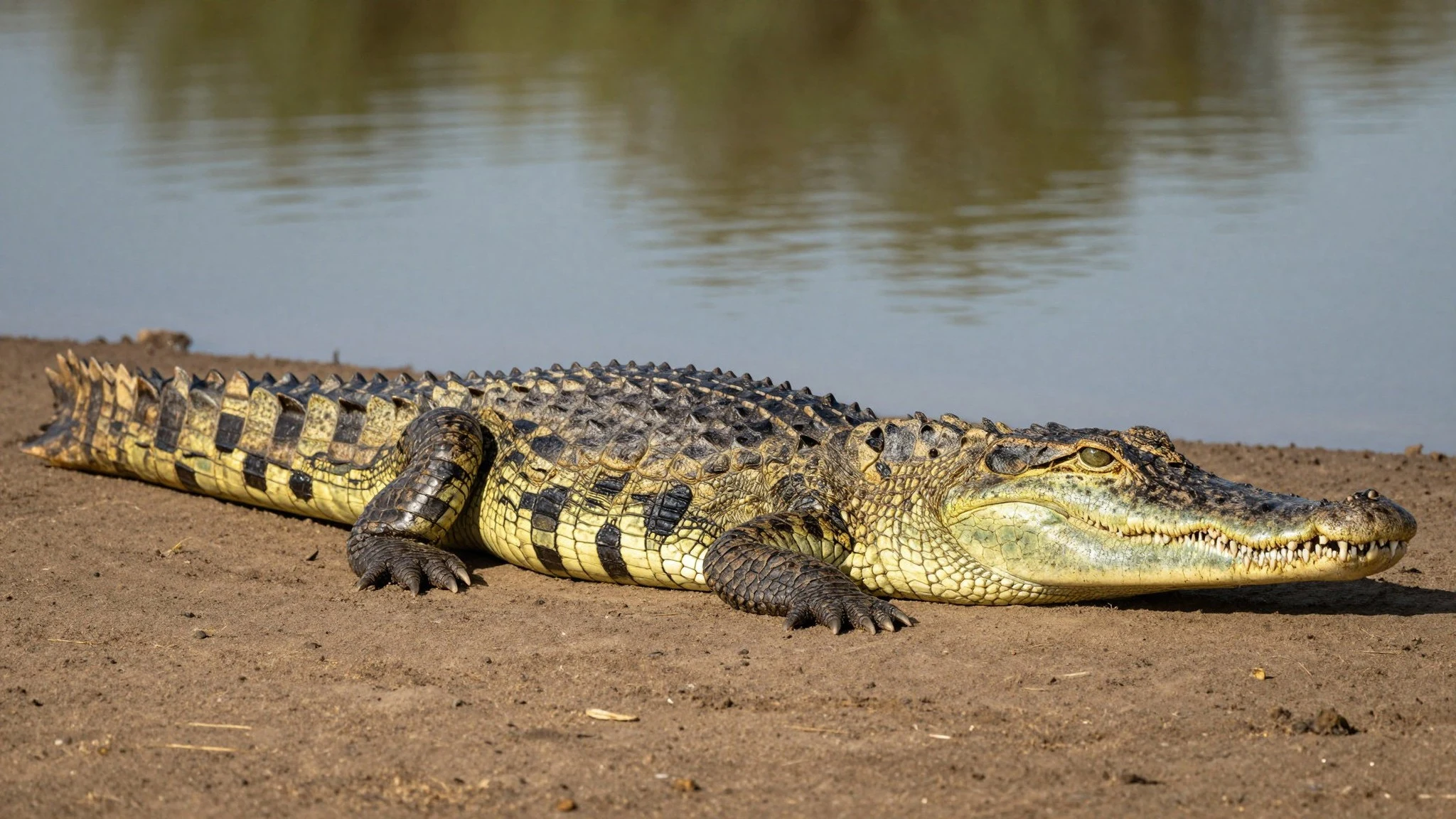
Permanent water draws wildlife in the dry months, and the pools hold Nile crocodiles that lie out on the banks in the sun. It is a spot for watching rather than walking: stay in the vehicle or at a designated viewpoint, and give the water's edge a wide berth.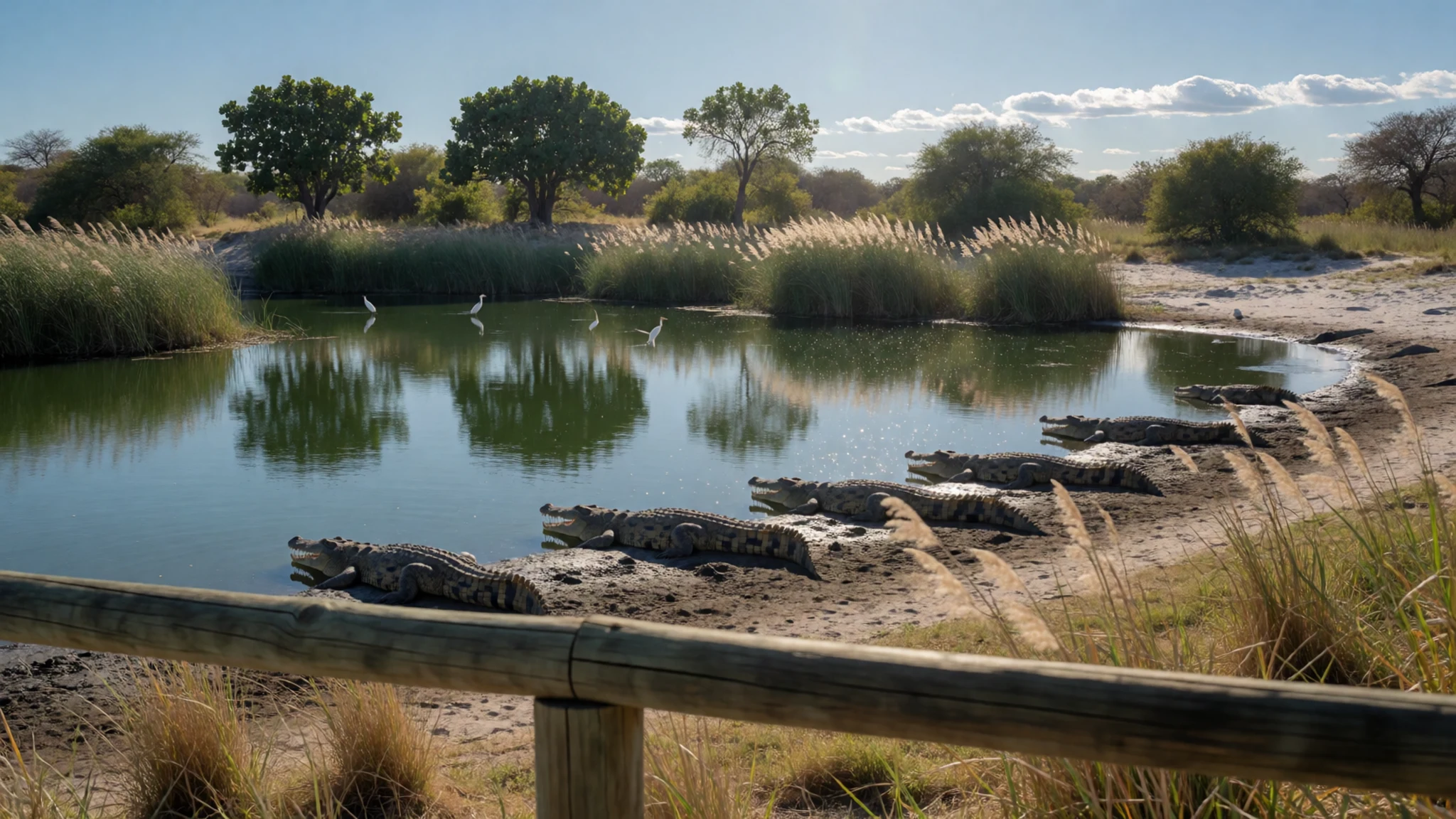
- Samalema Gorge — Mwenezi River
Here the Mwenezi River squeezes through hard igneous rock and splits into braided channels, a very different scene from the open sandstone country elsewhere in the park. The rock-lined water is photogenic, especially when the river runs low. Check current track conditions with the park before heading out.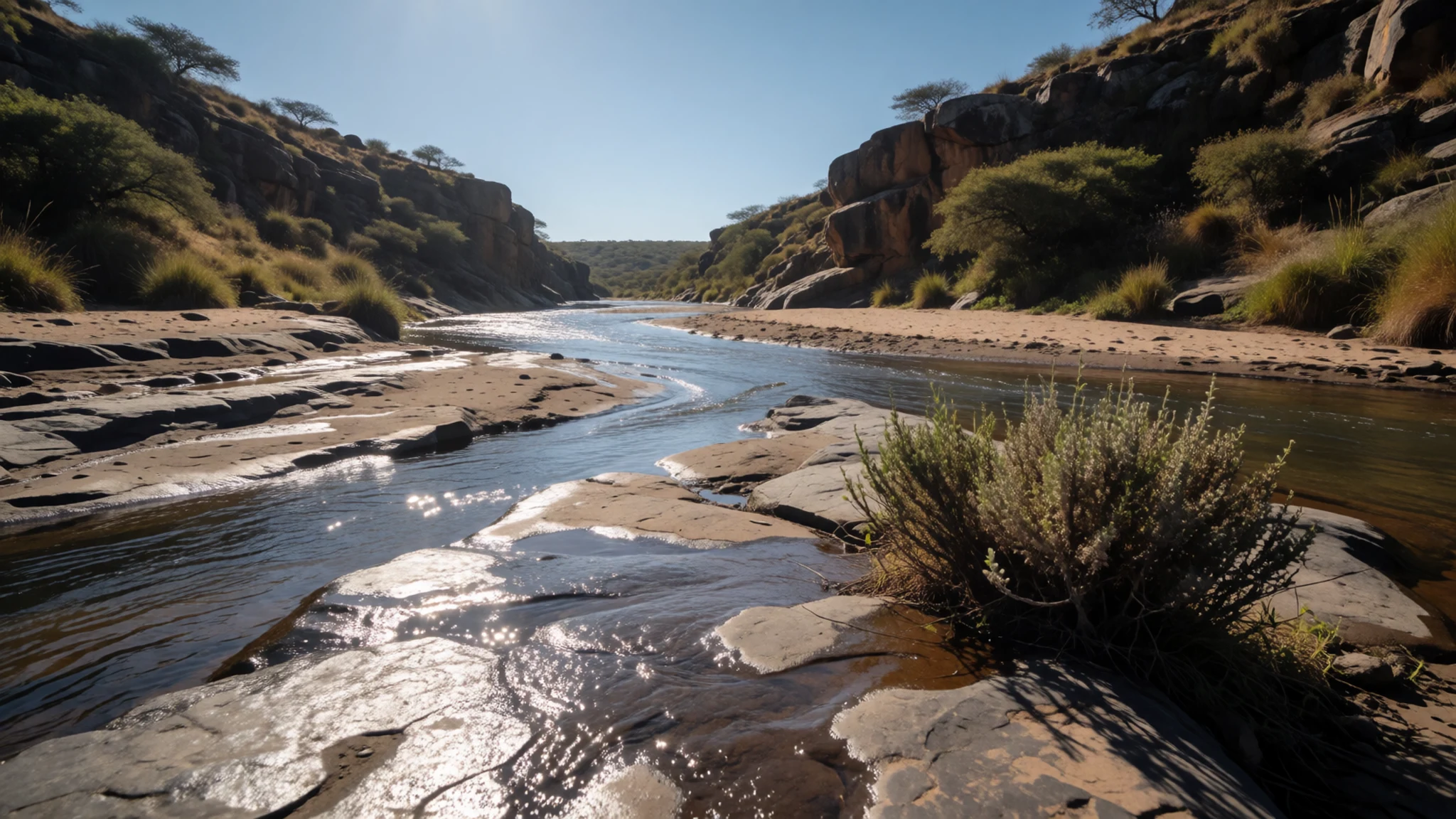
- Tembwahata and Machanu pans — Junction of the Save and Runde rivers
These pans form near the meeting of the Save and Runde rivers and attract waterbirds, hippos and grazing herds. Hundreds of bird species have been recorded across the park, and the pans, riverine woodland and mopane country are good places to look. Mornings are usually the most productive.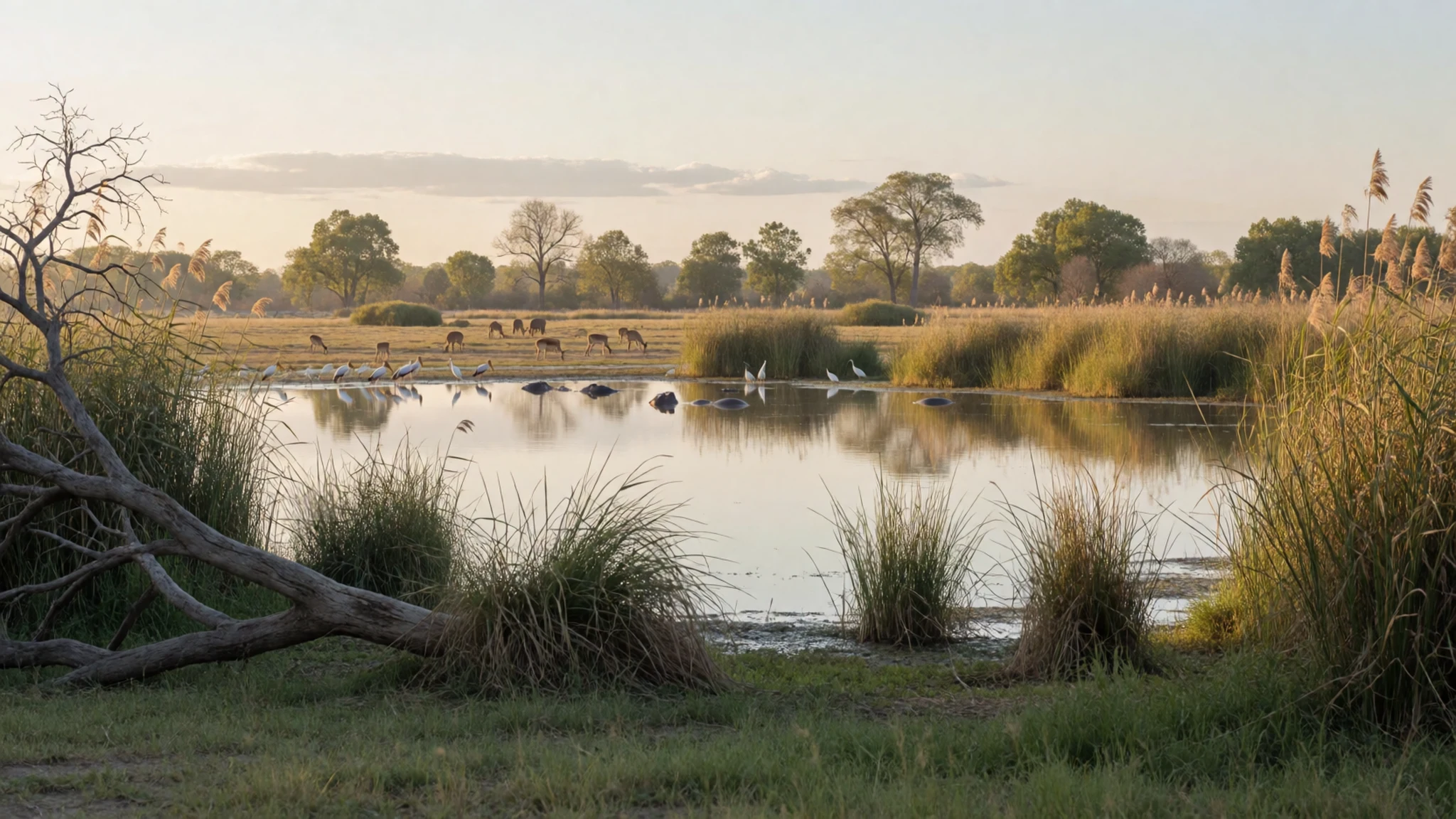
Culture
The park's name is Shona, and its meaning, the Place of Elephants, is a fair summary of how local people have long seen the area. Shona is the main language of this part of Zimbabwe, and a greeting in it is usually received warmly at gates, in Chiredzi and in villages on the approach roads. Communities live around the park boundary, and the relationship between people and wildlife is not abstract: elephants and other animals can damage crops, and conservation work here often has to answer to that reality.
The park's recent history also shapes how it is run. The co-management trust keeps tourism income within Gonarezhou, so fees and guiding fees go towards the park itself. Registered guides and operators are the people who know the tracks, the river crossings and the animal behaviour, and hiring one is both a safety measure and a way of putting money into the local economy.
Life at camp is practical and unhurried. Evenings revolve around a braai, a fire for cooking meat, and the sound of hippos or distant elephants. Mobile signal is patchy, shops are absent, and plans are loosely held, because rivers and tracks change with the season.
Visitors should stay in the vehicle around elephants, never walk to a river alone for water, and ask permission before photographing people in the villages along the access roads.
What to wear
In the Gonarezhou region, traditional Shona dress is built around wrapped cloth. Women have long worn printed cotton wraps tied at the waist, often with a matching headscarf, and beadwork and woven goods remain part of ceremonial dress. The cloth is bright and patterned, chosen for weddings, church gatherings and family occasions, while plainer wraps serve for farm work. Details differ by community, and rural dress today is a blend rather than a strict costume.
Day to day, most people in Chiredzi and the villages near the park wear what is common across southern Africa: jeans or trousers, T-shirts, shirts, school uniforms, football shirts and sturdy shoes. Church dress tends to be smart and modest, and women often still wear a wrap or skirt over trousers for chores. Park rangers and guides wear khaki or green uniforms.
For a visitor, the climate and terrain decide. Daytime temperatures can pass 35°C in the hot season, so light, loose cotton or quick-drying fabric with long sleeves protects against sun and insects. Muted colours such as khaki, olive and brown are standard on game drives, and a wide-brimmed hat, sunglasses and a scarf help against dust. Mornings in the open vehicle can be cool, so a fleece is useful. Closed shoes with grip are best on sandy tracks and at river crossings. In villages, cover shoulders and knees as a courtesy.
What to eat
- Sadza with relish — Eateries and markets in Chiredzi
Sadza is a thick maize-meal porridge, the staple of Zimbabwe, eaten by hand with a relish of greens, beans, meat or stew. It is best found in small eateries and market stalls in Chiredzi, the supply town before the park, rather than inside it.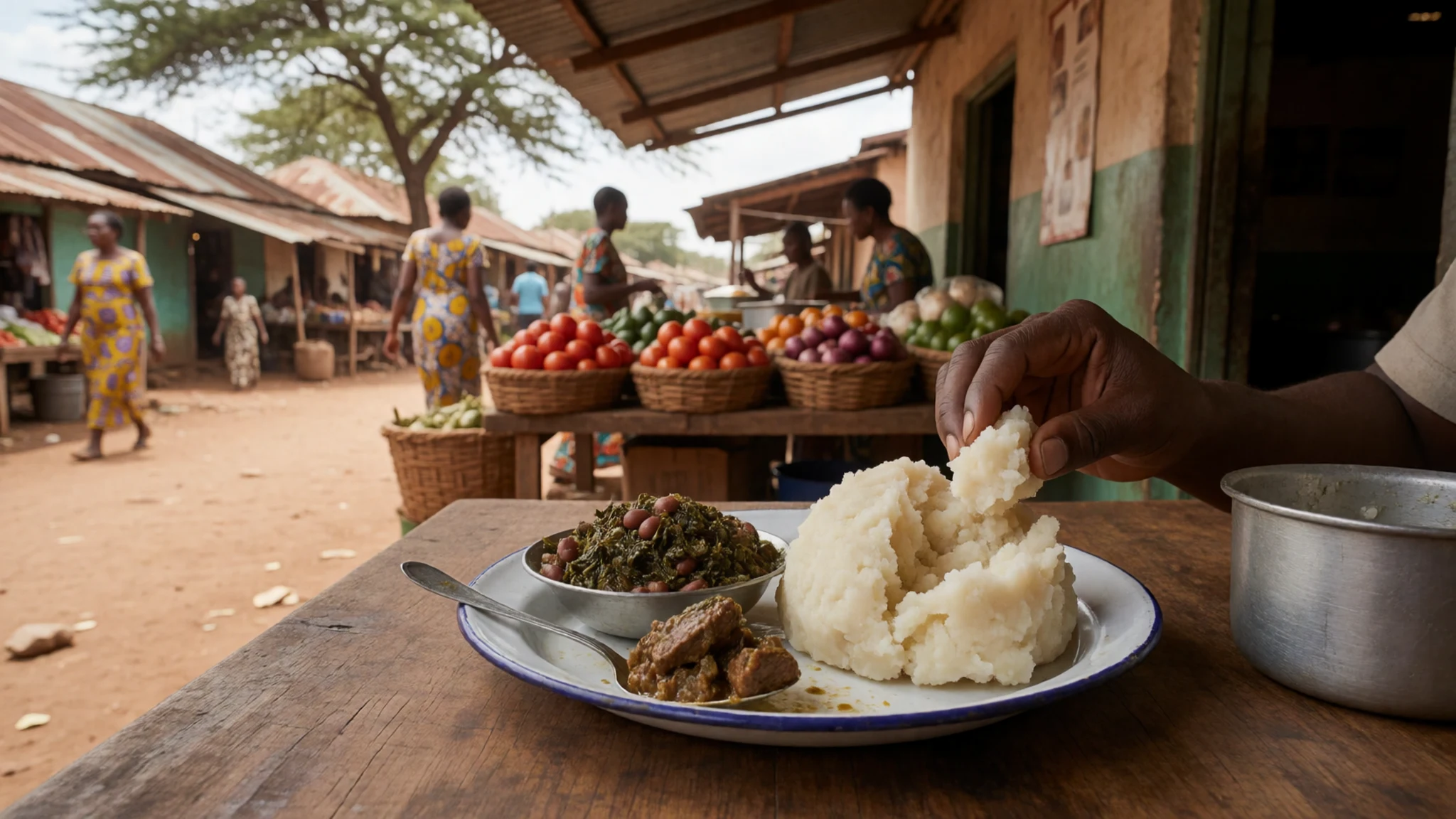
- Braai — Braai areas at self-catering camps
Meat grilled over wood coals is the standard camp meal. Self-catering camps usually provide a braai area, though visitors must bring their own meat, vegetables and firewood where needed. Cooking for oneself under the stars is the usual evening here, and details vary between camps.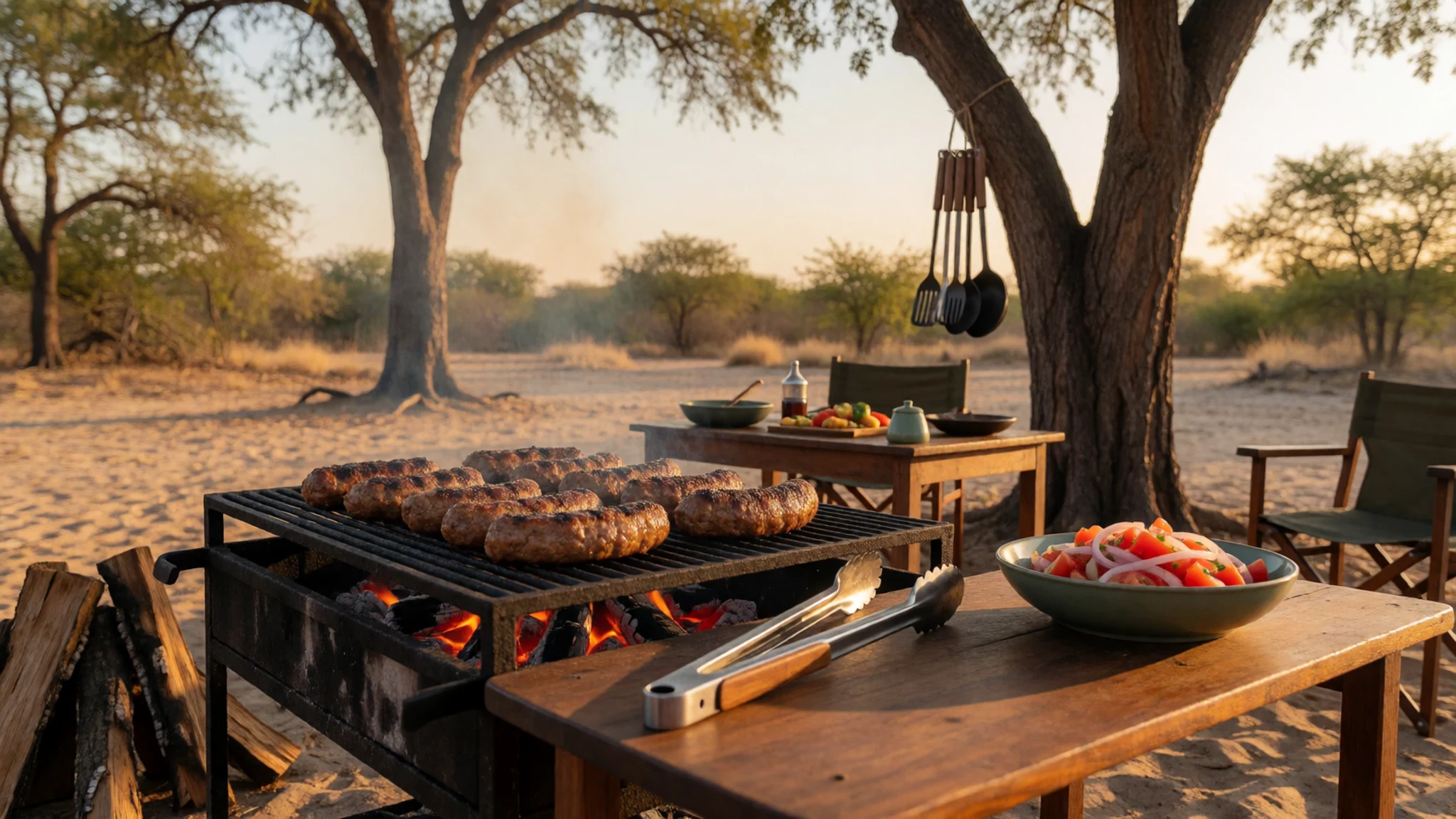
- Madora (mopane worms) — Chiredzi town markets
Dried or fried mopane caterpillars are a protein-rich seasonal snack across southern Africa and are linked to the mopane woodland in this region. They are salty and chewy, usually sold in bags or served with sadza. Look for them at local markets. - Roasted maize — Roadside sellers and Chiredzi market
Cobs of maize roasted over coals are a common roadside snack in Zimbabwe, sold by vendors along main routes and in town. They make a simple, cheap packed snack before the long drive into the park, where shops are absent. - Bush meals and packed lunches — Arranged in advance through registered operators
Registered guides and safari operators can arrange packed lunches, bush breakfasts and catered camp dining, but these must be booked ahead and are not guaranteed to independent visitors. Day visitors should carry their own meal and emergency food, and take all rubbish out.
Plan it
Best time. The cooler dry months, roughly June to October, suit wildlife watching, when animals gather at rivers and pools and the bush is thinner. The hot season brings daytime temperatures that can pass 35°C, and tracks can become difficult after heavy rain, so check conditions with the park first.
How long. 4–5
Getting there. Fly to Buffalo Range Airport near Chiredzi, the main supply town and gateway to the northern park, then drive to Chipinda Pools Gate via the Ngundu–Tanganda road. Other gates include Save–Runde Basecamp, which needs a four-wheel-drive vehicle to cross the sandy Save River, and Boli, Sango and Malipati in the south. Charter flights can use registered airstrips with prior authorisation.
Budget. mid
Tips
- Book camps and guides well ahead through the official site, zimparks.org, since facilities are limited
- Bring all food, drinking water and fuel; there are no shops or public restaurants inside the park
- Carry spare tyres, a compressor, a first-aid kit and recovery gear, as distances between camps are long
- Treat camp water as untreated unless told otherwise, and carry bottled or properly treated water
- Start game drives at dawn, when animals are active and the light on the cliffs is best
Etiquette
- Never walk to a river alone to collect water; crocodiles, hippos and elephants use the banks
- Keep fires to permitted camp areas and take all rubbish and food scraps away
- Keep a respectful distance and stay in the vehicle around elephants
Nearby
Sources
- Wikidata Q595121 (CC0)
- Wikipedia: Gonarezhou National Park (rev 1371832392) (CC BY-SA 4.0)
- Wikivoyage: Gonarezhou National Park (rev 5341495) (CC BY-SA 4.0)
- Chilojo Cliffs (Landscape), Ralf Ellerich (CC BY 3.0)
- Buffalo Bend, Babakathy (Public domain)
- Swimuwini Rest Camp, Babakathy (CC BY 3.0)
- Nile crocodile, Makokwani Pools, Babakathy (CC0 1.0)
- Nyala, Babakathy (CC0 1.0)
- Makokwani Pools, Babakathy (CC0 1.0)
- Rossi Pool and hide, Babakathy (CC0 1.0)
- Samalena Gorge, Babakathy (CC0 1.0)


Wildlife
- African bush elephant (animal)
The African bush elephant is the giant of the land, with a long trunk that works like a hand, big ears that help it keep cool, and curved tusks. In Gonarezhou you can look for elephants coming down to drink in the two river valleys that guided or self-drive game drives follow. The notes do not give a season or hour. Watch from your vehicle, keep a respectful distance, stay quiet, and travel with a guide if you can. Never feed them.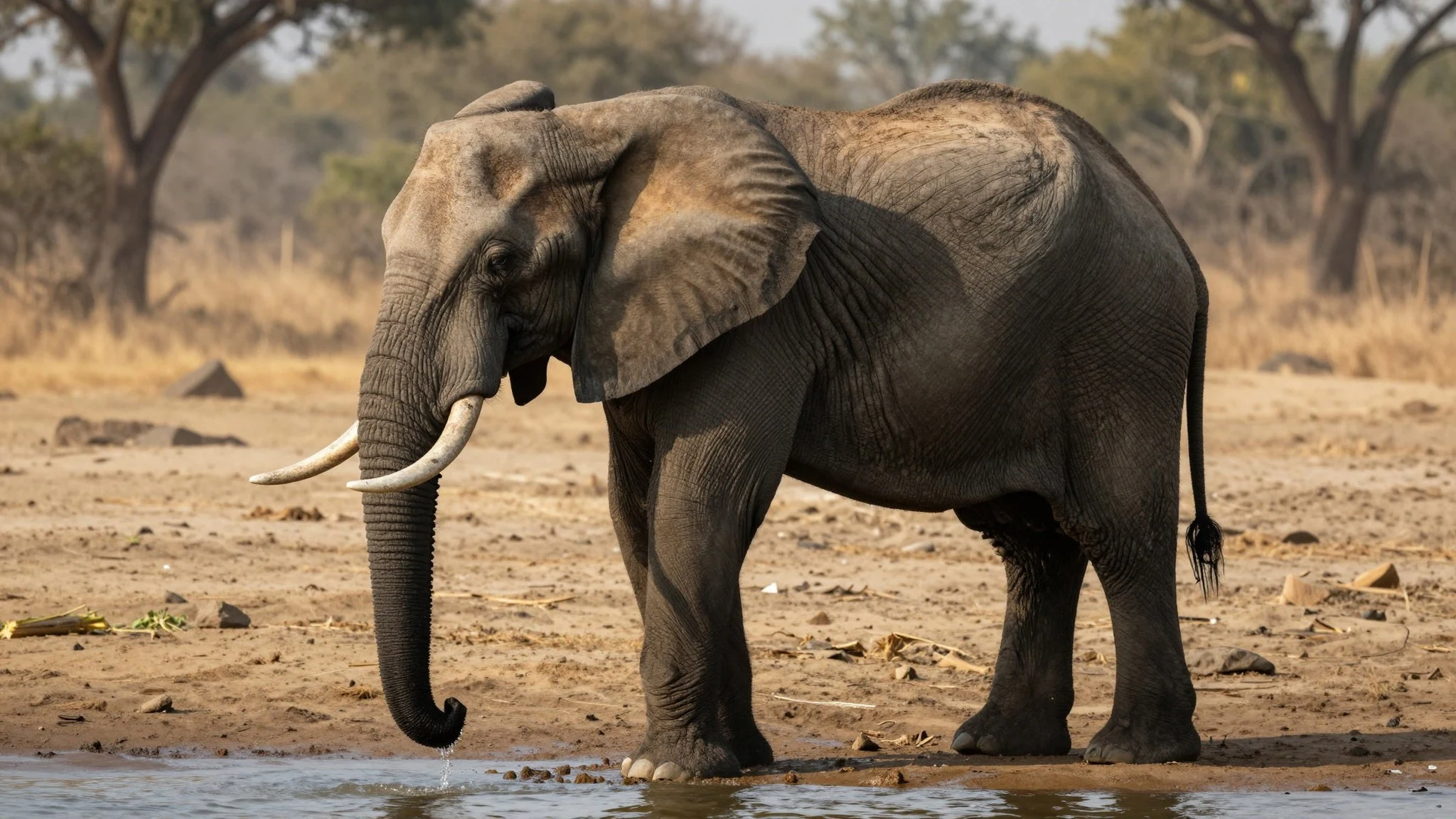
- Nile crocodile (animal)
The Nile crocodile is a big, watchful reptile that lives in African rivers, lakes and marshes, often lying so still it looks like a log. In Gonarezhou it is a creature to watch rather than walk beside, though the notes do not name a place, season or time of day. Stay inside your vehicle or at a designated viewpoint, and keep well back from the water's edge. Be quiet, follow your guide's advice, and never feed it.