Harare
Harare, Zimbabwe
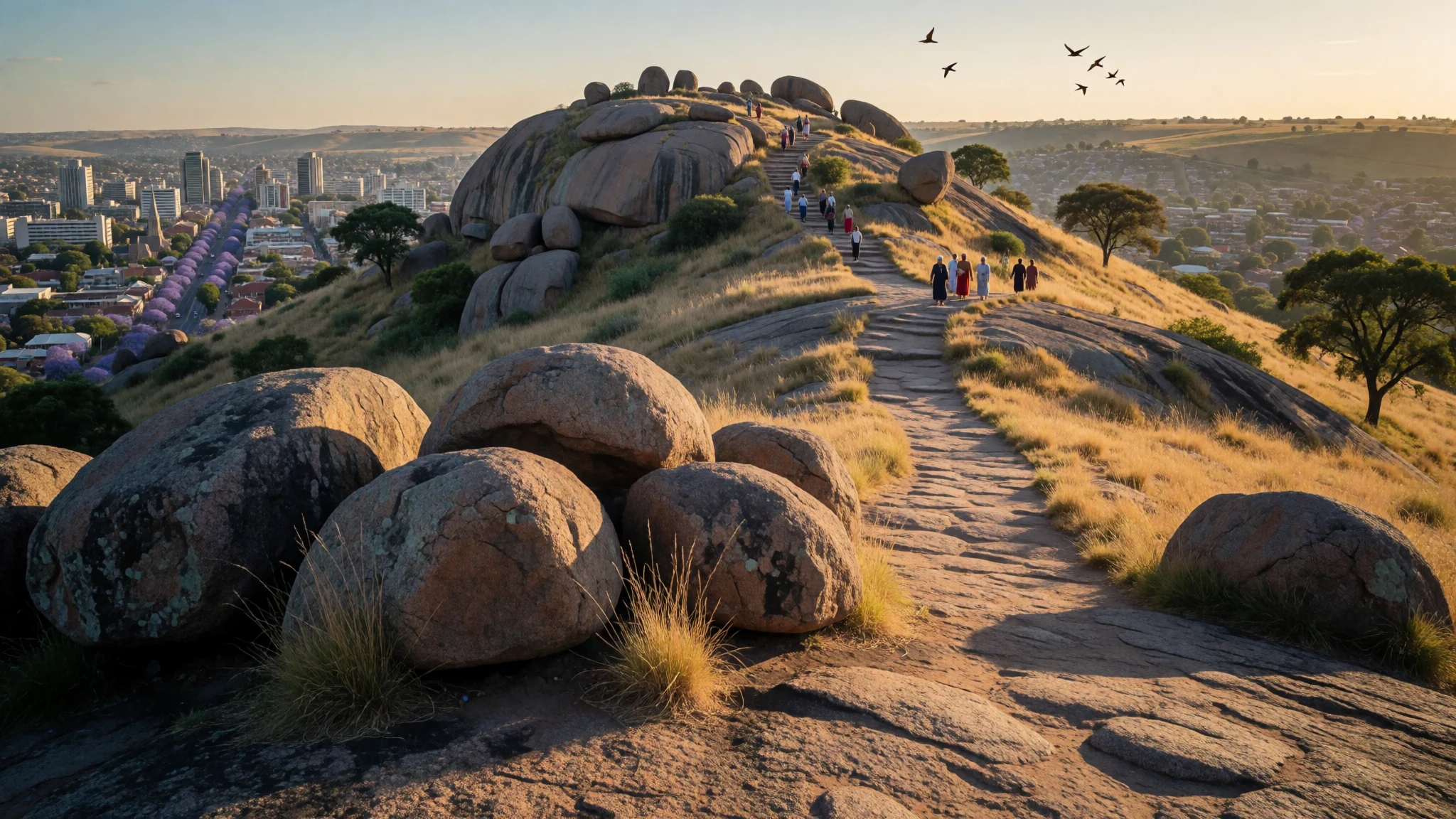
Harare is a high, green, jacaranda-lined capital where Zimbabwe's art, politics and everyday city life can be met on foot.
The place
Harare is the capital and largest city of Zimbabwe, spread across a plateau in the north-east of the country, in the Mashonaland region. At about 1,492 metres above sea level, it feels different from the lowland heat many people expect of southern Africa. Days are warm, nights in the dry months can be properly cool, and the subtropical highland climate suits broad-canopied trees and gardens. The city has about 2.15 million people, and the wider metropolitan province also takes in Chitungwiza, Epworth and Ruwa, so what looks like one city on the ground is really a string of linked towns. The centre is a gridded colonial-era plan of wide avenues, office blocks, parks and a few old civic buildings, with the granite hill of the Kopje on its south-western edge. Suburbs spread out beyond, some leafy and low-rise, others dense and busy, with markets filling the gaps. Harare is also where Zimbabwe's finance, industry and communications are concentrated, which explains the traffic, the queues at banks and the steady hum of small-scale trading on pavements. Many travellers treat it as a gateway to Victoria Falls and the national parks, but it rewards a few days of its own: galleries, stone sculpture, cafés, a lively theatre scene and a pace gentler than most capitals. Street lighting is patchy, so evenings are best spent indoors or in a pre-arranged taxi.
Its story
Harare began in 1890 as a fort. The Pioneer Column, a volunteer force of settlers raised under Cecil Rhodes for the British South Africa Company, reached the site on 12 September and named it Fort Salisbury after the British prime minister of the day, Lord Salisbury. The ground was poorly drained, so the first buildings clung to a slope beside a stream, and the first district to be properly drained, Causeway, later filled with government offices. Salisbury became a municipality in 1897 and a city in 1935. Company officials ran it until 1923, when it became the capital of the self-governing colony of Southern Rhodesia. After the Second World War it grew fast, helped by its role as capital of the Federation of Rhodesia and Nyasaland between 1953 and 1963, and it remained the seat of the Rhodesian government afterwards. Zimbabwe became independent from the United Kingdom in 1980, and on the second anniversary, in 1982, the city took the name Harare. Street names changed in the same years: the avenue once called Jameson is now Samora Machel Avenue. The layers now sit side by side, with a colonial grid carrying post-independence names, monuments to the liberation war, and the daily life of a working capital.
What to see
- National Heroes Acre — Western edge of the city
National Heroes Acre, west of the centre, is the national monument to Zimbabweans who died in the liberation war. It is a large, formal hillside complex, and the monument itself lies some distance beyond the ticket office, so allow time for the walk. It is a political site as much as a memorial. Check opening arrangements before going.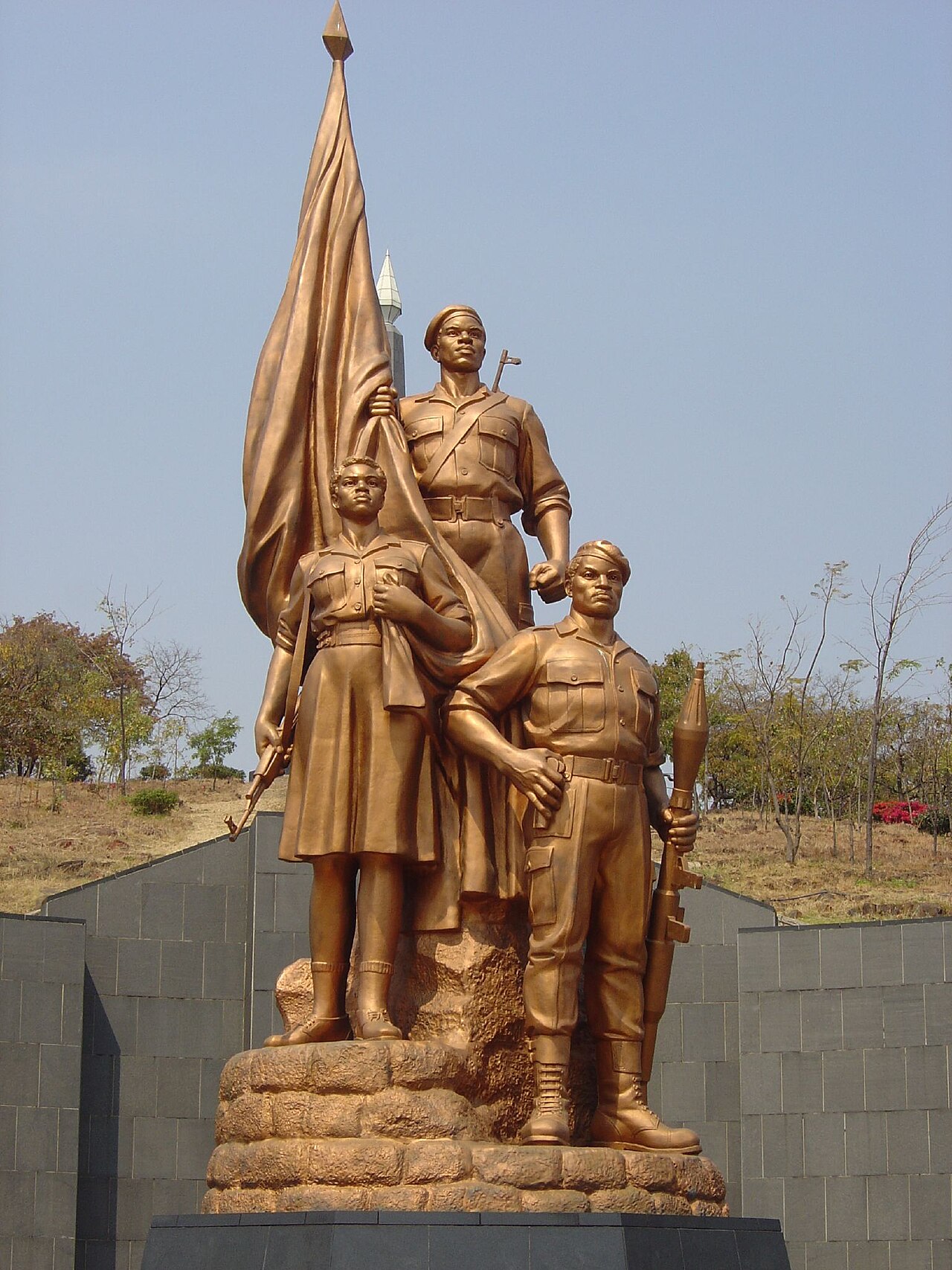
- The Kopje — South-west of the city centre
The Kopje is a granite hill at the south-western corner of the central grid, and the easiest place to see how Harare is laid out. From the top, the low skyline, the tree canopy and the straight avenues all come into view. Go in the morning for clearer air and gentler heat, and avoid climbing alone near dusk. - National Gallery of Zimbabwe — Central Harare
The National Gallery of Zimbabwe holds the national collection, hosts touring international shows, and keeps a permanent display of Shona soft-stone carving. The sculpture is the reason to go: families, birds and spirit figures cut from serpentine and similar stones, with a quiet confidence. Check current exhibitions on the gallery's own channels before visiting. - Chapungu Sculpture Park — Eastern suburbs
Dark serpentine rock is common across Zimbabwe, and sculptors have turned it into a national art form. Chapungu Sculpture Park, east of the centre, shows work outdoors among trees, so it suits a slow morning. It is a good place to see how a rough block becomes a figure. Check opening arrangements first. - Cathedral of St Mary and All Saints — Central Harare
The Cathedral of St Mary and All Saints is an Anglican cathedral in the city centre, completed in 1961. It makes a short, worthwhile stop for the calm of its interior after the traffic outside, and as a reminder of the city's mid-century growth. Dress modestly and check whether a service is under way before entering.
Culture
Harare's culture is shaped by a long habit of using art to talk about difficult times. Writers such as Doris Lessing and Petina Gappah and the musician Thomas Mapfumo have all pointed to the failings of government in their work, and since 2000 a sharper, more protest-minded theatre has grown up alongside them. Audiences have turned out in support, so an evening at a small theatre or a live gig can tell a visitor more about the country than a museum does. The Harare International Festival of the Arts has brought local and international performers to the city, though it was cancelled in 2019 and it is worth checking whether it is currently running. Music is everywhere, from church choirs on Sundays to bars with live bands, and the mbira, the thumb piano at the heart of Shona music, appears at ceremonies and in modern arrangements. English, Shona and Ndebele are all heard in the city, and a few words of Shona, such as a friendly Makadii (how are you), are warmly received. Greetings matter here, and people usually ask after one another before getting to business. Politics is a live subject, discussed with humour but also with care. Greet people properly before asking for anything, and ask permission before photographing individuals, government buildings or soldiers and police, which can cause real trouble.
What to wear
Fashion in Harare mixes inherited dress with the practical clothing of a working capital. Traditional dress is tied to Shona and Ndebele heritage: printed cotton wrap cloths worn as skirts, headscarves called doeks, and beadwork, especially the beaded collars, belts and aprons associated with Ndebele communities. These appear most at weddings, funerals, church events, cultural festivals and national holidays, when families often coordinate their cloth. Day to day, most people dress as in any city: shirts, suits and neat dresses for work, school uniforms, and jeans and trainers at weekends. Sunday church is the dressiest occasion of the week, and people take pride in being well turned out. Second-hand clothing from markets is widespread, and local designers show their work in boutiques and at arts events. Visitors should pack for a highland climate at 1,492 metres: light cotton and a sun hat for the day, and a fleece or jacket for evenings and the cooler months from May to August. Closed, comfortable shoes suit uneven pavements and the climb up the Kopje. Smart-casual is fine in restaurants. Covered knees and shoulders are respectful at churches and in rural areas, and camouflage-print clothing is best left at home.
What to eat
- Sadza with stew — Any local eatery in the suburbs, or the food stalls around Mbare Musika market
Sadza is a stiff porridge of maize meal, rolled by hand into a ball and used to scoop up stew or relish. It is the everyday staple at lunch and supper. Order it with beef, chicken or goat, and a side of greens. - Kapenta (matemba) — Local eateries and the big neighbourhood markets
Kapenta are tiny freshwater fish, dried and then fried or stewed with tomato and onion. They are salty, a little crunchy and very savoury, and are eaten with sadza. A good dish for anyone curious about what ordinary households cook. - Muriwo (leafy greens) — Home-style restaurants and lunch counters in the suburbs
Muriwo is the general word for cooked leafy greens, often pumpkin leaves or rape, simmered with tomato and onion and sometimes enriched with groundnut paste. It is the usual partner to sadza and a welcome counterweight to the meat dishes. - Braai — Suburban bars and grill spots, and roadside stalls in the evening
A braai is meat grilled over wood or charcoal, typically beef, chicken and sausage, shared with sadza, salad and a cold drink. It is a weekend social habit as much as a meal, and conversation tends to last longer than the cooking. - Roasted maize on the cob — Roadside sellers and bus-stop stalls across the city
Roasted maize cobs, blackened over small charcoal fires, are a simple street snack in the harvest months, roughly March to May. They are chewy, smoky and cheap to share while walking between errands.
Plan it
Best time. May–October is the dry season, with sunny days and cool nights, and June–July mornings can be properly chilly at this altitude. October–November brings the jacaranda bloom just before the rains, which usually arrive around November and bring heavy afternoon storms.
How long. 2–3
Getting there. Harare's international airport is the main gateway to Zimbabwe, with connections from Johannesburg, Addis Ababa, Nairobi, Luanda, Cairo and Amsterdam, though airlines change, so check current schedules. The last leg is a taxi or pre-arranged transfer into town. National train services were suspended at the last check, so confirm before planning on rail. A good road links Harare with Johannesburg.
Budget. mid
Tips
- Arrange airport transfers in advance, or agree the fare before getting into a taxi
- Do sightseeing in the morning, and plan to be indoors or in a taxi after dark because street lighting is patchy
- Carry some cash as well as a card, since small traders and markets often prefer cash
- Allow extra time for travel across the city, as traffic and road conditions can slow journeys
- Check the official city website, hararecity.co.zw, and venue pages for opening arrangements before visiting
Etiquette
- Greet people before starting a conversation or asking for help
- Ask before photographing people, and avoid photographing government buildings, soldiers or police
- Dress modestly at churches and memorials
Nearby
Sources
- Wikidata Q3921 (CC0)
- Wikipedia: Harare (rev 1383090425) (CC BY-SA 4.0)
- Wikivoyage: Harare (rev 5425634) (CC BY-SA 4.0)
- Central zone of Harare, Radozw (CC BY 3.0)
- View of the Crowne Plaza from the Harare Gardens, Baynham Goredema (CC BY 2.5)
- Downtown Harare, Zimbabwe, Suesen (CC BY 3.0)
- Heroes Acre, Harare, Zimbabwe, Gary Bembridge (CC BY 2.5)
- Hoisting the flag at Fort Salisbury (Public domain)
- Parliament of Zimbabwe (Public domain)
- Jameson Avenue, Salisbury, Rhodesia, Rob (CC BY 2.5)
- Jacaranda trees in Montagu Ave, 1975, GrahamBould (Public domain)


