Hwange National Park
Hwange National Park, Zimbabwe
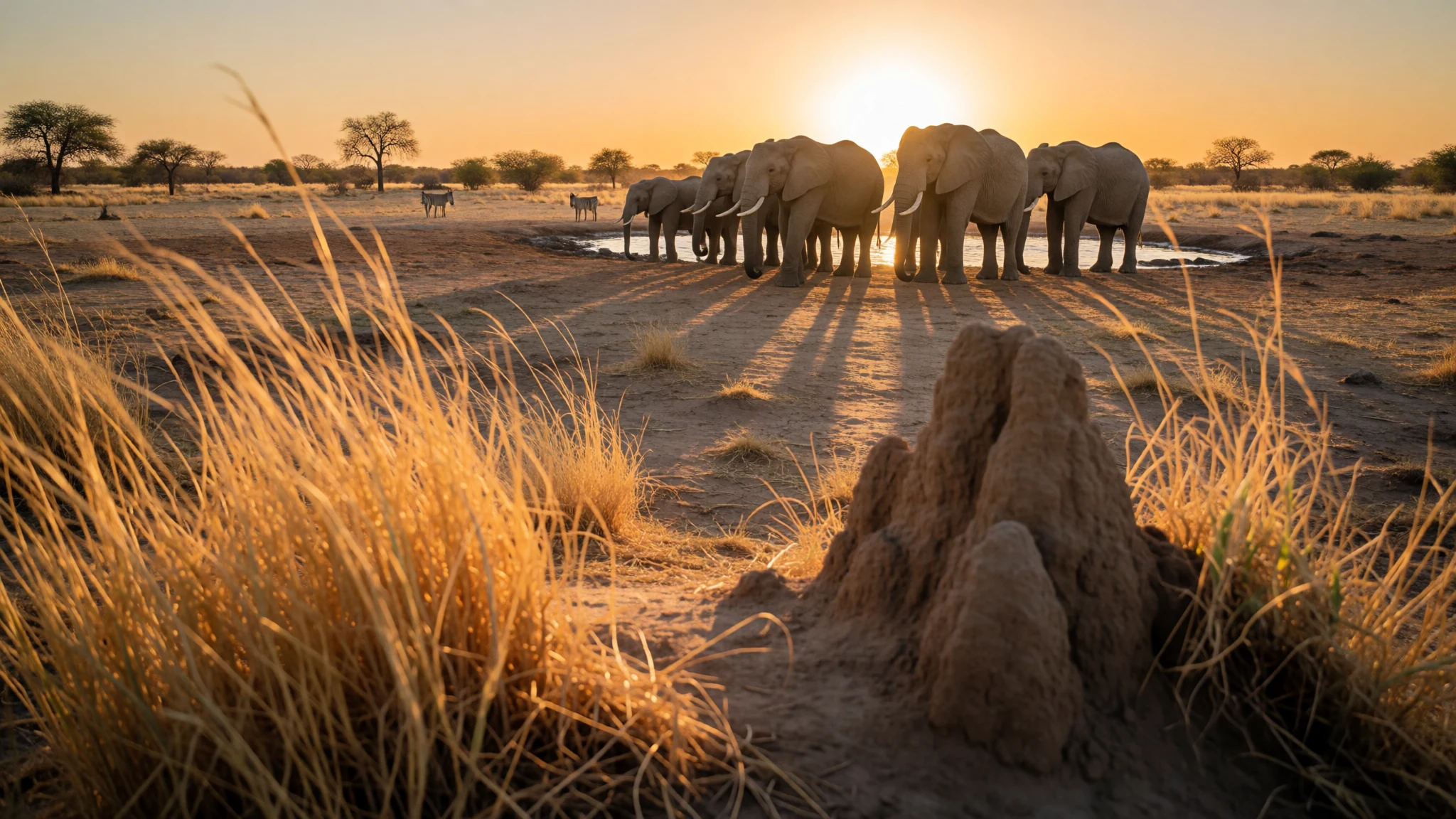
Hwange National Park is a vast sand-and-scrub wilderness in western Zimbabwe, where dry-season waterholes bring elephants and other game within easy watching distance.
The place
Hwange National Park fills a large part of north-west Zimbabwe, in Matabeleland North Province, between the city of Bulawayo and the road to Victoria Falls. The nearest town is Dete. At about 14,600 sq km it is the country's largest protected area, and it holds more than 100 mammal species and some 400 kinds of bird. Underfoot, most of it is Kalahari sand, which swallows rain at once, so rivers are scarce outside the north and north-west, where the Deka and Lukosi run and some of their tributaries have been dammed. Water instead gathers in pans, shallow hollows that either fill from rainfall or are topped up by groundwater seeps, as at Ngweshla, Shakwanki, Nehimba and Shapi. Old drainage lines near Main Camp and Linkwasha turn into seasonal wetland after good rains. Where basalt and granite break through the sand, in the north around Sinamatella, warm and salty springs rise. The tourist side of the park is zoned. The east and north hold the camps, picnic sites and hides, while the centre and south are kept as wilderness with little development and access only for guided groups. Visitor numbers are modest for a park this size, in the tens of thousands a year, so even in the dry season the sandy tracks can feel empty. That emptiness is part of the appeal, along with the long, quiet waits at a pan for elephants to arrive.
Its story
Hwange National Park began as Wankie Game Reserve, set aside in the early twentieth century in country that was hard to reach and thinly policed. The first decades were rough. Few roads led into the interior, poachers worked freely, and a logging concession kept cutting timber until 1933. Slowly the reserve gained structure, and in 1961 it was proclaimed a national park.
War then cut across it. In 1967 fighters of ZIPRA and of Umkhonto we Sizwe, the African National Congress's armed wing, clashed with Rhodesian troops in what became known as the Wankie Battles. Much of the park later came under martial law, and through the 1970s visitors were admitted only around Main Camp and Nyamandlovu Pan. After independence the gates reopened, but many tourist roads had decayed, and the network that returned was smaller than before.
Poaching has run through the park's modern story. In 2013 a waterhole was laced with cyanide and more than a hundred elephants died. Later, a protected lion was drawn out of the park at night with bait and shot with a bow. Those episodes sit beside slower, more hopeful news. In 2011 Hwange was brought into the Kavango–Zambezi Transfrontier Conservation Area, a treaty arrangement spanning five countries that treats the wider landscape as one living region, which matters for elephants that pay no attention to borders.
What to see
- Waterhole platforms near Main Camp — Eastern Wild Area, around Main Camp
Around Main Camp, in the more developed east of Hwange National Park, raised wooden platforms look over waterholes. In the dry season elephants, buffalo and antelope arrive in turn, and a long late afternoon here is a good way to understand how the park works. Bring binoculars, a hat and patience; sightings come in bursts between quiet stretches.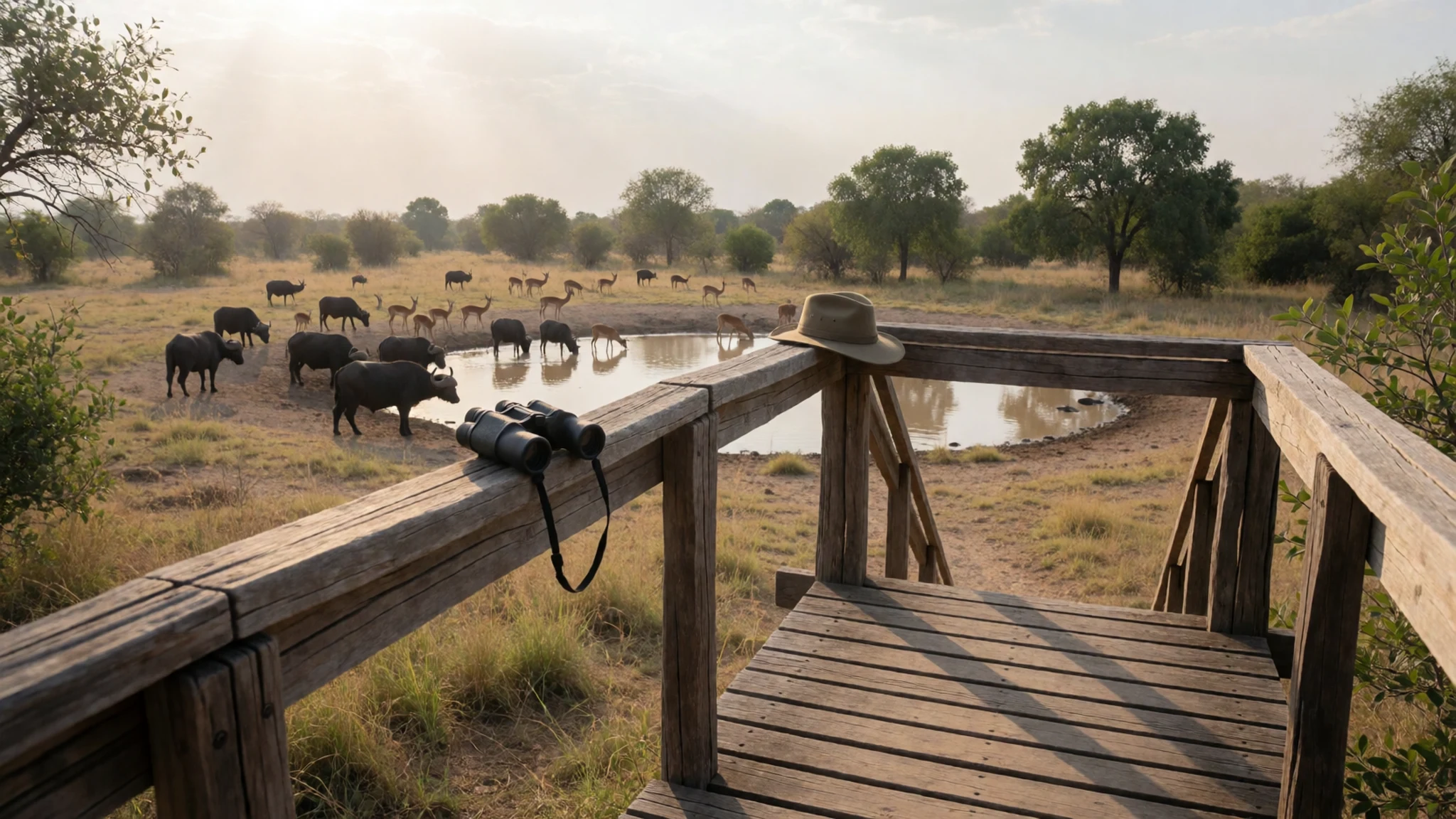
- Big Toms and Little Toms hides — Robins area, north of the park
These two hides stand in the Robins area, on land once farmed by Harold Robins and left to the park. They overlook water that draws game in the dry months. The approach from Victoria Falls is a long drive on sandy tracks, so treat the journey as part of the day and leave early.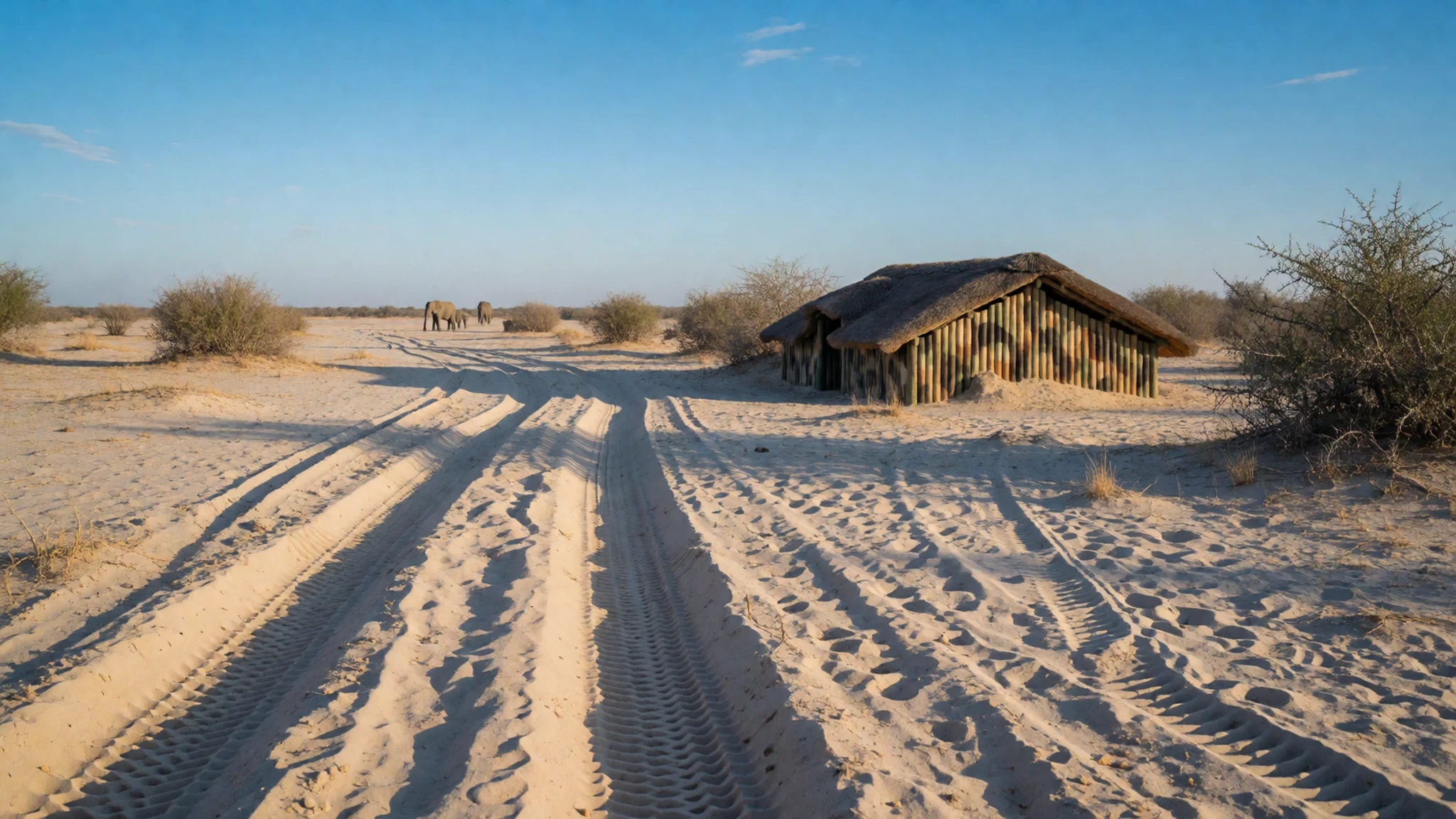
- Grass pans and seep-fed pans — Shumba, Linkwasha and the central pans
Some pans in Hwange National Park are grassy hollows that fill with rain, others are kept wet by groundwater seeps. Driving between them on authorised roads shows the landscape in miniature: bare sand, scattered trees, and a dark line of animals at the water. Many tracks suit only four-wheel-drive vehicles, so ask at camp before setting out.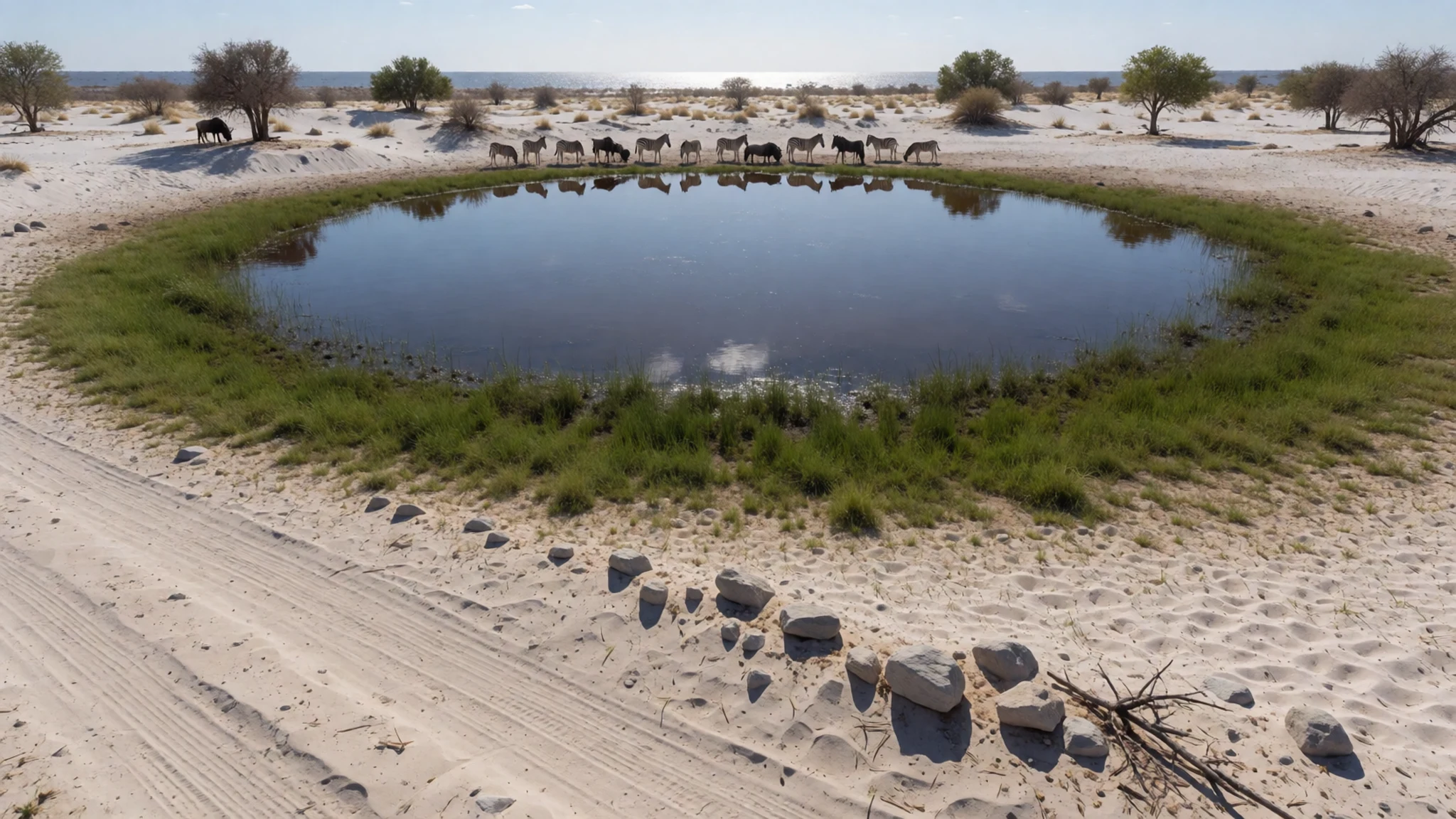
- Sinamatella and the northern hills — Northern Wild Area
Sinamatella sits in the north, where granite and older rock rise above the Kalahari sand and give the park some relief. Springs, both salty and hot, rise nearby. The camp has lodges and chalets, and wilderness trails start close by with a guide, a good alternative to watching from a vehicle.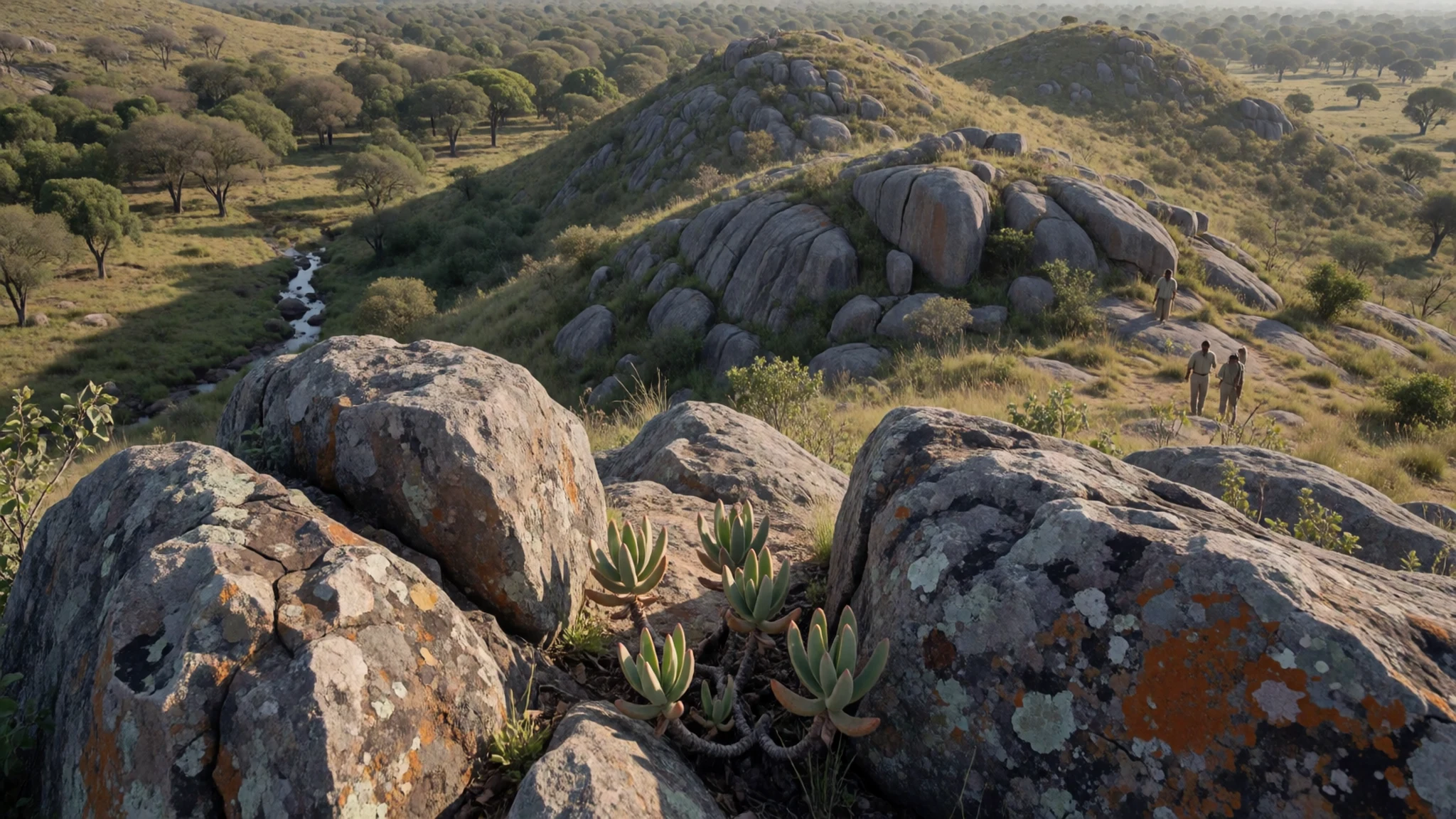
- Guided walks and moonlight viewing — Main Camp, Sinamatella and Robins Camp
Escorted daytime walks leave from the camps for small groups, with an extra fee. They slow everything down, so tracks, termite mounds, dung and birds become the main event. Moonlight game viewing runs from Main Camp when a clear sky and a nearly full moon allow it; ask at reception about the schedule.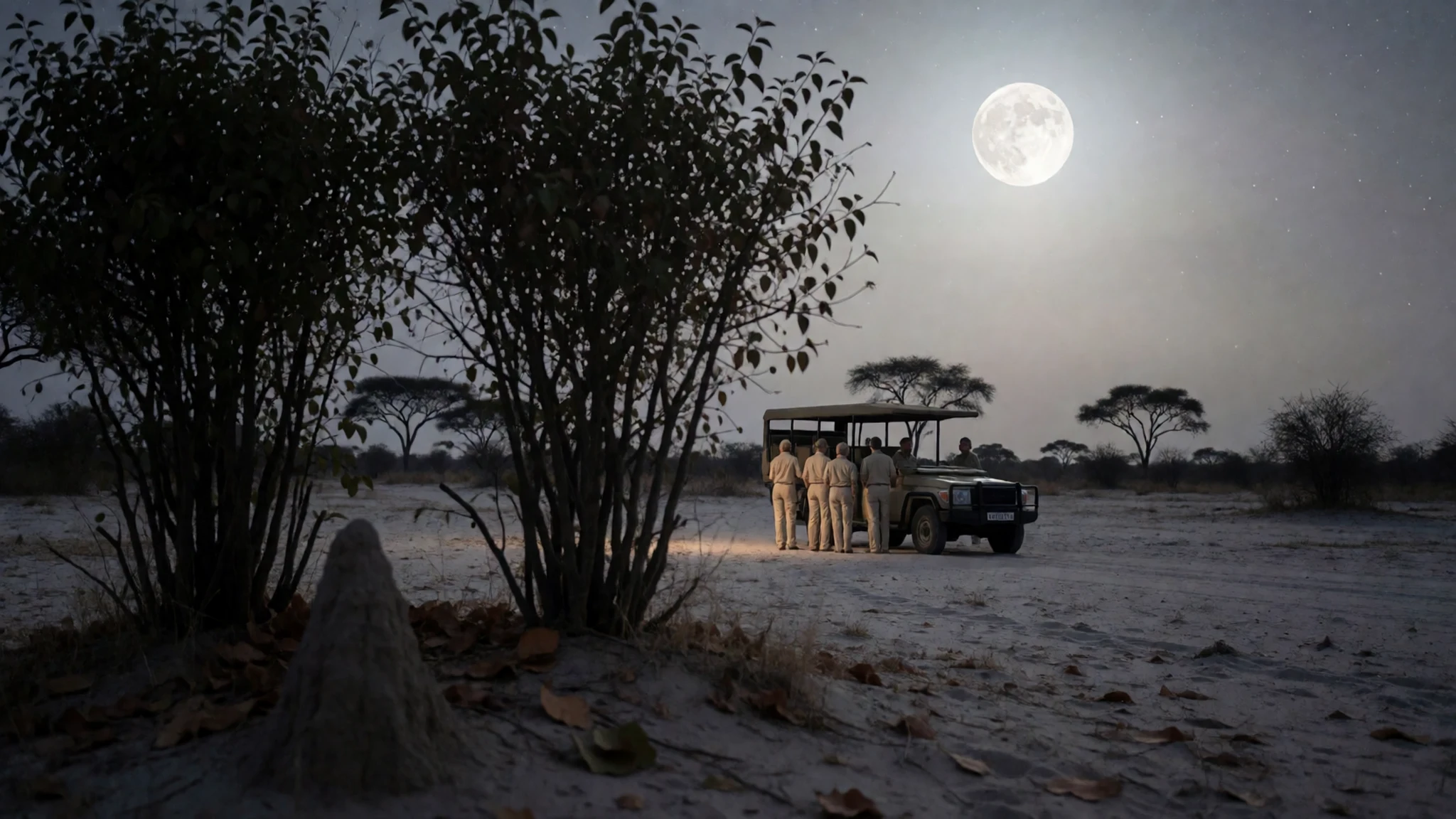
Culture
Hwange National Park sits in Matabeleland North, where Ndebele and Nambya are spoken alongside English and Shona. The park's name comes from a local chief's title, while older maps and many road signs still carry Wankie, the form settlers used. The towns around it, Dete and Hwange itself, grew up around railways and coal, so everyday life nearby is that of working towns rather than safari lodges: church on Sundays, football on the radio, small shops and bars along the road.
Inside the park, a different set of habits applies. Safari manners grow out of ranger practice: early starts, long silent waits at a pan, and pointing out a distant animal with a quiet gesture rather than a shout. Guides and rangers are mostly local, and an hour spent asking them about tracks, birds and trees tells more than any brochure. Many have their own stories of the war years and of living beside elephants, and they tend to share them if asked politely.
Tipping guides and camp staff is customary, though the amount is personal; small notes in an easy pocket help. Photographing people in villages needs a request first, and a smile before the camera comes out goes a long way. Meat is central to hospitality, so declining it may need a gentle explanation; mention dietary needs when booking.
Stay inside your vehicle or your guide's circle at all times, keep your voice low at the pans, and never feed or approach any animal.
What to wear
Around Hwange National Park, traditional dress belongs mainly to the Ndebele and Nambya peoples. Ndebele women are known for beadwork: broad beaded aprons, neck rings and bands in bold geometric patterns, worn at weddings, ceremonies and festivals. Cured-hide skirts called isidwaba have been part of married women's dress, and wool or cotton blankets draped over the shoulders belong to formal and ceremonial outfits. Such dress is now mostly kept for occasions rather than daily wear.
Day to day, people in Dete and Hwange town wear jeans, shirts, dresses, school uniforms and football shirts, with smarter clothes for church. Rangers, guides and camp staff wear olive or khaki uniforms, which tells you what works in the bush.
Visitors should dress for sun, thorn, insects and cold mornings. Muted greens, tans and browns suit game viewing; bright colours and white stand out and get dusty. Leave camouflage patterns at home, as they are best kept to the military. Lightweight long sleeves and trousers handle the sun and the insects at dusk, and in the dry winter months pre-dawn drives are cold enough to need a fleece and a scarf. Add a wide-brimmed hat, sunglasses, and closed, sturdy shoes or light boots, since the sand is deep and the ground thorny. In towns and villages, cover shoulders and knees as a courtesy.
What to eat
- Sadza with relish — Camp restaurants and everyday eateries in Hwange town and Dete
Sadza is stiff maize porridge, shaped by hand and used to scoop up a stew, beans or leafy greens known as relish. It is the everyday staple across Zimbabwe, filling after an early game drive, and simple eateries serve it with beef, chicken or vegetables.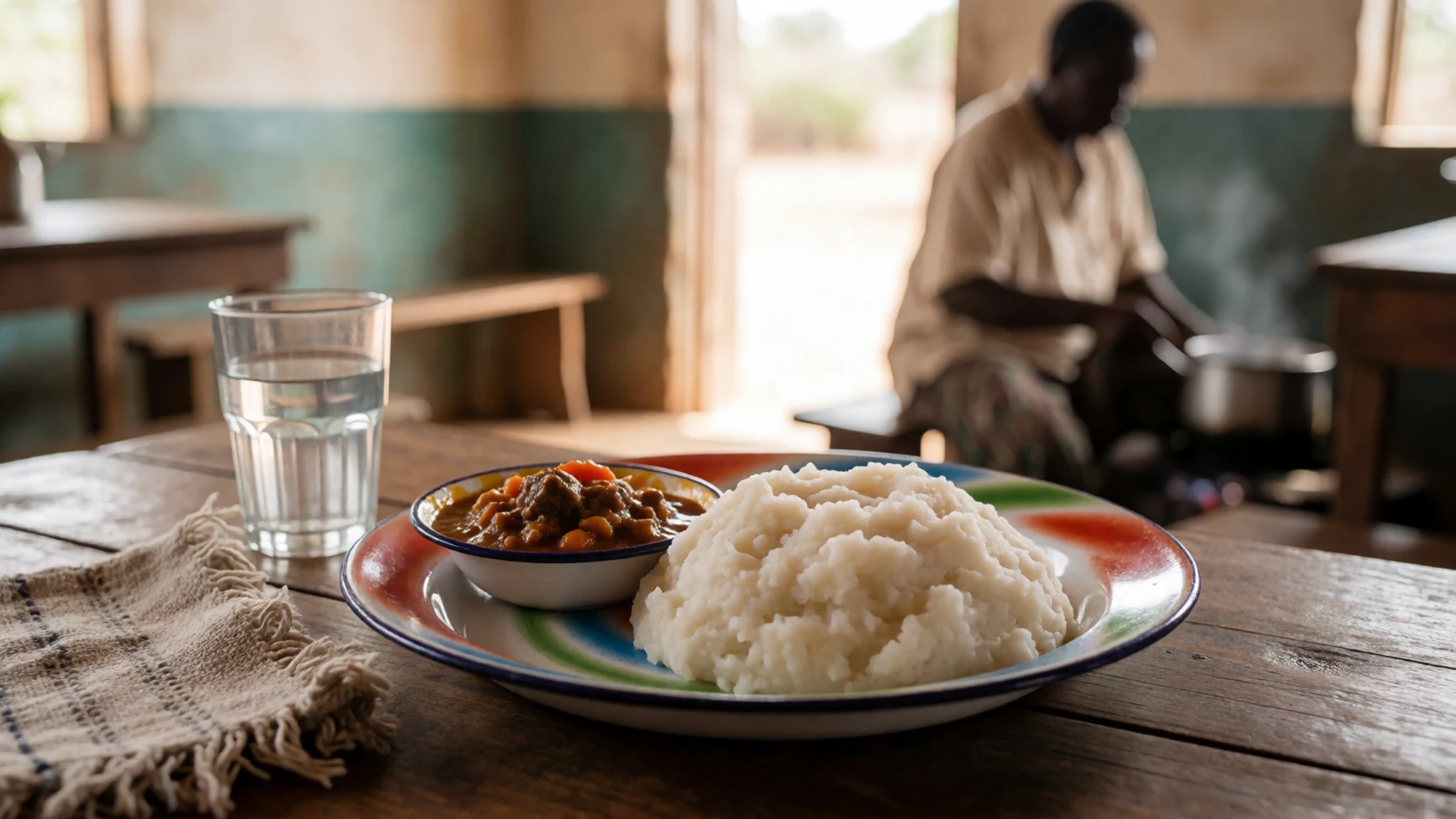
- Braai or nyama — Campsite grill stands and roadside stalls
Grilled meat is the social centre of Zimbabwean eating. Beef, goat, chicken and sausage cook over wood or charcoal, and are eaten with sadza and a tomato-and-onion sauce. Camps often have grill areas where visitors and staff cook beside each other at dusk.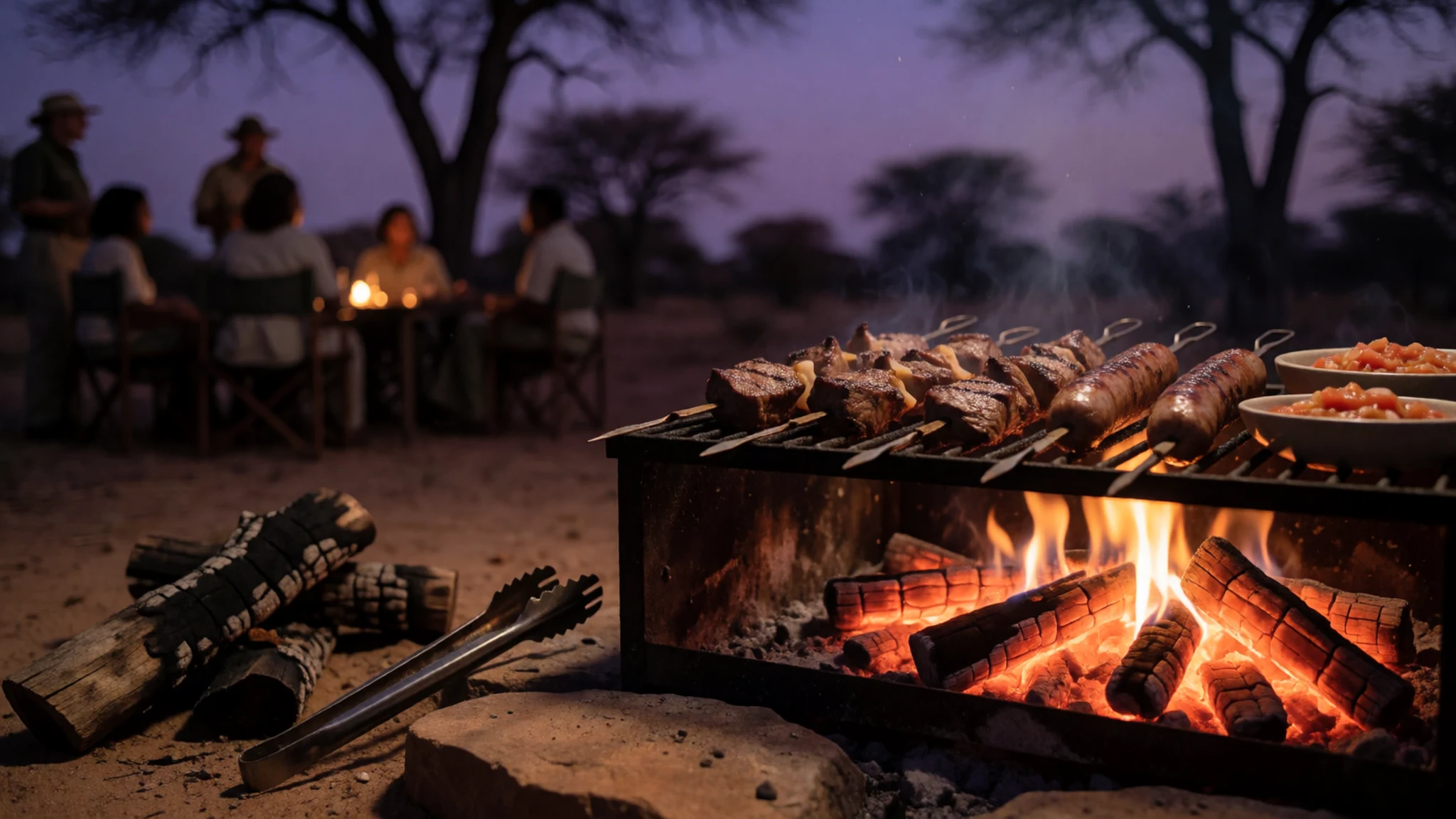
- Kapenta — Town markets and small shops
Kapenta are small dried freshwater fish, usually fried with onion and tomato until crisp, then eaten with sadza. They have a strong, salty flavour and are cheap, widely sold, and a good way to taste ordinary home cooking. - Madora (mopane worms) — Roadside stalls and market tables
Madora are dried mopane caterpillars, a seasonal protein with a long tradition in southern Africa. They can be eaten as a crunchy snack, salted, or simmered with tomato and onion. Newcomers often start with a few from a roadside stall. - Maheu — Corner shops and market stalls in the towns
Maheu is a lightly fermented, slightly sour maize drink, sold in cartons and bottles or made at home. It is thick, filling and not very sweet, and people drink it cold. Look for it in town shops before heading into the park.
Plan it
Best time. June to October is the dry season, when pans shrink, animals gather at the remaining water and the sand roads are easiest. June–August mornings are cold; September–October is hotter and dustier but often the busiest for animal watching. The rains make roads hard and travel slower.
How long. 3–4
Getting there. Fly to Victoria Falls Airport, which has connections to Johannesburg, then continue by road into the park. Scheduled buses between Victoria Falls and Bulawayo stop at the park, and overnight trains stop at Hwange town, though arrival times are awkward. Charter flights can land on a strip inside the park.
Budget. mid
Tips
- Book camps and lodges well ahead through the official Zimbabwe parks authority; check the official site for current fees and opening arrangements.
- Many roads suit only four-wheel-drive vehicles, so ask at camp about conditions, carry spare water and food, and avoid remote tracks in the rains.
- Start drives at first light and again late afternoon, and use the hours between for shade at camp.
- Carry cash as well as cards, since camp shops and rural services may not take cards.
- Take enough water, sun protection and insect repellent, and bring binoculars.
Etiquette
- Stay in your vehicle on game drives unless a ranger says otherwise, and never get close to any animal.
- Keep noise low at waterholes and hides, and do not feed wildlife.
- Ask permission before photographing people, and tip guides and camp staff.
Nearby
Sources
- Wikidata Q1571380 (CC0)
- Wikipedia: Hwange National Park (rev 1384495124) (CC BY-SA 4.0)
- Wikivoyage: Hwange National Park (rev 5109666) (CC BY-SA 4.0)
- Photo: The boys down the water hole, JackyR (CC BY 3.0)
- Photo: Roan Pan, Hwange National Park, Babakathy (CC0)
- Photo: Pan and wetland, Hwange National Park, Laura (CC BY 2.5)
- Photo: Lion resting near a termite mound, Laura (CC BY 2.5)
- Photo: Elephants at Longone Pan, Babakathy (Public domain)
- Photo: Road from Victoria Falls to the Robins Area, Fabio Achilli (CC BY 2.5)
- Photo: Hwange National Park, Zimbabwe, Fabio Achilli (CC BY 2.5)
- Photo: Map of Hwange National Park, Babakathy (CC0 1.0)


