Basseterre
Basseterre, Saint Kitts and Nevis
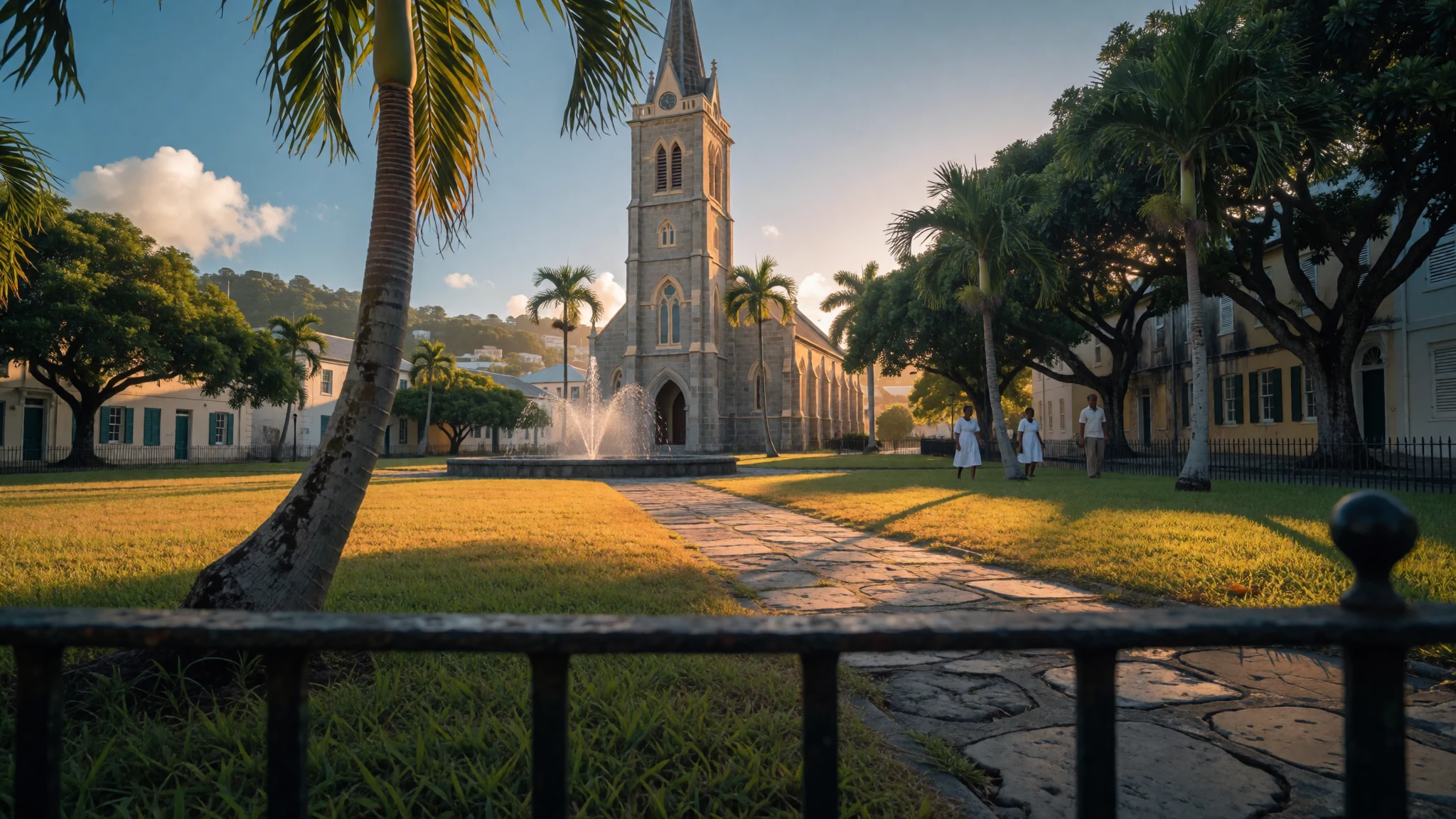
Basseterre is a small Caribbean capital with a harbourfront circus, a square of hard history, and a ferry across to Nevis.
The place
Basseterre sits on the leeward shore of Saint Kitts, in the federation of Saint Kitts and Nevis, and it is the capital. The name is French for low land, which suits a town laid out on the flat between the Caribbean Sea and the first slopes inland. A short grid of streets holds most of daily life. Near the middle, the roads open into a roundabout called the Circus. Independence Square lies close by, and the harbour is only a little farther, so the sea stays part of an ordinary errand. The waterfront is where the town meets its traffic. Cruise ships, a marina of smaller boats and the ferry across to Nevis share the same shore, and the mood of the pavements changes with them. When passengers come ashore, the waterfront shops fill and the Circus becomes a landmark on the walk to the square. On other mornings the same streets belong to people doing ordinary business. Inland, the buildings stay low: churches, banks, government offices and shop-houses, with rooms above the street and balconies where a breeze can be caught. Trees in Independence Square and awnings along the pavements supply most of the shade. The trade wind finds some streets and misses others, so the heat pools in the tighter blocks and lifts wherever a gap opens towards the water. People come in from villages along the coast road for the market, the ministries, the schools and the banks, then head home before the light goes. The public market, close to the water, handles the everyday buying and selling. Around the square, older stone and timber fronts share the block with plainer modern buildings and with gaps left by storms. The hills rise behind the last streets, and Nevis sits across a short stretch of water.
Its story
Basseterre began as a French choice of sheltered ground. The low leeward shore was easier to occupy than the steep windward coast, and the name still records that decision: basse-terre, the low land. The port that grew there served an island given over to sugar. Sugar required enslaved African labour, and the open ground now called Independence Square was a market where people were sold. The fountain and the trees stand on that history. They do not cancel it. The island later passed into British hands, and Basseterre acquired the rooms of a colonial capital: an Anglican church, courts, a legislature and a house for the governor. The Circus, a round junction modelled on Piccadilly Circus, with an 1883 fountain at its middle, is where the main streets are forced to meet. Fire, earthquake and hurricane have broken the streetscape more than once. What a visitor walks through is a sequence of rebuilds, which is why a stone church, a timber front and a plain concrete shop can share a block without forming a single preserved set. Emancipation ended the trade in people and left the square to become a civic garden. Independence made Basseterre the capital of a federation that includes Nevis, while Nevis kept its own character and its own capital across the water. Sugar retreated from the centre of the economy. Public service, the school run, cruise days and ordinary shopkeeping now shape the week. The readable story in the streets remains the layered one: a French name, a British plan, an African people, a square that was a slave market, and a harbour that still decides whether the morning is quiet or crowded.
What to see
- Independence Square — Town centre
Independence Square is the fenced garden at the middle of Basseterre, with a fountain, mature trees and paths between gates on each side. The ground was once a market where enslaved people were sold, and its present quiet does not remove that past. Older buildings face the railings. It is the place to sit through the hottest part of the day.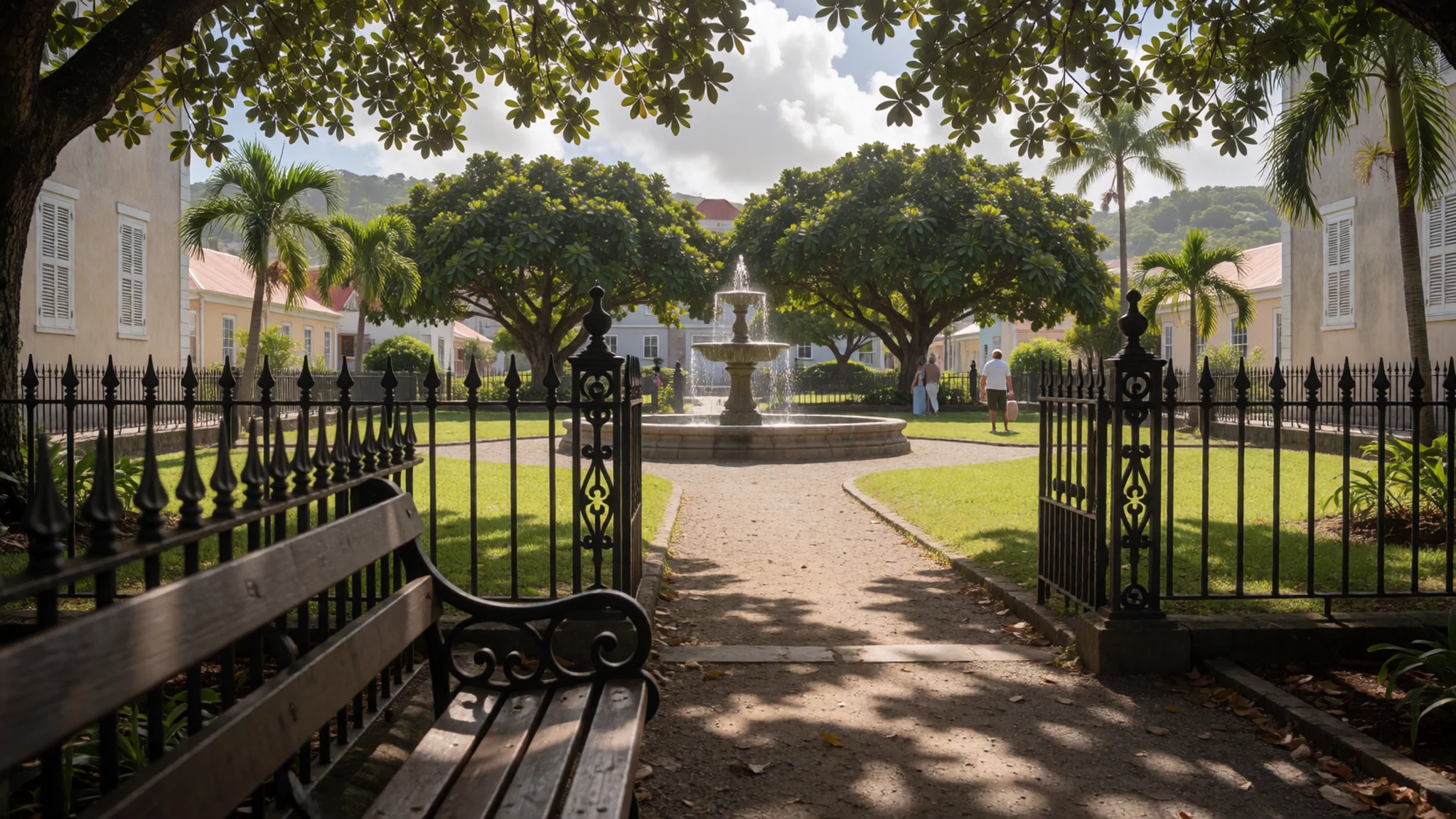
- The Circus — Town centre
The Circus is the round junction beside the commercial heart of Basseterre, where the main streets meet around a fountain for Thomas Berkeley Hardtman Berkeley. Banks, shops and passing traffic keep it busy from morning until the offices close. It is less a monument to pause inside than a hub to cross, and from its edge the way to Independence Square, the harbour or a side street is obvious.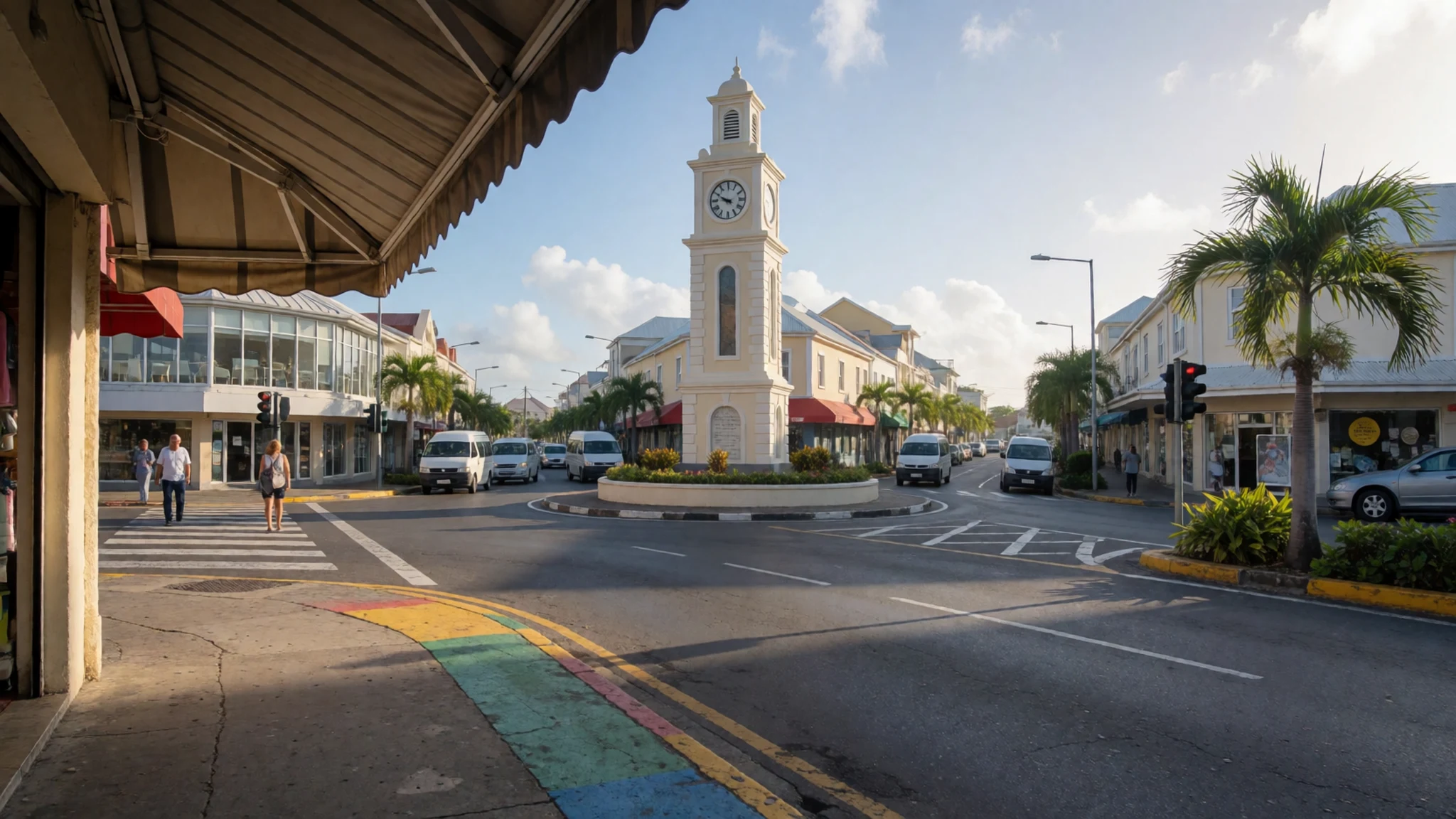
- St George's Anglican Church — Beside Independence Square
St George's Anglican Church stands on the eastern side of Independence Square, and its stone tower marks the Basseterre skyline. The building is a survivor of disasters that have forced the parish to rebuild, so the masonry reads as continuity as much as style. Visitors cover shoulders and knees, keep voices low, and stay out of the aisle if a service is under way.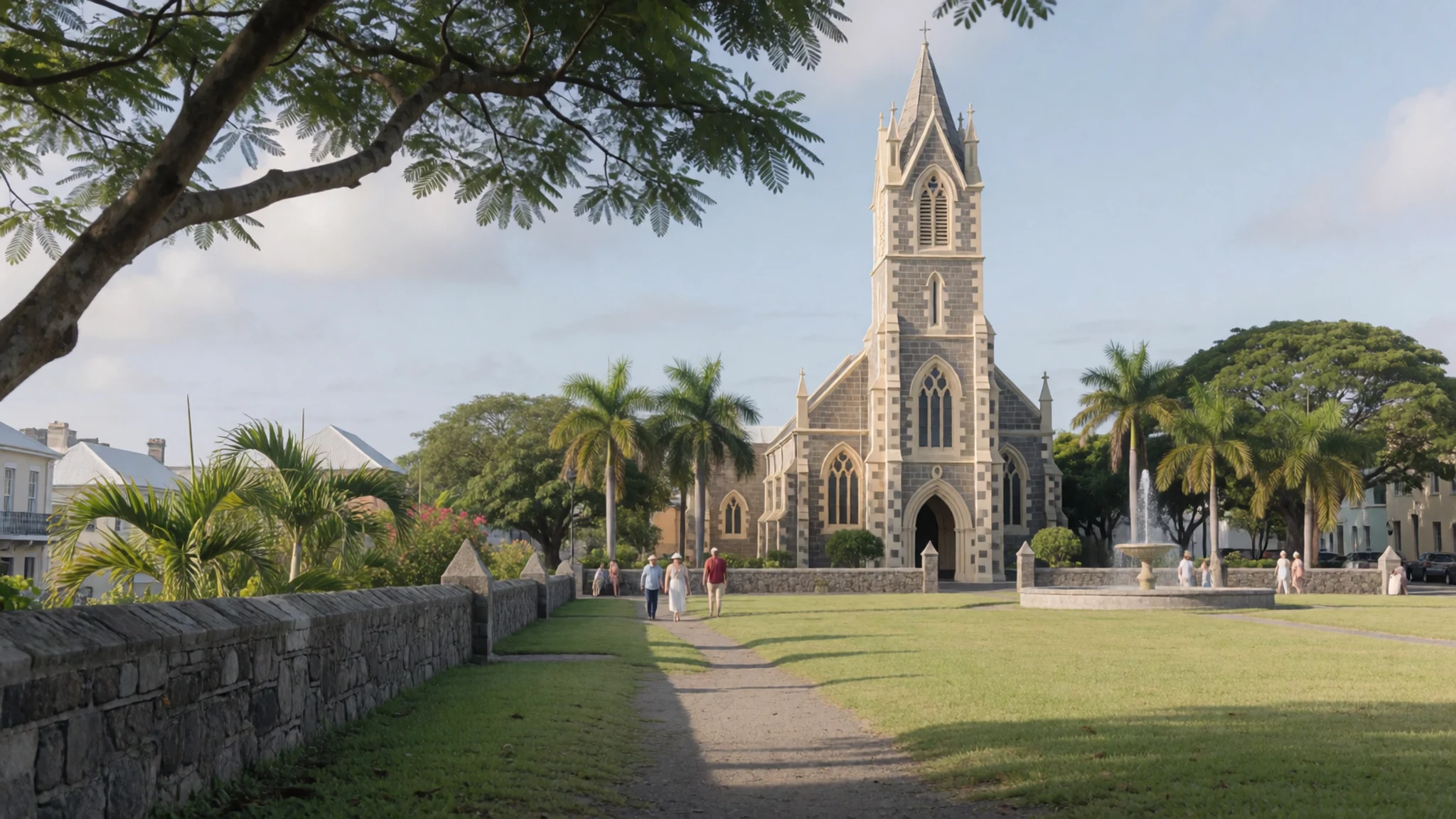
- Government House — North of the centre
Government House is the official residence of the Governor-General, set in grounds on the northern side of Basseterre. The formal front, pale and set back from the street, is civic architecture still in use rather than a relic opened as a gallery. There is no general visiting hour to assume. The respectful view is from the pavement and the gate, unless an official occasion invites people in.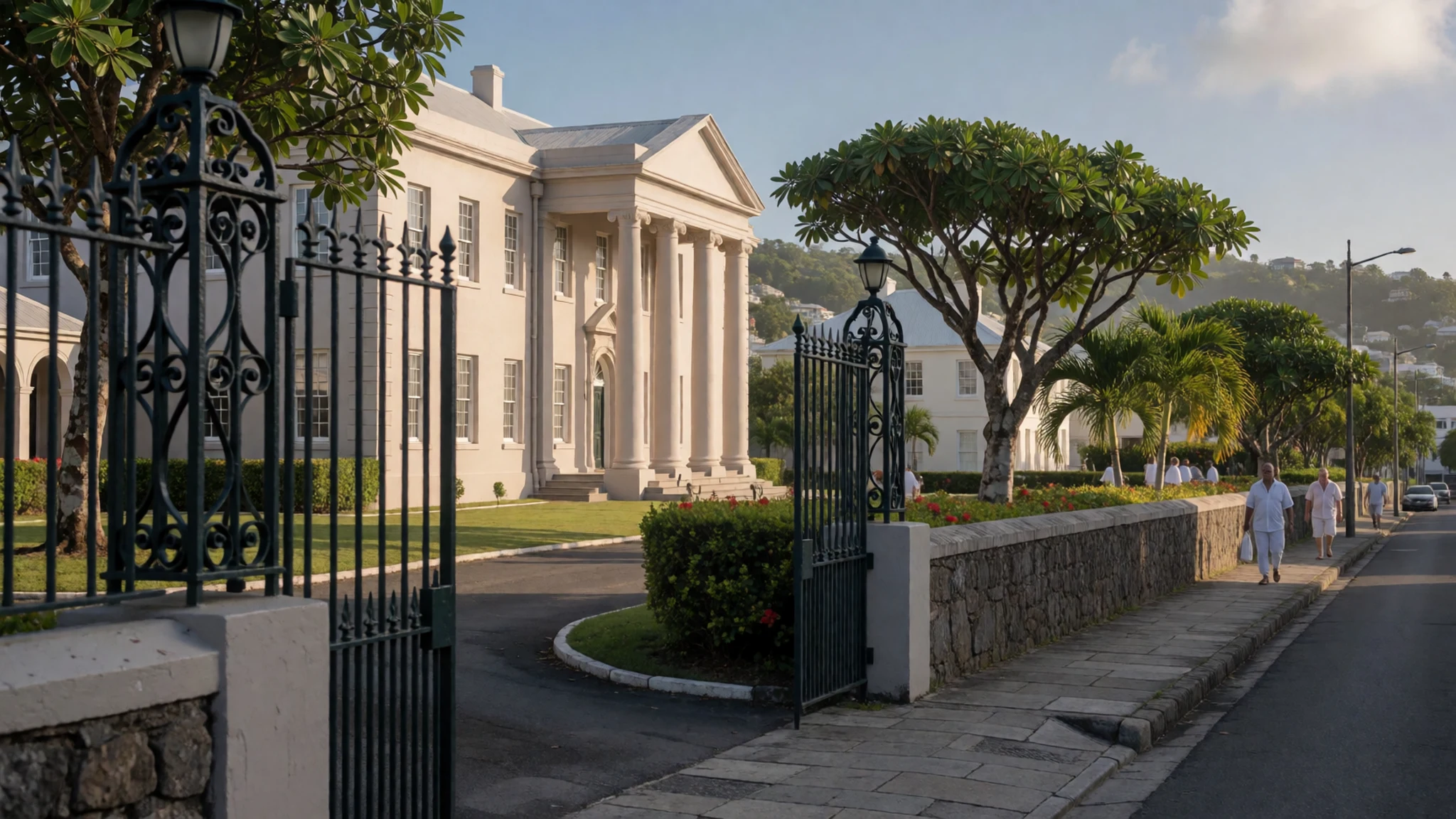
- Port Zante and the marina — Waterfront
Port Zante is the cruise berth and shopping front on the southern edge of Basseterre, with the marina of smaller boats as its quieter neighbour. A ship alongside fills this pavement with people. A day with an empty berth can feel abruptly still, because the port takes its tempo from arrivals at sea. The marina shows smaller craft against low buildings.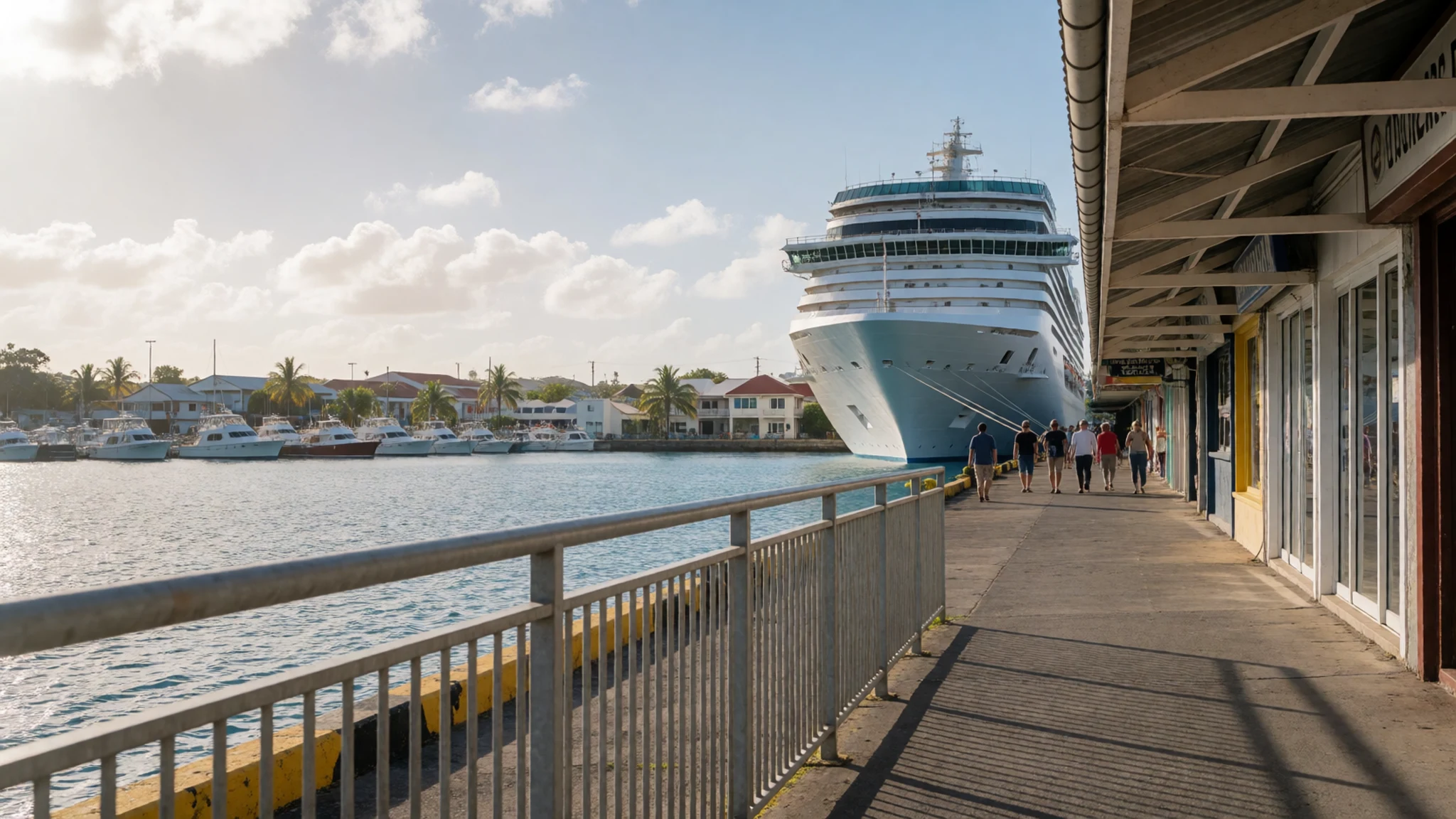
Culture
Culture in Basseterre is that of a small Afro-Caribbean capital which still keeps British civic habits under a French place-name. English is the language of school, church and office, and a Kittitian Creole runs beside it in the market and in shops, even when a visitor is answered in standard English. Much of Sunday belongs to church. Anglican, Catholic, Methodist and evangelical congregations dress with care and treat the service as a meeting of neighbours as well as worship. Cricket can empty a conversation, and a match day pulls the town into the wider West Indian argument about the game. Carnival is the loud answer to that Sunday formality. Masquerade bands in feathers, beads and bright cloth move through the streets, and the music is the soca and calypso of the Eastern Caribbean, played for dancing rather than for a seated audience. Through the rest of the year the sound is lower but steady: a radio in a shop, choir rehearsal, and the talk that fills any queue. Greeting, teasing and food are the ordinary arts. People expect to be acknowledged on the pavement. In Basseterre, greet someone before you ask for help or a photograph, and cover shoulders and knees when you go inside a church.
What to wear
Fashion in Basseterre follows heat, church and carnival rather than a single costume kept for display. The textile tradition most widely recognised is masquerade. Carnival clothes are built from satin, sequins, beads and dyed feathers, made to be read from across a street and worn for the parade, not for the working week. Sunday dress is the other inherited code: hats, lace and structured dresses in pale or bright colours for many women, and pressed shirts with trousers for men, cut so that cotton and light synthetics look deliberate. At cultural events, African-Caribbean headwraps in printed cotton appear beside those church clothes, without one fixed pattern claiming to be the only tradition. On an ordinary weekday the capital dresses more simply. Office staff wear short-sleeved collared shirts, modest blouses, trousers or knee-length skirts, and closed shoes, adding a light jacket only for rooms that are heavily cooled. Out of the office, T-shirts, polo shirts, sundresses, shorts and sandals or trainers are what the pavements actually show, and school uniforms join that crowd in the morning. A visitor does well in the same breathable cloth: cotton or linen, a sun hat, and shoes that can take hot pavement and uneven stones. Swimwear stays on the beach or beside a pool, not in the market or at the Circus. For a church, shoulders should be covered and hems should fall below the knee, and a light layer helps in cooled offices and in the breeze after dark.
What to eat
- Goat water — Weekend cookshops and rum shops
Goat water is a slow stew of goat eaten with a dense dumpling or provisions. It is the home-cooking plate people in Basseterre name first. It turns up at weekend cookshops and rum shops, served hot, with pepper sauce for those who want extra heat.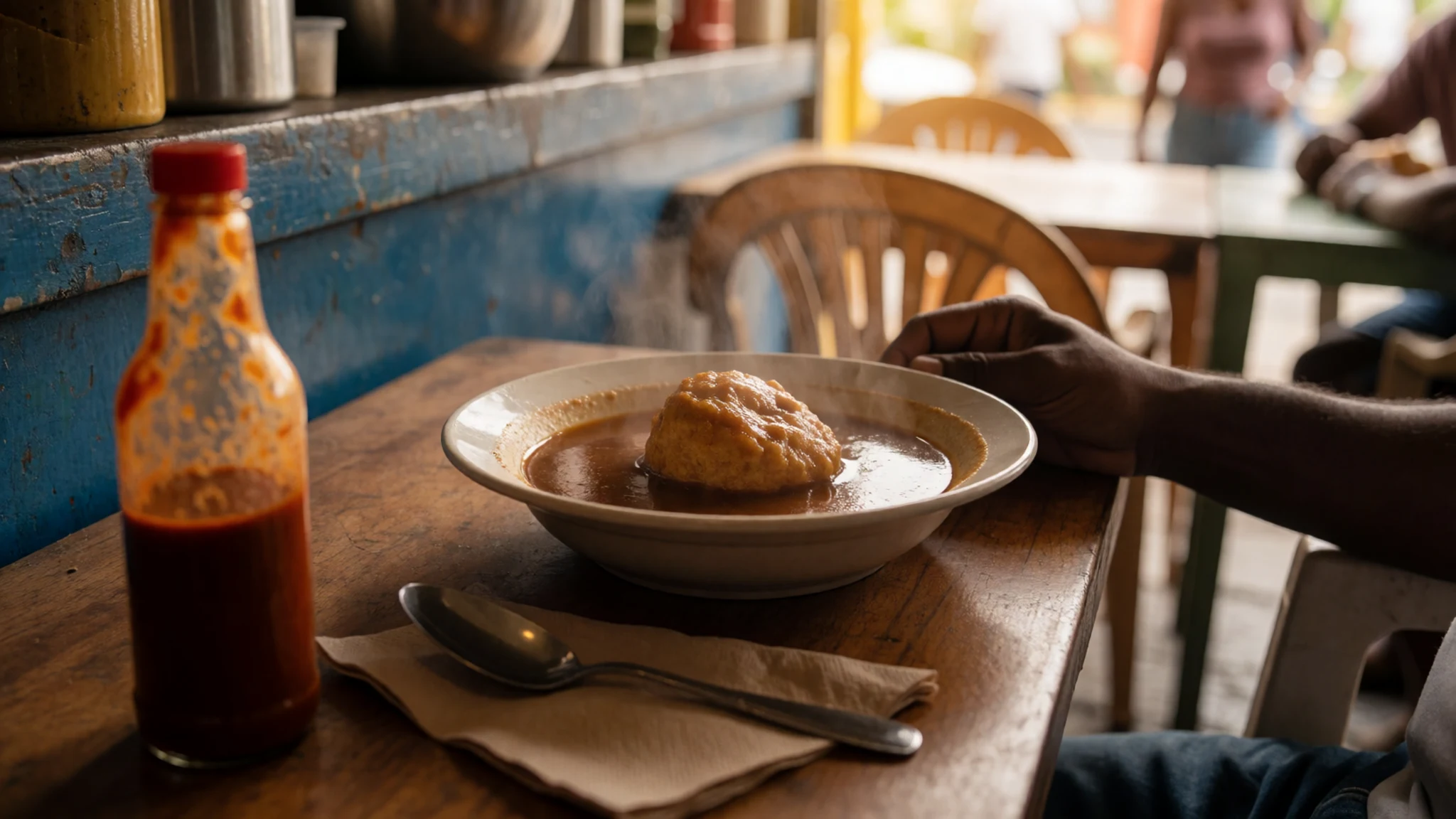
- Stewed saltfish — Breakfast counters near the public market
Stewed saltfish, with dumplings, plantain or breadfruit, is the breakfast that carries a market morning in Basseterre. The fish is flaked through a savoury sauce, and the plate is built to last. It is served early at breakfast counters near the public market.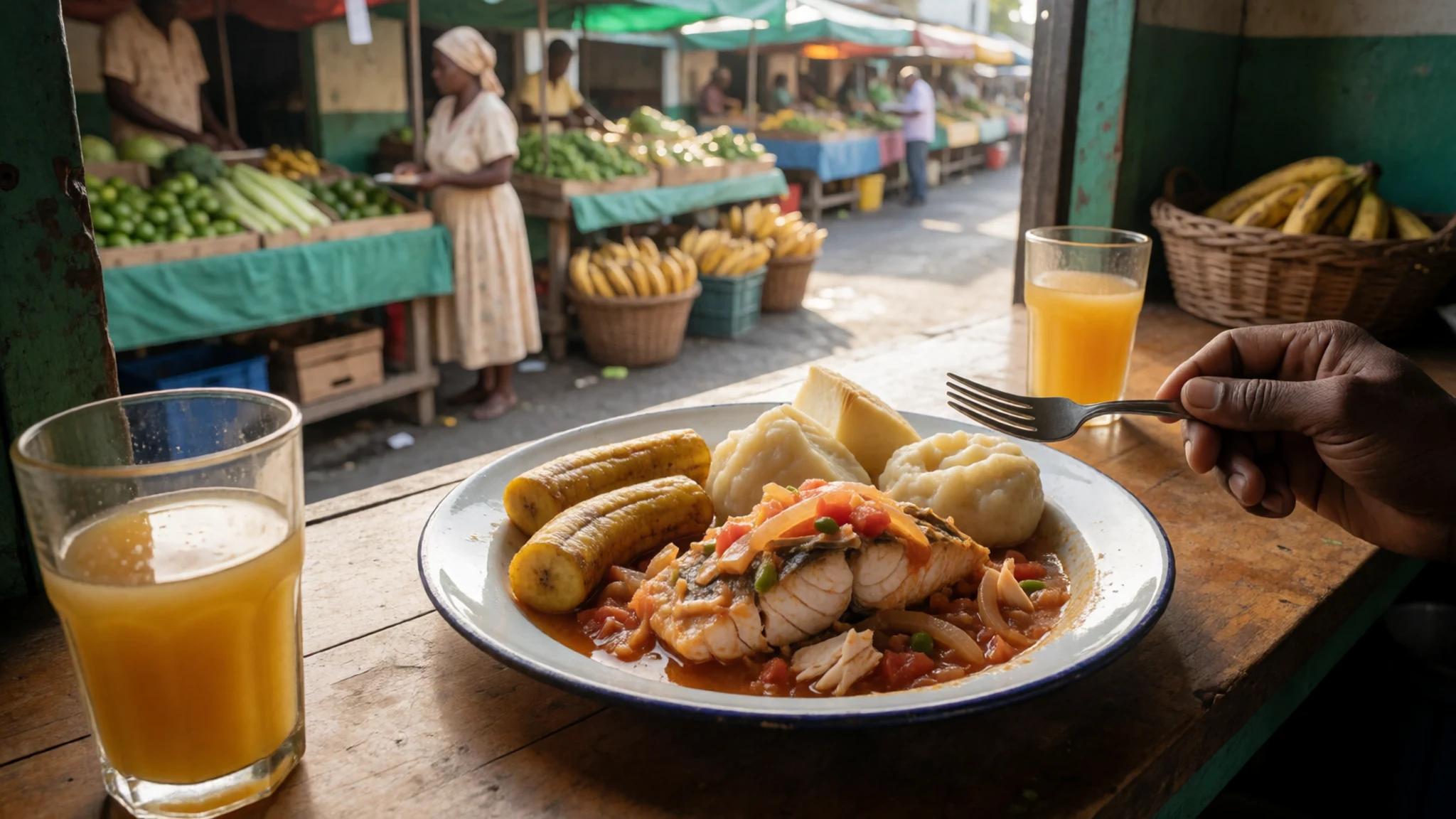
- Fried jack and breadfruit — Waterfront cookshops
Crisp fried jack fish and fried or roasted breadfruit make a plain, satisfying lunch at waterfront cookshops in Basseterre. The fish depends on the boats; the breadfruit is the starch many kitchens reach for instead of an imported side. Lime and pepper sauce finish the plate. - Sugar cake — The public market and small grocery counters
Sugar cake is grated coconut cooked with sugar until it sets in sweet, chewy pieces. In Basseterre it is a snack from the public market and from small grocery counters, not a plated dessert. The taste is simply cane and coconut. - Roti — Lunch counters in the town grid
Roti is a soft flatbread wrapped around a curried filling of chicken, goat or vegetables, and it makes an easy lunch in the Basseterre grid. The bread should bend without tearing and still survive a short walk.
Plan it
Best time. January to March is the milder, drier stretch and the easier time to walk Basseterre. September is the hottest month and October the wettest, and from May to November heavy showers pass and leave the hills green. Cruise mornings in the drier months bring the crowds.
How long. 2–3
Getting there. Fly into Robert L. Bradshaw International Airport on Saint Kitts and continue by taxi or local bus for the short road into Basseterre. Ferries from Charlestown on Nevis arrive at the waterfront, and cruise ships dock at Port Zante beside the town grid. Check the airline, the ferry operator or the port for current timings.
Budget. mid
Tips
- Start with the public market and Independence Square in the morning, before the heat and before cruise passengers come ashore.
- Carry cash for the market, cookshops and small buses; cards are widely accepted in larger shops.
- Ask whether a ship is due if the waterfront's mood matters to your day.
- Use the ferry operator and the airport for today's timings, not a remembered schedule.
- Take a hat and water for even a short walk; the centre is low and often exposed.
Etiquette
- Greet shopkeepers and stallholders before you ask a question or take a photograph.
- Dress modestly in churches and do not move about during a service.
- Keep Independence Square reasonably quiet, and remember that it was a slave market before it was a garden.
Nearby
Sources
- Wikidata (CC0)
- Wikipedia: Basseterre (CC BY-SA 4.0)
- Wikivoyage: Basseterre (CC BY-SA 4.0)