Nevis
Nevis, Saint Kitts and Nevis
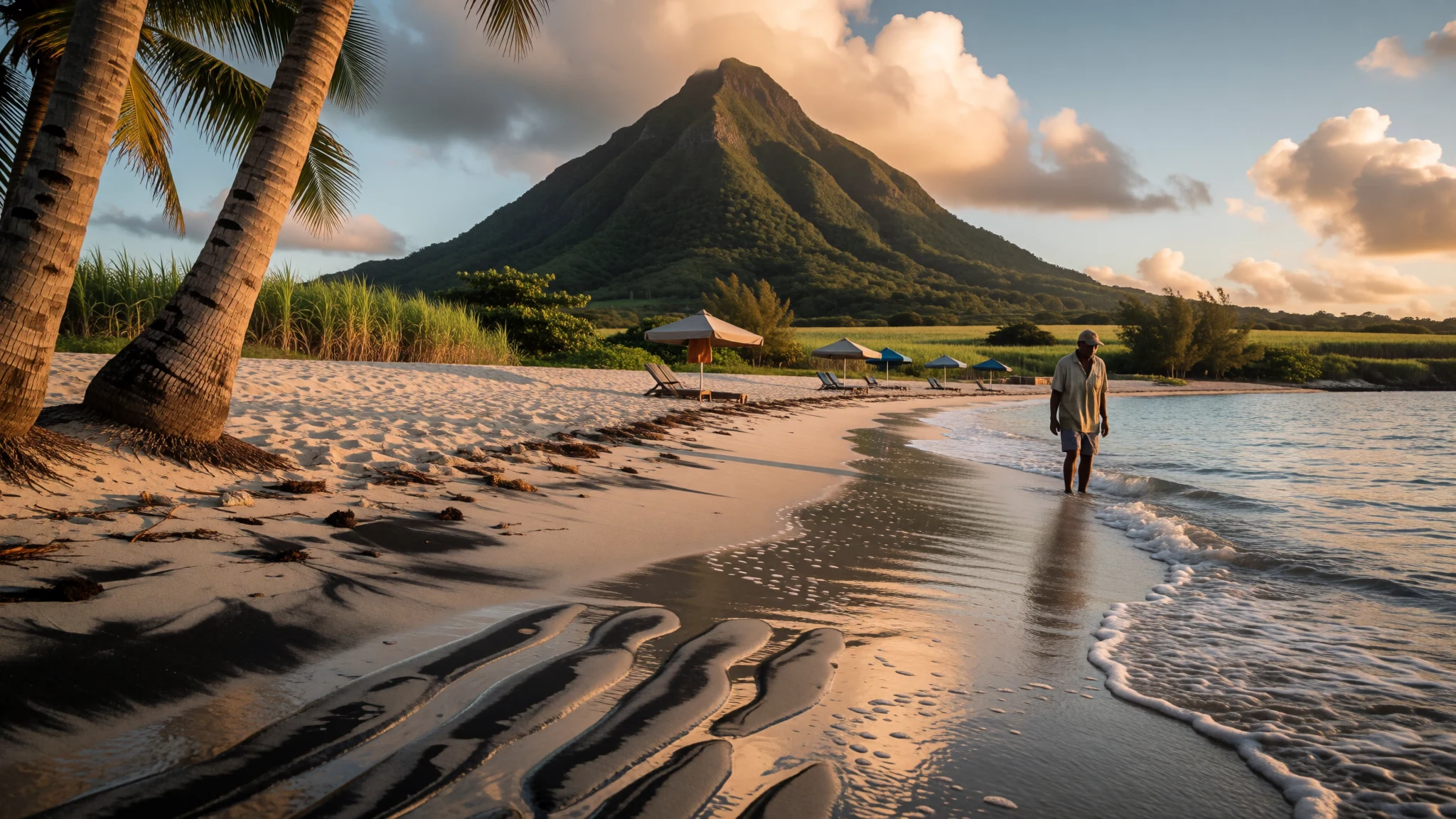
Nevis is a quiet, round volcanic island of sandy western beaches, hot springs and old plantation ruins, without the crowds of larger Caribbean islands.
The place
Nevis is a small, roughly conical island in the Caribbean Sea, part of the inner arc of the Leeward Islands, with a volcano, Nevis Peak, at its centre. It covers about 93 square kilometres and is home to 12,277 people. Together with neighbouring Saint Kitts it forms the sovereign Federation of Saint Kitts and Nevis, and Charlestown is its capital. The island sits about 350 kilometres east-southeast of Puerto Rico and about 80 kilometres west of Antigua, while a shallow channel called the Narrows, about 3 kilometres across, separates it from Saint Kitts.
The shape of the land explains much of the island's character. Beaches run along the western and northern coasts, and their sand is a blend of white coral with brown and black grains washed down from the volcanic rock. Behind them lies a gently sloping coastal plain, about 1 kilometre wide, where natural freshwater springs rise alongside volcanic hot springs. The hot water is not drinkable, and it is most common on the western side. Above the plain the ground climbs towards the peak.
The names tell part of the story. The Kalinago called the island Oualie, 'land of beautiful waters', and early British settlers called it Dulcina, 'Sweet Island'. English is the official language. Nevis is low-rise and unhurried, with beach bars, old estate houses and few crowds. Anyone wanting nightlife or large resorts will find little here, but those who want slow days by a calm shore, with a volcano to look at, tend to be well satisfied.
Its story
Nevis was home to Amerindian peoples long before Europeans appeared, and Columbus sighted the island in 1493. Its early inhabitants belonged to the Leeward Island groups usually labelled Arawaks and Kalinago, a mosaic of communities with similar language and culture. The term Carib, widely used by Europeans, traces back to Columbus, who borrowed it from the Taíno of Hispaniola; the Kalinago never used it for themselves. Their own name for the island, Oualie, 'land of beautiful waters', is still the one most often quoted.
Spain claimed the region, but the claim counted for little on the ground. Nevis became a regular stopover for English and Dutch ships crossing towards North America. In 1603 Captain Bartholomew Gilbert of Plymouth spent two weeks here cutting lignum vitae, a very dense hardwood. Early British settlers then gave the island the name Dulcina, 'Sweet Island'.
The later colonial chapters, centred on sugar estates and the labour of enslaved people, left the mills, estate buildings and churches that dot the island today. Many of those churches date to the 18th century. Emancipation Day, marked each August alongside the Culturama festival, keeps that history in public memory. Read together, the indigenous name, the passing ships and the plantation ruins explain why such a small island carries so many layers of memory, and why an afternoon's walk can pass from a sandy shore to a stone sugar mill.
What to see
- Pinney's Beach and the west coast — West coast, near Charlestown
Pinney's Beach runs along Nevis's sheltered western shore, where white coral sand mixes with darker volcanic grains and the view looks across the Narrows towards Saint Kitts. Beach bars and grills sit along the sand, and the water is generally gentle for swimming. Walk further along the shore for emptier stretches away from the lunch crowds.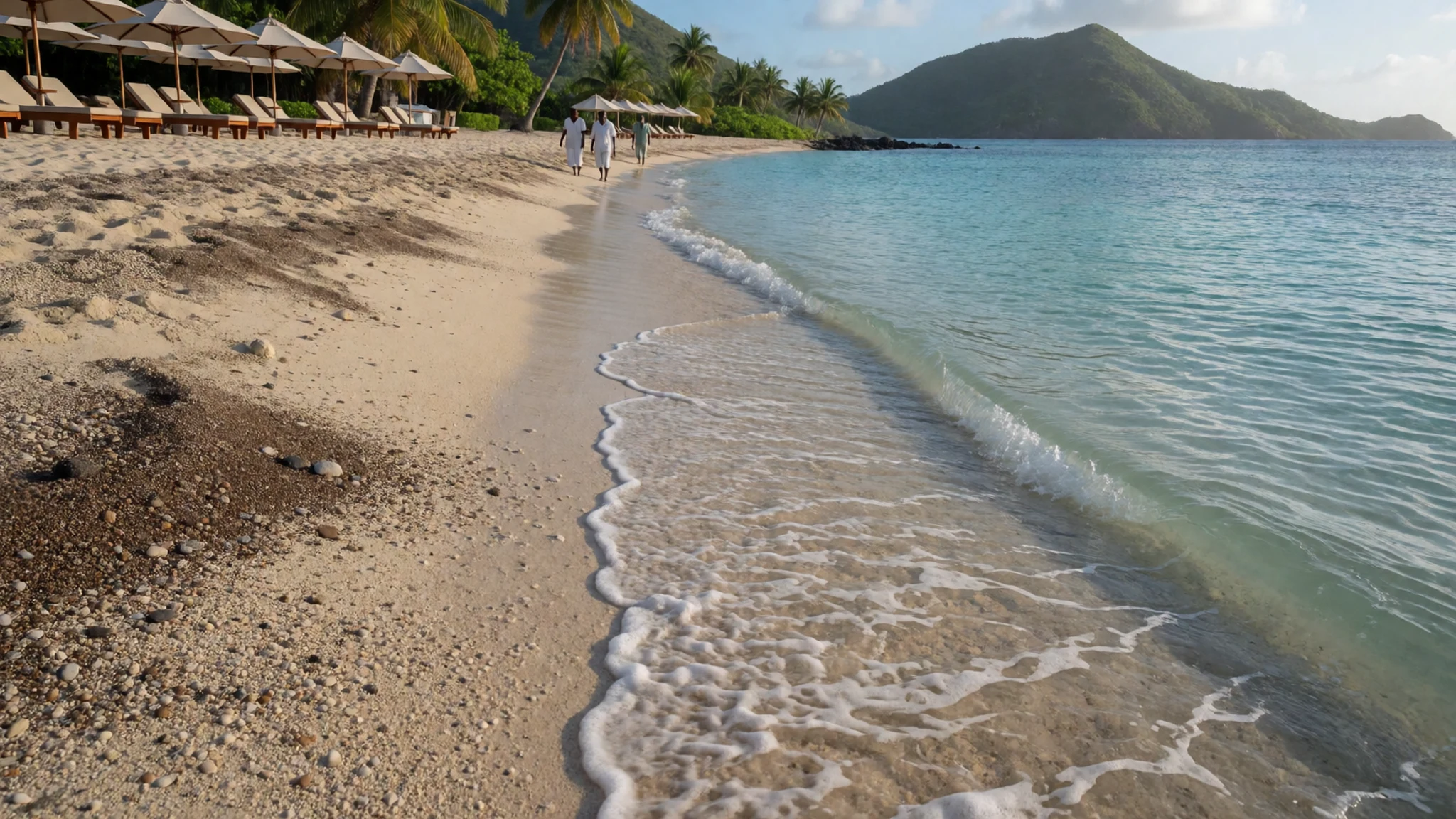
- Bath Hotel of 1778 and the hot springs — Just outside Charlestown
Just outside Charlestown stands the Bath Hotel of 1778, a spa lodging built to make use of the island's volcanic hot water. The building and the nearby springs make an easy, short visit. The water is geothermal and not for drinking, and temperatures vary, so test it with a hand before stepping in.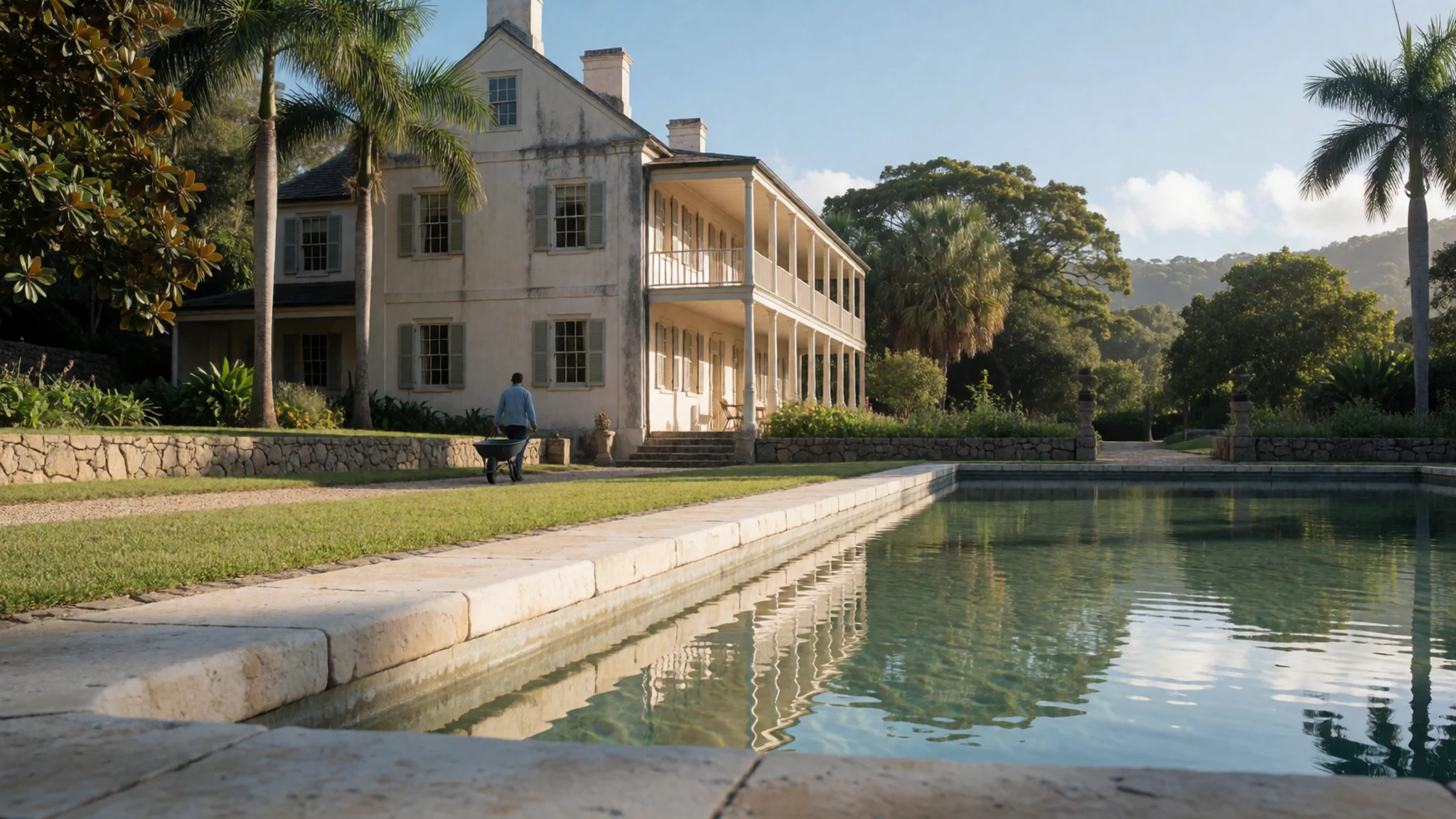
- Charlestown and its museums — Charlestown
Charlestown, the capital, holds the Museum of Nevis History in a restored Georgian-style Caribbean building, the Alexander Hamilton House, which is home to the Nevis Historical and Conservation Society. A sports museum and a philatelic bureau for stamp collectors are close by. The Nelson Museum has been closed since 2019, so check the official site first.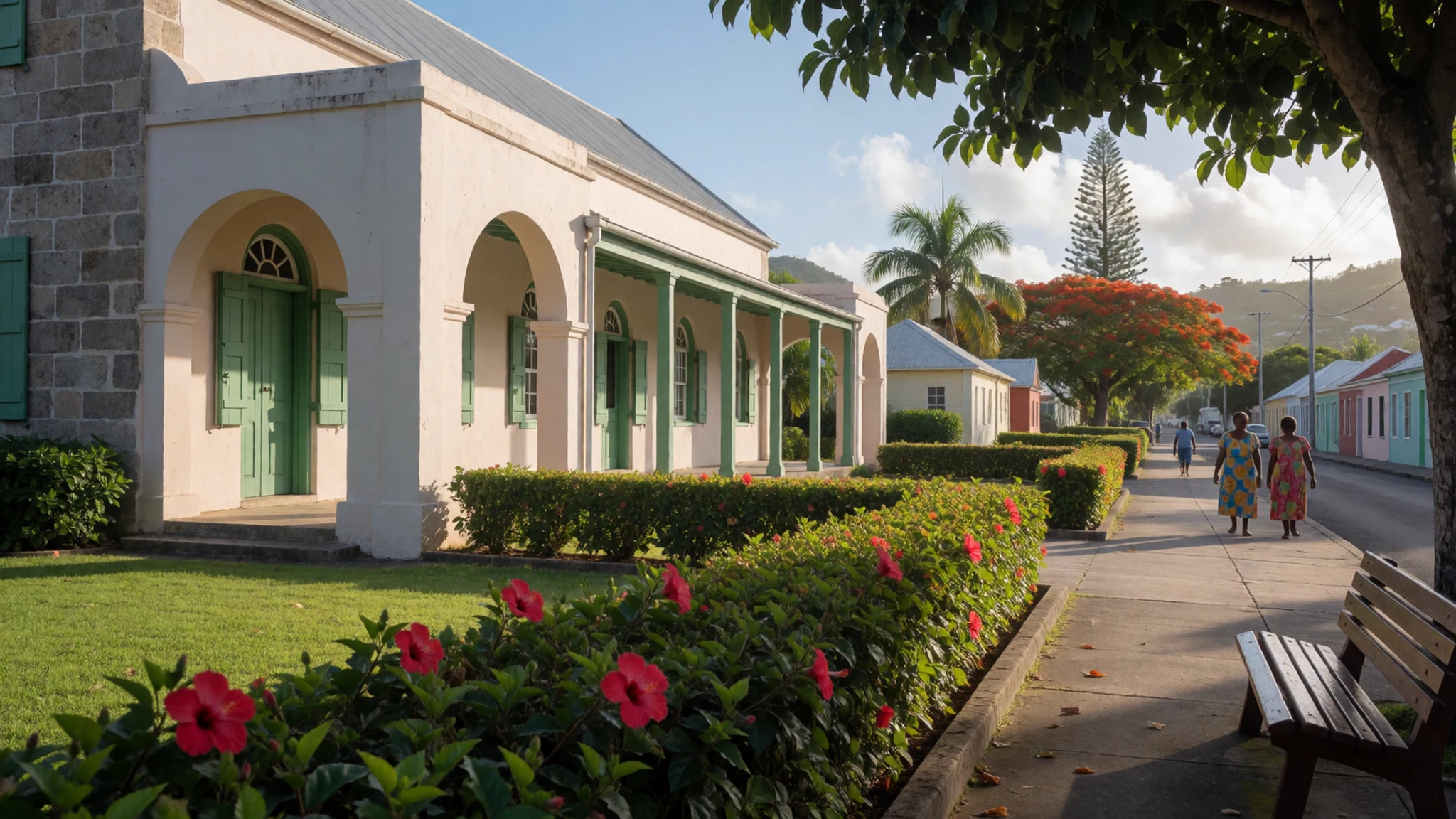
- Hermitage Plantation — Saint John parish
Hermitage Plantation, in Saint John parish, includes a wooden building of 1640 made from lignum vitae, a very dense hardwood, and still in service today. It is a rare chance to see early timber construction in the Caribbean, where hurricanes and termites have claimed most such houses. Ask locally about visiting arrangements before setting out.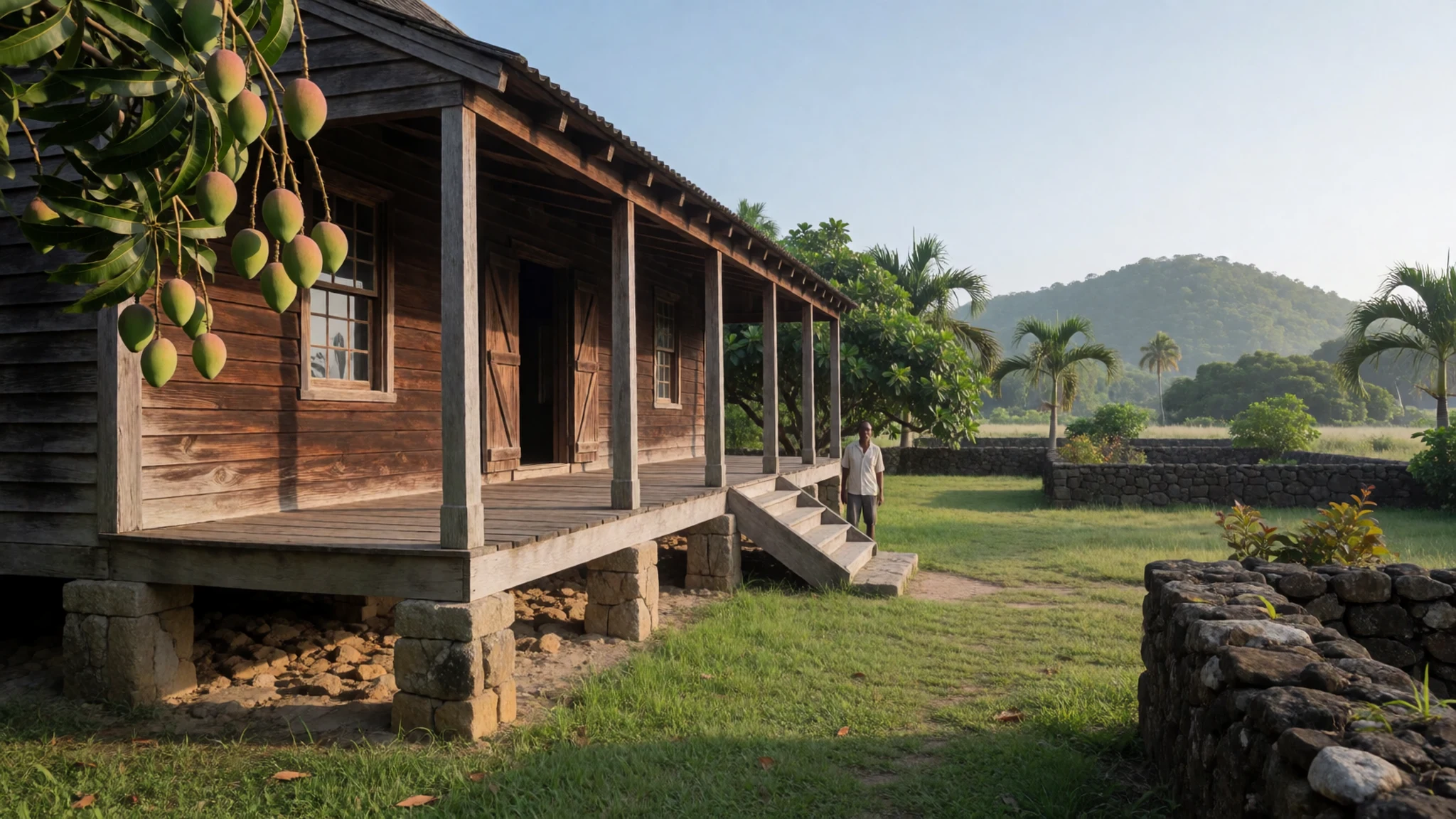
- Nevis Peak — Centre of the island
Nevis Peak is the volcano at the island's centre, and it is visible from nearly every beach and road. Most visitors simply admire it from the shore, especially at the end of the day when the light softens. Anyone who wants to climb should arrange a local guide and ask about conditions first.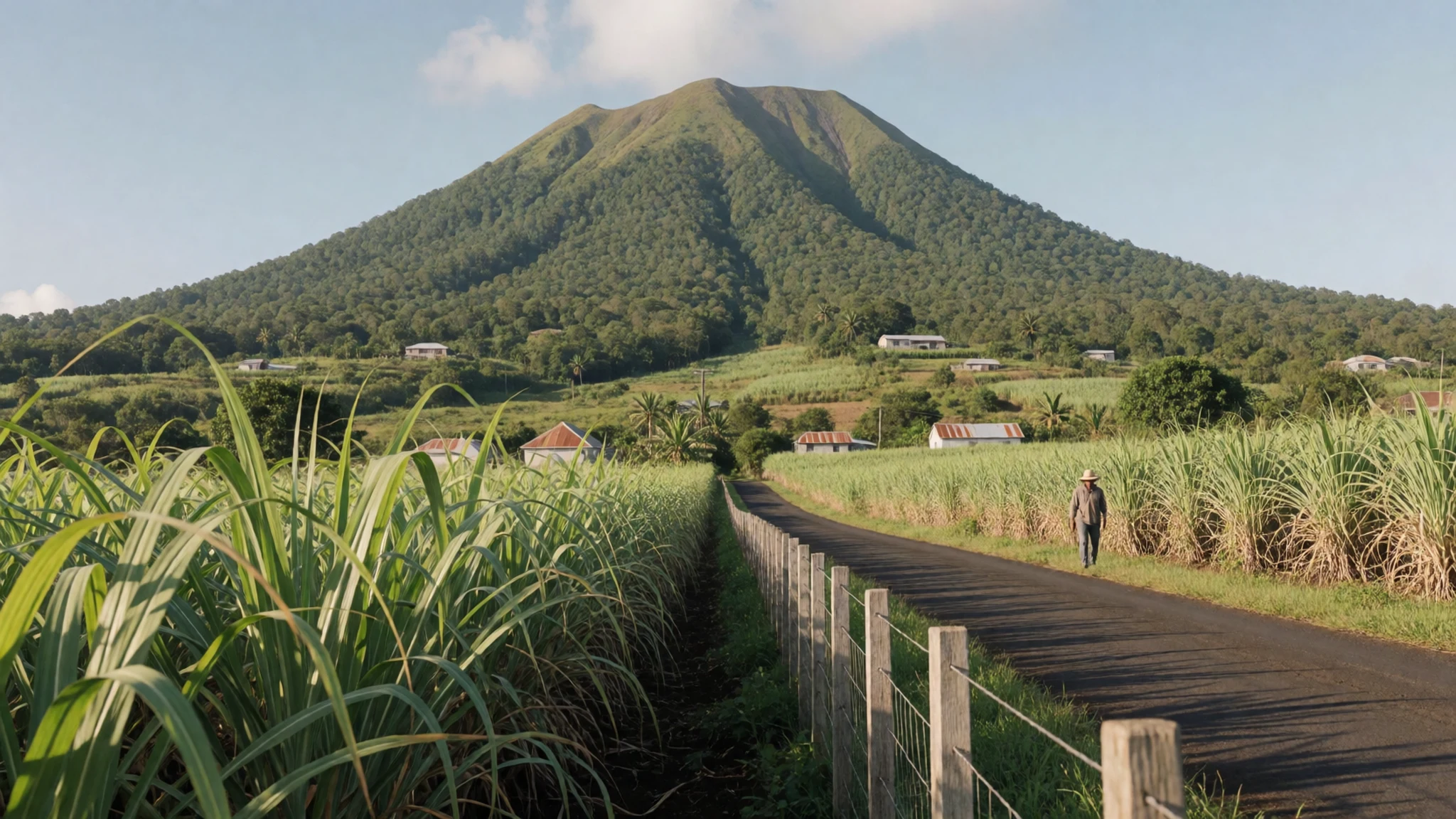
- Sugar mills, old churches and the racetrack — Island-wide; racetrack in the southeast near Indian Castle
Across the island, sugar mills and old estate buildings survive as ruins, and many churches date to the 18th century, so a slow drive repays frequent stops. In the southeast, near Indian Castle, a racetrack with a grandstand stages horse racing, a pleasant surprise on an island this small.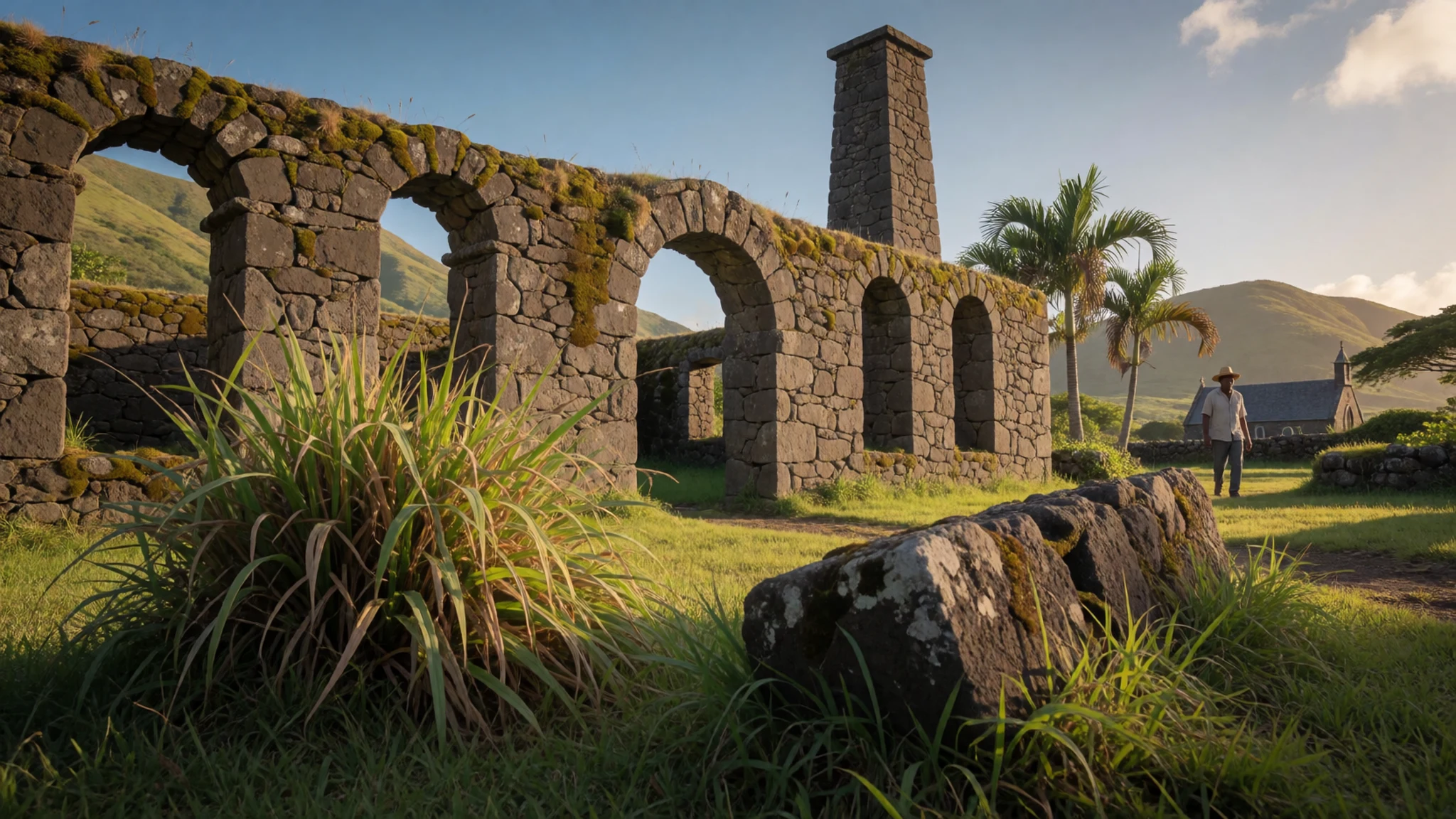
Culture
Nevis keeps its folk traditions alive through Culturama, the island's yearly cultural festival, held over the Emancipation Day weekend in the first week of August. The programme includes masquerade, Moko jumbies dancing on stilts, Cowboys and Indians, and Plait the Ribbon, a maypole dance. The event took a more organised shape in 1974, adding a Miss Culture Show, a calypso competition, drama, crafts exhibitions and recipe contests, alongside older troupes such as Johnny Walkers, Giant and Spear, Bulls, Red Cross and Blue Ribbon. Nevis has a quiet, old-school Caribbean feel that hits you the second you step off the ferry from St. Kitts—no high-rises, just green peaks, roaming donkeys, and rum shops tucked into chattel houses. It’s expensive, especially around the historic plantation inns, and the summer heat and humidity can be draining, but the winter trade winds make December through April gorgeous. Don't expect a bustling nightlife scene; Nevis is about hiking Peak Nevis, swimming empty beaches like Pinney's, and slowing down.
English is the official language, and everyday life on Nevis is unhurried. Dining spots serve all three meals—breakfast, lunch, and dinner—but typically close between sittings, meaning you need to plan your eating times rather than winging it. Many of the island's churches are centuries old and remain part of community life. Because the island is so small, courtesy counts for a great deal, and a friendly greeting opens more doors than any guidebook.
Anyone travelling in early August should book well ahead, since Culturama draws visitors as well as islanders. Greet people with a 'good morning' or 'good afternoon' before asking for anything, and cover swimwear with a shirt or wrap once you leave the beach for Charlestown or a church.
What to wear
Nevis has no single national costume that the sources for this reading describe, so traditional dress is best seen at festivals. During Culturama, masquerade bands, Moko jumbies on stilts and the dancers of Plait the Ribbon wear bright, theatrical outfits, with ribbons, sashes and layered fabrics suited to dancing in the street. Cotton, and in the wider Eastern Caribbean checked madras cloth, is the usual choice for folk dress, which is worn mainly at these performances and heritage events.
Everyday clothing on Nevis is light and practical in the tropical heat: cotton shirts, linen, sundresses, shorts and sandals. Smarter clothes are usual for church, official business and dinners at the better restaurants, while swimwear stays on the beach.
Visitors should pack breathable cotton or linen, a wide-brimmed hat, sunglasses and reef-friendly sunscreen, because the sun is strong through the year. Bring a light shirt or wrap to cover swimwear in Charlestown and in churches, and choose knee-length shorts or skirts for anything formal. Sandals suit the sand, but closed shoes with grip are better for ruined estates, uneven ground and any walk on the volcano's slopes. A light waterproof helps in sudden showers, and a dry change of clothes is handy after the boat crossing from Saint Kitts.
What to eat
- Roti — Small eateries and takeaway counters in Charlestown
A roll-up flatbread wrapped around a savoury filling, roti is simple, filling and widely available on Nevis. It travels well, which makes it a handy lunch for a day of sightseeing or a picnic on the beach.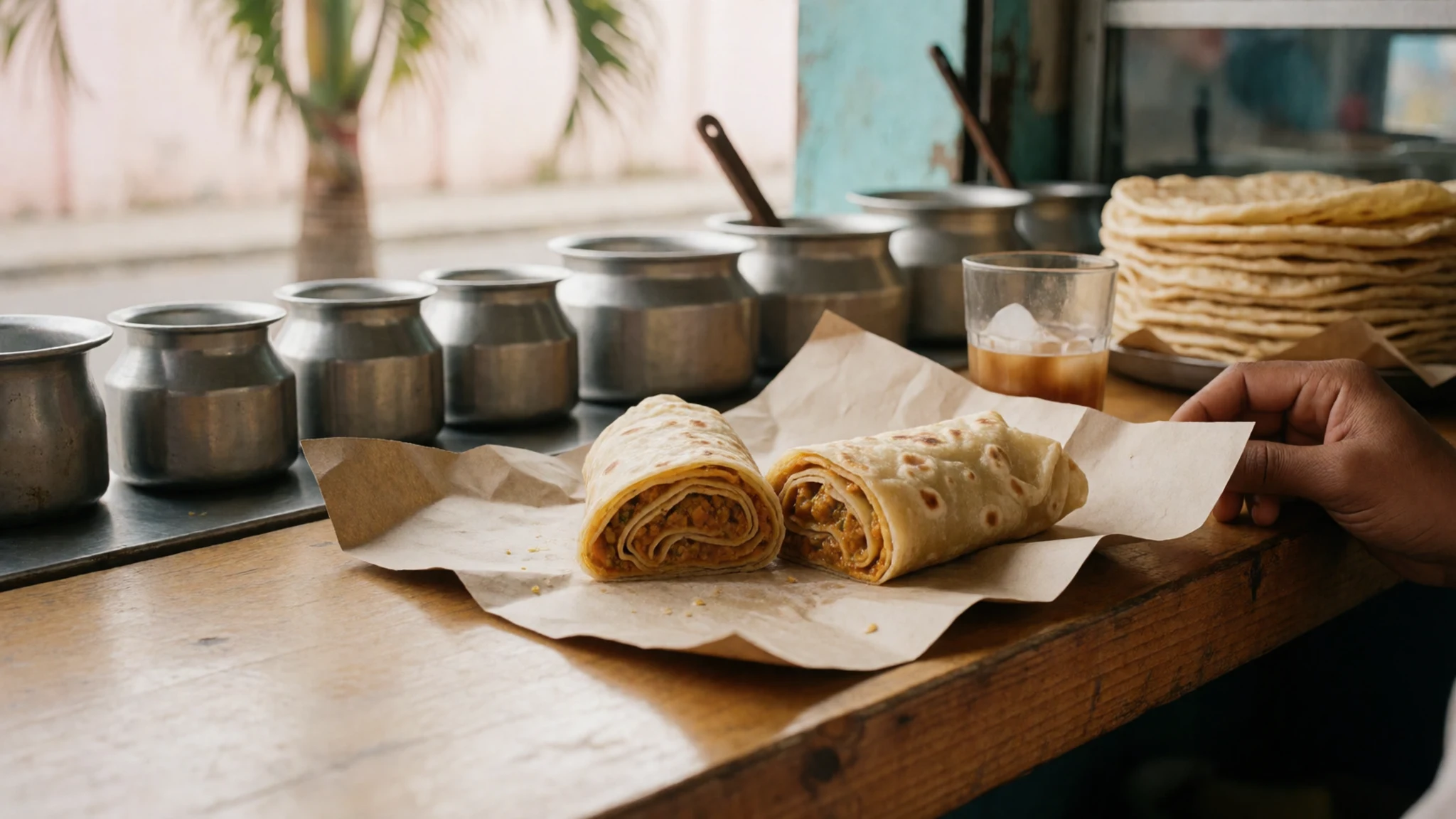
- Breadfruit — Local restaurants at lunch; ask what the day's sides are
Breadfruit is a starchy fruit cooked as a side dish, often roasted or fried, and it plays the role that potato does elsewhere. Its mild taste suits grilled fish and stewed meat, and it appears on many local menus.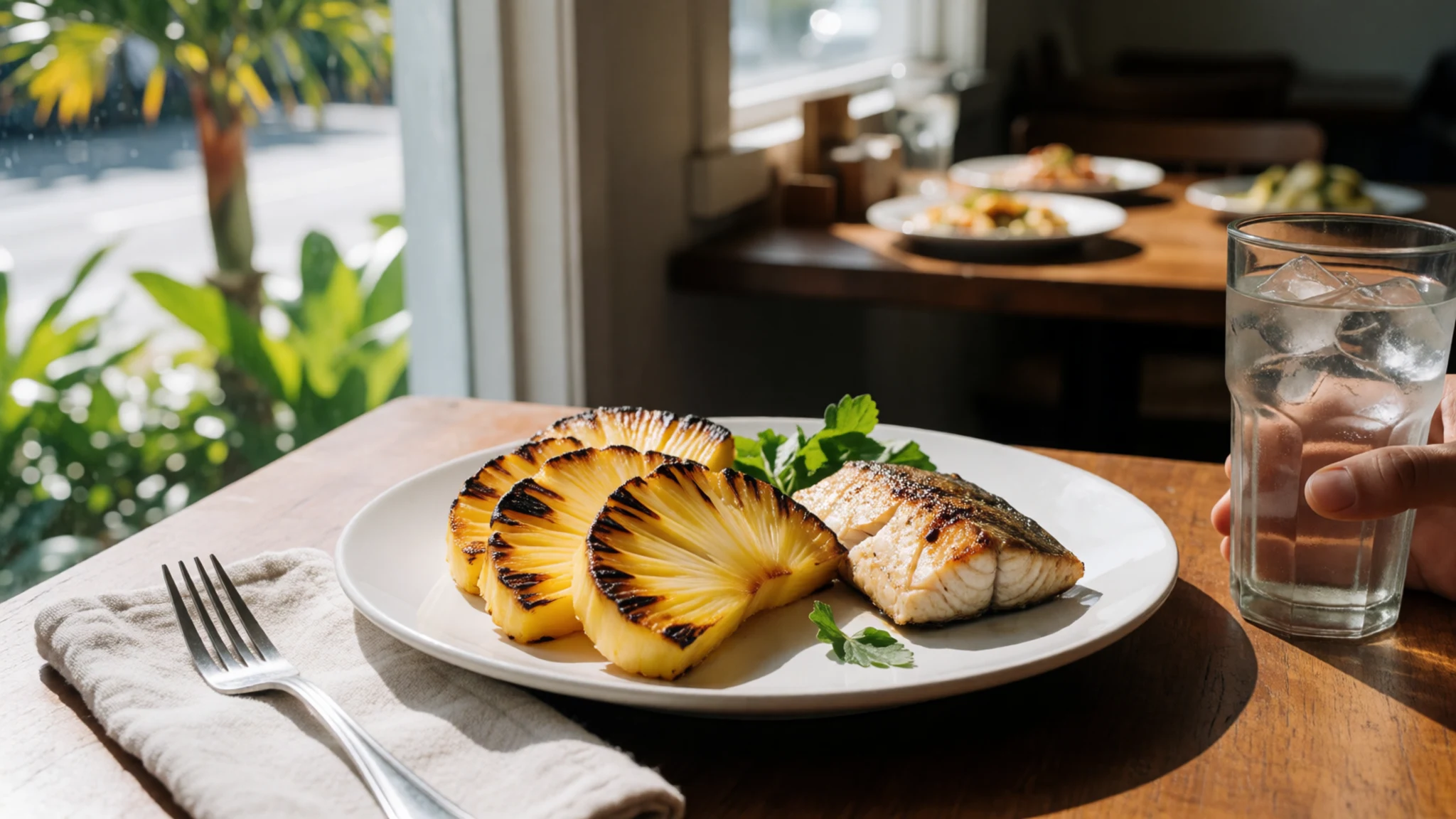
- Coconut jelly — Roadside stalls and beach vendors
The soft, jelly-like flesh inside a young coconut is eaten with a spoon and has a mild, sweet taste. It is refreshing in the heat, and the coconut water makes a good accompaniment. - Fresh mango — Roadside stands and the island's produce stalls
Mangoes are a seasonal treat on Nevis, eaten ripe and fresh, and often served in drinks and desserts. The fruit is at its juiciest when bought straight from a grower or stall rather than a shop. - Fresh tamarind — Produce stalls and local kitchens
Tamarind pods hold a sticky, sweet-sour pulp that can be eaten fresh or turned into sauces, sweets and cold drinks. It is a flavour typical of Caribbean cooking and worth trying in any form. - Beach-bar grill lunch — Pinney's Beach and the western and northern shore
Grilled dishes served on the sand are the island's easiest meal, with the sea in front and the volcano behind. The grills at Pinney's Beach, such as Sunshine's, and beach spots near Newcastle, such as Chevy's, are good places to start.
Plan it
Best time. December to April is generally the drier, cooler stretch and the most pleasant for beaches. June to November is hurricane season, so check forecasts and travel insurance cover if going then. Early August is lively because of Culturama.
How long. 3–5
Getting there. Vance Amory International Airport on Nevis takes small aircraft, usually connecting through a larger Caribbean hub such as Puerto Rico or Saint Maarten. Alternatively, fly non-stop to Saint Kitts if your route allows, then cross by ferry or water taxi. The car ferry, which also carries foot passengers, leaves from Majors Bay, a short drive from the Saint Kitts airport. Check current sailing times on the official site (https://nia.gov.kn/) or with your accommodation, which can often arrange the crossing.
Budget. high
Tips
- Book flights and transfers early, since two flights are common and small planes fill up
- Restaurants are usually closed between meals, so plan lunch and dinner times
- Carry some cash as well as a card, and ask your accommodation what smaller places accept
- Bring a hat, water and sun protection, and take shade in the middle of the day
- Book well ahead if you want to be here for Culturama in early August
Etiquette
- Greet people before asking for directions or help
- Keep swimwear to the beach and cover up in Charlestown and in churches
- Ask before photographing people, especially performers and market sellers
Nearby
Sources
- Wikidata Q207794 (CC0)
- Wikipedia: Nevis (rev 1384403864) (CC BY-SA 4.0)
- Wikivoyage: Nevis (rev 5244077) (CC BY-SA 4.0)
- Photo: Nevis 2008 (Public domain)
- Photo: Saint Kitts and Nevis Regions map (CC BY 3.0)
- Photo: Stkitts-view-lookingatsea (CC BY 3.0)
- Photo: Vance Amory International Airport, Nevis (CC BY 3.0)
- Photo: Portrait of John Pinney at the Georgian house, Bristol (CC BY 2.5)
- Photo: Nevis-lookingtosea (CC BY 3.0)
- Photo: Nevis Hot Spring (CC BY 3.0)
- Photo: The Museum of Nevis History, Alexander Hamilton birthplace (CC BY 3.0)


