Arad Fort
Arad Fort, Bahrain
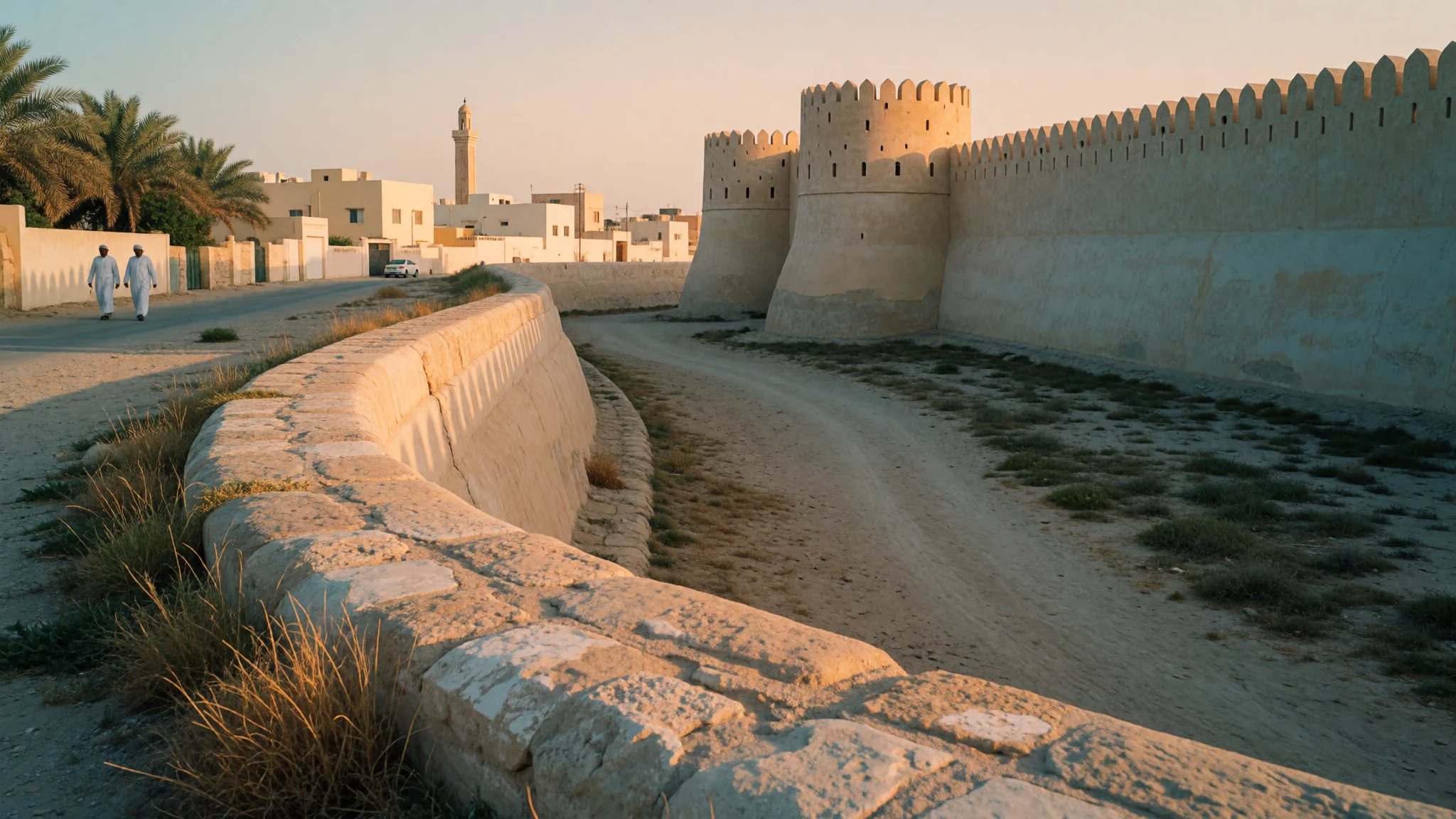
Arad Fort is a compact coastal stronghold on Muharraq, where Bahrain's island defences still read clearly in stone.
The place
Arad Fort (قلعة عراد) stands in the town of Arad on Muharraq, the island that holds Bahrain's main airport and some of its oldest neighbourhoods. The building is a low, compact stronghold, with thick walls, a regular plan and round towers at the corners, finished in a pale render that throws the daylight back. A dry moat rings the walls, so the fort reads as a small island of stone inside the modern town. From the parapet the view is everyday Bahrain: low houses, a flat Gulf horizon and the coming and going of aircraft. This was a working coastal defence on a small island, placed where a watch could see movement along the shore, not a palace raised to impress a capital. Inside, rooms open off a courtyard, and the scale stays human. The path crosses the ditch, passes the gate and reaches the heart of the place straight away. Restoration has left the surfaces even and the lines clear, so the fort can look recently finished until the thickness of the walls and the command of the towers become obvious. Streets, a mosque and ordinary traffic sit close to the monument, and the call to prayer carries over the walls. In the warmer months the stone holds the heat and the air is heavy with Gulf humidity; in the milder season the same openness is a pleasure, with a breeze and room to walk the circuit without hurry. The fort rewards a slow loop, outside along the moat, inside through the court, then along the public route on the walls, more than a hunt for objects.
Its story
Arad Fort began as a coastal stronghold for the people of Muharraq, built in the geometric manner of Islamic military work: a compact plan, round towers covering the walls, and a ditch that once carried sea water. At that time the fort stood on its own small island, reached by a causeway, which made the ditch a real barrier rather than a dry garden feature. It was already standing before the Portuguese took the Bahrain islands, and it belongs to the local tradition of watch-forts rather than to the Portuguese building programme along the Gulf. Control of Bahrain changed hands repeatedly in the centuries that followed, and a fort on this shore stayed useful to whoever held Muharraq, because the island faces the open water and the channels between the Bahrain archipelago. When pearling declined and the town spread, reclaimed land joined the fort's island to Arad, the seawater left the ditch, and the building slipped out of daily use. A later restoration cleared the plan again: plaster renewed, the court reopened, the walk on the walls made safe enough for visitors. Arad Fort is now a public monument inside a residential district, a short distance from the airport and from the older lanes of Muharraq. It is the slower story of an island fort that lost its island, kept its outline, and was handed back to the town as a place to walk. The aircraft on the horizon are new; the idea of watching this shore is not.
What to see
- The moat and walls — Arad, Muharraq
Arad Fort presents a low pale circuit of wall, with round towers at the corners and a dry moat between the masonry and the street. The ditch once held sea water, when the fort stood on its own small island and a causeway was the way in. A circuit of the outside, before the gate, shows the thickness of the defence more clearly than the courtyard does.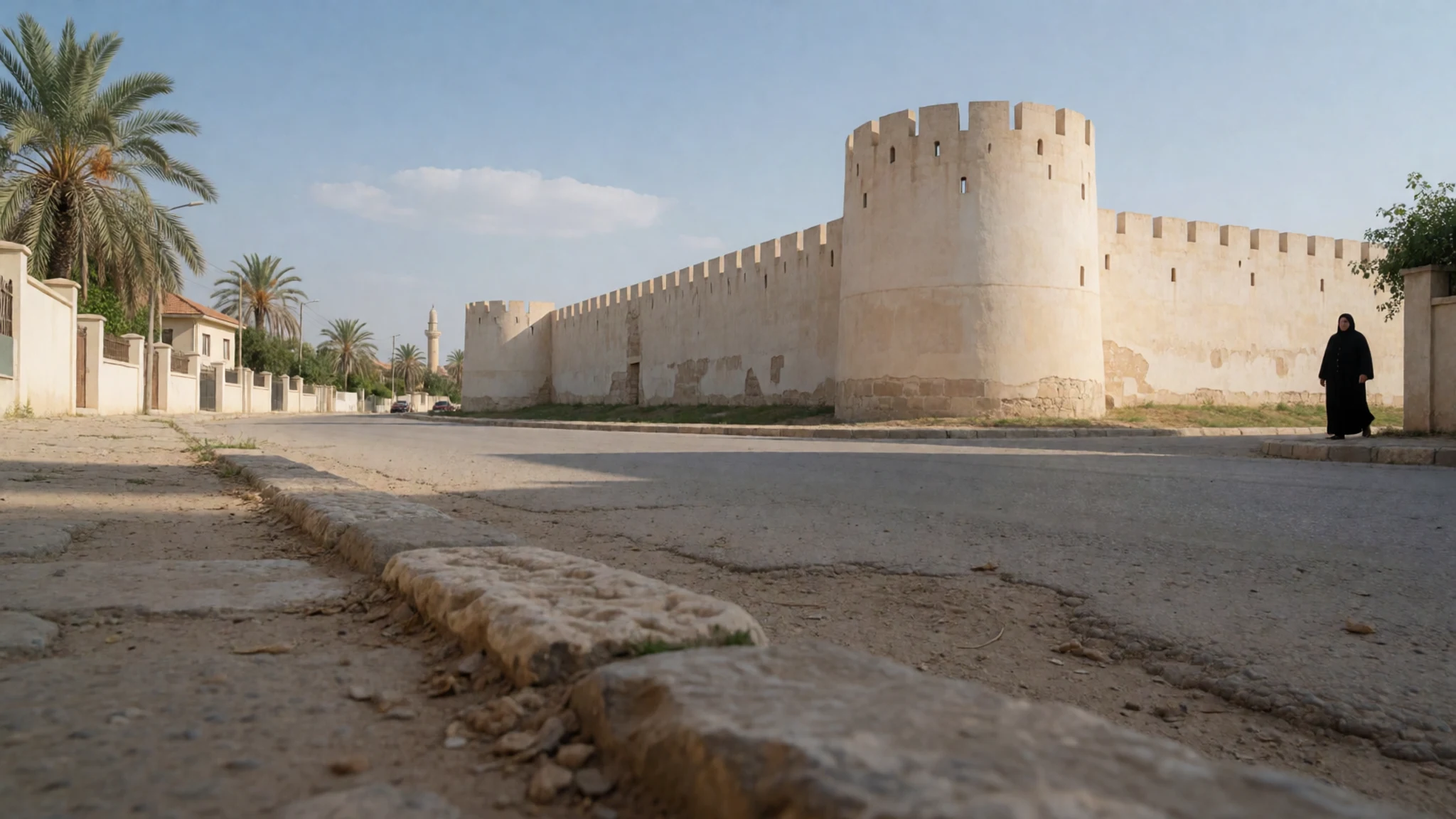
- The gate and courtyard — Arad, Muharraq
Arad Fort is entered across the moat and through the main gate into a compact courtyard. Rooms and covered passages open off that court, scaled for a garrison rather than for ceremony. The pale walls bounce the light, and at midday the open centre is the hottest part of the visit. Corners lead toward the towers, and from there the geometry of the plan is easy to read.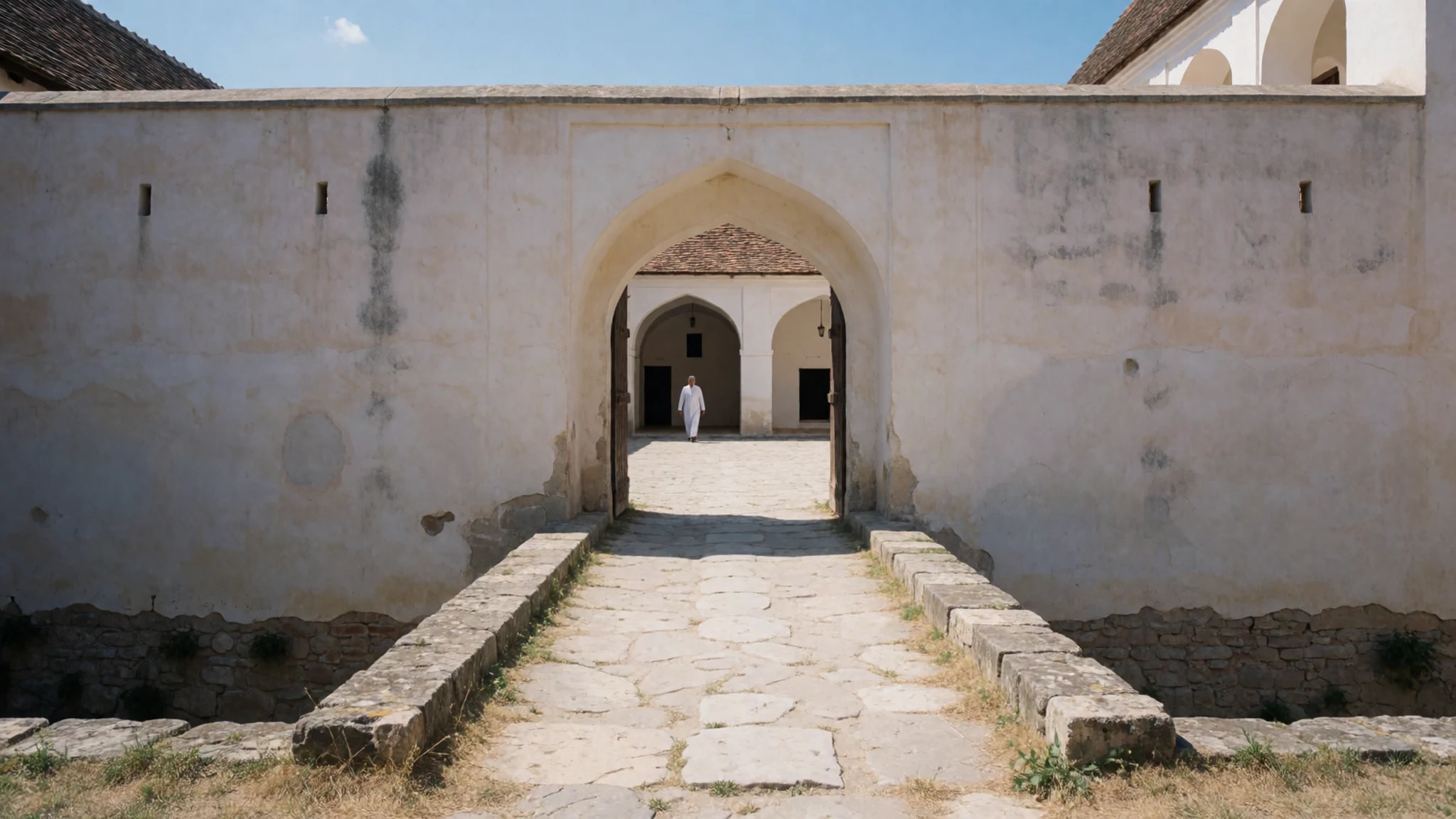
- The towers and wall-walk — Arad, Muharraq
Arad Fort's round towers anchor the corners and carry the wall-walk that links them. The climb is short, on stone and restored steps, and the reward is a circuit of the parapet rather than a high panorama. Muharraq lies flat all around: roofs, mosques, the Gulf's low horizon and the airport's traffic. Because the surrounding land was reclaimed, the view no longer matches the watery isolation the garrison knew.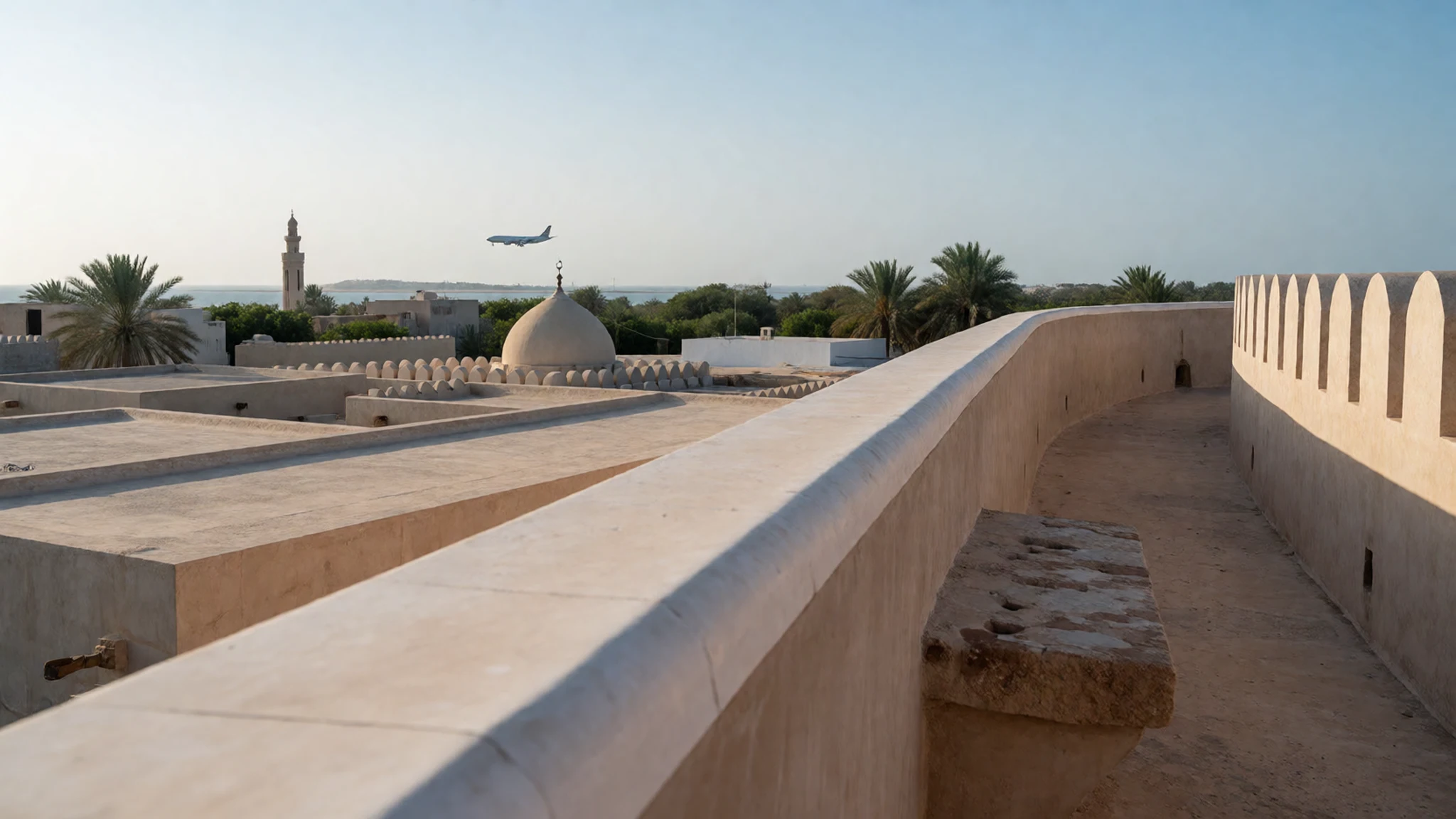
- The town edge — Arad, Muharraq
Arad Fort sits inside a lived-in neighbourhood. A flag, low houses and the ordinary street grid press up to the moat, which makes the pale walls easy to photograph and the context easy to misread. This is not a ruined outpost in the desert. It is a historic work left standing while Muharraq grew around it, close to a mosque and to the daily noise of a Bahraini town.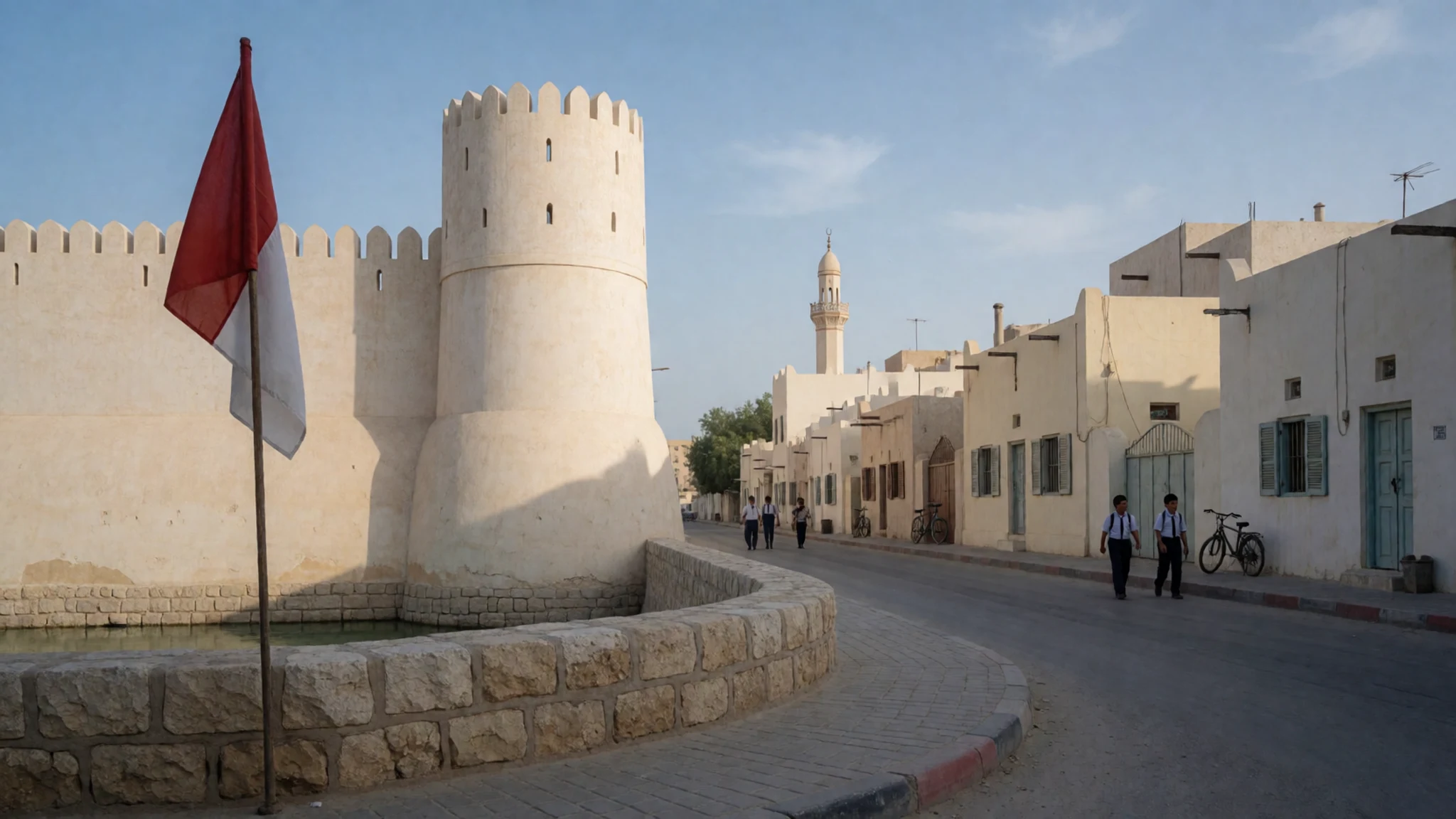
- The interior rooms — Arad, Muharraq
Arad Fort's interior rooms are plain, thick-walled and sparsely fitted, which is honest about what the building was. The covered parts are the surest shade, and they hold a cooler stillness even when the court is glaring. The openings are placed to watch the court and the ditch, and the rooms show how little space a garrison needed.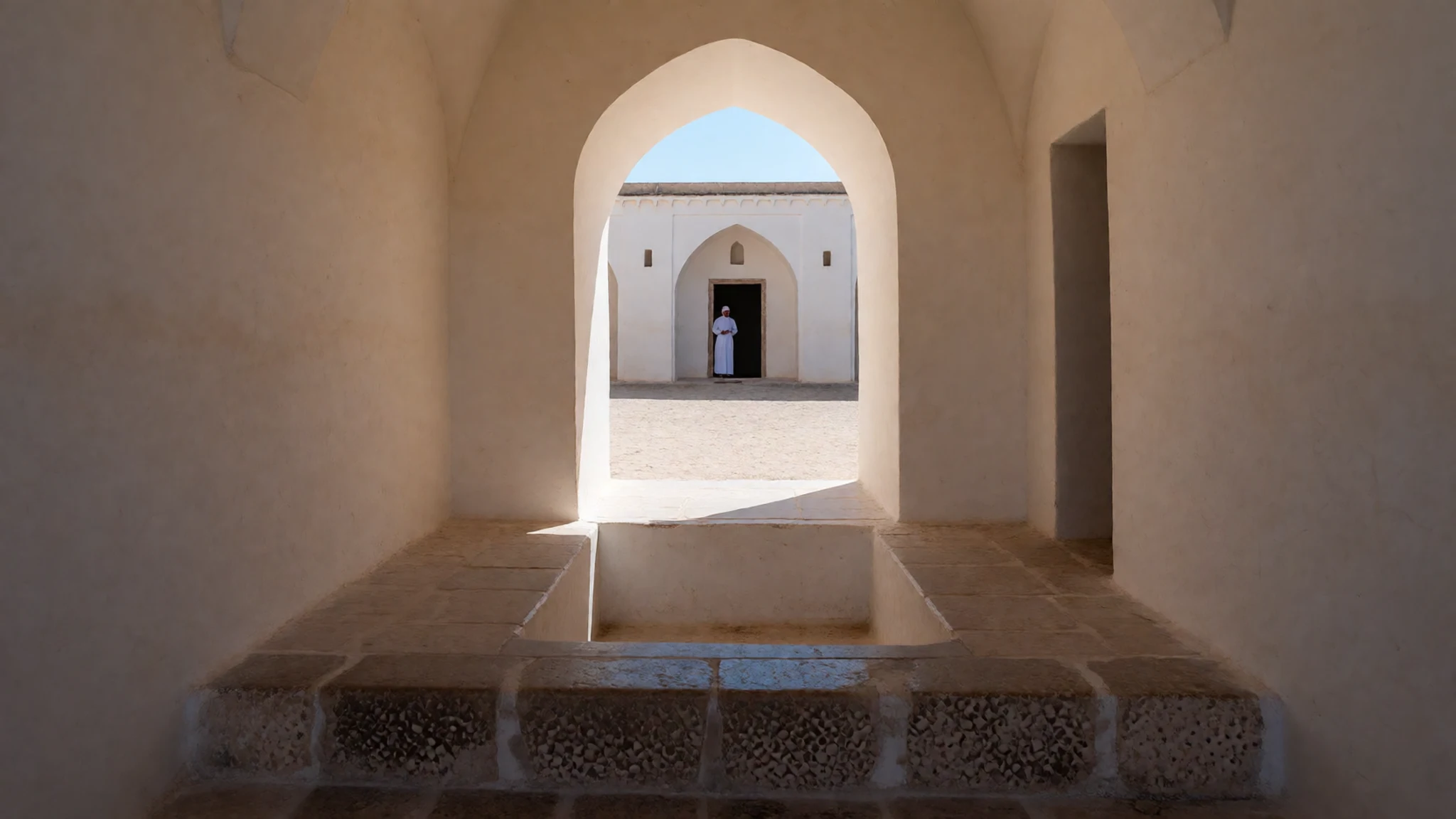
Culture
Arad Fort sits in a Bahraini town where hospitality, Friday gatherings and the rhythm of prayer are ordinary life, not a show arranged for visitors. Muharraq, the island around the fort, was long tied to pearling, boat-building and Gulf trade, and that past still shows in old lanes, in the majlis habit of receiving guests, and in the offer of gahwa with dates. Arabic is the language of the neighbourhood; English is widely understood in town and at the airport, so a short Arabic greeting is welcomed and never required. Islam shapes the day. The call to prayer crosses the walls, Fridays bring families out, and in Ramadan the public rhythm moves toward fasting by day and shared meals after sunset. People come to Arad Fort in national dress and in ordinary clothes, and the courtyard often serves as a backdrop when relatives are together. The monument is a heritage site in a residential district, not a place of worship, though a mosque stands nearby and someone may be praying or simply resting out of the sun. Photography of the walls is expected. At Arad Fort, cover shoulders and knees, ask before photographing people, and keep to the paths rather than climbing on the masonry.
What to wear
Arad Fort is where Bahrain's national dress and everyday town clothes show up together. Men traditionally wear the thobe, a long white cotton robe suited to Gulf heat, on ordinary days as well as Fridays and feast days. A ghutra or shemagh, fixed with an agal, covers the head. For weddings, Eid and formal calls, a bisht, a wool or fine cloak edged in gold thread, is worn over the thobe. Women traditionally wear a black abaya, with a shayla or hijab; a thobe nashal, heavily embroidered and paired with gold jewellery, is ceremonial dress for weddings rather than for the ramparts. Cotton next to the skin is the working textile; heavier cloth is kept for the bisht and for cooler evenings. Today, people at Arad Fort dress in both registers. Many Bahraini men still wear the white thobe to the fort, the shops and Friday gatherings; younger men and office staff are just as often in shirts, trousers, jeans and trainers. Women wear abayas over jeans or dresses, or modest clothes with a hijab, and uncovered hair with ordinary international fashion is a normal sight in Muharraq, depending on the family. Children are usually in sportswear. A weekend visit in the courtyard shows national dress, mall clothes and travellers in the same frame. Visitors need no national dress: light cloth, covered shoulders and knees, a hat, and closed shoes for stone steps and hot gravel. An abaya is not required. A light layer helps on winter evenings.
What to eat
- Machboos — family eateries in Muharraq
Machboos is Bahrain's everyday rice, cooked with baharat, dried lime and fish, chicken or meat so the spice colours the grains. Around Arad Fort there is no kitchen; family eateries in Muharraq serve it with salad, pickles and a chilli sauce.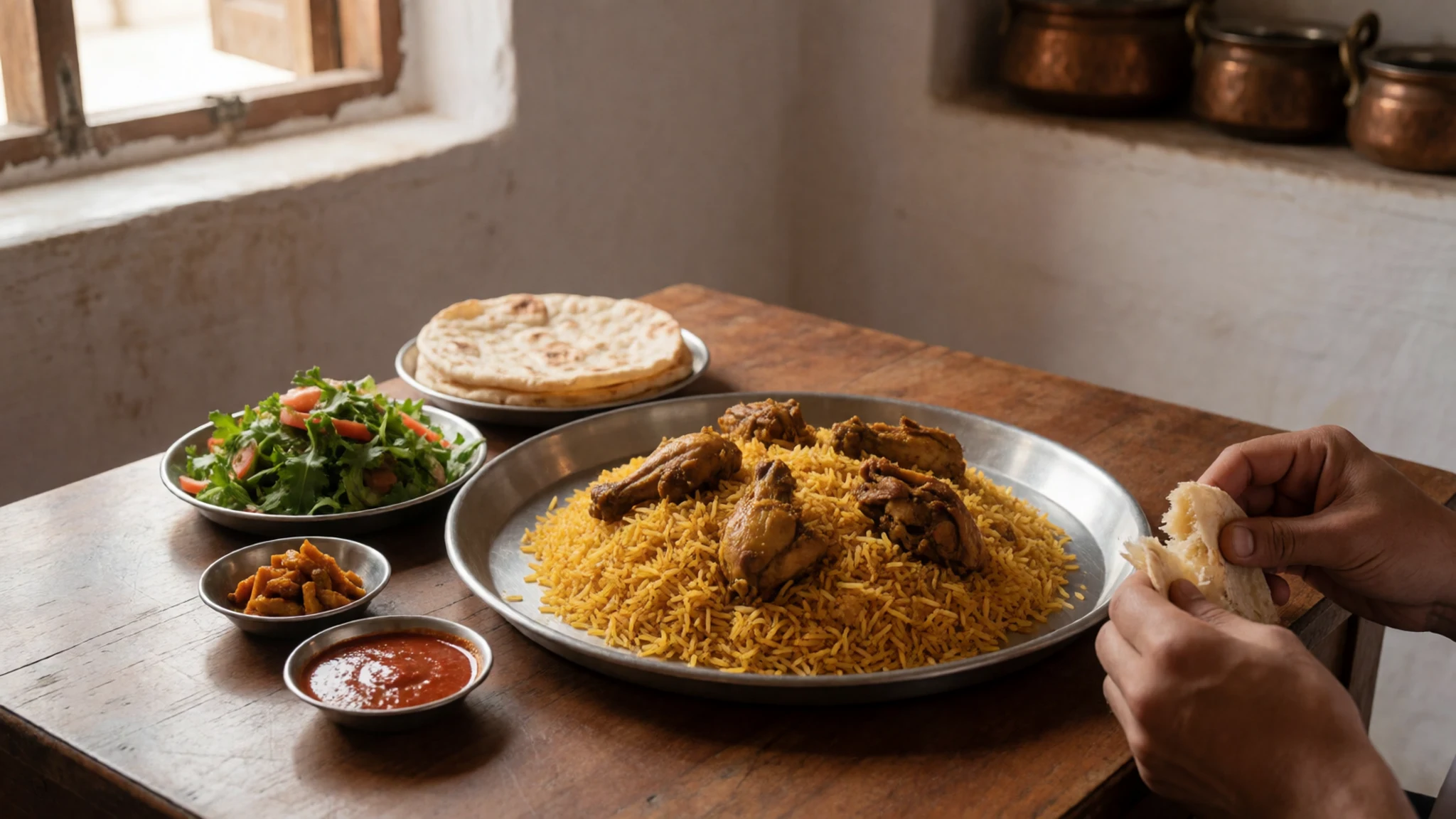
- Muhammar — traditional eateries in Muharraq and older Manama
Muhammar is sweet rice, tinted with date molasses or sugar and spices, eaten with grilled fish or on its own. Traditional eateries in Muharraq, and in older Manama a short hop from Arad Fort, serve it as a Bahraini table dish.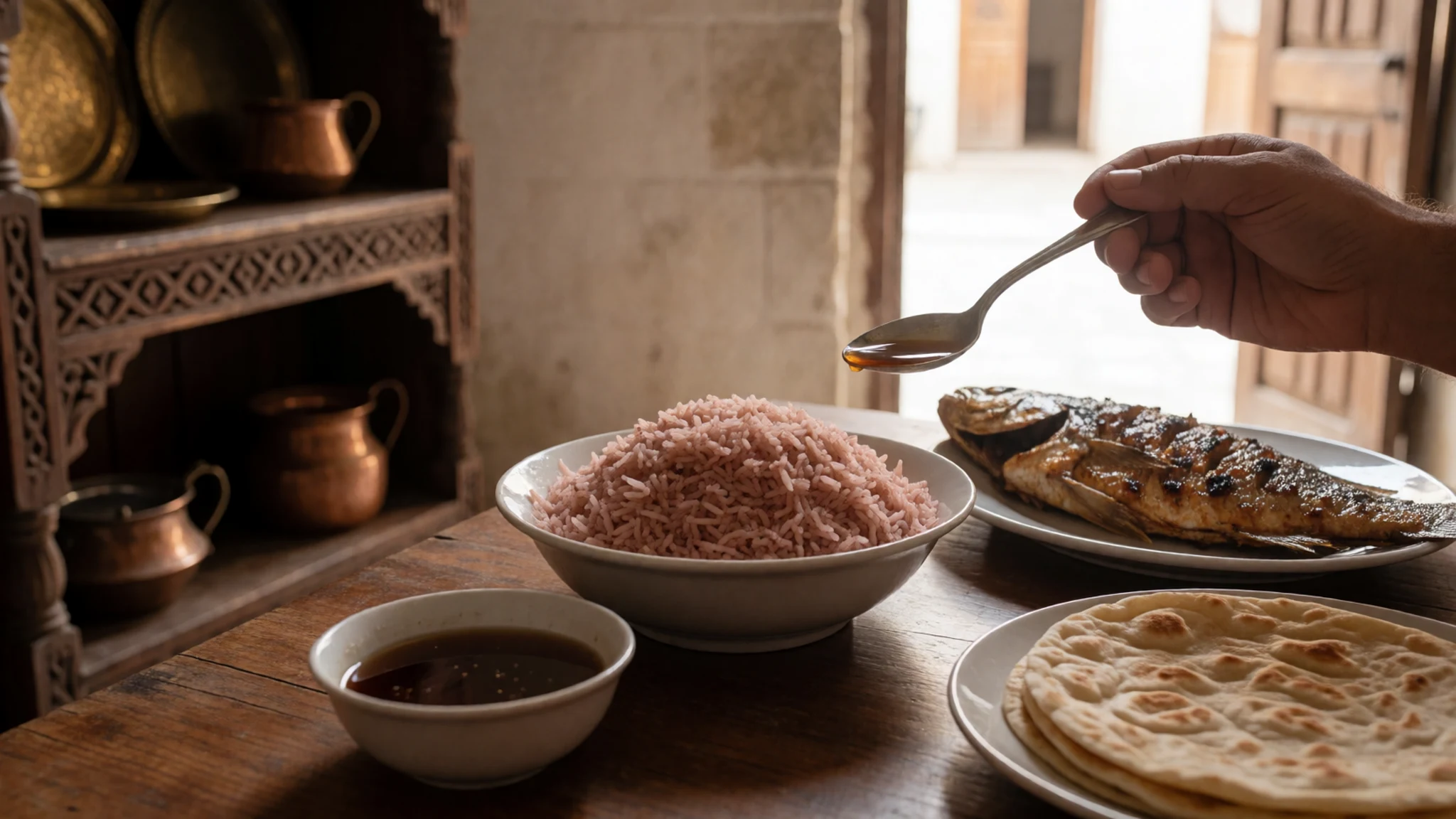
- Balaleet — breakfast eateries and coffee shops in Muharraq
Balaleet is a breakfast of thin vermicelli cooked sweet with cardamom and rose water, then topped with egg. Muharraq coffee shops and breakfast eateries near Arad Fort serve it in the morning with tea. It looks like a pudding and is firmly a first meal. - Harees — traditional eateries and Ramadan tents in Muharraq
Harees is wheat and meat cooked down to a soft savoury porridge, finished with oil or a little sugar. Traditional eateries in Muharraq, and Ramadan tents in the holy month, serve it; Arad Fort itself does not. - Grilled Gulf fish — fish counters and grill eateries in Muharraq's markets
Grilled hamour, safi or chanad, rubbed with spice and lemon and served with rice, is the coastal meal Muharraq knows well. Fish counters and grill eateries in the island's markets serve it in the evening, a short ride from Arad Fort.
Plan it
Best time. November to March is the kinder window, when Muharraq's days are warm rather than punishing and time on Arad Fort's walls is pleasant. April can still be manageable. From late spring through early autumn the heat and humidity are severe, the stone radiates, and shade inside the fort is limited.
How long. a short visit
Getting there. Bahrain International Airport is on Muharraq, the same island as Arad Fort, so the last leg is a short taxi, ride-hail or hired-car hop through Arad's streets. From Manama, cross a causeway onto Muharraq and continue to Arad.
Budget. mid
Tips
- Come early or late in the day; the courtyard and wall-walk have little shade, and midday heat on the stone is harsh for much of the year.
- Carry water. Arad Fort is compact, but the approaches are shadeless and the Gulf humidity is heavy in the warm months.
- Pair the fort with a walk in old Muharraq rather than treating it as a full-day destination on its own.
- Cards are widely used in Bahrain; keep a little cash for small tea shops and market stalls around Muharraq.
- Check the official site for opening days and any closure before you go. No timetable is given in this reading.
Etiquette
- Cover shoulders and knees. Arad Fort is not a mosque, but local families use it.
- Ask before you photograph people, especially women and family groups.
- Keep to the open route and do not climb on the walls or the moat edge.
Nearby
Sources
- Wikidata (CC0)
- Wikipedia (CC BY-SA 4.0)
- Wikivoyage (CC BY-SA 4.0)