Karzakan
Karzakan, Bahrain
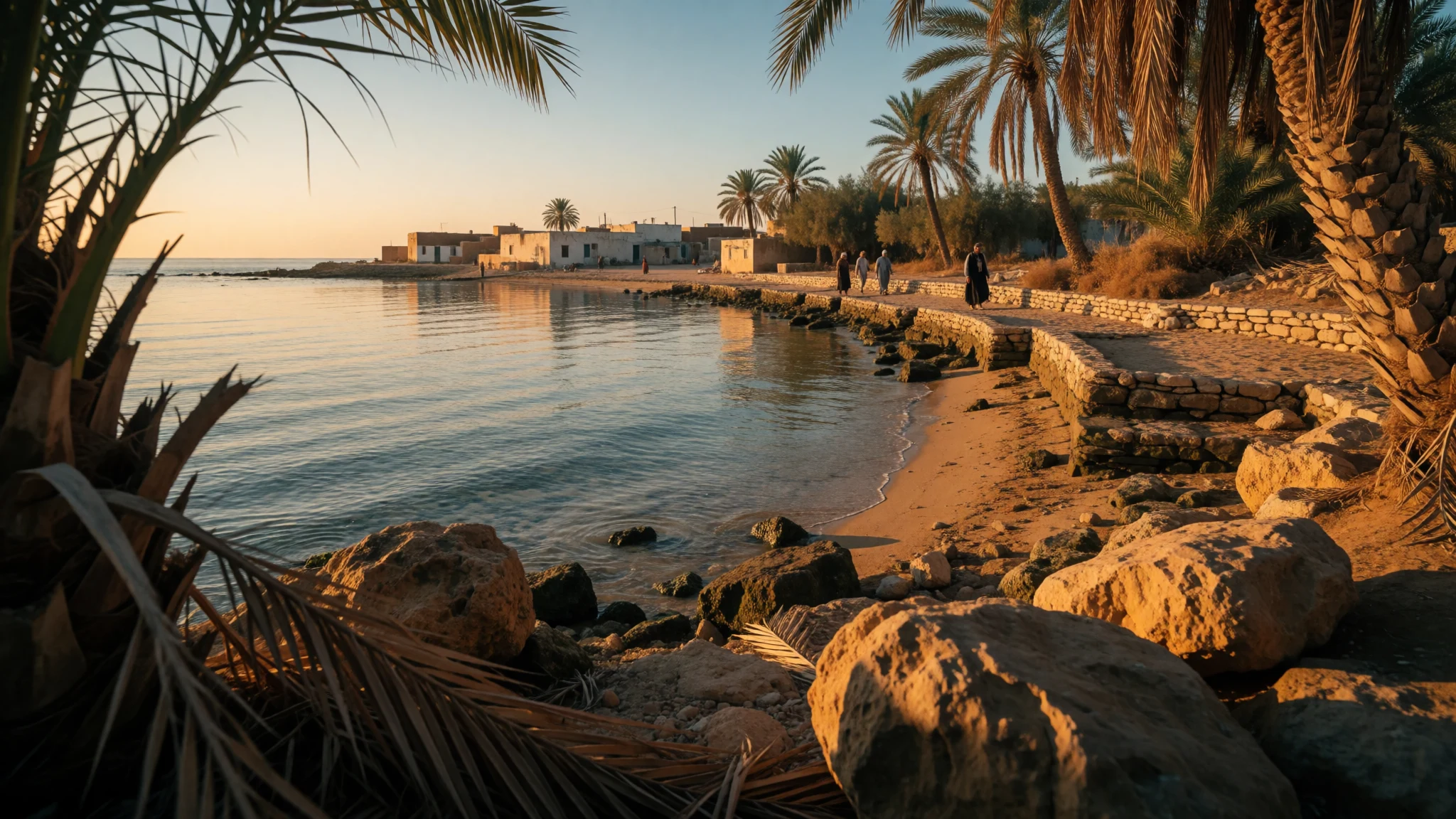
Karzakan is a quiet western-coast Bahraini village, best used as an unhurried stop on a wider island loop of forts, mounds and coffee.
The place
Karzakan is a village on the western coast of Bahrain Island, a few kilometres from the King Fahd Causeway, the road link that carries traffic off the island. It is not a destination in the usual sense. There is no headline monument and no old-town trail, and the village is best understood as an ordinary Bahraini community that happens to sit close to the sea and to a busy road. Its website, karzakan.info, is the place to look for local information. Bahrain's name means "two seas" in Arabic, and the water shapes the island even where the shoreline has been built over or fenced off. Good public beaches are scarce, and most swimming happens at resorts and beach clubs rather than on village shores. The island is small, so Karzakan works as a base or a pause between Manama, the burial mounds around A'ali and the fort on the north coast. Summer, from May to September, is very hot and humid, and the qaws, a dry hot wind, can bring dust. Winter evenings turn cool enough for a sweater. Most visitors pass through on the way elsewhere, and that is a fair way to use the village: stop for coffee, look at the coast, then carry on.
Its story
Karzakan's story is told through its people more than its monuments. The village was the home of Salih Al-Karzakani, a theologian of the seventeenth century, whose name still carries the village's own into Bahraini religious scholarship. That matters because Bahrain's population is predominantly Shi'a Muslim, and villages like this have long been centres of learning and community life, separate from the royal court and the capital. In more recent times Karzakan produced Mohammed Ebrahim, a chemical engineer credited with contributions to Bahraini chemical engineering, a reminder that the country built its modern economy on refining and technical skill rather than on large oil reserves. Behind both stands a much longer history. Bahrain was the seat of the ancient Dilmun civilisation, one of the earliest places to adopt Islam, and for centuries a pearling economy, with divers working the Gulf waters before oil and banking changed the island. Karzakan's coastal position places it within that maritime world even though little visible evidence of pearling survives in the village itself. Modern Bahrain has also known political tension, notably around 2011, and sectarian and social divisions are part of the context for any village on the island. A visitor will find ordinary streets rather than interpretation panels, so reading a little beforehand repays the effort.
What to see
- Karzakan village and shoreline — Karzakan, west coast
The village itself rewards a short, slow walk rather than a long visit. Low houses, local shops and a stretch of Gulf coast give a sense of everyday western Bahrain away from the malls. Access to the water can be limited, so treat it as a look rather than a swim.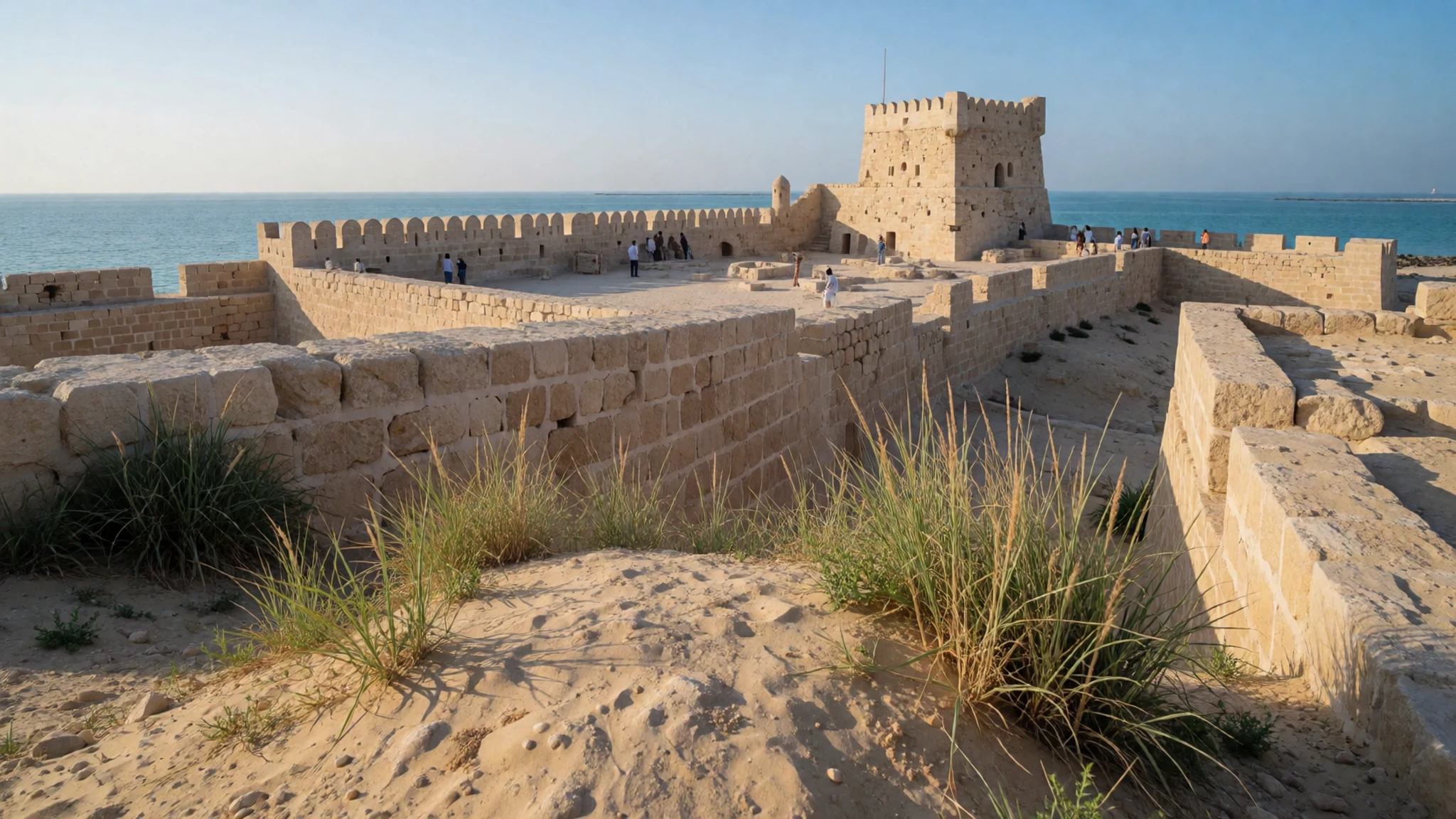
- Dilmun Burial Mounds — A'ali area
The mounds near A'ali are a short drive from Karzakan and belong to the ancient Dilmun culture. Twenty-one of them can be seen on the island, and they are on the World Heritage List. Expect low earthen humps in dry ground, with little shade, so go early.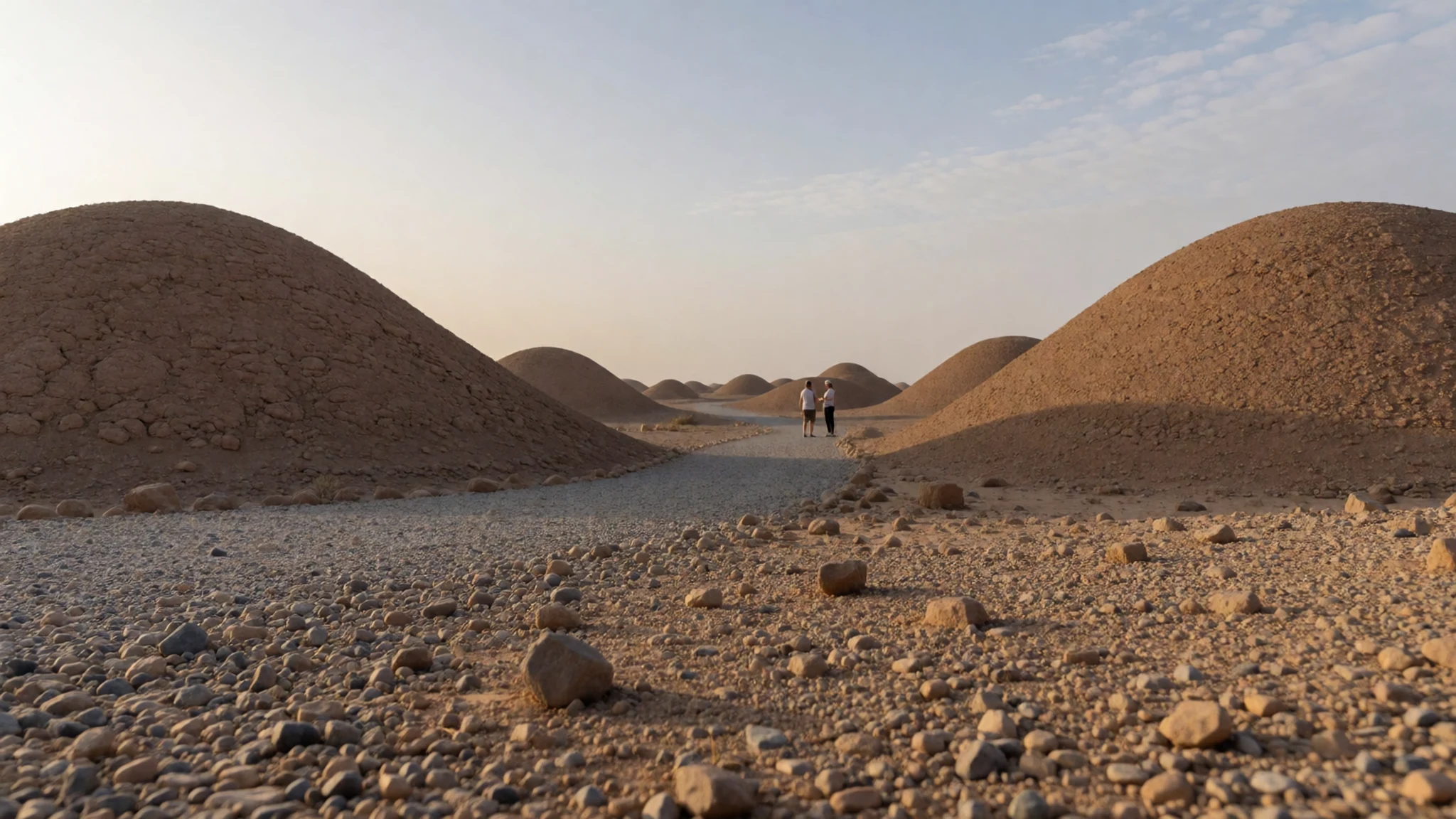
- Qal'at al-Bahrain — North coast
This restored fort on the north coast is in good condition but has little furniture, signage or displays inside, so some background reading helps. On a hot day, visit the fort first and then retreat to the nearby museum, which is cool and has a cafe.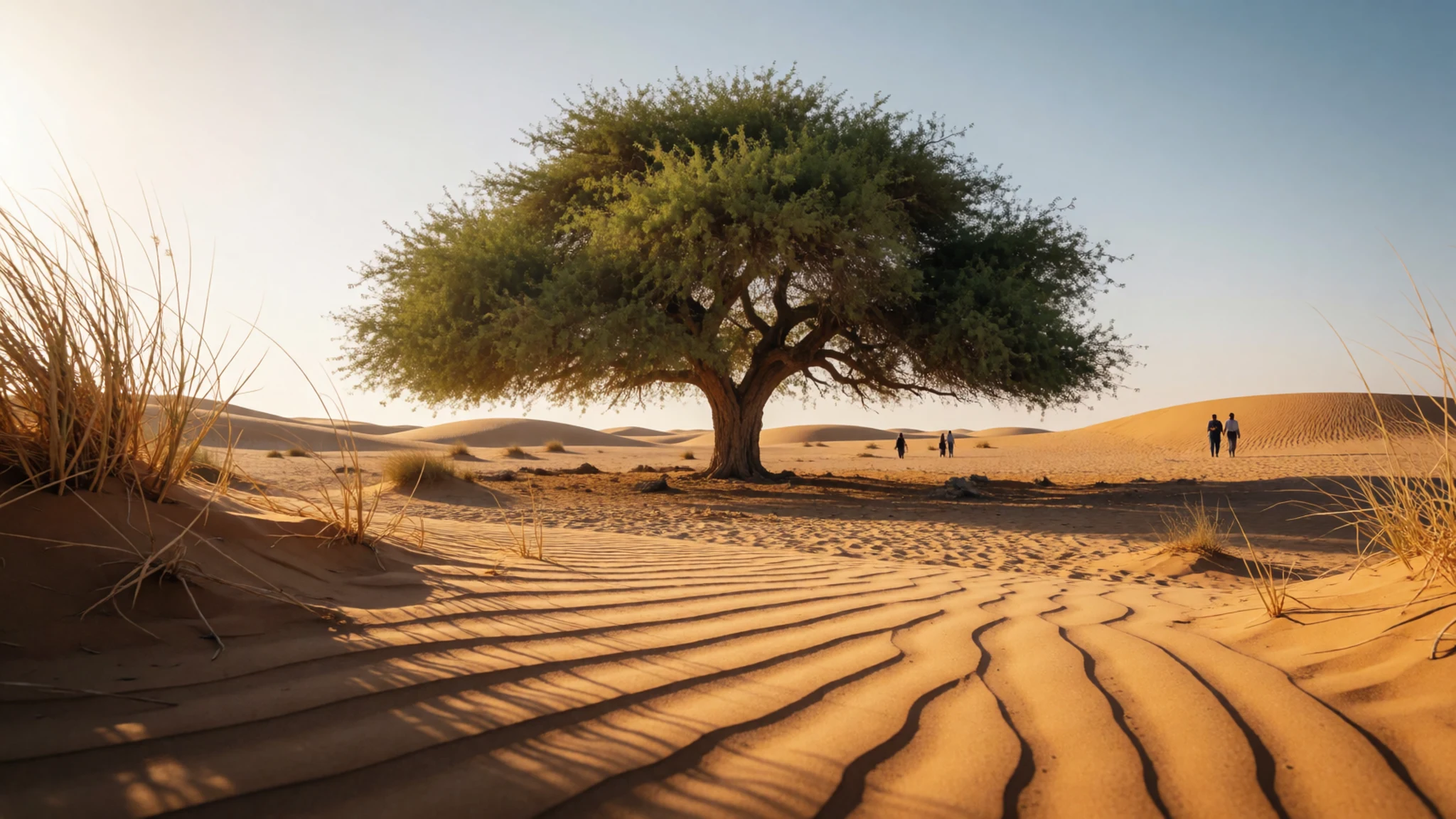
- Qal'at Al-Bahrain Site Museum — North coast
The museum, completed in February 2008, holds artefacts from the Dilmun period through the Islamic era, many found at the fort and the ruins beside it. It is the best place to make sense of the site, and the air conditioning is a real attraction in summer.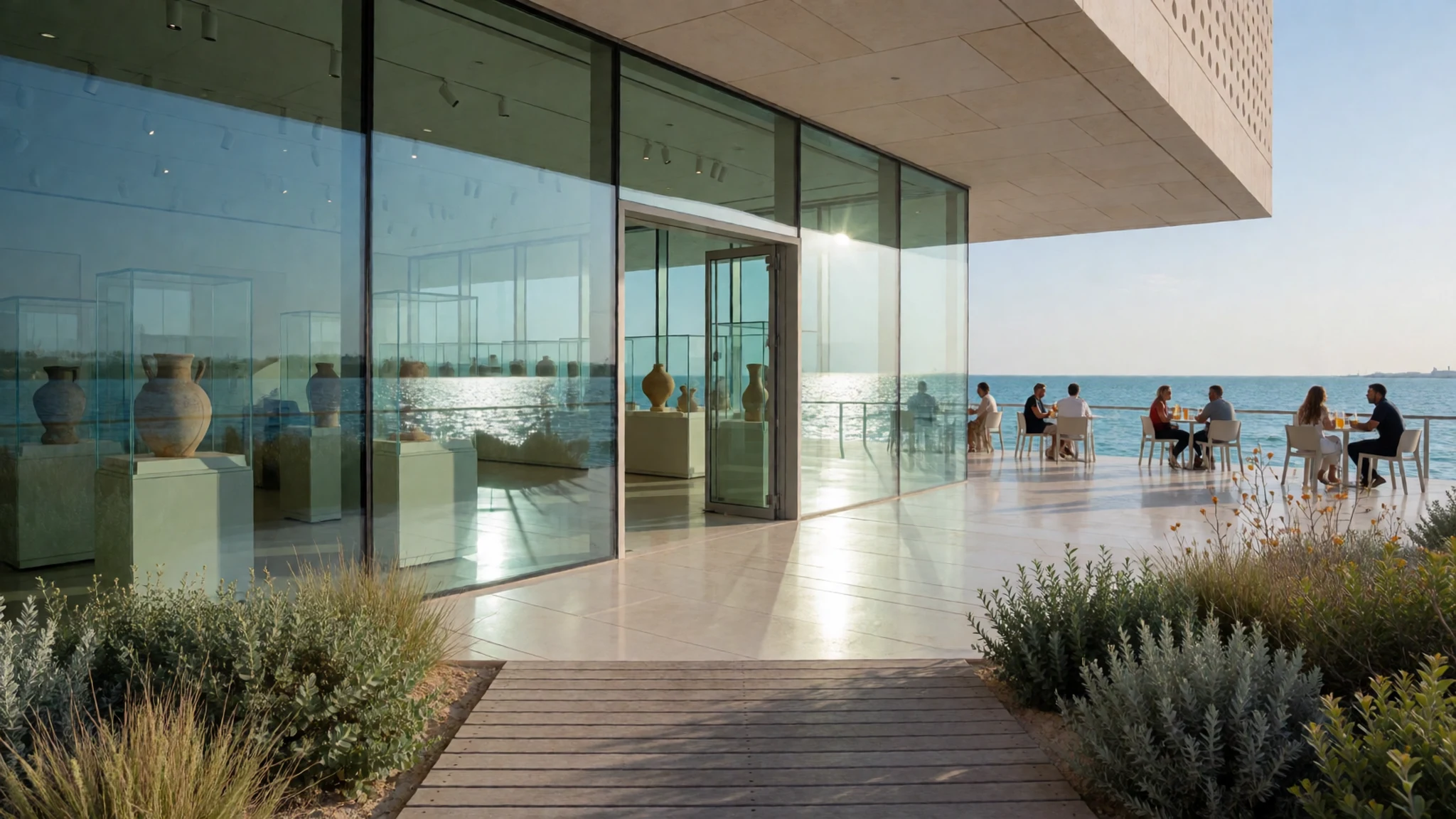
- Tree of Life — Southern desert
A lone tree standing in desert ground in the south of the island, said to be more than 400 years old. Its survival in such harsh conditions is the draw. It is a small, quick stop rather than a full outing, so pair it with other southern sights.
Culture
Karzakan is a Shi'a-majority village in a country that is Islamic in its customs but notably relaxed by regional standards. Alcohol is legal in Bahrain, yet it is served only in four-star hotels and above and is not sold in supermarkets, so the village itself is a quiet, alcohol-free setting. Coffee, called gahwa in Arabic, is part of the traditional welcome, and being offered a small cup is a courtesy worth accepting. Religious life shapes the calendar. During Ramadan, restaurants close in daylight hours and reopen for the meal that breaks the fast, and the pace of the whole day shifts. Shi'a observances such as Ashura bring processions and mourning gatherings to Bahraini villages, and visitors should watch with discretion. Public life in Bahrain also carries political sensitivities. Tension around 2011 left real social and sectarian divisions, and comments on politics, on the region's conflicts or on social media can cause offence or worse, so it is wise to keep opinions private. Romantic couples have been taken into custody over displays of affection in public spaces, and getting drunk in a public place is handled as a criminal offence. Hospitality is genuine, and people are generally gracious to visitors who show courtesy in return. Dress and behave conservatively in the village, and ask before photographing anyone, especially women, or any religious gathering.
What to wear
In Karzakan, as across Bahrain, traditional dress is the thobe and gutra for men, a long, light robe, usually in white cotton for summer, with a head cloth held by a cord. Women traditionally wear the abaya, a loose black cloak, often with a headscarf, and many families keep embroidered or patterned dresses for weddings and religious festivals. Everyday dress is mixed. Men often wear the thobe at work and in mosques but also wear trousers and shirts, while women's abayas range from plain to richly detailed, worn over modern clothes. Younger people in Manama dress much as they would in any international city. For visitors, the sensible choice is modest, loose and breathable. Long trousers rather than shorts are advisable wherever local people gather, and some government offices and museums will not admit anyone in shorts. Women should avoid see-through or very revealing outfits, and covering shoulders and knees is a courteous default in a village like this. Swimsuits and shorts are fine at beach clubs and hotels. A light sweater is worth packing for winter evenings, which can be cool. Comfortable closed shoes suit dusty ground at the burial mounds and forts, while sandals are fine for town. Sun protection matters nearly all year, and in summer light, long sleeves are cooler than bare skin.
What to eat
- Gahwa — Homes, majlis rooms and traditional cafes
Gulf Arabic coffee, pale, thin and often scented with cardamom, poured in small cups as a sign of welcome. Accepting at least one cup is polite. It is offered in homes, traditional majlis settings and some old-style cafes.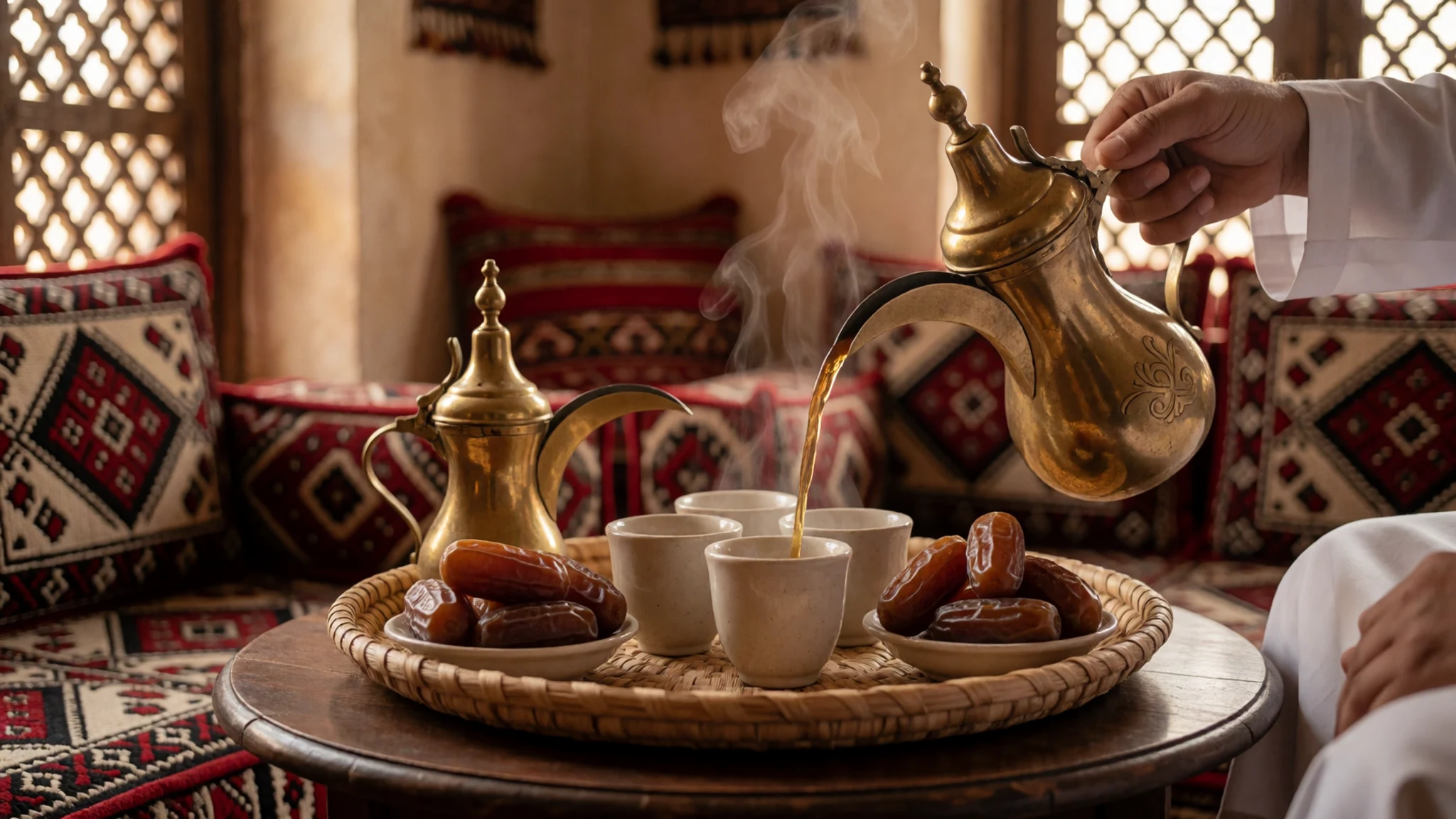
- Machboos — Traditional Arabic restaurants and family homes
A spiced rice dish cooked with meat or fish, tomato and dried lime, closely tied to Gulf home cooking. Traditional Bahraini food is hard to find in restaurants, so ask for it at traditional Arabic restaurants or at a local family's table.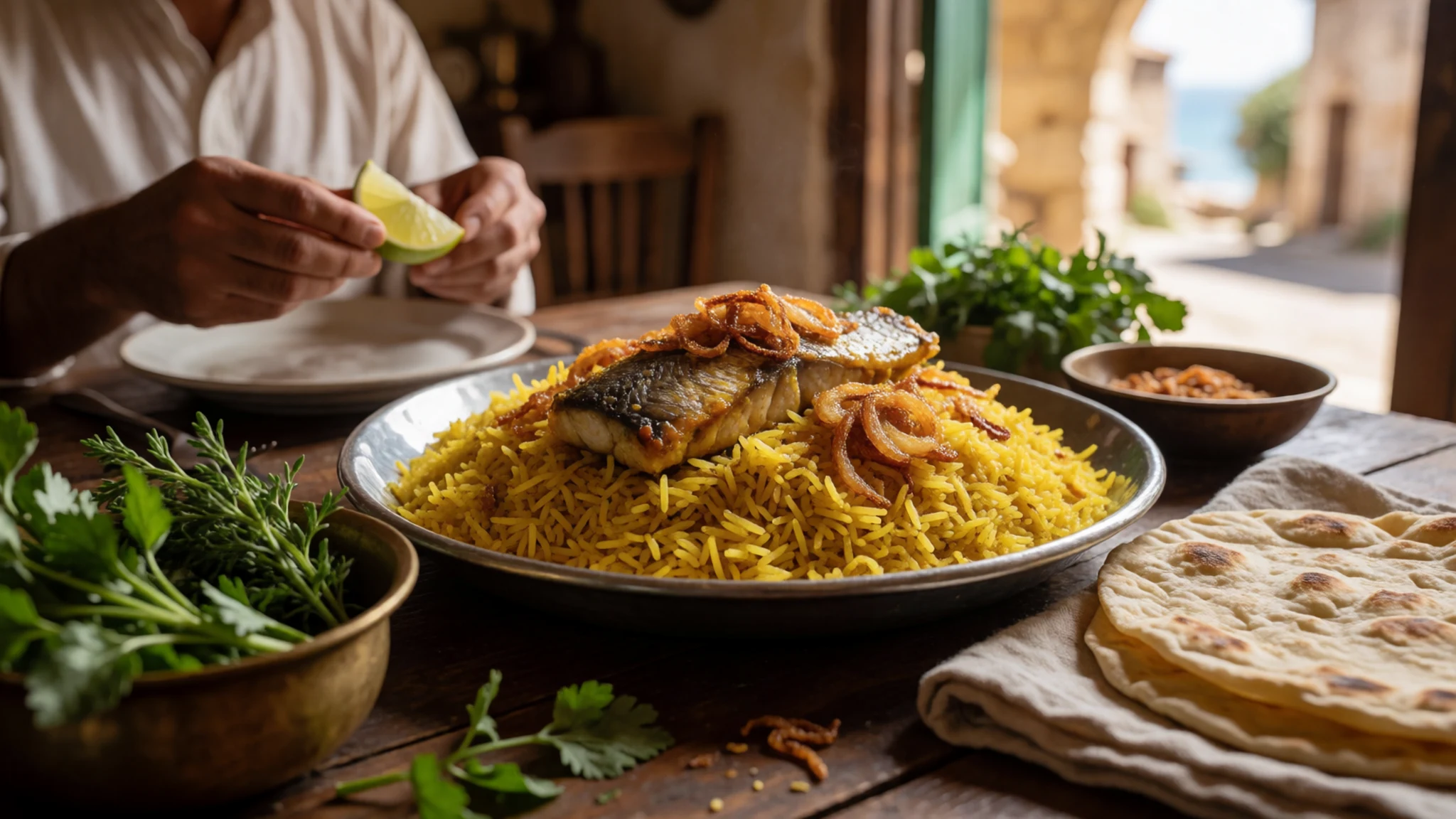
- Arabic bread and mezze — Arabic restaurants around the island and in Adliya
Flatbread served warm with hummus, grilled aubergine dip, salads and pickles makes an easy, filling meal, and suits shared tables. It is widely available across the island and works well for vegetarian visitors. - Grilled fish — Seafood restaurants near the coast
With a coast on the Gulf, fresh fish is a natural order, usually grilled whole and served with rice, lemon and salad. Choose from the day's catch at a seafood restaurant, and ask how it is cooked before ordering. - Iftar spread — Restaurants and hotels at sunset during Ramadan
During Ramadan, the evening meal that breaks the fast brings dates, soups, rice, meat and sweets to the table. Restaurants reopen at sunset, and joining the crowd is an experience in itself, though booking ahead is sensible.
Plan it
Best time. November to March, when days are warm rather than punishing and evenings can be cool enough for a sweater. October and April are just bearable. May to September is very hot and humid, and the qaws wind can bring sandstorms. Rain is occasional and falls only in winter.
How long. 1–2
Getting there. Fly into Bahrain International Airport near Manama, then take a taxi or hire a car for the drive west to Karzakan. The village lies a few kilometres from the King Fahd Causeway, and buses run to Bahrain from Saudi Arabia. Check the Ministry of Interior website for visa rules.
Budget. mid
Tips
- Hire a car or use taxis, as public transport to villages is limited
- Visit forts and mounds early in the morning to avoid heat and glare
- Carry water at all times and plan indoor stops, such as the site museum, for the hottest hours
- Check Ramadan dates, since restaurants close in daylight and opening hours shift
- Check karzakan.info for local information before you go
Etiquette
- Dress modestly: long trousers rather than shorts, and covered shoulders and knees
- Ask before photographing people, especially women, and avoid public displays of affection
- Avoid political comment, in conversation or on social media
Nearby
Sources
- Wikidata Q985377 (CC0)
- Wikipedia: Karzakan (CC BY-SA 4.0)
- Wikivoyage: Bahrain (CC BY-SA 4.0)