Bahrain
Bahrain, Bahrain
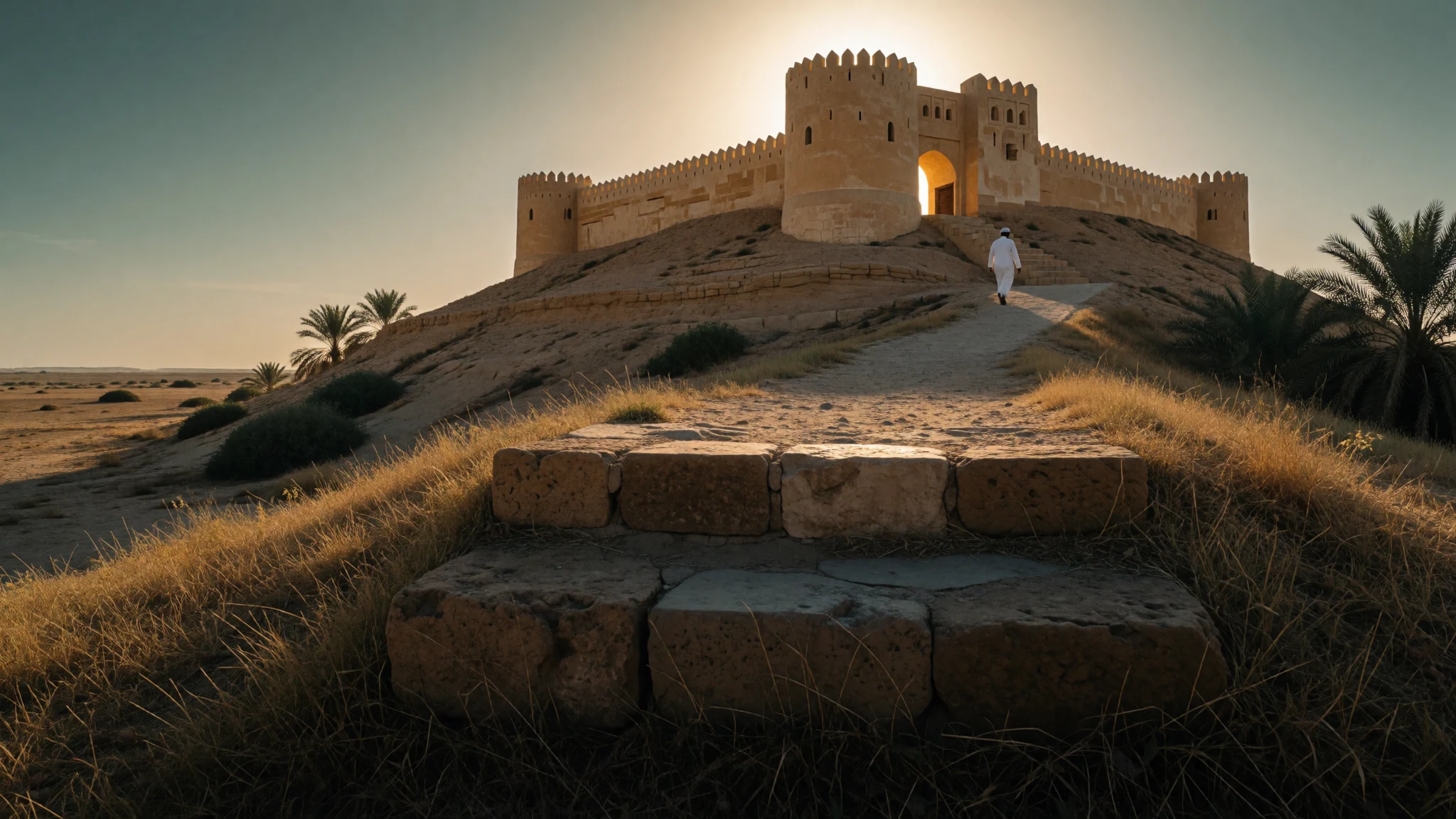
Bahrain is a compact Gulf island kingdom where Bronze Age tombs, a Portuguese-era fort and modern Manama sit within a short drive of each other.
The place
Bahrain is an island kingdom on the western side of the Persian Gulf, set between Qatar and the coast of Saudi Arabia. It is an archipelago of 33 natural islands and 50 artificial ones, though a single main island holds around 80 percent of the land, and a causeway ties the country to the Saudi mainland. The terrain is low, sandy and flat, and distances are short, so a visitor can stay in one spot and reach almost everything by taxi or hire car in a morning.
Manama, the capital, is the working centre. Glass towers and a reclaimed waterfront stand on one side, and an old souq with narrow lanes and mosques on the other. Adliya is the district for cafes, galleries and late dinners, while Juffair is known for its strip of American-style eateries. Outside the city, date gardens, fishing harbours, burial mounds and industrial plants share the same horizon.
About 2.7 million people live here, and a little over half are expatriates, so a single street may carry Arabic, Hindi, Malayalam and Tagalog. That mix shapes the food, the shops and the easy-going tone. One honest warning: despite being an island, Bahrain is poor for free public beaches. Much of the shoreline is built over or used for construction, and proper swimming usually means a resort. The draw is history, markets, food and a pleasant winter, not sand and surf.
Its story
Bahrain's story begins with Dilmun, a Bronze Age trading society that linked Mesopotamia with the Indus Valley. Fresh water rising from springs under the sea bed and under the island made this a rare stopping place for ships crossing the Gulf, and the settlement at what is now Qal'at al-Bahrain grew around that role. Later the islands passed under Sumerian and Babylonian influence, then Achaemenid Persian rule, and afterwards Parthian garrisons that guarded Gulf trade routes.
Greek writers knew the main island as Tylos. Nearchus, an admiral serving Alexander, landed here and described green land and cotton trees whose cloth was sold as far as India and Arabia. Theophrastus added that the island exported engraved walking canes, which were carried in Babylon as marks of status.
Pearls then defined the islands for centuries. Divers working from boats gave Bahrain a reputation across the Gulf and beyond, and that income shaped the old towns and their markets. Islam reached the archipelago in 628, during the lifetime of the Prophet Muhammad. The Portuguese held it from 1521 until 1602, when Shah Abbas of Safavid Iran drove them out. In 1783 the Bani Utbah and their allies took control, and the Al Khalifa family has led the country since. Modern Bahrain counts 1971 as the year it became a sovereign state, after a long period of British protection. Oil and finance later reshaped the economy, but the old trading instinct is still visible in the markets.
What to see
- Qal'at al-Bahrain — North coast, near Karbabad
This fort stands on a mound built up by layers of settlement over thousands of years. The walls are restored and the site is in good condition, but there is little signage or furniture inside. Visit early, as shade is scarce, and bring water and a hat.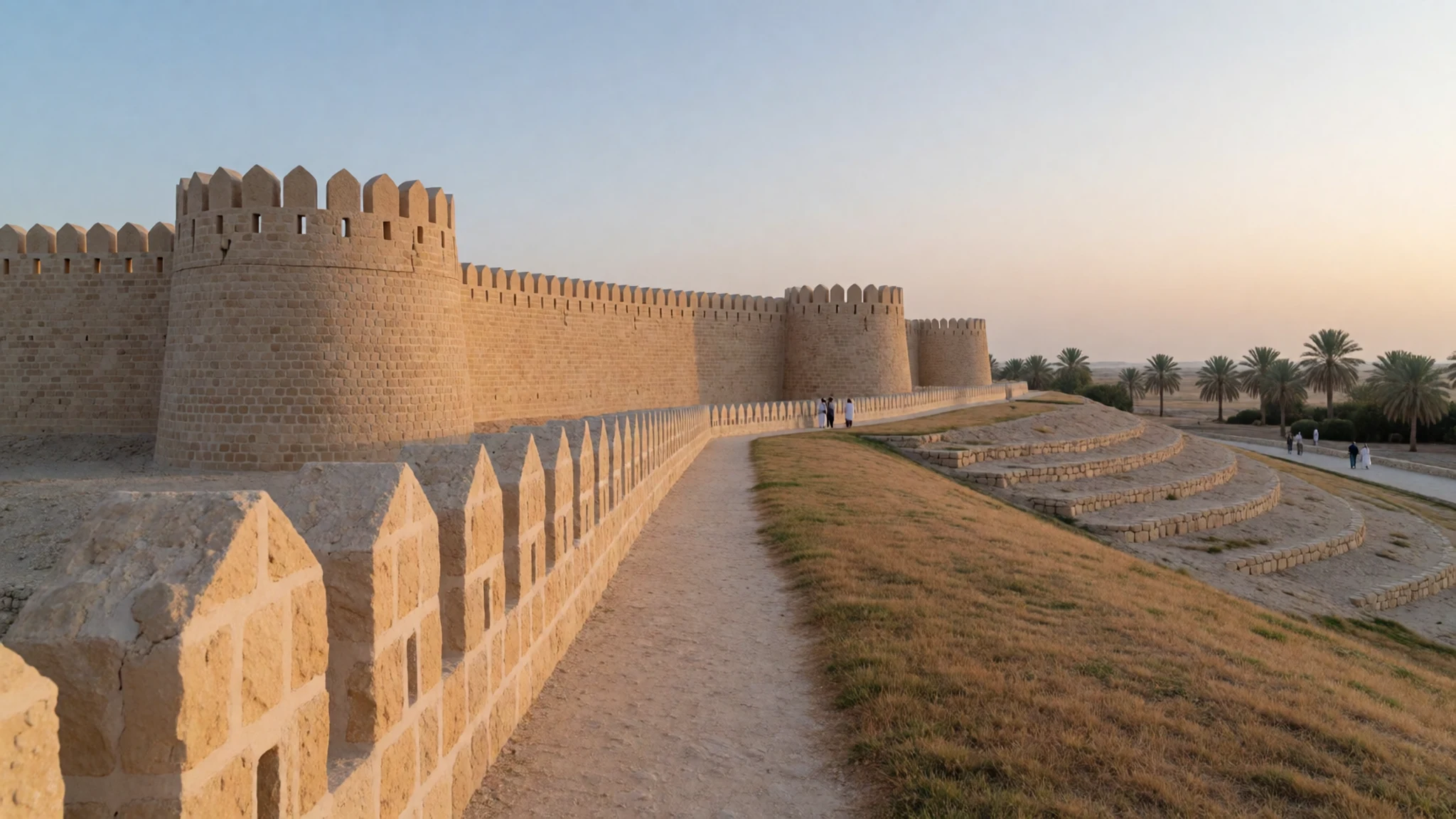
- Qal'at al-Bahrain Site Museum — Beside the fort, north coast
Next to the fort, this museum holds finds from the site and its surroundings, spanning the Dilmun era through the Islamic centuries. It is air-conditioned and has a cafe, so it makes a good second stop after the fort, especially in hot weather.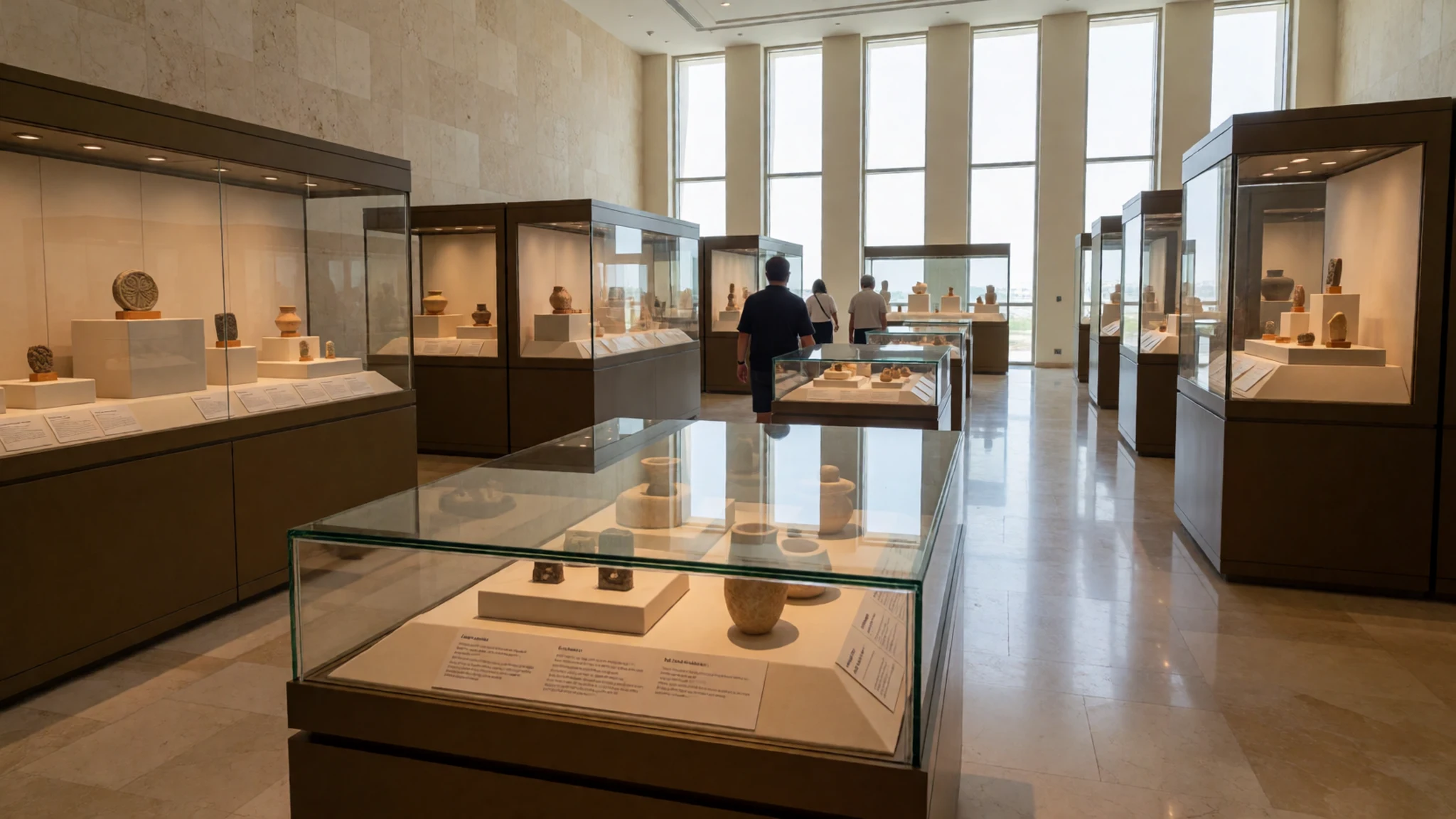
- Tree of Life — Southern desert, near Jebel Dukhan
A lone mesquite tree stands in open desert, with more than 400 years of age claimed for it. It is small and the trip is short, so it suits a half-day loop with other southern stops. Go in the cooler hours and bring water.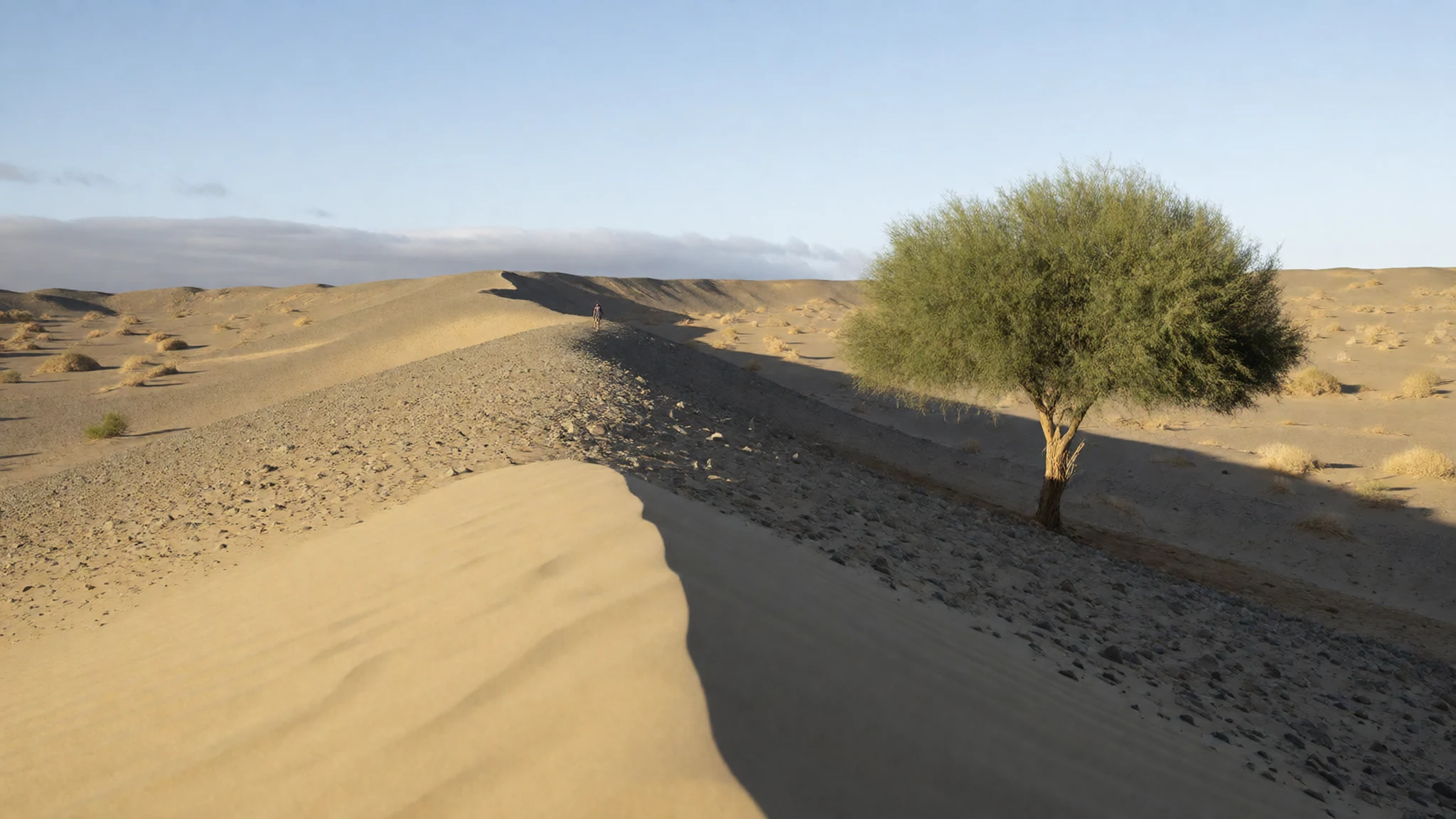
- Dilmun Burial Mounds — A'ali and the surrounding villages
Rounded earth mounds covering ancient tombs are scattered around A'ali and nearby. Of these, 21 were inscribed on the UNESCO World Heritage List in 2019. Some are low and plain, so a short walk among them shows how the dead were treated in the Dilmun era.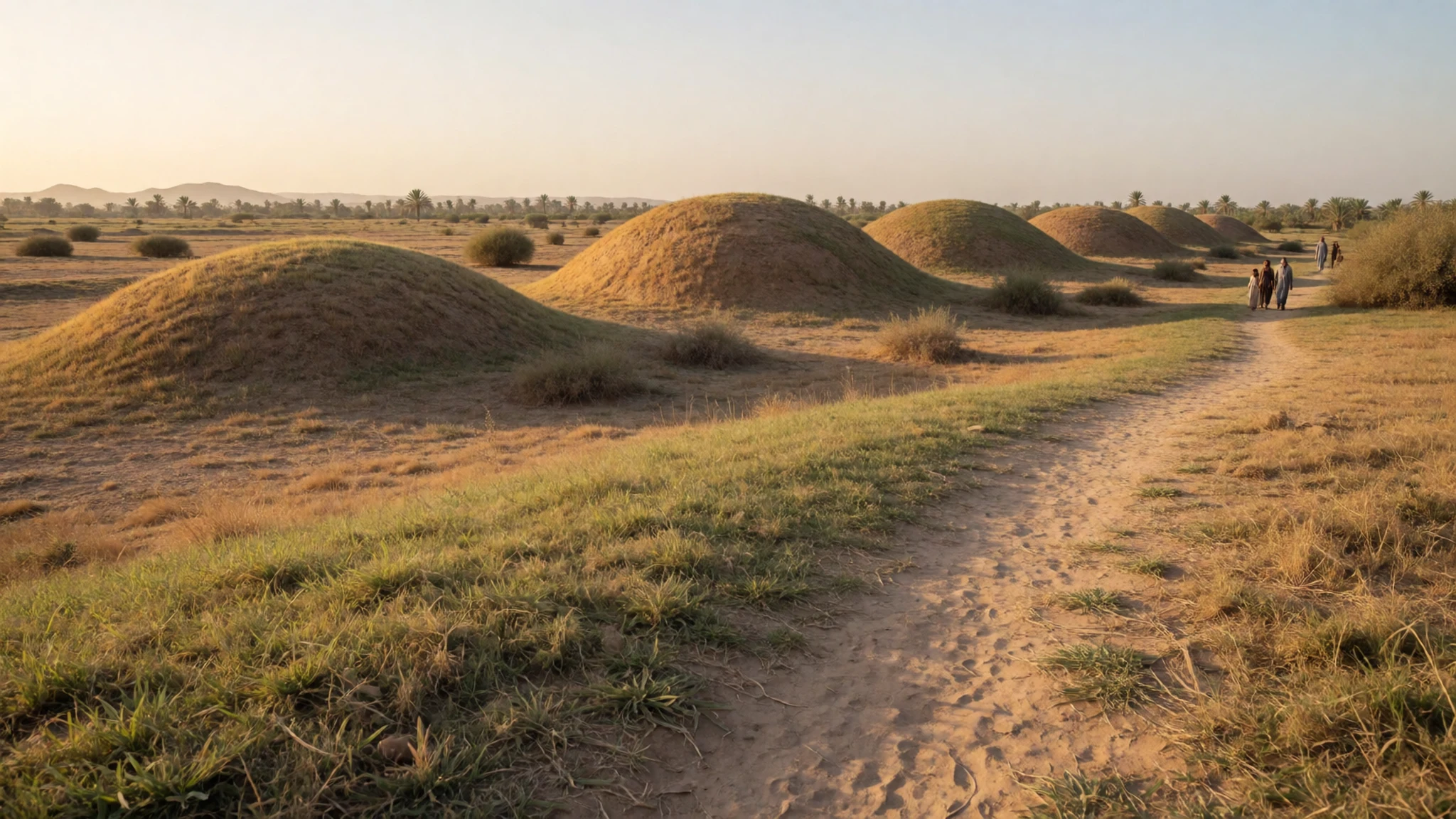
- Manama Souq — Old Manama
The old market quarter of Manama is a maze of lanes selling textiles, spices, gold, perfume and everyday goods. It is best on a winter evening when it cools, and it rewards slow wandering, tea stops and polite bargaining where that is the custom.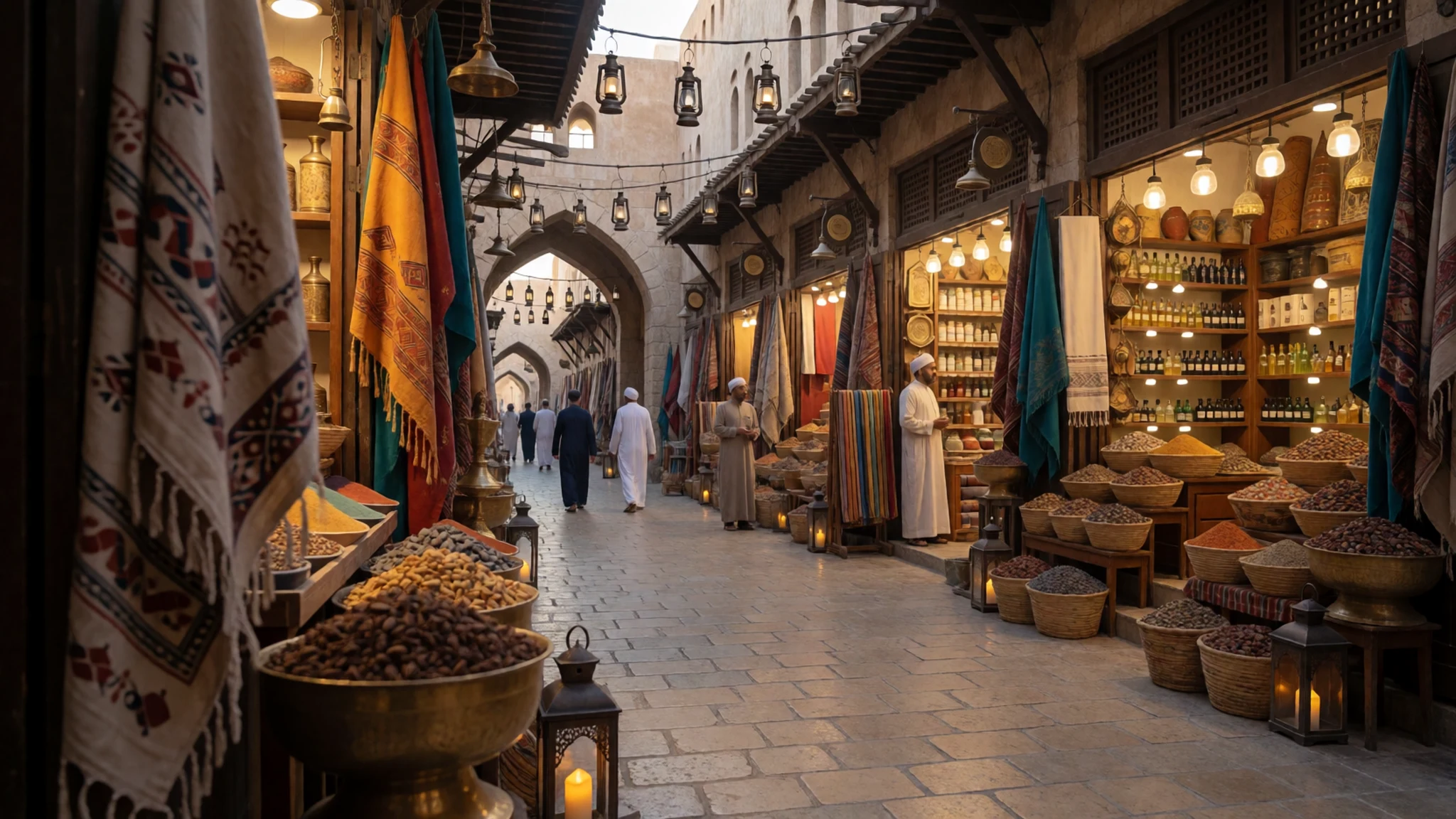
Culture
Islam is the main religion in Bahrain, and the country has a reputation for tolerance toward other faiths. Churches, Hindu temples and Sikh gurdwaras operate alongside mosques, which reflects the large expatriate population. Intermarriage between Bahrainis and expatriates is not unusual, so family life and neighbourhoods are mixed.
Daily rhythm follows the climate and the prayer calls. Mornings start early, the middle of the day is quiet in summer, and evenings are social, with families gathering in cafes, souqs and waterfront walks. Hospitality matters: coffee and dates are offered to guests, and refusing a first offer too firmly can seem curt. Weekends fall on Friday and Saturday, and many shops reopen late in the afternoon after a break.
The arts have a quiet but established scene. Modern art took shape in the middle of the last century, and expressionism, surrealism and calligraphy remain popular, so small galleries in Adliya are worth a look. Pearl diving, boat building and fishing are still honoured as heritage, in songs and in festivals.
Laws on public conduct are broader than in many countries, and rules on public decency are applied in ways visitors may not expect, so it pays to be discreet in public and respectful on religious matters.
Ask before photographing people, especially women and families, and dress modestly and remove your shoes before entering any mosque.
What to wear
Traditional dress in Bahrain is shared with the wider Gulf. Men wear the thobe, a long, loose robe, usually white in the hot months and in heavier, darker cloth in winter. The head is covered with a ghutra, a square cotton cloth, often held in place by a black agal cord, and some wear a keffiyeh in a checked pattern. Women commonly wear the abaya, a long, loose over-garment usually in black, with a hijab. Cotton and light wool are common, as is embroidered trim on women's formal wear. Cotton has a long history here: Greek writers noted the cloth of the island.
What people wear now is a mix. In Manama's offices, malls and cafes, Western clothing is common, and expatriates dress in styles from home, including saris, salwar kameez, and jeans and shirts. Rules for women are relatively relaxed compared with some neighbours, but traditional dress is usual at formal occasions, on Fridays and during Ramadan.
Visitors should pack for heat and for modesty. Light cotton or linen that covers shoulders and knees works in the souq, in villages and in mosques, and a scarf is useful for women entering a prayer hall. Beachwear belongs at the resort pool or private beach. Comfortable closed shoes are better for the fort and the burial mounds, where the ground is sandy and uneven, and a hat and sunglasses help at midday.
What to eat
- Machboos — Traditional Arabic restaurants around the country
A spiced rice dish cooked with chicken, lamb or fish, flavoured with dried lime, onions and warm spices. It is the dish most people name as a home-style Gulf meal. Look for it in family-run Arabic restaurants, especially at lunch.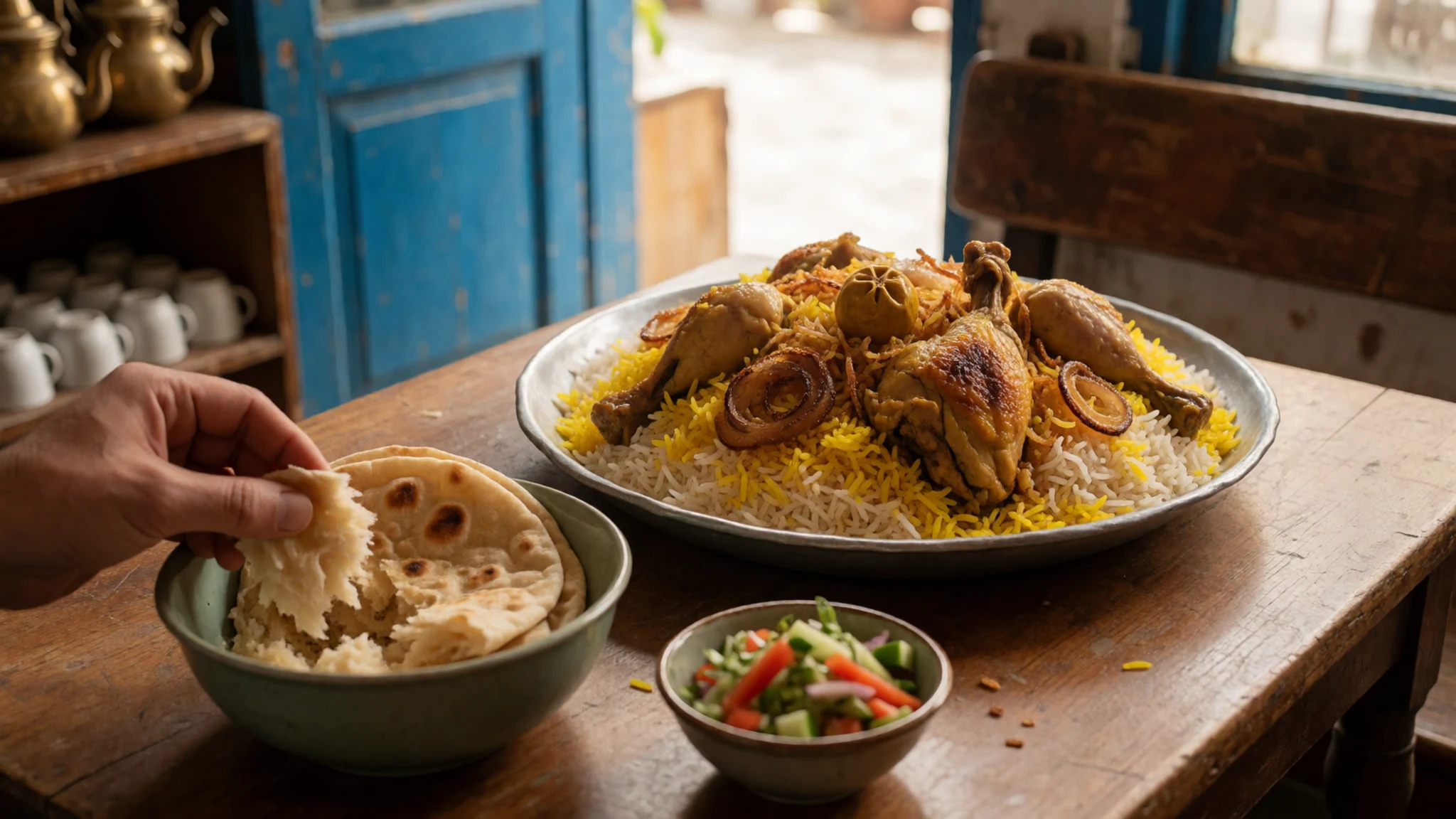
- Grilled and fried fish — Harbour-side eateries and fish markets
Gulf fish is cooked simply, grilled over charcoal or fried with a spice crust, and served with rice or flatbread. Fishing harbours and the fish market areas are good places to eat it and to see the catch.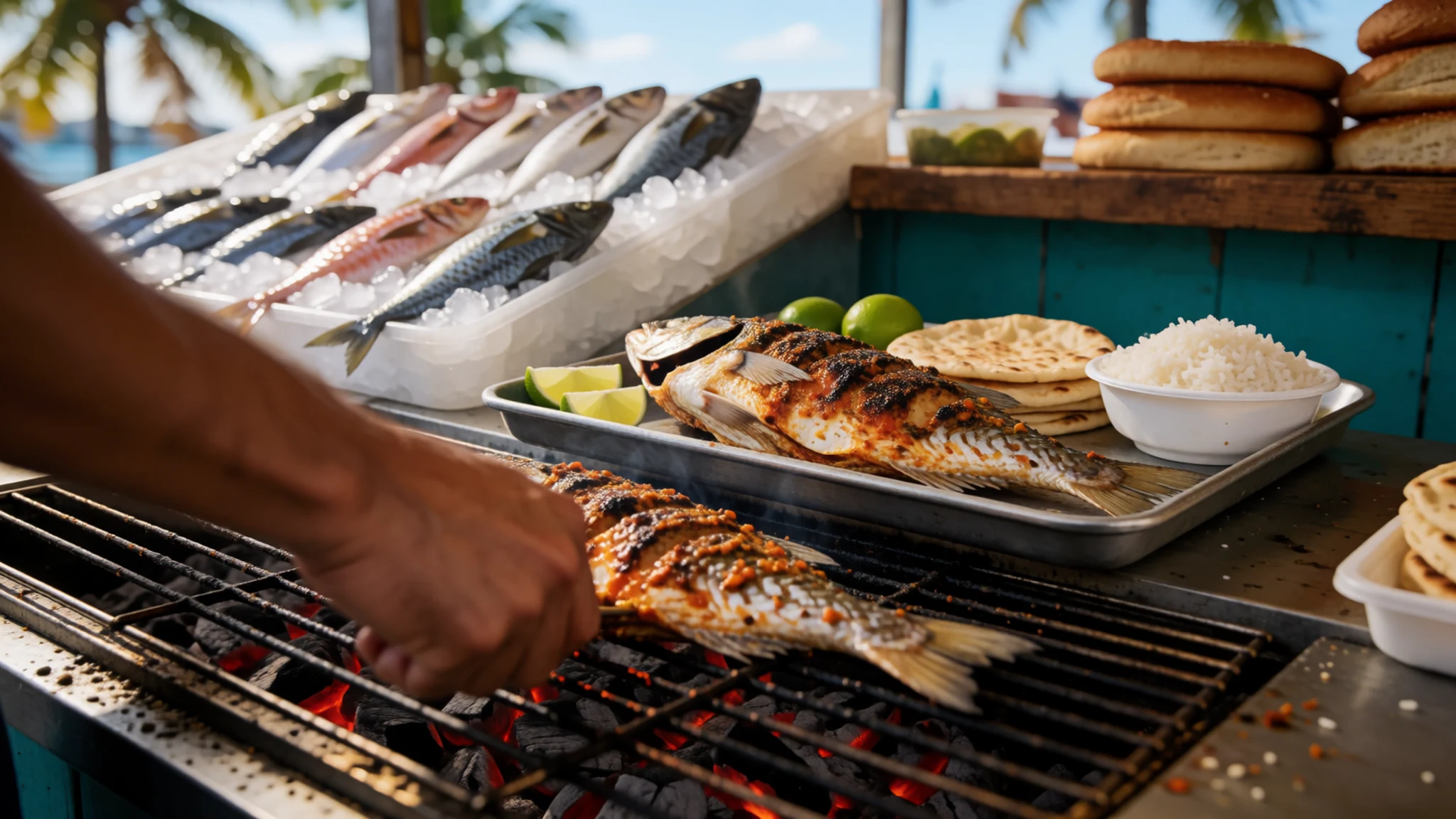
- Bahraini halwa — Sweet shops in Manama's old market
A glossy, chewy sweet made with starch, sugar, ghee and spices, often with nuts and saffron or cardamom. It is served with Arabic coffee and sold in boxes at traditional sweet shops, which makes it an easy gift. - Fresh flatbread and breakfast plates — Neighbourhood bakeries and breakfast cafes
Warm flatbread comes from local bakeries in the morning and is eaten with eggs, beans, cheese and dips. Cheap stalls and small cafes in older districts offer a quick, filling start to a day of sightseeing. - Shawarma and street snacks — Stalls across Manama and the older neighbourhoods
Cheap stalls offering wraps, falafel and kebabs reflect the large South Asian and Levantine communities. They are fast and filling, and a good choice for lunch between museum and souq. - Cafe food in Adliya — Adliya's cafes and restaurants
Adliya is the main dining district, with cafes, lounges and restaurants offering everything from Arabic mezze to international menus. It is the place for a long evening meal and for comparing styles of cooking.
Plan it
Best time. November to March, when days are warm rather than punishing and evenings are comfortable for walking in the souq and visiting outdoor sites. Summer is very hot and humid, and midday sightseeing outdoors is hard.
How long. 2–3
Getting there. Bahrain International Airport is close to Manama, so taxis or ride-hailing reach the city quickly. By road, the King Fahd Causeway links the country to Saudi Arabia. Check the Ministry of Interior website for visa rules for your nationality before travelling.
Budget. mid
Tips
- Visit Qal'at al-Bahrain and the burial mounds early in the morning, before the heat builds
- Carry water and sun protection for any outdoor stop, even in winter
- Use the museum beside the fort as a cool break on hot days
- Do not rely on free public beaches; plan swimming at a resort or hotel pool
- Check the official site at https://www.bahrain.bh for current visa and entry details
Etiquette
- Dress modestly in the souq, villages and religious places
- Ask before photographing people, especially women and families
- Be discreet in public and respectful on matters of religion
Nearby
Sources
- Wikidata Q398 (CC0)
- Wikipedia: Bahrain (rev 1384361922) (CC BY-SA 4.0)
- Wikivoyage: Bahrain (rev 5393532) (CC BY-SA 4.0)
- Manama — Wadiia (CC BY-SA 4.0)
- The Persian Sassanid Empire in 600 AD — Thomas Lessman (CC BY 3.0)
- Coronation of Hamad bin Isa Al Khalifa, 1933 (Public domain)
- Bahrain harbour (Public domain)
- View of Manama from the South, 1953 (Public domain)
- Manama Souq — Bahrain News Agency (Public domain)
- Bahrain Topography — Sadalmelik (Public domain)
- Hamad bin Isa Al Khalifa — US Navy (Public domain)


