Qal'at al-Bahrain
Qal'at al-Bahrain, Bahrain
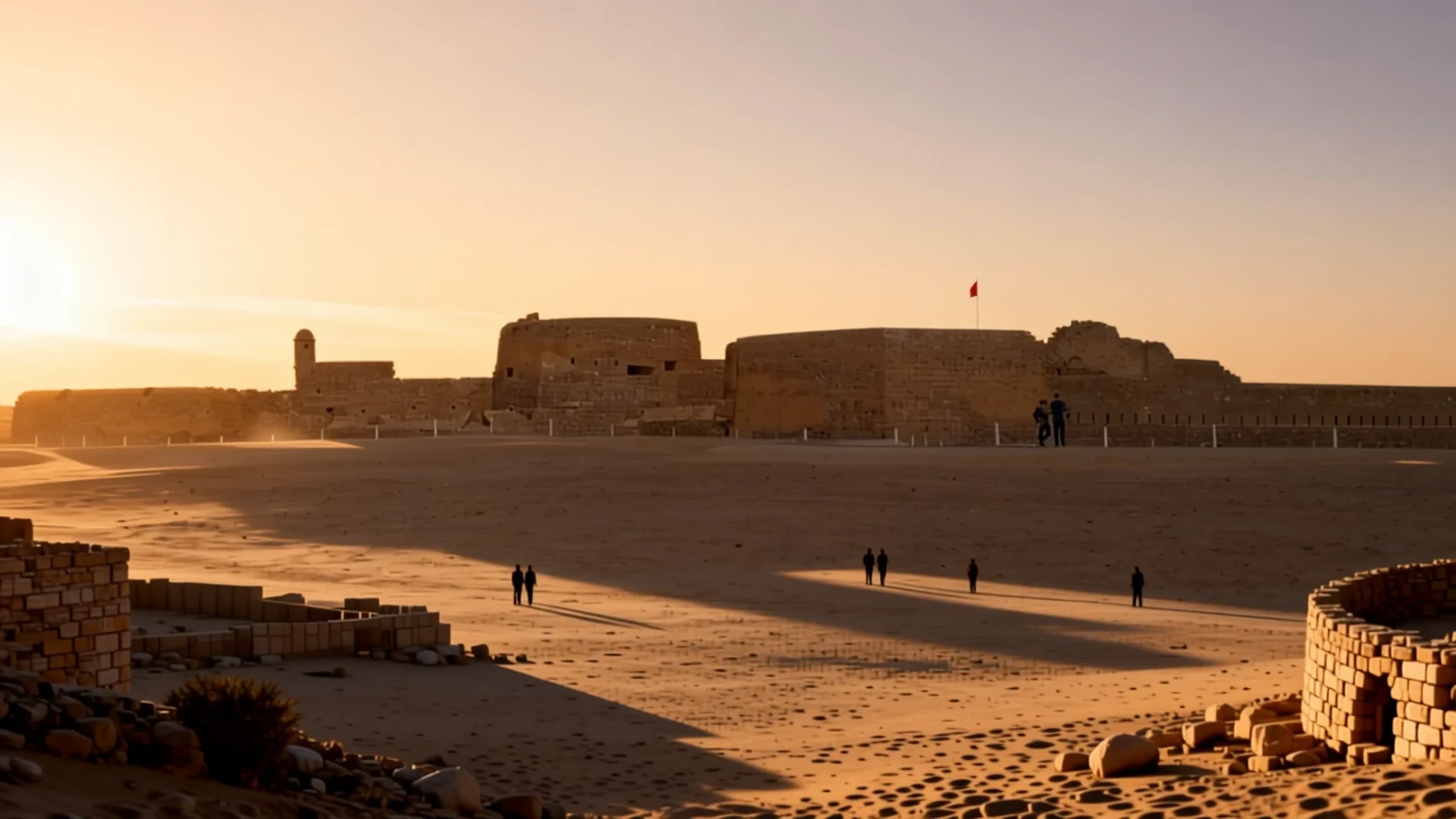
Visit Qal'at al-Bahrain to walk across millennia of stacked civilisations, exploring the ancient capital of the maritime Dilmun trade network.
The place
Qal'at al-Bahrain stands on the northern coast of the island nation, presenting travellers with an immense artificial tell formed by successive layers of human settlement. Rising above the flat coastal landscape, this massive archaeological mound preserves the physical remains of structures built, lived in and rebuilt over thousands of years by varied occupants including Kassites, Greeks, Persians and Portuguese. Visitors approaching the site encounter a landscape where academic excavation trenches run alongside heavy defensive stonework. The uppermost fortifications, known historically as the Portuguese fort, crown the mound and give the entire location its Arabic name of qal'a, meaning fort. Beneath these newer military ramparts lie the deeply buried foundations of ancient residential quarters, public buildings, commercial warehouses and religious spaces that reveal how central this coastal position was to regional seafaring trade routes. Walking around the perimeter paths, travellers can observe the complex stratification of mudbrick, stone and earth exposed by decades of international archaeological work. The surrounding flat terrain offers wide views across the waters towards the modern skyline and nearby coastlines, creating a stark visual contrast between the ancient remnants and the contemporary capital region.
Its story
The historical narrative embedded within Qal'at al-Bahrain stretches back deep into antiquity, connecting the Persian Gulf with ancient Near Eastern legends. Long before the stone ramparts visible today were constructed, this coastal position served as the political and commercial heartland of the legendary Dilmun civilisation. In ancient Mesopotamian texts, including the Epic of Gilgamesh, Dilmun was celebrated as a sacred land of immortality and a meeting place of the gods where the sun rose. Modern archaeological investigations, initiated by Danish expeditions in the middle of the twentieth century and continued by international teams, transformed these mythological references into tangible history by uncovering thousands of years of continuous habitation. Excavators discovered cuneiform tablets, administrative seals and imported pottery that proved the settlement operated as a vital maritime entrepôt linking Mesopotamia with the Indus Valley. Later eras brought new rulers and foreign powers who each left their architectural imprint upon the tell. Hellenistic governors, Persian garrisons and finally Portuguese military commanders all modified the fortifications to secure their maritime trade interests. Today, the accumulated layers of this long human story make Qal'at al-Bahrain an exceptional window into the evolution of seafaring empires across the centuries.
What to see
- Bahrain Fort — Northern coast, Qal'at al-Bahrain site
Bahrain Fort crowns the top of the archaeological tell on the northern coast, featuring restored stone ramparts, towers and courtyards dating from later defensive phases. Visitors can walk through the stone gateways, climb the defensive walls to survey the surrounding coastal plains, and look down into the deep dry moat that once protected the garrison from landward attack.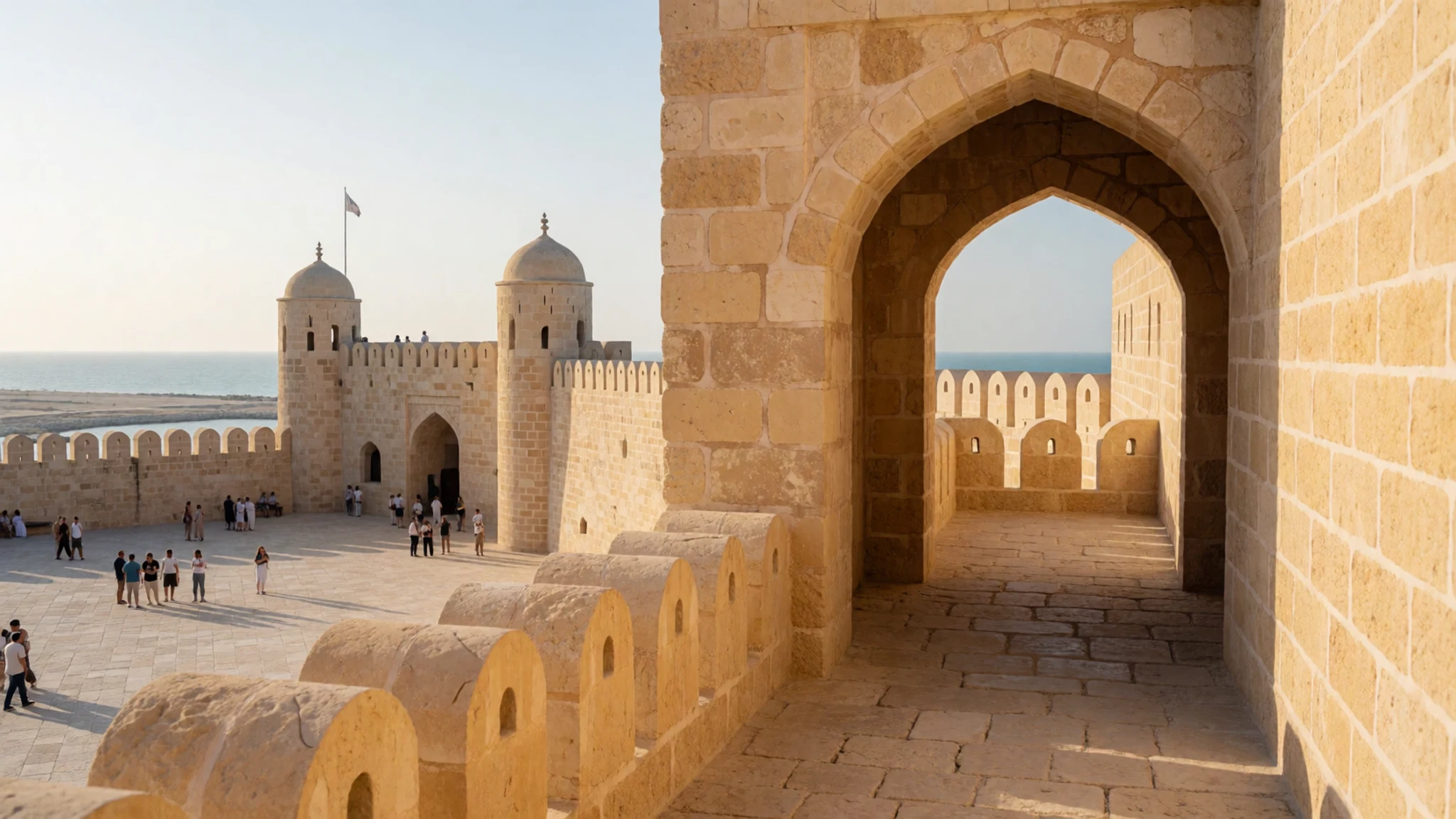
- Bahrain Fort Museum — Adjacent to the archaeological tell
Bahrain Fort Museum sits directly adjacent to the archaeological site, housing two main modern buildings designed to interpret the excavations. The first building contains curated exhibition galleries displaying recovered artefacts alongside interactive learning facilities, while the second structure offers a seminar hall and a seaside café overlooking the water.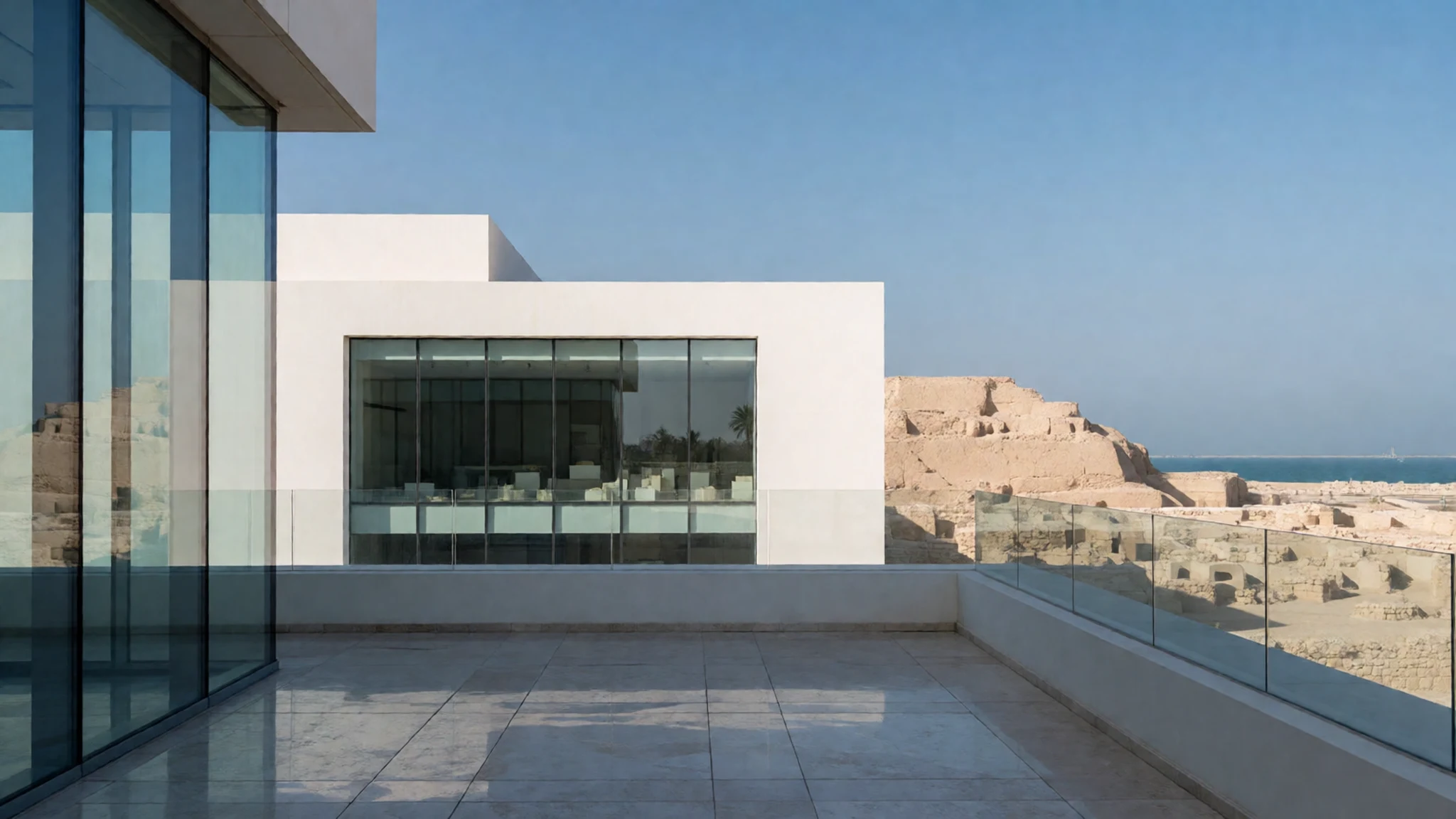
- Manama Souq — Central Manama
Manama Souq forms a dense network of narrow lanes located in the central district of the capital, packed with small shops trading in spices, textiles, electronics, souvenirs and local handicrafts. Travellers wander through bustling alleyways where traditional merchant stalls stand alongside established gold and jewellery stores, offering a lively glimpse into daily commercial life.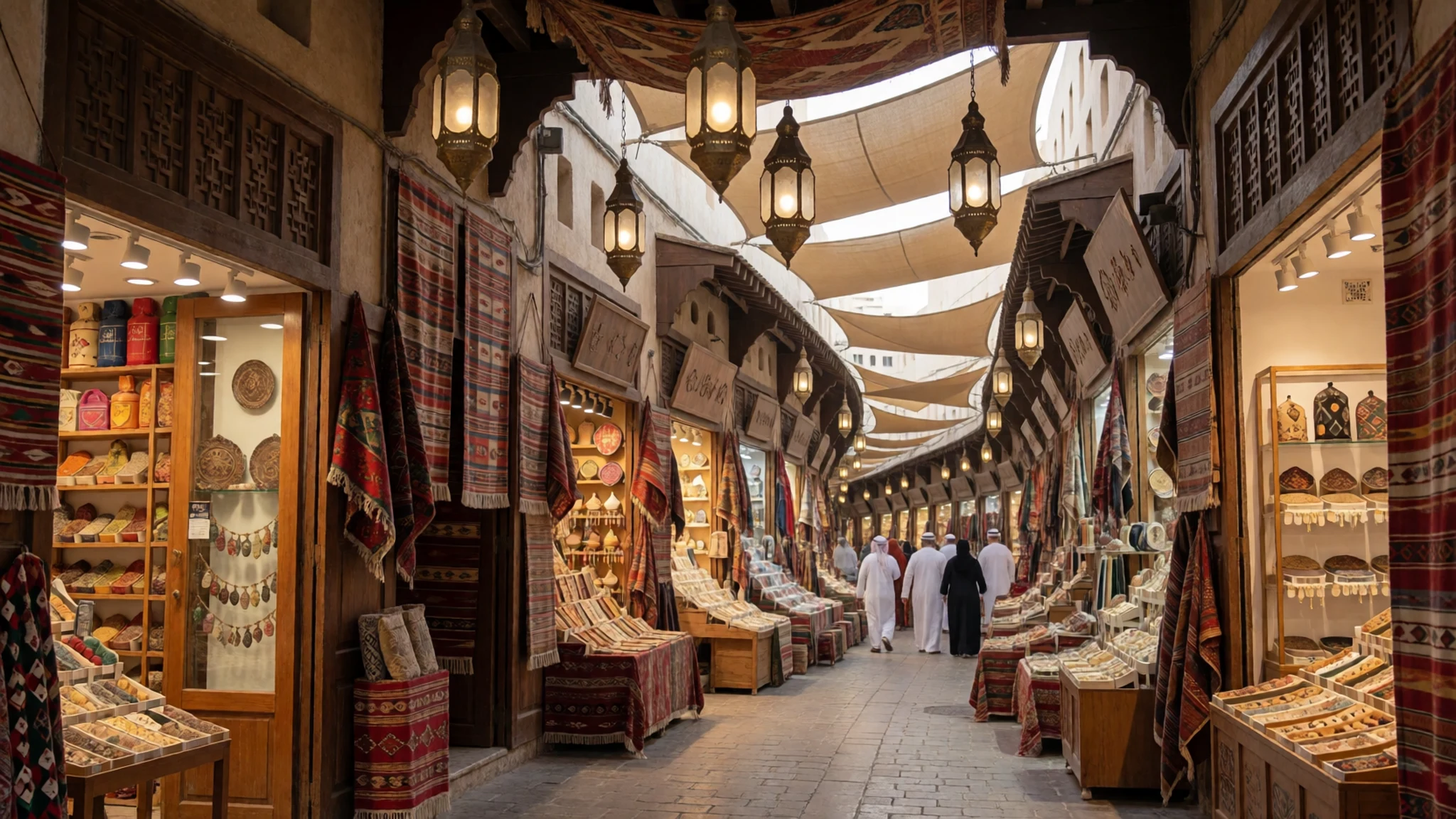
- Bab Al Bahrain — Customs Square, Central Manama
Bab Al Bahrain serves as the historic gateway marking the formal entrance to the central business district and souq area from Customs Square. The ground floor accommodates the official tourist information office alongside artisan handicraft shops, and functions as the regular departure point for guided sightseeing bus tours operating through the city.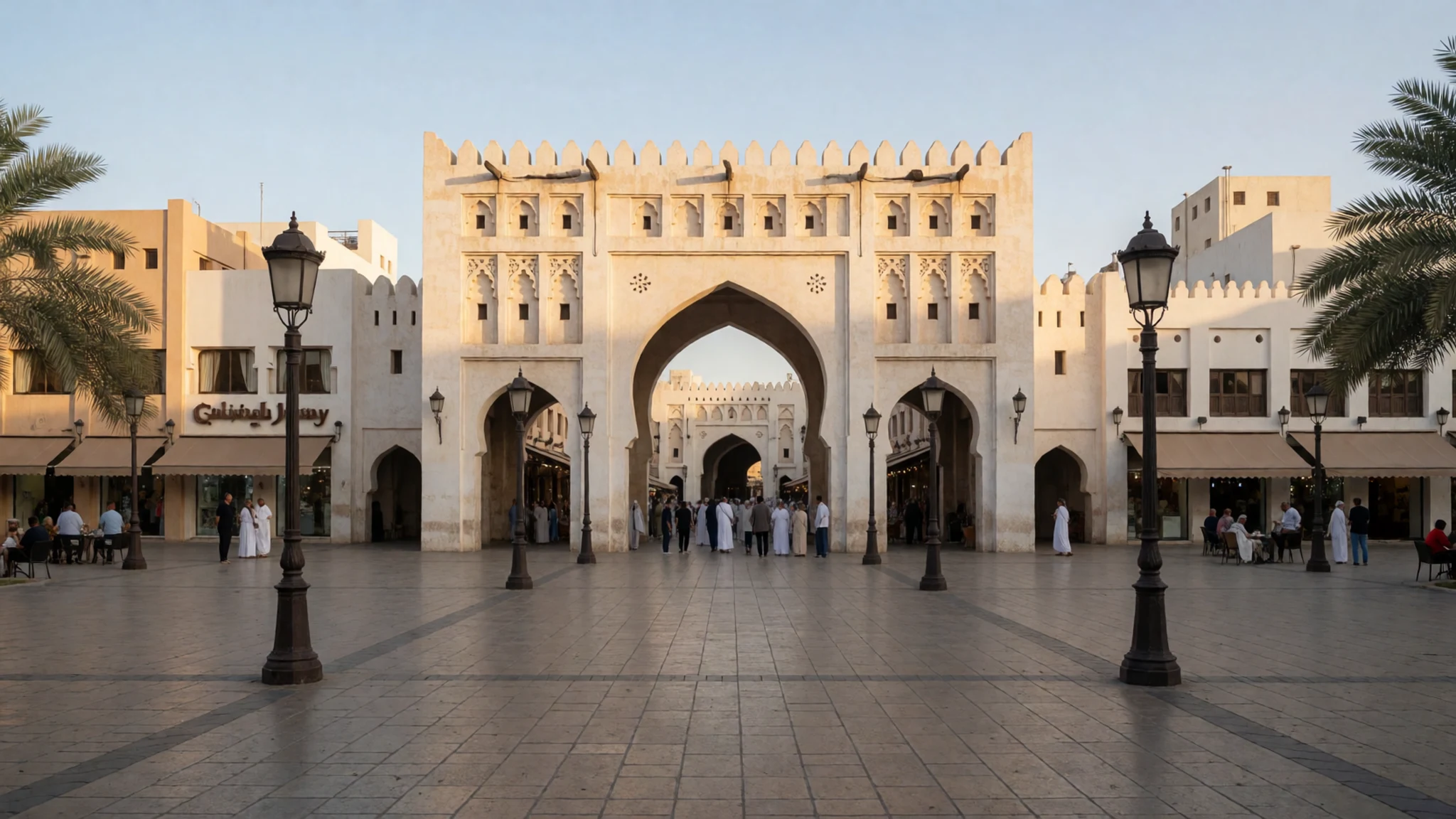
- Al Fateh Grand Mosque — Juffair district, Manama
Al Fateh Grand Mosque stands as one of the largest places of worship in the world, capable of welcoming thousands of worshippers beneath its enormous fibreglass dome. Visitors can join guided tours of the vast interior prayer halls to admire the intricate chandeliers, carved wood panels and Italian marble finishes crafted by international artisans.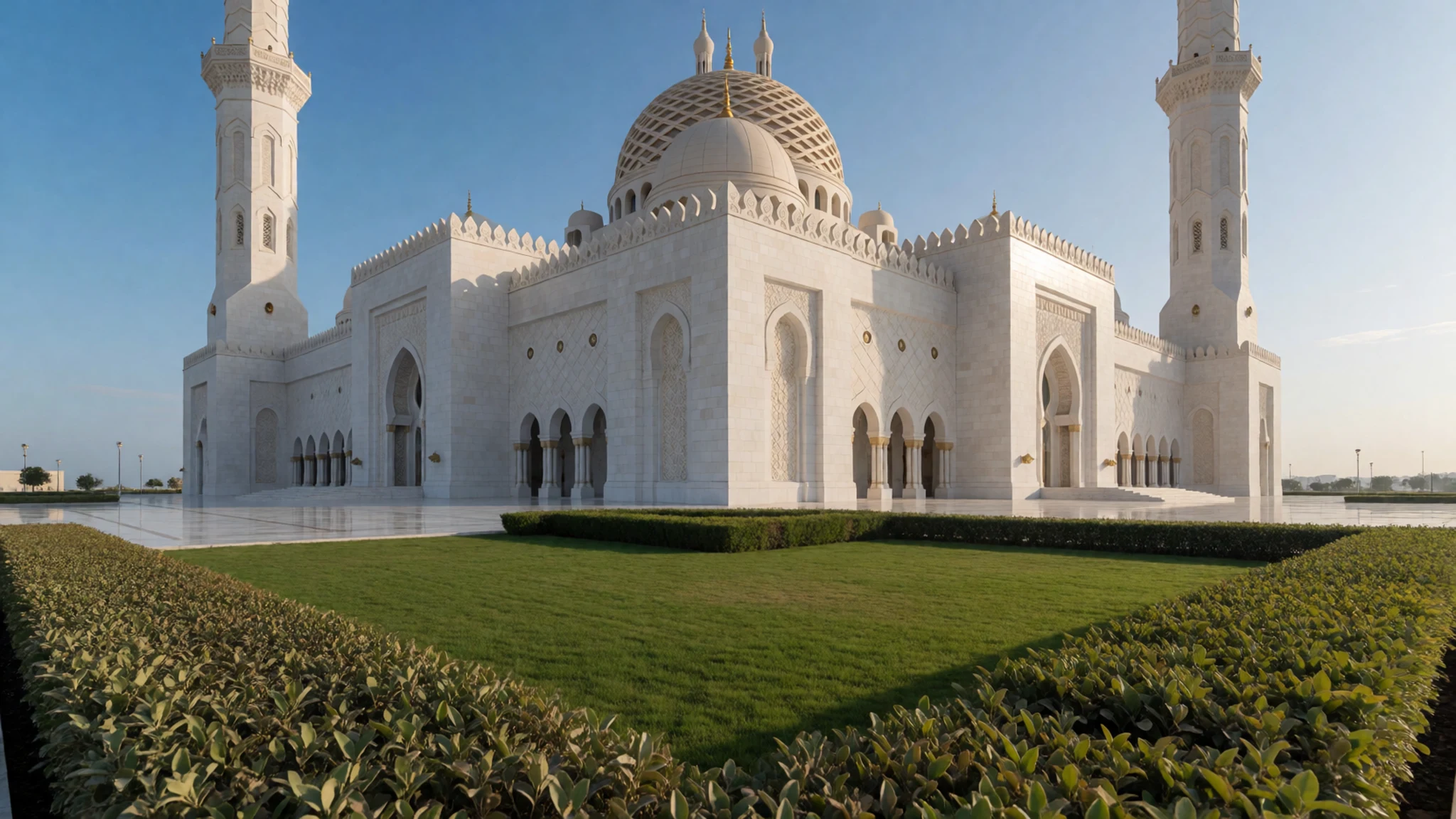
- Barbar Temple — Barbar village, northern Bahrain
Barbar Temple is an ancient archaeological sanctuary situated nearby in the quiet village of Barbar, featuring underground sacrificial altars, stone staircases and oval basins. Excavations here revealed sacred complexes built during the early Bronze Age associated with water worship and ritual offerings dedicated to the deities of Dilmun.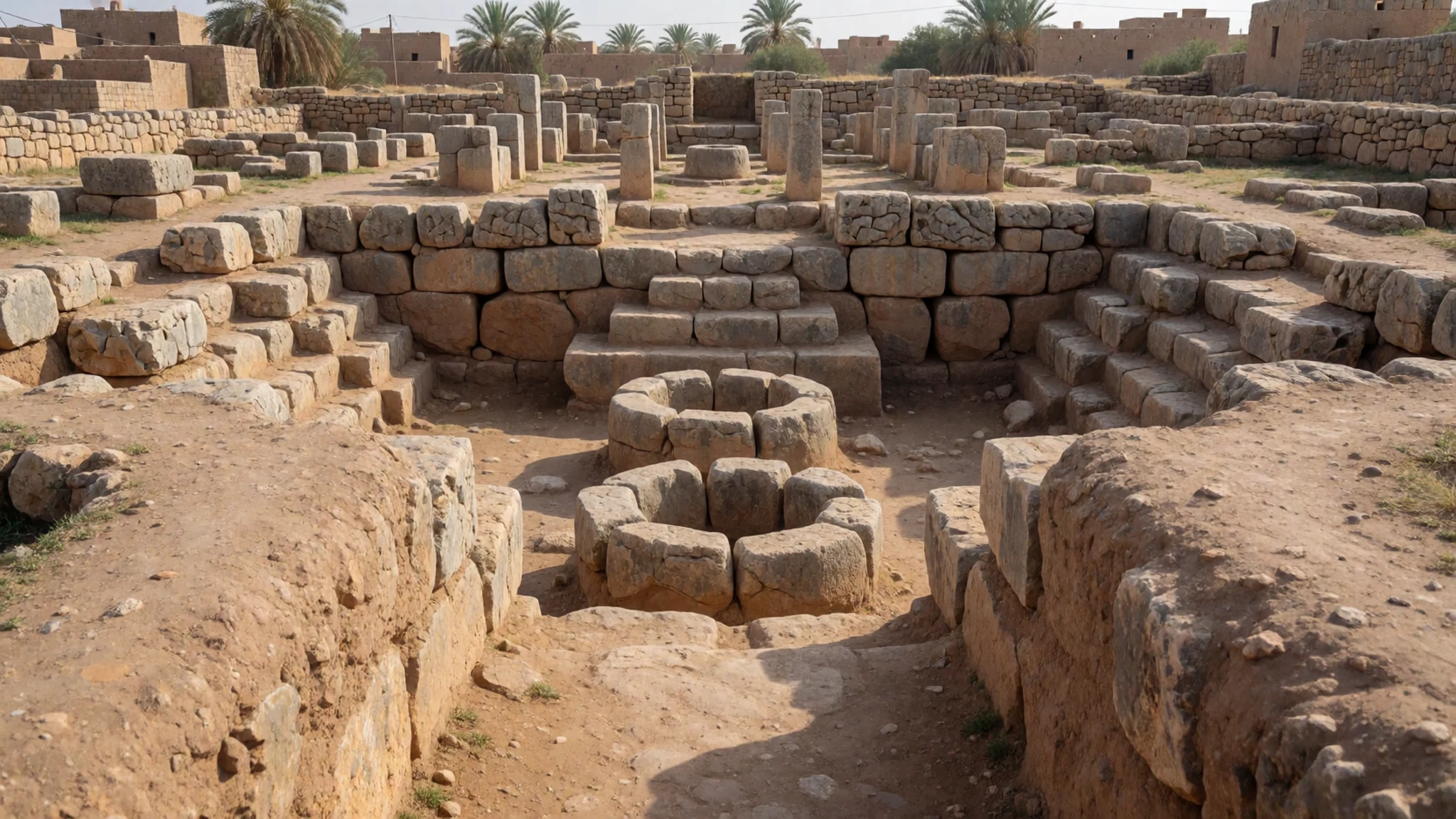
Culture
Traditional culture across Qal'at al-Bahrain and the wider island region is deeply rooted in Islamic heritage, maritime traditions and community hospitality. Generations of local families have maintained customs shaped by pearl diving, seafaring trade and oasis agriculture, preserving folk music, traditional poetry and intricate handicraft weaving. Modern society in the capital region is cosmopolitan, with international residents and visitors mixing freely in public spaces, restaurants and shopping quarters. Social relations are governed by traditional courtesy and respect for family structures, and local hosts take pride in offering warm hospitality to travellers. Visitors exploring the archaeological site and surrounding urban areas will find a welcoming atmosphere where Arabic is the official language, though English is widely spoken in all public establishments. When visiting religious sites, places of worship and traditional neighbourhoods, travellers are required to respect local customs by dressing modestly with shoulders and knees covered.
What to wear
Traditional dress around Qal'at al-Bahrain reflects the practical requirements of the desert climate combined with Islamic modesty standards. Local men traditionally wear the thawb, a full-length, loose-fitting white tunic, paired with a headscarf known as a ghutrah secured by a black agal cord. Women traditionally wear the abaya, a flowing black outer garment worn over everyday clothing, often accompanied by a head covering. In contemporary urban areas like Manama, younger locals and expatriates frequently wear modern western attire, ranging from lightweight casual shirts and trousers to professional business wear. Visitors exploring Qal'at al-Bahrain and the surrounding districts should choose loose, lightweight cotton clothing that provides protection from the intense sun while maintaining modest coverage of shoulders and knees. Sturdy, comfortable walking shoes are essential for navigating the uneven stone surfaces, dry earth paths and excavated trenches of the archaeological site.
What to eat
- Al-Abraaj — Manama dining districts
Al-Abraaj offers a welcoming casual dining environment across the city, serving as a reliable introduction for visitors to experience classic Middle Eastern dishes, grilled meats and traditional hospitality.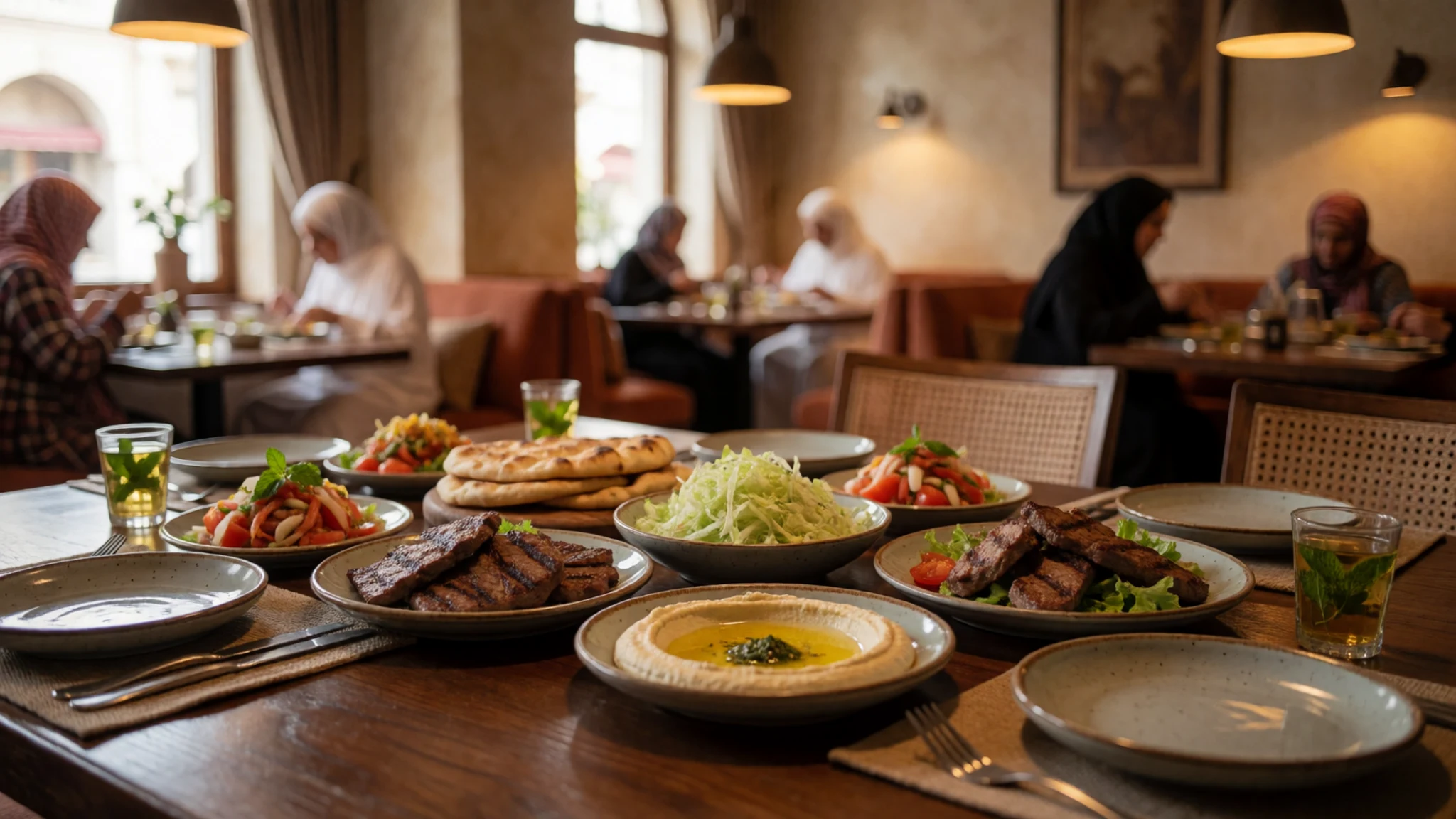
- Al-Suraj — Manama streets
Al-Suraj is a popular local spot known for preparing quick, savoury street-style shawarmas wrapped in flatbread, prized for their authentic spiced flavours and incredible affordability.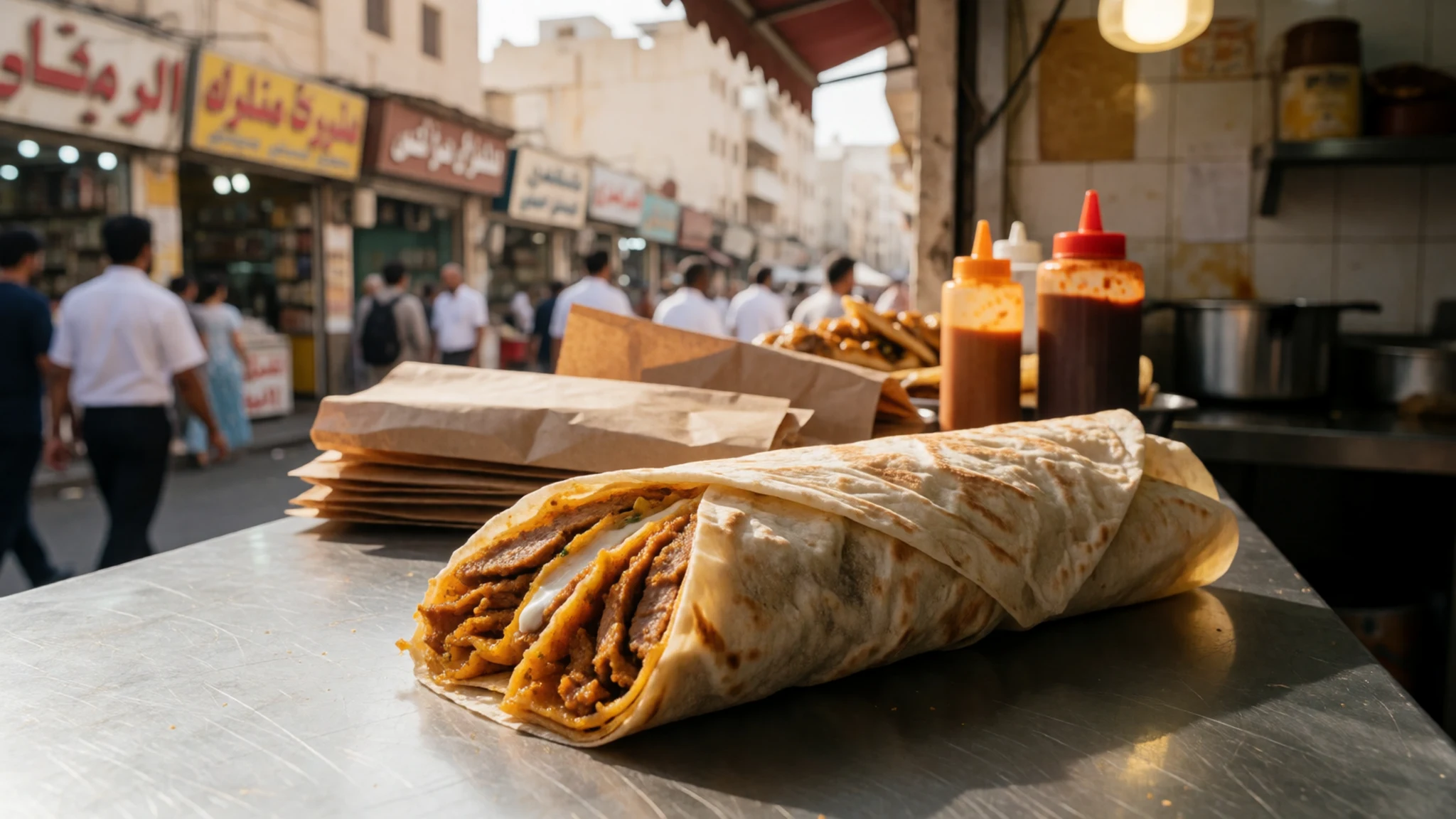
- Habara Snacks & Fish — Manama neighbourhoods
Habara Snacks & Fish operates as a cheerful neighbourhood diner dishing out simple, comforting portions of fried fish and chips alongside assorted local seafood snacks. - Bahay Kubo — Central Manama
Bahay Kubo provides a traditional Filipino dining experience in the city, offering hearty comfort food dishes in a lively environment complete with private function rooms. - Café Lilou — Manama café quarters
Café Lilou features ornate Paris-style interior decoration and an extensive menu of pastries, coffee and light meals, making it a favourite gathering spot for both expatriates and locals.
Plan it
Best time. November to March brings pleasant, warm weather ideal for exploring outdoor archaeological sites, while summer months from June to August experience extreme heat and high humidity.
How long. 2–3
Getting there. Fly into Bahrain International Airport in adjacent Muharraq, then take a municipal bus, taxi, or rental car into Manama and onward to Qal'at al-Bahrain.
Budget. mid
Tips
- Arrive early in the morning to explore the archaeological mound before afternoon temperatures rise
- Wear comfortable, sturdy footwear suitable for walking on uneven earth and ancient stone
- Carry bottled water and sun protection when visiting the open-air fort site
- Check official opening hours for the site museum before travelling
- Keep local currency or cards ready for small purchases in the souqs
Etiquette
- Dress modestly with shoulders and knees covered when visiting public areas and religious sites
- Ask permission before photographing local residents in traditional neighbourhoods
Nearby
Sources
- Wikidata Q740104 (CC0)
- Wikipedia (rev 1369726340) (CC-BY-SA 4.0)
- Wikivoyage (rev 5410334) (CC-BY-SA 4.0)