Animal Flower Cave
Animal Flower Cave, Barbados
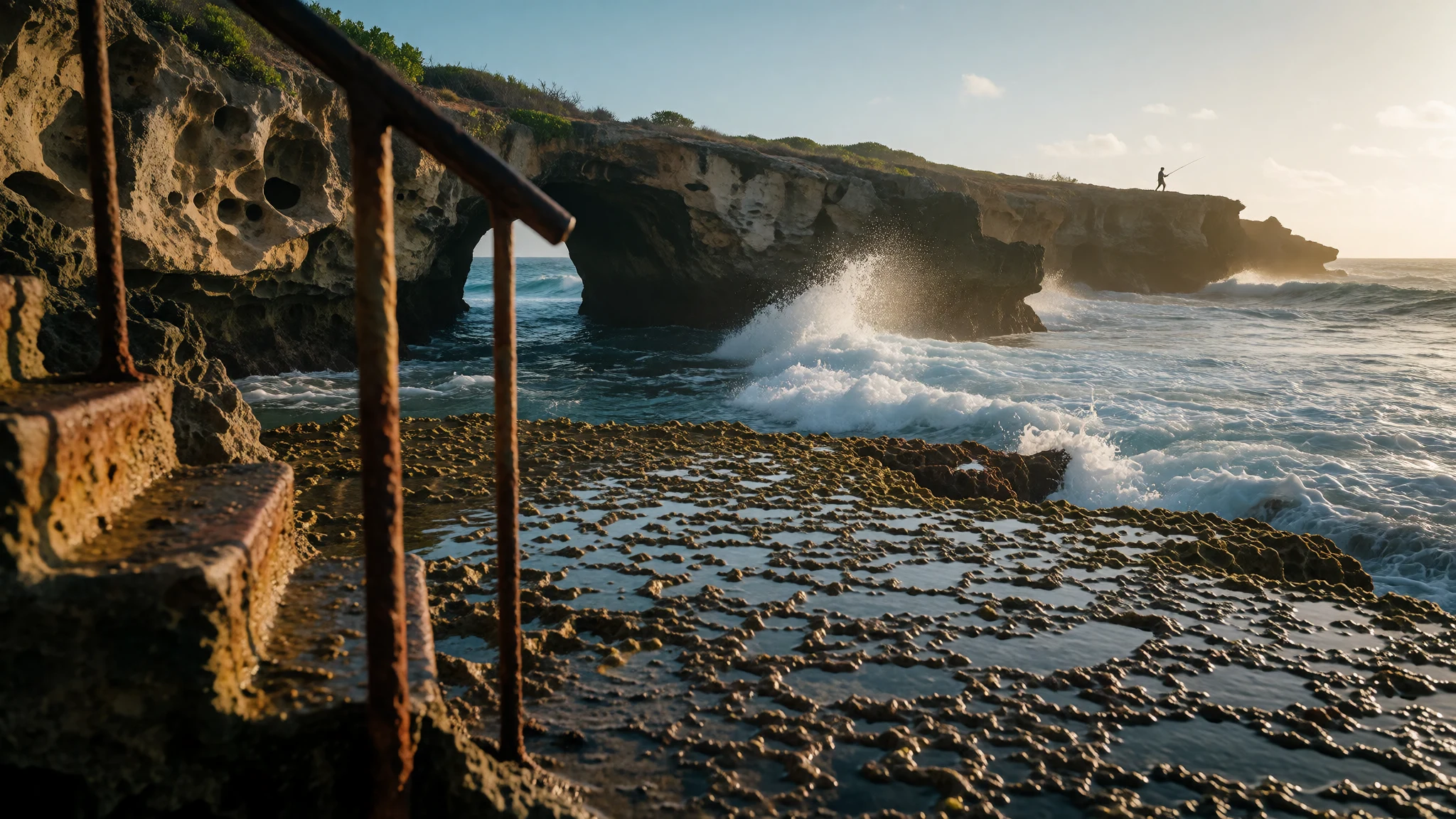
Animal Flower Cave is a sea cave under the coral cliffs of northern Barbados, where anemones open like flowers in pools of Atlantic water.
The place
Animal Flower Cave sits under the cliffs at the northern tip of Barbados, in the parish of Saint Lucy, where the Atlantic meets coral limestone and the land simply stops. The cave is a sea cave: waves have cut a hollow into the rock, and a short flight of steps leads down from the cliff top into chambers that stay dim, wet and salt-smelling even at midday. In the pools, sea anemones fix themselves to the stone. When the water is quiet their tentacles open and the rock looks planted with small flowers, which is how the cave got its name. The coast here is the rough side of the island. Barbados has a sheltered Caribbean shore to the west and this exposed Atlantic shore to the north and east; at North Point the swell has the whole ocean behind it. On a calm morning the mouth of the cave frames open water and the cliff edge throws spray. On a heavy day the same mouth is a surge of white water and the descent is closed, because the chambers flood and the steps run with seawater. Above the cave the ground is low, grassy and wind-scoured, with a small visitor building and a view that runs along the indented coast. There is no town at the rim. The nearest settlement of any size is Speightstown, down the west coast, and the rest of Saint Lucy is villages, gullies and fields. The rock itself is the old coral of the island, full of pockets and sharp edges, pale in the sun and dark where the spray keeps it wet.
Its story
Animal Flower Cave entered local memory through a likeness that is easy to repeat: the anemones in its pools look like flowers, and flowers that move tend to keep their name. For people on the north coast the place was a cliff they already used, a hollow the sea kept open, and a group of pools that could be watched when the Atlantic sat down. The name did the rest of the work. As more travellers were brought to the end of the island, those animal flowers became the reason for the journey, and a working landmark turned into a visit with steps, a cliff-top stop and a story attached. That shift belongs to a wider pattern on Barbados. Sugar, shipping and the capital at Bridgetown pulled settlement towards the south and the sheltered west, and the north stayed a parish of villages, gullies and wind. Saint Lucy was the road's end. A sea cave there offered what a west-coast beach does not: the sound of open ocean inside the rock, and a horizon framed by stone rather than by a shoreline of sand. The people who kept the site learned to host around the weather. Some days the chambers are the whole point, and some days the honest welcome is to stay above and look, because the swell has taken the stairs. The gentle name still leads people north. The sea then shows them what kind of place they have actually reached.
What to see
- The anemone pools — Inside the cave, North Point
The anemone pools are the heart of Animal Flower Cave, shallow basins in the coral floor where sea anemones hold fast and open their tentacles when the water is calm. They are the animal flowers of the name: plant-like at a glance, and clearly animals once a shadow or a ripple makes them fold. A rough Atlantic day fills the basins with surge, and the still life disappears.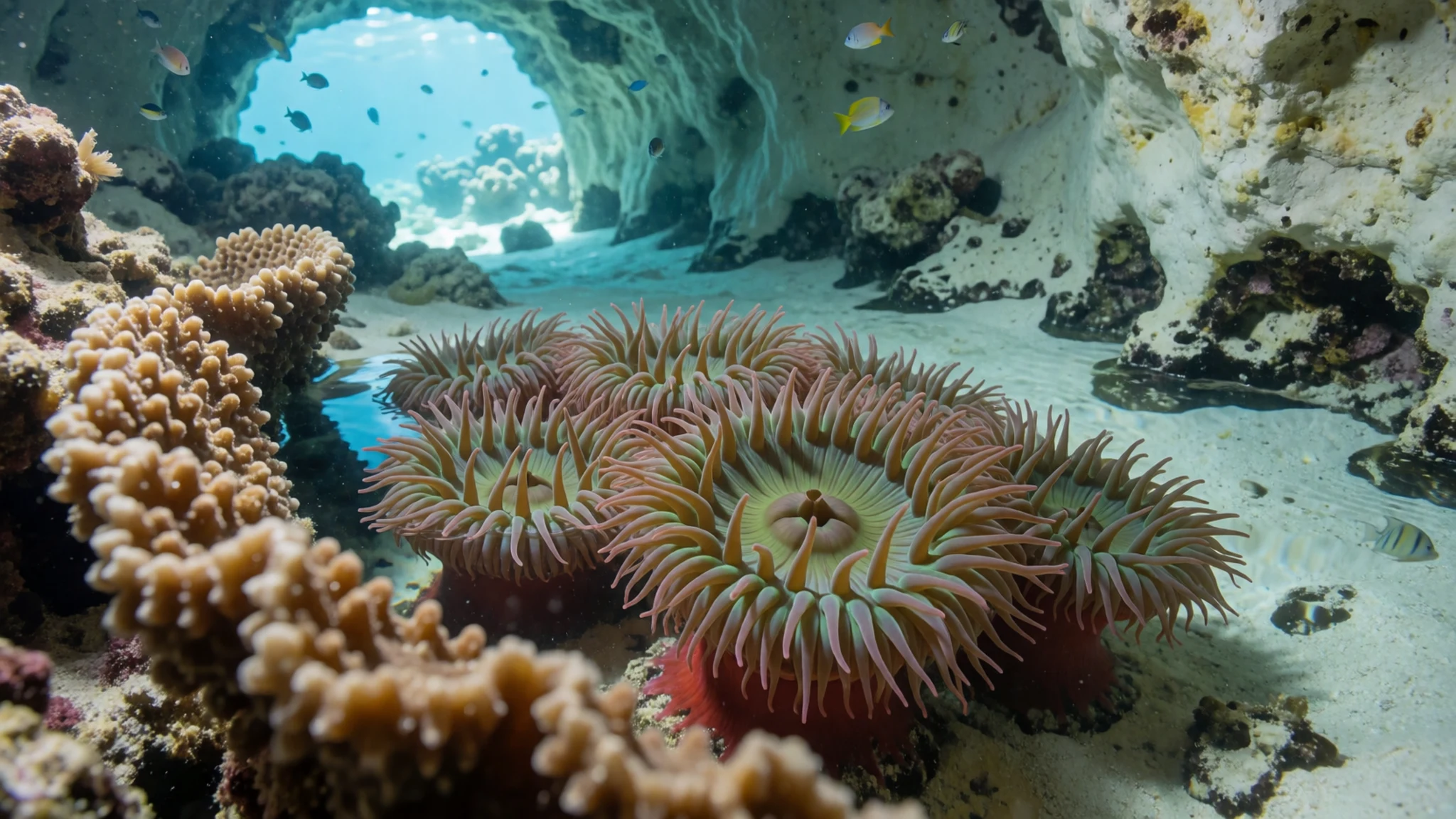
- The view from the cave mouth — Cave mouth, North Point
From inside Animal Flower Cave the Atlantic sits in a bright opening framed by coral rock, the view that draws people down the steps. The cliff continues on either side, pale and broken, with spray at the waterline and no beach in the frame. On a calm day it is a window onto blue water. When the swell rises the window turns white and the chamber booms.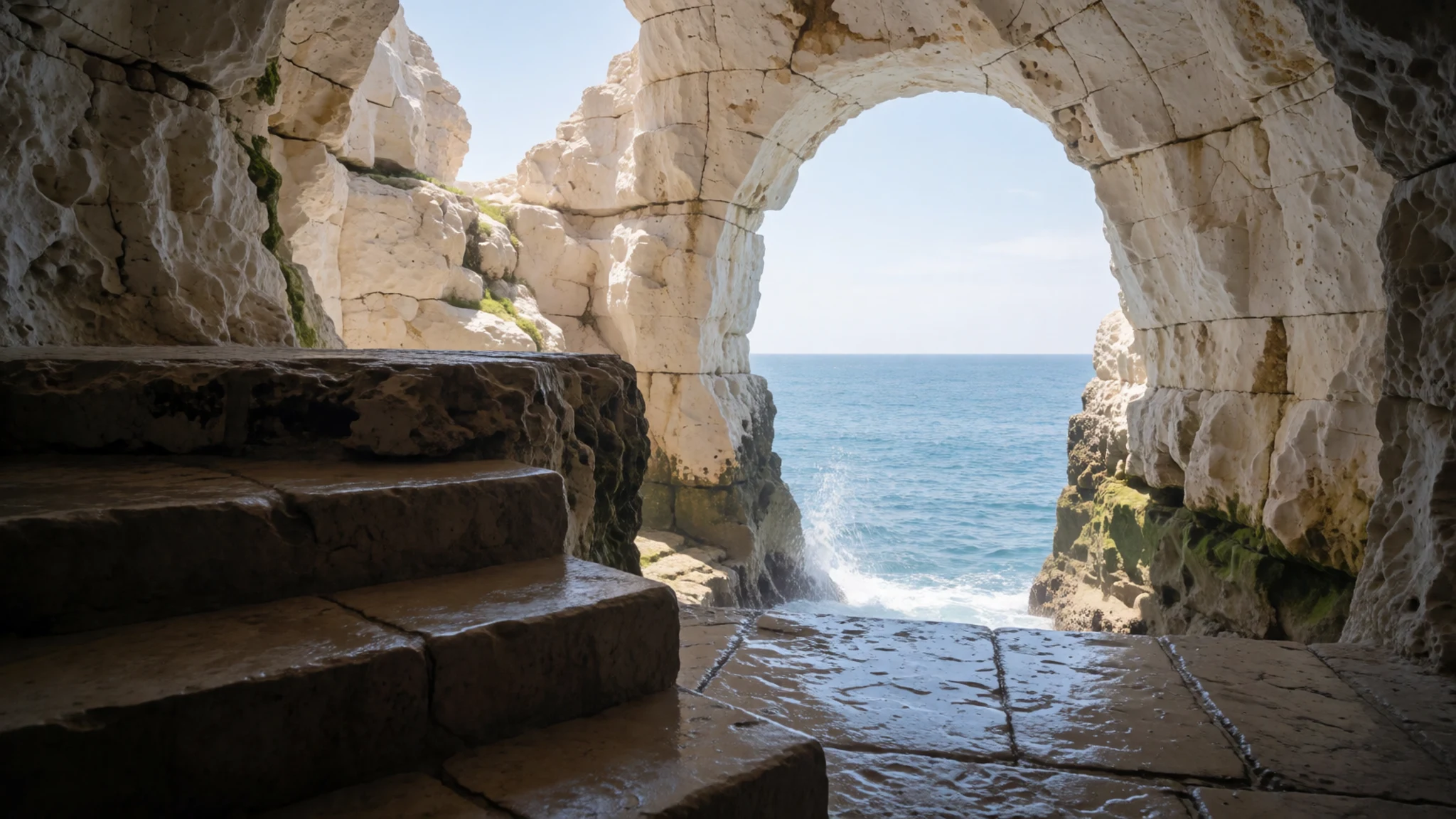
- The cliff-top rim — Cliff top, North Point
The ground above Animal Flower Cave is a low, windy rim at North Point, and many visits spend as long here as they do below. The coast runs off in coral headlands, the Atlantic breaking at the foot. It is the place to judge the sea before taking the steps. White water at the base means the cave is better left alone.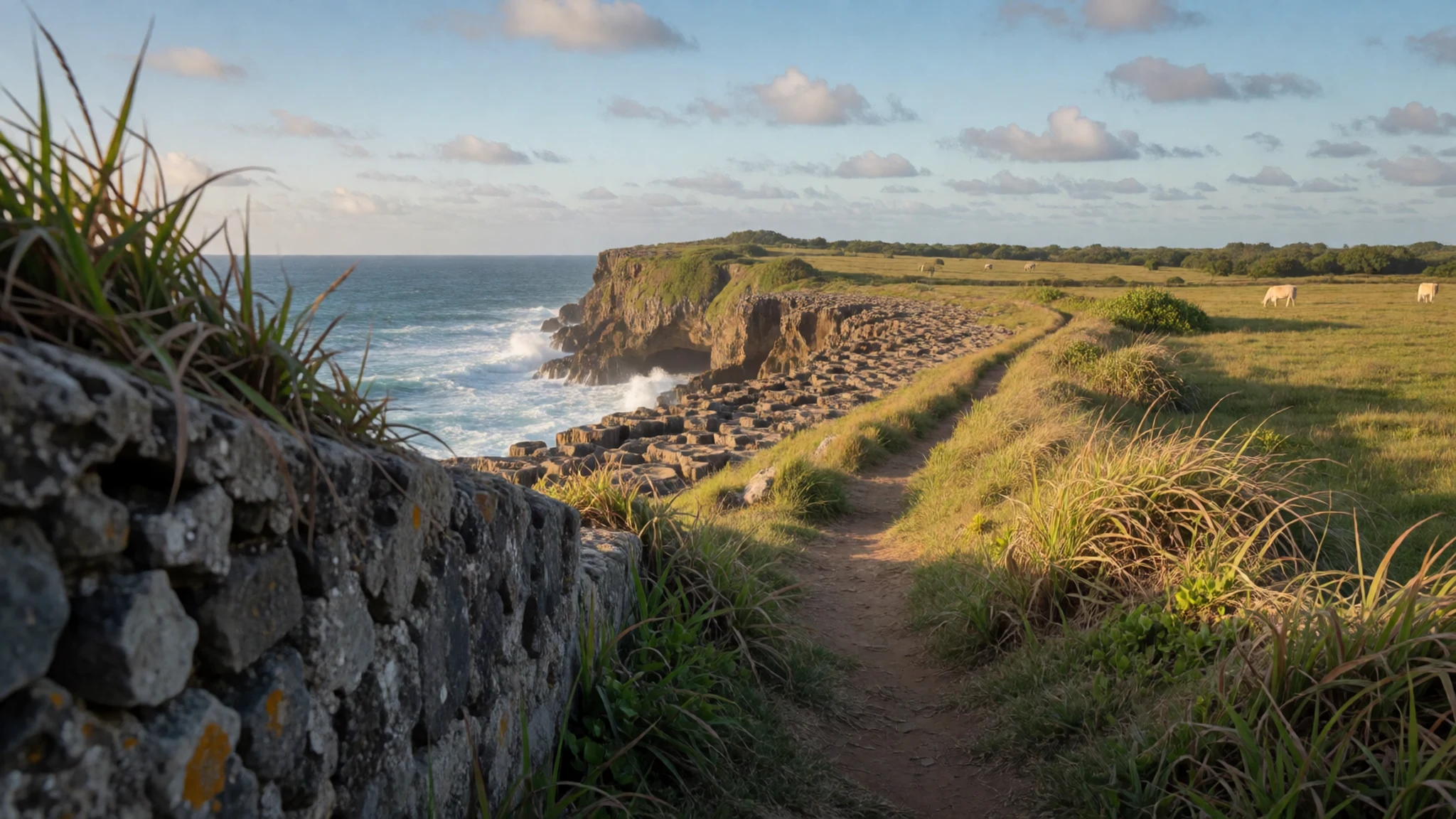
- The dripping ceiling — Cave interior, North Point
The ceiling of Animal Flower Cave is always wet. Fresh and salt water seep through the coral and fall in slow drops, so the steps and the floor never really dry. That drip is part of the character of the place: a small sound under the larger sound of the sea, and a reminder that the rock is porous all the way to the grass above.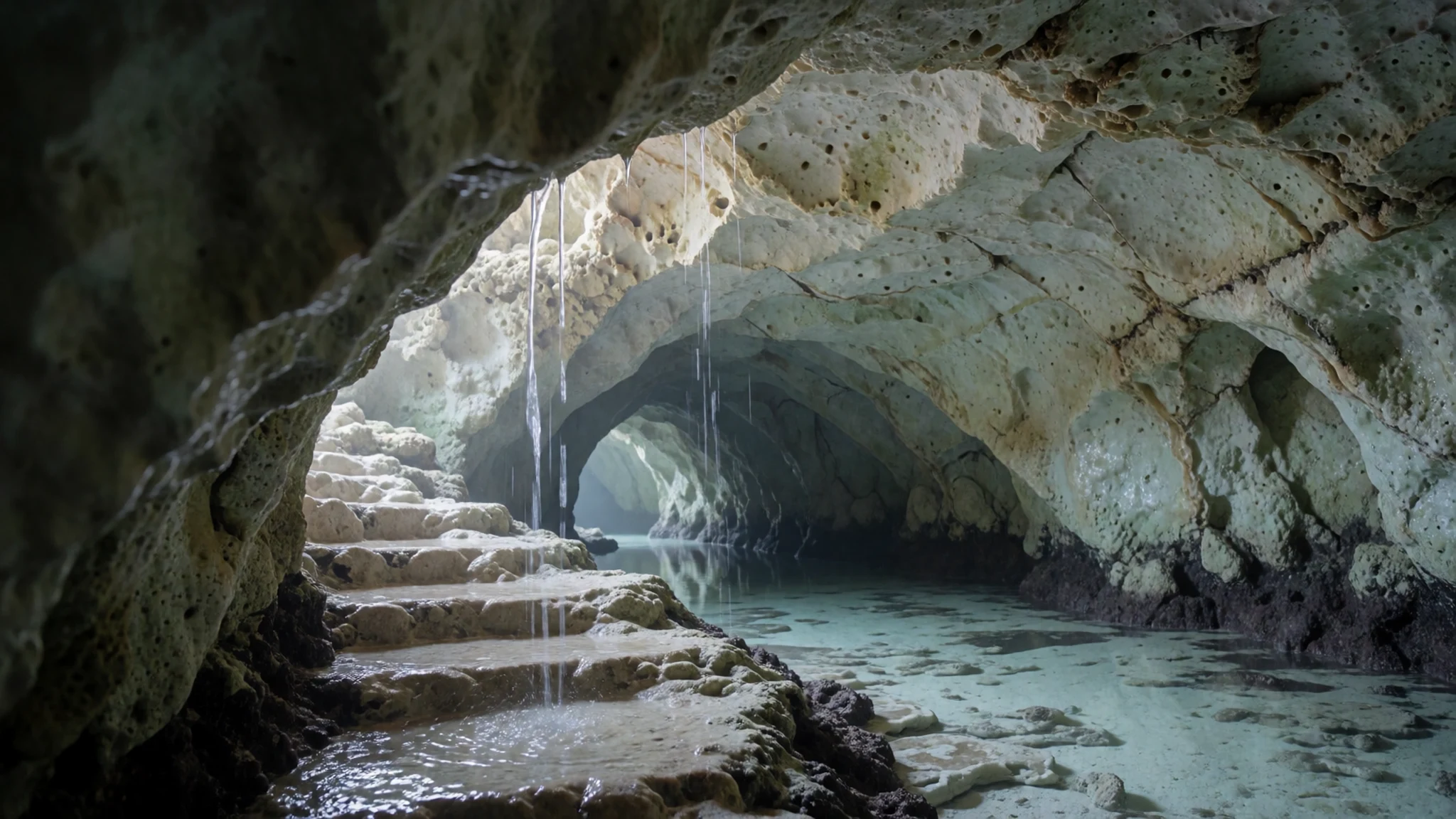
- North Point headland — North Point, Saint Lucy
North Point is the headland that holds Animal Flower Cave, and the walk along its rim is worth taking even when the cave itself is shut. The cliffs are low but abrupt, the rock pitted and sharp, and the bays on either side are small, stony and Atlantic, places to look at rather than to swim. Saint Lucy spreads inland in fields and village roads.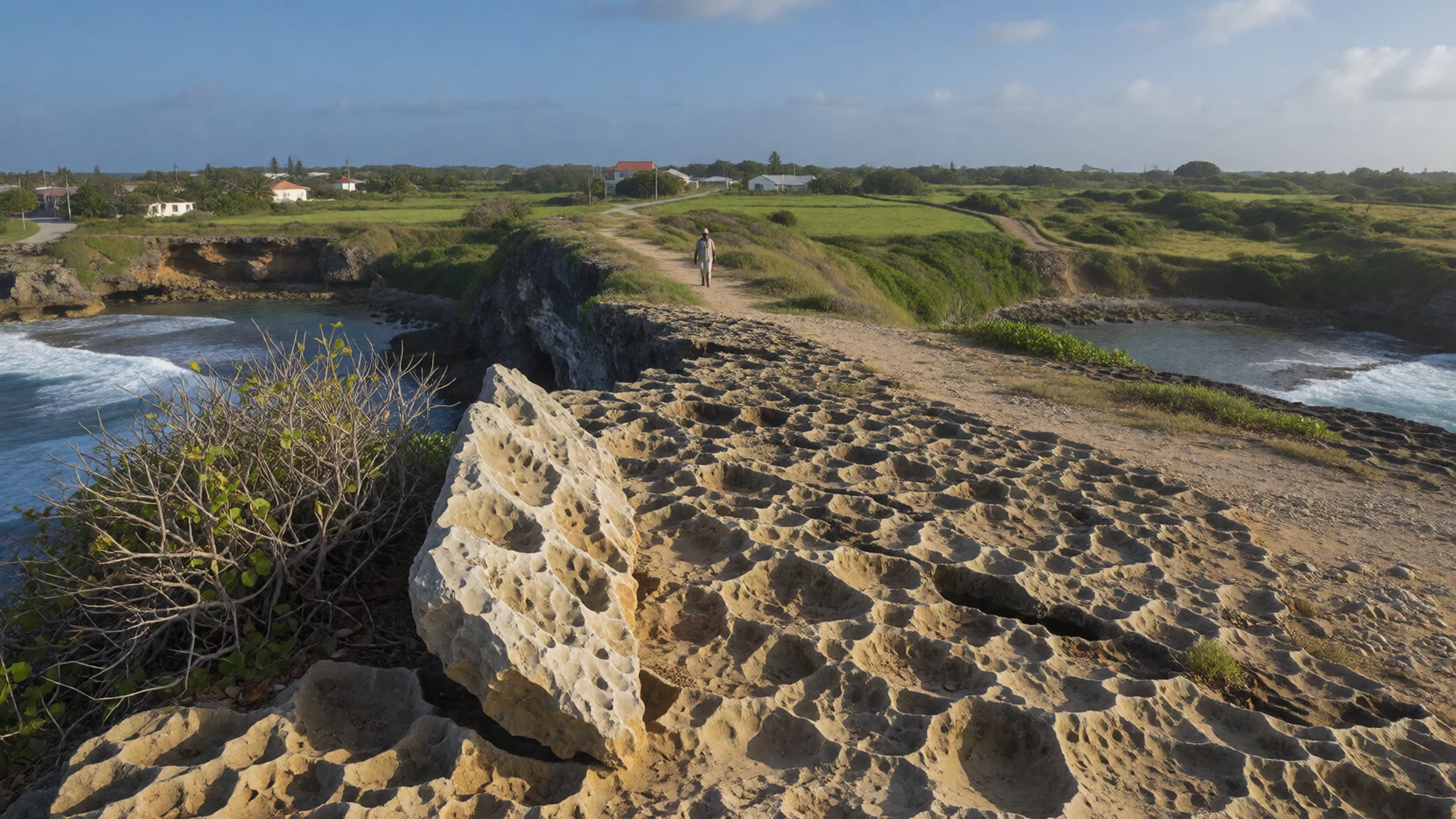
Culture
Animal Flower Cave sits in Saint Lucy, a parish that still feels like working Barbados rather than a resort strip. The island's culture is Bajan: English-speaking, shaped by West African inheritance and a long British colonial century, and lived in villages as much as in town. People greet one another. A good morning or a good afternoon matters in a rum shop, at a bus stop and on a cliff path, and starting a conversation without it reads as abrupt. Sundays slow the north down; churches fill and some small places stay shut. Crop Over, in the summer, is the festival that shows the other side of that restraint: calypso, tuk bands with their pennywhistle and drum, the Landship tradition with its dance of sailors, and Kadooment bands in full costume. None of this is performed at the cave, but it is the context a visitor walks into when the tour buses thin out and the staff are simply Barbadian hosts watching the sea. The cave adds a local rule of its own. The anemones are living animals, the rock is unstable underfoot when wet, and the Atlantic is allowed to cancel the day. Treat Animal Flower Cave as a working piece of coast: greet the people you meet, stay on the steps and the obvious footing, and leave the anemones untouched.
What to wear
At Animal Flower Cave the dress question is practical before it is ceremonial, but Barbados still has a costume tradition worth knowing. Crop Over and Kadooment are when the island's festive clothes appear: sequinned and feathered band costumes, bright cottons, and the older tuk and Landship looks that borrow sailor cuts and add ribbon and braid. Away from festival weeks, traditional Sunday clothes lean formal, with hats, dresses and pressed shirts, in fabrics that can survive heat, often cotton with a little structure. Everyday clothes now are lighter. In Speightstown and the villages of Saint Lucy people wear T-shirts, shorts, sundresses and polo shirts, with a shirt thrown on for church, a bank or a sit-down meal. Beachwear stays on the beach. The north point is not a sand beach, and the cliff path is a poor place for a bare foot. A visitor does best in light, covering clothes that can take spray and sun, a hat with a string, and shoes that grip wet rock: trainers or sandals with a real sole, not thin flip-flops. Swimwear under a shirt is fine for the drive, and a film of salt on the legs is normal once the steps are wet. Festival costume stays for Kadooment; the cave calls for clothes that can take wind, limestone and a sudden wave.
What to eat
- Flying fish and cou-cou — Speightstown eateries and north-coast rum shops
Flying fish and cou-cou, the plate Barbados is known by, is the meal to eat after Animal Flower Cave. Cou-cou is cornmeal and okra cooked to a firm mash, served with steamed or fried flying fish and pepper sauce at Speightstown eateries and north-coast rum shops.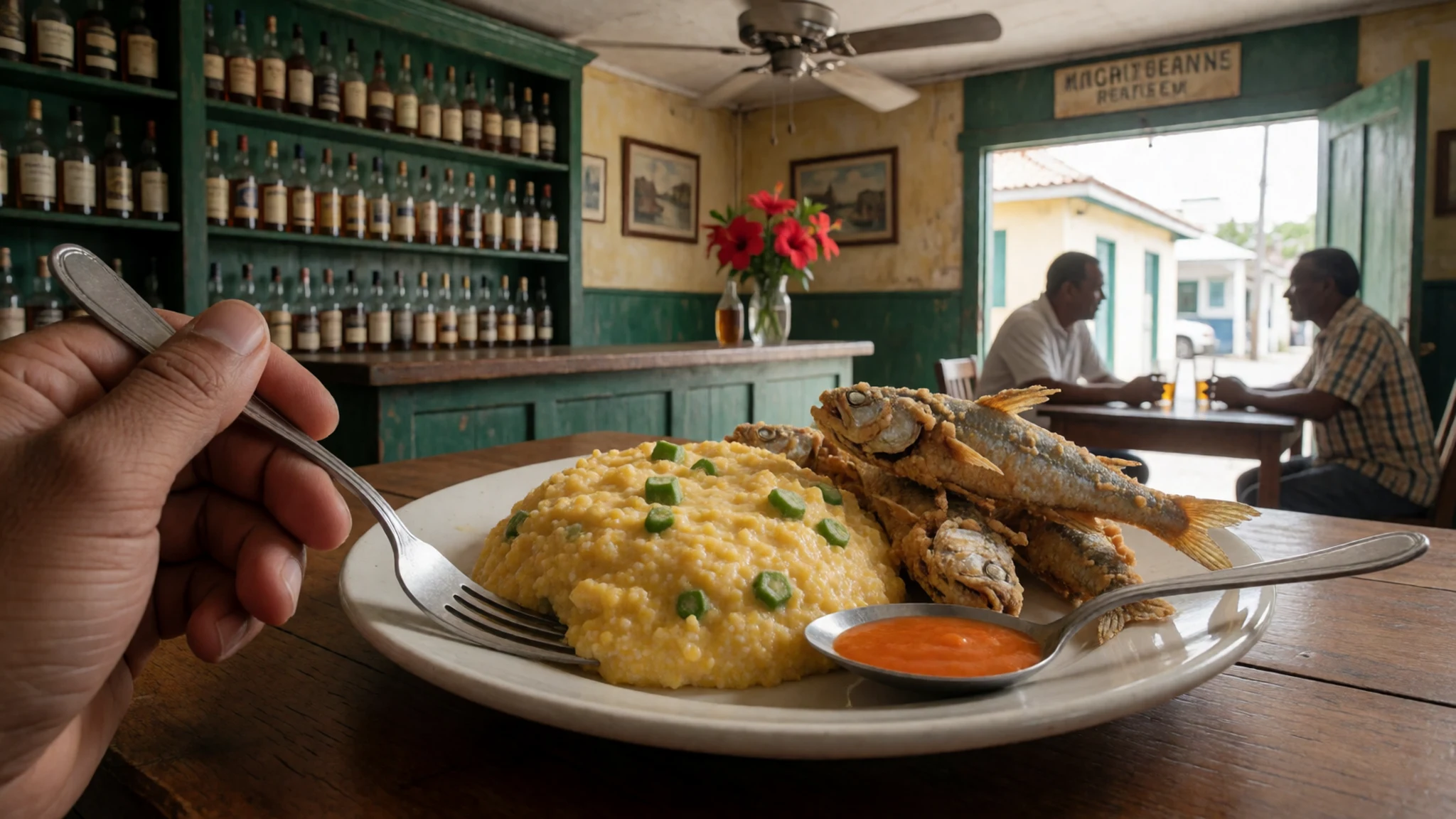
- Fish cakes and cutters — Bakeries and rum shops in Speightstown
Fish cakes in Barbados are salt-fish fritters, herbed and fried, and a cutter is the same cake slipped into a salt-bread roll. They are the ordinary snack of the island, sold from bakeries, rum shops and small takeaway windows rather than from a set menu.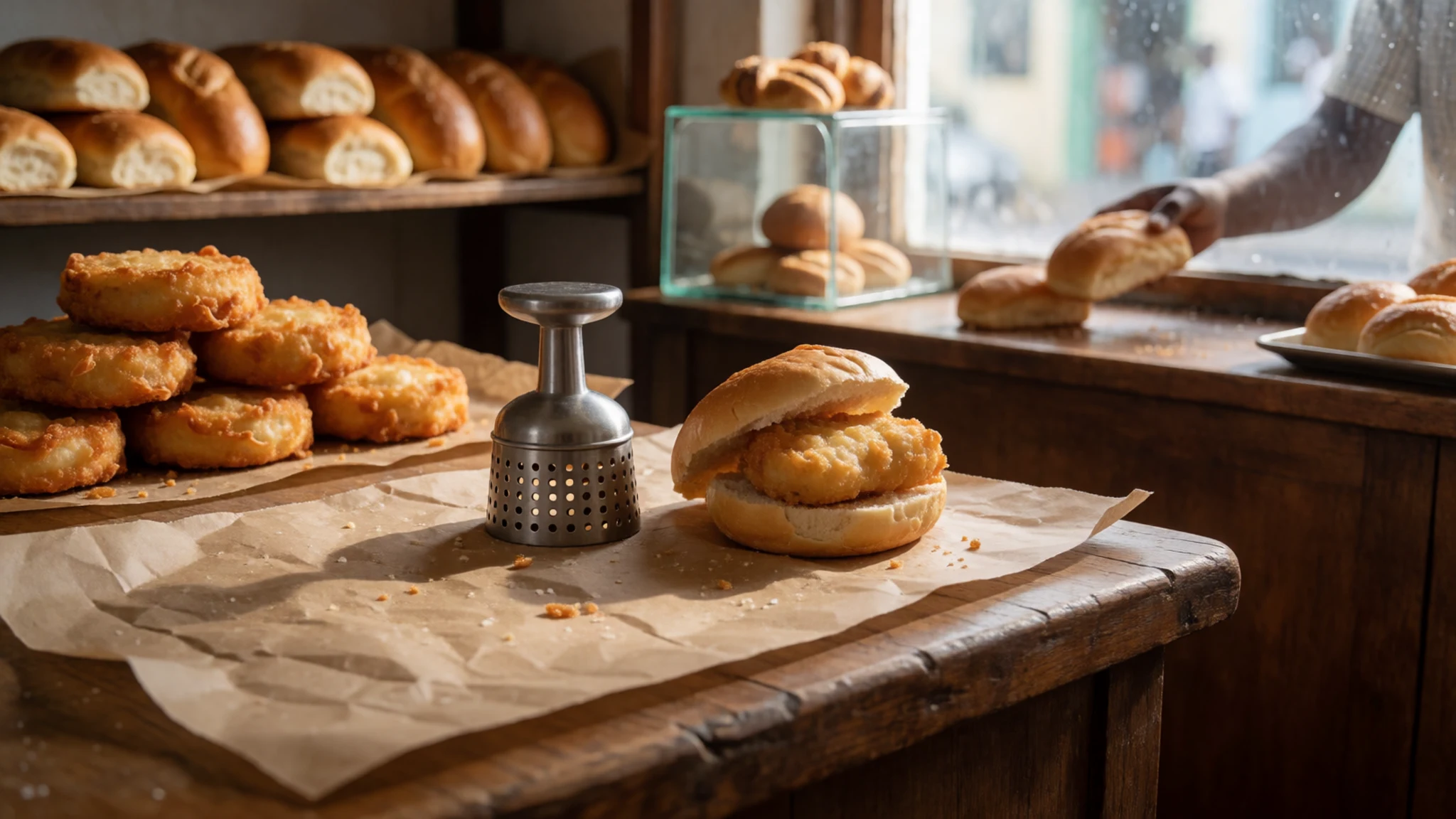
- Pudding and souse — Saturday rum shops and weekend stalls in Speightstown and the northern parishes
Pudding and souse is the Saturday plate: pickled pork with lime, onion, cucumber and pepper, beside a slice of steamed sweet-potato pudding. It shows up in rum shops and at weekend stalls, especially in the morning, and it is often gone by early afternoon. - Macaroni pie — Lunch eateries and cook-shops around Speightstown and the north
Macaroni pie is baked macaroni in a cheese custard, cut in squares and served as a side with fish, chicken or stew. Bajan versions are firm, peppered and slightly sweet. It turns up at simple eateries and cook-shops around Speightstown and the north. - Conkies — Bakeries and rum shops in Speightstown
Conkies are a steamed parcel of cornmeal, pumpkin, sweet potato, coconut and spices, wrapped in a banana leaf. They belong to Independence season but rum shops and bakeries sell them at other times too. A Speightstown bakery sells them on the way to Animal Flower Cave.
Plan it
Best time. Animal Flower Cave is at its easiest in summer, outside storms, when the Atlantic is more often calm enough to open the steps than in the drier months early in the year. The drier months early in the year bring the heavier swell and close the cave more often; September is hottest, October wettest, and January to March most comfortable.
How long. 1–2
Getting there. Grantley Adams International Airport is in the south of Barbados, and there is no railway onward. A hire car or a taxi covers the cross-island drive to North Point in Saint Lucy; buses run towards the north and west, then a short taxi finishes the leg to Animal Flower Cave. Ask locally that morning whether the cave is open, since no timetable survives a rough sea.
Budget. high
Tips
- Ask on the morning whether the steps are open; a heavy swell closes Animal Flower Cave without much warning.
- Wear shoes that grip wet limestone and keep a hand free on the steps.
- Go early, before coach parties reach the cliff and before the rock has had a full day of sun.
- Carry some cash, because north-parish rum shops and small eateries do not always take cards.
- Take water and a hat; the rim above the cave has little shade even when the wind feels cool.
Etiquette
- Greet staff and other visitors before you ask a question or take a photograph of a person.
- Do not touch the anemones or take anything from the pools.
- If the sea has closed the steps, accept the decision and stay on the cliff.
Nearby
Sources
- Wikidata (CC0)
- Wikipedia (CC BY-SA 4.0)
- Wikivoyage (CC BY-SA 4.0)