Bridgetown
Bridgetown, Barbados
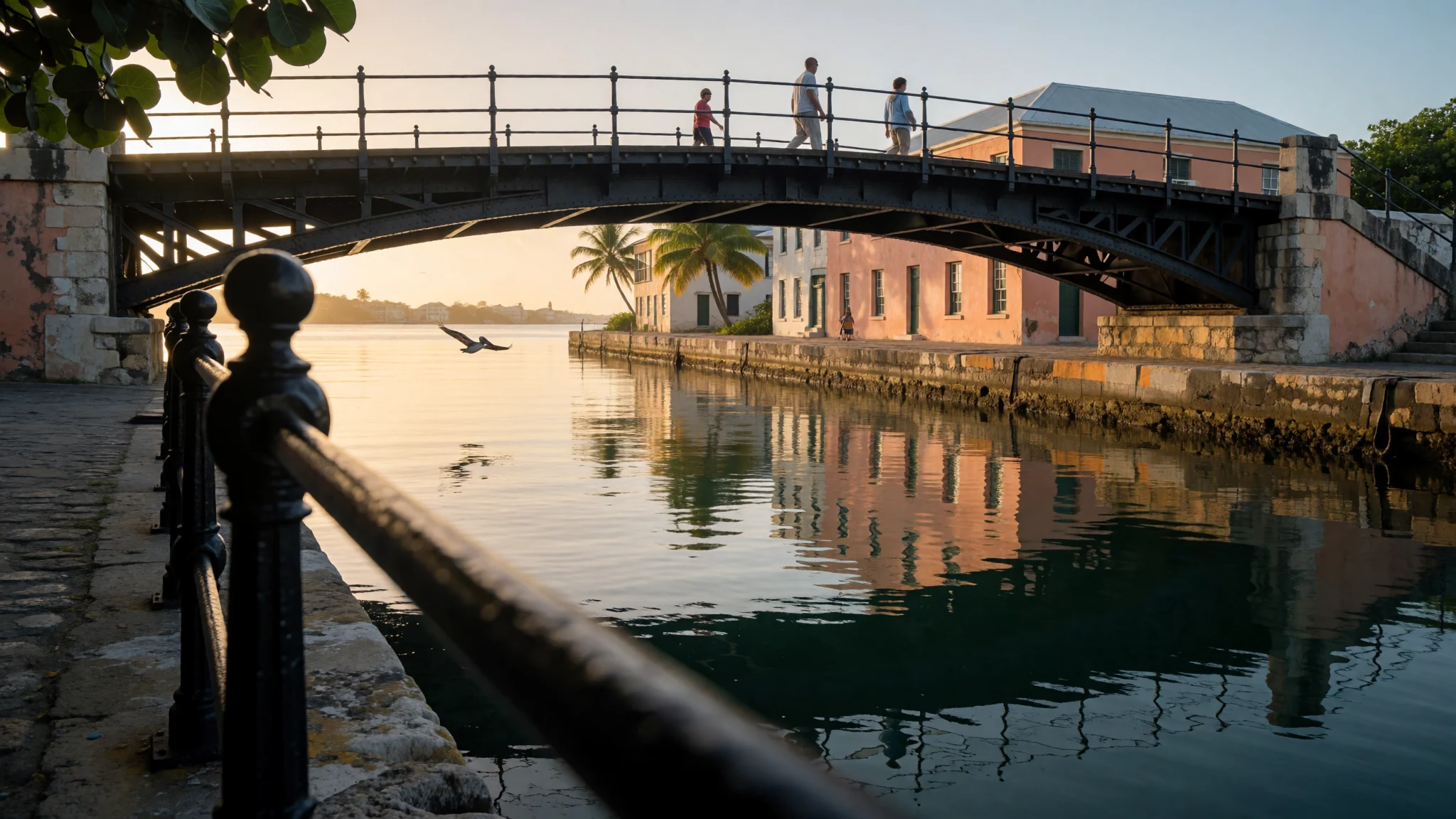
Bridgetown is a compact Caribbean capital of coral-stone churches, a synagogue and a working harbour, best seen on foot before the heat builds.
The place
Bridgetown is the capital of Barbados, a low coastal city of about 98,500 people, standing roughly one metre above sea level on the island's south-western shore. Locals mostly call it simply Town, and the name on an airline departure board can mislead: the airport lies outside, to the south-east, and many visitors are driven straight to beach hotels without ever seeing the centre. That is a pity, because the compact core around Carlisle Bay is walkable and has a rhythm of its own. The harbour handles cruise ships, so on port days the waterfront fills with taxi drivers, minibus touts and day-trippers, while the shopping streets behind fill with office workers on errands. The Careenage, a narrow inlet where boats tie up, cuts into the middle of town, and bridges across it link the commercial north bank with the quieter south side. Coral-stone churches, a synagogue, the parliament buildings and a broad square of memorials all sit within a short stroll of each other. There is no separate city council any more; Bridgetown is a constituency of the national parliament, and government ministries cluster in and around it. Heat is steady rather than dramatic, so the real variable is sun: shade is scarce on the pavements by midday, and the sea breeze helps only close to the water. Buses fan out from here to the rest of the island, which makes the city a practical base for day trips, even though the beaches draw most people elsewhere.
Its story
Bridgetown owes its name to a bridge, and the first one was not English. British settlers who reached Barbados found it uninhabited, and the main sign of earlier people was a rough crossing over the swampy ground where the Careenage now runs through the city. It was thought to be Taíno work, and the settlers called the spot Indian Bridge. Scholars widely believe the Taíno had already left for Saint Lucia under pressure from the Kalinago. English settlement here dates to 1628, and once a new bridge replaced the old crossing in 1654, the place was known as the Town of Saint Michael before the name Bridgetown took over, tied by tradition to a Sir Tobias Bridge. Its position at the eastern edge of the Caribbean made it an early landfall for ships from Europe, and the town grew into a centre of trade and government for the colony. The wealth behind that growth came from sugar plantations worked by enslaved Africans, a history that the island's museums and heritage sites increasingly address. Other threads run through the same streets: Jewish merchants who built a synagogue, Anglican churches rebuilt after storms, and a garrison area that holds the house where George Washington stayed during a visit to the island. His relatives had been among the early planters here. Today these layers sit close together, which is why a short walk through Bridgetown covers so much ground.
What to see
- St Michael's Cathedral — Central Bridgetown
St Michael's Cathedral is a coral-stone Anglican church close to the centre of Bridgetown. It was rebuilt in 1789 after hurricane damage and became a cathedral in 1825, when the island's diocese was created. The tower and the old font reward a slow look, and the cool interior is a welcome break from the midday glare outside.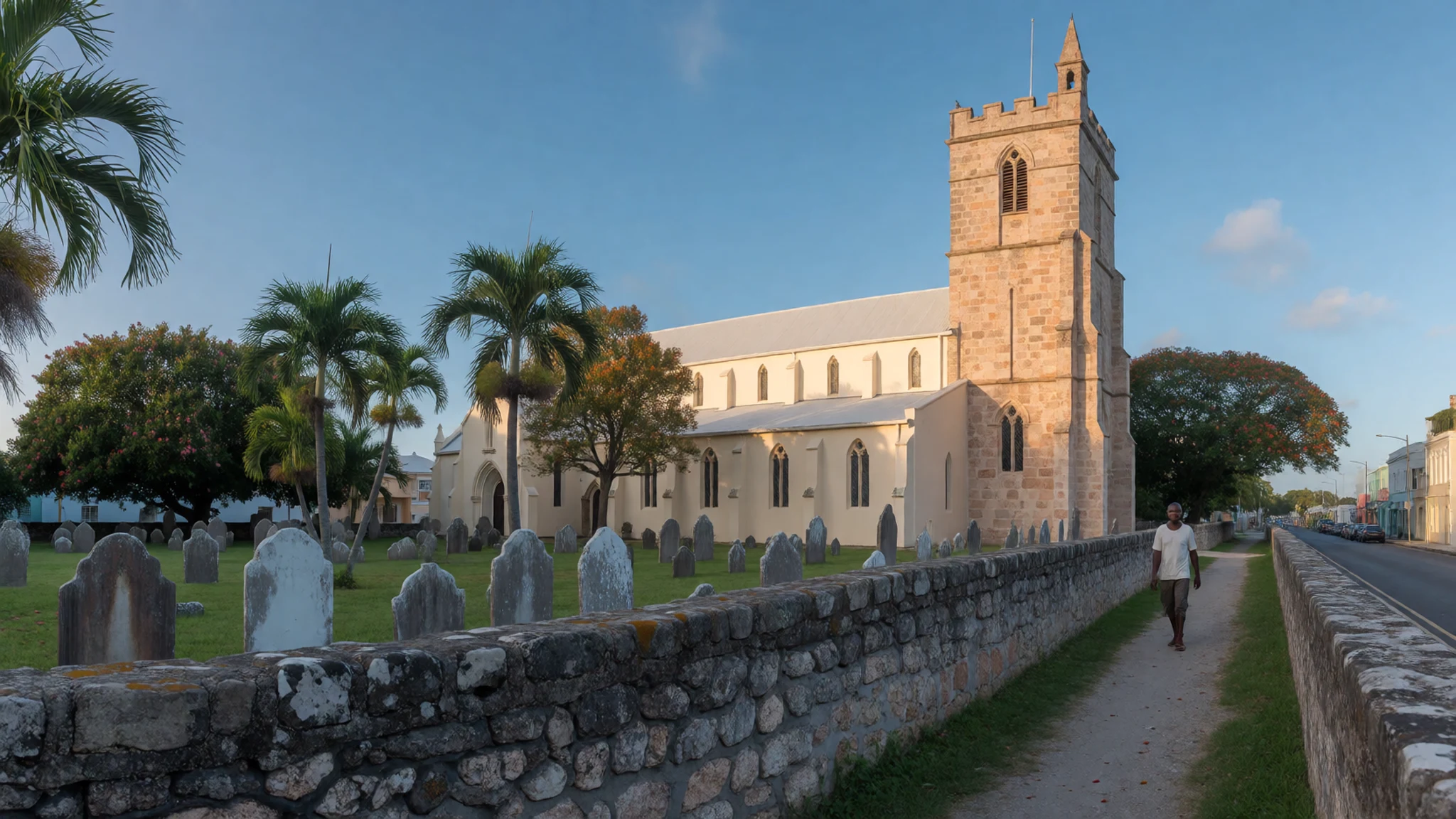
- St Mary's Church — Western Bridgetown
St Mary's Church, on the western side of the centre, has stood in its present form since 1827, though a church has occupied this ground since 1630. Its ornate font was given in 1863 by a Jewish merchant, a small sign of how closely the town's communities were bound together by trade. Opening times vary, so ask locally.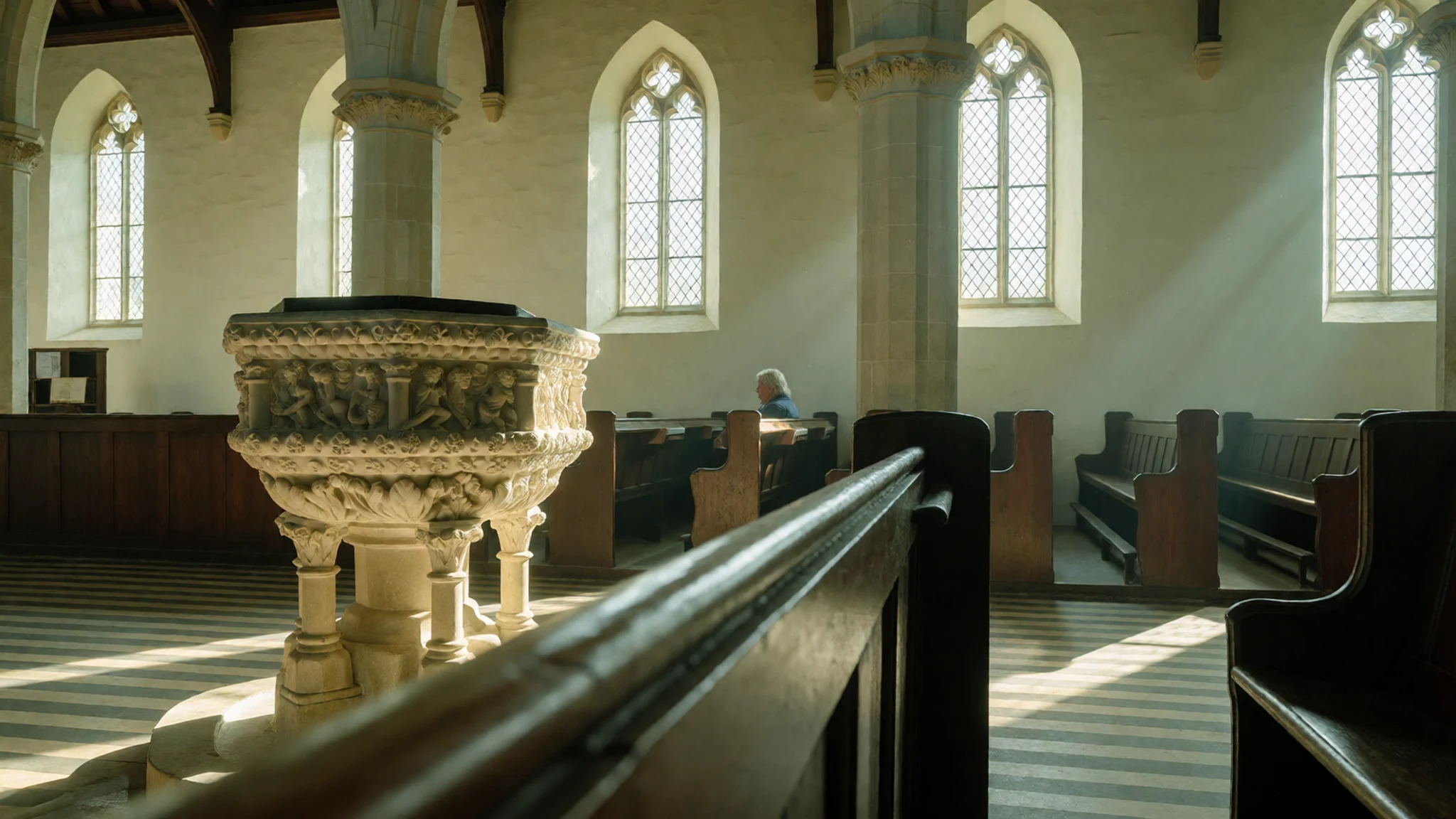
- Nidhe Israel Synagogue — Central Bridgetown
The Nidhe Israel Synagogue records a Jewish presence in Bridgetown that goes back to 1654, when Jewish settlers were already part of the trading community. The building and its grounds give a quiet, human-scale view of the town's merchant past. Check the official site at barbados.org/btown.htm or ask locally about visiting arrangements.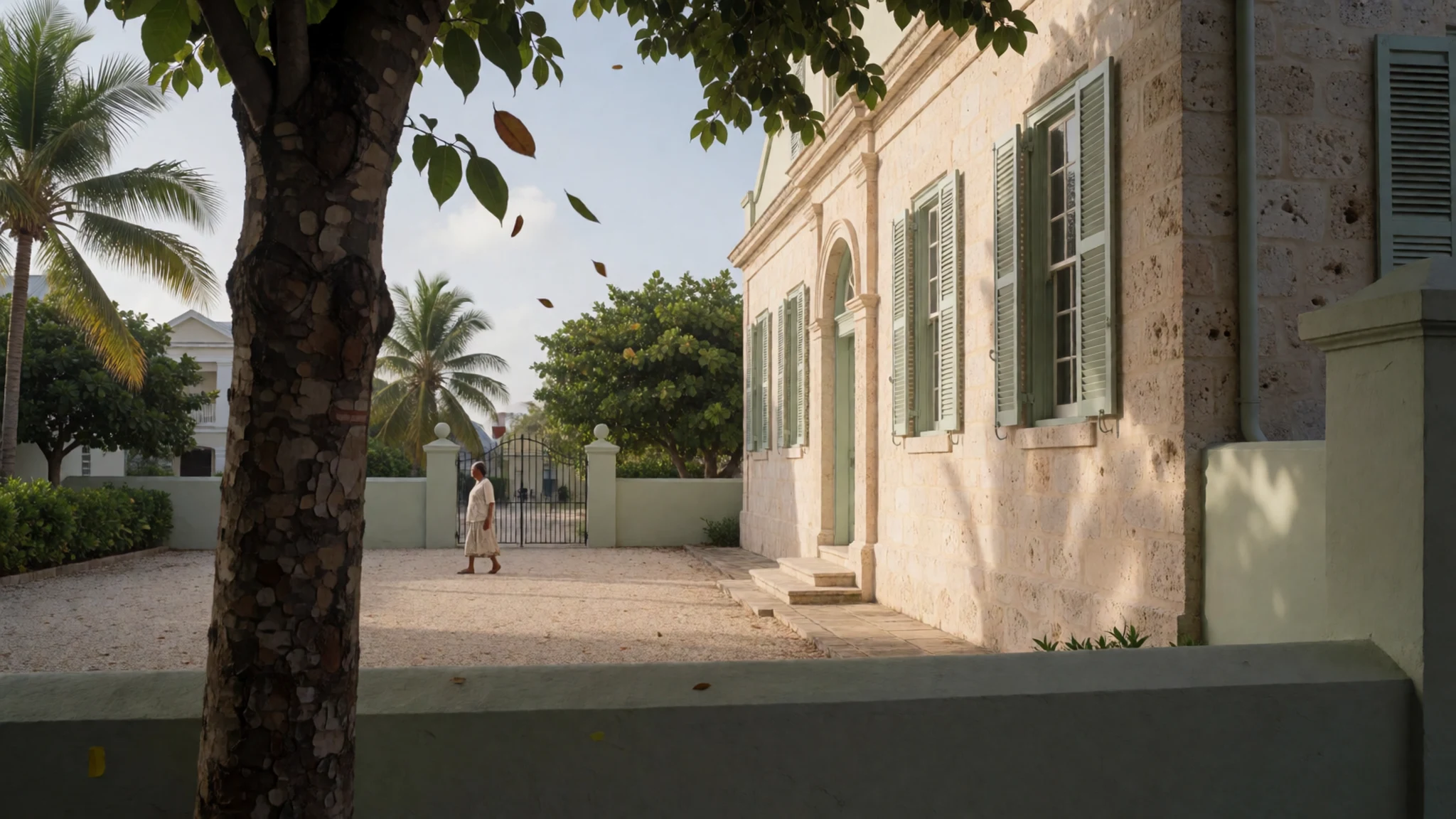
- National Heroes Square and the Public Buildings — Central Bridgetown
National Heroes Square is the open civic space at the centre of Bridgetown, with a cenotaph war memorial at its heart. The Public Buildings, where the island's parliament sits, stand just to the north. A short walk here ties the colonial administration to modern national life, and the surrounding streets are good for people-watching.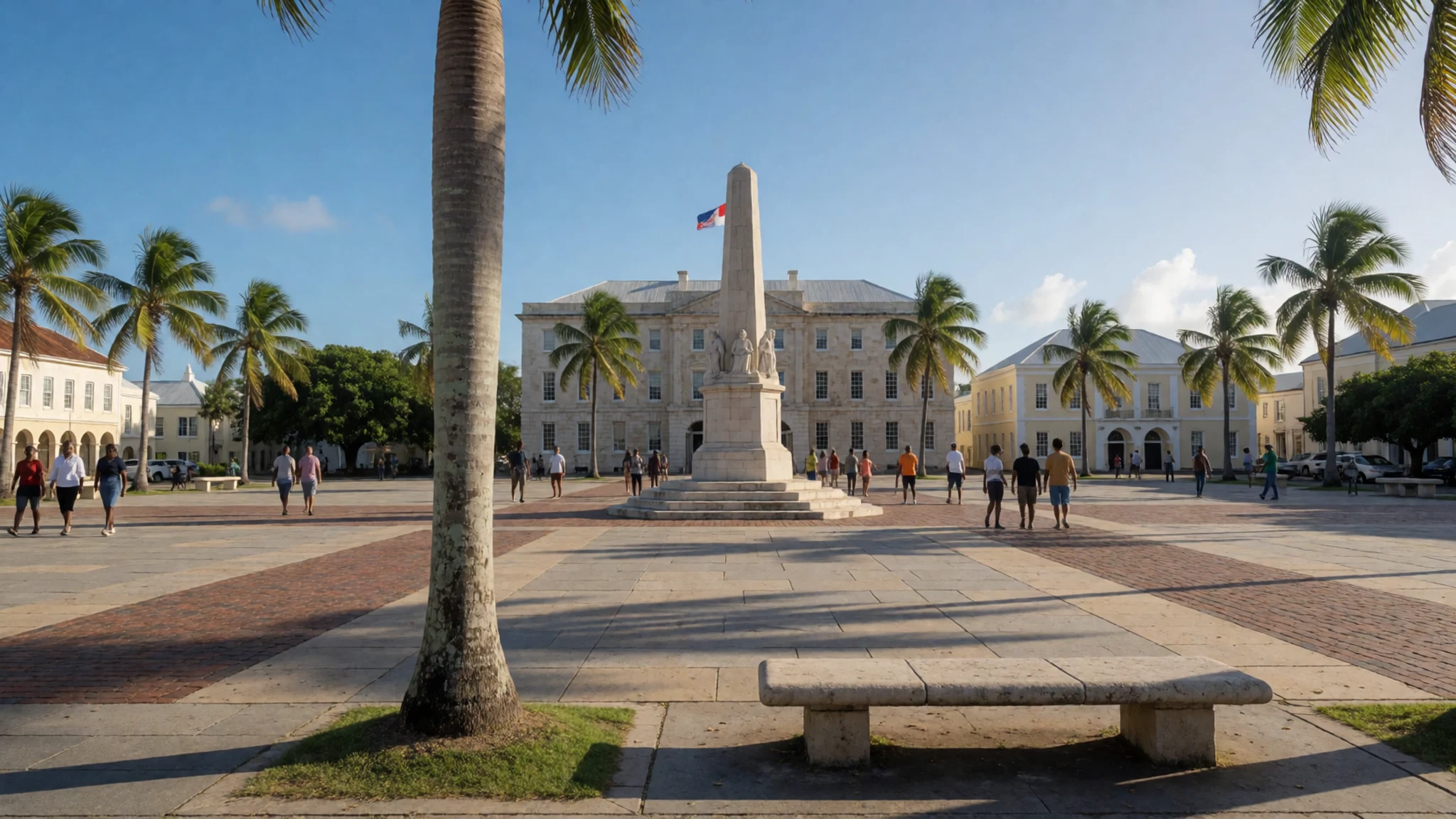
- Garrison Historic Area — South of the centre
The Garrison Historic Area lies south of the centre, around the old military parade ground. The Former Main Guard, a clock-towered building, is its landmark, and George Washington House, where the future president stayed, falls within its bounds. Allow a morning, carry water, and go early before the sun gets fierce.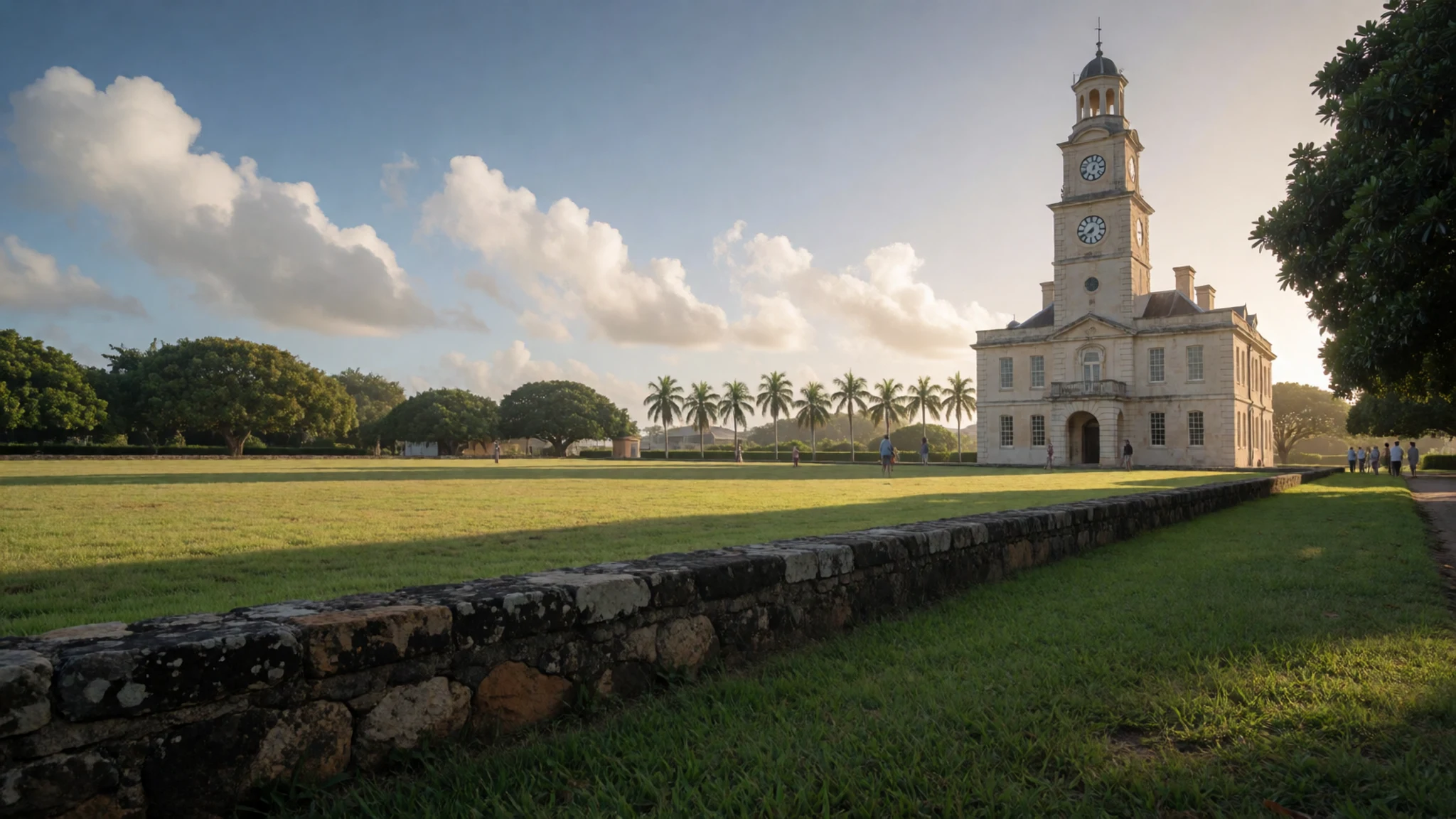
Culture
Bridgetown is where Barbados does its official business. Parliament meets in the Public Buildings just north of National Heroes Square, and government ministries, banks and the main bus network all converge on the city, so weekday streets move quickly, with uniformed schoolchildren, office workers and vendors sharing the pavements. The national library's main branch, a coral-stone building in an English Renaissance style, hints at how strongly British institutions shaped public life, from Anglican churches to cricket, which is followed closely across the island. Everyday speech is Bajan, an English-based Creole that sounds quick and musical to newcomers; visitors are understood in standard English, and a friendly greeting goes a long way. Greetings matter here: a 'good morning' on entering a shop or boarding a bus is expected, and skipping it can read as rude. Sunday is church day for many families, and the summer festival season of Crop Over brings music, costume and calypso to the capital. Religious variety shows in the synagogue standing alongside the Anglican churches, a reminder of centuries of trade and migration. Outside rush hours the pace is relaxed, and small talk is part of almost any transaction. Cover swimwear with a shirt or wrap when walking through Bridgetown or entering a church, and ask before photographing people, especially market vendors.
What to wear
Bridgetown has no single everyday traditional costume, so the story of dress is mostly one of occasions. Madras-style checked cotton, bright head wraps and scarves belong to older Caribbean village dress and still turn up at heritage events and national celebrations. The showiest clothing belongs to Crop Over, when masqueraders wear beaded, feathered and sequinned costumes on parade, built on light frames and often in saturated colour. In daily life, people dress for the heat: cotton shirts, linen trousers, sundresses and sandals, with a clear step up for church, court and office. Schoolchildren in crisp uniforms are a constant sight on weekdays. Smart-casual is the norm in restaurants, and beachwear stays at the beach. For visitors, the sensible kit is lightweight, breathable cotton or linen in light colours, a brimmed hat, sunglasses and high-factor sunscreen, since shade is thin on the pavements. Carry a shirt or wrap that covers shoulders and knees for churches and the synagogue. Closed comfortable sandals or trainers suit uneven pavements and the grass and gravel of the Garrison, and reef shoes help on rocky stretches of coast. A light rain jacket earns its place between June and November.
What to eat
- Cou-cou and flying fish — Lunchtime local eateries in central Bridgetown
Cou-cou, a smooth cornmeal and okra mash, is served with steamed or fried flying fish in a seasoned gravy. It is the dish most Barbadians name first. Look for it at lunchtime in local eateries around the centre.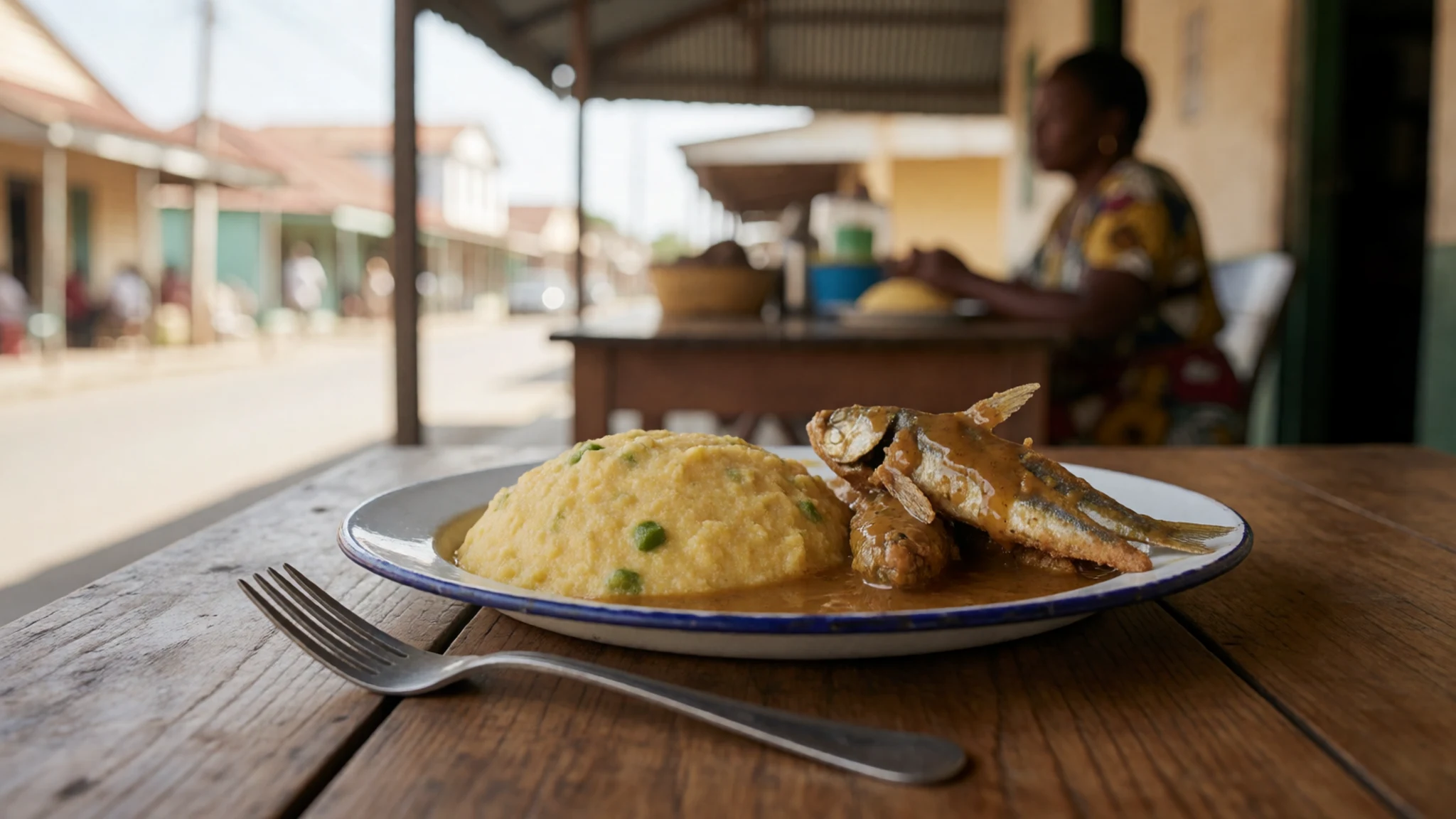
- Fish cutter — Snack counters and fish stalls near the harbour and fish markets
A fish cutter is a fried fish fillet tucked into a soft salt bread roll, usually with a dab of pepper sauce. It is a cheap, quick lunch and easy to eat standing up.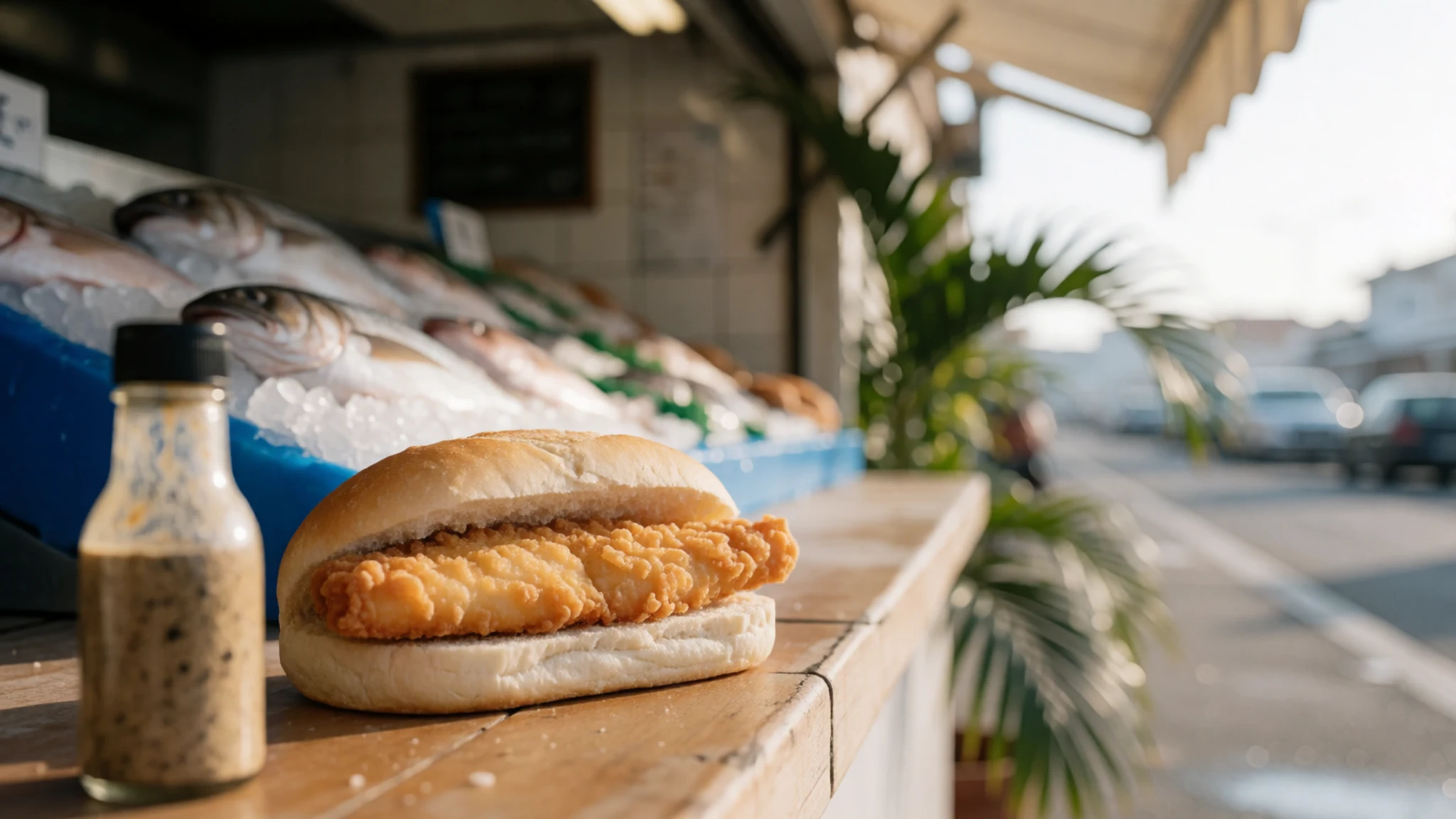
- Pudding and souse — Local cookshops and roadside stands, especially on Saturdays
Pickled pork in a lime and cucumber brine, served with steamed sweet potato, is a Saturday tradition across the island. The sharp, cool souse balances the sweetness of the potato. - Roti — Rum-and-roti shops and lunch counters in the town centre
Curried chicken, vegetables or potato wrapped in a soft flatbread shows the island's South Asian influence. Portions are generous, so one is often enough for a meal, and a small rum shop nearby is rarely hard to find. - Macaroni pie — Local cookshops and family restaurants around Bridgetown
Baked macaroni in a rich, firm cheese custard is the standard side at Sunday lunch and at most local eateries. It turns up beside fish, chicken and pork, and is usually served in a square slab.
Plan it
Best time. December to May is the drier, breezier season and the most comfortable for walking the city. June to November is wetter and hotter, with a risk of tropical storms, though fares and crowds are often lower.
How long. 1–2
Getting there. Grantley Adams International Airport, the island's only airport, lies south-east of the city; a taxi or a public bus covers the last leg. Cruise ships berth at Bridgetown Harbour, within walking distance of the centre. Island buses use different terminals either side of the Careenage depending on the coast they serve, so check where a route ends.
Budget. mid
Tips
- Start sightseeing early, before the midday sun, and carry water
- Check the official site, barbados.org/btown.htm, or ask locally for opening times of churches and museums
- Expect crowds and touts near the harbour on cruise-ship days
- Carry some cash for buses and small stalls, and a card for larger purchases
Etiquette
- Greet people when entering a shop or boarding a bus
- Cover swimwear in town and in places of worship
- Ask before photographing individuals
Nearby
Sources
- Wikidata Q36168 (CC0)
- Wikipedia: Bridgetown (rev 1375155845) (CC BY-SA 4.0)
- Wikivoyage: Bridgetown (rev 5425197) (CC BY-SA 4.0)
- Photo: Aerial view from western Bridgetown, Barbados (P.Lechien) (CC0 1.0)
- Photo: The Former Main Guard (Central Station) BB Bridgestown 1010 (32) (Diego Tirira) (CC BY-SA 2.0)
- Photo: BB Bridgestown 1010 (8) (Diego Tirira) (CC BY-SA 2.0)
- Photo: National Heroes' Square in Bridgetown (CaribDigita) (Public domain)
- Photo: BB Bridgestown 1010 (42) (Diego Tirira) (CC BY-SA 2.0)
- Photo: Relief Map of Caribbean (Nzeemin) (CC BY 3.0)
- Photo: Pg013 Title The history of Barbados by Sir Robert H. Schombourgk (Public domain)
- Photo: Pg012 Bridgetown in Barbados (cropped) (Public domain)


