Bottom Bay
Bottom Bay, Barbados
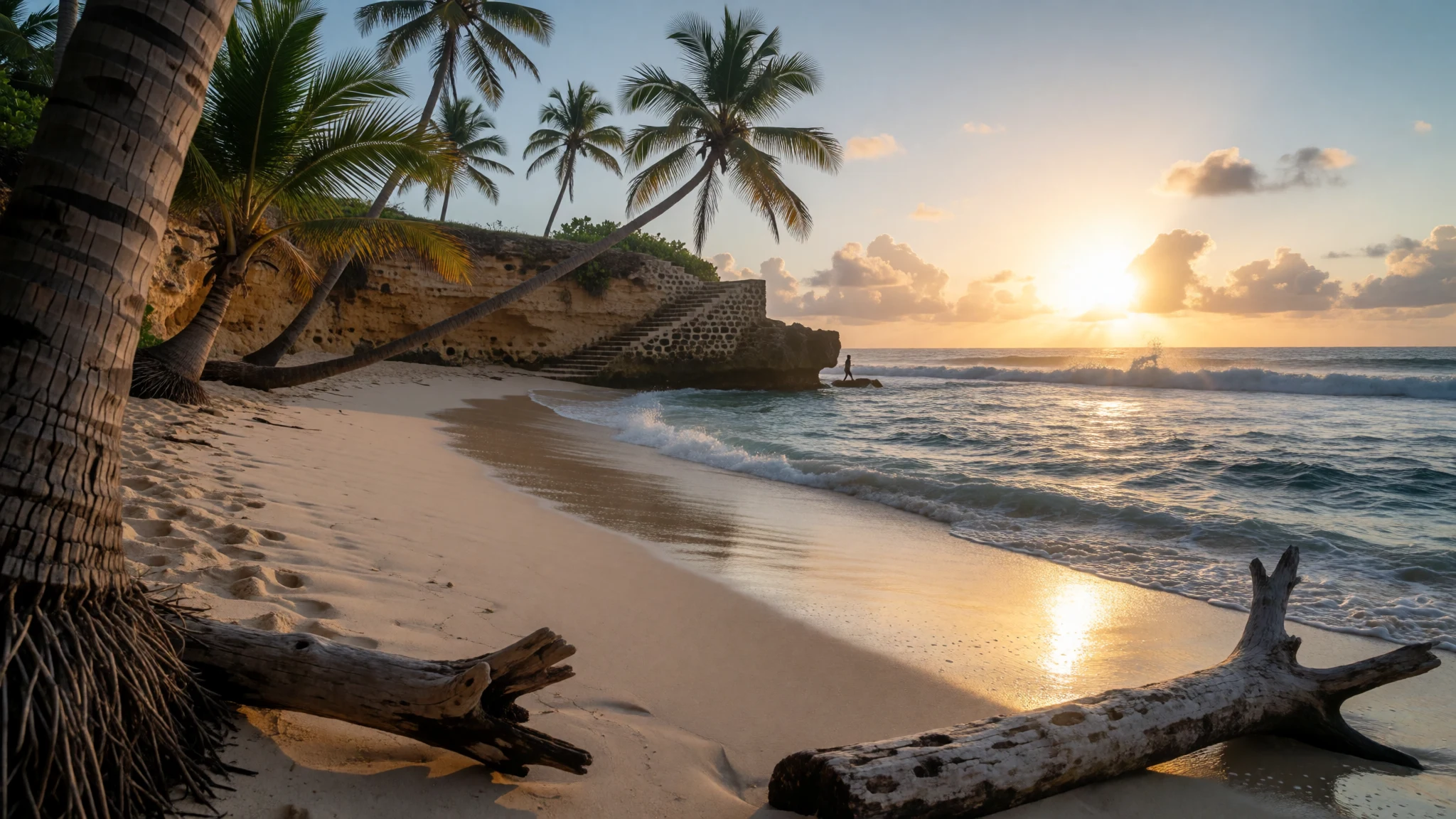
Bottom Bay is a quiet, palm-fringed cove on Barbados's wild Atlantic coast, good for staring at surf rather than swimming in it.
The place
Bottom Bay lies on the east coast of Barbados, in the parish of Saint Philip. It is a small bay with Palmetto Bay a short way to the north, and Cave Bay, Crane Beach and the site of Sam Lord's Castle strung out to the south. That run of coast faces open ocean, so it feels very different from the calm, busy beaches on the island's western side.
The bay itself is a curve of pale sand with coconut palms leaning out from the top of a low coral-stone bluff. A stairway cut into the bluff leads down from the car-parking area. At the bottom there is little more than sand, sea and shade, though a few vendors may set up on busy days. Bring water and anything else you want to eat or drink, and treat any facilities as a bonus.
The Atlantic is the main character here. Waves arrive with real weight and the currents can be strong, so most people paddle at the edge, walk the sand, photograph the palms and sit in the shade. Sunrise is the natural moment on this side of the island, when the light comes straight off the water.
Bottom Bay is rarely crowded compared with the famous west-coast beaches, though weekends and holidays bring local families and the occasional tour group. It works best as a half-day stop, combined with other beaches and villages along the Saint Philip coast, rather than as a place to base a whole holiday.
Its story
Bottom Bay has no grand founding story, and it is more honest to say so than to invent one. What can be said is that its character comes from geography and from the long history of Barbados around it.
The island is built largely on coral limestone, which is why the east coast has bluffs, caves and pocket bays rather than the gentle shelving sand of the leeward side. The names along this stretch, such as Cave Bay and Palmetto Bay, simply describe what early settlers and fishing families saw: a hollow in the rock, a stand of palms. Bottom Bay's own name probably reflects the same habit of plain description, though that is a guess rather than a documented origin.
For most of the island's colonial past the exposed Atlantic side was a working coast. Its landscape was shaped by sugar estates, and the sea was a source of fish and a hazard for ships rather than a holiday attraction. Sam Lord's Castle, to the south of the bay, is the best-known reminder of that plantation era, although the building has been through many changes of use.
The idea of the east coast as a place for visitors is much more recent. Photographers and travellers began to prize the same features that once made it awkward: empty sand, strong surf and a feeling of being away from the resort strip. Today Bottom Bay sits in between, a beach known to islanders and to travellers who go looking for the quieter shore.
What to see
- The beach and its palms — Saint Philip, east coast
The main attraction at Bottom Bay is the bay itself: a pale crescent of sand with coconut palms leaning over it. Go early or late for the best light, and spend time simply walking its length. The surf is strong, so enjoy it from the shoreline and shallows.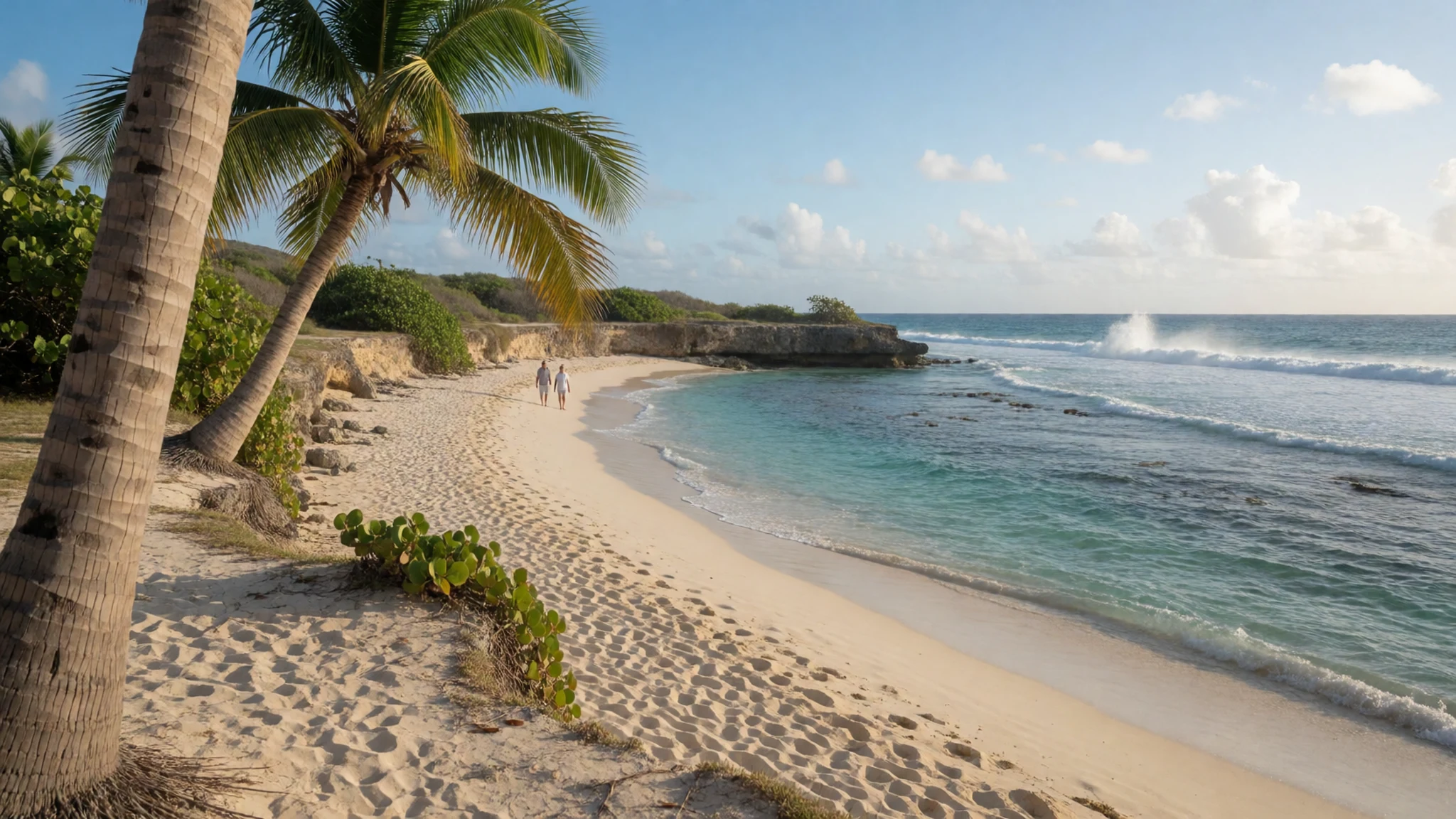
- The cliff stairway and viewpoint — Top of the bluff above the bay
A stairway runs down the coral-stone bluff to the sand, and the top of it gives the best overview of the bay. From there the palms, the curve of the shore and the lines of breaking waves all fall into one frame, which is why it is a favourite spot for photographs.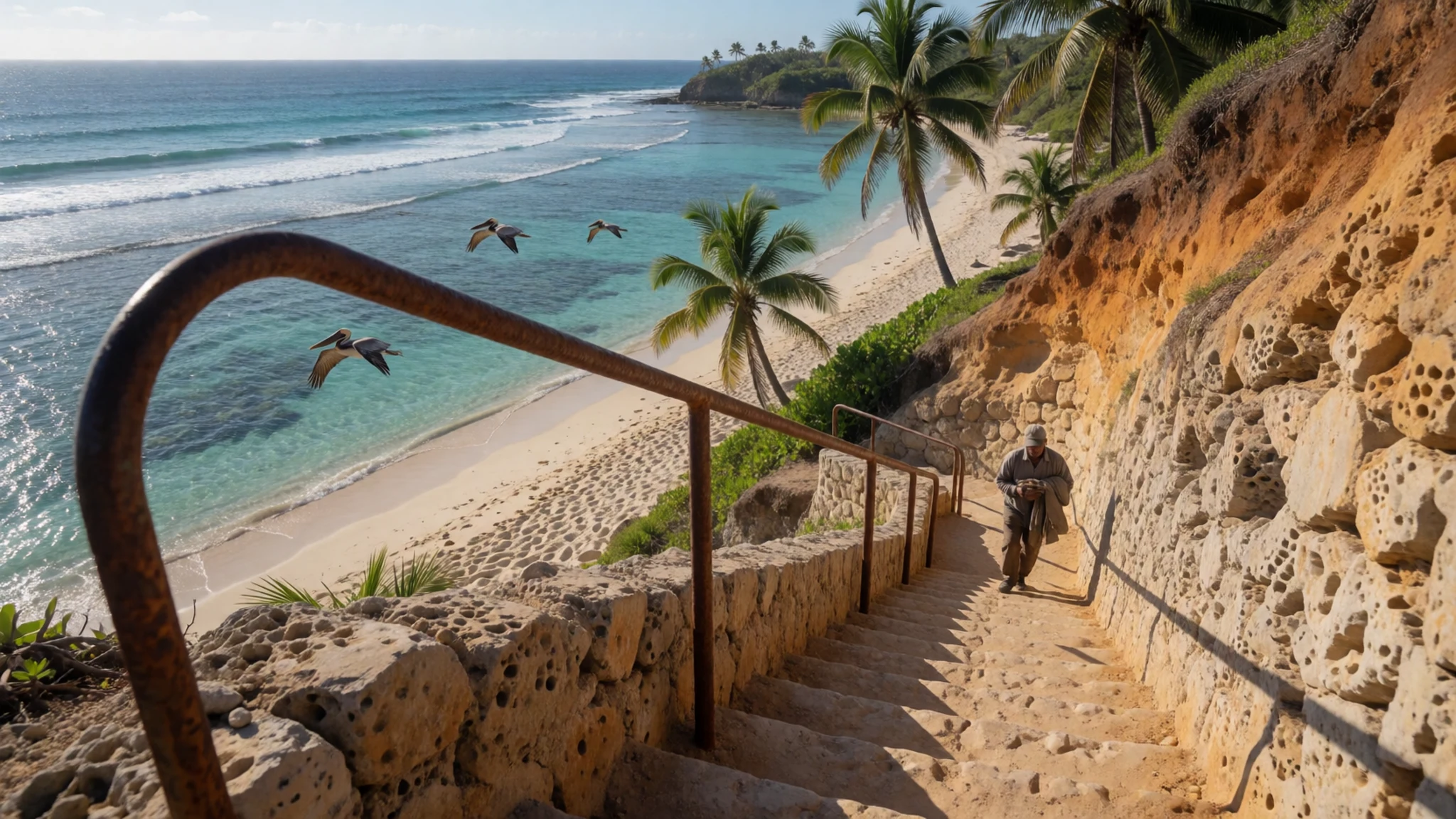
- The approach road and coastal scenery — Roads around Bottom Bay
The way into Bottom Bay passes through the rural scenery of Saint Philip, with low cane fields, small houses and glimpses of the Atlantic. Driving or cycling slowly gives a sense of how different this side of Barbados is from the busier west coast.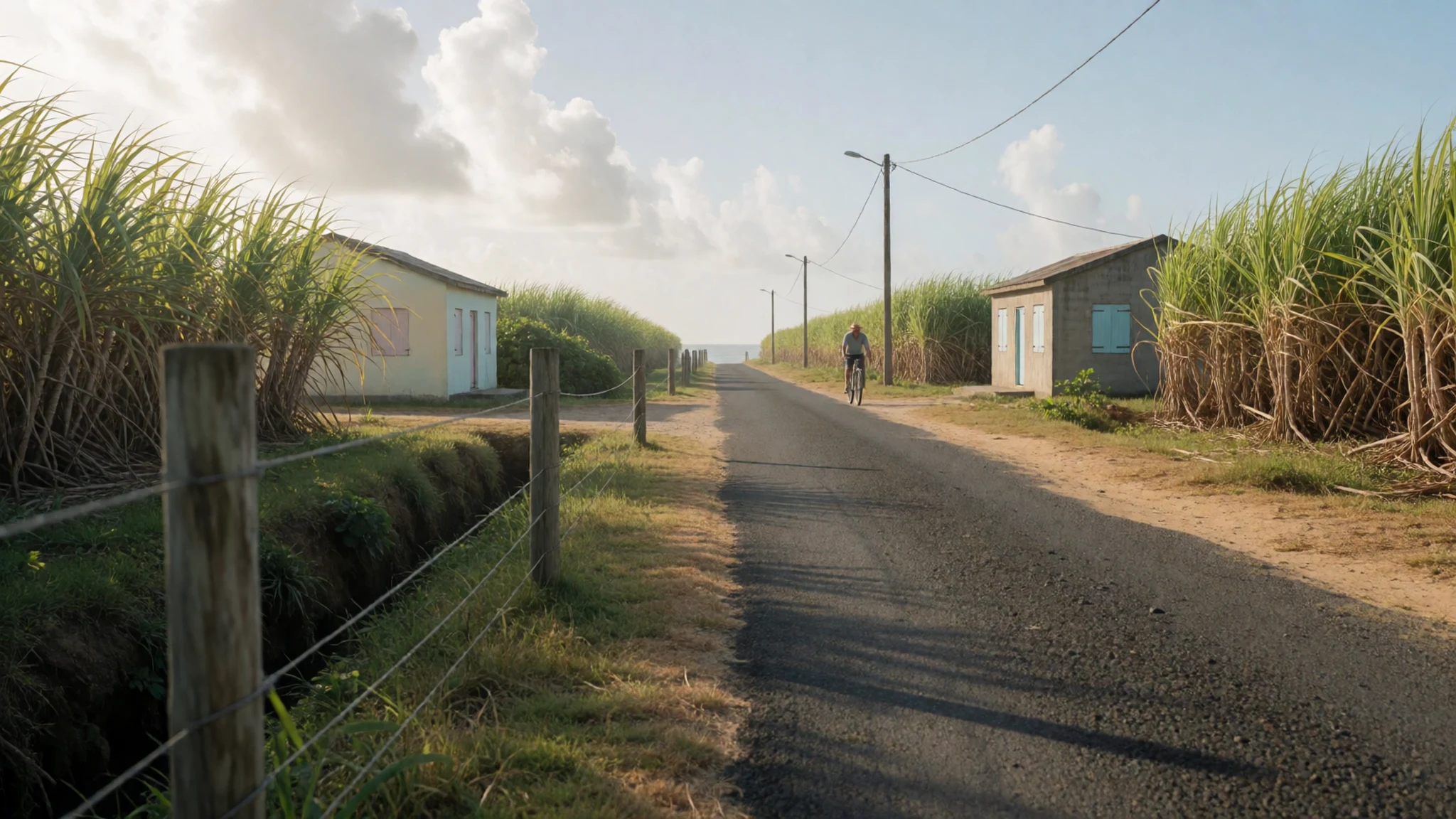
- Palmetto Bay — North of Bottom Bay
Palmetto Bay is the next bay to the north, and it shares the east coast's rocky edges and open surf. It makes an easy short detour for anyone who wants a second stretch of shoreline without a long journey, and it is usually quieter than the well-known beaches.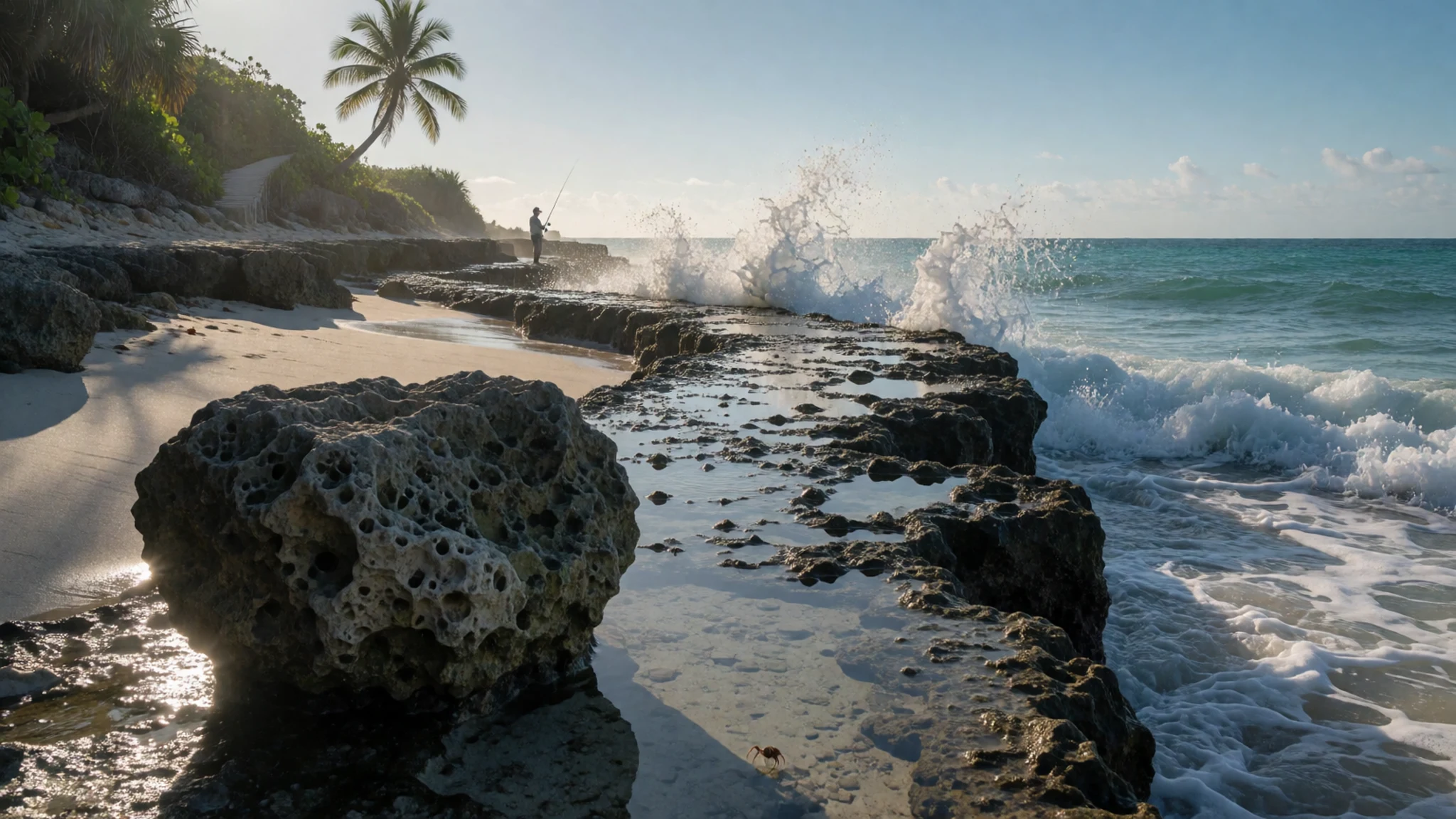
- Crane Beach — South of Bottom Bay
Crane Beach lies south of Bottom Bay and is the better-known neighbour, with a wider stretch of sand and more visitors. It pairs well with Bottom Bay on the same day, offering a livelier contrast to the cove's quiet, palm-shaded feel.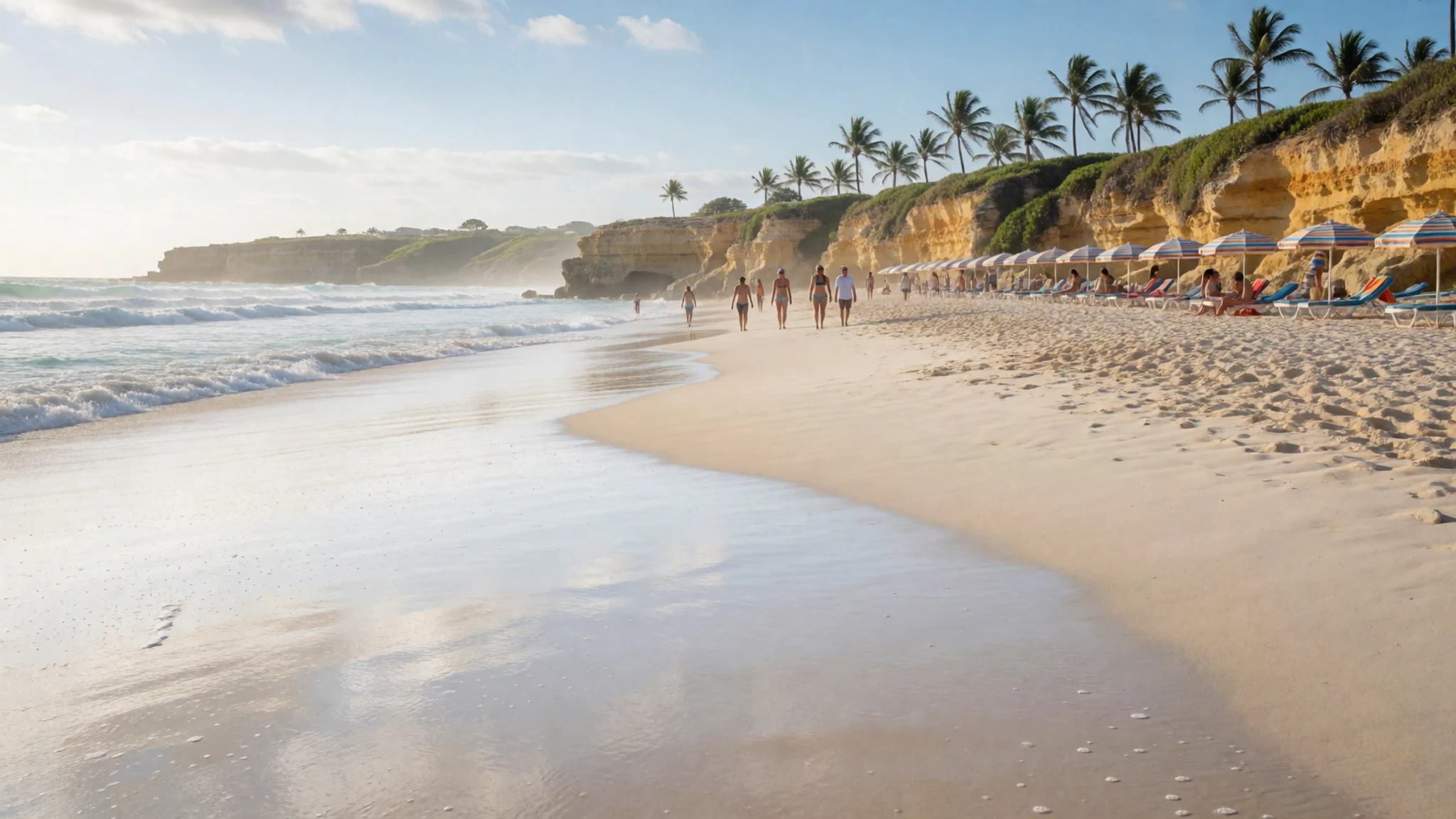
Culture
Bottom Bay belongs to Barbadian beach culture, which is relaxed, social and rooted in the idea that the shore is for everyone. On weekends and public holidays, local families arrive with coolers, music and folding chairs, and the beach turns into a communal living room. Visitors who arrive in that spirit, with time to chat, will find Barbadians friendly and happy to talk about the island.
Barbados is often called Bajan in everyday speech, and the island's dialect, humour and food all show up on the beach. Domino games, cricket on the sand and loud but good-natured conversation are common. Cricket in particular is a national passion, and mentioning it is a reliable way to start a conversation.
The sea on this coast also has a working side. East-coast communities have long fished these waters, and small boats and nets are part of the landscape in nearby villages. Treating them with respect, and not walking across gear or hauling boats, is simply good manners.
Churchgoing is still important across Barbados, and Sundays can be quieter inland, though the beaches stay lively. The wider island takes pride in its independence, its schools and its festivals, especially Crop Over, the summer harvest celebration, which brings music, costume and food to the island.
When you leave Bottom Bay, take all your rubbish with you and do not remove coral, shells or sand, because the cove has few bins and a fragile edge.
What to wear
Bottom Bay is a beach, so the clothes that matter here are practical ones, but Barbados does have its own dress traditions. Barbadians have no single national costume in daily use. Historic working dress was plain cotton, and the best-known traditional look draws on madras-style checked cloth, worn as head wraps, skirts and shirts at heritage events. Crop Over, the summer harvest festival, brings out a very different style: sequins, feathers and beads in bright carnival costumes.
What people wear day to day is simple and suited to the heat. Locals at the beach wear swimwear, shorts, T-shirts and light cotton shirts, with sandals or bare feet on the sand. In towns and for church, people dress more neatly, often in pressed shirts, dresses and smart trousers. Beachwear is expected to stay at the beach, so covering up on the way to shops and restaurants is a courtesy.
Visitors should pack light, quick-drying clothes, a wide-brimmed hat, sunglasses and high-factor sun cream, as shade is limited and the sun is strong. Reef-safe cream is a kind choice for the water. Wear shoes with grip for the stairway down the bluff, and bring a cover-up for the walk to and from the car. Because the surf is strong, secure hats and sunglasses, and avoid wearing anything valuable into the water.
What to eat
- Cou-cou and flying fish — Village eateries and rum shops in Saint Philip
Barbados's national dish pairs a soft cornmeal-and-okra mash with steamed or fried flying fish in a seasoned sauce. Look for it at village eateries and rum shops across Saint Philip, often served as a hearty weekday lunch.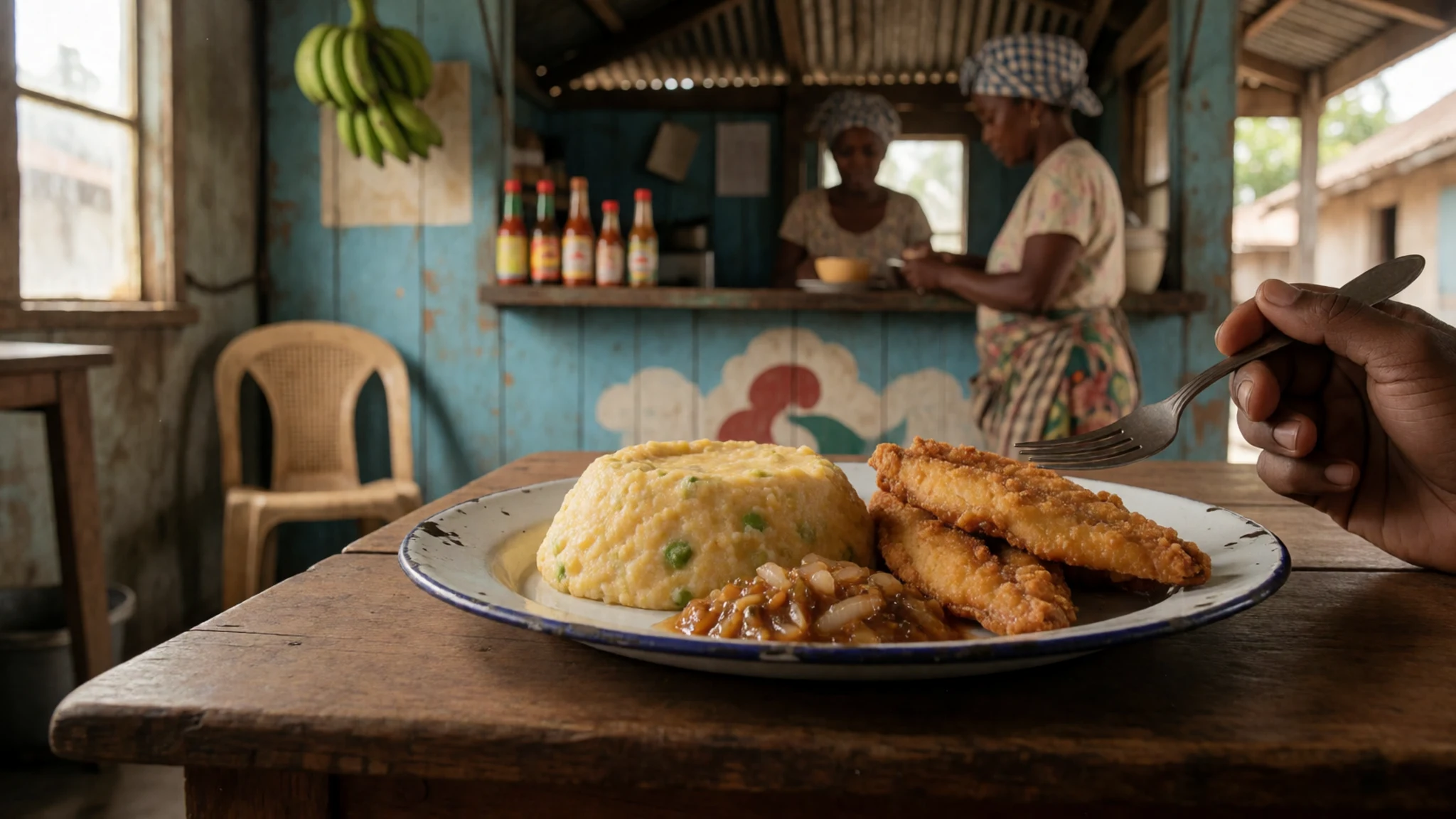
- Fish cakes — Roadside stalls and snack counters near the beaches
Salt-cod fritters with herbs and pepper, fried until crisp outside and soft within. They are a classic beach snack, often eaten from paper with a little hot sauce, and are easy to find at roadside stands and snack counters.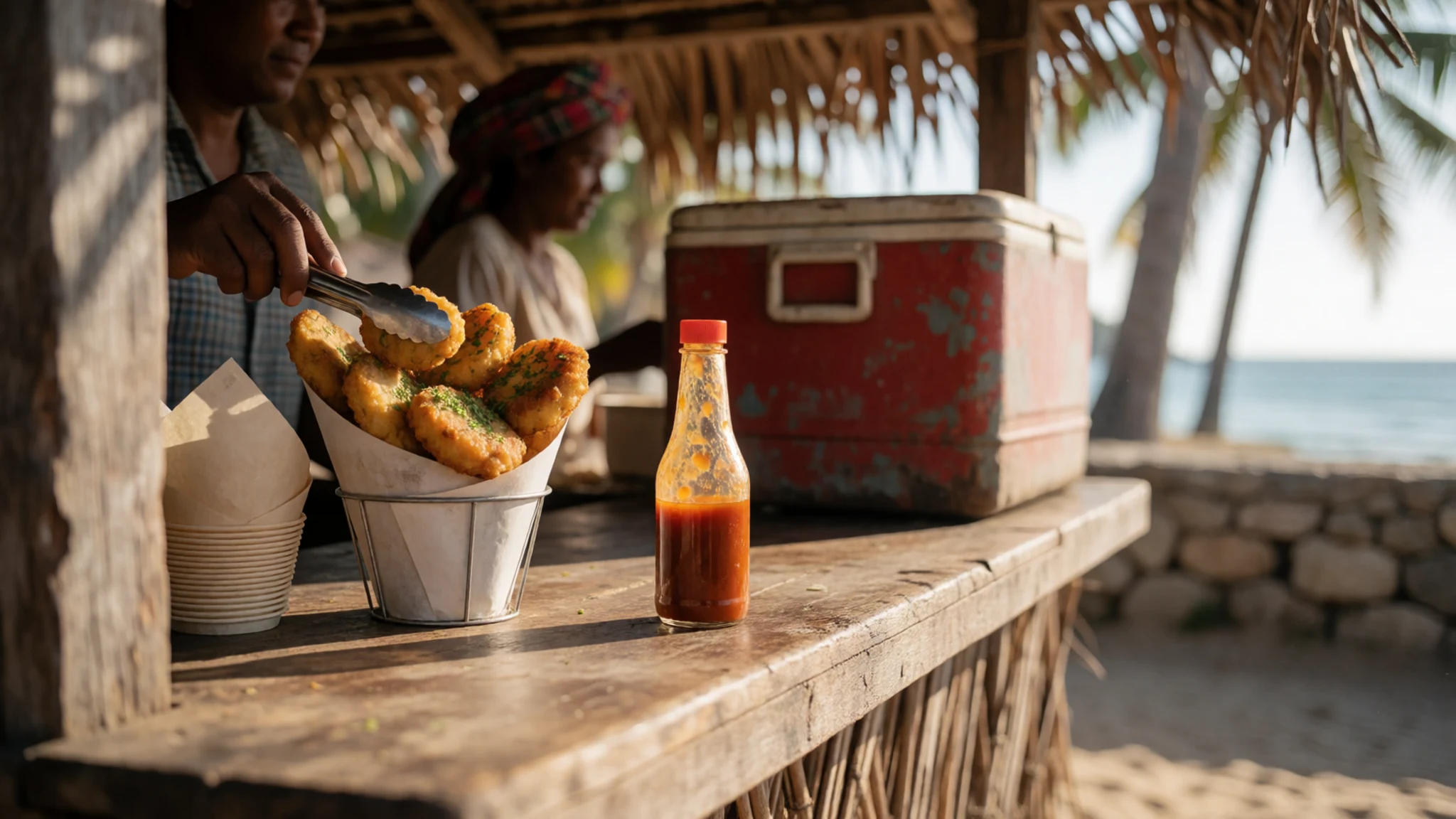
- Cutters — Bakeries and village shops
A cutter is a sandwich made on soft salt bread, usually filled with fried fish, ham, cheese or egg. It is cheap, filling and made for eating on the sand. Small shops and bakeries across the island sell them for lunch. - Pudding and souse — Neighbourhood eateries and roadside stalls, especially on Saturdays
A Saturday tradition of pickled pork served with steamed sweet potato, with a lime-and-cucumber pickle sharpening the dish. It is a true local meal, best sampled at a neighbourhood eatery rather than a tourist restaurant. - Macaroni pie — Local lunch counters and rum-shop kitchens
A baked, sliceable pasta dish with cheese, mustard and a crisp top, served as a side with fish, chicken or pork. It appears at nearly every local lunch counter and is a comfort food at family gatherings.
Plan it
Best time. December to May is the drier season, with sunny days and steady trade winds, and is the most comfortable time for Bottom Bay. June to November is wetter and hotter, and falls in the Atlantic hurricane season, so check forecasts and travel insurance. The surf on this coast is lively all year.
How long. 1
Getting there. Fly into Grantley Adams International Airport, which is in the south of Barbados and not far from Saint Philip. From there, take a taxi or hire a car for the drive east. Public minibuses and buses run along the coast, but a car or taxi is easier for the final stretch to the bluff and stairway.
Budget. low
Tips
- Arrive early in the morning for sunrise light and fewer people
- Bring water, snacks and sun protection, as facilities are limited
- Carry some cash for any vendors and for local snack stops
- Wear shoes with grip for the stairway down to the sand
- Check the official Barbados tourism site for current sea and weather advice
Etiquette
- Take all your rubbish with you, because the cove has few bins
- Greet people politely when you arrive, as Barbadians value a friendly good morning
- Leave shells, coral and sand where they are
Nearby
Sources
- Wikidata Q4949108 (CC0)
- Wikipedia — Bottom Bay (rev 1307056627) (CC BY-SA 4.0)
- Wikivoyage — Barbados (CC BY-SA 4.0)
- Photo: gemteck1, Bottom Bay (375362563) (CC BY 2.5)
- Photo: Jonathan Wilkins, Bottom Bay Beach with Coconut trees (CC BY 3.0)
- Photo: Jonathan Wilkins, Bottom Bay Coconut trees (CC BY 3.0)
- Photo: Jonathan Wilkins, Bottom Bay (CC BY 3.0)
- Photo: Jim.Milbourne, Surroundings of Bottom Bay (CC BY 3.0)


