Shogran
Shogran, Pakistan
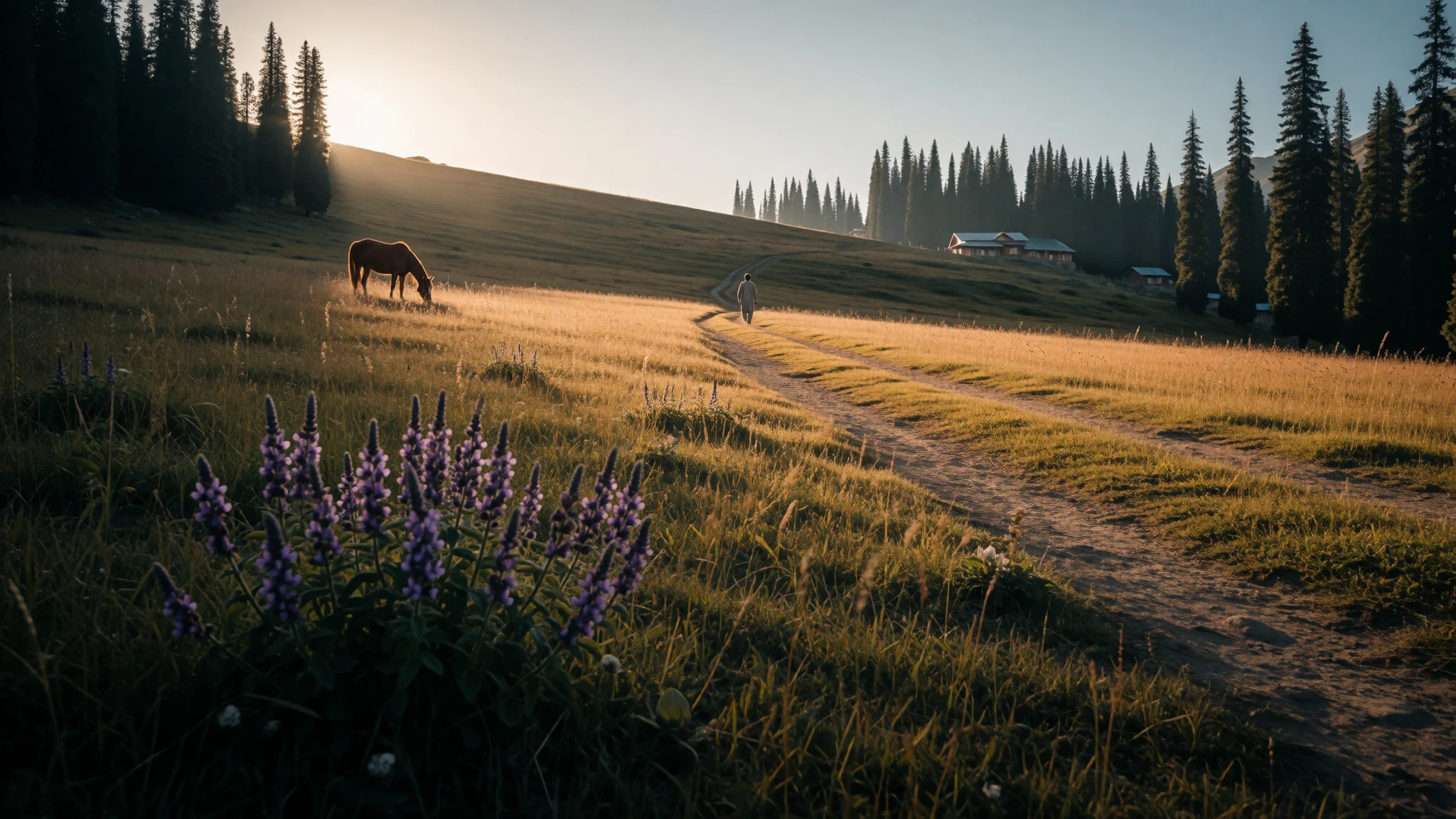
Shogran is a cool, green plateau in the Kaghan Valley where Pakistani families escape the summer heat, with meadow walks and jeep rides above.
The place
Shogran is a village and hill station on a plateau in the Kaghan Valley, in Mansehra District of Khyber Pakhtunkhwa, northern Pakistan. It sits at 2,362 metres, high enough that summer afternoons stay cool while the plains below bake. The name is written شوگراں in Urdu and Hindko. Balakot, the market town at the foot of the climb, is 34 kilometres away, and the road from Islamabad to the area runs 212 kilometres, so reaching Shogran is a long day's drive rather than a quick hop. What waits at the top is a broad, grassy shelf with forest closing in on its edges, a scatter of guesthouses and small restaurants, a modest bazaar, and horses grazing loose on the slopes. It is not a place of sights in the usual sense. People come for air, views, walks and the feeling of having climbed out of the heat. The population swells in summer and thins out afterwards, and much of the village is built around that seasonal rhythm, so what is open and how busy it feels depends heavily on the month. June to August is peak season, and on weekends and around holidays the plateau can be crowded, with slow traffic on the final stretch and noisy campsites. Outside those months it is quieter, and in winter the valley is usually under snow. Shogran also works as a base for walks and jeep rides to the meadows above it, which are the real draw for most visitors. Rain is the main uncertainty: monsoon downpours, hail and landslides can close the road, so flexibility matters more here than a tight itinerary.
Its story
The story of Shogran is mostly the story of a high pasture becoming a holiday place. For herding families in the Kaghan Valley, a plateau like this has long meant summer grass: animals go up when the snow retreats and come down before it returns, which fits with the fact that the village is still mainly populated in summer. The label hill station comes from the wider South Asian habit of escaping lowland heat for cooler altitudes, and Shogran fits that pattern, though its popularity with tourists has risen over recent decades rather than from any single founding moment. Road building did most of the work. A route up from Balakot turned a place once reached on foot or by mule into one that a family could reach in a day from Islamabad, and guesthouses followed the road. Today the visitors are largely domestic, and jeep drivers, guesthouse owners and horse handlers earn a good part of their income in a season that lasts only a few months. That dependence has costs. The road is exposed to landslides after rain and as the snow melts, and a blocked road can strand visitors and hold up supplies. Building has crept across the plateau as demand has grown, and traffic and litter can become pressures in the busiest weeks. None of this is unusual for mountain resorts, but it explains why the village seen in July is a different place from the one under snow in winter, when it is quiet and many seasonal businesses are likely to be shut.
What to see
- The Shogran plateau and bazaar — Shogran village
The plateau itself is the first sight: an open shelf of grass at 2,362 metres, with forested slopes around it and views along the valley on clear days. The main strip of guesthouses and small shops is best walked in late afternoon, when day-trippers have left and the light softens.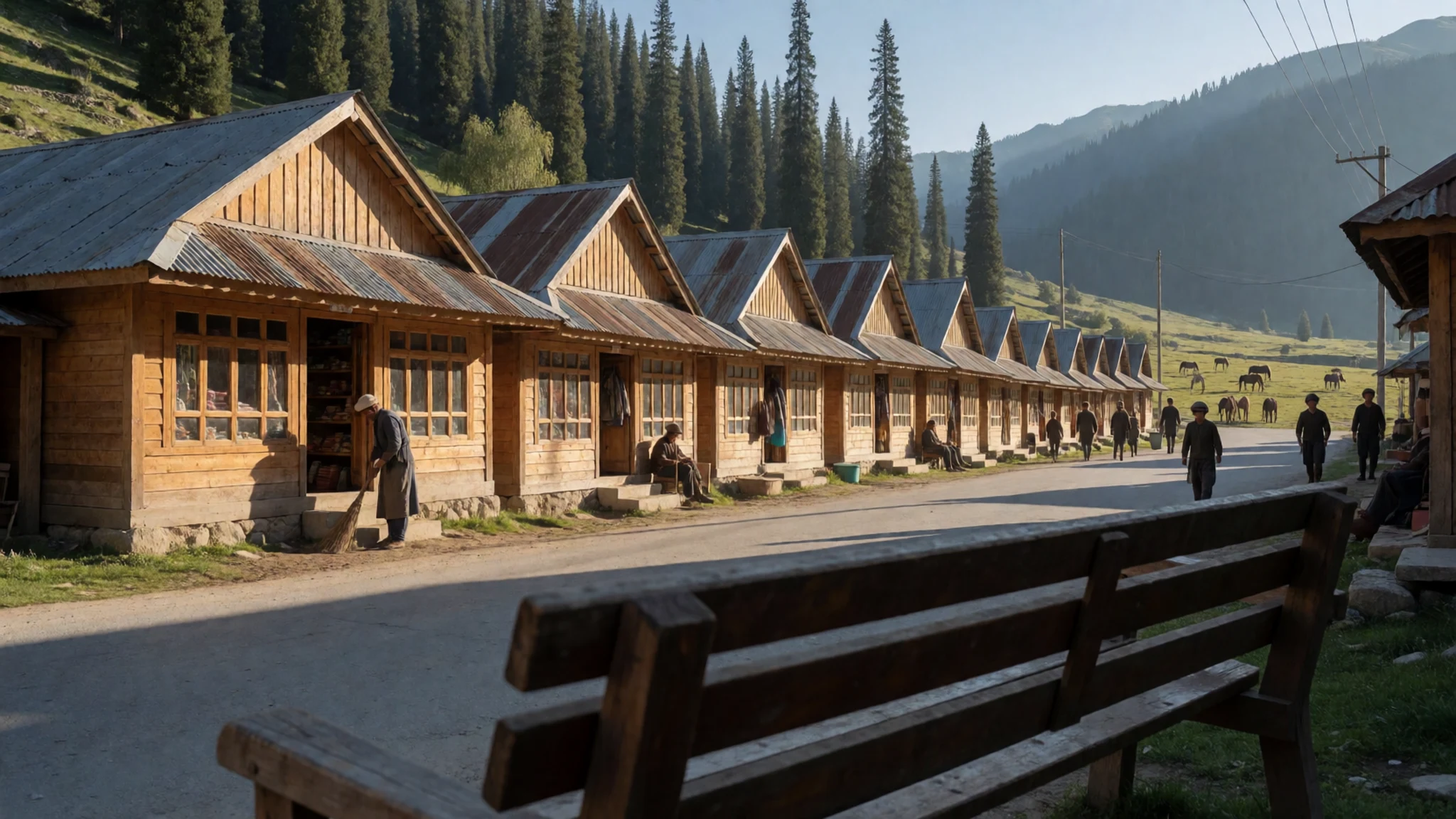
- The road up from Balakot — Between Balakot and Shogran
The climb from the valley floor is half the experience. It winds through forest in tight bends, with drops on one side and glimpses of terraced slopes below. Drivers know the corners, leaving passengers free to look out. After rain or snowmelt, ask locally whether the road is open, since landslides sometimes block it.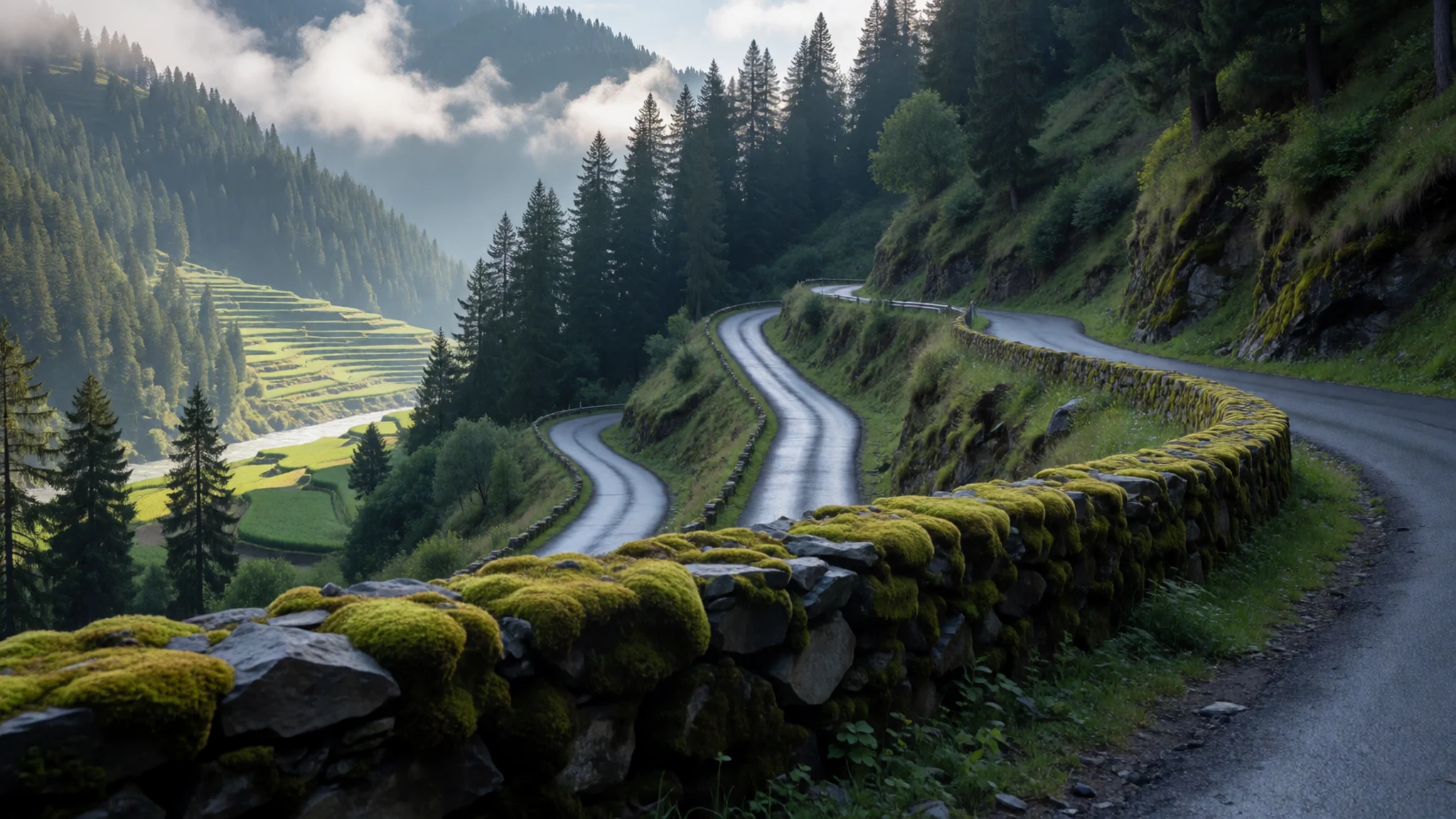
- Siri Paye meadows — Above Shogran
Siri Paye is the high meadow most visitors head for from Shogran, usually by local jeep followed by a short walk. Grass, seasonal wildflowers and a small lake sit beneath the surrounding peaks. Expect a cold wind even in July, and cloud that can close in within minutes.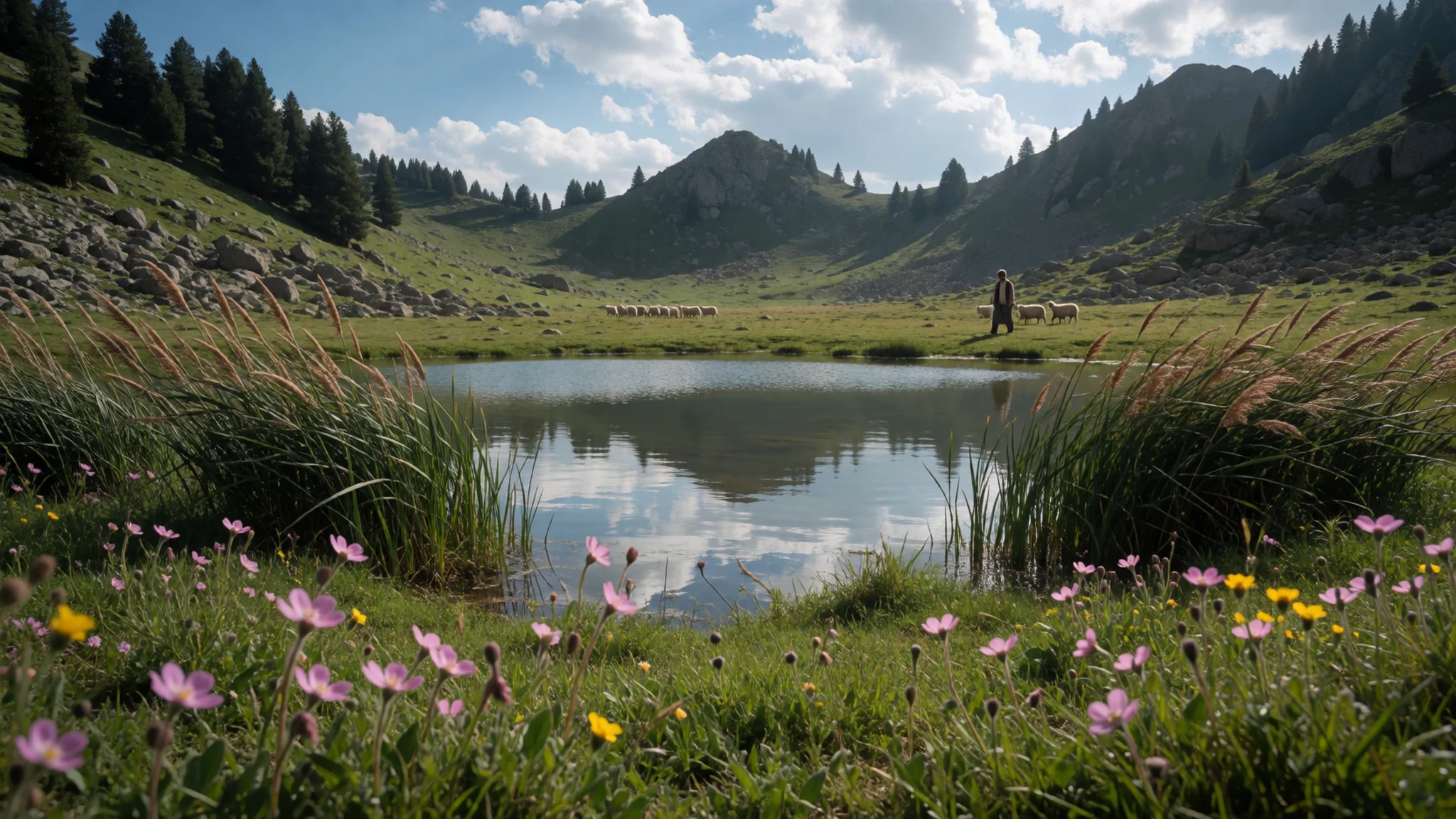
- Makra Peak walk — Slopes above Shogran
Makra Peak rises above Shogran and is a long day's walk for reasonably fit people, usually started early with a local guide. The trail climbs through forest to open slopes with wide views across the ranges in good weather. Conditions turn quickly, so set off at first light and turn back if cloud builds.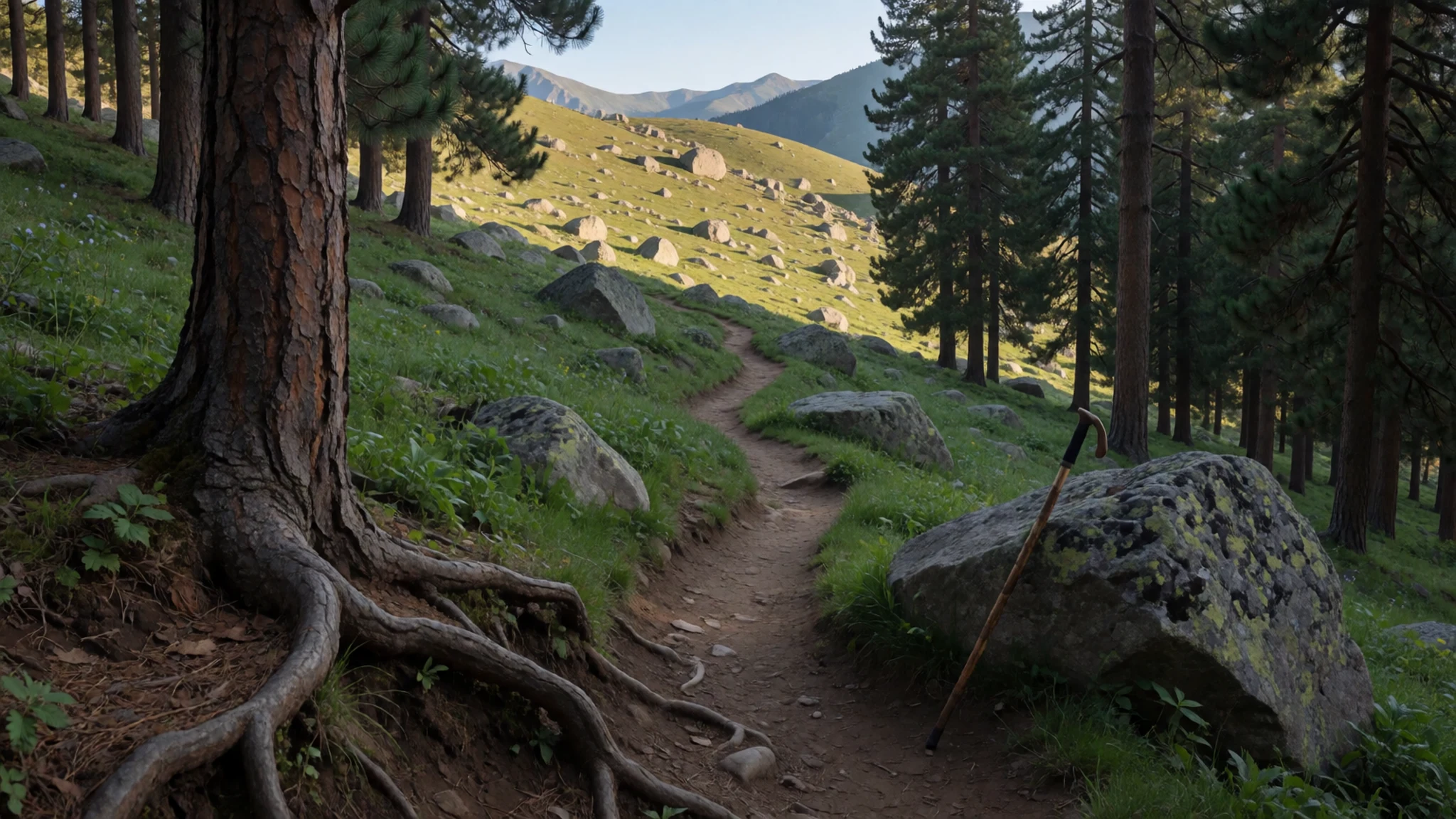
- Horses on the slopes — Around Shogran village
Horses graze loose on the grassy slopes around the village, and many are kept for visitors who want a ride to a viewpoint rather than a walk. Agree the route and duration with the handler before setting off, and treat the animals gently on the steeper, muddy sections.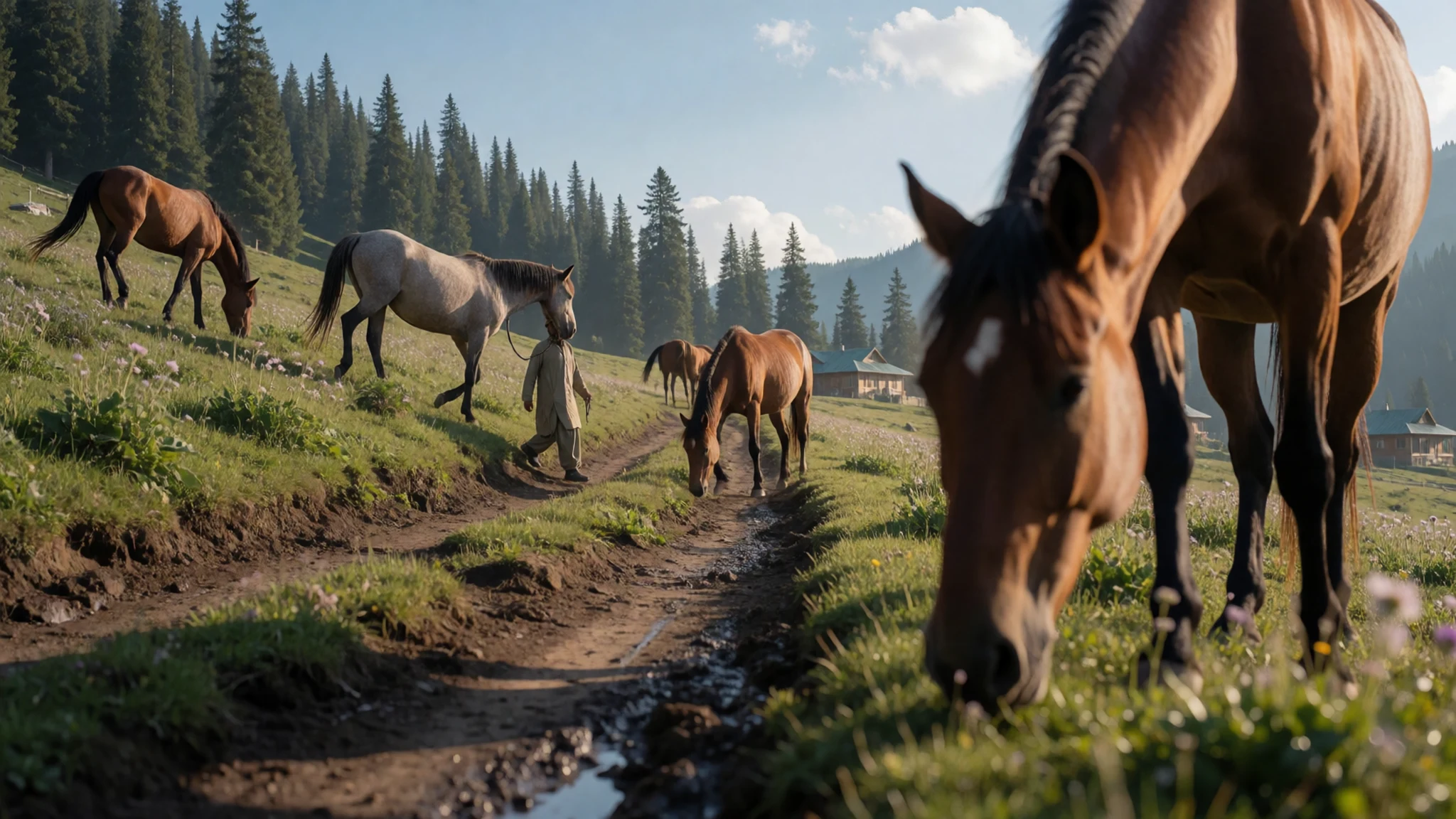
Culture
Shogran lies in Khyber Pakhtunkhwa, where the everyday languages of the Kaghan area include Hindko and Urdu, and daily life follows Muslim customs. Hospitality is a point of pride across this part of Pakistan: a cup of tea, questions about where a visitor has come from, and guesthouse owners or drivers who take trouble to explain the road are all normal. Because the village is mainly populated in summer, much of its social life is tied to the season. Families who run guesthouses and shops may live on the plateau for only part of the year, and herders move animals up and down with the weather. Most visitors come from elsewhere in Pakistan, so the plateau in July feels like a gathering of holidaymakers, with family picnics, groups of friends, horse rides and music from parked vehicles. Prayer times shape the day, and the call to prayer carries across the slopes. During Ramadan, eating and drinking openly in daytime can cause offence, and some eateries keep shorter hours. Alcohol is not part of the scene here. Winter is a different rhythm entirely: with snow over the valley, the plateau is quiet and many seasonal businesses are likely to be closed, so plans made for summer do not carry over. Dress modestly, and ask before photographing people, especially women and families, and put the camera away if anyone says no.
What to wear
Shogran's traditional dress is the same as across Khyber Pakhtunkhwa: the shalwar kameez, a long tunic over loose trousers, stitched in cotton for summer and in heavier wool blends for the cold months. Men often add a woollen waistcoat, a patti shawl of coarse handwoven wool, and the pakol, a soft rolled-wool cap. Women wear the shalwar kameez with a dupatta, and a warm shawl over the top. Herders and horse handlers tend to wear the practical version of all this, with a blanket or thick shawl against the wind. Day to day, the picture is mixed: older men in shalwar kameez and waistcoats, younger men in jeans, hoodies and puffer jackets, and visiting families in a mix of traditional and city clothes. A visitor should dress for mountain weather and local modesty together. Even in the peak season the range runs from a maximum of 20 °C to a minimum of 3 °C, so layers matter: a fleece, a waterproof jacket for sudden rain, and a warm hat for evenings and meadow mornings. Cover shoulders and knees; loose long sleeves and trousers suit both men and women, and a light scarf is useful for women and handy for everyone in wind. Shoes need grip, since tracks turn muddy and steep after rain. In winter, add proper snow boots, gloves and thermal layers.
What to eat
- Fried or grilled trout — Riverside and roadside eateries along the Kaghan road and in Shogran's bazaar
Trout from the cold streams of the Kaghan Valley is a regional favourite, usually fried in a spiced coating or grilled whole. It is served with flatbread and a squeeze of lemon. Availability varies with the season, so ask before settling in for it.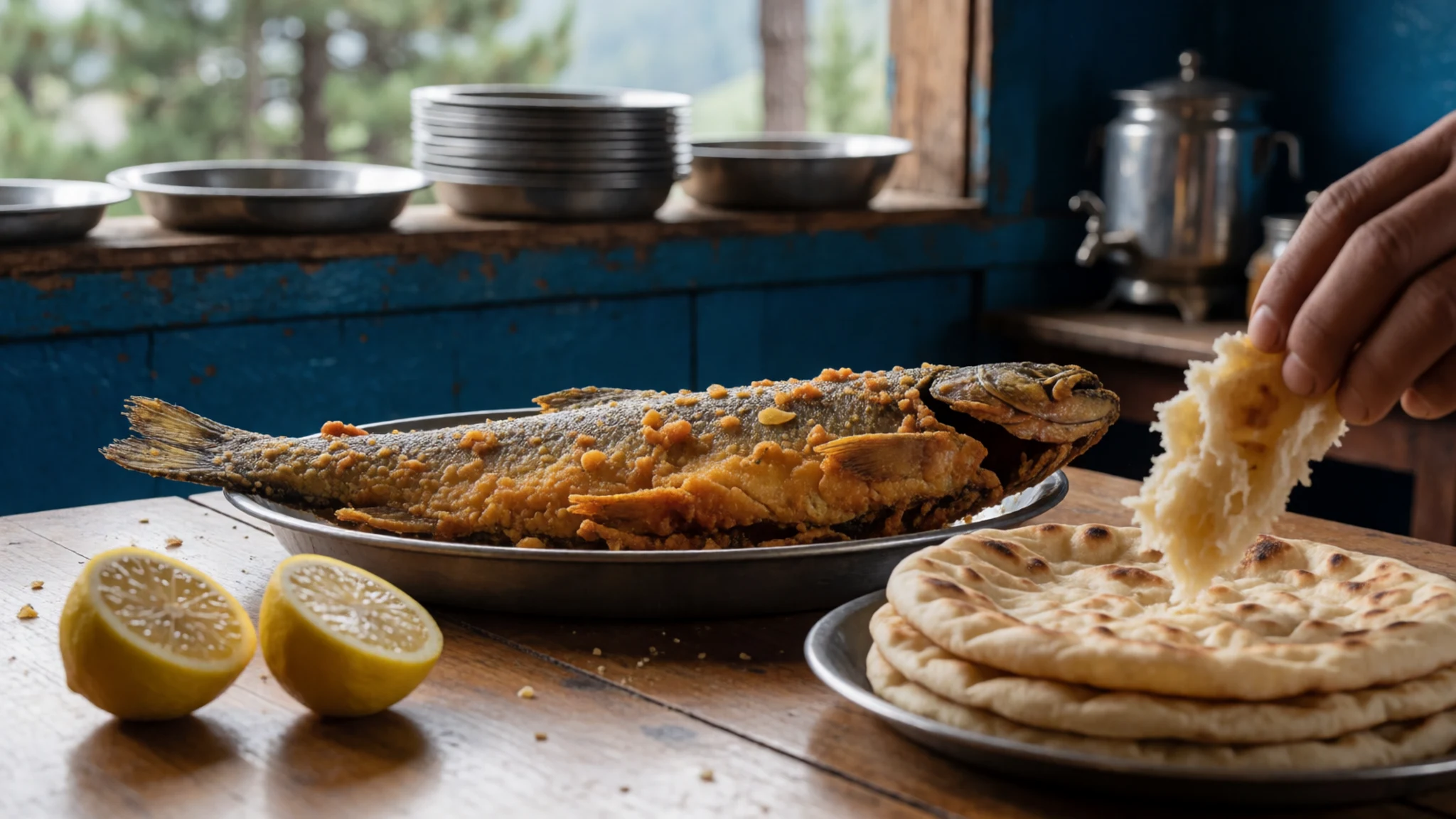
- Chicken karahi — Simple restaurants on the main strip of the village
A staple across northern Pakistan: chicken cooked fast in a wok-shaped pan with tomato, ginger, green chilli and plenty of black pepper. It arrives sizzling and is scooped up with naan. Mutton versions are common too, and the heat level can usually be adjusted.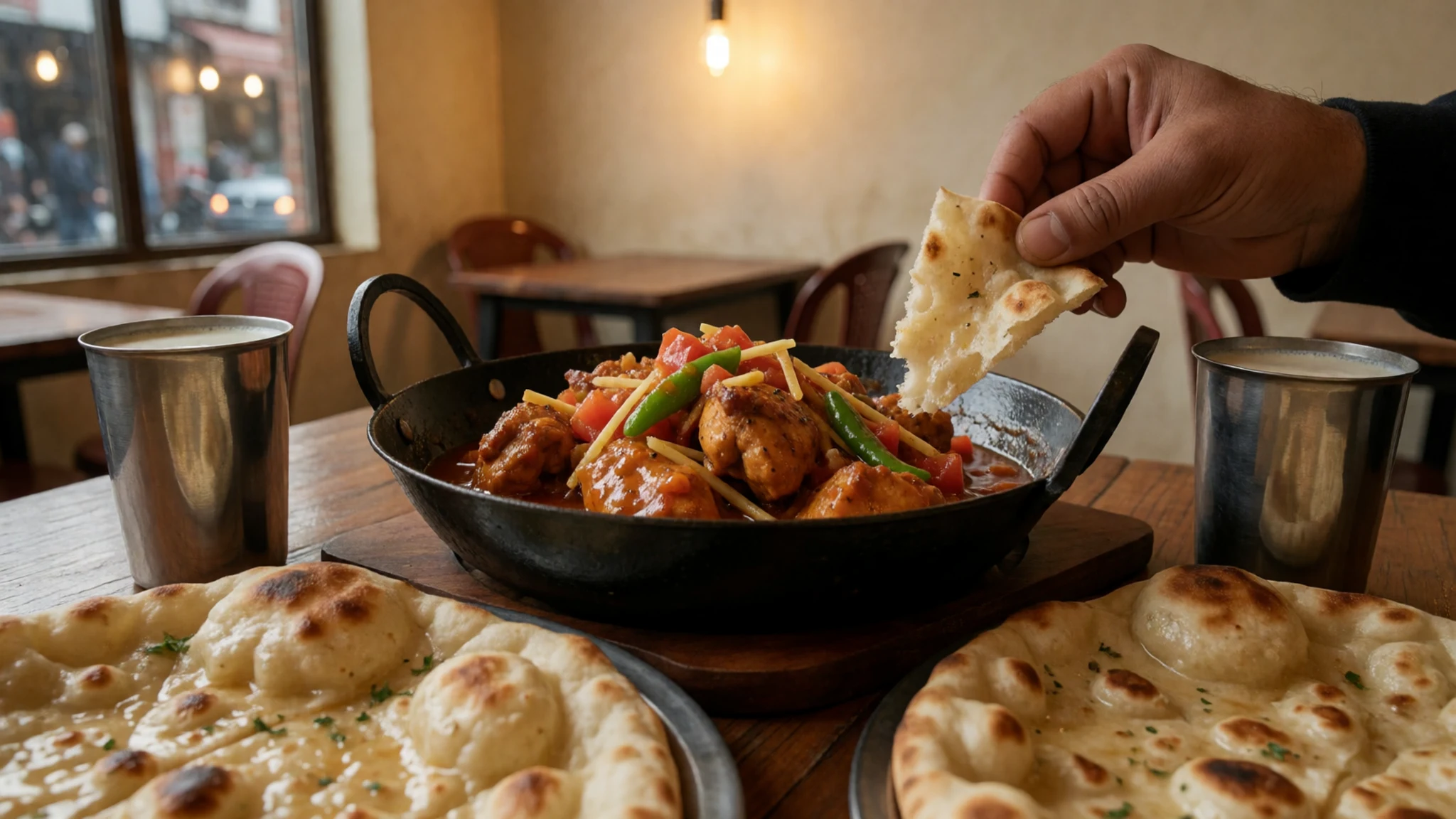
- Chapli kebab — Grill stalls and small kebab counters in the bazaar
A flat, spiced patty of minced meat, associated with Peshawar and the wider province, fried until crisp at the edges. It is eaten hot in naan with raw onion and a sharp chutney, and works well as a cheap, filling meal after a walk. - Paratha with omelette and chai — Guesthouse breakfast tables and tea stalls
A common mountain breakfast: layered, pan-fried paratha with a spiced omelette, followed by doodh patti chai, strong tea boiled with milk and sugar. It is warming on cold mornings and sets visitors up for a jeep ride or meadow walk. - Kehwa and green tea — Tea stalls, picnic spots and meadow stops
Green tea, sometimes spiced with cardamom, is the usual drink to sip while sitting out in the cold, particularly as evenings close in. It is lighter than milky chai and often arrives in a flask, ready to share around a group.
Plan it
Best time. June to August is peak season, with temperate days and a typical range from about 3 °C at night to 20 °C by day. It is also when monsoon rain, hail and thunderstorms can interrupt plans, and landslides sometimes close the road, so leave slack in the schedule. Winter brings snow across the valley, which suits people who want a quiet, white landscape but makes access harder.
How long. 2–3
Getting there. Fly to Islamabad, then travel by road to Balakot and on up the hill to Shogran; the road from Islamabad to the area is 212 kilometres, and Balakot is 34 kilometres below the plateau. For the final climb, many visitors hire a local jeep. Check road conditions before setting out, especially after rain or during snowmelt.
Budget. mid
Tips
- Book guesthouses well ahead for summer weekends and public holidays, when the plateau fills up
- Set off early for Siri Paye and Makra Peak, since cloud and rain tend to build later in the day
- Carry cash, as cards and cash machines may not be dependable on the plateau
- Pack a waterproof jacket and a warm layer even in July, because evenings turn cold quickly
- Ask your guesthouse about road status before leaving Balakot, as landslides can block the route
Etiquette
- Dress modestly, with shoulders and knees covered
- Ask before photographing local people, especially women and families
- Take litter back down with you, and keep to existing paths on the meadows
Nearby
Sources
- Wikidata Q3694718 (CC0)
- Wikipedia: Shogran (rev 1377587177) (CC BY-SA 4.0)
- Wikivoyage: Shogran (CC BY-SA 4.0)
- Photo: Shogran, Naran Valley — Almazi at en.wikipedia (Public domain)
- Photo: A day in Shogran — Hafsaamir123 (CC BY-SA 4.0)
- Photo: A land scape from Shogran — Tayyabjutt (CC BY 3.0)
- Photo: A motel in snowy Shogran — Naqviasma (CC BY-SA 4.0)
- Photo: A view from Shoogran 1 — Ali Sher (CC BY-SA 4.0)
- Photo: A view from Shoogran 2 — Ali Sher (CC BY-SA 4.0)
- Photo: Animals grazing at Shogran 01 — Attabik Awan (CC BY-SA 4.0)
- Photo: Ascent to Shogran hill station — FSfooty (CC BY-SA 4.0)


