Gwadar
Gwadar, Pakistan
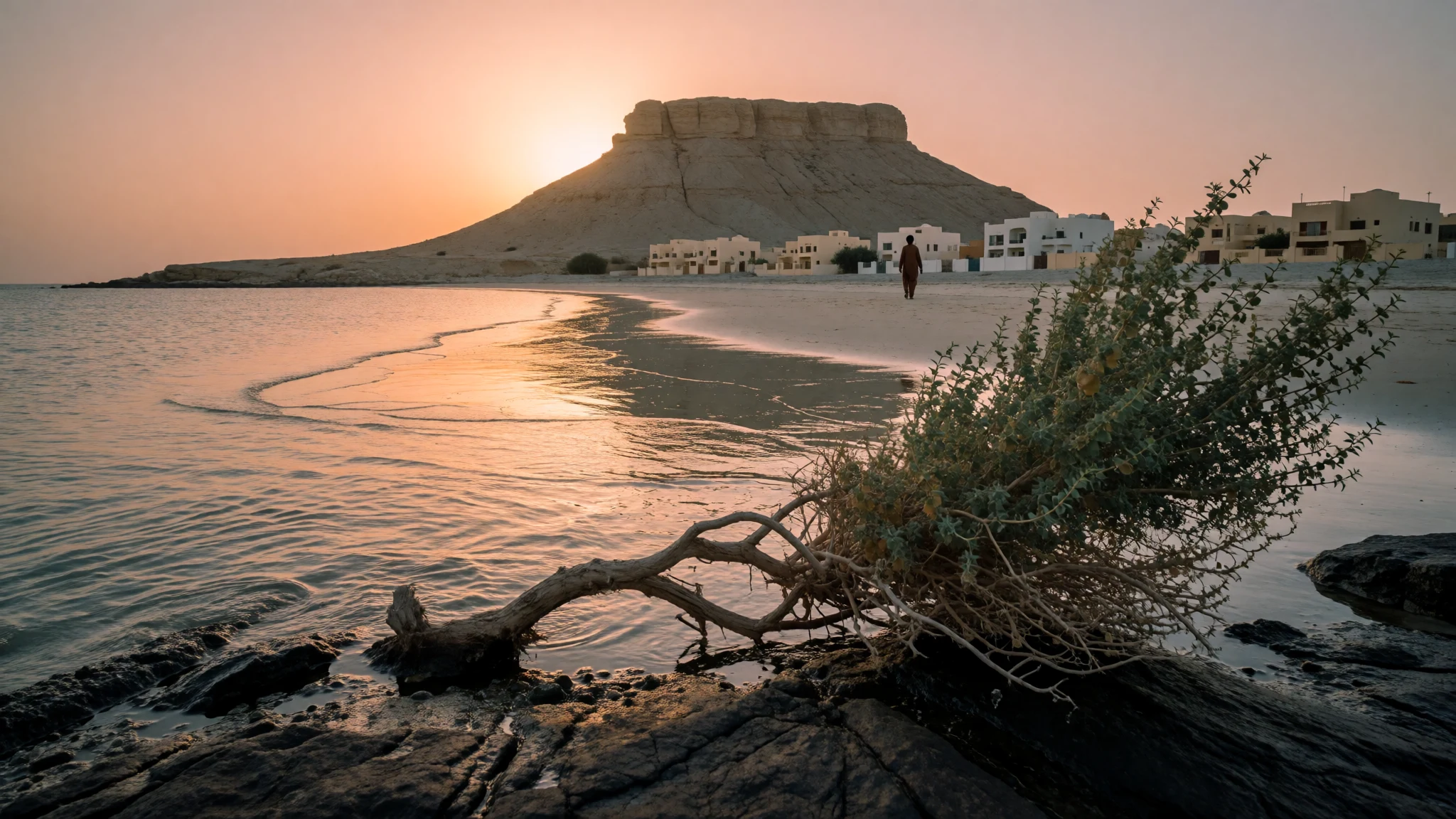
Gwadar is a windy fishing port on Pakistan's Makran coast, where working boats, Omani-era traces and a half-built port city sit side by side.
The place
Gwadar sits on a narrow, hammer-shaped headland on the Arabian Sea coast of Balochistan, in south-western Pakistan, facing Oman across open water. The Wikidata record gives it 70,852 residents and an elevation of 4 m, which says most of what matters: a small, flat, low-lying town where sea, sand and sky do the talking. Water lies on both sides of the headland, with a shallow fishing bay to the west and a broad open bay to the east, and a flat-topped hill, Koh-e-Batil, rises above the western side. The name is usually explained as two Balochi words, wind and gateway, and the wind is a fair summary of the place. Fishing is the long-standing livelihood, and the boats in the western basin set the rhythm of the day. Beyond the old bazaar, wide roads, a deep-water port and large empty plots point to a different ambition. Chinese investment from 2013 made Gwadar the centrepiece of a regional trade corridor, though much of what was planned is still unfinished. The result is a contrast of narrow lanes and concrete frontage on one side and broad, quiet avenues on the other. Karachi is the practical gateway, linked by a long coastal highway. Gwadar suits travellers who want sea air, empty beaches and a coast few people see, not a checklist of monuments. Services are limited, so expect to plan carefully and keep expectations modest.
Its story
Gwadar belongs to Makran, a coast that people have lived on since the Bronze Age, mostly in small settlements near oases and the shore. The region later fell under the Achaemenid Persian Empire, and Cyrus the Great is traditionally credited with bringing it in. When Alexander the Great turned back from India, his admiral Nearchus took a fleet along this coast and described a dry, mountainous land whose people lived on fish. The Greeks called them fish-eaters, and that old label is often linked to the name Makran. After Alexander's empire broke up, the area passed to Seleucus Nicator, one of his generals. For most of its later history Gwadar was a modest fishing town rather than a city of consequence. In 1783 it came under the Sultanate of Muscat and Oman, and it stayed an Omani possession until 1958, when Pakistan bought it. That long Omani chapter left a mark on buildings, trade and family ties across the water. Modern attention arrived with the idea of a deep-water port, and from 2013 China Overseas Port Holdings took over its operation. The port was meant to shorten routes for oil and goods heading to western China. Years on, the grand plans for a free zone and power plant are only partly delivered, so the town still feels caught between two eras.
What to see
- Fishing basin at Paddi Zarr — Western bay, old town
Gwadar's western bay holds a shallow basin where wooden fishing boats are moored, repaired and unloaded. Mornings and late afternoons are the busiest, with nets, ice boxes and buyers crowding the shore. It is the clearest view of the town's real economy, and the hammer-shaped hill rises behind it.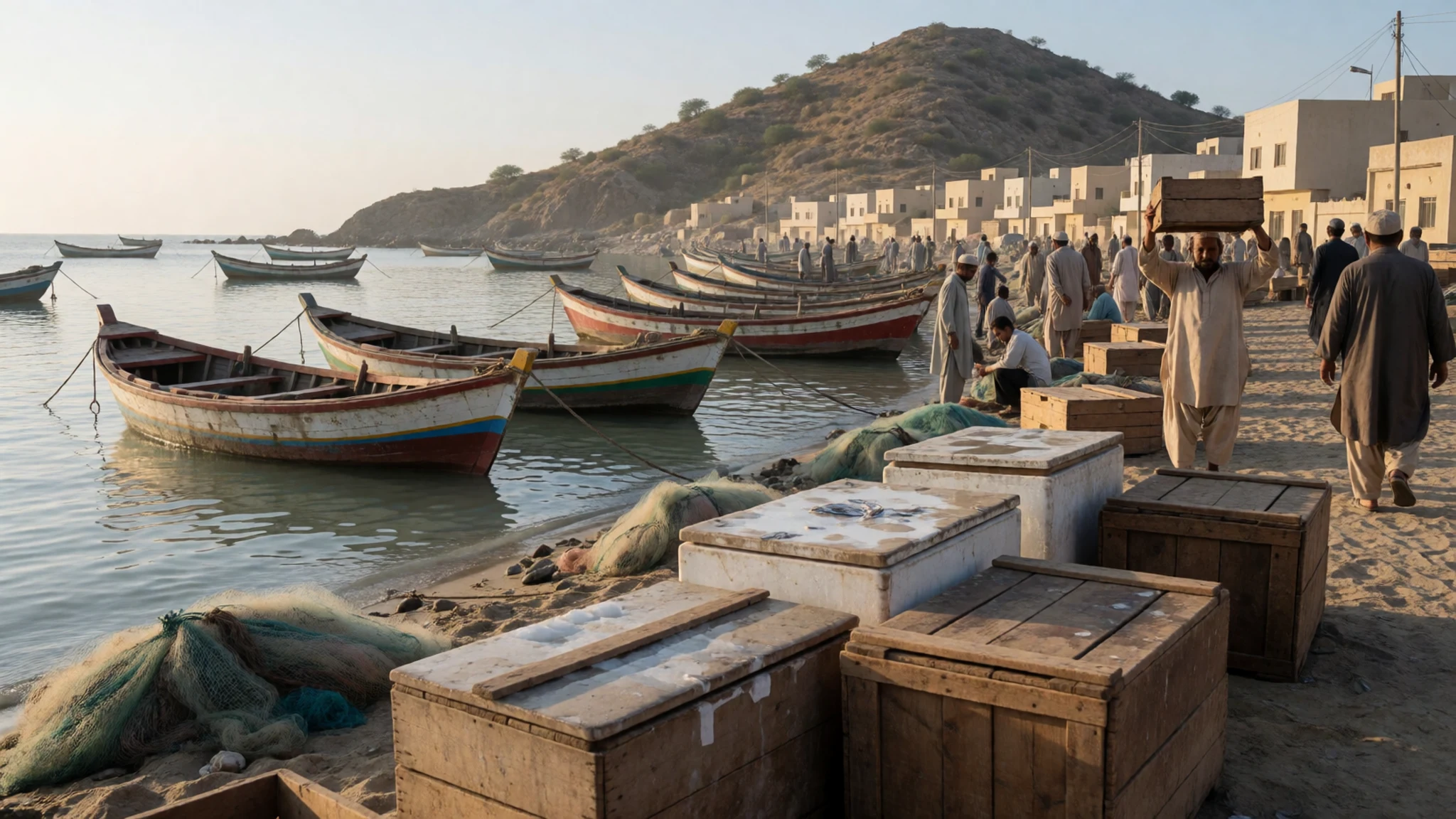
- Koh-e-Batil and the headland — Headland above the old town
The flat-topped hill above the western bay gives a wide view over the whole narrow peninsula, with water on either side and the town squeezed in between. Go near sunset for softer light and cooler air. Check locally on current access, since parts of the area may be restricted.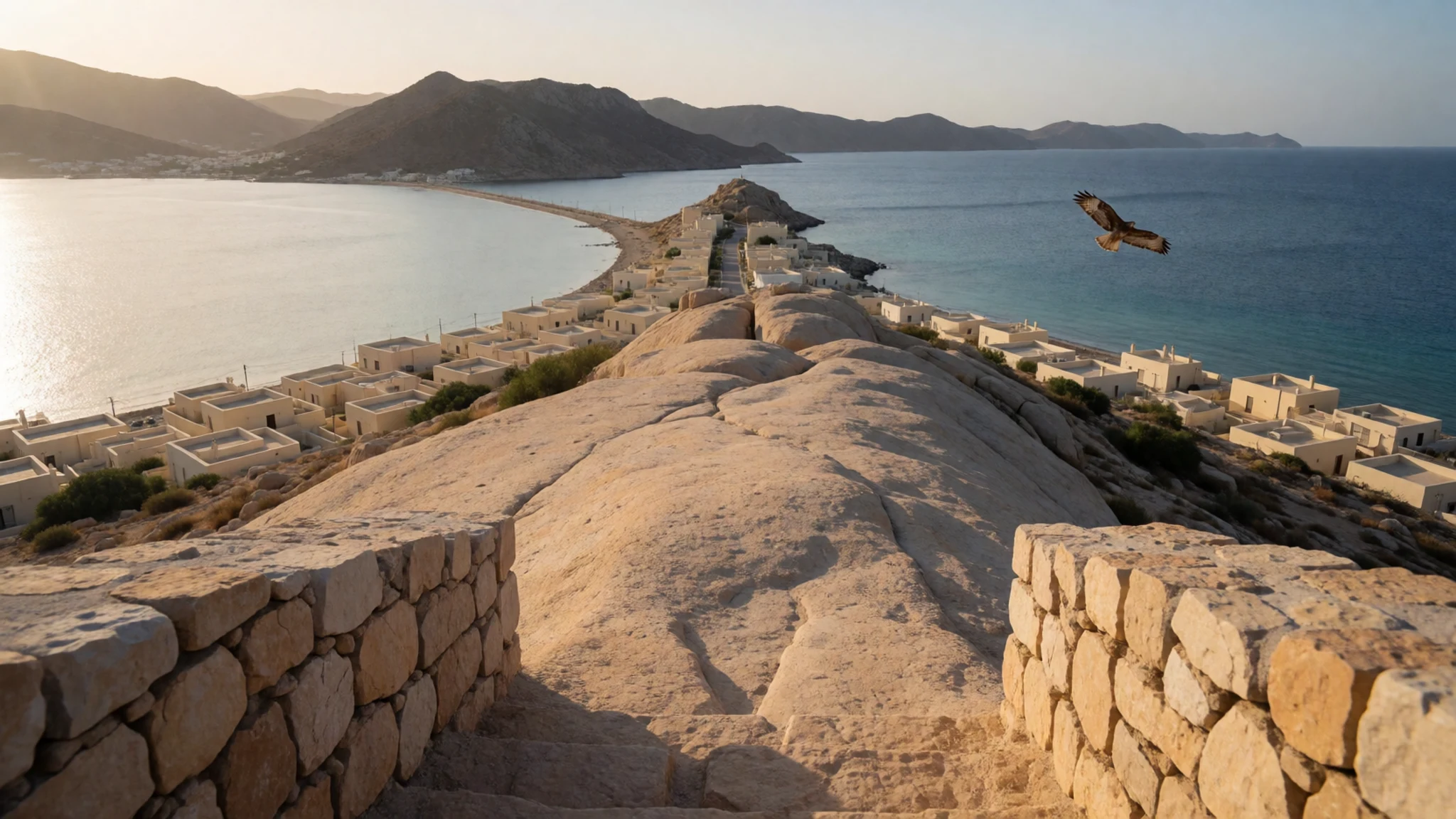
- Blue Lagoon — Coast near Gwadar
A sheltered stretch of clear, pale water photographed near Gwadar, popular as a place to sit by the sea. Conditions, access and facilities change, so ask a local driver or the tourism office before setting out. Bring your own water and shade, as there is little cover.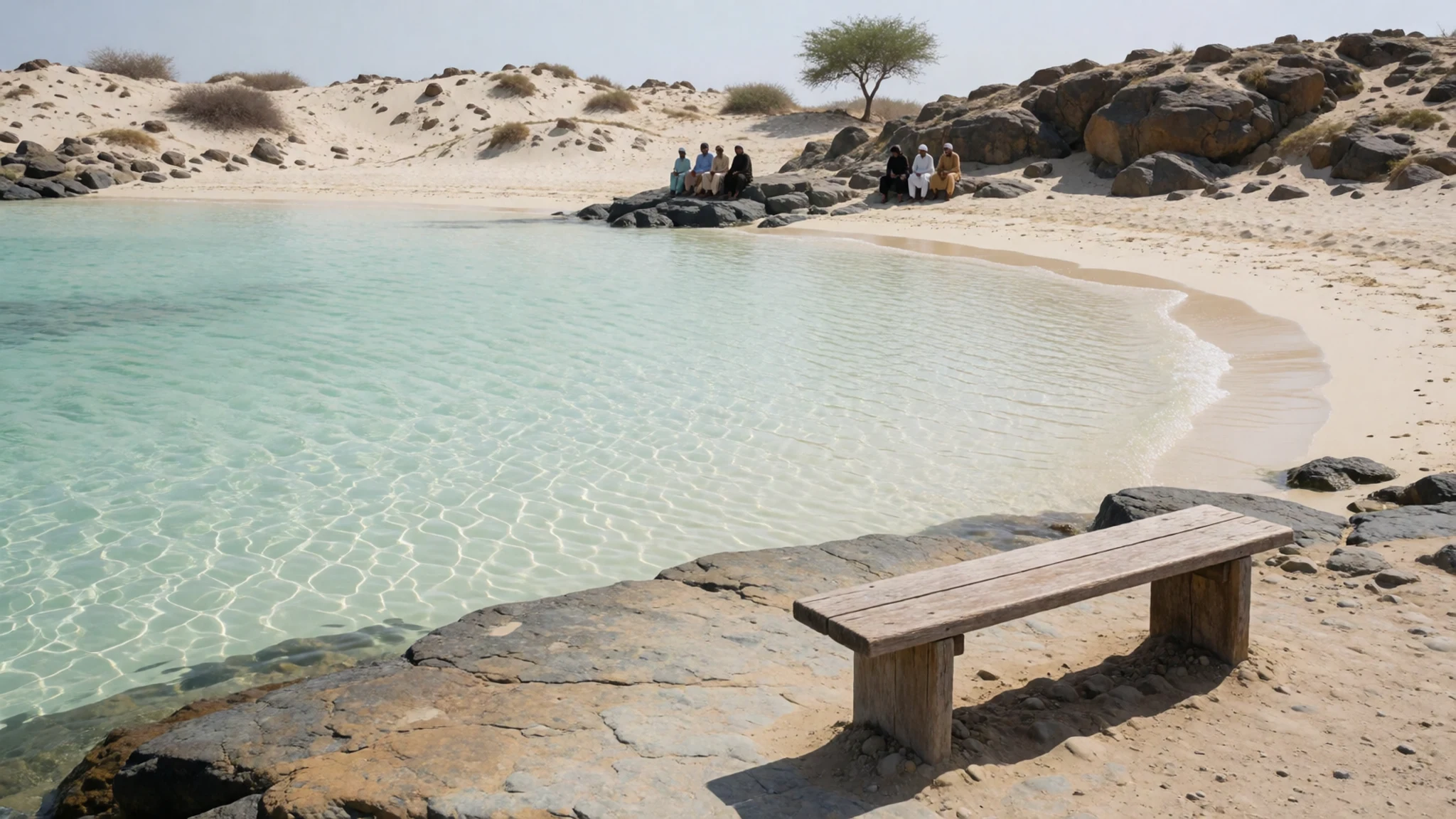
- Hingol National Park — Makran Coastal Highway, east of Gwadar
Hingol lies along the coastal highway towards Karachi, far east of Gwadar, so it works best as a stop on the long drive. The park mixes desert, mountain and river country, and wildlife is the draw. Go with a local guide and check road and security conditions first.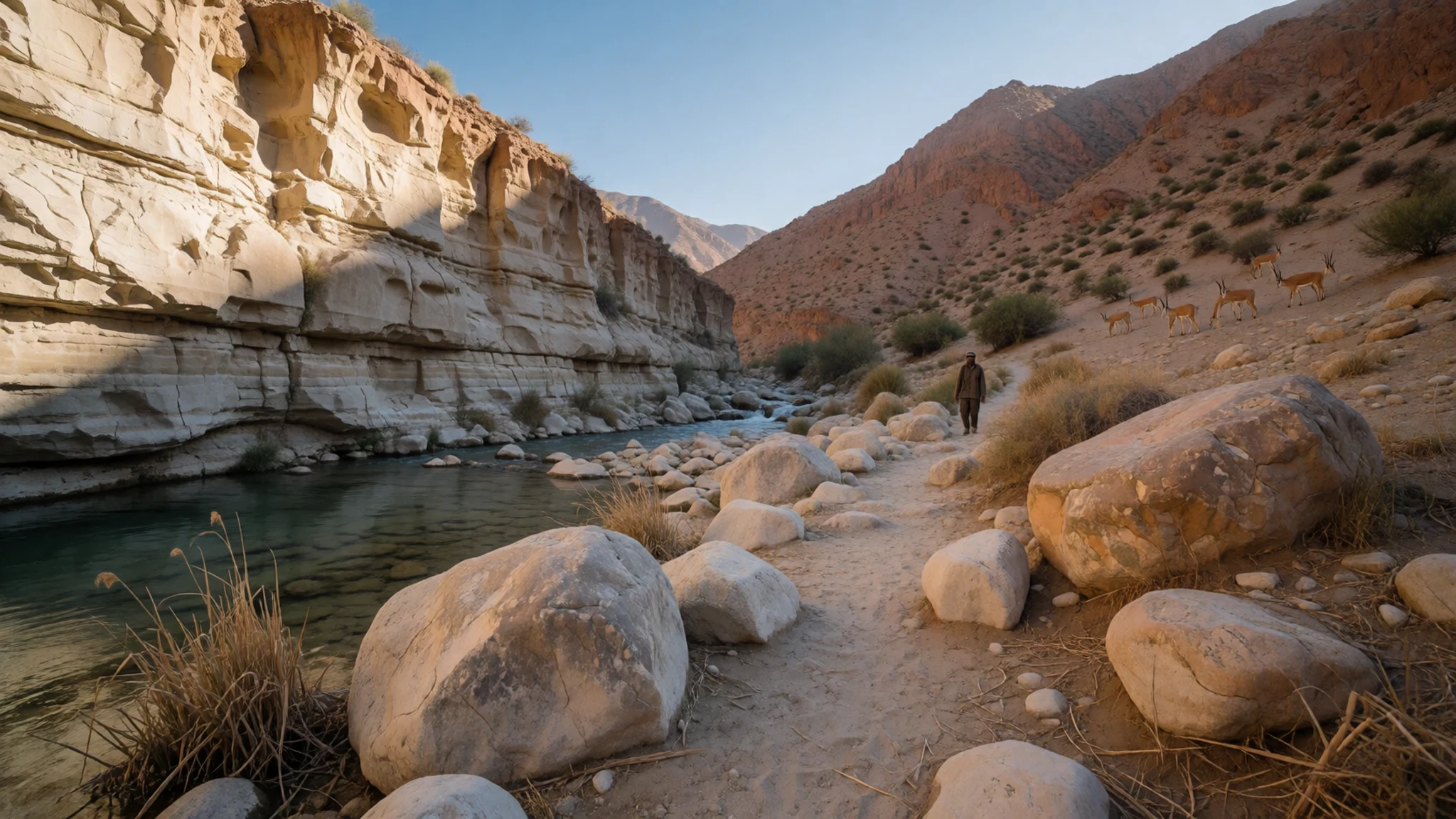
- Kund Malir Beach and Buzi Pass — Makran Coastal Highway, near Hingol
Kund Malir is a long desert beach backed by tall, bare mountains, near Hingol. A little further on, the highway climbs through Buzi Pass, with the sea on one side and rock on the other. Both are strong reasons to break the Karachi journey, daylight permitting.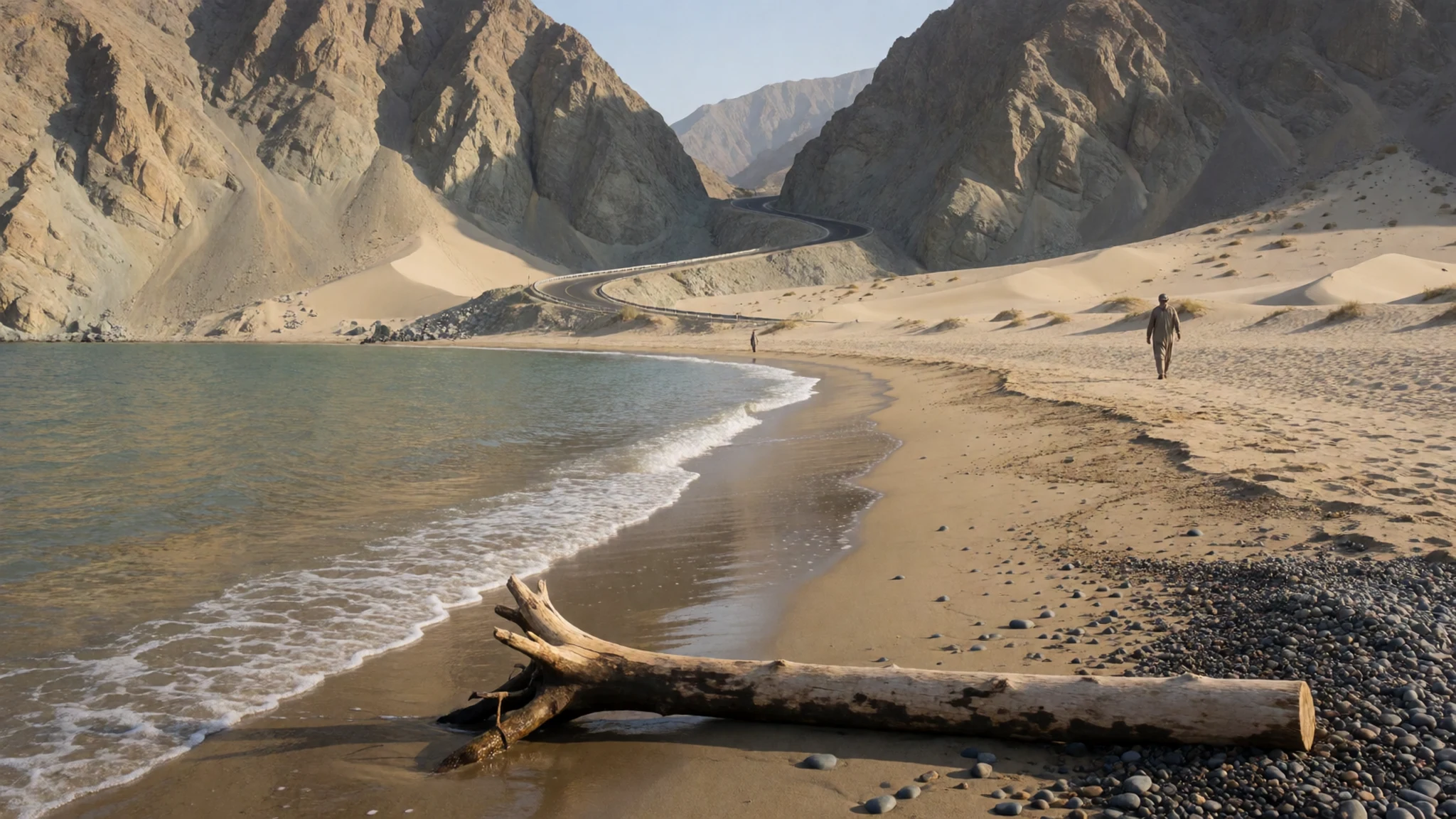
Culture
Gwadar is a Baloch town on a coast shaped by trade with the Arabian side of the sea. Balochi is widely spoken, Urdu is the common language for outsiders, and Arabic influence is strong thanks to the long Omani connection and the short sea crossing to the peninsula. Traces of Omani-era buildings still stand in the city, and family and commercial ties across the water have never fully faded. Life revolves around fishing, with boats leaving before dawn and catches sold on the shore, so the town is busiest early in the morning and quiet in the afternoon heat. Islam shapes the daily routine, from the call to prayer to the way shops close for Friday midday prayers. Hospitality matters, and visitors are often offered tea, which is polite to accept. The newer port district, with its wide roads and offices, feels like a separate, more international world, and many local residents see its benefits unevenly. Conversation about politics, security and the port is best left to the other person to start. Women travellers will find mixed company in public places easiest where other families are present. Keep your voice and behaviour modest in public, especially near mosques and on Fridays. Ask permission before photographing anyone, especially women, and do not photograph the port, checkpoints or security personnel.
What to wear
Traditional dress in Gwadar follows Baloch custom: the shalwar kameez, a long shirt over loose trousers, usually in cotton for the heat. Men often add a turban or cap and a shoulder cloth, and the cut of the shalwar is notably wide and roomy. Women's dress is known for embroidery, with thread and mirror work on the front panel, cuffs and neckline, worn with a long scarf or chadar. Embroidered pieces are most common at weddings, festivals and Eid, while everyday versions are plainer. On the Gulf side of the coast, some Omani-style caps and cloth also appear, a reminder of the old links. In daily life now, most men wear plain shalwar kameez, or trousers and a shirt, and fishermen wear practical, quick-drying clothes and sandals. Women generally dress modestly, with a headscarf or dupatta. Visitors should do the same. Pack loose, light cotton or linen that covers shoulders, arms and knees, plus a scarf for the head, which is useful for sun, dust and mosques. Women may feel more comfortable in a long tunic and loose trousers, while men should avoid shorts away from private beaches. Wear sturdy sandals or closed shoes with grip for rocky shore and sandy lanes, add a wide-brimmed hat and sunglasses, and carry a light layer for windy evenings. Swimming is best done in loose, modest clothing.
What to eat
- Fresh grilled or fried fish — Eateries near the fishing basin and the old bazaar
Fish is the heart of eating in Gwadar, and what is sold depends on the day's catch. It is usually grilled or fried with a spice rub and served with flatbread or rice. The freshest choices are near the fishing basin, from small eateries that buy straight from the boats.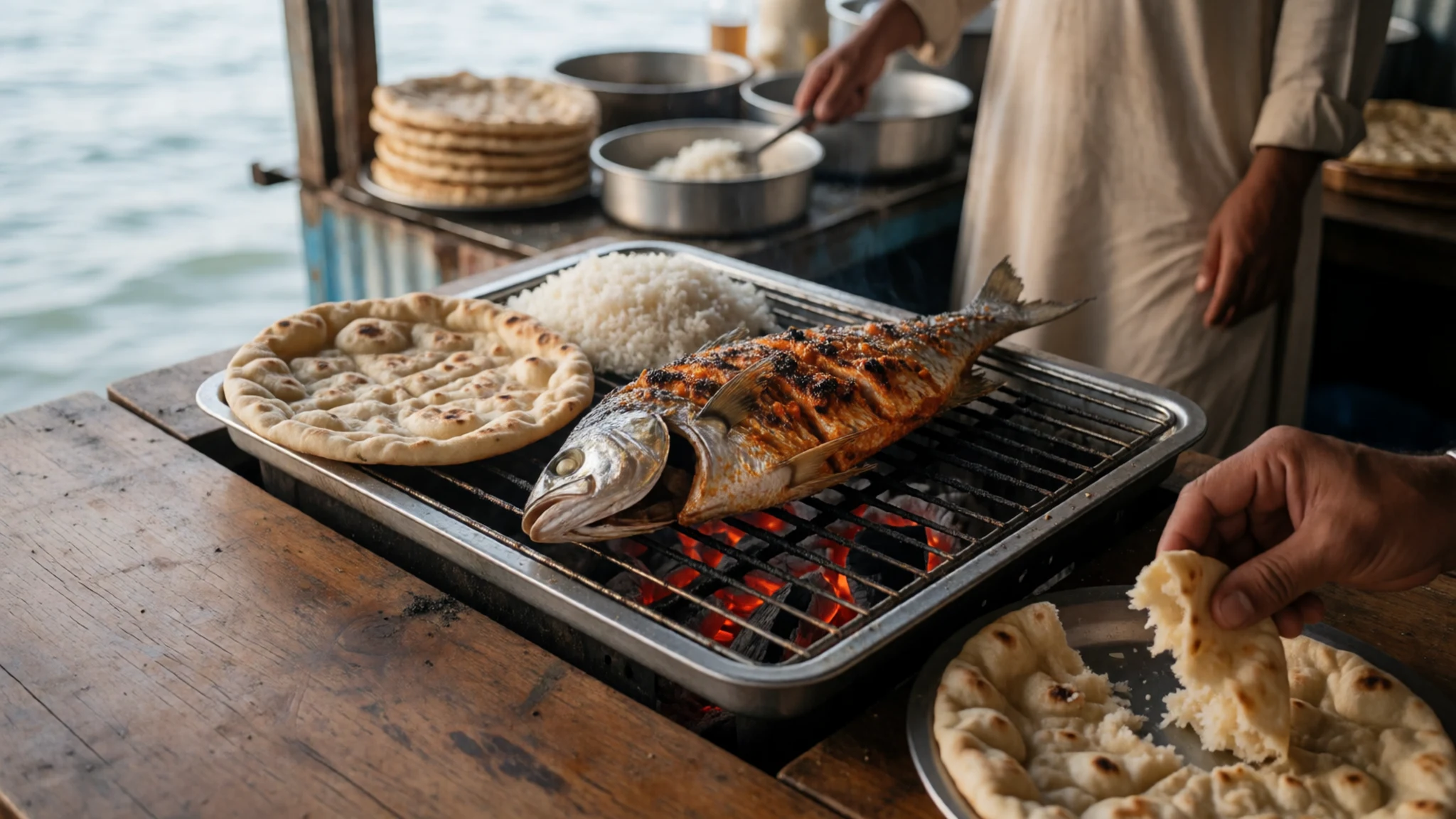
- Fish curry with rice — Family-run eateries in the town centre
A simple, spiced fish curry ladled over rice is a common home-style meal on the Makran coast. Expect chilli, tomato and onion, and a thinner gravy than inland curries. Ask what fish is in it, and eat it fresh at lunch rather than late in the day.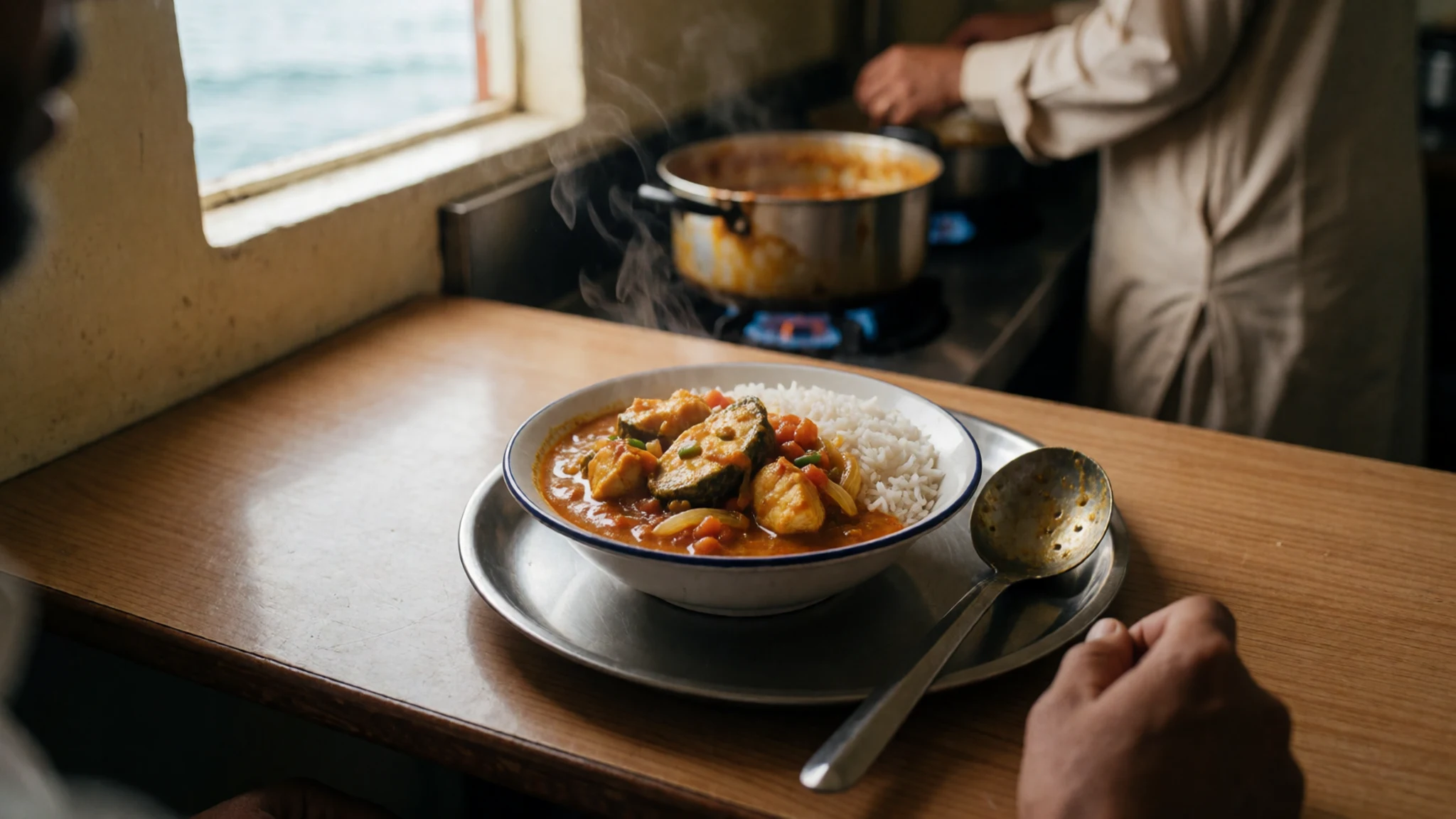
- Sajji — Roadside grill eateries on the main roads
Sajji is the Baloch roast: meat, usually lamb or chicken, seasoned simply and cooked slowly over open heat, served with rice or bread. It is a celebratory dish more than an everyday one, so look for places that specialise in it and arrive at midday when it is freshest. - Omani-style halwa — Sweet shops in the bazaar
A sticky, sweet halwa, reflecting the long Omani link, is sold in sweet shops across the Gulf and its neighbouring coasts, and similar sweets turn up in Gwadar. It is rich with sugar and ghee, often flavoured with cardamom or nuts. Buy a small piece to share, and ask about ingredients if you have allergies. - Tea and dates — Tea stalls and roadside stands near the bazaar
Strong, milky tea with sugar is the usual welcome, and it is often served with dates, a coastal habit shared across the Arabian Sea. A tea stall is also a good place to watch the town between meals, and to chat if your Urdu is up to it.
Plan it
Best time. November to March, when days are warm rather than punishing and the sea breeze is pleasant; summers on this coast are hot and humid, so most visitors find April to September hard going.
How long. 2–3
Getting there. Karachi is the nearest and easiest gateway: fly in, or take the Makran Coastal Highway (N10), a scenic 653 km drive of around 8 hours. Buses run between Karachi and Gwadar, and car rental is also available. Check airline schedules and the latest road conditions before you travel.
Budget. mid
Tips
- Check current official travel advisories and entry rules before booking, as conditions in Balochistan can change and some visitors need permits or permission.
- Carry plenty of cash, as cards and cash machines may not work everywhere.
- Drink bottled or boiled water, and bring sun protection, a hat and light, long-sleeved cotton clothing.
- Drive the coastal highway only in daylight, and fill the tank whenever you can, as fuel stops can be far apart.
- Book accommodation ahead, as options are limited, and confirm that your place of stay is open and prepared for visitors.
Etiquette
- Dress modestly, with shoulders and knees covered, and carry a scarf for mosques.
- Ask before photographing people, and avoid photographing the port, checkpoints and security staff.
- Accept tea when it is offered, and keep conversation about politics and the port polite and light.
Nearby
Sources
- Wikidata Q580533 (CC0)
- Wikipedia: Gwadar (rev 1385699972) (CC BY-SA 4.0)
- Wikivoyage: Gwadar (rev 5403425) (CC BY-SA 4.0)
- Gawadar City 2.jpg, unknown author (CC BY 3.0)
- Gwadar city, the doors of Air.jpg, Shayhaq Baloch (CC BY-SA 4.0)
- Blue Lagoon at Gwadar.jpg, Madihasalam (CC BY-SA 4.0)
- Gwadar Fishing Basin.jpg, Sajjad Mahesri (CC BY-SA 4.0)
- Gwadar, Balochistan.jpg, Ghulam Murtaza (CC BY-SA 4.0)
- Pakistan relief location map.jpg, Carport (CC BY 3.0)
- West Asia non political with water system.jpg, DEMIS Mapserver (CC BY 3.0)
- South Asia non political, with rivers.jpg, DEMIS Mapserver (CC BY 3.0)


