Shah Jahan Mosque
Shah Jahan Mosque, Pakistan
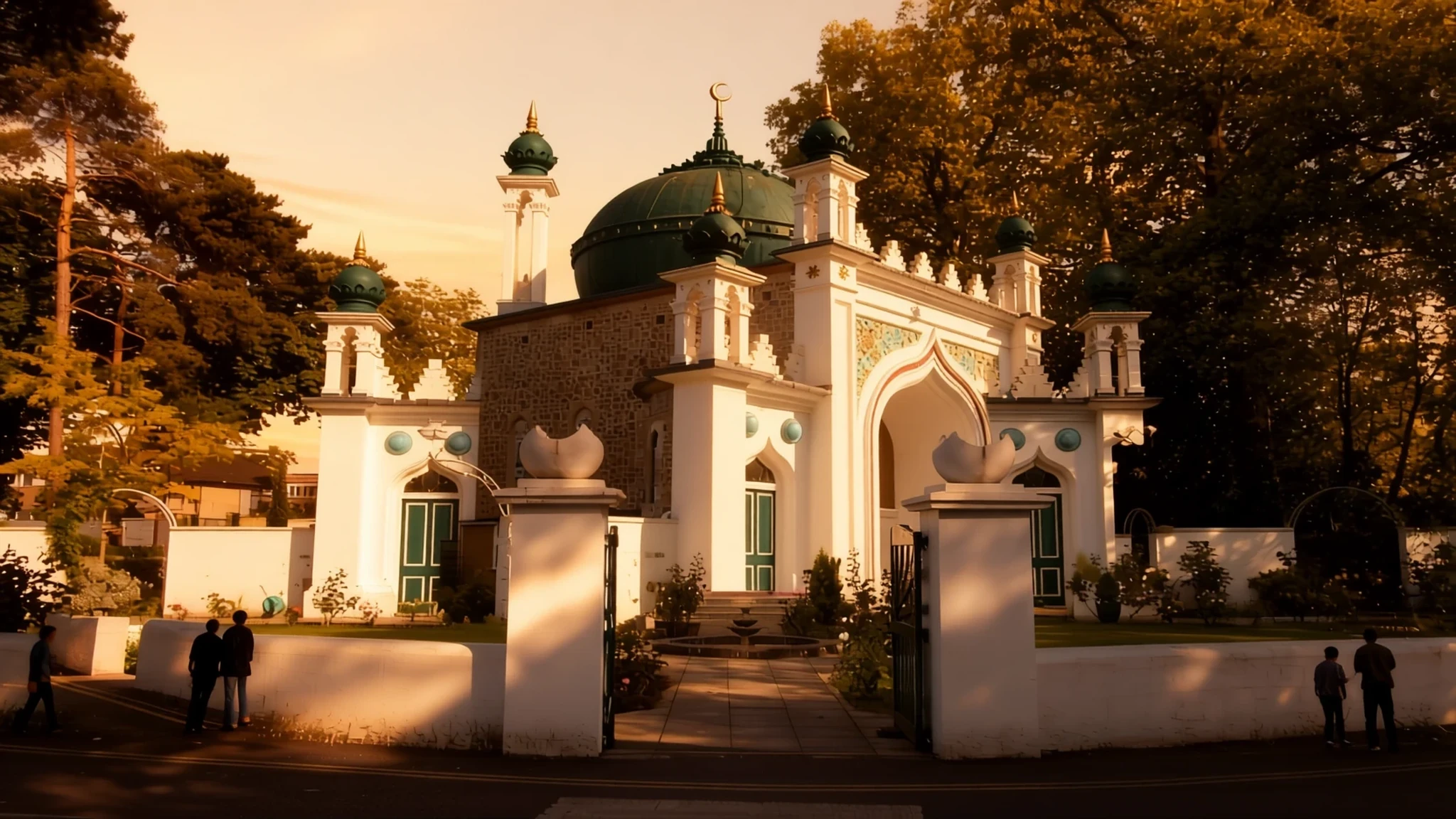
Shah Jahan Mosque in Thatta is a dome-covered Mughal congregational mosque in Sindh, known for its tilework and unusual geometric brickwork.
The place
Shah Jahan Mosque stands in eastern Thatta, a quiet town in Sindh that was once the provincial capital. It is the city's main congregational mosque, also called the Friday Mosque of Thatta, and it was founded in 1659 according to the facts for this place. The building is long and low, and its roofline is crowded with small domes that look especially good from above, as the aerial photograph on file shows. Two things set it apart from most Mughal mosques. First is the tilework, in blues, turquoises and whites, which covers arches, walls and the inside of the domes. Second is the brickwork: geometric patterns laid in brick itself, which is not the usual Mughal choice. The look leans towards Central Asia and Persia rather than Delhi or Lahore. Thatta is on the lower Indus plain, flat and hot, and the mosque sits in a small town rather than a big tourist centre. Around it are shops, tea stalls and ordinary traffic. The Makli necropolis, a UNESCO site, lies nearby, so the two make a natural pairing for a day. Karachi is about 100 km away, which makes this an easy trip from the coast. The mosque is still a working place of worship, so visits fit around prayer times. Expect a modest crowd, dust, and a building that shows its age in places but still rewards a slow look upwards.
Its story
Shah Jahan Mosque was ordered by the Mughal emperor Shah Jahan as thanks to the people of Sindh. Years earlier, while still a prince in revolt against his father Jahangir, he had taken refuge in Thatta and was well received. When he became emperor he repaid that welcome with a grand mosque in the city. Persian inscriptions on the building point to construction between 1644 and 1647, and an eastern addition was finished in 1659, in the reign of Aurangzeb. The design reflects Central Asian taste, which fits with the emperor's campaigns in that region shortly before work began. A popular story concerns the mihrab, the niche that marks the direction of prayer. Local tradition holds that the original layout went wrong, and the planners turned to Makhdum Lutufullah, a Sufi mystic whose tomb is in Hala, for help. He is said to have put it right through the power of his prayer. Historians tell it differently: records suggest the mihrab was rebuilt about a century after the mosque went up. Repairs came later too, in 1692 under Aurangzeb and in 1812 under Murad Ali Khan Talpur. In 1993 the mosque was placed on Pakistan's tentative list for UNESCO World Heritage status, though its conservation has not matched that of some better-funded mosques elsewhere in the country.
What to see
- The tiled domes and ceilings — Inside the main prayer hall
Look up first. The main chamber's ceiling is covered in tile patterns that spiral outwards in blue and white, and the many small domes repeat the effect. Photographs on file show perfect circles and lines across the roof. Go when the light is soft to see the glaze properly.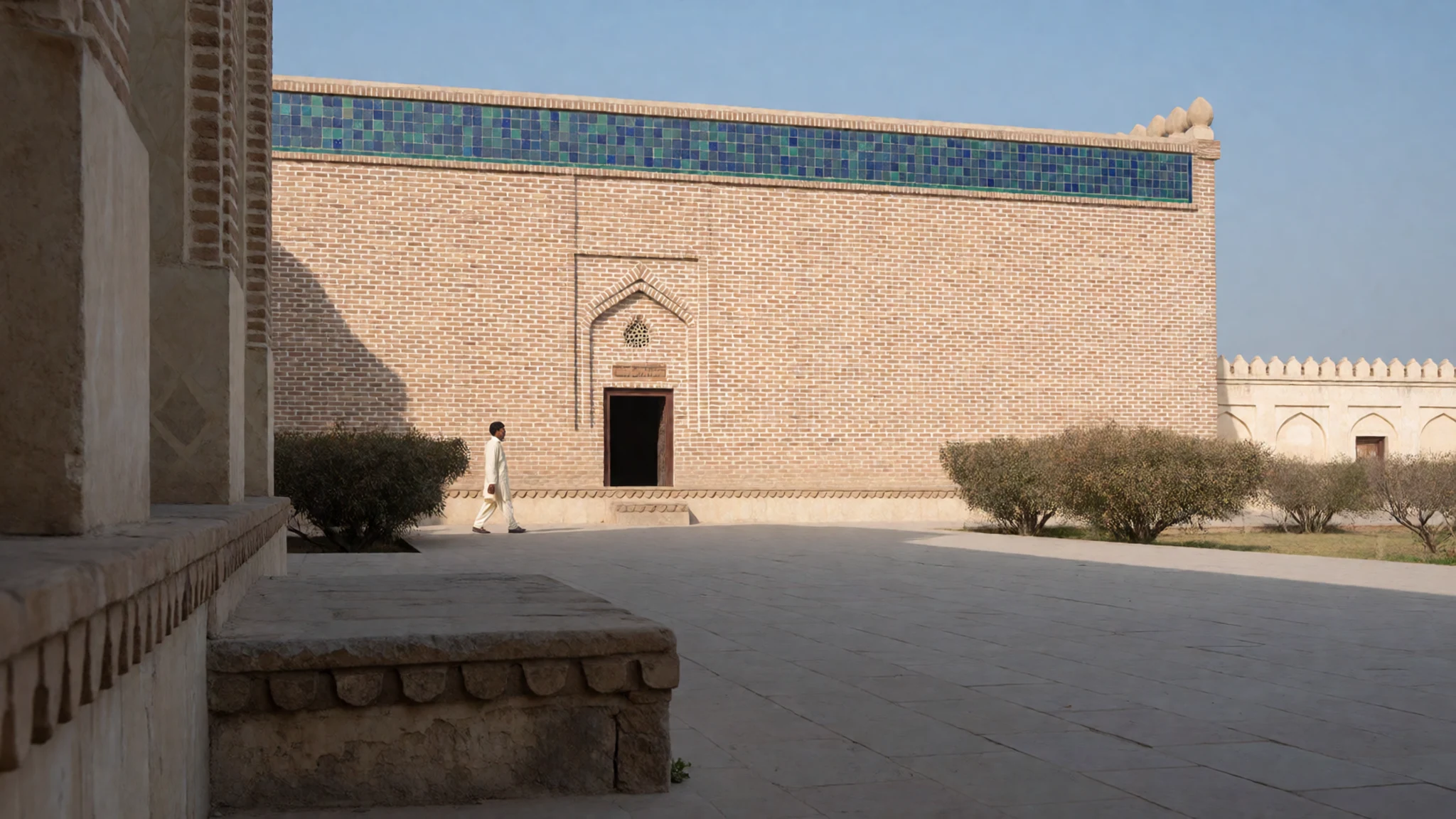
- Geometric brickwork — Outer walls and arcades
Beyond the tiles, the mosque is known for brick laid in geometric patterns, which is unusual for Mughal mosques. Walk the outer walls and arcades and compare brick against tile. It is a quieter pleasure than the glazed interior, and easy to miss.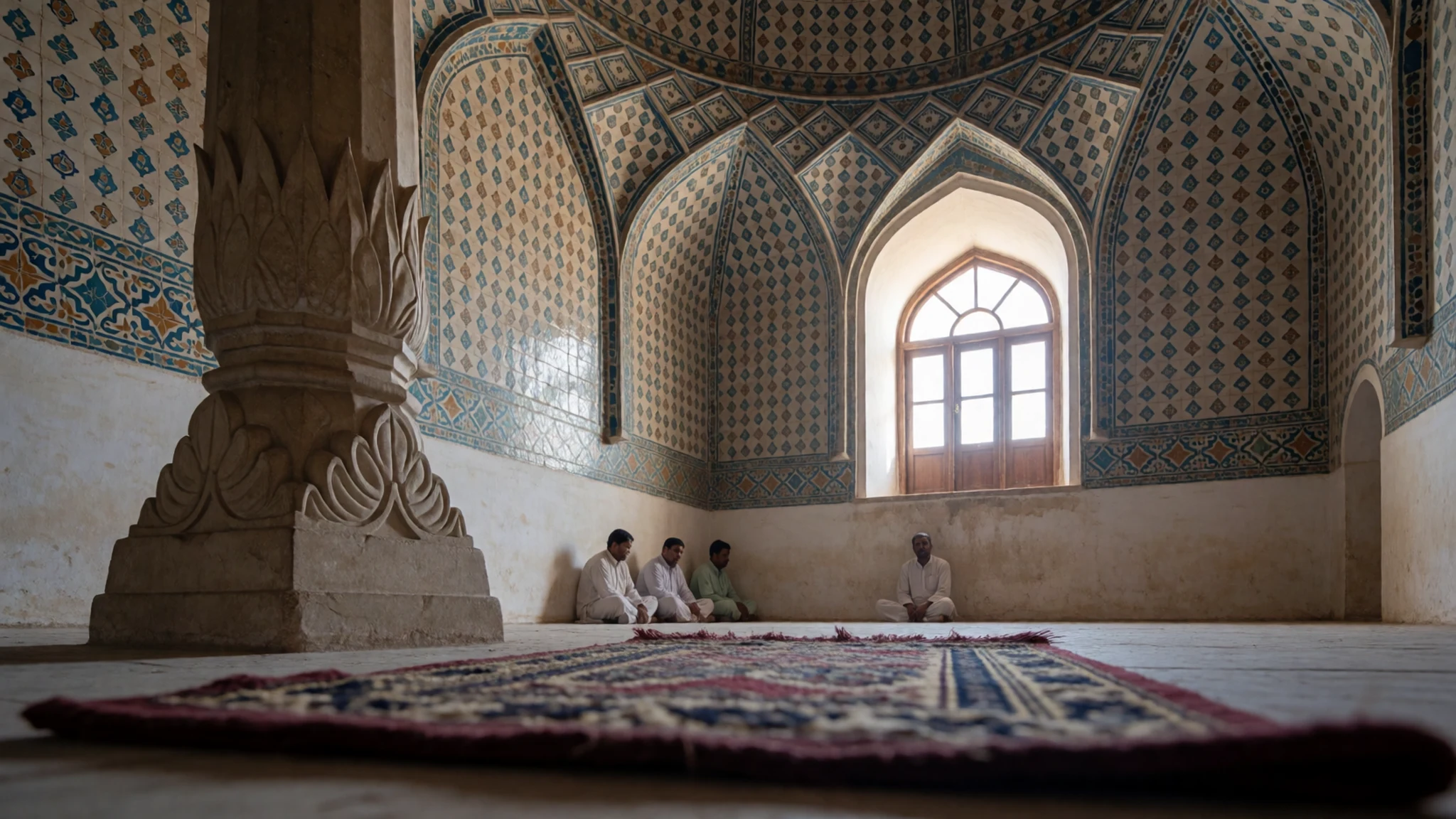
- The mihrab — Qibla wall, prayer hall
The prayer niche is the centre of the mosque and the subject of the story about its alignment. Visitors can look at it from a respectful distance, as worshippers use the space. The decoration is worth a slow look even without the legend.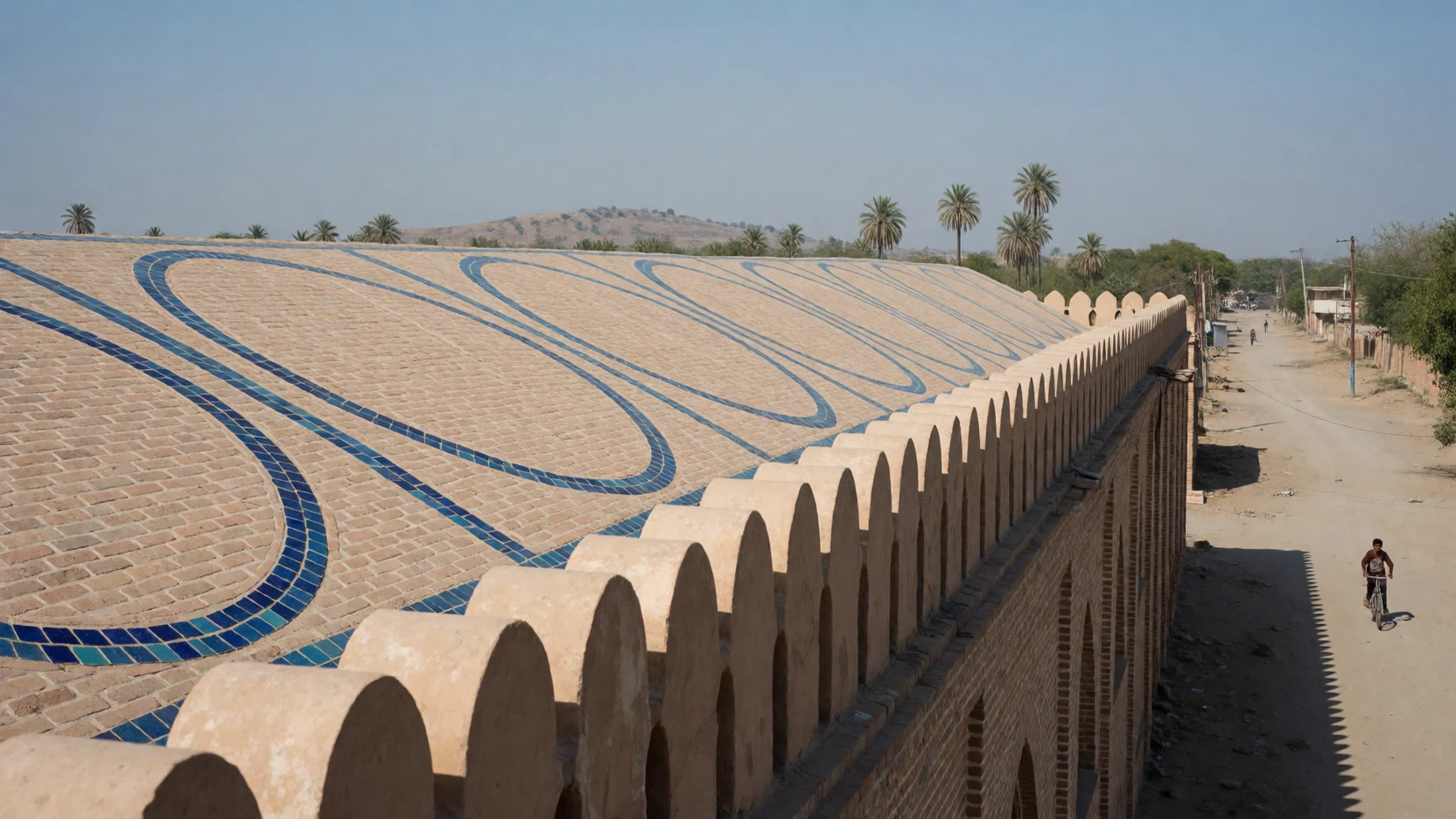
- Makli Hill necropolis — West of Thatta
A short drive from the mosque, Makli Hill is a walled cemetery with elaborate tombs from the 15th to 17th centuries, entered through a single gate. It is a UNESCO World Heritage Site, and its stone and brick monuments show how Thatta looked at its height. Bring water and a hat.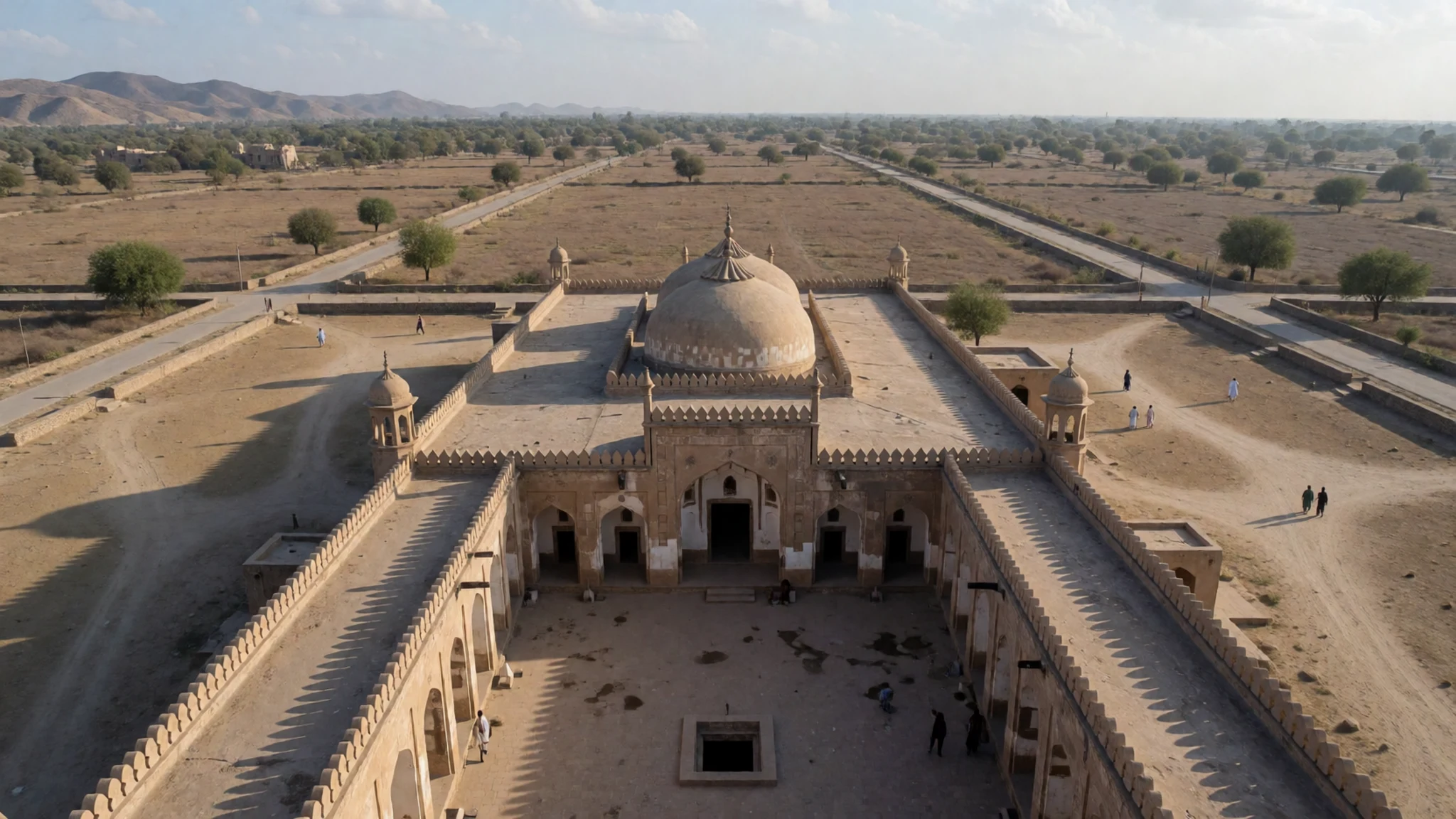
- Kalan Kot Fort — South-west of Thatta
The ruins of Kalan Kot Fort lie south-west of town, near the old Indus channels. It is a rougher, less visited stop than the mosque and the necropolis, and suits those who like ruins without crowds. Check local conditions and transport before heading out.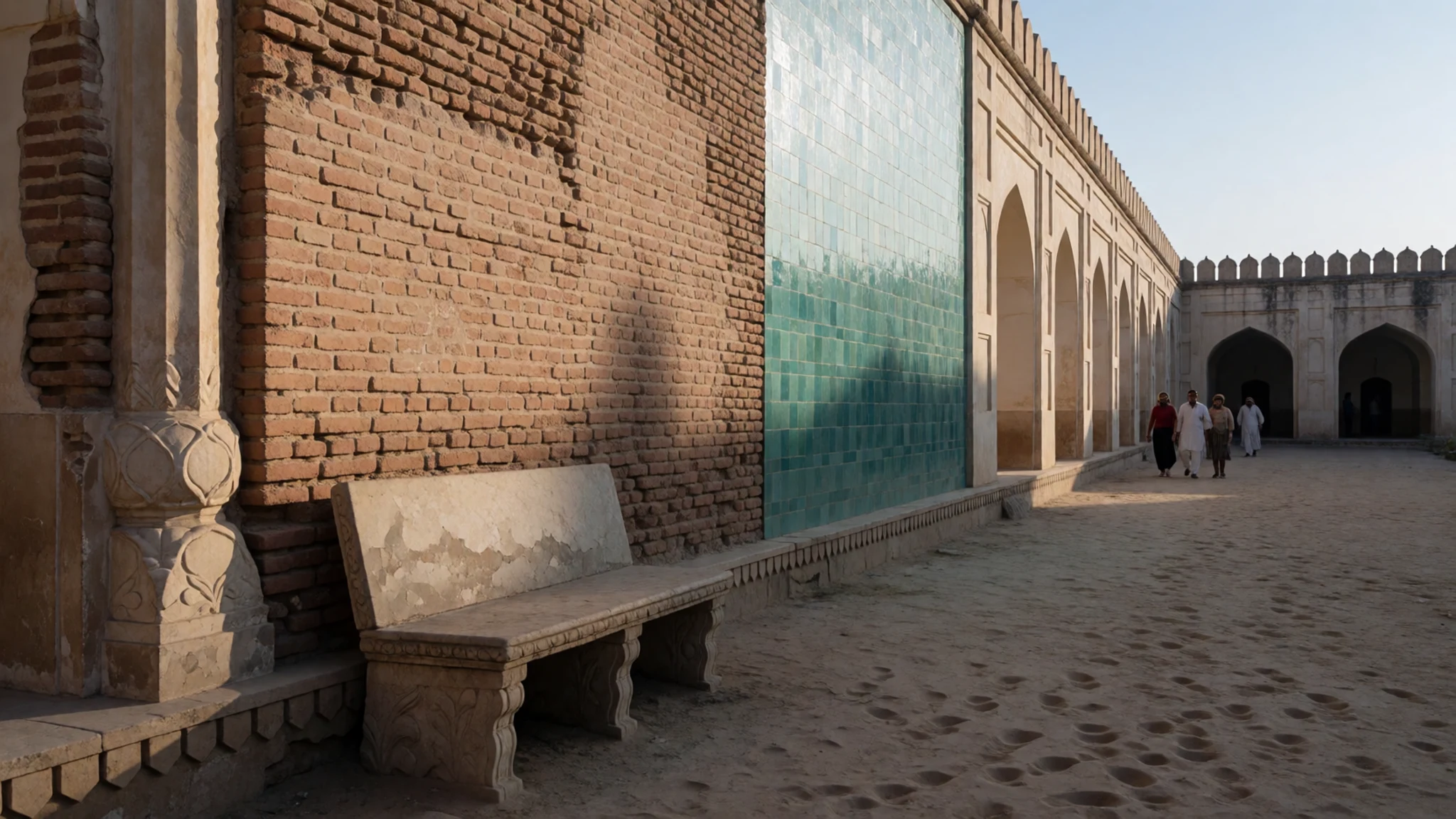
Culture
Shah Jahan Mosque is the Friday Mosque of Thatta, so it belongs first to the town's worshippers. Friday midday prayers draw the largest gatherings, and the call to prayer shapes the rhythm of the day around it. Sindh has a strong Sufi tradition, and the story of the saint Makhdum Lutufullah correcting the mihrab shows how closely people link the building with shrines and holy men. Locals will often tell the legend with relish, even though the historical record points to a later rebuilding of the mihrab. The mosque also carries a political story: Shah Jahan built it to thank Sindh for sheltering him, and many in Thatta remember it as a gift from an emperor to the town. Thatta was once a centre of learning, arts and commerce, and the mosque is one of the best surviving signs of that past. Today it sits in a place that gets few international visitors, so a foreigner is often met with curiosity and a friendly greeting. Women and men may find different areas open for visiting, and local custom varies, so follow the lead of those around you. Remove your shoes before stepping onto the prayer carpets, dress modestly, and keep your voice low and your camera away from anyone at prayer unless you have asked.
What to wear
Around Thatta, traditional Sindhi dress is a point of pride. Men wear the shalwar kameez, often in cotton, and many add the Sindhi cap, a rounded hat with mirror work and embroidery, and the ajrak, a block-printed shawl in deep red and indigo made from cotton. The ajrak is draped over the shoulder or given as a mark of respect, and it is worn most at festivals, weddings and on formal occasions. Women wear shalwar kameez too, along with embroidered dupattas and bright shirts with mirror work, and the region is known for its needlework. Day to day, people in Thatta wear light cotton shalwar kameez in plain colours, with sandals or simple shoes, and the heat shapes everything. Younger people in the cities may wear jeans and shirts, but in a small town like Thatta, conservative dress is the norm. Visitors should follow that lead. For the mosque, cover shoulders, arms and legs: loose long trousers or a long skirt and a long-sleeved top work well, and women should carry a scarf or dupatta for the head. Choose light, breathable cotton, as the lower Indus plain is hot for much of the year. Wear shoes that slip on and off easily, since you will remove them at the door, and bring socks for hot floors.
What to eat
- Rabri — Stalls and shops along the N-5 highway through Thatta
A sweet, thick dish of condensed milk, served in small clay pots. Thatta's version is known locally for its own taste, and it makes a good break after a morning of walking. Eat it fresh and slowly.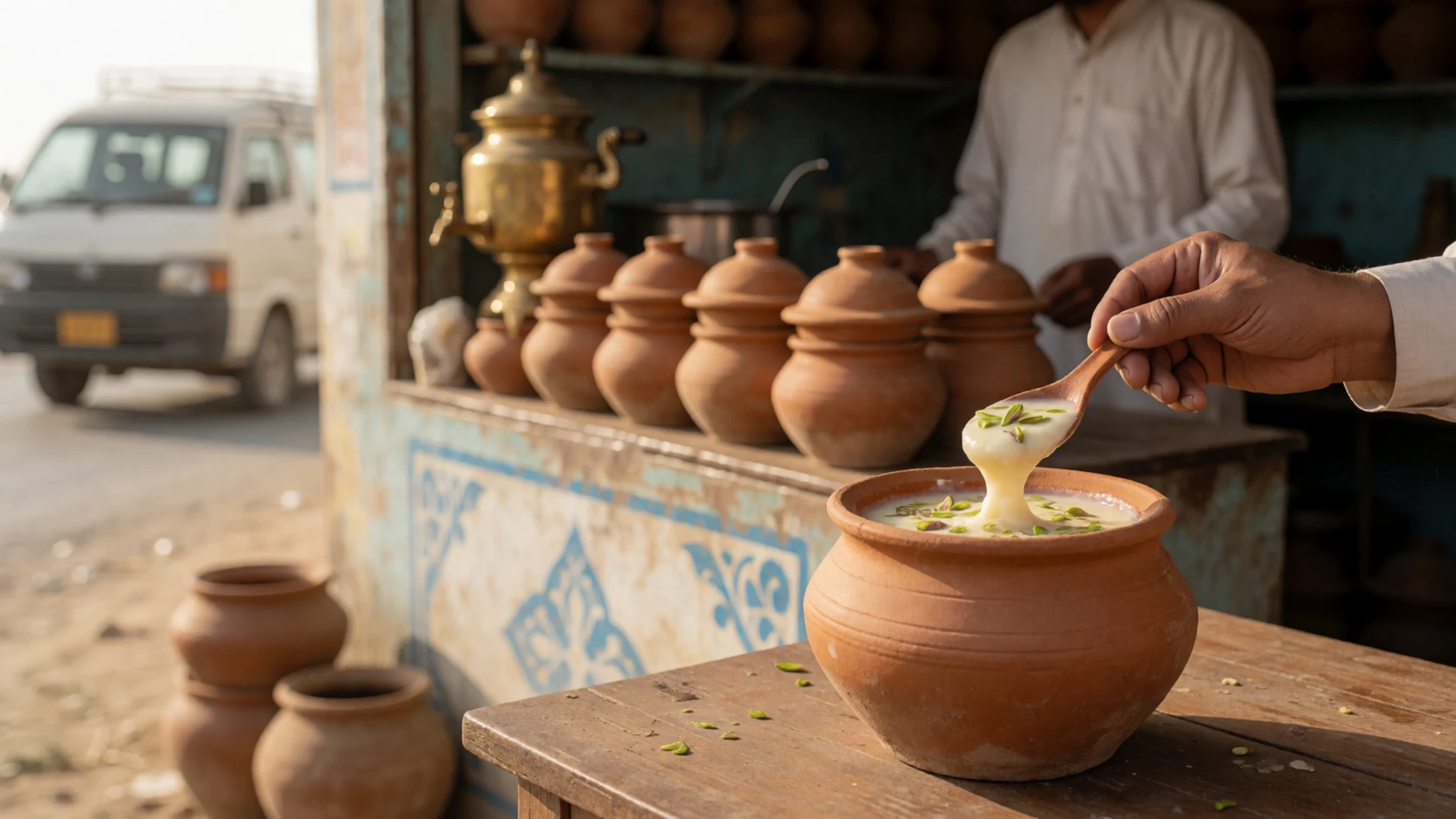
- Sindhi biryani — Basic restaurants on the N-5 highway
A spiced rice dish with meat, typically layered with potatoes and plums, and hotter than many northern versions. It is a standard order at the town's simple eateries and is best eaten at lunch.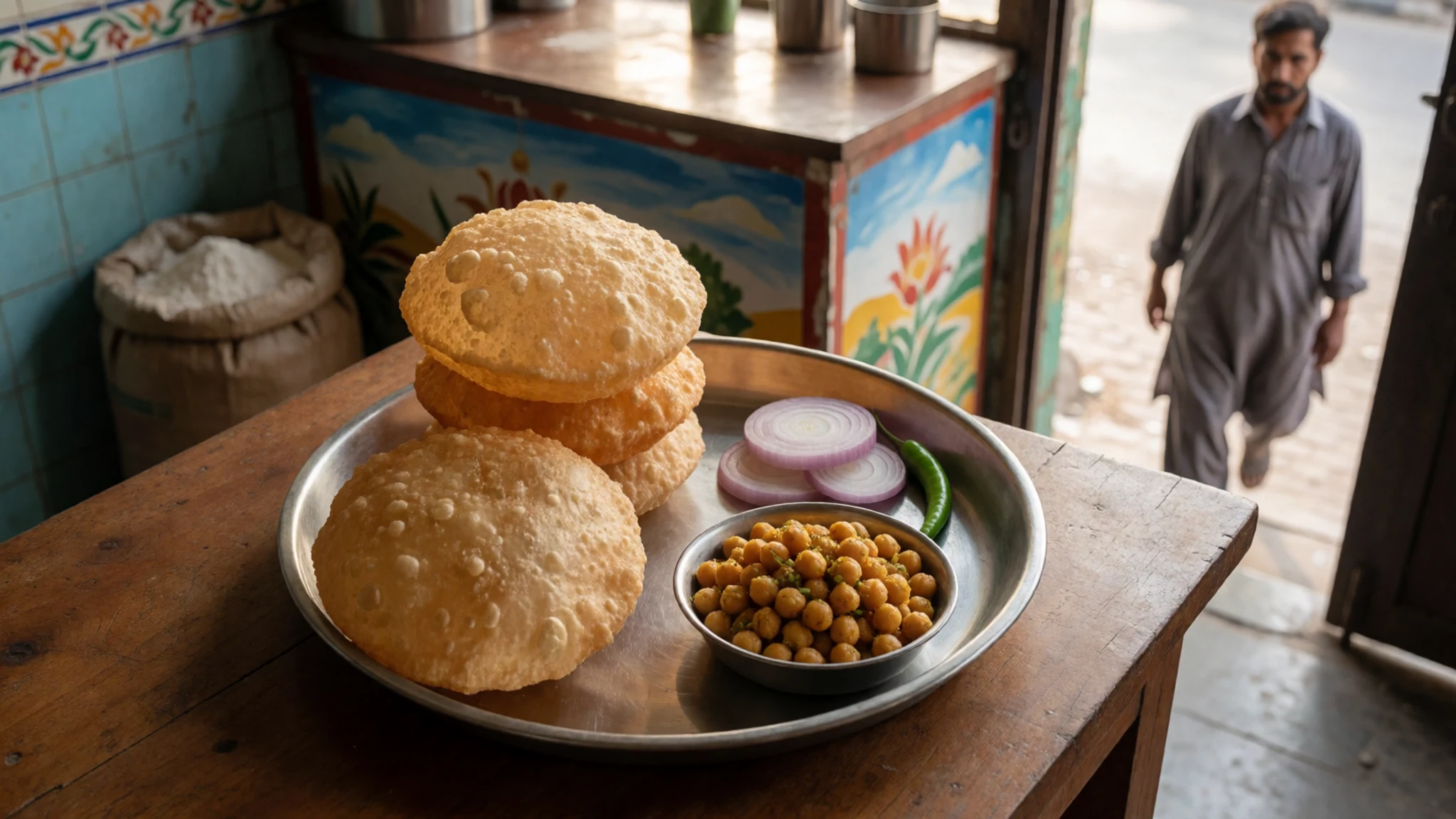
- Daal and roti — Roadside eateries and local canteens
A plain, filling meal of lentils with freshly cooked flatbread. It is the safest bet for a quick lunch and is usually available at small local eateries in the town centre. - Karahi — Restaurants along the N-5 highway
Meat cooked in a wok-like pan with tomatoes, chilli and ginger, and scooped up with bread. It is a common dinner dish across Pakistan and works well when shared between several people. - Chai — Tea stalls around the mosque and main road
Milky, sweet tea is the town's constant companion and a good excuse to sit down in the shade. Pair it with a snack from a nearby stall and watch the street go by.
Plan it
Best time. November to February, when days are cooler and walking between the mosque and Makli Hill is comfortable. Summer is very hot on the Indus plain, so avoid the middle of the day if you must visit then.
How long. 1
Getting there. Fly to Karachi, about 100 km away, then take a bus or car along the highway to Thatta. Buses also run from Hyderabad. The journey takes under two hours, and the mosque is in the east of town.
Budget. low
Tips
- Go early in the morning or late afternoon to avoid heat and to catch soft light on the tiles
- Carry water, a hat and sun protection, especially if you add Makli Hill
- Bring cash, as small eateries and stalls rarely take cards
- Check the current local security situation and travel advice before you go
- Allow time to combine the mosque with the Makli necropolis in one day
Etiquette
- Remove your shoes before entering the prayer areas
- Dress modestly, with shoulders and legs covered and a scarf for women
- Ask before photographing worshippers
Nearby
Sources
- Wikidata Q4022334 (CC0)
- Wikipedia: Shah Jahan Mosque, Thatta (rev 1376658461) (CC BY-SA 4.0)
- Wikivoyage: Thatta (rev 5422401) (CC BY-SA 4.0)
- Asultan, photo 01 (CC BY 3.0)
- Amanasad83, photo 02 (CC BY-SA 4.0)
- Mhtoori, photo 03 (CC BY-SA 4.0)
- Naveidniceman, photo 04 (CC BY-SA 4.0)
- Saqib Qayyum, photo 05 (CC BY 3.0)
- Fasih Ahmed, photo 06 (CC BY 3.0)
- Aliraza manjothi, photo 07 (CC BY-SA 4.0)
- Ibrahim Janjua, photo 08 (CC BY-SA 4.0)


