Multan
Multan, Pakistan
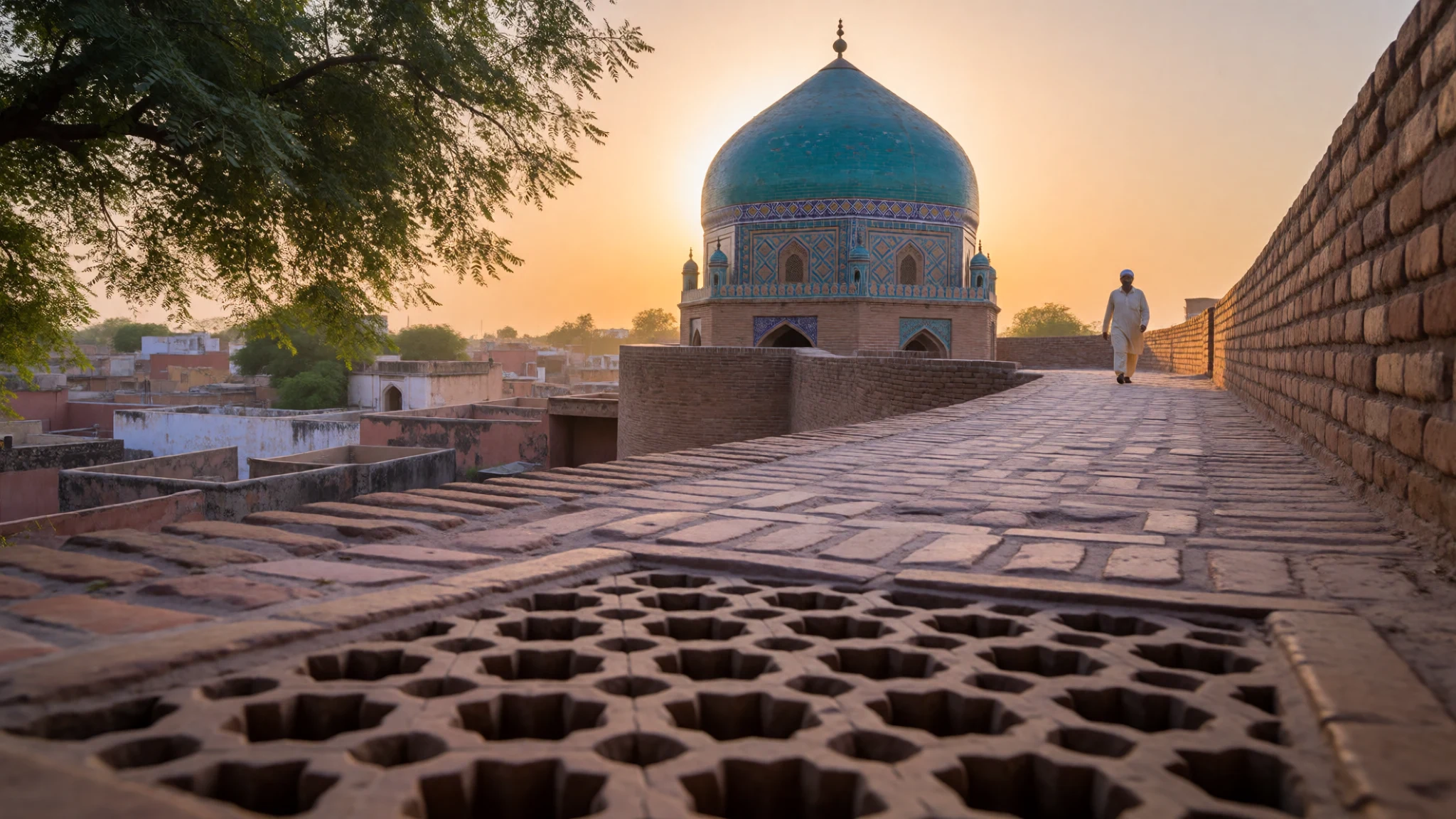
Multan is Pakistan's city of Sufi saints, where glazed-tile shrines, bazaar lanes and old gate names turn a flat river plain into a living history.
The place
Multan lies on the flat Punjab plain in central Pakistan, on the eastern bank of the Chenab River, at an elevation of 122 metres. About 1.9 million people live here, and the city is the administrative seat of its district and division. Newcomers often expect a dusty provincial stop and find a dense historic core, a skyline of glazed domes and a reputation older than most of the countries around it. The old centre rises on a mound where the fort once stood, ringed by lanes that still follow the line of lost city walls and gates. Around it sit the cantonment, the civil lines laid out under British rule, and newer suburbs such as Gulgasht, where cafés and chain restaurants cluster. The shrines are what draw most visitors. Multan earned the nickname "City of Saints" because Sufi teachers settled here for centuries, and the nearby town of Uch shares that tradition. Devotees arrive from across Pakistan, so the shrine districts hum with drummers, rose-petal sellers and families on their way to pray. The countryside around is irrigated farmland, known for mangoes, and the summers are fierce, which shapes everything from shop hours to when people go out. Winter evenings are the pleasant time for walking. Multan is also a trading city, historically tied to Iran and Central Asia, and its bazaars still sell hand-painted blue pottery, embroidered cloth and sweets. It works best as a slow stop of a few days rather than a rushed detour.
Its story
Multan's story is one of repeated conquest and repeated recovery. Long before written records, the Chenab valley belonged to the Indus Valley world, and the mound at the city's heart has been built up by settlement layer upon layer. Alexander the Great besieged the local Mallian town in 326 BCE during his march down the rivers. After him came Mauryan, Kushan and local Hindu dynasties, and in 712 CE the Arab commander Muhammad bin Qasim took Multan following his conquest of Sindh. By the ninth century the city was the capital of its own emirate, and in 1445 it became the seat of the Langah Sultanate. Delhi sultans, Mongol raiders and Timur's forces all fought over it, and the long list of rulers shows how often it changed hands. Its position on routes towards Iran and Central Asia made it rich enough to be worth the effort. Sufi mystics settled here in the eleventh and twelfth centuries, turning Multan into a place of learning and pilgrimage, and their tombs are now its most visible monuments. Akbar's reforms made Multan the centre of a Mughal province in 1580. Sikh rule from 1818 ended when British forces captured the city after a long siege, and little of the old fort survived. Multan joined Pakistan at Partition and has since grown far beyond its historic walls.
What to see
- Shrine of Shah Rukn-e-Alam — Old city, fort mound
This mausoleum honours the Sufi saint Sheikh Rukn-ud-Din and stands on the high ground of the old fort area. Its brick octagon and glazed blue tilework are easy to pick out across the rooftops. Inside it is cool and quiet, with a steady trickle of pilgrims. Go early, before the heat builds, and expect to remove shoes.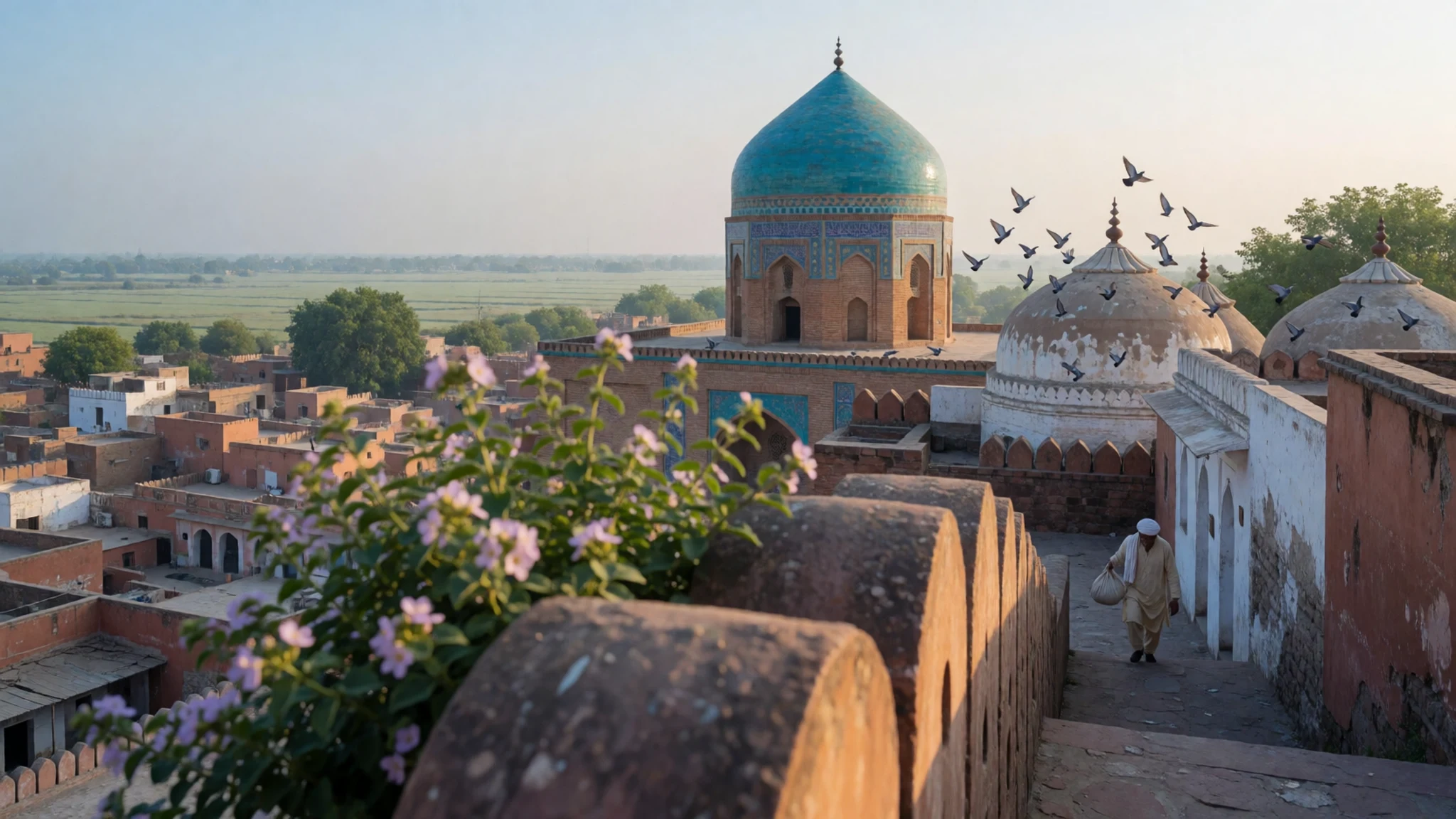
- Shrine of Hazrat Shah Shamsuddin Sabzwari — Multan city
Another Sufi tomb in the city, and a good place to see everyday devotion rather than a polished tourist stop. Families sit in the courtyard, vendors sell petals and sweets, and music may begin in the evening. Some areas are separate for women and men, so watch what others do before stepping in.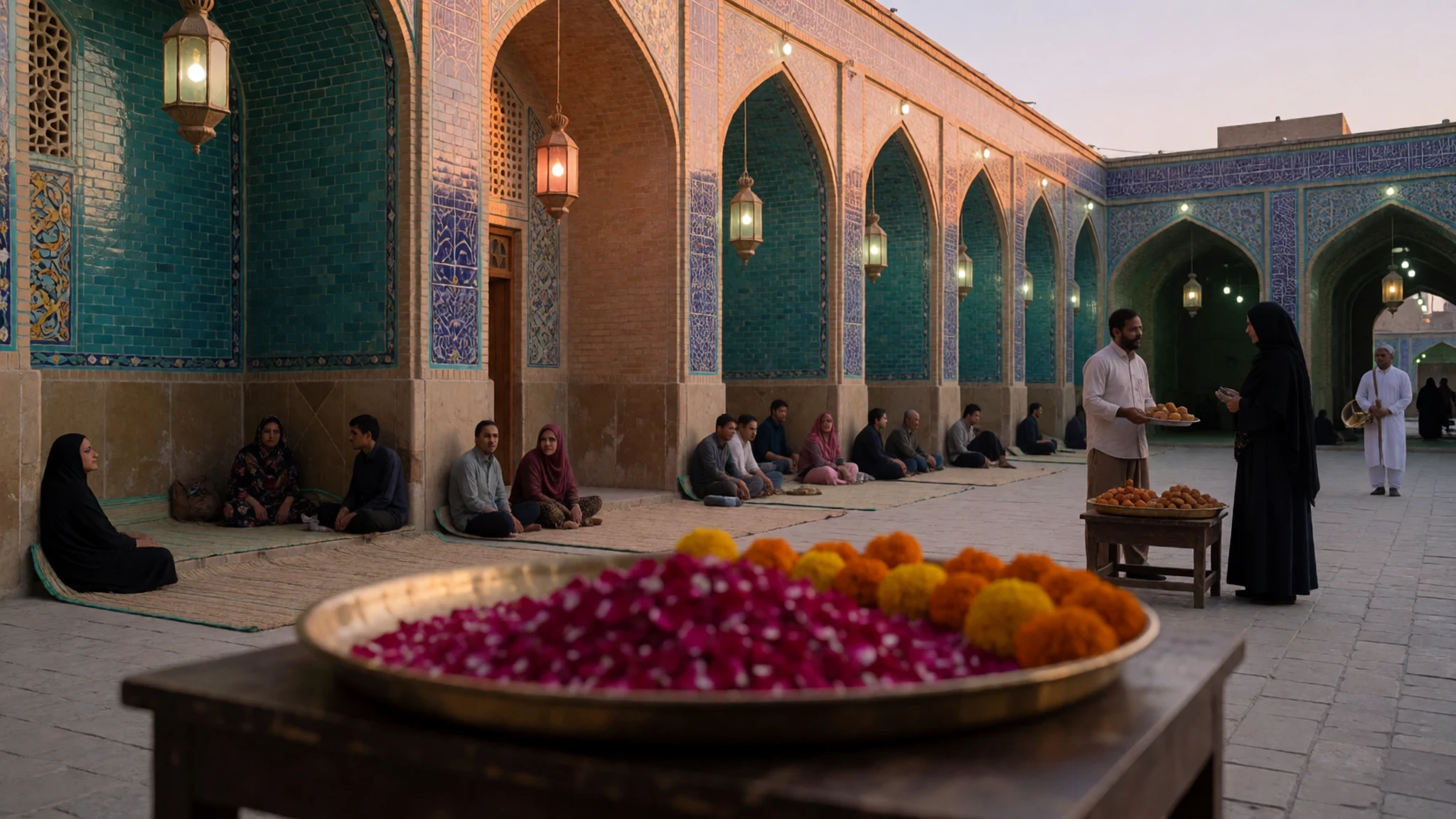
- Tomb of Shah Yousuf Gardezi — Old city
The tomb of Shah Yousuf Gardezi is a Sufi shrine in the old city, set within a small enclosure of tiled walls around a calm courtyard. It is quieter than the larger shrines, which makes it a useful stop for studying the blue-and-white tilework up close. Ask the caretaker before taking photographs inside.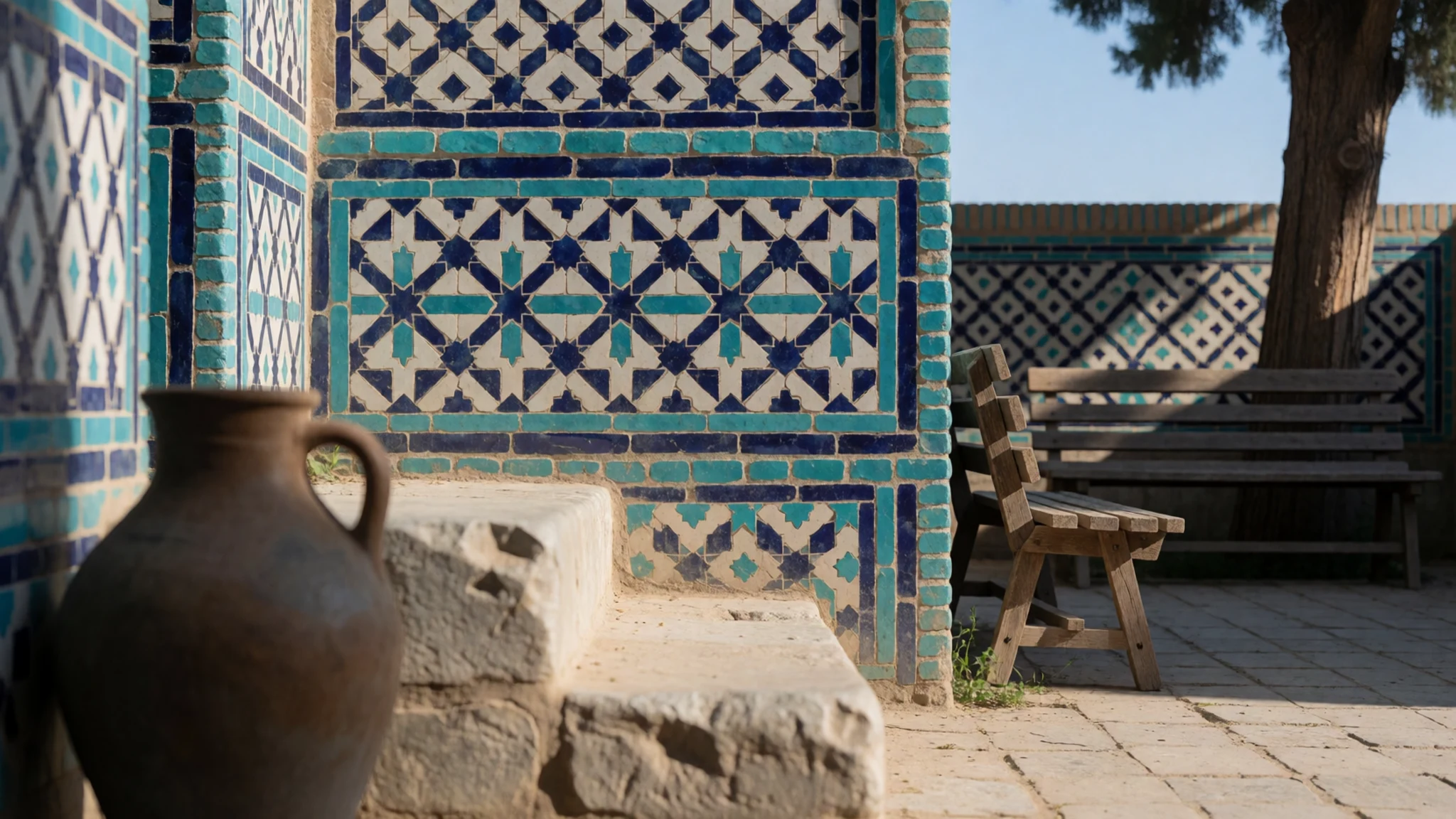
- Multan Fort remains — Old city, fort mound
Only fragments survive of the fort that once crowned the high mound beside the old river course. The mound itself is the real attraction, giving a view over the old city and showing how the settlement rose on its own earlier layers. There is little shade, so wear sturdy shoes and carry water.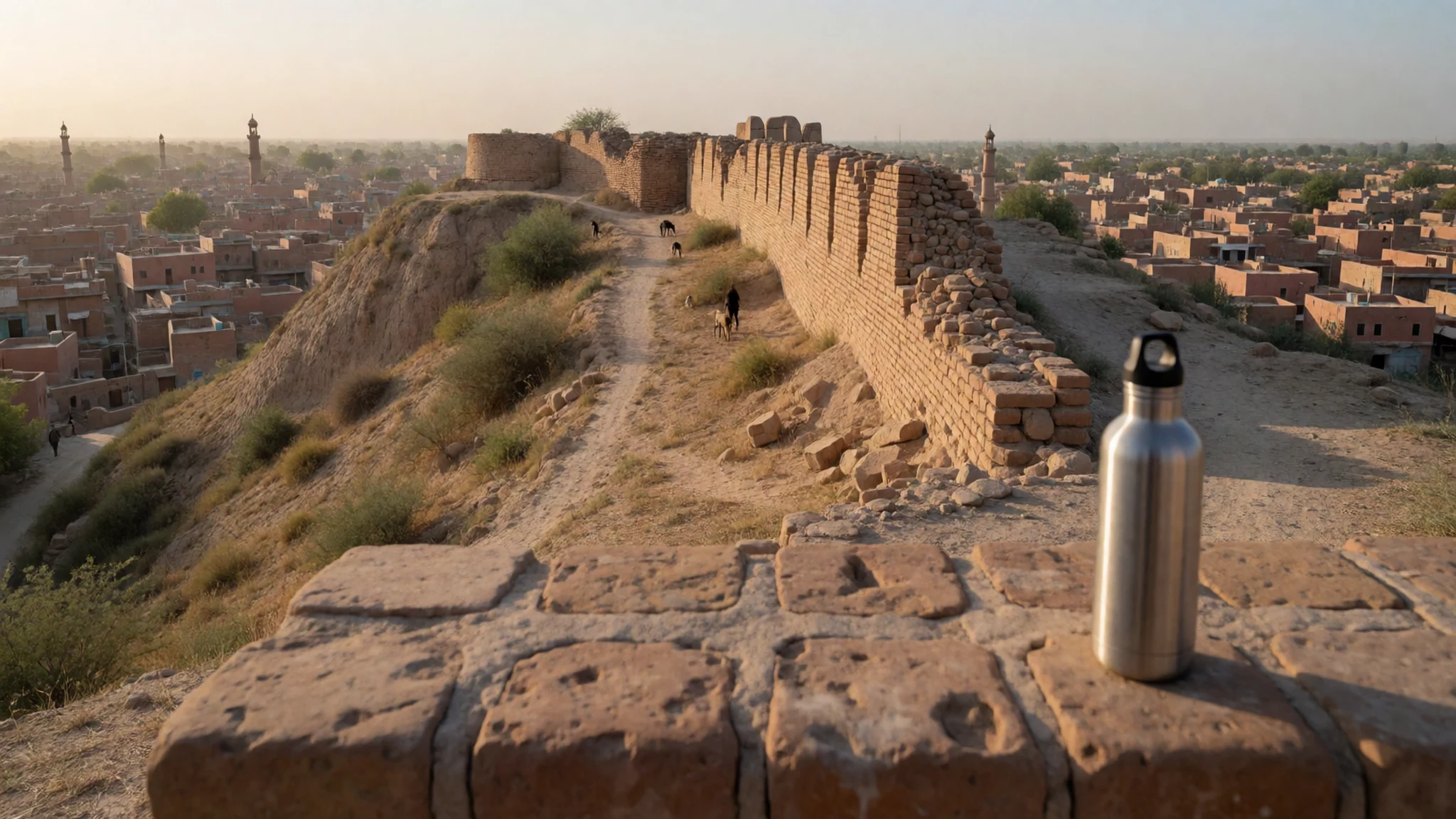
- Ghanta Ghar (clock tower) — Central bazaar area
The clock tower is an Indo-Saracenic landmark in the middle of the commercial district, surrounded by bazaar lanes and, in the evening, barbecue stalls. It is best taken in on foot while walking between markets, rather than treated as a separate trip. Clear mornings give the best light for photographs.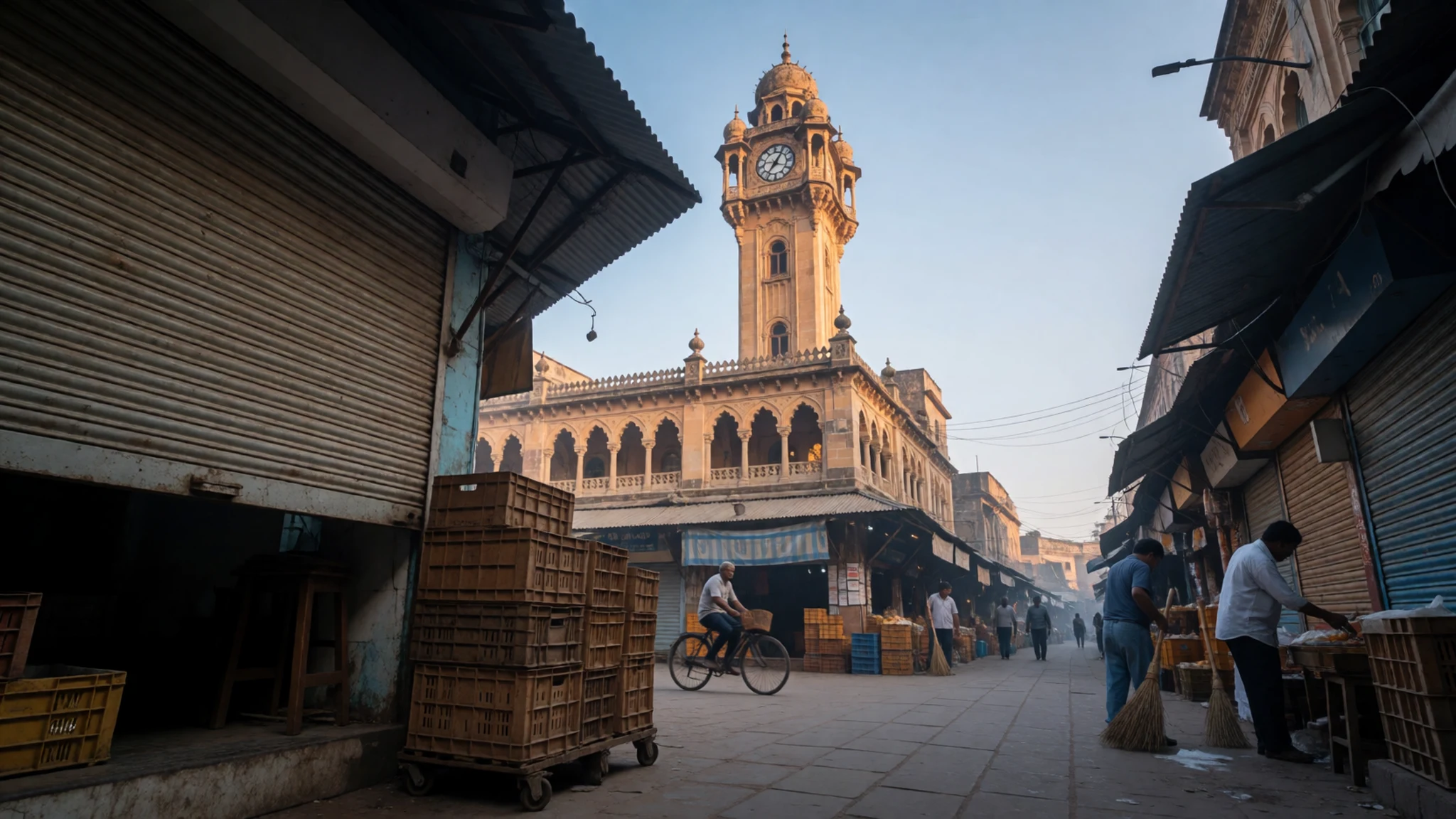
- The old city gates — Edge of the old city
Multan's walls have mostly gone, but the gate names survive on maps and in daily speech: Pak, Haram, Delhi, Bohar and Lohari among them. Bohar Gate once faced the river when Multan was a busy port. Walking between the sites gives a loose tour of the old city's edge and its traffic.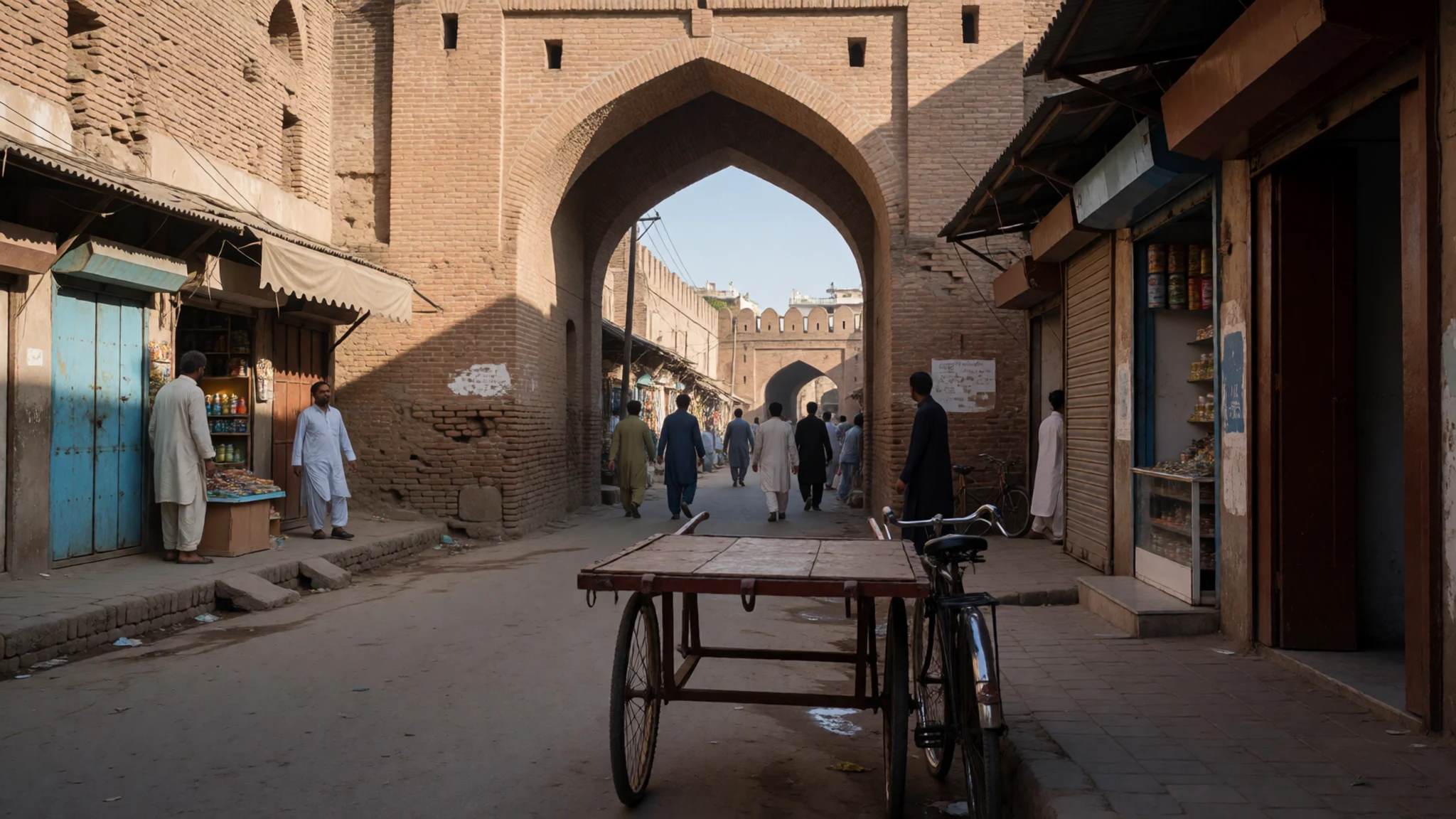
Culture
Multan's culture is shaped by Sufi Islam and by the Saraiki language, spoken across a region that sits between the Punjabi and Sindhi worlds. Shrine life sets the rhythm of the old city: devotees bring rose petals and green cloth, qawwali singers perform in the evenings, and families visit to ask for blessings before weddings or journeys. The annual death anniversaries of saints, called urs, bring larger crowds with extra stalls, lights and music. Poetry is part of daily talk, and verses by Sufi poets are recited and sung in courtyards and on buses. Craft is another thread. The city is known for blue-and-white ceramics and glazed tiles that cover shrine walls, and workshops in the old quarter still make them by hand. Hospitality is taken seriously, and a visitor who admires the city is likely to be offered tea or a sweet. The city is largely conservative, so public displays of affection are best avoided, and prayer times shape the day, with shops pausing and courtyards filling at dusk. Religious minorities have their own places too, including a Christian cathedral from the colonial years. At any shrine, remove your shoes at the entrance, cover your head and shoulders, and ask before photographing worshippers, especially women.
What to wear
Traditional dress in Multan is the shalwar kameez, a long tunic over gathered trousers, cut from light cotton for the long hot season and heavier cotton or wool in winter. Men often add a waistcoat, and for weddings and festivals an embroidered cap or turban; the stiff, decorated Saraiki cap is a regional signature. In villages many men still wrap a lungi around the waist. Women wear shalwar kameez with a dupatta, and Saraiki embroidery uses mirror work and bright thread. Ajrak, a block-printed cloth in deep red and indigo from the Indus region, is draped over shoulders as a mark of honour. Multani khussa, curled leather slippers, are the classic footwear. Day to day, most men now wear plain shalwar kameez or trousers and shirts, and younger women mix kurtas with jeans or churidars. Visitors should dress modestly and lightly: loose long-sleeved cotton, long trousers or skirts, and a scarf for covering the head at shrines. Slip-on sandals or shoes are practical, because footwear comes off at so many doors, and a hat and sunglasses help against the strong sun. Women travellers will feel more comfortable in a tunic that covers the hips.
What to eat
- Sohan halwa — Sweet shops in the old city bazaars
A dense, sweet confection made with milk, sugar and ghee, often studded with nuts, and long associated with Multan. It is sold in boxes at sweet shops across the old city; buy from a busy counter where stock turns over quickly.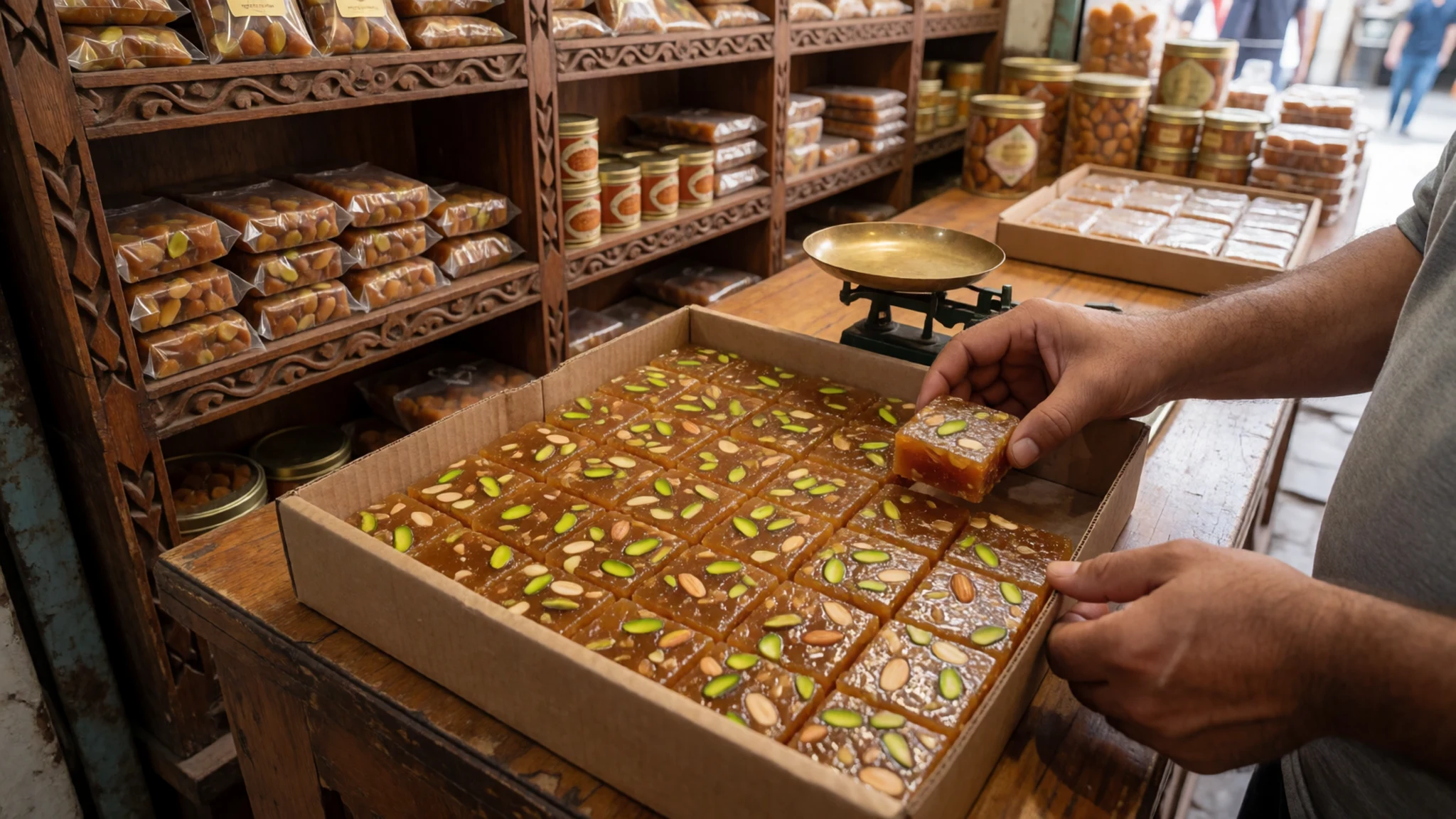
- Mutton karahi — Family restaurants in Gulgasht and the cantonment area
Meat cooked in a wide iron wok with tomatoes, ginger and green chillies, served with fresh tandoor bread. Chicken and mutton versions both appear on local menus; the mutton is richer and spicier.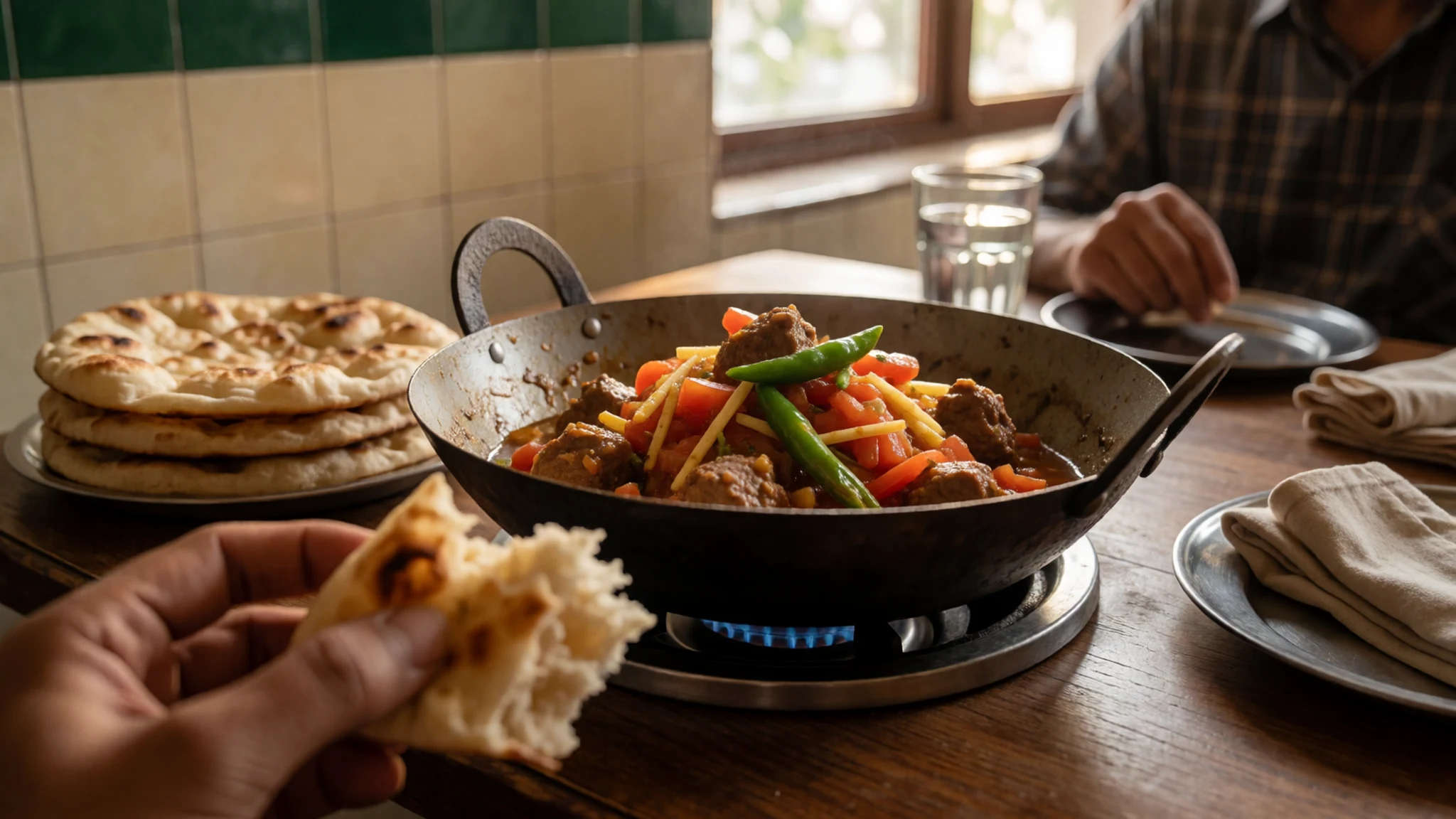
- Black-pepper mutton — Old-style lunch eateries around the city centre
Joints of mutton simmered in a thick, peppery gravy and eaten at lunch with naan. The heat comes from pepper rather than chilli, and the flavour is plainer and more local than standard restaurant curries. - Goat with spinach and lentils — Roadside dhaba-style eateries with benches on the main highways
A country-style dish of goat meat cooked with spinach and lentils, popular with truck drivers and Multanis alike. It is hearty and earthy, usually scooped up with roti. - Barbecued ribs — Barbecue stalls near Ghanta Ghar
Ribs cooked in two stages, first slowly and then over fire for char, served hot with chutney and bread. It is a good evening meal after a day of walking the bazaars. - Mangoes and sugarcane juice — Fruit stalls and juice carts in the main bazaars
The orchards around Multan supply mangoes in the summer months, and stalls press sugarcane juice in the cooler months, served over ice with lime. Choose busy stalls with fresh fruit and sealed or clean-looking ice.
Plan it
Best time. October to March, when days are warm and dry rather than punishing; November and February are the most comfortable. April to September is very hot, with harsh sun and, in the later part, monsoon humidity.
How long. 2–3
Getting there. Multan International Airport sits in the cantonment area, a short taxi ride from the centre; there are domestic flights from Lahore, Karachi, Islamabad and other cities, and some routes from Dubai. The only way out of the airport is by hired cab. By rail, the two main stations are Multan Cantt and Multan City.
Budget. low
Tips
- Visit shrines and the fort mound early, before the heat builds
- Carry water, a hat and cash for small shops, juice stalls and shrine offerings
- Check the official city website (http://www.multan.gov.pk/) and current local advice on travel conditions before you go
- Evenings are the best time for bazaars and barbecue stalls, so plan outdoor sightseeing for mornings
Etiquette
- Remove shoes before entering shrines and cover your head
- Ask before photographing worshippers, especially women
- Dress modestly in long, loose clothing
Nearby
Sources
- Wikidata Q185453 (CC0)
- Wikipedia: Multan (rev 1386046136) (CC BY-SA 4.0)
- Wikivoyage: Multan (rev 5411718) (CC BY-SA 4.0)
- Photo: Multan montage (Noorhussainmultan et al.) (CC BY 3.0)
- Photo: Shrine of Shah Rukn-e-Alam (Yaarahmadd) (CC BY-SA 4.0)
- Photo: Shrine of Hazrat Shah Shamsuddin Sabzwari (Sehar Khurshid) (CC BY-SA 4.0)
- Photo: Cathedral of St Mary the Virgin (Tahsin Shah) (CC BY-SA 4.0)
- Photo: Clock Tower, Ghanta Ghar (Junaidahmadj) (CC BY 3.0)
- Photo: Multan Cricket Stadium in 2020 (BBC Urdu) (CC BY 3.0)
- Photo: Pakistan relief location map (Carport) (CC BY 3.0)
- Photo: Tomb of Shah Yousuf Gardezi (Junaidahmadj) (CC BY 3.0)


