Lake Manchar
Lake Manchar, Pakistan
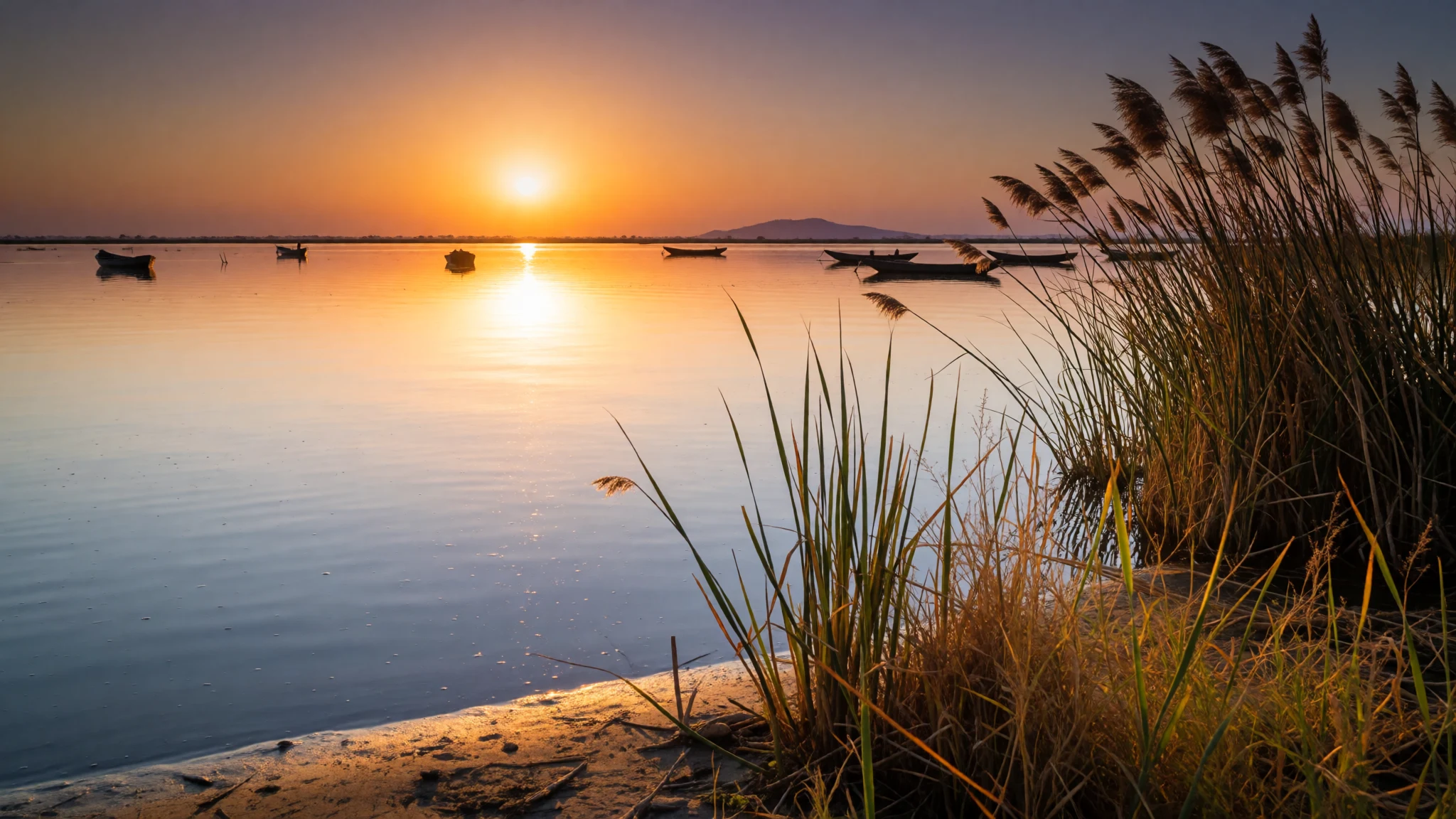
Lake Manchar in Sindh is a vast, shifting freshwater floodplain of fishing boats, reed banks and ancient mounds, best seen on a short winter visit.
The place
Lake Manchar (Manchhar; Sindhi منڇر ڍنڍ) sits in the Jamshoro and Dadu districts of Sindh, Pakistan, on the west side of the Indus and about 18 kilometres from the shrine town of Sehwan. Sources describe it as the country's largest natural freshwater lake, though its character is closer to a floodplain than a scenic mere. Streams from the Kirthar Mountains run into it, and an outlet carries water on to the Indus, so its size depends on the season and on the river. In the monsoon it spreads wide across the flat land; in the dry months it pulls back, leaving mud flats, reed beds and stranded boats. The water is shallow and the horizon low, with the Laki Hills, a spur of the Kirthar range, closing the southern end. The river and the lake trade water. When the Indus floods, it can spill into the basin, and in winter, when the river is low, the flow turns around and the lake feeds it. To the north lies Hamal Lake, joined to Manchar by a drain dug in 1921. Rain is thin in this part of Sindh, so canals, hill streams and the Indus do most of the work. Anyone going should picture a working landscape of fishing boats, nets and small villages rather than a resort shore. Summers are punishing, shade is rare and facilities are basic.
Its story
Lake Manchar has a story that runs from the Bronze Age to present-day flood engineering. Along its banks lie old mounds, among them Ghazi Shah, Wahi Pandhi and Ali Murad. The sites of Lal Chatto, Mashak Lohri and Lakhiyo are counted among the oldest, going back to Harappan culture, the Indus Valley Civilisation whose famous city Mohenjo-daro lies elsewhere in Sindh. People have clearly lived off this water for a very long time. The lake is a creature of the Indus: it formed when a branch of the river flowed through the area, and its fortunes have followed the river's moods ever since. A drain joined it to Hamal Lake in 1921. In 1958 a drought dried it out completely, a reminder that a lake this shallow and this dependent on inflow can disappear. Later, water was let in from the Indus to refill it. Then came the opposite problem. In two separate flood seasons the lake overflowed, and in the more recent of them engineers cut a breach in its bank to push water out and spare the city of Sehwan and the town of Bhan Syedabad. The relief for those places came at a heavy cost, because villages holding about 150,000 people were flooded instead. It was a decision that protected larger settlements by sacrificing smaller ones, and it shows how much of this lake's recent history is about managing too much water as well as too little.
What to see
- The open lake — Jamshoro and Dadu districts
Lake Manchar's main basin is the reason to come: a broad, shallow sheet of water with reed fringes, mud banks and fishing boats under a wide, pale sky. Its edge moves with the season, so a shoreline seen in one month may be fields in another. Early morning and the hour before sunset give the softest light and the most boat activity.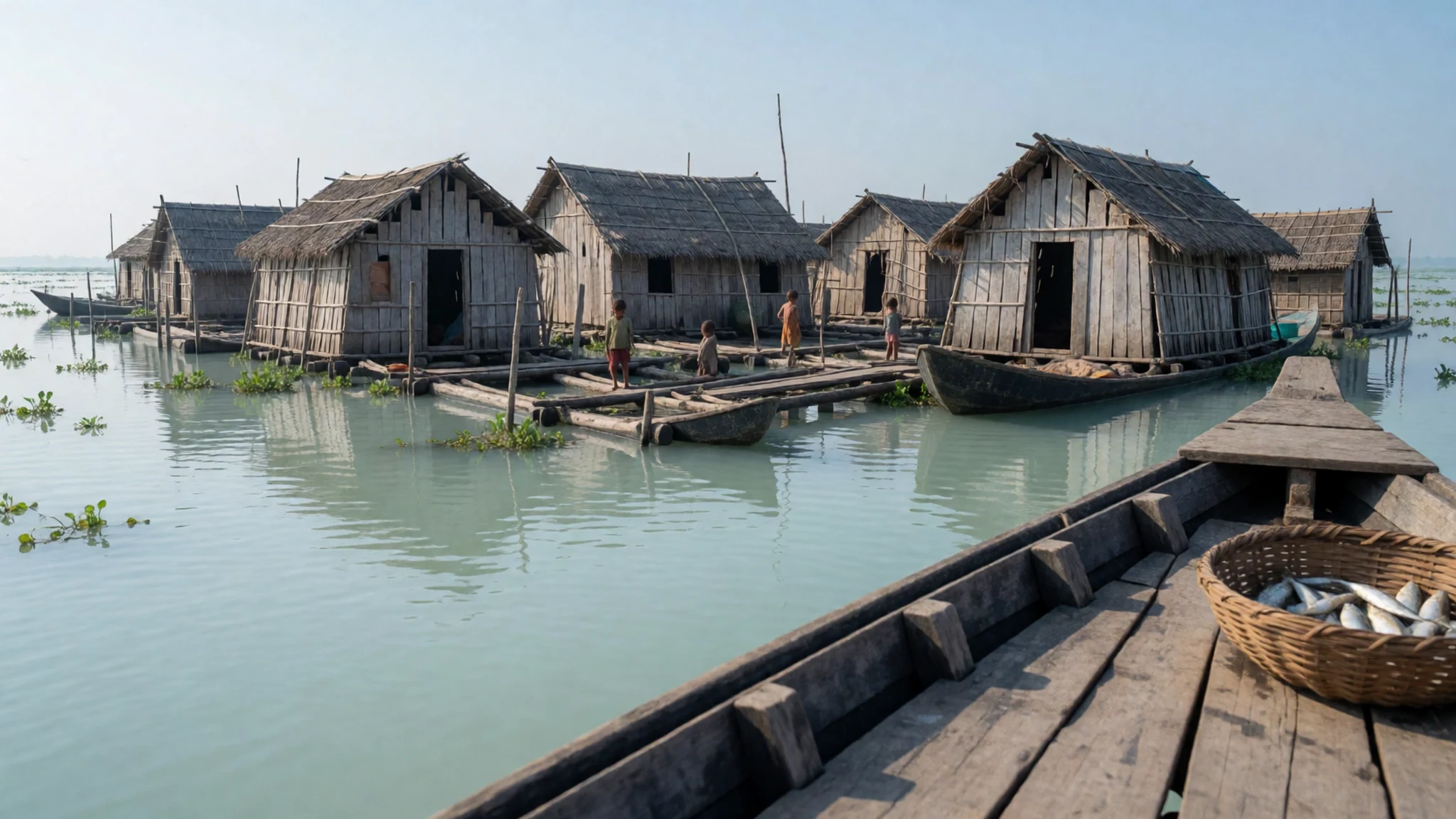
- Mohana boat communities — Lakeshore villages near Sehwan
The Mohanas, a fishing community, live and work on boats on Lake Manchar, and a reference photograph shows their craft on the water. Visitors can watch nets, small boats and floating homes from a respectful distance. Ask before photographing anyone, and arrange any boat trip through a local guide or community contact rather than turning up unannounced.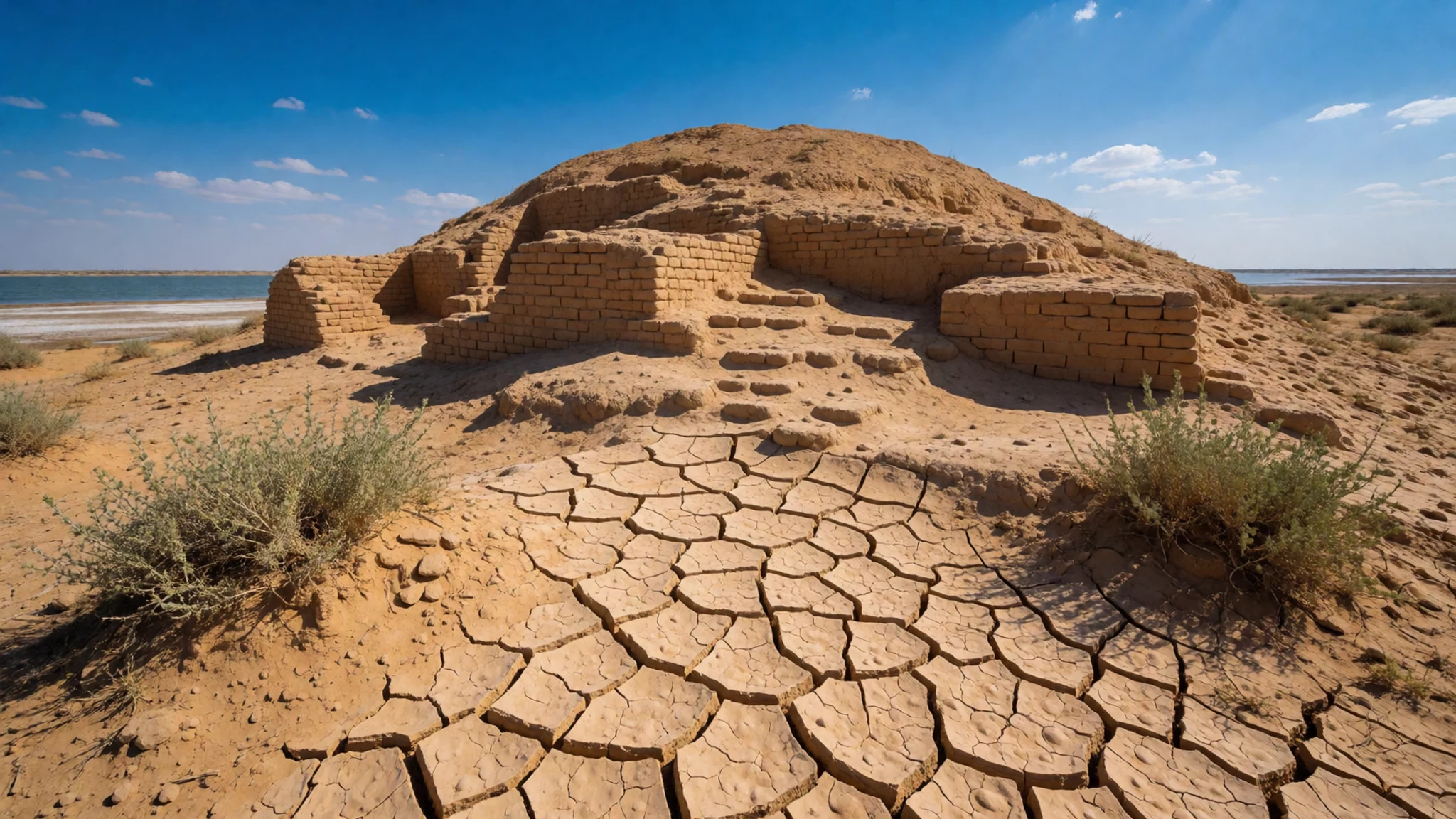
- Shrine of Shahbaz Qalander, Sehwan — Sehwan, Jamshoro district
Sehwan, about 18 kilometres from the lake, holds the very old Shrine of Shahbaz Qalander, a Sufi shrine visited by devotees from across the country throughout the year. It pairs naturally with a lake day. Dress modestly, expect crowds and noise around the shrine, and check current security advice first, as large gatherings are common.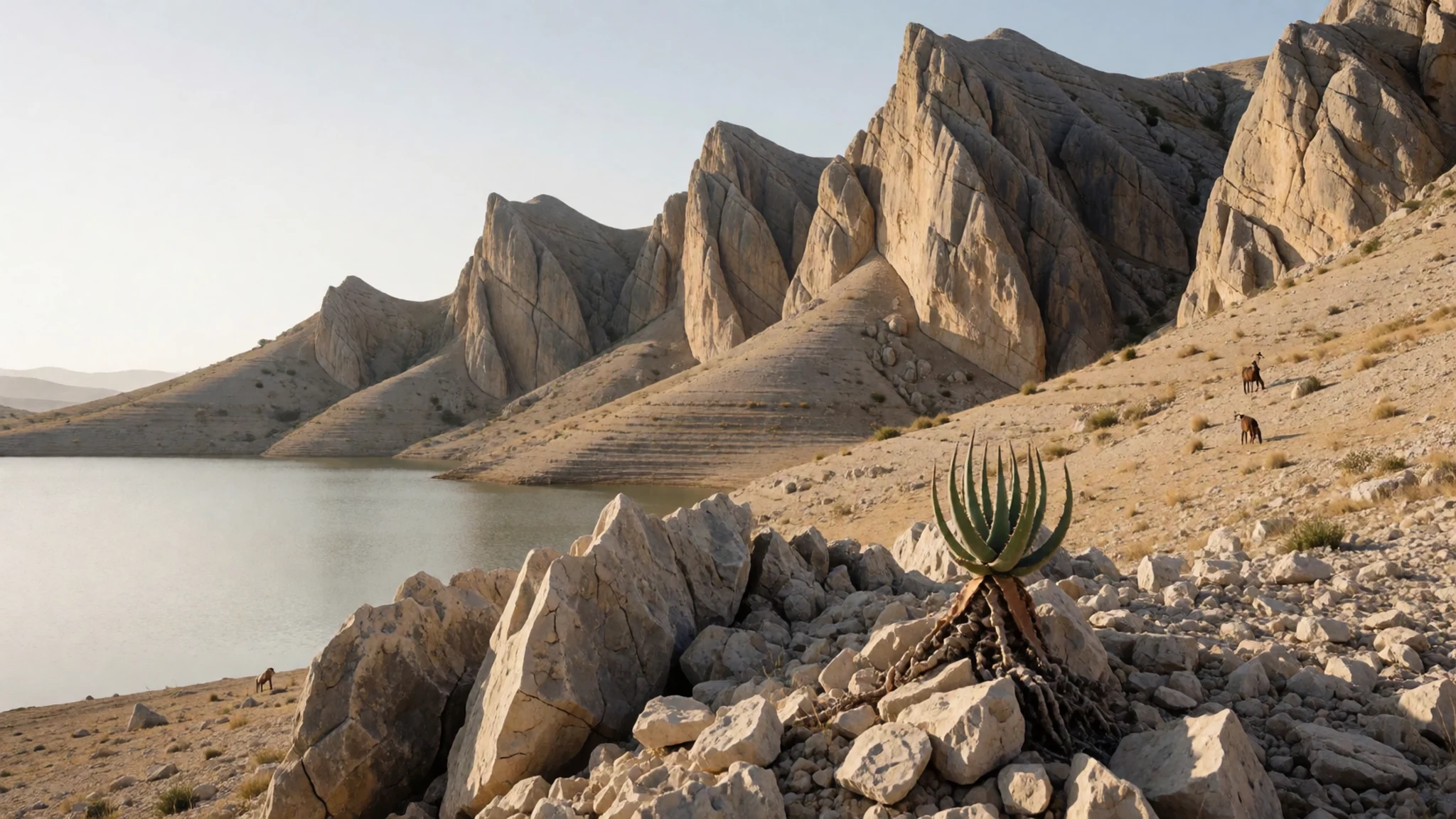
- Harappan mounds on the banks — Lake banks, Dadu district
Archaeological mounds line the lake's banks. Lal Chatto, Mashak Lohri and Lakhiyo date to Harappan times, while Ghazi Shah, Wahi Pandhi and Ali Murad Mound lie in the same area. These are low earthen sites rather than grand ruins, with little signage, so a local guide helps. Do not pick up pottery or dig.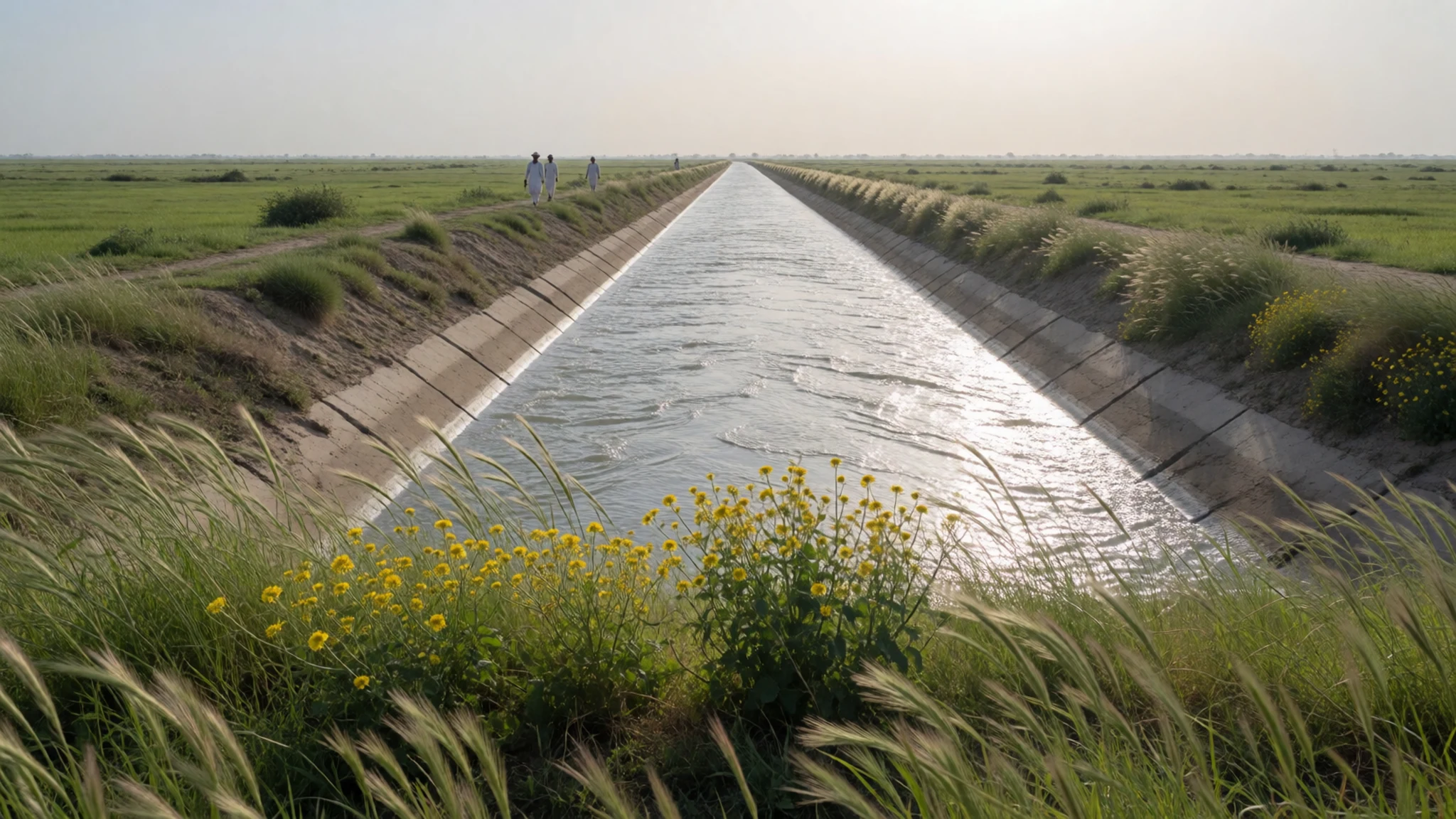
- The Nara channel — Between Shikarpur and Dadu
A freshwater channel known as the Nara runs from the Shikarpur side towards Dadu and ends at Manchar. A reference photograph shows it cutting through green fields. It shows how the lake is tied into the wider canal network of the Indus plain, and it makes a pleasant roadside stop for a short walk where access allows.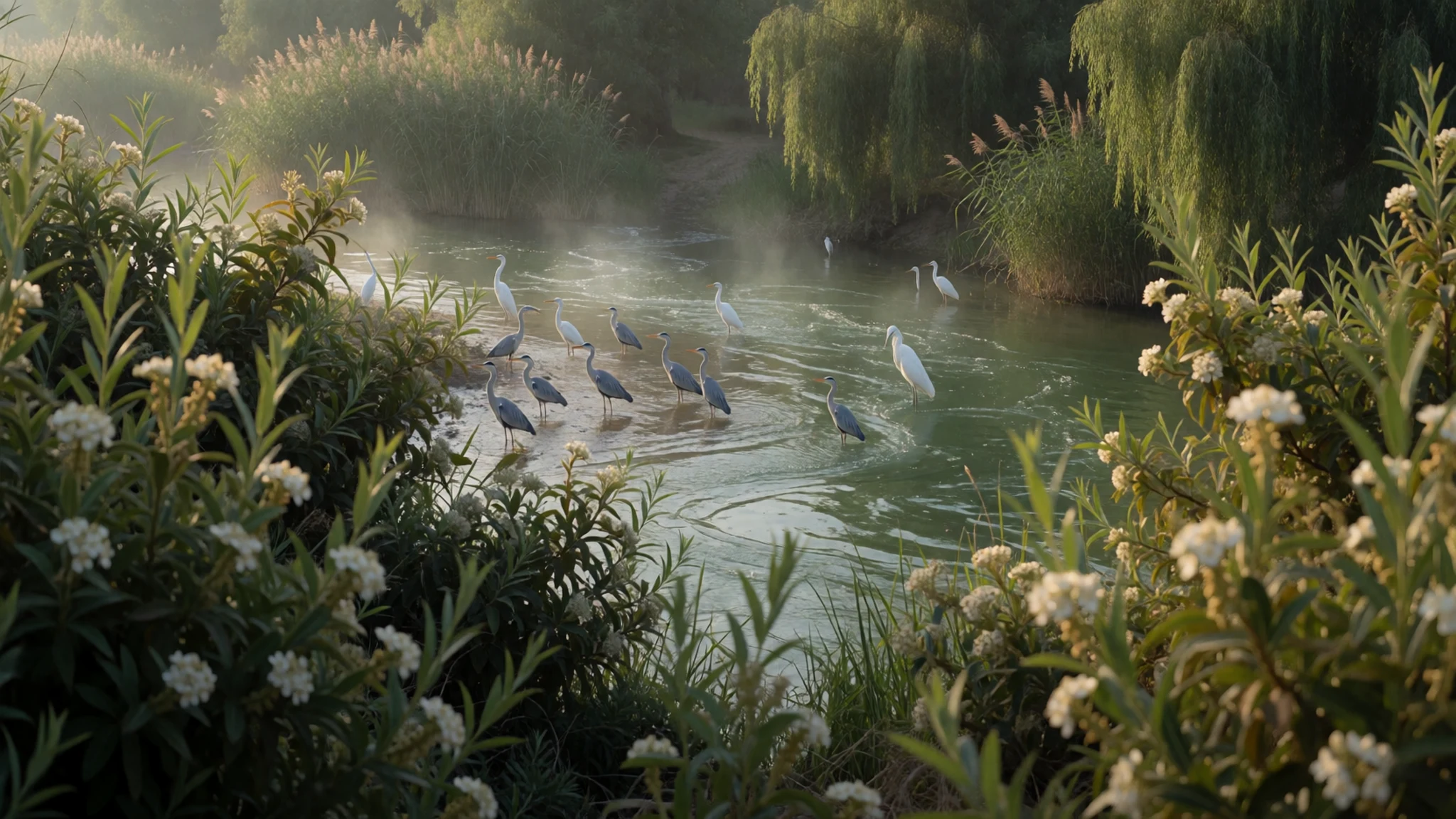
- The Laki Hills shore — Southern end of the lake, Jamshoro district
The southern end of Lake Manchar lies at the foot of the Laki Hills, a branch of the Kirthar Mountains, and water leaves from here towards the Indus by the Aral channel and Danister Canal. The hills give the only relief in an otherwise flat view and a vantage for judging how far the lake spreads. Arrange access locally.
Culture
Lake Manchar belongs to Sindh, a province where the Indus shapes daily life, and the culture around the lake is built on Sufi devotion, river trades and old rural habits. The shore communities, including the Mohana boat families, make their living from fishing and the water, and their routines follow its rise and fall. Sehwan's shrine draws devotees from all over Pakistan, and music, drumming and communal devotion are central to religious life there. Sindh also has strong Hindu influences and is prominent in Hindu mythology, and many of Pakistan's Hindus live in the province, so the region's identity is layered rather than single-stranded. Poetry runs through it as well: the shrine of Abdul Latif Bhittai at Bhit and that of Sachal Sarmast near Ranipur honour Sufi poets whose verses are still sung. Hospitality is generous, and an offer of tea from a stranger is ordinary rather than unusual. The lake is also a place where recent floods remain a live and painful subject, so questions about them are best asked gently and after listening first. Women travellers will generally find a visit easier with a local guide or in a mixed group. Dress modestly, ask before photographing people (especially women and families on the boats), and take your shoes off before entering any shrine.
What to wear
Lake Manchar sits in Sindh, whose best-known traditional textile is the ajrak, a block-printed cotton shawl in deep indigo and madder red, worn over the shoulder or head and often given as a mark of honour at weddings, festivals and shrine visits. Men traditionally wear the Sindhi cap, a rounded hat often with mirror work or embroidery, with a loose shalwar kameez. Women wear shalwar kameez too, usually in bright cotton with embroidery and a dupatta, with mirror work common on festive clothes. Day to day, people on the lake dress for sun and work: plain cotton shalwar kameez, light scarves or turbans against the glare, and sandals or bare feet on boats. Town streets show more Western shirts and trousers on men, and women generally keep arms and legs covered. A visitor should wear loose, long-sleeved cotton in light colours, a wide hat or scarf, sunglasses and sunscreen, since shade is scarce and summer heat is severe. Women should carry a dupatta or scarf for shrine visits, and men should cover their legs. Choose closed shoes or sturdy sandals for muddy banks, and slip-off footwear for shrines and boats. A light layer is useful on winter mornings.
What to eat
- Sindhi biryani — Roadside eateries in Sehwan and Dadu
Sindhi biryani is the region's signature rice dish, rich and spicy, and widely eaten across Pakistan. It tastes best in Sindh itself. Look for it at busy roadside eateries and family-run places in Sehwan, Dadu and other towns on the road to the lake.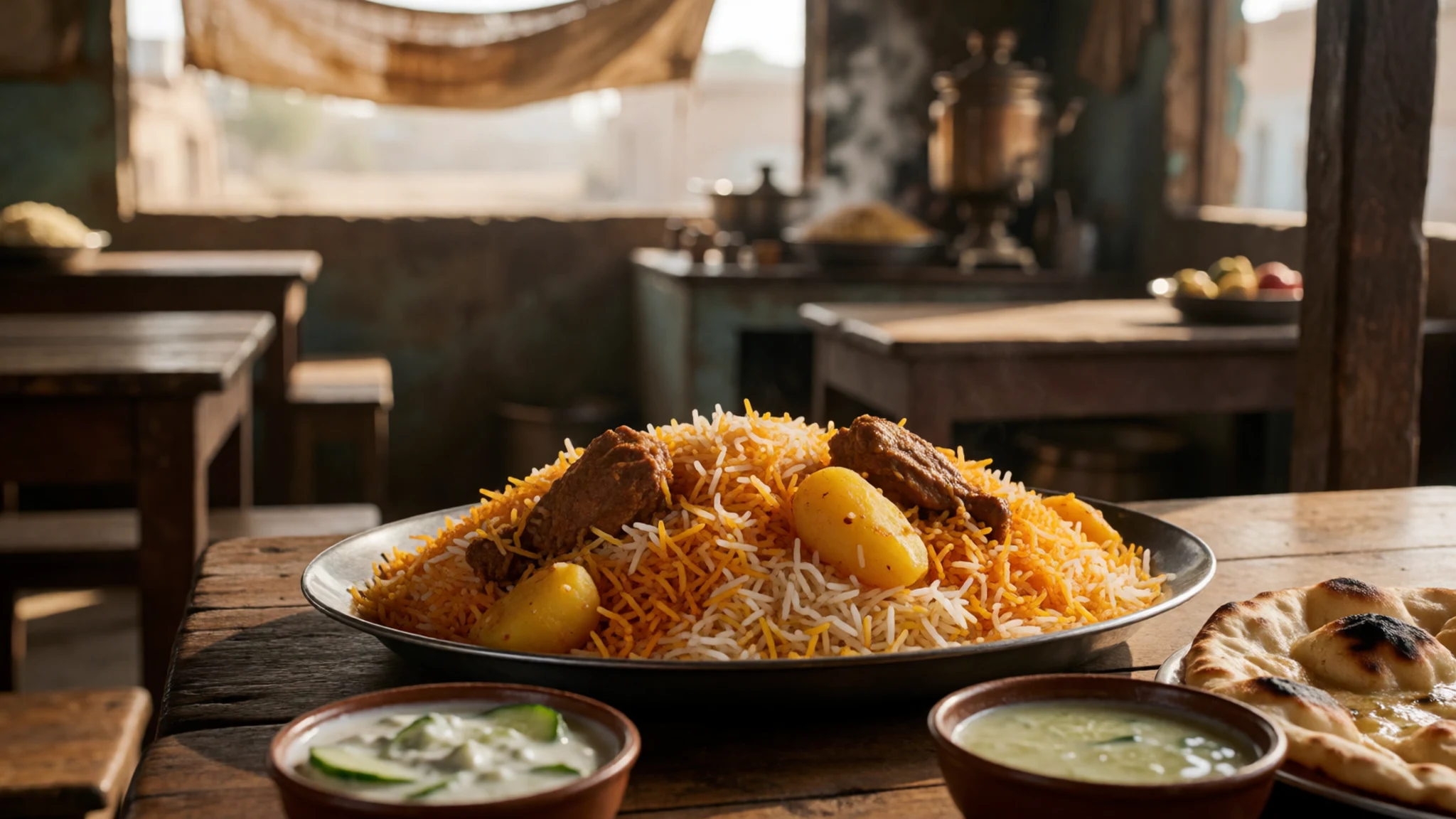
- Fried freshwater fish — Simple eateries near the lakeshore villages
Lake and river fish is a natural local choice, usually marinated in spices and fried until crisp. Availability depends on the catch and the season. Ask at simple eateries near fishing villages and on the road to the shore, and eat where the fish is clearly fresh.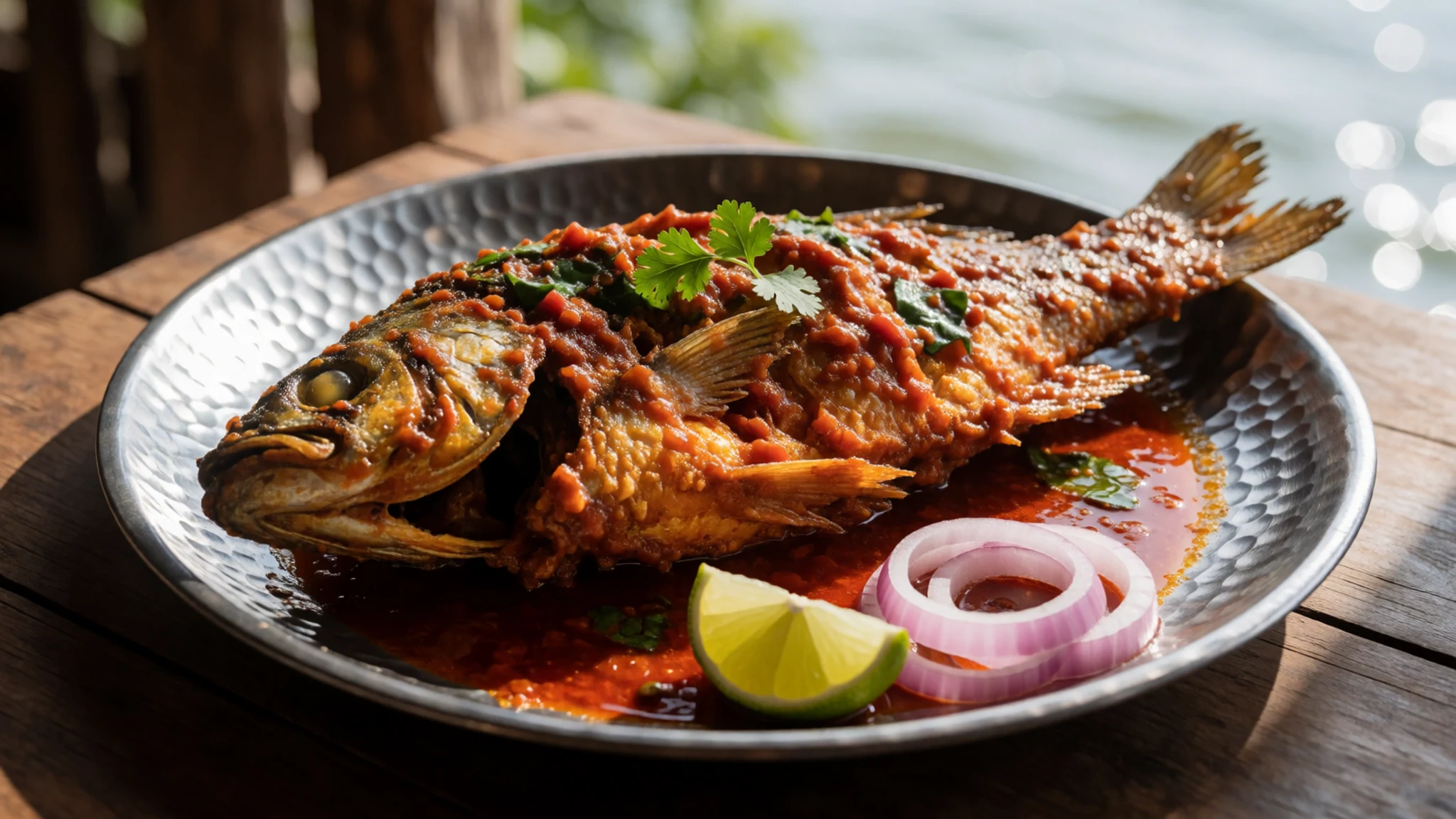
- Sai bhaji — Home kitchens and small local eateries
Sai bhaji is a classic Sindhi home dish of spinach and other greens cooked with lentils, spiced gently and eaten with flatbread or rice. It is more likely to appear in rural and family kitchens than in big restaurants, so ask local hosts or small eateries. - Dal with roti or paratha — Dhabas along the highway through Dadu and Sehwan
A plate of lentils with hot flatbread is the everyday meal of the plain, and a sensible pick after a hot morning on the water. Dhabas, the basic roadside eateries, serve it in huge numbers and turn out parathas fresh from the griddle. - Sweet milky tea — Tea stalls near the lake and in Sehwan's bazaar
Tea with plenty of milk and sugar is the usual welcome and the break in any boat or road day. Roadside tea stalls near the lake and in Sehwan's bazaar make it fresh and strong, and a host will almost always offer it.
Plan it
Best time. November to February, when the days are cooler and the lake is less punishing than in the fierce summer heat. The monsoon swells the lake but can bring floods and disrupted roads, so check conditions before any trip.
How long. 1–2
Getting there. Fly into Jinnah International Airport in Karachi, the main gateway to Sindh; Sukkur Airport handles domestic flights for the north of the province. Pakistan Railways links Karachi, Hyderabad and the junction at Rohri. The last leg to the lake, by road via Sehwan (about 18 kilometres away), is best done with a local driver.
Budget. low
Tips
- Check current government travel advice before going: the brief warns of crime and kidnapping risk in northern Sindh, and conditions around the lake can change.
- Travel in daylight with a trusted local driver or guide, and arrange boat trips and access to archaeological mounds through them.
- Carry plenty of drinking water, sun protection and a hat, because shade is scarce.
- Carry cash for small eateries, tea stalls and boat hire, as cards are unlikely to work in lakeside villages.
- Combine the lake with Sehwan's shrine, but expect heavy crowds and noise around festival times.
Etiquette
- Remove your shoes before entering any shrine and dress modestly.
- Ask before photographing people, especially women and families on the boats.
- Do not pick up pottery or disturb the archaeological mounds.
Nearby
Sources
- Wikidata Q2977085 (CC0)
- Wikipedia, Lake Manchar (rev 1366230930) (CC BY-SA 4.0)
- Wikivoyage, Sindh (rev 5422472) (CC BY-SA 4.0)
- Indus River and Manchhar Lake, Jesse Allen and Robert Simmon (Public domain)
- Mohanas of Manchar Lake, Akhtar Hassan (CC BY-SA 4.0)
- Mother Land 03, Naveed Solangi (CC BY-SA 4.0)


